US refinery utilization rate is the highest since September 7th, 2018; Strategic Petroleum Reserve at the lowest level since November 1982; US gasoline inventories are at a 41 week low; distillate inventories are at the lowest summertime level in more than thirty years; combined road fuel inventories are at their lowest in 18 years; months of supply lowest for August since World War 2
US oil prices fell for the first time in three weeks as the US policy impetus shifted to economic sanctions on Iran, reducing the level of violence around the Persian Gulf…after rising 5.7% to $87.06 a barrel last week as ship traffic thru Hormuz slowed and as an end to the conflict in the Middle East looked farther away than ever after new Trump threats against Iran and other countries, the contract price for the benchmark US light sweet crude for October delivery fell by more than $1 a barrel on Asian markets on Monday, as traders took profits following recent gains, while awaiting details of potentially tougher US sanctions against Iran, and continued lower across global markets amid continued tension in the Middle East as Iran and the United States were embroiled in a fresh trade war. and likewise softened Monday morning in New York as traders awaited details about large-scale U.S. sanctions on Iran expected to be revealed later that day, and settled $2.05 lower at $85.01 a barrel after U.S. Treasury Secretary Scott Bessent declined to say what specific countries would be targeted by the new sanctions, and stopped short of actually imposing penalties…crude oil futures traded higher on Tuesday morning in Asia, as traders analyzed the impact of US secondary sanctions against Iran, and treated the US effort to nudge partners away from Iranian trade as marginal rather than market‑moving, but then extended their sharp decline across global markets as signs of easing tensions between the US and Iran reduced fears of a broader military escalation and potential supply disruptions in the Middle East, and continued to reman soft in early US trading on the back of weaker-than-expected new U.S. sanctions on Iran, which were deemed unlikely to negatively impact oil supply, and settled $2.65 or 3% lower at a one-week low at $82.36 a barrel, as traders shrugged off the latest U.S. sanctions campaign against Iran, viewing economic pressure less risky for oil supplies than a military escalation….oil prices tumbled by more than 2% in the initial hour of trading in Mumbai on Wednesday, following reports that Oman and Iran had discussed establishing a temporary joint maritime corridor in the Strait of Hormuz, but briefly turned higher after Bloomberg News reported that Russia was preparing to escalate attacks on Ukraine after coming to a conclusion that negotiations for a peace deal were stalled, before extending their decline as markets opened in New York, on reports that Iran and Oman had made significant progress in negotiations to establish a jointly controlled shipping corridor in the Strait of Hormuz, but reversed higher after the EIA reported big gasoline and distillate draws, a tiny crude build, and that Cushing inventories were at tank bottoms, before settling 13 cents lower at $82.23 a barrel as traders weighed the news of talks on the Strait of Hormuz between Iran and Oman, and the continuing low volume of oil flowing through the waterway….oil prices extended their decline during Asian trading Thursday, as diplomatic efforts to reopen the Strait of Hormuz raised hopes of a gradual recovery in disrupted energy flows, and continued to decline across global markets on expectations of reduced supply risks amid growing prospects for the reopening of the Strait of Hormuz, talks between Iran and Oman, and Qatar’s mediation efforts, but steadied during early US trading as traders weighed easing supply risks in the Middle East against reported Russian plans of an escalation in the war against Ukraine and their accumulating refinery outages from Ukrainian attacks, and then settled up $1.30 at $83,53 a barrel after a Wall Street Journal report said President Trump was not interested in returning to terms of a memorandum of understanding reached with Iran in June, and that the US was not in talks with Iran,despite diplomatic efforts by other countries to re-engage the two sides….oil prices fell slightly during Asian trading on Friday as markets parsed reports that the U.S. was close to gaining access to Venezuela’s oil reserves, even as the focus remained on U.S.-Iran wrangling over the Strait of Hormuz, and remained mixed Friday morning in New York, reflecting a shrinking geopolitical risk premium tied to the U.S-Iran war, and rising oil flows from the Middle East, and settled 13 cents lower at $83.40 a barrel as traders evaluated hints about the U.S. Federal Reserve Bank's inflation-fighting policy, and rumors of a possible agreement on shipping through the Strait of Hormuz, leaving oil prices 4.2% lower for the week..
meanwhile, natural gas prices finished higher for a third straight week on a smaller than normal injection of gas into storage, and on forecasts for the exceptionally hot weather in the South to continue into early September….after rising 1.5% to $2.773 per mmBTU last week as intense heat over a large part of the country outweighed the copious supplies of natural gas already in storage heading into Autumn, the price of the benchmark natural gas contract for September delivery opened 6.3 cents higher on Monday, as traders looked to sustained cooling demand, but faded throughout the session on heavy storage levels to settle 0.9 cents higher at $2.782 per mmBTU, as sweltering Texas heat and a dip in production provided just enough support to keep prices positive after the overnight rally lost steam…the September contract then opened 7.9 cents lower on Tuesday, as traders braced for the contract expiration later in the week, and digested expectations for milder autumn weather in the weeks ahead, in the face of elevated supply. but traded gradually higher through the morning, as traders balanced fading summer cooling demand against short-term bullish weather forecasts and lower production, and settled 1.2 cents lower at $2.770 per mmBTU amid plentiful supply, sluggish LNG feedgas and a looming seasonal drop-off in consumption…September natural gas opened 6.1 cents higher on Wednesday, as the contract’s final settlement drew near and cooling demand held strong, and settled the session 7.2 cents higher at $2.842 per mmBTU, as record August heat looked set to bleed into September, and as LNG feedgas demand rebounded, giving bulls momentum ahead of Thursday’s government inventory report…the September contract opened 4.2 cents higher on its last day of trading Thursday, as traders braced for a bullish storage report, then pulled back as the report matched their expectations, before rising again to settle 6.5 cents higher at $2.907 per mmBTU, on the lean storage injection and on rising feedgas demand from the Freeport LNG terminal, while the more actively traded benchmark natural gas contract for October delivery settled 4.0 cents higher at $2.914 per mmBTU…with commodity markets now citing the price of the benchmark natural gas contract for October delivery, that contract price seesawed early Friday, amid abiding summer heat, strengthening LNG volumes, a dwindling but still notable storage surplus and seasonally strong production, and remained lower at midday as traders weighed the approaching shoulder season decline in demand against strong LNG feedgas and hotter regional changes to the weather outlook, and settled 2.6 cents lower at $2.888 per mmBTU, as cooler early September weather trends undercut demand expectations after Thursday’s rally stalled short of $3, outweighing persistent late-summer heat and the leanest storage builds of the summer….but natural gas prices still finished 4.8% higher for the week, while the price of the benchmark October contract, which had finished the prior week at $2.811 per mmBTU, finished 3.4% higher..
The EIA’s natural gas storage report for the week ending August 21st indicated that the amount of working natural gas held in underground storage rose by 15 billion cubic feet to 3,184 billion cubic feet by the end of the week, which left our natural gas supplies 30 billion cubic feet, or 0.9% below the 3,214 billion cubic feet of gas that were in storage on August 21st of last year, but 167 billion cubic feet, or 5.5% above the five-year average of 3,017 billion cubic feet of natural gas that had typically been in working storage as of the 21st of August over the most recent five years….the 15 billion cubic foot injection into natural gas storage for the cited week equaled the 15 billion cubic foot injection into storage that the market had been expecting ahead of the report, but it was less than the 17 billion cubic foot of gas that were injected into natural gas storage during the corresponding week of 2025, and also less than the average 33 billion cubic foot injection into natural gas storage that had been typical for the third week in August over the past five years…
The Latest US Oil Supply and Disposition Data from the EIA
US oil data from the US Energy Information Administration for the week ending August 21st showed that after a decrease in our oil imports and an increase in demand for oil the EIA could not account for, we had we had to pull oil out of our stored crude supplies for the seventeenth time in eighteen weeks, and for the 39th time in sixty-five weeks, as another big withdrawal of oil from the SPR led to a small addition to commercial crude supplies…. Our imports of crude oil fell by an average of 435,000 barrels per day to 6,158,000 barrels per day, after falling by an average of 746,000 barrels per day during the prior week, while our exports of crude oil fell by an average of 274,000 barrels per day to average 3,792,000 barrels per day, which, when used to offset our imports, meant that the net of our trade of oil worked out to an import average of 2,366,000 barrels of oil per day during the week ending August 21st, an average of 161,000 fewer barrels per day than the net of our imports minus our exports during the prior week... At the same time, transfers to our oil supplies from Alaskan gas liquids, from natural gasoline, from condensate, and from unfinished oils was 2,000 barrels per day lower than the prior week at 883,000 barrels per day, while during the same week, production of crude from US wells was 13,000 barrels per day higher at 13,843,000 barrels per day. Hence, our daily supply of oil from the net of our international trade in oil, from transfers, and from domestic well production appears to have averaged a total of 17,092,000 barrels per day during the August 21st reporting week…
Meanwhile, US oil refineries reported they were processing an average of 17,393,000 barrels of crude per day during the week ending August 21st, an average of 1,000 fewer barrels per day than the amount of oil that our refineries reported they were processing during the prior week, while over the same period, the EIA’s surveys indicated that a net of 515,000 barrels of oil per day were being pulled from the supplies of oil stored in the US… So, based on all that reported & estimated data, the crude oil figures provided by the EIA appear to indicate that our total working supply of oil from storage, from net imports, from transfers, and from oilfield production during the week ending August 21st averaged a rounded 214,000 more barrels per day than what our oil refineries reported they used during the week. To account for the difference between the apparent supply of oil and the apparent disposition of it, the EIA just plugged a [ -214,000 ] barrel per day figure onto line 16 of the weekly U.S. Petroleum Balance Sheet, in order to make the reported data for the supply of oil and for the consumption of it balance out, a fudge factor that they label in their footnotes as “unaccounted for crude oil”, thus indicating there must have been a error or omission of that amount in the week’s oil supply & demand figures that we have just transcribed.... Since 29,000 barrels per day of oil supply could not be accounted for in the prior week’s EIA data, that means there was a 243,000 barrel per day difference between this week’s oil balance sheet error and the EIA’s crude oil balance sheet error from a week ago, and hence the changes to supply and demand from that week to this one that are indicated by this week’s report are somehow off by that much. and therefore not very useful... However, since most oil traders react to to the figures in these weekly EIA reports as if they were gospel, and since these weekly figures therefore often drive oil pricing and hence decisions to drill or complete oil wells, we’ll continue to report this data just as it’s published, and just as it’s watched & believed to be reasonably reliable by most everyone in the industry…(for more on how this weekly oil data is gathered, and the possible reasons for that “unaccounted for” oil supply, see this EIA explainer….also see this March 2023 twitter thread from an EIA administrator addressing these ongoing weekly errors, and what they had once hoped to do about it).
This week’s rounded 515,000 barrel per day average decrease in our overall crude oil inventories came as an average of 14,000 barrels per day were being added to our commercial stocks of crude oil, while 529,000 barrels per day were being pulled out of our Strategic Petroleum Reserve, the twenty-second consecutive Iran war related withdrawal from the SPR, including the four largest draws in SPR history, which left the SPR level at 289,726,000 barrels, the lowest since it was initially being filled in November 1982....Further details from the weekly Petroleum Status Report (pdf) indicated that the 4 week average of our oil imports rose to 6,572,000 barrels per day last week, which was 2.6% more than the 6,403,000 barrel per day average that we were importing over the same four-week period last year, while the four week average of our exports fell to 3,650,000 barrels per day last week, which was 2.6% less than the 3,769,000 barrel per day average that we were exporting last year year at this time... This week’s crude oil production was reported to be 13,000 barrels per day higher at 13,843,000 barrels per day as the EIA’s estimate of the output from wells in the lower 48 states was 6,000 barrels per day higher at 13,413,000 barrels per day, while Alaska’s oil production was 7,000 barrels per day higher at 430,000 barrels per day...US crude oil production had reached a pre-pandemic high of 13,100,000 barrels per day during the week ending March 13th 2020, so this week’s reported oil production figure was 5.7% higher than that of our pre-pandemic production peak, and was also 42.7% above the pandemic low of 9,700,000 barrels per day that US oil production had fallen to during the third week of February of 2021.
US oil refineries were operating at 97.4% of their capacity while processing those 17,393,000 barrels of crude per day during the week ending August 21st, up from 97.2% the prior week, and the highest refinery utilization rate since September 7th, 2018….the 17,393,000 barrels of oil per day that were refined that week were 3.0% more than the 16,880,000 barrels of crude that were being processed daily during the week ending August 22nd of 2025, but were less than 0.1% less than the 17,408,000 barrels that were being refined during the pre-pandemic week ending August 23rd, 2019, when our refinery utilization rate was at 95.2%, which was close to the pre-pandemic normal utilization rate for this time of year…
While there was little change in the amount of oil that was being refined this week, gasoline output from our refineries was higher, increasing by 61,000 barrels per day to 9,772,000 barrels per day during the week ending August 21st, after our refineries’ gasoline output had increased by 143,000 barrels per day during the prior week... This week’s gasoline production was 2.3% higher than the 9,554,000 barrels of gasoline that were being produced daily over the week ending August 22nd of last year, but 8.3% less than the gasoline production of 10,660,000 barrels per day seen during the prepandemic week ending August 23rd, 2019….on the other hand, our refineries’ production of distillate fuels (diesel fuel and heat oil) decreased by 91,000 barrels per day to 5,135,000 barrels per day, after our distillates output had decreased by 54,000 barrels per day during the prior week. With those decreases, our distillates output was 1.6% less than the 5,217,000 barrels of distillates that were being produced daily during the week ending August 22nd of 2025, and 1.1% less than the 5,193,000 barrels of distillates that were being produced daily during the pre-pandemic week ending August 23rd, 2019....
Even with this week’s increase in our gasoline production, our supplies of gasoline in storage at the end of the week fell for the 22nd time in twenty-eight weeks, decreasing by 2,536,000 barrels to a 41 week low of 206,842,000 barrels during the week ending August 21st, after our gasoline inventories had increased by 688,000 barrels during the prior week. Our gasoline supplies fell this week because the amount of gasoline supplied to US users rose by 354,000 barrels per day to 9,043,000 barrels per day, and even though our imports of gasoline rose by 199,000 barrels per day to 565,000 barrels per day, while our exports of gasoline rose by 38,000 barrels per day to 890,000 barrels per day… After fifty-three gasoline inventory withdrawals over the past seventy-nine weeks, our gasoline supplies were 7.0% lower than last August 22nd’s gasoline inventories of 222,334,000 barrels, and about 6% below the five year average of our gasoline supplies for this time of year…
After this week’s decrease in distillates production, our supplies of distillates fell for the thirteenth time in twenty-eight weeks, deceasing by 2,228,000 barrels to 103,391,000 barrels during the week ending August 21st, the lowest summertime level in more than thirty years, after our distillates supplies had decreased by 1,530,000 barrels during the prior week... Our distillates supplies fell by more this week because the amount of distillates supplied to US markets, an indicator of domestic demand, fell by 114,000 barrels per day to 3,953,000 barrels per day, and because our exports of distillates rose by 189,000 barrels per day to 1,790,000 barrels per day, while our imports of distillates rose by 67,000 barrels per day to 176,000 barrels per day... After 28 withdrawals from distillates inventories over the past 59 weeks, our distillates supplies at the end of the week were 9.5% lower than the 114,242,000 barrels of distillates that we had in storage on August 22nd of 2025, and were about 14% below the five year average of our distillates inventories for this time of the year…with gasoline inventories similarly depressed compared to historical level, the drop in distillate fuels left our combined road fuel inventories at their lowest in 18 years..
Finally, even after the decrease in our oil imports, another big withdrawal from the SPR meant that our commercial supplies of crude oil in storage rose for the 14th time in twenty-six weeks, and for the 28th time over the past year, increasing by 95,000 barrels over the week, from 428,815,000 barrels on August 14th to 428,910,000 barrels on August 21st, after our commercial crude supplies had increased by 4,405,000 barels over the prior week….After this week’s increase, our commercial crude oil inventories were about 1% above the recent five-year average of commercial oil supplies for this time of year, while they were about 29% above the average of our available crude oil stocks as of the third weekend of August over the 5 years at the beginning of the past decade, with the difference between those comparisons arising because it wasn’t until early 2015 that our oil inventories had first topped 400 million barrels. After our commercial crude oil inventories had jumped to record highs during the Covid lockdowns in the Spring of 2020, then jumped again after February 2021’s winter storm Uri froze off US Gulf Coast refining, but then fell sharply due to increased exports to Europe following the onset of the Ukraine war, only to jump again following the Christmas 2022 refinery freeze-offs, changes in our commercial crude supplies had been less extreme up until the onset of the Iran war, when they were initially built up to a three year high by mid-April...However, after falling sharply over three months to the lowest in nearly eight years four weeks ago, our commercial crude oil inventories have since rebounded, and as of August 21st were 2.5% above the 418,292,000 barrels of oil we had in commercial storage on August 22nd of 2025, and were 0.9% more than the 425,183,000 barrels of oil that we had in storage on August 23rd of 2024, but were 1.1% less than the 433,528,000 barrels of oil we had left in commercial storage on August 18th of 2023…
This Week's Rig Count
The US rig count netted out as unchanged over the week ending August 28th, as the number of rigs targeting oil was down by five, the count of rigs targeting natural gas was up by five, and miscellaneous rigs were unchanged…for a quick snapshot of this week's rig count, we are again including below a screenshot of the rig count summary table from Baker Hughes...in the table below, the first column shows the active rig count as of August 28th, the second column shows the change in the number of working rigs between last week’s count (August 21st) and this week’s (August 28th) count, the third column shows last week’s August 21st active rig count, the 4th column shows the change between the number of rigs running on Friday and the number running on the Friday of the same week of a year ago, and the 5th column shows the number of rigs that were drilling at the end of that reporting period a year ago, which in this week’s case was Friday, the 29th of August, 2025…

+++++++++++++++++++++++++++++++++++++++++++++++++++++
Study Says 93-Mile Ohio “Lake to River” Gas Pipeline is Doable -- Marcellus Drilling News - Thirteen months ago, MDN told you Ohio had just handed the Eastgate Regional Council of Governments $250,000 to find out whether a natural gas pipeline could be built up the middle of State Route 11, from the Ohio River at East Liverpool all the way north to Lake Erie at Ashtabula (see OH Spending $250K to Study Utica to Lake Erie Pipe for LNG Exports). Yesterday the answer landed. The 142-page “Lake to River: Oil & Gas Pipeline Feasibility Study” (full copy below), prepared by consulting firm Verdantas, says yes — a 93-mile line is technically buildable inside the existing state right-of-way, would move up to 3 billion cubic feet per day, and would cost up to $1.36 billion. What it doesn’t have yet is a builder or a customer. Ashtabula County | Columbiana County | Mahoning County | Trumbull County
Ohio Gov. Race: Ramaswamy Pro-Frack, Acton Wants a Ban - Marcellus Drilling News - -- Ohio’s next governor will inherit a program that has already banked $314 million for the state by leasing the rock a mile below its parks and wildlife areas. Two of the three candidates on the November ballot want to shut it down. Cleveland.com/The Plain Dealer put four questions about drilling under state-owned land to Republican Vivek Ramaswamy, Democrat Amy Acton, and Libertarian Don Kissick as part of its 2026 gubernatorial issues series. The answers could hardly be more different.
Gas line puncture prompts evacuation of Northwest High School - Northwest High School students were evacuated Thursday morning after a gas line was punctured during construction work at the school. Northwest Local Schools Superintendent Shawn Braman said the district was notified by the construction company working on an addition to the high school and the district’s building and grounds supervisor. Students were evacuated to Stinson as a precaution. Braman said all students are safe and have been accounted for. Canal Fulton police and fire crews responded to the school, and police blocked the road at the entrance while crews worked to repair the gas line. School officials said they expected the repair to be completed within about an hour. The district plans to take steps to resume classes once the line is repaired. Officials said they will provide another update if the situation lasts longer than anticipated.
Knox Energy disconnects service for 43 customers in Belpre area - - Marietta Times - Knox Energy recently notified 43 of its customers that their natural gas service would be disconnected Oct. 29, stating the local supply gathering system will be unable to provide reliable service. Vanessa Hamilton, chief business development officer for Canton-based Knox Energy, said the area affected is solely supplied by local production. Several weeks ago, Knox Energy operations staff met with Bob Wilson, president of Wilson Energy, and were told the well conditions had worsened and couldn't continue to meet the demand of all customers. Hamilton said that last year Wilson met with Knox Energy and said the wells were depleting and customers could experience outages during extreme temperatures. In a letter dated Sept. 30, 2025, customers were notified of this potential change and urged to look for alternate heating solutions. Now, 43 of the approximately 160 Knox Energy customers whose service is supplied by Wilson Energy have been notified of the pending disconnection. Wilson and Wilson Energy Chief Operating Officer, Diogenes "Dio" Herrera were not immediately available for a comment on the status and conditions of the natural gas wells in question. Hamilton said the decision came after looking for alternate solutions such as larger transmission lines and contacted natural gas provider Enbridge for possible solutions for sustainability and reliability of service, but "they are capacity constrained" and all other options have been exhausted. Hamilton stated that the 43 customers whose service is being discontinued experienced outages last winter. "Some customers are miles and miles and miles away from any other supply source," she said. Jolene Reeder, a resident of Belpre, received the disconnection letter on Monday. She said she received a letter 10 days earlier with no disconnection date, only a notice of potential disruptions. She said she has lived in her home on Briggs Hill since 2018 and hasn't experienced any disruptions in the past year. Reeder said she contacted Enbridge about connecting to a gas line nearby, but her home is approximately 1,000 feet from the closest tap. She was told the first 100 feet to connect would be covered but she would have to pay around $80 per foot for the other 900 feet. "It equated to $81,000 for us to be able to connect to Enbridge," she said. Reeder said if her close neighbors chose to tap into the same line the cost would drop to approximately $21,000, but would take around a year for construction of the lines to be completed and the homes connected to natural gas. She stated her furnace, hot water heater and stove all run on natural gas and her next step is potentially converting them to propane. "It's absolutely disgusting and infuriating for these energy groups to expect families to be able to find reliable heat sources in a two-month period. ... and to think more people just have the extra money laying around to be able to (change gas providers) or have things converted to propane," Reeder said. Ohio Gas Association Distribution and Transportation Company President Jimmy Stewart said that with traditional wells like the ones operated by Wilson Energy, the supply of natural gas depletes over time and eventually there isn't enough, unless the company can tap into a larger transmission line nearby. Unfortunately, this situation is not unique to Washington County, he said.
Court allows construction company to argue for data center | Ohio - – The Ohio Supreme Court decided to allow a data center builder to intervene in a lawsuit challenging a massive new center in Trenton. The builder claimed it needs status as an intervening party to protect its financial investment in the project, and the high court agreed in a win for the data center industry. Trenton Data Center Campus LLC has been approved to build a data center in Trenton on 145 acres, according to court documents, and the company claims in court documents it “will bring significant economic investment, employment, and tax revenue to the city and the surrounding region.” The company has already spent $38 million on the project, it said in court filings. After approval by the city, opponents launched a petition drive to amend the city charter to ban construction of data centers larger than 25 megawatts in the city. Trenton Data Center Campus LLC has a “direct interest” to intervene in the case because it is the owner and developer of the only data center under construction in Trenton, it told the Ohio Supreme Court. The city said in court documents, however, that Trenton Data Center Campus LLC does not have a “clear legal right,” to intervene, yet the city does have a clear right to amend its charter. The Ohio Supreme Court, however, granted the intervention. The Ohio Chamber of Commerce sided with the data center company. “At its core, this case is about whether Ohio wants to remain a leader for business and economic development, or whether it prefers to take a backseat and fall behind,” the chamber told the High Court in documents. “Recently, Gov. Mike Dewine and Lt. Gov. Jim Tressel toured Ohio, touting Ohio’s economic success. Part of that success is because Ohio is a leader in data center development.” The supreme court ruling was the second in the last two weeks on data centers. The tiny Ohio village of Ashville, population of around 4,500, has a data center and natural gas power plant headed its way. In April, the village signed a multi-million-dollar contract with a company called EdgeConnex for the 195-acre project as Ohio continues to attract more data centers – and the opposition that follows them. But the Ohio Supreme Court recently put the brakes on the data center and power plant project, ruling that the village must first submit a referendum petition to the board of elections seeking a public vote on the contract.
Candidates Run Against Data Centers, But Ohio Legislature Didn't Get The Memo -With some of the highest electricity rates in the Midwest, Ohio has seen a remarkable policy shift from lawmakers in both parties. Every candidate for governor has now called for restrictions on the data center boom, each proposing some form of moratorium unless certain conditions are met. Both U.S. Senate candidates have turned sharply critical of the industry. And the state’s highest court just ruled that local governments can’t fast-track new data centers without providing specific reasons — giving teeth to referendum drives in small towns where residents are trying to block project approvals. The tide may be turning on data centers in Ohio, as it is in states across the country — from Pennsylvania to California. But when it comes to how the state generates its power, fossil fuel interests are using the moment to entrench themselves and box out solar and wind. The Republican-controlled Legislature is trying to redefine “clean energy” to include coal and gas, explicitly to the benefit of data centers, through a little noticed proposal — Senate Bill 294 — that passed the state Senate in June and awaits a House vote.SB 294 would make it the policy of the state to ensure “affordable, reliable, and clean energy security.” The catch is in the fine print: a minimum capacity factor standard of 50% — a measure that compares the energy source’s actual output to the maximum that is technically possible, a threshold that solar and wind fall far short of. Only nuclear, certain types of natural gas and wood-burning power plants can feasibly meet the threshold, per Inside Climate News. Energy experts consider it a definitional sleight of hand, with real consequences, with supporters casting the bill as energy security and critics arguing it intentionally sidelines the renewable projects needed to power massive energy-hungry data centers. The Senate passed it 24-9 on June 10.The irony is that Meta, one of the biggest tech companies in the state, has already signed an agreement to access more than 2.1 gigawatts of nuclear energy from power giant Vistra for its regional Ohio data centers — greener than the legislature that courts it. Beneath the maneuvering sits the number driving voter anger: The average Ohio electricity bill grew 55% from July 2021 to July 2026, far above the national average, according to the Heatmap/MIT Electricity Price Hub. Efforts at creating guardrails on data centers have stalled — a House bill to cut the sales tax break for new data center projects from 100% to 50% went nowhere, even with the House speaker’s support. “We don’t think we should be granting tax exemptions to multibillion-dollar corporations, especially when many of them are already coming here to build these data centers anyway,” Speaker Matt Huffman, a Republican, told the Ohio Capital Journal. Leatra Harper, managing director of the FreshWater Accountability Project, testified against SB 294 and has spent 15 years tracking bills like it. “The bad bills never seem to die and the good bills go away forever,” she told Capital & Main. “They let them linger. They hold it over our heads.” The Referendum The clearest test of the backlash comes Nov. 3 in Ashville, a town of about 4,500 south of Columbus, where the fossil-fuel dimension of the fight is unusually literal. The Ashville Village Council struck a tentative agreement with EdgeConneX to build two data centers and an 800-megawatt natural gas plant on about 195 acres of village property, declared the deal an emergency so it could take effect immediately and exempted the project from Ashville’s own data center moratorium. Residents gathered enough signatures for a referendum in the November midterms. Village leaders refused to forward the petition. On Aug. 7, the Ohio Supreme Court unanimously ordered it submitted to the Pickaway County Board of Elections, ruling that Ashville leaders never explained why waiting the standard 30 days would have delayed anything. “I think this will be the first vote on data centers in Ohio,” said Marc Dann, the Democratic former state attorney general now representing Data Center Resistance, a group backing residents in such fights. Among them is Brian Meyers, a bus technician of more than 20 years who told Ohio Capital Journal that he learned about the project from an announcement on the back of his water bill. Northwest of Columbus, Jerome Township trustees imposed their own nine-month moratorium on new data centers after residents complained about a persistent “industrial buzz” from Amazon’s two existing facilities there, which carry 10-year tax abatements approved at the county level. “According to the way that the noise is measured, it may be in compliance, but it still is not pleasant,” former township trustee Wezlynn Davis told WOSU, insisting the nine-month moratorium was not anti-business. “We’re finding now that we’re experiencing data centers in real time. It is not tolerable for our residents.” The politics have followed the complaints up the ballot. Sherrod Brown, the Democratic nominee for U.S. Senate, has hammered Republican opponent Jon Husted in attack ads as “the face of data centers in Ohio”, calling him the point man for the 230-odd new data centers in the state who pushed the Legislature to grant $2.5 billion in tax subsidies for operators. But both men have shifted their positions — a decade ago Brown celebrated Amazon Web Services’ arrival in central Ohio. Husted, for his part, has conceded the ground entirely: “They’ve earned that backlash,” he told the Statehouse News Bureau of the industry, faulting companies for not offering to pay energy bills in the communities where they build power plants. Harper, the FreshWater Accountability Project managing director, watches the conversion of Ohio’s politicians with the wariness of someone who fought this fight when it was a lonely quest. “People are slowly realizing that there’s a double standard — that our elected officials are catering more to fossil fuels and really putting all their eggs in the fracking basket,” she said. “It’s so much more blatant since the Trump administration has taken over.” Harper has felt it personally: Her own solar installation in Bowling Green was hit with a rider that she said wiped out its payback period, and she sued the city over it. Now she is fighting an $800 million Meta data center of more than 280 acres outside Bowling Green — one with its own permitted gas facility, fed by lines running off the Nexus and Rover fracked-gas pipelines. “I call it the Pandora’s box of fracking,” she said. “They’re just following that frack gas pipeline and installing these behind-the-meter gas plants.” The tools available to residents keep shrinking. Referendums, Harper said, were already difficult — volunteers canvassing around full-time jobs and 30-day windows — before lawmakers in 2023 raised the signature threshold for township zoning referendums from 8% of the last gubernatorial vote to 35%. “They sneak these bad laws in,” she said. “They put it in the chicken bill, or the budget bill. By the time you even catch on to what the impact is, it’s too late.” Still, she believes the resentment aimed at data centers is about something larger. “It might be as much about the billionaires as it is about the data centers themselves,” she said. “The data centers represent something — it’s tangible to the intangible that people are really beginning to resent, which is how our government’s pretty much bought and sold by moneyed interests.” Whether that resentment shows up in November is an open question. Harper thinks of her grandmother in Appalachia, who never cast a ballot in her life. “She said, ‘You know, if they’re not crooks when they go in, they’re crooks when they come out,’” Harper said. “And I used to think, Grandma, what are you saying? That can’t be true. But it is.”
Data center debate exposes Ohio's uneven energy landscape - Ohio Capital Journal - In the battle over data center siting in Ohio, one of the flashpoints is how data centers impact electricity prices.Data centers are indeed energy-intensive and the worry about their impact on local energy prices has moved most developers to work to get their energy generated in behind-the-meter projects that don’t draw from the electrical grid. So if you are a data center developer, what kind of power are you going to put behind the meter? Looking at the top sources of power in the United States, you can whittle the options down pretty quickly. Coal, once the heavyweight for energy in the United States, has seen its economics turn against itself and the United States has only begun construction on one coal-fired power plant in the past 13 years. For all the talk of small modular reactors, nuclear power is still not viable in Ohio due to the massive up-front costs and decades of regulatory hurdles to clear. Hydropower and geothermal power demand specific topographic conditions, and biomass has economies of scale that don’t make it competitive with other technologies. This leaves developers with three choices: solar, wind, and natural gas. The state has put its thumb on the scale when it comes to choosing between these technologies. A range of state decisions have made siting solar, wind, and natural gas projects very different from one another. Solar and natural gas projects over 50 megawatts must be approved by the Ohio Power Siting Board. For reference, this would be large enough to power all the homes in Canton with a little bit of energy left over. Wind projects, on the other hand, only need to be 5 megawatts to face Ohio Power Siting Board scrutiny. That is only enough to power about half the homes in Athens. The state has also given considerable latitude to county governments to ban solar and wind projects in unincorporated areas, a barrier gas-powered plants do not have to overcome. For projects that are not outright banned, two local representatives get a vote on Siting Board decisions for wind and solar projects, a requirement not faced by natural gas projects. Solar and wind projects also face a regime of siting rules that do not apply to gas plants. Solar facilities face specified setbacks, landscaping, fencing, stormwater, noise, and vegetation requirements. Wind facilities face turbine setbacks and shadow-flicker, ice-throw, blade-failure, communications-interference, noise, and aviation requirements.Solar and wind projects also face decommissioning planning requirements that gas-powered plants are not subject to.Gas-powered plants do have one requirement that solar and wind projects do not: they must submit a range of operational air-quality analyses. This makes sense to a certain extent given solar and wind generation is emissions-free. In an ideal world, technologies can compete against each other on a level playing field.If there are specific costs associated with outcomes like public health, environmental sustainability, or even aesthetics, these can be captured through fees and taxes specifically designed to internalize these costs into the market.Creating separate regulatory regimes for different technologies, on the other hand, makes legislators the arbiters of technological superiority rather than the market.
Hope and concern swirls for Ohioans around 'world's largest datacenter' - The Guardian - On a winding road tucked away behind forests in the Appalachian foothills of southern Ohio is where OpenAI, Nvidia and Japanese investors are set to spend $500bn on one of the largest artificial intelligence datacenters on the planet.Last March, the energy secretary, Chris Wright, the commerce secretary, Howard Lutnick and a host of Japanese and other dignitaries briefly descended on Piketon to enthusiastically break ground on a project to build 8GW worth of AI computing power. But locally, there’s a different feeling: a mix of hope but also concern. “Personally, my emotions range between positive and skeptical,” says Billy Spencer, who has been mayor of Piketon for the past 23 years, of the project.“There’s not an organized opposition to it around here. There hasn’t been that much talk. No one’s come to council – I don’t know that there’s been one citizen who lives within the village of Piketon who has come and said: ‘Mayor, what do you think about it?’” SB Energy, a subsidiary of Japanese bank SoftBank Group Corp, will own and operate the project with OpenAI signing a 20-year lease with the company to use the computing capacity delivered by the site. OpenAI would deploy Nvidia AI computing infrastructure at the datacenter, which will open in 2028.Masayoshi Son, the chair and chief executive officer of SoftBank Group Corp, at the Portsmouth site in Piketon, Ohio, in March. Photograph: Bloomberg/Getty ImagesTo meet its major energy demands, a natural gas plant would be built nearby, infrastructure expected to be paid for by Japanese money through a $33bn investment.However, the project has fueled concern from environmental groups, with part of it situated on a decommissioned uranium enrichment site that operated for nearly 60 years until 2001.For decades, communities in Pike county have blamed the department of energy-run facility, known locally as the “A-Plant”, for fueling above-average cancer rates and a host of other health issues. In 2019, a local middle school was forced to close after high levels of radiation were recorded in the building.The project is in large part a consequence of the Trump administration’s tariff and reshoring efforts: the government of Japan in July 2025 agreed to invest $550bn in the US in exchange for lowering tariffs on Japanese products entering the US. America is Japan’s biggest trade partner.However, a new administration could prevail in Washington after the 2028 presidential election and it could be one that could end Trump’s tariffs and consequently erase any motivation for Japanese investment in the project. That is not lost on Spencer.“But this is part of Japan’s deal – if you don’t put tariffs on us, we’ll spend money here [is Japan’s motivation],” he says. “So anytime it’s a political football like that, it’s subject to change, whether you support Trump or not.”Datacenters and their electricity and water needs have created a lightning rod of anger for communities across America. In July, the state of New York announced a pause in permitting the development of hyperscale datacenters, the first state in the country to do so.But the allure of huge sums of money is hard to ignore in Pike county, a part of America where the poverty rate, at over 19%, is almost double the national level.The project has promised to generate 35,000 construction jobs and 2,500 long-term, operating jobs respectively, with the datacenter expected to take up about 640 acres (260 hectares), or an area about three-fourths the size of New York City’s Central Park. “Since the [enrichment] plant closed, people have been wondering where the jobs will come from,” says Spencer.“Pike county certainly can’t handle that alone,” he says of the estimated tens of thousands of construction workers expected to descend on the area over the next six years.Environmentalists, however, say there are a host of issues with the plan.Creating what would be the country’s largest natural gas power plant could see millions of pounds of noxious chemicals released into the air. Flaring produces huge volumes of carbon monoxide, carbon dioxide, sulfur dioxide and nitrogen oxides.“As one of the largest natural gas facilities ever proposed, the greenhouse gas emissions and air pollution associated with a project of this size represents an astronomical contribution to climate change, not to mention the public health risks associated with the air pollution created by natural gas combustion,” says Carol Kauffman, the chief executive officer of the Ohio Environmental Council.“There are also upstream impacts, too, with fracking wells and methane leakage from pipelines.”The US Energy Information Administration estimates that in 2022, “CO2 emissions from burning natural gas for energy accounted for about 35% of total US energy-related CO2 emissions”.What’s more, local leaders suggest that during the construction phase up to 2m gallons of water may be required for waste purposes.Residents, including Spencer, have previously voiced opposition to a $650m waste disposal facility at the site, where low-level radioactive and other materials from the disassembled uranium-enrichment plant have been buried. Many are concerned that leaching, over time, could see hazardous waste enter the aquifer underground.Project managers, however, say that has been taken into account.“SB Energy performs thorough site reviews and due diligence for each of our infrastructure projects, including soil sampling,” a SB Energy spokesperson told the Guardian.“SB Energy has committed to paying for accelerated cleanup and remediation at the site.”Headquartered in Redwood City, California, SB Energy has said that Ohio ratepayers won’t have to pay into the cost for connecting the facility to the local electricity grid, and that additional electricity produced at the natural gas plant would go back onto the local grid, helping reduce costs for local customers.Many locals support any effort that would hasten funding for safer use and storage of the radioactive material that dots the site, which covers 6 sq miles, or almost 4,000 acres.For its part, OpenAI announced this month plans to “invest $40m in a community grant fund supporting priorities identified by local residents” in Pike county. It also plans to give college students across Ohio a $100 credit to use one of its ChatGPT AI tools.But all this money being pumped into a community where the median household income is $41,313 or 40% less than the Ohio figure, could set off a wealth gap between land and property owners and everyone else.Locals say SB Energy is actively buying up large tracts of land, a move that has reset the local property market. A report filed by SB Energy with the Ohio Environmental Protection Agency says part of the project would be located on more than 1,000 acres of private land immediately adjacent to the former enrichment facility.And at the time of writing, SB Energy had posted just four jobs based in Piketon.On the streets of Piketon, several residents in the village of about 2,200 people declined to comment on the project due to having no information about it.Dawn Winters, who runs several local gas stations, says her business is likely to benefit from the project.“I think it’s going to be a good thing for businesses like mine,” she says.“But on the other hand, we are seeing rent prices go up already. A friend of mine had to sell their land [to the project] and relocate. People are already needing affordable housing.”
How Will Massive Ohio Data Center Complex Get Its Gas? - This week, software giant Nvidia said it will infuse $1.5 billion into a massive data center and its 9.2 gigawatt gas-fired power plant in southern Ohio. But while the Ports-Pike Technology Campus sits in the heart of gas-rich Appalachia, there are no announced plans to build pipeline capacity to the project, which would require up to 1.5 billion cubic feet per day around the clock. [NB: that’s almost as much gas as is consumed by the entire state of Virginia]
US Data Center Backlash Adds Risk to Natural Gas Demand Outlooks - Political action against data centers in the United States is spreading and has become a bipartisan issue, one that could have potential ramifications for expectations of incremental natural gas demand.US data center development clusters near major natural gas pipelines, including Appalachia, Texas, Chicago, Atlanta and Phoenix. At a Glance:
Most Americans oppose local projects
States weigh tougher development rules
Political scrutiny raises project execution risks
Data Center Backlash Finds Its Bluntest Voice in Pennsylvania’s ‘Hell No -Pennsylvania Gov. Josh Shapiro escalated his criticism of proposed data centers in the state with some of the sharpest rhetoric yet aimed at the industry, singling out developers he accused of bullying communities to advance projects with no realistic path to power. US map shows data center development clusters near major natural gas pipelines in Texas, the Southeast, Midwest and Northeast. At a Glance:
- Shapiro brands developers ‘predatory’
- Archbald faces 51 proposed warehouses
- Governor still backs $20B in projects
Shell plans to sell US chemical assets for up to $8 billion - According to a report by the Financial Times on August 24, Shell has launched the sale process for its US chemical assets, with the entire portfolio valued at up to $8 billion. ExxonMobil, LyondellBasell, private equity firm Apollo, and the chemical business of Kuwait Petroleum Company are all participating in the bidding. Sources indicate that potential buyers submitted non-binding offers last month, with some interested parties choosing to acquire the entire portfolio, while others expressed interest only in certain target assets. The assets proposed for sale this time include four chemical bases located in Louisiana, Texas, and Pennsylvania. Among them, the Monaca polyethylene project in Pennsylvania has attracted the most market attention. The project commenced production in 2022 with a total cumulative investment of approximately 1.4 million tons and a designed annual polyethylene production capacity of 1.6 million tons. Relying on ethane feedstock from the Marcellus and Utica shale gas basins in the US, it was originally positioned as the first large-scale polyethylene production base in the northeastern United States, aiming to leverage low-cost raw materials to be close to consumer markets and drive the expansion of Shell's polyethylene business. However, this major project failed to meet expectations. Shell CEO Wael Sawan stated publicly in May of this year that the company is conducting a strategic evaluation of its chemical business, including Monaca, bluntly stating that the plant is not a "natural operator and owner" for Shell, which foreshadowed the asset disposal. The underlying logic for divesting assets is the long-term pressure on Shell's chemical sector. In 2025, Shell's chemical business reported an adjusted earnings loss of $1.125 billion, with operational performance further weakening compared to 2024. At the performance meeting in February 2026, management proposed a comprehensive assessment of the cash costs of chemical plants, not ruling out shutdown options, and planned to improve sector cash flow through cost reduction and asset restructuring. It is worth noting that the US chemical sector has already shown signs of recovery in the first half of 2026; plant utilization rates rebounded to 85% in the first quarter, and adjusted earnings improved significantly quarter-on-quarter in the second quarter. This indicates that this sale is not due to a sudden deterioration in the factory's operations, but an active strategic decision made by Shell regarding its asset portfolio from the perspective of long-term capital returns. Under the leadership of Wael Sawan, Shell continues to shrink non-core sectors, concentrating capital on its core businesses of oil, gas, and LNG. Previously, the company divested its refining and petrochemical assets in Singapore and sold its European onshore renewable energy business to TotalEnergies, continuously streamlining its operations. Although Shell has chosen to exit, this batch of US chemical assets has still garnered favor from multiple industrial capital firms. The assets possess mature production facilities, stable raw material supply, and supporting sales networks; the Monaca project also enjoys the locational advantage of being close to consumer markets in the northeastern part of North America. For industrial buyers, directly acquiring existing assets offers significant cost advantages compared to building new facilities. Currently, this transaction is still in the early stages. The final counterparty, transaction price, and scope of asset handover have not yet been finalized, and there remain uncertainties ahead.
19 New Shale Well Permits Reported for PA-OH-WV Aug 17 – 23 -- Marcellus Drilling News - The Marcellus/Utica region received 19 new drilling permits last week, August 17 – 23, down from the 27 permits issued two weeks ago. For the second week in a row, Pennsylvania issued the fewest new permits, with 2 (after issuing just 4 two weeks ago). What’s up with PA? Ohio issued 4 permits. And West Virginia took the prize last week, issuing 13 new permits. The drillers who received new permits were: Expand Energy (6), Infinity Natural Resources (1), Northeast Natural Energy (1), Pennsylvania General Energy (2), Tiburon Oil & Gas (3), and Vickery Energy (6). Doddridge County | Expand Energy | Guernsey County | INR/Infinity Natural Resources | Lycoming County | Marion County | Marshall County | Noble County | Northeast Natural Energy | Pennsylvania General Energy | Tiburon Oil & Gas | Vickery Energy Partners
DEP: Equitrans Water SVC [EQT] Reports 2 Landslides Along Shale Gas Water Pipeline Route In Union Twp., Washington County --On August 10, 2026, the Department of Environmental Project reported it was notified of two landslides on August 7 along the route of the Equitrans Water SVC (PA) LLC [EQT] NIMCH006 shale gas water pipeline in Union Township, Washington County impacted two streams. At Station 57+00 a slope failure of about 50 x 15 feet was observed with sediment from the failure accumulated within a stream Efforts were underway to remove the sediment and temporarily stabilize the slope. At Station 54+25 a slope failure of about 150 x 90 feet was observed with sediment deposited in a stream and altering its flow path. Efforts were underway to temporarily stabilize the slope. DEP and pipeline owners are sensitive to slope failures because they could stress natural gas and water pipelines causing them to rupture. DEP requested a response by September 1 that includes a geotechnical report on the cause of the slope failure, stabilization measures and an action plan to remediate the impacts of the streams. Equitrans said in its initial response to DEP there was a significant rain event on August 7 that contributed to the land slides. Click Here for the DEP inspection report + photos.
DEP: Routine Inspection Finds ‘Significant’ Release Of Contaminated Water From Conventional Oil & Gas Wells Pollutes Hillside In Warren County - On August 17, 2026, the Department of Environmental Protection conducted a routine inspection of the Smith 8 conventional well owned by LA Oil & Gas LLC and found a ‘significant’ release of contaminated water from storage tanks ran down a hill for hundreds of feet in Pleasant Township, Warren County. DEP reported the release started 10 feet from secondary containment and continued down slope 50 feet to a road ditch along the well site access road and traveled an additional 180 feet along the road until reaching a culvert under a public road. At that point the flow of contaminated water discharged over a hillside. “It is unclear when or how much fluid has been released, however given the extent of impacted soil it appears that over 1 barrel [42 gallons] of fluid has been released.” DEP said the release “likely [happened] on a recurring basis.” Multiple violations were issued, including failure to report the release of contaminated water. DEP requested a response by September 3 that includes not only a plan and timetable for cleaning up the spill, but also documentation on where the well owner disposed of their contaminated wastewater since August of 2025. DEP sent the well owner the inspection report. The response from the owner was “received.” Click Here for DEP inspection report + photos.
Washington Co. Brine Spill Doubles in Size, Cleanup Drags On -- Marcellus Drilling News - Remember that shale wastewater pipeline leak we told you about in West Finley Township, Washington County, back in July (see HG Energy Washington Co. Pad Leaks Up to 1,000 Barrels of Wastewater)? It’s worse than first reported; it still hasn’t been cleaned up, and the company DEP keeps writing violations to isn’t the driller you’d expect. It’s a New York City loan vehicle. When we first covered this on July 16, the Pennsylvania Department of Environmental Protection (DEP) said a failed piece of equipment in a cement vault had let loose somewhere between 21,000 and 42,000 gallons of brine — that’s produced water, the salty stuff that comes back up out of a shale well — near the WFN-6 well pad. Drone crews spotted it July 8. Two things have changed since then, and both are worth your attention.
DEP - Day 62: Contaminated Water Releases, Polluted Soil At Multiple Locations At Equitrans Water SVC [EQT] Richter Shale Gas Water Impoundment; Little Cleanup Happening In Greene County --On August 18, 2026, the Department of Environmental Protection did a compliance evaluation of the Equitrans Water SVC (PA LLC [EQT] Richter Shale Gas Water Impoundment spill site and found evidence of continuing contaminated water releases and a failure to advance remediate at the site in Aleppo Township, Greene County. In four inspection reports, DEP documented the failure of Equitrans [EQT] to comply with the cleanup order issued on June 30, 2026 to prevent the migration of contaminated water off site and from reaching ground or surface water from the pipeline release at the site on June 17. Read more here.
- -- Multiple field conductivity readings showed elevated levels of contamination at the former vault area that was the original location of the release on June 17, including in soils roughly 20 feet below the surface.
- -- A spring water seep along the slope of the vault had elevated readings.
- -- No additional remediation was done at the contaminated dewatering location for the impoundment.
- -- Excavation continues to fill in impoundment hole, field tests of the fill slope material being used found no elevated conductivity readings.
- -- Contaminated fluid removal from the rain garden retention area was on hold.
- -- A pond at the site was actively overflowing and discharging contaminated fluid down an access road.
- -- The pond water is overflowing into a ponded area behind a new beaver dam built on top of disturbed soils and on top of pipes used to collect contaminated water.
- -- Elevated conductivity readings were found in a tributary to South Fork Dunkard Fork Creek.
- -- Elevated readings were found in another spring water seek along the creek and at multiple seeps and other areas.
Inspection Report #4 noted DEP “collected samples from several surrounding locations potentially impacted from the spill” on August 18, but locations were not identified.The inspection reports included dozens of photos documenting the continuing problems at the site.DEP continued the violation issued August 11, 2026 related to failing to comply with the June 30, 2026 order to cleanup the site.No specific followup was requested from Equitrans, but copies of the inspection reports were sent to the company.
DEP: Eureka Still on the Hook for Cleanup Despite Selling Plants - Marcellus Drilling News - - Eureka Resources sold the business at all three of its shuttered Pennsylvania frack wastewater plants. What it did not sell — and legally could not sell — is the obligation to finish hauling the waste out. The Department of Environmental Protection (DEP) put that in writing last week, and added five words that ought to get somebody’s attention in Williamsport: DEP “is considering alternative enforcement measures.” The news comes, again, not from Eureka and not from a DEP press release, but from the Middle Susquehanna Riverkeeper Association, which keeps sending the agency questions and publishing the answers. DEP Northcentral communications manager Megan Lehman replied by email Aug. 20; the Riverkeeper posted the exchange Aug. 24.
Three Rivers Waterkeeper Notifies Harwick Operating Co. That It Intents To Sue The Company Over Clean Water Act Violations At Its Coal Ash Landfill In Allegheny County -On August 24, Three Rivers Waterkeeper filed a formal notice of intent to sue Harwick Operating Co. LLC for violating the federal Clean Water Act at its site in Springdale Borough, Allegheny County known as the Monarch Mine Dewatering Plant and the adjacent Cheswick Ash Disposal Site. Harwick discharges stormwater, treated mine water and landfill leachate from a coal ash landfill into Little Deer Creek which flows into Deer Creek approximately 2.2 miles upstream of the confluence of Deer Creek and the Allegheny River. Discharge monitoring reports submitted by Harwick to the Department of Environmental Protection show that from March 2025 to the present, Harwick has repeatedly violated its permit limits for iron, copper, cadmium, aluminum, manganese, total suspended solids, and hexavalent chromium. DEP has listed Little Deer Creek under the CWA as impaired due to high levels of iron, aluminum, and manganese. “Given its proximity to major drinking water sources, it is crucial that this facility complies with the Clean Water Act,” said Dr. Heather Hulton VanTassel, Executive Director, Three Rivers Waterkeeper. The Oakmont Borough Municipal Authority and the Wilkinsburg-Penn Joint Water Authority have public drinking water intakes 3.5 and 10 river miles, respectively, downstream from Harwick’s site. The notice is based on publicly available information, including Harwick’s CWA discharge permit and the discharge monitoring reports required by that permit. The purpose of the notice is to identify those violations and to give Harwick 60 days to achieve full compliance before a citizen suit is filed. "Our goal is to stop this ongoing pollution and protect our most critical natural resource - clean water." said Dr. Hulton VanTassel. "We can’t continue to allow our streams and rivers that provide drinking water and critical habitat to plants and animals to be unnecessarily contaminated by toxic chemicals." “This case shows the lingering long-term effects of burning coal to generate electricity,” said Jim Hecker, Senior Environmental Enforcement Attorney at Public Justice in Washington, D.C. “Even though the Cheswick power plant that burned the coal and generated the coal ash in the landfill has been shut down, pollutants from the coal mines and coal ash near the plant site are continuing to pollute the environment.” Harwick is a wholly-owned subsidiary of Charah Solutions, Inc., a holding company which provides services to the power generation industry.
3rd Circuit Revives XTO Bid to Arbitrate PA Royalty Claims -- Marcellus Drilling News - A federal appeals court has handed XTO Energy (ExxonMobil’s shale subsidiary) a win in a long-running Western Pennsylvania royalty lawsuit, ruling Monday that XTO did NOT give up its right to push some landowners into private arbitration — even though it spent 55 months litigating the case before it asked. The case is Salvatora v. XTO Energy Inc., a cousin of the Kriley case MDN has also followed. Same defendant, same Pittsburgh courthouse, same plaintiffs’ firm, same complaint: landowners say XTO shaved too much off their royalty checks for “post-production costs” — the gathering, compression, and processing charges that move gas from the wellhead to a buyer.
EQT stock slips after Q2 revenue missed estimates - EQT Corporation traded at $54.77 after the latest session, while the company reported second-quarter revenue of $1.68 billion and earnings per share of $0.39 for the period ended July 21, 2026. The quarter missed the $1.76 billion revenue estimate and the $0.41 EPS forecast, while revenue fell 29.2% from the same quarter a year earlier. Market data showed a market capitalization of $34.26 billion, a 52-week range of $47.94 to $68.24, and an EPS TTM figure of 4.31 on August 28, 2026. Consensus for the current fiscal year pointed to 3.97 EPS, and the dividend record showed a $0.165 quarterly payout that implied $0.66 annualized per share. The gap between the reported $0.39 EPS and the $0.41 estimate was small, but the revenue shortfall was more visible at $1.68 billion versus $1.76 billion. EQT is a U.S. natural gas producer with upstream operations in the Appalachian Basin, including the Marcellus and Utica shale formations. Its core product is natural gas, supported by associated liquids and conventional gas assets.
Analyst: Appalachian Drillers Done Buying Pipeline Space - Marcellus Drilling News - - For twenty years, the gospel in Appalachia has been simple: build every pipe you can, because the only thing standing between a Marcellus well and real money is a way out of the basin. Denver-based East Daley Analytics now says that gospel is being quietly abandoned — by the drillers themselves. In its August Monthly Production Stream webinar, the firm laid out evidence that M-U producers are letting long-haul pipeline contracts lapse on purpose, betting that the best customer for Appalachian gas is no longer a Gulf Coast LNG dock but a data center down the road.
Enterprise Signals ‘Rate Reset’ on ATEX M-U Ethane Pipeline -- Marcellus Drilling News - The single most important piece of pipe for Marcellus/Utica wet gas drillers is about to get a lot cheaper to use — and Enterprise Products Partners (EPD) just said so out loud. On its second quarter earnings call, EPD told analysts that the tolls it charges on ATEX, the 1,230-mile ethane pipeline running from Washington County, PA to Mont Belvieu, TX, now often cost more than the ethane moving through it. Enterprise executive Justin Kreider put it plainly: “There is going to be some degree of a rate reset.” A new analysis from East Daley Analytics puts numbers behind that comment — and finds that roughly half of ATEX’s capacity comes up for renewal in 2028.
Midwest Leads the Charge as U.S. Propane Stocks Reach Record High | RBN Energy -The EIA reported a build of 2 MMbbl in total U.S. propane/propylene inventories for the week ended August 14, exceeding industry expectations for a build of 860 Mbbl and the average build of 1.6 MMbbl for the week. The increase lifted total U.S. stocks to an all-time high of 107 MMbbl (red line in Figure 1 below). Inventories are now 15.8 MMbbl, or 17%, above the same week in 2025 (blue line); 14.7 MMbbl, or 16%, above the previous five-year maximum; and 24.9 MMbbl, or 30%, above the five-year average (green line). Total stocks could approach 117 MMbbl by early October if inventories follow the average seasonal building pattern of recent years before draws begin.For the third consecutive week, a region outside PADD 3 posted the largest inventory increase. Nevertheless, the Gulf Coast remains the foundation of the country’s elevated inventory position. Together, PADDs 2 and 3 accounted for nearly the entire weekly build and hold approximately 88% of total U.S. propane inventories. PADD 2 (Midwest) led this week’s increase, adding 1.1 MMbbl and lifting regional stocks to 26.2 MMbbl, or approximately 24% of total U.S. inventories (red line in Figure 2 below). Midwest stocks are 2.2 MMbbl, or 9%, above the same week in 2025 (blue line); 737 Mbbl, or 3%, above the previous five-year maximum; and 3.1 MMbbl, or 14%, above the five-year average (green line). PADD 3 (Gulf Coast) contributed another 876 Mbbl, pushing regional inventories to an all-time high of 67.8 MMbbl, or approximately 63% of the national total (red line in Figure 3 below). Gulf Coast stocks are 13.7 MMbbl, or 25%, above the same week in 2025 (blue line); 12 MMbbl, or 22%, above the previous five-year maximum; and 21 MMbbl, or 45%, above the five-year average (green line).
Appeals court tosses case challenging New York permits for NESE pipeline - The New York State Department of Environmental Protection scored a win in an appeals court Friday when a judge ruled in favor of the agency’s decision to grant water quality permits for a controversial gas pipeline. The Second Circuit Court of Appeals issued a summary order against environmental advocacy groups, dismissing their lawsuit. The court found the DEC acted reasonably when it awarded Transco water quality permits for its Northeast Supply Enhancement project, even though it had denied permits for the project three times in prior years.The DEC “subjects applications for environmental permits to a transparent and rigorous review process to protect public health and the environment,” Dana Ferine, a spokesperson for the DEC, said in a statement about the ruling. “DEC is committed to closely monitoring the proposed [NESE] pipeline project’s construction and adherence to all permit conditions to ensure the full protection of New York’s waterways.” The controversial pipeline project that would transport natural gas from Pennsylvania to downstate New York looked all but dead after environmental regulators in New York and New Jersey denied the project’s applications for water quality permits in prior years. But it was revived under the Trump administration, which has been pushing fossil fuel development over renewables. In April, the White House sent an all-star cast of officials to a groundbreaking ceremony for NESE, touting its ability to lower energy prices.Gov. Kathy Hochul’s administration was key in allowing the pipeline’s revival. President Donald Trump claims that Hochul “caved” when pressured to give the go-ahead to the pipeline project in return for allowing an off-shore wind project to resume construction. Hochul denies that any pipelines-for-wind deal was made.The ruling is a blow to environmental advocacy organizations that sued over the permitting.“The last thing we need is a gas pipeline that will raise bills and harm our environment.,” Earthjustice Managing Attorney Susan Kraham, who represented environmental groups in the case, said in a statement. “DEC was right to reject the NESE pipeline project three times because it could not comply with the states’ water quality standards. It should have done so again.”The project is still facing other active legal challenges, including a similar lawsuit in the Third Circuit Court of Appeals challenging the New Jersey Department of Environmental Protection’s issuance of water quality permits for the project. That case was argued in July.Environmental groups are also suing the New Jersey Tidelands Resource Council in state court over its decision to grant the project a utility license.The Federal Energy Regulatory Commission is facing a court challenge in the D.C. Circuit over its decision to revive the pipeline project.
2nd Circuit Upholds NY DEC Water Permit for NESE Pipeline - Marcellus Drilling News - -The U.S. Court of Appeals for the Second Circuit last Friday slammed the door on Big Green’s attempt to yank the New York water permit for the Williams/Transco Northeast Supply Enhancement (NESE) pipeline. Six environmental groups asked the court to vacate the Clean Water Act Section 401 water quality certification (WQC) that the New York State Dept. of Environmental Conservation (DEC) issued in November 2025. In a summary order issued Aug. 21, a three-judge panel said no. The permit stands. NESE, already under construction, keeps building.
Court Ruling on Gulf LNG Case Is Big Win for M-U Pipelines -- Marcellus Drilling News - -A federal appeals court in Washington on Tuesday threw out all eleven claims that environmental groups and Louisiana fishermen filed against Venture Global’s CP2 LNG export terminal and the pipeline that will feed it. The terminal sits 1,300 miles from Washington County, Pennsylvania — but buried in this decision is a holding that should make every Marcellus/Utica pipeline developer very happy. The case is For a Better Bayou v. FERC, No. 24-1291 (consolidated with Nos. 24-1292 and 25-1157). It was argued March 24 and decided August 25. Senior Judge Douglas Ginsburg, a Reagan appointee, wrote for a unanimous panel that also included Judge Karen Henderson (George H.W. Bush) and Judge Patricia Millett (Obama).
Louisiana LNG Advancing Despite Potential Supply Chain Impacts Caused by Iran War - Woodside Energy said Tuesday that the first liquefaction train at its Louisiana LNG project is 35% complete and the facility remains on track to produce the super-chilled fuel in 2029 from its first phase.At a Glance:
- Strong progress reported on work
- Steel supply could be threatened
- Woodside working to secure feedgas
Hormuz Corridor Talks Ease US LNG Netbacks Off Peak - A look at the global natural gas and LNG markets by the numbers. US Gulf Coast LNG netback prices for Japan/Korea, NBP and TTF compared with Henry Hub futures for October 2026-September 2027.
- $22.852: The maximum Gulf Coast LNG netback hit the highest point in more than a year at $22.852/MMBtu Monday before headlines about the Iran war tempered global LNG prices. Netback prices fell slightly Tuesday by around 56 cents as both European and Asian futures slid. Europe has remained the premium destination since Aug. 12, according to NGI data. The prompt Title Transfer Facility retreated from some of its highest levels in years on Tuesday and fell again Wednesday after Iran and Oman outlined a phased framework for a temporary joint shipping corridor through the Strait of Hormuz and a mine-clearance project. Iran’s deputy foreign minister subsequently said the unfinalized deal would close the UN-authorized southern route along the Omani coast, and Iranian officials have tied any full reopening to US concessions.
- 17.46 Bcf/d: US LNG feedgas demand jumped to roughly 17.46 Bcf/d in Wednesday’s nominations, a gain of about 738 MMcf/d and the largest single-day increase of August, according to NGI’s Entropic Analytics data. A boost in activity to Corpus Christi and Freeport contributed to the majority of the movement. The seven-day average stands at 16.70 Bcf/d against 17.10 Bcf/d for the week ended Aug. 19, and August is tracking at 16.97 Bcf/d versus 17.22 Bcf/d in July. Ambient heat continues to cut liquefaction efficiency across the Gulf Coast, and NatGasWeather expects highs of 90s to 110s across the southern two-thirds of the country through Sept. 1. LNG feedgas nominations have not topped 18 Bcf/d since July 5, and are well below the 19.5 Bcf/d high set March 28.
- 2.56 Bcf/d: Deliveries on Cheniere Energy’s Corpus Christi Pipeline (CCPL) climbed to about 2.56 Bcf/d in the evening cycle for Wednesday, the system’s strongest gas day since Aug. 16, according to Entropic Analytics data. The rebound followed a nine-day slide that bottomed at 1.55 Bcf/d, coinciding with testing and commissioning of a final train at the facility’s Stage 3 expansion project. Corpus Christi loaded 0.06 Mt/d of LNG over the seven days ended Aug. 25, against 0.063 Mt/d in July, according to Kpler data. LNG cargo loading at that rate implies feedgas supply of around 3.3 Bcf/d, or about 1.5 Bcf/d more than CCPL reported carrying, according to NGI calculations. The most likely source of the difference is the ADCC Pipeline, a Texas intrastate line that also feeds the terminal and, unlike CCPL, does not have publicly available data on delivered volumes.
- 4.03 Mt: US LNG exporters have delivered 4.03 Mt to Europe during the first 25 days of August, already ahead of the 4.00 Mt the continent took across all of July, according to Kpler vessel tracking data. The period marked a continued push by European buyers to fill storage despite increased price volatility and spot market competition. Asia absorbed the offset, taking 2.18 Mt so far in August versus 3.66 Mt in July. Total US exports were little changed at 0.334 Mt/d compared with 0.329 Mt/d in July, making the shift a redirection of cargoes rather than a supply gain. Northwest European and Iberian buyers led the pull, with the Netherlands at 0.86 Mt and Spain at 0.64 Mt month to date. Egypt, July’s single largest destination at 1.43 Mt, has slipped to 0.57 Mt in August as its summer cooling season winds down.
Federal Appeals Court Upholds FERC Approval for Venture Global’s CP2 LNG -Venture Global LNG cleared a major legal hurdle for its CP2 export project after the US Court of Appeals for the District of Columbia (DC) Circuit upheld the Federal Energy Regulatory Commission’s (FERC) approval of the Louisiana terminal and its associated CP Express Pipeline. At a Glance:
- DC Circuit denies CP2 petitions
- FERC terminal, pipeline approvals remain intact
- DOE, Marais challenges remain separate
Freeport LNG Completes Major Maintenance - Freeport LNG feedgas nominations neared 2 Bcf/d Thursday, returning roughly 0.8 Bcf/d of demand to the Gulf Coast just as summer heat lingers into September.Entropic Analytics chart shows Freeport LNG feedgas deliveries by Gulf South and TETCO pipelines from June through August 2026. At a Glance:
Freeport finishes 2-month turnaround
US feedgas climbs to 19.2 Bcf/d
Outage trimmed roughly 0.8 Bcf/d since July
LNG Incumbents Seen Leading Next Wave of North American FIDs in 2027 -- A tight global natural gas market driven by lingering conflict in Iran is likely to sustain commercial momentum for new North American LNG capacity working to move ahead, according to Rapidan Energy.IEA chart shows annual LNG project final investment decisions by region from 2015 through estimated 2026, led by North America. At a Glance:
20–30 Mt/y of new capacity expected
Brownfields to lead way
Contracting seen rising
Dems Demand Watchdog Probe Cheniere’s $370M Tax Break - Marcellus Drilling News - - Five Senate Democrats have escalated their fight over Cheniere Energy’s $370 million IRS “alternative fuel” tax payout, formally asking Treasury’s internal watchdog to investigate. Sen. Jeff Merkley (D-OR), joined by Senate Democratic Leader Chuck Schumer (D-NY) and Sens. Chris Van Hollen (D-MD), Edward Markey (D-MA), and Sheldon Whitehouse (D-RI), sent an Aug. 20 letter to Acting Treasury Inspector General for Tax Administration (TIGTA) Heather Hill. The letter asks TIGTA to determine how and why the IRS decided LNG tankers qualify as “motorboats” under the Alternative Fuel Excise Tax (AFET) credit—and, notably, whether the call was made to reward President Trump’s campaign donors.
Sempra Advances Third Port Arthur LNG Expansion in Texas -Sempra Infrastructure is moving ahead with a third large-scale buildout of its Port Arthur LNG complex with the launch of a federal pre-filing process for a four-train expansion that could push export capacity beyond 50 Mt/y in the next decade. At a Glance:
- Four new trains target 27 Mt/y
- Construction planned for late 2029
- North trains target 2034–2036 startups
Sapphire Expands Mobile LNG Footprint With EDGE -Conroe, TX-based Sapphire Gas Solutions has acquired EDGE LNG, adding about 200,000 gallons/day of modular liquefaction capacity as it expands its vertically integrated LNG supply business. At a Glance:
- EDGE adds 200,000 gallons/day capacity
- Deal expands integrated LNG supply
- Distributed energy demand growing
Near-Record ERCOT Load Tests Texas Natural Gas Demand - Near-record Texas electricity demand is producing a sharp evening ramp in natural gas-fired generation, but East Texas physical gas prices weakened even as the grid approached its all-time load record.NGI daily natural gas prices for Houston Ship Channel, Katy and Waha from Aug. 14-20, 2026, with Waha prices rising above $2.00/MMBtu. At a Glance:
ERCOT load nears record
Gas ramps as solar fades
Texas cash prices weaken
Solitude – New Natural Gas Pipeline to Overwhelm the Permian Basin with Outbound Capacity | RBN Energy - The Permian Basin is the nation’s second-largest natural gas-producing region, and over the past couple of years it has been dominated by one overarching story: pipeline takeaway constraints and periods of negative prices at the Waha Hub. That has changed recently, however, as more pipelines out of the region have entered service. Now, a consortium led by WhiteWater Midstream has reached a final investment decision (FID) on the Solitude Pipeline System, which will have the capacity to take an astonishing 4.5 Bcf/d of gas from the Permian by the early 2030s. In today’s RBN blog, we’ll explain why Solitude has the potential to upend the Permian gas story, bringing us a market where takeaway capacity is so great that production cannot keep up and multiple lines out of the Permian run largely empty.Before we look at the potential effects of Solitude, let’s look at what the project aims to do. Despite the lonely sounding name, Solitude (dashed orange line in Figure 1 below) will consist of two 48-inch pipelines, each capable of transporting 2.25 Bcf/d (for a total of 4.5 Bcf/d). Solitude is the name of a ski resort in Utah, which is probably the source of the name, as many WhiteWater-affiliated pipelines in Texas are named after mountains (Whistler, Blackcomb, Matterhorn, Eiger). Solitude will run from the Permian to Katy, just west of Houston. This is a familiar route for WhiteWater, which has been operating the Matterhorn Express pipeline (yellow line) since late 2024 and is building Eiger Express (dashed red line), which is planned to enter service in 2028. While the route is similar, Solitude has a different ownership group than other WhiteWater-led pipelines. WhiteWater will own 50% of Solitude, followed by Devon Energy (25%), MPLX (10%), Diamondback Energy (7.5%) and Western Midstream Partners (7.5%). The current plan is to have the first Solitude pipeline flowing gas in late 2029, with the second to follow in 2030.Key to understanding the impact of Solitude is the context, as it will be hardly solitary in providing a new outlet for Permian egress. Between the ultra-negative Waha prices of 2026 and the opening of the first Solitude line in 2029, five projects will have been completed, adding a whopping 11.3 Bcf/d to outbound capacity from the Permian. These projects have been described by Novi Labs/RBN before, most recently in Fly Like an Eagle, but to recap: the Gulf Coast Express expansion (0.57 Bcf/d, dark-blue line) is already flowing more gas to the Agua Dulce Hub in South Texas, and Hugh Brinson (green line) is starting to ramp up flows to Northeast Texas — it will eventually have a capacity of 2.2 Bcf/d. Blackcomb (dashed light-blue line) is set to enter service later this year, providing an extra 2.5 Bcf/d of takeaway to Agua Dulce. Then follows a nearly two-year pause before Eiger Express comes online, with a terminal capacity of 3.7 Bcf/d flowing to the Katy Hub. Finally, Energy Transfer’s Desert Southwest expansion (dashed dark-red line) will increase capacity headed westbound to Arizona by 2.3 Bcf/d about the same time Solitude enters service.That is a lot of extra capacity, which raises the question of how much Permian gas will be available and whether that available gas will fill all the incremental capacity. To answer these questions, we turn to our Arrow Model report, which is published every month (most recently on August 13). The Arrow Model divides most of Texas and all of Louisiana into 11 different regions; we then create supply-and-demand assumptions for each one. The pipelines between the regions are grouped into Arrows, and each Arrow has multiple tranches of capacity that simulate the way rates affect the flow of natural gas on the pipelines from one region to another. So, by plugging in our supply-and-demand assumptions and the pipeline capacities, Arrow tells us how gas is expected to flow (and what basis prices incentivize that flow).The Arrow region called West TX & NM coincides with the Permian production basin. In our monthly Arrow Model report, we model it using our mid-case production scenario, which assumes a long-run Henry Hub natural gas price of $4.25/MMBtu and a long-term WTI price of $70/bbl. For the Permian specifically, the oil price is far more relevant to gas production than the gas price — months of punishingly negative gas prices at Waha have proven that producers are willing to lose significant money on gas as long as they can produce profitable crude. Our production forecast has Permian production expanding by 11.2 Bcf/d between 2026 and 2036 – eerily similar to the 11.3 Bcf/d of pre-Solitude capacity expansion referred to above. We expect the rate of growth to be strongest over the next few years, with production growing at an average of 6% annually in the 2027-29 period, then slowing to less than 3% per year from 2033 onward.This growth is strong enough that our latest report predicted a new pipeline would need to be added out of the Permian to forestall another bout of extreme negative pricing. Based on where demand needs would be most acute in the 2030s, a pipeline to Gulf Coast TX — the Arrow region that includes Katy — was the most obvious choice. However, we predicted the line would not be needed until 2033 and would require only 2 Bcf/d of capacity to stave off constraints in the Permian. Solitude is more than twice the size and would come online around three years earlier, and these differences lead to big changes in flows. Simply put, it seems very likely that not enough gas will be available to fill each outbound pipeline, leaving some pipes partially empty.The impact of Solitude is most vividly illustrated by the graphs in Figure 2 below, adapted from our Arrow Model report. The seven graphs show the seven Arrows bringing natural gas out of the Permian. The red line in each chart shows the average annual gas outflow (in MMcf/d) for the version of Arrow with Solitude added. The blue line, where visible, shows annual flows where we instead had the 2-Bcf/d pipeline in Arrow D starting in 2033. The most dramatic impact is shown in Arrow C, with flowing gas to the Northeast TX region, which includes Dallas/Fort Worth and the Texas side of the Haynesville Shale. As this is a production region in its own right, the price premium is weaker than in other eastern regions, so in the scenario with Solitude, flows plummet to 0.6 Bcf/d in 2031 and stay below 1 Bcf/d in 2032, recovering later in the 2030s as Permian production gradually increases. This Arrow includes legacy systems Atmos and North Texas Pipeline, which would be more greatly impacted by the decline because of tariff structures. But Hugh Brinson is the dominant pipe in this Arrow, and it has 2.2 Bcf/d of capacity in these years. Our forecasts show that the majority of Hugh Brinson’s capacity will go unused in 2031-32 as a result of Solitude creating a Permian capacity glut.Moving clockwise, Arrow D to Gulf Coast TX, which includes metro Houston, is the only Arrow that moves higher under the Solitude scenario. Yet that higher move comes nowhere near the 4.5-Bcf/d capacity add. Instead, it totals 2.5 Bcf/d higher in 2031 and 2.8 Bcf/d higher in 2032. So, Solitude flows are coming at the expense of other pipelines, most notably the old legacy systems like Kinder Morgan Texas and Oasis, but also eating into volumes on the post-2020 buildout.In Arrow E to the Corpus TX/Agua Dulce region, all the pipelines are under a decade old, and the region is adjacent to expanding LNG terminals. Nevertheless, flows here are 0.8 Bcf/d lower from 2031-34 as a result of the new Solitude volumes. Flows from the Permian to Southwest TX are also impacted, albeit to a lesser extent. For Arrow G to Mexico and Arrow A to the west (Arizona and California), gas is headed to a higher-priced region with no obvious competing supply, so the flow forecast is the same in both scenarios. However, the flow forecasts on Arrow A and G assume an expansion of gas-for-power capacity in Arizona and Mexico, respectively. There is some risk that the power-sector expansion will not occur as planned to boost flows on those two Arrows. Finally, Arrow B to the MidCon is going to a lower-priced region and we expect flows on that Arrow to contract in both scenarios.The Permian gas industry has long adopted a just-in-time philosophy to building new outflow pipelines, so building a new line on a schedule that seems likely to leave some capacity unused is a bit of a head-scratcher. The answer might lie in the posse WhiteWater has gathered to build this particular pipeline, which is more producer-heavy than in the past. This group includes Diamondback Energy, which has been uniquely forthright about the effect that gas prices have had on its oil production. We reported back in May that Diamondback’s Q1 earnings call included a discussion of how fiercely negative Waha prices caused the E&P to shut in a small amount of oil production for purely economic reasons. The firm described how when Waha outright prices are below minus $3/MMBtu, the differential erodes a well’s NGL uplift, and below minus $4/MMBtu it starts eating into the oil value. Below a certain level of negative prices, gas shifts from an annoyance to a mortal threat to some oil wells. As seen in Figure 3 below, Waha cash prices (blue line) dipped below the minus $4/MMBtu barrier (red line) several times in 2024-25, but in March-May of this year the price was below that level the majority of the time, severely curtailing the amount of oil that producers without sufficient gas capacity could bring to market.The Permian is the country’s leading crude oil basin, and as oil production increases and gets “gassier,” gas production seems sure to follow. The question is not if, but when the Permian adds another 11.3 Bcf/d of gas production. In this context, it makes sense for producers and midstreamers to get ahead of capacity constraints and avoid the punishing market that has bedeviled producers without sufficient capacity over the past year.
Keep the Ball Rollin’ – Permian Gas Processing Buildout Continues, With a Tilt Toward the Delaware | RBN Energy -Since the start of 2022, more than 12 Bcf/d of new gas processing capacity has come online in the Permian, about half of it in the Midland Basin and half in the Delaware. That unprecedented, multibillion-dollar buildout will be continuing without let-up through early 2029, and the shift toward the gassier Delaware — seen by many operators as offering a longer runway for future growth — is picking up steam. In today’s RBN blog, we’ll discuss the latest tranche of gas processing plants under development in the Permian and what these projects reveal about production growth trends in the world’s most prolific stacked play.Things are looking up for Permian natural gas. After an extended period of pipeline takeaway constraints and negative gas prices at the Waha Hub, the situation for producers and marketers has been improving as new takeaway capacity has come online, first in June with the official startup of the 570-MMcf/d expansion on the now-2.55-Bcf/d Gulf Coast Express (GCX). More recently, our weekly NATGAS Permian report has cited initial flows on both the Hugh Brinson Pipeline (Phase 1 capacity of 1.5 Bcf/d) and the Blackcomb Pipeline (ramping up to 2.5 Bcf/d of capacity over the next few months). With the untangling of the takeaway logjam — and still more pipeline capacity on the way, including Hugh Brinson’s Phase 2 next year and Eiger Express in 2028 — Waha prompt-month and cash prices have turned positive, and we expect they will stay there for some time. (See our recent Fly Like an Eagle for more.)All that’s given new confidence to crude-oil-focused producers in West Texas and southeastern New Mexico, whose wells also churn out massive volumes of associated gas that needs to be run through gas processing plants. As we’ve discussed in many a blog over the past several years, operators in the Midland and Delaware basins have been in a constant struggle to stay one step ahead on the gas processing front — that is, to be sure they will have sufficient processing capacity in place as new production starts up.If anything, that challenge has become even more, well, challenging over the past couple of years as the lead time for key, in-demand processing plant components like brazed aluminum heat exchangers (aka “cold boxes”) and turbo-expanders has increased. “Lead times definitely have gotten extended,” Pat McDonie, Targa Resources’ president of gathering and processing, said during the midstream giant’s August 6 earnings call. “A lot of it is around the electrical infrastructure for the plant. ... Frankly, we’ve adapted to that.”With takeaway constraints easing, Waha prices well north of zero, and dry-gas production in the Permian approaching a record 23 Bcf/d, we thought it would be a good time to discuss the latest round of gas processing project announcements and what they say about where things stand — and where they are headed.Figure 1 above provides a big-picture view. Just under 6 Bcf/d of new processing capacity has come online in the Midland Basin over the past four years and seven months (orange bar segments to mid-2026) and just over 6 Bcf/d has started up in the Delaware, most of that on the Texas side of the sub-basin (dark-blue bar segments) but increasing amounts in southeastern New Mexico’s Lea and Eddy counties (light-blue bar segments). More than 6 Bcf/d of additional Permian processing capacity is slated to start up by Q1 2029 and, as you can see from the flattening out of the orange bar segments in mid-2027, most of these more recently announced projects will be sited in the Delaware.Figure 2 below zooms in on the specific projects being planned: their names, owners, capacities and online dates, plus the sub-basin in which they will be sited (Midland, Delaware-TX or Delaware-NM). Enterprise Products Partners and Targa Resources lead the pack, each with five new plants in the queue; Enterprise, whose projects are slightly larger (300 MMcf/d each compared to Targa’s 265 MMcf/d or 275 MMcf/d) is tops in total planned capacity (1.5 Bcf/d compared to just under 1.4 Bcf/d for Targa). Others with multiple Permian processing plants in the works include Phillips 66 and Brazos Midstream (each with two 300-MMcf/d plants) and ONEOK, with one 400-MMcf/d project (recently upsized from 300 MMcf/d) and two expansion projects with a combined 110 MMcf/d of incremental capacity. As we’ve been hinting at, the new-plants list is dominated by projects in the Delaware Basin: 12 projects (including the two ONEOK expansions) totaling just over 3.1 Bcf/d on the West Texas side and six new plants with just over 1.5 Bcf/d on the New Mexico side. The plant-building pace in the Midland has been slowing — only five new plants with a combined 1.5 Bcf/d of capacity are planned there.Processing-plant developers’ increasing focus on the Delaware Basin reflects what we discussed in some detail a few months ago in Long Time Comin’. There, we said that the improving outlook for stronger, reliably positive gas prices at Waha would be a boon to the many Permian producers whose bottom lines have been hurt by sub-$1 or, quite often, negative prices at the West Texas gas hub. (Note that producers with sufficient takeaway capacity and/or long-term deals with LNG exporters have been affected far less.)We also said the most obvious initial impact will be improved production economics in the gassier parts of the Permian, especially the western Delaware, where gas-to-oil ratios (GORs; measured in Mcf/bbl) are generally higher (red- and orange-shaded areas in Figure 3 below) than those in the eastern Delaware and most of the Midland (yellow- and green-shaded areas).When gas prices at Waha were very low or negative, Delaware producers tended to favor development in the less-gassy parts of the sub-basin, though we should emphasize that their primary driver has always been the crude oil resource — that’s where the money is, after all. Now, with easier pipeline egress out of the Permian at hand and stronger Waha gas prices on the horizon, we expect producers’ interest in the gassier parts of the Delaware to accelerate, thereby spurring the need for many of the gas processing plants listed in Figure 2.That view is bolstered not only by the fact that initial production (IP) rates for crude oil in the Delaware are considerably higher than in the Midland, but also by the AI-based analysis of Novi Labs (RBN’s corporate parent), which has determined through its machine-learning approach that the Delaware has a far larger inventory of high-quality wells — 5.5 years of Tier 1 sites at current drilling rates and 7.3 years of Tier 2 sites — than the Midland (with 3.6 years of Tier 1 and 3.8 years of Tier 2 inventory). Better yet, at a flat $70/bbl price for WTI, Novi Labs found that the Delaware has more than 70,000 drilling locations — more than 25 years of inventory at current drilling rates — that would earn at least a 25% rate of return on investment. (The estimates above are from Q3 2025. Novi Labs will be publishing updated estimates for the Midland and Delaware in the coming weeks.)We think that all this portends continued growth in both the gassier and less-gassy parts of the Delaware, assuming, of course, that the infrastructure required to facilitate increased gas production is in place. The gas processing projects now in the works would appear to support at least another 6 Bcf/d of dry-gas production in the Permian, and we expect that at least a couple more gas processing plants will be announced before the end of this year.
Global Natural Gas Shock Has Yet to Hit US Market, but Winter is Coming - The war in Iran upended global energy markets, but the disruption has yet to produce a shock to the US natural gas market. That could change as winter approaches. NGI Forward Look curves show Henry Hub, Waha, SoCal Border, Houston Ship Channel and Cove Point natural gas prices through September 2028. At a Glance:
War in Iran approaches 6 months
Conflict commenced in late February
LNG demand lurks as bullish wild card
Liquids Pipeline Projects Database: 8 Completed, 14 Announced Since 2025 | EIA – – see Interactive table - The latest edition of the Liquids Pipeline Projects Database, released by the U.S. Energy Information Administration (EIA), shows that eight liquid fuels pipeline projects have been completed since the start of 2025, with an additional 14 new projects announced. The database, which tracks more than 280 past, ongoing, and future projects, covers pipelines carrying crude oil, hydrocarbon gas liquids, and petroleum products such as gasoline, diesel, and jet fuel. Among the completed projects, Bahia Pipeline Enterprises finished a 550-mile natural gas liquids (NGL) pipeline with a capacity of 600,000 barrels per day, originating in West Texas and connecting to a fractionation complex in Chambers County, Texas. The Coastal Bend NGL Pipeline Expansion 1, formerly the EPIC Y-grade pipeline, increased capacity by 50,000 barrels per day to a total of 225,000 barrels per day, moving Y-grade from West Texas to Corpus Christi. Kinder Morgan converted the Double H Pipeline system from crude oil to NGL service for the Hiland Express Project. MPLX completed the BANGL Expansion 1, raising capacity to 250,000 barrels per day for Y-grade from the Delaware and Midland basins to a fractionator in Sweeny, Texas. The Santa Fe Pacific East Line Expansion 1 increased volumes of gasoline, diesel, and jet fuel on a line from El Paso, Texas, to Tucson, Arizona. Sable Offshore Corporation restarted the existing-but-idle Santa Ynez Pipeline System, formerly the California 901R and 903R lines. The Seahawk pipeline's Thunderdome Lateral converted an existing 16-inch natural gas pipeline to crude oil service, connecting the Gray Oak Louise terminal to the Edna terminal and ultimately to the Seahawk terminal in Texas. Enterprise converted the Seminole Red pipeline back to NGL service while building the Bahia pipeline. The newly announced projects include expansions and optimizations such as the Bahia Pipeline Expansion, Bayou Bridge Pipeline Expansion, Bridger Pipeline Expansion, Coastal Bend NGL Pipeline Expansion 2, Enbridge Mainline Optimization Phases 1 and 2, Flanagan South Pipeline Expansion, Puget Sound Pipeline Optimization, Santa Fe Pacific Pipeline East Line Expansion 2, Southern Illinois Connector, Sun Belt Connector, Western Gateway Pipeline, and Western Markets Pipeline Expansion Phases 1 and 2. The EIA notes that some projects are interconnected, and summing capacities across all projects could lead to double counting. The database is compiled from publicly available information, including company websites, trade press, and government documents, and reflects reported plans rather than mandatory survey data. The EIA does not make assumptions about the likelihood or timing of project completion. (see detailed table with 30 entries)
US pulls ahead of China in building natural gas to power AI data centers - The United States is building twice as much natural gas as China, giving Washington a leg up in the race to power data centers running artificial intelligence, according to a new report. The amount of natural gas projects under development in the U.S. in the first half of this year was already 50% higher than the total for 2025, a boom directly linked to the rapid deployment of AI, according to an analysis released Tuesday by the nonprofit organization Global Energy Monitor.The group estimated that about 189 gigawatts of the new gas-fired capacity in development during the first half of 2026 is planned for data centers. This is nearly double the total in development all of last year, around 97 gigawatts. For comparison, one gigawatt is estimated to power about 750,000 homes.
SPR Sinks Toward Operational Minimum as U.S. Crude Inventories Build - The American Petroleum Institute (API) estimated that crude oil inventories in the United States rose by 4.2 million barrels in the week ending August 21. Analysts had expected a 1.9 million-barrel build. In the week prior, US crude oil inventories fell by 328,000. Commercial crude oil inventories excluding the SPR have lost just over 45 million barrels over the last nineteen weeks, with US crude inventories up 5.8 million for the year, according to API data, kept in check by draws from the SPR. For the week ending August 21, another 3.7 million barrels left the SPR to aid commercial inventories, bringing the new total inventory held in the SPR to 289.7 million barrels—a level that is 442 million barrels shy of maximum capacity.The generally accepted operational minimum for oil in the SPR is between 250-300 million barrels, below which the reserve may find it difficult to pump and process oil efficiently.US production for the week ending August 14 rose to 13.830 million bpd, up from 13.805 in the week prior, and up 503,000 bpd from a year earlier.At 2:09 pm ET on Tuesday, Brent crude was trading down on the day at $88.38 (-4.11%), a nearly $3 per barrel loss week over week.WTI was also trading down on the day, by $2.90 per barrel (-3.39%) at $82.13, down more than $3.50 per barrel from this time last week.Gasoline inventories fell this week by 3.2 million barrels in the week ending August 21. In the week prior, gasoline inventories rose by 1.076 million barrels. In the week prior, gasoline inventories were already 5% below the five-year average for this time of year, according to the latest EIA data.Distillate inventories fell by 500,000 barrels, after a 2.797-barrel loss in the week prior. Distillate inventories were 13% below the five-year average heading into this reporting period, the latest EIA data shows.Cushing inventory—the inventory kept at the delivery hub for the WTI Crude futures contract—rose by 1 million barrels over the reporting period after falling by 1.439 million barrels in the week prior.
Sable Offshore fined $1.45 million, allowed to continue pipeline operations (Reuters) - Sable Offshore said on Monday a U.S. judge fined the oil and gas producer $1.45 million for violating a pipeline consent decree, but declined California's request to halt operations of its Santa Ynez Pipeline System.The rulings allow Sable to continue working to restart and expand its Santa Ynez project, which it has been trying to revive since a 2015 pipeline spill. Here are more details:
- The court found Sable violated the 2020 consent decree by restarting pipeline operations without authorization from California's state fire marshal.
- The judge ruled the company was no longer in violation after the Pipeline and Hazardous Materials Safety Administration approved its restart plan.
- It restarted production from one of the project's offshore platforms last year, nearly a decade after operations were halted following a 2015 oil spill under former owner ExxonMobil (XOM.N), opens new tab.
- In a separate case, the judge denied California's bid to block a federal Defense Production Act order supporting Sable's pipeline operations and ruled that the state's Department of Parks and Recreation could not take legal action to prevent Sable from complying.
- California has appealed the decision denying its request for a preliminary injunction, while another defendant appealed a related declaratory judgment.
Court allows Sable Offshore to keep carrying oil - - A federal judge in California is allowing oil to keep flowing through Sable Offshore’s contentious onshore pipeline, dealing a blow to California regulators and environmental groups who have sought to reverse the Trump administration’s resurrection of the conduit.On Wednesday, Judge Stephen Wilson for the U.S. District for the Central District of California agreed to modify a consent decree governing how the onshore pipeline could resume operations after it spilled more than 120,000 gallons of crude oil on Refugio State Beach, causing significant ecological damage in 2015.Under the new terms, the Pipeline and Hazardous Materials Safety Administration (PHMSA), a federal agency part of the Department of Transportation, will take over management of the consent decree from California’s Department of Forestry and Fire Protection’s Office of the State Fire Marshal (OSFM). The order effectively ends the state agency’s veto power over the operation of the pipeline.“In the view of this Court, though the solution that a federal agency functionally enforces standards set by a state legislature is unusual, it is necessary tailoring to consider both major public interest factors here—protecting energy security and the ecology of California’s coast—while honoring the original expectations of the parties about what substantive rules would apply to the owner of the pipeline,” Wilson wrote in his ruling.
A White House official helped an oil company advance its projects. Now she’ll lead its DC office. -- People milling around before a press conference in Santa Barbara, California, in early June might have mistaken Brittany Kelm, a White House staffer, for an oil company representative. During the tour of oil facilities run by Sable Offshore Corp., a company that owns an offshore pipeline which the Trump administration had recently helped to get oil flowing through, Kelm sported a Sable-branded cap and a Sable-branded shirt with her name embroidered on it, according to a photograph she posted to LinkedIn. “We’ve unleashed California’s offshore oil production!” Kelm, a senior energy adviser for the White House’s National Energy Dominance Council, wrote in the post.Less than three months later, Kelm would announce her departure from her job at the council to take over Sable’s Washington policy office. The move, even by Washington’s normally swampy standards, threatens to erode the lines between public officials and the industries they interact with, according to experts and former government ethics officials.More specifically, it gives rise to questions about how the company’s new lead at its Washington office will represent its interests while abiding by ethics requirements.The Trump administration as late as June hailed Kelm’s work helping to restart the pipeline system off the California coast owned by Sable, despite the objections of state and local officials. Indeed, both she and the administration made her heavy involvement very publicly clear for months in official statements and social media posts.Top administration officials even touted her work on behalf of the company on LinkedIn, the professional networking platform that’s become vital to career mobility and advancement in many industries.“Brittany Kelm never gave up on Sable Offshore Corp.,” Jarrod Agen, executive director of the National Energy Dominance Council, wrote on LinkedIn shortly after the June visit. Her work “unlocked production in California,” Interior Secretary Doug Burgum, who chairs the council, said in a statement last week praising her work at the White House.At the Santa Barbara event in June, Sable’s CEO Jim Flores thanked the Cabinet members and council for their help, saying that “you don’t get a project like this off the ground without help from everybody, top to bottom.”“Jarrod and Brittany, thank you for your help working with that,” he said.Kelm’s work as a government official subjects her to strict ethics laws before and after she took the job with Sable, according to five ethics experts. The rules should have barred her from doing any work related to Sable after starting to negotiate her new job and prohibited her for life from appearing before any federal agency on certain specific matters she worked on at the White House, they said.While departing government for the private sector is not inherently improper, “the ethics concern arises when that distance between an official’s public responsibilities and the private employment is so exceptionally close together, particularly when the official moves directly to a company whose interests she personally worked on while exercising governmental authority,” said Davina Hurt, director of government ethics at Santa Clara University’s Markkula Center for Applied Ethics. “That is what sort of has red flashing lights to me about the ethical implications of that change.”
Trump’s offshore drilling revival survives early court challenge - A federal judge in Alaska has blocked environmental groups’ challenge against the Trump administration’s decision to reopen millions of acres of offshore waters in the Arctic and elsewhere to oil and gas development. Chief Judge Sharon Gleason of the U.S. District Court for the District of Alaska on Monday ruled the environmental coalition led by the Northern Alaska Environmental Center lacked standing to bring their suit. The groups failed to show they faced imminent harm from President Donald Trump’s 2025 decision to reverse his predecessors’ orders to permanently close off broad swaths of the outer continental shelf (OCS) from fossil fuel development, she said. Gleason acknowledged it was likely that the Interior Department planned to issue permits for oil exploration and development, but there were still multiple steps to go before the groups challenging the decision would be harmed. “Presently, the Court can only speculate as to whether any of the previously withdrawn OCS acreage will be included in any new oil and gas leasing program or proposed lease sale,” Gleason wrote in an order dismissing the case. Former Presidents Barack Obama and Joe Biden had issued orders permanently stopping drilling in parts of the Arctic Ocean, Pacific Ocean, Atlantic Ocean and Gulf of Mexico, citing the risks development posed to the climate, marine life and subsistence lifestyles. When Trump returned to office for a second term, he issued an executive order reversing the withdrawals and directed Interior to advance oil and gas development in those areas. The agency announced in April 2025 that it was beginning a new five-year plan for offshore development that would replace the current plan and could include some of the areas reopened to leasing under Trump. Interior does not comment on pending litigation as a matter of policy. Gleason, appointed to the bench by Obama, stopped short of addressing the key issue in the environmental groups’ case — whether the president has authority under the Outer Continental Shelf Lands Act to reverse permanent withdrawals of federal waters. “We’re disappointed the court found that offshore drilling activities are not imminent. But this is not a final ruling on the merits of the case,” said George Torgun, a senior attorney at Earthjustice’s Oceans Program representing the environmental coalition, in a statement. “This administration has been doing everything in its power to open our coasts to fossil fuel development,” Torgun said. “We continue to maintain that President Trump’s attempt to open withdrawn areas for oil leasing is unlawful, and we intend to pursue those claims if and when any offshore activities are on the horizon.” Environmental groups warned in court filings that development in offshore waters could still pose imminent risk from seismic surveys that can occur years before any drilling begins. They said leasing in the previously withdrawn areas would be harmful to a range of marine life, including polar bears and walruses in the Arctic, marine monuments in the Pacific, fish nurseries in the Atlantic and the critically endangered Rice’s whale in the Gulf of Mexico.
Interior plans fast track for oil exploration in Alaska's North Slope - The Trump administration is planning to pare down environmental reviews of oil and gas exploration activities over the winter in parts of Alaska’s North Slope.As part of the administration’s push to speed oil and gas production, officials at the Interior Department plan to issue a categorical exclusion for winter seismic testing and other exploration activities in Alaska’s National Petroleum Reserve. The move could potentially mean skipping a public comment period and declining to examine the environmental effects that shock waves, ice roads, airstrips and drilled wells could have on sensitive Arctic tundra ecosystems.The potential for a categorical exclusion in the NPR-A was first reported by Public Domain. An Interior spokesperson said Wednesday that the department is “working on a proposed categorical exclusion to speed up permitting for winter exploration, including seismic and exploratory drilling operations.”While energy projects and other infrastructure that intersect with federal land generally require environmental analyses under the National Environmental Policy Act, officials can designate certain categories of activities as unlikely to cause significant environmental harm and therefore subject to abbreviated reviews. These are known as categorical exclusions.“That effort builds on what the BLM has learned from dozens of environmental reviews for winter exploration in the area: when conducted under established operating procedures and mitigation measures, those activities result in no significant impacts,” the spokesperson said.More than half a dozen oil and gas companies own leases in the more than 22-million-acre Alaska reserve and could potentially benefit from a categorical exclusion. The major producer in the region is ConocoPhillips, owner of the planned Willow project approved during the Biden administration. Others that own leases include Borealis Alaska Oil, North Slope Exploration and Oil Search. The companies could not be reached for comment.Recent Democratic administrations have sought to protect much of the NPR-A from development, while the Trump administration reopened more than 80 percent of the reserve to leasing. In March, a lease sale brought in a record $163 million with winning bids from companies including Exxon, Shell and Beacon Land Management. The companies did not immediately respond to requests for comment.Last December, the Bureau of Land Management, an Interior agency, approved winter seismic activity in the NPR-A by ConocoPhillips, which is currently the only company producing from the reserve. This included a seismic survey of more than 300 square miles, four winter exploratory drilling wells, clean up of two existing wells and building ice roads, airstrips and ice pads that involve hundreds of employees.The construction of ice roads and seismic survey also included pumping water and collecting snow from nearby lakes, according to a final environmental assessment.Dennis Nuss, a company spokesperson, said that ConocoPhillips “supports efforts to create a more predictable permitting process in the NPR-A while maintaining appropriate environmental protections and mitigation measures.”In January, an oil rig being transported in the NPR-A for use in the company’s winter exploration fell over and spilled thousands of gallons of diesel onto the tundra.Environmentalists have long been concerned about the harms such activities can have on species like polar bears, caribou, grizzly bears and migratory birds.“As the cleanup continues for an oil rig accident this past winter, this proposal to ignore impacts for exploration drilling and seismic in the NPR-A is simply mind boggling,” Andy Moderow, senior director of policy for the Alaska Wilderness League, said in an email. “When the government authorizes activities on public lands like towing 200-person worker camps across the tundra with bulldozers, pumping water out of lakes with fish to build ice roads, or thumping the tundra with 15-ton trucks in critical caribou habitat during the dark of winter, it should analyze impacts closely, not ignore them.”
Alaska officials respond to mystery spill near idled Cook Inlet oil platform | Alaska Beacon - State and industry officials and the U.S. Coast Guard were responding on Tuesday to an unexplained oil spill roughly 60 miles southwest of Anchorage in Southcentral Alaska’s Cook Inlet.The spill, which produced a long oil sheen on the water near the Trading Bay area on the western side of the inlet, was first spotted by a pilot on Monday. His report prompted a multiagency response.The multiagency unified command is composed of the Alaska Department of Environmental Conservation, the U.S. Coast Guard and Hilcorp, the dominant oil and gas operator in Cook Inlet.The sheen was seen near the idled Spark platform, one of 17 oil and gas platforms in the inlet. Six of those, including Spark, are now inactive. The Spark platform was acquired by Hilcorp as part of its 2012 purchase of Marathon Oil’s Cook Inlet assets. It has been inactive since 1992, said a statement issued by the unified command responding to the spill. The wells associated with the Spark platform were plugged and abandoned by a previous owner in 2009, the statement said.As of Tuesday afternoon, however, the ongoing investigation has not pinpointed a source of the spill, its size or even the substance, DEC officials said.An oil-response vessel sent by Hilcorp to the site arrived shortly after 2 a.m. on Tuesday, but its crew was not able to spot the sheen with infrared imaging technology, said the incident command statement. The spill-response vessel, the Endeavor, has been sailing in a grid pattern to search for the spilled material and its possible source, the statement said. A closeup view of a 2022 Alaska Division of Oil and Gas map shows the pipelines and oil and gas platform locations in Cook Inlet. (Map provided by the Alaska Division of Oil and Gas)There were no reports of impacts to fish or wildlife as of Tuesday afternoon, said a DEC situation report issued on Tuesday afternoon. Fish could be potentially at risk, the situation report said. All five species of Pacific salmon swim in the affected waters, and coho and sockeye salmon were migrating through the area at the time the spill was reported, the situation report said.Representatives of area environmental groups said Tuesday that the event was a warning about risks to the inlet.Satchel Pondolfino, the clean water lead for Cook Inletkeeper, said she and others are concerned about the apparent association with the idled but still-standing Spark platform.“It’s just another reason why it’s so important that Alaska use its authority to hold Hilcorp and every other operator accountable for dismantling the infrastructure,” she said.Activists have called for the removal of such unused infrastructure from the inlet, but the state so far has not ordered any company to do that.Cooper Freeman, Alaska director of the Center for Biological Diversity, said numerous natural resources continue to be at risk from the incident and others like it.“It’s gut-wrenching to see the inlet’s beleaguered salmon and belugas take a hit they can’t afford from a miles-long oil spill,” he said in an emailed statement. “We need Cook Inlet’s fish and wildlife to recover, and we can’t keep treating their home like an industrial waste zone. This is yet another wake-up call that our over-reliance on fossil fuels imperils not just our region’s long-term energy stability, but the vitality of our environment for all future Alaskans.”
Record Asian Imports from LNG Canada in July -- The amount of LNG that arrived in Asian ports from LNG Canada reached a record in July 2026 based on data reported in our Canadian NatGas Billboard. Based on the arrival date for each cargo at an Asian destination (using ship tracking data from Bloomberg), the amount of LNG shipped from LNG Canada totalled 1.13 million tonnes (MMt, ~1.75 Bcf/d) in July (height of rightmost stacked columns in chart below), edging out the previous record holder of May at 1.11 MMt (~1.73 Bcf/d). The record comes after a slow June arrival rate of 0.70 MMt (~1.09 Bcf/d). The see-saw pattern of arrivals from May to July may possibly be explained by the inconsistent state of geopolitical affairs in the Middle East and disruptions to LNG flows from the region over the past few months. The limited cease-fire between the U.S. and Iran in June allowed some LNG shipments to leave the Persian Gulf and make their way to Asian customers (mostly) and may have held back some urgency to bring in LNG from Canada. Once the cease-fire was abrogated a few weeks later, it is possible that Asian customers quickly returned to seeking any and all cargoes wherever they could find them, including those from LNG Canada, leading to the July record. Noteworthy for July was that receipts were more evenly distributed between China, Japan, South Korea and Taiwan, with Taiwan’s intake (orange columns) from Canada reaching a record at 0.35 MMt (~0.55 Bcf/d). Incomplete data for August arrivals shows South Korea (blue columns) as the largest importing customer, as it has been in most months since LNG Canada began commercial operations in June 2025. So far, only the seven Asian countries listed in the chart above have received cargoes from LNG Canada.
Commercialization Seen as ‘Key Hurdle’ for Ksi Lisims LNG Project in Canada --North American LNG netback prices show large premiums to AECO, SoCal Border, Transco Zone 5 and Waha forward natural gas prices. Rapidan Energy’s Global Gas Service expects the second 14 Mt/y phase of LNG Canada to be sanctioned early next year, but the firm said the timeline for other projects planned for North America’s west coast in Canada and Mexico is less clear. The 12 Mt/y Ksi Lisims floating LNG project in British Columbia is possibly the closest to crossing the finish line and reaching a positive final investment decision (FID), but Rapidan said more work needs to be completed.
U.S. Refiners Face New Crude Squeeze as Canada Cuts Oil Sands Output --U.S. refineries have been running at full speed for months to make up for lost fuel supply from the Middle East. Fuel exports from the United States have been breaking records. This may be about to change, and not because of the war. It is oil sands maintenance season in Canada. In September, Canadian crude oil production may drop by 300,000 barrels daily due to maintenance activities in the oil sands, Rystad Energy said this week, as quoted by Bloomberg. Usually, whenever such a seasonal disruption occurs, it gets offset with crude from storage. Unfortunately, crude in storage is also lower than usual—the lowest in 12 months, per the report. Normally, Canadian oil producers send 4 million barrels daily of heavy crude to U.S. refiners. Next month, there will be less, which will be felt because demand for fuels remains strong despite some demand destruction by higher prices. According to the Bloomberg report, all major oil sands operators will be cutting production for maintenance, and pipeline operators have stopped rationing space on their pipes in evidence they expect lower demand in September. The problem is there is no replacement for Canadian crude, even with oil shipments from Venezuela ramping up—because they are not ramping up fast enough. Venezuela exported 1.16 million barrels of crude oil daily last month, a slight decline from June’s 1.2 million barrels daily, because PDVSA withdrew less crude from storage, according to a Reuters report from earlier this month. The fact that Venezuela is drawing on inventories to cover export demand suggests production has yet to pick up meaningfully. Indeed, July exports to Venezuela’s biggest oil destination, the United States, averaged 786,000 barrels daily, which was the highest since early 2019, and up from 284,000 barrels daily in January 2026, before the U.S. federal government sent forces to Caracas to remove President Nicolas Maduro and establish U.S. control over the South American country’s oil industry. All in all, it appears the recovery in Venezuela’s oil production has been progressing more slowly than hoped, with all the supermajors that used to operate in the country wary and taking their time to make the decision whether to return. There have been some deals signed in recent months, with service providers and smaller American oil companies, which seem more willing to take the risks of operating in the country, which has yet to see a stable political and fiscal environment for large-scale operations. Meanwhile, the situation in the Middle East is not improving, despite claims from Washington that tanker traffic has normalized, which tanker-tracking companies have not been able to verify, per a recent Wall Street Journal report. Ukrainian drone attacks on Russian refineries continue, squeezing gasoline and diesel production there as well. Global fuel supply remains constrained, especially in diesel, which caused refining margins to hit all-time highs earlier this month. The diesel crack spread hit $100 per barrel for the first time in history in mid-August. Now, with 300,000 barrels daily of Canadian crude about to go offline in September, this record might yet get broken, just when demand for fuels picks up ahead of the heating season, when it hits a seasonal high. If the fuel supply balance remains compromised, there will be further demand destruction, starting from the most vulnerable markets and later spreading to the more resilient ones. This will in turn have implications for economic growth and inflation. There can be little doubt that the Middle East war will drive higher inflation across the globe as it moves closer to its seventh month, with no resolution in sight and more escalation as the United States has just widened its sanctions against Iran.
Company in talks for onshore gas exploration in Nova Scotia identified | CBC - The company negotiating with the Nova Scotia government for onshore gas exploration rights identified itself in a news release Monday. Alberta-based Questerre Energy said in a release that it is in “the final stages” of negotiations with the province to work on lands in the onshore Cumberland Basin of northern Nova Scotia. “Winning the first bid round allows us to start building relationships in Nova Scotia — with local communities and landowners, the Department of Energy and research partners such as Dalhousie University,” company CEO Michael Binnion said in the release. “We respect Premier [Tim] Houston’s efforts to strengthen the province’s energy security, and we intend to earn our place in that effort.” Questerre was the one company the province selected from four proposals advanced by a team at Dalhousie University in May for consideration. Last December, the province tapped Dal to oversee a new subsurface energy investment program, a $30-million initiative that includes about $24 million in incentives for developers. It’s part of the premier’s drive to expand natural resource development in the province, including potentially through hydraulic fracturing, or fracking, for onshore gas. Houston spent part of the summer touring the province to give speeches at chambers of commerce where he promoted his natural resource agenda as a way of giving Nova Scotia more energy independence. He was in Alberta last week to attend the annual conference of the Canadian Energy Executive Association. In the company’s release Monday, Binnion said an entry into Nova Scotia would provide the opportunity to “apply our extensive subsurface expertise in a new prospective basin.” Questerre’s website lists assets in Jordan, Utah, western Alberta, Saskatchewan, Manitoba and Quebec, where it holds “a significant natural gas discovery in the Quebec Utica shale, widely recognized as one of the most important undeveloped natural gas resources in Eastern Canada,” Monday’s release said. One reason that site has remained undeveloped is because of a Quebec ban on oil and gas production and exploration. The company has challenged that legislation in court. A spokesperson for Nova Scotia’s Energy Department said negotiations with Questerre continue. Company officials did not respond to requests for comment. Robin Tress, a member of the Nova Scotia Fracking Resource and Action Coalition, a group that opposes fracking in the province, said she has concerns about Binnion’s association with the Modern Miracle Network. A video on the network’s website says the outfit, which Binnion founded, is dedicated to “promoting, defending and encouraging thankfulness for the modern miracle of hydrocarbons” in Canada and around the world. “We do not want to see this go ahead,” Tress said in an interview.
Questerre Completes Emergency Maintenance at Brazilian Oil Shale Plant - Questerre Energy Corporation reported that emergency maintenance at the PX Energy oil shale processing facility in southern Brazil was completed on budget, on schedule and with no recordable safety incidents. The repair addressed a critical pipe failure in the furnace supplying heat to the main processing retort, where additional work restored operating efficiency and allowed the retort to run at over 90% efficiency for the past six days. Despite the unexpected shutdown, Questerre maintained continuous operation of the atmospheric distillation unit and expects to meet its minimum sales commitments under long-term contracts for August. Management said it will use lessons from this unscheduled turnaround to mitigate the root cause of the incident and improve the planned maintenance program next spring, reinforcing operational reliability at a key international asset.
U.S. In Talks To Take Direct Ownership Of Venezuelan Oil Fields -The Trump administration is reportedly in active discussions with Venezuela’s interim government to acquire a direct U.S. ownership stake in key Venezuelan oil fields. According to senior U.S. officials cited by Axios, the talks involve equity stakes in a select group of high-yield fields containing approximately 90 billion barrels of proven crude—a transaction that would significantly alter Washington’s foreign energy policy framework and expand U.S.-controlled global reserves. The targeted fields represent a strategic slice of Venezuela’s broader 303-billion-barrel reserve base, the largest in the world. The assets in question were previously operated by Venezuelan state interests, joint-venture partners, and Chinese state-backed entities. If finalized, the arrangement would mark a structural evolution in the White House’s "Energy Dominance" paradigm. Initially focused on domestic deregulation, pipeline expansions, and maximizing shale output, the strategy is shifting toward direct equity acquisition and resource control within the Western Hemisphere.The White House’s push for direct equity in Venezuelan oil assets comes at a particularly opportune moment, as supply disruptions, elevated energy prices and broader macroeconomic pressures increase the strategic value of Venezuela’s vast reserves. With the U.S. SPR depleted to historic lows and transit routes in the Middle East under ongoing threat, direct physical control over Western Hemisphere heavy crude offers a strategic hedge. Converting those paper reserves into physical liquidity, however, faces severe friction. Legacy underinvestment under PDVSA has left the nation's midstream and downstream assets heavily degraded. Even with U.S. capital moving in, companies face a number of operational challenges to produce beyond the current 1.25 million bpd. Energy analysts at Rystad Energy have pointed out that meaningful improvement of nameplate production capacity will require an investment of around $180 billion through the next decade. Even if Caracas were looking to keep current production levels flat, total capex would have to amount to more than $50 billion over the next 15 years.While supermajors such as ExxonMobil and ConocoPhillips maintain a cautious stance due to historical expropriations and legal ambiguities, independent operators and oilfield service providers are already moving to secure short-term opportunities.Companies including SLB and Hunt Oil recently inked initial exploration and service agreements with state oil company PDVSA. Additional independent operators, such as California-based Pacific Coast Energy Company, are finalizing agreements to operate mature heavy-oil fields.Under the framework currently under negotiation, private international firms would handle field development and operational logistics, with a portion of revenues returned to Caracas. According to Axios, Energy Secretary Chris Wright is scheduled to meet with officials in Caracas next week to discuss logistics for accelerating field rehabilitation. However, analysts maintain that short-term production gains will likely remain incremental until broader infrastructure and legal frameworks are stabilized.
TTF, JKM Charge Higher as Tight Supplies Drive Competition for Cargoes --Asian and European natural gas prices continued their rally Monday as global supplies faced competing threats. NGI chart showing U.S. Gulf Coast LNG netback prices for the 12-month strip as of Aug. 21, 2026, comparing JKM, NBP and TTF futures, estimated shipping costs, Gulf Coast netbacks and Henry Hub futures. The near-term average LNG netback is $17.806/MMBtu, a $14.669 margin over Henry Hub.
At a Glance:
TTF climbs sharply
Asian premium erodes
Prices at highest in years
TTF Seen Climbing Far Higher Unless LNG Flows Normalize in Strait of Hormuz - European natural gas prices would have to climb more aggressively than they have since last week if the continent expects to offset weak storage inventories with more LNG cargoes heading into winter, particularly if Middle East flows don’t rebound soon, according to Goldman Sachs.European Union natural gas storage was 63.3% full at 715.22 TWh on Aug. 24, 2026, nearly 194 TWh below the five-year average. At a Glance:
European demand rising
$30-plus TTF possible
EU storage injections still sluggish
US LNG Follows Storage, Not Heat, as Cargoes Swing to Europe - Record-low Atlantic shipping rates and a closed arbitrage to Asia are pushing US cargoes toward a European market as storage concerns outweigh weather forecasts. Europe and Asia weather data show daily mean temperatures versus normal for Northwest Europe, Beijing, Seoul and Tokyo through Aug. 25, 2026. At a Glance:
Atlantic freight at record seasonal low
Asia arb closed through 2026
Europe took 61.5% of cargoes
Equinor Extends Europe Natural Gas Supply as Norway Targets Bigger Finds -Equinor is locking in more long-term natural gas supply agreements with Europe’s critical energy hubs as it gathers partners to increase volumes and the lifespan of Norway’s offshore assets. At a Glance:
- Germany balances LNG with pipeline gas
- Exploration push targets post-2035 production
- US LNG exports to Germany rise
Qatar Loses $24 Billion as LNG Exports Collapse 96% - Six months since the Iran war crippled Qatar’s LNG exports via the Strait of Hormuz, the world’s second-largest liquefied natural gas exporter has lost $24 billion in sales as exports tumbled by as much as 96%, Reuters calculations showed on Wednesday. The number of LNG cargoes that Qatar has managed to export crashed to just 18, down from 509 cargoes shipped from Qatar in the same period of last year, per data from data intelligence firm ICIS cited by Reuters.Qatar’s LNG exports are arguably the biggest energy commodity casualty of the war, as Qatar hasn’t managed to sneak as many vessels out of Hormuz as the UAE, for example, has done in recent months.The slashed exports from Qatar have wide-ranging implications for the global LNG and gas markets, with U.S. LNG exports benefitting from high prices and no-conflict-zone origin and Europe left without Qatari shipments, struggling to fill gas storage sites ahead of the winter.The de facto closure of the Strait of Hormuz has trapped about 20% of daily global LNG flows. In addition, Iranian drone and missile strikes on energy infrastructure in the region have damaged Qatar’s key LNG liquefaction complex, Ras Laffan.Qatar’s state firm QatarEnergy expects the damage to the Ras Laffan LNG complex, the world’s single largest LNG-producing facility, to cost it about $20 billion per year in lost revenue and to take up to five years to repair.QatarEnergy has been forced to declare force majeure for up to five years on some long-term LNG contracts.The LNG crunch has sent Asian and European gas prices to the highest levels in three years and stoked fears about rebuilding gas inventories in Europe ahead of the next winter.Natural gas prices in Europe need to jump by December for European storage to fill up with enough inventory for the coming winter if the Strait of Hormuz crisis persists and keeps spot LNG prices in Asia elevated, Goldman Sachs said earlier this month. Since the Middle East crisis began, Europe has started losing the competition with Asia for spot LNG supply amid spiking prices in the absence of most Qatari LNG term volumes.
TotalEnergies Transfers Stake in Russia’s Arctic LNG 2 to Novatek Affiliate - TotalEnergies said Thursday it has completed its exit from the Arctic LNG 2 facility in Russia’s Far North, transferring its 10% interest fully to PAO Novatek subsidiary Nordline.NGI chart shows Russian LNG exports by destination, with Europe and Asia accounting for most volumes from 2022 through 2026. At a Glance:
Company has written down value
Could be reimbursed for loans
Sanctions limit operations
PCG braces for oil spill as tugboat sinks off Zambales — Authorities on Tuesday deployed oil spill response personnel and equipment to prevent a possible diesel leak from a tugboat that sank off Barangay Bangan in Botolan, Zambales.Carrying about 15,000 liters of diesel, SL Sual sank on Monday while emergency salvage operations were under way, days after it ran aground near the mouth of the Bucao River on Aug. 14.Cmdr. Euphraim Jayson Diciano, head of the Philippine Coast Guard (PCG) in Zambales, said additional personnel and equipment from the PCG’s Marine Environmental Protection Group in Manila had arrived in the area on Tuesday in preparation for a possible fuel spill.“So in case there is a spill, we are prepared,” Diciano told the Inquirer in a phone interview.No diesel leakage had been detected as of the latest assessment, he said.An underwater survey was also attempted to assess the condition and location of the sunken tugboat, but poor weather and water conditions hampered the operation. Diciano said authorities were prioritizing the retrieval of the vessel to prevent it from becoming buried under sediment, which could make salvage operations more difficult.
Manila Bulletin - Coast Guard monitors reported oil spill off Dinapigue, Isabela — The Coast Guard District North Eastern Luzon (CGDNELZN) continues to monitor waters off Dinapigue following a reported oil spill on Tuesday, Aug. 25. Through the Coast Guard Station Isabela and its sub‑stations, CGDNELZN conducted aerial and seaborne inspections about 2.06 nautical miles west of Dinapigue Mining Corp. in Barangay Digumased. Authorities said no visible oil slick, sheen, or traces of petroleum products were found during the assessment. Local fisherfolk and other stakeholders were tapped to help strengthen monitoring efforts. The Coast Guard said its units remain on alert and ready to respond should new sightings or indications of marine pollution emerge. The public was urged to immediately report any suspected oil spill or signs of marine pollution to the nearest Coast Guard unit for prompt action.
India’s Russian Oil Imports Slide From Record High as Supply Tightens - India’s crude oil imports from Russia have eased so far this month from July’s record high, as Ukrainian attacks on Russian export infrastructure and competition from China for Russia’s barrels have dented Indian intake of Moscow’s oil.India’s imports of Russian oil hit a new all-time high in July and accounted for more than half of total Indian crude oil imports. India’s crude oil imports from Russia rose to 2.8 million barrels per day (bpd) in July, up from the previous high of 2.7 million bpd in June, for the highest average monthly volume ever, according to vessel-tracking data by Kpler.In August, India’s imports of Russian crude oil are set to decline to about 2 million bpd, Sumit Ritolia, Manager Modelling Refinery and Oil Markets at energy flows analytics firm Kpler, told Bloomberg on Wednesday. Going forward, India’s purchases from Russia are set to stabilize at a level of just above 2 million bpd, according to Ritolia.The recent pullback in imported crude from Russia is the result of a combination of factors.First, Ukrainian attacks on Russian export infrastructure haven’t allowed Russia to take full advantage of available crude for exports, the volumes of which have been rising due to the nearly-daily Ukrainian drone attacks at Russian refineries.Then there is China, which has intensified buying of cheaper Russian crude oil, squeezing India out of some barrels.As a result, Indian refiners are looking far and wide for alternative supply, including from West Africa and the Americas, to meet demand that is expected to rise in the coming months. Indian state-controlled oil refiners continue to search the market for spot crude supply as term deliveries are constrained by the ongoing crisis in the Middle East and its key oil chokepoint, the Strait of Hormuz.In recent weeks, India’s state-run refiners have continued their buying spree of crude from West Africa as the Middle East crisis has sapped supply and made deliveries uncertain.
India’s LNG import costs rise amid higher gas prices, shipping charges - India's LNG imports have shot up by 24 per cent to $5.6 billion during April-July of the current financial year, up from $4.5 billion in the same period of the previous financial year with shipments being increasingly sourced from the US amid the West Asia crisis, according to data compiled by the Ministry of Petroleum and Natural Gas. India has gone in for a sharp increase in purchases of LNG and LPG from the US, as the choking of the Strait of Hormuz has disrupted supplies from the Gulf countries. In July, India’s LNG imports increased by 9.1 per cent to $1.2 billion from $1.1 billion in July 2025. Import volumes during the month stood at 2,915 mmscm, up 1.5 per cent from 2,872 mmscm in July last year, official figures showed. India has diversified its sources for the import of liquefied natural gas (LNG) from six countries earlier to a total of 15 countries in order to safeguard its energy supplies against supply chain disruptions due to the West Asia crisis. The country has also broadened its crude oil sourcing network, with imports now coming from 41 countries compared with 27 earlier. “This diversification has reduced dependence on any particular country, region or transit route and enhanced India's ability to manage supply disruptions and market volatility,” a senior official said. Apart from the higher prices due to the West Asia crisis, shipping costs have also surged as cargoes have to be transported across longer distances, the official said. India imported about 0.62 million tonnes of LPG from the United States in August, in addition to 0.89 million tonnes in July, accounting for more than 73 per cent of the country's LPG imports, according to data gathered by Kpler. The July volumes from the US volume were almost equal to the highest-ever monthly LPG import from the United Arab Emirates, India's traditional supplier, of 0.891 million tonnes in October 2025. The LPG imports from the UAE fell to about 1,40,000 tonnes in August, while Qatar supplied around 60,000 tonnes, Kpler data showed. Saudi Arabia supplied no LPG to India in either July or August.
India's Crude Import Bill Surges As Hormuz Shipping Rates Soar -India has been paying elevated prices to import Middle Eastern crude not only because of the spike in oil prices, but also due to the surging costs to bring supply from the nearest region from which it can import crude. The freight rates on the key route from Ras Tanura on Saudi Arabia's Persian Gulf to India have soared by more than 400% since February 28, when the war began, and Iran closed off the Strait of Hormuz. The rate for shipping crude on a very large crude carrier (VLCC) from Ras Tanura to India surged by 411% to $4.34 a barrel in August, from just $0.85 per barrel before the war, according to data compiled by Indian outlet Financial Express.The cost of shipping non-Middle Eastern cargoes has also soared amid a spike in demand for barrels not needing the Strait of Hormuz to reach India. The Corpus Christi-India freight rates have jumped by 150% to $15.86 a barrel from $6.35 a barrel pre-war, while the cost to transport crude oil from Russia's Ust-Luga port on the Baltic Sea on Suezmax tankers has more than doubled to $19.90 a barrel from $8.40 per barrel in February.War-risk insurance has also jumped from a quarter of a million U.S. dollars for a Hormuz voyage before the war, to up to $10 million for a single passage through the chokepoint now.The soaring shipping and war-risk insurance costs add to already high prices of India's imports as Brent Crude prices have risen by about 25% since the Iran war began, with spikes into the $100s on several occasions.India paid 60% more for crude oil imports in the April-June quarter compared to the same period last year, as the surge in oil prices couldn't offset slightly lower import volumes. The rise continued into the beginning of the third quarter, with the July import bill 41% higher from a year earlier.
Pakistan’s oil refiners set to export 185,000 mt of fuel oil in August - Cyprus Shipping News- Pakistan’s oil refineries have received regulatory approval to export about 185,000 metric tons of fuel oil in August, while maintaining adequate strategic reserves to meet the needs of the country’s domestic power generation sector, according to notifications from the Oil and Gas Regulatory Authority seen by Platts. OGRA has approved fuel oil exports of 50,000 mt for Pak-Arab Refinery Co., 45,000 mt for Cnergyico Pk. Ltd., 40,000 mt for Pakistan Refinery Ltd. and 50,000 mt for National Refinery Ltd., according to separate notifications dated Aug. 12 seen by Platts on Aug. 19. The approvals were subject to the refineries maintaining strategic reserves sufficient to meet the power sector’s requirements, according to the notifications. Pakistan’s oil refineries exported about 1.453 million mt of fuel oil in fiscal year 2025-26 (July-June), up from about 1.3 million mt the previous year, according to data from Karachi-based Oil Companies Advisory Council. Pakistan also exported 180,469 mt of low-sulfur fuel oil in FY 2025-26, up from 137,880 mt a year earlier, OCAC data showed. Structurally weak domestic demand for furnace oil led to significant surpluses at older refineries, which boosted exports, according to multiple industry sources. Pakistan’s refining sector is facing mounting pressure as domestic demand for furnace oil continues to decline, while older simple refineries retain relatively high fuel oil yields, according to a report by Karachi-based brokerage Arif Habib Ltd. seen by Platts. The aging hydroskimming refineries produced furnace oil equivalent to about 21% of total refinery throughput in FY 2025-26, creating persistent surplus volumes that need to be exported, often at discounted international prices, AHL said in a note. This has weighed on refiners’ profitability, particularly as domestic policy measures have further reduced furnace oil’s competitiveness, AHL added. Pakistan’s government has actively discouraged the use of fuel oil or furnace oil for power generation over the last two years, favoring cheaper, cleaner alternatives such as gas and renewables. Pakistan’s fuel oil-fired power generation surged in July as disruptions to LNG supplies from Qatar amid the ongoing conflict in the Middle East reduced feedstock for gas-fired power plants. Electricity generation from fuel oil-fired power plants nearly doubled year over year to 215 gigawatt-hours in July, from 108 GWh in July 2025, said Bazif Memon, research analyst at Karachi-based stock brokerage and financial advisory company Optimus Capital Management. Fuel oil-fired power generation totaled about 100 GWh in June, OCM data showed. “Due to the disturbance in the Middle East, LNG cargoes from Qatar reduced sharply,” Memon told Platts on Aug. 19, adding that the supply disruptions have forced the government to operate fuel oil-fired power plants instead of relying on regasified LNG. Only five LNG cargoes arrived in Pakistan in July, compared with 10 vessels in July 2025, Memon said. The increased use of fuel oil for power generation has provided some temporary near-term support to domestic demand, but refinery production continues to outpace structural consumption, according to local market sources.
Japan Holds Off On New Oil Reserve Release Despite September Import Drop - Japan expects its oil imports next month to be lower than this month's but has no plans to release additional crude from storage, the country's economy minister said. Oil imports next month are seen at 80% of the average monthly for 2025, Ryosei Akazawa said, as quoted by Reuters. The report noted that the August import rate had been 100% of the 2025 monthly total.The change is prompted by the redirection of tanker traffic from the Bab el-Mandeb Strait to the Suez Canal, as Yemeni Houthis threaten attacks on vessels in the Red Sea chokepoint. A tanker takes 23 days to reach Japan via the Bab el-Mandeb strait but more than twice that, at 55 days, via the Suez Canal, Akazawa told media."Of the national reserves for which a release has already been decided, there remains a portion that has not been utilised due to progress in securing alternative supplies. Using that portion would ensure (September) crude oil supply equivalent to an average month last year," the top official also said.Japan in March announced a release of 80 million barrels of crude and fuels in response to the supply squeeze in the Middle East resulting from the U.S. and Israeli strikes on Iran at the end of February that launched the latest war in the region. The amount was equal to 50 days of demand in one of the world's biggest energy importers.Japan relied on Middle Eastern producers for as much as 95% of its oil imports, which made it especially vulnerable to conflict in the Persian Gulf. Since then, Japan has made an effort to diversify its sources of crude, buying from Canada, Azerbaijan, and African producer countries. This has come at a price, however, with the country's import bill running at record highs because of energy commodities. The import bill for July hit an all-time high of $89.46 billion.
Egypt completes cleanup after oil spill in South Sinai -- Ahram Online Authorities have completed the removal of oil-contaminated sand from the Ras Badran coastal area near Abu Rudeis in South Sinai, following an oil spill from a crude-oil production line detected earlier this week, the South Sinai Governorate said Thursday. Around 200 tons of contaminated sand were removed during three days of cleanup operations carried out by the Petroleum Safety and Environmental Services Company (Petrosafe) on behalf of Suez Oil Company (SUCO), according to the governorate. The contaminated material was collected using manual equipment and transported to SUCO's designated collection point, where it will be safely disposed of in accordance with environmental regulations. The spill was first reported on Sunday, August 23, when oil slicks were detected in the marine area off Ras Badran, about two kilometres from the site. Environmental authorities subsequently found that traces of the pollution had spread over around three kilometres and reached parts of the public beach in Abu Rudeis. Authorities initially carried out field inspections and collected samples from the slick and affected areas to determine the extent of the contamination and identify its source through oil fingerprinting. Some offshore production platforms were partially shut down while teams investigated the source. The leak was eventually traced to a crude-oil production pipeline at the Ras Badran site, and a specialized Petrobel vessel was deployed to repair the line. Tests carried out after the repair found no further leakage, with production set to resume after final safety checks. The Environmental Affairs Agency, South Sinai authorities, Petrosafe, and the petroleum companies involved continued monitoring and cleanup operations after the leak was contained, including the removal of contaminated materials from the shoreline. The Ministry of Local Development and Environment has also ordered a technical review to establish the root cause of the pipeline failure and identify corrective and preventive measures to avoid a recurrence. Authorities said environmental monitoring would continue to assess the condition of the water, shoreline, and marine life and determine whether any residual pollution remains. Ras Badran is part of Egypt's long-established oil-producing area in the Gulf of Suez, where offshore platforms and submarine pipelines connect oil fields with coastal facilities and terminals. The Egyptian Environmental Affairs Agency identifies SUCO, Petrobel, and the Gulf of Suez Petroleum Company (GUPCO) among the major petroleum operators in the Gulf of Suez. SUCO operates an oil terminal at Ras Badran, while the region contains an extensive network of offshore oil fields and pipelines The area has also been a focus of efforts to increase crude production. In 2025, the Ministry of Petroleum said SUCO had increased production from the Ras Badran field to around 7,500 barrels of oil equivalent per day after activating a new drilling programme. Oil spills are recognized as an environmental risk in the Gulf of Suez because of the region's extensive petroleum production, offshore infrastructure, shipping, and oil-loading operations. The Environmental Affairs Agency has identified leakage from offshore platforms, wells, and pipelines among the potential sources of oil pollution in the region. South Sinai Governor Ismail Kamal said the governorate would continue monitoring the area and stressed the need for petroleum companies to comply with environmental requirements and emergency plans. Authorities said legal measures, including potential fines and compensation, will be determined based on the findings of the environmental assessment and investigation into the incident.
Oil pollution threatens up to 40km of Ras Madrakah coastline - Times of Oman - Oil pollution affecting beaches in the Ras Madrakah area could extend along up to 40 kilometres of coastline, Oman’s Environment Authority said in its latest update on the grounded vessel near Al Qibliyah Island in the Hallaniyat Islands archipelago. The authority said specialised teams are continuing environmental monitoring, surveying and response operations in coordination with relevant authorities. Satellite imagery, technical monitoring systems and numerical models are being used to track the movement and spread of oil slicks and forecast areas that could potentially be affected. According to the latest monitoring results, several beaches in the Ras Madrakah area have already been affected by the pollution. Current models indicate that the affected coastline in the same area could extend for up to 40km. The authority also warned that the southern coast of Masirah Island could be affected in the coming hours, with available data indicating a potentially impacted stretch of between 10km and 20km. Specialised teams are continuing monitoring, follow-up and response operations, with measures being taken to contain the spread of pollution and minimise its potential environmental impact. The authority said priority is being given to areas of high environmental sensitivity as response teams work to assess and address the effects of the oil pollution. The oil spill alert On a calm morning along Oman’s coastline, fishermen and beach visitors noticed a dark patch spreading across the surface of the sea. Concerned about the environment and marine life, they immediately informed the authorities. The Environment Authority quickly began monitoring the situation and issued an alert to the public. People were advised to stay away from the affected area, avoid touching any oily substances, and not swim in contaminated waters. Although some volunteers wanted to help, officials reminded everyone not to attempt cleaning the spill themselves, as improper handling could be dangerous. A family visiting the beach spotted several seabirds near the polluted water. Remembering the official guidance, they did not approach the animals. Instead, they reported what they had seen through the emergency contact number provided by the authorities. Throughout the day, residents followed updates from official sources and avoided spreading unverified information. Their cooperation helped emergency teams work safely and efficiently. Thanks to the combined efforts of the authorities and the public, the situation was managed effectively. The incident became a reminder that protecting the environment is a shared responsibility and that following official safety instructions can help keep both people and wildlife safe. Together, everyone played a part in protecting the sea for future generations. The Environment Authority urged fishermen, coastal visitors and members of the public not to approach, touch or handle any contaminated materials that may be found along affected areas. Members of the public were also advised to report any contaminated materials to the relevant authorities. The authority said it would continue to closely monitor developments and provide further updates through its official communication channels.
Tanker salvage and oil spill clean-up hampered by weather and technical challenges, Oman says (Reuters) - Weather conditions and operational challenges were hampering salvage efforts for a grounded tanker that was leaking Russian crude oil in a protected marine area off Oman's coast, the sultanate's state news agency reported on Monday. Oman has been coordinating the salvage operation with risk-management company Ambrey as part of efforts to contain environmental damage from a spill that some estimates put at 2,000 sq km. The government's environment agency gave an official estimate of 400 sq km on August 10 but has yet to issue an update.The spill from the Caroline Bezengi tanker — apparently the result of an unexplained attack on the vessel in June — has spread around a nature reserve and hit Oman's coastline on Wednesday. Mohammed bin Abdullah al-Rawahi, director general of maritime affairs at Oman's Ministry of Transport, Communications and Information Technology, said that difficulties emerged from the monsoon in the area and the shallow and rocky nature of the site where the vessel ran aground, the news agency reported. The conditions put salvage vessels and equipment under "operational and navigational risks", he was quoted as saying. The operation is further complicated by the damage to the vessel, with a large area flooded on one side, he added. The vessel, which was carrying an estimated 800,000 barrels of Russian oil and was under international sanctions, ran aground on June 30 near an Omani marine nature reserve that is home to wildlife including humpback whales and Socotra cormorants. The Caroline Bezengi loaded at Russia's Black Sea port of Novorossiysk in April and passed through the Suez Canal at the end of May, ship-tracking data shows. Built in 2001, it is part of Russia's so-called shadow fleet of older oil tankers, which lack Western insurance cover and sail under the flags of various nations to obscure their true ownership. The ship is subject to sanctions imposed by the European Union, Ukraine, the UK, Canada and Switzerland.
Iran transfers $7.5B in oil revenues to central bank despite US naval blockade: Report -Iran transferred $7.5 billion in oil revenues from sales during the first four months of the current Iranian year to the central bank, the semi-official Fars News Agency reported Saturday. The funds would be sufficient to cover the government’s foreign-currency expenditures from July through December, the report said, citing information obtained from Iran’s Oil Ministry. Iran has enough oil available for sale outside the US naval blockade to meet the revenue requirements set under its state budget for March 21, 2026-March 20, 2027, according to the report. Oil revenues on March 21-July 22, the first four months of the Iranian year, reached 99% of the amount projected in the budget for the period, according to the report. The development comes amid a US naval blockade imposed on Iran, which has disrupted Tehran’s oil exports and maritime trade. The Strait of Hormuz, a key route for global energy shipments, has remained at the center of the US-Iran conflict. Iran closed the strategic waterway, while the US has demanded its reopening to free and unrestricted navigation. Under a memorandum of understanding reached in June to end the US-Iran war, lifting the US naval blockade and reopening the Strait of Hormuz are among the key provisions. Iranian officials have said Tehran will not fully reopen the waterway until Washington fulfills its commitments, including lifting the blockade and sanctions and releasing frozen Iranian assets.
Satellite Images Show Seven Tankers Loading Iraqi Crude at Once - Seven crude carriers were moored at Iraq’s Persian Gulf export facilities on August 24—a sharp increase from recent weeks. The carriers had a combined carrying capacity of roughly 13 million barrels, according to satellite imagery analyzed by Bloomberg. TankerTrackers.com separately said it counted and identified 13 million barrels loading Monday at Iraq’s Al Basrah Oil Terminal. That is a dramatic departure from the past several weeks, when satellite passes typically showed just one or two tankers at Iraq’s offshore export facilities on any given day. Before the Iran war, six tankers occupying the terminal’s eight berths at once was normal. Monday’s activity does not mean Iraqi exports have returned to pre-war levels. It is a one-day snapshot, and every one of those barrels still has to make it through the Strait of Hormuz. Regional oil flows have stayed well below pre-war norms even as more Gulf producers experiment with covert transits, ship-to-ship transfers and alternative export routes. Iran’s own crude exports have been particularly hard hit. August loadings are running around 300,000 barrels per day (bpd), compared with a 2025 average of roughly 1.7 million bpd, while floating Iranian storage outside the Gulf has fallen to about 24 million barrels. Iraq has had considerably more success keeping barrels moving. The country said earlier this month that it was exporting around 2 million bpd despite the Hormuz disruption, and Chinese refiners have been snapping up Iraqi Basrah Medium and Basrah Heavy as supplies from elsewhere in the Gulf tighten. Seven tankers loading at once does not prove the Gulf oil crisis is easing. But after weeks of sparse activity at Basra, it is at least evidence that Iraq is managing to push more crude toward the exit.
Oil Prices Slide 2% as Markets Brace for Bessent’s ‘Economic D-Day’ -- Oil prices fell by more than 2% in early Asian trade on Monday as traders took profits and markets awaited details of a new U.S. sanctions package against Iran.At the time of writing, WTI futures were trading at $85.18 per barrel, down 2.16%, while Brent futures were trading at $92.32 per barrel, down 2.19%.Both benchmarks gained more than 5% last week as the U.S. and Iran continued to trade threats, Iranian crude exports dropped, and tanker traffic through the Strait of Hormuz slowed to a trickle. Today’s pullback appears to be driven primarily by profit-taking from that rally rather than by any significant improvement in the underlying geopolitical picture.One relative upside for traders to take into account is that there have been no confirmed attacks in the Strait of Hormuz over the past 48 hours. That may be partially due to the significantly reduced flow of tanker traffic, however.On Sunday, CENTCOM claimed that the U.S. blockade of Iranian ports has so far redirected 70 commercial vessels and disabled three. Meanwhile, Iran is stepping up its own efforts to control traffic through the strait, with the Iranian Persian Gulf Strait Authority publishing a list of dozens of vessels it says violated transit arrangements and warning that they could face future penalties.The next major catalyst for oil markets will come from U.S. Treasury Secretary Scott Bessent, who is due to hold a press conference at 2 p.m. on Monday to announce new economic measures against Tehran.Bessent dramatically raised expectations for the announcement over the weekend, writing in the FT, where he described the coming campaign as an “economic D-Day”. In the piece, the Treasury secretary specifically singled out countries and entities that purchase and transport Iranian petroleum, facilitate Tehran's financial transactions, and turn a blind eye to seaborne transfers of Iranian fuel.The U.S. blockade is already impacting Iran’s oil exports, with offers of Iranian crude to Chinese buyers having already declined and prices for available Iranian barrels having risen. If the new announcement successfully deters buyers or intermediaries, the oil market could tighten further. In response, Mohsen Rezaei, the recently appointed head of Iran's Supreme National Security Council, has warned that any country's participation in the U.S. economic campaign will be considered an “act of war.” As always, the signals coming from Tehran are mixed, with Iranian President Masoud Pezeshkian continuing to defend the MOU reached with Washington in June and describing diplomacy as the best route out of what he called a situation of “neither war nor peace.”At the same time, Pakistani Army Chief Field Marshal Asim Munir is expected to travel to Tehran on Monday as Islamabad attempts to push the U.S. and Iran toward renewed negotiations.For now, markets will be focused on exactly what measures are announced by Bessent on Monday and whether they might materially reduce Iranian exports or provoke Tehran into escalating the conflict further.
Oil Prices Dip After Weekly Gains Amid Iran Sanctions Concerns - Pakistan Observer - Global Oil prices fell by more than $1 a barrel on Monday as traders locked in profits following recent gains while awaiting details of potentially tougher US sanctions against Iran. Brent crude futures dropped $1.16, or 1.23%, to $93.23 a barrel at 1131 GMT. US West Texas Intermediate (WTI) crude declined $1.55, or 1.78%, to $85.51 a barrel. Both benchmarks had recorded their second straight weekly increase last week, gaining more than 5% as stalled US-Iran peace efforts added pressure to oil shipments through the Strait of Hormuz, a vital energy corridor that previously handled about one-fifth of global oil supplies. US Treasury Secretary Scott Bessent has warned that Washington could introduce what “toughest sanctions in history” against Iran. President Donald Trump has also threatened penalties against countries that continue trading with Iran. Media quoted market analysts as saying that any implementation of the proposed sanctions could reduce regional oil supplies. They say that the US could intensify its naval restrictions on Iranian oil exports, potentially prompting Tehran to respond with attacks on oil facilities elsewhere in the Middle East. Iran has rejected the planned US sanctions, while President Masoud Pezeshkian has continued to call for a diplomatic resolution. Pakistan’s army chief Syed Asim Munir is in Tehran for mediation efforts ahead of the expected US announcement. Meanwhile, shipping activity through the Strait of Hormuz remained severely restricted. Fewer than 20 commodity vessels crossed the waterway over the weekend, according to shipping data, amid Iranian and US restrictions affecting traffic through the key energy chokepoint. Iran has, however, allowed several Iraqi oil tankers to pass through the strait following repeated requests from Baghdad, Iranian state news agency IRNA reported. Traders also said Iraq’s SOMO and QatarEnergy had offered crude for loading within the strait through tenders.
Oil Prices Slip Ahead of US Sanctions Announcement (DTN) -- Oil prices softened Monday morning after rising by more than 5% last week as traders were awaiting details about large scale U.S. sanctions on Iran expected to be revealed later Monday. By 8:45 a.m. EDT, ICE Brent for October delivery fell $1.26 to $93.13 bbl, and NYMEX WTI for October delivery retreated $1.51 to $85.55 bbl. Downstream, NYMEX ULSD futures for September delivery slumped $0.1109 to $4.3839 gallon, and front-month RBOB futures softened $0.0822 to $3.2657 gallon. The U.S. Dollar Index advanced 0.136 points to 98.865 against a basket of foreign currencies. Weekend reports of Middle Eastern oil flows successfully circumventing Iran's blockade of the Strait of Hormuz weighed on prices. White House officials have claimed that on Friday alone, some 40 tankers transited the chokepoint in a U.S.-protected corridor along the Omani coast, and stated that oil supply from the Persian Gulf was back above half of pre-war levels. These claims were impossible to verify using conventional ship tracking, given that these voyages would likely have taken place with turned-off transponders. Reuters on Monday reported that only 16 commercial vessels crossed Friday, citing ship tracking data from Kpler. An uptick in inbound tanker traffic, however, supported U.S. claims of easing supply disruptions. Later Monday, Treasury Secretary Scott Bessent is due to unveil details about a new U.S. sanctions package against Iran. Last week, U.S. President Donald Trump in a social media post declared "economic warfare and isolation" on the country, and threatened Iranian trading partners with severe economic consequences. Tehran warned against such a step, saying that their response would be "crushing, punishing and devastating." Weak demand signals, meanwhile, continued to keep prices in check. On Sunday, the latest earnings report from Sinopec, China's largest refining conglomerate, showed domestic refined product consumption plummeting 8.6% year-on-year in the first half of 2026. Gasoline and diesel sales fell by 7.9%, and 12%, respectively.
Oil Market Retreats as Iran Sanctions Fall Short of Expectations - The oil market traded lower on Monday as traders took profits following its recent sharp gains. The market posted its high of $86.57 on the opening before it started on its downward trend. The market traded lower as traders awaited the U.S. Treasury Secretary’s press conference later in the afternoon, announcing sanctions on Iran. The oil market sold off to a low of $84.36 by mid-day. The market settled in a sideways trading range ahead of the U.S. Treasury Secretary’s sanctions announcement and remained within its earlier trading range following the announcement of an expansion of secondary sanctions the U.S. will impose on entities and countries that maintain business ties with Iran. It traded sideways as the U.S. Treasury Secretary declined to say what specific countries would be targeted and stopped short of actually imposing penalties. The October WTI contract, which remained within last Thursday’s trading range, settled down $2.05 at $85.01 and the October Brent settled down $2.22 at $92.17. The product markets also settled in negative territory, with the heating oil market settling down 22.71 cents at $4.2677 and the RB market settling down 7.71 cents at $3.2708. Bloomberg reported that in addition to the UAE’s Abu Dhabi National Oil Co exporting oil out of the Strait of Hormuz, other countries have also been exporting oil through the waterway, including Iraq, Qatar and Kuwait. It stated that last week, they appeared to be joined by Saudi Arabia, whose alternative export route via the Red Sea is under threat from Houthi attack. Over the weekend, Axios reported that around 40 ships transited the strait using a southern route hugging the coast of Oman on Friday night. That totaled about 16 million barrels of oil or about four-fifths of regular prewar flows. Bloomberg said there are signs that Hormuz flows have gathered pace in recent weeks and are continuing to grow. Bloomberg reported that despite the continued flow of oil out of Hormuz, Iran’s shipments to Asia have declined, increasing the cost of those cargoes to the highest levels in years. Bloomberg noted that much of that scarcity is due to the success of a U.S. blockade of Iranian ports, which has left loaded vessels trapped inside the Persian Gulf and a fleet of empty tankers stuck outside. According to the Department of Energy, crude oil stocks in the U.S. Strategic Petroleum Reserve fell by about 3.7 million barrels to 289.7 million barrels last week, the lowest level since November 1982. The drawdowns are part of a U.S. agreement to release 172 million barrels from the facility. Morgan Stanley revised its Brent crude forecasts higher and sees prices peaking at $100/barrel in the fourth quarter. It forecast more drawn-out Middle East supply recovery, which leaves the market in deficit throughout the fourth quarter and first quarter. The bank forecasts Brent oil at $90 per barrel in the Q3 2026, $100 in Q4 2026, $95 in Q1 2027 and $90 in Q2 2027, versus its previous assumption of $75 for all these quarters. IIR Energy said U.S. oil refiners are expected to shut in about 8,000 bpd of capacity in the week ending August 28th, increasing available refining capacity by 67,000 bpd.
Crude oil prices rise as markets weigh US sanctions on Iran. - The Hindu Business Line -- Crude oil futures traded higher on Tuesday morning as markets analysed the impact of US secondary sanctions against Iran. At 10.01 am on Tuesday, November Brent oil futures were at $90.71, up by 0.19 per cent, and October crude oil futures on WTI (West Texas Intermediate) were at $85.26, up by 0.29 per cent. September crude oil futures were trading at ₹8167 on Multi Commodity Exchange (MCX) during the initial hour of trading on Tuesday against the previous close of ₹8135, up by 0.39 per cent, and October futures were trading at ₹8031 against the previous close of ₹7991, up by 0.50 per cent. On Monday, US Treasury Secretary Scott Bessent announced an expansion of sanctions to cut off Iran’s economy. The US Treasury Department announced new sanctions on 60 individuals, entities and vessels. However, the list did not include any of the Chinese financial institutions suspected of facilitating oil trade of Iran. Bessent also declined to identify the countries that would be targeted or reveal when those penalties would take effect. In their Commodities Feed for Tuesday, Warren Patterson, Head of Commodities Strategy of ING Think, and Ewa Manthey, Commodities Strategist, said the market seems largely unfazed by Washington’s push for tighter economic pressure on Iran, with traders treating the US effort to nudge partners away from Iranian trade as marginal rather than market‑moving. The US announced more than 70 Iran-related sanctions and is threatening secondary sanctions on those that do not cut trading ties with Iran. “However, China is the largest buyer of Iranian energy. It remains unclear whether the US would risk a fragile trade truce with Beijing over secondary sanctions. The market is still awaiting further details on a possible timeline for trading partners to wind down ties with Iran,” they said. September natural gas futures were trading at ₹269.80 on MCX during the initial hour of trading on Tuesday against the previous close of ₹272.10, down by 0.85 per cent. On the National Commodities and Derivatives Exchange (NCDEX), September cottonseed oilcake contracts were trading at ₹3225 in the initial hour of trading on Tuesday against the previous close of ₹3270, down by 1.38 per cent. October dhaniya futures were trading at ₹16538 on NCDEX in the initial hour of trading on Tuesday against the previous close of ₹16578, down by 0.24 per cent.
Oil prices plunge as easing US-Iran tensions temper supply fears --Oil prices extended their sharp decline on Tuesday as signs of easing tensions between the US and Iran reduced fears of a broader military escalation and potential supply disruptions in the Middle East. International benchmark Brent crude plunged more than 6.5% to around $86.2 per barrel as of 2020GMT, extending its 2.4% decline in the previous session. US benchmark West Texas Intermediate (WTI) also fell 5.5% to $80.40 per barrel. Prices came under heavy selling pressure as investors assessed renewed diplomatic efforts aimed at easing tensions between Washington and Tehran. Pakistan’s army chief visited Tehran in an effort to support diplomatic initiatives, while Qatar said it was continuing mediation efforts between the sides. Reports that Washington could soon return diplomats evacuated from the region also reinforced expectations that a wider military confrontation may be less imminent. The decline accelerated after the latest US measures aimed at increasing economic pressure on Iran proved less severe than markets had anticipated. US Treasury Secretary Scott Bessent said countries trading with Tehran would be given a deadline to wind down their commercial ties or face unilateral penalties. The phased approach eased concerns that Washington would immediately impose measures capable of severely disrupting Iranian oil exports. Meanwhile, substantial volumes of crude continue to pass through the Strait of Hormuz, a critical route for global energy shipments, although some cargoes are reportedly moving discreetly. The continued flow of oil through the waterway has helped ease immediate concerns over a major supply shortage, adding further downward pressure on prices.
Oil Extends Decline as New US Sanctions Spare Oil Supply (DTN) -- Oil prices softened Tuesday morning, extending Monday's decline, which came on the back of weaker-than-expected new U.S. sanctions on Iran which were deemed unlikely to negatively impact oil supply. By 08:25 a.m. EDT, ICE Brent for October delivery was down $2.62 to trade near $89.55 barrel (bbl), and NYMEX WTI for October delivery fell $2.52 to $82.49 bbl. Downstream, NYMEX RBOB for September delivery slipped $0.0166 to $3.2542 gallon. ULSD futures bucked the trend, with the front-month contract inching up by $0.0117 to $4.2794 gallon. The U.S. Dollar Index steadied, up 0.016 points to 98.945 against a basket of foreign currencies. U.S. officials last week threatened Iran's trading partners with economic isolation, stoking concerns over Iranian oil exports. Monday's announcement, however, omitted any concrete steps regarding so-called secondary sanctions, and was much more limited in depth and scope than market participants had anticipated in the lead-up to the announcement of what Treasury Secretary Scott Bessent had called an "economic D-day." The strategic pivot from a military pressure campaign to an economic one also chipped away at the geopolitical risk premium, as did expectations of a restrained Iranian response to the new sanctions. The U.S., however, did not rule out the return of strikes on Iran; and Tehran, who on Monday vowed retaliation, continued to launch attacks on oil tankers in the Strait of Hormuz. How much crude oil is currently flowing through the chokepoint, meanwhile, remained unclear. Daily crossings of commercial ships trackable via AIS remained in the low single digits, and ship tracking companies estimated that total flows, including dark voyages and shuttling operations, amounted to some 5 million barrels per day (bpd). U.S. Energy Secretary Chris Wright, in contrast, claimed that 9 million bpd of crude oil left the Persian Gulf on average last week. Customs data from the main importers of Middle Eastern crude, mostly in Asia, will eventually allow the market to quantify actual flows, albeit with considerable delay. In the U.S., the six-month long oil supply disruption left its mark on road fuel inventories. Last week, the Energy Information Administration (EIA) reported that nationwide gasoline and diesel stocks were trailing year-ago levels by 6.3% and 10.3%, respectively. Vast crude oil releases from emergency stockpiles, meanwhile, and a less skewed global supply-demand balance feathered the drop in commercial crude oil inventories, which remained some 1.9% higher than in the corresponding reporting week in 2025. Inventory estimates for the week ended Aug. 21 by the American Petroleum Institute are scheduled for release later Tuesday, followed by EIA data on Wednesday.
Oil settles down more than 3%; investors shrug off US sanctions on Iran (Reuters) - Oil prices settled down more than 3% on Tuesday, at a one-week low as traders shrugged off the latest U.S. sanctions campaign against Iran, viewing economic pressure less risky for oil supplies than a military escalation. Brent crude futures settled down $3.59, or 3.9%, at $88.58 a barrel, the lowest since August 14. U.S. West Texas Intermediate crude futures fell $2.65, or 3.1%, to settle at $82.36, the lowest since August 13. The shift from military conflict to economic pressure in the U.S.-Israeli war with Iran has reduced some of the oil market's anxiety, said Saxo Bank head of commodity strategy Ole Hansen, adding the U.S. sanctions announcement was not as forceful as some traders had expected. Treasury Secretary Scott Bessent unveiled the measures on Monday, almost six months into the war. He declined to identify countries targeted or say when penalties would take effect, adding he would give countries time to comply. The economic pressure campaign has revived expectations of talks between the U.S. and Iran to resolve their conflict, which began when the U.S. and Israel launched military strikes on Tehran at the end of February, oil trading adviser Ritterbusch and Associates said. There have been signals of a potential return to mediation to end the war. Iran and Oman said they had discussed a proposal on Tuesday for a "joint temporary navigational corridor" through the Strait of Hormuz and a plan to clear the strait of mines. Still, Tuesday's sharp decline in oil prices appears to be an overreaction by market participants, Ritterbusch and Associates said. They cautioned traders that the market could swing sharply higher if Iran unleashes military strikes on U.S. installations in the Middle East. Iran has vowed to retaliate against the U.S. sanctions and expressed confidence that major trading partners would resist Washington's pressure campaign. China, the largest buyer of Iranian oil, said on Tuesday its cooperation with Iran was conducted within the framework of international law and should not be interfered with. "Iran still retains the ability to respond by disrupting shipping, which continues to keep a residual premium in the oil price," said Tim Waterer, chief market analyst at KCM. An oil tanker was struck on Tuesday by an unidentified projectile and disabled about nine nautical miles (16.7 km) northeast of Oman's Ash Shishah, the United Kingdom Maritime Trade Operations said. Just two tankers transited the Strait of Hormuz on Monday, the lowest daily tally of commodity vessels since early May, with both entering the Gulf, shipping data showed. The conflict has heightened concerns over the strait, the waterway through which roughly one-fifth of global oil consumption passed before the Iran war began on February 28. Supply disruptions have already prompted countries to draw down commercial and strategic oil reserves.
Crude oil price drop as Iran-Oman talks raise Hormuz hopes - Crude oil futures traded lower on Wednesday morning following reports that Oman and Iran had discussed establishing a temporary joint maritime corridor in the Strait of Hormuz. At 10.05 am on Wednesday, November Brent oil futures were at $85.25, down by 2.31 per cent, and October crude oil futures on WTI (West Texas Intermediate) were at $80.30, down by 2.50 per cent. September crude oil futures were trading at ₹7664 on Multi Commodity Exchange (MCX) during the initial hour of trading on Wednesday against the previous close of ₹7837, down by 2.21 per cent, and October futures were trading at ₹7575 against the previous close of ₹7721, down by 1.89 per cent. Both Iran and Oman said on Tuesday that they discussed a joint temporary navigational corridor through the Strait of Hormuz and agreed to clear it of mines. In their Commodities Feed for Wednesday, Warren Patterson, Head of Commodities Strategy of ING Think, and Ewa Manthey, Commodities Strategist, said oil prices continue to retreat, with ICE Brent settling 3.89 per cent lower on Tuesday and breaking below $90 a barrel. The catalyst appears to be positive signals from Persian Gulf talks. They said Iran and Oman appear closer to an agreement on shipping routes through the Strait of Hormuz. However, any agreement between these two parties does not mean we will see normalisation in oil flows through the key chokepoint. “We would likely need to see the US lift its blockade on Iranian ports and ease sanctions on Iran before we see any move towards normalisation,” they said. In a Truth Social post, US President Donald Trump said all mines have been removed and / or detonated from within the international waters of the Strait of Hormuz. “Iran has been notified that any ship or boat placing new mines will be immediately and systematically destroyed. Through Space Force, we are watching every square inch of the Strait, as we are, also, with Pickaxe Mountain and the already destroyed three other Nuclear sites. There is a Zero Tolerance policy on mine placement in full force and effect,” he said. August zinc futures were trading at ₹435.20 on MCX during the initial hour of trading on Wednesday against the previous close of ₹424.70, up by 2.47 per cent. On the National Commodities and Derivatives Exchange (NCDEX),September cottonseed oilcake contracts were trading at ₹3305 in the initial hour of trading on Wednesday against the previous close of ₹3263, up by 1.29 per cent. September jeera futures were trading at ₹21020 on NCDEX in the initial hour of trading on Wednesday against the previous close of ₹20920, up by 0.48 per cent.
WTI Rises After Big Product Draws, Tiny Crude Build, SPR Nears 'Tank Bottoms' | ZeroHedge - Oil prices extended their declines for a third straight day after the US plan to ramp up economic pressure on Iran spared the country’s trading partners from harsher measures for now, while mediators said they were continuing efforts to end the conflict. “There was a lot of buildup around the announcement but what we got was more a warning about where policy is heading than an immediate shock to physical supply,” said Haris Khurshid, chief investment officer at Chicago-based Karobaar Capital LP. “Until secondary sanctions start changing who can buy, ship or even finance Iranian crude, I don’t think traders have much reason to add another geopolitical premium.” Oman and Iran said the countries' foreign ministers discussed an agreement to reopen the Strait of Hormuz under a temporary framework. Negotiations between the two countries will continue "with a view to agreeing on a permanent navigational corridor and future administration of the strait," the joint statement said. While positive, an agreement between Oman and Iran wouldn't result in oil flows through the strait returning to prewar levels, ING analysts Warren Patterson and Ewa Manthey said. "We would likely need to see the U.S. lift its blockade on Iranian ports and ease sanctions on Iran before we see any move towards normalization." All eyes on domestic supply (and demand) for the next tactical leg... API
- Crude +4.2mm
- Cushing +1.0mm
- Gasoline -3.2mm
- Distillates -459k
DOE
- Crude +95k (+500k exp)
- Cushing +1.18mm
- Gasoline -2.54mm
- Distillates -2.23mm
Crude stocks rose for the 4th straight week (but it was a tiny 95k increase) while Cushing saw a modest build off tank bottoms. Product inventories saw large drawdowns.. The Trump admin drained another 3.6mm barrels from the SPR to 289.7 million barrels (1983 lows), approaching the minimum operational level for storage facilities, which ranges between 250 and 300 million barrels. The combination of a tiny commercial crude build and sizable SPR drain created the biggest net crude drawdown in over a month... Cushing stocks remain very near 'tank bottoms' Distillates stocks fell back near 25 year lows... ...and the lowest seasonally on record... US crude imports from Saudi Arabia picked up recently (but remain well below peak war levels). Crude exports fell below 4 million barrels a day, a threshold closely watched by the market to gauge demand. US Crude production remains near record highs and while the rig count dipped last week, it is still trending higher overall... Refining utilization rates are at the highest seasonal level since 1998. That is, in part, due to a shrinking US refining fleet in recent years. But it’s also evidence of how hard fuel-makers are running their plants right now to capture wide margins. They plan to keep that up into the fall, with some companies even deferring maintenance. US gasoline demand remains 'normal' for this time of year... WTI was hovering around $81.50 (off the overnight lows) ahead of the official data (down from almost $88 last week)... Crude is still up about 50% this year as the war - now in its sixth month - continues to disrupt the shipping of crude and refined fuels out of the Middle East. The impact has been particularly acute in fuel markets, which have also faced a hit from Ukrainian attacks on Russian refiners. That’s helped push premiums over crude to stratospheric levels (but the crack spread is starting to decline)... At the same time, large volumes of crude supplies continue to transit Hormuz with their satellite signals turned off. Those volumes are in millions of barrels a day and have helped generally keep a lid on prices that had been expected to soar at the outset of the conflict.
Oil dips in volatile session amid Mideast diplomacy hopes, Russia-Ukraine tensions -- Oil prices fell on Wednesday, extending weekly declines, after signs of progress in diplomatic efforts to end hostilities in the Middle East and reopen the Strait of Hormuz. Losses were capped, however, by tensions between Russia and Ukraine coming back into focus. Brent crude futures expiring in November, the global oil benchmark, shed 0.9% to settle at $86.47 a barrel, while U.S. West Texas Intermediate crude futures expiring in October dropped 0.6% to settle at $81.83 a barrel. Oil prices briefly turned higher Wednesday morning after Bloomberg News reported that Russia was preparing to escalate attacks on Ukraine after coming to a conclusion that negotiations for a peace deal were stalled, citing three people close to the Kremlin. Bloomberg said Russia was considering intensifying conventional ballistic missile attacks on Kyiv, including the center of the Ukrainian capital, and infrastructure targets in other cities, citing the people. The people also said that a number of Russian officials were of the belief that Vladimir Putin could eventually choose to use tactical nuclear weapons as a last resort in Ukraine, as per Bloomberg. The war between Russia and Ukraine has dragged on for more than four years after Moscow launched a full-scale invasion of the country in February 2022. Russia currently occupies roughly 20% of Ukrainian territory. Kyiv has recently responded with long-range drone strikes that have damaged up to 40% of Russia’s refining capacity and logistics hubs such as those run by Russian e-commerce giant Wildberries. Turning to the Middle East, oil prices slumped over 5% on Tuesday after Russian media reported that the U.S. and Iran were close to a fresh ceasefire deal. Russian state-owned agency RIA Novosti reported the deal, citing Pakistani and Iranian sources. The reported arrangement includes free navigation through the Strait of Hormuz and is expected to be announced in the coming days. Investing.com could not immediately verify the RIA report. Pakistani officials have said this week that they had made progress in mediation talks with Iran, and had discussed restoring an interim ceasefire deal between Washington and Tehran. Pakistan has been a major regional mediator in the ongoing U.S.-Iran war, and helped broker a now-expired framework ceasefire deal signed in June. Iran, Oman said to agree to temporary Hormuz route Meanwhile, Al Jazeera reported that Iran and Oman had agreed on a new temporary route through the strait after diplomats held talks in Tehran, citing a top Iranian official. But the official stressed that the strait will not reopen completely until the U.S. follows its commitments made in the June framework deal. A potential resumption of commercial traffic through the strait weighed on crude. Yet with the prospect of a return to fighting always “just around the corner,” oil prices will likely never return back to where it stood prior to the conflict, analysts at Vital Knowledge said. “[A] geopolitical risk factor will be permanently embedded in the price,” they said. Analysts at ING also warned that an agreement between Iran and Oman "does not mean we will see normalization in oil flows through the key chokepoint," adding that the U.S. would need to "lift its blockade on Iranian ports and ease sanctions on Iran before we see any move towards normalization." Tanker traffic through the strait has slowed to a trickle, as shipping groups choose not to take the risk of attacks on vessels attempt to traverse the conduit. According to preliminary data from Kpler cited by CNBC, a mere five commodity ships transited the strait on Tuesday, below the 10-day moving average of 15. Prior to the start of the war in late February, roughly a fifth of the world’s oil and liquefied natural gas flowed through the channel. The Iran-Oman talks also come just a day after the U.S. imposed stricter economic sanctions against Tehran, with Washington signaling a preference for economic pressure over military strikes against the country.
Oil prices little changed after Iran says deal reached with Oman to share revenue from Hormuz -- Oil prices were little changed Wednesday after Iran’s hard-line Revolutionary Guard said Tehran has reached a deal with Oman to share control of the Strait of Hormuz.Iran and Oman have agreed to share revenue generated from Hormuz, a Revolutionary Guard spokesman told the state news agency Tasnim. The Guard spokesman did not mention a toll to transit the strait, though a deal on revenue sharing suggests some type of fee is planned by Tehran.Brent crude futures, the international benchmark, traded 74 cents lower to close at $87.84 a barrel. U.S. West Texas Intermediate crude lost 13 cents to settle at $82.23 per barrel.Ships would enter the Persian Gulf through Iranian waters under the agreement, said Iran’s Deputy Foreign Minister Kazem Gharibabadi. They would exit through a joint corridor that crosses the territorial waters of Oman and Iran, Gharibabadi said, according to Tasnim. It’s unclear whether the U.S. would sign off on Iran jointly managing Hormuz, said Helima Croft, head of global commodity strategy at RBC Capital Markets. And Gulf nations that have been attacked by Iran during the war are not going to pay Tehran to ship oil through the strait, Croft told CNBC. Oil fell more than 3% earlier in the session as the U.S. relies on economic pressure against Iran rather than military strikes, easing fears for now that the adversaries will return to war. Prices are down more than 5% for the week.The Revolutionary Guard said the U.S. has tried to obstruct a deal between Iran and Oman. Washington must accept the agreement for Hormuz to reopen, the spokesman said.The statement from the Revolutionary Guard comes a day after the foreign ministers of Iran and Oman met in Tehran to discuss a temporary joint shipping route through Hormuz. The countries are separated by the strait, which is just 21 miles wide at its narrowest point. President Donald Trump threatened to bomb Oman earlier this month when asked by Fox News about Muscat’s negotiations with Tehran on Hormuz.Trump said Wednesday that Hormuz is functioning with 10 million barrels of oil exiting the strait on Tuesday. “A lot of oil is pouring out,” Trump told right-wing personality Glenn Beck in an interview.Trump has repeatedly claimed the U.S. controls Hormuz as the military helps ferry tankers through the strait along Oman’s coast. U.S. Central Command told CNBC last week that 660 million barrels of crude oil have exited Hormuz since May under military protection.
Oil Prices Extend Losses As Iran Talks Raise Hopes For Strait Of Hormuz Reopening - iOil prices extended their decline Thursday as diplomatic efforts to reopen the Strait of Hormuz raised hopes of a gradual recovery in disrupted energy flows. Brent crude futures fell 41 cents, or 0.5%, to $87.43 a barrel by 0330 GMT, while West Texas Intermediate declined 37 cents, or 0.5%, to $81.86, according to Reuters market data. The declines put Brent on course for a fourth consecutive losing session and WTI for a fifth, as Qatar prepared to send its prime minister to Tehran to revive negotiations and Iran and Oman continued discussions over arrangements for maritime traffic through the strategic waterway. The potential reopening has become the central variable for oil markets because the Strait of Hormuz carried an average 20.9 million barrels per day of oil in the first half of 2025, equivalent to about 20% of global petroleum liquids consumption, according to the U.S. Energy Information Administration. Brent's decline to $87.43 marked a further retreat from the recent highs reached as the conflict disrupted Gulf shipping. Reuters reported that Brent was on track for its fourth straight daily decline, while WTI was headed for a fifth consecutive loss. The market response reflects expectations that any agreement allowing commercial vessels to move more freely through Hormuz would restore some disrupted supply. Reuters reported that oil flows through the strait had fallen to about one-quarter of their pre-war level, based on ship-tracking data. The underlying exposure remains substantial. EIA data show that crude oil and condensate accounted for 14.7 million barrels per day of Hormuz traffic in the first half of 2025, while petroleum-product flows averaged another 6.1 million barrels per day. Iran and Oman were still negotiating an agreement covering control and revenue-sharing arrangements for the Strait of Hormuz after earlier Iranian claims that a deal had already been reached, according to Reuters. An Iranian source said the agreement had not yet been finalized. Qatar's Prime Minister Sheikh Mohammed bin Abdulrahman al-Thani was scheduled to visit Tehran Thursday to pursue mediation between the United States and Iran, according to Reuters. Qatar had previously helped facilitate a June ceasefire that later unraveled. The diplomatic process faces unresolved conditions. Reuters reported that Iran has linked reopening the strait to U.S. compliance with terms of the failed interim ceasefire, including sanctions relief and an end to port blockades, while attacks on shipping have continued. The easing in crude prices does not eliminate broader fuel-supply concerns. Reuters reported that damage to Middle Eastern refineries and Ukrainian attacks on Russian refining facilities have reduced diesel production, affecting a market in which Russia had been a major supplier. U.S. Energy Information Administration data cited by Reuters showed U.S. distillate inventories, which include diesel and heating oil, fell by 2.2 million barrels in the week ended Aug. 21 to 103.4 million barrels. Reuters reported that the level was the lowest recorded for that time of year.The combination of potential Hormuz normalization and depleted fuel inventories leaves oil markets sensitive to developments on both fronts. A sustained reopening of the waterway would improve the prospects for restoring disrupted crude flows, while stronger refinery output would provide an additional path toward rebuilding diesel supplies.
Oil Mixed as Russian Threats, Low Inventories Halt Selloff (DTN) -- Oil prices steadied following a four-day selloff Thursday morning as traders weighed easing supply risks in the Middle East against reported Russian plans of an escalation in the war against Ukraine and accumulating refinery outages from Ukrainian attacks. A bullish U.S. inventory report also lent price support. By 8:40 a.m. EDT, ICE Brent for October delivery rose $0.57 to $88.41 bbl, and NYMEX WTI for October delivery advanced $0.25 to $82.48 bbl. Downstream, NYMEX ULSD for September delivery retreated $0.0626 to $4.1974 gallon, and front-month RBOB futures slid $0.0140 to $3.3061 gallon. The U.S. Dollar Index strengthened by 0.036 points to 99.125 against a basket of foreign currencies. Negotiations between Iran and Oman to establish a joint shipping corridor in the Strait of Hormuz, which would ease the crude supply disruption, were reportedly in the final stages. Officials from both countries on Wednesday signaled optimism about opening a shipping lane within the next 30 to 60 days. Supply risks, however, rose elsewhere. Russian oil and product supply has been squeezed by recent Ukrainian attacks on refineries and export terminals, and reports that the Kremlin is no longer interested in pursuing diplomacy supported the geopolitical risk premium. In the U.S., meanwhile, the ongoing global refined product supply shortage has drawn down diesel stockpiles to the lowest seasonal level on record last week, the Energy Information Administration reported Wednesday. Ultra-low sulfur diesel inventories fell to 93.6 million bbl, down 11% year-on-year, and more than 15% below the five-year seasonal average. Gasoline stockpiles also shrank, falling to a nine-month low 206.8 million bbl. The weekly declines left combined road fuel inventories at their lowest in 18 years.
Oil settles up 2% after Trump rejects return to Iran ceasefire deal terms (Reuters) - Brent crude prices settled up by 2.1% on Thursday, snapping a three-session losing streak, after a Wall Street Journal report, said U.S. President Donald Trump is not interested in returning to terms of a memorandum of understanding reached with Iran in June. Citing people familiar with the matter, the report said the Trump administration has repeatedly told mediators it has no interest in reviving the June agreement, complicating a flurry of diplomatic efforts this week to restart talks. Brent crude futures finished up $1.86, or 2.1% at $89.70 a barrel. U.S. West Texas Intermediate crude futures settled up $1.30, or 1.6% at $83.53. Both benchmarks rebounded as investors scaled back expectations of a diplomatic breakthrough that could boost oil flows from the Middle East. A lack of progress in talks, combined with continually restricted flows, could have prompted an adjustment of market views, UBS analyst Giovanni Staunovo said. Earlier on Thursday, Washington confirmed it was not in talks with Iran despite diplomatic efforts by other countries to re-engage the two sides. "We don't want to speak to them. We're not looking to meet or anything," Trump told reporters later in the Oval Office, saying the U.S. was focused on punishing Tehran economically and would penalize countries that do business with the Islamic Republic. On Monday, the U.S. announced what it called the "toughest sanctions in history" on Iran. Treasury Secretary Scott Bessent suggested the measures would lessen the need for new major military operations. Ebrahim Azizi, head of the Iranian parliament's national security committee, said the sanctions were an "inhumane and hostile act" that had nevertheless lost their effectiveness. Qatar's pri me minister visited Tehran on Thursday in a bid to relaunch diplomatic talks to end the U.S.-Israeli war with Iran, on the eve of its six-month anniversary. Iran's top security official Mohsen Rezaei warned that Tehran would target U.S. military and economic interests if Washington started any "mischief" during the talks with Qatari officials. "At the heart of the dispute remains Iran's nuclear programme and that is unlikely to be resolved quickly ... Iran also understands the importance of its geographical position and the leverage that the Strait of Hormuz provides, so the risk of prolonged uncertainty remains," said Priyanka Sachdeva, head of market insights at Phillip Nova. The Strait of Hormuz handled about one-fifth of global daily oil and liquefied natural gas supplies before the conflict began in late February. Flows through the strait improved slightly on Wednesday, with 10 commodity vessels transiting the waterway, up from recent lows but still below the 10-day average of 15, according to Kpler data. Vessels exiting the strait included a medium-range fuel tanker, a bitumen tanker and a bulk carrier. State-owned Kuwait Integrated Petroleum Industries Co had restarted all three crude units at its 615,000 barrel-per-day Al-Zour oil refinery at 60% capacity as of August 19, consultancy IIR said. The refinery had come under attack by Iranian drones in May. Elsewhere, geopolitical tensions escalated after Russia warned it could strike British military targets inside and outside Ukraine in response to Ukrainian attacks on Russian territory using British-supplied long-range cruise missiles. Trump, however, said Russian President Vladimir Putin will not attack a North Atlantic Treaty Organization (NATO) country, and he downplayed media reports that CIA Director John Ratcliffe this week had warned Russian officials against such an attack. Britain is one of the founding members of NATO.
Oil prices ease after two weeks of gains - Oil prices fell on Friday and are on track to snap a two-week winning streak, despite settling higher in the previous session following a report that U.S. President Donald Trump is not interested in returning to previous deal terms with Iran. Brent crude futures were down 25 cents, or 0.3%, to $89.45 a barrel by 0035 GMT. West Texas Intermediate crude futures fell 22 cents, also 0.3%, to $83.31. Both benchmarks were poised to end the week lower, with Brent down 5.3% and WTI falling 4.3%. Citing people familiar with the matter, the Wall Street Journal report said the Trump administration has repeatedly told mediators it has no interest in reviving the June memorandum of understanding, complicating diplomatic efforts to restart talks. Earlier on Thursday, Washingtonsaid it was not in talks with Iran despite diplomatic efforts by other countries to re-engage the two sides. On Monday, the U.S. announced what it called the "toughest sanctions in history" on Iran. Tehran said the sanctions were an "inhumane and hostile act" that had lost their effectiveness. Elsewhere, geopolitical tensions escalated after Moscow warned it could strike British military targets inside and outside Ukraine in response to Kyiv's attacks on Russian territory using British-supplied long-range cruise missiles. Trump, however, said Russian President Vladimir Putin will not attack a North Atlantic Treaty Organization (NATO) country, and he downplayed media reports that CIA Director John Ratcliffe this week had warned Russian officials against such an attack. Britain is one of the founding members of NATO.
Oil on Track for Weekly Decline as Risk Premium Softens (DTN) -- Oil prices were mixed Friday morning, with crude benchmarks eyeing weekly declines in the 4% to 5% range, reflecting a shrinking geopolitical risk premium tied to the U.S-Iran war and rising oil flows from the Middle East. By 8:35 a.m. EDT, ICE Brent for October delivery was down $0.42 to trade near $89.28 bbl, and NYMEX WTI for October delivery fell $0.79 to $82.74 bbl. Downstream, NYMEX ULSD for September delivery advanced $0.0174 to $4.2691 gallon, and front-month RBOB futures rose $0.0407 to $3.4249 gallon. The U.S. Dollar Index edged higher by 0.053 points to 99.145 against a basket of foreign currencies. The U.S. completed its strategic pivot from a military pressure campaign to an economic one this week when Treasury Secretary Scott Bessent on Monday announced new sanctions on Iran. A muted response from Tehran, and the lack of anticipated secondary sanctions on Iranian trading partners, weighed on prices. Signs of some crude flows circumventing Iran's blockade of the Strait of Hormuz, and productive negotiations between Iran and Oman to establish a joint shipping corridor in the Strait of Hormuz, also eased supply woes. Officials from both countries this week said that this shipping lane could start within the next 30 to 60 days. Ship tracking experts did record a pickup in oil exports, with shippers relying on a combination of dark voyages in a U.S.-Navy protected corridor along the Omani coast, and crude flow diversions via pipelines and ship-to-ship transfers. Estimates vary however, ranging from one third to two thirds of pre-war volumes. While crude futures moved lower, product futures shrugged off the increase in oil flows from the Persian Gulf amid tightening global fuels supply. War damages to refineries in the Middle East and Russia have taken offline a not insignificant chunk of global fuels production capacity. Over the past several months, intensifying Ukrainian attacks on energy infrastructure have impacted a cumulative 20 to 40% of Russian refining capacity. On Friday, Ukraine reported to have struck yet another Russian refinery overnight.m
Oil settles lower on clues about Fed policy, rumors of Hormuz deal (Reuters) - Oil prices settled lower on Friday, also down for the week as traders evaluated hints about the U.S. Federal Reserve Bank's inflation-fighting policy and rumors of a possible agreement on shipping through the Strait of Hormuz. Brent crude futures settled at $89.31 a barrel, down 39 cents, or 0.43%. West Texas Intermediate crude futures finished at $83.40 a barrel, down 13 cents, or 0.16%. For the week Brent settled down by more than 5% and WTI by more than 4%. Following comments by new Fed Chairman Kevin Warsh pointing to a possible rate hike later this year to curb inflation, oil prices descended further, said Phil Flynn, senior analyst at the Price Futures Group. "The (global) products markets are looking strong on further Ukraine strikes on Russian refineries," Flynn said. "But there is a lot of rumbling, rumors we might see a deal to reopen the Strait of Hormuz over the weekend." The U.S.-Israeli war with Iran completed its sixth month on Friday. Traders were watching as flows of oil through the strait made a choppy recovery, through which 20% of global oil production flowed before the war started. "The market has been surprised by the additional flow, Iran-Oman shipping corridor and the U.S. mine clearance claims," said Rystad analyst Janiv Shah. "The weekly decline would likely be due to the available volume that is able to exit the Strait and the pace of ramp-up in flows. That would allow Asian refiners to pull and consume," he said. This week, the U.S. announced what it called the "toughest sanctions in history" on Iran. Tehran said the sanctions were an "inhumane and hostile act" that had lost their effectiveness. Mediators are stepping up efforts to get the Strait of Hormuz reopened. Tehran agreed to draw up a list of conditions to restore normal traffic after a Qatari emissary pressed the Iranians to respect freedom of navigation. The tentative recovery of oil flows through the strait, through which 20% of the world's oil supply moved before the war, remained choppy. On Thursday, seven commodity vessels transited, down from 17 a day earlier and below the 10-day average of 15, preliminary shipping data showed on Friday. The Bab el-Mandeb, another major maritime chokepoint, saw 17 commodity vessels pass through, with six entering and 11 exiting. Goldman Sachs on Thursday estimated recent total Gulf exports at 15 million to 16 million barrels per day, 7 million to 8 million bpd below pre-war levels but 5 million to 6 million above the lowest point in March. "The ramifications on who will be in or out of OPEC, how China's demand is affected, whether the refinery issues of the globe can now be solved are hitched firmly to this bumpy wagon of war," PVM Oil Futures analyst John Evans said. Officials in President Donald Trump's administration are working on a deal to secure long-term access to a portion of Venezuela's crude reserves, sources with knowledge of the negotiations said on Thursday. This move could ultimately lower the cost of oil imports. Venezuela is also considering leaving the OPEC oil production group, Bloomberg reported. Separately, geopolitical tensions escalated after Moscow warned it could strike British military targets inside and outside Ukraine in response to Kyiv's attacks on Russian territory using British-supplied long-range cruise missiles. Trump, however, said Russian President Vladimir Putin will not attack a NATO country, and he downplayed media reports that CIA Director John Ratcliffe this week had warned Russian officials against such an attack. Britain is a founding member of NATO. Ukraine's military struck a Russian oil refinery in the Yaroslavl region overnight, the Ukrainian General Staff said.
Aramco offers more oil outside Hormuz with some cargoes heading to China (Reuters) - Saudi Aramco has offered more oil for loading outside the Strait of Hormuz in September, four sources with knowledge of the matter said on Wednesday, after the producer sold at least 4 million barrels to China this month. Shipping data indicates that Aramco has resorted to shuttling cargoes aboard tankers with their trackers switched off to evade attacks during transit through the strait, which was used by a fifth of the world's oil and gas before the U.S.-Iran war broke out on February 28. Aramco has declined to comment. Aramco has started a sales process for Arab Medium and Arab Heavy crude with Asian buyers for a second consecutive week, with cargoes offered via ship-to-ship (STS) transfers off Fujairah in the United Arab Emirates or Sohar in Oman, both outside the strait, the sources said. Bids are due by Wednesday, one of the sources said. The offers come after two supertankers carrying 4 million barrels of Saudi crude were bound for China after loading the cargoes via STS transfers off Sohar, shipping data from Vortexa and Kpler showed. Very large crude carrier Singapore Prosperity transferred its Saudi crude cargo around August 22 to the VLCC Xin Hui Yang, which is expected to arrive at eastern Chinese Ningbo port on September 15, the data showed. On Tuesday, VLCC Algeria Prosperity transferred its cargo to the VLCC Xin Han Yang, which is expected to arrive at the Zhanjiang port in southern China on September 12. Both cargoes are to be delivered to the world's largest refiner Sinopec, according to Vortexa. Sinopec did not immediately respond to requests for comment. Aramco also sold at least 4 million barrels of the heavier grades to PetroChina and Sinochem last week after resuming oil loading at the Ras Tanura port earlier in August.
Iran and Oman push talks for ‘interim’ reopening of Hormuz - The Japan Times - Iranian Foreign Minister Abbas Araghchi and his Omani counterpart, Badr Albusaidi, discussed an “interim framework” aimed at resuming shipping through the Strait of Hormuz, according to a joint statement carried by the Oman News Agency, as the two sides press ahead with long-running talks over navigation through the key waterway. The initiative seeks to establish a “temporary joint maritime corridor” and project for mine clearance to restore safe navigation through the area, according to the statement. Technical talks between the two sides will continue with the aim of agreeing on a permanent maritime corridor, the future administration of the strait, as well as a mechanism for information exchange, traffic management, and the provision of relevant maritime and security services, it said. The Strait of Hormuz, through which about a fifth of the world’s oil and liquefied natural gas previously passed, has remained largely closed since March, when Iran moved to block the waterway following U.S. and Israeli attacks on Feb. 28 that killed Supreme Leader Ali Khamenei. Iran and Oman will hold further talks to “negotiate a new permanent route within 30 to 60 days” for shipping through the vital waterway, according to Iranian Deputy Foreign Minister Kazem Gharibabadi, the semiofficial Tasnim news agency reported, without specifying when the next phase of discussions will begin. Earlier Tuesday, U.S. President Donald Trump said the U.S. Navy had cleared mines from the strait, in a move aimed at opening shipping flows through the vital waterway. The social media announcement came a day after the U.S. announced a raft of new economic sanctions designed to deter economic and financial partnerships with the country and ratchet up pressure on Tehran. “Iran has been notified that any ship or boat placing new mines will be immediately and systematically destroyed,” Trump said. Trump provided no evidence for his assertion that the strait was cleared of mines, something he has claimed before. European officials have expressed skepticism in the past, given the time-consuming and complicated nature of mine clearing. Tehran had previously stated that it is focusing solely on talks with Oman as the other littoral state of the Strait of Hormuz, maintaining that those discussions are independent of stalled negotiations with Washington. But there were indications Tuesday that the negotiations could incorporate other nations in the region. The joint statement from Iran and Oman said that both sides “emphasized the importance of holding joint talks with regional countries bordering the waters of the Persian Gulf” as the monthslong discussions continue. And Albusaidi, in a social media post, said that discussions with regional partners “will be conducted in support of peace and cooperation, stability and freedom of navigation.” An agreement to ease traffic through the strait could help revive talks between Iran and the U.S., following a 60-day interim peace deal signed in June aimed at negotiating a permanent end to the conflict. That window closed in mid-August. Tehran says a return to talks hinges on Washington honoring the terms of the deal, accusing the U.S. of breaching the agreement by encouraging ships to use alternative routes that undermine Iranian authority over the strait. The White House has said that Iranian attacks on commercial and cargo ships in the strait violated the agreement and accused Tehran of failing to control rogue elements in the military. “It’s definitely a baby step in the right direction, but the U.S. reaction and coordination will be important in understanding how serious it is,” said Anna Jacobs, a non-resident fellow at the Arab Gulf States Institute. While Oman will continue working to “find compromises” acceptable to both Washington and Tehran, “the wildcard is Trump and whether his administration would support this framework,” Jacobs said. Albusaidi’s trip follows a visit by Pakistani Army Chief Asim Munir a day earlier. Both Oman and Pakistan have served as key mediators in talks between Washington and Tehran. A spokesman for the Iranian president’s office said Munir’s visit was “highly fruitful and yielded very valuable diplomatic achievements,” while the semi-official Tasnim news agency reported that Munir sought to “create space for negotiations and convey Iran’s conditions and positions to the American side.”
Iran, Oman Reach Strait of Hormuz Revenue Sharing Deal - --Iranian officials have announced that Tehran and Muscat will split the revenue generated by tolls for vessels crossing the Strait of Hormuz. The two countries also agreed to limited military transits through the critical waterway. “Agreements have been reached regarding each country’s share of the strait’s waters as well as Iran and Oman’s share of its revenues,” the Islamic Revolutionary Guard Corps said on Wednesday. “We have reached results that are acceptable to both sides.”However, the deal will not result in the immediate reopening of the Strait of Hormuz. The IRGC said that the US must comply with Iran’s conditions first. Tehran is calling on Washington to return to the Memorandum of Understanding before reopening the crucial waterway. Iranian Deputy Foreign Minister Kazem Gharibabadi explained that the deal created shipping lanes for traffic in and out of the Persian Gulf. Ships using the Strait to enter the Gulf will travel entirely through Iranian territory. Outbound traffic will use a lane that crosses both Iranian and Omani territory.The current lanes are temporary, and the two sides will use the next 60 days to discuss permanent shipping routes. Gharibabadi added that military vessels will be barred from transiting the Strait. Before the US and Israeli war against Iran, the Strait of Hormuz was treated as an international waterway. During the conflict, Tehran seized control of the Strait and asserted that international law allows the waterway to be split between Oman and Iran. Tehran then began negotiations with Muscat on establishing new protocols for vessels transiting the Strait, including charging “service fees.” The White House has demanded that Iran return the Strait to its pre-war status, with President Donald Trump even threatening to bomb Oman if it goes along with Iran’s plan to change tolls.
Iran details temporary Hormuz arrangement with Oman; vows reopening tied to fulfillment of demands - Iran’s deputy foreign minister for legal and international affairs details a temporary arrangement between the Islamic Republic and Oman concerning the Strait of Hormuz, while asserting that reopening of the waterway hinges on realization of Tehran’s demands. Remarking on Tuesday, Kazem Gharibabadi detailed the arrangement that he identified as tentative pending establishment of a “permanent route” during further negotiations between the two sides that are expected to take between 30 and 60 days. Iran closed the chokepoint following the launch of the latest bout of unprovoked American-Israeli aggression against the country on February 28. The Islamic Republic and the United States agreed on a 60-day reopening period as part of a Pakistan-mediated memorandum of understanding in June, but American violations forced Tehran to reestablish the closure. Tehran has conditioned reopening of the waterway on realization of a number of prerequisites, including cessation of American interference in regional maritime traffic. According to Gharibabadi, under the arrangement involving Iran and Oman, the southern route of the Strait of Hormuz will be closed. As part of its violations of the MoU, the US would try to illegally escort vessels through the southern route that runs along the Omani coastline. Oman has accepted the closure, the official said, adding that the move would be communicated to the International Maritime Organization (IMO). Under the arrangement, “vessels entering the Persian Gulf will use Iranian waters, while vessels leaving the Persian Gulf will use Omani territorial waters,” the senior diplomat stated. “Vessels would pass through Iranian waters in both directions,” he added. He described the arrangement as functioning “like a two-way highway,” with a total width of approximately seven nautical miles. Gharibabadi stressed that the arrangement agreed with with Oman does not mean that the Strait of Hormuz will be reopened immediately. He said the issue of the arrangement and the question of reopening the strait were separate matters. The official underlined that the waterway will remain closed if Iran’s requirements for its reopening are not met. He said the demands include the complete lifting of the illegal economic blockade targeting the Islamic Republic, durable cessation of aggression on all fronts, including Lebanon, and clarification of the situation concerning the blockade of Yemen. Gharibabadi attributed the enhanced position of the strait in Iran’s view to the developments that took place following the launch of the unprovoked American-Israeli aggression. “Following the 40-day war, the Strait of Hormuz has become a matter of Iran’s national security,” he said.
Oil tanker struck by unknown projectile off Oman: UKMTO -An oil tanker was struck by an unknown projectile off the coast of Oman, the UK Maritime Trade Operations (UKMTO) center said Monday.UKMTO said it received a report of the incident approximately 9 nautical miles northeast of Ash Shishah, Oman."The Master of an oil tanker reports the vessel has been struck by an unknown projectile causing damage to the engine room and disabling the vessel," it said. All crew members were reported safe, UKMTO said. The environmental impact of the incident was not known at the time of the report.Authorities are investigating the incident.
Another Tanker Struck as Hormuz Shipping Crisis Deepens - Yet another tanker has been struck by a projectile in the Strait of Hormuz, the UK Maritime Trade Operations said today, as quoted by DPA.The report follows earlier attacks that continue despite efforts on the part of Pakistan and other interested parties in the region to bring Iran and the United States to the negotiating table and end the shipping disruption in the chokepoint. So far, there is little evidence these efforts are producing any results, yet oil traders appear to be unshakeably optimistic, despite the reports about tanker strikes in the waterway.According to UKMTO, the attack took place on Tuesday in the waterway between Iran and Oman, and it followed an earlier attack that took place on Monday off the coast of Oman. Windward reported it was an Aframax sailing under a Liberian flag, which was loaded with 704,000 barrels of jet fuel. The vessel made it to Fujairah.Vessel traffic in the Strait of Hormuz, meanwhile, remains well below recent averages as Iran and Oman discuss a temporary shipping corridor in the key chokepoint that could lead to a kind of ‘interim’ reopening. Only five commodity vessels moved in either direction in the Strait of Hormuz on Tuesday, roughly the same number as on Monday, but well below the 10-day average of 15 ships, according to ship-tracking data by Kpler as of early Wednesday. As for pre-war levels, tanker traffic remains a small fraction of those. Windward reported that as of Wednesday, there were 11 inbound crossings in the Strait of Hormuz and six outbound ones. Of this total, six vessels were tankers: three outgoing and three incoming. All of the tankers had their transponders switched on, the data showed. The majority of oil exports, about 65%, from the Strait of Hormuz have China as their destination, according to Windward’s data.
Somali pirates hijack oil tanker off Yemen in latest attack - Somali pirates hijacked an oil products tanker off Yemen, a Somali maritime security official said, the latest in a resurgence of piracy that has seen six commercial vessels seized since April across the Gulf of Aden and western Indian Ocean. Six armed pirates hijacked the Eritrean-flagged M.T. Sibu 1 on Thursday about 136 nautical miles east of Al-Mukalla, Yemen, and took it toward Somalia’s Puntland coast, the official, who has knowledge of the incident, told the Associated Press on Friday. He spoke on condition of anonymity as he was not allowed to discuss the matter publicly. The Sibu 1, managed by the UAE-based Qatrat Alnada Almasi Ship Management, was sanctioned by the U.S. Treasury Department last year for allegedly belonging to an Iranian “shadow fleet” used to transport petroleum products seeking to evade U.S. sanctions. The tanker had 20 crew members aboard: 16 Indians, one Syrian, one Sudanese and one Iraqi. The nationality of one crew member was not immediately known. The vessel’s previous port of departure and intended destination remained unclear. The hijacking came three days after pirates seized the Lutuf, a Cameroon-flagged general cargo vessel, off Somalia’s coast. The vessel had 10 crew members aboard: six Indians, a Turkish national, a Georgian national and two Serbian security guards, according to maritime tracking reports. The Sibu 1 is the sixth commercial vessel hijacked by Somali pirates since April 21, when the Palau-flagged tanker Honor 25 was seized off Somalia. Pirates later seized the Sward on April 26, the Eureka on May 2, the Asana on July 17 and the Lutuf on Monday. The attacks have occurred increasingly far from Somalia’s coastline, including the hijacking of the Eureka while anchored off Yemen and the Asana about 65 nautical miles southwest of Al-Mukalla. The International Maritime Bureau recorded 38 piracy and armed robbery incidents worldwide during the first half of 2026, including five hijackings. Somali pirates accounted for 94% of crew members taken hostage during that period, the bureau said. Puntland’s Security Ministry said Friday that its investigations indicated that forces beyond Puntland’s control were behind the renewed piracy, but did not identify any group or country. The claim could not be independently verified. Puntland said it had deployed security forces along its coast and condemned airstrikes that it said struck fishing vessels and property near coastal communities where hijacked ships were being held. It called on the countries involved to explain strikes near Garacad on Tuesday and Thursday. The ministry did not identify who carried out the strikes, and the allegations could not be independently confirmed.
White House Planning to Reactivate Civil War-Era Court to Accelerate Theft of Iranian Oil - The US Justice Department is preparing to reactivate prize courts to “adjudicate the disposition of [Iranian] captured vessels and cargo.”Bloomberg reported speaking with an attorney working with the Justice Department on reviving the court. “Our national security interests may require the United States military to seize vessels or cargo supporting the enemy during military conflict,” Aaron Reitz, a Houston-based attorney, said in a statement. “If that happens, our federal courts must be ready to adjudicate the disposition of these captured vessels and cargo.”He described prize courts as an “ancient body of maritime law.”Maritime lawyers and former prosecutors told Bloomberg they anticipate “ship owners and Iranian terrorism victims” to be among the plaintiffs filing with the prize court to receive funds generated by selling off seized Iranian oil. While US officials and politicians often label Iran as the leading state-sponsor of terror, many of the alleged terror attacks that Tehran has ordered have been debunked, such as Iran supplying EFPs during the Iraq War and the Kohbar Towers attack. During the Civil War, the US Navy captured merchant vessels as prizes during the blockade of the South. The Confederacy also allowed privateers to keep captured northern ships as prizes. Allison Luzwick, an attorney specializing in maritime law, said the DOJ may struggle to use the prize court to seize Iranian oil, as international law has significantly developed since it was last used. “This really is a historical area of law that is not tested in modern times.” She added, “Great strides have been made in international law and the law of war since the late 1800s, and all of that is going to come into play when we’re actually looking at proceedings involving a vessel that is potentially seized under Prize Act authority.”The planning to reactivate prize courts comes as President Donald Trump is shifting his approach to the war against Iran. This week, Secretary of State Marco Rubio told allies that the US was not planning additional strikes against Iran, and would be focusing on implementing the blockade and sanctions. Since Trump imposed the blockade earlier this year, the US has captured and disabled multiple vessels attempting to reach or exit Iranian ports.
Yemen’s Houthis claim attack on Saudi oil tanker in Red Sea - The Hindu Yemen's Houthis said on Monday (August 24, 2026) that their forces hit a Saudi oil tanker in the Red Sea with a ballistic missile, as the Iran-backed rebels pursue a maritime blockade of the kingdom. Also read | ‘Economic D-Day’: U.S. threatens Iran with new sanctions, Tehran fires back "The strike was accurate and direct, resulting in a fire breaking out aboard the vessel and causing a number of other ships that were present in the target area to flee," the Houthis said in a statement. × "This targeting comes as part of the implementation of the Armed Forces' decision to ban maritime navigation by the Saudi enemy." Yemen, embroiled in more than a decade of civil conflict, in July became the latest country to be dragged into the West Asia war as the Houthis upended a 2022 truce with the country's Saudi-backed government. The Houthi claim came hours after a British maritime agency said a tanker struck by an "unknown projectile" caught fire off Saudi Arabia's Red Sea coast. "The Company Security Officer reported a tanker has been struck by [an] unknown projectile causing a fire to the vessel on the main deck," said the United Kingdom Maritime Trade Operations. "All crew are safe and accounted for and no environmental impact has been reported," it added. The incident took place 63 nautical miles west of the Saudi city of Yanbu, the agency reported. Yanbu lies hundreds of kilometres north of Yemen.
Yemen's Houthis say they attacked ship off Saudi Arabia's Yanbu -(Reuters) - Yemen's Iran-aligned Houthis attacked a vessel off Saudi Arabia’s port city of Yanbu in the Red Sea, the group's military spokesperson Yahya Saree said in a televised speech on Monday. Saudi Arabia's national shipping company Bahri later said one of its vessels, the "Amzan", was involved in a maritime incident in the Red Sea earlier in the day, adding that all crew members were safe and no injuries had been reported. The company said it remained in contact with the vessel and was closely coordinating with the relevant authorities. Earlier, the United Kingdom Maritime Trade Operations agency said a tanker had been struck by an unknown projectile 63 nautical miles west of Yanbu. The UKMTO said all crew were safe and accounted for with no reported environmental impact. Yanbu is Saudi Arabia's main Red Sea oil port, where millions of barrels a day are loaded, and it has become the main route out for Saudi oil skirting the Strait of Hormuz, which has been blockaded by Iran. Shipping from Yanbu has itself faced disruption since the Houthis declared a blockade on Saudi-linked vessels in the Red Sea last month. The Houthis have carried out other attacks on Saudi oil facilities and shipping in the Red Sea in recent weeks, and in July they claimed to have targeted Saudi oil giant Aramco facilities in Yanbu.
Six months into Iran war, almost half of global oil flows from war zones (Reuters) - Almost half the world's oil comes from countries affected by conflict in 2026, Reuters calculations show, underscoring that current disruptions have eclipsed previous energy crises.Six months ago, U.S. and Israeli attacks on Iran triggered what has become the largest oil supply crisis on record, with no clear end in sight.At the same time, the Russia-Ukraine war has forced production and refining cuts, including in nearby Kazakhstan this year.Ongoing conflict in Libya and U.S. restrictions on Venezuelan oil exports at the start of the year have added further strain.Together, countries affected by those conflicts produced about 45 million barrels per day of oil based on 2025 output, accounting for more than 43% of global supply, according to Reuters calculations using International Energy Agency data.Countries which supplied roughly half of the world's oil last year have been struck by oil production and refining capacity outages this year as a result of conflicts and extreme weatherThe disruptions have increased the world's reliance on U.S. oil supplies, though that too has occasionally been disrupted by severe weather. Not all of this year's supply disruptions happened at the same time.With Saudi Arabia re-routing oil to the Red Sea and Gulf exporters sneaking oil secretly out of the Strait of Hormuz, the current Gulf oil disruption stands at around 5 million to 7 million bpd, according to analysts' estimates. But risks to total flows remain high, as attacks in the Red Sea and near Egypt's Suez Canal in July demonstrated. The conflicts in the Gulf and Ukraine have also cut global refining capacity by about a tenth. Ukraine has targeted much of Russia's refining network, striking plants as far away as Omsk, about 2,700 km (1,680 miles) from Ukrainian-held territory.Russia is grappling with fuel shortages and has banned gasoline and diesel exports, tightening global fuel markets.Higher fuel prices have become a key driver of inflation, contributing to higher borrowing costs and helping to push U.S. debt to a record $40 trillion. U.S. diesel prices have climbed to record levels despite refiners running at peak capacity. The IEA has released record volumes from emergency stockpiles to help cushion the supply shock. Those releases are now largely complete, even as global inventories continue to decline.
Regional powers seek off-ramp from Iran war, and other Middle East developments - Qatar and other regional powers sought an off-ramp from the war with Iran on Thursday as another tanker attack was reported in the Strait of Hormuz, and the Iranian government dismissed the Trump administration's latest sanctions. Elsewhere in the Middle East, Israel continued its attacks on Gaza and Lebanon even as the country's strikes on Gaza drew a sharp rebuke from the top diplomat overseeing the U.S.-brokered ceasefire in the territory. Sheikh Mohammed bin Abdulrahman Al Thani was in Tehran on Thursday as part of Qatar's efforts to resolve the conflict between the United States and Iran. Qatar’s Foreign Ministry said in a post on X that Al Thani's meeting with Iran’s Foreign Minister Abbas Araghchi included talks on “the efforts being made to reduce escalation,” as well as a proposed plan between Iran and Oman to allow ships safe passage through the Strait of Hormuz and clear the vital commercial waterway of dangerous mines. Al Thani’s office said the prime minister emphasized the “necessity of respecting the sovereignty of neighboring countries and the freedom of navigation” through the strait. He also met Thursday with Iran’s President Masoud Pezeshkian and its parliamentary speaker, Mohammad Bagher Qalibaf. Maj. Gen. Mohsen Rezaei, secretary of Iran's Supreme National Security Council, underscored the longstanding ties between the two nations, noting that Iran supported Qatar during difficult times. Al Thani said Qatar has never hesitated to cooperate with Iran. U.S. President Donald Trump told Al Jazeera on Wednesday that he has “no time schedule” to wrap up the conflict that will reach the six-month mark on Friday. The United Kingdom Maritime Trade Organization said Thursday that it had received a report of an oil tanker hit in the Strait of Hormuz. The monitoring agency, run by the British military, said that local authorities reported that the vessel was hit by an unknown projectile on Tuesday in the waters between Oman and Iran, causing it to catch fire. The crew was reported to be safe and there have been no reports of environmental damage, the UKMTO said. Oil continues to pass through the Strait of Hormuz, albeit well below prewar levels, shipping analysts say. Ship traffic through the vital waterway increased last week compared with the prior week, with the number of oil and gas carriers up 50%, according to Lloyd’s List Intelligence. The U.S. government has claimed that up to 9 million barrels a day are flowing through the strait “over short time periods,” but commodities analysts at ING bank cautioned that the figure “seems aggressive.” Other ship-tracking estimates suggest it’s closer to 2 to 6 million barrels per day, ING said. Before the war, some 15 million barrels per day passed through the strait. Navy Admiral Bradley Cooper, the top U.S. military commander for the Middle East, said Thursday night that international shipping lanes through the Strait of Hormuz have been cleared of mines. “Today, international shipping lanes are open and momentum is building,” he said in a video posted on social media. Gulf states have not commented on the statement by U.S. Central Command, and it was not possible to independently verify the claim. Even without mines, however, ships still face threats from drones, missiles and boats as they pass through the narrow waterway.
Israel Using White Phosphorus Munitions Increasingly Often in Southern Lebanon - In recent weeks, the Israeli military is using a growing number of incendiary munitions in its attacks on southern Lebanon, including the use of white phosphorus in and around populated areas, which is potentially in violation of international law. Israel has been confirmed to be using white phosphorus in southern Lebanon since the invasion began in March, and indeed there was evidence of such munitions being used against Lebanese territory in prior conflicts. Legally speaking, white phosphorus munitions are permitted if they’re being used to generate smoke screens or to illuminate an area. It is not, however, permitted to be used against populated areas, and that’s where Israel is increasingly running afoul of the rules. For months, there’ve been reports of its deployment adjacent to populated areas, and it is one of several incendiaries which have been pointed to as the cause of massive forest fires that have devastated the Lebanese countryside in recent weeks.Israel has long maintained it is using the white phosphorus only in the legally permitted ways, but as more and more such munitions are being used inside towns and villages and in areas seemingly unrelated to troop deployments, the evidence suggests otherwise. Israel is not a party to Protocol III of the United Nations Convention on Certain Conventional Weapons, which explicitly forbids the use of incendiary weapons against populated areas or in any way which could be expected to cause loss of life, injury to civilians, or damage to civilian property. Lebanon is a party to this convention, however, and that Israeli officials so often try to spin violations of Protocol III as technically permissible under some interpretation suggests they are indeed aware that violation of the convention is a potential problem for them.
Israel DM Orders IDF to Escalate Demolitions in Southern Lebanon - A week after ordering the Israeli Defense Forces (IDF) to prepare for a “long-term stay” in occupied southern Lebanon, Defense Minister Israel Katz has now also ordered them to escalate the rate at which they’re destroying what is being framed as “Hezbollah infrastructure” across the south.The issue with this is the same as it’s been throughout the war, that Israel’s definition of Hezbollah infrastructure generally boils down to civilian infrastructure at large, with a particular emphasis on the municipalities where Shi’ite Muslims live, but by no means restricting the attacks just to them.Officials aimed to frame the tiny Shi’ite villages that the IDF already occupies as “Hezbollah fortresses,” and presented the ongoing demolition of those villages as “engineering activity.” Much of that engineering involves explosions, whether it’s heavy artillery fire on the villages or increasingly the deployment of incendiary white phosphorus munitions to set fires in the villages and the surrounding area. Katz has made clear that a number of the villages in the southernmost parts of Lebanon will simply have to “disappear,” and with tens of thousands of homes destroyed in recent months, there are a number of villages which it can be said simply no longer exist.But Israel has allowed a handful of non-Shi’ite villages to remain in that area, but living under the occupation leaves those villages in a very tenuous situation. Local leaders in Kfar Chouba reported that the IDF warned them that if anyone in the village was armed, the entire village population would be expelled and the buildings destroyed. So far, that hasn’t happened. But obeying the occupiers doesn’t mean the villagers can live as they would in peacetime. The village’s economy is based heavily around farming and olive orchards, but the Israeli troops regularly restrict villagers’ access to those lands. There’s no formal rule given to the villagers as to where they’re allowed or not allowed at any given time, and even the southernmost parts of the village are “no go” areas, with IDF troops reportedly setting up operations within buildings in that part of the village.
UNIFIL Reports Israel Wiping Out Entire Neighborhoods in Lebanon - - “Systematic not selective.” That’s how UNIFIL spokesperson Kandice Ardiel described the Israeli operations to destroy civilian infrastructure and residences across southern Lebanon, during her interview Monday evening on UN Radio.Ardiel said the UNIFIL peacekeepers were documented the extent of destruction in southern towns like Naqoura, Khiam and Kfar Kila. The destruction began March 2 with the Israeli invasion, but it continues to this day. “It’s hard to overstate the devastation that some communities have seen. Entire neighborhoods have been wiped out,” Ardiel noted, adding that “Homes and businesses, schools and hospitals and other critical infrastructure like roads, electricity and water networks” are being targeted in the Israeli campaign. This is not incidental damage done in the course of an invasion. Rather there is substantial evidence that this destruction is broadly the point of the invasion and occupation, with Israel displacing well over a million civilians from southern Lebanon and Defense Minister Israel Katz saying in June that certain villages, which Israeli troops were actively burning to the ground at the time, “must disappear.”How much of Lebanon is being made to “disappear” remains a matter of substantial contention rhetorically, but Israeli forces persistently are attacking civilian targets across Lebanon’s south and setting fires in towns and even forests in the area. A more substantial concern is that occupied southern Lebanon seems to be facing a more or less permanent Israeli occupation, and the Israeli Foreign Ministry published a map earlier this month, on a totally unrelated issue, which showed Lebanon as a substantially smaller country and much of the south as effectively Israeli territory.Demolitions continued today, and the Israeli military set fire to olive groves in the area of Bint Jbeil. That area, like much of southern Lebanon, is heavily dependent on an agriculture economy, and the invasion has focused its attention in part on destroying farmlands and orchards.The UNIFIL mandate is currently scheduled to expire this year. Israel is keen to see them removed from the area, though other nations are suggesting either extending that mandate or replacing them with some other multinational forces. Italy was the most recent to propose such a force, which would monitor and facilitate the ceasefire. Lebanese officials made clear they prefer to extend UNIFIL’s mandate, but said they could also support the EU-centric multinational force. Israel has broadly opposed any force in the area.
Lebanon Accuses Israel of Scorched Earth Policy as Southern Forests Are Burned - --Lebanon’s National Council for Scientific Research (NCSR) has issued a report that some 160 km² of land in southern Lebanon have been systematically burned by Israeli activity since 2023. This includes large amounts of farmland, but what is being called a “scorched earth” policy is increasingly including forests.Recent weeks have been punctuated by claims Israeli forces are deliberately dropping incendiaries on southern forests to set them ablaze. Israel denies deliberately starting fires in such a way, but the method in which the incendiaries are used makes that a difficult argument to make.Forests and olive groves are torched, while Israel is spraying pesticide on the farmland at levels which greatly exceed normal usage, leading Lebanon to accuse Israel of using herbicide as a weapon of war.The NCSR estimates tens of billions of dollars in damage have been done to Lebanese land as a result of Israeli military operations, and those operations are far from over, with several new attacks reported daily across the south, and the damage being so widespread and spanning so many areas that it’s not even possibly to reliably estimate the full toll. “Those whose land they didn’t burn, they’ve bulldozed,” noted one villager from near Shaqra, an area actively under Israeli occupation for months, where demolition activity is still regularly ongoing. Many villages in the farthest south, particularly predominantly Shi’ite villages, are effectively totally gone at this point, and displaced residents face an uncertain future.The Christian towns are somewhat different. Though Israel has attacked those towns intermittently throughout the war, they’re being careful to not destroy them outright. That’s both a blessing and a curse for residents of those towns, however, as they report Israel continues to have their towns totally surrounded and is severely limiting the ability of locals to leave without permission.Individual vehicles are neither allowed to enter or leave the Christian towns, only being allowed to leave as part of officially Israel-approved convoys, and even then permission to join those convoys is inconsistent, requiring locals to seek advanced permission and to allow Israeli forces to inspect their vehicles and belongings before being allowed to travel anywhere.This is a level of occupation that allows Israel to defend their operations as not exterminating Christian towns, even as it effectively makes life in those towns unlivable, and ultimately forcing those Christians to make decisions about whether or not to remain in their historic homes, assuming they’ll even be allowed to leave.
Israeli Military Warns Netanyahu Will Escalate Wars to Postpone Upcoming Elections - News From Antiwar.com Senior Israeli military officials are sounding the alarm that Prime Minister Benjamin Netanyahu is preparing to escalate ongoing wars to have a pretext for postponing the upcoming Knesset election. The Israeli outlet Maariv reports speaking with senior officials familiar with an IDF assessment that Netanyahu will attempt to escalate an ongoing conflict or ignite a new one. The Prime Minister hopes that putting Israel on a more active military footing will create a political opening to delay elections scheduled for October 27. Maariv speculates that the military operation will intensify the ongoing genocide in Gaza. In an interview with Mario Nawfal on Friday, US Ambassador to Turkey Tom Barrack said Israel was attempting to “bait” Turkey into an escalation by attacking a military base in Idlib, Syria. Senior Israeli military officials told Maariv that the IDF would not allow Netanyahu to start a new war before the upcoming election. Since the US brokered a ceasefire agreement between Hamas and Israel last October, Tel Aviv has continued its onslaught in Gaza at a reduced pace. Over 1,000 Palestinians have been killed in the past ten months, and the IDF has expanded its control over the Strip. Netanyahu has used Israel’s military conflicts in Iran, Syria, Lebanon, Yemen, the West Bank, and Gaza to delay his corruption trial.
Israel Developing Offensive Space Capabilities - - Israel is currently prepared to begin development of offensive space capabilities, including systems designed to defend Israeli satellites from hostile spacecraft, and weapons (including lasers) capable of striking targets from space. It is part of the Defense Ministry’s multiyear budget plan for the space sector, which will include upgrading and expanding IDF (Israel Defense Forces) intelligence and communications capabilities. The plan will also dedicate a budget to support offensive space operations, which will focus on weapons designed to protect Israeli satellites as well as weapons designed to strike targets on Earth.Defense Minister Israel Katz spoke earlier this summer about Israel’s commitment to becoming the world leader in space-attack capabilities, a realm of warfare that has experienced a surge in Israeli military interest given its extensive use for intelligence gathering in Iran. “One of the central goals that the prime minister [Benjamin Netanyahu] and I set is that we are recruiting the best minds,” he said. “As of today, no country has the ability to mount attacks in space. We must be the leading country in the world with this capability.” “If we achieve this, it will ensure the advantage of deterrence, of the ability to attack, destroy, and all of the other matters versus our enemies with large resources.” Global space warfare development has been on the rise in recent years, and some speculate that Israel’s recent activity is an effort to catch up with China and Russia, who have been testing their own offensive space capabilities. US President Donald Trump has also expressed his desire for America to do the same, by signing Executive Order 14369, “Ensuring American Space Superiority.”However, experts warn that Israel and others’ offensive space weapon programs have increased proliferation concerns. Satellite miniaturization, falling launch costs, and the commercialization of the space industry have also allowed more countries to create their own space programs, and not all of them are peaceful. Furthermore, space weaponry not only threatens satellites and other non-military technologies operating in space, but the growing prevalence of and reliance on the latter will make cyberattacks all the more dangerous.
Ukrainian drones target one of Russia's largest oil refineries in Yaroslavl, Tu-95 bomber at Engels base in overnight attack -- Ukrainian drones struck the Yaroslavl oil refinery, one of Russia's largest oil processing facilities, overnight on Aug. 28, the General Staff confirmed, with attacks also reported on Moscow and the region.In a separate operation a Tu-95 strategic heavy bomber was damaged at Engels air base in Saratov Oblast, President Volodymyr Zelensky said.The target of the attack was the Slavneft-YANOS refinery, one of Russia's largest oil processing facilities, the General Staff said, adding that damage to the refinery was still being assessed. The first footage published by the Russian Telegram channel Supernova+ earlier in the morning appeared to show at least two separate fires burning on the plant's territory.The latest attack marked the eighth on the Slavneft-YANOS refinery in 2026, which has been targeted repeatedly in previous Ukrainian attacks, including on Aug. 6, July 16, July 6, May 22, May 8, April 26, and March 28.The Slavneft-YANOS refinery, located about 250 kilometers (150 miles) northeast of Moscow and roughly 700 kilometers (435 miles) from Ukraine's border, processes around 15 million tons of oil per year, making it one of Russia's five largest oil refineries.The plant produces gasoline, diesel fuel, aviation kerosene, oils, bitumen, liquefied gases, and fuel oil. It is the main refining asset of Slavneft, which is jointly controlled by Russian state energy giants Rosneft and Gazprom.Earlier, Yaroslavl Oblast Governor Mikhail Yevraev reported a drone threat in the region. Traffic in the direction of Moscow was restricted, while public transport routes were adjusted following the attack.Yevraev said the drone attack on the region killed one person and injured 27 others. According to the governor, 10 people were injured when drone debris fell onto a bus.Debris also fell on industrial infrastructure, residential areas, and shops, without specifying which facilities or areas were affected, Yevraev added.Ukrainian forces also targeted a Tu-95 in a separate operation. The strategic bomber is one of Russia's main platforms for mass cruise missile attacks against Ukraine and often operates from Engels Air Base, more than 600 kilometers (370 miles) from Ukrainian-controlled territory.According to Zelensky, the successful strike on the plane was carried out by the Alpha special forces unit of the Security Service of Ukraine (SBU), the same unit that carried out Operation Spiderweb in June 2025, using small truck-launched drones to strike strategic bombers at airfields deep inside Russian territory.No more details about the strike on the Tu-95 were disclosed.Elsewhere in Russia, Ukrainian drones also attacked Russia's capital and Moscow Oblast. Moscow Mayor Sergey Sobyanin said Russian air defenses shot down two drones heading toward Moscow.Astra reported that a column of black smoke rose over the town of Pavlovsky Posad, located about 65 kilometers (40 miles) east of Moscow. The cause of the fire was unclear, the media outlet added.
Another Major Russian Refinery Up In Flames As Diesel Nears Historic Highs - On Wednesday Ukrainian forces struck a Wildberries facility deep inside of Russian territory for the second time this summer.The warehouse in the central Tambov region city of Kotovsk was first targeted in July, but this time the large complex has been "completely" destroyed in the resulting fire, Governor Yevgeny Pervyshov confirmed.The city's mayor, Alexey Plakhotnikov, wrote on social media that "A massive fire at the Wildberries warehouse complex, smoke and smog are quickly spreading throughout the city."He urged residents to shelter in place as a massive black cloud of smoke has reached high into sky, and enveloped the city and its environs."To avoid carbon monoxide poisoning and combustion products, I strongly urge you to refrain from active movement around the city for the next two days. Keep your windows and balconies closed," he instructed.Regional media recounts of the same site, "The Ukrainian Armed Forces previously attacked the Wildberries logistics center in Kotovsk. On July 18, seven employees were killed and 23 more were hospitalized."At this point over a dozen key Wildberries logistics hubs have been hit. The online retailer is considered to be the Amazon of Russia, but Ukraine has argued it is assisting the Russian military with supplies and so is fair game for targeting. The latest overnight drone onslaught across Russia killed three people overnight.Ukraine also struck Russia's NORSI oil refinery in Kstovo, Nizhny Novgorod region in the overnight attack. It is a Lukoil refinery that is one of the most important in Russia, and Ukraine's military says it is now up in flames.President Zelensky is vowing to keep up these punishing long-range drones strikes, but also as residents of the Ukrainian capital brace for potential Russian ballistic missiles.Regional unconfirmed reports say the Norsi complex has suffered a forced shut down as diesel prices soar near all time highs. DropSite News reviews of the significance:
- Ukraine’s General Staff said its forces struck Lukoil’s Kstovo (NORSI) refinery in Russia’s Nizhny Novgorod region about 250 miles east of Moscow.
- It is Russia’s 4th-largest oil refinery and 2nd-largest gasoline producer, and can process roughly 125 million barrels annually, or about 320,000–340,000 barrels per day. The strike sparked a fire and forced the refinery to suspend crude oil processing, according to Reuters.
- U.S. retail diesel prices meanwhile have surged near historic highs, reaching a national average of $5.62 to $5.65 per gallon.
- Prices jumped by 20 cents per gallon this week alone, driven by a global supply crunch linked to the Middle East conflict and refinery disruptions there and in Russia.
- Current diesel prices are nearly $2.00 per gallon higher than they were at this time last year.
While there's still yet to be official Kremlin confirmation of the Norsi refinery attack and destruction, videos like the below have been spreading quickly online:
As Ukraine hits Russia's refineries, Russia targets Ukraine's petrol pumps - Russia has hit more than 200 Ukrainian petrol stations since April, according to a think tank "Fill up quickly and move on," Mayor Ihor Terekhov warns drivers in Ukraine's second largest city Kharkiv. Two petrol stations in the city in Ukraine's north-east were hit by Russian drones on Monday, which local officials say wounded two people. In another attack on a petrol station outside the city of Kryvyi Rih last week, three people were killed. Russia's campaign of targeting civilian filling stations with drones and missiles began in earnest in April, primarily in regions on the front line, and the attacks are steadily growing more frequent. At the same time, Russia has endured two waves of severe fuel shortages across the country as a result of Ukrainian drone strikes on Russian oil refineries. In total, Russia has hit at least 246 filling stations across Ukraine so far, says Oleksandr Sirenko, an analyst with Ukrainian energy think-tank Nafto Rynok ("Oil Market"). In July alone, the Centre for Information Resilience, an open-source investigation non-profit group, verified 114 Russian strikes on filling stations, compared with 66 the month before. Given the threat, police have issued special guidance urging motorists to leave petrol stations and, if necessary, to abandon their vehicles whenever air raid alerts sound. "You can fix your car, but you won't get your life back," says one police force in the Dnipropetrovsk region. The damage is highly disruptive and puts civilians at considerable risk. According to Sirenko, initially the attacks were being carried out with smaller, remote-controlled drones, but then Russia started using bigger, more expensive and more destructive Iranian-made Shahed drones. One Shahed drone is estimated to cost between $20,000 (£14,500) and $50,000 (£36,000). "One petrol station took five Shahed hits," Sirenko tells the BBC. "These Shaheds cost more than the petrol station."
Russia Scrambles to Restore Fuel Supplies as Refineries Resume Operations -- Amid the ongoing fuel crisis in Russia, authorities are rushing to ease concerns that the shortages are worsening.Russia has been suffering from a gasoline and diesel crunch since the spring, when Ukraine intensified its drone attacks at Russian refineries, aiming to cripple fuel supply to the front lines and to the domestic Russian market.The drone hits on refineries, including deep into Russian territory more than 1,000 miles from the border with Ukraine, have become a nearly daily occurrence. But Russia’s Deputy Prime Minister Alexander Novak, who is in charge of energy issues including Russia’s OPEC+ talks, sought to alleviate concerns on Monday.Some oil refineries in Russia have resumed operations after repairs, which could soon raise supply on the domestic market, Novak told reporters today, as carried by Russian news agency Interfax. “The current situation is constantly changing. Several refineries are already back in operation, therefore, we're expecting an increase in amounts of supplier taking into account logistics,” the official was quoted as saying.“The situation is changing every day. We're constantly monitoring it and are making decisions at our headquarters. We're gathering the federal headquarters with the regions and all of our companies twice a week,” Novak said.Russia has been scrambling to ease concerns amid the crisis that has seen fuel rationing in many regions, gas stations in big cities running out of fuel, and long queues at many gas stations.Amid peak demand season, Russia has been suffering from gasoline and diesel shortages for over three months, as Ukraine’s drone campaign to strike Russian refineries forced many large processing sites offline in the spring and summer. Russia has turned to South Korea and India for fuel imports as one or the other refinery is constantly out of service due to the Ukrainian attacks. Russia’s diesel and gasoil exports have crashed so far this month to the lowest in many years, as Moscow extended restrictions on diesel exports amid the fuel crisis. The lack of Russian diesel adds to Middle East supply disruptions to tighten the global middle distillate market.
Ukrainian drones target one of Russia's largest oil refineries in Yaroslavl, Tu-95 bomber at Engels base in overnight attack -- Ukrainian drones struck the Yaroslavl oil refinery, one of Russia's largest oil processing facilities, overnight on Aug. 28, the General Staff confirmed, with attacks also reported on Moscow and the region.In a separate operation a Tu-95 strategic heavy bomber was damaged at Engels air base in Saratov Oblast, President Volodymyr Zelensky said. The target of the attack was the Slavneft-YANOS refinery, one of Russia's largest oil processing facilities, the General Staff said, adding that damage to the refinery was still being assessed. The first footage published by the Russian Telegram channel Supernova+ earlier in the morning appeared to show at least two separate fires burning on the plant's territory.The latest attack marked the eighth on the Slavneft-YANOS refinery in 2026, which has been targeted repeatedly in previous Ukrainian attacks, including on Aug. 6, July 16, July 6, May 22, May 8, April 26, and March 28.The Slavneft-YANOS refinery, located about 250 kilometers (150 miles) northeast of Moscow and roughly 700 kilometers (435 miles) from Ukraine's border, processes around 15 million tons of oil per year, making it one of Russia's five largest oil refineries.The plant produces gasoline, diesel fuel, aviation kerosene, oils, bitumen, liquefied gases, and fuel oil. It is the main refining asset of Slavneft, which is jointly controlled by Russian state energy giants Rosneft and Gazprom.Earlier, Yaroslavl Oblast Governor Mikhail Yevraev reported a drone threat in the region. Traffic in the direction of Moscow was restricted, while public transport routes were adjusted following the attack.Yevraev said the drone attack on the region killed one person and injured 27 others. According to the governor, 10 people were injured when drone debris fell onto a bus.Debris also fell on industrial infrastructure, residential areas, and shops, without specifying which facilities or areas were affected, Yevraev added.Ukrainian forces also targeted a Tu-95 in a separate operation. The strategic bomber is one of Russia's main platforms for mass cruise missile attacks against Ukraine and often operates from Engels Air Base, more than 600 kilometers (370 miles) from Ukrainian-controlled territory.According to Zelensky, the successful strike on the plane was carried out by the Alpha special forces unit of the Security Service of Ukraine (SBU), the same unit that carried out Operation Spiderweb in June 2025, using small truck-launched drones to strike strategic bombers at airfields deep inside Russian territory.No more details about the strike on the Tu-95 were disclosed.Elsewhere in Russia, Ukrainian drones also attacked Russia's capital and Moscow Oblast. Moscow Mayor Sergey Sobyanin said Russian air defenses shot down two drones heading toward Moscow.Astra reported that a column of black smoke rose over the town of Pavlovsky Posad, located about 65 kilometers (40 miles) east of Moscow. The cause of the fire was unclear, the media outlet added.
Kazakhstan says its Kondensat oil refinery to process Russian oil - Kazakh Energy Minister Yerlan Akkenzhenov said Tuesday that the Kondensat oil refinery in the West Kazakhstan region will be processing Russian oil. During a government briefing, Akkenzhenov said that an agreement is currently in place for the export of 70% of the facility's output to Russia, while 30% of in-demand petroleum products will remain in Kazakhstan. “I believe these are normal conditions. The owner (of the enterprise running the refinery) is not included on any sanctions lists, so we won't be affected by the sanctions,” Akkenzhenov was quoted as saying by Russian state news agency Tass. Noting that there are currently no pipelines connecting the facility to Kazakhstan's or Russia's pipeline systems, Akkenzhenov further said that the refined oil will be delivered by rail. “If the owner wants to ship products now, that's no problem. Everything depends on the railway's capacity. I know they're undertaking some reconstruction work at this plant to increase capacity. The benefits for us are additional investment in our country and job security,” Akkenzhenov added. The Kazinform news agency also quoted Akkenzhenov as saying that his country’s oil production plan for 2026 has been adjusted from 98 million tons to 96 million tons. He added that production losses due to attacks on the Caspian Pipeline Consortium will amount to 3.5 million tons. Long-range drone attacks by Ukraine on oil refineries in Russia in recent months have forced several facilities to suspend operations or undergo repairs, putting pressure on fuel production and distribution in some regions of the country.
Oil giant Russia turns to fuel imports as refinery crunch deepens - Intensifying Ukrainian attacks on Russian energy infrastructure are disrupting refinery operations, pushing one of the world's largest oil producers and exporters to increasingly rely on imported petroleum products. Ukraine has stepped up attacks on Russia's refining and export infrastructure in recent weeks as part of efforts to curb Moscow's energy revenues and undermine its ability to finance the war. Several refineries, including Orsk, TANECO, Ilsky, Bashneft-Novoil and Yaroslavl, were targeted in August, while major facilities including Volgograd, Saratov and Ryazan have faced production disruptions since late July. Russian refinery crude runs averaged about 3.7 million barrels per day (bpd) in July, 28% below the 2025 average, according to estimates by S&P Global Energy analysts. The decline in refinery activity has also hit gasoline production, tightening domestic fuel supplies. Gasoline output in early July fell to levels sufficient to cover only about 65% of seasonal domestic demand, prompting some regions to impose limits on fuel sales at filling stations. The Russian government extended a temporary ban on gasoline exports through Jan. 31, 2027, in an effort to ease domestic supply pressures, while instructing oil companies to increase deliveries to regions facing shortages. Russia, the world's second-largest crude oil producer, has also turned to external supplies of petroleum products as refinery disruptions strain the domestic fuel market. Russia has imported more than 1 million barrels of gasoline by sea since late July to ease domestic supply shortages, according to vessel-tracking data from S&P Global Commodities at Sea (CAS) and Kpler. Over 1 million barrels of Indian-origin gasoline was shipped to Russia via Egypt, while another 300,000-barrel cargo loaded in Morocco, with its origin unspecified, also arrived in the country. In addition to seaborne imports, Russia has sourced gasoline from Belarus and Kazakhstan. Gasoline shipments by rail from Belarus to Russia rose 13% month on month to 212,000 metric tons in July, according to data compiled from industry sources. Kazakhstan also shipped about 1,000 tons of gasoline to Russia during the month. While disruptions continue to weigh on Russia's refining sector, the country's crude and petroleum product exports are moving in opposite directions. Russia's petroleum product exports fell by 400,000 bpd from the previous month to 1.4 million bpd in July, according to data from the International Energy Agency (IEA). Product exports were also down 1.3 million bpd from a year earlier. By contrast, crude oil exports slipped by 200,000 bpd month on month to 5.6 million bpd in July but remained 800,000 bpd above year-earlier levels. The divergence underscores Russia's ability to maintain relatively strong crude exports even as attacks on its refineries constrain its capacity to process crude into fuels such as gasoline and diesel. Russia is primarily importing gasoline and jet fuel, an unusual shift that highlights the growing strain on the country's refining system, Energy Aspects Senior Oil Products Analyst Natalia Losada told Anadolu. "This is still highly unusual and highlights the significantly weakened state of Russia's refining system," Losada said. She said current pressure on fuel supplies largely stems from Ukrainian attacks, warning that continued strikes could keep global supply balances tight, particularly in diesel markets. A seasonal decline in Russian fuel demand during winter could provide some relief, Losada added. Francesco Sassi, postdoctoral fellow at the University of Oslo, said Russia's emergence as an importer of refined products poses a threat to its energy security and would be economically unsustainable over the longer term. Russia's position in global energy markets has traditionally rested on the security of its midstream and downstream infrastructure, including transportation, storage, refining and distribution facilities, Sassi said. Ukraine's drone campaign has eroded that advantage, putting the reliability of Russian oil supplies increasingly into question, he added. "Russia becoming an importer of oil products poses a clear threat to Moscow's energy security and represents an economically unsustainable strategy in the long term," Sassi said. Continued refinery outages could force Russia to retain more petroleum products for domestic consumption while seeking additional gasoline and diesel supplies abroad, according to Paolo Scafetta, senior petrochemical analyst at ICIS. That would simultaneously reduce Russian product exports and increase its import requirements, potentially tightening an already constrained global refined-products market. European buyers could increasingly find themselves competing with Russian importers for middle distillates such as diesel and jet fuel, Scafetta said. "European buyers could increasingly compete with Russian buyers for middle-distillate cargoes, keeping the European diesel/gasoil market short and supporting crack spreads," he said.
Rock Bottom – Declining Russian Refinery Output Pushing Global Products Prices Higher, Shifting Trade Flows | RBN Energy -- Global prices for refined products like gasoline and diesel have remained elevated this year for a number of reasons, most notably the prolonged disruption to normal vessel traffic through the Strait of Hormuz and the war-related damage to refineries across the Persian Gulf. But while the U.S.-Iran war may have attracted much of the spotlight, the state of Russia’s refining sector may be at least as much of a contributing factor. In today’s RBN blog, we look at why the deteriorating conditions in Russia may be the biggest disruptor to refined product prices globally, how trade flows for gasoline and diesel have rapidly shifted in recent months, and what a post-Ukraine-war recovery in Russian refining capacity might look like.As we noted recently in For the Love of Money, the run-up in refined product prices has been sustained this summer even though crude oil prices have retreated from their 2026 highs set just a few months ago, resulting in skyrocketing crack spreads — see Figure 1 below. (We’ll discuss the 3-2-1 crack spread and other important refining metrics during our upcoming School of Energy: Fundamentals, set for September 9-10 in Houston.) While several factors contribute to the differential trends between crude and product prices, the overwhelming reason is that global supply and demand are much tighter in product markets than crude markets. A major contributor to that tightness has been Russia’s ongoing war with Ukraine, which has led to sanctions, loss of Western technology and a “talent bleed” that imply the potential for a long-term deterioration of Russian refining capacity, even after hostilities cease. While the war began back in 2022, the challenges facing Russia have become more acute this year thanks to Ukraine’s ability to sharply increase the volume, range and effectiveness of its drone strikes, causing Russian refining operations to deteriorate rapidly. What began as temporary, isolated outages have turned into widespread, long-lasting disruptions, with nearly every major refinery hit — many of them multiple times. Public-source data and Novi Labs estimates show crude runs (red line and right axis in Figure 2 below) falling from more than 5 MMb/d through much of 2025 and into early 2026 to 4.4 MMb/d in May, 4.2 MMb/d in June and around 3.8 MMb/d in July — a 25+-year low and only about 50% of capacity. That has pushed seaborne product exports (blue bars and left axis) down from about 2.3 MMb/d in January 2025 to about half that amount in July.The most important changes in Ukraine’s drone capabilities are the improved targeting and payload levels. Attacks are increasingly hitting crude distillation units (CDUs), fluid catalytic crackers (FCCs), hydrocrackers, reformers, hydrotreaters, storage and export logistics. That reduces both total throughput and clean-product yields, making gasoline, diesel and jet availability more constrained than crude production alone would imply. Russia can push some unprocessed crude into export channels (more on that below), but sanctions, port damage and shadow-fleet constraints limit the offset. Moreover, global refining capacity is already tight, putting significant upward pressure on crack spreads.Russia has historically been a major exporter of refined products, but there’s been a 180-degree change due to lower refining throughput and the need to keep its domestic market supplied. Let’s start with diesel, where Russia had been the world’s #2 exporter, behind only the U.S. Before the war with Ukraine, Russia exported about 1 MMb/d of diesel, mostly to Europe. While those exports (blue line in Figure 3 below) have generally trended lower over the past few years, with some increased month-to-month variability compared to pre-war levels, those flows have slowed dramatically this year, falling to just 204 Mb/d in July. (Russia banned most diesel exports in July in an effort to stabilize domestic supplies and lower prices.) The supply situation in Russia is so dire that it has begun importing diesel (uptick at right end of orange line), with volumes rising to 39 Mb/d in July, up from less than 5 Mb/d in January and virtually nothing in previous years.On the gasoline side of things, Russian exports used to average more than 100 Mb/d, and topped 200 Mb/d (highest peaks in blue line in Figure 4 below) as recently as December 2023. (As with diesel, most of those barrels historically went to Europe, but that has changed since the start of the war, with more volumes headed to Central Asia, the Middle East and Latin America since then.) Regardless of where they’re headed, gasoline exports have fallen just as dramatically as diesel, averaging just 21 Mb/d in July, down from 105 Mb/d in March. (Most gasoline exports were banned in April; the ban was extended through 2026 in July). To meet domestic demand, Russia has begun importing gasoline (orange line), bringing in 90 Mb/d in July, up from less than 10 Mb/d in March and just 2 Mb/d in January. Its primary suppliers by region in July were Europe (likely Belarus, 58 Mb/d), India (16 Mb/d) and Central Asia (likely Kazakhstan, 7 Mb/d), with the remaining 8 Mb/d coming from elsewhere. Despite efforts to limit Russia’s crude oil exports since its war on Ukraine began in early 2022 (see The Hard Way Every Time), they were remarkably stable at 4.5-5 MMb/d until this year. But with its refining capacity significantly hobbled, that has left more Russian crude available for the global market. Monthly exports (blue line in Figure 5 below) climbed to an average of 5.2 MMb/d in May and 5.8 MMb/d in June and July, well above any month since 2021. Most of those barrels headed to India (2.8 MMb/d) and China (2.6 MMb/d) in July, continuing the trend since the war began. Those export trends appear likely to continue, as the short-term outlook for Russian refining doesn’t offer a lot of positives, regardless of whether Ukraine’s drone attacks are somehow mitigated in the months ahead. As noted in our recently published Future of Fuels report, we see very limited major refinery-project activity taking place in Russia and the other countries making up the Commonwealth of Independent States (CIS), which also includes Armenia, Azerbaijan, Belarus, Kazakhstan, Kyrgyzstan, Tajikistan and Uzbekistan. A very small (8 Mb/d) expansion at the Bukhara refinery in Uzbekistan, which is expected to be completed in 2027, is the only increase in Russian/CIS refining capacity expected by 2030 (very short red bar in Figure 6 below). The vast majority of added refining capacity is likely to come from Asia Pacific (green bar) and Africa (yellow bar), with the U.S. expected to see its capacity contract by 66 Mb/d (blue bar).The only Russian projects we have on our Future of Fuels Probable List are a number of refinery modernizations, none of which add any crude capacity. We continue to push back the schedules for these projects (which are the tail end of what once was an ambitious Russian effort to increase the upgrading capabilities of its refineries) and whether they ever move forward is very uncertain.Russian refining capacity is a long-term issue but it’s important to note that some recovery could come fairly quickly if the Ukraine war were to stop any time soon. (Conversely, the condition of Russia’s refineries could become more dire the longer the war lingers.) If the war ended and the refinery attacks stopped, Russia could probably bring back 500+ Mb/d of refining capacity within a month or two and more than 1 MMb/d within six months, taking runs back to 4.5 MMb/d. If sanctions stayed in place, that could be about where things would level off, since Russia would still have trouble getting certain equipment and catalysts and would face limits on shipping and product exports. If sanctions were lifted (likely in stages) as part of a future deal, runs could keep rising toward 5-5.5 MMb/d over the following year or two. The first part of the rebound could happen fairly quickly, but the last few hundred thousand barrels per day would take much longer.The bottom line is that Russia’s refining problems are no longer just a regional issue — they have become global in scope. Even if the war ends and damaged refineries begin returning to service, the recovery is likely to be measured in months and years, not weeks, while sanctions, equipment shortages and lost technical expertise could permanently limit Russia’s refining capacity. That means the market may get some relief from a post-war rebound in Russian product output, but it shouldn’t expect a return to the old normal anytime soon. Until then, tighter global refining capacity, disrupted trade flows and a diminished Russian contribution to gasoline and diesel supply could keep product markets — and the crack spreads that signal their tightness — elevated.

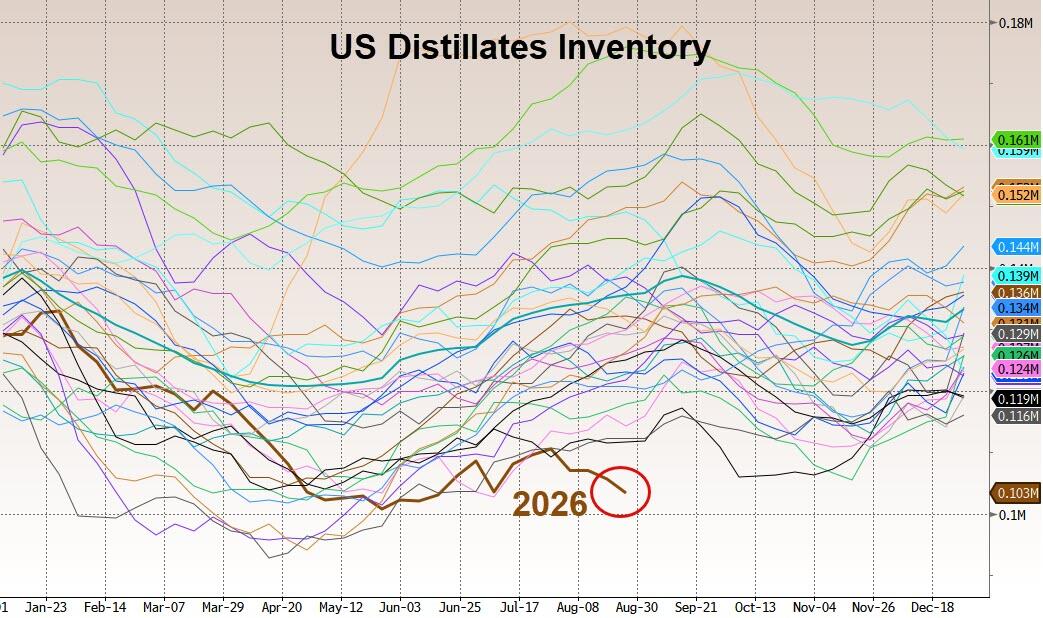
No comments:
Post a Comment