US oil imports at a twenty month high add to largest commercial crude inventory build in three and a half years; Strategic Petroleum Reserve now the lowest since it was initially being filled in January 1983... US distillates exports at an all-time high lead to lowest summertime distillate inventories in 30 years...US gasoline supplies at a 38 week low..
US oil prices rose for the first time in three weeks despite the largest US crude inventory build in three and a half years on increasingly belligerent exchanges between Trump and Iran and on attacks on oil tankers in the Red Sea and in & around the Strait of Hormuz…after falling 9.2% to $78.18 a barrel last week as Iran and Oman appeared to be close to finalizing a bilateral deal to manage ship traffic through the Strait of Hormuz, which could have allowed for the relatively unrestrained flow of Persian Gulf oil to global markets for the first time since February, the contract price for the benchmark US light sweet crude for September delivery opened higher on Asian markets on Monday as lingering uncertainty over reopening of the Strait of Hormuz sent fresh jitters through energy markets, then steadied after those early gains faded, as progress on talks to reopen the Strait of Hormuz was clouded by continued demands from Iran, then surged as markets opened in the US after Iran called on the U.S. to meet certain conditions, including paying war reparations and ending sanctions and military threats, and settled $3.95 or 5% higher at $82.13 a barrel, as uncertainty increased over whether the United States and Iran could reach a deal to increase shipping traffic through the Strait of Hormuz, reversing some of last week's losses which were predicated on such a deal….oil prices rose more than 2% across global markets on Tuesday, as hopes for a US-Iran agreement to end the war and reopen the Strait of Hormuz faded after President Donald Trump demanded compensation from Tehran, then dipped Tuesday morning in New York following media reports that negotiations over the Strait of Hormuz between Iran and Oman had reached an advanced stage, but still settled $1.07 higher at $83.20 a barrel as traders grew more pessimistic about a potential deal to bring stability to the Middle East and reopen Hormuz….oil prices rose again during Asian trading on Wednesday morning after deadly attacks on vessels in the Red Sea and Gulf of Oman heightened concerns over the security of major global shipping routes, and continued to edge higher during early US trading after a senior Iranian source told Reuters there were no discussions between Iran and the U.S. to extend their ceasefire because, from Tehran's perspective, there was nothing to extend, but sold off after the EIA reported the largest crude oil inventory build since January 2023, but still settled 7 cents higher at $83.27 a barrel as traders parsed a barrage of data from leading energy forecasters amid little sign of a breakthrough between Iran and the US over the Strait of Hormuz….oil prices fell in Asian trading on Thursday, weighed down by cuts to 2026 oil demand forecasts from both OPEC and the International Energy Agency, but swung in volatile trading across global markets, driven by escalating rhetoric between Washington and Tehran over the Strait of Hormuz, then traded lower during the US session as traders weighed the lower demand outlooks by the IEA and OPEC and the large build in crude inventories reported on Wednesday against the lack of progress in talks over the Strait of Hormuz, and settled $2.02 lower at $81.25 a barrel as traders focused on signs of weaker global demand and the sharp build in U.S. crude inventories…oil prices rose during Asian trading Friday, following a U.S. threat to indefinitely blockade Iran, reversing earlier declines caused by weakened demand expectations, then continued to climb during early US trading over renewed attacks on tankers and a war of words between the Trump administration and Iran’s leadership, and settled $1.15 higher at $82.40 a barrel on those tanker attacks and on a lack of progress towards peace between the Trump administration and Iran's leadership, and thus finished up 5.4% for the week…
at the same time, natural gas prices finished higher for the first time in seven weeks as weather models showed exceptional heat building across the southern US….after falling 3.1% to $2.662 per mmBTU last week on diminishing cooling demand and a larger-than-expected injection of gas into storage, the price of the benchmark natural gas contract for September delivery opened 9.5 cents higher on Monday, as a bullish shift to short-term cooling demand over the weekend helped the contract hit an intraday high of $2.806 multiple times throughout the session, before settling 13.2 cents higher at $2.794 per mmBTU as record natural gas short positions ran headlong into the summer's biggest weekend jump in forecast demand, igniting a short covering rally in futures as traders raced to cover their bearish bets that had built up over five straight weekly losses….the September contract opened 0.6 cents higher on Tuesday, but spent the rest of the morning trending lower to stabilize near $2.760, as traders seemed comfortable with that price level, in spite of the impending increase in cooling demand, and settled 2.7 cents lower at $2.767 per mmBTU amid plump supply readings and profit-taking following the rare late 2026 summer rally at the start of the week….natural gas prices advanced early Wednesday after overnight weather models added heat to an already bullish outlook, even though robust inventories and weaker power burn tempered the upside, and settled 3.7 cents higher at $2.804 per mmBTU as bulls welcomed near-term cooling demand while the market overall braced for updated storage data that was projected to show abundant supplies….natural gas futures retreated early Thursday as traders awaited government storage data that was expected to show another near-normal injection, even as forecasts maintained an exceptionally hot pattern through late August, then tumbled to settle 7.7 cents lower at $2.727 per mmBTU following an EIA inventory report that proved bearish relative to historical norms and to market expectations….natural gas prices advanced early Friday as hotter overnight weather trends helped prices regain ground following Thursday’s bearish storage surprise, and settled 0.6 cents higher at $2.733 per mmBTU after weather models trended warmer for late summer in the southern states and LNG export flows from the US Gulf Coast increased, reducing the gas volume available for the domestic market and leaving natgas prices 2.7% higher for the week….
The EIA’s natural gas storage report for the week ending August 7th indicated that the amount of working natural gas held in underground storage rose by 36 billion cubic feet to 3,153 billion cubic feet by the end of the week, which left our natural gas supplies 25 billion cubic feet, or 0.8% below the 3,178 billion cubic feet of gas that were in storage on August 7th of last year, but 198 billion cubic feet, or 6.7% above the five-year average of 2,955 billion cubic feet of natural gas that had typically been in working storage as of the 7th of August over the most recent five years….the 36 billion cubic foot injection into natural gas storage for the cited week was more than the 33 billion cubic foot injection into storage that the market had been expecting ahead of the report, but it was considerably less than the 49 billion cubic foot of gas that were injected into natural gas storage during the corresponding week of 2025, while also more than the average 33 billion cubic foot injection into natural gas storage that had been typical for the first week in August over the past five years…
The Latest US Oil Supply and Disposition Data from the EIA
US oil data from the US Energy Information Administration for the week ending August 7th showed that after a near record increase in our oil imports and a drop in our oil exports, we had surplus oil to add to our stored crude supplies for the first time in sixteen weeks, and for the 26th time in sixty-three weeks, as an increase in oil supplies that the EIA could not account for contributed to the surplus…. Our imports of crude oil rose by an average of 1,140,000 barrels per day to a twenty month high of 7,339,000 barrels per day, after rising by an average of 515,000 barrels per day during the prior week, while our exports of crude oil fell by an average of 627,000 barrels per day to average 3,058,000 barrels per day, which, when used to offset our imports, meant that the net of our trade of oil worked out to an import average of 4,281,000 barrels of oil per day during the week ending August 7th, an average of 1,767,000 more barrels per day than the net of our imports minus our exports during the prior week... At the same time, transfers to our oil supplies from Alaskan gas liquids, from natural gasoline, from condensate, and from unfinished oils was the same as the prior week at 223,000 barrels per day, while during the same week, production of crude from US wells was 1,000 barrels per day higher at 13,805,000 barrels per day. Hence, our daily supply of oil from the net of our international trade in oil, from transfers, and from domestic well production appears to have averaged a total of 18,309,000 barrels per day during the August 7th reporting week…
Meanwhile, US oil refineries reported they were processing an average of 17,179,000 barrels of crude per day during the week ending August 7th, an average of 26,000 more barrels per day than the amount of oil that our refineries reported they were processing during the prior week, while over the same period, the EIA’s surveys indicated that an net of 1,615,000 barrels of oil per day were added to the supplies of oil stored in the US… So, based on all that reported & estimated data, the crude oil figures provided by the EIA appear to indicate that our total working supply of oil from net imports, from transfers, and from oilfield production during the week ending August 7th averaged a rounded 486,000 fewer barrels per day than what was added to storage plus our oil refineries reported they used during the week. To account for the difference between the apparent supply of oil and the apparent disposition of it, the EIA just plugged a [ +486,000 ] barrel per day figure onto line 16 of the weekly U.S. Petroleum Balance Sheet, in order to make the reported data for the supply of oil and for the consumption of it balance out, a fudge factor that they label in their footnotes as “unaccounted for crude oil”, thus indicating there must have been a error or omission of that amount in the week’s oil supply & demand figures that we have just transcribed.... In addition, since 561,000 barrels per day of oil supply could not be accounted for in the prior week’s EIA data, that means there was a 75,000 barrel per day difference between this week’s oil balance sheet error and the EIA’s crude oil balance sheet error from a week ago, and hence the changes to supply and demand from that week to this one that are indicated by this week’s report are off by that much.... However, since most oil traders react to to the figures in these weekly EIA reports as if they were gospel, and since these weekly figures therefore often drive oil pricing and hence decisions to drill or complete oil wells, we’ll continue to report this data just as it’s published, and just as it’s watched & believed to be reasonably reliable by most everyone in the industry…(for more on how this weekly oil data is gathered, and the possible reasons for that “unaccounted for” oil supply, see this EIA explainer….also see this March 2023 twitter thread from an EIA administrator addressing these ongoing weekly errors, and what they had once hoped to do about it).
This week’s net 1,615,000 barrel per day average increase in our overall crude oil inventories came as an average of 2,489,000 barrels per day were being added to our commercially available stocks of crude oil, the largest commercial oil inventory increase since January 2023, while 874,000 barrels per day were being pulled out of our Strategic Petroleum Reserve, the twentieth consecutive Iran war related withdrawal from the SPR, including the four largest draws in SPR history, which left the SPR level at 298,694,000 barrels, the lowest since it was initially being filled in January 1983....
Further details from the weekly Petroleum Status Report (pdf) indicated that the 4 week average of our oil imports rose to 6,257,000 barrels per day last week, which was 0.1% more than the 6,249,000 barrel per day average that we were importing over the same four-week period last year, while the four week average of our exports fell to 3,391,000 barrels per day last week, which was still 0.9% more than the 3,362,000 barrel per day average that we were exporting last year year at this time... This week’s crude oil production was reported to be 1,000 barrels per day higher at 13,805,000 barrels per day as the EIA’s estimate of the output from wells in the lower 48 states was 25,000 barrels per day higher at 13,401,000 barrels per day, while Alaska’s oil production was 24,000 barrels per day lower at 404,000 barrels per day...US crude oil production had reached a pre-pandemic high of 13,100,000 barrels per day during the week ending March 13th 2020, so this week’s reported oil production figure was 5.4% higher than that of our pre-pandemic production peak, and was also 42.3% above the pandemic low of 9,700,000 barrels per day that US oil production had fallen to during the third week of February of 2021.
US oil refineries were operating at 96.2% of their capacity while processing those 17,179,000 barrels of crude per day during the week ending August 7th, down from 96.5% the prior week, but still above the recent normal utilization for this or for any time of year….the 17,179,000 barrels of oil per day that were refined that week were virtually unchanged from the 17,180,000 barrels of crude that were being processed daily during the week ending August 8th of 2025, but were 0.7% less than the 17,302,000 barrels that were being refined during the pre-pandemic week ending August 9th, 2019, when our refinery utilization rate was at 94.8%, which was close to the pre-pandemic normal utilization rate for this time of year…
Even with the small increase in the amount of oil that was being refined this week, gasoline output from our refineries was a bit lower, decreasing by 1,000 barrels per day to 9,568,000 barrels per day during the week ending August 7th, after our refineries’ gasoline output had decreased by 309,000 barrels per day during the prior week... This week’s gasoline production was 2.5% lower than the 9,813,000 barrels of gasoline that were being produced daily over the week ending August 8th of last year, and 6.2% less than the gasoline production of 10,203,000 barrels per day seen during the prepandemic week ending August 9th, 2019….on the other hand, our refineries’ production of distillate fuels (diesel fuel and heat oil) increased by 50,000 barrels per day to 5,280,000 barrels per day, after our distillates output had decreased by 144,000 barrels per day during the prior week. With that increase, our distillates output was 2.5% more than the 5,137,000 barrels of distillates that were being produced daily during the week ending August 8th of 2025, and 4.0% more than the 5,077,000 barrels of distillates that were being produced daily during the pre-pandemic week ending August 9th, 2019....
With this week’s gasoline production barely changed, our supplies of gasoline in storage at the end of the week fell for the 21st time in twenty-six weeks, decreasing by 968,000 barrels to a thirty-eight week low of 208,690,000 barrels during the week ending August 7th, after our gasoline inventories had decreased by 1,643,000 barrels during the prior week. Our gasoline supplies fell by less this week because the amount of gasoline supplied to US users fell by 67,000 barrels per day to 8,964,000 barrels per day, and because our imports of gasoline rose by 120,000 barrels per day to 583,000 barrels per day, while our exports of gasoline rose by 45,000 barrels per day to 852,000 barrels per day… After fifty-two gasoline inventory withdrawals over the past seventy-seven weeks, our gasoline supplies were 7.8% lower than last August 8th’s gasoline inventories of 226,290,000 barrels, and about 6% below the five year average of our gasoline supplies for this time of year…
After this week’s decrease in distillates production, our supplies of distillates fell for the twelfth time in twenty-seven weeks, but only by 10,000 barrels to 107,149,000 barrels during the week ending August 7th, but still the lowest summertime level in thirty years, after our distillates supplies had decreased by 3,473,000 barrels to that level during the prior week... Our distillates supplies fell by less this week because the amount of distillates supplied to US markets, an indicator of domestic demand, fell by 483,000 barrels per day to 3,458,000 barrels per day, and even while our exports of distillates rose by 51,000 barrels per day to an all-time high of 1,935,000 barrels per day, while our imports of distillates rose by 13,000 barrels per day to 111,000 barrels per day... After 27 withdrawals from distillates inventories over the past 58 weeks, our distillates supplies at the end of the week were 5.2% lower than the 112,971,000 barrels of distillates that we had in storage on August 8th of 2025, and were about 12% below the five year average of our distillates inventories for this time of the year…
Finally, after the increase in our oil imports and the decrease in our oil exports, and with the big withdrawal from the SPR, our commercial supplies of crude oil in storage rose for the 13th time in twenty-six weeks, and for the 26th time over the past year, increasing by 17423,000 barrels over the week, from 406,987,000 barrels on July 31st to 424,410,000 barrels on August 7th, the largest weekly increase since January 6th 2023, after our commercial crude supplies had increased by 2,479,000 barrels from a 94 month low over the prior week….After this week’s big increase, our commercial crude oil inventories were still about 2% below the recent five-year average of commercial oil supplies for this time of year, while they were still 26.7% above the average of our available crude oil stocks as of the first weekend of August over the 5 years at the beginning of the past decade, with the difference between those comparisons arising because it wasn’t until early 2015 that our oil inventories had first topped 400 million barrels. After our commercial crude oil inventories had jumped to record highs during the Covid lockdowns in the Spring of 2020, then jumped again after February 2021’s winter storm Uri froze off US Gulf Coast refining, but then fell sharply due to increased exports to Europe following the onset of the Ukraine war, only to jump again following the Christmas 2022 refinery freeze-offs, changes in our commercial crude supplies had been less extreme up until the onset of the Iran war, when they were initially built up to a three year high by mid-April...However, after falling sharply over the past three months until this week, our commercial crude oil inventories as of August 7th were 0.5% below the 426,698,000 barrels of oil we had in commercial storage on August 8th of 2025, and were 1.5% less than the 430,678,000 barrels of oil that we had in storage on August 9th of 2024, and 4.8% less than the 445,622,000 barrels of oil we had left in commercial storage on August 4th of 2023…
This Week's Rig Count
The US rig count increased by five over the week ending August 14th, as the number of rigs targeting oil was up by one, the count of rigs targeting natural gas was up by four, and miscellaneous rigs were unchanged…for a quick snapshot of this week's rig count, we are again including below a screenshot of the rig count summary table from Baker Hughes...in the table below, the first column shows the active rig count as of August 14th, the second column shows the change in the number of working rigs between last week’s count (August 7th) and this week’s (August 14th) count, the third column shows last week’s August 7th active rig count, the 4th column shows the change between the number of rigs running on Friday and the number running on the Friday of the same week of a year ago, and the 5th column shows the number of rigs that were drilling at the end of that reporting period a year ago, which in this week’s case was Friday, the 15th of August, 2025…

+++++++++++++++++++++++++++++++++++++++++++++++++++++
Thousands of acres of land in Wayne National Forest to be opened up to oil and gas drilling — A Trump administration plan to lease lands in the Wayne National Forest for oil and gas development has raised the ire of environmentalists. On July 17, the Bureau of Land Management (BLM) announced the agency’s intention to offer 41 oil and gas parcels totaling 2,840 acres for lease.The BLM completed scoping on these parcels in January. This was followed by a public comment period that closed in June, though a 30-day public protest period will remain open until Aug. 17. While the BLM allowed for comments to be submitted online during the public comment period, all comments submitted during the public protest period must be submitted by mail, Cathy Cowan Becker, co-leader of Save Ohio Parks, explained.The lease sale for the 41 oil and gas parcels in the Marietta Unit of the Wayne National Forest is scheduled to take place Sept. 15. No lands in Athens County would be impacted by the lease, with all leased lands being located in Washington, Noble and Monroe counties, Becca Pollard, the executive director of Buckeye Environmental Network, explained.“They probably know that they would get a lot more pushback if they were to try to do this in Athens County, where there’s a larger population [and] more people visit that unit of the forest,” Pollard said. “These parcels that are being auctioned off are all in an area that has a long history of extraction [and] I think they don’t expect to have a lot of opposition there.” While the initial lease is for 2,840 acres, this represents a small portion of a much larger proposal approved by both the BLM and the U.S. Forest Service.The proposal could see as much as 40,000 acres of land in the Wayne National Forest leased out for oil and gas drilling, Nathan Johnson, the senior attorney for land and water at the Ohio Environmental Council, explained. This would be larger than Cuyahoga Valley National Park and would also represent a substantial chunk of the Wayne National Forest’s roughly 250,000 acres, Johnson added.Since President Donald Trump’s inauguration, the federal government has sought to increase the production of natural resources from public lands.The Trump administration’s efforts to lease lands in the Wayne National Forest for oil and gas drilling began during President Trump’s first term, Pollard explained.These efforts were stymied as a result of a lawsuit by the Ohio Environmental Council, the Center for Biological Diversity, the Sierra Club and Heartwood against the BLM for its failure to comply with the National Environmental Policy Act (NEPA). “The leasing was halted and the Bureau of Land Management was told that they had to do an updated environmental assessment [because] their environmental assessment did not comply with the National Environmental Policy Act,” Pollard said.The BLM subsequently released an updated environmental assessment, but this fell short of the rigorous survey the Ohio Environmental Council and its partners were hoping for, Pollard explained. Rather than an environmental assessment, which is less thorough, the Ohio Environmental Council and its partners wanted the BLM to conduct an environmental impact statement.The revised environmental assessment completed by BLM remains largely unchanged and because of this, the BLM is still out of compliance with NEPA, Johnson explained.“The environmental review that was completed and released by the Trump administration raises a whole host of questions. It’s obviously unlawful [and] fails to adequately review a number of environmental impacts that we’re really concerned about,” Johnson said. As a result of the lawsuit filed by the Ohio Environmental Council and its partners, an injunction was ordered mandating that the BLM would need to comply with NEPA in order to move forward with oil and gas leases.Despite this injunction, the BLM is moving forward with its plans to lease lands in the Wayne National Forest for oil and gas drilling, which has resulted in additional litigation by the Ohio Environmental Council and its partners, Johnson explained.“We’ve been litigating the underlying environmental reviews since 2017. Right now we’re in court asking the court to enforce the injunction on the underlying environmental review and agency activities in the interim,” Johnson said.One major flaw of the environmental assessment completed by the BLM is that the estimate of how much air pollution the agency thought could result from the project likely represents a significant undercount.The BLM left out Washington County from their air pollution estimates on the grounds that the land leased would be in Monroe County, even though half of the project area studied was in Washington County, Johnson explained.“Washington County is a Clean Air Act maintenance area. It has a history of air pollution problems, violations relating to ozone and fine particulate matter,” Johnson said. “If you look at the numbers the agency provided, they’re going well above and beyond thresholds of concern.”
Big Green Runs Back to Court to Block Drilling in Ohio’s Wayne NF -- Marcellus Drilling News - Here we go again. The Bureau of Land Management (BLM) finally issued three permits to drill on Wayne National Forest (WNF) land in Monroe County, Ohio, back in May — the first new drilling permits in Ohio’s only national forest in years. Predictably, the same coalition of green groups that has kept a lid on WNF for the better part of two decades ran straight back to federal court to try to stop them. Read More
Fracking is not ‘responsible development’ of Ohio’s state parks and public lands -
Commentary by Melinda Zemper - Ohio’s oil and gas industry continues to spread one of its cruel, bald-faced lies.Industry spokespeople claim fracking oil and gas from state parks and wildlife areas is “responsible development” of Ohio public lands.But parks don’t belong to one supermajority political party to lease, industrialize, monetize, and destroy. Ohio public lands belong to all Ohioans across generations. We have a collective responsibility to steward them wisely. Muckraker Upton Sinclair said it well: “It’s difficult to get a man to understand something when his salary depends on his not understanding.”Climate scientists, the United Nations and International Protocol on Climate Change have pleaded for decades for a fossil fuels energy phase-out. That phase-out has begun because energy markets want it.Renewable energy is on course to meet almost half global electric demand by 2030, with solar leading the pack. Wind and solar are now cheaper, reliable with battery storage and have zero-carbon footprints. This is great for Ohio pocketbooks, renewable energy jobs and hope for a livable planet. It’s not great for a greedy industry eager to lock in fossil fuel energy markets allowing them to power polluting AI data centers for the next 20 to 30 years. Wars in Ukraine, Gaza and Iran have damaged gas and oil production and transportation infrastructure throughout conflict areas. The Strait of Hormuz is now a flashpoint. India, Pakistan and Australia, which experience some of the worst droughts and highest temperatures as the planet warms, are racing toward renewables. And Germany, a longtime energy innovator, has embraced balcony solar.Gov. Mike DeWine and Republican Party lawmakers captured by gas and oil and their 19th-century fossil fuels energy policy and are beginning to be exposed. Save Ohio Parks research shows Ohio’s supermajority quashed the equivalent of 5.3 GW of renewable energy over the last 12 years while simultaneously creating or amending energy laws to expand natural gas fracking. This is intentional. And it’s killing our state and planet. See how this works?Since 2010, the oil and gas industry has donated the vast majority of its donation dollars to GOP candidates. Utility donations keep the GOP in power in Ohio, too— in gerrymandered voting districts the Republican Party selects. Supermajority lawmakers, including Gov. Mike DeWine, support and pass laws to frack Ohio. The Oil and Gas Land Management Commission (OGLMC) has rubberstamped fracking 22,000 acres of Ohio state parks, wildlife areas, and public rights-of-way since DeWine’s 2022 reelection as governor. Fracking pollutes the air; depletes and destroys our fresh water; endangers biodiversity; and increases greenhouse gas emissions that supercharge climate warming.The question is, have voters had enough?Interestingly, Ohio’s AI data center explosion has elevated public consciousness of industry threats to Ohio’s air, water and lands. Fracking used to be a NIMBY issue for Appalachian Ohio. Now, because of hyperscale centers using fracked gas plants and gas fuel cells across Ohio, it’s in everyone’s backyard. Yet the GOP is slow-rolling regulation of Ohio’s 240 already-sited data centers. Most will run on gas fracked from public lands.This is a seminal election. The public needs to understand this. If we want clean air, fresh water and pristine parks, we need to vote only for candidates dedicated to protecting them. Fracking’s Achilles heel: what do we do with the waste?The public is just realizing fracking’s true, irrevocable harms: billions of gallons of toxic, radioactive wastewater are inexplicably deposited each year into U. S. injection wells for storage. Last month, Ohio Department of Natural Resources (ODNR) shut down four Class II injection wells in Washington County because pressurized toxic, radioactive wastewater brine migrated miles away from injection sites and contaminated conventional oil wells.Frack waste now poses a serious threat to drinking water aquifers for tens of thousands of people in Marietta and surrounding communities— while lawmakers and regulators remain willfully oblivious to the looming catastrophe. Instead, the industry and lawmakers hope the toxic waste will stay underground. But it doesn’t. Search for terms like “Dimock contamination,” “Gasland” or “Texas Groundwater Contamination” to learn how fracking and reckless waste management in Ohio and other states have destroyed or threaten to destroy drinking water across the country.To claim fracking public lands is “responsible” is a horrifying lie. Cheaper, reliable and zero-carbon wind and solar works for the rest of the world. It will work for Ohio, too.
Undisclosed Settlement Ends Mineral Rights Case That Had Been Headed To Trial - Ohio property owners and a drilling company, the parties that remained in a mineral rights case first filed in a federal court in Ohio in 2018, jointly stipulated to dismissal with prejudice after notifying the court that they negotiated an undisclosed settlement. The joint stipulation of dismissal in the case over horizontal drilling into the Utica Shale and Point Pleasant formations was filed in the U.S. ... Attached Documents
- Joint stipulation of dismissal with prejudice
- J&R Passmore, et al.’s trial brief
- Rice Drilling’s trial brief
- J&R Passmore, et al.’s second amended complaint
Gulfport Aiming to Expand Utica Shale Position Under New CEO - Natural Gas Intelligence -Gulfport Energy is aiming to grow its Utica Shale footprint during the remainder of 2026 after its new CEO announced the launch of a “discretionary acreage acquisition program” to spend $140 million to bolt-on more assets in Ohio. Graph: NGI Appalachia regional average daily natural gas prices ranged from about $1.75 to $2.90/MMBtu from April through early August 2026. At a Glance:
Builds on recent acquisition
Could boost Utica inventory 20%
Marcellus delineation adding locations
Ohio Utica's Ascent Resources Has 'Flexibility' for Big-Ball M&A - Hart Energy Ascent Resources is adding more leasehold to its 402,400-net-acre position in Ohio’s Utica Shale, picking up another 4,000 net in three deals for roughly $40 million, or $9,900 per acre. Privately held E&P Ascent Resources is a top producers of gas and oil in the Ohio Utica Shale.
Infinity Natural Resources Q2 Earnings Call Highlights - Key Points
- Strong second-quarter performance: Infinity Natural Resources increased production 75% year over year to 348 Mcfe/d and posted record adjusted EBITDAX of $115 million. Oil output more than doubled, while gas and NGL production also grew substantially.
- Utica development is progressing: The company brought 10 Ohio wells online, advanced multiple Utica pads and said the first three wells from its Antero acquisition are meeting or exceeding expectations. Infinity is also improving drilling and completion efficiency while expanding use of its owned midstream system.
- Outlook reaffirmed despite leadership changes: Infinity maintained its 2026 production guidance of 345–375 Mcfe/d and development capital spending guidance of $450 million–$500 million. CFO David Sproule will depart, with Cary Baetz succeeding him and Andrew Judge joining as senior vice president of finance.
Infinity Natural Resources (NYSE:INR) reported second-quarter production growth of 75% year over year and record adjusted EBITDAX of $115 million, while advancing development of recently acquired Ohio Utica assets and reaffirming its full-year outlook.Net production averaged 348 million cubic feet equivalent per day (Mcfe/d) during the quarter. Oil production rose 102% from a year earlier to about 12,400 barrels per day, natural gas production increased 73% to approximately 217 MMcf/d, and NGL production climbed 57% to roughly 9,500 barrels per day.
CPK Update: Utica Gas to Data Centers, Marcellus Gas to Delmarva -- Marcellus Drilling News - Chesapeake Utilities Corporation (NYSE: CPK) is a Dover, Delaware utility holding company that most folks in our patch have never heard of — which is a shame, because CPK owns two systems that Marcellus and Utica molecules flow through every single day. The company posted second quarter results Aug. 6 and held its analyst call Aug. 7. Buried inside the slides are updates on an Ohio data center pipeline, a nearly finished LNG plant on the Delmarva Peninsula, and a fresh $100 million bump to this year’s capital budget. Here’s CPK’s M-U story.
Akron’s B&W Buys 1 GW of Turbines for Gas-Fired Data Centers - Marcellus Drilling News - - Babcock & Wilcox — the 159-year-old boiler maker headquartered in Akron, Ohio — announced yesterday that it signed an agreement with Siemens Energy to start work on 20 steam turbine generator sets totaling 1 gigawatt (GW) of capacity for gas-fired data center projects. Here’s the part that caught our eye: B&W hasn’t announced signed customers for all of them. The company is buying the factory slots first and lining up buyers second. That’s a real bet on gas-fired power demand — and it’s being made by a company sitting right on top of the Utica.
$105M in Shale Money Headed to Ohio Wildlife Areas -The Ohio Department of Natural Resources (ODNR) will ask the state Controlling Board on Monday, August 17, for authority to spend $105 million of oil and gas lease money on Ohio’s wildlife areas — construction, renovation and grants, on a budget line that currently has zero dollars appropriated for the year. It’s the biggest single deployment of shale money since Ohio started leasing public land, and it’s a good moment to revisit what the opposition told Ohioans would happen instead
OH Point Pleasant Deep Rights Case vs. Rice Ends Days Before Trial - One of the biggest landowner-vs.-driller cases in Ohio shale history just ended — with no verdict, no dollar figure, and a two-page piece of paper. On July 29, a group of Belmont County mineral owners and Rice Drilling D LLC (owned by EQT) jointly asked a federal judge to throw out the case for good, roughly two months after it was supposed to go in front of a jury. Eight years, 580 docket entries, and one of the most consequential lease questions in the Utica — settled behind closed doors.
Miles Road waterline project remains stalled after series of gas line strikes - - Work remains paused on part of the Miles Road waterline replacement project as Enbridge Gas Ohio continues verifying the location of underground gas lines after multiple strikes in recent weeks. For roughly a week, crews have been unable to resume excavation east of Brainard Road. “Enbridge Gas Ohio crews are providing additional verification of our underground utilities due to conditions encountered during the project,” the company said in a statement. “We anticipate the waterline replacement project will be able to proceed next week as safely as possible.”
Miles Road waterline project in Orange Village to resume after 3 gas line strikes in 15 days - Officials say Enbridge Gas has located and marked known gas lines east of Brainard Road and will provide an onsite response team when work resumes Thursday. — Construction on the waterline replacement project on Miles Road in Orange Village will resume later this week after a pause was put into place due to repeated gas line strikes. In a joint release, officials in Solon and Orange Village announced that Terrace Construction will restart the project on Thursday amid an agreement "by all parties." "Enbridge Gas has conducted and completed a comprehensive effort to locate and mark all known gas lines in the area east of Brainard Road," the release stated. "Enbridge will provide an onsite response team to coordinate with Terrace in taking all proper precautions." The pause in construction, announced on July 30, came after three separate gas line strikes during a period of 15 days, leading to road closures and shelter-in-place orders. The first incident happened on July 15, when according to Orange Village Mayor Jud Kline, a utility-locating contractor incorrectly marked underground utilities before crews began installing new water lines. As crews excavated based on those markings, they struck a gas line, prompting evacuations, shelter-in-place orders and the temporary closure of U.S. 422 near the Miles Road overpass. On July 29, a gas leak occurred when construction crews struck a gas line, prompting the temporary closure of Miles Road between Brainard and Miles Market. One day later, another gas leak was reported as crews were installing a new waterline along Miles Road. Police and fire personnel from Orange Village and Solon responded to the scene along with Enbridge Gas and construction crews to secure the area and facilitate repairs. "Officials from both municipalities, alongside representatives from the waterline replacement project and utility providers, are convening for a comprehensive coordination meeting as soon as possible and before work is permitted to continue," Orange Village Fire Chief Larry Genova said in a statement after the third gas leak was secured. "The goal of this meeting is to address the recent incidents, review safety protocols, and outline clear corrective measures to prevent further disruptions." That afternoon, Solon and Orange Village officials announced that excavation work for the waterline project would be put on hold while Enbridge located and marked all known active and inactive gas lines in the area. Once that work was completed, Terrace Construction was to perform "additional hand digging and other verification measures to confirm the location of underground utilities before excavation continues." "Orange Village and the City of Solon appreciate the patience and understanding of residents and businesses affected by the incident and the temporary traffic disruptions," Tuesday's joint release added. "Orange Village and the City of Solon remain committed to completing this important water infrastructure improvement project safely and will continue working closely with Terrace Construction, Enbridge Gas, and our public safety partners throughout the remainder of the project."
Putnam County crews respond to ruptured gas line on SR 190 - (WLIO) - Area agencies working together after a natural gas line was struck in Fort Jennings. The Putnam County Office of Public Safety says that crews were dispatched to the area of the 17000 block of SR 190 around noon on Tuesday after a four inch natural gas line was struck by a bulldozer with an ODOT crew working on a new drainage system. Residents in a half mile radius of the scene are advised to shelter in place until crews can manage the situation. The work is expected to take several hours. August 12, 2026, Press Release from the Putnam County Office of Public Safety: At approximately 12:06 p.m., emergency crews were dispatched to the 17000 block of State Route 190 in Fort Jennings after a 4-inch natural gas line was struck. The Fort Jennings Fire Department, Putnam County Sheriff’s Department, EMA, EMS, Ottoville EMS, and the gas company are currently on the scene working to manage the incident and ensure the safety of residents and the surrounding community. Residents within a one-half-mile radius of the incident are asked to shelter in place until further notice. The shelter-in-place order is expected to remain in effect for several hours until the situation is managed. Additional information will be provided as it becomes available.
Northeast Ohio data center moratoriums: What they cover - cleveland.com — Cleveland, Twinsburg, Ravenna and Vermilion have temporarily stopped some or all approvals for new data centers, with deadlines ranging from this fall through spring 2027. The measures differ in scope. Cleveland and Twinsburg focus primarily on standalone data centers that would be the main use of a property. Ravenna and Vermilion cover broader zoning, development and building applications. None permanently prohibits data centers. Cleveland, Ravenna and Vermilion allow extensions under specified conditions. Twinsburg’s ordinance does not. The ordinances and meeting records cite concerns including electricity and water demand, utility capacity, nearby properties and whether existing zoning codes adequately define data centers. The original article examined whether Ashville residents may force a referendum on their village’s agreement with a data center developer. The Northeast Ohio moratoriums involve a separate issue: what approvals each city has temporarily stopped while considering permanent regulations. Cleveland City Council approved Ordinance 556-2026 by a 14-1 vote July 15. City records list July 20 as its effective date. The measure stops city departments from reviewing or issuing permits and other approvals for expanding an existing standalone data center or establishing one as the principal use — the main purpose — of a standalone building. Existing data centers may continue operating. The final ordinance ends the pause three months after July 20, which would be Oct. 20, or when permanent regulations take effect. A separate city explanation says it runs through Oct. 16. The records differ by four days. Council may extend the moratorium once for three months. A city working group is examining utility infrastructure, neighborhoods, natural resources and land use. Public records reviewed for this story do not identify its members. The city had already denied Lakeland Equity Group’s permit application for a proposed $1.6 billion data center campus on 35 acres in Slavic Village, News 5 Cleveland reported. The rejection and later citywide moratorium were separate actions. Twinsburg City Council unanimously adopted Ordinance 2026-065 as an emergency measure April 14. It stops zoning and occupancy applications involving a data center as a property’s principal use. Existing businesses also may not expand in a way that would make a data center their principal use. Twinsburg’s zoning code already does not list data centers as an allowed principal use. The ordinance gives officials time to determine whether and where they should be permitted and what restrictions should apply. The moratorium lasts 12 months from its effective date and may end sooner if the city changes its code or council revokes it. The ordinance contains no extension provision. The posted ordinance leaves the mayoral approval and effective date fields blank, so the records do not specify its exact expiration date. A property owner sought permission in 2025 to market industrial land for a potential data center. Council returned the request to the Planning Commission, and the applicant later withdrew it, according to the city’s account. The records do not state why. Twinsburg says it has no pending data center application or proposal. Ravenna City Council unanimously adopted Ordinance 2026-067 as an emergency measure April 20. The one-year moratorium covers zoning permits, conditional-use permits, variances, site plans and building permits for new data centers. The posted records place its expiration in April 2027 but do not establish a precise day. The ordinance may be extended if officials need more study time or ended early if permanent regulations are adopted. The Committee of the Whole minutes say the Planning Commission will examine utility demands, zoning and how to classify facilities including server farms, cloud-computing centers and cryptocurrency mining operations. An existing cryptocurrency mining operation remained open because, council members said, its size had not required city utility infrastructure or Planning Commission approval. The records do not identify that threshold. Council records reviewed for this story do not identify a formally filed data center application when the moratorium was adopted. Vermilion introduced Ordinance 2026-17 March 23 and adopted it April 20. The moratorium runs through March 23, 2027, unless council extends it. It applies in every zoning district and covers development plans, special- or accessory-use permits, occupancy permits, building permits and similar approvals. Existing businesses also may not expand to establish or operate a data center. The administration, Planning Commission and council are reviewing state requirements, water and sewer capacity and whether data centers should be allowed in any zoning district. The ordinance cites increased development interest in Erie and Lorain counties but identifies no proposed project in Vermilion. The records reviewed for this story do not show a pending application when the moratorium was adopted. Cleveland faces the first deadline this fall. Vermilion’s pause runs through March 2027, while the Twinsburg and Ravenna measures extend into April unless permanent regulations take effect sooner.
Ohio General Assembly members propose sweeping bill to regulate data center development - Last week, a group of legislators in the Ohio House of Representatives introduced a far-reaching bill to regulate data center development across the state of Ohio. In the face of concerns about the environmental, aesthetic, and public finance ramifications of Ohio’s rapid growth in data center development, Ohio House Bill 983 introduces a range of interventions designed to insert the public into data center development decisions. The bill will require voter approval for every new construction or expansion of a data center with peak electric load over one megawatt for every municipality and township within five miles of the project.Permits issued without voter approval would be considered void.It would also impose new air emission and water discharge standards on a range of substances including PFAS, glycols, metals, and other organic compounds. These standards would apply to existing data centers after eighteen months.Owners of data centers would also be held financially responsible for water supply and water pressure impacts associated with their centers. On the fiscal side, the legislation would ban local governments from offering property tax incentives for data centers and power plants associated with them. It would also require public disclosure of all data center agreements associated with development and supply.This legislation would significantly slow down the development of data centers in Ohio, if not stop it altogether.The voter approval requirement in particular could lead to dozens of required communitywide votes across the country to authorize data center developments. This would have a substantial impact on Ohio’s economy.Developers are set to invest $40 billion in data centers across the state of Ohio over the next four years. While this legislation would prevent some wasteful incentive spending, it would also likely cost the state economy tens of billions of dollars in investment.m One of the major concerns people have with data center development in Ohio is strain on public utilities, particularly electricity and water.If data center development drives up demand for each of these, it could drive prices for electricity and water up for local residents.This could fall more heavily on low-income residents because they spend more of their income on utilities than high-income residents. This bill’s proposed interventions could mitigate some of these cost concerns.There are other spillover effects people worry about with data center developments.Will incentives leave less money available for schools? Will data centers lead to wastewater, air emissions, and noise pollution?These are concerns that could be bluntly dealt with through bans on incentives and community votes, which are likely to torpedo most projects. Overall, though, it seems like this bill is a hammer for an issue that likely needs a scalpel.Communitywide votes to authorize new developments would likely be tantamount to a total ban of data center development across the state. This could slow Ohio’s economy to the tune of tens of billions of dollars over the next few years.Making sure that Ohio’s electricity and water systems keep up with new development could probably be achieved with less economic pain than a de facto permanent ban on development would create.
Ohio Supreme Court rules on potential vote on two data centers and natural gas plant (18 page slip opinion embedded) The battle over a data center in a small town south of Columbus will go on. A unanimous Ohio Supreme Court ordered the village of Ashville to submit to elections officials petitions for a ballot issue this fall on a data center and a natural gas plant to power it. But that doesn’t mean the vote will definitely happen.In May, residents opposed to the deal Ashville struck with EdgeConneX to build two data centers and a natural gas plant on village-owned property turned in enough valid signatures to put the issue before voters this fall. Ashville refused to submit it to the Pickaway County Board of Elections, saying this was emergency legislation not subject to a referendum. Justices agreed the village didn’t have sufficient reasons for the deal to be declared an emergency.“I think this will be the first vote on data centers in Ohio," said Marc Dann, a Democratic former Ohio attorney general now representing Data Center Resistance, a group that's supporting people opposed to data centers in their communities. “I think it's really terrific that the Ohio Supreme Court unanimously stood up and enforced the constitutional right that citizens have to a referendum, particularly when there's no emergency associated with the legislation.”Though the petitions must be submitted, elections officials could still decide the agreement was an administrative action, which is also not subject to referendum. If that happens, there won’t be a vote.Requests seeking comment from EdgeConnex and the Data Center Coalition have not been returned.
Ohio Supreme Court sides with Ashville residents who oppose data center - The Columbus Dispatch --The village of Ashville improperly blocked a ballot referendum that aims to challenge a controversial data center, the Ohio Supreme Court ruled Aug. 7. The court sided with three Ashville residents who sued fiscal officer April Grube after Grube rejected the ballot measure. The referendum seeks to overturn a term sheet for an agreement between the village and EdgeConneX over a data center and natural gas facility.The Ashville Village Council approved the measure in April and declared an emergency, arguing the project shouldn't be "unnecessarily delayed." The move came after EdgeConneX requested an emergency designation, according to court records. Emergency laws are not subject to ballot referendums.But the state Supreme Court said the resolution wasn't a true emergency."All emergency measures are presumably designated as such because commencement of the underlying matter should not be delayed," the court stated. "But (the resolution) does not explain why waiting 30 days for the resolution to take effect would unnecessarily delay the EdgeConneX project." The fight in Ashville comes amid a broader reckoning over data centers in Ohio. Residents have flooded government meetings to oppose developments. State officials and political candidates, under pressure from constituents and voters, have started calling for more restrictions on companies that build them.The Aug. 7 ruling is a victory for Ashville residents, but it doesn't guarantee their referendum will make the Nov. 3 ballot. Grube must now submit the issue to the Pickaway County Board of Elections for a final decision. Still, former Ohio Attorney General Marc Dann − who represents an organization called Data Center Resistance − is optimistic about their prospects. And he said the court's decision is a win for communities statewide who want to push back on data centers through the referendum process."We'll get our first democratic process around a decision to bring a data center to town," Dann said. "Everyone can make their arguments fair and square in the public square." An EdgeConneX spokesperson did not respond to a request for comment.
Village Must Submit Data Center Referendum to County Board of Elections - Court News Ohio -- The village of Ashville must submit a referendum petition to the board of elections seeking a public vote on the village’s tentative agreement to cooperate in the construction of two data centers and an accompanying natural-gas power-generating facility, the Supreme Court of Ohio ruled today.In a per curiam opinion, the Supreme Court concluded that the Ashville fiscal officer, April Grube, could not refuse to certify the petition of opponents of the EdgeConneX data center plan because the village adopted its agreement with the company as emergency legislation.The Court ordered Grube to submit the petition to the board of elections for placement on the Nov. 3 general election ballot. However, the Court’s decision does not ensure voters will get to decide the matter. The Court noted that the Pickaway County Board of Elections may consider whether the resolution was an “administrative action” taken by the village, and not subject to a referendum.Chief Justice Sharon L. Kennedy and Justices Patrick F. Fischer, R. Patrick DeWine, Joseph T. Deters, Daniel R. Hawkins, and Megan E. Shanahan joined the per curiam opinion.Justice Jennifer Brunner concurred with the opinion but stated she supported setting an expedited schedule for the Court to address whether the village resolution is not subject to referendum because it was an administrative action. In April, Ashville village council adopted Resolution No. 06-2026 to approve a “development and supply agreement term summary” with EdgeConneX and to declare an emergency.The resolution stated EdgeConneX and its affiliate intended to construct and operate two single-story data centers and a natural gas power plant on village property. The resolution noted EdgeConneX intended to seek authority from the Ohio Power Siting Board to build the power plant. The term summary states that the resolution does not constitute a legally binding agreement, except for four provisions. Those provisions included EdgeConneX paying between $50,000 and $100,000 to the village to hire professional advisors to assist with the project, and that the village’s previously enacted data center moratorium would not apply to the project.The resolution’s emergency clause stated the legislation was “immediately necessary for the preservation of the public peace, health, and safety of the municipality” and that it needed to accept the terms “as soon as possible so that this project is not unnecessarily delayed.”The resolution was adopted in April and approved by the mayor. Village resident Laura McNamara-Smith and others circulated a referendum petition to repeal the EdgeConneX resolution. In May, the group turned in enough valid signatures to place the referendum on the Nov. 3 ballot. The petitions were submitted to Grube to transfer to the board of elections. In a June letter, Grube informed the board of elections that she was not submitting the petition because it was insufficient and invalid. She explained the resolution is not subject to referendum because it passed as an emergency measure and was an administrative action. McNamara-Smith sought a writ of mandamus from the Supreme Court directing Grube to submit the petition to be on the ballot. The Court explained a municipal official with the duties of the village clerk has limited discretionary authority to determine the sufficiency and validity of a referendum petition. Grube has those duties for Ashville and has the right to refuse to submit the petition if it is an emergency measure. The opinion noted that R.C. 731.30 defines emergency ordinances as measures “necessary for the immediate preservation of the public peace, health, or safety in such a municipal corporation.” The Court noted that to qualify as an emergency measure, it must contain sufficient reasons for the village to declare it an emergency.“In doing so, we must determine whether the council apprised voters of the specific reasons for declaring the resolution to be an emergency measure,” the opinion noted.The Court wrote that it previously ruled that parroting R.C. 731.30 by referring to the “preservation of the public peace, health, or safety” is not enough. The village also cannot provide “after the fact” reasons for declaring an emergency that are not in the resolution, the opinion noted. The other reason stated by the village was to prevent unnecessary delay. An emergency resolution takes effect immediately. Other resolutions take effect within 30 days, the opinion noted.“All emergency measures are presumably designated as such because commencement of the underlying matter should not be delayed. But Resolution No. 06-2026 does not explain why waiting 30 days for the resolution to take effect would unnecessarily delay the EdgeConneX project,” the Court wrote. Because the resolution fails to apprise voters of specific reasons to pass as an emergency, it is not exempt from referendum and must be submitted to the board of elections, the Court concluded.
Ohio Supreme Court Sides w/ Data Center Foes on Ashville Vote -- Marcellus Drilling News - - A unanimous Ohio Supreme Court has ordered the tiny Pickaway County village of Ashville to let voters decide the fate of a data center and natural gas power plant — a project the village council tried to fast-track by declaring it an “emergency” not subject to a public vote. The court didn’t buy it. But before opponents celebrate too hard, the ruling doesn’t guarantee a vote will actually happen this November — county election officials still get to decide whether the deal is even the kind of thing voters can weigh in on at all.
Ohio residents sue to stop data center - — As the demand for data centers continues to grow, so does the heated battle over where they belong. Emotions are boiling over in one southwest Ohio community where police were called to a council meeting, and a lawsuit is now in the works. Close to an hour north of Cincinnati, in the small town of Trenton, there is construction underway to build a new data center that many residents don’t want and some are fighting the city to stop it. At Thursday night’s Trenton city council meeting, police were called in and residents were escorted out after tempers flared over a data center. It happened when city leaders played a video showing President Donald Trump saying he supports data centers. Residents snapped back in disagreement. Lorie Blankenship is one of them. She’s with the group “W.A.T.E.R.,” Woodsdale and Trenton Environmental Resistance. They started a petition to stop large data centers from being built here. They hoped to get enough signatures to get the issue on the November ballot and believed they needed 10% of voters who cast a ballot in the last election. But city leaders say while the group gathered over 300 signatures, that’s not enough because they need 10% of all voters to sign, not just the ones who voted in the last election. The group has now filed a lawsuit against the mayor and city council over their decision not to certify the petition. “We now have a situation where the city is being ripped apart…. We’re essentially asking the Supreme Court to tell the city that they should do their statutory duty by allowing us to have that on November’s election,” said Blankenship. City leaders did not address the lawsuit in the heated council meeting, and would not comment on it. But they did say this area is zoned for heavy industrial, and they’re moving forward with data center plans.
'They are afraid' | Tri-state vote on data center ban depends on Ohio Supreme Court decision - A group of petitioners in the Trenton area has elevated a battle to ban data centers to the Ohio Supreme Court after city council members voted to reject their initiative to put a vote on the November ballot. nIn response, the Supreme Court opened an expedited election case and issued a summons to the City of Trenton, Mayor Ryan Perry and every council member Thursday. We reached out to Barry Blankenship, who has led the signature-gathering effort, after they filed the lawsuit and asked what he thought when council voted 4-3 in a special meeting Tuesday to reject their initiative."What that tells me is, they are afraid to let the people of Trenton decide," Blankenship said.City Attorney Nick Ziepfel laid out the options before council at the special meeting:
- Decide that the term "electors" in the city charter referred to all registered voters active during the previous election cycle, requiring the petitioners to gather 820 valid signatures to get the initiative before voters.
- Decide that the term "electors" in the city charter referred to all voters who cast a ballot in the previous election, requiring petitioners to gather 128 valid signatures to get the initiative before voters.
The council decided the former tally of 820 was appropriate, making the 336 valid signatures gathered by petitioners well short of the goal.The Butler County Board of Elections determined 128 signatures were sufficient to get the measure on the ballot, based on advice from the Butler County Prosecutor's Office.Prosecutor Mike Gmoser said he did not do the math for the Board of Elections and instead provided the legal basis for determining the number of signatures required."I did it only on the basis of the question that was posed to me by the Board of Elections, and I answered it. I am satisfied that I have answered correctly," Gmoser said.He did not comment further due to the pending case before the Supreme Court. Blankenship said he immediately contacted the group's attorney when the petition was rejected. "If Trenton doesn't want to hear us, and Trenton doesn't want to feel like we have a right, we'll take them to the Supreme Court, as we did," Blankenship said.Blankenship and others have been fighting the already-under-construction Prologis data center south of Kennel Road and the newly announced Amazon Web Services project on what is now land controlled by Madison and St. Clair townships, but eyed for annexation by Trenton. The Supreme Court gave the city and council members three days to file a response to the summons. Read the Full Lawsuit Here:
Ohio targets $40 billion data center boom with local votes, pollution rules, and no tax breaks - Ohio's push to become a major data center hub could face a significant new obstacle: voters. State lawmakers have introduced a sweeping proposal that could make many future projects far harder to build, even as developers are expected to invest billions of dollars in new facilities across the state, according to the Ohio Capital Journal. House Bill 983 would put more control over Ohio data center projects in the hands of the public. Projects with peak electric load above one megawatt, including expansions of existing facilities, could not proceed without voter approval. That requirement would extend beyond the host community to every municipality and township within five miles of the site, and any permit issued without that approval would be invalid. The bill also targets pollution and resource use. Data center developers would be held liable for impacts on local water supply and pressure, and the measure would add air-emission and water-discharge limits for PFAS, glycols, metals, and other organic compounds. The provisions "would apply to existing data centers after eighteen months," the Ohio Capital Journal noted. The bill would also bar local governments from offering property tax breaks to data centers or associated power plants, while making development and supply agreements publicly disclosable. Ohio is projected to attract roughly $40 billion in data center investment over the next four years. One major reason backers want tighter rules is concern that large facilities can strain electricity and water systems. If that extra demand drives utility rates up, residents could be saddled with higher monthly bills, with lower-income households often feeling the impact most because utilities take up a larger share of their income. In some places, data centers have drawn criticism over wastewater, air emissions, noise, and the visual impact of large industrial campuses. Tax incentives have also become a flashpoint, particularly when residents worry that public dollars could be diverted from schools or other local needs. At the same time, critics of the bill argue that requiring repeated communitywide votes could effectively block most new projects, slowing development and, they claim, costing the state billions in economic activity. The legislation would impose a much stricter set of rules on the industry. Among its biggest changes, the measure would let nearby voters decide whether many projects can move forward and would require more transparency around agreements tied to those developments. Whether or not House Bill 983 advances, it signals that data center growth in Ohio is no longer just an economic story. It is also becoming a debate over energy, water, pollution, and who gets to decide what gets built nearby. If the measure moves forward, Ohio could become a test case for how far states are willing to go to rein in data center growth. The outcome could shape not only future investment but also how communities protect their resources while navigating a rapidly changing digital economy.
Massillon puts limits on future data centers with new zoning rules - — Massillon City Council is putting new rules in place for future data centers, limiting where those facilities can be built and adding additional review requirements before construction can begin. Council voted 7-1 on Aug. 3 to approve zoning changes that only allow data centers in industrial zoning districts, which are areas designated for heavier industrial uses and generally located farther away from residential neighborhoods. The move comes as the city’s temporary stay preventing new data center development is set to expire Aug. 14. City leaders say the goal is to have regulations in place before any proposal comes forward. "It doesn't matter the size of the data center whether it is a large scale or non-large scale, we are only going to allow it on I-2 full general industrial at this point," said Julie Harwig Smith, Ward 5 Massillon City Councilwoman. Under the new rules, large data centers, those exceeding 100,000 square feet per parcel, and smaller facilities must be located at least 400 feet away from residential districts. Developers will also be required to show their proposed sites have enough water, electric and wastewater capacity before construction can move forward. The regulations also require peak noise and decibel level certifications to address concerns about potential impacts on surrounding neighborhoods. “My biggest concern is protecting the residents,” Smith said. “I don't want anyone's peace and solitude to be harmed. I don't want them to have health effects from constant noise. I don't want our electric bills higher, or our water polluted. None of us do.” The city’s site plan review committee will also have the ability to revisit utility-related changes that may happen after a project receives initial approval or after construction begins. While there are currently no finalized data center projects planned in Massillon, city leaders say they want to be prepared if a developer approaches the city. One possible future location that has been discussed is the Massillon Technology and Energy Park, the former Republic Steel site, which is already zoned for heavy industrial use. City leaders say the new regulations are intended to balance economic development opportunities with protections for residents.
Ohio governor wants local governments to be aggressive in data center negotiations – NBC4 -— Ohio Gov. Mike DeWine (R) has spent much of this week at the Ohio State Fair, and says one of the top issues he’s hearing about from fairgoers is data centers. On Friday, DeWine told reporters he believes the majority of Ohioans agree with the basic principles that data centers are economically beneficial but must comply with health and environmental standards. He also reminded local officials they have the ability to make data center companies adhere to those standards. “We don’t have to give everything to it,” DeWine said. “We can be more aggressive, local government can be more aggressive. We can demand certain things from them.” DeWine maintains that data centers are an essential part of the economy and of everyday life, pointing out that every time a person Googles something they are using a data center.But, DeWine said, local governments can negotiate deals with data center developers who want to build in their communities and set terms that might better serve their residents. He also said both candidates hoping to replace him as governor seem to have embraced that mentality as well. Brown County attorney Austin Baurichter, however, is frustrated by the implication that the best residents can hope for is getting a good deal out of a data center. He points out that a lot of people simply don’t want any data centers built in their community. “The underlying assumption under that statement is that these deals are gonna happen no matter what,” Baurichter said. “I see all of these politicians, these governor candidates, talking about, we’re gonna get a good deal, right? Nobody ever says we’re gonna not have a deal at all because people don’t want these at all.” Baurichter has represented data center opponents at the local and state level, including residents in Ashville, Ohio, who have sought to put a referendum on the November ballot blocking the construction of the EdgeConneX hyperscale data center in Pickaway County. Despite obtaining enough valid signatures to get on the ballot, the petition was blocked by Ashville’s fiscal officer, who claimed the resolution approving the development was adopted as an emergency, rather than a legislative measure. Emergency measures are generally shielded from repeal by referendum, but on Friday, the Supreme Court of Ohio wrote that Ashville failed to justify why it needed to adopt the resolution as an emergency, other than to avoid unnecessary delays. The court ordered Ashville to submit the petition to the board of elections. Baurichter said the speed at which local governments like Ashville’s have approved new data center projects in recent years has made constituents feel left out of the democratic process.“Trust is thin right now between people and their local governments,” Baurichter said. “I wish Gov. DeWine had said local governments can be aggressive in protecting the rights of their constituents, and protecting the voice of their constituents.”Gallup polling from earlier this year shows that 70% of Americans oppose the construction of data centers in their communities. Even as he advised local governments to be aggressive with data center developers, DeWine rejected the idea of stopping them entirely. “I think it would be bad if we said, well, we don’t want any data centers,” DeWine said. “I think that’s not helpful to the economic future of the state. But doing it the right way, I think, makes a lot of sense.”
All candidates for Ohio governor have now called for restrictions on data center boom - Each of the candidates for Ohio governor now wants to restrict the data center boom, all proposing some form of moratorium unless certain guidelines are met. Within two weeks of each other, they announced their proposals. Democrat Amy Acton announced hers in July, Libertarian Don Kissick in August, and several days later, Republican Vivek Ramaswamy unveiled his. Republican Vivek Ramaswamy said the state needs more data centers to store and process data. Previously, he said a total ban would be bad for the economy. But this past week, he laid out an extensive plan to regulate the tech hubs. “Free electricity for local communities paid for by the data centers combined with lowering property taxes as a condition, I think it’s going to be something that sets Ohio up as a national model for how we deal with this issue,” Ramaswamy said Friday. His plan prohibits new data centers until a list of requirements is met: a company will pay electric bills for the community it is in; new hubs must pay full property taxes, which could provide some relief for homeowners; and there will be strict standards for environmental protection. He also wants to prioritize using brownfields over farmland. Much of the criticism of data centers centers on energy use and environmental concerns. “Air and water quality is no worse off, and that we’re prioritizing brownfield sites that are abandoned rather than interrupting fertile farmland,” Ramaswamy added. On his first day in office, he said he would sign an executive order immediately halting the approval of any new center until the legislature passes his vision. Democrat Amy Acton announced that she wants a conditional moratorium on data centers. “We are absolutely open, but we’re not for sale,” Acton said Friday. “We have conditions.” To get a data center in the state, the companies would be held liable for all costs associated with their project, must protect the environment, and be transparent about building plans. “The community should have a lot of say about what comes into their community,” Acton said. “That’s why we don’t think you should be coming in secrecy.” She also would require assurance that the construction jobs will all go to union workers. New data centers would also be required to be built on brownfields and previously developed industrial sites, not farmland. She also made a requirement for community benefit agreements so that the centers bring something positive to the residents. Data center opposition is also being fueled by reports that tax breaks handed out by the state have reached $1.6 billion. She wants to rein those in, and would add clawback provisions to protect Ohio taxpayers, she said. And while she wants to bring down costs, she explained she doesn’t think free electricity can logistically work for everyone. “I can’t speak to no one ever having an electric bill,” Acton said. “I think the math doesn’t quite add up on that.” Libertarian Don Kissick is “against data centers,” he said, and announced his version of guidelines in early August. “Ohioans need room to breathe, and the land rush to stop, until permanent statewide standards are in place,” Kissick said in a statement. “The rules should be clear before construction begins, not negotiated project by project.” As broken by us, a new proposal by a business trade group is causing Ohio farmers to fear that the state and utility companies could take private property to build data centers. This idea would also allow entities to take the land before the owner gets paid. Kissick’s proposal would ban that. Under his policy, there would be no non-disclosure agreements, no special tax incentives for developers, centers would have to generate their own energy, and facilities would have to use closed-loop cooling systems to conserve water. “If a project cannot succeed without secrecy, eminent domain, taxpayer subsidies, or shifting its infrastructure costs onto Ohio families, then it shouldn’t be built here in the first place,” Kissick said. Like Acton, the libertarian also cast doubt on Ramaswamy’s proposal for free electricity. “Ohioans deserve policy, not a sales pitch,” Kissick said.
What an Ohio EPA decision on data center wastewater discharge means for the environment, the industry - Listen • 26:53 - The Ohio Environmental Protection Agency has dropped a proposal that would have made it easier for data centers to discharge their wastewater into fresh water.The agency was considering a plan to streamline a permit process for all data centers statewide, which could have allowed wastewater to be discharged into some lakes, rivers and streams.But the Ohio EPA changed course after a “significant volume” of comments against the plan. On Cincinnati Edition, we discuss the implications of the decision for the environment and the data center industry and hear how other states and jurisdictions are handling the issue.Guests:
- Leatra Harper, managing director, FreshWater Accountability Project
- Doug Swain, president, Logistix
- Miranda Willson, reporter, E&E News by Politico
Beginning at noon, call 513-419-7100 or email talk@wvxu.org to have your voice heard on this topic. You can catch a recorded replay at 8 p.m. Listen here.
PUCO takes steps to limit data center power cost increase - Ohio power regulators are taking steps they say are designed to protect large electric customers from paying higher rates because of data centers. Under a new order by the Public Utilities Commission of Ohio, data-enter customers will have to give AEP Ohio, a large power company, notice when they plan to ramp up electricity usage so other large customers don't see power bills increase because of the increased demand from data centers. "Upon receiving notice, AEP Ohio will procure energy to serve the customer through separate stand-alone auctions or spot-market purchases, with the entirety of the cost assigned to the data center customer," the commission said in a statement. "This ensures that the costs to serve the data center customer do not impact other customers also on AEP Ohio's default rate." This spring, the state utility board approved a new rate structure for AEP Ohio. "New data centers must pay a minimum monthly customer charge," the board said. "This helps ensure new data centers pay for the costs they create on the grid." The commission defines a data center as "a building that holds many computers which store and process information. Much of 'the cloud' lives in data centers." Ohio has 240 data centers in 19 markets, accessing to Data Map, which tracks the industry Critics say data centers have the potential to drive up electricity costs and also strain Ohio's water supply. However, one of Ohio' attractions for data centers is that the state has a cooler climate, requiring less water for cooling the centers. "We continue to implement safeguards to ensure that other customers are not impacted by costs to serve large loads like data centers," PUCO Chair Jenifer French said. "Ohio is fully committed to protecting customers from added costs related to data center buildout. Today's action builds upon the PUCO's efforts to create separate rate classes for data center customers, and the commitments under the Ratepayer Protection Pledge.
State directs AEP Ohio to implement new data center protections – NBC4 -— The state’s public utilities regulator directed AEP Ohio to further protect customers from data centers’ impacts on energy prices.The Public Utilities Commission of Ohio, or PUCO, granted AEP Ohio’s request for relief this week and ordered the utilities company to implement new protections for Ohioans’ electric costs amid a data center boom. The ruling requires data centers to give AEP Ohio a 180-day notice before joining the grid. See previous coverage of data centers’ effects on electric rates in the video player above.Data centers require immense amounts of energy, which increases demand on Ohio’s grid. However, Ohio law does not allow utility companies like AEP Ohio to generate more energy, so as demand increases, supply often cannot keep up. Because AEP Ohio is the default provider in central Ohio, the company is compelled to serve data centers that cannot provide their own electricity.“For many reasons, there’s an imbalance between the supply of electricity and the growing demand for it,” an AEP Ohio spokesperson said. “This imbalance has driven the cost of generating electricity higher over the last several years, a reality that AEP Ohio cannot fix on our own because we are the local electric distribution company and are legally prevented from owning or operating power plants and other types of power generation.”The difference can increase prices for the company’s 1.5 million Ohio customers through generation costs, which AEP Ohio does not profit from but still appear on bills. AEP Ohio has already placed some protections in place, such as a tariff requiring data centers to cover at least 80% of their energy costs.Under PUCO’s ruling, AEP Ohio will use the 180-day notice to find enough energy to serve the data center through stand-alone auctions or quick purchases. That way, AEP Ohio will bring in new energy to cover the data center’s needs. The data center customer will cover all costs, PUCO said. Ohio is home to nearly 200 data centers, about half of which are in central Ohio. PUCO said Columbus residential electric bills are over 7% higher this month than they were at this point in 2025. Last year also saw spiking costs; AEP Ohio said customers’ bills raised an average of $27 per month in the summer of 2025 due to increased generation costs.“Ohio is fully committed to protecting customers from added costs related to data center buildout,” PUCO Chair Jenifer French said Wednesday. “Today’s action builds upon the PUCO’s efforts to create separate rate classes for data center customers, and the commitments under the Ratepayer Protection Pledge.”The Ratepayer Protection Pledge is a nonbinding promise for data centers to cover their own costs initiated by President Donald Trump. Trump recently expanded the pledge from data center companies to also include government entities and utility companies.AEP Ohio and Ohio Gov. Mike DeWine are among the 300 signatories who pledged to help protect consumers from price hikes due to data centers. The pledge reflects a commitment to working to minimize data centers’ impacts on utilities but does not legally require action.
PUCO Approves Additional AEP Ohio Plan to Protect Ratepayers from Data Center Costs - State regulators on last Wednesday approved another data center-related AEP Ohio proposal aiming to prevent cost shifts from those energy-hungry customers.The Public Utilities Commission of Ohio previously signed off on the central Ohio electric distribution utility’s data center tariff, a plan proponents have repeatedly contended keeps residential ratepayers’ utility bills in-mind.The plan commissioners OK’d on Wednesday takes that idea a step further by requiring data center customers to provide a 180-day notice of their intent to return to the standard service offer and to pay all generation costs when they rely on an SSO.“We continue to implement safeguards to ensure that other customers are not impacted by costs to serve large loads like data centers,” PUCO Chair Jenifer French said in a statement.“Ohio is fully committed to protecting customers from added costs related to data center buildout. Today’s action builds upon the PUCO’s efforts to create separate rate classes for data center customers, and the commitments under the Ratepayer Protection Pledge.” That pledge, signed by Gov. Mike DeWine in July, marked an effort by the White House to secure commitments from governors and other key players to insulate consumers from data center-driven cost hikes.Opposition toward AEP’s plan came from the Ohio Manufacturers’ Association Energy Group and Constellation Energy, which characterized the proposal as unlawful and warned it could allow the utility to “impermissibly” provide generation services.The Retail Energy Supply Association and Interstate Gas Supply Inc. joined OMAEG and Constellation in taking issue with the 180-day notice, which essentially constitutes a "stay" locking those customers into existing terms for the duration of that period.“In short, restrictive conditions such as AEP’s proposed 180-day notice requirement and minimum stay provision discourage shopping and therefore market competition,” OMAEG wrote to commissioners. “Moreover, such provisions improperly constrain customers’ ability to respond to changing market conditions.” The commission, however, determined the proposal was lawful and “sufficiently tailored for the unique circumstances occurring on the federal and state level regarding data center customers’ load.” The panel noted ongoing debates on market changes occurring between PJM Interconnection and the Federal Energy Regulatory Commission.“Moreover, the Commission notes that the adoption of this Interim Request should not be interpreted as an indicator of the Commission’s long-term position on fair cost allocation for [data centers] Customers,” the PUCO wrote in its order.“However, given the extraordinary circumstances contemplated in this Finding and Order, AEP Ohio’s Interim Principles offer a reasonable, temporary solution to the issues raised.” On the other end, AEP’s proposal drew favor from various consumer and environmental groups such as the Ohio Consumers’ Counsel, the Ohio Environmental Council and the Environmental Law & Policy Center, among others. While OCC supported the central Ohio utility’s proposal, the group also called for stronger consumer protection measures to ensure residential consumers do not face higher bills. “Consumer protection must be at the forefront when considering AEP’s proposal,” the office wrote. “Data centers should pay all costs associated with serving them, including generation costs, in keeping with the law’s mandate that utility service must be, in all respects, 'just and reasonable’ for all consumers.”Google and Amazon Data Services were also generally supportive of the plan, but told the PUCO the proposal should also apply to customers that are not subject to the utility’s data center tariff.Commissioners were not moved by that request, writing that the limited interim relief is “consistent with the existing regulatory framework” in the state.
Enbridge Wants $163M More From Ohio Gas Customers, Regulators Push Back -Enbridge Gas Ohio is asking state regulators for permission to raise natural gas rates by roughly $163 million a year, a request that would add about $7.60 to $9.49 to the average residential customer's monthly bill. But a staff investigation at the Public Utilities Commission of Ohio has recommended a much smaller increase, setting up a fight over just how much of that cost households across northern and eastern Ohio should actually have to cover.According to WKTN, Enbridge's formal application sought a $163,072,527 annual revenue increase, a 17.28% jump, but PUCO staff instead recommended an increase somewhere between $112,646,190 and $129,447,541 — 11.86% to 13.63% — which would trim the estimated average residential monthly bill impact down to $5.90. That gap between what the company wants and what state auditors think is justified sits at the heart of the case now working its way through Columbus.As reported by FOX 8 Cleveland WJW, Enbridge Gas Ohio spokesperson Stephanie Moore said the proposed increase is needed to manage financial pressures on multiple fronts. The company points to higher operations and maintenance costs, higher construction expenses for meters, pipelines and related work, and a need to recover costs tied to previous system investment. Enbridge also says it needs to reconcile tax accounts related to post-retirement plans, and Moore has said natural gas remains one of the most affordable energy sources, adding that Enbridge customers benefit from the company's robust system and supply sources and currently have some of the lowest natural gas rates in Ohio.This is not the first time PUCO has taken a skeptical view of Enbridge's numbers. In the utility's previous base rate case, decided in June 2025, the commission rejected Enbridge's requested $211 million annual revenue hike and instead ordered a $26.3 million annual rate reduction for residential customers, according to the Ohio Energy Report. That recent history helps explain why state staff are again recommending far less than what the company has asked for this time around.The current proceeding is made up of four consolidated dockets filed December 31, 2025: Case Nos. 25-1097-GA-AIR for the rate increase itself, 25-1098-GA-ALT for an alternative rate plan, 25-1099-GA-AAM covering accounting methods, and 25-1100-GA-ATA for tariff revisions, per the Public Utilities Commission of Ohio. Alongside the base rate request, Enbridge's alternative rate plan application seeks approval to modify and continue its Pipeline Infrastructure Replacement and Capital Expenditure Program riders, mechanisms that let the utility pass pipeline capital investment costs to customers outside of a traditional rate case, the Daily Standard reported.The proposed hike has already generated visible backlash from customers. Fox 8 Cleveland WJW reported that at a PUCO public meeting at the Akron Public Library, resident Robert Adams said Enbridge reported profits of about $1.4 billion in the last quarter, pointing to the figure as he objected to the company's request. PUCO Commissioner John Williams told the outlet that affordability will be weighed heavily during consideration of the proposed increase, and that customer concerns will be factored into the commission's final decision, which is expected around the end of the year.PUCO planned three public meetings across the service area to hear customer comments on the case. In addition to the Akron session, the commission will hold a public hearing on August 19 at the Frank J. Lausche State Office Building at 615 W. Superior Ave. in Cleveland, and another on August 31 at the Lima Public Library at 650 W. Market St. in Lima. Williams said the public can offer comments or concerns about the case, and customers can also submit comments online through the PUCO website.The Office of the Ohio Consumers' Counsel has issued public alerts opposing the rate increase, warning that raising fixed monthly distribution charges disproportionately hurts low-income households and seniors because those fixed fees cannot be reduced through energy conservation, according to the Office of the Ohio Consumers' Counsel. Unlike usage-based charges, a fixed monthly fee stays the same no matter how much a household cuts back on gas use, which advocates say strips away one of the few tools lower-income customers have to control their bills.The Ohio Consumers' Counsel also notes that Enbridge's filing is part of a broader wave of utility rate requests moving through PUCO in 2025 and 2026, including a $212 million request from Columbia Gas of Ohio along with separate filings from Duke Energy, AES Ohio and FirstEnergy. That pattern means many Ohio households could be facing compounding increases across both their gas and electric bills in the coming year.
With more data centers on the horizon, communities worry about rising electricity bills | WEKU -Residents across Kentucky, Tennessee and West Virginia have packed public meetings in recent months to speak out against data centers, with a recurring concern being how they could affect the cost of electricity. On a steamy evening in July, the Kentucky Public Service Commission met at Hancock County High School, about 20 miles east of Owensboro. They’re here to discuss a data center project in the county seat of Hawesville. More than a dozen residents spoke — none of them in support of the development. For some, electricity bills were top of mind. Gary Elder, a 69-year-old retiree who lives in Lewisport, said his bills are already high and thinks the data center could drive them up even more. “Last month at the house was $440,” he said. “Last year during the heat — and I'm sure it will be that way probably my next bill — it was $569. It was my highest electric bill last year. I'm retired. I can't afford a $1,000, $1,100, $1,200 electric bill.” Residents weren’t only worried about the impact on their household finances. Christie Compton, of Falls of the Rough, said she’s expecting her first grandchild in November. She told the commissioners she wants future generations to be able to afford to live in the area. “I know thinking about, ‘We're going to make all this extra money,’ it's very enticing,” she said. “But you have to look at it in the long run and think, ‘What are we going to do for our future?’ If you worry about your children and your grandchildren, think about that, please.” Data center proposals have multiplied across Kentucky and the surrounding region in the past year, making it the latest battleground over land and water use, community impacts, electricity costs and the rise of artificial intelligence in the broader economy. Hancock County has a population of just under 10,000 and sits along a quiet part of the Ohio River in Western Kentucky. In July, Maryland-based developer TeraWulf signed a 20-year contract with AI company Anthropic as a tenant for its Justified Data Campus in Hawesville on the site of an idled aluminum smelter. It would employ about 100 workers and generate millions of dollars in tax revenue to support local schools, including the one where the meeting was held. But some in attendance, like Jacob Hodge of Lewisport, aren’t sold on the project. “None of us want this,” he said. “We weren't even able to know what was happening before the land was sold.” TeraWulf representatives attended the Hancock County meeting, but they did not speak or make any presentations. When offered the opportunity to comment for this story, they declined. The Kentucky PSC needs to approve or reject TeraWulf’s contract with regional electric cooperative Big Rivers and local utility Kenergy. The data center will draw nearly 500 megawatts of power from the regional grid, about as much as the shuttered aluminum plant. Big Rivers has signed President Donald Trump’s Ratepayer Protection Pledge, which aims to shield customers from the cost of building power plants and transmission lines to support data centers. The voluntary ratepayer pledge — signed by other major utilities in Kentucky and nationwide — may not be enough to reassure residents who have seen their electricity bills spike in recent years.“You can say in the contracts all day that it says they can't do that, but we've seen it all over the country,” Hodge said at the meeting. “It's happened thousands of times. People keep getting their rates jacked up because the AI data center comes into town, and this industry is an industry built on lies.” Kentucky is uniquely dependent on coal to generate electricity among states. With the rise of cheaper natural gas from hydraulic fracturing, or fracking, and the growth of renewables such as wind and solar, coal does not always produce the cheapest electricity. Residential customers of Kenergy pay some of the highest monthly bills in Kentucky, according to Heatmap, which tracks electricity prices nationwide. In July, the average Kenergy bill was more than $260 — a 39% increase from July 2021. As a whole, average bills across the state have increased more than 21% in that timeframe. Leslie Barr, a Kenergy spokeswoman, said existing customers would not end up paying more to support data centers. “Co-ops are opposed to electric rates subsidizing data centers,” she said. “Instead, we support contracts with data centers that can help stabilize electric rates.” But Jamie Van Nostrand, the former chairman of the Massachusetts Department of Public Utilities, said electricity customers are likely to be on the hook for the new generation and transmission utilities needed to meet data center demand. It’s less likely for customer rates to go down.“I think the chances of that happening are fairly small,” he said. “I think generally data centers will cause higher rates.”State legislators can codify ratepayer protections into law. Kentucky’s House of Representatives approved such legislation this year, but it stalled in the Senate. On Aug. 6, Gov. Andy Beshear signed an executive order meant to ensure data centers bear any increases to electricity costs, not residents.At the PSC meeting in Hancock County, Compton said residents in places like Eastern Kentucky need to make their voices heard. “I think that they need to come out in full force,” she said. “I think that they need to let their local city councils (know), their fiscal courts, all of them. They need to show up, and all state lawmakers, but mainly, people don't realize local government is the one that lets this stuff come in.”
Kentucky Data Center Developer Says It Could Double in Size - — An Eastern Kentucky data center campus could double in size.Bitcoin mining firm TeraWulf, Inc. plans to construct what would become one of the largest artificial intelligence data centers in the Bluegrass State at more than 1 gigawatt of full-time electrical capacity by 2030 on the site of an abandoned strip mine near Ashland on the border of Greenup and Boyd counties. But capacity could double, TeraWulf Chairman and CEO Paul Prager said Aug. 5 during the public company’s second quarter earnings call.“Given its near-term power availability, we are increasingly optimistic about the potential to expand the Muskie campus to as much as 2 gigawatts and accelerate portions of the current development timeline,” he said. What the company is calling its Muskie Data Campus is an approximately 285-acre site within EastPark Industrial Park. Delivery of 500 megawatts is expected in the second half of 2028, with an additional 500 megawatts for the second half of 2030. An estimated $4 billion is being invested in property acquisition, construction and more.Construction of the campus “will be one of the largest economic development projects Eastern Kentucky has ever seen,” a spokesperson for Gov. Andy Beshear said in May when the project was announced. The administration told the Herald-Leader it believed the campus “would be a positive for the community.”Investor-owned Kentucky Power Co., the primary utility propping up TeraWulf’s project, started the process of requesting the state regulator’s permission to generate new energy. The company plans to build a new natural gas-fired unit at its former Big Sandy coal plant in Louisa, 30 miles south of Ashland. TeraWulf is also the developer of a data center campus being built in Hancock County where the artificial intelligence company behind the chatbot Claude signed a $19 billion, 20-year lease earlier this summer. Hancock County is situated along the Ohio River just east of Owensboro. The Hancock County data center campus is still under construction and initial capacity is projected to come online in the second half of 2027. The campus will accommodate 401 megawatts of critical infrastructure technology load by early 2028, or the power equivalent needed to supply at least 300,000 homes with continuous electricity. In February, TeraWulf acquired the former Century Aluminum smelter which included 250 buildable acres and immediate access to power infrastructure, including multiple transmission lines, an energized substation and direct connection to the regional transmission network. Then in April, Big Rivers Electric Corp. filed a service agreement with the state’s Public Service Commission to continue serving the site while protecting existing member-consumers, providing financial benefits and supporting system reliability.When it acquired the site, TeraWulf said it would invest between $3 billion and $4 billion constructing two data center buildings that would generate hundreds of short-term construction jobs. Once operational, TeraWulf said there would likely be 100 full-time, permanent jobs for electrical technicians, IT specialists, facility operators and more.The developer previously estimated the project would contribute more than $14 million annually in state sales taxes in addition to contributing $7 million in annual school taxes. Nearby the Boyd County proposal, a separate data center developer is planning yet another 2-gigawatt facility.A data center broker based in the United Kingdom says it is eying a former steel mill near Ashland to house what would would also be a 2-gigawatt AI computing center with power consumption levels rivaling a mid-sized city like New Orleans.Rubix Data Centers, part of a Spanish artificial intelligence and cloud services firm, has identified 500 acres of former AK Steel Ashland Works property along the Ohio River to construct a what was then Kentucky’s largest data center project.The two proposals position Kentucky’s Northeast corner, once a thriving steel manufacturing community, as one of the nation’s hottest hubs for hyperscale data, a fact that’s already sparked outrage among some residents in both communities, who fear the cost of electricity and environmental hazards that accompany major computing hubs could push them out of their homes.
8 New Shale Well Permits Reported for PA-OH-WV Aug 3 – 9 - Marcellus Drilling News - The Marcellus/Utica region received 8 new drilling permits last week, August 3 – 9, down 7 from two weeks ago. Pitiful. (Cue Linda Ronstadt’s “Poor, Poor, Pitiful Me“) It’s actually a little worse than that. Two weeks ago, the Ohio Department of Natural Resources didn’t issue a report. One of the Ohio permits from last week is actually from two weeks ago. Pennsylvania only issued 2 new permits, Ohio issued 6 (5 new + 1 tardy), and West Virginia was a big, fat goose egg. The drillers who received new permits were: Apex Energy (4), Ascent Resources (1), EOG Resources (1), and Expand Energy (2) Apex Energy | Ascent Resources | Bradford County | EOG Resources | Expand Energy | Guernsey County | Monroe County |
Mineral Buyers Say Ohio Is Easy Pickings, West Virginia Isn’t - Marcellus Drilling News - Two panels at THE SUMMIT: Appalachia on July 28 were aimed squarely at the money side of the business — one on minerals and non-operated working interests, one on capital markets. If you own minerals in Ohio or West Virginia, or you’ve been getting letters offering to buy your royalty, the first panel explains exactly who is sending them and why. And both panels landed hard on a financing structure that has quietly moved $15 billion into oil and gas — with several speakers predicting it blows up. MDN was an advertising partner for the event and obtained the transcripts with the organizer’s permission. This is the fourth and final of four articles chronicling the event
NextEra Inks Final Deal, Gets $3.3B for 4.3-GW SWPA Gas Plant -- Marcellus Drilling News - - Back in March, we brought you news that the Trump administration had announced “South Mon,” a $17 billion, 4.3-gigawatt (GW) natural gas-fired power hub headed for southwestern Pennsylvania, funded as part of Japan’s $550 billion U.S. investment commitment (see Trump Admin Announces $17 Billion Gas-Fired Power Plant for SWPA). At the time, we grumbled that there were “precious few details” — no location, no contracts, no money changing hands. Just a handshake at the White House. On Tuesday, NextEra Energy (NYSE: NEE) announced the handshake has become a signature. The company has executed definitive agreements with the U.S. Department of Commerce and the Government of Japan covering up to 10 GW of gas-fired generation across Pennsylvania and Texas — and, more importantly, an initial $3.3 billion tranche of funding has been released. That money buys turbines. Real ones.
MDN Sleuths Out Location of New 200 MW PA Gas Data Center Project - Marcellus Drilling News - - A Nasdaq-listed company you’ve almost certainly never heard of says it has signed a binding term sheet to buy roughly 1,800 acres of unleased Marcellus mineral rights in “northern Pennsylvania,” drill a dozen wells on it, burn the gas in on-site turbines, and run a 200-megawatt AI data center behind the meter — with a stretch goal of 1 gigawatt. The company, Alpha Compute Corp. (Nasdaq: ALP), never says which county. We think we’ve figured it out: Tioga County. Here’s what’s actually known, what we deduced, and what nobody should be printing as fact yet.
Q2 2026 Earnings Calls: MPLX Continues to Execute on Wellhead-to-Water Strategy | RBN Energy -- MPLX's latest earnings call, on August 4th, reinforced that the partnership remains focused on expanding its natural gas and NGL value chain rather than pursuing major crude oil infrastructure projects. Management highlighted continued strong producer activity across the Marcellus, Utica and Permian basins, driving high utilization rates at its gathering systems, processing plants and takeaway pipelines. Project execution remains the central theme for 2026. During the quarter, MPLX placed the 200 MMcf/d Secretariat I processing plant (red diamond in Fig. 1) in the Delaware basin into service and recently started up Harmon Creek III, 300 MMcf/d, in the Utica/Marcellus. The partnership also confirmed that additional sour gas processing capacity, gas gathering expansions and NGL projects are scheduled to enter service over the balance of the year. These include an expansion of the Permian NGL pipeline, BANGL(blue line) to 300 Mb/d, incremental sour gas treating in the Delaware basin at the Titan processing complex (blue diamond). Along with the Q4 startup of the WhiteWater Midstream operated 2.5 Bcf/d Blackcomb pipeline (white/black dashed line). MPLX owns a 34% stake in Blackcomb.Gas projects still in the pipeline include a mid 2028 start for the 3.7 Bcf/d Eiger Express pipeline (yellow/black line in Fig.1). MPLX owns a 22% stake in Eiger. The 2.6 Bcf/d Bay Runner Pipeline (red/black) extends the Whistler system from Agua Dulce to NextDecade’s Rio Grande LNG terminal (orange triangle) and forms part of the Rio Bravo/Bay Runner twin-pipeline project (purple/black). Combined the Bay Runner system will be capable of supplying ~5.3 Bcf/d of feed gas to NextDecade LNG by the end of this decade. Further out on the horizon is the development of MPLX’s Texas City NGL and JV with ONEOK LPG assets. Maryann Mannen President, CEO & Chairman of the Board of MPLX GP LLC said “We expect the first 150 Mb/d fractionator, the 400 Mb/d JV LPG export terminal and the associated purity pipeline to be in service in 2028, followed by the second 150 Mb/d fractionator in 2029.”Looking ahead, management emphasized that its development pipeline remains heavily weighted toward fee-based natural gas and NGL infrastructure, with opportunities extending beyond processing plants to include gathering expansions, compression, fractionation and downstream connectivity. The company continues to see sustained demand from producers seeking reliable takeaway and processing capacity, particularly as LNG export growth and rising domestic natural gas demand support long-term production increases.
Cove Point's Winter Gas Premium Is Really an M-U Pipeline Story - Marcellus Drilling News Forward natural gas prices for this coming winter at the Cove Point LNG terminal in Maryland have gone parabolic — and if you produce, gather, or transport Marcellus/Utica gas, you should care, because the pipes behind this story are the same pipes you use every day. A quick primer: a 'forward price' is what buyers and sellers agree today to pay for gas delivered on a future date — think of it as locking in a price months ahead of time. When forward prices spike, it means the market is already betting on tight supply or high demand down the road.
Millennium’s Two New Expansions Set Up Enbridge’s Project Beacon -- Marcellus Drilling News - A new report from RBN Energy fills in a piece of the Project Beacon puzzle we haven’t fully covered: two separate Millennium Pipeline expansions — one already sanctioned, one still on the drawing board — that DT Midstream and TC Energy are advancing to feed New England’s growing appetite for Marcellus/Utica gas. One is moving fast. The other needs New York State’s blessing, which is never a sure thing.
NY Banned Fracking, Now Data Centers. Is PA Dumb Enough to Copy? -- Marcellus Drilling News - - Pennsylvania got off easy in the 2026-27 budget. Only one data center bill made it into law, and it was a toothless one. But the Pittsburgh Business Times reports Harrisburg is loading up for another round this fall — and this time the antis have a working blueprint to copy. It’s called New York, where Gov. Kathy Hochul banned new hyperscale data centers last month, and where the anti-fracking crowd has already spent a decade proving what happens when a state tells industry to go away.
Step by Step – Northeast Gas Projects Move Forward, One Step at a Time - Efforts to move more natural gas into gas-starved New England are picking up steam. Enbridge recently said the open season for its Project Beacon, an expansion to the Algonquin Gas Transmission (AGT) system into and through New England, fared better than expected and remains a top priority. At the same time, DT Midstream is moving ahead with one expansion of its Millennium Pipeline, which moves Marcellus/Utica gas to a key AGT interconnection, as it weighs a much larger one. In today’s RBN blog, we’ll update Project Beacon’s status and dig into the two Millennium projects that will help boost supplies to New England. As we discussed in Movin’ Out, Marcellus/Utica producers have wanted to send more gas into New England for years. But most big expansion projects have, until relatively recently, hit massive resistance. Regulators and elected officials are now more open to brownfield projects that build on existing infrastructure, especially if they help reduce the need for diesel-fired power during peak winter demand. The nearby Marcellus/Utica still has plenty of gas to meet rising demand, but more production only matters if the pipeline capacity exists to move that gas to market. (For a deep dive into the Northeast gas market and how it may be poised for a reawakening, see our recently published Drill Down report, Wake Me Up.)Let’s start with a bit of background. In September 2025, Enbridge, owner of the 3.1-Bcf/d AGT system that stretches from New Jersey to eastern Massachusetts (purple lines in Figure 1 below), sanctioned the development of the AGT Enhancement. The project, scheduled for completion in late 2028, is designed to ease constraints along the 1,130-mile system and increase its capacity during peak-demand periods by 75 MMcf/d. This project involves:
- Installation of about 3 miles of new 36-inch-diameter looping pipeline (i.e., parallel piping; yellow boxes in Figure 1 below) along the AGT system near Burrillville, RI
- Replacing more than 8 miles of existing 16-inch pipeline in Massachusetts’s Norfolk and Worcester counties and Rhode Island’s Providence County with 36-inch pipe (green boxes)
- Adding more than 2 miles of 12-inch looping pipeline in Newport County, RI (dark-blue boxes)
- Making software improvements to AGT’s existing compressor station in Cromwell, CT (orange boxes)
In February, Enbridge asked the Federal Energy Regulatory Commission (FERC) to use its pre-filing process to expedite the project’s review. The commission approved that request. The company’s formal filing for a FERC Certificate of Public Convenience and Necessity (CPCN) to build the project is in the works. Also, the Massachusetts Department of Public Utilities (DPU) has approved the 10-year precedent agreements between AGT and two New England utilities (NSTAR Gas and Eversource Gas of Massachusetts) that underpin the project.That brings us to Project Beacon. Enbridge’s AGT Enhancement project is the opening act for this much larger project. Project Beacon could add another 300 MMcf/d of capacity to the system (and possibly more) by late 2030 through a series of physical and operational improvements. (Enbridge hasn’t provided specifics, but Project Beacon may well include replacing existing pipe with larger-diameter pipe, installing looping along parts of the system, and adding compression.)In its Q2 earnings call on July 31, Enbridge CEO Greg Ebel said the company’s Project Beacon open season, which ran through July 1, “significantly exceeded our initial expectations.” (Click here for a primer on open seasons.) While this is positive news for Enbridge, there is a lot of work to do. Ebel said the company is working with utility, power and data-center customers to advance the project toward binding commitments while also moving through the permitting process, with more updates expected later this year.Given its potential size and scope, Project Beacon will be a test of how open New England officials are to expanding pipeline capacity in the energy-challenged region. Our bet is that AGT’s likely approach of limiting system improvements to its existing rights of way — combined with New England’s clear need for more inbound capacity — will help the project win needed approvals, though the effort is unlikely to be friction-free. Akman said permitting remains the biggest obstacle: “Of course, there's a lot of hurdles to pass. As you all know, permitting is the #1 thing there.” He said the company will stay disciplined and keep the permitting risk manageable as it advances the project. Project Beacon may be the clearest test case for how New England’s gas constraints are beginning to translate into new infrastructure. Project Beacon is expected to get a good bit of its incremental supply needs from DT Midstream’s Millennium, the 1.9 -Bcf/d, 266-mile pipeline (see blue line in Figure 2 below) that runs across New York’s Southern Tier (just above the New York/Pennsylvania state line) from the Corning/Independence area to the Ramapo, NY, interconnect in Rockland County, where Millennium connects into AGT (pink line).The Millennium Pipeline, which is 52.5% owned by DT Midstream and 47.5% by TC Energy (formerly TransCanada), is advancing one expansion while continuing to evaluate a second. The 70-MMcf/d Repurposing to Ramapo (R2R) expansion reached a final investment decision (FID) earlier this year and remains on schedule for service in Q1 2027. The project is supported by long-term contracts with two utilities and an existing power plant.Millennium is also developing Millennium PRO, a larger expansion that would add looping and new compression, although that project remains in the early planning stages, with no FID or construction schedule announced. Keep in mind that Millennium PRO requires New York state regulatory approval. As we discussed in All We Are Saying ... Is Give (NESE) a Chance, New York finally approved Williams Cos.’ long-stalled Northeast Supply Enhancement project last year, but the Empire State is still a particularly challenging place to get major energy projects permitted.When asked about Millennium PRO on the recent earnings call, DT Midstream’s Slater described it as being complementary to Project Beacon. “You can almost think of the two projects as tandem projects. … As Beacon commercializes, that's going to drive incremental opportunity on Millennium.”In addition to Project Beacon and the Millennium expansions, there are a couple other projects worth keeping in mind:
- The Iroquois Gas Transmission System, which moves Canadian gas south across upstate New York to New England (and New York’s Long Island) is moving ahead with its Expansion by Compression (ExC) which received New York air permits in 2025 and is designed to add about 125 MMcf/d of capacity on the existing system through the addition of more compression, with service targeted for 2027-28.
- The bigger wildcard is the Wright Interconnect Project (WIP), which Iroquois is seeking to reauthorize as part of Williams’s effort to revive the long-stalled Constitution Pipeline. (WIP would enable the northern terminus of Constitution to tie into both Iroquois and the Tennessee Gas Pipeline system, the latter of which also flows into New England.) Constitution and WIP were originally certificated by FERC in 2014 but never built.
For New England, this extra capacity could mean fewer winter price spikes and a more resilient power grid heading into a period of rising data-center demand. If Beacon and the Millennium expansions stay on track, they would mark a shift from years of stalled greenfield proposals toward a more pragmatic, brownfield-led approach. We’ll be watching closely as Enbridge moves Beacon from open-season success to binding commitments and as DT Midstream advances its Millennium projects through the permitting process.
Gas Transmission Work Doubles at Pipeline Builder ESOA - Marcellus Drilling News - - When a pipeline construction contractor tells you its gas transmission work has more than doubled in a single year, that’s not a stock story — that’s a leading indicator. Energy Services of America (Nasdaq: ESOA), the Huntington, WV-based contractor that actually digs the ditches and welds the pipe across Appalachia, reported fiscal third quarter results Monday afternoon. Revenue hit $130.0 million, up 25.5% from $103.6 million a year ago. But the number that matters for our readers is buried in the fine print of the 10-Q: revenue from Gas & Petroleum Transmission work jumped from roughly $9.7 million to $21.2 million — an increase of about 120%.
FERC Green-Lights $5.2B Kinder Morgan Southeast Gas Push - Marcellus Drilling News - -We missed one, and it’s a big one. On July 31, the Federal Energy Regulatory Commission (FERC) handed Kinder Morgan certificates of public convenience and necessity for BOTH of its blockbuster Southeast projects — the Mississippi Crossing Project (MSX) on Tennessee Gas Pipeline, and the South System Expansion 4 Project (SSE4) on Southern Natural Gas and Elba Express. Put together, that’s roughly 500 miles of new steel, about $5.2 billion of capital, and something on the order of 3.8 million dekatherms per day of new firm transportation capacity aimed squarely at the fastest-growing gas market in the country. FERC issued the order right on time — the FAST-41 schedule said “no later than July 31,” and the Commission delivered on the last possible day.
The 1938 Law Running Your Pipeline Projects Was Never Updated -- Marcellus Drilling News - The last 18 months have been about as good as it gets for anyone who moves Marcellus and Utica molecules. President Trump’s Executive Order 14154 killed the Biden LNG export pause on day one. FERC rewrote its environmental review procedures in June 2025 to speed things up. And FERC finally drove a stake through Order No. 871, the Biden-era rule that let Big Green freeze construction on an approved pipeline just by filing an appeal (see FERC Upholds Eliminating Order 871 – Pipeline Challenge Rule). Here’s the uncomfortable part, and a new Congressional Research Service report (full copy below) lays it out plainly: not one of those wins is written into law. Every single one is an executive order or an agency policy choice. Which means a different president and a different FERC can undo all of it — using exactly the same authority.
Midstream Companies Expand Natural Gas Pipelines as LNG & AI Demand Grows - Several midstream energy companies are expanding their natural gas pipelines through new acquisitions and project developments as they look to capture growing demand for natural gas driven by liquefied natural gas (LNG) exports and data centers. Williams Companies (WMB) announced a $5.5 billion acquisition of Momentum Midstream alongside its $1.5 billion Delta Access Expansion project.Enbridge (ENB:TSE) and MPLX (MPLX) sanctioned the 2.6 Bcf/d Bay Runner Twin Pipeline to supply Permian gas to the Rio Grande LNG export terminal.TC Energy(TRP:TSE) and DT Midstream (DTM) secured expansion initiatives directly tied to regional gas-fired power generation and AI data center loads.
This year has seen midstream operators deploy capital to consolidate high-demand pipeline corridors. Leading the charge, Williams Companies (WMB) is set to acquire Momentum Midstream for $5.5 billion. The acquisition adds 4.05 billion cubic feet per day (Bcf/d) of capacity across three take-or-pay pipelines. The pipelines are positioned to serve growing Gulf Coast LNG, power, and industrial customers. Alongside the acquisition, Williams announced its $1.5 billion Delta Access Expansion. This 2.25 Bcf/d take-or-pay project along its Transco corridor will move Haynesville natural gas to growing Gulf Coast markets starting in early 2029. Decades-long contractual commitments are common in the midstream space, helping offset risk. A joint venture, including Enbridge Inc. (ENB:TSE) and MPLX LP (MPLX), officially sanctioned the Bay Runner Twin Pipeline. The project is designed to deliver 2.6 Bcf/d of Permian gas supply to NextDecade’s (NEXT) Rio Grande LNG facility. Furthermore, the take-or-pay pipeline is scheduled to enter service by 2030. This project will add to the original 2.6 Bcf/d Bay Runner Pipeline, which is slated to begin service in the third quarter of this year. Hyperscale AI data centers are rapidly emerging as key consumers of natural gas power generation. TC Energy Corporation (TRP:TSE) sanctioned two expansion efforts backed by 20-year take-or-pay contracts. These include the $300 million Central Virginia Capacity Project (0.4 Bcf/d targeting 2028–2030) and the $100 million Clark Project (0.3 Bcf/d targeting 2028). Both serve natural gas-fired utilities catering to regional data centers. Similarly, DT Midstream Inc. (DTM) commercialized a new 380 million cubic feet per day (MMcf/d) interconnect on its NEXUS pipeline. The pipeline addition directly supplies a newly constructed AI data center in Ohio.
Williams Clinches $5.5B Momentum Midstream Deal to Dominate Haynesville-to-LNG Corridor -- Williams Cos. plans to acquire Momentum Midstream for up to $5.5 billion, giving the pipeline operator a larger position connecting Haynesville Shale production with the nearby natural gas demand growing along the Gulf Coast.
Two Fossil Fuel Companies Are Driving the Data Center Boom -- It’s been a banner year for oil and gas companies. Some of the world’s biggest oil giants have announced billions of dollars in quarterly profits over the past two weeks, boosted largely by the soaring price of oil thanks to the conflict in the Middle East.But the artificial intelligence boom is also giving fossil fuel companies a new industry to sell their gas, pipelines, and power plants to: data centers. Two American oil and gas companies, Williams and Chevron, are presenting that demand to investors as a huge win.Data centers are becoming “a big driver for both power and gas demand in the US,” says Ashish Sethia, the global head of commodities and energy at BloombergNEF. The group published a report last week that found that increased demand for natural gas by the mid-2030s, driven partly by data centers, means that the US would need to increase production by 36 percent.The boom could have big climate implications—even when considering projects that aren’t connected to the larger grid. Just five of the seven data-center-connected gas-fired power plants highlighted in these two companies’ second quarter results could emit as much as 21 million tons of greenhouse gases per year, according to their permit applications. That’s an amount roughly on par with the annual emissions of Guatemala, though the actual emissions may be lower than what’s on the permits.Executives from both Williams and Chevron said on earnings calls that they expect to expand on facilities they are building now for the data center industry for years to come.“The frightening thing about the tech and oil alliance is that this is a lifeline to an industry that we need to be phasing out,” says Lukas Shankar-Ross, deputy director at Friends of the Earth, an environmental nonprofit.While it may not be a household name like Chevron or Exxon, Williams is one of biggest oil and gas infrastructure companies in the US—and it has also created a highly profitable data-center services business. Last year, Williams announced that it would build a power plant and associated pipeline infrastructure in Ohio solely for use by a data center. Building islanded infrastructure like this, also referred to as “behind-the-meter” power, has become an increasingly popular option for tech companies that don’t want to deal with long wait times to connect to the electric grid or impact consumer electricity prices.Williams is now building six behind-the-meter gas plants for data centers across the country, including four projects serving Meta data centers in Ohio. (Meta declined to comment.) In mid-July, Williams announced more than $5 billion in investments for its data center ventures, including money from private equity giant KKR.Williams’ four power plants that have filed permit applications could, according to those applications, emit up to 9.6 million tons of greenhouse gases per year, which is equivalent to the emissions from more than 22 average natural gas plants, according to the Environmental Protection Agency. Williams spokesperson Alex Schott tells WIRED in an email that the facilities are “designed to operate well below permitted limits” and comply with state air requirements. The company’s modeling, Schott says, puts actual emissions from these plants at “potentially” two-thirds less than what’s on the permits.The company is also building a 9-mile natural gas pipeline across an Ohio suburb. Williams executives say they envision the pipeline being used not just to serve its power plants for Meta in the area, but also to supply natural gas to the growing number of data centers in that region. In an earnings call in May, Williams president Chad Zamarin said the company “overbuilt the capacity” of a pipeline serving one of its Meta-affiliated power plants to “be an energy artery along which other projects could be developed.”The largest behind-the-meter gas power plant Williams is building for Meta in Ohio is just under 700 megawatts. But Williams isn’t the only company betting big on providing data centers with power, and that project pales in comparison to the size of the 2.67-gigawatt project Chevron is building for a Microsoft data center in Texas. The oil giant reported its best quarterly profits in six years on Friday, and highlighted the partnership in all of its investor materials. In June, Chevron confirmed that it had signed an agreement with Microsoft. The companies signed a power purchase agreement—an arrangement to purchase electricity at an agreed-upon price for a set period of time—that lasts for 20 years. (Williams’ agreements with Meta for its data center power are between 10 and 12.5 years.) Chevron says the project is the only “multi-[gigawatt]” project with such a “long-term” contract in place. As WIRED reported in April, the power plant quietly applied for a school district tax break worth millions, which was finalized by the state late last month.The Chevron and Microsoft plant, according to its permit, could produce more than 11.5 million tons of carbon-dioxide-equivalent emissions per year. Chevron spokesperson Paula Beasley says the power plant is designed to comply with federal and state environmental requirements.“Kilby's approach focuses on natural gas generation for reliable capacity, with the possibility of adding renewable generation in the future,” she says.Microsoft did not respond to a request for comment. While Williams and Chevron are early movers, Sethia thinks that “multiple players” stand to benefit from building pipeline infrastructure for data centers. “One of the patterns we are seeing is a lot of the new data center announcements are starting to cluster around areas which have gas pipelines,” says Sethia. Building islanded power plants at the scale and speed that the AI industry requires is a relatively new phenomenon. With utility bills rising and helping to fuel the national backlash against data centers, the Trump administration is actively encouraging tech companies to figure out ways to keep their projects from impacting the grid, which includes bringing their own power.Whether these massive plants will stay serving data centers only, or if they will eventually be connected to the grid is “a massive question for the future of power prices in the country,” Sethia says. While Chevron’s investor materials indicate that it expects to connect the Microsoft power plant to the grid sometime after 2030, Texas’ grid is facing significant delays for interconnection. Beasley says that an interconnection application for the plant has already been submitted. “Future interconnection could enable export of surplus power and provide additional system redundancy, if achieved,” she says.Schott, the Williams spokesperson, says that the company is looking into technologies to increase the efficiency of their gas plants. “Future interconnection opportunities could be evaluated once the long-term load profile and system needs are better understood,” she says.Large gas plants are long-term investments that can outlast the shorter-term political whims of presidential administrations. Building more fossil fuel infrastructure to power data centers now, Shankar-Ross points out, could delay the renewable energy transition that may pick back up if political winds shift.“If, 20 years from now, there’s a public grid dominated by renewables, and a private grid dominated by fossil gas, Microsoft will bear some of the responsibility here,” he says.
U.S. Propane Stocks Climb as East Coast Leads the Build - The EIA reported that total U.S. propane/propylene inventories increased by 1.9 MMbbl for the week ended August 7, approximately 800 Mbbl above industry expectations for a 1.1-MMbbl build but 272 Mbbl less than the average build for the week of 2.1 MMbbl. Stocks reached 105 MMbbl (red line in the chart below), standing 16.4 MMbbl, or 19%, above the same week in 2025 (blue line). Inventories were also 14.4 MMbbl, or 16%, above the previous five-year maximum and 24.4 MMbbl, or 30%, above the five-year average (green line). Stocks reached their highest level since October 2025. The 1.9-MMbbl nationwide build was broad-based but led by PADD 1 (East Coast), which added 1.2 MMbbl and accounted for nearly two-thirds of the increase. East Coast stocks reached 8.1 MMbbl (red line in the chart below), representing approximately 8% of total U.S. inventories. Inventories were 579 Mbbl, or 8%, above last year (blue line) and 775 Mbbl, or 11%, above the five-year average (green line) but remained 48 Mbbl, or less than 1%, below the previous five-year maximum. PADD 3 (Gulf Coast), by comparison, contributed only 251 Mbbl, or about 13%, of this week’s build but remained the primary source of the elevated national inventory position. Gulf Coast stocks reached 66.9 MMbbl (red line in the chart below), representing approximately 64% of total U.S. inventories. Inventories were 13.6 MMbbl, or 26%, above last year (blue line); 12.1 MMbbl, or 22%, above the previous five-year maximum; and 20.9 MMbbl, or 45%, above the five-year average (green line). Taken together, the regional data reveal a clear divergence, with the East Coast driving this week’s nationwide build while the Gulf Coast remained the foundation of the country’s elevated inventory position.
US Strategic Petroleum Reserve drops below 300 million barrels, lowest since 1980s -The U.S.’s emergency oil reserve has fallen below 300 million barrels of oil for the first time since it was being filled decades ago. New Energy Department data shows that the Strategic Petroleum Reserve (SPR) contained 298.7 million barrels as of Friday. The last time the level was below 300 million barrels was in the early 1980s. The drop is not a surprise, as the Trump administration announced in March that it would release 172 million barrels from the reserve over the course of 120 days. The U.S.’s war in Iran has put a crunch on global oil supplies because Iran has been able to limit oil shipping through the nearby Strait of Hormuz, a key chokepoint. This has resulted in higher prices for consumers at the pump. Low levels in the federal oil reserve are generally a separate matter from private oil stocks and consumer fuel availability, though releases and purchases from the reserve can impact available supplies on the market. The SPR was created in 1975 after oil-producing countries imposed an embargo against the U.S., triggering a supply shock. While the reserve is authorized to hold up to 714 million barrels, its actual total has fluctuated over the years as various administrations and Congress have used the country’s spare barrels to fill supply gaps or pay for expenses. The Biden administration also released 180 million barrels in 2022 after Russia’s invasion of Ukraine sent oil prices spiking. Patrick De Haan, head of petroleum analysis at GasBuddy, noted in a post on the social platform X that SPR declines “are likely for a few more weeks before the authorized release is complete.”
Crude Awakening: U.S. Net Imports Skyrocket to 14-Month High | RBN Energy - According to the EIA’s Weekly Petroleum Status Report (WPSR) released this morning for the week ended August 7, net imports surged 1.8 MMb/d to 4.3 MMb/d (red dashed oval in chart below), their highest weekly level since June 2025. Put simply, net imports measure the amount of crude entering the U.S. minus the amount shipped overseas. When net imports rise, more barrels are effectively staying at home, adding to the domestic crude supply available to refiners or storage. Last week the U.S. crude balance was a reprieve from fears in recent months of a global crude shortage, with imports jumping and exports sinking. As discussed in this week’s Crude Oil Billboard, imports soared 1.1 MMb/d to 7.4 MMb/d, the highest volume since November 2024. Meanwhile, as discussed in this week's Crude Voyager, exports plunged just 3 MMb/d. The swing was especially dramatic on the Gulf Coast, where PADD 3 imports leapt nearly 800 Mb/d to 1.9 MMb/d. With more crude pouring in and fewer barrels heading offshore, PADD 3 inventories ballooned by 15 MMbbl, accounting for the lion’s share of the nationwide crude stock build. Canadian imports rose to 4.4 MMb/d, their highest since March 2025, while Venezuelan flows skyrocketed 80% to nearly 750 Mb/d, marking their strongest week since August 2017. Imports from countries outside the U.S.’s major crude trading partners also surged by more than 600 Mb/d to 1.1 MMb/d, adding another sizable slug of supply. The sharp jump in net imports means substantially more crude was left on U.S. shores last week. That influx, coupled with the export pullback, helped flip the domestic balance looser and fueled the massive inventory build of over 17 MMbbl.
Trump Administration Extends Jones Act Waiver Another 90 Days - On Monday, August 10, the Trump Administration extended its temporary Jones Act waiver for another 90 days, keeping the exemption in place through mid-November as the War in Iran continues to disrupt global crude and refined-product flows and pressure U.S. energy costs. The administration first issued a 60-day waiver on March 17 (see Me and Mrs. Jones), followed by a 90-day extension in mid-May (see Let It Go, Let It Flow). Unlike those broader waivers, however, the latest extension comes with additional guardrails: qualifying voyages will be reviewed on a case-by-case basis, with the Pentagon required to consult the U.S. Maritime Administration on the availability of U.S.-flagged, -owned and -operated vessels. Eligible commodities have also been narrowed, primarily to energy products including crude oil, gasoline, jet fuel, naphtha and LNG.Even with those restrictions, foreign-flagged tankers can continue to move U.S. crude between domestic ports when approved, providing valuable flexibility as disruptions to Strait of Hormuz flows reshape global trade patterns and increase competition for alternative barrels. As discussed in this week’s Crude Voyager, the waiver has already enabled otherwise uncommon Gulf Coast-to-West Coast movements and increased Gulf Coast-to-East Coast shipments, allowing domestic crude to compete with imports without the substantially higher transportation costs and limited vessel availability associated with Jones Act-compliant shipping. Voyage-by-voyage approval may temper that flexibility, but extending the waiver through mid-November gives Gulf Coast producers, refiners and traders another outlet for balancing regional supply and demand while Middle East disruptions continue to scramble traditional crude flows.Because of the added costs, the Jones Act shapes the movement of crude and products between U.S. coasts and refineries (green-shaded areas in map above). The dark- and light-blue dashed lines on the map show the routes Jones Act-qualified barges and tankers take to move barrels between ports such as Corpus Christi, Houston, New York Harbor and the West Coast. The pink dashed line illustrates foreign-flagged tankers that transport barrels of Gulf Coast crude through international waters to destinations like Eastern Canada, as this route is less costly than complying with Jones Act restrictions (these barrels could be refined and re-exported to the U.S.).The bigger question is what happens when the waiver expires. The current stretch of relief, now the longest and broadest waiver of the Jones Act since at least 1950, has effectively provided a real-world test of how access to lower-cost foreign-flagged vessels can affect U.S. coastal crude and product flows. If domestic movements remain economically attractive over the next three months, pressure for additional relief could build, intensifying the longstanding tug-of-war between energy-market participants seeking greater transportation flexibility and the U.S. maritime industry seeking to preserve Jones Act protections.
Jones Act Waiver Supports PADD 1 Propane Balance | RBN Energy -- According to U.S. Maritime Administration (MARAD) data, on August 1, the France-flagged vessel Champagny, delivered 313.2 Mbbl (~10 Mb/d) of propane from Energy Transfer's Marcus Hook terminal in Pennsylvania to the Sea-3 terminal in Rhode Island (RI), pictured below. Since the Jones Act waiver was issued on March 17, 2026 there have been six movements of propane under the waiver including this latest cargo. All propane shipped under the Jones Act waiver thus far had been from either Houston or Marcus Hook to Puerto Rico, with this latest inter-PADD 1 transfer marking the first instance of propane moving within the lower-48 states under the waiver.Under the 90-day waiver extension in-effect August 17, qualifying voyages will now be reviewed on a case-by-case basis and the Pentagon will now be required to consult MARAD on the availability of Jones Act vessels. Eligible commodities have also been narrowed, with reports from major news outlets citing White House officials mentioning the new waiver will only apply to certain energy resources but cover most products that were covered previously. It's not clear at this time if propane is included in that list, but given the waiver's use to support Puerto Rico, and now New England propane supply, it would be a surprise if it was excluded.The Sea-3 RI import terminal was purchased along with the rest of Blackline Midstream's assets by EQT last month. The $77 million deal closed July 21, 2026 and includes the RI terminal which received the cargo, as well as the other Sea-3 import terminal in New Hampshire (NH). The RI terminal imports propane by sea, while the NH terminal can import propane by rail as well. The product is then transported by truck or railed out to serve PADD 1 consumers, mainly for residential heating and commercial use. The Sea-3 RI terminal has a storage capacity of 16 MMgal (381 Mbbl) and the NH site can store up to 23.5 MMgal (560 Mbbl) of propane. These two facilities are the only large-scale refrigerated propane storage operations in New England and serve a critical role in balancing the PADD 1 propane market.
Q2 2026 Earnings Calls: Genesis Energy Notes Dip in Volumes, But Touts 'Multi-Generational' Gulf Operations | RBN Energy - Genesis Energy said its Offshore Pipeline Transportation segment performed slightly below expectations during Q2 2026 as some operators experienced operational challenges and unplanned downtime at several fields connected to its offshore infrastructure, CEO Grant Sims said during the company’s earnings call August 6.Sims said the Genesis pipeline network was available more than 99% of the time during the quarter but that fluctuations in production volumes were beyond its control, mainly resulting from changes in the timing of new wells coming online or wells needing intervention or remediation. He emphasized that deepwater Gulf operations were “multi-decade, if not multi-generational plays.”“Putting aside the near-term noise and production nuances, the longer-term story in our Offshore Pipeline Transportation segment remains fully intact,” he said.As an example, Sims cited BP’s decision to expand activity at its Atlantis production facility, which came online 19 years ago. BP, along with its partners Chevron and Woodside, will add two new subsea and water injection wells to help increase the pressure of target reservoirs, unlocking additional barrels to be recovered. The project is expected to add about 10 Mboe/d of production and tens of millions of barrels of additional ultimate recoveries, Sims said. All crude through the Atlantis facility moves on Genesis’ CHOPS pipeline.Genesis noted several updates in its Offshore Pipeline Transportation segment:
- The first Monument well was successfully drilled; it is expected to be completed and producing in late 2026.
- The second Monument well is expected online in early 2027, followed by new wells at Shenandoah and Shenandoah South.
- Four Phase 1 Shenandoah wells are now online. A rig is on-site to perform remediation work on one of the wells.
- A fourth Salamanca well is online with sustained production of 40-42 Mb/d. A fifth well should be online as early as Q4 2026 at 50-60 Mb/d.
Shenandoah, operated by Beacon Offshore Energy, began production in July 2025 through Genesis’s SYNC pipeline. Monument and Shenandoah South are separate subsea developments operated by Beacon and tied back to the Shenandoah floating production unit (FPU), with Monument’s two wells expected online by early 2027 and Shenandoah South targeted for 2028. The Salamanca FPU, operated by LLOG, began production in September 2025 and flows through Genesis’s SEKCO and Poseidon systems.
Plaquemines Expansion to Anchor East End of Williams’ Delta Access - Venture Global LNG confirmed the planned expansion of its Plaquemines terminal would be connected to additional feedgas supply from Williams’ newly sanctioned Delta Access pipeline, giving the fully contracted 2.25 Bcf/d project a major export anchor. At a Glance:
- Delta Access to move 2.25 Bcf/d
- Cloud Connector to span 165 miles
- Both projects target 2029 startup
Q2 2026 Earnings Calls: Cheniere Making Progress on LNG Capacity, Dealing with Nitrogen | RBN Energy - Cheniere has been the largest producer of LNG for export in the U.S. since Sabine Pass began producing LNG a decade ago. But export capacity is still growing, as the company discussed during its earnings call on Thursday. Firstly, the firm gave an update on Corpus Christi Stage 3, saying that construction on the entire project is now 98% complete. Train 6 has been substantially complete since June and Train 7 is expected to be complete in a few months. The company is also working on mid-scale trains 8 and 9 and the associated debottlenecking of pipelines to feed those trains, with construction on those projects now reported as 48% complete. Altogether, trains 7-9 are expected to add 6 mtpa in capacity (0.8 Bcf/d in feedgas) to Cheniere’s already hefty export portfolio, as seen in the graph below. CEO Jack Fusco said that this news “reinforces Cheniere’s execution track record for bringing LNG capacity online ahead of schedule and on budget.”Cheniere also spoke about the Phase 1 expansion of Sabine Pass, touting contracts signed with Bechtel and Baker Hughes that aim to turn that project into reality. The expansion will be a single large-scale liquefaction train capable of producing 6 mtpa (roughly 0.8 Bcf/d of LNG feedgas capacity). Cheniere plans to reach final investment decision (FID) on this project by early 2027.Also during the earnings call, Cheniere addressed the issue of nitrogen content and how they plan on dealing with it, particularly with the start of new pipelines coming out of the Permian. Fusco mentioned that the facilities have the ability to “sub-cool the LNG” in order to “liquefy the nitrogen in the process and evacuate it.” They also divert substantial amounts of nitrogen-rich gas to the Gregory Power facility north of Corpus Christi. Cheniere confirmed that nitrogen content has stabilized at around 1.5% of all gas coming from the Permian Basin, and they have been able to blend it with gas from other sources to keep it at a reasonable level.
Big LNG Quarter at Cheniere Means Big Demand for M-U Gas - Marcellus Drilling News - - America’s biggest LNG exporter just had a monster quarter — and raised its full-year forecast for the second time this year. Cheniere Energy (NYSE: LNG) shipped 184 cargoes in the second quarter and is now building toward a platform that could eventually swallow more than 10 billion cubic feet of gas a day. Appalachian producers should be paying attention. Cheniere Energy reported second quarter 2026 results on Aug. 6, and the numbers were eye-popping. Revenues hit $5.73 billion, up 24% from a year ago. Consolidated adjusted EBITDA came in at $1.80 billion, up 27%. Net income was $3.07 billion, up 89% — though a big chunk of that is non-cash accounting noise we’ll get to in a minute
Venture Global 2Q26: Record $2.5B EBITDA, 127 LNG Cargoes Shipped - Marcellus Drilling News - - Venture Global (VG), the Arlington, Virginia-based LNG exporter that operates the Calcasieu Pass and Plaquemines liquefaction plants in Louisiana — and is building a third, CP2 — reported second quarter 2026 results Tuesday that were, by any measure, a blowout. Revenue hit $4.6 billion (up 48% from 2Q25), net income came in at $1.3 billion (up 266%), and consolidated adjusted EBITDA reached $2.5 billion (up 79%), the largest quarterly EBITDA in company history. VG shipped 127 cargoes in the quarter and raised its full-year EBITDA guidance to $8.7-$9.1 billion, up from the $8.2-$8.5 billion it guided to in May. The company also passed its 1,000th cargo overall and jacked up its quarterly dividend by 122%. Why do we care in Appalachia? Because Plaquemines is fed by pipelines that carry Marcellus/Utica molecules south — and VG is planning to nearly double in size.
Q2 2026 Earnings Calls: Venture Global Updates on LNG Progress | RBN Energy - Venture Global gave an update on its existing and proposed LNG facilities during its earnings call this week. The company – which is the U.S.’s second largest producer of LNG for export – currently operates the Calcasieu Pass and Plaquemines export facilities in Louisiana. Construction is also underway on CP2, which is on Monkey Island in the middle of the pass, while the original Calcasieu Pass facility is on the mainland. The initial CP2 project will take 3.2 Bcf/d in feedgas and is scheduled to reach First LNG in the second half of 2027. In the latest update from Venture Global, 16 out of 36 liquefaction trains have been delivered and 36% of on-site construction is complete. CEO Michael Sabel said that the facility is “progressing as well as any LNG facility has ever progressed.” In addition to what is currently under construction, the company is planning “bolt-on expansions” at CP2 and Plaquemines. The CP2 expansion is a brownfield project on Monkey Island next to the rest of CP2 and will take roughly 1.3 Bcf/d in feedgas. Venture Global filed for a non-FTA export permit for this bolt-on last month, and they are targeting FID in early 2027. The firm is also planning Phase I of a bolt-on expansion at Plaquemines, which would take 0.9 Bcf/d. They are targeting the first half of 2027 for FID on this project, which is more specific than the previous timeline. With regard to the Plaquemines expansion, Sabel said that “customer demand can comfortably support” FID early next year, and that “timing of the offtake contracts” would not be an impediment to reaching FID. The company touted its new or increased offtake agreements during the second quarter with TotalEnergies, Vitol, Atlantic-See LNG and EnBW.
Faster Builds Push Venture Global Toward Shorter LNG Contracts -Venture Global LNG is continuing to shift its model away from a reliance on 20-year contracts that financed the first two waves of US LNG export capacity to shorter deals as hastened construction timelines unlock more flexible opportunities. NGI forward curves compare Henry Hub basis with Waha, SoCal Border, Houston Ship Channel and Cove Point through September 2028. At a Glance:
32 Mt/y uncommitted across portfolio
Brownfield builds cut timeline to 18 months
Waha runs $1.45 below Henry Hub
Golden Pass LNG Nominations Overshoot, Clouding Natural Gas Demand Signals -Golden Pass LNG has been walking back an average 36% of its first-cycle nominations since July 30 as commissioning work leaves the Southeast Texas terminal’s early demand signals running well ahead of the feedgas it takes. Graph: Golden Pass LNG feedgas nominations and final scheduled deliveries fluctuate from April-August 2026, reaching roughly 600,000 Dth/d. At a Glance:
Timely nominations soar before sharp fades
Intraday cuts reach 43% fleet share
Freeport’s share of cuts falls to 16%
Q2 2026 Earnings Calls: Sempra Discusses LNG Facilities, Increased Texas Electric Demand | RBN Energy - Utility giant Sempra is in the process of reducing its ownership of Sempra Infrastructure (SI) from its current 70% controlling interest to an ownership level of just 25%. The private equity firm KKR will become the majority owner of SI when the partial divestment closes in the third quarter of 2026. Nevertheless, the current parent company gave an update on SI’s two LNG export projects. For the Port Arthur project, CEO Jeffrey Martin announced that “both Phase 1 and Phase 2 are on time and on budget.” This facility will be able to take 3.7 Bcf/d in feedgas when fully online. However, for the LNG export facility on the Pacific coast of Mexico, Energia Costa Azul (ECA), the situation has been more complicated. Executive Vice President Justin Bird recounted how SI shipped the first cargo from ECA in July, but then discovered “damage to equipment connected to the plant’s mixed refrigerant compressors” during maintenance. They are now working with the equipment vendor and their procurement contactor on a solution and expect to reach substantial completion of the facility in the fourth quarter of 2026. ECA is much smaller than Port Arthur and is expected to take only 0.3 Bcf/d in feedgas. As Sempra partially divests from SI, it is increasingly focusing on its utility business. This includes the Texas utility Oncor, where Sempra is expanding its transmission capability, as seen in the map above. Martin noted that ERCOT reached a record for daily electric load last month. However, the company also noted that there is increasing political opposition to long-distrance transmission lines. The transmission buildout is aimed at meeting increasing load led by data centers. The company noted ERCOT’s Batch Zero process and the large queue of potential data center projects awaiting approval.
August Natural Gas Burn Outpaces Every Week of Record-Setting July Heat --North American LNG feedgas flows reached 17.37 million Dth on Aug. 12, 2026, led by Sabine Pass, Plaquemines and Corpus Christi. A look at the global natural gas and LNG markets by the numbers:
- 52.53 Bcf/d: US natural gas-fired generation consumed more natural gas over the past week than during any week of July, despite record heat. Power burn averaged 52.53 Bcf/d in the seven days through Wednesday, according to NGI’s Entropic Analytics data, edging past July's strongest seven-day stretch. Power burn peaked Monday at 55.56 Bcf/d, the most since July 27. The National Oceanic and Atmospheric Administration confirmed in a recent report that July was the warmest month in a 132-year record, set by overnight lows that averaged a record 64.2 while daytime highs ranked only sixth warmest. Injections into storage had shrunk to 28 Bcf by the week ended July 24 from 61 Bcf in early July. Forecasters give the Southern Plains a better than 50% chance of above-average August temperatures.
- 18.13 Bcf/d: US LNG feedgas demand rebounded Wednesday, recovering nearly all of a one-day drop that had pushed volumes to their weakest level since Aug. 1. Flows totaled about 18.13 Bcf/d, according to Entropic Analytics data, up roughly 980 MMcf/d day/day and about 300 MMcf/d above a week earlier. The seven-day average climbed to 18.07 Bcf/d from 17.51 Bcf/d the previous Wednesday, reversing the prior week's slide. Volumes peaked Sunday at 18.44 Bcf/d, the strongest gas day since July 9.
- 493 MMcf/d: Golden Pass LNG feedgas nominations rose for a fifth consecutive day Wednesday to about 493 MMcf/d, the terminal's strongest gas day since early July. Nominations averaged 373 MMcf/d over the past seven days, against 296 MMcf/d the prior week excluding two days when volumes collapsed below 155 MMcf/d. The terminal shipped about 0.14 Mt in July, roughly double each of the three preceding months, and has moved about 0.43 Mt since its first cargo departed in April, according to Kpler data. Wednesday's nomination was about 300 MMcf/d short of the 790 MMcf/d Train 1 could draw at full output, based on NGI calculations.
EIA Slashes Natural Gas Price Forecast as Storage Swells Near Record Pace -Lower 48 natural gas prices are expected to hold below $3.00/MMBtu until November as LNG terminal maintenance and record production build the largest storage cushion heading into winter in a decade, according to US Energy Information Administration (EIA) estimates.US natural gas prices compare Henry Hub and residential prices from 2022 through 2027, including NGI forward prices and EIA forecasts. nAt a Glance:
- 3Q Henry Hub forecast falls 50 cents
- Freeport LNG work trims feedgas demand
- Texas data center pause trims load forecast
Haynesville Natural Gas Production Sets New Weekly Record -- Haynesville natural gas production climbed to a new record last week and continues to rise. For the week ending August 10, Haynesville production averaged about 16.5 Bcf/d (dark green line below), up 0.06 Bcf/d from the previous week. Output declined slightly on the Louisiana side of the basin but was more than offset by higher production in Texas, according to our NATGAS Haynesville Report. LNG feedgas demand strengthened last week as the final train at Corpus Christi Stage III began ramping up, providing additional support for basin growth. RBN expects Haynesville production to continue climbing through year-end as LNG demand increases and new export capacity comes online. Haynesville production is expected to exceed 17 Bcf/d by year-end, supported by growing LNG feedgas demand. While feedgas demand has been somewhat lackluster this summer, it is expected to pick up heading into the winter peak season and as additional LNG export capacity comes online.
Q2 2026 Earnings Calls: Western Midstream Growth Flows Through Water Business | RBN Energy – On its Q2 2026 earnings call, Western Midstream (WES) emphasized water handling is now its fastest-growing business, with throughput up roughly 85% this year, and CEO Oscar Brown put it plainly: in the Permian, "crude oil and natural gas flow assurance does not happen without a solution for produced water." Pathfinder, a 42-mile, 30-inch pipeline moving more than 800 Mb/d of water out of the busiest parts of the Delaware Basin to disposal wells in eastern Loving County, Texas, is expected to enter service in Q1 2027. Occidental's anchor contract covers just under a third of it.On natural gas, management noted some Delaware customers curtailed volumes in Q2 when Waha prices went negative, but curtailments ended by quarter's end as the GCX expansion and Hugh Brinson started up. With the added relief of Blackcomb later this year, management mentioned some customers are shifting 2027 wells into late 2026. North Loving II, a 300 MMcf/d processing plant due online early in Q2 2027, will expand the company's West Texas complex to about 2.5 Bcf/d, though Brown said the site is now full, so the next plant would have to go elsewhere. The $1.6 billion Brazos Delaware II deal, closed in mid-June, shows what spare processing capacity is worth. Brazos adds 460 MMcf/d from its Comanche complex and 470,000 dedicated acres to the WES portfolio.
Q2 2026 Earnings Calls: Permian Technology Becomes ExxonMobil's Next Growth Lever - -- While ExxonMobil delivered another quarter of record Permian production at more than 1.8 MMboe/d, management made it clear that future value creation will depend less on adding volumes and more on improving recovery and capital efficiency. In their Q2 2026 earnings call, the company highlighted significant progress deploying extended-reach laterals, AI-driven drilling optimization, advanced completion designs, and enhanced recovery technologies across its acreage. During the first half of 2026, ExxonMobil drilled more than 80 four-mile laterals, supported by its Houston-based remote operations center and real-time data analytics, while management noted it now has more than 1,200 horizontal wells exceeding three miles, roughly three times the count of its nearest competitor. These longer laterals reduce surface infrastructure requirements, lower development costs per barrel, and improve capital productivity.The next challenge is proving these technologies can consistently deliver higher recoveries at basin scale. Management reiterated that its portfolio of more than 40 recovery-enhancing technologies is largely "stackable," allowing multiple innovations, including surfactants, advanced proppants, and AI-enabled optimization, to be deployed on the same well. According to the company, the portfolio is progressing toward its long-standing goal of doubling recovery rates while requiring fewer wells to access the resource. If ExxonMobil can successfully commercialize these technologies across its acreage, the Permian could transition from a production growth story to one centered on structurally lower capital intensity, higher recovery factors, and stronger free cash flow generation, providing a durable competitive advantage even as industry-wide shale growth begins to mature.
Q2 2026 Earnings Calls: All Systems Are a-Flow for ONEOK | RBN Energy - ONEOK’s 2Q26 call emphasized accelerating volumes across its integrated system and a sizable slate of mostly brownfield infrastructure. In the Permian, ONEOK recently added the 150 MMcf/d Midland Basin Shadowfax processing plant, expects another 110 MMcf/d of Delaware capacity in 3Q26 as a result of expansions, and upsized its mid-2027 Permian Bighorn plant from 300 to 400 MMcf/d; total Permian processing capacity should reach nearly 2.4 Bcf/d (see table below). It also started construction on the 120-MMcf/d Cutter 2 plant in the Powder River Basin due online in 1Q28. Management said G&P volumes increased both sequentially and year over year, with particularly good visibility in the Permian, and separately secured a 1-GW gas-fired power-generation supply agreement requiring just over $100 million of capital. Several potential data-center gas projects are in late-stage discussions, although commercialization is taking longer than ONEOK initially expected. NGLs were one of ONEOK's standout stories: raw-feed throughput rose 7% YoY to a record, helped by stronger ethane recovery. Going forward, Medford Phase 1 will add 100 Mb/d of Midcontinent fractionation in 4Q26 and Phase 2 follows in 1Q27. The new LPG export facility has reached its 80% contracting threshold on 200 Mb/d of capacity. West Texas LPG can handle up to 740 Mb/d without another near-term expansion, and more than 50 Mb/d of legacy EnLink NGL volumes currently moving on a third-party pipeline will migrate onto ONEOK’s system as contracts expire from late 2026 through 2028. The caveat is that record NGL volumes do not translate one-for-one into earnings: incremental ethane carries lower T&F rates than C3+.Crude and refined products throughput, shown below, grew also. Refined-product shipments increased 8% YoY, Seabrook crude-export throughput rose about 20% sequentially, and Midland crude-gathering volumes rose 10% sequentially. The new Denver expansion adds 35 Mb/d of firm take-or-pay refined-products capacity plus a direct DIA jet-fuel connection. In Q&A, ONEOK revealed that it had installed a 16-inch line capable of potentially ~200 Mb/d, leaving roughly 165 Mb/d of latent capacity and positioning it for additional PADD 4/Salt Lake City flows.
Q2 2026 Earnings Calls: Plains Says Permian Gas Relief Is Unlocking Crude Growth | RBN Energy - On its Q2 2026 earnings call, Plains All American (Plains) raised its Permian Basin oil production forecast to growth of 100-200 Mb/d on an exit-to-exit basis for 2026 versus 2025, up from a prior forecast of roughly flat, although the firm is primarily in the midstream business, the company produces fundamental analysis of the basin. Plains attributed the change mostly to new natural gas takeaway capacity arriving ahead of schedule. Commercial chief Jeremy Goebel said the basin has "a very favorable path to get to north of 7 MMb/d," with 8 MMb/d requiring better recoveries and supportive prices, though "it's not an unreasonable scenario."A newly sanctioned expansion of Cactus III (formerly EPIC), the Permian-to-Corpus Christi crude pipeline acquired last year, to 725 Mb/d is expected to come online at the end of August. Management pegged the cost in the tens of millions of dollars and said future phases now look cheaper than underwritten at acquisition, though they'll wait on shipper commitments. Behind that, Plains is extending Permian gathering into newly dedicated Midland and Delaware acreage, and in Canada, the company is expanding the gathering system around its Rainbow assets in the Clearwater play and Rangeland system in the Duvernay, both backed by producer commitments.In the Q&A session, CEO Willie Chiang mentioned that in Q2, the U.S. market "had record crude exports out of the Gulf Coast," and went on to say with global inventories drawing down, "this is really shifting to a demand-pull market." Goebel mentioned that the added 75 Mb/d on Cactus III "won't change the market, and our outlook for production is substantially higher than 75 Mb/d, so the market from a supply and demand takeaway [perspective] will be net tighter."
Q2 2026 Earnings Calls: Targa Loads Record LPG Exports as Buyers Turn to U.S. Supply | RBN Energy -Targa's Permian natural gas volumes hit a record 7.2 Bcf/d in Q2, up 450 MMcf/d from Q1, "almost two plants worth of gas in one quarter," as CEO Matt Meloy put it, and that came despite 200–400 MMcf/d shut in on any given day because of week Waha natural gas prices. With Hugh Brinson Phase 1 and the Gulf Coast Express expansion now moving gas out of the basin, management mentioned most of those shut-ins returned in July. Regarding their NGL business, the company reported record NGL pipeline throughput of 1.1 MMb/d, record fractionation volumes of 1.2 MMb/d, and record LPG exports of 14.8 million barrels per month (~490 Mb/d) at Galena Park. Management attributed export growth to the Middle East conflict pushing buyers toward U.S. barrels and noted more butane heavy cargoes.Speedway, a roughly 500-mile, 500 Mb/d NGL pipeline from the Permian to Mont Belvieu, expandable to 1 MMb/d by adding additional pump stations is on-schedule to start up in Q3 2027 alongside the Galena Park expansion that will lift LPG export capacity to 19 million barrels per month (~625 Mb/d). The 275 MMcf/d East Driver processing plant entered service in Q2, earlier than expected. Frac train 11 (150 Mb/d) and the 500 Mb/d Delaware Express Y-grade pipeline, which takes processing plant outlet volumes from the TX Delaware across the Permian to the company's larger Y-grade takeaway system, also entered service in Q2. When asked about how long processing plants take to construct from sanctioning to start-up, President of Gathering and Processing Patrick McDonie mentioned "Lead times definitely have gotten extended...18 to 24 months is the kind of timeframe we look at." He went on to mention, "lead times on compression, lead times on certain components of plants certainly are extended, but it hasn't affected our ability to perform in any way." Other project details including gas processing plants, fractionators and natural gas pipelines are tabulated below, with currently in-service projects denoted with a (1) superscript.
Energía Costa Azul LNG Already Impacting Western US Natural Gas Prices, Supplies -A historic wave of natural gas demand projected for broad swaths of the country has natural gas buyers and those that serve them in western markets on edge after years of abundant and cheap supplies. At a Glance:
- EPNG prices fluctuate
- Rockies flows hit record
- More volatility likely
Alaska LNG Bill Again Fails to Gain Traction, Hindering Project’s Path Forward -- The Alaska legislature has again failed to advance a bill to provide tax exemptions for the massive pipeline that would feed Glenfarne Group’s proposed 20 Mt/y Alaska LNG project. Legislative leaders said a bill put forward by Republican Gov. Mike Dunleavy did not have the support for a vote due to disagreements over a tax relief provision. There are no plans to address the potential tax exemptions after the latest bill failed during a third special session to address them.
Q2 2026 Earnings Calls: LNG Canada Phase 2 Could Be Shell’s Next Major LNG Growth Leg | RBN Energy - Shell’s strong second-quarter 2026 results were helped by an increasingly diversified LNG portfolio, but management’s comments suggest the bigger story may be what comes next in Canada. LNG Canada Phase 1 reached full capacity during Q2 2026, only about a year after shipping its first cargo, and has already loaded more than 100 cargoes. That performance helped Shell offset some of the LNG volumes lost from Qatar during the quarter. The next test is whether Shell and its partners sanction LNG Canada Phase 2. Management said the joint venture is targeting a final investment decision (FID) before the end of 2026, subject to required approvals. If sanctioned, Shell sees Phase 2 as another layer of free-cash-flow growth beginning in the 2030s, on top of its existing $25-$30 billion/year base of free cash flow and the roughly $1.5 billion/year contribution expected from the ARC Resources acquisition. Shell said its existing Groundbirch acreage already underwrote Phase 1 and provided some gas for a potential second phase. ARC would give Shell enough additional gas to underpin Phase 2 if the partners move forward, although management emphasized that Phase 2 was not included in the base economics used to justify the ARC acquisition. In other words, Shell views the expansion as upside rather than something required to make the acquisition work.The challenge is timing. Shell expects roughly 180 million metric tons/year of new LNG supply to enter the global market by 2030, potentially creating a more competitive market just as the company considers another large Canadian LNG investment. At the same time, Shell remains bullish on the longer-term demand picture, forecasting LNG demand growth of about 65% through 2050, with Southeast Asia, Europe, transportation and gas-fired power among the important demand drivers.LNG Canada Phase 2 could become the bridge between two major pieces of Shell’s strategy: expanding its North American gas resource position through ARC and growing its global LNG portfolio. The project would give Shell additional Pacific Coast LNG supply backed by Western Canadian gas and its global trading operation. But sanctioning the expansion into a wave of new LNG capacity means the economics will matter more than simply adding volume. The key milestones to watch through year-end are whether the partners reach FID, the eventual size and cost of Phase 2, and how Shell plans to use the expanded ARC resource base to supply the project. If those pieces line up, LNG Canada could evolve from a successful new asset into one of Shell’s more important LNG growth platforms for the 2030s.
Shut Up and Drive – Slow to Start on LNG Exports, Canada Now Has Its Pedal to the Metal | RBN Energy -- LNG Canada, Canada’s first large-scale LNG export terminal, didn’t load its first cargo of liquefied natural gas until June 2025, more than nine years after Sabine Pass LNG was up and running in Louisiana. But while the U.S. Gulf Coast had a big head start — and is now in the midst of another wave of LNG export project development — Canada is finally firing on all cylinders, with plans to more than triple its current export capacity of 14 MMtpa (1.8 Bcf/d) by the early 2030s. In today’s RBN blog, we’ll begin an examination of several planned projects on Canada’s west coast and why the U.S.’s northern neighbor is, at long last, building a lot more LNG export capacity.There are at least a few reasons why the U.S. went “from zero to 60 in 3.5” (as Rihanna put it in “Shut Up and Drive”) in developing LNG export projects in the mid-to-late 2010s. For one thing, the Gulf Coast in particular had a stockpile of LNG import terminals that had been constructed just a few years earlier, when the U.S. thought it would soon need to start shipping in LNG from overseas. Those terminals (and the natural gas pipelines built to move their imported gas to market) provided a good bit of the infrastructure that would be needed for LNG export terminals. Also, the Federal Energy Regulatory Commission (FERC) and state regulators along the Gulf Coast were (and still are) supportive of LNG export development, and getting new pipelines built in Texas and Louisiana was (and still is) easy-peasy. It was a different story in Canada, which had no LNG import terminals along the British Columbia (BC) coast to repurpose for exports and next-to-no gas pipeline capacity from its primary gas production region (the Western Canadian Sedimentary Basin, or WCSB) to potential export sites. In addition, LNG export projects needed to clear a number of Canadian and BC regulatory hurdles and were opposed by many indigenous First Nations groups whose ancestral lands would be impacted by pipeline and/or terminal development.It took a long time — 14 years from project announcement to first cargo — but the 14-MMtpa (1.8 Bcf/d) first phase of LNG Canada (see photo below) was finally commissioned 14 months ago by co-owners Shell (a 40% stake and the project operator), Petronas (25%), PetroChina Co. Ltd. (15%), Mitsubishi Corp. (15%) and Korea Gas Corp. (KOGAS, 5%). And it took almost 12 years for TC Energy (a 35% stake) and its financial partners (KKR and AIMCo; 32.5% each) to complete the 2.1-Bcf/d first phase of their Coastal GasLink system, a 416-mile pipeline that runs from the gas-rich Montney Formation in northeastern BC to the LNG Canada site in Kitimat.But things have been changing up north. For one thing, the Canadian government, led by Prime Minister Mark Carney since March 2025, is now hell-bent on energy-trade diversification — that is, moving beyond what had been the country’s near-total dependence on U.S. buyers. Last year’s Bill C-5, the One Canadian Economy Act, states that federal government reviews of large-scale projects determined to be in Canada’s national interest will be completed within two years. “This will include working with provinces and territories to eliminate project assessment duplication and build a more efficient and timely system,” the government said in explaining the measure.Also, First Nations have taken equity positions in most of the new projects now underway in BC — in one case, a majority stake — thereby speeding their regulatory approvals and minimizing the legal challenges that dogged many earlier projects. Further, the international LNG trade has continued to evolve in recent years. Now, destination optionality and location swaps (aka geographic displacement or time/location arbitrage) can enable, say, a Canadian LNG producer with a long-term contract to deliver gas to a customer in Europe to execute an agreement with an LNG portfolio trader under which the Canadian-sourced LNG is shipped to Asia and the portfolio trader ships LNG to the European customer from a much closer export terminal.With that as background, we’ll start our discussion of existing and planned Canadian LNG export projects with a look at the one that got things rolling: LNG Canada. As we said in the introduction to today’s blog, the two-train 14-MMtpa (~1.8 Bcf/d) first phase of the project has been sending out cargoes since June of last year. It hasn’t been all smooth sailing, however. The facility has experienced equipment and operational problems and feedgas flows (see Figure 1 below) have fluctuated over the past several months, falling to an estimated 1 Bcf/d in July, when only nine LNG carriers appear to have been loaded, the lowest count since December 2025. (We estimate flows will rebound to an average of 1.5 Bcf/d in August.) Still, plans for a two-train, 14-MMtpa-plus second phase of LNG Canada are well underway, with a final investment decision (FID) targeted for later this year and (if that happens) the start of commercial operations in 2031-32. It hasn’t been revealed yet if all of the companies that co-own the existing facility would participate in the development of Phase 2, but it seems likely that at least a few will. No offtaker commitments for the project’s output have been announced; instead, the co-owners of the second phase — each of them a global LNG marketer or LNG buyer — would probably be entitled to output shares matching their equity stakes. Shell would almost certainly be the operator. On August 1, France-flagged vessel Champagny, delivered 313.2 Mbbl (~10 Mb/d) of propane from Energy Transfer's Marcus Hook terminal in Pennsylvania to the Sea-3 terminal in Rhode Island (RI). This is the sixth movement of propane under the Jones Act waiver issued March 17, and recently extended on August 10. It is notably the first instance of propane moving within the lower-48 states under the waiver, as all shipments until then had been destined for Puerto Rico.As evidence the project is likely to advance, the LNG Canada team and the co-owners of Coastal GasLink announced in March that they had entered into commercial agreements regarding Coastal GasLink Phase 2. That project, which would be needed to supply the second phase of LNG Canada with feedgas, would increase the pipeline’s capacity to at least 4.2 Bcf/d (and possibly as much as 5 Bcf/d) by adding compression. Under the agreements, Coastal GasLink would remain the owner, operator and permit holder for the pipeline but LNG Canada would serve as “execution manager for construction” on the pipeline expansion project.One more thing regarding LNG Canada Phase 2: In July, the LNG Canada team unveiled an “equity option agreement” with MNT Investments LP, a limited partnership of the economic development organizations of five First Nations neighboring LNG Canada’s operations: Gitga’at First Nation, Gitxaała Nation, Haisla Nation, Kitselas First Nation and Kitsumkalum. The agreement provides MNT Investments the opportunity to invest up to C$1 billion (about US$720 million) to acquire a majority equity ownership interest in a special purpose entity that would purchase a planned LNG storage tank to be built as part of the second phase. The asset would then be leased back to LNG Canada for the operational life of the project.Figure 2 above identifies:
- The lone LNG export facility in operation in BC: LNG Canada Phase 1 (solid-orange diamond), in Kitimat.
- Cedar LNG (striped-pink diamond), a planned 3.3-MMtpa (0.4 Bcf/d) floating LNG project now under construction, also in Kitimat.
- Woodfibre LNG (striped-green diamond), a planned 2.1-MMtpa (0.3 Bcf/d) LNG terminal now under construction near Squamish, BC.
- LNG Canada Phase 2 (checkered-orange diamond), a 14-MMtpa (1.8 Bcf/d) add-on to Phase 1 that — as we said just above — is closing in on a possible FID in late 2026.
- Ksi Lisims LNG (checkered-purple diamond), a proposed 12-MMtpa (1.6 Bcf/d) floating LNG facility planned for a site near Prince Rupert, BC.
The map also shows the Coastal GasLink pipeline (yellow line) from the Montney Formation to the LNG Canada and Cedar LNG sites in Kitimat as well as other gas pipelines (existing and planned) that will serve the other LNG export projects in BC. We will discuss Cedar LNG, Woodfibre LNG and Ksi Lisims — and their status — in more detail in an upcoming blog.
Mexico Bans Fracking in Key Shale Basin - -- Mexico has ruled out fracking in a key shale basin, drawing a line through a resource-rich area even as the country looks for ways to cut its dependence on U.S. natural gas. President Claudia Sheinbaum said hydraulic fracturing will not be allowed in the Tampico-Misantla basin beneath Veracruz and Tamaulipas. The government cited the basin’s dense population, indigenous communities and freshwater reserves. Sheinbaum ordered a panel to examine whether unconventional gas could help reduce imports from the United States. Mexico buys more than 6.5 billion cubic feet per day of pipeline gas from its northern neighbor, covering roughly 75% of domestic demand. The commission recommended boosting conventional gas production first. Even with the proposed measures, Mexico’s reliance on U.S. supply would fall only to about 50%, according to Sheinbaum. Mexico would need unconventional gas to push that figure lower. The panel said future fracking should be limited to basins containing salt water rather than freshwater, leaving northern shale formations in play. Sheinbaum campaigned as a critic of fracking and its environmental costs. Energy math has since become less cooperative. Natural gas fuels much of Mexico’s power sector and industry, while domestic production has failed to keep pace. Seven combined-cycle power plants are coming online, with five more planned, adding to the demand for gas. Pemex expects to lift domestic production to just over 4 billion cubic feet per day by 2030, still nowhere near enough to eliminate imports. The state oil company is also under pressure to reverse falling output while carrying a mountain of debt. Mexico holds an estimated 141.5 trillion cubic feet of unconventional gas resources, mostly in northern basins. The Tampico-Misantla ban shows how carefully the government is trying to thread the needle: more domestic gas, fewer imports, less water risk and no political explosion in communities sitting above the resource.
Mexico Pulls More US Natural Gas as Texas Storage Levels Drop - Mexico has had a strong summer of imports of US natural gas, with demand growing as the Energía Costa Azul (ECA) LNG export terminal in Baja California moves toward commercial operations.NGI Agua Dulce, Waha bidweek prices versus US natural gas pipeline exports to Mexico from August 2023-August 2026. At a Glance:
Mexico imports average 7.80 Bcf/d
North Baja flows exceed pre-expansion levels
ECA commissioning jolts Western market
Latin America LNG Imports Hit 3-Year High as El Niño Takes Effect - Latin America imports of LNG and vessel traffic through the Panama Canal leapt to three-year highs in July, according to Kpler data. NGI Latin America DES LNG prices for September-November 2026 across terminals in Argentina, Brazil, Chile, Colombia, Mexico and Panama. At a Glance:
Colombia imports record LNG volumes
US supplies most regional cargoes
Chile pays above $20
YPF Eyes Year-End Pipeline FID as Vaca Muerta Natural Gas Expansion Advances -- Argentina’s national oil company YPF is advancing natural gas midstream infrastructure and is eyeing a potential final investment decision (FID) on a flagship LNG project by the end of the year, executives said in an earnings call. Argentine natural gas production rose from 2020 to 2025, led by Neuquén as output climbed to nearly 140 million cubic meters/day. At a Glance:
Shale gas offsets conventional declines
Pipeline finance targets 3Q closing
San Matías adds 27 MMcm/d capacity
ADNOC’s XRG Bets on Venezuelan Offshore Natural Gas as Regional LNG Links Take Shape - XRG is making one of the most significant new foreign investments yet aimed at unlocking Venezuela’s vast offshore natural gas resources for international markets, taking a stake in the 4 Tcf-plus Loran field as the country looks to establish a more direct path for its gas into the global LNG trade. At a Glance:
- Project could access existing infrastructure
- Venezuela pursues LNG export deals
- Loran holds more than 4 Tcf
Out of Gas – Is Europe on the Brink of Another Natural Gas Crisis? | RBN Energy - It has been a volatile spring and summer for global natural gas markets as the war in Iran has dragged on, seemingly causing prices to jump — or falter — with every headline. From an LNG perspective, the focus has been centered around the loss of Qatari LNG, which has created a global supply shortage that disproportionately affects Asia compared to other end markets. Asia’s pull for additional cargoes, however, has created a lingering and worsening problem for Europe. Low inventories there mean that high global gas prices will not only outlast the war, they could rise further if Europe struggles to keep pace with its peak demand period. In today’s RBN blog, we’ll discuss Europe’s gas storage woes and the potential ramifications as time runs out to refill inventories.The current conflict in the Middle East began at the end of February with strikes by the U.S. and Israel on Iran, followed by Iran’s blockage of the vital Strait of Hormuz. The strait is a key passage for oil, refined products, LNG and NGLs, and its blockage left large volumes of energy commodities stranded. As a result of the blockage, Qatar, the second-largest LNG exporting nation (only the U.S. exports more), declared force majeure and shut-in LNG production, effectively reducing global supply by about 20%. In mid-March, Iran struck the two LNG trains co-owned by ExxonMobil at QatarEnergy’s Ras Laffan complex, taking 12.8 million tons per annum (MMtpa; ~1.7 Bcf/d) of LNG offline for years. (See Eyes of the Ranger for more on the conflict and its impact on LNG.)NATGAS Permian is a weekly natural gas fundamentals analysis focusing entirely on the key market drivers within the Permian basin. The report contains details and forecasts around natural gas production, demand, pricing, and a summary of pipeline outflows and capacities from the Permian to neighboring regions.Backing up a bit, while we colloquially refer to Asia, Europe and other LNG-consuming countries as the “global gas market,” it’s important to note that Europe and Asia are very different when it comes to gas consumption. In Asia, “gas” essentially just means LNG, but Europe features a robust pipeline grid and underground gas storage, similar to the U.S., albeit on a smaller scale. Europe has a small amount of domestic production (although primarily from Norway, which is outside the European Union, or EU) and imports LNG. It also piped in gas from Russia prior to the 2021-22 crisis (see Beyond the Sea).At the end of last winter, global gas prices, using the Japan-Korea Marker (JKM, blue line in Figure 1 below) and the Dutch Title Transfer Facility (TTF, yellow line) were in the $10-$11/MMBtu range, but immediately shot up to the high teens after the war with Iran began. Since then, prices have largely bounced between $15-$20/MMBtu, with a few blips just above or below that range. The volatility in prices has been headline driven, falling each time it looks like peace talks may succeed, then climbing when the headlines turn the other way. U.S. gas prices (Henry Hub; orange line) have not been impacted by the war, continuing to trade on U.S. market fundamentals and remaining in the $2.50-$3.35/MMBtu range. While global gas prices will fall when the conflict ends and the Strait of Hormuz returns to normal traffic, it might already be too late for Europe to stave off a storage crisis heading into this winter.
Nuclear Outages, Searing Heat Deepen Europe's Call on US LNG --Two tropical systems are easing cooling demand across Japan and eastern China through the middle of the month as US export volumes climb and Europe's refill window narrows. NGI chart compares daily mean temperatures with normal levels in Northwest Europe, Beijing, Seoul and Tokyo through Aug. 10, 2026. At a Glance:
- Tokyo, Beijing could see cooler weather
- Natural gas demand centered in Korea
- US feedgas rises to early-July levels
TTF Upside Strengthens Amid Bleak EU Natural Gas Storage Outlook The Europe Union’s (EU) natural gas inventories continue to lag historical levels as summer nears an end and supply disruptions caused by the Iran war persist. Graph: EU natural gas storage was 58.8% full at 664.97 TWh on Aug. 8, 2026, 187.6 TWh below the five-year average. At a Glance:
Inventories at multi-year lows
Supply situation could worsen
More spot LNG likely needed
Transgaz Weighs Stake in Argent LNG as European Strategy Expands - Argent LNG has added another potential European partner on its path to commercialization with a tentative deal with Romania’s Transgaz that could give the pipeline system operator an equity stake in the proposed 25 Mt/y Louisiana project. At a Glance:
- Argent expands tentative European portfolio
- Project targets 25 Mt/y export capacity
- First LNG cargoes targeted for 2030
Global Natural Gas Prices Rebound as Iran Hardens Terms for Hormuz Reopening - Global natural gas prices snapped back Monday after Iran attached a list of sweeping conditions to reopening the Strait of Hormuz, unwinding a week of optimism that peace agreements could be moving forward.Map of Persian Gulf LNG import and export terminals in Qatar, UAE, Kuwait, Bahrain and Oman, including the Strait of Hormuz.At a Glance:
- Zero Hormuz LNG exports in August
- Iran issues list of demands
- TTF recovers weekly losses
Asia Pulling in More US LNG Amid Iran War, but Europe Still Top Destination -The United States continues to send most of its LNG to Europe even though the Iran war has severely disrupted Asian supplies of the super-chilled fuel and sent prices there to multi-year highs. US LNG exports by destination rose 25.4% in 2025 before falling 31.1% year to date in 2026, with Europe remaining the top market. At a Glance:
Shipments to Asia outpace 2025 levels
56% of US LNG shipped to Europe
Competition could intensify
Diesel prices surge on tightening global supply - (Reuters) - U.S. and European diesel prices rose sharply on Monday after attacks on refineries in Russia and Saudi Arabia added to supply disruptions, raising concerns for farmers in need of the fuel for the planting season in the Northern Hemisphere and harvesting season in the Southern Hemisphere. The U.S. ultra-low sulfur diesel futures contract rose 7.4% to settle at $4.19 a gallon on Monday, the biggest gains since July 13. European diesel refining margins, measured as the difference between the price of fuel and the cost of crude oil, rose nearly 10%. The surge followed confirmation of an attack by Ukraine on a refinery in Russia's Tatarstan region and another attack by Yemen's Houthis on the Jazan refinery in Saudi Arabia. The Jazan refinery has been shut since July 27 due to an earlier strike by the Houthis, and plans to restart it have been postponed from August 15 to August 30, according to industry monitor IIR Energy. "The refinery attacks have taken substantial amounts of diesel off the market," Mizuho analyst Bob Yawger said in a note. Crude oil is the biggest driver for fuel prices, but the gains in diesel futures outpaced U.S. West Texas Intermediate futures and Brent futures, both of which settled up about 5% as hopes of reopening the Strait of Hormuz appeared to fade with the United States and Iran trading demands for compensation. The blockade of the Strait of Hormuz in the ongoing Iran war has sharply cut global diesel supply by choking the flow of both the fuel and crude oil from the Middle East. Ukraine has also intensified attacks on Russian energy infrastructure in recent months, prompting Moscow to ban exports of both gasoline and diesel until the end of January 2027, further tightening global supply. U.S. inventories of distillate fuels, which include diesel and heating oil, stood at 107.2 million barrels as of July 31, the lowest for this time of year in three decades. Analysts expect the U.S. distillates stockpile to have decreased again last week by around 1.6 million barrels, according to a preliminary poll by Reuters.
Global Diesel Crunch Worsens Ahead of Peak Winter Demand -- - As peace in the Persian Gulf remains elusive and Ukrainian drones keep raining on Russian refineries, a global fuel crisis is looming larger by the day as demand is set to increase in the coming months, especially for diesel. Shortages are already reality in some parts of the world. In Southeast Asia, Reuters reported last week, palm oil farmers are seeing diesel supply shortages and spiking prices. In the United States, diesel fuel exports hit an all-time high in the first week of August, running at an average daily rate of 1.9 million barrels. Meanwhile, Russia, the world’s number-two diesel exporter, has banned exports in order to deal with the local supply squeeze caused by Ukrainian drone attacks on refineries. The situation is quite far from perfect for large fuel importers such as the European Union because it is now facing new competitors such as Brazil and Turkey, which previously took in a lot of Russian diesel fuel. Still, with that gone, they have to compete with U.S. barrels as supply from the other big refining hub in the Middle East remains severely disrupted. In the European Union, as many as 30 refineries closed between 2009 and 2024, with another 400,000 barrels daily in capacity set for closure in 2025 amid Brussels’ tightening emission reduction rules that have raised costs for refiners substantially—and made the originally trade-focused bloc a lot more vulnerable to global market disruptions. “Europe has a tremendous diesel problem,” Eugene Lindell, head of refined products at consultancy FGE NexantECA, told Bloomberg. “It will get ugly in the sense that you will probably see extremely high flat prices.” These high prices will spread to everything from consumer goods to services and, according to FGE’s Lindell, translate into pressure on political circles. “We’re in a diesel supply crunch right now because none of the Persian Gulf refineries can get product out,” Rabobank senior energy strategist Joe DeLaura said, as quoted by the Wall Street Journal earlier this month. “Crude oil is just the input, but diesel is the everything the industrial economy runs on,” he also said. “Everything in agriculture, everything in construction, everything in mining. Also everything on the supply and distribution side runs on diesel.” Big Oil majors have also been sounding the alarm on a supply squeeze in fuels that is a lot more serious than the squeeze in crude oil, but it has led to nothing but an attack on the industry by President Trump, who told Exxon and Chevron they were making too much money and had to pass some of it on to consumers. Meanwhile, those record diesel exports are costing the United States. These have been running at rates of 1.5 million barrels daily for five weeks in a row before rising to the record high, according to Bloomberg. Because refineries cannot produce more diesel at the moment, fuel sellers have been dipping into inventories. As a result, these are now at the lowest since 1996, Bloomberg reported, with peak demand season right around the corner and refinery maintenance season even closer. Prices are, as usual, a good indicator of the supply security of diesel fuel. In Europe, the price of diesel has gone up by 40% since mid-June, while the price of crude oil has only added 5% over the same period, Bloomberg said in its report on the state of diesel supply from last week. Inventories of the fuel in the EU have shrunk by 30% since March—and the EU has cut off its access not only to Russian fuels but to fuels made from Russian crude in third countries. This would leave European fuel importers even more exposed to U.S. supply, but that is not going to remain at record rates, according to some analysts. “Gulf Coast refiners can’t keep exporting diesel to Northwest Europe indefinitely. They have their own fish to fry,” Kpler’s head of clean petroleum products Zameer Yusof told Bloomberg. Asia, meanwhile, has its own fuel supply problems and will not be in a rush to share its diesel, such as it is, with the Europeans. “We never fully recovered from refining losses in the Middle East, and have also lost Russian capacity,” oil analyst June Goh from Sparta Capital said, as quoted by the publication. “The misery of Europe is not an immediate crisis, but one down the line.” If we add natural gas to diesel, the crisis becomes a lot more severe. The EU’s gas stocks are much lower than the seasonal average, analysts are concerned shortages might emerge by winter, and no one is doing anything about it as gas buyers wait for lower LNG prices—which are rather unlikely at the moment. Unfortunately for large energy importers, relief in global diesel supply is also rather unlikely for the time being.
Oman oil spill: Caroline Bezengi leak spreads across protected Arabian Sea reserve - India Today - Satellite images reviewed by The Associated Press show that the sanctioned tanker Caroline Bezengi, carrying nearly a million barrels of oil, appears to be sinking further into the water off the coast of Oman after being grounded there for weeks. The vessel is also leaking increasing amounts of crude oil into the surrounding sea. The spill has spread quickly in recent days and reached the shores of Qibliyah Island off Oman’s south-west coast. By August 7, it covered nearly 800 square km, according to Wim Zwijnenburg, an environmental expert with the Dutch organisation PAX, which tracks environmental damage in conflict zones. Greenpeace Germany also said the spill was growing sharply, pointing to a worsening condition of the vessel. “Satellite imagery analysis suggests that the oil spill covered 45 square km up until July 26. By August 2, it had expanded to around 150 square km, and imagery from August 4 indicates that it now extends across roughly 600 square km,” said Nina Noelle, an environmental disaster expert at Greenpeace Germany. The affected area is part of the Arabian Sea reserve, a marine protected area that is home to wildlife including endangered petrels and the rare Arabian Sea humpback whale. The 247-metre Caroline Bezengi has been grounded off Qibliyah Island for two months. Media reports said the crew had reported an explosion on board on June 8. The tanker is believed to be part of Russia’s “shadow fleet” and has been sanctioned by the British government and the European Union for carrying Russian oil. According to geospatial data tracking company SynMax Maritime, it left the Russian Black Sea port of Novorossiysk in May. Greenpeace and other reports said the vessel’s owners are believed to be based in Shanghai. Satellite images dated August 5 showed an oil sheen stretching to the north-east of the tanker and around the island, while the vessel appeared more submerged than in an image taken on July 31. July and August are the peak monsoon months in the area. It remains unclear whether any rescue or salvage effort is under way. On Thursday, the Oman government said it was responding to the incident, but it was not immediately clear whether authorities had reached the tanker or were trying to stop the leak. A statement carried by the Oman News Agency said authorities were monitoring the area through satellite imagery, field surveys and technical models, and that teams were ready “to implement necessary procedures” to deal with possible effects on marine life and navigation safety. Greenpeace Germany warned on Wednesday of an “imminent risk of an unprecedented oil disaster from a broken tanker with devastating consequences for the region’s coastlines and marine ecosystems”, and urged all concerned bodies to act immediately to assess ways to contain the spill, while calling on Oman to seek international assistance if needed. The latest satellite assessments indicate that the grounded Caroline Bezengi is leaking more oil as it sinks further off Oman’s coast, with the spill spreading across a protected marine area and concerns growing over the environmental impact and the absence of a clear salvage response.
Leaking grounded oil tanker off Oman sinks further | Borneo Bulletin Online - (AP) – A sanctioned tanker carrying nearly one million barrels of oil appears to have become further submerged in waters off the coast of Oman where it has been grounded for several weeks, satellite images reviewed by The Associated Press showed. Crude oil has been leaking and spreading quickly in recent days from the Caroline Bezengi and has reached the shores of Qibliyah Island, off Oman’s southwest coast. As of August 7, a spill of oil sheen covered nearly 800 square kilometres (km), according to environmental expert for PAX Wim Zwijnenburg, a Dutch organisation that tracks environment in conflicts. Greenpeace Germany, which has also been monitoring the situation, said the spill is increasing, indicating deterioration of the vessel’s condition. “Satellite imagery analysis suggests that the oil spill covered 45 square km up until July 26. By August 2, it had expanded to around 150 square km, and imagery from August 4 indicates that it now extends across roughly 600 square km,” said environmental disaster expert at Greenpeace Germany Nina Noelle. On Saturday, Zwijnenburg said the oil sheen was barely visible in new satellite images and appeared to have been diluted and dispersed by weather conditions. The affected area is part of the Arabian Sea reserve, a marine protected area and host to endangered wildlife, including petrels and the rare Arabian Sea humpback whale. The 247-metre Caroline Bezengi has been grounded off Qibliyah Island in southwest Oman after its crew reported an explosion on board on June 8, according to media reports. The vessel had left the Black Sea port of Novorossiysk in Russia, in May, according to geospatial data tracking company SynMax Maritime. The vessel’s owners are believed to be Shanghai-based, according to Greenpeace and other reports. The latest satellite images, dated August 5, appear to show an oil sheen trailing northeast of the tanker, aground off the rocky coastline, and surrounding the island. In the images, the vessel appears to be partly submerged, noticeably more so than on a photo taken on July 31. July and August are peak monsoon season in the area. Oman’s government said it was responding to the incident. It was not immediately clear if the authorities have reached the tanker and whether there are efforts to salvage it or stop the leaking crude oil. The statement published by the Oman News Agency said authorities were observing the area through satellite images, field surveys and technical models. It said teams were ready “to implement necessary procedures” to handle potential impacts on marine life and navigation safety in the area. Greenpeace German warned in a statement of an “imminent risk of an unprecedented oil disaster from a broken tanker with devastating consequences for the region’s coastlines and marine ecosystems”. It urged all concerned bodies to act immediately to assess options to contain the spill, calling on Oman to request international assistance if needed.
Oman trying to contain extensive oil spill from stricken tanker | Environment News | Al Jazeera - Oman says it is working to contain an oil spill off its southern coast that covers almost 400 square kilometres (150 square miles) from a stricken tanker stranded for more than a month inside a protected marine area.The Oman Environment Authority said on Monday that the ongoing spill was within an estimated 7km (4.4 miles) of the coast, according to its most recent analysis.Environmental group Greenpeace last week estimated the slick at around 600 square kilometres (230 square miles), citing analysis of satellite imagery.The Caroline Bezengi loaded at Russia’s Black Sea port of Novorossiysk in April and passed through the Suez Canal at the end of May, ship-tracking data shows. An investigation by the AFP news agency found that the tanker had been stranded since early June near Oman’s al-Qibliyyah Island after it was rocked by an explosion, causing water to enter several sections of the vessel.The slick was concentrated around Oman’s Hallaniyat archipelago, where Sultan Haitham bin Tariq Al Said established a marine reserve last year to protect sensitive ecosystems home to diverse marine life, including rare sea turtles.The country’s environment authority said rapid action was needed to protect the area’s biodiversity, including “coral reefs, turtle nesting areas, marine habitats and coastal areas of ecological importance”.A report in the state-backed Oman News Agency quoted an official with the Transport Ministry as saying authorities were conducting aerial surveillance and had deployed divers.The official said authorities were in the early stages of developing a plan to transfer the vessel’s oil cargo “to reduce the risks arising from the incident, ensure navigational safety and protect the marine environment”.Omani authorities have not yet identified the cause of the spill. Greenpeace and Dutch peace organisation PAX told AFP that the spill was on the verge of causing an “environmental disaster”, saying the tanker was carrying around one million barrels of crude bound for Asia. The ship is believed to be part of Russia’s “shadow fleet”, which Moscow uses to circumvent Western sanctions on its oil exports, with ships sailing under the flags of various nations to obscure their true ownership.The fleet includes ageing vessels that have faced criticism over maintenance, insurance and safety standards.The Caroline Bezengi is subject to sanctions imposed by the European Union, Ukraine, the United Kingdom, Canada and Switzerland. Tankers have been frequently targeted in the Gulf region since the US-Israel war on Iran began at the end of February.
Oman oil spill from grounded tanker spreads across 400km2- A crude oil spill from the grounded tanker Caroline Bezengi has spread across almost 400km2 off Oman’s coast, according to a statement by the Omani government. The vessel, carrying nearly one million barrels of Russian oil destined for Asia, encountered problems in June 2026 while sailing off the coast of Yemen, reported Reuters. Maritime security sources have indicated that initial inspections pointed to an onboard explosion, although no party has claimed responsibility for an attack. Oman’s Environment Authority announced that the spill, estimated at about 390km2 (150 square miles), is located near the Hallaniyat Islands. The authority relayed through the state news agency that there is currently no threat to local facilities, including desalination plants or tourism infrastructure. The slick, extending northeast from the islands, is within approximately 7km of the coastline. Hallaniyat Islands were declared a nature reserve last year by royal decree from Sultan Haitham bin Tarik. The protected area is home to wildlife such as Arabian Sea humpback whales and Socotra cormorants. The Omani government stated it is working to manage the environmental impact caused by the leak. Greenpeace, an environmental organisation, previously estimated the spill covered around 600km2, using satellite imagery analysis. According to data cited by Reuters, the Caroline Bezengi departed from Russia’s Black Sea port of Novorossiysk in April and transited the Suez Canal at the end of May. The vessel was reportedly operating as part of a fleet of older tankers that do not hold Western insurance and often use different national flags to conceal ownership. Shipping records identify Caroline Bezengi as flying the Cameroon flag, though it was one of 39 tankers recently removed from the Cameroonian registry. The ship is under sanctions imposed by the European Union, Ukraine, the UK, Canada, and Switzerland. LSEG data lists Rentoor Shipmanagement as the registered owner and Villar Shipmanagement as manager, with both firms believed to be based in China.
Huge oil spill in Arabian Sea reaches Oman coast - Oman’s National Emergency Management Committee met Thursday to discuss the government’s response to an oil spill in the Arabian Sea, the day after confirming that oil from the spill arrived on Oman’s shores. The oil was expected to pollute a roughly 25-mile stretch of the coast within a few hours, according to state-aligned Oman News. It would also soon reach some beaches of Oman’s Al Masira Island further north, officials said.The spill on Wednesday covered over 772 square miles of ocean, Reuters reported. It comes from a disabled tanker, the Caroline Bezengi, which reported an explosion and ran aground near Oman’s Al Qibiliya island in late June, according to Euronews.com.The tanker is suspected to be part of Russia’s shadow fleet, which is under international sanctions, with a gradual leak of its oil cargo into the sea. The Ambrey maritime risk firm said Thursday that it was assisting in operations to salvage the tanker, despite monsoon weather. It shared a photo of the vessel mostly submerged. Specialists were trying to stabilize the tanker’s cargo, the firm said.Omani government teams were working to reduce the spread of the spill, especially in environmentally sensitive areas, officials said. Government agencies asked fishermen to avoid the polluted areas. They were also testing local seafood and asking fishermen to report any new spread of the spill, Oman News reported.The Greenpeace environmental activism organization recently said the spill would likely cause severe consequences for local wildlife and a marine protected area. The oil could harm the rare Arabian Sea humpback whale, along with fish, seabirds, and turtles, it said.
The pollution that outlives war - War is measured first in lives lost, families uprooted and neighbourhoods reduced to rubble. But there are also deadly consequences that are often ignored. Pollution caused by war can settle over cities, contaminate water and soil, and shape public health long after the fighting is over. This is the case with the Iran war. The six weeks of bombardment in Iran and the Gulf that saw attacks on energy infrastructure have already taken a toll. Burning fuel tanks send toxic particles into the air, while debris, run-off and oil residues threaten coastal waters and marine ecosystems across the Gulf, where pollution can spread far beyond the immediate strike zone. The region has seen before how long such damage can last. During the 1991 Gulf War, retreating Iraqi forces set fire to more than 600 Kuwaiti oil wells. For months, dense smoke covered the skies, causing widespread air pollution, contamination of soil and groundwater across the Gulf – and a generation of health consequences. The United Nations later treated much of that destruction as compensable harm: Through the UN Compensation Commission, Iraq ultimately paid more than $50bn for damage linked to oil fires, marine pollution and ecosystem loss. Ukraine offers another terrifying example. The ongoing war has created a toxic legacy, with attacks on fuel depots, industrial sites, chemical warehouses and energy infrastructure contaminating air, rivers and farmland across large parts of the country. UN agencies and Ukrainian organisations have documented thousands of incidents of environmental harm since the invasion began, including fires at oil facilities, deforestation, contamination from damaged industrial sites, and widespread risks to water systems. Fossil fuel systems are especially vulnerable in war because they concentrate combustible fuels and hazardous chemicals. When oil depots, refineries or pipelines are struck, they ignite fires that release toxic gases, carcinogenic particles and residues, contaminating surrounding land and water for years. Conflict also erodes oversight. When governance collapses, environmental regulation and corporate accountability often collapse with it, leaving communities living in the shadow of fossil fuel infrastructure to absorb pollution and health harms long after headlines fade. Routine maintenance on oil pipelines, for example, has become difficult in volatile security environments in Yemen and Sudan, resulting in contaminated water and farmland. In Yemen, years of conflict left the FSO Safer tanker without maintenance, threatening to cause one of the world’s worst potential oil spills before an emergency transfer operation finally took place in 2023. The climate dimensions compound the harm. Militaries themselves were responsible for an estimated 5.5 percent of global greenhouse gas emissions in 2022, largely from the burning of high-emitting fossil fuels. Yet military emissions are not comprehensively included in international climate accounting – an exemption long pushed for by the United States. As military spending surges globally, so too does its largely uncounted carbon footprint. Conflict also drives environmental harm beyond energy systems. When electricity collapses and fuels become scarce, households often turn to charcoal and firewood, accelerating forest loss in fragile areas. Researchers tracking conflict zones have found that deforestation frequently rises where governance weakens and fuel alternatives disappear. Sudan has seen this dynamic around Khartoum and other urban areas, with significant loss of tree cover since the war began in 2023 – tree cover that serves important ecosystem functions, including retention of groundwater. War also creates hazards beyond fossil fuels themselves. Bombardment pulverises buildings, roads and industrial sites, releasing dust laced with silica, heavy metals, and other toxins into the air. These particles can scar lungs and aggravate chronic respiratory illness. Rebuilding destroyed cities adds another climate burden: Cement and steel production are among the most carbon-intensive industrial processes in the world, meaning reconstruction often generates another surge of emissions embedded in new concrete and infrastructure. Renewable energy systems can also be damaged in conflict, but their environmental footprint is fundamentally different. A destroyed solar installation does not spill crude into rivers, and a damaged wind turbine does not ignite refinery-scale fires or release toxic benzene into nearby neighbourhoods. That matters when countries rebuild. Energy systems reconstructed around oil storage, gas transport and centralised fuel infrastructure remain vulnerable both to pollution and to global price shocks whenever conflict threatens major supply routes such as the Strait of Hormuz. More distributed renewable grids cannot remove the risks of war, but they can reduce both the toxic aftermath and the global economic shock that follows. Wars will continue to destroy infrastructure. Whether they also leave behind decades of pollution depends in part on what kind of energy systems are rebuilt when the fighting stops.
Huge oil slick hitting Oman's shoreline as agencies warn of disaster (Reuters) - A vast oil spill from a leaking tanker has started to hit Oman's coastline, its environment agency confirmed on Wednesday, in what threatens to become one of the world’s worst in years after spreading largely unchecked for weeks. The oil could end up impacting 40 km (25 miles) of coast near Ras Madraka as well as Masirah Island, the agency said. The slick now covers an area of more than 2,000 square km, said John Amos, an oil spill specialist who reviewed satellite imagery obtained by Reuters. The Caroline Bezengi tanker, carrying an estimated 800,000 barrels of Russian oil and under international sanctions, ran aground on June 30. It is leaking near an island that is part of an Omani marine nature reserve that is home to wildlife including Arabian Sea humpback whales and Socotra cormorants. The tanker first reported difficulties off Yemen on June 8 after what maritime sources said appeared to be a blast. No party has claimed an attack, but the vessel was navigating two separate wars on its journey from Russia to India. In April it sailed from the Russian port of Novorossiysk on the Black Sea, a flashpoint in the Russia-Ukraine war. Ukraine has carried out assaults on a so-called shadow fleet carrying Russian oil, which the Caroline Bezengi is part of. It then passed through the Suez Canal at the end of May, ship-tracking data shows, before sailing past Yemen, where the Iran-aligned Houthi militants have entered a wider regional war between the United States, Israel and Iran. A web of complex war- and sanctions-related rules governing shipping and oil spills is already hampering efforts to respond and could yet get in the way of halting an impending disaster, insurers and analysts say. The IOPC Funds, an intergovernmental agency dealing with tanker spills compensation, told Reuters it would not be involved in clean-up costs because the incident was being treated as an "act of war" rather than a simple accident. The 25-year-old tanker is also not insured by any recognised Western insurance provider. "A nightmare scenario is there's no adequate response to keep the worst from happening," said the oil spills specialist Amos, CEO of SkyTruth, a nonprofit organisation aiming to strengthen environmental conservation through the use of satellite images. Amos said that in this case, the vessel would "continue to break up under the steady onslaught of wind and waves and to lose the entire cargo and that could be a spill upwards of 40 to 50 million gallons." Amos said this would rival the 1989 Exxon Valdez oil spill in sheer size. The ship is similar in size and capacity to the Sanchi, an Iranian ship that collided with a freighter off China in 2018 in the world's worst oil tanker disaster in decades. The U.N.'s International Maritime Organization said that seasonal monsoon conditions had limited access to the tanker and delayed salvage operations. "Oil spill contingency planning is in place," an IMO spokesperson told Reuters. Oman said on Monday the slick covered almost 400 square km. It has not elaborated on the containment efforts, but said it had used booms to try to stem the spread. Environmental agencies and oil spill specialists estimated its size as far larger, noting the spread has accelerated dramatically since the beginning of August. "The affected area went from around 45 square km by the end of July, to 150 at the beginning of August. And then within two days, it quadrupled to 600 by the 4th or 5th of August," said Hanen Keskes, political campaigns lead for Greenpeace in the Middle East. SkyTruth's Amos said that measures required, beyond the use of booms, included stabilising the tanker and transferring whatever crude oil was left onboard to another vessel. "The longer we wait, the more damaged and decrepit that tanker gets, the more complicated and difficult and potentially dangerous that salvage operation is going to be," he said.
Oil Prices Rise as Uncertainty Persists Over Reopening of Strait of Hormuz Oil prices rose on Monday as uncertainty continued over the reopening of the Strait of Hormuz. Iran said an agreement with Oman on establishing new shipping routes was in its final stages, but stressed that the United States still needed to meet additional conditions. Brent crude futures rose $1.20, or 1.44%, to $84.79 a barrel by 22:06 GMT, while U.S. West Texas Intermediate (WTI) crude gained $1.12, or 1.08%, to $79.29 a barrel. Iranian Foreign Minister Abbas Araghchi said Sunday that there were no direct talks with the United States, but rather an exchange of messages through intermediaries. Mehr News Agency quoted Araghchi as saying that there would be no negotiations as long as what he described as U.S. violations of the interim agreement continued. Araghchi said negotiations with Oman over establishing a new maritime route through the Strait of Hormuz were progressing positively and had reached their final stages. He confirmed that the existing routes through the Strait of Hormuz would be replaced with new routes as part of the negotiations with Oman, adding that experts were working on maps. Araghchi explained that reaching an agreement with Oman would not necessarily mean the reopening of the Strait of Hormuz, as additional conditions would need to be met. Iran’s Islamic Revolutionary Guard Corps said Iran would continue to keep the Strait of Hormuz closed until the United States accepted “all” of its conditions. On the other hand, U.S. Vice President J.D. Vance said Iran had informed Washington that it would not impose fees on vessels transiting the Strait of Hormuz and would allow oil to flow through the waterway at maximum capacity. However, he stressed that the United States did not trust these assurances until they were tested in practice. Vance added that Washington was working on a plan to ensure the safe passage of vessels, including an Iranian commitment not to open fire. He said the main problem was mines that Iran had laid in the strait at the beginning of the war, adding that the United States was working to establish a safe navigation system. Oman, for its part, said negotiations on navigation arrangements in the Strait of Hormuz were taking place in a “positive and constructive” atmosphere, and called for avoiding any actions that could affect the talks and the progress achieved so far.
Global Oil Prices surge as Hormuz Uncertainty grips global markets - Global oil markets opened higher on Monday as lingering uncertainty over reopening of Strait of Hormuz sent fresh jitters through energy markets. After weekly market holiday, Asian trading resumed with crude prices climbing as investors remained focused on developments surrounding the key maritime chokepoint and the prospects for its reopening. In the latest trading, Brent crude rose 91 cents per barrel to $84.46, while West Texas Intermediate (WTI) crude gained 61 cents to $78.79 per barrel, reflecting renewed concerns over potential disruptions to global oil supplies. The latest gains come after both major international benchmarks slumped by more than 7% last week, as hopes grew that an agreement between Iran and Oman could pave the way for the Strait of Hormuz to reopen. The renewed uncertainty now reversed some of that optimism, putting the Strait of Hormuz back at the center of global energy-market concerns. The waterway is a critical route for international oil shipments, meaning any prolonged uncertainty surrounding its reopening can quickly ripple through crude markets and raise concerns about supply security. The conflicting signals from the oil market, a sharp decline last week followed by fresh gains at the start of the new trading week, underscore how heavily prices are being driven by developments surrounding Hormuz. For traders, the key question remains whether diplomatic efforts involving Iran and Oman will produce a breakthrough capable of restoring traffic through the waterway, or whether uncertainty will continue to keep a risk premium embedded in global crude prices.
Oil prices steady as Strait of Hormuz talks stall over Iranian demands -Oil prices showed little movement on 10 Aug, Monday, after early gains faded, as progress on talks to reopen the Strait of Hormuz was clouded by continued demands from Iran, reported Reuters.By 06:43 GMT Brent crude futures were largely flat at $83.54 per barrel, down by $0.1.Meanwhile, US West Texas Intermediate (WTI) crude futures slipped $0.15, or 0.2%, to $78.03 per barrel.Both oil benchmarks fell by over 7% last week as expectations grew that Iran and Oman were nearing an agreement on reopening the Strait of Hormuz.Before the conflict began, the waterway carried about one-fifth of global oil shipments.However, Iran stated that negotiations with Oman were in the “final stages”, but made clear that any reopening of the Strait depended on the US meeting additional demands, including compensation for what Tehran described as widespread US attacks. Iranian Foreign Minister Abbas Araqchi said on Sunday that no talks were underway between Iran and the US, and that Tehran would not enter discussions as long as Washington remained in breach of the interim deal signed in June.Elsewhere in the region, Yemen’s Iran-aligned Houthi group said it had attacked Saudi Aramco’s Jazan refinery on Sunday, reported Reuters. The incident took place two days after Saudi Arabia entered a defence agreement with Turkey and Pakistan, aiming to reinforce collective security amid ongoing tensions stemming from the US-Israeli conflict with Iran.Saudi Arabia’s energy ministry said the refinery fire was quickly extinguished and no injuries were reported, though it did not disclose the cause of the incident.In a separate development, the UAE’s ADNOC reported on Friday that 15 of its vessels had been attacked while passing through the Strait of Hormuz since the start of the conflict. The Houthis also declared a naval blockade against Saudi Arabia in the Red Sea last month, a claim that Saudi officials have denied.
Oil Prices Surge 5% as U.S.-Iran Compensation Demands Dim Hopes for Strait of Hormuz Reopening - The oil market ended the session 5% higher on Monday after Iran and the U.S. traded demands for compensation, cutting hopes for a deal to reopen the Strait of Hormuz soon. Over the weekend, Iran called on the U.S. to meet certain conditions, including compensation and an end to sanctions and military threats, before the strategic waterway is reopened. Iran’s Foreign Minister, Abbas Araqchi, said on Sunday that Iran will not start talks with the U.S., while Washington is in breach of an interim deal signed in June. The oil market posted a low of $77.79 in overnight trading before it continued on its upward trend. The market was further supported after President Donald Trump indicated that he was in no rush to sign a peace deal as Iran deals with high inflation. He said he will demand that Iran pay the U.S. compensation for “all of the people that they have killed and gravely wounded.” The crude market extended its gains to over $4.10 as it rallied to a high of $82.32 ahead of the close. The September WTI contract settled up $3.95 at $82.13 and the October Brent contract settled up $4.17 at $87.72. Meanwhile, the product markets ended the session higher, with the heating oil market settling up 28.74 cents at $4.1898 and the RB market settling up 15.01 cents at $3.1354. The White House said President Donald Trump has extended for 90 days a waiver allowing foreign-flagged ships to transport oil and other commodities between U.S. ports. White House spokeswoman, Taylor Rogers, said the 90-day extension ensures the U.S. military and key industries maintain uninterrupted access to critical resources. Under the new terms, the administration has narrowed the scope of the relief, requiring individual voyages to undergo case-by-case review rather than allowing foreign ships to receive blanket exemptions from the Jones Act. The waiver was set to expire on August 16 without the extension. It is the longest suspension of the more than a century-old law in its history. According to a Reuters survey, OPEC oil output increased further in July, as Gulf members restored supplies that were shut due to the Iran war and effective closure of the Strait of Hormuz. Output by the 11-member Organization of the Petroleum Exporting Countries increased by 1.17 million bpd month-on-month to 19.85 million bpd. That extended the recovery from May, which was the lowest monthly figure since at least 2000 and also well below the levels seen during the COVID-19 pandemic in 2020 when demand collapsed. The survey showed that Iraq had the biggest increase of 850,000 bpd to 2.85 million bpd, followed by Kuwait, with an increase of 300,000 bpd to 1.95 million bpd. Iran also increased exports although the resumption of a U.S. blockade on Iranian ports in mid-July slowed shipments again. Saudi Arabia’s supply was down 100,000 bpd to 6.9 million bpd. IIR Energy said U.S. oil refiners are expected to shut in about 141,000 bpd of capacity in the week ending August 14th, increasing available refining capacity by 22,000 bpd. Marathon Petroleum reported that a leaking threaded connection on a pressure gauge was discovered at its 631,000 bpd Galveston Bay, Texas refinery. Phillips 66 reported a unit start up at its 345,000 bpd Wood River, Illinois refinery. IIR reported that Saudi Aramco has delayed the tentative restart of its 400,000 bpd Jazan oil refinery by about two weeks to August 30th. Yemen’s Houthi militants said on Sunday they had attacked the refinery, which has been shut since July 27th following a previous Houthi attack.
Oil Jumps 5% as Hormuz Uncertainty Grows (DTN) -- Crude futures jumped about 5% Monday as uncertainty increased over whether the United States and Iran will reach a deal to increase shipping traffic through the Strait of Hormuz, reversing some of last week's steep losses. NYMEX WTI crude for September delivery settled up $3.95, or 5.1%, at $82.13 bbl, rebounding after the U.S. crude benchmark fell 9% last week for a second consecutive weekly loss. WTI's intramonth spread remained in strong backwardation despite falling $0.020 on the session to $1.010 bbl. The spread has traded around $1 bbl or higher since July 22, signaling continued strength in prompt crude supplies relative to later-dated barrels. ICE Brent crude for October finished the session up $4.37, or 5.2%, at $87.72 bbl, following a 9% decline last week. Among refined products, NYMEX ULSD for September delivery surged $0.2874, or 7.4%, to settle at $4.1898 gallon after the diesel futures contract fell 5% last week. NYMEX RBOB for September climbed $0.1501, or 5%, to finish at $3.1354 gallon, recovering some of the previous week's roughly 4% decline. Monday's rally came as uncertainty increased over prospects for an agreement between Washington and Tehran that would allow more vessels to transit the Strait of Hormuz, the key waterway that in normal times handles around 20 million bpd of global energy liquids. Expectations for an agreement had pressured crude prices over the previous two weeks, with traders anticipating that a deal could restore more normal shipping through the waterway. Those expectations weakened Monday as uncertainty surrounding negotiations increased, returning a geopolitical risk premium to crude and refined product markets.
Oil prices surge above one-week high amid Hormuz tensions | News.az -Oil prices rose more than 2% to their highest levels in more than a week as hopes for a US-Iran agreement to end the war and reopen the Strait of Hormuz faded after President Donald Trump demanded compensation from Tehran. Brent crude futures rose by $1.73, or 1.97%, to $89.45 a barrel by 08:33 GMT, while US West Texas Intermediate (WTI) crude futures gained $1.91, or 2.33%, to $84.04 a barrel, Al Jazeera reports. Both benchmarks were trading at their highest levels since July 31. Prices continued to rise after both contracts jumped more than 5% on Monday, following Trump’s response to Iran’s conditions for a peace deal. Trump demanded that Iran pay compensation for Americans killed in the war, attacks and protests, demands that are likely to complicate efforts to reopen the Strait of Hormuz. Later in the day, Trump said the United States had control of the strait and had cleared the strategic oil route of Iranian mines.
Oil Dips as Iran, Oman Advance Talks on Strait of Hormuz -- (DTN) -- Crude futures dipped Tuesday morning following media reports that negotiations over the Strait of Hormuz between Iran and Oman have reached an advanced stage. By 9:25 a.m. EDT, NYMEX WTI crude for September delivery was down $0.30, or 0.4%, to $81.83 bbl. ICE Brent crude for October slid $0.44, or 0.5%, at $87.28 bbl. Among refined products, NYMEX ULSD for September delivery fell $0.0567, or 1.4%, at $4.1331 gallon. NYMEX RBOB for September retreated by $0.0282, or 0.9%, to $3.1072 gallon. The U.S. Dollar Index eased 0.008 points to 99.695 against a basket of currencies. The modest pullback came after both Brent and WTI crude contracts surged more than 5% on Monday, Aug. 10. That rally was driven by escalating rhetoric as U.S. President Donald Trump demanded financial compensation from Iran, while Tehran countered with demands for reparations and the complete removal of sanctions before reopening the waterway. Market participants remain concerned that prolonged supply disruptions through the key transit route could reignite inflationary pressures and prompt further monetary tightening by the Federal Reserve. Conflicting narratives regarding shipping conditions persist, with Washington asserting the channel is open while Tehran claims it remains blocked by mines and drones. The elevated geopolitical tensions have unwound optimism from late last week when preliminary reports of a potential agreement sent energy prices sharply lower. Qatar's Foreign Ministry assuaged some of those concerns by reporting Tuesday that an imminent Iran-Oman deal on the Hormuz could lay the foundation at least for the reopening of the Hormuz, pending U.S. cooperation. Despite the ongoing standoff over the waterway, ship tracking data reported by media indicated that four commercial vessels, including two clean product tankers, traversed the strait on Monday.
Oil Prices Rise as Strait of Hormuz Talks Advance but U.S.-Iran Disputes Stall Reopening The oil market traded higher as the market weighed the latest developments regarding talks to reopen the Strait of Hormuz. While Qatar’s Foreign Ministry said talks between Oman and Iran over shipping in the Strait of Hormuz are at an advanced stage, there has been no real meaningful progress, with Iran stating that the Strait of Hormuz will remain closed as long as the U.S. does not change its behavior and accept Iran’s conditions to end the war. This followed an exchange of demands between the U.S. and Iran, which are complicating efforts to reopen the Strait of Hormuz. Shipping through the Strait of Hormuz remains low, with six vessels moving through the waterway on Monday, compared with a 10-day average of about 11 vessels. The crude market rallied to a high of $84.61 in overnight trading before it sold off to a low of $81.27 by mid-morning amid the Qatari statement. However, the market bounced off its low and settled in a sideways trading range. The September WTI contract ended the session up $1.07 at $83.20 and the October Brent contract settled up $1.19 at $88.91. The product markets ended the session higher, with the heating oil market settling up 6.27 cents at $4.2525 and the RB market settling up 12 points at $3.1366. The EIA forecast 2026 global oil output of 100.8 million bpd, down 1.1 million bpd from a previous forecast and sees 2027 output of 109.7 million bpd, down 100,000 bpd from a previous estimate. It expects ongoing disruptions to Mideast crude output of about 600,000 bpd to continue through the end of 2027. It said Mideast oil output shut-ins averaged 5.5 million bpd in July. U.S. oil output in 2026 is expected to total 13.8 million bpd, up 20,000 bpd from a previous estimate, while 2027 output is forecast at 14.15 million bpd, up 120,000 bpd from a previous forecast. The EIA sees 2026 world oil demand of 102.7 million bpd, down 100,000 bpd from a previous estimate, while 2027 oil demand is expected to increase to 105 million bpd, which is up 200,000 bpd from a previous forecast. U.S. oil demand is estimated to total 20.6 million bpd, up 100,000 bpd from a previous estimate, while demand in 2027 is seen at 20.8 million bpd, unchanged on the month. The EIA reported that WTI crude spot prices will average $80.88/barrel in 2026, up from a previous forecast of $76.26/barrel. The price of Brent crude is expected to average $86.81/barrel in 2026, compared with a previous forecast of $81.91/barrel. Pemex reported the continuation of work activities that may cause flaring at its Deer Park, Texas refinery. Work activities began on August 4th. Phillips 66 reported emissions at its 149,000 bpd Borger, Texas refinery. Libya’s National Oil Corporation said it could declare force majeure and completely halt operations at the 120,000 bpd Zawiya refinery if drone attacks on oil assets in the city continued, after reporting a third such attack on Sunday and Monday.
Oil Prices Rise As Red Sea Ship Attack, Hormuz Uncertainty Heighten Supply Risks – Oil prices rose on Wednesday as deadly attacks on vessels in the Red Sea and Gulf of Oman heightened concerns over the security of major global shipping routes. Brent crude futures, the international benchmark, gained about 0.88% to $89.69 per barrel as of 2:13 a.m. ET, while US West Texas Intermediate (WTI) crude futures advanced 0.91% to $83.96 per barrel. The gains came after Iran-backed Houthi rebels killed six people in an attack on a cargo ship in the Bab el-Mandeb Strait on Tuesday, marking the first reported fatalities from attacks on Red Sea shipping in more than a year. Hours later, US forces said they fired missiles at a container ship that allegedly attempted to breach Washington’s blockade of Iranian ports in the Gulf of Oman. The incidents have underscored the growing impact of the nearly six-month-old conflict on two strategically important global shipping routes, raising concerns over potential disruptions to energy supplies and international trade. The developments come even as diplomatic efforts aimed at reopening the Strait of Hormuz appear to be making progress. Pakistan has expressed optimism that Washington and Tehran could reach an agreement over the reopening of the strategic waterway. Torres said markets were still awaiting concrete evidence of progress, noting that investors had been expecting a deal for several weeks. “Investors have been awaiting a deal for a few weeks, and tangible progress is likely required for yields to fall significantly and stocks to rally further at this juncture,” he said in a note late Tuesday. He also pointed to the rise in oil prices as an indication that concerns over supply disruptions linked to the conflict had yet to ease. The Strait of Hormuz remains a critical artery for global energy supplies, with any prolonged disruption capable of affecting crude oil flows and putting further upward pressure on international energy prices
WTI Dips After Massive Crude Inventory Build, Big SPR Drain, Surge In Imports - Oil prices are marginally lower this morning as OPEC again cut its forecast for global oil-demand growth for this year, but stalled talks to reopen the critical Strait of Hormuz waterway and risks in the Red Sea prolong disruptions to global supplies. Physical disruptions are spreading beyond Hormuz. Refinery attacks and fires have hit Russia and Libya, while the Houthis claimed another attack on Saudi Aramco’s Jazan complex. The Red Sea has become a key alternative export route for the Kingdom, and Houthi attacks are putting that release valve under pressure. Overnight saw API report a huge crude inventory build and API
- Crude +9.1mm
- Cushing +1.6mm
- Gasoline -1.5mm
- Distillates -600k
DOE:
- Crude +17.4mm (-1.4mm exp) - biggest build since Jan 2023
- Cushing +1.61mm
- Gasoline -968k
- Distillates -10k
After API's reported large build, the official data showed an almost unprecedented 17.4mm barrel build in crude stocks (the biggest since Jan 2023), Cushing saw another build while products saw draws for the second week in a row... The massive oil stock build was driven by imports which rose to the highest level since November 2024. The US imported over a million barrels a day of oil last week, in part driven by a rise in Venezuelan imports and a return of Saudi Arabian oil. This is a sharp reversal from only a few months prior when oil was flowing abroad in massive quantities. Net Imports at their highest since June 2025 (thanks in addition to a big slump in US crude exports to the lowest since Nov 2025) ... Stocks at the critical Cushing Hub are limping off 'tank bottoms'... As we detailed here, the Strategic Petroleum Reserve saw drawdowns re-accelerate last week (with 6.1mm barrels leaving the caves of salt), back below $300 million barrels to its lowest level since January 1983. Nevertheless, total commercial crude stocks rose 11.3mm barrels last week - the largest since February... A total of 117 million barrels of crude has been taken out of the SPR since late March under a program to release 172 million barrels as part of a relief plan coordinated by the IEA aimed at lowering energy costs. US Crude production also limped higher near record highs as the rig count continues to rise... The oil stock build comes even as refiner runs rose and are sitting at the highest seasonal level since 2019. Fuel makers have signaled they intend to run harder-than-usual through the third quarter, a time when plants typically go down for maintenance. WTI dipped back below $83 after the official data, holding gains from Friday's close around $77... Interestingly, Bloomberg points out that US gasoline demand continued to remain resilient in the face of elevated gasoline prices. US retail gasoline prices are averaging over $4 per gallon, almost $1 per gallon (29%) higher than last year’s level at this time, according to data from the American Automobile Association. However, this week’s gasoline demand is only 36,000 barrels per day -- 0.4% lower compared to last year. Finally, as we noted yesterday, quoting Bloomberg macro strategist, Michael Ball, market structure reflects that stress better than outright prices. Brent and WTI curves remain backwardated and refining cracks are elevated, signaling near-term scarcity. Options are less aggressively bullish, with 25-delta call skews in both benchmarks dropping to their least bullish levels since July 10. That points to a market vulnerable to spot disruptions while increasingly pricing a path toward de-escalation.
Oil prices edge up as investors weigh US-Iran talks deadlock against lower demand(Reuters) - Oil prices rose slightly on Wednesday as attacks on ships in the Middle East continued and talks to end the Iran war hit an impasse. However, the gains were limited after forecasters cut global oil demand projections for 2026. Brent futures settled up 7 cents at $88.98 a barrel, while U.S. West Texas Intermediate crude rose 7 cents to $83.27. Prices rose after a senior Iranian source told Reuters there were no discussions between Iran and the U.S. to extend their ceasefire because, from Tehran's perspective, the deal had no start date and so there was nothing to extend. "The continued strength in oil prices comes as markets grow increasingly doubtful that an agreement can soon be reached to ease disruptions to crude flows from the region or prevent another escalation of the conflict," said Simon-Peter Massabni, head of business development at brokerage XS.com. The U.S. and Yemen's Iran-aligned Houthis reported separate attacks on shipping in the Strait of Hormuz and the Bab el-Mandeb Strait on Tuesday, two crucial export routes for Middle Eastern oil and gas in addition to the Suez Canal. Shipping data showed the number of vessels transiting the Strait of Hormuz fell to a one-week low of eight on Tuesday. Before the war, 125 to 140 vessels passed through the crucial waterway each day. Futures were under pressure after forecasters revised down their oil demand outlooks as U.S.-Iran talks stall. The Organisation of the Petroleum Exporting Countries lowered its world oil demand growth forecast for 2026 to 580,000 barrels per day, it said in its monthly oil market report. The International Energy Agency cut its 2026 demand projections and now expects a 1.6 million bpd contraction this year. However, the Paris-based agency is also predicting a 4.3 million bpd drop in supply this year, and an overall 2026 deficit of around 1.27 million bpd. Simon Wong, portfolio manager at Gabelli, said the demand cut was not surprising, given that refiners, particularly those in Asia, have been unable to secure enough crude supplies due to the closure of the Strait of Hormuz and have therefore reduced refinery runs. The key question, he said, is the extent of the decline and how much reflects temporary demand management versus permanent demand destruction. "The question is, after the war, how much of that demand will actually come back? I don't think all of it will," Wong said. U.S. crude stocks posted a surprise build and made their largest weekly gain since January 2023 last week as exports slumped, the Energy Information Administration said on Wednesday. [EIA/S] Analysts said the inventory build last week was mainly driven by unusually weak crude exports and a surge in imports.
Oil Prices Hold Steady as Gulf Shipping Attacks Offset Large U.S. Crude Inventory Build - The oil market posted an inside trading day on Wednesday as the market weighed the lack of progress on a permanent end to the war in Iran and the news of attacks on shipping in the Gulf against the unexpected large build in crude oil inventories and OPEC and the IEA cutting their demand growth forecasts. The market traded higher in overnight trading as it retraced some of Tuesday’s losses after the U.S. and Yemen’s Iran-aligned Houthis reported separate attacks on shipping in the Strait of Hormuz and the Bab el-Mandeb Strait. The crude market posted a high of $84.35 before it once again erased its gains. The market sold off to a low of $82.40 as the EIA reported the largest crude oil inventory build since January 2023. The market’s losses were limited as a senior Iranian source stated that there were no discussions between Iran and the U.S. to extend their ceasefire because from Iran’s perspective, the deal had no start date and there was nothing to extend. The oil market later settled in a sideways trading range. The September WTI contract ended the session up 7 cents at $83.27 and the October Brent settled up 7 cents at $88.98. The product markets ended the session higher, with the heating oil market settling up 5.15 cents at $4.3040 and the RB market settling up 1.71 cents at $3.1537. The IEA said global oil supply will fall by 4.3 million bpd or around 4% this year, as renewed hostilities in the Middle East since July are set to plunge the world deeper into an oil-market deficit. The 4.3 million bpd supply drop compares with the 3.7 million bpd forecast in the IEA’s July report, and will take total supply to the IEA’s lowest forecast yet for this year at 102.02 million bpd. That would put global oil supply about 1.27 million bpd below demand this year, widening from an 860,000 bpd deficit implied from the IEA’s July forecast. The IEA sees world oil supply 4.61 million bpd above total demand, assuming a de-escalation in the coming months. It expects global demand to contract this year by 1.6 million bpd, steeper than the 1 million bpd decline previously expected. The IEA said world oil refining was 5 million bpd below year ago levels in July as spare capacity was unable to offset product supply bottlenecks. OPEC lowered its forecast for world oil demand growth in 2026 to 580,000 bpd from a previous forecast of 780,000 bpd, marking the fourth straight downward revision. OPEC also raised its forecast for 2027 oil demand growth to 2.16 million bpd from a previous estimate of 1.94 million bpd. OPEC stated that OPEC+ output averaged 37.66 million bpd in July, up about 1.42 million bpd on the month, led by gains in Gulf producers. IIR Energy said U.S. oil refiners are expected to shut in about 141,000 bpd of capacity in the week ending August 14th, increasing available refining capacity by 22,000 bpd. Offline capacity is expected to fall to 8,000 bpd in the week ending August 21st. The latest Trump administration sale of oil and gas drilling rights in the Gulf of Mexico attracted nearly $82.7 million in high bids on Wednesday. The Trump administration offered more than 80 million acres in the Gulf of Mexico to drillers as part of an effort to increase domestic energy production with regular offshore lease sales.
Oil Prices Fall as OPEC and IEA Slash 2026 Demand Outlooks --Despite the ongoing stalemate in the U.S.-Iran talks and persistent risks to shipping in the Middle East, oil prices fell in Asian trading on Thursday, weighed down by cuts to 2026 oil demand forecasts from both OPEC and the International Energy Agency. Brent Crude prices dropped by 0.5% to trade below $89 per barrel at $88.56, easing from the Wednesday intraday high of over $89 a barrel, amid demand concerns and a bearish EIA inventory report.The U.S. benchmark, WTI Crude, traded 0.60% lower at $82.77 in the Asian session.On Wednesday, both OPEC and the IEA slashed their oil demand forecasts for 2026 due to the ongoing closure of the Strait of Hormuz.The IEA expects in its August monthly report that oil demand will slump by 1.6 million barrels per day (bpd) this year. That’s a 510,000 bpd decline from the expected figure in the July report, which had assumed the Strait of Hormuz oil flows would gradually rise.However, the renewed hostilities at the end of July and the deadlock in U.S.-Iran talks have prompted the IEA to project much larger demand destruction due to higher prices than were expected in early July.OPEC also cut its demand forecast for 2026 on Wednesday. Unlike the IEA, the cartel expects demand growth, although its outlook was slashed to 580,000 bpd, down from the 780,000 bpd growth expected in the July report.Also weighing on oil prices was a surprise big build in U.S. crude oil inventories, which saw a massive increase of 17.4 million barrels during the week ending August 7, per data from the U.S. Energy Information Administration (EIA) out on Wednesday.The increase brings commercial stockpiles to 424.4 million barrels, according to government data, which are now just 2% below the five-year average for this time of year. The large inventory increase was predominantly driven by a 1.14 million bpd increase in crude oil imports week-on-week, while crude exports fell by 627,000 bpd on the week to August 7.
Oil Prices Slip As Demand Forecast Cuts Offset Middle East Supply Risks - Oil prices eased Thursday after a six-session rally as sharply lower 2026 demand forecasts from the International Energy Agency (IEA) and OPEC outweighed continuing supply concerns around the Strait of Hormuz. Brent crude fell 42 cents to $88.56 a barrel and West Texas Intermediate (WTI) dropped 55 cents to $82.72, according to Reuters. The decline followed a 17.4 million-barrel increase in U.S. crude inventories, the largest weekly build since January 2023, according to Reuters. At the same time, the IEA projected a 1.6 million-barrel-per-day contraction in global oil demand in 2026, while OPEC cut its demand-growth forecast to 580,000 barrels per day. The IEA's Aug. 12 Oil Market Report lowered its 2026 global oil demand forecast by 510,000 barrels per day from the previous month's estimate, leaving expected consumption 1.6 million barrels per day below 2025 levels. The agency attributed the revision to the ongoing closure of the Strait of Hormuz and elevated fuel prices. The IEA expects the annual contraction to ease from 4.9 million barrels per day in the second quarter to 2.8 million barrels per day in the third quarter, before global demand returns to growth in the fourth quarter. For 2027, the agency projects demand growth of 2.4 million barrels per day. The demand weakness comes alongside a sharp supply disruption. The IEA said global oil supply increased 2.4 million barrels per day in July to 101.5 million barrels per day but remained 6.3 million barrels per day below July 2025 levels, with 8.3 million barrels per day of Gulf production still shut in. OPEC lowered its 2026 global oil demand-growth forecast to 580,000 barrels per day from 780,000 barrels per day, marking its fourth consecutive downward revision, according to its latest monthly report as reported by Reuters. The figure remains materially above the IEA's forecast of a 1.6 million-barrel-per-day contraction. The different forecasts reflect substantially different assessments of the conflict's effect on consumption. OPEC continues to expect global demand to expand in 2026, while the IEA expects consumption to contract as higher prices, supply disruptions and weaker economic activity reduce oil use. OPEC also expects a stronger recovery in 2027, according to its latest report. The divergence between the two agencies therefore remains a key uncertainty for producers, refiners and investors assessing how quickly the market can rebalance once transportation and production disruptions ease. The Strait of Hormuz remains critical because the EIA estimates that 20.9 million barrels per day of oil moved through the waterway in the first half of 2025, equivalent to about 20% of global petroleum liquids consumption and roughly one-quarter of global maritime oil trade. The IEA reported that regional oil exports, including routes bypassing Hormuz, fell 2.1 million barrels per day in July to 15 million barrels per day after the passageway was effectively closed again in early July. Gulf production remained 8.3 million barrels per day below pre-war levels. The agency also said global oil inventories fell by 69 million barrels in July and had declined by 410 million barrels between the end of February and the end of July. By the end of July, observed stocks had fallen below 7.9 billion barrels for the first time since April 2025. The U.S. inventory increase provided another bearish signal for prices. Reuters reported that U.S. crude stocks rose 17.4 million barrels in the latest weekly data, the largest increase since January 2023. The inventory movement comes as disruptions to Middle Eastern trade routes alter global crude flows. Reuters reported that shipping transparency has also deteriorated because some vessels have switched off tracking signals amid safety concerns, making real-time assessments of regional oil movements more difficult. The combination of higher U.S. inventories and weaker global demand forecasts gives the market a measurable source of downward pressure even as physical supply remains constrained. The IEA projects a 1.8 million-barrel-per-day global oil-market deficit in the third quarter, more than double its previous estimate of about 800,000 barrels per day. Saudi Arabia's crude production rose to 8.24 million barrels per day in July from 7.34 million barrels per day in June, according to the IEA's August Oil Market Report. Despite the increase, Saudi output remained 2.11 million barrels per day below the report's implied target. Total OPEC production increased from 18.96 million barrels per day in June to 20.91 million barrels per day in July, while total OPEC+ production rose to 34.53 million barrels per day from 33 million barrels per day, according to IEA data. The recovery has not restored Gulf supply to pre-conflict levels. The IEA estimates that Gulf production remained 8.3 million barrels per day below pre-war levels in July, leaving the market exposed to further disruptions even as additional barrels return to production. The market is therefore being pulled in two directions: demand forecasts are deteriorating while inventories and physical supply remain under pressure. The IEA expects global oil supply to decline by 4.3 million barrels per day on average in 2026 before rebounding by 8.3 million barrels per day in 2027. The IEA expects the market to return to surplus toward the end of 2026, but it also warned that the urgency of reopening the Strait has increased as available inventory buffers decline. The agency recorded cumulative stock draws of 410 million barrels between the end of February and the end of July. For now, the latest price move shows that weaker demand expectations can outweigh geopolitical risk in day-to-day trading, but the underlying supply deficit and depleted inventories leave crude prices sensitive to any further disruption. The IEA's forecast that demand returns to growth in the fourth quarter and expands by 2.4 million barrels per day in 2027 provides a potential recovery path if Middle East supply flows normalize.
Oil Stays in Red as Demand Worries Cap Hormuz Crisis (DTN) -- Crude and product futures remained in the red Thursday as demand downgrades from global energy agencies clashed with persistent physical supply blockades along the Strait of Hormuz. NYMEX WTI crude for September delivery fell by $2.19, or 2.58%, to settle at $81.08 bbl. ICE Brent crude for October settled down $1.91, or 2.2%, at $87.07 bbl. Downstream, NYMEX ULSD for September delivery slipped by $0.0566, or 1.22%, to close at $4.2474 gallon. NYMEX RBOB for September retreated by $0.0309, or 0.98%, to finish at $3.1228 gallon. By 3 p.m. ET, the U.S. Dollar Index slid 0.049 points to 99.85 against a basket of currencies. Oil prices remained in the red after the International Energy Agency (IEA), in its August supply-demand outlook released Thursday, slashed its annual world oil demand forecast by another 510,000 bpd. It was the agency's latest demand reduction forced by the ongoing closure of the Strait of Hormuz and elevated fuel prices. Combined with earlier reductions, it takes a total of 1.6 million bpd from the IEA'S original demand forecast for 2026. The IEA's revision comes on the heels of OPEC's decision on Wednesday, Aug. 12, to trim demand by 200,000 bpd -- the producer's fourth straight monthly cut -- to project uptake growth at 580,000 bpd. Despite weakening demand projections, physical supply remains tightly restricted as diplomatic efforts between Washington and Tehran to reopen the Hormuz show no signs of progress. Independent tracking data showed vessel traffic in the transit corridor dropping to eight tankers on Tuesday, Aug. 11, contradicting claims from U.S. officials of expanding regional shipping volumes. Tehran insists the waterway will remain closed until the U.S. pays war reparations and withdraws military vessels; terms U.S. President Donald Trump has firmly rejected. Tensions escalated further Thursday after Yemen's Houthi rebels claimed a drone attack on a Saudi Aramco refinery in Jizan, highlighting broader regional infrastructure risks. Market momentum is also capped by Wednesday's U.S. Energy Information Administration report showing domestic commercial crude inventories surging by 17.4 million bbl to a three-year high. The massive commercial build contrasted sharply with Strategic Petroleum Reserve stocks, which dropped 6.1 million bbl to a 43-year low of 298.7 million bbl.
Oil Prices Fall as Weaker Demand Outlook and U.S. Inventory Build Offset Middle East Supply Risks The oil market traded lower on Thursday as traders weighed the lower demand outlooks by the IEA and OPEC and the large build in crude inventories reported on Wednesday against the lack of progress in talks over the Strait of Hormuz. The market traded sideways in overnight trading, posting a high of $83.30, before it traded lower following Wednesday’s EIA report, which showed the U.S. crude stocks built by the largest amount since January 2023 as exports declined. The crude market sold off to a low of $80.09 by mid-morning. The market was also pressured by the lower world oil demand growth forecasts released by the IEA and OPEC on Wednesday. However, it losses were limited by reports that Yemen’s Houthis had targeted a Saudi Aramco refinery with drones on Thursday, increasing concerns over supply disruptions in an already tight market. The September WTI contract settled down $2.02 at $81.25 and the October Brent contract settled down $1.91 at $87.07. The product markets ended the session lower, with the heating oil market settling down 5.34 cents at $4.2506 and the RB market settling down 2.57 cents at $3.128. LSEG data showed that diesel cargoes are costing more than jet fuel in Europe for the first time in more than a year, as the continent replaces lower Middle East air fuel shipments with other sources of supply, but struggles to secure more diesel for industry and agriculture. Europe has been able to pull in jet cargoes from the U.S. and other countries like Nigeria as prices increased after the start of the Iran war. Global diesel supply tightened even further when Russia banned exports amid Ukrainian attacks on its refineries. Analysts at Goldman Sachs said “We see a higher risk of persistent scarcity pricing in diesel than in crude heading into winter.” According to Kpler, Europe increased imports of jet fuel to 750,000 bpd in June, the highest level since October 2025, and a similar rate in July from 612,000 bpd in January. By contrast, European diesel imports have fallen to 1.56 million bpd in July from 1.97 million bpd in January. LSEG data showed that the price of diesel overtook that of jet fuel this week. Bloomberg reported that gasoline prices and diesel prices are lower than peak levels reached earlier this year, gasoline prices are still over $4/gallon and diesel prices at about $5.40/gallon. Both are at record highs for this time of year. Last year, the price of gasoline and diesel were $3.16/gallon and $3.72/gallon, respectively. The US Department of Energy raised its fuel price forecasts on Tuesday, forecasting gas at an average of $4/gallon in the third quarter and $3.72/gallon in the fourth quarter, still well above seasonal norms. Diesel is seen falling just shy of $5 by year’s end. Bloomberg stated that the price of gasoline and diesel will remain elevated until a lasting deal is struck with Iran. Yemen’s Houthis said they attacked an Aramco refinery in Saudi Arabia’s Jazan with two drones on Thursday. A Houthi military source said the attack was in response to what the group described as Saudi violations of Yemeni airspace and sovereignty in Saada and Hajjah provinces.
Oil prices edge higher after US threatens open-ended blockade of Iran -Oil prices rose following a U.S. threat to indefinitely blockade Iran, renewing concerns about crude oil supplies. The move came after prices fell in the previous session on expectations of weaker global demand. Brent crude increased to $87.16 and WTI to $81.29 amid renewed concerns over supply disruptions. Brent crude futures rose 9 cents, or 0.1%, to $87.16 a barrel, while U.S. West Texas Intermediate (WTI) futures gained 4 cents to $81.29 a barrel. Both contracts fell more than 2% in the previous session, giving back some of their gains following six consecutive sessions of increases for Brent and five for WTI. Nevertheless, both were still heading for weekly gains of around 4%. The United States said on Thursday that it could continue its naval blockade of Iran indefinitely and would intensify economic pressure on Tehran amid stalled ceasefire talks. U.S. Treasury Secretary Scott Bessent said: “Look for more announcements next week, because we will impose measures unprecedented in the history of economic isolation of any country.” The latest U.S. threats come as Iran continues to restrict maritime traffic through the Strait of Hormuz, through which around 20% of the world’s oil passed before the conflict. The restrictions have driven up fuel prices and increased pressure on U.S. President Donald Trump to end a war that is unpopular domestically. The Emirates News Agency (WAM) reported that two tankers belonging to Abu Dhabi National Oil Company (ADNOC), the state-owned oil company, were attacked while transiting the strait on Thursday. The UAE government condemned what it described as an “aggressive Iranian attack.”
Oil climbs on tanker attacks, US-Iran claims about Hormuz control - Crude oil prices climbed on Friday over renewed attacks on tankers and a war of words between the Trump administration and Iran’s leadership.Brent futures were up 80 cents, or 0.92%, to $87.87 a barrel at 10:48 a.m. CT (1548 GMT), while U.S. West Texas Intermediate crude futures were up 43 cents, or 0.53%, to $81.69 a barrel.Brent and WTI were on track for weekly gains of 5.09% and 4.37%, respectively.Higher oil prices are a natural result of the latest U.S. approach to Iran, which implies little hope of a near-term resolution, said Bjarne Schieldrop, chief commodities analyst at SEB Research.On Thursday, the U.S. said it could maintain a naval blockade of Iran indefinitely and increase economic pressure on Tehran in response to stalled ceasefire talks.“Watch this space for more announcements coming next week because we are going to apply measures like have never been seen in the history of economic isolation of a country,” Treasury Secretary Scott Bessent said on Newsmax’s “Rob Schmitt Tonight” program.“A return to normal flows out of the Strait of Hormuz is now suddenly without any near-term hopes,” Schieldrop said.As the U.S. and Iran made claims over control of the strait, shipping traffic through the channel fell below the month’s average.Before U.S.-Israeli attacks on Iran began in late February, the strait handled about one-fifth of global oil and liquefied natural gas supplies.Two vessels from the state-owned Abu Dhabi National Oil Company were attacked while transiting the strait on Thursday, the United Arab Emirates’ state news agency WAM said, an incident the UAE government condemned as an Iranian attack.“That’s the headline that pushed up prices: Tankers attacked,” Crude oil exports from Russia’s Sheskharis terminal at the Black Sea port of Novorossiysk were suspended on Friday following a drone attack, three sources familiar with the matter said, adding to disruptions at one of the country’s key export outlets. Flynn said the Ukrainian attack on the port of Novorossiysk was also boosting prices.While Middle Eastern supplies are constrained, OPEC forecasts pointed to weaker demand growth and U.S. crude inventories posted their largest weekly increase in more than 3-1/2 years.“This week’s reports by the IEA and EIA were quite revealing. Storage is holding up much better than feared, which should pull oil prices lower,” said Norbert Rucker, head of economics and next generation research at Julius Baer, referring to the International Energy Agency and U.S. Energy Information Administration.
Oil Prices Rise as Tanker Attacks Return to Hormuz (DTN) -- Crude oil futures rebounded Friday as fresh tanker attacks in the Strait of Hormuz and intensifying rhetoric between Washington and Tehran reignited geopolitical supply fears. The price gains offset earlier pressure from bearish weekly inventory builds and downgraded demand forecasts. NYMEX WTI crude for September delivery rose by $1.15, or 1.42%, to settle at $82.40 barrel (bbl). For the week, the U.S. crude benchmark rose 5%. ICE Brent crude futures gained $1.45, or 1.67%, to close at $88.52 bbl. The global crude benchmark rose almost 6% for the week. Downstream, NYMEX ULSD for September delivery climbed by $0.0323, or 0.76%, to close at $4.2829 gallon. The U.S. diesel benchmark gained nearly 10% on the week. NYMEX RBOB for September advanced by $0.0561, or 1.79%, to finish at $3.1841 gallon. For the week, the gasoline benchmark rose almost 7%. The U.S. dollar index, meanwhile, slipped by 305 points to 99.55 against a basket of currencies. The United Arab Emirates on Friday accused Iranian forces of launching drone strikes against two Abu Dhabi National Oil Company tankers transiting the Strait of Hormuz on Thursday. The UAE foreign ministry condemned the strikes as acts of piracy, adding that both vessels sustained minor damage with no casualties reported. Separately, crude exports from Russia's Black Sea port of Novorossiysk were halted Friday following a Ukrainian drone strike on the Sheskharis terminal. The operational shutdown at one of Russia's primary export hubs added further momentum to Friday's market rally. Escalating rhetoric from the White House also dampened prospects for a near-term diplomatic breakthrough over the Middle East shipping corridor. U.S. Treasury Secretary Scott Bessent warned Thursday that Washington plans to impose unprecedented economic isolation measures against Iran alongside a continued naval blockade. Shipping traffic through the Hormuz remains severely restricted, with vessel volume slipping below the monthly average as Tehran insists the waterway will remain closed. The channel historically carried roughly 20% of global oil and liquefied natural gas supplies before hostilities began. Despite Friday's price gains, broader market upside remains constrained by heavy commercial inventory builds and weakening macroeconomic forecasts. Data released this week showed U.S. commercial crude stocks surging 17.4 million bbl, alongside lowered demand growth expectations from both OPEC and the IEA.
Another UAE ADNOC tanker targeted in Strait of Hormuz - A tanker belonging to the UAE’s state-owned Abu Dhabi National Oil Company (ADNOC) was targeted while transiting the Strait of Hormuz on Friday, a day after two other ADNOC vessels came under attack in the strategic waterway. The latest incident occurred on the evening of August 14, according to ADNOC. No injuries were reported, and the situation was brought under control. ADNOC stressed the importance of protecting the safety and well-being of seafarers, maintaining freedom of navigation and safeguarding maritime security. The incident came a day after two ADNOC tankers were targeted while passing through the Strait of Hormuz. No deaths or injuries were reported in that incident either. The attack was the third such incident involving ADNOC vessels in less than a week. The UAE had accused Iran of being behind the earlier attacks, but there was no official comment from the UAE on Friday’s attack. Qatar and Kuwait condemned the attacks on the ADNOC vessels and expressed solidarity with the UAE. In separate statements, the two Gulf states described the attacks as a blatant violation of international law and freedom of maritime navigation, as well as a breach of UN Security Council Resolution 2817. Qatar also described the attacks as a “tool of pressure” and called on Iran to halt attacks against neighbouring countries. Both countries reaffirmed their “full solidarity with the UAE” and support for measures taken by Abu Dhabi to protect its assets. ADNOC has previously said the ongoing war has had a “significant” impact on its operations but stressed that the safety of its personnel and assets remained its priority. Iran has not publicly responded to the UAE’s latest allegations regarding the tanker attack.
BofA: Hormuz Needs 10 Times More Ships to Stabilize Oil Markets - Bank of America (BoFA) is warning that oil prices could continue climbing into the winter if the U.S. and Iran fail to reach an agreement reopening the Strait of Hormuz, with severe shortages already emerging in diesel, gasoline and global natural gas markets. “We’ve been expecting oil to be in the $70 to $80 a barrel range for Brent on the assumption that we were going to see some resolution,” Francisco Blanch, Bank of America’s head of commodities and derivatives research, told CNBC on Monday. “But if we don’t, we’re going to keep creeping higher into the winter.”The warning comes as negotiations over reopening Hormuz remain unresolved and tanker traffic through the world’s most important oil chokepoint remains a fraction of pre-war levels.Blanch said only around 5 to 10 ships per day are currently passing through Hormuz, compared with roughly 140 before the war. With some crude now being rerouted through Saudi Arabia and the UAE, traffic would need to recover to around 80 to 100 ships per day just to stabilize energy markets.“We have enough crude oil for now, but we have true shortages in diesel markets, gasoline markets and also global gas,” Blanch said. “We have some serious shortfalls in end products in the energy markets right now.”Those shortages are showing up most dramatically in refining margins. Blanch said diesel crack spreads–the difference between diesel and crude prices–have surged to roughly $80-$85 per barrel, meaning the diesel differential alone is now higher than the price of WTI crude. “That’s kind of never happened before except for a few occasions,” he said, adding that gasoline differentials are also extremely high and refining margins have reached record levels.Inventories offer considerably less protection than during previous supply disruptions. “We don’t have the inventories that we used to have,” Blanch said, warning that failure to secure an agreement could bring another escalation.Brent crude was trading at $86.12 per barrel Monday morning, up 3.08%, while WTI was near $80.72, up 3.25%.Bank of America is also urging investors to become more defensive as its bull-and-bear indicator climbs to 9.7, its highest since 2021. Chief investment strategist Michael Hartnett has recommended reducing exposure to risk assets rather than adding to positions, writing that the bank remains in a “Retreat/Rotate not Reload” camp. U.S. equities remain near record highs, leaving investors heavily exposed if another surge in oil and fuel prices spills into inflation and the wider economy.
US, Israel solely to blame for Hormuz insecurity; world should hold Washington accountable: Iran FM -- Iranian Foreign Minister Abbas Araghchi says the United States and the Israeli regime are the only parties to blame for the insecurity that has come to affect the Strait of Hormuz. The top diplomat made the remarks on Monday during a telephone conversation with his German counterpart Johann Wadephul. Iran declared the Strait of Hormuz, a vital global energy chokepoint, closed in response to the unprovoked US-Israeli aggression, days after it was launched on February 28. The US and Iran signed a memorandum of understanding in June to end the cycle that had resulted from the aggression. The Islamic Republic subsequently reopened the strait, but was forced to reimpose the closure after Washington began interfering with a legal transit mechanism that Tehran had devised for passage through the chokepoint in line with the understanding. “The international community should hold the US government accountable for the security and economic consequences arising from the closure of the Strait of Hormuz,” Araghchi added. He emphasized that ensuring the security of the Strait of Hormuz required an end to the US acts of aggression and unlawful interference, including an illegal maritime blockade that it has imposed on Iran. The Iranian foreign minister also briefed his German counterpart on ongoing consultations with Oman aimed at establishing a safe navigation route for shipping through the strait. Additionally, the two sides discussed and exchanged views on bilateral relations, and stressed the importance of continuing diplomatic consultations on various levels.
US Sending Fresh Aircraft Carrier to the Middle East Amid Reports of Multiple Sailors Attempting to Jump Overboard - -The aircraft carrier USS George Washington is preparing to relieve the USS Abraham Lincoln as part of a scheduled Middle East deployment, The Wall Street Journal reported on Thursday, news that comes as families of military personnel aboard the Lincoln have reported that sailors have attempted to jump overboard.The Lincoln has been deployed for more than 250 days and hasn’t made a port call in over 200 days, as part of a deployment initially scheduled to end in May but extended due to the Iran war, straining the crew. For months, the ship has been deployed in the Arabian Sea, where it has been involved in bombing Iran and is currently part of the armada enforcing a blockade of Iranian ports. Military Times and Stars and Stripes both reported this week that family members are extremely concerned about the strain on sailors and Marines aboard the carrier, and there have been multiple accounts of sailors attempting to jump overboard. On Thursday, CNN reported that one sailor did go overboard earlier this month. US officials told the outlet that the sailor was rescued after an hour and was then medically evacuated off the vessel.Sen. Richard Blumenthal (D-CT) has said that he wrote a letter to US War Secretary Pete Hegseth and Acting Navy Secretary Hung Cao about the conditions on the Lincoln. “There have been widespread reports of shortages of basic supplies, water contamination, plumbing issues, deteriorating mental health, deck safety concerns, and disruptions in the mail system, which have caused many care packages in route to the ship to be lost in transit for months,” Blumenthal wrote.“These reports warrant immediate attention, but they also raise a broader question: whether the Navy can sustain the operational tempo now being demanded of its carrier force, particularly as this Administration repeatedly commits U.S. forces to conflicts of its own choosing and increasingly relies on aircraft carriers to sustain those operations,” the senator added.
Iran Briefs Germany on Hormuz Strait Talks - (Tasnim) – Iranian Foreign Minister Abbas Araqchi briefed his German counterpart on Tehran’s ongoing consultations with Oman to establish a safe shipping route through the Strait of Hormuz, stressing that insecurity in the waterway stems from US and Israeli military aggression against Iran. In a telephone conversation on Monday afternoon, Araqchi and Johann Wadephul talked about the bilateral relations as well as regional and international developments. The Iranian foreign minister informed his German counterpart about the ongoing consultations with Oman on determining a safe route for maritime traffic through the Strait of Hormuz. Araqchi stressed that the insecurity imposed on the Strait of Hormuz is solely the result of the military aggression by the United States and the Israeli regime against Iran, saying the international community should hold the US accountable for the security and economic consequences resulting from the closure of the Strait of Hormuz. He further emphasized that ensuring security in the Strait of Hormuz requires an end to US acts of aggression and illegal interventions, including the naval blockade and other violations of US commitments. The two foreign ministers also reviewed several issues related to bilateral relations and underscored the importance of continuing diplomatic consultations between Tehran and Berlin at various levels.
Missile Strike on Ship in the Bab el-Mandeb Strait Kills Four - A missile strike on a commercial ship in the Bab el-Mandeb Strait on Tuesday killed at least four crew members, Reuters has reported, in an attack blamed on Yemen’s Ansar Allah, also known as the Houthis.Ansar Allah hasn’t officially taken credit for the attack, but according to Yemen’s SABA news agency, the media wing of the Ansar Allah-led Yemeni Armed Forces (YAF) said that the YAF “targeted a ship transporting Saudi military equipment in the Bab al-Mandeb Strait.”The Reuters report said that the Tihamah, a small, Egyptian-owned cargo ship, was hit while it was at anchor near Perim, an island in the Bab el-Mandeb Strait, which connects the Gulf of Aden and the Red Sea, and that three Pakistanis and one Indonesian were killed. Ansar Allah has launched multiple attacks on Saudi-linked shipping as part of its enforcement of a new maritime blockade it imposed on Saudi Arabia following Saudi strikes that targeted the Sanaa International Airport in mid-July. If it’s confirmed that Ansar Allah was responsible for the attack, it would mark the first deaths in its attacks on ships since the blockade was first imposed on July 20.Ansar Allah has also been carrying out strikes targeting oil infrastructure in Saudi Arabia and Saudi-backed forces in Yemen, which have inflicted dozens of casualties. The group announced more attacks on Tuesday targeting what it called “Saudi military buildups” in the Red Sea port city of Mocha, which is near the Bab el-Mandeb Strait, and in Yemen’s central Marib province.
Ansar Allah Launches More Attacks on Oil Sites in Saudi Arabia, Saudi-Backed Forces in Yemen - Yemen’s Ansar Allah, also known as the Houthis, launched more attacks on Thursday, targeting oil infrastructure inside Saudi Arabia and Saudi-backed forces in Yemen, according to Yemeni media reports.An Ansar Allah military source told the SABA news agency that two drones targeted an Aramco refinery in Jizan, southern Saudi Arabia, and claimed it was a “precise” strike. Ansar Allah has launched multiple successful strikes on Saudi oil sites in recent weeks, but so far, whether Thursday’s attack caused damage hasn’t been confirmed. Also on Thursday, Aljoumhouriya TV reported that an Ansar Allah drone hit a military camp in eastern Yemen’s Hadramout province. The report said the camp belonged to the Nation’s Shield Forces, a Saudi-funded Yemeni military force led by Salafi commander Bashir al-Madrabi, and that two fighters were killed and 15 were wounded.Over the past week, Ansar Allah has launched multiple attacks targeting Saudi-backed forces in eastern Yemen and in Mocha, a Red Sea port near the Bab el-Mandeb Strait that is under the control of the Saudi- and Western-backed government, which is based in Aden, though its leaders are based in Riyadh.The attacks have inflicted dozens of casualties, and Ansar Allah’s military spokesman, Yahya Saree, has said the attacks were launched as the Saudi forces are preparing for an escalation against the “liberated” Yemeni provinces, referring to the areas of Yemen under Ansar Allah control, which is where most Yemenis live.There have been reports that Saudi Arabia is preparing for a major escalation in Yemen that could involve a ground offensive, and Riyadh has formed a new Red Sea coalition meant to confront Ansar Allah. The Saudis reignited the war last month by bombing the Sanaa international airport to prevent a flight from Iran from landing. In response, Ansar Allah announced a maritime blockade on Saudi Arabia, a policy it calls a “blockade for a blockade,” and has launched multiple attacks on Saudi shipping.
Iran Condemns Israeli Crimes against Lebanon - (Tasnim) – Spokesperson for the Iranian Foreign Ministry Esmaeil Baqaei strongly condemned the Zionist regime’s recent attacks on southern Lebanon, which have killed and wounded Lebanese citizens and damaged infrastructure and homes. In a statement on Tuesday, Baqaei strongly condemned the brutal attacks carried out by the Israeli regime over the past several days against areas in southern Lebanon. Referring to the continuation of attacks by the Zionist regime and its violation of Lebanon’s territorial integrity and national sovereignty, the spokesman said the silence and indifference of international bodies, particularly the United Nations Security Council, has emboldened the Israeli regime and led to the continuation of its aggression and crimes. He noted that the US administration, due to its comprehensive support for the Israeli regime, is considered an accomplice and partner in all of the Zionist regime’s crimes in Lebanon, occupied Palestine and the entire region. The Foreign Ministry spokesman also praised the courageous resistance and steadfastness of the Lebanese people in the face of the Israeli regime’s aggression and occupation, stressing Iran’s full solidarity with Lebanon in its path to defend its sovereignty, dignity and independence against Israeli aggression.
Iran Sees Mecca Defense Pact as Sign of Regional Shift -- Tasnim News Agency (Tasnim) – The spokesman for Iran’s Foreign Ministry described the Mecca Joint Defense Agreement among Saudi Arabia, Pakistan and Turkey as a sign of a changing perception among regional states, saying they have realized that security cannot be secured by relying on foreign powers. In comments at a weekly press conference on Monday, Esmaeil Baqaei said the trilateral agreement could be viewed as an indication of a shift in the way countries in the region perceive security. He noted that Iran has consistently called on regional countries to cooperate and strengthen their own security without relying on foreign actors, stressing that the latest development should be taken into consideration. Baqaei said regional countries had, particularly since the start of the genocide in Gaza and Israeli attacks three years ago, increasingly recognized the source of the greatest threat to stability and security in the region and beyond. He pointed to the Zionist regime’s attacks on Lebanon, Palestine and Syria, as well as its threats against other countries in the region, saying such developments have strengthened the understanding that regional states can no longer rely on the US claims to provide security. The Iranian spokesman also said the US itself has contributed to insecurity in the region, arguing that the Israeli regime could not have carried out its actions without American support. He stressed Iran’s view that regional security is indivisible, saying that any initiative that correctly identifies the enemy and the threat could contribute to strengthening security.
Yemen's Ansar Allah Targets Saudi Oil Refinery, Saudi-Backed Forces in Yemeni Port of Mocha - Yemen’s Ansar Allah, also known as the Houthis, launched attacks on Sunday targeting both an oil refinery inside Saudi Arabia and Saudi-backed forces in the Yemeni port city of Mocha. Ansar Allah military spokesman Yahya Saree said early Sunday that a Saudi Aramco facility in Jizan, a Red Sea port city in southern Saudi Arabia, was targeted with a drone, an attack he said was a response to Saudi drones flying in northern Yemeni provinces. Local officials reported a fire at the facility and said it was extinguished with no casualties.The strike on the oil facility came two days after Saudi Arabia signed a new defense pact with Pakistan and Turkey, which includes a NATO-style security guarantee that says an attack on one will be considered an attack on all, though the details of what that means still need to be worked out.Later in the day, Saree announced a drone and missile attack against what he called the “Saudi enemy’s mobilizations and weapons depots” in Mocha, which is under the control of the Saudi and Western-backed Yemeni government, whose leadership is based in Riyadh. Saree said the attack was in response to “continued mobilization by the Saudi enemy of its tools, reinforcing them with weapons and equipment, and its ongoing assaults in the western coastal region and Taiz Governorate.”He claimed that the strikes “resulted in widespread destruction of that equipment and weaponry, as well as the killing and wounding of dozens, including Saudis.” A medical source in Mocha told AFP that the strike killed 11 people, including eight soldiers and three civilians. The strikes on Mocha came a few days after Ansar Allah launched attacks in central Yemen targeting the Emergency Forces, a military unit recently created by Saudi Arabia that operates under the control of the Saudi military. That attack killed at least 35 fighters. Ansar Allah has also continued strikes on Saudi tankers as it continues to enforce a maritime blockade it imposed following Saudi airstrikes on the Sanaa International Airport, which Riyadh carried out to prevent the landing of a plane from Iran. The plane, which ended up landing in Yemen’s Red Sea port city of Hodeidah, was carrying a Yemeni delegation that attended the funeral of Ayatollah Ali Khamenei, and US and Saudi officials have claimed it was also carrying weapons and IRGC advisors. President Trump reportedly gave Saudi Crown Prince Mohammed bin Salman the green light for the strikes on the Sanaa airport, which reignited the conflict between the Saudis and the Houthis after a ceasefire had held relatively well since 2022.
Some Middle East oil output will stay shut through next year, US EIA says - (Reuters) - Some producers in the Middle East are likely to struggle to restore oil output to pre-conflict levels by the end of 2027, even if trade patterns return to normal by early next year, the U.S. Energy Information Administration said on Tuesday.Disruptions to shipping through the Strait of Hormuz and attacks on energy infrastructure have forced oil producers across to Middle East to sharply reduce production, reducing global supply and sending oil prices to multi-year highs. The EIA estimated about 5.5 million barrels per day of Middle East oil output, or over 5% of global consumption, was shut-in during July, the agency said in its short-term energy outlook (STEO) for August.The EIA now expects flows through Hormuz to be severely constrained through August after renewed attacks on vessels in recent weeks, but it assumes that shipments will start to slowly increase in September. The agency, which is the U.S. Department of Energy's statistical arm, has previously issued similar forecasts of an imminent increase in Hormuz shipments, which failed to materialize as the Iran war dragged on.Even if most Middle East oil output and global trade recover to pre-conflict levels by early 2027, about 600,000 bpd of production from the region will be shut-in through the end of 2027, the EIA said in the August STEO.The EIA now expects global oil output will likely average about 100.8 million bpd this year, about 1% below the forecast in July STEO, the agency said. World oil demand, however, is expected to be about 104 million bpd, the same as the July forecast.The widening supply deficit prompted the EIA to raise its oil price forecasts for both 2026 and 2027.For 2026, the EIA said it now expects Brent crude oil prices to average $86.81 a barrel, and U.S. West Texas Intermediate crude to average $80.88 a barrel. The prior forecast had Brent crude averaging under $82 this year, and WTI just over $76.Prices will decline next year as the EIA assumes Middle East output and global trade to have recovered substantially by early 2027, but it now expects a softer decline as some output will be shut for longer. Brent crude prices will fall 20.1% from 2026 to average $69.39 a barrel next year, compared to the prior forecast of a 20.9% decline, while WTI prices will decline 19.1% to $65.39 a barrel, compared to the prior forecast of a 20.3% decline, the EIA said.
Israeli Military Declares the West Bank's Last Entirely Christian Village a 'Closed Military Zone' Amid Increasing Settler Violence - The Israeli military on Sunday declared that Taybeh, the last village in the Israeli-occupied West Bank that is populated entirely by Christians, was a “closed military zone” amid rising Jewish settler violence against the town.The IDF said it took the step due to “some violent attacks by Israelis in the region” and that it meant Israelis and other non-residents of the village could not enter.While the step is being taken in the name of protecting the village, Taybeh’s mayor, Suleiman Khouria, said the step further restricts the town’s residents and fails to actually protect them from settlers, calling it an “attempt to further tighten the noose on villagers rather than a measure to protect them.”“Some residents make their living from tourism, making restrictions on foreign entry a direct blow to economic activity and income sources,” Khouria told the Palestinian news agency WAFA. He said that the village never received an official notification from the IDF about the closure and that he only heard about it through media reports.Vatican News on Monday published an interview with Father Bashar Fawadleh, a Catholic priest in Taybeh, who detailed the uptick in settler violence. “Many families across the west, east, and south of Taybeh are suffering from this settler violence. As they always do, they have been setting fire to vacant land,” he said.“Over the last few months, the situation has deteriorated dramatically. Almost daily, we face incursions, attacks on private property, the destruction of farmland, road closures, travel restrictions, and relentless pressure on the population,” Fawadleh added.Fawadleh called for international support for the town and appealed to Pope Leo XIV. “Through your platform, I would like to appeal directly to Pope Leo XIV to intervene for this last Christian village in the West Bank, so that these settler attacks cease and the occupation of our land stops. We simply want to live in peace, with justice and dignity,” he said.Taybeh received international attention last year when settlers set a fire next to the historic Church of St. George, which was first built in the fifth century. In a statement on the attack, Father Fawadleh and the priests from the Melkite Catholic and Greek Orthodox churches in the town noted that Taybeh was known in the Gospel as Ephrahim, the “place to which Jesus withdrew before His Passion.” They said the village’s wholly Christian population “represents a unique presence in the region, a living testimony that dates back to the time of Christ.” Church leaders from the region and foreign diplomats visited Taybeh in the aftermath of the attack and strongly condemned the settler violence against the Christian village, but it has only increased since then, following a pattern across the entire West Bank.
Influential Retired IDF General Says Gaza Should Remain 'Destroyed for Generations' - A retired Israeli general who has had significant influence on Israel’s operations in Gaza has called for the Palestinian territory to remain in a state of devastation “for generations,” Middle East Eye reported on Monday, citing Israeli media. “Israel has no interest in Gaza being rebuilt, it is better for us that it be destroyed for generations to come,” Ret. Maj. Gen. Giora Eiland told Israel’s 103FM radio station. “The greater the despair in Gaza and the greater the destruction, and the greater the monument to what they did on October 7, years to come, that is good,” added Eiland, who previously headed Israel’s National Security Council. Eiland was responsible for crafting what became known as the “general’s plan,” a proposal to destroy northern Gaza by forcibly evacuating civilians from the area, cutting off all aid, and considering anyone who remains as a hostile militant. The retired general presented the plan to the Knesset Foreign Affairs and Defense Committee in September 2024, and the following month, Israel ordered the evacuation of northern Gaza and cut off virtually all aid going to the areas of Jabalia, Beit Hanoun, and Beit Lahia. The campaign in northern Gaza also involved mass demolitions in the areas civilians were forced out of, destroying nearly all of the buildings in the north. While Israel officially denied it was carrying out the “general’s plan,” it’s clear significant portions of it were implemented. In his radio interview, Eiland also criticized the Hamas disarmament plan announced by President Trump and the so-called “Board of Peace,” calling it “pro-Hamas.” Israeli Prime Minister Benjamin Netanyahu has also rejected the proposal.Eiland said that Israel should be able to keep the land that it controls in Gaza, which is currently about 70% of the Palestinian territory. “In war…the losing side loses. Germany, which lost the Second World War, was forced to surrender 25 percent of its territory,” he said.“Along with this, there is the territorial need for the Yellow Line, which we must not give up under any circumstances. This is a war, the enemy has lost, and we need land, not for settlement, but as a security buffer between the settlements and where the IDF can be located,” Eiland added.
Israel Assassinates Gaza Police Official as It Continues Violating Ceasefire - --Israel assassinated a police official in Gaza on Thursday, the Quds News Network reported, as the IDF continues its constant violations of the October 2025 ceasefire deal despite President Trump recently announcing that a deal had been reached on Hamas disarmament.The Quds report said that the official, Col. Jamal Abu Kumeil, was the chief of police in the Gaza governorate and was hit by an Israeli airstrike while traveling in a vehicle in southwestern Gaza City. Two people traveling with him were injured.Gaza’s Interior Ministry strongly condemned the Israeli strike and noted that it followed a pattern of escalated Israeli attacks targeting the police on the Hamas-controlled side of Gaza, an ever-shrinking strip of land. The ministry said the attacks on the police force are part of an effort to “create chaos within Palestinian society.”
Future of Israel-Lebanon Talks in Doubt After ‘Annexation’ Map, Grave Demands - US-brokered Israel-Lebanon talks are already adjourned for the month of August, but as the war continues various controversies raise doubts over whether it would be worth coming back to the table in September, and indeed if Israel is taking these matters seriously.The latest round of controversies started Friday with the Israeli Foreign Ministry publishing a map on social media aiming to downplay child malnutrition in the Gaza Strip. The map, rather conspicuously, made Lebanon substantially smaller than it actually is, and added quite a bit of Lebanon’s south to Israel. Israel deleted the map, and claimed it was an “error.” The Lebanese government is reportedly investigating but notably hasn’t made any public comments regarding the matter. Hezbollah isn’t being so quiet about it. Rather, Hezbollah issued a statement calling on Lebanon to halt direct talks over the map, accusing the Israelis of incorporating occupied Lebanon into their territory in an effort to “impose new realities” on the situation.Adding more confusion to the already struggling negotiations, Israel reportedly also raised the prospect of a “civilian prisoner exchange” which would allow Lebanon to recover the civilians Israel has captured so far over the course of the war. In return they wanted the Lebanese government to exhume remains of Lebanese Jews and send them to Israel.Historically, Lebanon had a rather substantial Jewish community, and both Beirut and Sidon have historic Jewish cemeteries. The expectation that they’d be dug up and their bodies given to the Israeli state was previously never broached, and reportedly “bewildered” the Lebanese negotiating team.In return, Israel would only retain those captives they’re confident aren’t Hezbollah, and since they were presumably captured in occupied southern Lebanon, there’s nothing to prevent Israel from simply recapturing them on their return, while Lebanon’s cemeteries clearly have finite numbers of people to “exchange” for them.This proposal further raises questions about Israel’s seriousness in the talks, as Israel is reportedly refusing to discuss withdrawing from Lebanon or even halting attacks on Lebanon, but is now transitioning the talks to minutiae regarding centuries-old cemeteries.
As Southern Lebanon Villages Erased, Israel Accused of Deliberately Starting Forest Fires --Wednesday saw Israel continuing to attack towns and villages across southern Lebanon, wounding several people in strikes on Mansouri, Beit Yahoun, and Zawtar al-Sharqiyeh. Such strikes are effectively a daily occurrence in those areas.That’s particularly true of Mansouri, which is adjacent to one of the “pilot zones,” and where the growing escalation of Israeli artillery shelling and drone strikes in raising concerns about the war ratcheting up again, after weeks of relatively low death tolls.The most immediate concern in southern Lebanon, however, isn’t what has happened in the war, or is likely to happen in the near future, but rather what is currently happening, which is a soaring number of forest fires caused by rural Israeli strikes.Israeli forces have been dropping incendiaries on the forests in areas like Khiam and civil defense officials are saying that increasingly, those forest fires are taking up most of their attention, and seemingly this is deliberate, as Israel is dropping flares into forests and predictably setting them ablaze.Defense Minister Israel Katz has been bragging about how many villages he’s completely destroyed over the course of the Israeli war, which began in early March. While destruction in the villages continues apace, there’s been growing attention to how many forests, orchards, and general farmland that Israel has been targeting. It’s not enough, it seems, to erase the villages, but to ensure that the land is unlivable for the displaced Lebanese villagers.
An overnight Ukrainian blitz damages Russia’s Black Sea naval stronghold, Zelenskyy says (AP) — Ukrainian anti-ship missiles and drones blitzed a major Russian naval base on the Black Sea coast in a “unique” nighttime operation, Ukrainian President Volodymyr Zelenskyy said Wednesday. Cutting-edge drones developed by Kyiv since Moscow’s full-scale invasion over four years ago have repeatedly targeted Russian ships in the Black Sea, including warships and oil tankers. Ukraine’s air and sea drones have succeeded in limiting the movements of Russia’s once-dominant Black Sea navy, Kyiv officials say, in one of the country’s biggest accomplishments of the war. But Ukrainian officials believe Russian President Vladimir Putin is bent on pressing ahead with the war, despite his bigger army’s slow and costly progress on the battlefield and U.S. diplomatic efforts to find a settlement. Putin is planning “an additional rapid mobilization of several hundred thousand Russians by the end of the year,” Zelenskyy said Tuesday night on social media, citing Ukrainian intelligence reports. Those reports have said recently that Russia is expanding production of ballistic missiles and jet-powered drones, both of which are hard for Ukrainian air defenses to counter. Ukraine also is trying to scale up its weapons manufacturing through agreements with partner countries. Neither Putin nor other senior Russian officials have hinted at a possible major call-up of forces to fight in Ukraine. Some officials have accused Kyiv of trying to rattle the Russian public with talk of a mobilization. Russian lawmaker Andrei Gurulyov brushed off reports of a possible autumn mobilization. “It is the enemy deliberately spreading rumors about mobilization in order to destabilize the situation inside Russia,” he was quoted as saying by pro-Kremlin online outlet Tsargrad in comments published Monday. After the widely unpopular partial mobilization of some 300,000 men four years ago, Russia has relied on volunteers attracted by relatively high pay. However, the decree declaring the partial mobilization that Putin signed in September 2022 is open-ended, allowing authorities to resume it if needed. The Ukrainian military “carried out a unique operation targeting the naval base in Novorossiysk — the last major stronghold of the Russian fleet in the Black Sea,” Zelenskyy said in a social media post Wednesday. The attack struck air defenses, piers and other port infrastructure, he added. Russia relocated most of its naval ships to Novorossiysk after Ukrainian strikes on the main Black Sea base at Sevastopol on the Crimean Peninsula earlier in the war. Hundreds of Ukrainian drones attacked Novorossiysk, Anapa and Gelendzhik and the Temryuk district of the Krasnodar region overnight, said Gov. Veniamin Kondratyev. An 8-year-old child was one of three people killed in the attack on the region, Kondratyev said. He added that 24 others in the region were wounded. Dozens of residential buildings were damaged, Kondratyev said, and debris from downed drones fell on the grounds of four industrial plants. The strikes damaged two of Novorossiysk’s three grain terminals, with one of them halting operations, the Russian business daily Vedomosti reported. Russia’s Defense Ministry said its air defenses downed more than 500 Ukrainian drones. Novorossiysk also is home to the Grushovaya oil terminal, one of the largest international hubs in southern Russia for petroleum products. No reports indicated it had been hit.
The General Staff reported that four Russian ships were hit in Novorossiysk, two of them Kalibr missile carriers The General Staff confirmed that four Russian warships were hit in Novorossiysk, including frigates and a small missile ship. The information is being уточнено. The General Staff reported that four Russian ships were hit in Novorossiysk, two of them Kalibr missile carriers The General Staff confirmed that four enemy warships in Novorossiysk were hit—two frigates, a small missile ship, and a patrol ship, reports UNN. According to preliminary information, four warships belonging to the Russian aggressor sustained damage of varying degrees: two Project 11356 frigates, "Admiral Makarov" and "Admiral Essen" (Kalibr missile carriers—ed.), the Project 21631 "Buyan-M" small missile ship, and the Project 22160 "Vasily Bykov" patrol ship - the statement says. The information is being уточнено. We remind you President of Ukraine Volodymyr Zelenskyy stated that a unique operation had been carried out to strike the enemy naval base in Novorossiysk using "Palianytsia" jet drones, "Neptune" missiles, and naval drones.
Russia’s “Sheskharis” terminal on the Black Sea suspended loading after a drone attack - Reuters | УНН -- Crude oil exports from the "Sheskharis" terminal in Novorossiysk have been completely suspended following a drone attack. The terminal, which handles 700,000 barrels per day, stopped loading because its storage tanks were full. The export of crude oil from the Russian "Sheskharis" terminal at the port of Novorossiysk was completely suspended following a drone attack. Reuters reports this, citing sources, UNN reports. The export of crude oil from the Russian "Shesharis" terminal at the Black Sea port of Novorossiysk was suspended on Friday as a result of a drone attack - the publication writes. The "Shesharis" terminal, which handles about 700,000 barrels of oil per day (b/d), is Russia’s main oil export facility on the Black Sea. Its shutdown increases pressure on Russia’s energy infrastructure, which has been repeatedly targeted in attacks in recent months.One source said that a tanker that was due to load oil at the port headed out to sea early Friday after an attempted drone attack on the terminal. As a result of the attempted attack, the port suspended oil loading and stopped accepting oil at the terminal because the storage tanks were filled to capacity.The disruptions occurred after a period of significant export volumes in recent months. According to one source familiar with export data, oil-loading volumes from Novorossiysk reached nearly 1 million barrels per day in July, and about 800,000 barrels per day in June - the publication adds. It is noted that Novorossiysk is used to export Russia’s flagship Urals crude, Kazakhstan’s KEBCO blend, and Siberian Light crude. The suspension of exports followed a series of disruptions to oil supplies from Russia’s Black Sea coast.
Environmental disaster’: Ukrainian attacks on oil refineries rock Russia -When cleanup volunteer Sergei Solovev arrived in the town of Tuapse, on Russia’s Black Sea coast, an unpleasant odour hung in the air and everything was coated in a layer of black grime. “I saw train carriages covered in residue from the black rain and animals. It’s all very toxic,” he told Al Jazeera. “And the smell was oily.” Black rain is an unnatural weather phenomenon, where water droplets blackened by soot and ash fall from the sky. It was seen in Hiroshima, Japan, after the atomic bomb explosion in 1945, more recently in the Iranian capital, Tehran, and in 1991 in Kuwait, when oilfields were set ablaze during the Gulf War.And now, it is falling on parts of Russia. Over the past couple of weeks, Tuapse has been hit by a series of three Ukrainian drone strikes targeting its refinery, one of the largest in Russia. The attacks, aimed at hurting Russia’s oil industry, have caused an ecological disaster in a war that has devastated the environment. The first strike came on April 16, causing a fire that lasted two days. Four days later, on April 20, the refinery was struck again, leaving a massive plume of thick smoke billowing into the sky. This time, the fire lasted for five days. Smoke from the fire released poisonous chemicals, and a subsequent analysis of the air around the town found that concentrations of benzene, xylene, and soot were three times above safe levels. No more data was published after that, but residents were advised to stay indoors, keep their windows shut, and leave home wearing a mask. Advertisement Meanwhile, a black rain began to fall. “The rain covered all the cars and animals,” said Elena Lugovenko, a local volunteer. “All the animals are covered in oil. Volunteers have set up animal cleanup centres.” Want to come back to this article? Save it for later. Save Volunteers collected distressed animals, including cats, dogs and birds, to wash away the muck before sending them to shelters. Oil spills are particularly dangerous for birds, which find it extremely difficult, if not impossible, to fly. It is also poisonous, and the feathered creatures might accidentally swallow it as they try to preen themselves loose. By the end of the April 20 attack, at least eight storage tanks at the refinery lay destroyed, the spilled petroleum leaking into the nearby Tuapse River from where the current carried it into the Black Sea, spreading along the coast. Authorities dispatched more than a dozen boats to clean up the slick at sea, while booms have been installed on beaches to contain the spill. Emergency crews and volunteers are working to clear the stony beaches using excavators, and the oil is being collected in barrels and plastic bags. “It’s an environmental disaster,” said Solovev, who drove from Sochi, 116km (70 miles) down the coast, to join the effort. “There’s oil already all over the coastline within a 20-kilometre (12-mile) radius. It’s all still not being cleaned up; it’s all covered in oil. All the soil needs to be removed, a huge amount of this muck, all covered in rocks in hard-to-reach places, which you can’t even get to with equipment.” Whether saving the animals or mopping up the beaches, volunteering in Tuapse is hazardous work. The tiny oil droplets in the air are dangerous when inhaled, and it is imperative to apply eyedrops the second a burning sensation is felt. “You have to drink absorbents every two hours while cleaning it up,” warned Solovev. “Wear a mask and chemical protection.” Local environmentalists told the independent Russian media outlet Important Stories that, in some cases, authorities covered beaches with new pebbles, hiding the mess rather than removing it. But even if the coastal containment is successful, Ruslan Khvostov, chairman of the Green Alternative party, warned that the long-term consequences for the local ecosystem “could be serious and last for years”. “Oil products settle in the bottom sediments of the Black Sea, disrupting the food chain, and everyone will suffer,” Khvostov told Al Jazeera. “The oil slick blocks oxygen, causing mass mortality of fish, shellfish, and bottom dwellers; biodiversity restoration will take five to 10 years or longer, as in the case of the 2024 Kerch spill. Toxins accumulate in organisms, threatening birds and marine mammals, [such as] dolphins, bottlenose dolphins.” After the third and final strike on Tuesday, conditions in Tuapse became so unbearable that the town was evacuated. Russia’s invasion of Ukraine has already caused environmental damage. Thousands of dolphins and porpoises have washed up dead ashore as a result of sonar activity from mainly Russian submarines in the Black Sea, which damages the aquatic mammals’ hearing. Since they depend on echolocation to navigate the waters, without hearing, the animals are unable to orient themselves or find food. In June 2023, the Kakhovka Dam in the Kherson region was destroyed by an explosion while the area was under Russian control. The water, contaminated by toxic waste even before the war, flooded dozens of nearby settlements, destroying the habitats of animals such as the endangered sandy blind mole-rat – whose almost entire living range was flooded – and releasing pollutants into the Black Sea. The fish and other aquatic wildlife which lived in the reservoir before the dam’s destruction mostly perished.With no clear path to peace or even a ceasefire in the foreseeable future, Ukraine may intensify strikes on Russia’s oil industry, which is enjoying soaring profits as a result of the Middle East crisis. “Tactically, refineries make good targets for an attritional drone campaign – they are large, fixed, and difficult to defend,” observed Witold Stupnicki, senior analyst for Europe and Central Asia at Armed Conflict Location & Event Data (ACLED).“The repeated strikes on Tuapse – three times in under two weeks – show that Ukraine is carrying [out a] sustained campaign mode, where compounding damage prevents recovery, the same pattern that targeted the Primorsk and Ust-Luga ports in the Baltic Sea in March. Ukraine is likely to continue and probably escalate this campaign, particularly as domestic drone production scales up and as these attacks systematically degrade Russian air defences to enable strikes deeper into Russian territory.”The Tuapse disaster is not the first such calamity in the region. In December 2024, two Russian oil tankers sank during a storm on the Black Sea, spilling thousands of tonnes of petroleum, which began washing up near the resort town of Anapa. Emergency crews and tens of thousands of volunteers, including Solovev, were dispatched to clean up one of Russia’s worst-ever environmental disasters.In a post on social media, environmental activist Arshak Makichyan blamed Russia’s fossil fuel industry and the political system built around it.“If we are surprised by oil rains in Tuapse and Sochi, we ought to remember the black snow in the Kemerovo region [in 2019], which happened without any war, which took place because of the Russian regime, because of the coal sludge that no-one removed, due to the lack of any regulations at all, because what Russia needed first of all was to make money by destroying nature,” he wrote. “Environmental disasters will happen in Russia until Russians begin demanding changes at the system level, and not just blaming Ukraine for what happened.”
Putin Threatens Seizures Of European Ships Over EU's "Piracy & Banditry" - Russian President Vladimir Putin on Wednesday addressed the persisting issue of European governments and navies seizing what they deem Russian 'shadow fleet' vessels off Europe's coast. The past year alone has seen several examples, sometimes involving French or Swedish commandos descending onto a tanker's deck from helicopters and arresting crew members. The seized vessels are then taken to nearby European ports. The latest European Union sanctions package passed last month stipulates that EU members can sell the oil or any seized cargo obtained from these 'shadow fleet' vessels. Putin has reiterated Kremlin outrage at this scheme, condemning it as "piracy and banditry". This after Sweden has lately declared its intent to hand seized Russian grain over to Ukraine. The Russian leader's patience has reached its limit, apparently, as he is now putting European governments that their own ships become at risk of seizure in return. "We will be forced to respond in kind," Putin said while overseeing naval drills in Russia's Far East, aboard the Russian cruiser Varyag off the island of Sakhalin. Russian forces will act "wherever we ourselves deem necessary and appropriate — anywhere," he added. According to some of his fuller remarks as translated and presented in Reuters: "We can see that the authorities of certain countries, in violation of international maritime law, are attempting to restrict the movement of our economic operators’ vessels..., and have recently gone so far as to consider the possibility of seizing our vessels and selling off the property they have plundered from us," said Putin. "Naturally, this is nothing less than piracy and robbery. And if this begins to be put into practice, we shall be forced to respond in kind. And not necessarily in those waters where raids on our ships and vessels are planned, but wherever we ourselves deem it necessary and appropriate." So while Russia would not likely act in European waters, such a scenario would be more likely to go down in places like the Black Sea or Baltic region, or perhaps the faraway Indian Ocean.

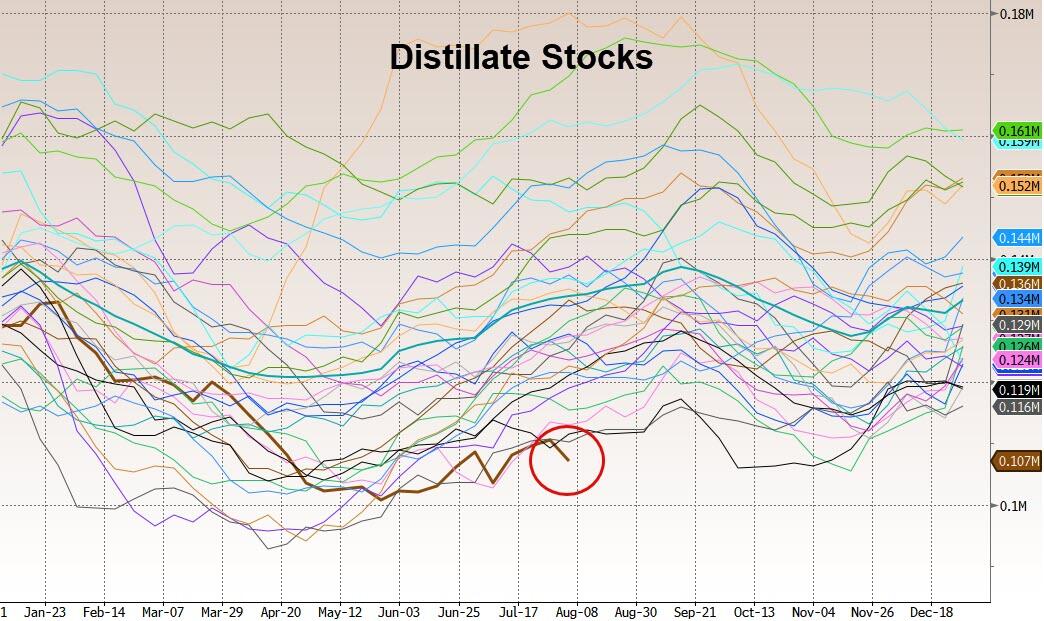
No comments:
Post a Comment