US Strategic Petroleum Reserve is at the lowest level since it was initially being filled in December 1982; US refinery utilization rate matches the highest since September 2018; US distillates inventories fall further from their lowest summertime level in thirty years
US oil prices rose for a second straight week and for the sixth time in eight weeks as Hormuz ship traffic slowed and an end to the conflict in the Middle East looked farther away than ever after a week of new Trump threats against Iran and other countries….after rising 5.1% to $82.40 a barrel last week on increasingly belligerent exchanges between Trump and Iran and on attacks on oil tankers in the Red Sea and in & around the Strait of Hormuz, the contract price for the benchmark US light sweet crude for September delivery rose across Asian markets on Monday, as expectations for a breakthrough in U.S.-Iran peace talks faded and tanker traffic through the Strait of Hormuz slowed, heightening concerns over geopolitical risks in the market, then edged higher during a choppy morning session in New York amid heightened uncertainty over the future of the U.S.-Iran war, while fresh bearish economic data from China capped its gains, and then rallied amid concerns over President Trump’s comments demanding that Iran surrender while threatening to also attack Oman, and settled $2.10 higher at $84.50 a barrel as Iran said a deal to end the war with the US is ‘no longer relevant' following repeated US violations of the original ceasefire agreement…oil prices continued to rise during Asian trading on Tuesday as diminishing prospects for a U.S.-Iran deal fueled concerns over prolonged supply disruptions through the Strait of Hormuz, and edged higher during morning trade in Europe as prospects for a deal to end the war in the Middle East deteriorated after Iran said it would take a more offensive stance, and as the United States ruled out extending the ceasefire agreement, heightening concerns about prolonged disruptions to energy supplies, and held at their highest in nearly three weeks in early New York trading on dimming peace prospects and mounting supply disruptions, while fresh attacks on tankers and refineries catapulted U.S. diesel margins to record highs, and closed up 44 cents, or 0.5%, at a three week high of $84.94 a barrel as progress on peace talks and the resumption of oil tanker traffic through the strategic Strait of Hormuz appeared to have halted, threatening to extend the conflict that the U.S. and Israel launched with their attacks on Iran on February 28th …oil prices rose for a fourth consecutive session across global markets on Wednesday, as the U.S.-Iran standoff in the Strait of Hormuz showed few signs of ending soon, which in turn spurred bets that global supplies could remain tight over the coming months, and continued to climb in early Wednesday morning trading in New York as oil flows through the Strait of Hormuz continued to slow amid new attacks on tankers and rising tensions between Iran and the United Arab Emirates, then turned choppy as traders weighed the 'dark fleet' transits after the EIA reported a large distillates inventory draw and that Cushing OK oil stocks remained near 'tank bottoms', before settling 89 cents higher at $85.83 a barrel, as traders worried about escalating tensions in the Middle East after the United Arab Emirates decided to suspend all financial and economic transactions with Iran, and as ship traffic through the Strait of Hormuz remained slow….the September oil contract was broadly steady in early Asian trading on Thursday, as traders assessed the outlook for the war between the United States and Iran and the security of navigation through the Strait of Hormuz, then rebounded from early losses to gain more than 1 per cent as fresh US sanctions aimed at isolating Iran stoked concerns over further disruptions to global oil supplies, and then rose further during the US session after U.S. Treasury Secretary Scott Bessent said the US would impose "the toughest sanctions in history" on Iran, while urging Beijing to cooperate with Washington, and expired $2.00 higher at $87.83 a barrel after President Trump warned of retaliation against nations supporting Iran, his latest attempt to resolve a war that has stranded millions of barrels of Middle Eastern oil, while the contract price for the benchmark US crude for October delivery settled $2.44 higher at $86.83 a barrel…with global markets now citing that October contract for the benchmark US crude as the US price of oil, oil futures traded lower on Friday morning in Asia despite the US threat to impose the ‘toughest sanctions in history’ on Iran, but edged higher in early morning trade in New York on the back of rising tensions between the U.S. and Iran and slowing oil flows from the Middle East, and settled 23 cents higher at $87.06 a barrel after Iranian President Masoud Pezeshkian said “it is better to end the war today” when Iran is “in a position of power and dignity,”….oil prices thus finished 5.7% higher for the week, while October contract for the benchmark US crude, which had ended the prior week at $81.47, ended up 6.9% higher…
meanwhile, natural gas prices finished higher for a second time in eight weeks, as intense heat over a large part of the country outweighed the copious supplies of natural gas already in storage heading into Autumn….after rising 2.7% to $2.733 per mmBTU last week as weather models showed exceptional heat building across the southern US, the price of the benchmark natural gas contract for September delivery opened 6.1 cents lower on Monday, a markdown that analysts attributed to hefty storage levels and the waning cooling-demand season, then traded in a narrow band near $2.695 into the afternoon before settling 4.3 cents lower at $2.690 per mmBTU, as traders weighed strong near-term cooling demand against looming fall weather and hefty supply readings….that September natural gas contract opened 1.2 cents higher on Tuesday and gradually trudged higher throughout the session, as the market weighed steady production against hearty near-term cooling demand, and settled 8.6 cents higher at $2.776 per mmBTU as traders focused on strong mid-August cooling demand and expectations for a seasonally lean storage injection…that natural gas contract price then started Wednesday 6.8 cents higher and climbed to an intraday high of $2.875 at 9:45 AM, as news of increased cooling demand was added to the already bullish short-term forecast, but stepped lower from that high to stabilize near $2.830 into the afternoon before settling 3.8 cents higher at $2.814 per mmBTU, as natural gas traders turned their attention toward a coming shoulder season that could leave balances even looser, once cooling demand faded, with production hovering near record levels and LNG demand still below what analysts said might be needed to absorb growing supply…however, natural gas opened 8.4 cents lower on Thursday and then withdrew further following the 10:30AM storage report, even as the report met market expectations, and settled 8.1 cents lower at $2.733 per mmBTU as the EIA inventory report proved bullish relative to historical norms but left stockpiles at hefty levels as the Autumn shoulder season neared…natural gas futures rebounded Friday morning as European weather models reversed sharply hotter, restoring stronger cooling demand expectations through early September, then edged higher through midday as sharply hotter weather models ratcheted up CDD forecasts, and settled 4.0 cents higher at $2.773 per mmBTU as intense heat across a majority of the country outweighed the impact of heavy supplies that had bogged down the market the previous session, leaving natural gas prices 4.0 cents or 1.5% higher for the week…
The EIA’s natural gas storage report for the week ending August 14th indicated that the amount of working natural gas held in underground storage rose by 16 billion cubic feet to 3,169 billion cubic feet by the end of the week, which left our natural gas supplies 28 billion cubic feet, or 0.9% below the 3,197 billion cubic feet of gas that were in storage on August 14th of last year, but 185 billion cubic feet, or 6.2% above the five-year average of 2,984 billion cubic feet of natural gas that had typically been in working storage as of the 14th of August over the most recent five years….the 16 billion cubic foot injection into natural gas storage for the cited week was close to the 14 billion cubic foot injection into storage that the market had been expecting ahead of the report, but it was less than the 19 billion cubic foot of gas that were injected into natural gas storage during the corresponding week of 2025, and also less than the average 29 billion cubic foot injection into natural gas storage that had been typical for the second week in August over the past five years…
The Latest US Oil Supply and Disposition Data from the EIA
US oil data from the US Energy Information Administration for the week ending August 14th showed that after a big decrease in our oil imports and a jump in our oil exports, we had we had to pull oil out of our stored crude supplies for the sixteenth time in seventeen weeks, and for the 38th time in sixty-four weeks, as the withdrawal of oil from the SPR was greater than the addition to commercial crude supplies…. Our imports of crude oil fell by an average of 746,000 barrels per day to 6,593,000 barrels per day, after rising by an average of 1,140,000 barrels per day to a twenty month high during the prior week, while our exports of crude oil rose by an average of 1,008,000 barrels per day to average 4,066,000 barrels per day, which, when used to offset our imports, meant that the net of our trade of oil worked out to an import average of 2,527,000 barrels of oil per day during the week ending August 14th, an average of 1,754,000 fewer barrels per day than the net of our imports minus our exports during the prior week... At the same time, transfers to our oil supplies from Alaskan gas liquids, from natural gasoline, from condensate, and from unfinished oils was 662,000 barrels per day higher than the prior week at 886,000 barrels per day, while during the same week, production of crude from US wells was 25,000 barrels per day higher at 13,830,000 barrels per day. Hence, our daily supply of oil from the net of our international trade in oil, from transfers, and from domestic well production appears to have averaged a total of 17,243,000 barrels per day during the August 14th reporting week…
Meanwhile, US oil refineries reported they were processing an average of 17,395,000 barrels of crude per day during the week ending August 14th, an average of 215,000 more barrels per day than the amount of oil that our refineries reported they were processing during the prior week, while over the same period, the EIA’s surveys indicated that a net of 123,000 barrels of oil per day were being pulled from the supplies of oil stored in the US… So, based on all that reported & estimated data, the crude oil figures provided by the EIA appear to indicate that our total working supply of oil from storage, from net imports, from transfers, and from oilfield production during the week ending August 14th averaged a rounded 29,000 fewer barrels per day than what our oil refineries reported they used during the week. To account for the difference between the apparent supply of oil and the apparent disposition of it, the EIA just plugged a [ +29,000 ] barrel per day figure onto line 16 of the weekly U.S. Petroleum Balance Sheet, in order to make the reported data for the supply of oil and for the consumption of it balance out, a fudge factor that they label in their footnotes as “unaccounted for crude oil”, thus indicating there must have been a error or omission of that amount in the week’s oil supply & demand figures that we have just transcribed.... But since 486,000 barrels per day of oil supply could not be accounted for in the prior week’s EIA data, that means there was a 457,000 barrel per day difference between this week’s oil balance sheet error and the EIA’s crude oil balance sheet error from a week ago, and hence the changes to supply and demand from that week to this one that are indicated by this week’s report are somehow off by that much. and therefore pretty useless... However, since most oil traders react to to the figures in these weekly EIA reports as if they were gospel, and since these weekly figures therefore often drive oil pricing and hence decisions to drill or complete oil wells, we’ll continue to report this data just as it’s published, and just as it’s watched & believed to be reasonably reliable by most everyone in the industry…(for more on how this weekly oil data is gathered, and the possible reasons for that “unaccounted for” oil supply, see this EIA explainer….also see this March 2023 twitter thread from an EIA administrator addressing these ongoing weekly errors, and what they had once hoped to do about it).
This week’s rounded 123,000 barrel per day average decrease in our overall crude oil inventories came as an average of 629,000 barrels per day were being added to our commercial stocks of crude oil, while 753,000 barrels per day were being pulled out of our Strategic Petroleum Reserve, the twenty-first consecutive Iran war related withdrawal from the SPR, including the four largest draws in SPR history, which left the SPR level at 293,426,000 barrels, the lowest since it was initially being filled in December 1982....Further details from the weekly Petroleum Status Report (pdf) indicated that the 4 week average of our oil imports rose to 6,453,000 barrels per day last week, which was 1.2% more than the 6,379,000 barrel per day average that we were importing over the same four-week period last year, while the four week average of our exports rose to 3,569,000 barrels per day last week, which was 2.2% more than the 3,491,000 barrel per day average that we were exporting last year year at this time... This week’s crude oil production was reported to be 25,000 barrels per day higher at 13,830,000 barrels per day as the EIA’s estimate of the output from wells in the lower 48 states was 6,000 barrels per day higher at 13,407,000 barrels per day, while Alaska’s oil production was 19,000 barrels per day higher at 423,000 barrels per day...US crude oil production had reached a pre-pandemic high of 13,100,000 barrels per day during the week ending March 13th 2020, so this week’s reported oil production figure was 5.6% higher than that of our pre-pandemic production peak, and was also 42.6% above the pandemic low of 9,700,000 barrels per day that US oil production had fallen to during the third week of February of 2021.
US oil refineries were operating at 97.2% of their capacity while processing those 17,395,000 barrels of crude per day during the week ending August 14th, up from 96.2% the prior week, and matching the highest refinery utilization rate since September 2018, which was also hit three weeks earlier….the 17,395,000 barrels of oil per day that were refined that week were 1.1% more than the 17,208 ,000 barrels of crude that were being processed daily during the week ending August 15th of 2025, but were 1.7% less than the 17,702,000 barrels that were being refined during the pre-pandemic week ending August 16th, 2019, when our refinery utilization rate was at 95.9%, which was close to the pre-pandemic normal utilization rate for this time of year…
With the increase in the amount of oil that was being refined this week, gasoline output from our refineries was also higher, increasing by 143,000 barrels per day to 9,711,000 barrels per day during the week ending August 14th, after our refineries’ gasoline output had decreased by 1,000 barrels per day during the prior week... This week’s gasoline production was 1.6% higher than the 9,813,000 barrels of gasoline that were being produced daily over the week ending August 15th of last year, but 1.9% less than the gasoline production of 9,897,000 barrels per day seen during the prepandemic week ending August 16th, 2019….on the other hand, our refineries’ production of distillate fuels (diesel fuel and heat oil) decreased by 54,000 barrels per day to 5,226,000 barrels per day, after our distillates output had increased by 50,000 barrels per day during the prior week. With that decrease, our distillates output was 2.0% less than the 5,330,000 barrels of distillates that were being produced daily during the week ending August 15th of 2025, and 2.2% less than the 5,340,000 barrels of distillates that were being produced daily during the pre-pandemic week ending August 16th, 2019....
With this week’s increase in our gasoline production, our supplies of gasoline in storage at the end of the week rose for the sixth time in twenty-seven weeks, increasing by 688,000 barrels to 209,378,000 barrels during the week ending August 14th, after our gasoline inventories had decreased by 968,000 barrels during the prior week. Our gasoline supplies rose this week because the amount of gasoline supplied to US users fell by 275,000 barrels per day to 8,964,000 barrels per day, and even though our imports of gasoline fell by 217,000 barrels per day to 366,000 barrels per day, while our exports of gasoline were unchanged at 852,000 barrels per day… After fifty-two gasoline inventory withdrawals over the past seventy-eight weeks, our gasoline supplies were 6.3% lower than last August 15th’s gasoline inventories of 223,570,000 barrels, and still about 5% below the five year average of our gasoline supplies for this time of year…
After this week’s decrease in distillates production, our supplies of distillates fell for the twelfth time in twenty-seven weeks, deceasing by 1,530,000 barrels to 105,619,000 barrels during the week ending August 14th, the lowest summertime level in thirty years, after our distillates supplies had decreased by 10,000 barrels during the prior week... Our distillates supplies fell by more this week because the amount of distillates supplied to US markets, an indicator of domestic demand, rose by 495,000 barrels per day to 3,953,000 barrels per day, and even while our exports of distillates fell by 334,000 barrels per day to 1,601,000 barrels per day, while our imports of distillates fell by 2,000 barrels per day to 109,000 barrels per day... After 27 withdrawals from distillates inventories over the past 58 weeks, our distillates supplies at the end of the week were 9.0% lower than the 116,028,000 barrels of distillates that we had in storage on August 15th of 2025, and were about 13% below the five year average of our distillates inventories for this time of the year…
Finally, after the increase in our oil exports and the decrease in our oil imports, the big withdrawal from the SPR meant that our commercial supplies of crude oil in storage rose for the 14th time in twenty-six weeks, and for the 27th time over the past year, increasing by 4,405,000 barrels over the week, from 424,410,000 barrels on August 7th to 428,815,000 barrels on August 14th, after our commercial crude supplies had increased by 17,423,000 barrels over the prior week….After this week’s increase, our commercial crude oil inventories were near the recent five-year average of commercial oil supplies for this time of year, while they were about 28% above the average of our available crude oil stocks as of the second weekend of August over the 5 years at the beginning of the past decade, with the difference between those comparisons arising because it wasn’t until early 2015 that our oil inventories had first topped 400 million barrels. After our commercial crude oil inventories had jumped to record highs during the Covid lockdowns in the Spring of 2020, then jumped again after February 2021’s winter storm Uri froze off US Gulf Coast refining, but then fell sharply due to increased exports to Europe following the onset of the Ukraine war, only to jump again following the Christmas 2022 refinery freeze-offs, changes in our commercial crude supplies had been less extreme up until the onset of the Iran war, when they were initially built up to a three year high by mid-April...However, after falling sharply over the past three months until last week, our commercial crude oil inventories as of August 14th were 1.9% above the 420,684,000 barrels of oil we had in commercial storage on August 15th of 2025, and were 0.7% more than the 430,678,000 barrels of oil that we had in storage on August 16th of 2024, but 2.5% less than the 439,662,000 barrels of oil we had left in commercial storage on August 11th of 2023…
This Week's Rig Count
The US rig count decreased by five over the week ending August 21st, as the number of rigs targeting oil was down by three, the count of rigs targeting natural gas was down by one, and miscellaneous rigs were down by one…for a quick snapshot of this week's rig count, we are again including below a screenshot of the rig count summary table from Baker Hughes...in the table below, the first column shows the active rig count as of August 21st, the second column shows the change in the number of working rigs between last week’s count (August 14th) and this week’s (August 21st) count, the third column shows last week’s August 14th active rig count, the 4th column shows the change between the number of rigs running on Friday and the number running on the Friday of the same week of a year ago, and the 5th column shows the number of rigs that were drilling at the end of that reporting period a year ago, which in this week’s case was Friday, the 22nd of August, 2025…

+++++++++++++++++++++++++++++++++++++++++++++++++++++
OpenAI Signs 10 GW Ohio Data Center Lease, Utica Gas Wins Big - Marcellus Drilling News - It’s official. In June, we told you OpenAI was in “advanced negotiations” to lease the gargantuan 10-gigawatt (GW) data center campus rising on federal land in Piketon (Pike County), Ohio (see OpenAI in Talks to Lease OH Data Center, Largest Gas Power in U.S.). Yesterday, the Wall Street Journal reported the ink is dry. OpenAI has signed a 20-year lease for the whole 10 GW campus with SB Energy, the SoftBank subsidiary developing the site — and chipmaker Nvidia is standing behind the deal with a financial backstop worth up to $105 billion. Why should Utica landowners care about a Silicon Valley lease? Because the electricity feeding this monster comes from a 9.2-GW natural gas power plant, and that gas has to come from somewhere. That somewhere is under your feet.
Nvidia to Provide Up to $105 Billion Guarantee for OpenAI's Ohio Data Center - (Reuters) – Nvidia has agreed to provide a guarantee of up to $105 billion to help OpenAI lease a sprawling data center in Ohio being developed by SoftBank-owned SB Energy, in one of the chipmaker’s largest infrastructure financing commitments. The Jensen Huang-led firm said on Monday it will also invest $1.5 billion in SB Energy, months after a $1 billion investment from OpenAI and SoftBank to expand data center infrastructure. The new deal is the latest example of Nvidia financing the infrastructure built around its chips, a strategy that helps drive demand but has also raised questions about circular funding flows between the chipmaker and its customers. Last week, scrutiny of such funding deepened after Nvidia partnered with six major financial institutions including BlackRock to launch financing platforms targeting more than $500 billion in third-party funding for AI infrastructure. Huang said the new deal was not circular financing and that Nvidia is using “its scale and long-term visibility” to help. “We are securing long-lived infrastructure for Nvidia compute so OpenAI can deploy the most productive AI factories that can be upgraded repeatedly with each new generation delivering more intelligence and better economics,” Huang said. The company will be the exclusive chip provider for the facility in Pike County, Ohio, which will have a total capacity of as much as 8 gigawatts, with the first 800 megawatts expected to come online in 2028. OpenAI is leasing the site for 20 years. The financing structure is not yet defined and will include equity, people with knowledge of the matter said. The equity may include capital raised by a potential SB Energy IPO and Softbank direct investment, they said. After the total equity amount is defined, there will be a debt portion that will probably include project finance loans and potentially public debt such as bonds, the people said, asking for anonymity to disclose private discussions. Land and power are increasingly becoming a hurdle for data centers due to the aging and strained U.S. grid and growing opposition to new construction from communities worried about higher electricity prices as well as potential water wastage. Nvidia said its guarantee covers a portion of the lease and power payments, as well as a commitment to ensure the site retains a minimum value, rather than the full cost of the project or all of OpenAI’s obligations. OpenAI will pay the rent, but if it defaults, Nvidia will cover the gap between that guaranteed minimum value and whatever the owner can recoup by re-leasing or selling the site. Nvidia said it plans to selectively lock up prime sites where its chips can run for multiple generations in the future. “Investors are right to be worried about what seems to be a never-ending loop of AI deals but realistically the field of players isn’t all that vast and there was always going to be a degree of circular financing,” said Danni Hewson, head of financial analysis at AJ Bell. “The biggest test is whether these investments ultimately generate decent returns for all those laying out cash and that’s something that can only be figured out further down the line.” Huang said the site, which would have an initial capacity of 4.25 gigawatts, could contribute as much as $200 billion to Nvidia’s revenue. One gigawatt of computing power is enough electricity to power roughly 750,000 U.S. homes on average. Overall, Nvidia could make $600 billion in revenue from OpenAI by 2030 by selling it 16 gigawatts of computing power, including an expansion of the Ohio site by 3.75 gigawatts. To support the site, SoftBank and SB Energy plan to build at least 10 gigawatt of new power generation and invest $4.2 billion in new regional grid infrastructure through a partnership with AEP Ohio (AEP.O). The project is expected to create about 35,000 construction jobs through 2032 and about 2,500 long-term operating jobs, the ChatGPT maker said. The project has a low risk of construction delays due to local opposition, the sources added, as the state has been supportive due to the job creation and a commitment OpenAI and SoftBank commitment to fund $80 million in community projects. The project includes federal land and has the involvement of the U.S. Departments of Commerce and Energy.
Nvidia's $105-billion bet on Ohio data center supercharges AI arms race - LA Times - Nvidia Corp. has agreed to spend as much as $105 billion to support a massive new data center campus in Ohio set to be leased by OpenAI, according to a financial filing, marking the latest tie-up between two dominant forces driving the artificial intelligence boom. ChatGPT maker OpenAI said Monday it has entered into an agreement to secure up to roughly 8 gigawatts of computing capacity from the Pike County complex, with the first 800 megawatts expected to come online by 2028. A single gigawatt is enough to power up to 750,000 U.S. homes at any given time. OpenAI said it will only begin paying as capacity becomes available for lease. Nvidia said it will provide support for “defined portions of lease and power payments,” aiding a project that will lead to a large deployment of its AI chips. Separately, Nvidia has agreed to invest $1.5 billion in SB Energy Corp., the SoftBank Group Corp.-backed developer that will build, own and operate the facility. The Ohio data center complex as envisioned would be among the biggest in the world — a symbol of the enormous demand for computing to propel AI development. It’s also a centerpiece project for SoftBank founder Masayoshi Son and the Trump administration, which has hailed the investment as a major win. Nvidia previously discussed providing a guarantee of as much as $250 billion to OpenAI for the data center lease, Bloomberg News has reported. Nvidia has provided a financial backstop to other companies trying to rapidly build out AI hardware, notably CoreWeave Inc., and it has invested directly in OpenAI and AI peer Anthropic PBC. But the latest loan guarantee is the largest arrangement of its type for the chipmaker. There have been some concerns about debt that doesn’t show up on their balance sheets, as well as circular deals that involve Nvidia financing other companies, which then pay for its chips. Nvidia also said the Ohio deal with OpenAI is not an example of circular financing. “OpenAI will pay the lease,” Nvidia said.
Amazon eyes land for suburban county's first hyperscale data center - Cincinnati Enquirer -Hyperscale data centers are creeping closer to Cincinnati. Amazon, through its subsidiary Amazon Web Services, is in negotiations with the city of Trenton and other partners on a roughly 600-acre plot of land for a hyperscale data center in Butler County, according to Marcos Nichols, Trenton city manager.The project would include 18 buildings, each around 220,000 square feet, on farmland between Wayne Madison Road and Hawkins Road in Madison Township and St. Clair Township, just south of Trenton.It would be the county's first hyperscale data center – sprawling campuses that are used for artificial intelligence and processing large amounts of data – Butler County administrator Judi Boyko said. Congress defines hyperscale data centers as ones that occupy at least 10,000 square feet of space and use more than 100 megawatts of power, roughly the amount of power used by 80,000 households.As the city of Trenton negotiates with Amazon, it is also seeking to annex the land where the campus would be built.Meanwhile, Trenton residents' concerns about the Amazon project, and another planned data center, fell on deaf ears at a Trenton City Council meeting earlier this month.The proposed Amazon site is just outside of Trenton, a small agricultural city in Butler County around 38 miles north of Cincinnati. Roughly 5 square miles, Trenton is home to less than 14,000 people, according to Census data.Trenton officials submitted a petition to annex the land to Butler County Commissioners on Aug. 4. The city owns roughly 215 acres of the site. Two Duke Energy subsidiaries, Watson Gravel Inc. and a private owner own the rest.The soonest commissioners could consider the petition would likely be early September, Butler County administrator Boyko said. As long as there aren't any issues with the petition, commissioners' role is to grant it, Boyko said.
Backdoor deal or business as usual? An Ohio data center raises transparency concerns -Lorie Blankenship has lived in Trenton since the 1970s. The elementary school she walked to every morning as a kid is still around the corner from her house. Down the road, her neighbor farms the same land that's been in the family for more than a century.Blankenship says the city of about 15,000 has changed in some ways over the years.“When we moved here, it probably had about half the population, but it still, no matter when it grew, it kept that same small-town atmosphere,” Blankenship said.Now, she's worried a new neighbor could hurt her quiet hometown.The city agreed to sell the land to the developer in spring 2024. But Blankenship and most residents didn’t find out until the sale closed a year later, in fall 2025. “We immediately went, ‘What?,’ and then we started looking back through things, trying to get people involved,” Blankenship said. “November is when they had a city council meeting. A lot of people came to the city council meeting, and they were questioning the data center, and that's when the transparency issues came up.”People worried the city was keeping the project a secret. They raised concerns from water use to noise because neither the city or developer had revealed specific plans or studies at that point.In other communities with data centers, residents have reported negative impacts from constant humming noises to air pollution from diesel backup generators to strain on local water systems. Trenton City Manager Marcos Nichols says the city anticipated the data center would operate differently from the traditional industrial developments in town. That’s why council voted to create an I-T zoning district. “The building is further back from the property line, as well as has an 8-foot berm, and then there has to be trees on the berm to allow for light, noise, sound, all of that to be buffered by those things,” Nichols said.The city says the developer has done its due diligence. Prologis has said it will pay for water, electricity and power system upgrades. And it estimates the project will create more than 100 full-time jobs.Blankenship says she's still not convinced. And learning a city official signed a non-disclosure agreement for the project only adds to her concerns about transparency. “Now nobody has any faith in their own government,” Blankenship said. “People go and they vote for people and they expect that they're going to represent them, and then they feel that backdoor deals have been done.”Nichols says with projects like these, there’s a fine line between openness and staying competitive.“If they put out that they're coming to town six months ahead of time, a year ahead of time, what does that mean from a competition standpoint? Does that mean that someone else is going to come in and try and get land and move through the processes faster than them and get built faster? It's a balance,” Nichols said.
Ohio OKs First Non-Data-Center Gas Plant Since 2019 in Carroll Co. - Marcellus Drilling News - Score one for the good guys. The Ohio Power Siting Board (OPSB) voted yesterday (Aug. 20) to hand Chestnut Run Energy LLC its Certificate of Environmental Compatibility and Public Need — the golden ticket needed to build a 1,300-megawatt (MW), $2 billion natural gas-fired power plant in Washington Township, Carroll County. That's smack in the middle of Utica Shale country. MDN first told you about this project back in April (see Chestnut Run Energy to Build 1.3 GW Power Plant in Carroll County). Now it's official.
Big Green Coming for Williams’ Ohio Gas-Fired Power Plants - Marcellus Drilling News - Something happened over the past ten days that ought to look awfully familiar to anyone who was around Marcellus country in 2009. A single advocacy shop dug a permit out of a state filing cabinet, handed it to a friendly reporter at the New York Times, and within a week roughly two dozen outlets were running the same three sentences about Amazon becoming “the largest single source of pollution in the United States.” It’s not a coincidence, it’s not organic, and it’s not staying in Texas. Big Green has told us, in print, that the data center fight is the anti-fracking playbook run a second time — and one of the projects already on their list belongs to Williams, in Ohio, burning Utica gas.
Columbus Dispatch Takes Another Swing at Marietta Injection Wells Marcellus Drilling News -- The Columbus Dispatch — a paper based 120 miles northwest of the action — parachuted into Marietta, Ohio, yesterday with a long story about shale wastewater injection wells that leads with the words "radioactive," "toxic," and "Russian roulette," and waits ten paragraphs to tell readers the one fact that matters most: no evidence of drinking water contamination has turned up. Not now. Not in 15 years. We've covered this fight since 2025, and we'll say again what we said in July — there IS a real problem here, but it isn't the one the Dispatch is selling.
27 New Shale Well Permits Reported for PA-OH-WV Aug 10 – 16 - Marcellus Drilling News - The Marcellus/Utica region received 27 new drilling permits last week, August 10 – 16, up significantly from the 8 permits issued two weeks ago. In something of a reversal, Pennsylvania turned in the fewest new permits, just 4. Ohio issued the most permits, with 16, and West Virginia issued 7 permits. The drillers who received new permits were: Antero Resources (6), Ascent Resources (5), EOG Resources (8), Expand Energy (4), Jay-Bee Oil & Gas (1), LOLA Energy (1), Range Resources (1), and Seneca Resources (1). Antero Resources | Ascent Resources | Beaver County | Belmont County | Bradford County | Butler County | EOG Resources | Expand Energy | Harrison County | Jay-Bee Oil & Gas | LOLA Energy | Noble County | Pleasants County | Range Resources Corp | Ritchie County | Seneca Resources | Tioga County (PA) | Tuscarawas County
Infinity Pulls Core From Deep Utica Farther East of Pittsburgh - Hart Energy - Ohio Utica Shale M&A activity is increasing. Infinity Natural Resources has pulled core now from the deep Utica in a hot new play area underlying the Marcellus in Pennsylvania where other E&Ps are reporting sustained 30 MMcf/d holes or better—and while on stiff chokes.
NextEra Inks Final Deal, Gets $3.3B for 4.3-GW SWPA Gas Plant - Marcellus Drilling News - Back in March, we brought you news that the Trump administration had announced “South Mon,” a $17 billion, 4.3-gigawatt (GW) natural gas-fired power hub headed for southwestern Pennsylvania, funded as part of Japan’s $550 billion U.S. investment commitment (see Trump Admin Announces $17 Billion Gas-Fired Power Plant for SWPA). At the time, we grumbled that there were “precious few details” — no location, no contracts, no money changing hands. Just a handshake at the White House. On Tuesday, NextEra Energy (NYSE: NEE) announced the handshake has become a signature. The company has executed definitive agreements with the U.S. Department of Commerce and the Government of Japan covering up to 10 GW of gas-fired generation across Pennsylvania and Texas — and, more importantly, an initial $3.3 billion tranche of funding has been released. That money buys turbines. Real ones.
More Than 99% Of Conventional Oil & Gas Well Owners Failed To Comply With DEP’s 2022 Methane Emission Reduction Regulations; How Will It Be Any Different Under DEP’s New Methane Regulations? - On August 6, eight environmental organizations offered public comments to DEP’s Air Quality Technical Advisory Committee supporting DEP’s new initiative to adopt regulations to reduce methane emissions from oil and gas wells and facilities to comply with US Environmental Protection Agency 0000c oil and gas methane reduction regulations.The Environmental Defense Fund and other groups called on DEP to develop regulations that target the largest methane emissions in the oil and gas industry -- conventional oil and gas wells and facilities. Kate Courtin, Senior Manager with the EDF State Climate Team, told the Committee—“The question before us is no longer whether methane should be addressed. It is how Pennsylvania can design the smartest, most effective rule. “As DEP develops this rule, the data clearly identify where the greatest opportunity exists. “Research from the Appalachian Methane Initiative shows that low-producing wells [conventional wells in Pennsylvania] account for roughly 64% of methane emissions [across the Appalachian Basin] while contributing to only 1% of production. That tells us something important. If Pennsylvania wants meaningful methane reductions, low-producing wells must be part of the solution. As was just noted, the simple truth is that large companies own the vast majority of low-producing wells. Eleven oil and gas corporations own nearly half of low-producing wells in Pennsylvania as of 2024. At the same time, there are truly small operators whose circumstances are different. A durable rule should recognize both realities. DEP should develop strong and resilient standards that achieve equivalent or greater reductions as the 2024 US EPA methane rule.” The same research by the Appalachian Methane Initiative-- a coalition of CNX Resources, EQT Corporation, MPLX and Seneca Resources at the University of Texas and Colorado State University-- also found unconventional shale gas wells account for 17.5% of methane emission while producing over 98% of the basin-wide natural gas.According to a FracTracker Alliance analysis, these are the top 11 conventional oil and gas well owners in Pennsylvania that own wells producing 15 BOE [barrels of oil equivalent] or less-- Diversified Production LLC - 21,147; Minard Run Oil Co. - 2,172; OWS Energy LLC - 2,603; Cameron Energy Co. - 1,867; Apollo Resources LLC - 1,876; Pennhills Resources LLC - 1,676; Snyder Bros Inc. - 1,705; VEC Energy LLC - 1,852; ARG Resources Inc. - 1,547; Bull Run Resources LLC - 1,489; and Kriebel Natural Gas Co. LLC - 1,675.These top 11 conventional well owners account for 39,607 low-producing wells, which is about 44.4% of the 89,161 low producing conventional wells at 15 BOE or below, leaving out 55.6% of conventional wells in this count.Readers of the PA Environment Digest Weekly Oil & Gas Compliance reports will recognize many of these conventional well owners’ names, because they show up frequently in DEP violations and enforcement actions.Diversified Production LLC, as the largest owner, has frequent violations and signed an agreement with DEP in 2019 to plug over 1,400 abandoned wells it owns; Minard Run Oil Co. owns 390 abandoned wells; ARG Resources Inc. owns at least 36 abandoned wells and was the target of recent US Forest Service action to close unsafe facilities.Visit DEP’s Oil and Gas Compliance Database to check them out for yourself.Click Here for the top 30 companies from FracTracker.
DEP Evaluating 37 Conventional Oil & Gas Wells In Venango County For Plugging As A Result Of Owner’s Death -On August 12, 2026, the Department of Environmental Protection posted inspection reports on 37 conventional oil and gas wells owned by the late Daniel L. Heath documenting visits to the sites by DEP and contractors as part of an evaluation of their status for well plugging.All but one of the conventional wells are located in Cranberry Township, Venango County. The remaining well is located in Barkeyville Borough. The wells were not only abandoned and not plugged, but the owner had failed to submit annual production, waste generation and well integrity reports for some time.Some wells were also found to be leaking gas and fluids.DEP continued or issued multiple violations to each well as part of its enforcement record. The inspection reports were all very similar to these examples: Faren 2, Farren 10, Farren 11, Ridgeway 3 HDL-2-R, Oneil 5 HDL-1-R..
DEP - Day 632: Seneca Resources Installs Trench, Concrete Catch Basin To Collect Continuing Releases Of Contaminated Water From The Taft Shale Gas Well Pad In Middlebury Twp., Tioga County - On July 17, 2026, the Department of Environmental Protection did an inspection of the Seneca Resources Taft shale gas well pad in response to a notification that additional measures were installed to collect and allow for cleanup of contaminated water coming from the pad in Middlebury Township, Tioga County. DEP observed a trench had been recently dug along the north side of the pad with contaminated water flowing into a new cement catch basin. Conductivity field measurements of liquid in the trench indicated contaminated water. A vac truck was staged on site with a hose end located in the catch basin to remove the accumulating liquids. No liquids were flowing into the sediment basin at the pad, but field conductivity measurements at the northeast overflow indicated contaminated water and DEP collected a sample of the water. "The DEP recommends that Seneca continues to monitor the conditions on the pad surface and the sediment basin and remove elevated conductance fluids and soils as discovered. Prevent elevated conductance fluids from leaving the facility and causing pollution to the waters of the Commonwealth." These violations have now been continued for 632 days. DEP did not request a written follow-up from Seneca.Click Here for DEP inspection results + photos. Violations for the wastewater releases at the Taft site were originally issued on October 23, 2024.DEP found similar conditions-- spills, crews trying to clean up the pad while drilling and fracking new shale gas wells continues-- starting October 23, 2024, then on July 11, 2025, August 21, 2025, October 2, 2025, October 31, 2025, December 23, 2025, January 21, 2026, April 21, 2026 and June 23, 2026. A July 27, 2026 inspection of the 75HU Utica shale gas well at this same Taft shale gas well pad found evidence of continuing casing/cementing failure originally discovered on Nov. 13, 2024. The violation was continued and so will the monitoring.DEP inspection report. On October 31, 2025, Attorney General Dave Sunday announced criminal charges against Seneca Resources, LLC, following multiple violations of Pennsylvania’s environmental protection laws in several counties, as recommended by the 48th and 51st Statewide Investigating Grand Juries.Three separate criminal complaints were filed regarding the natural gas company’s violations related to improper waste management practices and policies.Prominent in the Attorney General’s announcement of the charges was the fact that DEP repeatedly warned Seneca that their practices were not in line with Pennsylvania law, but those warnings were ignored or disputed. Read more here. In all, Seneca is charged with 64 counts of violations of the Solid Waste Management Act and 36 counts of violations of the Clean Streams Law in Cameron, Clearfield, Elk, Jefferson, Lycoming, McKean, Potter, Tioga Counties. Read more here.
XTO Wins PA Royalty Case, Then Asks Judge to Undo the Judgment - Marcellus Drilling News -- In March, MDN told you that Butler County landowners were appealing after a federal judge tossed their royalty class action against XTO Energy (see Landowners Appeal Dismissal of XTO Lawsuit re Royalties in W. Pa.). That appeal is now on hold — because on Aug. 6, the same judge wiped out his own judgment and declared it void. And the party that asked him to do it was XTO, which won the case.
Upstream Goes Downstream: Equinor Buys Into Scranton Power Plant - Marcellus Drilling News - Norway’s Equinor — the company we all used to call Statoil — announced Monday it is buying a majority interest in the Lackawanna Energy Center (LEC), the big Marcellus-fired power plant in Jessup, PA, just outside Scranton. Equinor is paying $940 million for 87.71% of the Class A shares in the 1,483-megawatt plant, buying them from funds managed by Global Infrastructure Partners (GIP), which is now part of BlackRock. Invenergy, which built LEC and has run it since day one, stays on as operator. MDN has followed this plant since it was nothing but a proposal and a pile of angry town council meetings (see MDN’s LEC coverage), so this one hits close to home — literally, since the plant sits two counties from MDN world headquarters.
Where Natgas Prices Stand: Nymex $2.78, Appalachia $1.77 - Marcellus Drilling News - A punishing heat dome parked over the southern two-thirds of the country gave natural gas prices a nice bump on Tuesday — the September Nymex contract jumped 8.6 cents to settle at $2.776 per MMBtu, up 3.2%. But if you own Marcellus or Utica royalties, the number that actually lands in your mailbox is a lot smaller than that. Here's the full picture, national and regional. https://marcellusdrilling.com/wp-content/uploads/2026/08/mdn_natgas_price_gap_aug_2026-scaled.png.
Why Your Royalty Check May Shrink This Fall: $1.70 Appalachia Gas - Marcellus Drilling News - Appalachian gas producers look likely to spend this autumn doing exactly what they did last autumn: turning down the taps. Regional storage is fat, in-basin prices are stuck near $1.70, and the January contract is more than double that. For Marcellus and Utica landowners, that math translates into one thing — thinner royalty checks in September, October and November
Shapiro EO Slams Brakes on PA Data Centers, Gas Plants Too - Marcellus Drilling News - Gov. Josh Shapiro signed Executive Order 2026-05 on Tuesday, imposing what he called “the strictest guardrails in the nation” on AI data centers — and, we’d argue, on the gas-fired power plants that will run them. Two western PA projects lost fast-track permitting status the same day. But the real damage is buried in a 33-page model consent order that got almost no attention. We don’t think it’s unfair or hyperbole to say Shapiro just destroyed the AI data center industry in the Keystone State.
Pennsylvania Gov. Shapiro signs order to limit new data centers - Data centers will need local approval before Pennsylvania grants them state permits, Democratic Gov. Josh Shapiro announced Tuesday. The potential White House contender signed an executive order that ties data center permits to a regulatory framework he previewed earlier this year — as well as some new, tougher provisions, including a prohibition on nondisclosure agreements and no eligibility for fast-track permits. Shapiro stopped short of a statewide data center moratorium, which has been implemented in neighboring New York and has been called for by his Republican gubernatorial opponent, state Treasurer Stacy Garrity. But his order will effectively halt any new development that faces opposition from local officials. The new order illustrated Shapiro’s evolution from data center cheerleader into a vocal skeptic. “I will not allow Pennsylvanians to be bullied by greedy developers and bulldozed by the lawyers working for these big tech companies,” Shapiro wrote on social media. Before state agencies begin permit reviews, Shapiro’s directive requires data centers with a peak load of at least 25 megawatts to sign a consent order outlining key details about their power demand, development plans and investment commitments. The order also calls for utilities to cut power to data centers first in case of a grid emergency and for data centers to shoulder all the costs of their electricity service. The Data Center Coalition, the industry’s main trade group, released a statement saying it shares Shapiro’s goals to ensure the state benefits economically from data centers while protecting residents. But “in distinguishing speculative proposals from real projects, it’s important that rules are not changed midstream impacting ongoing investment in verified and responsible data center projects. Companies have made plans, communities have prepared for economic opportunities, and workers are ready to build the next generation of digital infrastructure,” said Dan Diorio, executive vice president of state policy and government affairs at the coalition. Pennsylvania is in one of the fastest-growing data center regions, adding 2.4 gigawatts of new capacity between March 2024 and March 2025, according to research firm BloombergNEF.
Gov. Shapiro Signs Executive Order Requiring A.I. Data Center Developers To Sign Consent Order Binding Them To Comply With GRID Principals, Including Clean Energy; DEP Will Not Review Permits Until Communities Give Their Approval - On August 18, Gov. Josh Shapiro signed Executive Order 2026-05 requiring A.I. Data Center developers to comply with what he called the "strictest guardrails in the nation" "to stop the predatory developers and bad proposals." He said this action is necessary because the Pennsylvania Senate failed to act on legislation passed by the House to put those standards in place."The absence of legislative approval has left me with no other option but to protect the people of Pennsylvania by taking executive action to put the strictest guardrails in the nation in place to stop the predatory developers and bad proposals."Because I’ve heard loud and clear from the people of Pennsylvania as I’ve traveled our Commonwealth, and I’m here to say that we will not be bullied by developers and bulldozed by the lawyers working for these big tech companies."We have a long history in Pennsylvania of industry running roughshod over our communities to make a buck – that stops with me."He said these requirements "will hold greedy developers accountable, stop bad projects, and put more power back in the hands of local communities.""Starting today, A.I. data center developers who want to do business in our Commonwealth must respect our communities and abide by these stringent requirements."The main elements of the Order include--
- -- Notice Of Intent: Developers will be required to provide a notice of intent to comply with GRID.
- -- Present Detailed Plans: Required to present their detailed plans to DEP, who will scrutinize them to ensure they’re sufficient.
- -- Sign Consent Order: Developers must sign a legally binding consent order locking them into the GRID Requirements and setting penalties if they fail to comply. [Model Consent Order]
- -- Local Approval First: Developers must also earn legal approval of their projects at the local level before DEP will review their permits, as well as approvals for water withdrawals or wastewater discharge..
- Among other requirements, the Governor’s Responsible Infrastructure Development (GRID) and the Executive Order require--
- -- Bring Your Own Power: Developers must bring their own power and pay for all the costs associated with that electricity. They will not be permitted to saddle homeowners and businesses with added costs because of their development.
- -- Clean Energy Sources: They must get an increasingly significant portion of that power from clean energy sources like solar, advanced nuclear, and battery storage.
- -- First Off The Grid In An Emergency: In the event of a grid energy emergency, data centers will be the ones who get cut off first.
- -- Promote Transparency and Community Engagement: Provide a community outreach plan that promotes public engagement and enables meaningful public input.
- -- Supporting Workforce and Economic Development: Provide a community benefit plan detailing anticipated contributions to the state and local community beyond existing legal obligations.
"If a developer refuses to comply with those requirements, they will have no pathway of getting the necessary approvals needed to build a data center in Pennsylvania," said Gov. Shapiro."And they will be disqualified from receiving the existing exemption on sales tax on data center equipment that was put in place two years before I was elected your governor." "These are the wealthiest companies in the world – they shouldn’t get a tax break for gouging our communities." The Executive Order also--
- -- Prohibits the signing of non-disclosure agreements by any agencies under the Governor’s jurisdiction
- -- DEP will create a publicly accessible map with current permitting information and tracking about all proposed data center projects. [Click Here For DEP’s Data Center Permit Tracker]
- -- DEP is directed to recommend new regulations to better protect the environment from data center impacts and ways to sufficiently consider the cumulative impact of multiple backup generators will have on the environment.
- -- Removing Data Center Projects From Fast Track Permitting: Required permits are also excluded from DEP’s PAyback and Permit Decision Guaranteed Program.
The Governor also directed "my new Special Counsel on Energy Affordability to engage with the Pennsylvania Utility Commission and help establish rules and procedures that ensure Pennsylvanians are protected from the demand data centers put on the energy grid.""We’re going to ensure that any infrastructure costs caused by data centers are paid by the AI data centers – not Pennsylvania homeowners or business owners – even if a data center ultimately closes and can’t pay."No one’s utility bill should go up because these wealthy companies don’t pay their fair share. They should pay for every penny of electricity they need."With this Executive Order, I’m putting these developers on notice and letting them know that we will not let them bully Pennsylvanians, disregard our constitutional right to clean air and pure water, or drive up our utility bills.“We’ve had enough here in Pennsylvania – and I’m not going to let it happen on my watch. “If these companies want to do business here, they need to comply with the strictest guardrails in the nation on data center development, starting today."
- Click Here for a copy of the full GRID principles.
- Click Here for a copy of the Executive Order.
- Click Here for Gov. Shapiro’s press release
- Click Here for a copy of the Governor’s remarks.
- Click Here for a video of the event.
“DEP’s mission is to protect Pennsylvania’s air, land, and water resources, and we take that responsibility seriously,” said DEP Secretary Jessica Shirley. “Under Governor Shapiro’s Executive Order, data center developers must meet strong, enforceable environmental standards and demonstrate that their projects can move forward responsibly. We will continue to rigorously review these projects under Pennsylvania law and ensure that protecting our environment and communities remains at the center of that process.” “The action Governor Shapiro is taking today through this Executive Order shows that he is listening to Pennsylvanians across the Commonwealth who have voiced their concerns about the impacts of data centers on their communities, the environment, and utility costs,” said Secretary of Revenue Pat Browne. “The Sales and Use Tax exemption on equipment purchases is a valuable tax benefit justifying the Governor’s position that data center projects established in Pennsylvania must follow strict standards which protect our residents and their communities in order to qualify for it.”“When we created Hampden’s ordinance, we tried to put real, enforceable protections in place for things like energy costs, the environment, transparency, jobs and community involvement. What Governor Shapiro is doing takes many of those same concerns and addresses them at the state level. That gives communities like Hampden another layer of protection while still allowing us to make decisions locally,” said Commissioner John Smith of Hampden Township. “That’s really what local control is about and I want to thank Governor Shapiro for giving communities like Hampden a seat at the table.”
WV Rolls Out Data Center Welcome Mat as PA Slams the Door -- Marcellus Drilling News - Yesterday we told you how PA Gov. Josh Shapiro’s Executive Order 2026-05 handed every township supervisor a kill switch and wrote natural gas out of the “clean firm energy” column (see Shapiro EO Slams Brakes on PA Data Centers, Gas Plants Too). Now look two states south. On Aug. 11, WV Gov. Pat Morrisey stood at a Charleston podium reading “STANDING ON PRINCIPLES,” flanked by Senate President Randy Smith and House Speaker Roger Hanshaw, and rolled out the West Virginia Responsible Data Center Development Plan — a 20-year framework built to attract hyperscale data centers, not repel them. Same gas underneath. Opposite answers.
CPV, EQT Sign 10-Yr Gas Deal to Fuel 2,100 MW Shay Plant in WV -- Marcellus Drilling News - - Competitive Power Ventures (CPV) and EQT Corporation have signed a 10-year gas supply agreement that locks up the entire fuel appetite of the CPV Shay Energy Center, the $3 billion, 2,100-megawatt (MW) combined-cycle plant headed for Doddridge County, West Virginia. It’s the deal that turns Shay from a project on paper into a project with a fuel contract.
Dead Rule Walking: Gas Plant Permits Still Cite Biden Carbon Regs - Marcellus Drilling News --Here’s a puzzle for you. The Trump EPA has spent 18 months dismantling the Biden administration’s carbon rules for power plants. The final repeal has been parked at the White House Office of Management and Budget since May 14 — and as of this writing it’s still sitting there, past the 90-day review window that ran out on August 12. Everybody in the business assumes it’s a done deal. So why are state regulators still writing those very same carbon limits into brand-new permits for brand-new gas plants — including two projects that will burn Marcellus and Utica gas?
New York Fracking Ban Faces Constitutional Challenge - New York’s sweeping ban on hydraulic fracturing is facing a federal constitutional challenge from a father and son who say the state effectively wiped out the value of their natural gas rights without paying them compensation. Thomas Woodward and Madison Woodward III filed suit in U.S. District Court for the Northern District of New York, arguing the prohibition amounts to an unconstitutional “taking” under the Fifth Amendment. The Woodwards purchased 164 acres near Sidney in Delaware County in 2011, attracted largely by the natural gas beneath the property. The land sits above the Marcellus and Utica shale formations, which have produced enormous quantities of natural gas across the border in Pennsylvania. The Woodwards later sold the surface property but retained the mineral rights. Their lawsuit contends those rights have been rendered essentially worthless because New York prohibits commercially viable methods of extracting the gas. New York imposed a de facto moratorium on high-volume hydraulic fracturing in 2008, formally prohibited the practice based on an environmental review and later codified the ban in state law. The state also imposed restrictions on gelled-propane fracturing and, in 2024, banned carbon dioxide-based fracturing. The Woodwards are represented by the Pacific Legal Foundation, which argues property owners cannot be forced to shoulder the financial cost of statewide environmental policy without compensation. The state is fighting back. Attorney General Letitia James’ office has asked the court to dismiss the case, arguing among other things that the Woodwards’ claim is barred by the statute of limitations and that they cannot demonstrate the continuing harm required for the injunction they seek. Meanwhile, Catskill Mountainkeeper, Food & Water Watch and Delaware Riverkeeper Network have moved to intervene, warning that overturning the prohibition could expose New Yorkers to environmental and public-health risks. No final ruling has been issued, leaving a potentially significant test of New York’s energy policy and private-property rights moving forward in federal court.
FERC Greenlights PowerTransitions’ 6th NY Gas Plant, Nobody Objected Marcellus Drilling News -- Both federal and state regulators signed off last Thursday on PowerTransitions’ purchase of the 1,242-megawatt (MW) Roseton Generating Facility in Newburgh, New York — the sixth and by far the largest gas-fired plant the Houston-based company has grabbed in the Empire State this year. The Federal Energy Regulatory Commission (FERC) issued its order Aug. 13 (Docket EC26-95-000), and the New York Public Service Commission approved the transfer the same day. But the most interesting thing in the FERC order isn’t the approval. It’s the name of the company doing the buying.
New England Grid Study Is a Giant Ad for More M-U Gas Pipelines -- Marcellus Drilling News - New England has spent 25 years and untold billions “transitioning” its electric grid—and has almost nothing to show for it, at least by the one measure the greenies claim to care about. A new white paper from the Fiscal Alliance Foundation, released Aug. 20, finds fossil fuels generated 55.4% of the electricity produced inside New England in 2025 — slightly more than the 54.6% share back in 2000. Read that again. A quarter-century of mandates, subsidies, and virtue-signaling, and the fossil share went up.
PJM’s FERC Filing is a 30-GW Sales Pitch for Marcellus Gas - Marcellus Drilling News -- PJM Interconnection, the grid operator that keeps the lights on for 67 million people across 13 states including Pennsylvania, Ohio, and West Virginia, filed its long-awaited data center framework with the Federal Energy Regulatory Commission (FERC) on Wednesday, August 13. The short version: if you’re a new data center and you don’t bring your own electricity to the party, you get switched off first when the grid gets tight. Homes and small businesses get cut last. It’s a rule that, read correctly, is one enormous purchase order for Marcellus/Utica gas.
Feedgas Climbs at Corpus Christi Expansion as Final Train Nears First LNG - Feedgas nominations to the Corpus Christi LNG (CCL) facility in South Texas have ramped up sharply over the past week after the final train at the facility’s Stage 3 expansion project cleared the last regulatory hurdle to produce the super-chilled fuel for the first time. At a Glance:
- Feedgas flows hit highest point of year
- Project nearly complete
- More trains under construction
Satellite Heat Images Show Golden Pass LNG Train 1 Back to Work - Marcellus Drilling News - On July 1, MDN told you Golden Pass LNG had gone dark — three cargoes out the door and then, on June 29, almost no feedgas flowing into the plant at all (see Golden Pass LNG Offline After Sending Out First 3 Cargoes). We now have an answer to what happened next, and it comes from an unusual place: a British satellite 600 kilometers overhead that takes pictures of heat. A public relations firm working for SatVu, a London-based thermal imaging company, sent MDN a news release along with three annotated image sheets. The analysis was done by AllSource Analysis, a Longmont, Colorado imagery-interpretation shop. Their conclusion: on July 9, Golden Pass LNG Train 1 was up and liquefying gas.
FERC Opens Environmental Review for Venture Global CP2 LNG Expansion -Venture Global’s proposed expansion of the CP2 LNG export project has moved into federal environmental review, advancing plans that could add 11.7 million tons/year (Mty) of peak liquefaction capacity and nearly 1.9 Bcf/d of natural gas transportation capacity. At a Glance:
- FERC opens environmental scoping
- Comments due Sept. 11
- CP2 expansion advances
US LNG Export Capacity Poised to Enter Next Wave of Growth - Another wave of US LNG export projects is close to coming online as the last continues ramping up, with new facilities on track to add nearly 8 Bcf/d between 2027 and the first half of 2028. North American operational and sanctioned LNG export capacity rises from less than 1 Bcf/d in 2016 to nearly 40 Bcf/d by 2033. At a Glance:
7.5 Bcf/d due online
Gillis to Katy to see most growth
US exports on track to exceed 30 Bcf/d
Related Tags:
- CP2 LNG
- Commonwealth LNG
- Corpus Christi Stage 3
- Delfin LNG
- Energia Costa Azul
- Golden Pass LNG
- Louisiana LNG
- Port Arthur LNG
- Rio Grande LNG
- Venture Global
- Woodside Energy
Gulf Coast Feedgas Demand Dips, but Europe’s Demand for US LNG Cargoes Jumps – Table: NGI prompt-month statistics track US, European, Asian and Latin American natural gas and LNG market fundamentals through Aug. 19, 2026. A look at the global natural gas and LNG markets by the numbers:
- 17.66 Bcf/d: US LNG feedgas demand faded again Wednesday, giving back most of a brief Tuesday bounce. Volumes totaled roughly 17.66 Bcf/d, according to NGI’s Entropic Analytics data, accounting for a roughly 250 MMcf/d day/day loss. Feedgas demand has changed little from a week earlier as summer heat and maintenance continue to weigh on flows. Flows peaked Sunday at 18.37 Bcf/d before dropping to 17.34 Bcf/d Monday, the weakest gas day since Aug. 11. The seven-day average eased to 17.92 Bcf/d from 17.99 Bcf/d the previous Wednesday, leaving August tracking at 17.83 Bcf/d against 17.96 Bcf/d in July.
- 1.87 Bcf/d: Deliveries on Cheniere Energy’s Corpus Christi Pipeline (CCPL) fell for a third straight session Wednesday, making it the biggest mover in national feedgas demand for exports. Flows on the system dropped to about 1.87 Bcf/d in the evening cycle for Wednesday nominations from 2.76 Bcf/d Sunday. Cheniere posted an updated CCPL planned outage and maintenance summary Aug. 13. CCPL has held operating capacity at 2.75 Bcf/d every day this month, leaving about 880 MMcf/d unscheduled Wednesday after two days at full utilization. Corpus Christi loaded full cargoes Monday and Tuesday, and the terminal’s seven-day loading pace held at about 0.064 Mt/d through Aug. 18. That was roughly in line with July, Kpler vessel tracking data show. Loadings at that rate imply feedgas deliveries near 3.4 Bcf/d, well above what CCPL is posting, pointing to supply shifting onto the intrastate ADCC Pipeline, which is not required to post nominations publicly.
- 18%: Heat-driven constraints with nuclear facilities in France pushed output down 18% Monday, the equivalent of 11.6 GW, according to Électricité de France (EDF) figures cited by European trading firm Mind Energy. EDF is required to curtail reactors when river temperatures rise above threshold or water levels drop too low, pulling more natural gas-fired generation into the European stack at a moment when the continent is already short of LNG. Daily US LNG exports to Europe averaged 0.22 Mt over the seven days ended Aug. 19, equivalent to roughly 10.5 Bcf/d and up 41% from the prior week. On a trailing 30-day basis, volumes averaged 0.18 Mt/d, or about 8.9 Bcf/d, versus 0.12 Mt/d (5.6 Bcf/d) over the preceding 30 days. Europe has taken at least one US cargo every day this month, compared with five delivery-free days in May, June and July.
- 1.43 Mt: Ships have delivered more than 1.43 Mt in US LNG to Asia over the first 19 days of August, marking a slight decline as European demand increases, according to Kpler data. Total US exports held roughly flat over the same comparison at 16.4 Bcf/d, compared with a 16.8 Bcf/d average from February to July. Northwest European and Iberian buyers absorbed the difference. Deliveries to Spain have risen to 0.025 Mt/d from 0.014 Mt/d, and France’s are up to 0.027 Mt/d from 0.020 Mt/d.
Fossil Fuels Still 86% of World Energy; U.S. LNG Exports Jumped 27% - Marcellus Drilling News -- The Energy Institute (EI) has published the 75th edition of the Statistical Review of World Energy, covering full-year 2025 data. The press release leads with the news the green crowd wanted: renewables were the single largest source of new energy supply growth for the first time outside of a recession, with solar accounting for 71% of that increase. The news EI buried a little deeper: fossil fuels still supplied roughly 86% of the world’s total energy, every single fuel source set a new record, and natural gas trade grew faster than the gas market itself. Once again, the greens can’t hide the ball.
35 Bcf/d of LNG Demand by 2035: Where Will the Gas Come From? - Marcellus Drilling News - Here’s a number every Marcellus and Utica landowner should tape to the refrigerator: $5. That’s where Colorado-based East Daley Analytics thinks Henry Hub natural gas prices are headed by 2031, and the reason is the LNG export buildout on the Gulf Coast, which the firm says will pull roughly 35 billion cubic feet of gas per day out of the U.S. supply pool by 2035. The catch — and it’s a big one — is that nobody has fully answered where all that gas comes from. East Daley published the analysis Aug. 18 in its Daley Note. Most of it is Gulf Coast and Permian Basin material. But bury the lede, and you miss what matters for the M-U audience.
Devon Spends Big to Move Gas – Permian Gas, Not Marcellus Gas - Marcellus Drilling News -- Devon Energy just told the market it’s willing to write big checks to get stranded natural gas to better markets. The gas in question is in West Texas, not Susquehanna County — and that says something about where the old Cabot Oil & Gas assets stand in the new Devon. On Monday, Devon announced a positive Final Investment Decision (FID — meaning the money is committed and the shovels are coming) on the Solitude Pipeline System, a WhiteWater-led joint venture building two 48-inch natural gas pipelines from the Permian Basin to Katy, Texas.
Fly Like An Eagle – With New Permian Takeaway Capacity Coming Online, Gas Production Could Soar | RBN Energy - For the first time in years, the Permian Basin’s chronic natural gas takeaway constraint is beginning to ease — and in a big way. Major pipeline projects entering service this year and next will add roughly 5.3 Bcf/d of new egress capacity from the Waha area, led by the Gulf Coast Express (GCX) expansion, Hugh Brinson Pipeline and Blackcomb Pipeline. That buildout should materially improve Waha pricing and reduce the risk of severe in-basin discounts, but it also raises a new set of questions. In today’s RBN blog, we’ll discuss the major Permian gas pipeline projects scheduled to come online in 2026 and 2027, how much new capacity they will provide, and consider what the shift means for Waha prices, Gulf Coast balances and the U.S. natural gas market. This is the first blog in a series examining the outlook for the major U.S. producing basins. The Permian, a major topic of discussion at our upcoming School of Energy: Fundamentals, is the country’s largest oil-producing basin and one of the biggest drivers of U.S. gas growth, which makes it the natural place to begin. Its crude-oil-focused wells produce large and growing volumes of associated gas, but getting that gas out of West Texas has become one of the market’s biggest challenges and a major constraint on oil production. In the series ahead, we will look at the Permian’s major producers and the basin’s next set of challenges, including what increased production will mean for the NGL market. For today’s blog, let’s start with the big gas pipeline projects that have come online or are set to begin operations this year or next.In June, Kinder Morgan brought its Gulf Coast Express expansion (pink line in Figure 1 below) online. The project added 570 MMcf/d, or about 0.6 Bcf/d, of capacity from the Waha hub (blue circle to left) to the Agua Dulce hub (blue circle at bottom) in South Texas. It is fully subscribed and can move about 2.6 Bcf/d in total. The new capacity helped Waha prices recover sharply from their lows (more on this below) but didn’t solve the Permian’s takeaway problem on its own.That brings us to the Hugh Brinson Pipeline (purple line in Figure 1 above), the next big outlet for Permian gas. Phase 1 construction is complete and the line has started moving gas. Pipeline owner/operator Energy Transfer expects the ramp-up to continue through September, when the project should reach its full 1.5 Bcf/d capacity. The exact volumes moving today are not public, so while we know gas is flowing, we don’t know how much. Once fully ramped, the pipeline will give producers another route out of Waha to Maypearl, south of the Dallas-Fort Worth area. That is a big deal for Waha because it gives trapped Permian gas another path to higher-value markets in addition to the Gulf Coast. Energy Transfer will later add compression and lift west-to-east capacity to 2.2 Bcf/d, and it is targeting Q2 2027 for Phase 2 completion.Next up is the Blackcomb Pipeline (green-dashed line), a 2.5-Bcf/d pipeline that runs from the Permian to Agua Dulce. It has begun commissioning and could enter service by the end of October, then ramp up to its full capacity through the rest of 2026. Blackcomb is operated by WhiteWater Midstream and is 70% owned by the WPC joint venture, 17.5% by Targa and 12.5% by MPLX. (WPC is owned by WhiteWater, MPLX and Enbridge.) It gives Permian producers yet another major outlet for their gas and should further ease pressure at Waha. In 2027, the planned Traverse Pipeline between Agua Dulce and the Katy/Houston area is expected to give shippers — including Blackcomb-connected supply — additional options.Venture Global reports continued progress in building the CP2 export terminal. It also touted its commercial progress toward FID on two bolt-on projects near existing facilities.Then comes Eiger Express (orange-dashed line), a new 48-inch-diameter pipeline that will move 3.7 Bcf/d from the Permian to Katy, west of Houston. It is expected to enter service in mid-2028 with 2.5 Bcf/d, with the remaining 1.2 Bcf/d coming a year later in mid-2029. The Matterhorn joint venture owns 70% of Eiger, while ONEOK and MPLX each own 15%. (The Matterhorn group includes WhiteWater, ONEOK, MPLX and Enbridge.)Next, let’s look at the flows out of the Waha hub, because it tells the story of the past year and gives us some big clues about what comes next as new takeaway capacity comes online. As Figure 2 below shows, eastbound flows out of the hub have been running close to 14 Bcf/d for most of this year, very near the current capacity (dashed black line), leaving very little room in the system. That starts to change this fall. Capacity should rise above 16 Bcf/d in October and approach 19 Bcf/d in November as Hugh Brinson and Blackcomb ramp up.The added capacity is important because the Waha market has been under extraordinary pressure. Waha normally trades below Henry Hub because it is a production hub with little local demand, so gas must move to the Gulf Coast, Mexico, and other demand centers. Intermittently throughout 2024 and 2025, Waha basis fell to extremely low levels. Producers without long-term offtake agreements or hedging had to accept deeply discounted prices for gas — and often negative outright prices — to keep their oil wells running. In the first half of 2026, the situation became even more grim for unhedged producers. Waha basis repeatedly fell to $5-$9/MMBtu below Henry Hub as associated gas production grew faster than new pipeline capacity could be added to move it out of the basin. The turn came in June and July. As the GCX expansion entered service and Hugh Brinson began moving early volumes, Waha basis tightened sharply. Prices averaged about $1.28/MMBtu below Henry Hub in July, compared with roughly $6/MMBtu below Henry Hub during the first six months of the year (dark-pink line in Figure 3 below). We still expect some bumps over the next couple of months as the new pipelines ramp up, but at least Waha prices should be in positive territory.
Net Power Pivot 2.0 – Build the Gas Plant First, Capture CO2 Later - Marcellus Drilling News -- Net Power, backed by the Rice brothers (of Rice Energy and EQT fame), has spent years chasing the holy grail of natural gas power: a plant that burns gas and emits essentially zero carbon dioxide. Last year the company backed off that goal and pivoted to post-combustion carbon capture (PCC), which grabs about 90% of the CO2 using off-the-shelf technology. Close enough, the market said. Last week, Net Power pivoted again — and this one’s a doozy. The first phase of its flagship West Texas project will now be built with no carbon capture at all. Just a gas plant. Meanwhile, the company took a $193.7 million charge to write its original Allam Cycle technology and its La Porte demonstration plant down to zero.
Explainer: Why is Trump talking about the Keystone XL oil pipeline? - (Reuters) - A social media post by U.S. President Donald Trump declaring that the Keystone XL oil pipeline "may be awoken from the grave" attracted attention this week in the midst of U.S.-Canada trade talks. Keystone XL was a proposed crude pipeline, roughly 1,900 km (1,181 miles) long, which would have carried 830,000 barrels per day of oil from the oil sands of northern Alberta to the major U.S. storage hub at Cushing, Oklahoma, and then on to Gulf Coast refineries. The project, which was opposed by many environmental and Indigenous groups, was rejected by U.S. President Barack Obama's administration and revived by Trump during his first term. Though construction work had started, the pipeline was never completed after U.S. President Joe Biden revoked a key permit for the U.S. stretch of the project in 2021. The company behind Keystone XL, Canada's TC Energy, lost billions when the pipeline was canceled. It later spun off its crude pipelines business into a new entity, South Bow, so that it could focus on natural gas instead.But Trump has been vocal about wanting to see the Keystone expansion built. Canada, the world's fourth-largest oil exporter, sends more than 90% of its crude oil production to the U.S., and many U.S. refineries are dependent on Canadian heavy oil.While South Bow previously said it had "moved on" from the Keystone project, forecasts for increased Canadian oil production led the company earlier this year to propose a new pipeline project called Prairie Connector.The 550,000-barrel-per-day project, which South Bow is working on in partnership with U.S. company Bridger Pipeline, would run from Alberta to Wyoming and would use some of the Keystone XL pipe that had been installed on the Canadian side of the border before that project was canceled.South Bow has said it will decide whether or not to go ahead with Prairie Connector in 2027. The company's CEO has said he needs proof that a U.S. presidential permit is "durable" before proceeding. South Bow declined to comment on Trump's recent posts.Reuters reported Canadian Prime Minister Mark Carney raised a potential revival of the project during trade talks with Trump last October, presenting it as a possible area of cooperation between the two countries. Trade talks then stalled for months. Trump posted a meme about Keystone shortly after announcing late on Tuesday night he had given Canada a three-day reprieve on more tariffs.
Questerre Advances Oil Shale Technology, Repositions Assets Amid Quebec Gas Shift -Questerre advanced its three core assets this quarter, highlighted by a successful commercial-scale test of its patented HCCO oil shale refining process in Brazil, which could cut capital costs and internal fuel use while generating a pure CO2 stream for potential sequestration. The company is now preparing an extended test to establish commercial operating parameters and working to restore retort efficiency after operational issues increased costs and reduced processing performance. In Quebec, the province’s new long-term energy plan formally recognizes natural gas as strategically important through 2050, aligning with Questerre’s shovel-ready Utica discovery designed to provide lower-emission, locally produced gas for industrial and winter heating demand. Questerre is pursuing an expedited legal action to protect shareholder rights over these assets and expects renewed discussions with the government after the October provincial election. Financially, Questerre listed preferred shares tied to its Quebec assets on Euronext Growth under the ticker QGAS and sold its minority Kakwa Central interest for $23.5 million, reallocating capital to Kakwa North and Saskatchewan expansion. Second-quarter production averaged 5,700 boe per day after the Kakwa sale, revenue rose to $50 million on higher oil prices, net income reached $27.8 million, and the working capital deficit narrowed sharply to $19.1 million, though PX Energy’s higher operating costs and bond-related interest remain key factors for future profitability. The combination of technology progress in Brazil, supportive policy signals in Quebec and portfolio reshaping in Canada enhances Questerre’s medium-term positioning in both conventional and transitional energy markets. Stakeholders face a mix of upside from potential commercialization of HCCO and Quebec gas development, and ongoing exposure to operational, legal and market risks as the company works to improve PX Energy profitability and resolve its dispute over the Utica discovery.
Questerre Wins Quebec OK for Carbon Storage Pilot on Utica Acreage - Marcellus Drilling News - Quebec has approved Questerre Energy's application to run a carbon storage pilot on its Utica Shale acreage near Bécancour — but don't mistake this for Quebec lifting its ban on Utica gas drilling. The Ministry of Economy, Innovation and Energy approved the five-year pilot (extendable two more years) on August 19, letting Questerre drill injection and observation wells — including one existing well — to test the subsurface for long-term CO2 storage. CEO Michael Binnion is using the approval to push two bigger arguments: that Questerre's pre-existing exploration rights survived Bill 21, the 2022 law that outlawed oil and gas production province-wide, and that gas and carbon storage should be developed together as Quebec's "made in Quebec" answer to emissions and energy security. Buried in the release: Quebec has also given Questerre a decommissioning notice for its 12 suspended wells, due within 36 months — a deadline the company is now contesting using a separate bill that allows old wells to be repurposed for carbon storage.
First Nations-Led Kino Aski LNG Revives Quebec Export Ambitions - An Indigenous-led group and Marinvest Energy Canada are reviving ambitions for an LNG export facility on the Atlantic coast of Canada with a 15 Mt/y proposed project targeting European demand. At a Glance:
- Kino Aski targets 15 Mt/y exports
- New potential outlet for WCSB gas
- East coast projects have proved challenging
Ksi Lisims Feedgas Link Advances With Prince Rupert Pipeline Award - The Prince Rupert Gas Transmission (PRGT) project has awarded its first onshore construction contract, advancing the planned feedgas link for the proposed Ksi Lisims LNG export terminal in British Columbia (BC). NGI LNG netback prices show wide premiums to AECO, SoCal Border, Transco Zone 5 and Waha forwards through August 2027. At a Glance:
- Canadian contractors selected
- Marine and onshore awards buildout
- Developers target year-end FID
Hormuz Closure, Storage Gap Keep Europe Bidding for US LNG -Cooling demand is retreating from northwest Europe and the Iberian Peninsula, but a still-shuttered Strait of Hormuz and the thinnest August storage in years are driving European buyers ahead of Asia in the hunt for US cargoes. NGI Europe and Asia weather data chart showing trailing 365-day daily mean temperatures versus normal in Northwest Europe, Beijing, Seoul and Tokyo through Aug. 14, 2026. At a Glance:
Iberian cooling demand collapses
Asian heat rotates into China
US feedgas at six-week high
Iran War Creating Opportunities for LNG Shippers Despite Influx of New Vessels --LNG shipping company Flex LNG said Wednesday it expects the remainder of the year to be volatile for the freight market as it balances continued disruptions in the Middle East with ongoing fleet growth that’s dragging down rates. Spot LNG vessel rates on Aug. 19, 2026, range from $1,000/day to $26,000/day West and $10,000/day to $67,500/day East. At a Glance:
100 ships to hit market in 2026
Freight rates weak for now
Demand poised to jump
How Are Iran War Supply Disruptions Impacting Asia’s Natural Gas Demand? - Click here to listen to the latest episode of NGI’s Hub & Flow in which former International Energy Agency (IEA) Executive Director Nabuo Tanaka joins host Christopher Lenton to discuss how the Iran war translates to natural gas’ “much longer role for the future energy mix” for certain Asian buyers. Tanaka explains why LNG may be entering a new “golden age” as geopolitical upheaval reshapes global energy security. Tanaka examines how conflict in the Middle East and disruption around the Strait of Hormuz have exposed Asia’s dependence on Gulf energy supplies, tightened the LNG outlook and increased the importance of supply diversification from the United States, Canada and Russia. He also explains how the conflict has shifted policymakers’ thinking about net-zero decarbonization goals, putting renewed emphasis on natural gas as governments balance emissions targets with affordability and security of supply. Tanaka also tackles the debate over whether the world is undergoing an “energy transition” or simply an “energy addition,” as consumption of fossil fuels grows alongside renewables and other emerging technologies. He argues the reality lies somewhere between the two narratives, with natural gas likely to retain a significant role even as countries pursue nuclear, renewables, hydrogen, ammonia and carbon capture. From Japan’s potential need for substantially more LNG to the uncertain timing of peak fossil fuel demand, Tanaka offers a wide-ranging look at how war, energy security and decarbonization are rewriting assumptions about the global energy future.
Papua New Guinea LNG Project Could Advance by Year’s End - Australia-based Santos said Wednesday that project partners expect to make a final investment decision (FID) by the end of the year for a new LNG export facility in Papua New Guinea. At a Glance:
- FID targeted for 4Q
- Financing progressing
- Would add 5.6 Mt/y of supply
Global Natural Gas Prices Rally to Highest Level in Years - European and Asian natural gas prices continued their rally on Friday, settling at the highest levels since January 2023 as threats to global supplies continue to grow.European Union natural gas storage was 61.8% full at 698.64 TWh on Aug. 19, 2026, below the five-year average by 194 TWh. At a Glance:
TTF, JKM move above $22
European gas infrastructure threatened
Iran war continues providing support
ExxonMobil Green Lights Some Equipment for Rovuma LNG Project -ExxonMobil this week awarded several pre-final investment decision (FID) contracts for long-lead time equipment at its Rovuma LNG project in Mozambique targeted for startup next decade. Global LNG export terminal FIDs by country from 2014-2025 show US projects dominating capacity sanctioned in 2025. At a Glance:
Contracts cover long-lead time equipment
Tentative EPC contractor selected
FID targeted for 2026
Azerbaijan Sees Threefold Increase in Crude Oil Exports to Switzerland - Caspianpost. From January to July 2026, Azerbaijan exported 272,501.37 tons of crude oil to Switzerland, nearly tripling the volume recorded during the same period last year, according to the State Customs Committee.Azerbaijan’s crude oil exports to Switzerland were valued at $193.596 million, marking a 3.6-fold annual increase, or $139.738 million, AZERTAC reported.During the reporting period, crude oil shipments to Switzerland accounted for 2.14% of Azerbaijan’s total oil exports.
Oil Prices Rise as US-Iran Talks Stall and Shipping Traffic Slows -- Oil prices rose on Monday as expectations for a breakthrough in U.S.-Iran peace talks faded and tanker traffic through the Strait of Hormuz slowed, heightening concerns over geopolitical risks in the market. Brent crude futures rose 1% to $89.40 a barrel, after gaining 72 cents to $89.20 by 02:29 GMT. U.S. West Texas Intermediate (WTI) crude futures rose 44 cents to $82.83 a barrel. Both benchmarks had gained more than 5% last week following attacks targeting tankers operated by Abu Dhabi National Oil Company (ADNOC) in the Strait of Hormuz and a refinery belonging to Saudi oil giant Aramco. At the start of the week, Iranian Foreign Minister Abbas Araghchi said Tehran had not yet decided whether to resume talks with the United States, while U.S. President Donald Trump urged Americans to accept a slight increase in gasoline prices as long as the conflict continues. “Oil prices have now almost fully recovered from the lows recorded in early August, as hopes for a more sustainable resolution between the U.S. and Iran have faded and geopolitical risk premiums have returned to the market,” said Priyanka Sachdeva, head of market analysis at Phillip Nova in Singapore. “However, I see limited upside from these levels unless we get clear evidence of renewed hostilities in the Strait of Hormuz, particularly physical damage to tankers or oil infrastructure,” she added. Data on Monday showed that shipping traffic through the Strait of Hormuz slowed at the beginning of the week following attacks on oil tankers. Vessel-tracking data from Kpler showed that five cargo vessels carrying essential commodities crossed the strait on Saturday, while no vessels were recorded crossing on Sunday, compared with 31 vessels at the beginning of the previous week. The official Emirates News Agency (WAM) reported that the UAE accused Iran of attacking a third vessel operated by ADNOC while it was transiting the strait on Friday, after blaming Iran for two other incidents involving ADNOC vessels in the strait on Thursday evening.
Oil Prices Edge Higher Ahead of US-Iran Ceasefire Expiry (DTN) -- Oil prices edged higher in a choppy Monday morning session amid heightened uncertainty over the future of the U.S.-Iran war, while fresh bearish economic data from China capped gains. By 8:55 a.m. EDT, ICE Brent for October delivery rose $0.81 to $89.33 bbl, and NYMEX WTI for September delivery advanced $0.65 to $83.05 bbl. Downstream, NYMEX ULSD futures for September delivery climbed $0.0660 to $4.3489 gallon, while front-month RBOB futures inched up $0.0002 to $3.1843 gallon. The U.S. Dollar Index softened by 0.209 points to 99.35 against a basket of foreign currencies. Oil futures advanced by more than 5% last week after Iran stepped up attacks on tankers in the Strait of Hormuz and on neighboring energy infrastructure. Vessel tracking data showed traffic slowed markedly on the weekend. On Sunday, Israeli attacks on Lebanon stoked concerns of a broader escalation just ahead of the U.S.-Iranian ceasefire expiring. Tehran has over the past weeks repeatedly denied White House claims of back-channel negotiations, insisting that U.S. attacks must cease before talks can resume. Iranian forces have during this time fired at tankers traversing the strait without the country's approval, leading to U.S. strikes on Iranian military assets and both sides accusing each other of violating the ceasefire. Reports suggested that both the U.S. and Iran were preparing for a broadening conflict ahead of the official end of the 60-day truce agreement late Monday. Weaker-than-expected macroeconomic indicators out of China, meanwhile, amplified demand woes and weighed on prices. Official government data released overnight Monday showed retail sales expanded 0.6% year-over-year in July, falling short of analyst expectations of 1.5%. Growth in industrial production in the world's second largest oil consuming country slowed from 5.3% in June to 4.5% last month, compared to expectations of a 4.8% year-on-year expansion. This week, market participants will be on the lookout for the latest U.S. industrial production data scheduled for release on Tuesday, followed by U.S. and European manufacturing PMIs on Friday.
Oil Prices Rally as U.S.-Iran Tensions Escalate and Strait of Hormuz Shipping Remains Restricted - The oil market traded higher amid concerns over the latest U.S. and Iranian rhetoric regarding the war in Iran. The market was well supported as shipping through the Strait of Hormuz remains restricted and diplomatic efforts to resolve the war have reached a stalemate. The oil market traded sideways in overnight trading, posting a low of $81.50. However, the market bounced off its low and rallied higher amid concerns over U.S. President Donald Trump’s comments demanding that Iran surrender while also threatening to attack Oman if it interfered. Meanwhile, an Iranian official said Iran would escalate tensions in the Strait of Hormuz and beyond and launch an attack of the U.S. fails to implement an interim peace deal fully in a matter of weeks. The crude market rallied to a high of $84.88 in afternoon trading. The September WTI contract ended the session up $2.10 at $84.50 and the October Brent contract settled up $2.35 at $90.87. The product markets settled higher, with the heating oil market settling up 15.42 cents at $4.4371 and the RB market settling up 8.6 cents at $3.2701. Shipping through the Strait of Hormuz slowed over the weekend following recent attacks on tankers. According to Kpler data, five commodity vessels transited the Strait of Hormuz on Saturday, with none registered for Sunday, compared with 31 for the prior weekend. The EIA reported that U.S. Gulf Coast to West Coast waterborne crude oil and petroleum products shipments more than quadrupled year on year in April and May after the Jones Act waiver. It said the shipments reached a record 1.2 million bpd in April, up 11% from the pre-waiver record. It said crude oil shipments from the Gulf Coast to the East Coast increased to a record 180,000 bpd in May. U.S. Energy Secretary, Chris Wright, said he would talk to U.S. refiners on Monday about ways to increase fuel production in an effort to lower gasoline prices that remain high in the wake of the U.S.-Israeli war on Iran. He said increasing refinery output in the U.S. and elsewhere was the key to lowering gasoline prices. According to AAA, the average U.S. price for regular gasoline is more than $4.06/gallon, up by more than $1 from a year ago. IIR Energy said U.S. oil refiners are expected to shut in about 163,000 bpd of capacity for the week ending August 21st, unchanged from the previous week. Offline capacity is expected to fall to 8,000 bpd in the week ending August 28th. The U.S. diesel crack reached an all-time high of $102.20/barrel on Monday as global supply disruptions from the wars in Iran and Ukraine run into peak agricultural consumption season. The crack has reached new intraday record highs in five of the last six sessions, reflecting growing concerns about fuel availability as new attacks on Middle Eastern refineries added to existing supply disruptions. Delek reported equipment malfunction at its 73,000 bpd Big Spring, Texas refinery. An alert of emissions at Valero’s Corpus Christi, Texas East plant last week has been withdrawn after the company name was entered incorrectly in a filing by the Texas pollution regulator. The incident instead involved an overhead leak at Citgo’s Corpus Christi refinery East plant. Flint Hills Resources reported operating conditions have made flaring necessary at 290,000 bpd its Corpus Christi, Texas West plant.
Oil futures: WTI rises as US-Iran deal window closes -- WTI crude futures rose by 2.6pc today as Iran said a deal with the US is ‘no longer relevant' and as the US threatened to attack Oman.September Nymex WTI rose by $2.10/bl to $84.50/bl while October Ice Brent rose by $2.35/bl to $90.87/bl. The October Brent-October WTI spread widened by 8¢/bl to $7.13/bl.WTI at the Magellan East Houston terminal was discussed at a prompt $1.05-$1.25/bl premium bid-ask spread to the Cushing benchmark at 3pm ET, according to the Argus Crude Market Ticker, broadly steady with Friday's $1.14/bl volume-weighted average premium.A 60-day window that Iran and the US agreed on in mid-June to negotiate an end to the war and to reach a deal on Iran's nuclear program "is no longer relevant" following repeated US violations of the agreement, Iran's foreign ministry spokesman Esmail Baghaei said on Monday.Signed on 18 June, the agreement, a memorandum of understanding, was meant to also kickstart a process whereby Iran would ensure the return of shipping through the strait of Hormuz back to pre-war levels within 30 days, and allow for the passage of ships with no charge for 60 days. The agreement's 60-day window closed today.Disagreements over control and administration of the strait of Hormuz after the agreement was signed had prompted Iran to target vessels as they crossed they key waterway, resulting in the agreement's collapse in early July.US president Donald Trump on Monday threatened to bomb Oman if it "gets in the way" of negotiations between the US and Iran over the strait of Hormuz.Trump made the threat to "bomb the [expletive] out of" Oman in an unaired interview with Fox News on Monday. The White House subsequently confirmed the remarks, which were made in regards to talks between Oman and Iran over the future administration of the strait of Hormuz.Trump on 14 August threatened an indefinite naval blockade against Iran — and a US territorial claim on the strait of Hormuz — marking a new approach to pressuring Tehran. “After we finish defeating Iran, which is being very badly defeated, pretty soon I'll be declaring the Hormuz strait a territory of the United States," Trump said.Abu Dhabi's state-owned Adnoc sold at least 16mn bl of spot crude originating from within the strait of Hormuz through its latest tender that closed last week, with Indian buyers accounting for almost half of the traded volumes.Indian refiners bought a combined 7mn bl of light sour Das and medium sour Upper Zakum crude through Adnoc's eighth sale tender.Nymex RBOB rose by 8.6¢/USG to $3.2701/USG while Nymex ultra-low sulphur diesel rose by 15.42¢/USG to $4.4371/USG.
Oil Prices Surge as Brent Tops $91, WTI Exceeds $85 - Caspianpost.com -Crude oil prices continued to rise on Tuesday as diminishing prospects for a U.S.-Iran deal fueled concerns over prolonged supply disruptions through the Strait of Hormuz, with Brent topping $91 a barrel and West Texas Intermediate nearing $85. Brent futures were up 0.3% at $91.14 a barrel at 0003 GMT on Aug. 18, while U.S. WTI gained 42 cents to $85.04. WTI earlier reached $85.37, its highest level since July 31, while Brent had climbed to its strongest level since July 30, Coinpaper reported. The latest move followed a deterioration in U.S.-Iran diplomacy. Iran said it would adopt a more offensive military posture after efforts to negotiate a permanent end to the conflict stalled, while Washington ruled out extending the temporary ceasefire. Progress toward restoring normal tanker traffic through the Strait of Hormuz has also slowed. The supplied Brent chart captures the speed of the latest move. Brent climbed from around $88.50 to above $90 on Aug. 17, breaking out of an intraday range as traders added a larger geopolitical risk premium. That breakout has since extended above $91. The immediate question is whether Brent can hold the psychologically important $90 level. A sustained move above it would keep buyers in control, while a drop back below $90 could suggest that part of the geopolitical premium is fading. Supply concerns have a fundamental basis. The International Energy Agency said Gulf oil production in July remained 8.3 million barrels per day below prewar levels, while regional exports fell as renewed disruption restricted Hormuz traffic. The IEA now expects the global market to run a 1.8 million-bpd deficit in the third quarter. The supplied WTI daily chart shows a broader recovery from the July low near $70, followed by another pullback and rebound. Price has now returned to the mid-$80s, but the chart shows heavier resistance approaching the late-July region around $90. WTI therefore needs more than a brief push above $85 to confirm another leg higher. Failure to maintain the recovery would bring the $80 area back into focus, while stronger buying could reopen a test of the previous highs. The Energy Information Administration has also raised its 2026 average price forecasts to $86.81 for Brent and $80.88 for WTI, citing prolonged Middle East production losses. The main bearish counterweight comes from U.S. inventories and the demand outlook. Commercial crude stocks surged 17.4 million barrels to 424.4 million barrels in the week ended Aug. 7, the largest weekly increase since January 2023. The next EIA report is scheduled for Wednesday, Aug. 19. Demand forecasts are also divided. The IEA expects global oil demand to decline by 1.6 million bpd in 2026, while OPEC still expects growth of about 600,000 bpd. For now, crude oil prices remain driven primarily by supply risk. Holding Brent above $90 and WTI above the mid-$80s would preserve the bullish setup, but another large inventory build or renewed diplomatic progress could quickly reduce the geopolitical premium.
Oil prices reached their highest level since July | УНН - Oil prices edged higher on Tuesday for the third day in a row as prospects for a deal to end the war in the Middle East deteriorated, with Iran saying it would take a more offensive stance and the United States ruling out extending the ceasefire agreement, heightening concerns about prolonged disruptions to energy supplies, UNN writes, citing Reuters. Brent crude oil futures rose 7 cents, or 0.08%, to $90.94 a barrel by 10:31 GMT (13:31 Kyiv time). U.S. West Texas Intermediate crude futures rose 53 cents, or 0.63%, to $85.03 a barrel. Brent and WTI futures had traded at their highest levels since July 30 and 31, respectively, earlier in the session. "Sentiment remains supported by U.S. President Donald Trump's decision not to extend the peace agreement between the United States and Iran, as well as persistent concerns about security in the Strait of Hormuz," ING analysts wrote in a note. Progress in peace talks and the resumption of oil tanker traffic through the strategic Strait of Hormuz has stalled, threatening to prolong the conflict that the United States and Israel began by attacking Iran on February 28, the publication writes. Iran will keep the Strait of Hormuz closed until the United States fulfills the terms of the interim agreement signed in June, Iran's chief negotiator Mohammad Bagher Ghalibaf said in comments published by state media on Tuesday. Trump previously called the agreement "over." Ghalibaf's comments came after a senior Iranian official told Reuters on Monday that Iran would shift to a "fully offensive" military posture, as efforts to reach a final end to the war had reached an impasse. Iran threatened an offensive in the Strait of Hormuz if talks with the United States fail 18.08.26, 03:56 • 5102 views "The absence of any agreement will affect expectations for oil prices going forward, in the fourth quarter and even in 2027," said DBS Bank's head of energy research, Souvro Sarkar. However, some oil is passing through the Strait of Hormuz, although the number of crossings is in the single digits. Saudi Aramco has resumed loading oil from the Strait of Hormuz and is offering cargoes to be loaded via ship-to-ship transfers off Fujairah in the UAE. "Iran likely has the ability to completely halt the flow of oil through the Strait of Hormuz when it considers it appropriate," said SEB analyst Bjarne Schieldrop. Iran has separately been negotiating with Oman on an agreement to manage the Strait of Hormuz and says they are close to a deal. But Trump responded to the talks by threatening to bomb Oman, a longtime U.S. security partner. Trump threatened to bomb Oman over its interference in U.S. efforts in the Strait of Hormuz 17.08.26, 15:40 • 10046 views Elsewhere in the Middle East, Yemen's Houthis launched missiles in attacks on vessels they described as a Saudi warship and four escort vessels in the Red Sea, their military spokesperson Yahya Saree said on Telegram.
Oil Rises, ULSD Crack Tops $100/bbl on Tightening Supply -- Oil prices rose for a third consecutive trading day Tuesday morning, holding at their highest in nearly three weeks on dimming peace prospects and mounting supply disruptions. Fresh attacks on tankers and refineries, meanwhile, catapulted U.S. diesel margins to record highs. By 8:45 a.m. EDT, ICE Brent for October delivery rose $0.35 to $91.22 bbl, and NYMEX WTI for September delivery advanced $0.76 to $85.26 bbl. Downstream, NYMEX ULSD futures for September delivery slightly retreated from Monday's four-and-a-half-month high, inching down $0.0118 to $4.4253 gallon. Front-month RBOB futures, meanwhile, added $0.0320 to $3.3021 gallon. The U.S. Dollar Index steadied, up 0.021 points to 99.555 against a basket of foreign currencies. The ULSD crack -- the price difference between a barrel of the most actively traded NYMEX ULSD and WTI contracts -- on Monday breached the $100 bbl mark for the first time in history, settling at $101.86 bbl as ULSD soared to the highest since early April on reports of new Iranian attacks on tankers and Houthi attacks on Saudi refineries. Washington and Tehran dismissing the option of extending the 60-day ceasefire period which expired Monday also supported prices. On Feb. 27, the last trading day before the start of the U.S.-Israeli war on Iran, the differential was $42.01. Last month, the ULSD crack versus WTI surpassed the previous record high $86.82 bbl reached in October 2022 after the European Union agreed to ban refined fuel imports from Russia, back then the economic bloc's primary diesel supplier. The de-facto closure of the Strait of Hormuz and attacks on refineries in the Persian Gulf have since early March considerably tightened global diesel supply. Aside from the direct loss of around 4 million bpd of middle distillate exports, the market had to contend with a still ongoing crude-shortage-induced refining lull affecting most of Asia. At the same time, Ukraine has been stepping up its attacks on Russian energy infrastructure, taking offline around a third of refining capacity, which subsequently led to refined product export bans and fuel shortages, further tightening the screws on the global diesel market. U.S. crude stockpiles, meanwhile, which have dwindled rapidly amid the largest oil supply disruption in history, unexpectedly rose in the first week of August amid a surge of imports, the U.S. Energy Information Administration (EIA) reported last Wednesday. Weekly inventory estimates by the American Petroleum Institute are scheduled for release later Tuesday, followed by EIA data on Wednesday, Aug. 19.
Oil Prices Extend Gains for Third Session as Hopes for U.S.-Iran Peace Deal Fade - The oil market traded higher on Tuesday, settling higher for the third consecutive session, as hopes for U.S.-Iranian peace deal fade, with Iran stating that it would adopt a more offensive stance and the U.S. ruling out extending a ceasefire. U.S. President Donald Trump on Tuesday, said that talks between Washington and Tehran were neither taking place nor scheduled, while he insisted that the Strait of Hormuz remained open. The crude market posted the day’s trading range by mid-morning as it posted a high of $85.94 amid the comments made by President Trump. However, the market gave up some of its gains and posted a low of $84.57 before it settled in a narrow trading range during the remainder of the session. The September WTI contract settled up 44 cents at $84.94 and the October Brent contract settled up 15 cents at $91.02. The product markets ended the session higher, with the heating oil settling up 1.3 cents at $4.4501 and the RB market settling up 3.16 cents at $3.3017. According to preliminary shipping data, ship crossings via the Strait of Hormuz were still in single digits on Monday, despite increasing slightly from the weekend. Kpler shiptracking data showed that six commodity ships transited the strait on Monday, of which three were exiting the Gulf and three were entering, compared with the 10-day average of 11 ships. Three ships transited on Saturday while two moved through the waterway on Sunday. Kpler data showed that at Bab el-Mandeb, 19 commodity vessels transited on Monday, lower than a 10-day moving average of 26 and Sunday’s 33 crossings. Out of the 19 ships, five were entering the Red Sea and 14 were exiting. Of the 14 exits, one was the VLCC Norns laden with 2 million barrels of oil. Of the ships entering, two were the liquid tankers Admiral and Portofino, with the Portofino loaded with diesel bound for west of Suez markets. Bloomberg reported that BP Plc has become the latest foreign company to begin trading Venezuelan oil since the U.S. removed former President Nicolas Maduro, following in the footsteps of Trafigura Group and Vitol Group. The tanker Monte Lema finished loading fuel oil for BP on Tuesday. The ship, carrying 400,000 barrels of heavy fuel oil, lists Houston as its preliminary final destination. The fuel oil is being supplied by state oil company Petroleos de Venezuela SA. According to three industry executives, tanker trackers and a ship broker, two Chinese shipping giants have stopped sending oil tankers through two Middle East chokepoints amid ongoing conflict and are instead collecting oil cargoes outside the Gulf. According to Vortexa and a ship broker, state-controlled COSCO Shipping Energy Transportation and China Merchants Energy Shipping have kept their tankers out of the Strait of Hormuz and Bab al-Mandeb since late July, with security concerns curbing oil shipments to the world’s largest importer. The two shippers, which together control more than 100 very large crude carriers capable of carrying 2 million barrels of oil each, handled about half of China’s crude imports from the Middle East before the Iran war began in late February.
Oil Extends Rise on Mounting Tensions, Slowing Flows (DTN) -- Oil prices climbed for a fourth day in early Wednesday morning trade as oil flows through the Strait of Hormuz continued to slow amid new attacks on tankers and rising tensions between Iran and the United Arab Emirates. Prices, however, briefly reversed course in tandem with the U.S. Dollar Index after the U.S. Treasury announced to at least double buyback operations for longer-dated securities. By 8:58 a.m. EDT, ICE Brent for October delivery fell $0.09 to $90.93 bbl, and NYMEX WTI for September delivery dropped $0.14 to $84.80 bbl. Downstream, NYMEX ULSD futures for September delivery retreated $0.0303 to $4.4198 gallon, and front-month RBOB futures softened $0.0139 to $3.2878 gallon. Following the Treasury announcement, the U.S. Dollar Index dropped to 99.05 against a basket of foreign currencies, down 0.504 points. Vessel tracking data showed that crossings through the chokepoint remained in the single digits on Tuesday. Traffic has in recent days slowed markedly after Iran stepped up attacks on ships navigating the Strait without Tehran's approval. Before the start of the war in late February, daily transits averaged 130. Following Iranian strikes on UAE-linked tankers and a refinery Tuesday, Abu Dhabi officially cut economic ties with Tehran, halting all trade and financial transactions. Iran in response again warned countries in the region not to provide assistance to U.S. armed forces. Several workarounds established over the past six months were able to ease the crude supply disruption stemming from the blockade of the Strait of Hormuz, including Saudi and Emirati pipelines diverting flows to ports outside the Persian Gulf, and shuttling oil onto tankers in the adjacent Gulf of Oman. Global supply of refined products, suffering from both the lack of Middle Eastern exports and months of crude-shortage-induced low refinery runs outside of the region, remained tighter than that of crude oil. Diesel inventories remained depressed, with U.S. refining margins for the fuel soaring to new records this week. According to U.S. Energy Information Administration (EIA) data, nationwide stockpiles of ultra-low sulfur diesel are trailing year-ago levels by 7.3% and the five-year seasonal average by 11.5%. The American Petroleum Institute on late Tuesday reported that distillate fuel oil inventories extended their decline by close to 2.8 million bbl last week. If confirmed by EIA data scheduled for release at 10:30 a.m. EDT Wednesday, the draw would leave inventories 8.2% lower than in the corresponding reporting week in 2025.
WTI Rises As Distillate Stocks Draw, Cushing Back Near 'Tank Bottoms', SPR At 43-Year Lows - Oil prices are chopping sideways (to modestly higher) for the second day in a row as traders weighed the 'dark fleet' transits with renewed tensions in the Middle East further clouding the outlook for flows through the vital Strait of Hormuz. “A combination of the escalation between the UAE and Iran, coupled with a market increasingly pricing a ‘closed for longer scenario,’ keeps oil and refined products supported,” said Arne Lohmann Rasmussen, chief analyst at Global Risk Management. Combine that with the ever-decreasing poll of global inventories (to soak up any supply shortage)... ...and every incremental report on supply and production matters (especially for refined products). API
- Crude -328k
- Cushing -1.4mm
- Gasoline +1.1mm
- Distillates -2.8mm
DOE
- Crude +4.41mm (-707k exp)
- Cushing -1.314mm - biggest draw since mid-June
- Gasoline +688k
- Distillates -1.53mm
After last week's massive crude inventory build, expectations were a calmer week (API showed a small draw). The official data showed a sizable build (4.41mm barrels) for the 3rd week in a row while Cushing stocks slipped back. Products were mixed with Distillates drawing down for a 3rd week... Cushing stocks remain near 'tank bottoms'... The SPR saw another drain... ...pushing stocks back to ever lower lows (1983 lows now)... US crude production rose last week, edging closer to record highs as rig counts continue to rise... Crude imports eased after a big surge a week earlier mostly thanks to a significant slide in volumes from Canada. Still, shipments from Venezuela remain very strong holding above 700,000 barrels a day and near the highest levels since 2017. WTI Crude is rising on the report back up near $85... Finally, as we have noted numerous times recently, it's not crude that is the center of the current crisis but refined products with fuel prices, especially diesel, having rallied much harder than oil, as the war between Russia and Ukraine has also contributed to tighter energy markets following attacks on refineries. That’s heaping cost pressure onto drivers, truckers and farmers, as well as overall industry, and leaks into inflationary impacts for the 'average joe' far quicker. The margin for making diesel from crude oil in the US has topped $100 a barrel, setting all-time highs. In Europe, gasoil futures have more than doubled this year.
UAE suspends all trade with Iran, lifting oil prices -- The United Arab Emirates halted all trade, commercial exchanges, and financial transactions with Iran on Wednesday, citing regional escalations that undermine peace and security, the UAE Ministry of Foreign Affairs said. Afra Al Hameli, director of the Strategic Communications Department at the ministry, said the suspension would remain in place until further notice. Al Hameli also said the UAE remains committed to safeguarding the integrity of the international financial system, in line with international law.Oil prices climbed on the news. By late morning, Brent crude futures were trading at $91.89 a barrel, up 87 cents or close to 1%, with U.S. West Texas Intermediate crude also in positive territory at $86.11 a barrel, a gain of $1.17 or 1.4%. Wednesday's intraday peak for Brent marked the contract's strongest level since July 30, while WTI's session high had not been seen since July 31."Crude futures remain supported by the geopolitical tensions that remain in the Middle East, now with the UAE stating they have cut off all financial ties to Iran due to the latest missile attacks," Dennis Kissler, senior vice president of trading at BOK Financial, told Reuters.Traffic in the Strait of Hormuz stayed depressed on Wednesday, with tanker operators largely steering clear of the route while questions about the blockade's end date went unanswered, Reuters reported. Before the conflict disrupted maritime traffic, the waterway had been the passage for around a fifth of the world's oil and liquefied natural gas shipments.On Tuesday, President Donald Trump said no talks were taking place with Iran and that the Strait of Hormuz was open. Iran said the waterway remained shut.The trade suspension deepens a prolonged standoff between the two countries. Monday saw the expiration of a temporary ceasefire, after which a senior Iranian official said that Tehran was adopting a harder line as diplomatic efforts stalled. There were no reports of strikes by either side on Tuesday.The broader crisis has its roots in a breakdown of an earlier accord. Iran set broad conditions — including sanctions relief, war reparations, and an end to U.S. military threats — that Washington would need to meet before the Strait of Hormuz could reopen. The two countries signed a memorandum of understanding on June 17 committing to open Hormuz to commercial traffic, but the agreement unraveled almost immediately amid fighting over permissible transit routes.The International Energy Agency cut its 2026 global oil supply forecast last week, projecting a deficit of 1.8 million barrels per day in the third quarter of 2026 — more than double its prior estimate — as the breakdown of the ceasefire reversed a recovery in Gulf output.
Oil prices settle near 4-week high as Middle East crisis escalates (Reuters) - Crude oil prices rose on Wednesday and settled at the highest in nearly four weeks, as investors worried about escalating tensions in the Middle East after the United Arab Emirates decided to suspend all financial and economic transactions with Iran, and as ship traffic through the Strait of Hormuz remained slow. Brent crude futures settled at $91.62 a barrel, up 60 cents, or 0.7%. U.S. West Texas Intermediate crude futures rose 89 cents, or 1.1%, to settle at $85.83 a barrel. Both benchmarks closed at their highest since July 24. "Crude futures remain supported by the geopolitical tensions that remain in the Middle East, now with the UAE stating they have cut off all financial ties to Iran due to the latest missile attacks," said Dennis Kissler, senior vice president of trading at BOK Financial. On Tuesday, U.S. President Donald Trump said no talks were taking place with Iran and that the Strait of Hormuz was open. Iran, however, said the waterway remained shut. A temporary ceasefire agreement expired on Monday and a senior Iranian official told Reuters his country was moving to a due to the diplomatic stalemate. There were no reports of strikes by either side on Tuesday. Iran is eyeing military targets in Europe if Trump escalates the war, the Financial Times reported, citing sources. The oil market remains focused on the Strait of Hormuz, through which about one-fifth of global oil and liquefied natural gas supplies passed before the U.S.-Israeli war on Iran began at the end of February. Only six commodity vessels crossed the strait on Tuesday, Kpler data showed by 0258 GMT, down from nine a day earlier and below the 10-day daily average of 11. Brent's move above $91 a barrel suggests traders are pricing in a higher risk premium, with prices potentially returning to three-digit levels, said Ahmad Assiri, research strategist at brokerage Pepperstone. Meanwhile, oil shipments from Russia's western ports have fallen to about 2.3 million barrels per day in the first half of August, 15% below the initial loading plan, because of disruptions at the Black Sea port of Novorossiysk. In the U.S., crude inventories rose by 4.4 million barrels to 428.8 million barrels last week, the Energy Information Administration said, easing concerns about tight supplies. Globally, refiners have been snapping up crude barrels due to high margins and as Ukraine's attacks on Russia’s refining sector kept global fuel supplies tight, BOK's Kissler noted. U.S. refinery utilization rates rose by 1 percentage point in the week to 97.2%, EIA data showed.
Oil Prices Steady as Markets Assess Outlook for Washington-Tehran War -Oil prices were broadly steady in early trading on Thursday as investors assessed the outlook for the war between the United States and Iran and the security of navigation through the Strait of Hormuz. By 0037 GMT, Brent crude futures for October delivery had risen 25 cents, or 0.3%, to $91.87 a barrel, while US West Texas Intermediate (WTI) crude futures for September delivery fell 2 cents to $85.81 a barrel. The more actively traded October US crude contract rose 14 cents, or 0.2%, to $84.53 a barrel. Both benchmark crude contracts rose for a fourth consecutive session on Wednesday, reaching their highest settlement levels since July 24. The September US crude contract expires later on Thursday. “Oil prices have remained elevated as the market is supported by sporadic attacks in the Middle East, but they lack fresh momentum as there has been no major escalation,” said Hiroyuki Kikukawa, chief analyst at Nissan Securities Investment. He added that “the market is likely to maintain a gradual upward trend amid uncertainty over talks to end the war and disruptions involving the UAE, Oman and Iran.” The UAE’s decision to suspend all financial and economic transactions with Iran until further notice has once again highlighted the strained relations between the two countries. US President Donald Trump said on Tuesday that there were no talks with Iran and that the Strait of Hormuz was open. Iran, however, said the waterway remained closed. Data released on Wednesday showed a slowdown in shipping traffic through the Strait of Hormuz, as most shipowners avoided the waterway due to uncertainty over navigation conditions following its closure amid the war with Iran. The US Energy Information Administration said on Wednesday that crude oil and gasoline inventories rose, while distillate stocks fell last week. Crude inventories increased by 4.4 million barrels in the week ended August 14, compared with analysts’ expectations for a 600,000-barrel decline.
Crude oil price jumps over 1% as US issues fresh threats to Iran - The HinduBusinessLine - Crude oil futures rebounded from early losses to gain more than 1 per cent on Thursday, tracking firm global trends as fresh US sanctions aimed at isolating Iran stoked concerns over possible disruptions to global oil supplies. On the Multi Commodity Exchange (MCX), crude oil for the September delivery appreciated by ₹96, or 1.18 per cent, to ₹8,247 per barrel. The October contract also advanced ₹91, or 1.14 per cent, to ₹8,097 per barrel on the MCX. Analysts said the rally marked the fifth straight session of gains for MCX crude futures, as investors weighed the impact of the latest US pressure on Iran's oil trade. Brokerage firm Kotak Neo, formerly Kotak Securities, said the market is now pricing in the risk of tighter Iranian crude flows, with the Strait of Hormuz once again emerging as a key pressure point. The gains were mirrored in international markets, with Brent crude futures for October delivery rising $1.95, or 2.13 per cent, to $93.57 per barrel on the Intercontinental Exchange. The West Texas Intermediate (WTI) crude oil for the same-month contract climbed $1.87, or 2.22 per cent, to $86.26 per barrel on the New York Mercantile Exchange. US President Donald Trump announced a fresh campaign to isolate Iran economically, warning countries and entities supporting Tehran that they could face severe economic consequences. In a post on Truth Social, Trump said, "I am announcing the most crushing economic operation ever taken against any country! This will be Economic Warfare and Isolation on an unprecedented scale." He added that "Any country that allows its financial institutions, businesses, airports, or government entities to provide any type of lifeline to Iran will itself face tremendous economic consequences." However, the announcement came without details on the specific measures or countries that could be targeted, analysts said. The move signals a further shift in Washington's strategy towards economic pressure on Tehran after Trump paused US attacks on Iran last month following two weeks of nightly strikes, they added. Meanwhile, US Treasury Secretary Scott Bessent also said last week that Washington would step up efforts to isolate Iran economically. Kotak Neo said market participants will monitor potential supply disruptions, retaliatory action around the Strait of Hormuz and whether sanctions force further rerouting of Iranian crude flows. Any disruption to flows through the strategic shipping lane could add another layer of risk to an already sensitive oil outlook, it said.
Oil Prices Jump after Trump Declares 'Economic Warfare'(DTN) -- Oil prices rose to their highest in more than three weeks Thursday morning amid dimming peace prospects and fresh concerns over Iranian oil supply as the U.S. and UAE ramped up economic pressure on the country. By 8:30 a.m. EDT, ICE Brent for October delivery rose $3.00 to $94.62 bbl, and NYMEX WTI for September delivery on its last trading date advanced $3.17 to $89.00 bbl. The October contract rose $3.22 to $87.61 bbl. Downstream, NYMEX ULSD futures for September delivery gained $0.0561 to $4.5084 gallon, and front-month RBOB futures inched up $0.0017 to $3.2568 gallon. The U.S. Dollar Index continued to soften following Wednesday's 0.823-point slump, edging lower by 0.051 points to 98.680 against a basket of foreign currencies. U.S. President Donald Trump on Wednesday in a social media post announced "economic warfare and isolation" against Iran. He specifically mentioned oil smuggling, raising concerns that sanctioned Iranian crude oil flows may ebb even further. Sanctions on Iranian oil trade, in place since 2018, had, while denting Tehran's purse, proven largely ineffectual in lowering the country's oil exports, and ship tracking data suggest that flows were continuing even amid the U.S. naval blockade of Iranian ports, albeit at a trickle. The president also threatened economic consequences to every country not severing economic ties with or providing help to Iran. The move stoked concerns over a prolonged status-quo, as economic pressure campaigns have in the past failed to bring Tehran to the negotiating table, and given the long history of Iran's largest trading partners skirting U.S. sanctions. If anything, Iran has during this now almost six-month long war repeatedly met perceived U.S. escalations with attacks on military and energy assets in the region. U.S. oil inventory data also lent price support. The Energy Information Administration on Wednesday reported that diesel inventories fell to their lowest in a month, and were at their most depleted for the corresponding reporting week since August 1996. Total crude stockpiles also receded despite a large surprise build in commercial inventories, as volumes in the Strategic Petroleum Reserve fell to their lowest since 1982.
Oil settles up more than 2% after Trump threatens countries supporting Iran (Reuters) - Oil prices jumped more than 2% on Thursday to settle at the highest in nearly a month, after U.S. President Donald Trump warned of retaliation against nations supporting Iran, his latest attempt to resolve a war that has stranded millions of barrels of Middle Eastern oil. Brent crude futures settled up $2.16, or 2.4%, at $93.78 a barrel, the highest since July 24. U.S. West Texas Intermediate crude futures for September gained $2, or 2.3%, at $87.83 a barrel, also the highest level since July 24. On Wednesday evening, Trump threatened "economic warfare and isolation on an unprecedented scale" against Tehran, warning of consequences for any country that provided "any type of lifeline to Iran". U.S. Treasury Secretary Scott Bessent said he would hold a press conference on Monday "to talk about exactly what we're going to do." Thousands of people have been killed in the Iran war, which began on February 28 when the U.S. and Israel launched military strikes on Iran. Since then, Tehran's blockade of the Strait of Hormuz and Iranian attacks on energy facilities across the Middle East have sharply disrupted the flow of oil and gas to other parts of the world. "For now, these new threats appear unlikely to sway Iran into relinquishing their primary source of leverage, that being control of the Strait, absent major concessions from the U.S.," oil trading advisor Ritterbusch and Associates said in a note. "So, the beat goes on with no resolution in sight that would spur a major decline in oil prices back to levels anywhere close to those prior to the war," Ritterbusch and Associates said. Shipping traffic through the Strait of Hormuz on Wednesday was unchanged from the day before, far below pre-war levels, according to the latest shipping data. Prior to the Iran war, shipments equal to about one-fifth of global consumption moved through the waterway. This week, the United Arab Emirates suspended all financial and economic transactions with Iran until further notice, highlighting the fraught ties between the major Gulf Arab oil producer and Tehran. The war has also impacted the supply of refined fuels and drawn down inventories, with less crude available to refiners. U.S. stockpiles of distillate fuel, including diesel and heating oil, fell last week for a third straight week, the Energy Information Administration said on Wednesday. However, crude inventories unexpectedly rose by 4.4 million barrels. Trump's threats against nations helping Iran could become a sensitive topic in U.S.-China relations, said Alex Hodes, an energy analyst at StoneX, noting that China is the largest importer of Iranian crude oil.
Crude oil price: Futures decline as US threatens ‘toughest sanctions’ on Iran - - Crude oil futures traded lower on Friday morning despite the US threat to impose the ‘toughest sanctions in history’ on Iran. At 9.38 am on Friday, October Brent oil futures were at $93.46, down by 0.34 per cent, and October crude oil futures on WTI (West Texas Intermediate) were at $86.40, down by 0.50 per cent. September crude oil futures were trading at ₹8282 on Multi Commodity Exchange (MCX) during the initial hour of trading on Friday against the previous close of ₹8304, down by 0.26 per cent, and October futures were trading at ₹8123 against the previous close of ₹8142, down by 0.23 per cent. k US Treasury Secretary Scott Bessent, told CNBC that the US would impose the ‘toughest sanctions in history’ on Iran. “If we are doing the maximum economic pressure, then that means that likely there will not be a large-scale kinetic restart,” Bessent said. Kinetic restart is a term used to refer military force. The Trump administration’s plan to crush Iran’s economy will likely negate the need for major US military operations against Iran, he said. US President Donald Trump had stated on Wednesday that the US plans to choke Iran’s economy by levying major penalties against any country that provides ‘any type of lifeline’ to Iran. “This will be an ECONOMIC D-DAY, and we need all of our Allies to stand with the United States of America to isolate, and defeat, the Iran threat,” he said. September natural gas futures were trading at ₹267.70 on MCX during the initial hour of trading on Friday against the previous close of ₹265.20, up by 0.94 per cent.
Oil on Track for Weekly Jump as US-Iran Tensions Mount (DTN) -- Oil prices edged higher in early Friday morning trade and were on track for the second consecutive weekly increase on the back of rising tensions between the U.S. and Iran and slowing oil flows from the Middle East. By 8:02 a.m. EDT, ICE Brent for October delivery rose $0.21 to $93.99 bbl, and NYMEX WTI for October delivery advanced $0.13 to $86.96 bbl. Downstream, the increase was more pronounced, with NYMEX ULSD futures for September delivery rising $0.0399 to $4.5202 gallon, and front-month RBOB futures appreciating by $0.0628 to $3.3257 gallon. The U.S. Dollar Index continued lower, down 0.218 points to a three-month low 98.595 against a basket of foreign currencies. Crude benchmarks rose to the highest in more than three weeks on slimming prospects of an easing oil supply disruption after Tehran and Washington adopted a more confrontational stance following the expiry of the official 60-day ceasefire on Monday, Aug. 17. Iran stepped up attacks on commercial ships trying to traverse the Strait of Hormuz outside of Tehran-approved corridors, leading daily crossings of the energy chokepoint back into the single digits, compared to the ante bellum average of 130. Iran-aligned Houthis also launched fresh attacks on Saudi energy infrastructure outside of the Persian Gulf this week, raising concerns over the substantial crude oil flows that Saudi Arbia had during the nearly six-month long crisis successfully diverted to ports outside of Iran's reach. The latest escalation in the conflict came in the form of a midweek U.S. announcement to impose harsh economic sanctions on Iran. U.S. President Donald Trump on Wednesday in a social media post declared "economic warfare and isolation" against the country, and threatened countries continuing to trade with Iran with severe economic consequences. Tehran on Friday warned against such a step, saying that their response would be "crushing, punishing and devastating". U.S. Treasury Secretary Scott Bessent said that he would share details about the planned sanctions package on Monday, Aug. 24. Intensifying Ukrainian attacks on Russian refineries, meanwhile, have over the past months also contributed to the global fuel supply tightness. Analysts estimate that the strikes have temporarily disabled anywhere from 20 to 40% of the country's refining capacity, sparking fuel shortages and export bans from an important global diesel supplier, and leading to a rally in diesel prices which dwarfed the rise in underlying crude oil futures.
Oil rises as Trump threatens sanctions on Iran partners (Reuters) - International and U.S. crude oil futures rose on Friday after U.S. President Donald Trump threatened economic sanctions on Iran's trading partners, raising expectations of tighter supply in the coming weeks. International benchmark Brent crude futures settled at $94.39 a barrel, up 61 cents or 0.65%. U.S. West Texas Intermediate crude settled at $87.06 a barrel, up 23 cents or 0.26%. The Brent benchmark has gained 6.39% while WTI has risen 5.66% this week, with both touching their highest since July 24 in the previous session. "Sanctions have been the only thing to bring Iran to heel," said John Kilduff, partner with Again Capital. Iran said on Friday that its response to any new U.S. threats would be "devastating" after Washington pledged to impose the toughest financial penalties in history with the aim of toppling the Iranian leadership. "The immediate impact on supply may be limited as Iranian exports are already heavily constrained by the U.S. naval blockade," said Crispus Nyaga, research analyst at Empire FX. "However, an increase in shipping incidents and retaliation against economic sanctions could exacerbate the current situation at a time when traffic through the Strait of Hormuz remains well below normal levels." But, workarounds and alternative supplies are being found while Hormuz remains constrained, said Phil Flynn, senior analyst with Price Futures Group. "Hormuz is still a problem, but it is no longer the only story," Flynn said in a morning note. "Pipelines, shuttles, U.S. shale, a recovering (if bottlenecked) Venezuela, and an unconstrained UAE are all adding barrels." Oil prices have climbed on concerns over the continued curtailment of supply from major oil producers such as Saudi Arabia, Iraq, the United Arab Emirates and Kuwait. The earlier peace deal between the U.S. and Iran expired this week with no effort by either side to restart talks. Offers of Iranian crude to Chinese buyers have declined and prices have jumped this week as the U.S. blockade cuts Iran's shipments, trade sources said, with the threat of more sanctions from Washington looming. Seven commodity ships sailed along the Strait of Hormuz on Thursday, which was only half the previous day's tally, data from ship-tracker Kpler showed. Before the U.S.-Israeli attacks on Iran began in late February, the Strait of Hormuz handled about a fifth of global oil and liquefied natural gas supplies. As the war approaches the six-month mark, disruptions to energy flows through the waterway remain in place. Elsewhere, Ukraine's military hit a Russian oil refinery in the city of Perm overnight, more than 1,600 km (1,000 miles) from the Ukrainian border, President Volodymyr Zelenskiy said on Friday.
Oil prices are little changed after Iran’s president indicates Tehran wants war to end soon - Oil prices were little changed Friday after Iran’s president indicated that Tehran wants the war with the U.S. to end sooner rather than later. Brent crude futures added 61 cents to close at $94.39 per barrel. U.S. West Texas Intermediate futures rose 23 cents to $87.06. Iranian President Masoud Pezeshkian described the memorandum of understanding with the U.S. as a victory for the Islamic Republic. Pezeshkian said “it is better to end the war today” when Iran is “in a position of power and dignity,” according to the state news agency PressTV. The MOU, which the U.S. and Iran signed June 17, allowed Tehran to determine how the Strait of Hormuz would be administered through negotiations with Oman and the other Gulf states. Oil prices finished the week more than 5% higher after Treasury Secretary Scott Bessent told CNBC on Thursday that Washington will impose the “toughest sanctions in history” against Iran. Echoing President Donald Trump’s threats, Bessent said the U.S will collapse the regime in Tehran. The Treasury Secretary said traders had misinterpreted the Trump administration’s threats by bidding up oil prices. The economic pressure campaign means the U.S. likely will not return to large-scale combat operations against Iran as it steps up economic pressure, he said. Bessent says U.S. likely won’t restart large-scale Iran combat as it steps up economic pressure But Iran is already one of the most sanctioned countries in the world, said Helima Croft, head of global commodity strategy at RBC Capital Markets. It is not clear whether the U.S. will go after China and Russia who are partners of Iran, Croft told CNBC’s “Squawk on the Street.” The question is whether more sanctions will change Iran’s behavior, Croft said. Tehran appears to believe that it can outlast the U.S., she said. The U.S. military told CNBC Thursday it has helped tankers transport more than 660 million barrels of oil through Hormuz since early May. This implies at least 160 million barrels, or more than 7 million barrels per day, exited the strait over the last three weeks based on previous statements from the military. “The Strait of Hormuz is not closed but we still estimate that we’re losing from this war about 8 million barrels a day,” Croft said. About 20 million bpd of oil and products passed through Hormuz before the war. Crude oil prices had eased significantly over the first two weeks in August as U.S. officials suggested a deal with Tehran was imminent to increase traffic through the strait. But prices started rising after an agreement never materialized and both sides’ rhetoric escalated again. Oil prices are still well below their wartime peak, but the global diesel market is very tight due to Ukraine’s attacks on Russian refineries and outages in the Middle East due to the disruption in Hormuz. Diesel is crucial for the global economy because it is the main fuel for agriculture and freight transportation. “Diesel prices are at historic highs and we do not have spare refining capacity for diesel,” Croft said. “That is the market when it comes to energy to pay very, very close attention to.”
Yemen's Mocha port halts operations after Houthi attacks, port director says (Reuters) - Yemen's Mocha port has suspended commercial and maritime operations after being hit by more than 25 missiles in Houthi attacks over recent days, the port's director said on Saturday.The attacks killed seven people and caused an estimated $16 million in losses, the director told a news conference.
- Mocha is a Red Sea port near the Bab el-Mandab strait, a strategic chokepoint connecting the Red Sea with the Gulf of Aden and a key route for international shipping.
- The port is controlled by forces aligned with Yemen's internationally recognised government. It has a smaller cargo capacity than Yemen's main ports of Aden and Hodeidah.
- Yemen's government said on Friday the Houthis fired six ballistic missiles at Mocha that day, killing at least four civilians and targeting civilian, economic and maritime facilities.
- The Houthis said they targeted a military build-up of weapons and warships belonging to Saudi-backed forces in Mocha.
- The escalation comes amid heightened regional tensions from the U.S. war on Iran and has raised concerns about a return to large-scale conflict in Yemen.
- Major fighting in Yemen had largely subsided following a U.N.-brokered truce in 2022, but efforts to reach a lasting political settlement have stalled.
Ansar Allah Launches More Attacks on Saudi-Backed Forces in Mocha and Marib - - Ansar Allah, also known as the Houthis, has launched more attacks targeting Saudi-backed forces in the Yemeni Red Sea port city of Mocha and in Yemen’s eastern Marib province as the war in the country continues to escalate. Citing a military source, Yemen’s SABA news agency reported that the Ansar Allah-led Yemeni Armed Forces targeted “Saudi enemy military reinforcements in the Mocha area and Marib governorate with a number of ballistic missiles and drones.” The report added that the “strikes were precise and direct, resulting in a number of killed and wounded, and the destruction of several Saudi enemy weapons depots and storage facilities.” Al Jazeera reported that four people were killed and several others were wounded by the Ansar Allah attacks on Mocha. The local government in the part of Marib province that’s not under Ansar Allah control said that the attacks on Marib damaged homes, vehicles, and other civilian property and wounded four people. Also on Sunday, the Taiz Military Axis, part of the Saudi-backed Yemeni government’s military forces, said that it launched attacks against Ansar Allah in the southwestern Taiz province that it said killed and wounded multiple fighters. The Saudi- and Western-backed government is based in Aden, though its leaders are based in Riyadh. Sources claimed to the Saudi outlet Al Arabiya that more than 200 Ansar Allah fighters have been killed in fighting over the past 48 hours, but the numbers haven’t been confirmed. Ansar Allah did announce a funeral for four of its officers who were killed in recent days.SABA also reported Saudi shelling in northern Yemen on Sunday, with a source telling the outlet that Saudi forces targeted populated villages in the Razeh district of the northern Saada province.The war in Yemen has been reignited following Saudi airstrikes targeting the Sanaa international airport to prevent a flight from Iran from landing. In response, Ansar Allah announced a maritime blockade on Saudi Arabia, a policy it calls a “blockade for a blockade,” and has launched multiple attacks on Saudi shipping. Ansar Allah has also been targeting oil infrastructure inside Saudi Arabia.
Fire ABLAZE at Fujairah Oil Hub After Drone Attack - A fire broke out at the Fujairah Oil Zone followinAnsar Allah Announces Attacks on Saudi Ship in Red Sea, Saudi-Backed Forces in Yemen's Marib Province - Ansar Allah military spokesman Yahya Saree announced on Monday an attack on a Saudi ship in the Red Sea and strikes on Saudi-backed forces in Yemen’s Marib province, as the conflict in Yemen continues to escalate.Saree said that Yemeni forces struck what he called a “Saudi-led coalition landing ship” and four accompanying warships with ballistic missiles off the coast of the Red Sea port city of Mocha.So far, Saudi Arabia has not confirmed the attack. Officials from the Saudi-backed Yemeni government, whose leadership is based in Riyadh, told Reuters that Ansar Allah, also known as the Houthis, struck a ship in the Bab el-Mandeb Strait with six missiles, though they described the vessel as having been out of service for more than a year for maintenance and likely empty at the time of the attack.Later in the day, Saree said that Ansar Allah forces “successfully targeted an arms depot belonging to Saudi enemy forces in the Sahn al-Jin camp in Marib Governorate with several drones.” Ansar Allah has launched multiple attacks on Saudi-backed Yemeni forces in Marib and in Mocha, inflicting dozens of casualties.Saudi-backed forces have also been launching attacks against Ansar Allah and are claiming major casualties. On Monday, the Taiz Military Axis, part of the Saudi-backed Yemeni government’s military forces, said that it targeted two Houthi military vehicles and six patrols in the southwestern Taiz province, claiming the shelling achieved “direct hits.”Saudi Arabia reignited its war in Yemen by launching airstrikes last month against the Sanaa international airport to prevent a flight from Iran from landing. In response, Ansar Allah announced a maritime blockade on Saudi Arabia, a policy it calls a “blockade for a blockade,” and has launched multiple attacks on Saudi shipping and oil infrastructure inside Saudi Arabia.g a drone attack, while the UAE said it intercepted missiles fired by Iran, according to EnergyNow. The incident targets one of the world's most important fuel storage and bunkering hubs, immediately raising fresh concern over Gulf energy infrastructure. Per EnergyNow, the Fujairah Oil Zone was struck by a drone attack that sparked a fire at the facility. Separately, UAE authorities said they intercepted missiles launched by Iran. Fujairah sits on the UAE's east coast, just outside the Strait of Hormuz, making it a strategic node for storing and loading crude and refined products that bypass the chokepoint. As a developing story, details on the scale of the fire, damage to storage tanks, and any impact on loading operations remain limited to what the outlet has reported. No casualty figures, volumes offline, or price moves have been confirmed in the source reporting at this stage. What is clear is the strategic weight of the location: Fujairah is one of the largest bunkering and oil storage hubs in the world, serving as a key alternative outlet for Gulf barrels that avoids transiting the Strait of Hormuz. Any confirmed damage to storage capacity or a disruption to loading schedules would be the first hard numbers to watch.
Houthis Claim Third Attack on Saudi Aramco Refinery in Two Weeks -The Iran-aligned Houthi group on Tuesday claimed it had targeted Saudi Aramco’s Jazan oil refinery on Red Sea coast in southwest Saudi Arabia, in what was the third Houthi attack at the facility in the past two weeks, amid escalating hostilities in the region and a deadlock in the U.S.-Iran talks.The armed forces of the Yemen-based Houthi group targeted the Jazan refinery with “a number of drones,” a military source at the Houthi forces told the Houthi-controlled Yemeni News Agency Saba. The strike at the refinery was precise, the source said, adding that the facility was targeted “in response to the violation of Yemeni airspace over the Saada and Hajjah governorates.”There was no immediate confirmation or other communication from Saudi Arabia about the reported incident.The attack, if confirmed, would be the third in two weeks against the Jazan refinery. Last week, the Houthis said they had targeted Jazan again, for the second attack in less than a week.Jazan, Saudi Aramco’s 400-barrels-per-day refinery, was closed at the end of July due to damage from a Houthi attack, which took place several days after the Iran-aligned group said it would target Saudi oil shipments and infrastructure in the Red Sea and the Bab el-Mandeb Strait.The Houthi threat escalated security and safety risks to oil and fuel flows from the Middle East, forcing Saudi Arabia to re-route part of its oil exports from Yanbu on the Red Sea to the Suez Canal and the Egyptian port of Sidi Kerir on the Mediterranean. Heightened risks to shipping safety in the Red Sea have reportedly prompted some Asian refiners to ask Aramco to pick up its crude oil cargoes at Sidi Kerir as vessel owners are increasingly reluctant to pass through the Bab el-Mandeb Strait to enter the Red Sea.
Two Ships Transiting Strait of Hormuz Are Attacked as Oil Prices Rise - The New York Times - Two ships in the Strait of Hormuz were attacked in recent days, killing at least one sailor, maritime officials said on Tuesday, as a declining number of vessels brave the dangerous passageway.Both vessels were hit by unknown projectiles as they passed through the strait, according to the United Kingdom Maritime Trade Operations agency.A crew member on one ship that was sailing close to Oman was killed, the Joint Maritime Information Center, a multinational organization, said. On the other vessel, there was a “crew casualty,” U.K. maritime officials said. Iran has not commented on either attack.As the conflict between Iran and the United States stretches into its sixth month, traffic in the vital waterway, through which one-fifth of the world’s oil and gas supplies moved before the war began, has dwindled. The average number of ships transiting the strait over the last week was about 12 vessels per day, down from more than 130 a day before the United States and Israel attacked Iran in late February. Many ships travel with their navigation devices turned off to evade attack, making them harder to track.The war has left hundreds of ships stranded in the Persian Gulf and left commercial sailors on the front lines. Since the war with Iran began, 17 sailors have been killed in 65 attacks around the strait, according to the latest report by the International Maritime Organization, a U.N. agency. Most of the deaths have been the result of Iranian strikes, but three mariners died after the U.S. Navy struck a ship in June. As uncertainty persists in the Middle East, energy prices have remained elevated. The national average price of gasoline in the United States has been at its highest recorded levels for the month of August, according to the AAA motor club. Brent, the global oil benchmark, was at about $91 a barrel, up from $72 just before the start of the war.Any resolution between the United States and Iran is likely to include not just an end to a U.S. blockade on Iranian exports, but also a U.S. acknowledgment of Iran’s influence in the Strait of Hormuz, said Pietro Guglielmi, an analyst from Eurasia Group. Iran stands to gain financially if it secures the right to levy fees on ships, but these gains are likely to be eroded over the coming years as Gulf producers invest in pipelines that bypass the strait. Because of this, the waterway’s significance for oil trade may be cut in half by 2030, he added. There is already evidence of the strait’s reduced importance for energy markets, Mr. Guglielmi said. Before the war, about 21 million to 22 million barrels of crude oil and oil products per day passed through it. Now, just about five million barrels a day on average of crude oil and oil products have passed through the strait, he said, citing Kpler data. Another seven million to eight million barrels a day of crude and oil products are getting out of the Gulf through pipelines and other means.
Iran war live: Mediators waiting for Iran-Oman Hormuz deal, Qatar says - Qatar’s Foreign Ministry spokesmBab el-Mandeb Strait faces growing threat as Houthi attacks raise fears of a second Hormuz -- The Iran-backed Houthis’ escalating attacks on shipping through the Bab el-Mandeb Strait are raising a growing strategic question: Could the waterway become the next Strait of Hormuz? The answer is complicated by the geography — and by Yemen itself. Unlike Hormuz, where Iran can directly threaten shipping from its own coastline, Tehran’s leverage over Bab el-Mandeb depends largely on its Houthi allies. And the country overlooking the strait is fractured among competing armed and political forces, leaving the U.S. and its regional allies confronting a threat that may be difficult to solve with naval power alone. The danger was underscored Tuesday when the Houthis attacked the Egyptian-owned cargo ship Tihamah in Bab el-Mandeb. Four crew members — three Pakistanis and one Indonesian — were killed, according to Yemeni and Pakistani officials, while two Yemeni rescuers were killed when the Houthis struck again after rescue crews arrived, Yemen’s Coast Guard said. Reuters reported that the fatalities, if confirmed, would be the first deaths in a Houthi strike on shipping since the U.S.-Iran war began Feb. 28. The Bab el-Mandeb Strait, is located between Yemen and the Horn of Africa, connects the Gulf of Aden and Arabian Sea to the Red Sea and, farther north, the Suez Canal and the Mediterranean. It is a crucial route for energy and commercial shipping. The Suez Canal and Egypt’s SUMED pipeline effectively form the northern end of the same Red Sea corridor. The Houthis control the capital, Sanaa, and much of northern Yemen, while the internationally recognized, Saudi-backed government and an array of allied or competing groups control areas elsewhere. The Southern Transitional Council, a separatist movement that has been backed by the United Arab Emirates, has been a major force in the south. That fragmentation is becoming increasingly relevant to the security of the waterway. Amr Al Bidh, the STC’s foreign affairs chief, told Fox News Digital that naval forces can defend individual vessels but cannot by themselves remove the threat posed by Houthi-controlled territory overlooking the maritime route. "Naval presence protects individual ships. It does not take away Houthi launch sites, it does not interdict the smuggling routes that resupply them and it does not hold terrain," Al Bidh said. He said that "you have to be on the ground" to ultimately secure Bab el-Mandeb. The deterioration comes amid a broader escalation in Yemen. U.N. Special Envoy Hans Grundberg told the Security Council Thursday that the country faces its most serious threat of a return to large-scale war since the U.N.-brokered 2022 truce, warning that renewed Houthi attacks on commercial vessels risk drawing Yemen deeper into the wider regional confrontation. That truce sharply reduced major fighting after years of war following the Houthis’ seizure of Sanaa in 2014 and the Saudi-led military intervention the following year. Though the formal truce expired in Oct. 2022, large-scale hostilities remained comparatively limited for years. On July 20, the Houthis declared what they called a naval blockade of Saudi Arabia, threatening vessels doing business with Saudi ports. Riyadh denies the Houthi accusation that Saudi Arabia has imposed a siege on Yemen. A White House official, speaking on background, said the United States expects the Houthis to continue to uphold the terms of the ceasefire. The official said the Houthis "saw during Operation Rough Rider that the United States and President Trump will take necessary action to protect freedom of navigation and U.S. commercial shipping from Houthi terrorist attacks." The official added that the United States is focused on protecting core national security interests — including freedom of navigation in the Red Sea — while "empowering our regional partners to take the lead in managing and resolving regional security challenges." The official said Washington is in continuous dialogue with Saudi Arabia and the Republic of Yemen government regarding regional stability.an Majed al-Ansari says during a news conference that countries mediating between Iran and the US are waiting for Iran and Oman to announce an expected agreement on transit through the Strait of Hormuz, before pushing Washington and Tehran to resume negotiations aimed at ending their war. Qatar’s Foreign Ministry says an invitation for an Iranian delegation to visit regarding the issue of the downed Iranian pilots is still open, but Tehran has yet to respond.Last week, Iran accused Qatar of holding three military pilots prisoner after their planes crashed in the early days of the war. Qatar has categorically denied these claims. A fourth pilot died in the crash. Qatari authorities did find his body and returned it to Iran.Two Chinese shipping giants have stopped sending oil tankers through two Middle East chokepoints and are instead collecting oil cargoes outside the Gulf, Reuters reports, citing three industry executives, tanker trackers and a ship broker. State-controlled COSCO Shipping Energy Transportation and China Merchants Energy Shipping (CMES) have kept their tankers out of the Strait of Hormuz and Bab al-Mandeb since late July, according to tanker tracker Vortexa and a ship broker, with security concerns curbing oil shipments to the world’s largest importer.CMES told investors in late July that its vessels would not enter the Strait of Hormuz for the time being. It added that other shippers have avoided Bab al-Mandeb, without mentioning its own policy for the narrow passage at the southern end of the Red Sea, a public filing showed.The two shippers, which together control more than 100 very large crude carriers capable of carrying two million barrels of oil apiece, handled roughly half of China’s crude imports from the Middle East before the US-Israel war on Iran began in late February, according to shipping sources.
UAE seeks to placate Iran, releases $3 billion assets, 2 tonnes gold and 15 planes --The United Arab Emirates (UAE) has released billions of dollars in Iranian assets held in its banks and helped transfer gold and passenger aircraft to Iran as fighting between Tehran and Washington intensifies, according to several sources in Tehran familiar with the transfers.The assets released include around 2 tonnes of gold valued at about $283 million, the sources said. The transfers are being described as part of Abu Dhabi’s efforts to persuade Iran not to target the UAE during hostilities between Iran and the United States.The latest movement of assets reportedly took place through flights between the UAE and Iran on August 11 and 12. The aircraft used for the transfers was a Boeing 737-7KK with registration A6-RJA, operated by the UAE Royal Jet. The aircraft flew from Abu Dhabi to Tehran’s Mehrabad Airport and Karaj’s Payam Airport on August 11 and 12. On each trip, it spent around an hour at the Iranian airport before flying back to the UAE.The same aircraft had previously flown from Abu Dhabi to Tehran’s Mehrabad Airport on June 8. Citing Iranian officials, Reuters reported that the flight was used to transfer $3 billion in Iranian assets.The latest transfers also involve Iranian funds frozen in Emirati banks. Sources familiar with the development said the UAE is seeking to keep itself away from direct involvement in the fighting between Iran and the United States.The movement of the gold adds another element to the reported transfers. Around 2 tonnes of gold, worth an estimated $283 million, were among the assets sent to Iran, according to the sources. The reported financial transfers were accompanied by another step involving Iran’s aviation sector. The UAE government has allowed the sale of 15 second-hand passenger aircraft to Iranian airlines through Emirati companies. Three Boeing 737-300/500 aircraft were also sold to Iranian airlines by Aerovision FZ, while two former Condor Airbus A320-212 aircraft were sold by Skysource FZ. The two Airbus A320 aircraft have been flown to Iran. The aircraft transfers are important for Iran’s commercial aviation sector, which has faced years of restrictions on acquiring and maintaining modern passenger aircraft. The reported deals come after Iranian airlines lost more than 30 passenger aircraft during US and Israeli attacks carried out as part of Operation Epic Fury and Lion’s Roar. The UAE-backed aircraft transfers are expected to continue. Sources in Iran said another 14 passenger aircraft are set to arrive in the country with the help of Emirati companies. Satellite imagery has also shown two Airbus A320-212 aircraft, identified as C9-ACE and C9-ACF, at George Enescu International Airport in Romania shortly before their transfer to Iran with assistance from the UAE government. The aircraft movement gives Tehran another way to rebuild part of its damaged passenger fleet after the recent attacks. The reported transfers offer a different picture of the UAE’s approach to Iran from some claims circulating on social media, where the Emirati government has been portrayed as taking a tougher position towards Tehran.Sources in Tehran said UAE officials have been working to convince Iran not to target the country during the fighting between Iran and the United States.The release of Iranian funds, transfer of gold and facilitation of passenger aircraft deals are being described by the sources as part of that effort.The UAE has close economic and commercial relations with Iran and has also maintained channels for dealing with Tehran despite years of tension between Iran and the United States. Any direct attack on Emirati territory could seriously damage those ties and create risks for trade and aviation in the Gulf.The reported moves therefore point to an effort by Abu Dhabi to use financial and commercial measures to keep its territory away from the conflict as tensions between Washington and Tehran continue.
Russia Sends Explosives to Iran via Caspian Sea - Caspianpost.com Russia has begun transporting explosives, ammunition and drone components to Iran across the Caspian Sea as Tehran works to replenish weapons stocks depleted during its conflict with the United States and Israel. The shipments provide Iran with a direct supply route from Russian territory at a time when Tehran is seeking to restore its missile and drone capabilities, NBC news reported. The Caspian Sea is bordered by Russia, Iran, Azerbaijan, Kazakhstan and Turkmenistan. Western naval forces do not operate there, making shipments between Russian and Iranian ports considerably harder for the United States or its allies to intercept. The route has already drawn military attention as Israel struck the Iranian Caspian port of Bandar Anzali in late March. However, the shipping activity resumed after the attack. The reported Russian deliveries point to a significant reversal in the arms relationship between Moscow and Tehran. Iran emerged as a major military supplier to Russia following Moscow's full-scale invasion of Ukraine in 2022, providing Shahed attack drones that Russia subsequently deployed extensively against Ukrainian cities and infrastructure. Tehran also transferred technology that helped Russia establish domestic production of Iranian-designed drones. Moscow later modified the aircraft and expanded production inside Russia. More recently, military assistance has increasingly flowed in the other direction. Russia had supplied drones to Iran and provided Tehran with satellite imagery, intelligence and targeting information for operations against U.S. positions in the Middle East. The latest shipments are taking place as Iran attempts to replenish weapons expended or destroyed during its confrontation with the United States and Israel. A 60-day ceasefire between Washington and Tehran agreed in June was extended for another two months in August. Tehran's objective is not simply to replace lost weapons. Iranian officials are seeking to restore enough missile and drone capacity to impose substantially higher costs on U.S. and Israeli forces in any renewed conflict. With the Caspian providing the two countries with a direct maritime link, Moscow can now help Tehran replenish key weapons stocks through a route largely shielded from Western naval power. As The Gaze informed earlier, Ukrainian intelligence has identified evidence that Russia has been providing Iran with satellite imagery of U.S. military facilities and strategic sites in the Persian Gulf, and that Kyiv will share the data with its international partners. Additionally, President Volodymyr Zelenskyy dismissed suggestions that an Iranian attack on Ukraine is only a future risk, arguing that Tehran effectively launched one by supplying Russia with Shahed drones, related technologies, and production licenses.
Iran Reportedly Prepares Secret Plan to Escalate War - Caspianpost.com - Iran has reportedly launched a covert strategy to escalate the conflict, with intercepted communications and intelligence suggesting that hard-line leaders are seeking to raise the costs for the United States and its regional allies. According to the publication, after U.S. President Donald Trump signed a memorandum of understanding with Iran in mid-June, administration officials began working to secure support for a deal that, in their view, would reopen the Strait of Hormuz and begin winding down the war, UNN reported. According to Iranian and Arab officials, "Iran's hard-line leaders gathered in Tehran and developed a different plan." "In their view, the pact was likely merely an attempt by the United States and Israel to relieve pressure on the global economy and buy time for a larger attack in the future. Instead of believing in negotiations, they spent the past two months preparing for a bigger battle," the publication says. Their efforts reportedly "include giving the powerful Islamic Revolutionary Guard Corps greater control over the country's regular army, appointing battle-hardened veterans of the war with Iraq and past domestic crackdowns to key positions, expanding domestic counterintelligence operations, and ramping up missile and drone production." The leadership, the publication writes, quickly seized the initiative by attacking ships to strengthen Iran's control over the Strait of Hormuz and expand the battlefield to the Red Sea, which Saudi Arabia had used to circumvent Iranian control in the Persian Gulf. Arab intelligence officials "have gathered evidence, including communications between Iran and allied militias in countries such as Yemen and Iraq, of a strategic shift within the country's leadership - hard-liners preparing their forces to expand the war and increase the costs for the United States," officials familiar with the findings say. "Iran's leaders are increasingly talking about offensive operations on enemy territory, raising concerns among weaker Persian Gulf countries such as Kuwait," the publication notes.
Wait… how much oil is actually leaving the Persian Gulf? - A debate is brewing in the oil market: Is the Strait of Hormuz way more “open” than we thought? Common wisdom held that the crucial waterway is effectively closed to oil tanker traffic. Iran has fired on dozens of tankers attempting to transit the strait. Maritime tracking services using a combination of transponder data and satellite imagery have reported a significant decline in the number of vessels trying to navigate the waters. Global oil inventories continue to be depleted.But US Energy Secretary Chris Wright told a very different story last week: The strait is open, and oil is flowing significantly faster than the market appreciates. He would know: The US military is right there, patrolling the water, escorting ships in and out of the strait, protecting them from enemy fire. The Navy provides the Department of Energy with detailed information about which vessels are moving through and when.“In coordination with the US military, the US Department of Energy maintains the best available data related to oil and oil products leaving the Arabian gulf,” a DOE spokesperson said. It’s not unlike the Trump administration to jawbone oil prices lower. President Donald Trump has repeatedly said the United States controls the Strait of Hormuz and frequently claims that a deal with Iran is imminent. Secretary Wright has said the United States is ensuring plenty of oil is getting where it needs to go. Ignoring the bluster, Wall Street analysts have largely relied instead on the third-party tracking data they’ve been receiving, along with industry-reported inventory measurements and other data.But that might be changing. Or, at least, for the first time since the start of the war, some analysts on Wall Street might at least be willing to consider that the administration may be telling the truth about the state of the oil market.That could give the Trump administration significantly more leverage with Iran than previously believed. Wright asserted that the seven-day average of oil flowing out of the Strait of Hormuz had increased to 9 million barrels per day. Hussain noted that stood in direct opposition to Iran’s claim that the strait was closed — and ship-tracking data that showed it was about half Wright’s number. “It is becoming increasingly difficult to know how much oil is leaving the Gulf,” said Hamad Hussain, senior climate and commodities economist at Capital Economics. “Contrasting claims by US and Iranian officials are muddying the waters.” Wall Street analysts – who use ship tracking services like Kpler and Windward Intelligence, among many other data points, to provide estimates about oil flows – have said oil tankers have been getting roughly 4 million barrels of oil out of the Persian Gulf each day. In addition to the roughly 7 million barrels per day that Middle Eastern countries have rerouted around the strait through pipelines and other methods, about 11 or 12 million barrels have been flowing out, according to the tracking services. That’s significantly lower than the 20 million barrels per day that the region had exported before the Iran war started.
UN ‘Alarmed’ as Israeli Strikes Against Lebanon Surge Substantially - A UN spokesperson expressed concern at the “alarming” rate of Israeli strikes against southern Lebanon in recent days, as the UNIFIL peacekeeping force noted that they’ve documented an average of 137 projectiles fired into Lebanon from Israel daily over the past two weeks.Today appeared to be no exception, with reports of the morning opening with shelling on the outskirts of Majdal Zoun, while Israeli tanks and a military bulldozer advanced into the area around Shebaa, attacking homes in the area. Machine gun fire was reported in Baraachit and near Haddatha, while Israeli warplanes were seen flying over the area around Hermel. Israeli drones were also reported flying relatively low over the suburbs of the capital of Beirut, though no attacks have yet been reported there. Though the number of strikes is once again on the rise after a relative decline in the number of incidents starting in late June, the most pressing concern seems to be that the Israeli strikes are more directly targeting apparent civilian targets, with home demolitions and gunfire in populated areas.That the UNIFIL is documented the number of Israeli strikes once again makes the peacekeepers a matter of debate, with Lebanese officials keen to see their mandate extended again this year but Israel, as they have for years, demanding that the mandate expire and end the presence of UN personnel in the area they’re actively invading/occupying.The casualties for the latest strikes have yet to be confirmed, though a substantial number of civilians were killed in Saturday’s airstrikes against Ansar and Deir al-Zahrani, where Israeli airstrikes killed at least 11 people and wounded 19 others.
Large Israeli Deployment Reported in Southwest Syria, Forces Push Into Rif Damasq - --With growing numbers of incursions reported by Israeli forces into southwest Syria, the latest incidents are noteworthy both for being unusual in size and in one case for going far deeper into Syria than previous operations.Dozens of Israeli soldiers, supported by at least 15 military vehicles, entered Syria today and headed into the town of Jbata al-Khashab. The troops raided and searched multiple homes en route, and captured at least two people. There was no word on what the two were detained over, nor is their likely to be, as generally people captured by Israeli forces just disappear into the Israeli system for weeks or even months on end. Three Syrians were released from Israeli custody today back into the Quneitra Governorate, following nearly a full year in captivity. The reasons for their initial detention, and indeed for their eventual release, were never made public. Families of the missing detainees held a rally outside of UNDOF headquarters only yesterday, noting that there is little to no information on the fate of their relatives, and some of the released had reported detainees still held in struggling health.UNDOF, for its part, held a tour in al-Rafid, in Quneitra, today. That town is regularly raided by Israeli forces, and the UNDOF were taking testimonies from locals regarding the incursions, which are becoming increasingly common.Shelling was reported in the area of Saida al-Golan, and Israeli forces also reportedly entered that village, though in this case, no detentions were reported. But to the north, infiltration got even deeper.Israeli troops reportedly got all the way to the Talat Bat Al-Warda, in Rif Damasq Governorate. Though this is not the first time forces have advanced this far north, it is extremely unusual, and as with most other operations, this is coming without any statements from the IDF regarding to what end they’re doing so.
In Statement on Syria Airstrikes, Netanyahu Claims Turkey Was About To Deploy Troops to Idlib Air Base - Israeli Prime Minister Benjamin Netanyahu has justified Israeli airstrikes that hit Syria on Tuesday by claiming the Syrian government was about to allow the deployment of Turkish troops to an air base near Aleppo, as Israel has been taking an increasingly hostile position toward Turkey. At least eight Israeli airstrikes hit the Abu al-Duhur military air base in Syria’s northwest Idlib province, which is far from Israel’s border. According to Syrian media, the attack didn’t cause casualties. “Israel and Syria agreed to a status quo in security matters, which Syria was on the verge of breaching by permitting Turkish troops to deploy at an airbase near Aleppo,” Netanyahu’s office said in a statement. “Israel repeatedly warned Syria that such a deployment would pose a threat to Israel’s security. Syria chose to ignore these warnings. Israel will not tolerate threats to its security, and would welcome a return to the status quo,” the statement added.A Turkish official speaking to Axios reporter Barak Ravid said that Israel was creating pretexts to justify the attack. “There was no Turkish presence at the airbase. Israel is inventing pretexts to bomb neighboring countries and destabilize the region,” the Turkish official said.The Israeli airstrikes prompted rare US criticism. “We are deeply concerned that the confirmed Israeli airstrikes on Abu al-Duhur Airbase constitute an unnecessary escalation that does not advance regional stability,” US Ambassador to Turkey Tom Barrack, who also serves as an envoy to Syria, wrote on X. Barrack also noted that the government of Syria, led by Ahmed al-Sharaa, a former al-Qaeda commander whom the US, Israel, and Turkey all helped install in power, has been highly deferential toward Israel. “The Al-Sharaa government has neither adopted a predatory posture nor maintained proxy forces. It has, in fact, repeatedly indicated a preference for de-escalation with Israel,” he said.
Netanyahu Rejects International Force, Rebuilding Gaza - The Israeli Prime Minister’s office said that Tel Aviv does not support an international force entering Gaza or rebuilding the Strip until Hamas disarms. “Contrary to media reports, the political echelon has not approved the entry of the international force to the Gaza Strip,” the statement reads. “Israel has made it clear that there will not be any reconstruction in the Strip before Hamas is fully disarmed.”Earlier this week, military officers from Burundi and Uganda toured sites in Gaza with the IDF. Some reports said the foreign officers were a part of the initial formation of an international stabilization force (ISF) in Gaza. The ISF is part of the Board of Peace agreement that was brokered by President Donald Trump in October. Earlier this month, Trump announced that the deal had progressed and Hamas was prepared to disarm in exchange for an Israeli withdrawal from Gaza. “Today, the Board of Peace reached a HISTORIC agreement for the COMPLETE DISARMAMENT of Hamas and all other armed groups in Gaza,” the President wrote on Truth Social. “This agreement is a critical step towards Gaza finally being governed by a new Palestinian government that will work closely with the Board of Peace to help the Palestinian people.” Netanyahu and other top Israeli leaders have repeatedly stated that the IDF will not withdraw from Gaza, and any rebuilding in the Strip will only begin after the Palestinians are disarmed. Hamas has pressed Washington to force Tel Aviv to comply with the deal. Israeli Prime Minister Benjamin Netanyahu explicitly rejected the proposal to disarm Hamas.“Israel does not accept the 15-point document,” Netanyahu told members of the Israeli cabinet earlier this month. The military “will not carry out any withdrawal until Hamas is disarmed … it means heavy weaponry, lighter weaponry, all weaponry.” He continued, “And we are talking about genuine disarmament, not fictitious disarmament. [The US] have ideas, some of which are acceptable to us and some of which are unacceptable to us.”
'They're Not Even People': Ben Gvir Says Israel Should Kill 30-40 Palestinians in Gaza Every Night - Israeli National Security Minister Itamar Ben Gvir has called for Israel to kill 30 to 40 Palestinians every night in Gaza and said there are people in the Strip “who are not worthy of life.”Ben Gvir made the comments when discussing the reduction in Israeli attacks in Gaza, though the IDF hasn’t fully stopped its strikes and continues to violate the US-backed October 2025 ceasefire deal.“It’s no secret, I disagree with the prime minister,” Ben Gvir said on a podcast hosted by Rom Braslavski, who was previously held captive in Gaza, according to The Associated Press.“I think targeted assassinations should be carried out in Gaza, taking down 30 to 40 every night. Not just those who pose an immediate threat — there are people there who are not worthy of life. They shouldn’t live. They’re not even people,” he added.Ben Gvir, leader of the Jewish Power party, is known as an outspoken proponent of the ethnic cleansing of Gaza and the establishment of Jewish settlements in the Palestinian territory, views that he reaffirmed in the podcast interview.“I see all of Gaza as ours,” he said. “Settlements not just in Gush Katif but throughout Gaza, encouraging as much emigration as possible, sending them to their countries, and for the terrorists, no emigration, nothing, just to kill them one by one.”
King: Without Addressing the Palestinian Issue, the Region Will Remain Vulnerable to Repeated Waves of Violence - His Majesty King Abdullah II said that, despite the regional situation, Jordan continues to take the initiative and encourage coordination and cooperation to achieve peace, while remaining firmly committed to its principles. In a press interview with Xinhua, the official news agency of the People’s Republic of China, published Monday in Chinese, English and Arabic, the King said, “Our diplomatic efforts have focused on this approach. I have always said that the Palestinian issue will remain the central issue in our region, and I firmly believe this. What we have witnessed in recent years confirms this reality.” “Unless this issue is addressed, the region will remain vulnerable to recurring waves of violence that will grow in intensity and scope, with repercussions extending far beyond the region’s borders,” he said. The King noted that Palestinians are facing unprecedented measures, including escalating settler attacks, the rapid and widespread expansion of illegal settlements, the seizure and confiscation of land, the demolition of homes and violations of their sanctity, as well as harassment and incitement at Muslim and Christian holy sites in Jerusalem. He stressed that these measures cannot continue without being addressed, adding that it is everyone’s responsibility to ensure respect for international law, United Nations resolutions and human rights. The King said Jordan’s efforts focus on achieving de-escalation in the region, fulfilling the Kingdom’s role under the Hashemite Custodianship over the Muslim and Christian holy sites in Jerusalem, working to end unilateral measures that obstruct peace, and seeking a just and comprehensive solution to the Palestinian issue. Such a solution, he said, should lead to the establishment of an independent, viable and sovereign Palestinian state along the 1967 borders, with East Jerusalem as its capital, living alongside Israel in peace and security. “We look forward to coordinating with China, as an influential global voice and a key partner, and building on its significant role on the international stage to help advance the two-state solution,” the King added. “Our humanitarian efforts in Gaza also continue, and we are grateful for China’s contributions to the ongoing relief efforts,” he said.
Ukraine drones hit a major Russian refinery 800 miles from the border - Ukrainian drones struck a major refinery deep inside Russia, military officials said Thursday, the fourth in three days in Kyiv’s monthslong campaign to choke Moscow’s vital oil sector. Russia is one of the world’s biggest energy producers, with oil providing an economic mainstay as its army tries to push deeper into Ukraine in a slow and costly advance more than four years after Moscow launched its full-scale invasion. The attacks have dented Russia’s refining capacity, bringing shortages at gas stations. Kyiv officials say the onslaught seeks to compel Russian President Vladimir Putin to seek a peace deal. There is no sign that strategy is working. Ukraine’s General Staff said that its forces struck the Gazprom Neftekhim Salavat oil refining and petrochemical complex in Russia’s republic of Bashkortostan overnight, causing a fire at the facility. The complex, located southeast of Moscow about 1,300 kilometers (800 miles) from Ukraine’s border, is one of Russia’s largest oil refining and petrochemical facilities, the General Staff said in a Telegram post. The plant processes up to 74 million barrels of oil annually, producing gasoline, diesel fuel and other products, it said. Russia’s Bashkortostan governor, Radiy Khabirov, said only that a drone attack wounded two civilians and started a fire in an industrial zone of Salavat. Wildberries, Russia’s biggest online retailer whose giant warehouses have repeatedly been struck by Ukrainian drones, said a fire started at one of its facilities in the Salavat industrial zone after the overnight attack. The company said the facility was evacuated but that goods were not being stored there. The attack came a day after Ukrainian anti-ship missiles and drones blitzed a major Russian naval base on the Black Sea coast.
Fuel Rationing Reaches Moscow Amid 'Second Wave' National Shortages --Already Russia has been subject to many months of a ramped-up long-range drone campaign out of Ukraine, chiefly targeting oil refineries as well as industrial sites - and most recently expanding to online retail companies and attacks on private sector businesses. Tuesday saw one of the single biggest drone waves on Moscow of the war, for example, with at least 600 sent against against the capital region, resulting in widespread panic and some casualties. Making matters worse for the Russian population, several gas station networks have introduced new restrictions on fuel sales - which is a rarity for the capital.Gazprom Neft as well as Tatneft have confirmed via representatives and their customer service lines that limits have now been placed on petrol sales at Moscow filling stations.Long lines of cars have been observed at filling stations in and around the capital city, with Reuters detailing the following:
- A customer hotline operator at Gazprom Neft said gasoline and diesel sales at the company's automated filling stations in Moscow were limited to 40 litres [10 gallons] per customer.
- At Gazprom Neft's other filling stations, diesel sales remain unrestricted, while gasoline purchases are capped at 60 litres per vehicle.
- Rosneft, Russia's largest oil producer, said gasoline sales at all its filling stations across Russia were limited to 30 litres per vehicle [about 8 gallons], while diesel sales faced no restrictions.
These companies have also been warning customers to be prepared for longer waiting times for fill-up due to heightened demand.One reason being offered by Russian energy giants for the delays is "unscheduled refinery maintenance" - which is a vague but obvious reference to damage left in the wake of Ukraine's constant drone attacks on the nation's oil and refining infrastructure.As for the latest attacks, on Wednesday it's being widely reported that Ukrainian drones struck an oil refinery and a residential building in the republic of Bashkortostan, regional head Radiy Khabirov also confirmed.The incident once again demonstrates the very far reach of Ukrainian drones, given that Bashkortostan is fairly remote from the Ukraine border, lying north of Kazakhstan.
Russian Strike on Kyiv Kills 16, Highlighting Ukrainian Missile Shortage - Russia struck the Ukrainian capital of Kyiv and the surrounding region with a massive barrage of drones and missiles in an hours-long night attack that killed 16 people, officials said Thursday.The Russian Defense Ministry claimed that it hit military-industrial sites in and around Kyiv that manufactured long-range drone and cruise missile components, as well as supply depots. They also said Ukraine launched its own mass drone raid the same night, claiming that Russian air defenses shot down 726 drones over 20 regions. The attack is part of the increasing number of Russian ballistic missile strikes targeting Kyiv in recent months, as Moscow has been exploiting Ukraine’s severe shortage of U.S-made Patriot air defense interceptors. According to the United Nations, Kyiv was the hardest hit Ukrainian city in July, with at least 54 civilians killed and 202 injured. Ukrainian President Volodymyr Zelenskyy has pleaded with countries to send more Patriot interceptors, which is the only weapon system in Ukraine’s arsenal capable of neutralizing Russian ballistic missiles. However, global stockpiles are limited, with the United States in particular having burned through most of its arsenal in Iran. Several EU member states, such as Germany, Poland, and the Netherlands, claim their stocks are “too low” to give away. US President Donald Trump stated in July that he would give Ukraine a license to domestically manufacture them, but later backtracked and expressed hesitancy.Ukraine has renewed its own long-distance strikes against Russia, including against oil refineries in Nizhnekamsk and Volna, and hit Moscow in a recent attack involving over 600 drones. Ukraine has also been targeting facilities operated by Wildberries, a major Russian retailer, in an effort to disrupt Russian society and military supply. Russian Foreign Ministry spokeswoman Maria Zakharova stated Thursday that “The Russian Armed Forces will respond proportionately to emerging threats” and that “Escalation is not our choice.”
North Korea deploys 400 drone operators to Russia -- North Korea has expanded its military presence in Russia’s Kursk region by deploying hundreds of drone operators who may participate in attacks against Ukraine. Vadym Skibitskyi, Deputy Chief of the Defense Intelligence of Ukraine, told CNN that most North Korean troops in Russia are stationed in the Kursk region, Militarnyi reported. According to Skibitskyi, the North Korean contingent includes about 1,000 engineers and sappers, along with 400 drone operators. According to him, during a meeting between Vladimir Putin and Kim Jong Un in September, North Korea could be asked to provide up to 50,000 additional troops. Skibitskyi added that by that time, around 25,000 North Korean soldiers had already been deployed to, or rotated through, the Russian Armed Forces. According to Ukrainian intelligence, the North Korean troops sent to Russia will not fight on Ukrainian territory but will instead reinforce Russian positions in the rear. The Deputy Chief of the Defense Intelligence of Ukraine said that by August last year, North Korea had supplied Russia with at least 150 KN-23 or KN-24 ballistic missiles for strikes against Ukraine, with another 120 reportedly promised. On August 5, North Korea began deploying a missile unit to Russia’s Voronezh region to launch ballistic missile strikes against Ukraine. On July 25, Ukrainian President Volodymyr Zelensky said that Russia planned to deploy 30,000 North Korean troops and additional ballistic missile launchers. On April 25, Kim Jong Un effectively confirmed the practice of North Korean soldiers committing suicide rather than being captured by Ukrainian forces while taking part in Russia’s war against Ukraine. The involvement of North Korean troops in the war against Ukraine was first reported in December 2024. In April 2025, Russia officially acknowledged the participation of North Korean soldiers in combat operations.
Russia reopens Lisyi Island bioweapons facility | News.az --Russia has reportedly restored a biological weapons research facility known as the “Center for Experimental Physiology” on Lisyi Island in the Vyshnevolotsk Reservoir in Tver Region. The Defense Intelligence of Ukraine reported the development, Militarnyi reported. According to the Defense Intelligence of Ukraine, the biological research facility as rebuilt on orders from Russian President Vladimir Putin as a high-priority project aimed at “ensuring Russia’s defense capabilities and security.” The facility is under tight security, including protection by air-defense missile crews against potential aerial attacks. The facility, officially known as the “Center for Experimental Physiology,” is located on Lisyi Island in the middle of the Vyshnevolotsk Reservoir. The reservoir provides fresh water to several settlements, including the city of Vyshny Volochyok, and is also the source of the Tvertsa River, which flows into the Volga. Since 2023, the waters around the island housing the biological laboratories have been closed to fishing, swimming, and boating, having been designated a “specially protected area of regional significance.” An official historical account from the All-Russian Research Institute of Experimental Veterinary Medicine states that the facility was established in 1938 to conduct “acute experiments involving infectious diseases of farm animals.” Today, the facility appears within the structure of the “Center for Strategic Planning and Management of Biomedical Health Risks” under the name “Center for Experimental Physiology.” It is subordinate to Russia’s Federal Medical-Biological Agency. In May 2026, the Russian Federal Medical-Biological Agency posted a vacancy for a laboratory assistant whose duties explicitly included working with pathogenic biological agents belonging to Groups I–IV. Under the Russian classification, Group I biological agents cause particularly dangerous and fatal infections that are easily and rapidly transmitted from person to person. Effective means of prevention or treatment are either unavailable or limited. Lisiy Island had appeared in U.S. intelligence documents as a possible site of the Soviet biological weapons program since at least the 1950s. A declassified index of CIA reports from 1957 contains the entries “Lisiy Island BW Research Facility” and “Lisiy Is[land] BW Research” – “biological warfare research facility on Lisiy Island” and “biological warfare research on Lisiy Island.” The island is also mentioned in the 1961 CIA report The Soviet BW Program. It described a branch of the All-Union Institute of Experimental Veterinary Medicine on Lisiy Island as one of the facilities that U.S. intelligence associated with the Soviet biological weapons program. According to an analysis by Militarnyi of publicly available satellite imagery, the laboratory complex gradually fell into disrepair throughout the 2000s and 2010s. The buildings progressively deteriorated, with no signs of repairs. However, in 2022, Russia began a large-scale reconstruction, demolishing the old buildings and constructing modern laboratories. At the beginning of 2022, the Russian company ABT-GROUP received a contract to manufacture load-bearing steel structures for the reconstruction of the laboratory and testing facility. That same year, the design, construction, and connection to the power grid of three new packaged block transformer substations were carried out for the laboratory and testing facility. In 2022–2023, the company PIRS GROUP carried out work as part of the construction of a new research center of the Russian Federal Medical-Biological Agency on the island. The contractor equipped 1,200 m² of GMP Class C–D cleanrooms and installed the same area of conductive and commercial linoleum. In October 2024, it became known that Russia had begun restoring and expanding a biological weapons research center in the Moscow region, which had been the Soviet Union’s main research center for biological weapons, viruses, and other biological agents during the Soviet era.

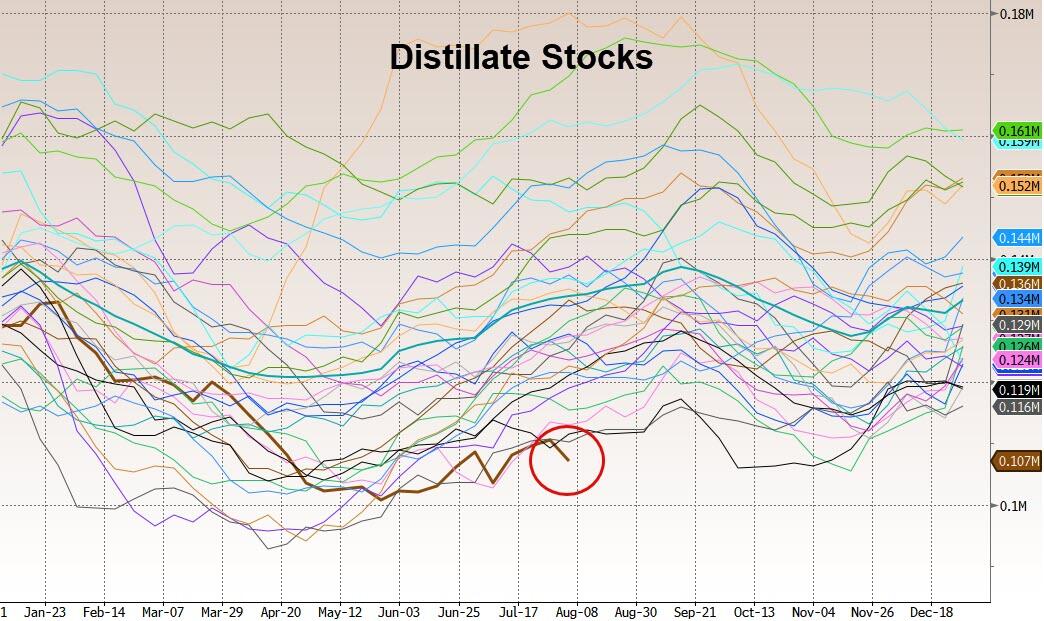
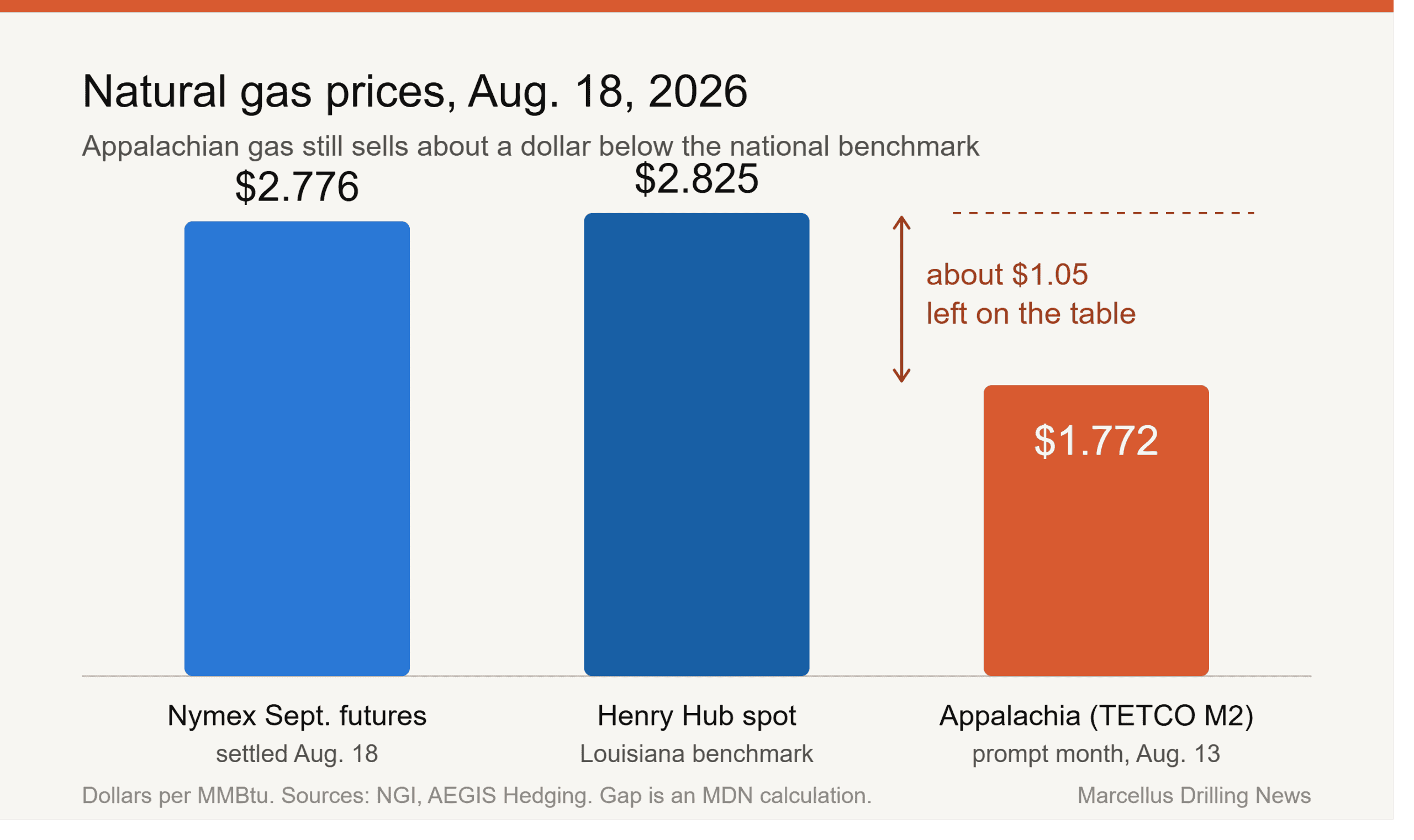
No comments:
Post a Comment