US oil prices finished lower for the third time in four weeks as traders bet that a US peace deal with Iran would soon allow oil to flow freely through the Strait of Hormuz, even while the US strikes on Iranian installations continued, and as Iran insisted that it would continue to regulate traffic through the strait, charging fees to transit….after falling 4.4% to $96.60 a barrel last week on repeated reports that peace in the Middle East was imminent, the contract price for the benchmark US light sweet crude for July delivery dropped by more than 6% on global markets over the US holiday on Monday after President Trump said negotiations with Iran to reopen the Strait of Hormuz were proceeding in an orderly and constructive manner, but spiked in early Asian trading on Tuesday after the U.S. military launched strikes on targets in southern Iran, reigniting fears of renewed military action, just a day after prices had dropped dramatically on promises of a peace deal, and were trading more than 3% higher by 10:45 a.m. in London, as U.S. military operations in southern Iran and President Donald Trump's mixed messaging on the negotiations between Tehran and Washington kept traders on edge, and continued to rebound Tuesday morning in New York after the U.S. carried out fresh attacks on Iran despite an existing ceasefire, raising doubts that a peace deal with Iran was imminent, and settled $2.71 lower than Friday’s US price at $93.89 a barrel, even as global prices were up 3.6% on the day, as a fresh escalation in the Middle East conflict reignited global supply worries that boosted Brent futures while deteriorating domestic consumer data placed a lid on U.S. oil futures….oil prices dropped by around 4% on global markets on Wednesday, as hopes of a U.S.-Iran deal outweighed concerns about rapidly shrinking inventories, as the Strait of Hormuz remained closed on the back of fresh U.S.-Iran hostilities, and slid further as markets opened in New York on news of a partial resumption of flows from the Persian Gulf, as the U.S. and Iran were reportedly close to reaching a deal which would end the double-blockade of the Strait of Hormuz, and settled $5.21 lower at $88.68 a barrel amid hopes for a framework agreement between the U.S and Iran to end the conflict, despite the recent U.S. strikes on Iranian missile sites and on vessels that were attempting to lay mines in the Strait of Hormuz…..however, oil prices spiked once again in early Asian trading on Thursday, after reports of fresh U.S. strikes on Iranian military targets reignited fears that the most recent round of peace talks could give way to further escalation, and were higher as markets opened in New York after U.S. and Iranian forces traded fresh attacks, threatening a shaky ceasefire amid ongoing negotiations to end the war, but then dropped sharply around 10:00 AM after Axios reported that U.S. and Iranian negotiators had reached an agreement on a 60-day memorandum of understanding to extend the ceasefire and launch negotiations on Iran's nuclear program, and settled 22 cents higher at $88.90 a barrel as traders mulled conflicting reports of progress on a potential deal to extend a ceasefire between the U.S. and Iran….oil prices slid again in Asian trading on Friday, after the US and Iran tentatively agreed to extend the ceasefire by 60 days, raising hopes of smoother oil flows through the Strait of Hormuz, and were down about 1% or more on Friday morning in New York, as reports of a potential deal to end the Iran war and reopen the Strait of Hormuz to energy shipping put crude futures on track to their sharpest weekly loss since early April, and settled $1.54 lower at $87.36 a barrel as the U.S. and Iran appeared close to ending their three-month long war and reopening the blockaded Strait of Hormuz to energy shipments. leaving US oil prices down 9.6% for the week..
on the other hand, natural gas prices finished higher for the second time in three weeks, as traders focused on impending cooling demand following a switch to citing the higher priced July contract…after falling 1.8% to $2.907 per mmBTU last week on a larger-than-expected inventory build and on an unsupportive weather forecast for the last week of May, the price of the benchmark natural gas contract for June delivery opened trading 3.7 cents higher on Tuesday, and rose to an intraday high of $2.989 ahead of 10:00 AM, as traders positioned themselves ahead of Wednesday’s final settlement, but slid from that high to settle 1.3 cents lower at $2.894 per mmBTU on forecasts for less demand next week than had been expected before long holiday weekend….June natural gas then opened 1.6 cents higher on its last day of trading Wednesday, as summer-like temperatures were about to subside for key demand areas of the country, then see-sawed through its final session as traders sized up strong supply readings and balanced them against signs of mounting demand to expire 14.6 cents higher at $3.040 per mmBTU, while the more actively traded natural gas contract for July settled 8.5 cents higher at $3.095 per mmBTU….with markets now citing the price of the benchmark natural gas contract for July delivery, that contract opened 2.0 cents lower Thursday, but then rallied to hit the $3.160 level by 10:00 AM, as expectations for short-term cooling demand impressed analysts, then surged thru midday to mark to a near four-month intraday high of $3.289 at 2:25 PM following a historically bullish storage injection, before settling 19.0 cents higher at $3.285 per mmBTU, as a seasonally light inventory injection further propelled natural gas futures that were already in rally mode…natural gas futures pushed higher overnight ahead of Friday's market open as traders responded to a firmer fundamental backdrop, then crept still higher as traders eyed bullish demand signals for domestic power generation as well as exports, before settling 0.5 cents higher at $3.290 per mmBTU, as increasingly bullish demand signals fueled advances for a third straight session, leaving natural gas prices 13.2% higher for the week, while the benchmark natural gas contract for July delivery, which had ended the prior week at $3.021 per mmBTU, finished 8.9% higher…
The EIA’s natural gas storage report for the week ending May 22nd indicated that the amount of working natural gas held in underground storage rose by 92 billion cubic feet to 2,483 billion cubic feet by the end of the week, which left our natural gas supplies 21 billion cubic feet, or 0.9% above the 2,462 billion cubic feet of gas that were in storage on May 22nd of last year, and 144 billion cubic feet, or 6.2% above the five-year average of 2,339 billion cubic feet of natural gas that had typically been in working storage as of the 22nd of May over the most recent five years….the 92 billion cubic foot injection into natural gas storage for the cited week was close to the 94 billion cubic foot injection into storage that the market was expecting ahead of the report, while it was less than the 104 billion cubic foot of gas that were injected into natural gas storage during the corresponding week of 2025, and also less than the average 97 billion cubic foot injection into natural gas storage that had been typical for the same mid May week over the past five years…
The Latest US Oil Supply and Disposition Data from the EIA
US oil data from the US Energy Information Administration for the week ending May 22nd indicated that after a drop in our oil imports and an increase in our refinery demand, we again needed to pull oil out of our stored crude supplies for the fifth consecutive week and for the 27th time in fifty-two weeks, in spite of a drop in our exports and an increase in our oil supplies that the EIA could not account for ….Our imports of crude oil fell by an average of 804,000 barrels per day to 5,212,000 barrels per day, after rising by an average of 116,000 barrels per day during the prior week, while our exports of crude oil fell by an average of 1,164,000 barrels per day to 4,440,000 barrels per day, which, when used to offset our imports, meant that the net of our trade of oil worked out to an import average of 772,000 barrels of oil per day during the week ending May 22nd, an average of 360,000 more barrels per day than the net of our imports minus our exports during the prior week... At the same time, transfers to our oil supplies from Alaskan gas liquids, from natural gasoline, from condensate, and from unfinished oils were 5,000 barrels per day lower than the prior week at 490,000 barrels per day, while during the same week, production of crude from US wells was 13,000 barrels per day higher at 13,715,000 barrels per day. Hence, our daily supply of oil from the net of our international trade in oil, from transfers, and from domestic well production appears to have averaged a total of 14,977,000 barrels per day during the May 22nd reporting week…
Meanwhile, US oil refineries reported they were processing an average of 16,971,000 barrels of crude per day during the week ending May 22nd, an average of 852,000 more barrels per day than the amount of oil that our refineries reported they were processing during the prior week, while over the same period, the EIA’s surveys indicated that an average of 1,770,000 barrels of oil per day were being pulled out of the supplies of oil stored in the US… So, based on that reported & estimated data, the crude oil figures provided by the EIA appear to indicate that our total working supply of oil from storage, from net imports, from transfers, and from oilfield production during the week ending May 22nd averaged a rounded 224,000 fewer barrels per day than what our oil refineries reported they used during the week. To account for the difference between the apparent supply of oil and the apparent disposition of it, the EIA just plugged a [ +224,000 ] barrel per day figure onto line 16 of the weekly U.S. Petroleum Balance Sheet, in order to make the reported data for the supply of oil and for the consumption of it balance out, a fudge factor that they label in their footnotes as “unaccounted for crude oil”, thus indicating there must have been a error or omission of that magnitude in the week’s oil supply & demand figures that we have just transcribed….Since 830,000 barrels per day of demand for oil could not be accounted for in the prior week’s EIA data, that means there was 1,055,000 barrel per day difference between this week’s oil balance sheet error and the EIA’s crude oil balance sheet error from a week ago, and hence the changes to supply and demand from that week to this one that are indicated by this week’s report are off by that much, and therefore useless.... However, since most oil traders react to these weekly EIA reports as if they were gospel, and since these weekly figures therefore often drive oil pricing and hence decisions to drill or complete oil wells, we’ll continue to report this data just as it’s published, and just as it’s watched & believed to be reasonably reliable by most everyone in the industry…(for more on how this weekly oil data is gathered, and the possible reasons for that “unaccounted for” oil supply, see this EIA explainer….also see this old twitter thread from an EIA administrator addressing these ongoing weekly errors, and what they had once hoped to do about it).
This week’s 1,770,000 barrel per day average decrease in our overall crude oil inventories came as an average of 475,000 barrels per day were being pulled out of our commercially available stocks of crude oil, while 1,295,000 barrels per day were being pulled out of our Strategic Petroleum Reserve, the ninth consecutive Iran war related withdrawal from the SPR and including the two largest in SPR history, following a nearly continuous string of weekly additions to the SPR from September 2023 to February 2026, which had followed nearly continuous SPR withdrawals over the 39 months prior to August 2023… Further details from the weekly Petroleum Status Report (pdf) indicated that the 4 week average of our oil imports fell to 5,651,000 barrels per day last week, which was 7.1% less than the 6,084,000 barrel per day average that we were importing over the same four-week period last year. This week’s crude oil production was reported to be 13,000 barrels per day higher at 13,715,000 barrels per day as the EIA’s estimate of the output from wells in the lower 48 states was 2,000 barrels per day higher at 13,293,000 barrels per day, while Alaska’s oil production was 11,000 barrels per day higher at 422,000 barrels per day...US crude oil production had reached a pre-pandemic high of 13,100,000 barrels per day during the week ending March 13th 2020, so this week’s reported oil production figure was 4.7% higher than that of our pre-pandemic production peak, and was also 41.4% above the pandemic low of 9,700,000 barrels per day that US oil production had fallen to during the third week of February of 2021.
US oil refineries were operating at 94.6% of their capacity while processing those 16,971,000 barrels of crude per day during the week ending May 22nd, up from 91.6% the prior week, as refineries ramp up for summertime production….the 16,971,000 barrels of oil per day that were refined that week were 3.9% more than the 16,328,000 barrels of crude that were being processed daily during the week ending May 23rd of 2025, and were 1.2% more than the 16,767,000 barrels that were being refined during the pre-pandemic week ending May 24th, 2019, when our refinery utilization rate was at 91.2%, which was below the pre-pandemic normal utilization rate for this time of year…
With the increase in the amount of oil that was being refined this week, gasoline output from our refineries was also higher, increasing by 600,000 barrels per day to 9,939,000 barrels per day during the week ending May 22nd, after our refineries’ gasoline output had decreased by 446,000 barrels per day during the prior week... This week’s gasoline production was 1.9% more than the 9,751,000 barrels of gasoline that were being produced daily over the week ending May 23rd of last year, and 0.8% more than the gasoline production of 9,863,000 barrels per day seen during the prepandemic week ending May 24th, 2019….at the same time, our refineries’ production of distillate fuels (diesel fuel and heat oil) increased by 76,000 barrels per day to 5,082,000 barrels per day, after our distillates output had increased by 214,000 during the prior week. After those production increases, our distillates output was 5.6% more than the 4,812,000 barrels of distillates that were being produced daily during the week ending May 23rd of 2025, but 1.9% less than the 5,182,000 barrels of distillates that were being produced daily during the pre-pandemic week ending May 24th, 2019....
Even with this week’s increase in our gasoline production, our supplies of gasoline in storage at the end of the week fell for the fifteenth week in a row, decreasing by 2,572,000 barrels to a six month low of 211,591,000 barrels during the week ending May 22nd, after our gasoline inventories had decreased by 1.545,000 barrels during the prior week. Our gasoline supplies decreased by more this week because the amount of gasoline supplied to US users rose by 489,000 barrels per day to 9,256,000 barrels per day, while our imports of gasoline rose by 7,000 barrels per day to 555,000 barrels per day, and while our exports of gasoline fell by 25,000 barrels per day to 800,000 barrels per day… After forty-six gasoline inventory withdrawals over the past sixty-six weeks, our gasoline supplies were 5.2% lower than last May 23rd’s gasoline inventories of 223,081,000 barrels, and about 6% below the five year average of our gasoline supplies for this time of year…
Even after this week’s increase in distillates production, our supplies of distillates fell for the twelfth time in seventeen weeks, decreasing by 2,107,000 barrels to a twenty-three year low of 100,799,000 barrels during the week ending May 22nd, after our distillates supplies had increased by 372,000 barrels during the prior week... Our distillates supplies fell this week because the amount of distillates supplied to US markets, an indicator of domestic demand, rose by 396,000 barrels to 3,948,000 barrels per day, and because our imports of distillates fell by 46,000 barrels per day to 127,000 barrels per day, while our exports of distillates fell by 12,000 barrels per day to 1,561,000 barrels per day... After 24 additions to distillates inventories over the past 46 weeks, our distillates supplies at the end of the week were 2.5% lower than the 103,408,000 barrels of distillates that we had in storage on May 23rd of 2025, and about 11% below the five year average of our distillates inventories for this time of the year…
Finally, after a drop in our oil imports and a jump in our refinery demand, our commercial supplies of crude oil in storage fell for the 13th time in twenty-six weeks, and for the 27th time over the past year, decreasing by 3,327,000 barrels over the week, from 445,013,000 barrels on May 15th to 441,686,000 barrels on May 22nd, after our commercial crude supplies had decreased by 7,863,000 barrels over the prior week….After this week’s decrease, our commercial crude oil inventories were about 2% below the recent five-year average of commercial oil supplies for this time of year, while they were still 25% above the average of our available crude oil stocks after three weeks of May over the 5 years at the beginning of the past decade, with the difference between those comparisons arising because it wasn’t until early 2015 that our oil inventories had first topped 400 million barrels. After our commercial crude oil inventories had jumped to record highs during the Covid lockdowns in the Spring of 2020, then jumped again after February 2021’s winter storm Uri froze off US Gulf Coast refining, but then fell sharply due to increased exports to Europe following the onset of the Ukraine war, only to jump again following the Christmas 2022 refinery freeze-offs, changes in our commercial crude supplies have been less extreme since, and as of this May 22nd were 0.3% above the 440,363,000 barrels of oil in commercial storage on May 23rd of 2025, but were 2.9% less than the 454,689,000 barrels of oil that we had in storage on May 24th of 2024, and were 3.9% less than the 459,657,000 barrels of oil we had left in commercial storage on May 26th of 2023…
This Week's Rig Count
The US rig count was up by four over the week ending May 29th, as the count of rigs targeting oil was up by four, the number of rigs targeting natural gas was unchanged, and miscellaneous rigs were also unchanged…for a quick snapshot of this week's rig count, we are again including below a screenshot of the rig count summary pdf from Baker Hughes...in the table below, the first column shows the active rig count as of May 29th, the second column shows the change in the number of working rigs between last week’s count (22nd) and this week’s (May 29th) count, the third column shows last week’s May 22nd active rig count, the 4th column shows the change between the number of rigs running on Friday and the number running on the Friday of the same week of a year ago, and the 5th column shows the number of rigs that were drilling at the end of that reporting period a year ago, which in this week’s case was Friday, the 30th of May, 2025…

+++++++++++++++++++++++++++++++++++++++++++++++++++++
OH Gov. DeWine Announces Pause of Data Center Tax Exemption - Marcellus Drilling News -- Ohio Governor Mike DeWine announced on May 27, 2026, that he has directed the chair of the Ohio Tax Credit Authority to pause consideration of any new data center tax exemption requests. The pause comes while the Ohio General Assembly’s Joint Data Center Committee “studies” the growth of data centers in the state. DeWine noted that data centers previously granted sales and use tax benefits reported a total capital investment of $27.2 billion in 2025. The Tax Credit Authority will stop accepting new exemption proposals after a meeting next Monday, where it will consider one final proposal. DeWine said the move is a suspension of new exemptions, NOT a data center ban.
Warren, OH Council Proposes Economic Suicide via Data Center Ban -- Marcellus Drilling News -- - The Warren, OH, City Council introduced legislation to impose a permanent ban on new data centers, citing concerns about water supply, wastewater infrastructure, utility costs, and the city’s residential character. Sponsored by Democrats, the proposed ordinance argues that data centers place unsustainable demands on city systems, particularly following a costly wastewater plant upgrade. One Council Democrat drew parallels between data centers and past fracking “disappointments” in the region, emphasizing water as the community’s most critical resource.
Billion-watt AI campus planned for Kentucky's EastPark --A new project branded the “Muskie Data Campus” has been announced for eastern Kentucky, with a Maryland-based company describing the large-scale development as “strategically located” for artificial intelligence and high-performance computing infrastructure. The announcement came Tuesday from TeraWulf Inc., stating it has acquired a hyperscale high-performance computing development site located within the EastPark Industrial Park, which traverses Greenup, Boyd and Carter counties.
TC Energy to Build 42 Miles of Kentucky Pipe for Gas Plant - Marcellus Drilling News -- - Maysville Project map (click for larger version) Although TC Energy filed to build a new pipeline project in Kentucky last November, we’re just now learning about it. TC Energy is proposing the Maysville Project, a 42-mile pipeline expansion of its Columbia Gulf Transmission (CGT) System in Kentucky, to supply 340,000 dekatherms per day (328 MMcf/d) of Marcellus/Utica gas for East Kentucky Power Cooperative’s Hugh L. Spurlock Power Station in Maysville, KY. Traversing Rowan, Fleming, and Mason counties, this infrastructure project includes a new delivery meter station and interconnect in Maysville.
These Mason County properties are projected to house a new natural gas pipeline - — More than a week after Frances Sarver held a town hall to inform people about a proposed 41-mile natural gas pipeline running from Mason to Rowan Counties, WCPO visited the land that drove her to begin studying the issue. Sarver's parents have lived on 105 acres along KY-419 for more than three decades. Her grandfather bought the property around 1970, according to her father, Allen Pollitt."I told my wife when we built this house, I said the only way I'm moving again ... is when they take me out on a gurney," Pollitt said, looking out over the cattle grazing in a valley below. He said he still operates the farm at 90 years old. "I work this every day. In fact, it's probably the reason I'm still alive," he said.Pollitt said he now looks out from his front porch and worries about the metal pipe with orange ribbon sticking out of the ground a few hundred yards down the road. It marks the spot where TC Energy plans to run a new natural gas pipeline as part of its Maysville project. "It will be trenched across, along the power line on the other side of the power line," he said, pointing out toward the horizon from his back porch. Pollitt said he's worried about what the construction could do to his herd and land, and he's concerned that potential malfunctions along the line when active could lead to an explosion. Another Mason County farm owner, Rebecca Cartmell, said TC Energy representatives came to her property around two years ago, requesting access to survey. She was hesitant, but said her brothers allowed the work to continue. We asked why she hadn't signed anything allowing TC Energy to begin work on the land."I think one of the main concerns is once they come through, they have rights to your property," Cartmell said. Both Pollitt and Cartmell told us they weren't against the line's construction, but they would like to see the path moved away from their land."Of course, we would love for it not to come across our property, but then we realize it will go through someone else's," Cartmell said.TC Energy is currently seeking permission to build the line from the Federal Energy Regulatory Commission, and public comment is open to share your concerns.
O&G Spending on AI to Grow from $25B in 2025 to $50B in 2035 - Marcellus Drilling News -The oil and gas industry not only benefits from the AI (data center) sector by supplying natural gas to power plants, it also benefits by *using* AI in its operations. Like just about every other business on the planet, O&G companies are now using (embedding) AI into their business. Here’s a startling statistic: In 2025, O&G companies worldwide spent a cumulative estimated $25 billion on AI, according to Rystad Energy. By 2035, that number will be an estimated $50 billion per year. Amazing! Are you looking for a hot hot hot job? Look at AI in O&G.
Big Green, NY DEC File Separate Lawsuits to Block Constitution Pipe -- Marcellus Drilling News -- Well, you knew this was going to happen. Last week, a group of disgusting Big Green groups and the New York State Attorney General both filed separate lawsuits in the U.S. Court of Appeals for the Second Circuit (2nd Circuit), challenging the Federal Energy Regulatory Commission’s (FERC) decision to resurrect the Constitution Pipeline under the existing (but dormant) docket. NY AG Tish James, representing the Department of Environmental Conservation (DEC), argues that a brand new review should be done by the state to evaluate the project for compliance with the federal Clean Water Act. You may recall that NY previously lost its right to evaluate the Constitution project by stretching out its review for years, causing FERC to overrule NY (see Victory! FERC Overrules NY DEC to Allow Constitution Pipeline).
FERC Seeks to Fast-Track Gas Infrastructure with Blanket Permits - Marcellus Drilling News -- Last Thursday (May 21), the commissioners of the Federal Energy Regulatory Commission (FERC) unanimously proposed significant changes to the agency’s natural gas blanket certificate program, the most substantial overhaul since 2006. The Notice of Proposed Rulemaking (NOPR) aims to roughly double the cost thresholds for pipeline companies to build and modify infrastructure without extensive case-by-case approval. It also expands eligible project categories and, for the first time, extends streamlined authorization to certain LNG facility activities
US natural gas futures hover near one-week low as demand outlook slips -(Reuters) - U.S. natural gas futures held near a one-week low on Tuesday after the long U.S. Memorial Day holiday weekend on forecasts for less demand next week than previously expected. On its second-to-last day as the front-month, gas futures for June delivery NGc1 on the New York Mercantile Exchange fell 1.3 cents, or 0.4%, to settle at $2.894 per million British thermal units (mmBtu), their lowest close since May 14 for a second day in a row. Futures for July, which will soon be the front-month, were also little changed at around $3.01 per mmBtu. Looking forward, the 12-month NG12Mst and year-ahead NGYstc1 futures strips both fell to their lowest since December 2024. In the cash market, average gas prices at the Waha Hub in West Texas have remained in negative territory for a record 76 days in a row as pipeline constraints trap gas in the Permian region, the nation's biggest oil-producing shale basin. In the West, mild weather and ample hydropower supplies pushed spot power prices at South Path 15 W-SP15-IDX in Southern California into negative territory for the 12th time this year. Financial group LSEG said average gas output in the U.S. Lower 48 states fell to 109.4 billion cubic feet per day (bcfd) so far in May, down from 109.8 bcfd in April and a monthly record high of 110.6 bcfd in December 2025. Analysts said mild weather earlier this spring allowed energy firms to inject more gas into storage than usual. But they noted recent output declines coupled with higher demand in recent weeks likely reduced the inventory surplus to around 6% above normal during the week ended May 22, down from roughly 7% above normal during the week ended May 15. EIA/GAS NGAS/POLL Looking forward, meteorologists forecast the weather will remain mostly near normal through June 10. LSEG projected average gas demand in the Lower 48 states, including exports, would slide from 99.7 bcfd this week to 98.3 bcfd next week. The forecast for this week was higher than LSEG's outlook on Friday, while the forecast for next week was lower. Average gas flows to the nine big U.S. LNG export plants fell from a monthly record high of 18.8 bcfd in April to 17.0 bcfd so far in May due to spring maintenance at several plants, including ExxonMobil/QatarEnergy's Golden Pass and Freeport LNG's plant in Texas.
Clashes Near Strait of Hormuz Cast Doubt on Peace Deal, Revive LNG Supply Risks --Continued uncertainty over a peace deal between the United States and Iran propped up global commodity prices Tuesday. NGI North America LNG export flow tracker showing US LNG feed gas deliveries near 17.4 million Dth on May 26, 2026. At a Glance:
Fighting also escalates in Ukraine
Heat wave provides further upside
Crude near $100
How the Marcellus/Utica Made the U.S. #1 in LNG Exports - Marcellus Drilling News -- The Appalachian Basin, spanning Pennsylvania, West Virginia, and Ohio, has become America’s premier natural gas province, producing over 35 billion cubic feet daily (Bcf/d) in 2024. Driven by hydraulic fracturing in the Marcellus and Utica shales, private mineral rights, and low breakeven costs below $2 per MMBtu, the basin has reshaped *global* energy markets. How? Infrastructure constraints (lack of pipelines) and Mid-Atlantic political opposition prevent local LNG export terminal development. Even so, Marcellus/Utica gas underwrites domestic power markets, fuels digital infrastructure, and indirectly propelled the United States to become the world’s leading LNG superpower by displacing Gulf Coast gas for export liquefaction.
U.S. LNG Feedgas Lingers at Lower Levels | RBN Energy - U.S. LNG feedgas remains below recent peak levels as maintenance continues to curb demand, with one train offline at both Cameron and Freeport LNG.U.S. feedgas averaged about 17.4 Bcf/d last week (see blue-dotted line below), flat week-on-week, but flows should begin to climb at the end of this week as maintenance wraps up. Cameron appears to be nearing the end of its outage and Freeport will likely follow the week after. Cove Point, Elba Island, Calcasieu Pass, and Plaquemines are all operating at or above typical utilization levels, according to our LNG Voyager Weekly Report. Intake at the commissioning Golden Pass LNG is back around 300 MMCf/d after being near zero from May 9 to 21. Golden Pass said the shut-in was part of regular maintenance tasks related to commissioning. Shut-ins or drops in feedgas are a normal part of the commissioning process and do not necessarily signal any issues at the terminal. .
Lower 48 LNG Feedgas Flows Stabilize Near 18 Bcf/d After Holiday Weekend Recovery - A look at the global natural gas and LNG markets by the numbers. Graphic: North American LNG Export Flow Tracker
- 18 Bcf/d: US feedgas nominations have rebounded sharply from last week’s lows as maintenance events wind down and demand returns. Scheduled flows rose to the upper-17 Bcf/d range over the holiday weekend and have stabilized since the beginning of the week, according to NGI’s US LNG Export Flow Tracker. Utilization at LNG terminals is expected to increase in the coming days with Wood Mackenzie projecting nominations to hover around 17.7-18.1 Bcf/d. Meanwhile, nominations to Freeport LNG have continued to lag after a compressor issue in the beginning of the month. Pipeline utilization was reported at 51% of capacity Wednesday, according to pipeline data.
- 350,000 MMBtu/d: Feedgas flows to Golden Pass LNG have strengthened again ahead of an expected third cargo loading next week. Over the weekend, nominations ticked up around 24% to above 350,000 MMBtu/d after sinking to bare minimum capacities for most of the month. The recovery marked the highest levels to the Texas facility since early May, when a second vessel loaded at the terminal. The Barzan, controlled by QatarEnergy, is currently passing through the Caribbean and is tracking to arrive at the Southeast Texas coast by June 1, according to Kpler data.
- 2 Mt: US LNG exports are set for a 0.32 Mt week/week dip the week of May 25, according to Kpler data. Estimated loadings from terminals in the United States are expected to reach just below 2 Mt, down from 2.31 Mt the week prior. The decline would put weekly exports about 0.72 Mt below the spring high of 2.71 Mt reached the week of April 20. Europe remains the top destination at roughly 0.82 Mt, followed by Asia at 0.58 Mt. There are around 0.38 Mt in volumes with unknown destinations, according to Kpler.
- 14 MMcf/d: An exploration and production firm has restarted natural gas flows at a mothballed field in the North Sea as the UK looks to secure more supply closer to home. Privately held Perenco UK disclosed wells in the Davy gas field in the Southern North Sea are now online after being partially decommissioned five years ago. Production was estimated at around 14 MMcf/d. The restart comes as the UK's government straddles continued policies of winding down offshore production licenses and rising prices amid global conflicts. UK’s National Balancing Point benchmark averaged about $16.08/MMBtu over the latest five trading days.
Mild US, European Weather Mutes Natural Gas Demand, but Late June Heat Offers Hope -Mild weather across the United States and Europe is keeping a lid on near-term natural gas demand, muting the impact of Asian cooling demand and leaving traders looking for late June heat. At a Glance:
- US cooling demand develops unevenly
- Softer feedgas tempers bullish momentum
- Traders await broader summer heat
Data Centers, LNG Each Take Aim at 16 Bcf/d Growth Into Next Decade - LNG exports are driving most of US natural gas demand upside in 2026, but data centers could start to rival LNG as a source of incremental growth by the start of the next decade. LNG exports are driving most of US natural gas demand upside in 2026, but data centers could start to rival LNG as a source of incremental growth by the start of the next decade. NGI chart showing Texas Eastern M-3 forward natural gas basis curves through 2031 with recurring winter price spikes. At a Glance:
- 32 Bcf/d in new demand by 2031
- ArkLaTex leads regional growth
- Appalachia winter premiums strengthen
Cheniere Lines Up Bechtel for Sabine Pass Train 7 Ahead of 2027 FID -- Cheniere Energy has finalized a construction agreement with Bechtel and given a green light for limited work on its Sabine Pass expansion project as it aligns materials and partners for a final investment decision (FID) next year. At a Glance:
- Haynesville feedgas pull could strengthen
- Train 7 underpins phased buildout
- First LNG targeted around 2030
NGPL, Creole Trail Maintenance Seen Tightening Sabine Pass Natural Gas Supply - NGI chart compares Henry Hub, Houston Ship Channel and NGPL TexOk prices against Creole Trail and NGPL feedgas deliveries to Sabine Pass LNG.
- Modest early summer demand is keeping a firm grip on natural gas prices across most of the Gulf Coast, even as pipeline maintenance is expected to tighten supply. Losses on Thursday were modest in South Texas, but NGPL Texok’s 8.5-cent drop to $2.475/MMBtu stood out as most locations in East Texas put up gains on the day. Houston Ship Channel barely budged a half-cent down to $2.535, while Henry Hub fell 7.5 cents to $3.075. The weakness entering the summer season comes as both Creole Trail Pipeline and Natural Gas Pipeline Co. of America (NGPL) kick off brief, but significant, maintenance events.
- First up is Creole Trail, which will start pigging operations on Sunday that will continue for several hours through Tuesday. This will limit available capacity to 700,000 MMBtu/d, representing a maximum estimated cut of around 880,000 MMBtu/d based on average flows over the past 30 days, according to Wood Mackenzie.
- NGPL is set to start work on Compressor Station (CS) 348 on Tuesday, reducing capacity to 450,000 MMBtu/d. NGPL, like Creole Trail, is one of Sabine Pass LNG’s sources of feedgas. NGPL deliveries to Sabine Pass have averaged around 763,000 MMBtu/d and peaked at around 892,000 MMBtu/d on May 7, per Wood Mackenzie. This means the maintenance could cut roughly 442,000 MMBtu/d of deliveries.
- Sabine Pass LNG has several options for receiving feedgas, including Kinder Morgan Louisiana Pipeline (KMLA) and Transcontinental Gas Pipe Line. Wood Mackenzie noted that available capacity from alternative feedgas sources currently stands at about 670,000 MMBtu/d. However, past maintenance events indicate that actual rerouting may fall well short of available capacity.
- Prices along the Gulf Coast are likely to remain soft heading into the weekend, but any cut in supply, combined with any unexpected changes to the currently moderate weather outlook, could provide some uplift. NatGasWeather said Texas could see highs reach the 90s even as national demand remains light. Still, the forecaster noted afternoon highs in the mid-80s to lower 90s over much of Texas “isn’t hot enough to impress.”
NextDecade Files for Another Rio Grande LNG Train, Granted First Phase Extension --Federal regulators have granted NextDecade another three years to complete the first five liquefaction trains at its Rio Grande LNG terminal under construction on the Port of Brownsville in South Texas. At a Glance:
- Project now has until 2031
- FERC application filed for train 6
- Broader expansion not yet sanctioned
Let It Go, Let It Flow – Jones Act Waiver Opens Up New Routes for Foreign-Flagged Ships on U.S. Waters -The White House gave the green light on March 18 for foreign-flagged tankers to move crude oil and refined products between U.S. ports by waiving the Jones Act, and has since extended the waiver to August 17. In two months, 60 waivers have been recorded, and a compelling story is emerging around what those vessels are moving and where. So far, more than 3 MMbbl of gasoline, diesel, jet fuel and heavy crude have moved from other states into California, and there is also a distinct flow of Gulf Coast (PADD 3) barrels to other parts of the country. In today’s RBN blog, we’ll dig into the new patterns that have emerged.As a quick refresher, the Jones Act — formally Section 27 of the Merchant Marine Act of 1920 — requires that cargo moving between U.S. ports travel on vessels that are U.S.-built, U.S.-owned, U.S.-flagged and primarily U.S.-crewed (see Me and Mrs. Jones). The post-World War I law was designed to protect the domestic shipbuilding industry and to ensure a reliable U.S. merchant fleet for national defense and emergency response. Back in 2013-14, strong demand for Jones Act tankers and articulated tug barges (ATBs), along with a spike in charter rates, triggered a wave of new vessel orders. But by the time those ships hit the water, market conditions had shifted: U.S. crude production slumped mid‑decade and the 2015 repeal of the crude export ban reduced the need to move oil and refined products between domestic ports. Demand fell off, charter rates dropped sharply and newbuild orders dried up. Today, the Jones Act fleet stands at around 100 eligible vessels, a fraction of the roughly 400 ships in service back in 1950, and the total has been trending lower over the past decade. A major complication of the Jones Act is that it adds a layer of cost to moving crude and products between U.S. ports. U.S.-built ships are more expensive to build due to limited shipyard capacity and competition, and operators also face higher labor and insurance costs. Those factors have kept the Jones Act fleet relatively small and discouraged new vessel construction, which in turn has pushed up charter rates and shipping costs, a key consideration in whether coastwise transport makes economic sense.These cost dynamics directly shape how crude and products move around the country. While Jones Act vessels typically carry barrels between major hubs like Corpus Christi, Houston, New York Harbor and the West Coast (dashed dark-blue lines in Figure 1 below), or to inland destinations (dashed light-blue lines) and refining areas (green-shaded areas), higher costs can make indirect routes on foreign-flagged ships (dashed pink lines) more attractive. For example, it can be cheaper to move Gulf Coast crude through international routes such as Eastern Canada or even the Panama Canal than to ship it directly to the East Coast on a Jones Act vessel, despite the shorter distance. That cost structure has always limited how many domestic barrels move coastwise, and it’s a big reason why, when the Iran conflict pushed prices higher, the administration reached for a Jones Act waiver. The reasoning behind the waivers is pretty consistent. Operators point to a lack of available U.S.-flagged vessels, tight timing, complications tied to the Strait of Hormuz closure, and the need for flexibility. In short, they say the Jones Act fleet just wasn’t set up to handle a sudden reshuffling of domestic fuel flows during a geopolitical disruption.Let’s start with California, which is highly dependent on crude and refined product imports (see I Need More). With jet fuel prices already roughly double pre-war levels, PADD 5 faces the risk of additional price spikes if the conflict persists. This vulnerability reflects a structural shift. Refining capacity on the West Coast has declined faster than demand in recent years, pushing the region to rely more heavily on imported gasoline and jet fuel, primarily from Asia. Recent refinery closures have reinforced this trend. Phillips 66 shut its Los Angeles-area site, the Carson/Wilmington refinery, in November 2025, and Valero Energy idled its 150-Mb/d Benicia refinery in the Bay Area in February. Combined with earlier conversions to renewable fuels, California has lost roughly 575 Mb/d of conventional refining capacity since 2020, structurally increasing its import dependence.Given that backdrop, it’s no surprise that California shows up again and again in the waiver logs. So far, more than 3 MMbbl of products have been delivered from other parts of the country, with the majority from Texas Gulf Coast terminals such as Houston, Pasadena, Corpus Christi and Port Arthur. In addition, as shown in Figure 2 above, trip after trip runs north-to-south or south-to-north along the West Coast. More than 1.7 MMbbl have been shipped intrastate, and multiple voyages involve the same vessels, including trips such as Martinez (near San Francisco) to Long Beach/Los Angeles and the reverse route, Long Beach to Martinez, or San Francisco to Long Beach.A prime example is the Marshall Islands‑flagged Cabo Deseado, operated by Cape Management and Fleet Ship Management PTE, which loaded VGO at PBF’s Martinez refinery on March 2 and delivered it to Long Beach and Los Angeles on April 5, moving 296.9 Mbbl. A few days later, the vessel was back in Martinez loading low-sulfur gasoil, which it carried south to Long Beach/Los Angeles between April 12-15. Just days after that run, the Cabo Deseado reversed course again, taking on a cargo of heavy crude oil in Long Beach/Los Angeles on April 18 and hauling it north to Martinez by the end of April. […] The Jones Act waiver has reshaped crude and product flows within the U.S. in just a matter of weeks. With those ships now able to serve U.S.-to-U.S. routes for at least the next few months, more U.S crude oil and refined products can move to premium East and West coast markets instead of being pushed onto the export slate. We expect that trend to continue, with many more waivers likely through August. But some key questions remain. Is the waiver enough to offer significant help to places like California and the East Coast? Will it be extended beyond mid-August? And will there be a new push to revoke the Jones Act outright? We’ll be watching to see how the market develops over the summer.
Delaware City Refinery oil spill hits Delaware River after Memorial Day --Delaware City Refining Co. spilled oil into the Delaware River just after the holiday weekend. The refinery issued an oil spill notification on May 26 sharing “evidence of an oil spill and sheen in the vicinity of our pier on the Delaware River” was observed by refinery personnel at around 7:15 a.m. on Dock 3. It said the spill occurred following the completion of a transfer of oil to a marine vessel.The refinery’s oil response team “promptly established containment to prevent migration of the sheen and initiated oil recovery and cleanup efforts following established procedures,” the notification read. The Delaware Department of Natural Resources and Environmental Control tracks releases such as the oil spill through the Delaware Environmental Release Notification System. The system recorded the oil spill time as 4 a.m. on May 26, then reported a few hours later at 8:02 a.m. DNREC’s report said gasoline blending stocks – a hydrocarbon material that is not finished gasoline but can be blended with other components to become so – or specifically reformates, continuously leaked into the Delaware river due to a leak in the refinery’s supply pipeline from landside to the rack used for loading and unloading ships. Reformates can irritate the upper respiratory tract, central nervous system and organs if inhaled or ingested, per DNREC, leading to various complications. The report did not include the estimated quantity of oil spilled, though the leak was contained.The incident was not categorized as "extremely hazardous" by investigators. An extremely hazardous substance is no more or less dangerous than “hazardous” chemicals, but they are more volatile, according to DNREC. No impacts were recorded from the release, but oil spills are known to harm water creatures, ruin water quality and make seafood unsafe to eat. Oil spills also require specific cleanup to save harmed wildlife and help the impacted body of water recover, according to the National Oceanic and Atmospheric Administration.
Heat of the Moment — Oil and Gas Prices Supercharge Q1 2026 E&P Results | RBN Energy -Oil and gas markets don’t stay quiet for long. Just as upstream producers settled into a lower-growth, shareholder-return-focused era, a geopolitical shock in the Middle East and one of the coldest Eastern winters in years sent commodity prices sharply higher during Q1 2026. WTI crude surged on fears surrounding the Iran conflict, while Appalachian natural gas prices briefly spiked into double digits as freezing temperatures tightened supply across key consuming markets. In today’s blog, we chronicle a massive rebound in profitability and cash flow from a dismal Q4 2025 for the 38 E&P companies we cover.Crude oil prices soared during Q1 2026, but only in the last month of the quarter, so higher realizations tell only part of the earnings story. At the same time, commodity markets strengthened while producers continued to grind down operating costs, cut impairment charges and maintain disciplined spending — allowing much of the price upside to flow directly to their bottom line. The quarter also reinforced how structurally different today’s upstream sector has become compared with prior commodity upcycles, with producers now far more focused on returns and balance-sheet durability than on rapid production growth. Importantly, most producers resisted the temptation to materially accelerate drilling activity, continuing the capital discipline that has defined the sector since 2021. The result was one of the strongest quarters for upstream profitability since the post-pandemic recovery, with Gas-Weighted E&Ps briefly taking center stage before what already appears to be another shift in momentum heading into Q2 2026.We made several changes to our peer-group composition during Q1 2026 to better reflect the evolving strategic profiles of the companies in our universe. ConocoPhillips was moved into the Oil-Weighted peer group, while EOG Resources was reclassified into the Diversified E&Ps because of its increasingly balanced commodity mix and broader operating footprint. In addition, Diversified Energy and SandRidge Energy were added to the list, expanding our coverage of mature asset and natural gas-focused operating strategies.The 38 E&P companies covered in this analysis saw profits surge in Q1 2026 as oil prices (gray line and right axis in Figure 1 below) climbed following the Iran conflict and Appalachian natural gas prices — a pivotal benchmark for our Gas-Weighted E&Ps — spiked during an unusually cold winter across the eastern half of the U.S. At the same time, the companies in our universe reduced overall costs by more than $1/boe. Pre-tax profits (blue bars and left axis) more than doubled from Q4 2025 to $13.67/boe in Q1 2026, the second-highest result since mid-2023. Realized prices increased 24% to $38.15/boe, while total costs fell 4% to $24.28/boe. Lifting costs rose 4% to $11.28/boe, driven solely by higher price-sensitive production taxes. Production costs were flat at $9.32/boe, while severance and ad valorem taxes rose 26% to $1.96/boe. Excluding production levies, total costs declined 6%. Depreciation, depletion and amortization (DD&A) expenses fell 4% to $10.45/boe, while impairment charges were reduced by 31% to $2.44/boe. Exploration expenses increased by 12% to $0.32/boe. Cash flow (orange bars and left axis) rose a healthy 35% to $26.87/boe, a two-year high. The Gas-Weighted E&Ps were the most profitable peer group in the quarter, posting pre-tax operating earnings of $16.47/boe, well ahead of the Oil-Weighted and Diversified peer groups at $12.33/boe and $12.23/boe, respectively. Oil and gas production fell 1% to 1.51 billion boe, as a 3.4% gain by the Diversified E&Ps partially offset declines by both the Oil-Weighted (-2.6%) and Gas-Weighted E&Ps (-2.6%). The Oil-Weighted E&Ps posted the largest increase in pre-tax profits (blue bars and left axis in Figure 2 below), going from $2.10/boe in Q4 2025 to $12.33/boe in Q1 2026, a fivefold increase, on the strength of higher oil prices (gray line and right axis). In addition, cash flow (orange bars and left axis) rose 28% to $29.72/boe. The gain in income resulted from a combination of a 19% increase in realized prices to $43.08/boe and a 10% ($3.33/boe) reduction in costs, including a $1.26/boe decline in impairment charges. Lifting costs were up 3% to $13.36/boe as production costs were down 1% to $10.61/boe, while production taxes were up 24% to $2.75/boe. DD&A expenses were reduced by 3% to $13.86/boe. In addition, impairment charges were cut in half to $3.11/boe. Impairment charges still amounted to $1.8 billion, the largest of which was a $1.4 billion ceiling test write-down from Diamondback Energy in addition to the $3.7 billion impairment charge it took in Q4 2025. Exploration charges increased 24% to $0.42/boe. The Diversified E&Ps saw profits (blue bars and left axis in Figure 3) increase 53% to $12.23/boe from $8.00/boe in Q4 2025 on the back of higher oil (gray bars and right axis) and gas prices. Cash flow (orange bars and left axis) was up 21% to $28.33/boe. Realized prices increased 15% to $39.71/boe. Lifting costs gained 1% to $11.38/boe as production taxes increased 23% to $2.24/boe and production costs declined 3% to $9.14/boe. DD&A expenses fell 5% to $11.28/boe. Impairment charges were $1.8 billion ($4.38/boe, up 42%), primarily because of Ovintiv’s $1.5 billion ceiling-test write-down on oil properties. The company write-offs consisted of $1.1 billion in the U.S. and $400 million in Canada. Exploration spending was down 1% to $0.44/boe. The Gas-Weighted E&Ps saw a surge in profits and cash flow during Q1 2026 due to the frigid winter weather that gripped the eastern half of the U.S. As you can see in Figure 4 below, we plotted the Gas-Weighted E&Ps profits (blue bars and left axis) and cash flow (orange bars and left axis) against the Transco Zone 6 natural hub (gray line and right axis), which serves the New York City market and acts as a key benchmark for Appalachian gas pricing. Earnings more than doubled to $16.47/boe, the highest among our three peer groups, powered by a surge in Appalachian natural gas prices to more than $12/MMbtu. The quarter demonstrated how rapidly regional gas market tightness can reshape profitability for Appalachia-focused producers. Realized prices were up nearly 50% to $30.98/boe ($5.16/Mcf). Lifting costs rose sharply, only partially because of higher production taxes. Lifting costs increased 7% to $8.71/boe as production costs rose 5% to $7.94/boe and production taxes were up 40% to $0.77/boe. DD&A expenses were reduced by 10% to $5.88/boe, while exploration costs increased 5% to $0.08/boe. Impairment charges were crushed during Q1 2026, down 93% to $0.02/boe.
Oil Spill in East LA Injures Birds - May 24 Authorities Sunday continued to monitor the effects of an oil spill that sent at least 2,400 gallons of crude oil onto an intersection in East Los Angeles, where a construction crew laying out a fiber optic line ruptured an underground pipeline and crews planned to work through the night to repair the broken pipeline. Firefighters were dispatched at 3:19 a.m. Friday to the area of East Cesar Chavez and North Eastern avenues, according to a Los Angeles County Fire Department public information officer, who added that the crude oil was projecting through the asphalt at the intersection. The “pipeline operator” was notified of the rupture and shut down the flow within 30 minutes of being notified, she said. The shut-off valve was near Dodger Stadium. The 16-inch line extends from Kern County to the Port of Long Beach, she said, adding it will “take days” to repair the line. It was unclear how long the clean up might take. “Petroleum product entered storm drains and was released into the Los Angeles River. Investigation into the cause and volume is ongoing,” California Department of Fish and Wildlife spokesman Eric Laughlin said. “OSPR (Office of Spill Prevention and Response) personnel on scene include wildlife officers, environmental scientists and oil spill prevention specialists.” “The Oiled Wildlife Care Network has been notified and is on standby for wildlife response,” Laughlin added. OWCN officials said Saturday that oiled birds have been collected from the area by trained OWCN responders from UC Davis, Aquarium of the Pacific and International Bird Rescue. . “The birds have been transported to the Los Angeles Oiled Bird Care & Education Center where additional OWCN responders are providing initial care prior to cleaning,” they said. Some of the oil that spilled into the L.A. River contaminated 25 birds, which were receiving treatment, the California Office of Spill Prevention and Response said Sunday. The state officials added that crews were making progress at strengthening measures to contain the oil during cleanup and recovery. Long Beach officials said Sunday that they were closely monitoring conditions in the LA River in coordination with the Unified Command and through their own on-site visual assessments. “At this time, we understand that no new oil is entering the river,” according to a city statement. “Current mitigation efforts are focused on addressing the oil that is already present. On Saturday, an oil sheen was observed near the PCH bridge. In response, additional oil-absorbing booms have been deployed at multiple points along the river, including Willow Street, PCH, Ocean Blvd and the approach to Golden Shore.
L.A. River Cleanup Continues After 2,400 Gallon Spill -Over 2,000 gallons of crude oil flowed into the L.A. River after a pipeline located by East Cesar E. Chavez Avenue and North Eastern Avenue ruptured. The incident, which occurred last Friday, resulted in clean-up endeavors that continued through the weekend and into Monday. The oil entered storm drains that emptied out into the river, leading concentrating clean-up efforts to the pipeline site as well as the riverbank. In Long Beach, oil-absorbing containment booms were installed to help prevent oil spill-off from reaching the ocean. Additionally, wildlife volunteers have been at work; approximately 25 oil-soaked birds along the L.A. River have been treated. Community members living near the site of the spill have reported strong fumes since the incident occurred on Friday. Officials state that they are closely tracking the situation, utilizing both community air monitoring systems as well as individualized personnel-operated air monitoring tools. Air purification efforts also remain in place. Kristina Werner spokesperson with the Office of Spill Prevention and Response (OSPR) said: “We know that this community is impacted, and we know that roads are shut down. We know that it’s an impact, so we just ask for everyone’s patience and just keep in mind, we will do this as quickly and as properly as we can,” Thus far, officials say they have been able to keep oil contamination away from the river south of the Pacific Coast Highway. However, clean-up efforts will continue into the foreseeable future. The broken pipeline has been shut down, and crews remain in place, excavating and repairing the channel.
US Shipping More LNG to Asia, Setting Stage for Supply Battle with Europe Later in Year – (Graphic: US Gulf Coast Netback Prices) More US LNG is headed to Asia on early signs of summer demand that are pushing up prices as buyers in the region grapple with supply outages in the Middle East. At a Glance:
Diversions increasing
Heat stoking Asian demand
Europe faces storage deficit
Mexico’s Gato Negro LNG Gains Permit as Waha Natural Gas Glut Persists -The Gato Negro Manzanillo LNG export facility planned for Colima, Mexico, has secured an environmental permit from the Agencia de Seguridad, Energía y Ambiente (ASEA), a “significant regulatory milestone,” developers of the project said.NGI chart showing Waha daily natural gas prices from May 2025 to May 2026 with volatile swings, negative pricing, winter spike. At a Glance:
Gato Negro targets 2030 startup
Phase 1 offers 3 Mt/y
Waha prices remain negative
NOG to acquire 25% Duvernay light oil stake for $253m - Northern Oil and Gas (NOG) has agreed to acquire a 25% undivided stake in light oil properties in the Duvernay East Shale Basin, Alberta, Canada. The transaction, currently valued at C$350m ($253.4m) before customary closing adjustments, marks the company’s entry into the Canadian market. The assets are currently operated by Parallax Energy Operating, a portfolio company of investment funds overseen by Carnelian Energy Capital Management. Under the agreement, NOG will purchase its interest through a combination of cash and stock. Parallax will receive approximately C$113m in NOG common stock at closing. The remainder of the payment will be funded through cash on hand, operating free cash flow, and borrowings from NOG’s revolving credit facility. In connection with this acquisition, NOG is forming a new Canadian subsidiary, NOG Energy Canada. The portfolio to be acquired comprises approximately 75,000 net acres and around 500 gross drilling locations. NOG estimates the assets hold roughly 20 years of inventory, with average breakeven costs below $50 WTI and a projected capital cost of about $0.6m per net location. Production from the acquired stake is expected to reach around 4,000 barrels of oil equivalent per day (boepd) by 2027, with roughly 80% categorised as light oil.
Canadian Rig Counts: Active Oil Rig Count Now 23% Above Prior Five-Year Seasonal High -Western Canada’s active oil-directed rig count jumped by 11 rigs for the week ending May 22, to 85 rigs, eclipsing 69 rigs that were active at this time last year, which was the prior five-year high for this time of year, according to Baker Hughes data. The Western Canada natural gas-directed active rig count was unchanged for the week at 48 active rigs, five more than at this time last year. In terms of oil-directed rig counts in Western Canada last week, Saskatchewan added eight rigs, primarily in Southeast Saskatchewan where the active rig count went from three to ten last week, as spring break-up season looks to be ending earlier than last year. In Alberta, the Foothills Front, East Central Alberta, and Northeast Alberta regions all added one rig last week. Strong oil prices and an early end to spring break-up in Southeast Saskatchewan are contributing to a stronger oil-directed rig count for this time of year than has been seen in the past 10 years.The natural gas-directed rig count in Western Canada fell by one in the Alberta Foothills Front region, to 26 active rigs, while Saskatchewan went from zero to one rig actively targeting gas.
Canada Eyes European LNG Foothold With Ksi Lisims Supply Deal to Germany (Graphic: Other North American LNG Netback Prices) Canada’s LNG ambitions are expanding across the Atlantic, as Germany secures supply from a proposed export project that could establish Canada’s link to Europe’s natural gas market. At a Glance:
- Germany further diversifies LNG portfolio
BC feedgas targets overseas markets
AECO discount strengthens LNG economics
"Removed Without Warning": Ex-BP Chairman Blasts Abrupt Ouster As Wall Street Gets Spooked - The abrupt Tuesday morning firing of BP Chairman Albert Manifold by the board certainly raised eyebrows, given his key role in the company's turnaround effort: unwinding years of underperforming green-energy bets and steering the oil major back toward its oil-and-gas business. The board cited "serious concerns" tied to "important governance standards, oversight, and conduct" as the core reason for Manifold's removal. But the explanation remains vague, leaving Wall Street desks wondering exactly what prompted such a sudden and aggressive move against the chairman.Bloomberg reporters reached out to Manifold for his perspective on the firing. He said, "I was removed without warning and without explanation." "I dispute entirely the characterization of my conduct and I will not allow a false narrative to go unchallenged," Manifold continued. The outlet spoke with people close to BP, who requested anonymity, and said the firing was tied to Manifold's "aggressive behavior" toward employees and mishandling of sensitive information. They also noted that he was seeking to bypass the board. Manifold told the reporters, "During my time as chairman, I worked to drive genuine change at BP — cutting costs, challenging excess, and holding the organization to higher standards," adding, "The board's statement this morning acknowledged the focus and pace I brought." The dismissal adds to BP's leadership instability, following years of underperformance and multiple CEO changes. Also, BP shares in London are nearing the lows set by yesterday's announcement. Manifold had been a driving force behind an aggressive turnaround, bringing in CEO Meg O'Neill, Big Oil's first female chief executive, while pushing cost cuts, asset sales, and a renewed focus on oil and gas. C That strategy had been warmly received by Wall Street analysts after years of frustration with BP's costly move into unprofitable and unreliable green-energy deals. "We had welcomed what looked to be a turnaround under Mr. Manifold, but we think serious questions do need to be asked about the wider board's decision-making process," Barclays analyst Lydia Rainforth said in a note. TD Cowen analyst Jason Gabelman noted, "We had believed Manifold could be a driving force behind any updates, including an acceleration of investing in core oil and gas assets and further simplifying the business. Continued leadership change could bring into question pace of change at a minimum." His removal now raises new questions over whether the company can maintain the turnaround plan.
Iraq's Oil Collapse Sparks Race For New Export Routes -- April was indeed the cruellest month for decades for Iraq's crude oil production, with an average of 1.389 million barrels per day (bpd) over the period. This compares to a monthly average of 3.47 million bpd from January 2002 to the end of March this year, and an average of over 4.1 million bpd in the three months leading up to the onset of the U.S./Israel-Iran War on 28 February. The last time oil production fell to the current level in the country was in the early 2000s, during and immediately following the 2003 U.S.-led invasion. Even for a diversified economy, this would spell bad news, but for Iraq, it is existential, with over 90% of its annual budget historically coming from oil and around 95% of that black gold having to pass through the still-blockaded Strait of Hormuz before it is monetised. The effective closure of that key export route meant that Iraq's domestic oil storage tanks quickly filled to maximum capacity, and because it has extremely limited options to transport its crude elsewhere, it has been forced to shut down production wells entirely. As disastrous as it is now, even worse may be to come soon, as these shutdowns can cause permanent damage to wells through a loss of reservoir pressure, water infiltration, and corrosion, among other factors. In Iraq's case, many of its biggest mature southern fields are highly susceptible to these problems. This is why the race has been on in Baghdad to secure other export options, most notably now, pipeline options in the north, but these bring their own sets of problems with them.Historically, moving oil from the southern part of Iraq administered by the Federal Government of Iraq (FGI) in Baghdad was a largely redundant exercise, with little demand for it from Europe that was not already being filled by oil coming from the country's semi-autonomous northern region, presided over by the Kurdistan Regional Government (KRG). Instead, the onus of the FGI's export drive was to the East, especially to China - a route involving the Strait of Hormuz. This was also a pivotal means by which sanctioned Iranian crude oil could be surreptitiously transported to the same destination, rebranded as non-sanctioned Iraqi oil, with all elements involved in this mechanism analysed in full in my latest book on the new global oil market order. Aside from the ongoing conflicts with Washington that this continued practice brought with it for Baghdad, it also meant that the Federal Government could focus on measures aimed at stopping the KRG's oil exports to Europe via a pipeline running into the Turkish port of Ceyhan, thus pressuring its ability to generate financing independent of Baghdad. This was central to Baghdad's long-term objective to destroy the economic infrastructure of the Kurdistan region before rolling it into the remainder of a unified Iraq as just a regular administrative region. The idea was in line with the geopolitical ambitions of Baghdad's superpower sponsors, China and Russia, as also detailed thoroughly in my latest book. These objectives were outlined some time ago by a very senior member of the Russian administration to a senior source who works closely with Iran's Petroleum Ministry, and then exclusively relayed to OilPrice.com: "By keeping the West out of energy deals in Iraq, the end of Western hegemony in the Middle East will become the decisive chapter in the West's final demise." On the other hand, the U.S. and its allies wanted to bolster the independence of the Kurdistan region to act as leverage to extend their influence in the rest of Iraq to the south. Their objective was to have the Kurdistan region expel all Chinese, Russian, and Iranian companies from the region, and then to gradually push for the same to happen in the rest of Iraq.The key lever Baghdad used to effect this plan to subsume the northern Kurdistan region was a deal struck in 2014, in which the FGI pledged to send the KRG money each month from Iraq's central government budget (17% at the time the deal was made) in exchange for the KRG pledging to send oil produced in its region (around 550,000 bpd at the time of the initial deal) to the FGI. The deal has never worked properly, with either Baghdad accusing Erbil of underdelivering oil (and selling it separately outside the terms of the agreement) or Erbil accusing Baghdad of underpaying from the budget - or both simultaneously. This, though, has caused a big problem for Baghdad since the outbreak of U.S./Israel-Iran War, in that the KRG had the only workable pipeline solution that would enable Baghdad to move its oil anywhere for monetisation through exports. Moreover, the supply/demand dynamics shifted so that European refiners grew desperate to secure any replacement barrels to compensate for those that had come through the Strait. To capitalise on this - but with no fully working pipeline itself, and disagreements with the KRG still simmering away - Baghdad has resorted in recent weeks to transporting oil to Turkey as and when it can through trucks overland.Something is better than nothing, of course, but these volumes pale into insignificance when compared to those that could be achieved through a working pipeline, and it is this that Baghdad is aiming to get up and running as soon as possible. Not that long ago, the FGI had an oil pipeline that ran from the disputed, federally-controlled Kirkuk province adjacent to Iraq's Kurdistan region to the Turkish port of Ceyhan. It ran northwest from the Kirkuk K1 field through federal territory (the Salahaddin and Nineveh provinces, near Mosul) up to the border town of Fishkhabur. This "original" Kirkuk-Ceyhan Pipeline or Iraq-Turkey Pipeline (ITP) consisted of two pipes, which theoretically had a nameplate capacity of 1.6 million bpd combined and was split into 1.1 million bpd for the 46-inch (1,168-mm) diameter pipe and 500,000 bpd for the 40-inch (1,016-mm) line. This FGI-controlled pipeline's export capacity reached between 250,000 and 400,000 bpd when running normally, but even before the Islamic State entered the picture in 2014, the pipeline was subject to repeated and ongoing attacks by various Sunni militant groups operating in the region. Given its unreliability as an export option, the KRG constructed its own single side-track pipeline, from the Taq Taq field through Khurmala, which joins the Kirkuk-Ceyhan pipeline in the border town of Fishkhabur. This had a nameplate capacity of 700,000 bpd, which was then increased to 1 million bpd, although it has so far reached only 900,000 bpd.With or without a peace deal between Iran and the U.S./Israel alliance, Baghdad is now pushing ahead with the Kirkuk-Nineveh pipeline as part of the Iraq-Turkey crude oil pipeline extending to Ceyhan Port on the Mediterranean Sea, which is independent of the KRG. The Kirkuk-to-Nineveh line is not a standalone project, but rather is the vital northern leg of the rehabilitated federal network, proving the physical pipe required to carry oil around the KRG's territory and deliver it directly to the Fishkhabur border terminal. The 350,000-bpd design capacity of this Kirkuk-to-Nineveh segment reflects the Oil Ministry's cautious, phased approach, as they cannot safely test the entire 1.6 million bpd nameplate capacity of the old system at once. Opening this 350,000-bpd pipeline allows Baghdad to easily handle the initial trial target of 150,000 to 250,000 bpd of Kirkuk crude next month. Moreover, once the southern Basra-to-Haditha corridor is built, it will plug into this newly opened Kirkuk-Nineveh-Fishkhabur line, creating a seamless, high-volume flow from the Persian Gulf to Turkey - at least, that is the idea.However, just when the West thought that Iraq might be moving back into its own sphere of influence and away from China's, Beijing's hand has appeared again in this grand pipeline project. To obviate any future problems that might come in transporting oil from its massive southern fields out into the world, Baghdad is working to connect these directly to the northern network, and to achieve this, it has agreed to partner heavily with Chinese engineering firms. This will be part of the US$1.5 billion emergency infrastructure budget approved by former Iraqi Prime Minister Mohammad Shia al-Sudani that ties into the 2019 "Oil-for-Projects" agreement between Baghdad and Beijing, fully analysed in my latest book on the new global oil market order. Suffice it to say here that under this framework, Iraq sets aside 150,000 barrels of oil per day in an escrow account to serve as collateral for such work undertaken by Chinese entities. Indeed, Baghdad bypassed traditional open public bidding to directly invite specialised Chinese state companies to fast-track construction of the US$5 billion Basra-to-Haditha pipeline - the 700-kilometre mega-corridor designed to pump 2.5 million bpd from the south up toward the northern networks.
Stranded - Markets laid in wait for war-related headlines yesterday after Trump truthed on Monday night that “negotiations with the Islamic Republic of Iran” were “proceeding nicely.” It’s also possible that “proceeding nicely” meant that the US was once again escalating to de-escalate, as hours later the US military confirmed reports of strikes against Iranian military assets, including speedboats which were laying mines in the Strait. While the news reel was sparsely populated, it did flag that the US Navy was restarting to guide ships through the Strait with a plan to help a dozen vessels through the passage in the coming days. However, minutes later a “US official” denied these claims, leaving traders, and vessels in the Strait, stranded. Brent crude oil climbed around $3.50 from open to $99.50/bbl. A look at the current landscape suggests to us that a peace deal is far beyond the horizon. Rabobank’s global strategist, Michael Every, released a report, The Hormuz Odyssey: a new base case, which updates our base case to see complications in the Strait for around another three months. The possible outcomes of the war in Iran are immeasurable, but even in the pipe dream scenario where the war ends tomorrow, logistics are king. If a deal were to be magically achieved tomorrow, there are still somewhere around 1,500 ships still trapped in the Strait of Hormuz.The Strait is incredibly narrow and it will take time for these ships to safely pass through. Energy strategists Joe DeLaura and Florence Schmit elaborate on the implications for energy prices in their recent report, Longer Stalemate, Higher Prices. Needless to say, they project oil staying higher for longer, forecasting Brent averaging around $120/bbl in Q3 of this year, which would imply a return to levels still not seen since 2022To further complicate the outlook, the proxy war in the Middle East between Israel and Hezbollah has also re-escalated, with the IDF reporting that it hit over 100 Hezbollah sites in Southern Lebanon, including “storage facilities, command centers, and observation points.” This, of course, likely puts another obstacle in the way of Trump’s insistence that GCC members join the Abraham Accords and normalize relations with Israel as part of a broader peace deal. While many of the GCC states are no friend to Hezbollah, the implications of normalizing relations with Israel during elevated hostilities in the Levant are a political nightmare.US Secretary of State, Marco Rubio, hinted that in his view, negotiations to end the war may “take a few days,” which is certainly more optimistic than our view of a few months. Nuclear programs will continue to stand as a major barrier towards any sense of an agreement between the US and Iran. Total regime change in might not be in the cards, but achieving a firm commitment from Iran that it promises to table its plans for nuclear development is the only way the US can exit the war and keep some of its street cred.But while nuclear proliferation is a major issue abroad, it may be presenting opportunities at home. The New York Times reports that the US government may allow private companies to use “Cold-War era plutonium from dismantled nuclear warheads” as fuel for nuclear power plants.US Treasury yields traded mostly flat from the open, across the yield curve, with a slight bull-steepening bias, and the DXY index was little changed at 99.19. The US 5-year, 30-year spread widened again, back to 84bp, bouncing off of 1-year lows of 81bp on Friday. The US OIS curve remains positioned firmly in favor of hikes, pricing in around 70% of a hike by year-end, and a full hike by March of next year.But the US consumer outlook remains grim. US Conference Board consumer confidence picked up a touch from 92.8 to 93.1, but remains firmly planted in negative territory. The components of the headline index—present situation and job outlook—have been trending consistently lower since 2021, while consumer expectations also remain in negative territory. While we should note that consumer confidence has been a poor indicator of economic performance for quite some time now, a poor consumer outlook coupled with a dire inflationary outlook could spell trouble for those at the lower end of the income spectrum. We will see headline and core PCE price data for April on Thursday, expected to register 3.8% y/y and 3.3% y/y, respectively.
Why Oil Markets Could Face A Generational Shock This Summer If US-Iran Talks Fail -- President Trump is signaling "make a good deal" or walk away with no deal at all.Overnight hostilities around the Hormuz maritime chokepoint highlight just how fragile the ceasefire remains as Washington and Tehran try to solidify a peace deal to end the conflict.The timing of a peace deal is very important because, as we have warned readers, a no-deal scenario would collide with a deteriorating oil-supply backdrop by summer, when global buffers and floating storage begin to run down, and SPR releases become less effective in offsetting lost supply from the Gulf region.Building on UBS analyst Arend Kapteyn's note from Friday titled "When The Oil Buffers Run Out," Brookings' Robin Brooks and Ben Harris outline in a note that oil markets could face a massive price shock by mid-July as temporary supply buffers run dry.There appears to be consensus building among Wall Street analysts at Goldman, JPMorgan, UBS, and many other desks that if the Hormuz chokepoint is not reopened in the near term, an energy cliff may materialize in early summer. The Brookings analysts say crude prices have so far been depressed by three factors: trade rerouting, inventory drawdowns, and market expectations that the U.S.-Iran war would end quickly."The bottom line is that the supply shortfall will build in the coming months as temporary buffers are depleted. And if markets grow increasingly pessimistic over an eventual resolution to the impasse in the strait, oil prices may rise materially higher," the Brookings analysts said.However, they warned that the three factors capping crude prices are fading. Russian floating stocks are likely depleted by the end of April; Iranian floating stocks are expected to be gone by the end of May; and the IEA emergency oil release is projected to be exhausted by July 9.They continued, "It is fair to say that the scale of the supply shortfall is now well-known to markets. But the timeline on which temporary buffers run out and how this interacts with prices is of critical importance.""This interaction means non-linear outcomes in prices—in other words, sharp price spikes—are possible the longer this conflict is expected to take. The potential for non-linear outcomes grows the longer oil tanker traffic through the Strait of Hormuz remains severely encumbered," the analysts ended the note.Shifting back to UBS analyst Kapteyn's note last week on oil buffers, he warned, "Oil prices can move much higher once inventories are depleted." He continued: This week saw the largest-ever drawdown in US oil inventories since records began in 1982: commercial inventories and the SPR combined fell by 17.8mb. These stock draws help explain why—despite nearly three months of supply shortfalls from the Middle East—oil is still trading "only" around $105/bbl.Oil prices and volumes are linked by the price elasticity of demand. A simple relationship allows us to approximate price outcomes under different supply disruptions and degrees of demand destruction:The oil team estimates that the net supply loss via the Strait of Hormuz is around 9mb/d after SPR releases, equivalent to a ~9% disruption.At $105/bbl, this implies demand elasticity of roughly –0.2: a 1% increase in prices reduces demand by 0.2% (see chart). Without SPR releases, the supply shock would be closer to 12%, implying a price nearer $123/bbl.There are two ways in which oil prices could increase much more:
- First, if inventories are depleted they can no longer buffer the supply shortfall.
- Second, as the "easy" adjustments in consumption and production are exhausted, demand becomes less responsive to higher prices.
The chart highlights some scary combinations. For instance, if the global supply shortfall were 14% then even with the current demand elasticity, oil should be trading closer to $140/bbl. If the demand elasticity was 0.15 rather than 0.2, the implied oil price would be $208/bbl, and if the demand elasticity was 0.1 prices would approach $372/bbl. What we are outlining here is a growing consensus across Wall Street: a no-deal outcome between Washington and Tehran would represent a severe risk for energy markets, with the critical point of no return by early summer. That is when the temporary buffers suppressing crude prices, including emergency stockpile releases, floating storage, rerouted flows, and hopes for a diplomatic off-ramp, begin to lose effectiveness. Once those offsets are exhausted, the market would likely be forced to slap a new war risk premium more aggressively, removing the current ceiling on Brent and WTI.JPMorgan analysts recently warned about this ...
Oil market at 'tank bottoms' in Asia, Europe isn't far behind: Jeff Currie -- Oil markets are nearing minimum operating levels in Asia, with Europe likely next and the U.S. potentially facing shortages by July, said veteran market strategist Jeff Currie on Monday, underscoring the global energy shock due to the Iran war. Headline global inventory figures can be misleading as much of the oil stored worldwide cannot be used immediately, said Currie, Carlyle’s chief strategy officer of energy pathways and co-chairman of Abaxx Markets. A large portion of that oil is needed to keep pipelines and storage systems running safely, leaving only a smaller share available for the market. Asia is already close to these so-called “minimum operating levels,” Currie told CNBC on the sidelines of the UBS Wealth Conference in Singapore. Global oil markets have been under strain since the outbreak of the Iran war earlier this year, after disruptions to shipping through the Strait of Hormuz sharply curtailed energy exports from the Middle East. “We’ve seen explosive prices on products. Jet fuel has come down, but diesel has now gone up above jet fuel. So, the problem here in Singapore continues. It just moved from jet to diesel,” said Currie. Europe could begin seeing similar strains within weeks, as the current relief from U.S. oil flows may prove temporary, and as the summer driving season starts. “I would say, Asia, you’re there. Europe, give it about another month, and look for July being a problem in the U.S.,” Currie said. “All of the inventories that are drawing out of the United States out of the U.S. SPR [Strategic Petroleum Reserve] are being exported into Europe, so the Europeans think they have no problem because they’re getting all of this oil being imported from the United States, but that can’t continue on.” His comments come on the back of recent warnings by the International Energy Agency that the global oil market could face a critical supply squeeze during the peak summer consumption period, especially if Middle Eastern exports fail to recover and inventories continue falling. “We may be entering the red zone in July or August if we don’t see that there are some improvements in the situation,” IEA chief Fatih Birol cautioned last week. Currie, a former global head of commodities research at Goldman Sachs, dismissed proposals such as suspending the U.S. federal gasoline tax as insufficient to address the underlying supply crunch. “That doesn’t solve any of the problems. The only way you solve this problem is to increase the availability of molecules,” he said, referring to physical oil supply. While releases from the U.S. SPR have provided some relief, Currie said market pricing suggests underlying shortages remain acute. Ultimately, reopening the Strait of Hormuz remains the only lasting solution, though even that would take time to normalize markets, Currie said, arguing that shrinking global inventories are also strengthening Iran’s leverage in ongoing negotiations. U.S. President Donald Trump on Sunday asked his team to not agree a deal with Iran in a hurry to end the war and reopen the Strait of Hormuz. “Every day that goes by, Iran’s negotiating leverage compounds. Why? Because inventories of oil and inventories continue to drop,” he said. “The minute you think you won, that’s exactly when you know you probably lost, and their negotiating position at this point has never been stronger in the last 47 years.”
"Approaching Unheard Of Inventory Levels": Exxon, Chevron Issue Apocalyptic Warning About What Happens Next To Oil -- Just about two months ago, JPMorgan did the math on "How Long Before The World Hits Crude Oil Operational Minimum." The punchline was that while the market can hold hundreds of millions of barrels, it would still become fragile once working stocks fell too low. Like blood pressure in the human body, the issue is circulation. Then, approximately 4 weeks later, the bank followed up this analysis with some more math, explaining "Why Hormuz Will Reopen By September... One Way Or Another." The bank calculated that of the 8.4 billion barrels in global oil inventories at the start of 2026, only 0.8 billion barrels were realistically available without pushing the system into operational stress. Long story short (and the long story can be found here), OECD commercial stocks could fall to operational stress levels by June, and then hit the global operational floor by September if the Strait of Hormuz remains closed, assuming demand destruction stabilized at 5.5 mbd (with oil prices paradoxically dropping since the last JPM article, demand destruction has actually slowed). Meanwhile, the biggest paradox during this period when the blocked Hormuz Strait meant that roughly 10 million barrels of oil wasn't reaching its intended destination each day, was that instead of prices going sharply higher to destroy demand, oil prices were actually dropping after peaking in late March and then again a month later, in effect incentivizing more demand. This prompted JPMorgan to published that "Something Is Off" With The Global Oil Math...... and Goldman to follow up a few weeks later by observing that in May, global oil inventories plunged by a record 8.7 million barrels per day, with Hormuz still largely blocked. And yet, oil prices are sharply lower in May, in no small part due to the daily market jawboning manipulation by various official and unofficial sources, who signal that an Iran deal is imminent... any minute now. Only it isn't, and while the market may prefer to shove its head in the sand, the biggest names in the room are no longer keeping quiet.Today, Chevron CEO Mike Wirth warned oil prices are likely to rise over the next two months as already near record low crude inventories continue to decline due to the Iran war. “The buffers and the shock absorbers are being steadily drawn down, and the ability for the market to absorb this imbalance is drastically diminished today versus where we started,” he said at a Bernstein conference on Thursday.“Over the next few weeks, we’re likely to see those pressures flow through more directly to physical prices and there’s more upwards pressure that I would expect as we get into June and certainly into July.” Wirth’s comments follow a 10% fall in oil prices over the past week amid optimism that the US and Iran can agree a deal to end the three-month-long conflict that has closed the Strait of Hormuz, a narrow waterway through which a fifth of crude flows. They highlight growing concern among economists that the war’s impact on energy prices will continue to be felt for many months after any deal is agreed to end it... not that that moment is even remotely close. The conflict has removed 12mn-13mn barrels of oil a day from global markets. The comments by Wirth echo a growing chorus of warnings from other oil executives, including the head of the United Arab Emirates state oil group Adnoc, who cautioned last week that full oil flows through the Strait of Hormuz were unlikely to return before next year even if the conflict is resolved. “It will take at least four months to get back to 80% of pre-conflict flows, and full flows will not return before the first or even second quarter of 2027,” Adnoc chief executive Sultan al-Jaber said during an Atlantic Council event on May 21. Echoing JPMorgan's observations, Wirth said oil prices had not risen as much as people had expected due to higher-than-normal stocks of crude prior to the outbreak of the war, releases from the US Strategic Petroleum Reserve and flows of sanctioned oil from Iran, Russia and Venezuela. But he said these stocks were now running low. One wildcard is the rapid, yet very stealthy, drain of Chinese stocks, both commercial and strategic. With 1.4 billion in China's SPR, the moment of reckoning could be delayed yet again if Beijing decides to open the floodgates. Wirth also said the energy crisis would force governments to focus more on “an insurance policy” by building up oil reserves to insulate them from shocks such as the pandemic and wars in Iran and between Russia and Ukraine. “The likelihood that another shock is around the corner is something policymakers are going to have to bear in mind . . . how long they want to roll the dice before they refill inventories is a question that I think we’re going to see policymakers have to grapple with.”“That’s going to put more demand into the market, which is going to put a bit of additional tension on the price,” he said.The Chevron boss concluded by warning that damage to oil and gas infrastructure in the Middle East would cost tens of billions of dollars to repair, putting additional upwards pressure on prices. “If this goes on for long, it tips us into an economic slowdown or a recession, you might have an offset on the demand side, which you can’t rule out.”But if Chevron was pessimistic, the company's biggest domestic competitor, Exxon, was downright apocalyptic. Speaking at the same Bernstein conference, Exxon SVP Neil Chapman had some truly horrifying remarks, certainly not something that Donald Trump would like to hear. We present them below. Commercial inventories of crude oil, of liquids, think petroleum, gasoline, diesel, jet fuel, they've all run down. And running down those inventories has mitigated or offset, supplemented by the release of strategic petroleum reserves, which most of the Western countries have done. All of that has mitigated the impact. You can model this. We've modeled it. I think a lot of people in the industry have modeled it. Nothing new here: we've discussed all this in the previous three months. But it is what he said next that was a moment of shocking insight into just how bad things are about to get: We're approaching unheard of inventory levels. I mean, really, really low levels. You can debate whether that's going to hit those really low levels in two weeks or three weeks. Once you get to that point, then you'll see price shoot up. A model would say dated Brent will shoot up. Once you get to that really low inventory level, up to $150, $160.The models would tell you that. And then what happens is when the price gets to a certain level, demand destruction brings it back into balance. Prices go so high, it becomes unaffordable. And that's what happens. And so we're at that level right now. Next, Chapman connected all the abovementioned dots: "I think crude being in this sort of $90 to $110 for the last whatever it is, six weeks, has really been mitigated by running down inventories. It can't last forever. So we'll see what happens.... predicting this and the exact timing, it's always a challenge. But that's the way we see the picture."Putting all of the above in simple terms: by playing a jawboning game of cat and mouse with oil markets, the Trump administration is only draining stocks, both commercial and strategic, faster as consumers can afford to buy more, and they do. However, the supply sid of the pipeline remains blocked.And until the war in Iran truly ends, and the Strait returns to normal transit, global inventories will continue to drain by about 10-14 million per day. Which is why when the operational floor is reached in less than three months, the resulting parabolic move in oil will be just as memorable as when it plunged deep into negative territory in April 2020 when traders were paying others any amount asked, to take physical oil off their hands. It will be just like that... only in reverse.
Fed's Logan: world may need to cut use of oil and natural gas (Reuters) - The world may need to find a way to get by on less oil and gas if the Strait of Hormuz remains closed much longer due to the U.S.-Israeli war on Iran, Dallas Federal Reserve President Lorie Logan said on Wednesday. Iran has throttled shipping through the strait during the three-month conflict, forcing up energy, food and fertilizer prices. Around a fifth of the world's oil and liquefied natural gas transited the narrow waterway before the war. "With supplies highly constrained, if shipping through the strait does not soon return to prewar levels, world oil and natural gas consumption could need to fall more meaningfully than it has so far," Logan said in remarks prepared for delivery to a Bank of Japan conference. "The economic consequences would depend on the degree to which end users can switch to other energy sources or use energy more efficiently, versus curtailing economic activity." U.S. oil executives in a recent Dallas Fed survey said they expect U.S. oil output to rise this year by only a quarter of a million barrels a day, and by only half a million barrels per day next year. That compares with a reduction in the global oil supply of about 13 million barrels a day since the start of the Iran war -- a shortfall now being largely made up by drawing down inventories that are, Logan noted, finite. "One way or another, I expect energy markets to come into rough balance before too long," Logan said. "If the molecules aren’t available, the world can’t consume them." Logan was one of three Fed policymakers who voted against last month's interest-rate decision because they felt the U.S. central bank should signal that given rising energy and other prices a rate hike is just as possible as a rate cut. In her prepared remarks for the closed-press conference on Wednesday, she did not offer any near-term economic forecasts or comment on monetary policy. She did use the speech to call for boosting the resilience of the Treasury market by centrally clearing the Fed's own Treasury securities trading and enhancing the Fed's liquidity toolkit beyond its standing repo operation, noting that leveraged investors have acquired a growing share of Treasuries. "Levered positions can unwind rapidly in the event of price or funding shocks," she said. "The Treasury market underpins government finance, the flow of investment, and the implementation and transmission of monetary policy. Its resilience deserves, and requires, ongoing effort and vigilance."
Kansas Fed Pres Warns Oil Price Shock Might Not Be Transitory -Federal Reserve Bank of Kansas City President Jeffrey Schmid has warned that the current global energy shock cannot simply be dismissed as transitory, given already-elevated baseline inflation. Speaking at a conference in Iceland, Schmid pointed out that inflation has stalled near 3% and remained above the Fed's 2% target for a long time, making it challenging for the central bank to "look through’’ surging oil prices. Schmid has argued that current monetary policy may not be restrictive enough, reinforcing his hawkish stance on monetary policy. Schmid has suggested that the Fed may need to consider utilizing its balance sheet as an additional tool to cool down the economy.“We're not very restrictive at this stage and I think there's some dialogue that we need to start considering what tools we have to really make it a little bit more restrictive depending on how the oil shock plays out in an environment of already high inflation," the official said. ‘‘Maybe we look at the balance sheet again as another tool to...create some restriction," he added, suggesting some sort of new drawdown in Fed holdings.Despite high prices driven by geopolitical conflict, Schmid noted that U.S. energy firms are practicing extreme capital discipline and are reluctant to increase oil production due to price uncertainty. However, Schmid has affirmed that whereas high energy prices are draining consumer purchasing power, the overall economy remains resilient, with steady growth and a balanced labor market. Schmid’s warning comes hot on the heels of another hawkish stance by yet another Fed official. Dallas Federal Reserve President Lorie Logan recently warned that the world needs to cut its oil and gas consumption to keep energy prices down. Logan was one of three Fed policymakers who strongly objected to post-meeting statement language that hinted the Fed's next move would be an interest rate cut following the April 2026 Federal Open Market Committee (FOMC) meeting. Logan argued that forward guidance should accurately reflect the policy outlook, and that because inflation risks were elevated, an interest rate hike was just as likely as an interest rate cut.
Oil Prices Fall 6% as U.S.-Iran Peace Talks Gain Ground --Oil prices were sharply lower on Monday following comments by President Donald Trump that diplomatic negotiations with Iran are advancing, easing market fears of severe energy supply disruptions due to the Middle East conflict. Brent crude for July delivery fell 5.9% to trade at $97.44 per barrel at 7.45 am ET in Monday’s early morning session, slipping below the $100-per-barrel mark for the first time in nearly three weeks while the corresponding WTI contract fell by a similar margin to trade at $90.99/bbl. Easing inflation and supply concerns prompted a global stock market rally, with Japan’s Nikkei reaching a record high and U.S. futures posting solid gains.Markets reacted to tentative progress in U.S.-Iran diplomatic talks. Tracking data shows de-escalation movements, such as Chinese tankers shifting out of the high-tension zone, while earlier IEA strategic petroleum reserves are being tapped at a record clip to cushion the market.However, both Washington and Tehran have downplayed expectations for an immediate peace agreement to end their three-month-old war, backing away from claims of an imminent breakthrough. Trump recently revealed that he has instructed negotiators not to rush the process, asserting that the U.S. naval blockade on Iranian ports will remain in full effect until a finalized accord is certified and signed. Secretary of State Marco Rubio has affirmed that Washington will exhaust diplomatic channels; however, he has warned that the U.S. will handle Iran in “another way” if a good agreement cannot be secured, hinting at a potential return to active war.Iranian Foreign Ministry spokesperson Esmaeil Baghaei has clarified that while a 14-point framework has been reached, it does not mean they are close to a final signing. Tehran insists that current negotiations are focused strictly on ending active hostilities and lifting the U.S. economic and naval blockade, rather than broader nuclear concessions. Iran insists it will not impose traditional tolls for passage through the strategic Strait of Hormuz, but says it expects compensation for maritime security and environmental services provided.
Oil prices drop more than 5% after Trump says Iran talks are moving in 'constructive' direction - Oil prices dropped Monday after President Trump said negotiations with Iran to reopen the Strait of Hormuz were moving ahead — though traders remained braced for more potential chaos as the blockade that has choked global energy supplies drags on. International benchmark Brent crude had declined 7% to $96 as of the late afternoon, while US benchmark West Texas Intermediate crude went down 6% to $90, after Trump voiced progress on talks with Iran. “The negotiations are proceeding in an orderly and constructive manner,” he wrote Sunday on social media, while cautioning that the US would “not rush into a deal.” Monday’s selloff extended losses from last week, when WTI dropped more than 8% and Brent fell more than 5% after Trump said he halted imminent airstrikes on Iran to give diplomacy more time. Oil prices plunged nearly 6% Monday after President Trump said negotiations with Iran over reopening the Strait of Hormuz were advancing.AFP via Getty ImagesStill, despite Monday’s decline, crude remains dramatically elevated from prewar levels after surging more than 30% since the US and Israel launched strikes against Iran in late February. Scott Martin, a partner at Kingsview Wealth Management, told The Post that investors may be prematurely pricing in a resolution to the Iran crisis even as major risks remain unresolved.“I think the market may be getting a little ahead of itself here,” he said. “Every positive headline around Iran talks seems to knock oil lower, but the actual supply situation still looks pretty tight.“A lot of traders are acting like this thing is almost resolved already, and I don’t think we’re there yet,” he added. “You still have production offline and the Strait of Hormuz is still a real wildcard.” The latest rout was driven by mounting hopes that Washington and Tehran could eventually hammer out a framework to reopen Hormuz — the narrow waterway that handles roughly 20% of the world’s oil supply, which has become the epicenter of the largest energy shock in modern history.Iran has maintained a de-facto blockade of the strait since early March, forcing vessels to seek permission before passage or risk attack.The move followed the killing of Iran’s supreme leader Ayatollah Ali Khamenei and a number of top regime figures in US and Israeli strikes.The US retaliated with its own blockade targeting Iranian ports and shipping.Trump said Sunday that the American crackdown would remain in “full force and effect until an agreement is reached, certified, and signed.”But even as Wall Street cheered signs of diplomacy, analysts warned the market may be getting ahead of itself. Secretary of State Marco Rubio said there was a “pretty solid thing on the table” involving reopening the strait and beginning temporary nuclear negotiations with Tehran, though Iranian officials quickly poured cold water on expectations of an imminent breakthrough. Iranian foreign ministry spokesman Esmaeil Baghaei said talks had advanced on several issues but stressed that did not mean Tehran was close to signing an agreement.The mixed messaging underscored the fragile state of negotiations — and the enormous risk still hanging over global oil markets. The International Energy Agency estimates that more than 14 million barrels per day of oil production remains shut in across the Gulf region, while cumulative supply disruptions have already topped 1 billion barrels.Global inventories plunged by roughly 250 million barrels during March and April as refiners scrambled to replace missing Middle Eastern crude, the IEA oil market report from last week said.Crude prices remain elevated after the conflict between the US, Israel and Iran triggered massive supply disruptions across global energy markets.AFP via Getty ImagesEven if a deal is eventually reached, analysts expect it could take months — not days — for tanker traffic, insurance markets and damaged production facilities to normalize. That reality has left traders caught between collapsing geopolitical optimism and an energy market still suffering from severe physical shortages.“Physical oil flows” remain the key issue, UBS analyst Giovanni Staunovo told Reuters, warning investors not to overreact to headlines about diplomacy while shipping through Hormuz remains heavily restricted.The Energy Information Administration still expects Brent crude to average above $100 a barrel in the near term before potentially easing later this year if Gulf traffic gradually resumes.Martin warned that crude could quickly rebound if negotiations stall after markets already stripped out much of the geopolitical risk premium.“If these talks drag out or fall apart, oil could move right back up fast because the market already pulled some of that fear premium out,” he told The Post. “The bigger issue right now is mixed messaging,” Martin added. “One day it sounds like progress, the next day it sounds tense again. That makes it really hard for traders to know what’s real and what’s just short-term headline movement.”Dan Doyle, author of “Of Roughnecks & Riches” and a veteran of the oil and gas industry, told The Post that US energy producers remain skeptical that any emerging agreement with Iran will meaningfully ease pressure on oil markets. “Trump has been really good at keeping prices down — remember oil ran up to $130 when Russia invaded Ukraine — but even if there is a deal, it doesn’t address uranium up front,” Doyle said, referring to US calls for Tehran to dispose of its nuclear material. He added that producers increasingly see the negotiations as either “another Iranian stall tactic or a U.S. attempt to keep a lid on prices, or both.”Doyle said drilling activity in the US continues to ramp up despite the market selloff because producers expect supply disruptions tied to the Strait of Hormuz to keep crude elevated. “Producers are picking up rigs and frack spreads are selling out,” he told The Post.“Not because of this deal, but because of the Straits of Hormuz being closed. Three months of supply disruptions means prices will settle higher for longer. That’s what’s driving activity at home.”Meanwhile, the shipping crisis remains acute.War-risk insurance premiums for tankers have soared more than 1,000% since the conflict erupted, with some vessels facing insurance charges approaching $7 million per voyage.
Oil Prices Jump After U.S. Strikes Iranian Missile Sites - Oil prices spiked in early Asian trade on Tuesday, after the U.S. military launched strikes on targets in southern Iran, reigniting fears of military action just a day after prices had dropped dramatically on promises of a peace deal. At the time of writing, Brent futures had climbed to $98.39 per barrel, up 2.34% on the session after plunging 7% on Monday. WTI futures also climbed, but, as there was no settlement on Memorial Day, they remained 4.98% down from the start of the week at $91.79.U.S. Central Command confirmed the strikes on Iranian targets near the Strait of Hormuz, including missile launch sites and vessels allegedly attempting to lay naval mines.According to CENTCOM, the strikes were “designed to protect our troops from threats posed by Iranian forces.” Iranian media reported explosions around the city of Bandar Abbas on Monday evening, but did not specify the source of the explosions.The strikes come just as negotiations appeared to be making progress, with Iran’s parliamentary speaker, Mohammad Bagher Ghalibaf, and foreign minister, Abbas Araghchi, travelling to Qatar on Monday in an attempt to finalize the deal.Marco Rubio had even floated the idea of a deal being finalized on Monday, although any permanent solution would remain over a month away as the current negotiations are focused mainly on extending the ceasefire for 60 days and reopening the Strait.A report from Nikkei, citing a Middle East diplomatic source, said Iran could agree to clear mines from the Strait of Hormuz within 30 days under the proposed framework, allowing commercial shipping to resume freely while ending transit fee collections imposed during the conflict. As well as promises of a deal, there has been a slight uptick in vessels passing through the Strait. Ship-tracking data showed several LNG carriers recently passed through the strait en route to Pakistan, China, and India. A supertanker carrying Iraqi crude to China also reportedly completed transit after remaining stranded for nearly three months. As always, markets will remain on edge until a durable reopening of Hormuz is achieved, with volatility likely to remain until then. While further military action would spark a major spike in prices, traders appear to be expecting a diplomatic breakthrough.
Brent crude climbs as Iran vows retaliation against ceasefire violations after US military strikes - Brent crude oil rose Tuesday as U.S. military operations in southern Iran and President Donald Trump's mixed messaging on the negotiations between Tehran and Washington kept traders on edge. July futures for international benchmark Brent crude gained 3.4% to $99.39 a barrel by 10:45 a.m. in London (5:45 a.m. ET), while U.S. West Texas Intermediate futures for July were trading 3.9% lower at $92.85 per barrel compared with Friday's close. There was no WTI price settlement on Monday due to the U.S. Memorial Day holiday. The U.S. military said it "conducted self-defense strikes in southern Iran today," targeting vessels allegedly trying to deploy mines, as well as missile launch locations. The U.S. Central Command said the actions were intended "to protect our troops from threats posed by Iranian forces." Iran's Islamic Revolutionary Guard Corps on Tuesday said it would retaliate against violations of the ongoing ceasefire after it identified and engaged U.S. drones and an F-35 jet fighter that entered the country's airspace. The Islamic Republic's semi-official Tasnim news agency separately described recent talks with the U.S. as "overall good," citing an informed source, but said a memorandum of understanding with Washington would be dependent on the release of $24 billion in frozen Iranian funds. Complicating peace talks further, Trump said in a social media post Monday that he had encouraged Saudi Arabia, Qatar, Pakistan, Turkey, Egypt and Jordan to join the Abraham Accords aimed at normalizing Arab nations' ties with Israel. Trump also said negotiations with Iran were "proceeding nicely," but cautioned that the U.S. could resume military action if discussions were to collapse. "It will only be a Great Deal for all or, no Deal at all," Trump wrote. Swiss multinational investment bank UBS said Friday the global oil market was showing mounting signs of strain as inventories continue to fall amid ongoing disruptions to shipments via the Strait of Hormuz. Observed global oil inventories dropped by a combined 246 million barrels in March and April, while cumulative production losses could exceed 1 billion barrels by the end of May, the bank said. The sharp inventory drawdowns suggest the market remains "strongly undersupplied," UBS said, pointing to falling on-land crude and refined product inventories even as oil stored on tankers rose due to rerouted U.S. exports to Asia.
Brent Rises as US Strikes Cast Doubt on Iran Peace Deal (DTN) -- Brent crude oil futures rebounded Tuesday morning after the U.S. carried out fresh attacks on Iran despite an existing ceasefire, raising doubts that a peace deal with Iran was imminent. By 8:30 a.m. EDT, ICE Brent for July delivery was up $2.92 to trade near $99.06 bbl, and NYMEX WTI for July delivery fell $3.88 to $92.72 bbl. Downstream, NYMEX ULSD futures for June delivery retreated $0.0796 to $3.8082 gallon, and front-month NYMEX RBOB futures fell $0.1308 to $3.3231 gallon. The U.S. Dollar Index softened by 0.135 points to 99.05 against a basket of foreign currencies. Oil prices slumped after several senior U.S. officials over the weekend touted significant progress in negotiations with Iran to end the war that has been disrupting more than 15% of global oil supply for nearly three months. On Monday, U.S. President Donald Trump in a social media post said that negotiations were "proceeding nicely." Ten hours after the statement, the U.S. military launched strikes on southern Iran, saying they had targeted missile sites and ships laying mines in the Strait of Hormuz. Tehran said it considered the attacks a breach of the ceasefire and announced possible retaliatory strikes on U.S. military bases in the region. Following Tehran's response to the attacks, U.S. Secretary of State Marco Rubio on Tuesday qualified his earlier statements about an imminent peace deal, saying negotiations could take several more days. NYMEX traded oil and product futures, meanwhile, slipped from the previous trading day as there was no settlement Monday due to a U.S. holiday. WTI continued to trade at a steep discount to Brent, hovering around $6.32 bbl, compared to $6.94 bbl at Friday's close. Market participants were also tracking signs of possible demand destruction and stunted economic growth amid growing inflationary pressures and soaring energy prices caused by the largest oil supply disruption in history. The second of three estimates for first quarter GDP growth is scheduled for release by the U.S. Bureau of Economic Analysis on Thursday, May 28. In April, BEA estimated the U.S. economy to have expanded by 2% in the first three months of the year after GDP growth slowed to 0.5% in 4Q2025.
Oil Prices Swing Amid U.S. Strikes in Iran as Hopes for Quick Peace Deal Fade -- The crude market settled lower on Tuesday after the market retraced some of it losses on the news that the U.S. military carried out strikes in Iran, adding to uncertainty on whether a peace deal will be imminently reached to end the war. The market gapped lower over the long Memorial Day weekend from $94.73 to $93.88 as optimism increased that the United States and Iran were moving closer to a peace deal that would reopen the Strait of Hormuz. On Monday, Iran’s top negotiator and its Foreign Minister were in Doha for talks with Qatar’s Prime Minister on a potential deal with the U.S. to end the war. Both sides said they made progress on a memorandum of understanding that would halt the war and give negotiators 60 days to reach a final deal. The crude market sold off to a low of $89.41 during Monday’s shortened trading session in observance of Memorial Day. However, the market retraced its losses and started to backfill its gap as it traded to $94.70 by mid-day on Tuesday. The market was supported by U.S. Secretary of State Marco Rubio stating that negotiating a deal with Iran could “take a few days,” cutting hopes for an imminent end to the conflict a day after U.S. forces conducted what Washington called defensive strikes in southern Iran. The oil market settled in a sideways trading range amid the continuing uncertainty. The July WTI contract ended the session down $2.71 at $93.89, while the July Brent contract settled up $3.44 at $99.58. The product markets ended the session lower, with the heating oil market settling down 17.32 cents at $3.7146 and the RB market settling down 23.34 cents at $3.2205. U.S. President Donald Trump said he asked countries including the UAE, Qatar, Pakistan, Egypt and Jordan to sign onto the Abraham Accords as part of U.S. efforts to reach a deal with Iran. He said those countries would be honored to have Iran as part of the accords, a set of agreements to normalize relations with Israel. The Nikkei newspaper reported, citing a Middle East diplomatic source, that the U.S. and Iran are discussing a plan to open the Strait of Hormuz about 30 days after the two countries reach a deal to end hostilities. Iran would proceed to clear mines from the strait during a 30-day window following an agreement, after which ships from all countries would be able to navigate freely and safely, and Iran would stop collecting transit fees. The ceasefire agreed in early April would be extended for 60 days, with the plan to hold talks on Iran’s nuclear program during the two-month pause. Iranian Supreme Leader Ayatollah Mojtaba Khamenei said that Gulf powers will no longer be a shield for United States bases and the U.S. will no longer have a safe haven in the region. A source close to Tehran’s negotiation team said around $24 billion of Iranian funds frozen overseas must be released under a memorandum of understanding being negotiated with the United States. Iran’s top negotiator, Mohammad Baqr Qalibaf, had travelled to Qatar to reach agreement on a mechanism to implement this demand. IIR Energy said U.S. oil refiners are expected to shut in about 178,000 bpd of capacity in the week ending May 29th, increasing available refining capacity by 50,000 bpd from the previous week. Offline capacity is expected to fall to 132,000 bpd in the week ending June 5th..
Oil Prices Fall as Traders Bet on U.S.-Iran Deal - Oil prices dropped by around 4% early on Wednesday as hopes of a U.S.-Iran deal outweighed concerns about rapidly drawing inventories as the Strait of Hormuz remained closed on the back of fresh U.S.-Iran hostilities. As of early Wednesday trade in Europe, WTI Crude, the U.S. benchmark, is down by 4.32% at $89.83 per barrel. The international benchmark, Brent Crude, had fallen 3.66% to $95.94, remaining below the $100 a barrel mark for the third consecutive day.. Traders and speculators appear hopeful, again, that the United States and Iran could be close to a framework agreement that would extend the ceasefire by 60 days and allow further negotiations on the re-opening of the Strait of Hormuz and Iran’s nuclear program. “Oil prices are under pressure on Wednesday morning amid shifting expectations around a potential US?Iran deal, although risks remain elevated with ongoing tension near the Strait of Hormuz,” ING commodities strategists said in a note early on Wednesday.“Prices are under pressure from improved sentiment around a potential US?Iran deal, even as hostilities continue and the Strait of Hormuz remains effectively closed. Military activity persists near the strait, including US strikes and reported Iranian engagement,” the strategists noted. On Tuesday, Iran accused the U.S. of a “grave violation” of the ceasefire, following the new U.S. strikes on missile sites and boats in southern Iran, which the U.S. Central Command described as “self-defense.” U.S. Secretary of State Marco Rubio, who earlier this week played down the possibility of an imminent deal, said an agreement was still in the realm of possibility, but U.S. President Donald Trump wants to either “make a good deal,” or no deal at all. The noise around a potential deal has continuously trumped market fundamentals in recent weeks, with traders trying to play the market on hopes of an agreement and largely ignoring the global energy crunch, with most supply from the Middle East still trapped behind the Strait of Hormuz. Inventory data from the American Petroleum Institute (API) later today, and the EIA weekly petroleum report on Thursday, could move the oil market in the coming hours while traders hope for – and apparently bet on – a U.S.-Iran deal.
Oil prices fall after Iran state media says deal with US would include restored Hormuz shipping -- Oil prices fell sharply on Wednesday morning as traders looked for momentum in US-Iran negotiations, with hopes spurred by reports from Iranian state media that such a deal would reopen the Strait of Hormuz. Futures on Brent crude. the international benchmark, fell as much as 4.2% to briefly trade below $93 per barrel, while those on US benchmark WTI crude stumbled by as much as 5.7% to trade below $89. Oil prices dropped precipitously at around 9 a.m. ET after Iranian state media, which is understood to be tightly controlled by the regime, reported that a draft memorandum between the United States and Iran said Iran would restore shipping through the Strait of Hormuz to pre-war levels within 30 days, while the United States would withdraw its military from the area and lift its naval blockade. Prices had ticked up on Monday and Tuesday after the United States said it launched a new round of airstrikes in southern Iran, the US military’s first major action against the Islamic Republic since the two nations initially agreed to a ceasefire. While the United States called the strikes “defensive,” Iran Supreme Leader Mojtaba Khamenei said the Middle East will “no longer serve as shields for US [military] bases.” Without further escalation, traders have swung their focus back to President Trump’s announcement over the weekend that Washington and Tehran are close to agreeing on terms to restart peace negotiations, with a full ceasefire on all fronts and a reopening of the Strait of Hormuz as preliminary conditions. News that three LNG tankers, headed for Pakistan and China, had successfully passed through the strait over the past few days has also kept prices from rising. Iran’s Revolutionary Guard Corps said Tuesday that 25 ships had crossed the strait after being granted permission over the preceding 24 hours, according to local media. “The markets are just waiting for something tangible now when it comes to a deal between the US and Iran,” “A lot of good news is priced-in, leaving room for disappointment if something comprehensive isn’t announced — especially if it doesn’t offer clarity and certainty about the re-opening of the Strait of Hormuz,” Both the president and Secretary of State Marco Rubio have tempered expectations over the last few days, as Trump noted that both sides must “take their time” and Rubio said in India on Tuesday that negotiating a deal with Iran could "take a few days.” "The straits have to be open, Rubio said. "They're going to be open one way or the other, so they need to be open.” JPMorgan analysts said Wednesday that their base case remains a reopening of the Strait by the end of June, forced by mounting pressure on global oil inventories — though a need to rebuild those inventories will likely keep Brent prices near $100 per barrel through year-end. Analysts have increasingly noted that global commercial oil stocks have been drawn down to levels approaching minimum amounts needed for systems such as pipelines and storage tanks to function, which could drive prices higher. “When you have no crude in storage, THEN and only then will the spot price move to a level to destroy demand. I have no idea if it is 150, or 200, or 250,” Jeff Currie, prior co-head of commodities at Goldman Sachs, said.
Oil Market Trades Lower on Progress in U.S. Iran Peace Talks -- The oil market traded lower on Wednesday on progress in U.S.-Iran peace talks. The market posted a high of $93.69 on the opening and continued on a downward trend amid hopes for a framework agreement between the U.S and Iran to end the conflict despite the recent U.S. strikes on Iranian missile sites and vessels that were attempting to lay mines in the Strait of Hormuz. The crude market extended its losses to over $6 as it posted a low of $87.77 early in the morning amid the news of a draft framework for a memorandum of understanding. Under the framework, Iran would restore commercial shipping through the Strait of Hormuz to pre-war levels within a month, while the U.S. would withdraw its military forces from Iran’s vicinity and lift its naval blockade of the waterway. The market later bounced off its low and settled in a sideways trading range after the White House said the Iranian report for draft framework is false and President Trump said that while Iran wanted to make a deal, the U.S. was not satisfied with it yet. The July WTI contract settled down $5.21 at $88.68 and the July Brent contract settled down $5.29 at $94.29. The product markets ended the session lower, with the heating oil market settling down 11.71 cents at $3.5975 and the RB market settled down 8.68 cents at $3.1337. U.S. President Donald Trump said his administration may talk with Congress about the possibility of legislating a federal gas tax holiday. IIR Energy said U.S. oil refiners are expected to shut in about 180,000 bpd of capacity in the week ending May 29th, increasing available refining capacity by 48,000 bpd from the previous week. Offline capacity is expected to fall to 138,000 bpd in the week ending June 5th.According to Kpler, a cargo of oil from the U.S. Strategic Petroleum Reserve is headed to California this month for the first time ever. California, once a top oil-producing state in the U.S., has in recent years become more dependent on crude imports, including about 230,000 bpd last year from the Middle East. About 460,000 barrels of Bayou Choctaw Sweet crude headed to Chevron’s Richmond refinery in California, while another 50,000 barrels of the same grade discharged at Chevron’s El Segundo refinery.Flint Hills Resources reported flaring due to operating conditions at its 268,500 bpd Corpus Christi West refinery.PBF Energy’s 160,000 bpd refinery in Torrance, California experienced an unplanned flaring event.Dallas Federal Reserve President, Lorie Logan, said the world may need to find a way to get by on less oil and gas if the Strait of Hormuz remains closed much longer due to the U.S.-Israeli war on Iran. She said “With supplies highly constrained, if shipping through the strait does not soon return to prewar levels, world oil and natural gas consumption could need to fall more meaningfully than it has so far.” She added “The economic consequences would depend on the degree to which end users can switch to other energy sources or use energy more efficiently, versus curtailing economic activity.”
Oil Prices Jump After Fresh U.S. Strikes on Iran -Oil prices spiked once again in early Asian trade on Thursday after reports of fresh U.S. strikes on Iranian military targets reignited fears that the most recent round of peace talks could give way to further escalation. At the time of writing, WTI was trading at $90.51, up 2.06% on the session, while Brent crude had climbed 2.17% to trade at $96.34. The jump comes after both benchmarks dropped by more than 7% this week as traders became increasingly optimistic over a potential agreement that could restore traffic through the Strait of Hormuz. Those hopes are now fading after reports that the U.S. military carried out strikes on southern Iran and shot down four Iranian attack drones. A U.S. official from Central Command claimed the action was defensive as the ground control station hit was about to launch a fifth drone. The latest military action followed comments from President Trump on Wednesday that suggested he was in no rush to sign an agreement. The president said that while a good deal could be made right now, “if it's not a great deal, we're not making it." At the same conference, Trump said that the U.S. was not “talking about any easing of sanctions or giving money”. As usual, his comments included a threat to “finish them off” if Iran failed to meet his terms.One of the reasons oil traders had embraced the possibility of a diplomatic breakthrough this week was signals from Iranian media that a potential ceasefire extension was nearing, with suggestions it would include sanctions relief and the release of frozen Iranian assets. Now, Trump’s latest comments, as well as divisions inside Tehran, appear to be complicating that thesis.According to reporting by the FT, Iranian ultra-hardliners are now openly attacking negotiators for considering compromises with Washington, insisting Tehran maintain full authority over the Strait of Hormuz and refuse any concessions on uranium enrichment.As well as the renewed geopolitical risk, bullish inventory data is adding to the upward pressure on oil prices and highlighting the crisis in physical markets.On Wednesday evening, the American Petroleum Institute reported that U.S. crude stockpiles fell by 2.8 million barrels last week, marking the sixth consecutive weekly decline. Official EIA data is due later on Thursday due to a one-day delay tied to the Memorial Day holiday.For now, the ceasefire survives, and talks are continuing, but the risk of a major price spike will remain until a durable peace agreement is signed and a long-term solution to ensuring traffic through the Strait of Hormuz is found.
'Tank Bottoms' Loom At Cushing After Across-The-Board Inventory Draws, Another Huge SPR Drain - Oil prices bounced higher overnight after the US and Iran exchanged new strikes despite their purported ceasefire, rekindling uncertainty about an end to the Middle East war. The latest strikes were the most serious since an April ceasefire, and came despite a series of headlines suggesting talks on a deal were progressing. "A fresh exchange of strikes between the two countries is testing the fragile ceasefire and forcing a reassessment of the chances of a near-term agreement which can reopen the Strait of Hormuz and dial down the pressure the crisis is putting on the global economy," But then, around 1000ET, Axios reports that U.S. and Iranian negotiators have reached an agreement on a 60-day memorandum of understanding to extend the ceasefire and launch negotiations on Iran's nuclear program. That sent oil prices reeling lower... With the geopolitical headlines so dominant, this morning's official US crude inventory and supply data is taking a back seat to Washington and Tehran again (despite some chunky draws reported by API overnight). API:
- Crude -2.8mm
- Cushing -2.9mm
- Gasoline -3.19mm
- Distillates +1.1mm
DOE:
- Crude -3.33mm (-3.2mm exp)
- Cushing -2.79mm - biggest draw since Aug 2023
- Gasoline -2.57mm
- Distillates -2.11mm
Inventories saw across the board drawdowns with Cushing standing out. Distillate draws returned as gasoline stocks fell for the 15th straight week Graphics Source: Bloomberg. 'Tank Bottoms' loom as inventory at Cushing is the lowest for this time of year since 2014... The Strategic Petroleum Reserve saw another major drawdown (over 9mm barrels)... US Crude production ticked higher as rig counts are rising rapidly... The market has backed away from believing the Axios report (after a denial from Iranian news) and the big draw is helping WTI recover... "The bigger picture is that crude is still on course for a second weekly decline, suggesting investors are not yet pricing in a worst-case disruption," Hargreaves Lansdown analyst Matt Britzman said. "For now, the market looks caught between short-term nerves over renewed hostilities and a lingering hope that both sides still have enough incentive to get energy flows moving," he added. Investment strategist Ed Yardeni wrote in an overnight note that "oil markets will be in dire straits" if the Strait of Hormuz doesn't open soon. He sketched out looming crisis points that have turned the U.S.-Iran negotiation into the "ultimate game of chicken." The U.S. blockade of Iranian ports means the country's oil industry is producing too much and storage capacity is quickly filling. Yardeni concludes that Iran has until mid- or late June before storage is maxed out, forcing a sharp cut in production to domestic consumption levels. "The toll on Iran's oil industry and its broader economy is certainly one of President Trump's best negotiating cards," he wrote. Yardeni further notes that oil inventories in Asia are already approaching minimum levels, meaning the war-driven dearth of oil imports will soon lead to shortages. Europe faces the same situation, possibly by late June. Yardeni highlighted International Energy Agency Director Faith Birol's warning that depleted stocks and high usage during the summer travel season could push global oil markets into "the red zone in July or August."
Oil Prices Rise As Iran Draws Red Line on Uranium -- Oil prices rose on Thursday as fresh signs of trouble in Iran peace talks as the parties hit a wall over enriched uranium. WTI crude climbed 2.2% to $100.40 while Brent gained 1.8% to $106.90 as reports emerged that Iran's Supreme Leader, Mojtaba Khamenei, has drawn a hard line on one of Washington's key demands: the removal of Iran's stockpile of highly enriched uranium. According to Reuters, Khamenei issued a directive that near-weapons-grade uranium must remain inside Iran, complicating already fragile negotiations aimed at ending the U.S.-Israeli conflict. Uranium has been one of the major pressure points in negotiations. Israeli officials have reportedly said that President Trump previously assured Israel that any agreement would include removing Iran's enriched uranium stockpile from the country. Iranian officials, meanwhile, appear increasingly unwilling to make that concession. "The Supreme Leader's directive, and the consensus within the establishment, is that the stockpile of enriched uranium should not leave the country," an anonymous Iranian source told Reuters. A White House spokeswoman responded by telling Reuters, “President Trump has been clear about the United States’ red lines and will only make a deal that puts the American people first.” Iranian leadership reportedly believes sending material abroad could leave the country vulnerable if hostilities resume. Reuters reported there remains "deep suspicion" among senior Iranian officials that the current pause in fighting could simply be a tactical timeout before additional strikes. Markets have repeatedly treated any suggestion of progress as a reason to sell oil, and any reminder of reality as a reason to buy it right back. The problem for traders is that the underlying supply picture has not improved very much. The Strait of Hormuz remains constrained, peace talks remain shaky, and supply disruptions tied to the conflict continue hanging over the market nearly three months after fighting began.
Oil prices settle in mixed direction on conflicting reports of US-Iran ceasefire deal (Reuters) - Oil prices settled mixed on Thursday after a choppy trading session, as traders mulled conflicting reports of progress on a potential deal to extend a ceasefire between the U.S. and Iran. Brent crude futures for July , which expire on Friday's settlement, closed down 58 cents, or 0.6%, at $93.71 a barrel. The more actively traded August Brent futures were last trading up by 72 cents at $92.97 as of 3:20 p.m. EDT (1720 GMT). U.S. oil futures eked out marginal gains to settle up 22 cents, or 0.3%, at $88.90 a barrel. Oil prices have been volatile in recent sessions on conflicting signals on the possibility of an end to the three-month Iran war and potential re-opening of the Strait of Hormuz. Traffic through the maritime chokepoint remains a small fraction of the pre-war level. An agreement had been reached to extend the ceasefire in the Middle East for 60 days, four sources familiar with the matter told Reuters. News outlet Axios first reported about the deal on Thursday. The agreement still needs U.S. President Donald Trump's approval, sources told Reuters. Iran's Tasnim news agency, meanwhile, said the text of a potential memorandum of understanding with the U.S. has not yet been finalized or confirmed. In early trading, Brent and WTI futures were up more than 2%, after Iran's Revolutionary Guards said they had targeted a U.S. air base in response to a U.S. attack on the port city of Bandar Abbas. "The complex continues to advance grudgingly on bullish developments out of Iran while plunging markedly on even the slightest suggestion of a reopening of the Strait of Hormuz," oil trading advisory firm Ritterbusch and Associates said. "This contrast in responses to bullish and bearish inputs could continue as long as the ceasefire remains intact." Oil prices were also under pressure from official U.S. data that showed the country's crude oil stockpiles fell by 3.3 million barrels last week, a sixth consecutive week of declines but lower than the 4.1-million-barrel draw analysts polled by Reuters expected. Does that force a rethink of what the pay trade economy actually includes in your ETFs? U.S. gasoline and distillate fuel stockpiles also fell. The oil market remains more sensitive to Middle East headlines despite another week of large declines in U.S. stockpiles, UBS analyst Giovanni Staunovo said.
Oil Prices Slip Following Reports of Iran-U.S. Deal Understanding - Global oil prices dropped sharply following reports of a possible understanding between Iran and the United States to extend the ceasefire and begin negotiations on Iran’s nuclear program. According to international media reports, the price of Brent crude oil dropped to $93.7 per barrel, while WTI crude oil fell to $88.9 per barrel in global trading, The Caspian Post reports, citing Daily Ausaf. In addition, the price of Murban crude oil also declined to $93.3 per barrel. The decline in oil prices came after reports that negotiators from Iran and the United States had agreed on a 60-day memorandum of understanding (MoU) to extend the ceasefire and begin talks regarding Iran’s nuclear activities. According to Axios, citing informed sources, US President Donald Trump has not yet granted final approval to the proposed understanding. The report stated that if signed, the memorandum could become the most significant diplomatic breakthrough since the beginning of the conflict. However, sources indicated that difficult and detailed negotiations would still be required to reach a final agreement addressing Washington’s demands regarding Iran’s nuclear programme. Market analysts say easing tensions in the Middle East generally reduce fears of supply disruptions, leading to downward pressure on global oil prices.
Crude oil prices slide 19% in May, post worst monthly fall since 2020; Will US-Iran peace deal deepen losses? - Crude oil prices declined on Friday, 29 May, after the US and Iran tentatively agreed to extend the ceasefire by 60 days, raising hopes of smoother oil flows through the Strait of Hormuz. Brent crude slipped towards $92 per barrel and is on track for its biggest monthly decline since 2020, falling nearly 19% in May, while WTI crude hovered around $87. Reports suggested that shipping through the Strait of Hormuz could remain unrestricted, although US officials indicated that discussions were still ongoing and no final agreement had been reached. Vice President JD Vance said it was too early to determine whether a formal deal with Iran would materialise. Oil prices continue to face downward pressure amid hopes for a resolution to the Middle East conflict, though earlier positive sentiment over negotiations has since diminished without any agreements. The turmoil around the Strait of Hormuz previously caused a significant global energy crisis, affecting daily oil supply by millions of barrels. Even with hopes for an extension of the ceasefire, numerous obstacles persist, including clearing mines from shipping lanes, restarting closed oil fields, repairing damaged energy infrastructure, and resuming normal cargo transport. Brent crude has fallen by 10.5% this week, experiencing its largest weekly drop since April 2020, while WTI crude has decreased by 9.2%, representing its most significant weekly decline since that same month in 2020. On the home front, MCX crude oil prices have decreased in 7 of the last 8 trading sessions, losing nearly 17% over that period. According to Vandana Bharti, Head of Commodity Research at SMC Global Securities, Brent crude’s nearly 19% decline this month to around $91 per barrel reflects a sharp unwinding of geopolitical risk premiums, though strong market fundamentals continue to support prices. She noted that consecutive multi-million-barrel global inventory drawdowns in March and April, along with a projected second-quarter supply deficit ahead of the peak summer driving season, are likely to limit further downside. Bharti added that escalating war-risk premiums and rerouted shipping routes have widened the Brent-WTI spread to more than $5 per barrel. She believes that if a formal ceasefire agreement is reached, Brent crude could fall below $85 and eventually find support near $80–82. In the domestic market, MCX crude oil may then slip below the ₹8,200 support level and head towards the major base around ₹7,500. However, if peace talks fail, strong demand and supply deficits could trigger a sharp rebound in Brent prices towards $110–115 per barrel, while MCX crude may move above ₹9,155 and retest the ₹9,400–9,600 zone. Kaveri More, Commodity Analyst at Choice Broking, said Brent crude has corrected by nearly 18% this month amid concerns over slowing global demand, easing geopolitical tensions, and expectations that Saudi Arabia will lower official selling prices for Asia for the second straight month. She noted that despite ongoing Middle East tensions, weak refining margins and sluggish Asian demand continue to weigh on crude prices. According to More, the overall outlook for MCX crude oil remains moderately bearish, with prices likely to face selling pressure on rallies unless geopolitical tensions escalate significantly. She sees immediate support near ₹8,100, with a sustained breakdown potentially dragging prices towards ₹7,750. On the upside, resistance is placed in the ₹8,900–9,500 range, where fresh selling interest is expected to emerge. According to Dhaval Popat, Analyst – Energy at Choice Institutional Equities, Brent crude prices are currently reacting more to geopolitical headlines than underlying fundamentals. He said the recent sharp correction has largely been driven by optimism surrounding a potential US-Iran agreement and expectations that shipping flows through the Strait of Hormuz could gradually normalise. Popat added that any formal announcement or positive progress in negotiations could push Brent crude prices lower in the near term. However, he noted that the physical oil market remains considerably tighter than current prices indicate. Over the past two months, a global supply deficit of nearly 7–11 million barrels per day has only been partially offset by higher US production and releases from strategic petroleum reserves. Continued inventory drawdowns suggest that underlying demand-supply balances remain tight despite the recent price decline. Popat believes that while crude oil may remain under pressure if diplomatic efforts progress, the downside is unlikely to be unlimited. Any delay in finalising a deal, slower-than-expected restoration of oil flows, or renewed disruptions in the Strait of Hormuz could quickly revive the geopolitical risk premium. In such a scenario, Brent crude could climb back above $100 per barrel during the peak summer demand season in July. He expects Brent crude to average around $82 per barrel in FY27 under the base-case scenario. However, if prolonged disruptions persist and flows through Hormuz fail to normalise by the end of June, prices could average closer to $98 per barrel in FY27.
Oil Prices Head for Large Weekly Loss (DTN) -- Oil prices fell about 1% or more on Friday morning as reports of a potential deal to end the Iran war and reopen the Strait of Hormuz to energy shipping put crude futures on track to their sharpest weekly loss since early April. By 8:20 a.m. EDT, NYMEX WTI crude for July delivery was down $1.17, or 1.3%, to $87.73 bbl. ICE Brent for July delivery fell $1.48, or 1.6%, to $92.23. For the week, both WTI and Brent were headed for a loss of more than 9%, their most since the week ended April 17. While crude prices remain elevated compared to pre-war levels of nearly $70 bbl, long liquidation is accelerating on both NYMEX and ICE as players price in a resumption of commercial shipping on Hormuz, analysts said. Among refined products, NYMEX ULSD futures for June delivery retreated by $0.0275 to $3.5912 gallon. June RBOB slipped by $0.0407 to $3.1445 gallon. The U.S. Dollar Index was virtually unchanged, rising 0.04 points to 99.005 against a basket of currencies. Friday's drop in oil prices came on the back of reports that negotiators have finalized a memorandum of understanding for a 60-day ceasefire extension to reopen Hormuz, which Tehran has effectively blockaded since the start of U.S.-Israeli airstrikes on Iran at end-February. However, the pact remains contingent upon approvals from U.S. President Donald Trump and Iranian Supreme Leader Mojtaba Khamenei. ExxonMobil warned Thursday, May 28, that oil inventories could fall to record low levels in coming weeks, forcing prices to spike and curb demand. U.S. commercial crude inventories declined for a fifth consecutive week, while distillate stocks plunged to their lowest level since 2003, according to Energy Information Administration data for the week ended May 22. Commercial crude stockpiles fell by 3.3 million bbl to 441.7 million bbl, while gasoline inventories dropped to a fresh six-month low, falling by 2.6 million bbl to 211.6 million bbl.
Oil falls on hopes for US-Iran ceasefire agreement – Oil futures fell more than two per cent on Friday (May 29), closing out their steepest weekly decline since early April as traders awaited word that the US, Israel and Iran had reached agreement on a ceasefire. Brent crude futures for July, which expired on Friday, settled at US$92.05 (S$117.54) a barrel, down US$1.66, or 1.8 per cent. WTI US oil futures finished at US$87.36 a barrel, down US$1.54 or 1.7 per cent. "Obviously, the market thinks the ceasefire will be all easy-peasy and is done and dusted," The three-month war between the US and Iran has been marked by frequent chatter of an impending end to the conflict that would open the crucial Strait of Hormuz, used to transit one-fifth of the world's oil and gas supply. Even with both sides suggesting an agreement was forthcoming, their characterizations of the deal were still somewhat different. Iran's Fars news agency said the agreement – which it has not decided yet to approve – required Iran to open the strait without restrictions but the Islamic Republic would reopen the waterway "according to its own pre-determined arrangements." Iran has said after the conflict that it would regulate traffic through the strait, charging fees to transit. US President Donald Trump has said called again on Iran to immediately re-open the strait. The closure of the waterway has driven energy prices sharply higher worldwide. Recent sessions have been volatile, with swings by as much as US$6 for both benchmarks on conflicting signals over a potential reopening of the strait. "The questions are when are we going to open the strait? I wonder when are we going to hit the bottoms of the tanks," . "I'm surprised prices aren't higher." Brent has plunged by about 11 per cent this week, its steepest weekly decline in seven weeks. WTI has dropped by more than nine per cent for its biggest weekly loss in six. Both benchmarks hit their lowest price since mid-April. "While oil flows through the Strait of Hormuz remain restricted and oil inventories keep falling, the market focus remains on the possibility of a deal between the US and Iran," said UBS analyst Giovanni Staunovo. "The price drop could be forcing some market players to close their long positions." The US and Iran reached a tentative agreement on Thursday to extend a ceasefire and lift restrictions on shipping through the Strait of Hormuz, sources told Reuters. Traffic through the maritime chokepoint remains a small fraction of levels before the conflict. Analysts at ING said a reopening of the waterway would offer some immediate relief to the oil market, but a recovery is still uncertain. Japan, which relies heavily on oil from the Middle East, last month registered a 66 per cent drop in crude oil imports compared with April last year. Commerzbank raised its Brent forecasts to US$90 a barrel by the end of September and US$85 by the end of the year, based on a scenario in which the strait remains closed to normal shipping for another two months. US crude, gasoline and distillate stockpiles fell last week, the Energy Information Administration said on Thursday, as demand from refiners and consumers rose, while exports fell by 1.16 million barrels per day to 4.4 million barrels per day..
Saudi Arabia Expected to Slash Oil Prices Again -- Saudi Arabia is expected to slash again the official selling prices of the crude it will load for Asia in July amid weakening demand and narrowing spot Middle East crude premiums, a Reuters survey of industry sources showed on Friday. Saudi Arabia, the world’s top crude exporter, is set to cut the official selling price (OSP) for its flagship Arab Light crude loading for Asia in July by $3 to $8 per barrel from June, to a premium of between $7.50 and $12.50 a barrel over the average Oman/Dubai prices, the benchmark for Middle East’s oil, according to the survey. This would be the second consecutive major price cut of Saudi pricing, after the record-high premium of $19.50 a barrel for loadings for Asia in May, which the Kingdom announced in early April. Early this month, Arab Light crude loading for Asia in June was priced at $15.50 per barrel above the Oman/Dubai average, down by $4 a barrel compared to the record high $19.50 premium for May.The Saudi price cut is expected to follow a weakening spot market and spot trades in May. So far this month, the cash Dubai premium to swaps has averaged $8.90 per barrel, compared to an average premium of $13.92 a barrel in April, according to Reuters data. The spot premium for Oman crude has also slid in May, suggesting tepid spot market demand. Additionally, Brent Crude prices have slumped below the $100 per barrel market this week – and were at $93 in Asian trade on Friday – amid market hopes that the U.S. and Iran could reach a deal.The industry in Asia expects Saudi Arabia to slash the OSPs of the other Saudi grades, similarly to the cut in Arab Light prices, according to the Reuters survey.Saudi Arabia typically announces around the fifth of each month its crude pricing for the following month and doesn’t comment on price changes.
Oil and LNG tankers exit Hormuz, heading for Pakistan and China (Reuters) - Ship-tracking data showed three liquefied natural gas tankers passed through the Strait of Hormuz in recent days, heading to Pakistan, China and India, as well as a supertanker with Iraqi crude for China after being stranded for nearly three months. The U.S.-Israeli war on Iran that began on February 28 has severely curtailed shipping through the Strait of Hormuz, through which about a fifth of the world's oil and LNG supply normally flows. The vessels join a handful of supertankers leaving the Gulf this month via a transit route that Iran has ordered ships to use. Last week, three Very Large Crude Carriers (VLCCs) made their way to China and South Korea with 6 million barrels of crude. LNG tanker Fuwairit crossed the Strait of Hormuz on Monday and is expected to discharge its cargo in Pakistan on Tuesday, LSEG and Kpler shipping data showed. The vessel, sailing under the Bahamas flag, loaded LNG at Qatar's Ras Laffan port around March 28. Japan's Mitsui O.S.K. Lines (MOL), which owns the Fuwairit, declined to comment. The LNG tanker Al Rayyan has also passed through the waterway. Carrying a cargo loaded at Ras Laffan, it was last seen in the Gulf on May 22, and is now located outside the strait between Iran and Oman. It is expected to discharge its cargo in China on June 27, LSEG and Kpler data shows. QatarEnergy, which owns Al Rayyan, did not respond immediately to a request for comment outside office hours. A tanker managed by Abu Dhabi National Oil Company (ADNOC) also crossed the strait. The Al Hamra was last seen on April 19 east of the strait. It reappeared on ship-tracking data on May 23 off the coast of India, Kpler data shows. ADNOC did not respond immediately to a request for comment. Separately, the VLCC Eagle Verona, which exited the strait on Saturday, is expected to reach Ningbo port in eastern China on June 12 to discharge its cargo, LSEG and Kpler data showed. The Singaporean-flagged vessel chartered by Unipec, the trading arm of Asian refiner Sinopec, loaded nearly 2 million barrels of Basrah crude around February 26, the data showed. The Eagle Verona was among seven ships for which Malaysia had sought permission to transit, two sources had told Reuters. Five of the ships have since exited the waterway while two more remain in the Gulf. Sinopec and Malaysian state shipper MISC, which owns the vessel, could not be reached for immediate comment. Before the war began, shipping traffic through the strait averaged 125 to 140 daily passages. About 20,000 seafarers remain stranded on hundreds of ships in the Gulf.
Fuel spill after Greek tanker hit by explosion off Oman -- UK maritime security authorities reported that a tanker was hit by an external explosion 60 nm east of Oman. UK Maritime Trade Operations (UKMTO) said that the Master of a tanker reported an external explosion port side aft of the vessel close to the waterline at 09:45 hrs UTC on 26 May. “The crew and vessel are safe, although the Master reports some bunker fuel has discharged into the sea,” UKMTO said in an attack warning. JMIC identified the vessel as the Marshall Islands-flagged VLCC Olympic Life and said it was proceeding to its next port of call. The vessel is operated by Olympic Shipping and Management founded by late Greek shipping magnate Aristotle Onassis. Reuters quoted a statement from technical manager Springfield Shipping that, "An initial assessment indicated that there was damage to one of the vessel's bunker tanks. A sheen was reported in the water after the incident." The VLCC was headed towards the Arabian Sea in the Gulf of Oman at the time of incident, and continued on its voyage, based on AIS data from Pole Star Global with its destination listed as "For orders". Related:US sanctions Iran’s Persian Gulf Strait Authority The attack follows US strikes on two Iranian boats attempting lay mines in the Strait of Hormuz on 25 May, as well as a naval base near the port city of Bandar Abbas. US Central Command described the strikes as “self-defense” The latest strikes came as peace talks between the US and Iran were reported to be progressing around a Memorandum of Understanding which would extend the ceasefire for another 60 days and a re-opening of the Strait of Hormuz, although the two sides have differed on how close they are to an agreement.
Chevron CEO: Multiple Ships Attacked In Strait of Hormuz - Multiple vessels transiting the Strait of Hormuz have suffered attacks this week, Chevron Corp. Chief Executive Officer Mike Wirth revealed in an interview on Bloomberg TV on Friday. According to Wirth, these previously unreported incidents highlight ongoing risks for ships plying the channel despite any ongoing diplomatic efforts. Commercial shipping traffic through the key chokepoint--which normally carries 20% of the world’s petroleum--remains paralyzed with traffic at roughly 10% of its pre-war levels.Wirth says Chevron currently has six vessels under charter operating within the Persian Gulf. However, the CEO is adamant that his company will not consider paying any form of toll or fee to secure passage for its cargo through the Strait of Hormuz. In any case, these ships belong to third parties, implying that the burden of paying Iran’s levies falls on them. Iran began demanding upfront cash payments of up to $2 million per tanker from select operators in March in exchange for guaranteed safe passage. However, the United States has strictly warned shipping companies that paying these illegal tolls risks violating Western sanctions.Wirth has warned that global trade is unlikely to return to normal quickly, even if a peace agreement between the U.S. and Iran is soon reached, saying that shipowners and insurers must first rebuild confidence after months of seeing crews and ships trapped in the region. The United States and Iran are discussing a memorandum of understanding that would extend the current ceasefire and begin negotiations on a permanent settlement. The proposal includes a 60-day extension of the ceasefire, the reopening of the Strait of Hormuz, and further talks over Iran’s nuclear program.While U.S. officials remain upbeat and have reported that Iran is negotiating in good faith, Iranian state media and officials have maintained caution, stating that no final agreement has been completely finalized nor confirmed yet.
Satellites track SO₂ emissions following March 2026 refinery fires in Tehran, Iran - On the evening of March 7, 2026, a series of explosions and fires occurred at multiple oil storage and refining facilities in Tehran, Iran. A research team has utilized a constellation of satellites to investigate and quantify this sulfur dioxide (SO₂) pollution event.The results of their study are published in the journal Advances in Atmospheric Sciences. There is a lack of high-quality, real-time ground-based atmospheric monitoring in the Middle East. This leaves a "data vacuum" when industrial disasters occur. "We aimed to demonstrate that satellite remote sensing can fill this gap by providing wide spatial coverage and frequent observations to monitor atmospheric pollutants over large areas," said Professor Peng Zhang, Meteorological Observation Center, China Meteorological Administration. When the March 7 explosions and fires occurred, the Fardis, Shahran, and Aghdasieh depots, as well as the Tehran Oil Refinery were devastated. The Shahran Oil Depot was particularly hard-hit, with burning oil entering the city's sewer system and igniting urban green belts, creating a major source of toxic smoke. Local residents reported immediate health impacts, such as respiratory distress, skin irritation, and a "bitter taste" in the mouth. Scientists are particularly concerned with SO₂ pollution because of its strong irritant and corrosive properties. The combustion of petroleum products mixed with local rainfall also produced "black rain," a corrosive mixture of oil droplets and soot. As a major precursor of acid rain, it poses a substantial threat to the regional atmospheric environment and public health.
May 25: Iran vows not to yield to US pressure in negotiations to end imposed war -Iran on Monday reaffirmed its unwavering position in ongoing negotiations to end the third imposed war, with senior officials vowing the Islamic Republic will not yield to US pressure or maximalist demands.Top Iranian officials, including Parliament Speaker Mohammad Baqer Qalibaf, held talks with Qatari officials in Doha on Tuesday as diplomatic efforts moved forward Meanwhile, the Islamic Revolution Guards Corps (IRGC) reported steady and secure ship traffic through the Strait of Hormuz, with more than 30 ships transiting in 24 hours. The day also saw continued regional fallout, including new Israeli strikes in Lebanon and fresh disclosures about the human and economic costs of the US-Israeli war on Iran.Key developments on day 87 of the war, the forty-seventh day of the ceasefire:
- The United States carried out a deliberate and barbaric missile strike on a civilian sports hall in the city of Lamerd in Fars Province during the 40-day war against Iran, martyring 24 innocent Iranians and injuring over 130 others, Iran’s Foreign Ministry Spokesman Esmaeil Baghaei revealed in harrowing details.
- President Masoud Pezeshkian declared that Iran will not surrender to US pressures and maximalist demands, saying the country’s negotiators will ensure the full restoration of the nation’s rights through the diplomatic process.
- Mohammad Bagher Zolghadr, the secretary of Iran's Supreme National Security Council, in his first message since assuming office, stated that the Islamic Republic “will not retreat” in any agreement.
- Iranian Parliament Speaker Mohammad Baqer Qalibaf and Foreign Minister Abbas Araghchi held talks with top Qatari officials in Doha amid diplomatic efforts to end the unprovoked US-Israeli war against Iran.
- Iran's Foreign Ministry spokesman said indirect talks with the United States are centred on ending aggression on all fronts and that the nuclear issue or the management of the Stratif of Hormuz are not part of the negotiations.
- Iran’s IRGC Navy said 32 more ships passed through the Strait of Hormuz in the past 24 hours after obtaining permission from the Iranian forces following improved security in the strategic waterway.
- Mohammad Mokhber, senior advisor to the Leader of the Islamic Revolution, said the country is repeating history by gaining strength through steadfastness.
- Brigadier General Mohammad Reza Naqdi, senior advisor to the IRGC commander-in-chief, said that the US and Israel unleashed over 2,100 projectiles and nearly 300 surface-to-surface missiles against Iran's strategic Abu Musa island during the recent war of aggression.
- Iran’s National Olympic Committee announced that it has named the contingent of Iranian athletes scheduled to participate in the 2026 Asian Indoor and Martial Arts Games after "Martyred Leader."
- An Iranian civil aviation official said 20 airports across the country have successfully resumed operations following the recent US-Israeli aggression.
- Wafiq Safa, head of Hezbollah's Liaison and Coordination Unit, said the Lebanese resistance movement will never engage in a confrontation with the Lebanese army, and that the resistance group remains the most effective force against Israeli occupation forces.
- At least six people were killed in the latest round of Israeli airstrikes against multiple locations in southern Lebanon, as the Israeli army issued fresh evacuation orders amid ongoing military aggression.
- Gold prices rose 1.4 percent to $4,570.88 per ounce on Monday, while oil prices fell as benchmark London Brent crude fell 4 percent below $100 a barrel. The price increased amid a weaker dollar as capital investors weigh US-Iran peace deal prospects.
- The US-Israeli aggression against Iran could cost American taxpayers billions of dollars, as investor fears over rising inflation add to the US government’s debt burden, the Financial Times reported.
- US President Donald Trump told several Arab and Muslim leaders that he expects them to establish formal relations with Israel in exchange for a ceasefire deal with Iran to end the war, according to American officials.
May 26: Leader urges Muslim unity as Iran reports US truce violations and downs MQ-9 --In his Hajj message on Tuesday, Leader of the Islamic Revolution Ayatollah Seyyed Mojtaba Khamenei called on Muslim nations to deepen cooperation in shaping a new regional and global order, declaring the end of the American era.Meanwhile, Iran strongly condemned new ceasefire violations by the United States, as the country's armed forces warned of heavier retaliation following fresh American strikes near Bandar Abbas and the downing of a US MQ-9 drone by the Islamic Revolution Guards Corps' (IRGC) air defense systems.Separately, Iranian officials outlined the required steps for any agreement to end the US-led war of aggression against the Islamic Republic, even as Israeli attacks continued in southern Lebanon on Tuesday. Key developments on day 88 of the war, the forty-eighth day of the ceasefire:
- In his Hajj message, Leader of the Islamic Revolution urged Muslim countries to deepen cooperation and shape a new regional and global order away from American dominance that has now ended.
- President Masoud Pezeshkian called for greater unity and cooperation among Muslim countries, saying solidarity across the Islamic world is essential to confronting threats and crises in West Asia.
- Brigadier General Abolfazl Shekarchi, a senior spokesperson for the country's armed forces, warned of “heavier and more severe” counterattacks in the event of a new aggression by the United States and the Israeli regime, saying the country has renewed its target bank and is ready for war
- Iran's foreign ministry condemned in the strongest terms "flagrant and unjustified" ceasefire violations by the United States in the Strait of Hormuz. The foreign ministry warned that Washington's true behaviour has been exposed once again and that no act of aggression will go unanswered.
- US forces launched unprovoked strikes on sites in southern Iran late on Monday, targeting areas near the strategic port city of Bandar Abbas, according to reports from American media outlets that even the aggressors themselves were forced to acknowledge.
- The IRGC said its air defense units intercepted and shot down a US MQ-9 Reaper drone over the Persian Gulf, warning that any violation of the ceasefire by the United States will be met with a severe response.
- According to a statement released by the IRGC Navy Public Relations Department on Tuesday, 25 ships, including oil tankers, container ships and other commercial vessels, successfully transited the Strait of Hormuz during the past 24 hours after obtaining permission and receiving comprehensive security coordination and protection from the IRGC Navy.
- Brigadier General Seyed Majid Ibn Reza, Iran’s acting Defence Minister, said the country made breakthroughs in air defence technology during the joint US-Israeli war of aggression against Iran, enabling its armed forces to target more than 200 enemy aircraft.
- Chairman of Parliament’s National Security and Foreign Policy Committee Ebrahim Azizi said the United States must take five necessary confidence-building steps before it can reach any agreement with Iran, emphasising that there will be no deal without such measures.
- The steps include an end to the war on all fronts, particularly in Lebanon, with guarantees that the war will not be repeated; the lifting of the naval blockade; acceptance of Iranian arrangements for the Strait of Hormuz; the suspension of oil sanctions; and the release of Iran’s blocked assets.
- A new report stated the issue of Iran's frozen assets remains a key sticking point in the talks between Tehran and Washington, and that negotiations cannot proceed without the release of these funds.
- A ringleader of a Mossad spy network convicted of collaborating with the Israeli intelligence service and carrying out multiple sabotage and terrorist operations inside and outside the country was executed, the Iranian judiciary announced.
- Russia’s Federal Security Service (FSB) chief Aleksandr Bortnikov warned that Western intelligence agencies are planning to use Daesh-affiliated Takfiri militants in Syria as a proxy force against Iran.
- The Israeli occupation military expanded its attacks in southern Lebanon, stepping up air and ground operations across the region.
- At least 17 civilians were killed in a series of Israeli artillery and aerial strikes against multiple locations in southern Lebanon, as the regime’s prime minister, Benjamin Netanyahu, ordered the military to intensify offensives against the Arab country.
- Two Israeli cabinet ministers, Itamar Ben-Gvir and Bezalel Smotrich, openly called for cutting electricity supplies to Lebanon, seizing the Zahrani River, and demolishing dozens of buildings in Beirut, in a brazen display of the illegal entity’s inherent aggression and desperation.
- The Lebanese Islamic resistance movement Hezbollah fighters destroyed two Israeli army Merkava tanks and struck multiple enemy positions and troop gatherings in southern Lebanon in a series of military operations.
- Pakistan’s Defense Minister Khawaja Asif asserted opposition to his country's normalising relations with the Israeli regime after US President Donald Trump called on regional states to enter rapprochement deals with Tel Aviv.
'Weeks Inside Highly Fortified Bunkers': Report Details Painfully Slow Communication Within Iran's Leadership - According to a Sunday CBS News report citing US officials, Iran's Supreme Leader Mojtaba Khamenei is still in hiding in a secret location with extremely limited communication to the outside world. Driven underground by a pervasive fear within Tehran's remaining leadership structure following relentless US and Israeli military strikes, the Supreme Leader is effectively isolated. This information is nothing 'new' - but even as talks with the US are now little by little reportedly proceeding - and as a ceasefire has been extended by weeks - the Ayatollah is clearly not taking any chances. The CIA and Mossad have openly acknowledged that are actively looking for his hideout. But the report seeks to provide an explanation as to why Tehran's response to any specific updated draft peace deal often takes several days. CBS detailed how the isolation is to keep Western intelligence from mapping his coordinates, which involves only being reached via a slow, archaic network of physical couriers designed to conceal his location. The report further alleges that these heightened security measures have significantly disrupted communication lines within Iran's government, complicating active negotiations with the Trump administration and at times dragging responses to US peace proposals to a grinding halt. But this is also to a large degree by design, to allow the different military units autonomy of command in the instance for more 'decapitation strikes' targeting governing centers in Tehran. The end result, says CBS, is that "When the U.S. sends proposed details, the difficulty in reaching the supreme leader means there can be a long delay before the U.S. receives a response, two of the officials said." Yet, it wasn't long ago that White House officials and mainstream pundits were insisting that the Ayatollah is not actually in charge of the country. But now assumptions have shifted back, apparently. The report claims further: At this point, most Iranian leaders don't see daylight, spending weeks inside highly fortified bunkers and avoiding speaking to each other unless absolutely necessary, the sources said. "Watching them try to figure out how to talk to each other is almost like watching a sitcom. They are completely exasperated," one official said. The most cautious measures are being taken by the supreme leader. By design, even officials at the highest levels of the Iranian government don't know where he is and have no way to contact him directly. One official followed with: "This is why you see people saying things like, 'The supreme leader has agreed to the framework,' or 'We're waiting to hear back on the final deal points.' Every piece of information he receives is dated and there's a lot of latency to his responses," one official said.
Hormuz Transit Charges Yield First Revenue for Iran: MP - Economy news - (Tasnim) – A senior lawmaker said Iran has received its first revenue from fees collected on foreign vessels transiting the Strait of Hormuz, which has been deposited into the Central Bank of Iran. Deputy Speaker of the Iranian Parliament Hamidreza Hajibabaei announced during an event in Lorestan Province that the first revenue generated from transit tolls in the Strait of Hormuz has been transferred to the account of the Central Bank of Iran. He stated that the Iranian nation expects that the Strait of Hormuz belongs to Iran and that all ships passing through this route must pay the toll to Iran in the national currency, the Iranian rial. Referring to the passage of 20 percent of the world’s oil and 35 percent of gas through the Strait of Hormuz, the MP noted that control over the waterway means Iran plays a significant role in the international economy. Hajibabaei described dominance over the Strait of Hormuz as a major achievement of the resistance, saying the United States has pushed its vessels back by up to 200 kilometers out of fear. He added that two violating vessels have so far been seized by Iran and that the number could increase if necessary. The Islamic Revolution Guards Corps (IRGC) Navy announced on Wednesday that it has intercepted and transferred two violating vessels to Iranian territorial waters in the Strait of Hormuz as part of its ongoing maritime security operations.] The vessels were identified as the “MSC-FRANCESCA,” reportedly linked to the Zionist regime, and the “EPAMINODES,” both of which were operating without authorization, repeatedly violating regulations, and manipulating navigation aid systems in a way that endangered maritime safety.
At Least 31 Killed, 40 Wounded in Israeli Attacks on Southern Lebanon - As Israeli forces launch new ground offensives further northern into southern Lebanon, the IDF has also issued a flurry of evacuation notices in the already occupied southern areas, and the ensuing airstrikes against those areas left at least 31 killed and 40 others wounded, according to the Lebanese Health Ministry. The largest of the strikes was in the area of Burj al-Shamali, near the city of Tyre. Israeli strikes there killed at least 14 people, including three women and four children. Additional strikes were reported in Kawthariyat al-Riz, Habbush and Maarakeh. The hospital in Nabatieh city was also reportedly targeted in the course of the strikes. Significant damage was reported to the hospital though no casualties have been reported in that particular strike yet. Burj al-Shamali was one of the last three towns to have an evacuation order issued on them. Over the course of Tuesday Israel issued evacuation orders for 50 distinct municipalities in southern Lebanon. More than 120 airstrikes were reported against southern Lebanon over the course of Tuesday. The strikes were mostly in the southern part of southern Lebanon, while the ground clashes were north of the Litani River.Hezbollah reported substantial fighting in the area of Zawtar al-Sharqiyah, which overlooks Nabatieh, and was one of the major targets of Israel’s latest offensive beyond the Yellow Line zone. Hezbollah also reported fighting near Yohmor al-Shaqif. srael made the Litani River the main boundary for their offensive when they first invaded Lebanon in March, though the Yellow Line extended beyond the river and the offensive has gone beyond the Yellow Line zone further still. Israel destroyed every bridge spanning the Litani River earlier in the war, and has repeatedly issued evacuation orders for areas south of the river, expecting locals to flee northward to uncertain futures.An estimated 1.2 million Lebanese, roughly 25% of the total population, have been displaced by the conflict. Many people have simply found themselves unable to flee, and are living under an active occupation in the ever-expanding southern zone of operation.
Israel has reportedly bombed the Qaraoun Dam in Lebanon -Israel has reportedly bombed the Qaraoun Dam in Lebanon’s Beqaa Valley — one of the country’s most important water reservoirs, serving civilians across nearby towns and villages. This is not just another strike on a map. Water infrastructure is the lifeline of ordinary people. It supports homes, farms, hospitals, schools, and entire communities that depend on it for survival. When a key civilian water source is targeted, the consequences go far beyond the immediate blast. It threatens drinking water, agriculture, sanitation, and public health for thousands of people. Critics say this cannot be brushed aside as a normal battlefield operation. A dam serving civilian populations is not a military front line — it is critical infrastructure. If these reports are accurate, this attack represents a dangerous escalation and a severe assault on civilian life. War should never turn water into a weapon.
New Israeli Bombings Kill at Least 17 Across Southern Lebanon - --Israel extended its evacuation order in the city of Tyre to include effectively the whole south of Lebanon, declaring the entire region an active combat zone, despite a ceasefire nominally having been in place in Lebanon for well over a month now.That ceasefire has consistently failed to cease Israeli attacks on Lebanon, and even as hope springs eternal that the US and Iran will work out a deal, Lebanese citizens areincreasingly resigned to a long-term Israeli invasion and occupation. Israel has been expanding the war northward in recent days, with ground troops crossing the Litani River, and IDF forces once again attacking the capital city of Beirut, claiming they were trying to kill an Iranian who was there. At least 17 people were killed nationwide in Israeli attacks and scores of others were wounded. At least five women and three children are among the slain according to various reports on the identities of the people caught up in Israeli attacks.Six were reported killed in Adlun, including two children and their parents. Five others were killed in nearby Qiya and 21 others wounded, including five children. Further south along the road to Deir al-Zahwari, a strike on a vehicle killed a Lebanese soldier, the third such soldier slain in the last 72 hours.More attacks were reported in and around Tyre, the target of yesterday’s evacuation orders. Three were reported killed in a strike near al-Bas, and two Syrian citizens were slain on a motorcycle elsewhere around Tyre. With shelters overwhelmed and the highways leading out of Tyre packed, many feel they have no real option to flee the city as ordered, though a large number who are able have already left, so the city, among Lebanon’s largest, so there are at the very least fewer people left to be targeted by the IDF.
Netanyahu Says He Directed Israeli Military To Take More Territory in Gaza - Israeli Prime Minister Benjamin Netanyahu has said that he directed the Israeli military to take more territory in Gaza by increasing its control from 60% of the territory to 70%, a clear violation of the US-backed ceasefire deal signed in October 2025.“At this point, we are fully in control of 60% of the territory of the Gaza Strip… and my directive is to get to… 70%,” Netanyahu said in footage aired by Israel’s Channel 12, according to The Times of Israel. Netanyahu made the remarks during a conference at the Ein Prat Leadership Academy in a Jewish settlement in the Israeli-occupied West Bank, and an audience member shouted out that Israel should take “100%” of Gaza. Netanyahu didn’t dispute the idea that taking over the entire Palestinian territory was the ultimate, and replied by saying, “we’re going in order… First 70%. We’ll start with that.” Netanyahu recently acknowledged that Israel now controls 60% of Gaza, more than the 53% of the territory it initially occupied after the signing of the October 2025 deal. The agreement states that the “IDF will not return to areas that have been withdrawn from, as long as Hamas fully implements the agreement,” and Hamas had fulfilled its side of the deal by releasing all living Israeli hostages and bodies that it had and working to recover other Israeli remains. Israeli officials have claimed Hamas is violating the deal by not disarming, but the agreement didn’t commit Hamas to giving up its weapons. The two sides agreed to a US proposal that called for the “demilitarization” of Gaza as a framework for negotiations, but the issue of disarmament was meant to be worked out in follow-up talks. Israel has also violated the deal by launching constant attacks in Gaza, which have killed more than 920 Palestinians since the agreement was signed. Recent days have been especially violent, with the Health Ministry in Gaza reporting on Thursday that at least 16 Palestinians were killed by IDF attacks over the previous 24-hour period.
Yemen reaffirms unwavering support for Palestine, Iran and Lebanon -- The leader of Yemen's Ansarullah has offered condolences on the martyrdom of a prominent commander of the Al-Qassam Brigades, reaffirming the Yemeni armed forces's unwavering support for the Palestinian people as well as Iran and Lebanon. Abdul-Malik al-Houthi expressed unwavering solidarity with the Palestinian people in a message on Sunday, following the assassination of Izz El-Din Al-Haddad, known as Abu Suhayb, by the Israeli regime in Gaza a day earlier. Houthi emphasized that the assassination is not an isolated incident, but rather part of a broader pattern of aggression against the Palestinian people. “This incident represents yet another example in the ongoing series of crimes committed by Zionist forces against the people of Gaza, including acts of murder, siege, and numerous offenses against the Palestinian populace in the West Bank, along with assaults on the al-Aqsa Mosque,” he said. The Ansarullah leader further reaffirmed Yemen’s steadfast position in supporting the people of Gaza alongside other oppressed Palestinians, as well as the people in Iran, Lebanon, and beyond. He also articulated a strong belief in an eventual triumph against the Israeli regime’s aggression, saying, “Our trust in God’s victory against this Zionist attack on the Islamic nation is very high.” “In the end, jihad and confrontation will be for the benefit of the believers; whether its time is long or short, God's victory is near,” Houthi stressed in his message, adding that “He is sufficient for us and the best advocate and helper.”
Malaysia ready to take Israel to ICJ over abduction, torture of Gaza flotilla activists: Official -The Malaysian government is prepared to take Israel to the International Court of Justice (ICJ) over the abduction and torture of activists from the Gaza-bound Global Sumud humanitarian aid flotilla. Amirudin bin Shari, chief minister of the Malaysian state of Selangor, said on Monday that Kuala Lumpur will initiate proceedings as soon as lawyers complete the collection of information and supporting evidence. Over 400 international activists aboard the flotilla, which aimed to break Israel's naval blockade on Gaza to deliver aid, were attacked and abducted by Israeli forces last week in international waters. “We will not remain silent; we will not stop. While the legal team gathers all documentation on violations of international law, they (flotilla participants) were kidnapped more than once, they were tortured,” Amirudin said while speaking at the Global Sumud Flotilla 2.0 homecoming ceremony at Kuala Lumpur International Airport. “We will bring this to the international court, we will continue diplomatic pressure, and we will also travel across Malaysia,” he said. Bin Shari said the legal action follows acts of brutality, including abduction, torture, and sexual violence perpetrated by Israeli forces on the flotilla activists, particularly Malaysian participants. He added that the move will be followed by continued diplomatic pressure by the government to demand the "full liberation" of Gaza. Although the GSF 2.0 mission has concluded, Malaysia and Selangor’s commitment to the Palestinian cause will continue, Bin Shari emphasized. There are plans to bring international conferences related to Palestine to Malaysia in the future to strengthen advocacy efforts, he explained. He stated that the Global Sumud 3.0 will continue the struggle against the Israeli regime until the blockade on Gaza is lifted. Last Monday, the Israeli forces attacked the flotilla in international waters off the Cypriot coast. The Global Sumud Flotilla has confirmed that activists abducted from Gaza-bound vessels were subjected to sexual violence, physical assaults, and degrading treatment. In a statement, the flotilla said Israeli forces attacked the first of its boats "in broad daylight" in international waters while military vessels intercepted the fleet. The flotilla demanded "safe passage" for its humanitarian mission to the blockaded Palestinian territory, denouncing the Israeli regime for carrying out "illegal acts of piracy." This is not the first time the flotilla's mission to transfer direly-needed aid to the Gaza Strip has been hampered by the regime, as the coastal sliver continues to suffer from the catastrophic aftermath of a war of genocide by Tel Aviv that began in October 2023. The genocide has also been characterized by the weaponization of foodstuffs and other vital commodities as a result of the regime's further tightening of its 2007-present siege of Gaza.
Israel says it will sever all ties to UN's Guterres after inclusion in sexual violence report | Middle East Eye Israel has lashed out against United Nations secretary general Antonio Guterres for its inclusion as a perpetrator in this year's Conflict-Related Sexual Violence report, which was released to the public on Friday.Israel said it would no longer work with the UN chief. The report adds Israel to a slate of countries whose soldiers and security forces have shown a pattern of using rape against captives or vulnerable groups. The secretary general warned that he would do so last year, when he put Israel "on notice" for not providing sufficient access to UN investigators.The UN has long documented Israeli sexual violence towards Palestinians, most particularly in its March 2025 report about the "systematic" use of such force in Gaza and the occupied West Bank, and then again in July when it highlighted a pattern of "genital beatings" and "burns". After viewing an internal copy of the report earlier this week, Israel's mission to the UN said on Thursday that it would no longer work with Guterres and that its ambassador, Danny Danon, "set him straight" during a phone call. "WE’RE DONE WITH YOU! @antonioguterres," Danon wrote on X. "To put our soldiers, my son, my daughter, in the same list with the terrorists of Hamas, who committed the horrible crimes of October 7... There is a line, and we decided that enough is enough," he later told the Israeli news channel i24. In a statement, the Israeli foreign ministry called the report's findings "shameful and absurd". It said the UN is a "politicized and corrupt organization that has abandoned its founding principles and systematically targets Israel as its primary mission", and for that reason, "Israel has decided to sever all ties with the Secretary-General’s Office and will wait until a new UN Secretary-General is appointed". Guterres' term is due to end on 31 December.
China’s Export Prices Jump as Oil Shock Hits Factory Costs |- China’s export prices saw their biggest gain in three years in April as the oil price surge filtered through the goods manufactured in the world’s biggest exporter of goods. Chinese export prices jumped by 5% in April from a year earlier, the largest increase since April 2023, data by China’s General Administration of Customs showed. The increase, largely due to the oil price shock impacting manufacturing inputs and prices, comes after years of low export prices out of China. For years, Beijing has relied on cheaper goods to maintain its leadership in exports. China’s so-called export price Harmonized System 2-digit (HS2) index tracks monthly and yearly unit value changes for nearly 100 Chinese exported goods. This index showed that the exports of mineral oil, including petroleum, surged by 22% in April from a year earlier, while fertilizer export prices soared by 17%, as the Iran war upended global oil, gas, ammonia, and urea trade with tankers stuck at the Strait of Hormuz. In addition, the global AI frenzy and data center buildout have hiked the prices of electronics and semiconductors. The export price of China’s electronics and electric machinery jumped by more than 20% in April compared to the same month last year, according to the official Chinese data analyzed by Bloomberg. The price hikes were concentrated in just a handful of industries, mostly those linked with raw materials needing petroleum and gas, as well as electronics. Many other prices of China’s exports fell as domestic manufacturers competed for market share and refrained from passing the higher input prices onto finished goods. Yet, as the overall Chinese export prices jumped by the most in three years, consumer goods globally could accelerate their price increases, stoking inflation and depressing consumer demand in major developed markets, including in the United States.
Chinese Navy Pushes Dutch Frigate From Claimed Waters Via Electronic Warfare--- The Netherlands has become the latest Western nation to tangle with Beijing and exchange tense words after testing its sweeping claims to the South China Sea.A tense military encounter unfolded involving a Dutch warship, identified as the HNLMS De Ruyter, after it had entered waters near the disputed Paracel Islands. China's military reportedly used electronic warfare measures to force it out of the China-claimed waters in the incident on Wednesday.Chinese military spokesperson Zhai Shichen later charged that the Dutch ship violated "China’s territorial sovereignty and maritime and air security," while further alleging that the ship illicitly launched multiple helicopter sorties and entered Chinese airspace."The Dutch side’s actions…seriously undermine peace and stability in the South China Sea and could easily lead to misunderstanding and miscalculation," Zhai said."We firmly oppose such acts and solemnly demand that the Dutch side immediately cease its infringement and provocative actions. The Chinese military will maintain a high state of alert at all times and resolutely safeguard China's national sovereignty, security and regional peace and stability," the PLA statement added.However, the Netherlands has rejected this account, instead saying "the frigate has not been in territorial waters" and "operates in accordance with international law," according to the words Dutch navy spokesperson Marinka Hiraldo Vos-van Kooten.USNI News details the Dutch frigate's mission as follows:The Royal Netherlands Navy De Zeven Provinciën-class frigate is deployed to the Indo-Pacific for Amsterdam’s five-month-long Pacific Archer mission. The mission aims to promote freedom of navigation and foster ties with allies and partners. De Ruyter is also set to attend the Rim of Pacific naval drills around Hawaii later this summer.One week before the incident, De Ruyter moored in Manila for a port visit and activities with the Philippine Navy. The frigate’s captain told local media outlet Manila Bulletin that the ship’s previous interactions with a Chinese helicopter was “professional” and did not involve a territorial challenge.Following a brief but intense naval clash with Vietnam in the 1970s, Beijing seized control of the Paracel Islands. There remain overlapping claims among many nations in the region.
Russia Signs Military Cooperation Deal With Afghanistan’s Taliban Government - Russia and Afghanistan’s Taliban government have signed a military agreement, in a move that signals deepening cooperation between the sides, experts said. The deal was signed on May 27 by Sergei Shoigu, secretary of Russia’s Security Council, and the Taliban’s defense minister, Mohammad Yaqub, on the sidelines of a security forum outside of Moscow, Russian media reported. Neither side has released the text of the military cooperation agreement or offered details about its scope, making it difficult to gauge whether the deal represents a substantive shift in military cooperation or a symbolic political gesture, experts said. Military-technical cooperation agreements can cover a wide range of activities, including arms sales, training, maintenance, logistics support, or technical assistance. Experts said Russia’s ability and willingness to deepen defense cooperation with the Taliban is constrained by Moscow’s ongoing war in Ukraine and the crippling impact of Western sanctions on the Kremlin’s coffers. “Russia is too economically stretched to provide free military aid to the Taliban government,” said Hameed Hakimi, nonresident senior fellow at the Atlantic Council, a Washington-based think tank. “Meanwhile, the Taliban government does not have deep coffers to purchase such a quantity of military equipment, which would make it a consequential military trading partner in Moscow's eyes,” added Hakimi, who is also a senior research associate at ODI Global, a London-based think tank. Any cooperation is more likely to focus on maintenance, coordination, or training rather than major arms deliveries, experts said.Russia is the only country that has formally recognized the Taliban as Afghanistan’s legitimate government. It did so in 2025, four years after the group returned to power following the withdrawal of US and NATO forces from Afghanistan in 2021. Several countries -- including China, Kazakhstan, and Uzbekistan -- maintain diplomatic, trade, and economic ties with the Taliban without officially recognizing its government. Russia has hosted Taliban delegations in recent years and positioned itself as a key interlocutor on Afghan security issues. Moscow is particularly concerned about the threat posed to Russia and Central Asia, which it considers its strategic backyard, by militant groups such as Islamic State Khorasan (IS-K).
Ukraine Hits 300,000-Bpd Gazprom Neft Refinery in Overnight Drone Strike -- Ukraine targeted overnight the Yaroslavl oil refinery in Russia, escalating the drone attacks on Russian refining and oil exporting assets, Ukrainian President Volodymyr Zelenskyy said on Friday.“Today, there was a report by Commander-in-Chief of the Armed Forces of Ukraine Oleksandr Syrskyi on the use of long-range drones against Russian oil refining and export assets,” Zelenskyy wrote on social media.“In particular, overnight, the Defense Forces of Ukraine operated against targets associated with the Yaroslavl oil refinery – about 700 kilometers from our territory,” the Ukrainian President said without specifying whether the refinery has been damaged.“We are bringing the war back home – to Russia – and that’s only fair,” Zelenskyy added.The attack on the Yaroslavl oil refinery, co-owned by Gazprom Neft, was the fourth on the facility in one month, as Ukraine looks to diminish Russia’s refining and export capabilities amid soaring international oil and fuel prices. A satellite image taken by a NASA’s Fire Information for Resource Management System satellite shows a heating anomaly at the refinery, which suggests that there may be a blaze at the site, Bloomberg reports.The attack on the 300,000-barrels-per-day Yaroslavl refinery was carried out hours after Ukrainian drones hit the Syzran oil refinery in Russia’s southwestern Samara region operated by Rosneft.Zelenskyy on Thursday posted footage of fire and smoke at a facility and captioned the post with “Another Ukrainian long-range sanction against Russian oil refining – and we are continuing this line of action.”Since international crude oil prices surged following the war in the Middle East, Russia has boosted its oil revenues as not only prices have jumped, but Russian oil was made desirable in India again, thanks to U.S. waivers for sales of Russia’s crude already loaded on tankers.Ukraine is intensifying attacks at Russian refineries and oil export ports as Kyiv looks to limit Russia’s oil exports and revenues.
Russia Launches Massive Drone and Missile Barrage on Kyiv After Ukrainian Strike Kills 21 at Luhansk College - --Russia on Sunday launched a massive drone and missile barrage against the Ukrainian capital of Kyiv, an attack that came after Ukrainian drones hit a college in a Russian-controlled area of the Donbas region on Friday, massacring a group of students. Russia’s TASS news agency reported that the death toll in the Ukrainian attack on a college dormitory in Starobelsk in the Luhansk Oblast has risen to 21 and that another 42 people were injured. For its part, Ukraine denied responsibility and claimed that it targeted a Russian drone unit in the area, while Russian officials said there were no military targets at the college.After the attack, the Russian Foreign Ministry warned that those responsible for the attack would face “inevitable and severe punishment.” According to AFP, the Ukrainian air force said the Russian attack that targeted Kyiv on Sunday involved 600 drones and 90 missiles. The Russian Defense Ministry said that the attacks included strikes involving Russia’s advanced missiles, including its Oreshnik hypersonic missile. The ministry said the strikes were a ” response to the terrorist attacks by Ukraine on civilian targets in Russia.”Ukrainian officials said that two people were killed in Kyiv, 56 were wounded, and another two were killed in the surrounding region. Before the attack, the US embassy in Kyiv said that it had “received information concerning a potentially significant air attack that may occur at any time over the next 24 hours.”A group of journalists visited the site of the drone attack on the college on Sunday as part of a trip organized by the Russian Foreign Ministry. Yana Lantrova, Russia’s new commissioner for human rights, told journalists that the attack involved three waves of Ukrainian drones. “Sixteen UAVs in total. They waited for the children to run out. They fired directly at the children,” she said, according to Reuters.
Senior Russian MP Says Russia Will Begin Targeting Underground Bunkers Used by Ukrainian Leadership in Kyiv - -A senior member of Russia’s parliament on Tuesday said that Russia is planning to escalate its attacks on Kyiv by targeting underground facilities and bunkers used by Ukrainian military commanders and leadership.Russia has informed the US and its European allies to evacuate their personnel from the Ukrainian capital as Moscow is planning major strikes that it says are a response to the May 22 Ukrainian drone attack that hit a college in Starobelsk in the Luhansk Oblast, killing 21 people, and other strikes on civilians.According to RT, Andrey Kartapolov, the head of the Russian State Duma’s Defense Committee, said that Russia’s “patience has run out” and that it will target “underground fortified [military] command and control centers” and bunkers used by Ukrainian security services and leadership.The Russian Foreign Ministry has said targets will include the facilities used to develop drones and “decision-making centers” in Kyiv. Kartapolov said that “decision-making centers” do not include the Ukrainian parliament or Ukrainian President Volodymyr Zelensky’s office because Ukrainian MPs don’t control the military and because the Ukrainian leader is rarely in his office.Writing in Responsible Statecraft, Anatol Lieven, director of the Eurasia Program at the Quincy Institute, said that Russia will likely use its Oreshnik hypersonic missiles to target “the underground headquarters in Kyiv where US and European officers have been helping the Ukrainian armed forces to target Russia with missiles and drones.”Lieven noted that Russia has so far refrained from targeting the headquarters despite Ukraine’s frequent attacks on Russian command centers due to concerns that Russia would likely kill US and other NATO soldiers and intelligence officers, which could lead to a major escalation from the West.Russia has also likely refrained from taking the step as it has been involved in negotiations with the Trump administration to potentially end the war, but those talks appear to have hit a dead end, as US Secretary of State Marco Rubio said last week that there are “no such talks occurring at this time.”
NATO Warns Russia's Hybrid War Is Targeting Europe's Energy Grid While many may be focusing on the transfer of nuclear weapons from Russia to Belarus on NATO’s northeastern Baltic States border, the bloc's security apparatus is at least as concerned about imminent attacks on the region's energy infrastructure, a senior source who works very closely with the European Union's (E.U.'s) energy security complex exclusively told OilPrice.com last week.“Russia’s effectively been at war with the West since February 2007 when [Russian President Vladimir] Putin condemned NATO’s expansion to the East, which was followed by a huge cyber-attack against Estonia,” he said. “Then we had the beginning of the land pushback, with Russia’s war on Georgia in 2008, where we [the West] did nothing to dissuade him from further actions Westwards, then the first invasion of Ukraine and annexation on Crimea in 2014, where we did nothing much again [as analysed in full in my latest book on the new global oil market order], and then the second invasion of Ukraine in 2022,” he added. “We’re into the final phase now, in which we’re making a stand, and Russia’s testing how resolved we are,” he underlined. So, what happens next in terms of Europe’s crucial energy infrastructure? “We expect hybrid attacks of the sort we’ve seen in recent years, and more direct physical ones, which have also increased in recent months, primarily against gas infrastructure, electricity cables, offshore networks, and control systems,” said the source. “The full array of these measures has already been used by Russia in Ukraine, so they’re ready to roll out whenever Putin wants -- it’s just a question of how far he’s willing to push the boundaries before he thinks we’ll react with true deterrent force,” he added. As also highlighted by the E.U. Institute for Security Studies, there have been several incidents since Russia’s full-blown invasion of Ukraine in 2022 in which undersea energy cables were severed by Russian-affiliated vessels. For example, in December 2024, Russian shadow fleet vessel Eagle S was apprehended by Finnish authorities after severing EstLink 2, a critical electricity interconnector linking Finland and Estonia. The ship had military-grade detection hardware in its hull, indicating a direct, premeditated, and malicious attack on European energy infrastructure. Similarly, a Russian vessel, the Scanlark, was detained by authorities after being caught launching surveillance drones and carrying spying equipment near the Olkiluoto Nuclear Power Station in Finland. “Subsea electricity interconnectors and gas pipelines in the Baltic and North Seas are also highly vulnerable to the same style of attacks, with the same capabilities also available for the targeting of power grids to trigger cascading regional blackouts across the highly interconnected European electricity grids,” the E.U. source told OilPrice.com last week. Indeed, an attempted dual nature energy-telecommunications hit was tried by Russia within the last couple of months, as revealed by the British Ministry of Defence on 9 April. Three Russian submarines were mapping and surveying vital gas pipelines in the North Sea, and undersea electricity interconnectors vital to trading power with mainland Europe. “This is all part of Russia’s ongoing grey war with the West, focused on Europe right now, which aims to critically undermine us without crossing the boundary that triggers Article 5 and outright war between NATO and Russia,” the source underlined. The key reason why there has been a surge in the scale and scope of Russia’s grey war in recent weeks is that Putin thinks time is running out for his ‘Special Military Operation’ in Ukraine, according to security sources in Washington and London exclusively spoken to by OilPrice.com last week and exclusively confirmed by a very high-level Moscow-based source in the current Russian Administration. Part of Putin’s belief comes from the burn rate of Russian soldiers on the frontline, with only 70% of those killed now able to be replaced by new recruits. “This is the big problem, because it means that the [recruitment] net will have to be widened to areas that could cause political problems,” said the Moscow source last week. In this context, much of the burden of the war to date has been borne by Russia’s ethnic minorities and those from poor regions, for whom the relatively high military salaries and death benefits are life-changing money for them and their families, whether they live or die. So far, the more affluent, better-connected, and more highly educated ‘middle class’ Russians from the major metropolitan hubs -- specifically Moscow and St Petersburg -- have been largely insulated from the war. But, with Putin’s choice now being either an end to the war on Ukrainian terms or extending recruitment to the previously protected class, this could change, although both possibilities have been prepared for.On the one hand, Putin said on 9 May that the Ukraine war is ‘coming to an end’ -- the first time in over four years of fighting that he has used this specific phrasing. On the other hand, Russia rolled out a unified digital conscription registry last May, which sends draft notices electronically via state portals.The likelihood of major protests erupting if this system is used across Russia’s major metropolitan hubs may have been foreshadowed by the Kremlin’s drive to isolate the country’s internet, allowing it to suppress the kind of widespread dissent that fuelled the Arab Spring uprisings.There are three other factors in the ‘why now’ equation for Russia, according to the Washington, London, and E.U. sources, again confirmed by the very highly placed source in Moscow.
- The most immediate catalyst was the unblocking of the €90 billion E.U. package for Ukraine, following the removal from power of Hungarian Prime Minister Viktor Orbán, who acted as Putin’s de facto blocking vote on E.U. legislation the Russian premier did not want. Two-thirds of this money is strictly earmarked for spending by Ukraine on hard defence assets rather than just keeping the government afloat. Even without this, Ukraine has dramatically expanded its capabilities of hitting key military and civilian infrastructure targets deep inside Russia for the first time, with repeated hits on key sites connected to its ability to monetise its oil and gas resources by exports. Last year, according to industry figures, Russian oil firms suffered RUB1 trillion roubles (US$12.9 billion) in combined losses across 120 recorded energy facility strikes. But since January alone this year, Russia has already lost over US$7 billion in oil revenue, driven by the prolonged downtime of facilities and steep export reductions from disrupted Baltic Sea shipping hubs like Ust-Luga and Primorsk. Worse still for Putin is that his long-running project to keep U.S. President Donald Trump on its side has backfired as, no longer under the shackles of U.S. arms supply deals, Ukraine is no able to keep hitting any target it wants inside Russia up to 1,200 miles, putting over 70% of the Russian population within Ukraine’s crosshairs. Putin knows that this is only going to get worse, as Ukraine continues to develop the range and accuracy of its own missiles and drones with the funding from the new €90bn package.
- The second reason for Russia stepping up its pressure on the West is that Europe is moving ahead with new sanctions designed to end all imports of Russian gas and oil and cut off Moscow’s access to the financing that supports them. Liquefied natural gas imports will end by the end of this year, natural gas by 30 September next year, and crude oil and petroleum products by the end of next year. To this end, its latest (20th) Sanctions Package, adopted on 23 April, was structured specifically to cut off Russia's financial loopholes and squeeze what remains of its energy revenue. It focuses on eliminating its Shadow Fleet of vessels still transporting Russian oil and gas covertly around the world, and on ending crypto escape routes that allow Russia to use digital assets to circumvent traditional Western banking blocks.
- And the final reason, again an unintended by-product of Putin’s misjudgement in attempting to use Trump for his maximum benefit to Russia, is that because of Europe’s uncertainty now over the U.S. commitment to NATO’s Article 5, it is rearming at pace, at scale, and in size. Even before this current round of military build-up, the chance of Russia defeating a united European military force -- without the U.S. -- was minimal, which is why Moscow has continued to fight a grey war under the boundary that would trigger outright conflict. But European NATO’s membership has expanded since the Ukraine invasion, and commitments to new spending and realised new expenditure have increased dramatically.
In the end, Europe’s energy grid is no longer just infrastructure — it is the front line.And Russia’s grey war will keep pressing against it until Moscow is convinced. European officials fear Russia’s “grey war” is entering a more dangerous phase, with gas pipelines, electricity interconnectors, offshore networks, and subsea infrastructure increasingly vulnerable to sabotage and cyberattacks. The West is finally prepared to push back in a way that convinces Putin that he must go no further.
UK Targets Kremlin-Linked Crypto Network In Latest Sanctions Round - The United Kingdom has unveiled a fresh package of sanctions against Russian financial structures that use crypto and offshore payment routes to sidestep restrictions imposed after the invasion of Ukraine. The measures focus on the Kremlin-backed A7 network, a ruble-based settlement system, and a cluster of exchanges and firms that route payments through Kyrgyzstan and Georgia.Announced by Foreign Secretary Yvette Cooper, the package covers 18 new designations that target what London describes as the backbone of Russia’s illicit finance channels. Officials say the list includes a Kyrgyz bank suspected of handling A7 flows, a major global cryptocurrency exchange that has sent more than 1.5 billion dollars to entities close to the Kremlin, and three Georgian companies that run Russia-focused trading platforms.The A7 network has emerged as a central hub in Russia’s attempts to blunt the impact of Western sanctions on its war economy. Investigations by independent researchers describe A7 as a cross-border settlement platform that uses a ruble-backed token, branded A7A5, and links to Promsvyazbank, a state lender that supports the Russian defense sector. According to the UK government, A7 claims to have moved more than 90 billion dollars during the past year, a sum that officials say approaches half of Russia’s annual military spending. Separate journalistic probes have found that A7-connected wallets and entities handle a significant share of cross-border transfers for sanctioned oligarchs and state-linked businesses. The crackdown lands at a moment when Russia’s own forecasts show a weaker outlook for growth under sanctions pressure. This month the Economy Ministry cut its 2026 growth projection to 0.4 percent from 1.3 percent and reduced the estimate for 2027 from 2.8 percent to 1.4 percent, an admission that extended war spending and trade limits weigh on expansion. Western authorities and crypto analytics firms have flagged crypto as a key tool in Russia’s effort to replace severed bank links. Research into related platforms such as A7A5 and exchanges that serve Russian users has traced billions of dollars in stablecoin and token flows that bypass traditional banking checks, much of it through venues in Central Asia and the Caucasus.Cooper framed the new sanctions as part of a broader drive to hit the financial lifelines of Moscow’s war machine and close off safe havens for enablers of the invasion. She said the UK would keep working with allies to expose, disrupt and dismantle the structures that move money and goods for Russian forces.Since the start of the full-scale invasion in 2022, Britain has sanctioned more than 3,300 individuals, companies and vessels linked to the Kremlin, from banks and energy giants to defense suppliers.The government estimates that international sanctions have stripped more than 450 billion dollars from Russia’s economy, a loss equal to an estimated two years of funding for its war against Ukraine.

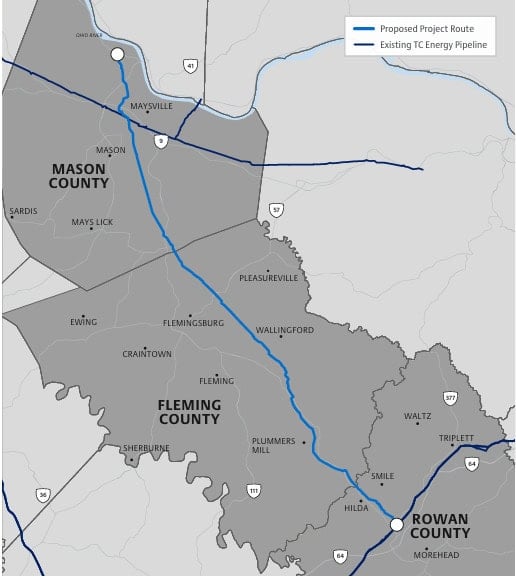
No comments:
Post a Comment