oil price at four month low even with Strategic Petroleum Reserve at the lowest since initial fill-up in June 1983; commercial crude supplies at a 17 month low; total supplies of crude oil and petroleum products, including the SPR, at the lowest since February 27th, 2004…
US oil prices finished lower for the fifth time in six weeks as oil tankers continued to traverse the Strait of Hormuz amid ongoing talks between representatives of the US and Iran…after falling 9.8% to $76.60 a barrel last week after the US and Iran signed a memorandum of understanding to negotiate an end to their war and end their respective blockades of oil shipments through the Strait of Hormuz, the contract price for the benchmark US light sweet crude for July delivery rose as oil began trading trading in Asia late Sunday after shipping through the Strait of Hormuz slowed while the initial talks between U.S. and Iranian officials under an interim peace deal were off to a bumpy start, but fell as much as 2% on global markets after reports that Iran had secured waivers for oil and petrochemical exports as part of discussions aimed at reducing tensions and stabilizing regional trade flows, and continued to trade lower as markets opened in New York after U.S. and Iranian negotiators touted progress as the first round of peace talks wrapped up in Switzerland, and settled $1.78 lower on the July contract's last day of trading at $74.82 a barrel, after Vice President JD Vance said progress had been made in talks with Iran and the Strait of Hormuz was open, while the more actively traded benchmark light sweet crude contract for August delivery settled $1.99 lower at 73.86 a barrel…with markets now citing the price of the benchmark US light sweet crude contract for August delivery, prices fell by more than 1% during Asian trading on Tuesday amid signs of some progress in resuming crude oil flows through the Strait of Hormuz following the talks between the United States and Iran, and extended their decline from the previous session as US trading began, on signs of an easing Middle East oil supply disruption, as tanker traffic through the reopened Strait of Hormuz was picking up steam, and settled 65 cents lower at $73.21 a barrel as traders tracked tanker traffic through the Strait of Hormuz….oil prices continue to decline on global markets on Wednesday amid increasing tanker traffic through the Strait of Hormuz, a gradual return to normal oil and petroleum product flows, and reported progress in US-Iran negotiations, and dropped to the lowest in nearly four months as markets opened in New York after more tankers left the Persian Gulf with transponders turned on, as traffic through the Strait of Hormuz continued to show signs of normalizing, and held their losses even after the EIA reported that oil supplies in the Strategic Petroleum Reserve and at the Cushing OK oil depot were at 'Tank Bottoms', and settled $2.87 or nearly 4% lower at $70.34 a barrel, its lowest level since before the start of the Iran war, as supply concerns eased as more stranded oil tankers exited the Strait of Hormuz…oil prices continued to decline on during early Asian trading on Thursday, as stranded tankers continued to exit the Strait of Hormuz following the tentative agreement to end the U.S.-Israeli war on Iran, and dropped to pre-war levels in early New York trading, driven by growing confidence that the Strait of Hormuz would remain open, and by expectations that a flood of oil would be leaving the region as hundreds of laden tankers were ready to depart. but jumped by more than 2% in subsequent trading after a cargo vessel was hit by an unknown projectile near Oman, putting the flow of ships from the Strait of Hormuz on hold, and reawakening concerns about the worldwide flow of oil, and settled $1.58 higher at $71.92 a barrel, as the hit on the ship sparked worries about how long it could take for oil flows in the Middle East to return to the levels seen before the U.S.-Israeli war on Iran….however, oil prices headed down again on Friday morning during Asian trading as more stranded oil tankers exited the Strait of Hormuz, despite the hit on a cargo vessel near Oman on Thursday, and were down more than 2% by midday on global markets as traders looked beyond renewed tensions in the Middle East and focused on the global supply outlook, and were on track for their third consecutive weekly decline Friday morning in New York as oil exports from the Persian Gulf had soared following the U.S.-Iranian agreement that allowed for the reopening of the Strait of Hormuz, and settled $2.69, or 3.7% lower at $69.23 a barrel, its lowest settlement since February 27th, as the US-Iran peace deal had pulled the rug out from under months of geopolitical risk premium that had been baked into energy prices….oil prices thus finished 9.6% lower for the week, while the benchmark light sweet crude contract for August delivery, which had ended the prior week priced at $75.85 a barrel, finished 8.7% lower….
meanwhile, natural gas prices finished little changed this week, as selling ahead of the July contract’s expiration and a higher US drilling rig count appeared to outweigh rising LNG feedgas deliveries and hotter weather forecasts… after rising 3.6% to $3.233 per mmBTU last week on a smaller than expected addition to storage and on expectations for stronger power sector demand and LNG feedgas demand later this summer, the price of the benchmark natural gas contract for July delivery opened 3.5 cents higher on Monday, as updated forecasts for increased cooling demand in the near term drove prices cautiously higher early on, but pulled back after rising to an intraday high of $3.299 at 12:50 PM, and settled 2.0 cents higher at $3.253 per mmBTU on rising gas flows to LNG export plants and on revised forecasts for warmer weather and higher air conditioning demand over the next two weeks…natural gas futures struggled to find their footing in early Tuesday trading, even though forecasts showed a sizable uptick in cooling demand by the weekend, as a sharp increase in renewable generation was expected to take a substantial bite out of natural gas power burn in the Texas market this week, even as the overall power load climbed, then dipped lower at midday as traders balanced healthy US supply and Iran war uncertainty against looming domestic cooling demand bumps and steady calls for American LNG, and settled 10.6 cents lower at $3.147 per mmBTU as cooler weather forecasts trimmed cooling degree day expectations and power sector demand projections, while strong production and expectations for more than adequate storage weighed on sentiment….natural gas prices were modestly higher in early trading on Wednesday, on bargain buying and supportive overnight forecast trends, and maintained modest momentum at midday, as market participants focused on impending heat waves and robust supply, and settled 7.4 cents higher at $3.221 per mmBTU on a decline in output and increasing gas flows to LNG export plants over recent weeks…natural gas futures edged higher in early trading on Thursday, ahead of an imminent heat wave, as traders anxiously awaited the day’s weekly government storage data and tomorrow’s final settlement of July futures, then tumbled as a bearish report compared to consensus estimates that sent prices plummeting but bounced back by midday as traders shifted their focus back to forecasts calling for widespread heat next week, and settled 12.2 higher at $3.343 per mmBTU, as stronger LNG demand, rising feedgas deliveries and hotter weather forecasts boosted market sentiment…natural gas futures ticked higher in early Friday trade ahead of the July contract’s final settlement at day’s end, as already bullish near-term forecasts trended hotter still overnight, and inched upward through midday as traders balanced heightened demand expectations against healthy supply, but tumbled in their final hours as the prompt-month contract to settle 11.2 cents lower at $3.231 per mmBTU, as traders took profits after the previous day's rally as the contract’s expiration and a higher US drilling rig count appeared to outweigh otherwise supportive summer fundamentals…thus the July natural gas contract ended 0.2 cents, or less than 0.1% lower for the week, while the benchmark natural gas contract for August delivery, which will become the quoted front month contract next week, settled 0.3 cents, or 0.1% higher at $3.279 per mmBTU...
The EIA’s natural gas storage report for the week ending June 19th indicated that the amount of working natural gas held in underground storage rose by 76 billion cubic feet to 2,835 billion cubic feet by the end of the week, which left our natural gas supplies 49 billion cubic feet, or 1.7% below the 2,884 billion cubic feet of gas that were in storage on June 19th of last year, but 152 billion cubic feet, or 5.7% above the five-year average of 2,683 billion cubic feet of natural gas that had typically been in working storage as of the 19th of June over the most recent five years….the 76 billion cubic foot injection into natural gas storage for the cited week was close to the 74 billion cubic foot injection into storage that analysts had forecast in a Reuters poll ahead of the report, while it was less than the 96 billion cubic foot of gas that were injected into natural gas storage during the corresponding week of 2025, while near the average 75 billion cubic foot injection into natural gas storage that had been typical for the same mid June week over the past five years…
The Latest US Oil Supply and Disposition Data from the EIA
US oil data from the US Energy Information Administration for the week ending June 19th showed that since an increase in our imports was mostly offset by an increase in our exports, we again needed to pull oil out of our stored crude supplies for the ninth consecutive week and for the 31st time in fifty-six weeks, despite a decrease in demand for oil that the EIA could not account for…. Our imports of crude oil rose by an average of 436,000 barrels per day to average 5,570,000 barrels per day, after falling by an average of 754,000 barrels per day during the prior week, while our exports of crude oil rose by an average of 342,000 barrels per day to 4,669,000 barrels per day, which, when used to offset our imports, meant that the net of our trade of oil worked out to an import average of 901,000 barrels of oil per day during the week ending June 19th, an average of 94,000 more barrels per day than the net of our imports minus our exports during the prior week... At the same time, transfers to our oil supplies from Alaskan gas liquids, from natural gasoline, from condensate, and from unfinished oils were 1,000 barrels per day lower than the prior week at 390,000 barrels per day, while during the same week, production of crude from US wells was 13,000 barrels per day higher at 13,819,000 barrels per day. Hence, our daily supply of oil from the net of our international trade in oil, from transfers, and from domestic well production appears to have averaged a total of 15,110,000 barrels per day during the June 19th reporting week…
Meanwhile, US oil refineries reported they were processing an average of 17,111,000 barrels of crude per day during the week ending June 19th, an average of 81,000 fewer barrels per day than the amount of oil that our refineries reported they were processing during the prior week, while over the same period, the EIA’s surveys indicated that an average of 2,164,000 barrels of oil per day were being pulled out of the supplies of oil stored in the US… So, based on that reported & estimated data, the crude oil figures provided by the EIA appear to indicate that our total working supply of oil from storage, from net imports, from transfers, and from oilfield production during the week ending June 19th averaged a rounded 163,000 more barrels per day than what our oil refineries reported they used during the week. To account for the difference between the apparent supply of oil and the apparent disposition of it, the EIA just plugged a [ -163,000 ] barrel per day figure onto line 16 of the weekly U.S. Petroleum Balance Sheet, in order to make the reported data for the supply of oil and for the consumption of it balance out, a fudge factor that they label in their footnotes as “unaccounted for crude oil”, thus indicating there must have been a error or omission of that magnitude in the week’s oil supply & demand figures that we have just transcribed.... However, since most oil traders react to to the figures in these weekly EIA reports as if they were gospel, and since these weekly figures therefore often drive oil pricing and hence decisions to drill or complete oil wells, we’ll continue to report this data just as it’s published, and just as it’s watched & believed to be reasonably reliable by most everyone in the industry…(for more on how this weekly oil data is gathered, and the possible reasons for that “unaccounted for” oil supply, see this EIA explainer….also see this March 2023 twitter thread from an EIA administrator addressing these ongoing weekly errors, and what they had once hoped to do about it).
This week’s 2,164,000 barrel per day average decrease in our overall crude oil inventoriescame as an average of 870,000 barrels per day were being pulled out of our commercially available stocks of crude oil, while 1,294,000 barrels per day were being pulled out of our Strategic Petroleum Reserve, the thirteenth consecutive Iran war related withdrawal from the SPR, including the four largest in SPR history, which left the SPR at 331,191,000 barrels, the lowest since it was initially being filled in June 1983…As the result of those recent draws on the SPR, on commercial supplies, and with total fuel inventories tracking near multi-year lows, our Total Supplies of Crude Oil and Petroleum Products, including the SPR fell to 1,533,511,000 during the week ending June 19th, the lowest since February 27th, 2004….
Further details from the weekly Petroleum Status Report (pdf) indicated that the 4 week average of our oil imports rose to 5,747,000 barrels per day last week, which was 4.1% less than the 5,992,000 barrel per day average that we were importing over the same four-week period last year, while the four week average of our exports rose to 4,944,000 barrels per day last week, which was still 24.6% more than the 3,956,000 barrel per day average that we were importing last year year at this time... This week’s crude oil production was reported to be 13,000 barrels per day higher at 13,806,000 barrels per day as the EIA’s estimate of the output from wells in the lower 48 states was 7,000 barrels per day higher at 13,392,000 barrels per day, while Alaska’s oil production was 6,000 barrels per day higher at 420,000 barrels per day...US crude oil production had reached a pre-pandemic high of 13,100,000 barrels per day during the week ending March 13th 2020, so this week’s reported oil production figure was 5.5% higher than that of our pre-pandemic production peak, and was also 42.5% above the pandemic low of 9,700,000 barrels per day that US oil production had fallen to during the third week of February of 2021.
US oil refineries were operating at 96.1% of their capacity while processing those 17,111,000 barrels of crude per day during the week ending June 19th, down from 96.7% the prior week, but still higher than normal for this time of year….the 17,111,000 barrels of oil per day that were refined that week were 0.7% more than the 16,987,000 barrels of crude that were being processed daily during the week ending June 20th of 2025, but were still 1.3% less than the 17,337,000 barrels that were being refined during the pre-pandemic week ending June 21st, 2019, when our refinery utilization rate was at 94.2%, which was near the pre-pandemic normal utilization rate for this time of year…
With the decrease in the amount of oil that was being refined this week, gasoline output from our refineries was also lower, decreasing by 588,000 barrels per day to 9,488,000 barrels per day during the week ending June 19th, after our refineries’ gasoline output had increased by 356,000 barrels per day during the prior week... This week’s gasoline production was also 6.2% lower than the 10,112,000 barrels of gasoline that were being produced daily over the week ending June 20th of last year, and 9.7% less than the gasoline production of 10,512,000 barrels per day seen during the prepandemic week ending June 21st, 2019….on the other hand, our refineries’ production of distillate fuels (diesel fuel and heat oil) increased by 55,000 barrels per day to 5,230,000 barrels per day, after our distillates output had decreased by 29,000 during the prior week. But with five production increases over the past six weeks, our distillates output was 9.2% more than the 4,789,000 barrels of distillates that were being produced daily during the week ending June 20th of 2025, while 1.4% less than the 5,305,000 barrels of distillates that were being produced daily during the pre-pandemic week ending June 21st, 2019....
Despite this week’s decrease in our gasoline production, our supplies of gasoline in storage at the end of the week rose for the third time in nineteen weeks, increasing by 2,064,000 barrels to 216,299,000 barrels during the week ending June 19th, after our gasoline inventories had decreased by 906,000 barrels during the prior week. Our gasoline supplies increased this week because the amount of gasoline supplied to US users fell by 4371,000 barrels per day to 8,775,000 barrels per day, and because our exports of gasoline fell by 227,000 barrels per day to 762,000 barrels per day, while our imports of gasoline fell by 94,000 barrels per day to 647,000 barrels per day… After forty-seven gasoline inventory withdrawals over the past seventy weeks, our gasoline supplies were 6.9% lower than last June 20th’s gasoline inventories of 230,013,000 barrels, and about 5% below the five year average of our gasoline supplies for this time of year…
After this week’s increase in distillates production, our supplies of distillates rose for the eighth time in twenty-one weeks, increasing by 3,064,000 barrels to 106,116,000 barrels during the week ending June 19th, after our distillates supplies had increased by 951,000 barrels during the prior week... Our distillates supplies rose by more this week because the amount of distillates supplied to US markets, an indicator of domestic demand, fell by 126,000 barrels to 3,533,000 barrels per day, and because our imports of distillates rose by 8,000 barrels per day to 135,000 barrels per day, and because our exports of distillates fell by 113,000 barrels per day to 1,507,000 barrels per day... After 27 additions to distillates inventories over the past 51 weeks, our distillates supplies at the end of the week were 0.7% higher than the 105,332,000 barrels of distillates that we had in storage on June 20th of 2025, but were about 10% below the five year average of our distillates inventories for this time of the year…
Finally, with little change in supply and demand from a week ago, our commercial supplies of crude oil in storage fell for the 14th time in twenty-six weeks, and for the 27th time over the past year, decreasing by 6,088,000 barrels over the week, from 418,222,000 barrels on June 12th to a seventeen month low of 412,134,000 barrels on June 19th, after our commercial crude supplies had decreased by 8,263,000 barrels over the prior week….After this week’s decrease, our commercial crude oil inventories were about 7% below the recent five-year average of commercial oil supplies for this time of year, while they were still about 18% above the average of our available crude oil stocks as of the third weekend of June over the 5 years at the beginning of the past decade, with the difference between those comparisons arising because it wasn’t until early 2015 that our oil inventories had first topped 400 million barrels. After our commercial crude oil inventories had jumped to record highs during the Covid lockdowns in the Spring of 2020, then jumped again after February 2021’s winter storm Uri froze off US Gulf Coast refining, but then fell sharply due to increased exports to Europe following the onset of the Ukraine war, only to jump again following the Christmas 2022 refinery freeze-offs, changes in our commercial crude supplies had been less extreme up until the onset of the Iran war...However, after falling sharply over the past two months, our commercial crude oil inventories as of this June 19th were 0.7% below the 415,106,000 barrels of oil we had in commercial storage on June 20th of 2025, and were 10.5% less than the 460,696,000 barrels of oil that we had in storage on June 21st of 2024, and 11.0% less than the 463,293,000 barrels of oil we had left in commercial storage on June 16th of 2023…
This Week's Rig Count
The US rig count was up by ten over eight days ending June 26th, the largest US rig addition since June 2022, as the count of rigs targeting natural gas was up by three and the number of rigs targeting oil rose b7 seven, while miscellaneous rigs were unchanged…for a quick snapshot of this week's rig count, we are again including below a screenshot of the rig count summary pdf from Baker Hughes...in the table below, the first column shows the active rig count as of June 26th, the second column shows the change in the number of working rigs between last week’s count (June 18th) and this week’s (June 26th) count, the third column shows last week’s June 18th active rig count, the 4th column shows the change between the number of rigs running on Friday and the number running on the Friday of the same week of a year ago, and the 5th column shows the number of rigs that were drilling at the end of that reporting period a year ago, which in this week’s case was Friday, the 27th of June, 2025…

+++++++++++++++++++++++++++++++++++++++++++++++++++++
OH Gov. DeWine Signs Bill Updating Law Governing Oil & Gas Wells -- Marcellus Drilling News - In October 2025, we reported that Ohio Republican Senators had introduced Senate Bill (SB) 219, the first significant update to Ohio’s oil and gas laws since the Kasich administration more than a decade ago (see Ohio Bill Makes Major Changes to Law Governing O&G Wells). SB 219, introduced by Sen. Al Landis, aims to reform Ohio’s orphaned oil and gas well program and other elements of Ohio’s O&G laws. The bill eventually passed both the Senate and House, and on Wednesday, Governor Mike DeWine signed it into law
Gov. Mike DeWine signs bill speeding up Ohio’s oil and gas permitting process
Cleveland Plain Dealer - —Gov. Mike DeWine on Wednesday signed legislation that makes wide-ranging changes to Ohio’s oil and gas drilling laws – including by speeding up the permit process for fracking under Ohio state parks and wildlife areas. Senate Bill 219, which passed the Republican-controlled Ohio legislature on near-party-line votes, was hailed by the state’s oil and gas industry as a much-needed update to the state’s drilling laws, including protecting a state fund that covers the cost of plugging abandoned drilling wells. However, environmentalists have denounced other parts of the bill as a giveaway to the state’s oil and gas industry, warning it will weaken oversight, shorten public review timelines and fast-track leasing decisions that could open more state-owned land to drilling with less scrutiny. DeWine signed SB219 even though it includes a measure he vetoed last year to allow the primary term of oil and gas leases to last for five years, up from three years under previous law. The bill also requires the Ohio Department of Natural Resources and other state agencies to finalize approved oil and gas leases within 60 days. DeWine vetoed a similar proposal last year that would have required state agencies to act within 30 days. DeWine’s office announced Wednesday night that the governor signed SB219, but it didn’t include any explanation about why the governor chose to sign it. DeWine spokesman Dan Tierney said in a statement that the Ohio Department of Natural Resources worked with the General Assembly since last year’s budget bill “to improve the language and make it more workable.”SB219, which takes effect in mid-September, makes several changes to accelerate the state’s permitting process for oil and gas drilling generally, including by:
- No longer allowing state regulators to refuse to process expedited drilling permit requests on the grounds that they’re too busy with other matters. Each driller is limited to filing 10 expedited requests per year.
- Requiring regulators to either issue or deny a drilling permit within a week of receiving an expedited request
- Forbidding the state from requiring a company to stop or slow production from an existing well just because it wants to carry out additional drilling or work on the same site, unless regulators can show “good cause” for doing so
- Making ODNR write its own administrative rules for oil and gas decisions, instead of following the state Administrative Procedures Act. Such a move could mean more regulatory flexibility, but it could also potentially result in oil and gas rules that are less transparent and harder for the public to review and challenge.
SB219 also takes steps to encourage and accelerate oil and gas fracking under state lands, including by:
- Reducing the amount of time the Oil and Gas Land Management Commission has to decide on a nomination to frack public lands from 180 days to 90 days.
- Requiring the commission to put approved state land fracking nominations out for bid immediately (rather than the next calendar quarter, under previous law), then select the “highest and best bid” within 60 days.
- Requiring the state agency that manages the land to sign approved drilling leases within 60 days
- Loosening the deadline for oil and gas companies that secure a lease for fracking under state lands to pay any advance royalties or bonuses, from 10 days to 60 days.
- Suspending royalty payments and time limits for public-land fracking leases going through a federal approval process (as is the case right now with the Zepernick and Leesville wildlife areas), as well as while any court challenge to the lease is pending until there’s a “final, non-appealable order” in the case
- Restricting state officials from demanding lease royalties higher than the standard 12.5% rate or tacking on extra fees or conditions that aren’t explicitly authorized in state law. Some existing fracking leases on state lands, including Salt Fork State Park and Valley Run Wildlife Area, have royalty rates higher than that baseline or offer additional financial compensation to the state
SB219 is in line with Ohio lawmakers’ efforts in recent years to jump-start fracking underneath state lands.While then-Gov. John Kasich signed legislation in 2011 authorizing such drilling, Kasich and DeWine dragged their feet on actually leasing state lands until lawmakers passed legislation in 2023 effectively forcing the DeWine administration to begin moving to approve leases.Since then, state regulators have approved at least 18 fracking leases for more than 11,000 acres of state land, including Salt Fork State Park, five state wildlife areas, and smaller Ohio Department of Transportation parcels. The Oil and Gas Land Management Commission is set to meet next Monday to consider nominations to drill under an additional 23,173 acres at Egypt Valley and Jockey Hollow wildlife areas, as well as another 513 acres under Salt Fork State Park.
Ohio Gets Ready to Open Another 23,000 Acres of State Land for Fracking -- Marcellus Drilling News - -The Ohio Oil and Gas Land Management Commission (OGLMC) is set to vote on Monday to open roughly 23,000 acres of publicly owned wildlife preserves in eastern Ohio to fracking. The panel will weigh accepting bids on about 15,000 acres split between Jockey Hollow and Egypt Valley, plus opening another 8,000 acres of Egypt Valley. Approval would bring Ohio’s leased public land to more than 30,000 acres across Salt Fork State Park and six wildlife areas, mostly in the Belmont-Harrison-Guernsey region. Ohio has already collected roughly $57 million in signing bonuses, plus 18–20% royalties.
An insane amount of public land is up for fracking on Monday - Cathy Cowan Becker, Save Ohio Parks -- We have just learned that the Oil and Gas Land Management Commission will meet on Monday, June 29, to decide on a long list of nominations and bids to frack Ohio public land.We’re not going to lie … they are likely to approve most if not all the nominations and award most if not all the bids.That’s because, as our data center report shows, the legislature has squashed 5300 MW of solar and wind energy – so now they are building new gas plants to power data centers across the state, with the gas coming from our state parks and wildlife areas.We wish we had better news – but there are two ways you can help us fight back.
- Fill out this action alert to send a letter directly to Commission Chair Theresa White, ODNR Director Mary Mertz, and Commission Clerk Nathan Moffitt telling them you do not want them to approve fracking Ohio state parks and public lands.
- Register for this event to attend our press conference Monday at noon, then the commission meeting at 1 p.m. See the proceedings yourself – the lack of democracy, inability for the public to speak out – while they sell off our public lands.
No, it’s not fun to watch – but we need to demonstrate to the media, the public, and our own posterity that the people of Ohio love our state parks and public lands and think they should be protected.Here are the pending nominations to be approved or denied:
- 26-DNR-0006- Egypt Valley Wildlife Area (5439 acres)
- 26-DNR-0007- Egypt Valley Wildlife Area (1285 acres)
- 26-DNR-0008- Egypt Valley Wildlife Area (777 acres)
- 26-DNR-0009- Egypt Valley Wildlife Area (863 acres)
- 26-DOT-0003- ROW Along SR 513 & I-70 in Guernsey County
- 26-DOT-0004- ROW Along SR 30 in Stark County
- 26-DOT-0005- ROW Along SR 285 in Guernsey County
Here are the pending bids to be awarded to the “highest and best” (not our language) bidder:
- 24-DNR-0011- Egypt Valley Wildlife Area (4360 acres)
- 24-DNR-0012- Jockey Hollow Wildlife Area (382 acres)
- 25-DNR-0001- Egypt Valley Wildlife Area (366 acres)
- 25-DNR-0002- Jockey Hollow Wildlife Area (1460 acres)
- 26-DNR-0001- Egypt Valley Wildlife Area (3846 acres)
- 26-DNR-0002- Egypt Valley Wildlife Area (2792 acres)
- 26-DNR-0003- Salt Fork State Park (513 acres)
- 26-DNR-0004- Egypt Valley Wildlife Area (849 acres)
- 26-DNR-0005- Egypt Valley Wildlife Area (746 acres)
- 24-DOT-0015- ROW Along SR 821 in Guernsey County
- 25-DOT-0001- ROW Along SR 800 in Tuscarawas County
- 25-DOT-0002- ROW Along SR 800 in Tuscarawas County
- 25-DOT-0003- ROW Along SR 800 in Tuscarawas County
- 25-DOT-0004- ROW Along SR 78 in Noble County
- 25-DOT-0005- ROW Along SR 78 in Noble County
- 25-DOT-0006- ROW Along SR 558 in Columbiana County
- 25-DOT-0007- ROW Along SR 26 in Monroe County
- 25-DOT-0009- ROW Along SR800 in Tuscarawas County
- 25-DOT-0010- ROW Along SR 7 in Belmont County
- 25-DOT-0012- ROW Along SR 513 in Guernsey County
- 26-DOT-0002- ROW Along SR 513 in Guernsey County
- 25-DRC-0001- Noble Correctional Institution in Noble County
As you can see, this is an insane amount of public land – the most we’ve ever seen for one commission meeting during the 3+ years we have been doing this.The commission never used to rush this much public land through at once. We believe this is happening because they got the order to open up gas to power data centers.
Home explodes, houses burn, residents evacuate after gas leak in Twinsburg Township -- The Twinsburg Fire Department has reported that a home on Hiram Lane in Twinsburg Township blew up and two others caught fire after a reported gas leak, according to wkyc.com, media partner of cleveland.com and The Plain Dealer.Lt. Mike Perlatti of the Twinsburg Fire Department said the three homes were a total loss and a dozen others on Hiram Lane were severely damaged, according to wkyc.com. More homes on Fairway Boulevard were also damaged.Nobody was home when the house exploded, Perlatti said. The blast injured one person who was taken the hospital. Another person was taken to the hospital for “unspecified reasons,” the news outlet reported.Twinsburg Fire Department responded to the gas leak in the Woodlands neighborhood Thursday afternoon after workers reportedly struck a gas line, according to wkyc.com, and as Enbridge gas employees went to inspect the damage, gas started to settle due to a lack of wind and an evacuation order was issued.Shortly thereafter, the home exploded. Residents in the area were told:
Do not turn any electrical devices on or off. If already on, leave on.
Do not start any vehicles.
Avoid anything that could create an electric spark.
Twinsburg Township street ‘engulfed in flames’ after natural gas explosion rocks quiet neighborhood (WJW) (videos)— There may be no telling what sparked a massive natural gas explosion in Summit County on Thursday afternoon, June 25, that destroyed three homes and damaged dozens of others. Investigators said the situation began to unfold when a work crew installing fiber optics hit a gas line. Authorities called it a “construction mishap.” The blast rocked a quiet neighborhood on Hiram Lane in The Woodlands subdivision in Twinsburg Township. “All of a sudden — this big kaboom like I’ve never heard before. My house actually shook and I didn’t know what happened. I thought a tree fell over; I thought we had an earthquake. I didn’t know, I’ve never experienced anything like it,” said Township resident Carl Snyder. Residents said the work crew had been marking lawns in the neighborhood earlier this week, pinpointing where the fiber optics would be buried. “You know, to prevent any situation like this. And all of a sudden, in the middle of the afternoon, this unfortunately happened,” said Snyder. Twinsburg firefighters quickly responded to the gas leak and were immediately concerned about the amount of gas that was concentrated in the neighborhood. Authorities directed residents to evacuate or shelter in place, and asked them not to do anything that might trigger an explosion. While firefighters tried to keep everyone safe while waiting for a gas crew to stop the leak, the gas was ignited by an unknown source, triggering the massive blast. Longtime firefighters said they have not seen or felt anything like it. “The fact that we were on scene when it happened. Per one of the Enbridge representatives, as he described it, he said, ‘You know, another 30 seconds and we probably could have been in the blast zone.’ That’s how close that was to going off and you can’t predict that,” Twinsburg fire Lt. Michael Perlatti told FOX 8 News. Fire Chief Earl Wilson on Friday said the concussive force of the blast blew out windows, knocked down siding and soffitts, shattered lights and blew in garage doors. Nearly all of the 15 homes in the area immediately around the origin of the blast were damaged in some way. SkyFOX surveyed the neighborhood on Friday morning: The explosion reportedly knocked one resident out of his chair. He was able to walk out of his home and away from the scene, Wilson said. Right after the blast, sheriff’s deputies worked quickly to verify residents’ locations while police worked to evacuate the area, he said. “The house that was where the initial explosion was — those folks were not home, so that was a blessing. They were actually on a day trip out of town,” said Perlatti. Residents and firefighters who were at the scene at the time of the blast are amazed that no one was severely injured or killed. “This is a miracle in itself,” Wilson said. “If you consider just two people per house, you’re looking at 30 people right there. Who’s home? Who’s not home? … We don’t know where anyone is.” Fire investigators said at least three homes were destroyed or totaled and about 35 others had varying degrees of damage on Hiram Lane and neighboring streets. One person was injured in the explosion, and was transported to the hospital, along with another resident, who had a separate medical issue. Residents were stunned by the scope of the damage done to their neighborhood. “I got a call from my sister saying it felt like a nuclear bomb had detonated within the house and it was like the whole left side part of the street up there was completely engulfed in flames,” Chris Zorella told FOX 8 News. Perlatti said the blast was so powerful it launched a mattress 40 feet into the air. It remained stuck in a tree Thursday afternoon. “We can’t guarantee that anything else won’t fall out of the trees during a breeze,” he said. “When that storm came through a little bit earlier and the breeze did kick out, we did have stuff fall out of the trees, from shingles to two-by-fours.”
23 homes damaged after house explosion in Cleveland, Ohio suburb -— Fire officials have confirmed that a house explosion in Twinsburg Township, a suburb of Cleveland, Ohio, has destroyed three homes and left 20 more damaged. According to Lt. Mike Perlatti of the Twinsburg Fire Department, crews were initially called to Thursday afternoon for a reported gas leak caused by workers striking a gas line. With the gas settling into the area due to a lack of wind, an evacuation order was issued as workers made their way to the scene to inspect the damage. Minutes later, one of the houses in the area blew up, and two more homes caught fire as a result. Perlatti confirmed all three of those homes were a total loss, while 12 more houses on one street -- Hiram Lane -- suffered severe damage. "My wife was at home at the time, and she called me panicking, and she just said, 'The house exploded!'" Kenneth Longmire said. "I guess it knocked her off her feet." "There was a fire coming up through the water line toilet because the toilet exploded," Christopher Hamed added of his own house. "The garage door's caved in, and the front door was also caved in." An additional eight homes in neighboring Hudson, Ohio, suffered moderate damage but were not impacted by the fire.Perlatti said that the residents of the house that suffered the initial explosion were not home at the time."They're normally there at the table eating dinner at that time," neighbor Jay Ski told 3News, a local TV station. One person was hurt by the blast, and another suffered injuries due to other unspecified reasons. Both were taken to the hospital.No further information about additional injuries or possible fatalities was available as of early Friday morning. The fires are now under control, per Perlatti, and the gas lines have been shut off.Due to heavy debris and the continued presence of first responders, it is not known when the evacuation order will be lifted. Residents were allowed back in briefly to collect some belongings under police supervision.In neighboring Hudson, the city announced that all future directional drilling operations scheduled to take place in the city have been halted "until the cause of this devastating gas explosion is released. According to Hudson City Councilman Kyle Brezovec, a fiber optic contractor is believed to have struck the line and caused the leak in Twinsburg Township.
Enbridge Repairs Damaged Pipeline After Ohio Explosion (P&GJ) — Enbridge Gas Ohio says it is repairing a damaged natural gas pipeline and restoring service following a gas explosion that destroyed three homes on June 25 in Twinsburg Township, Ohio, as state officials continue investigating the incident. According to WKYC, the utility said its crews were responding to a damaged pipeline when the explosion occurred. Enbridge said crews were dispatched to Hiram Lane after receiving reports of a damaged gas line on June 25. The company said the explosion occurred shortly after its personnel arrived, prompting crews to shut off gas service to the affected neighborhood while working with local emergency responders. "We shut off gas to the affected neighborhood and the area was made safe," Enbridge said in a statement to WKYC. "We're working to repair the pipeline and to restore service." According to WKYC, the incident began after contractors performing underground utility work reportedly struck a natural gas pipeline on June 25. One home exploded, igniting nearby structures and destroying three homes. Two people were injured, while authorities said no one was inside the house that exploded. The Ohio State Fire Marshal is leading the investigation, with Enbridge assisting authorities. The utility said it remains on site and thanked local emergency responders for their response. Separately, the City of Twinsburg has suspended all boring, directional drilling and related underground utility work until the incident can be reviewed. Neighboring cities, including Stow and Hudson, announced similar temporary suspensions. As reported by WKYC, Uniti Group, owner of Windstream, confirmed contractors working on its Kinetic Fiber network were performing work in the area when the explosion occurred and said it is cooperating with investigators.
New 953-MW Utica-fired power plant goes online in Lordstown, Ohio - — A massive new $1.2 billion natural gas-fired power plant fueled by the Utica Shale has officially launched commercial operations in Trumbull County, project officials announced Wednesday. The 953-megawatt Trumbull Energy Center, which began generating power earlier this year before celebrating its official launch yesterday, is expected to produce enough electricity to power nearly 1 million homes across the region. Clean Energy Future first announced plans for the combined-cycle gas turbine facility in January 2017, positioning it adjacent to the existing Lordstown Energy Center. Construction on the project began in late 2022 immediately after developers successfully secured $1.2 billion in final financing. The state-of-the-art facility is designed to address critical regional energy needs as older, coal-fired power plants across the Midwest continue to retire. Electricity generated by the plant will feed directly into the PJM Interconnection, the nation's largest wholesale electricity grid, helping to stabilize power supplies for both residential consumers and major industrial facilities in northeastern Ohio. Local officials have highlighted the project's significant economic footprint, noting that construction generated hundreds of union jobs and hundreds of millions of dollars in local spending. Under long-term tax agreements, the plant is scheduled to provide millions of dollars in steady funding to the village of Lordstown and the Lordstown Local School District over the next 15 years.
Gas plant permits still include EPA’s carbon rules -- State regulators are still including EPA carbon rules in the permits they issue for new gas-fired power plants, despite the federal agency’s plans to repeal the rules. But how they’re doing that varies from state to state. States usually take the lead in issuing air quality standards for power plants within their borders. So even states that sued to stop the Biden greenhouse gas rules from taking effect are responsible for ensuring that their fossil fuels generators have a plan to meet those standards when they’re granted an operating permit — unless and until EPA finalizes their repeal. “The law that’s on the books is what’s on the books right now, so that’s what folks have to comply with,” noted Miles Keogh, executive director of the National Association of Clean Air Agencies, which represents those state regulators. And they are. Georgia joined 24 other GOP-led states in 2024 in challenging the Biden-era rule that would require coal- and some new gas-fired power plants to retrofit with carbon capture and storage by 2032. Those fossil fuels plants that weren’t prepared to start capturing 90 percent of their carbon by that year would have to commit to a retirement schedule, in the case of existing coal. New gas would be required to run below 40 percent capacity. The Trump EPA proposed repealing the standards last year, and a final rule is currently under White House review. Still, when the Georgia Department of Natural Resources issued a so-called Title V permit for the Plant Bowen combined-cycle natural gas project in January, it required Georgia Power to retain records of fuel usage and take other steps to comply with the Biden rules and a 2015 greenhouse gas standard “as applicable.” It also required the project to keep greenhouse gas emissions to a 12-month average of 905 pounds of carbon dioxide equivalent — in line with the first phase of the 2024 rules before the CCS requirement kicks in. Another litigant — the state of Ohio — did the same. The Ohio Environmental Protection Agency in its draft permit for the Chestnut Run Energy project in January acknowledged that the proposed 1,300-megawatt combined-cycle natural gas power plant would have to comply with the 2024 rule. It would use “high efficiency combustion technology” to keep emissions to 800 lb CO2e per megawatts per hour when running at full load — again, a level in line with the rule’s preliminary phase before the 2032 CCS requirements take effect in 2032. The Homer City Generation Station — under development at a decommissioned coal-fired power plant in Pennsylvania — includes both combined-cycle and simple-cycle units. A revised application for the project that was submitted to the Pennsylvania Department of Environmental Protection last July, after EPA’s repeal was proposed, states that the combined-cycle units would “have to meet an emission limitation of 800 lbs CO2/MWh based on gross energy output or 820 lbs CO2/MWh, based on net energy output.” Pennsylvania isn’t among the states that sued EPA over the 2024 rules. But North Dakota did join the lawsuit. Its method for implementing the standard also stands out from other permits and drafts POLITICO reviewed for this story. In a permit last December allowing Basin Electric Power Cooperative to construct its new Bison Generation Station combined-cycle natural gas plant, the North Dakota Department of Environmental Quality acknowledged it would need to meet EPA’s greenhouse gas rule. But the permit included no emissions limit or compliance strategy for that rule, and instead pointed in a footnote to EPA’s June proposal to repeal it. “If the rule is repealed, subjectivity to this standard, as referenced in the permit, will be eliminated,” it stated. David Stroh, an official with the department’s Division of Air Quality who worked on the permit, said in an email that as things currently stand, the facility would need to comply with the greenhouse gas rules when it starts up in 2027 or 2028. “However, due to impending regulatory uncertainty and the variety of available compliance pathways — such as carbon capture or operational restrictions — the North Dakota Department of Environmental Quality did not mandate a specific methodology,” he said. In a follow-up call, Stroh said that the department ordinarily would have included a numerical limit on emissions as part of its permit. But it didn’t do so for the greenhouse gas rules because EPA has signaled it plans to roll those back. Including them in the permit to construct might have required a revision, he said. “We felt it was just most simple at this stage in the game to reference ‘they must comply,’” Stroh said. “But we thought we’d be a little bit vague at this stage about how they’re going to do that, because there are a lot of moving parts.” If the 2024 carbon rules are still on the books when the Bison plant begins operations in a year or two, he said, the state will issue an operating permit within a year that would include a numerical limit on greenhouse gases in line with the EPA’s requirements. “They’ll have to comply with it,” Stroh said, adding that he’d already discussed compliance options with Basin Electric Power Cooperative, including carbon capture and storage and reducing capacity. If EPA repeals the 2024 standards in the coming months, that move is likely to be litigated, perhaps all the way to the Supreme Court. But even if the Trump regulatory rollback is overturned, that won’t mean challenges to the Biden rule are at an end. The uncertainty might carry some risk for utilities and their customers as they seek to bring new gas plants online. But Keogh said a state’s perception of that risk “depends strongly on what your theory of the future is.” “I don’t think North Dakota has made much of a secret of its theory of the future,” he said. “They and a number of other states have weighed in pretty heavily, saying they don’t think that EPA had the authority to issue these things.”
As Texas Gas pipeline proposal moves forward in Shelby County, neighbors come together to oppose it -- Neighbors say the proposed route could put homes at risk because of sinkholes and karst terrain. (WAVE) - Neighbors in Simpsonville are protesting a proposed natural gas pipeline that would run through several states, including parts of Shelby County. Texas Gas is proposing construction of a 265-mile natural gas pipeline called the Borealis Project. Company leaders said on the project website that the pipeline is needed to help meet growing energy demands. Under the current plan, the pipeline would run through parts of Ohio, Indiana and Kentucky, including Jerry Vandevelde’s farm in Shelby County. Vandevelde opposes the project, particularly because his farm and neighboring land sit on karst terrain, which includes sinkholes and underground drainage systems. Pink tape is scattered across Vandevelde’s 10-acre farm to mark sinkholes on the property. “For the sake of the almighty dollar, hundreds of people, hundreds of homes are going to be put at risk,” Vandevelde said. Vandevelde said the terrain could create problems for the pipeline. “It’s very possible that this is going to subside,” he explained while pointing to a sinkhole. “That’s going to stress the pipe, perhaps cause cracks or leaks and then, if there’s a source of ignition you could have an explosion.” Developers said on the project website that the pipeline route could change after further studies. They also said the project is expected to increase tax revenue in participating counties. Vandevelde said he believes the benefits for neighbors would be limited, especially since, at a previous meeting, a Texas Gas representative told his wife that, if there were any damages to their property because of the project, the company wouldn’t pay for the repairs. “This Texas Gas line is not for any kind of residential use,” he pointed out. “Nobody along the pipeline is going to have access to natural gas. We all are on propane tanks now.” The project is regulated at the federal level. Vandevelde said neighbors may not be able to stop it, but they are trying to get Texas Gas to move the route farther away from homes.
Freshwater Withdrawal from Antero Midstream Corp - water service volumes and shale focus -- Freshwater Withdrawal from Antero Midstream Corp starts long before a shale well flares to life, when pumps hum beside the Ohio River and thick hoses snake over gravel roads toward remote West Virginia pads. The service feels more like an industrial circulatory system than a classic energy product. Freshwater Withdrawal is Antero Midstream's dedicated business of sourcing, transporting and delivering water for hydraulic fracturing and drilling for its anchor customer Antero Resources in the Marcellus and Utica shale plays. The midstream company operates high-pressure water pipelines, pumping stations and storage facilities that replace hundreds of daily truck journeys. According to management, this setup lowers surface footprint and logistics costs for each completed well. In the company's water segment, services are split between freshwater delivery and wastewater handling and treatment, but freshwater volumes remain the backbone of frack operations. Antero Midstream reports that it can deliver water directly to pads via more than 765 miles of pipelines, creating a dedicated network across its Appalachian footprint. To feed Freshwater Withdrawal, Antero Midstream holds withdrawal rights on multiple water sources, including the Ohio River, local reservoirs and impoundments built near development areas. Giant electric pumps pull water into the pipeline system, where it moves at controlled pressure toward centralized storage ponds and then onward to individual pads during completion campaigns. On site, crews connect temporary flexible hoses and manifolds that let operators ramp flow rates up and down as frac stages progress along a horizontal wellbore. The constant roar of pumps and the rush of water through steel headers is the soundtrack of a modern Antero Resources completion job. Freshwater Withdrawal sits inside Antero Midstream's water business, which investors follow closely given its link to drilling activity and Antero Resources' long-term development pace. Antero Midstream charges Antero Resources a fixed fee per barrel of water delivered, under long-term, fee-based contracts that run through at least 2038 for fresh water services. Chief executive Paul Rady has highlighted these contracts as a stabilizing element in the company's cash flow profile. In recent filings, Antero Midstream disclosed that it delivered over 148 million barrels of fresh water in 2023, closely tracking the pace of completion activity on Antero Resources pads. The fee structure, indexed modestly over time, means higher volumes directly support both revenue and distributable cash flow as drilling intensifies. Freshwater Withdrawal inevitably raises questions about water use in shale development, especially in drought-prone periods or near sensitive ecosystems. Regulators require the company to secure permits, monitor withdrawal rates and respect minimum stream flows at each intake point. Deviations can result in curtailments or forced shifts to alternative sources. To address these concerns, Antero Midstream combines fresh water with increasing volumes of recycled produced water from its separate wastewater operations, reducing the net new freshwater loads per well over time according to management commentary. Environmental groups still keep a close eye on intake points, especially along the Ohio River corridor, where industrial withdrawals add up. For Antero Resources, outsourcing water logistics to a dedicated affiliate reduces operational complexity and keeps field crews focused on drilling and completions rather than pipeline maintenance and permitting. The operator can schedule multi-well pads knowing water will arrive at specified rates and pressures without coordinating dozens of third-party truckers. Completion engineers like to avoid the stop-and-go rhythm that comes with trucked water deliveries. A steady pipeline-fed stream allows longer frac stages and more consistent sand injection, which in turn can support higher initial production rates per well according to Antero's technical presentations. Antero Midstream's freshwater network spans West Virginia and Ohio, criss-crossing hillsides with buried lines that quietly loop between sources, impoundments and drilling locations. At surface level, the most visible signs are fenced pump sites, lined ponds and the occasional row of black pipe stacked by a county road. The company reports that this infrastructure was built largely in parallel with its gathering and compression assets, letting it share certain rights-of-way and land access points. That co-location can reduce both capital intensity and permitting friction compared with building fully separate routes for water and gas.
Antero to Buy Gas Assets From Quantum's HG for $2.8 Billion. - The article focuses on Antero Resources Corp. and its pipeline affiliate's acquisition of natural gas production and pipeline assets from HG Energy II LLC for a total of $3.9 billion in cash. Antero Resources will pay $2.8 billion for upstream assets in the Marcellus shale in West Virginia and has also sold production assets in Ohio's Utica Shale for $800 million. Antero Midstream Corp. will acquire HG's pipeline assets for $1.1 billion. The deal comes as natural gas prices are rebounding, with U.S. futures recently reaching $5 for the first time in nearly three years, driven by increased demand forecasts. HG Energy II LLC, founded in 2011 and backed by Quantum Capital Group, operates in Ohio, Pennsylvania, and West Virginia. [Extracted from the article]
Little talk of 'world's largest' data center planned for southern Ohio | Shelby Daily Globe - A Cold-war relic in Southern Ohio from America’s nuclear past is emerging as a prime site in the latest global evolution – data centers and artificial intelligence. In late March, the U.S. Department of Energy announced a public- private partnership with SB Energy, a Japanese company and part of the Softbank Group, to build the “world’s largest artificial intelligence data center” at the 3,700- acre Portsmouth, Ohio site near the village of Piketon. Construction began on the Portsmouth Gaseous Diffusion Plant in November 1952. The mission of the plant was to increase the national production of enriched uranium and maintain the nation's superiority in the development and use of nuclear energy,” according to the U.S. Department of Energy. In February, the Trump administration announced a massive natural gas electric power plant planned for southern Ohio as one component of a new trade deal with Japan. The plant is expected to be in the “vicinity of Portsmouth,” the U.S. Commerce Department said at the time. According to the Portsmouth Area Chamber of Commerce, both of the announced projects – the gas power plant and the data center – are still planned. Steve Shepherd, executive director of the southern Ohio Diversification Initiative, created to “re- industrialize and repurpose underutilized land and facilities” at the former diffusion plant in Piketon, declined to comment on the projects. “We are not in a position to make any statements at this time,” Shepherd told The Center Square. The village of Piketon had a population 2,291 in 2020, according to the U.S. Census Bureau. When the natural gas electric plant was announced in February, the announcement caught some local leaders, including the mayor of Portsmouth, Charlotte Gordon, by surprise. “I wasn’t privy to these discussions,” Gordon told The Center Square. “I started calling some of the people I thought should know and they didn’t know.” The data center was discussed at a meeting earlier this year of the West Union Village Council, according to minutes of the meeting. The village mayor, Jason Buda, expressed concern about the amount of water that would be consumed by the data center, according to the minutes. “The mayor said that it's too early at this time to say much but he does have concerns about the amount of water usage because from what he has heard they can expect to use one million gallons a day and that is about four times the amount we use ourself,” the minutes state. When the data center was announced in March, U.S. Energy Secretary Chris Wright praised the project, pointing out that it includes an electric generating component. “I’m pleased to be working with our partners at Softbank and AEP Ohio on this important project,” Wright said. “By bringing new power online and upgrading our existing infrastructure, this investment supports the AI boom and cutting-edge technologies while strengthening our energy system and helping keep costs down for the American people.”
Ohio Lawmakers Delay Data Center Legislation - State Affairs Pro - Action on priority data center legislation will have to wait at least a few months, as lawmakers will not be returning to the Statehouse this week.House Speaker Matt Huffman, R-Lima, originally signaled that his chamber would be coming back for a June 24 session to continue conversations on the issue.But after the Senate decided it would not head back to Columbus this month, the House late last week cancelled its as-needed session set for Wednesday and now plans to return in early November.While that decision puts legislative action on hold, members of the Select Committee on Data Centers contend they now have more time to find solutions.“I think having this time to really think about it, we can really sharpen that policy and make it perfect and address some of the issues that members had,” Rep. Adam Holmes, R-Nashport, said in an interview. The measure (HB 646) was teed up for a Senate floor vote on June 10 but was later rereferred to the Senate Energy Committee as consensus over the data center sales and use tax exemption and nondisclosure agreements could not be reached.The legislation currently revises the maximum tax break to 50%, which sparked concerns from the Ohio Chamber of Commerce and Data Center Coalition, which claimed it could deter investment into the state. Some Republican and Democratic lawmakers wanted the exemption, currently paused by a directive from Gov. Mike DeWine, permanently repealed.Holmes, who serves as a co-chair of the bicameral panel, said that HB646 was crafted with an upcoming PJM Interconnection capacity auction scheduled for September in mind.Since the prices set by the auction would be implemented in three years, he and Rep. Thad Claggett, R-Newark, said there was less urgency for lawmakers to act.“Once we figured out that that auction, while it is scheduled for a few months, it's got a three-year runway to it and the agency [PJM]…they can manage that,” Claggett said. “If we get back and give some direction as the Legislature on how we want that handled, then they're still good.”Others like Sen. Kent Smith, D-Euclid, however, have said the regional transmission organization’s forthcoming auction should give the Legislature an incentive to move quickly.“If states don’t take some steps to mandate that data centers will pay for that additional power…that could get spread over all ratepayers in the state,” he said during the Mid-Atlantic Conference of Regulatory Utilities Commissioners conference on June 16.PJM’s latest capacity auction in December 2025 set a record by hitting a price of $333.4 per megawatt day, an increase of $4.27 per megawatt day compared to July 2025 auction results that also set a record that year.Even with price caps, another cost increase is projected come September's results.Another factor weighing into conversations was the potential for a constitutional amendment placing a moratorium on new data center construction in the state.The group leading that effort, Conserve Ohio, recently signaled it does not have enough signatures to land its proposal on the November ballot. It now intends to submit the 413,000-some needed signatures for the 2027 general election ballot.Holmes reiterated HB646 aimed to resolve concerns brought forth by Conserve Ohio and others. He also indicated that another committee meeting will be scheduled regarding the major data center campus coming to Piketon.“We'll continue to prioritize the concerns of the citizens on this and use the committee as an information resource to allow individuals to make the best decisions for themselves,” he said.
Bipartisan rage in Ohio politics: rural voters, liberal activists oppose data center giveaways - Cleveland.com -- Ohio’s state lawmakers had one clear job heading into summer: fix the data center mess that has been spiking electric bills across the state.They couldn’t do it.And now, say hosts of the Today in Ohio podcast, the political fallout could be costly for them come November.The Ohio House canceled its last session before summer break without taking any action on House Bill 646 — the legislation designed to rein in the runaway power and tax giveaways flowing to data center giants. What makes this failure so stunning, the hosts argue, is that lawmakers now go home empty-handed to face angry voters. “We have given billions of our tax dollars to these companies to come in to jack up our electric rates by using up the power on the grid,” said host Chris Quinn on Monday’s episode. The anger is showing up at family cookouts, in rural communities, and in the inboxes of lawmakers who can’t seem to figure out which side they’re on.That’s because this issue has scrambled Ohio’s political map in ways nobody predicted. As reporter Anna Staver found in her reporting — discussed in detail on the episode — this fight has pulled together two groups that rarely agree: conservative rural voters and liberal environmental activists. The Ohio Farm Bureau’s vice president put it plainly, saying frustration over data centers is showing up in all corners of the state.Republicans are split between continuing to give billions of tax dollars to wealthy business interests and listening to their own base. Democrats are caught between environmental concerns and labor unions that benefit from data center construction jobs. The result? A messy political collision that left House Bill 646 dead.“What I love about this is the divide between legislators that want to keep taking care of big tech and big energy and the legislators who understand what their constituents actually think,” Quinn said.A University of Cincinnati politics professor told Staver that the issue will reward whichever party steps up and takes a clear stance reflecting where average Ohioans stand. So far, neither party has gotten there.The hosts make clear that this isn’t a complicated policy problem — it’s a political will problem. Ohioans aren’t opposed to data centers. They’re opposed to being handed the bill for them. No more subsidies. No more gifts. Make the companies pay their way, bring their own power generation, and let communities decide where they go.But with House Speaker Matt Huffman unable to close the deal before break, and the Wild West still prevailing on data center development, voters may have the final word. As the podcast makes plain, with a governor’s race on the horizon and a rare cross-partisan coalition already angry, the bumblers in Columbus may look back at this summer as the moment they blew it.
Hyperscale data centers drive electricity demand - Policy Matters Ohio -- Hyperscale data centers are massive facilities that consume far more electricity than earlier generations of data centers. Their size and energy demands are driven by the rapid expansion of Artificial Intelligence. Hyperscale facilities are typically defined as having a minimum capacity of 40 MW or 50 MW. They require a staggering amount of electricity to run thousands of servers, storage devices, and networking equipment around the clock, seven days a week. Ohio is seeing a surge in large hyperscale data centers. For example, Cologix began construction on an AI data center with 120 MW of capacity, and the U.S. Department of Energy recently announced plans for a 10 GW data center in Pike County. The Cologix facility will use enough electricity to power more than 70,000 Ohio households.[1] The Pike County project will require more electricity than is used by every residential ratepayer in Ohio combined.[2] According to the Data Center Proposal Tracker, a citizen-led platform that crowdsources data on U.S. data centers, proposed data centers in Ohio have a cumulative demand of 17.6 GW, while the FracTracker Alliance’s U.S. Data Centers Tracker, a separate source, estimates 6,135 MW in load growth driven by proposed data centers in Ohio, with 12.0 GW under construction.According to PJM’s 2026 load forecast report, summer peak load in the transmission zones served by AEP and AES[3] is expected to increase by 5.3% and 5.2% per year, respectively, over the next decade,[4] — the 3rd- and 4th-highest load growth rates among the 22 transmission zones in PJM’s territory.[5] And this growth is rapidly accelerating: Just five years earlier, AEP and AES projected an annual growth rate of 0.4% between 2022 and 2031.[6] Soaring electricity demand means higher utility bills, more blackouts, and more pollution, plus all the illness and reduced quality-of-life that comes with it. In Ohio, where a large share of existing and planned data centers are concentrated,[7] we’ll face more than our share of those consequences.To learn more about data centers, visit our data center resource page.
Deadline Looms to Shield Ohioans From Data Center Costs — If Ohio can’t figure out who should pay the electricity costs associated with data centers before September, all Ohioans could end up sharing the bill.Data centers require enormous amounts of power, and PJM, the operator of the regional electric grid, is preparing to buy additional generation to meet growing demand. It’s holding a special auction in September, and the question is who pays for it.House Democrats warned Tuesday that Ohio doesn’t have a clear answer.In a letter to Gov. Mike DeWine and state utility regulators, Democrats asked to put data centers in their own rate class, arguing it would create a clear way to assign future power costs to the tech companies.“This is both a political and an economic imperative,” according to the letter. “If we cannot fully and transparently create a separation of residential and data center costs for our utilities, thousands of jobs and tens of millions of dollars from everyday Ohioans are at risk.” For years, PJM’s electricity market operated in a relatively stable environment. Demand grew gradually; older power plants retired at a manageable pace and new generation could be built quickly enough to replace it.PJM says those conditions no longer exist.Demand is rising rapidly and supply chain delays mean new power plants take much longer to build than they used to, according to a May 2026 report.
That’s where the special auction comes in. PJM needs to buy additional power for large load users. But before that happens, the grid operator strongly urged its member states to decide who gets the bill.In a letter to governors this spring, PJM warned that “absent appropriate safeguards, it is possible that these costs will be allocated to other consumers in the states, including residential consumers.” Ohio lawmakers spent much of the last few weeks trying to answer that question through House Bill 646.The sweeping data center reform bill would have required the Public Utilities Commission of Ohio to create a special rate class for data centers.Utility customers are grouped into different rate classes based on the demands they place on the grid. Homes, small businesses and factories already pay different rates because they require different levels of infrastructure.Supporters said data centers should be treated the same way.Because they use enormous amounts of electricity, they often require additional power lines, substations and other upgrades. A separate rate class would ensure those costs are paid by the companies using the power rather than spread across other customers. But negotiations broke down over a controversial sales tax exemption for data centers, and the HB 646 never reached the governor’s desk.That left Ohio without a legislative solution. Lawmakers aren’t expected back until after the November election, well after PJM’s September auction is scheduled to take place. In their letter, Democrats said the situation requires immediate action and blamed the bill’s collapse on Republican lawmakers, who hold supermajorities in both the Ohio House and Senate.
Ohio House Democrats Urge Governor DeWine to Act on Data Center Electricity Costs -- — Ohio House Minority Leader Dani Isaacsohn (D-Cincinnati), Member of the Select Committee on Data Centers Representative Glassburn (D–North Olmstead) House Energy Committee Ranking Member Representative Rader (D–Cleveland), and the members of the Ohio House Democratic Caucus leadership team today sent a letter to Governor Mike DeWine urging immediate action to establish a statewide utility rate class for large data centers in order to protect Ohio families and businesses from looming electricity rate increases. The lawmakers' letter comes as PJM Interconnection, the regional grid operator serving Ohio and much of the Midwest, prepares for a major procurement process this fall that could saddle residential and small business customers with significant costs associated with rapidly growing electricity demand from data centers if adequate consumer protections are not in place. Ohio House Democrats are calling on Governor DeWine to work with the Public Utilities Commission of Ohio (PUCO) to ensure a dedicated rate structure is established for large data center customers so that the costs they impose on Ohio's electric grid are borne by those facilities rather than shifted onto everyday ratepayers. The letter notes: “The time for action is now. As PJM holds an early auction to secure additional power generation for data centers, it is critical that Ohio is ready to protect other customers from these additional costs. PJM has made clear that all Ohioans will have to pay even higher rates for the additional power generation unless a separate rate class makes sure it is paid by data centers. This responsibility falls on elected leaders of this state.” Data centers have become one of the fastest-growing sources of electricity demand in Ohio and across the country. State policymakers, consumer advocates, environmental organizations, and utility regulators have increasingly raised concerns that without appropriate rate structures, the infrastructure and generation costs needed to serve these facilities could be spread among all utility customers. As the letter states: “The data center industry itself has publicly acknowledged in testimony that they increased capacity requirements by 50%. Others believe their share is much higher. All parties believe that the industry will continue to grow even more rapidly into the future.” The request follows recent discussions in the Ohio General Assembly regarding data center development and consumer protections, including proposals to create a separate utility rate class for large-load customers. With no additional legislative session days currently scheduled this year, caucus members emphasized the urgency of executive action to prevent unnecessary costs from being passed on to Ohio households and businesses. Lawmakers in their letter noted: “While the legislature could have acted through legislation to direct this action, the failure of the majority to bring this forward does not undermine existing authority of the Public Utilities Commission to determine classifications.” In their letter, lawmakers urged the governor to act quickly so that Ohio has protections in place before PJM's upcoming processes determine how future grid investments and reliability costs will be allocated. A copy of the letter is attached.
Hubbard officials share contrasting views of data center tour - The Vindicator — Earlier this week, Councilwoman Robin Zambrini, D-2nd Ward, said she, along with Councilman Jerry Crowe, D-at Large, and economic development and government officials, traveled to New Albany, Ohio to see their business park and data centers. New Albany is home to 40 completed data centers across 15 companies, with 28 more announced or under construction in its “IT and Mission Critical Cluster,” a high-availability infrastructure designed to host applications and services that cannot experience downtime without severely impacting business operations or safety, according to a presentation from New Albany officials. The city welcomed its first data center investment in 2010, its first hyperscale investment in 2015, and Meta in 2017, with Google following two years later, according to the presentation’s timeline. Zambrini said she went there with an “open mind,” but her goal was to see whether anything that worked for New Albany could work for the city, acknowledging that it was in no way like Hubbard in the sense that it was huge, progressive and modern. “I’m just comparing the processes they went through to get to where they are today,” Zambrini said. She said the development and implementation of a strategic plan was part of New Albany’s success, as it maps out its development. “This plan is updated every five years, and its mission says it’s for the collaboration between the city, residents, (and) businesses — proactively planning for an outstanding community of choice,” Zambrini said. Zambrini noted that “community of choice” was very important, as it establishes that New Albany’s residents chose what businesses the city wanted and where it was to go, as well as how it operates. “It’s not the other way around — the businesses don’t come in and say, ‘We’re going to do this, we’re going to do this, we’re going to do this,'” Zambrini said. “The community says, ‘Oh no, you’re going to do it our way,’ and it works.” Zambrini admitted that she went into the tour a bit skeptical and curious if they were trying to gain something from city officials, but found New Albany’s officials to be “very open” and willing to share information. Zambrini said, according to Jennifer Chrysler, New Albany’s director of community development, their strategic plan evolved over six months and it was called “the people’s plan.” “They have six industry clusters containing four data centers, and 28 more announced; they are various sizes, these buildings, they are warehouses, they are manufacturing plants, there are distribution centers,” Zambrini said. “They can be huge, but they can be small too; they all aren’t gigantic, which is called hyper-scale — they can be any size.” Zambrini said New Albany’s formula is to generate as much revenue from the data center as if it were any other type of business. She said the formula has five requirements: service payments, a Tax Increment Financing collection, a new community authority payment, income tax and Payment In Lieu Of Taxes cash payments, which are liquid funds collected by the county’s treasurer in place of traditional property taxes. “In their own words, they have implemented, quote, ‘A diversified revenue stream,’ Zambrini said. “Payments are made, regardless of the success of the company.” Zambrini said in terms of local control and resources like water, she said they were told to dictate to companies how much they can have, not how much they need to operate. In terms of sound, Zambrini said New Albany permits decibels no louder than the closest street level noise, noting Google’s highest to be 68 decibels, and they work with sound experts. Zambrini said they, as a group, didn’t have time to leave the tour bus, as they were in an industrial park, and ongoing construction was happening. She said there’s no actual heat coming from the buildings. Zambrini said there might not be a large number of direct employees, but they have indirect revenue value, noting tech people come in to maintain and service the equipment, which needs to be refreshed every two to three years. “This has not let up since the inception, and over 30 states have incentives for refreshing to take place,” Zambrini said. “Data centers hire contract personnel and security, they give back to the community for causes they support, there are fiber optics opportunities and construction puts people to work in the trade industries.” Zambrini said data centers that become obsolete can be repurposed for manufacturing, warehousing or even deconstructed. Chrysler did not recommend moratoriums because they are the equivalent of saying no to development and showing a community is closed for business, according to Zambrini. “She said that she would recommend making data centers a conditional use in zoning regulations,” Zambrini said. She said based on the information gathered, Hubbard’s potential development guidelines needed to be fine-tuned on the community’s terms.
Guernsey County Residents Raise Concerns Over Proposed Data Center – A proposed data center that could potentially be built in Guernsey County is generating discussion among residents. On Saturday, June 20th, opponents of the project gathered signatures and encouraged community members to learn more about the proposal. As hundreds gathered in downtown Cambridge for the annual National Road Bike Show, some also made a stop by a petition booth to learn more about a proposed data center and to sign a petition opposing the project. Organizers say the petition effort is aimed at raising awareness and gathering public input as discussions surrounding the project continue. “I think it’s important to be educated about data center development. It’s happening all over Ohio. There’s over 200 already in the state of Ohio. Now, all of a sudden this has popped up in the last 10 or 11 days that there has been a buzz and some word at the Guernsey County Commissioner meetings regarding a potential data center development on 425 acres.” Data Center Opponent, Leslie Menges, said. People of all ages stopped by the booth throughout the day to share their thoughts on the proposed project. “Data centers don’t bring good jobs, they take up and destroy farmland, and they’re just loud.” Data Center Opponent, Sam Menges, said. The petition drive follows a public meeting held last week regarding the proposed project. Amy Kissinger and Geno Riley, who attended that meeting and founded the Facebook group called “Guernsey County & Ohio: Data Center Developments”, say residents have voiced concerns about the potential impact a data center could have on the community. “The primary concern that were all held in common was how is this going to impact our water supply, the amount that it uses, and in addition, what impact will it have on our water quality? There were also many concerns raised about how this will impact our utilities, such as electricity.” Community Activist, Amy Kissinger, said. The Guernsey County Commissioners also recently released a statement regarding the proposal. According to that statement, developers met with commissioners earlier this month to discuss a possible data center project, but a location for the development was not disclosed. Commissioners later announced that they do not support the project as currently presented. “We were elated to know that the Guernsey County Commissioners are on our side and opposed to it and weren’t going to give a tax abatement to something this large. If it is coming, it needs to bring money with it. I always say, is the juice worth the squeeze? If it’s going to be forced on us, what are we getting out of it?” Community Activist, Geno Riley, said. While no official location for the project has been announced, Kissinger and Riley say research conducted by residents, including themselves, has led them to suspect the proposed development could be located off State Route 146 in the Pleasant City area. However, developers have not publicly identified a project site. To learn more about the proposal and read the commissioners’ full statement, visit the Guernsey County Commissioners website. GC Commissioners Data Center Press Release – Guernsey County, Ohio
Dayton to vote on zoning changes to ban data centers, restrict gas stations and car washes - The Dayton City Commission will vote June 24 on a proposal to ban data centers and restrict gas stations and car washes.The city's planning department recommended the zoning changes at its June 17 meeting.Jeff Green, director of the Dayton planning department, said they looked at four criteria for their recommendation: water, electric rates, environmental concerns for residents and the financial incentive for the city."With the information we have, we believed a ban was best suited at this time," Green said. Earlier this year, the Dayton City Plan Board recommended to the Dayton City Commission a 180 day moratorium on data center construction that is still in effect.Data center construction in Ohio has become a heated topic over the last year. A citizen-led petition was started to implement a statewide ban on large-scale data centers, a joint data center committee was created at the statehouse, city governments have issued local moratoriums on new projects, and there's been a recent cessation of new data center tax breaks. The environmental impact has also been debated, with the Ohio Chamber releasing a report this week about the water usage of data center facilities.The proposed zoning change comes as the city of Dayton is preparing to revise its decades-old zoning code, and has asked residents for their input. Visit AdaptDayton.com to learn more about the effort and to take a quick survey to provide feedback."There's new technology and new things are occurring at a far more rapid pace than 10, 20, 30 years ago in terms of land use criteria and how we wish cities to develop," Green said. "So this is a timely, in our opinion, comprehensive review."
Ohio manufacturers wary of where data center tariff leaves Dayton-area electric customers --A group of Ohio manufacturers is concerned that Dayton electric utility AES Ohio’s proposed data center tariffs will leave customers exposed to higher costs over the long run. Based on testimony filed recently with the Public Utilities Commission of Ohio, the Ohio Manufacturers Association is airing concerns that a data center tariff or charge proposed by staff members working for the PUCO won’t truly cover the centers’ expected costs. The testimony identifies $837.5 million in initial transmission project costs, a spokesman for the association said, summarizing the testimony filed with the commission. Once those costs are recovered over time, they would create some $2.77 billion in guaranteed revenue requirements for AES Ohio. But under the data center tariff proposed by PUCO staff, data centers would provide about $1.4 billion in “guaranteed transmission payments,” the OMA said. That leaves more than $1.3 billion potentially at risk to other customers, according to the OMA’s math. “A data center tariff can be a customer-protection tool if it actually makes the data center pay the full cost of the grid upgrades it causes,” said OMA spokesman David O’Neill. “This one does not.” In a statement, AES Ohio said existing customers are “protected against data center costs.” “Customers benefit from new large loads through stronger, more reliable infrastructure that supports economic development,” the utility said. “Minimum load charges and term limits help protect existing customers from incremental costs while allowing large-load customers to contribute to new and existing transmission costs.” The OMA said it is eyeing two requests for electric service by data center projects in AES Ohio service territory, in Piqua and near Marysville. “AES gets 40 years of guaranteed recovery. Data centers get a 12-year payment obligation. Customers get the gap,” OMA President Ryan Augsburger said in a statement. “That is not customer protection. That is a cost shift dressed up as a tariff.” Data centers are typically power-hungry concentrations of computer servers that require constant cooling and 24-7 electricity. Opponents argue that their proliferation raises costs by forcing power companies to build new infrastructure and purchase more power. Ohio manufacturers don’t want “special treatment,” Augsburger said in his statement. “We are asking for the oldest rule in ratemaking to be enforced. The customer that causes the cost should pay the cost.” The OMA testimony argues that the proposed tariff “insufficiently protects customers” and could exacerbate load forecasting inaccuracies, creating new costs for customers, the OMA said.
Girard advances data center moratorium - The Vindicator — The city is the latest community in the Mahoning Valley wanting to place a moratorium on data centers, with city council giving second reading Monday to legislation putting a one-year moratorium in place. Final reading on the legislation is scheduled for the July 13 meeting, after which the moratorium will immediately take effect. Councilwoman Lily Martuccio, D-at Large, said the moratorium will allow for council and the administration to have more time to study the impact data centers will have on the community. Martuccio said once the moratorium is in place, it will allow officials to develop zoning guidelines to ensure public safety for any proposed projects. Martuccio said officials need more time to look into data centers “We support the other cities and townships that have moratoriums in place. We do not know what effect data centers will have on people and communities. I have read reports that people’s water has been ruined when data centers have been put in. People have complained of a humming noise from data centers that can be heard for a mile away. We need to do research on how this will affect our area,” Martuccio said. Many other communities, such as Lordstown and Hubbard, also have moratoriums in place to allow for more time for research and to strengthen current zoning laws. Officials from McDonald, Lordstown and Hubbard also have been to New Albany, where many data centers are located. Data centers are not the only issue involving moratoriums as council also gave second reading to extend a moratorium on small box discount stores in the city. Councilman Wes Steiner, D-at Large, said the city has several discount stores, but no grocery store. He said the legislation, when passed, will place a two-year extension of the current moratorium on having any more dollar stores located in the city. “We would like to have a Giant Eagle, Sparkle Market or IGA in the city for the residents. We need a grocery store,” Steiner said. Steiner said while discount stores are fine for communities, there needs to be a limit on how many.
Lordstown data center case still pending in Ohio SUPCO - - (WKBN) — A complaint filed by a company that wants to build a data center in Lordstown is making its way through the Ohio Supreme Court. A lot has changed with how Lordstown is considering data centers since Bristolville 25 Developer, LLC and BHGH Properties, LLC submitted their site plan for a data center in the Village in October 2025, which sparked the SUPCO case in the first place. Bristolville 25 Developer, LLC and BHGH Properties, LLC filed a complaint with the Ohio Supreme Court in November 2025, claiming that the council’s actions to stall data centers in the Village do not apply to them. Lordstown Village Council previously voted to ban AI data Centers, only to reverse its decision in early December. Then they voted in January to place a 180-day moratorium on the permitting of AI data centers, which expires July 4, 2026, according to court filings. Bristolville has maintained that when it submitted a site plan review in October 2025 to initiate the zoning permit process, data centers were permitted under the Village’s zoning laws. It addresses the moratorium in a June 18 motion asking the Ohio Supreme Court to compel the Village Council to consider its site plan now and continue the permitting process, which would keep them on track for a September 2026 construction start time. “Relators (Bristoville) seek an order that directs Respondents Village of Lordstown and Kellie D. Bordner, including the Village’s Planning and Zoning Department and its Planning Commission, to review and act upon Bristolville’s site plan materials for a data center project and to do so throughout the Site Plan Review Process under the Village’s applicable laws in effect as of January 4, 2026, before Village Council enacted a 180-day Moratorium on accepting, processing or granting permits for data centers,” Bristoville wrote in its filing. Bristoville added that since it filed its request seven months ago to have the Ohio Supreme Court weigh in on whether Lordstown was correct in stalling the project, several “material” facts have changed, largely due to actions the Village Council has taken regarding how it plans to handle data centers. Lordstown Village Council responded to Bristoville’s motion, saying that the company never actually applied for a zoning permit in October 2025 and only submitted a site plan, so their motion to compel a permit consideration now is moot. An argument they have been maintaining throughout the proceedings. “Rather, Relators’ Motion is another reflection of their continued attempts to circumvent the Village’s Local Ordinances and Moratorium, which is designed to give the Village an opportunity to conduct its due diligence review to address the growth and demands of data centers and their potential impact on the Village and its residents,” Village Council wrote in its answer. An answer to Bristoville’s motion has not been decided yet.
A 200-foot water tower was built along Clover Valley Road between huge Meta data centers and the Intel computer chip -A 200-foot water tower was built along Clover Valley Road between huge Meta data centers and the Intel computer chip manufacturing facility in New Albany, Ohio. The water tower will serve the Intel plant and the surrounding New Albany International Business Park area. It is a joint project between New Albany and the City of Columbus with New Albany owning the tower, but Columbus provides the water.
Do Ohioans want data centers? | Freshwater People - Great Lakes Now - interview video --Throughout the country, communities are having difficult conversations about whether or not they want data centers in their communities, with many of them pushing back against proposed developments.In Ohio, Zaria Johnson from @ideastream has been closely following the data center debate. She gives us an update on how Ohioans are responding to an influx of proposed data centers. This is part of a series of interviews about data centers with reporters from around the Great Lakes region.
Citizen effort to ban data centers lacks enough signatures to make November ballot – NBC4 -— A citizen push to ban new data centers in Ohio will not be on the ballot this year, organizers said.A coalition of Ohioans had hoped to put a statewide ballot issue before voters in November to ban all large-scale data centers in Ohio. Austin Baurichter, attorney for Conserve Ohio, told NBC4’s Jesse Bethea that the group collected about 70,000 signatures — far below the more than 400,000 needed to get on the ballot. See previous coverage in the video player above.Organizers plan to carry the 70,000 signatures over to next year in hopes of gathering the 413,500 signatures necessary before the November 2027 election. If approved, Ohioans would vote on whether to prohibit data center construction for any new data center that uses more than 25 megawatts per month.The push to ban data centers comes amid mass community pushback, with many municipalities considering bans or limits on data centers. Ohio is already home to around 200 data centers, most of which are in central Ohio. Legislators had hoped to pass new legislation addressing concerns about data centers before leaving for an extended summer break. However, the bill stalled amid debate over whether a state tax exemption for large data centers should remain in place or be reduced. Although the House hopes to make progress in a special session on June 24, the Senate is not scheduled to return until November. It is unlikely data center legislation will progress until after the Nov. 3 election.“Seeing it just fizzle out, I was just like, ‘Welp, I’m going to stop caring about that yet again and just focus on what I can do as a citizen,’” Baurichter said of the legislative pauses.If the organizers can collect enough valid signatures from across the state by July 2027, the group hopes to put the issue in front of voters next November.
Mayfield Village puts one-year moratorium on new data centers - Mayfield Village Council has joined several communities by passing a one-year moratorium on data centers. During its June 22 meeting, the resolution overwhelmingly passed 5 to 1 with Councilperson Mark Arndt being the only one to vote against the moratorium. Councilmember Peter Gall was not present. Village Economic Development Manager John Marquart said after the meeting that they will be using this time to study what impact a data center might have on the village if one was proposed. One of the challenges, he added, was that data centers come in many shapes and sizes. According to a report by the EPA, some data centers use natural gas turbines to power their servers and then dump the exhaust into the local environment resulting in worse air quality for the area around them. Adobe CMO on the Shift to AI-Driven Search He said for now they would be studying what size data center could come to the village as they range from 20,000 square feet to over a million. Additionally, he said, they were going to study how many people the center could employ, adding that staff for these centers were usually low compared to the size. “We have started some of that research,” Marquart said. “…How much acreage, what are the noise emissions, mostly planning and zoning stuff… I also think that in terms of employment its going to be a range. We may be able to zero in a little more in terms of employment because those numbers tend to be fairly similar, whether it’s 100,000 square feet or a million, those numbers are seem to be fairly in line regardless of the size.” One concern he said was that of “rapid deployment structures” which have been used by Mark Zuckerberg’s company Meta who have been setting up data centers under tents. Because they don’t have to erect a permanent structure it allows them to quickly get a foothold in a municipality. “They are putting one up in central Ohio now, and they call it a rapid deployment center, and its actually sort of tents, rather than hard construction like steel and concrete buildings,” Marquart said. “That’s a little concerning as well. It’s durability, security, there’s a lot of things that I think the community has a right to know whether or not its something they want to see in their town. “Its a whole lot to get our arms around and a whole lot to report when we do… we’re at step one of a bunch.” According to a previous report, the state has also shifted their policy on data centers after it was revealed that sales tax breaks have cost taxpayers over $1.5 billion in 2025, about 12 times the state’s predicted forecast, according to filings on the Ohio Department of Taxation’s website. Marquart said he believes that because the idea of a data center is new that the zoning hasn’t caught up to it and that has been one cause of a lack of communication between municipalities and their residents as often times there is not a requirement to have public input on the process. “I don’t want to point any fingers at any particular community, but in the communities where these are popping up fairly routinely the zoning code has already been written in such a fashion that they are permitted as either industrial or office,” Marquart said. “Provided they meet the setbacks and the height restrictions and all those sorts of things there really wouldn’t be much opportunity for the public to even know that its coming. “In a lot of jurisdictions they can be built just as easily as an office building or a manufacturer would be.” He said that they would be finding a way to communicate their findings over the course of the next year with residents but he wasn’t sure if that would be an in-person forum, a newsletter, or how it would be released. “I think once we finish our fact finding we will sort of roll that out to the public in some fashion,” Marquart said. “…I don’t know what format that will take but I definitely think we owe it to our residents to keep them informed as best we can.”
Cleveland, Akron navigate data center reform: Here's what both cities are considering — The debate over new data center construction across the country has become one of the most polarizing topics of 2026. In Northeast Ohio, political leaders in Cleveland and Akron have rolled out proposed legislation and procedures for how they will handle the possibility of more large-scale computing facilities being built within city boundaries. On Thursday, Cleveland City Council's Utilities Committee voted in favor of a 3-month moratorium on the construction of new data centers, effectively preventing any data center proposals. The legislation, introduced in April by Councilman Charles Slife, could be voted on by the full council on July 15. According to Sean McDonnell of 3News media partner Cleveland.com, the original proposed length of the moratorium was one year; however, Cleveland Mayor Justin Bibb reduced that length down to three months. Per McDonnell's reporting, Slife says this legislative push is not focused on outright banning the construction of data centers in Cleveland but instead on helping the city better distinguish between small server rooms and the large, controversial computing centers being built across the country. The moratorium will also allow Cleveland officials to better understand where these new data centers can be built, as Slife says Cleveland's decades-old zoning code could permit large-scale data center construction in areas meant for offices and other lighter industry areas. In addition to the zoning discussions the moratorium will allow Cleveland officials, the pause in data center development will give Cleveland Public Power and Cleveland Water time to figure out if the utilities can handle the mass amount of power data centers consume. Last month, the city of Cleveland rejected a permit application by Lakeland Equity Group to construct a proposed $1.6 billion, 35-acre data center in the Slavic Village neighborhood. A spokesperson for the city said Bibb has "serious concerns about hyperscale, standalone data centers in neighborhoods." AK The city of Akron announced Thursday that updates to its zoning code will make it so future data centers must go through Akron City Council and the city's Planning Commission for approval. Under the proposed zoning code changes, applications for new data centers will have to go through Akron's conditional use process. First, the planning commission would review the application and make a recommendation, followed by a public hearing and vote conducted by city council. Data center developers must provide specific information pertaining to data centers in their applications to the city, including expected electricity demand, projected water use and waste discharge, projected noise level, and backup power systems. In addition, data center developers will also have to provide information regularly given during conditional use applications, like site plans and building elevations. "Our zoning code was written before facilities like modern data centers became a significant planning consideration," said Malik in a statement. "This proposal creates a thoughtful, transparent process that allows us to evaluate each project on its merits, engage the public, and ensure we're protecting community interests while providing clarity and predictability for applicants." According to the city, the extra information provided by data center developers during the application process will help the city council, planning commission, city staff, and the Akron community better understand and evaluate the potential impact a new data center could make. "This ordinance is an important first step," added Planning Director Kyle Julien. "It gives Akron a clear and transparent framework for evaluating data center proposals while we continue studying best practices from around the country. Our goal is to ensure our regulations keep pace with emerging industries and position Akron to make informed decisions that balance economic opportunity with the long-term interests of our neighborhoods and infrastructure." These zoning code updates will be proposed at the Akron Planning Commission's July 10 meeting. If the changes are approved by the planning commission, the proposal will move to Akron City Council following public hearings. The city added that over the next six months Akron staff will be evaluating "national best practices and developing additional recommendations for the Planning Commission and City Council" when it comes to considering the construction of new data centers. "By taking a phased approach, the city will have the opportunity to develop comprehensive regulations that reflect both the evolving nature of data centers and Akron's long-term planning goals," the city of Akron stated.
City of Akron Proposes New Review Process for Data Centers - — The City of Akron is proposing updates to its zoning code that would establish a clear review process for future data center developments, ensuring greater transparency, public input, and careful evaluation of projects before they move forward. Under current city law, data centers are allowed in industrial areas by right with no additional review process. This proposed change would require potential data center developers to go through the City’s Planning Commission and Akron City Council for approval. At its July meeting, the Akron Planning Commission will consider a zoning ordinance that would formally define data centers as a land use and require any proposed data center to obtain conditional use approval before development could proceed. "Our zoning code was written before facilities like modern data centers became a significant planning consideration," said Mayor Malik. "This proposal creates a thoughtful, transparent process that allows us to evaluate each project on its merits, engage the public, and ensure we're protecting community interests while providing clarity and predictability for applicants." Like many communities across the country, Akron's zoning code does not currently include a specific definition or review process for data centers. Historically, these facilities have been considered industrial uses in industrial zoning districts. As the scale and infrastructure needs of modern data centers continue to evolve, the City believes a more deliberate approach is warranted. Under the proposed changes, data center applications would undergo the City's conditional use process, which includes public hearings before both the Planning Commission and Akron City Council. The Planning Commission would review each proposal and make a recommendation before City Council conducts its own public hearing and votes on the application. In addition to the information already required for all conditional use applications, including site plans, landscaping plans, and building elevations, developers proposing data centers would be required to provide detailed information regarding:
- Expected electricity demand
- Projected water use and wastewater discharge
- Backup power systems
- Projected noise levels
Requiring this additional information will allow City staff, the Planning Commission, City Council, and the public to better understand each proposal, evaluate potential impacts, and identify appropriate mitigation measures before any project moves forward.
Cleveland data center moratorium heads for a council vote as City Hall writes new regulations Cleveland will likely hit pause on new data centers while the city draws up rules for the computing facilities at the heart of the artificial intelligence boom. A City Council committee advanced a three-month moratorium after a hearing on Thursday that lasted a little more than two hours. The full council could pass the legislation as soon as its July 15 meeting. The city wasn’t offering a firm yes or no to data centers in moving the moratorium, Utilities Committee Chairman Brian Kazy said. Instead, the pause will give City Hall time to come up with a way to manage and evaluate data center projects, such as by size or environmental impact. From Cleveland City Hall to Cuyahoga County Council, our free daily newsletter provides you with essential local government news. “Data centers are here,” Kazy said. “They’re probably not going anywhere any time soon. But what we need to figure out is, do we have infrastructure that’s going to support them?” The committee approved an amended version of the legislation that trimmed the moratorium down to three months from the original proposal, which would have paused data centers until May 2027. The moratorium would also apply to data center expansions. It would not include companies that maintain in-house data centers, Kazy said. After three months, council would have the option to extend the moratorium. The pause could also end earlier once the city passes new data center rules. Thursday’s hearing offered an early look at how the political debate over AI data centers will play out in Cleveland, with its legacy as a hub for industry. The city has long been home to data centers offering storage and internet connectivity. But adding urgency to the debate is a proposal for a large, 150-megawatt data center in Slavic Village, which appeared to catch public officials by surprise. Bibb’s administration denied a permit for the project for now. Tom Bullock of the Citizens Utility Board of Ohio, who described himself as neutral on the legislation, likened data centers to the railroads and steel mills of a century ago — the possible foundation for a growing U.S. economic competitiveness. Ward 12 Council Member Tanmay Shah saw a more dire side in that comparison. He argued that Big Tech, not Cleveland, would benefit from new data centers in town. “Those billionaire oligarchs like Bezos, Musk and Zuckerberg are dependent on these data centers to be put in our communities so they can continue extracting our money,” he said. “They’re actually the robber barons of our times.” Shah questioned whether the city’s electrical grid, which has seen its share of power outages, could handle the increased demand brought by data centers. He unsuccessfully sought to extend the moratorium to six months, arguing that three months wasn’t enough time. Council President Blaine Griffin said the city should include environmental protections in its new rules, such as minimizing how much water data centers use when cooling servers. On the other hand, the council president warned that he didn’t want to stiff-arm businesses. “We do want to make sure that we get this right,” Griffin said. “But we also don’t want to say that Cleveland is closed for business.”
How data centers could reshape Ohio's political map - cleveland.com -- Data centers are scrambling Ohio’s political map, uniting liberal environmental activists with conservative rural voters while putting both parties in hot water with some of their closest allies. For Republicans, many of the communities pushing hardest against data centers are the same rural areas that form the party’s base. At the same time, business groups, utilities and economic development leaders see the industry as a major source of jobs and investment. Scholz condemns Musk's support for far-right AfD “I cannot stress how frustrated people are with this topic,” Ohio Farm Bureau vice president Jack Irwin said during an Ohio Chamber of Commerce event in May. “It is in all corners of the state.” Democrats face their own dilemma. Concerns about utility costs and environmental impacts clash with support from labor unions that benefit from the jobs data centers create. House Republicans had retreated behind closed doors to decide the fate of a bill to regulate Ohio’s booming data center industry. State leaders had spent weeks warning that lawmakers needed to act before leaving for summer break. When the GOP caucus emerged, House Bill 646 was dead.The immediate disagreement was about a controversial sales tax exemption worth billions of dollars. Some Republicans wanted to preserve incentives that helped attract data centers to Ohio. Others argued taxpayers shouldn’t be subsidizing some of the world’s wealthiest corporations.. But the divide wasn’t limited to Republicans. Pressed repeatedly on whether Democrats supported continuing tax breaks for data centers, House Minority Leader Dani Isaacsohn sidestepped the question. “I have not defended the sales tax exemption,” Isaacsohn said. “I have refused to ignore the fact that there are tens of thousands of meaningful jobs that have been created over the last few years in sectors that have not seen growth for generations.” Here’s where the story gets complicated. The argument over tax breaks wasn’t really about tax breaks. It was about a rapidly growing industry that has become a stand-in for some of voters’ biggest concerns, from rising utility bills and water consumption to artificial intelligence and the growing influence of tech companies. Seven in ten Americans oppose building artificial intelligence data centers in their local communities, according to a Gallup poll conducted in May. The survey was the first time Gallup asked that question, and its researchers found little difference in opposition by age, race, education, income or whether respondents lived in urban or rural areas. “This is one of those issues where you should bite the bullet, take a clear stance that mirrors where the average Ohioan is and reap the reward,” University of Cincinnati politics professor David Niven said. “But neither party seems ready to make that commitment.” Ohio House Speaker Matt Huffman initially planned to bring the House back for one last attempt this week to hammer out a deal. But on Thursday, that session was scrapped. That means any new legislation likely will have to wait until after the November election. If data centers become a major campaign issue, political experts think the winning strategy will be to convince voters the other side is responsible. Rising utility bills, disappearing farmland and sprawling industrial campuses next door to residential neighborhoods all create opportunities for candidates to point to an opponent and say, “This is all your fault.” For Democrats, that means tying the industry’s growth directly to Republican policies, like the creation of that controversial sales tax exemption. “Ohio has been about job creation for a long time, certainly in the last 20 years, and that’s been largely Republican legislation,”. To win statewide, Democrats don’t need to carry rural Ohio, but they need to lose by less. Niven and Sutton both thought data centers could create an opening. The proposed constitutional amendment to ban data centers larger than 25 megawatts didn’t originate in Cleveland, Columbus or Cincinnati. It started in rural Adams and Brown counties along Ohio’s southern border. Both are deeply Republican. More than 80% of voters in each county backed President Donald Trump in the 2024 election. Yet residents there have become some of the state’s most vocal critics of data center development, raising concerns about farmland loss and the industrialization of rural communities. The Ohio Farm Bureau says the state has lost about 1 million acres of farmland in recent decades—enough land to fit more than 750,000 football fields. “We must recognize that farmland is a strategic resource and a vital part of our nation’s security,” Republicans have their own argument for why your power bills are rising. Rather than focus on data centers themselves, many GOP leaders have sought to tie rising electricity costs to energy policies championed by Democrats and environmental groups.
EOG Resources Stock Could Be 16.9% Undervalued After Encino Deal - Based on the most followed valuation narrative, EOG Resources has a fair value estimate of $159.82 compared with the recent close at $132.83, and the gap largely comes down to how future cash flows and capital efficiency are expected to play out. EOG's acquisition of Encino, adding a major Utica shale position alongside existing top tier assets, expands its core resource base and is expected to deliver significant operational synergies, lower well costs, and rapid payback well inventory supporting multiyear production growth, greater capital efficiency, and higher long term free cash flow. Read the complete narrative. Curious what sits behind that cash flow story? The narrative leans on measured revenue assumptions, rising margins, and a future earnings multiple that has to stretch beyond today. The full breakdown shows how those pieces fit together and what has to go right for EOG Resources to reach that fair value mark.
Allegheny Township gets donation from CNX for police fleet - Gas driller seeks deeper partnership with township - Allegheny Township Police Department was gifted $25,000 from gas drilling company CNX Resources Corp, which is increasing its drilling footprint in the region, said township Supervisors Chairman Jamie Morabito. The money will help offset the costs of a new police vehicle that the department plans to buy later this year, Morabito said. “Some of our police vehicles have 170,000 miles on them,” Morabito said. “Our vehicles haven’t been rotated a number of years and, now, we’re playing catch-up with trying to get old equipment replaced.” Right now, township officials and police are looking at new vehicles, which with modifications like adding a light bar on top, interior lights and computers, is expected to cost around $72,000, Morabito said. “It’s going to be a huge benefit because it’s going to be a cost savings because the vehicles are constantly breaking down and in the shop with higher bills,” Morabito said. Morabito said the township’s fleet currently consists of hybrid vehicles that have both gasoline and electric capabilities. He wants to transition back to all gasoline vehicles, which, he said, are cheaper to maintain. CNX currently has one gas lease in the Willowbrook Road area of the township and is working on another to drill Utica shale gas wells in the next few years, Morabito said.
31 New Shale Well Permits Reported for PA-OH-WV Jun 15 – 21 -- Marcellus Drilling News --The Marcellus/Utica region received 31 new drilling permits last week, June 15 – 21, up from the pathetic 2 permits issued two weeks ago. However, not all 31 permits reported last week were issued last week. Ohio, which is increasingly tardy in updating its public reports, included permits in last week’s report that should have been in the previous week’s. Last week, Pennsylvania issued 18 permits. Ohio issued 9 new permits, all of which should have been reported two weeks ago. West Virginia issued 4 new permits last week. The drillers who received new permits included: EOG Resources, EQT, Gulfport Energy, Infinity Natural Resources, JKLM Energy, LOLA Energy, Northeast Natural Energy, PennEnergy Resources, and Sabre Energy. Beaver County | Belmont County | Butler County | EOG Resources | EQT Corp | Greene County (PA) | Gulfport Energy | INR/Infinity Natural Resources | JKLM Energy | LOLA Energy | Monongalia County | Noble County | Northeast Natural Energy | Potter County | Sabre Energy | Sullivan County | Tuscarawas County
PA Anti-Shale Groups Push for Bill that Defacto Bans Data Centers - Marcellus Drilling News - Pennsylvania radical green groups, including PennFuture, the Center for Coalfield Justice, and the Sierra Club Pennsylvania Chapter, continued a full-court press against AI data centers in the Keystone State yesterday. Just yesterday, we reported that Food & Water Watch had assembled dozens (perhaps one hundred at most) protesters in Harrisburg on Tuesday to support a bill (Senate Bill 1359) that would (if signed by Governor Shapiro) ban new data center development in PA for three years (see PA Antis Rally in Harrisburg to Destroy Data Center Opportunities). Yesterday, the aforementioned green groups held a briefing to support a different data center bill, House Bill (HB) 1834, which does not outright ban new data centers the way SB 1359 does, but has the same effect.
PA Antis Rally in Harrisburg to Destroy Data Center Opportunities -- Marcellus Drilling News - Somehow, the radicalized Food & Water Watch (Big Green) was able to attract, prod, and cajole “hundreds” (more likely about 75) anti-fossil fuelers to show up at the Pennsylvania State Capitol Rotunda to support a “bipartisan” bill that would ban new data centers from being built in the Keystone State. Senate Bill 1359, sponsored by the uber-left Katie Muth (a strong anti-fossil-fueler), would impose a three-year moratorium on building new data centers in Pennsylvania. You might as well call it what it is: a permanent ban. Why? Because the data center rush to build will happen in the next three years. There won’t be anything (or very little) left to build after three years, and Muth knows it.
Riverkeeper Claims Dead Philly LNG Project has Come Back to Life -- Marcellus Drilling News - In early 2024, we reported that Penn America Energy CEO Franc James, the potential builder of the proposed Penn America LNG export facility in the Philadelphia area, said that he “pumped the brakes” on the project but that it wasn’t dead yet (see Penn LNG CEO Says Philly Export Project on Hold, “Not Dead Yet”). This past February, MDN reported that the developer, Penn America Energy Holdings LLC, had reportedly been dissolved (see Potential Philadelphia LNG Export Facility Appears to be Dead). While some individual entities may still exist, the core organization responsible for advancing the project is no longer active in its original form. However, THE Delaware Riverkeeper held a webinar on Wednesday evening and made some wild claims: That Penn LNG is alive and kicking and has a “secret plan” to build in a new location along the Delaware River.
U.S. Propane Inventories Continue to Build as Exports Remain Strong - U.S. propane/propylene inventories continued their seasonal climb, increasing by 2.6 MMbbl during the week ended June 19, slightly above industry expectations for a 2.4 MMbbl build and the 5-year average build of 2.5 MMbbl for the week. As shown in the chart below, total stocks now stand at 90 MMbbl (red line), up 17.4 MMbbl, or 24%, from the same week in 2025 (blue line), 22.9 MMbbl, or 34%, above the 5-year average (green line), and 10.5 MMbbl, or 13%, above the previous 5-year maximum (top of gray range). Weekly U.S. propane exports edged higher to 2.03 MMb/d (red line in chart below), up 31 Mb/d from the prior week and above the year-to-date average of 1.98 MMb/d. The chart below shows exports remaining above both the four-week average of 1.94 MMb/d (green dashed line) and the 1.82 MMb/d reported during the same week in 2025 (blue line).
Northeast Gas Demand Down as Summer Starts | RBN Energy -Summer officially began on Sunday, signaling the beginning of what is usually a moderate gas demand season in the region, contrasting with the light demand of spring. We will have to wait some time for gas demand to truly pick up to summer highs, as Northeast demand slackened over the past week. The lower gas-for-power-demand coincided with higher Appalachian production, leading to lower cash basis prices in the producing region. Demand for gas was particularly low over the weekend. Because of the Juneteenth holiday, cash trading for the four days from Friday through Monday was completed on Thursday morning, so low prices during that trading day determined four-sevenths of the average weekly price. Overall Northeast demand averaged 16.2 Bcf/d, down 1.8 Bcf/d week-on-week. Regional demand, excluding LNG feedgas, (represented by the dark purple line in the chart above) was 15.4 Bcf/d, which was 1.5 Bcf/d lower than last year but equal to the 5-year average. Power demand fell by 1.3 Bcf/d, while Res/Comm and Industrial demand each declined by 0.2 Bcf/d. LNG feedgas at Cove Point was 0.8 Bcf/d, similar to the prior week. The “Other S&D” balancing item decreased by 0.4 Bcf/d week-on-week and production was up 0.6 Bcf/d so the total Northeast gas balance loosened by 2.1 Bcf/d.
FERC details plans for environmental review of Constitution gas line - - FERC said Wednesday it plans to issue an environmental review of the Trump-backed Constitution pipeline in late August, the latest step in the proposal’s push to transport Pennsylvania gas to upstate New York. The agency’s announcement comes more than two months after FERC said it was going to study the project’s “potential” environmental effects. President Donald Trump lambasted New York Gov. Kathy Hochul this month over allegedly breaking a deal — one that Hochul’s office denies making — that would have had the state revive pipelines in exchange for federal approval of wind projects. The Constitution pipeline, put forward by Williams Companies, was canceled in 2020 but put back on the table through a petition last year and has benefited from the Trump administration’s ardent backing. Williams, as well as Trump officials like EPA Administrator Lee Zeldin, have said the pipeline will help lower costs for consumers in the Northeast. In the new three-page notice, FERC outlined its schedule for preparing an environmental assessment for the 125-mile Constitution pipeline and the linked Wright Interconnect project, which would enable gas delivery from Constitution into existing pipeline networks. Iroquois Gas Transmission System is developing the Wright Interconnect project.
CT Antis Use Fake Research to Pressure Gov Against Gas Pipes -- Marcellus Drilling News - A new report from UConn’s Connecticut Center for Economic Analysis, bought and paid for by the anti-fossil fuel Connecticut League of Conservation Voters (meaning it’s useless propaganda), argues that the state’s past expansion of natural gas saddled customers with costly infrastructure upgrades without lowering fuel prices. The so-called report says most of the increased gas demand went to power plants—including three new or expanded facilities—rather than heating homes. The propagandists claim that Connecticut, a net electricity exporter, supposedly “absorbed pollution costs,” while benefiting neighboring states.
Williams Open Season to Expand Transco Gas Eastbound to PA, NJ, MD -- Marcellus Drilling News - Leidy Access Expansion (click for larger version) A new pipeline project to tell you about! That’s always a red-letter day here at MDN. The mighty Transco pipeline (subsidiary of Williams) is holding a binding open season (which ends today) for its proposed Leidy Access Expansion, which would add up to 175,000 Dth/d (roughly 175 MMcf/d) of firm capacity to move Marcellus/Utica gas east from Pennsylvania toward demand centers in Pennsylvania, New Jersey, and Maryland by Nov. 1, 2027. The project would use existing Leidy Line infrastructure from the MARC I interconnect in Lycoming County, PA, to a new transfer point in Luzerne County, PA, limiting environmental impacts.
Movin' Out – Plans to Move More Marcellus/Utica Gas to the Midwest, Mid-South and Deep South -RBN Energy - Midwestern states like Ohio, Indiana, Illinois and Michigan are important markets for natural gas producers in the Marcellus/Utica, as are states in the Mid-South like Kentucky and Tennessee and states in the Deep South. But expanding gas sales in those markets will require a lot more pipeline capacity, and that’s exactly what’s in the works. In today’s RBN blog, we continue our look at the pipeline projects being planned to move more Appalachia-sourced gas within — and out of — the U.S.’s largest gas production region.This is Part 5 of our blog series on gas market dynamics in the Northeast. In Part 1, we said the Appalachia market has been quietly evolving in ways that will not only shift flow patterns within the region but also affect flows to the Southeast, Midwest and Gulf Coast. Part 2 focused on gas demand within the Northeast, which is getting a big boost from the power-generation sector as coal retirements continue and data center development proliferates. In Part 3, we started a review of the pipeline projects planned to enable more gas to flow through and out of the Marcellus/Utica, focusing on projects in New England and New York. Part 4 continued that review with a look at projects within Pennsylvania; regionwide enhancements like TC Energy’s Appalachian Supply Project; and projects involving or tied to either the Mountain Valley Pipeline or Williams’s Transco system. Today, we wrap up the pipeline projects part of our series with an analysis of (1) projects that will provide expanded capacity to eastern Ohio and beyond and (2) projects that are more distant but still related to the Marcellus/Utica. There already are several major pipelines that transport Appalachian gas west. These include the bidirectional, Tallgrass Energy-operated Rockies Express (REX), which can move up to 2.6 Bcf/d westward; Enbridge’s sprawling Texas Eastern Transmission Co. (TETCO), and TC Energy’s ANR Pipeline system. (The ANR system is being expanded to support new data centers and related power projects in the Upper Midwest — more on that later) and two big greenfield pipelines that started up in 2018: Energy Transfer and Ares Management’s 3.425-Bcf/d Rover Pipeline and Enbridge’s 1.4-Bcf/d NEXUS Pipeline.As massive as these pipelines may be, rising gas demand means that still more westbound capacity into, through and out of Ohio will be needed over the next few years. Among the largest development efforts is Boardwalk Pipelines’ two-part Borealis Pipeline Project, which will enable an incremental 2 Bcf/d to be transported west across Ohio and an incremental 1.75 Bcf/d to move into southeastern Indiana and northern and western Kentucky. (Boardwalk is a subsidiary of Loews Corp.)The 198-mile Borealis Supply Leg (dashed light-pink line in Figure 1 above) will run from the Clarington gas hub in southeastern Ohio to Lebanon in the southwestern part of the state and feature 42- and 36-inch-diameter pipe. The 264-mile Borealis Mainline (dashed dark-pink line), in turn, will run primarily alongside a section of Boardwalk’s 5,975-mile Texas Gas Transmission (TGT, green lines) system between Lebanon and Slaughters, KY — about 35 miles south of Evansville, IN. We should note that TGT, like many other large-bore, legacy pipeline systems in the region, was originally developed to transport Gulf Coast-sourced gas north, but was repurposed in the 2010s to allow gas to be moved either north or south. The proposed Borealis project is designed to strengthen energy reliability and help supply increasing gas demand in southwestern Ohio, southeastern Indiana and northwestern Kentucky by moving additional Marcellus/Utica volumes west across Ohio into Boardwalk’s existing TGT footprint. In April 2025, TGT held a non-binding open season that indicated strong support for the pipeline plan. The open season was initiated soon after Boardwalk reached a final investment decision (FID) on its planned 1.16-Bcf/d Kosci Junction Pipeline in Mississippi, which will move gas from the TGT system into the Southeast and further integrate Appalachian and southeastern demand centers across Boardwalk’s network. (More on Kosci Junction in a moment.)If all goes well, Boardwalk expects to file a formal application with the Federal Energy Regulatory Commission (FERC) for a Certificate of Public Convenience and Necessity (CPCN) for the Borealis project in H2 2027, secure FERC’s approval in H2 2028, and complete the two-part project in late 2029 or early 2030.The Clarington gas hub in southeastern Ohio — the start-off point for REX, Rover and NEXUS — is also the focus of a short-but-important pipeline planned by EQT Corp., the largest natural gas producer in Appalachia and part-owner of the 2-Bcf/d Mountain Valley Pipeline (MVP), whose capacity is being expanded by 600 MMcf/d. EQT in October 2024 proposed the Clarington Connector (dashed yellow line in Figure 2 above), a 20-mile, 24-inch pipeline that will run from the producer’s system in northern West Virginia’s Marshall County to Clarington in Ohio’s Monroe County. The Clarington Connector was originally expected to have a capacity of 300 MMcf/d but was expanded to 400 MMcf/d in February. The project is scheduled to be completed by year-end 2026. Pipeline projects like Clarington Connector and Borealis will enable more Marcellus/Utica gas to move west into and across Ohio — and support the development of additional downstream projects. Unlike Borealis, which reaches east to aggregate Marcellus/Utica production at the Clarington hub in southeastern Ohio and move it west across the state, many of the following projects are designed to pull gas from established market hubs in western Ohio (such as Lebanon and Defiance) and move it deeper into Midwest and Mid-South demand centers. Among the many examples is Boardwalk’s planned Dearborn County Lateral Project (dashed aqua line in Figure 3 below), which will involve the construction of a 12-mile, 20-inch pipeline from the TGT system (green line) in Dearborn County, IN, to Vistra Corp.’s Miami Fort power plant in Hamilton County, OH — about 20 miles west of downtown Cincinnati. Units 7 and 8 at the Miami Fort plant currently burn coal, but the plant’s owner plans to convert the two 510-megawatt (MW) units to gas firing in 2028-29. Boardwalk/TGT expects to begin construction of the pipeline lateral in Q2 2027 and bring the project online in Q2 2028.There is also a slate of demand projects that plan to begin at liquid hubs in western Ohio. Two other examples are the Heartland Project and the Northwoods Project, both of which will expand the gas-carrying capacity of TC Energy’s ANR Pipeline system (dark-blue lines in Figure 4 below) in the Chicago area and the Upper Midwest. In addition to other sources to its south and west, the ANR system receives Marcellus/Utica gas via the western portion of TC Energy’s Columbia Gas Pipeline system (CGP; yellow lines), which features a dense web of pipelines across Ohio. Among other things, the Heartland Project calls for installing ~11 miles of 42-inch looping pipeline (parallel pipe) along ANR’s existing Line 100 pipeline in Kendall County, IL (aqua line and box); ~49 miles of 36-inch looping pipeline along Line 301 in Illinois’s Kendall, Kane and McHenry counties (magenta line and box); and ~8 miles of 12-inch looping pipeline along Line 380 in Sheboygan County, WI (green line and box). The project, which is slated for completion in Q4 2027, also calls for replacing ~1.5 miles of 18- and 20-inch pipe on Line 301 in Waukesha County, WI, with 30-inch pipe (tan line and box) and building three new compressor stations in the area — two in northern Illinois and one in Wisconsin near Green Bay.The Northwoods Project, in turn, calls for installing about 92 miles of 36-inch looping pipeline (dashed red-and-dark-blue line and red box) alongside an existing ANR pipeline through four Wisconsin counties (Shawano, Oconto, Marinette and Florence) and Iron County in Michigan’s Upper Peninsula.
Seneca, Evolution partner on electric fracturing in Appalachian Basin - Seneca Resources, the exploration and production unit of National Fuel Gas, is partnering with Evolution Well Services to deploy electric fracturing technology across its operations in the US’ Appalachian Basin. Seneca’s operations consist of around 1.2mn acres (4,856 square km) in the Appalachian Basin, spanning both the Marcellus and Utica shale plays. According to National Fuel Gas’ website, Seneca produces around 1.2bn cubic feet (34.0mn cubic metres) per day of gas from the region on a net basis. The company has had a presence in the Marcellus since 2007 and, like other shale producers, has sought to boost its performance via innovation. Electric fracturing technology has emerged as one example of shale innovation, with benefits such as increased efficiency, as well as a reduction in greenhouse gas (GHG) emissions. Evolution says on its website that its equipment is designed as a “fully integrated platform built to maximise safety, operational efficiency and output density”. Under the three-year agreement between Seneca and Evolution, the latter will provide its electric fracturing technology, in-house power generation and advanced field gas conditioning services to the partnership. Combined with Seneca’s “responsibly sourced” gas production, the partnership will be aimed at improving operational efficiency while reducing the environmental footprint of completions, Evolution said. Both Seneca and Evolution will be able to “leverage real-time data and engineered solutions to drive efficiency during high-intensity completions” under the partnership, Evolution added. “This initiative reflects Seneca’s focus on disciplined capital allocation and operational execution,” stated Seneca and NFG Midstream’s president, Justin Loweth. “By leveraging our responsibly produced and gathered field gas to power electric fracturing operations, we can reduce fuel and logistics costs, improve reliability and uptime, and lower overall cost of ownership. Our partnership with Evolution demonstrates how thoughtfully integrated technology can drive meaningful operating efficiencies, enhance capital productivity, and deliver durable returns while maintaining strong environmental performance,” he added. “This alignment exemplifies how innovation and disciplined execution can work together to advance natural gas development,” added Evolution’s president and CEO, Steven Anderson. “By integrating our fully electric fracturing technology, in house power generation, and field gas conditioning with Seneca’s responsibly sourced natural gas, we are delivering a completion solution that prioritises safety, reliability and efficiency while reducing operational complexity.” No further details were provided. However, the latest news builds on a series of announcements by Evolution over the past few years about partnerships with other upstream players to deploy its electric fracturing fleets, often also in Appalachia.
Antis Give Up Trying to Block Permit for Transco SESE Pipeline - Marcellus Drilling News - - Williams’ Transco Southeast Supply Enhancement Project (SESE) is a 55-mile, 42-inch-wide pipeline that will run through Pittsylvania County, Virginia, and Rockingham, Guilford, Forsyth, and Davidson counties in North Carolina. It will provide natural gas to Duke Energy customers. Big Green sued to overturn a federal water quality permit issued by the U.S. Army Corps of Engineers. Big Green wanted the court to block construction until the full case could be heard. In May, a three-judge panel from the U.S. Court of Appeals for the Fourth Circuit (4th Circuit) rejected arguments Big Green put forward that claimed the Army Corps’ decision was “arbitrary and capricious” and refused to block construction (see 4th Circuit Panel Rejects Antis’ Plea to Block Transco SESE Work). And now, Big Green is throwing in the towel on the entire lawsuit.
FERC Gives OK for MVP Southgate Construction to Begin in N.C. -- Marcellus Drilling News - This is a momentous occasion. Yesterday, the Federal Energy Regulatory Commission (FERC) issued a “Notice to Proceed with Construction” order authorizing Mountain Valley Pipeline (owned by EQT Corporation) to proceed with construction of MVP Southgate pipeline in North Carolina. This follows FERC granting permission to begin building Southgate in Virginia in April (see MVP Southgate Gets FERC Permission to Start Building in Virginia). MVP Southgate extends the original MVP from its termination in Pittsylvania County, Virginia, to Rockingham County, North Carolina—about 31.3 miles.
Nearly 500 Miles of Kinder Morgan Gas Pipelines Advance with Final FERC EIS - The 199-mile Mississippi Crossing Project and 291-mile South System Expansion 4 have reached a key regulatory milestone as FERC advances its review. (P&GJ) — FERC staff has issued the final environmental impact statement (EIS) for Tennessee Gas Pipeline's Mississippi Crossing Project and Southern Natural Gas' South System Expansion 4 (SSE4) Project, advancing two major natural gas expansion projects toward Commission review. The Mississippi Crossing Project would add approximately 2.1 billion cubic feet per day of firm transportation capacity through construction of about 199 miles of new 36- and 42-inch pipeline, along with compressor stations, meter stations and related facilities across Mississippi and Alabama. The South System Expansion 4 Project would provide approximately 1.323 billion cubic feet per day of additional transportation capacity through nearly 291 miles of pipeline looping, compressor upgrades, meter station additions and other system modifications across Mississippi, Alabama and Georgia. FERC environmental staff concluded that construction and operation of both projects would result in some adverse environmental impacts but determined those impacts could be reduced to less-than-significant levels through proposed mitigation measures. Staff noted that climate change impacts were not characterized as either significant or insignificant in the environmental review. The agency said the projects incorporate numerous environmental protection measures, including erosion and sediment controls, wetland mitigation, spill prevention plans, invasive species management and post-construction environmental monitoring. FERC staff also completed or is continuing consultations required under the Endangered Species Act and National Historic Preservation Act. The final EIS recommends additional project-specific mitigation measures outlined in the environmental review and concludes that, if those measures are implemented, neither project would result in significant long-term adverse environmental effects. The final environmental impact statement serves as a recommendation from FERC staff. The Commission will consider the environmental findings before issuing a final order on the projects.
FERC Clears Golden Pass LNG to Begin Commissioning Train 2 Systems - The outlook for feedgas demand growth on the Gulf Coast this year continues to trend bullish as Golden Pass prepares to commission the second train at the southeast Texas facility. At a Glance:
- Train 2 clears early commissioning hurdle
- Feedgas flows signal ongoing ramp-up
- Third Golden Pass cargo nears export
NFE Restructuring Advances as Altamira LNG Demand in Focus for Agua Dulce -New Fortress Energy (NFE) now awaits an answer from US courts later this week after clearing a key hurdle in separating its Brazil business and preserving the Fast LNG platform tied to Texas natural gas exports into Mexico.Agua Dulce forward natural gas prices for 2026-2028 show a lower curve than January forecasts, with winter peaks near $4.40/MMBtu. At a Glance:
West Texas demand impact stays modest
Brazil separation remains central piece
US recognition hearing set Friday
Delfin Lines Up Centrica as Long-Term FLNG 2 Offtaker -- Delfin LNG has secured a long-term offtake agreement for its second floating LNG (FLNG) vessel offshore Louisiana as UK-based Centrica Energy works to lock in more US natural gas. At a Glance:
- 20-year SPA supports second vessel
- Centrica grows North American exposure
- Delfin advances offshore LNG model
Corpus Christi LNG Train 7 Commissioning Signals More Gulf Coast Feedgas Demand - A look at the global natural gas and LNG markets by the numbers:
- 186 MMcf/d: More feedgas demand to the Gulf Coast could be on its way in the coming weeks after Cheniere Energy told Texas regulators it would begin startup and commissioning operations on Train 7 at its Corpus Christi LNG Stage 3 expansion. In a regulatory filing, the firm reported that commissioning activity would begin Wednesday morning. The permit window spans up to one year, though Cheniere and Bechtel have consistently reached first LNG production within four to six weeks of commissioning startup on prior Stage 3 trains. Train 7 is the final unit in the seven-train Stage 3 buildout, which carries a combined nameplate capacity of just over 10 Mt/y, or about 1.3 Bcf/d. Once fully operational, the train is expected to add roughly 186 MMcf/d of incremental feedgas demand. With all seven Stage 3 trains complete, Corpus Christi LNG would hold a total nominal capacity of 3.1 Bcf/d, trailing only Sabine Pass among US export terminals.
- 18.9 Bcf/d: LNG feedgas demand held near 18.9 Bcf/d on Wednesday, according to NGI's Entropic Analytics data, roughly in line with the seven-day average of 18.7 Bcf/d. Nominations have tracked relatively steady over the past week, ranging from a low of roughly 18.2 Bcf/d to a high of around 19.1 Bcf/d. Venture Global's Plaquemines LNG continued to run near capacity, pulling roughly 3.7 Bcf/d, while Sabine Pass rose to around 4.9 Bcf/d. Golden Pass LNG nominations held at around 0.5 Bcf/d, consistent with feedgas volumes the terminal has drawn since coming online but slightly lower than before the weekend, according to Entropic Analytics data.
- 532,875 MMBtu/d: While feedgas nominations for Golden Pass in southeast Texas have been rising since the beginning of the week, operators of the facility reported multiple extended flaring events from Sunday to Tuesday. Nominations dropped slightly Wednesday morning to around 532,875 MMBtu/d, or around 20% of capacity, according to EA data. The project developer jointly owned by ExxonMobil and QatarEnergy told Texas regulators commissioning and startup of the facility would continue as crews investigate the source of a four-hour visible flare at an LNG storage tank. The flaring started shortly before a ship landed in berth at the facility Tuesday to take on the third possible cargo from Golden Pass since it began producing volumes earlier in the year.
- 2.24 Mt: US LNG exports pulled back in the week of June 15, slipping to approximately 2.24 Mt according to Kpler data. Exports fell about 16% from the prior week's strong 2.67 Mt. Despite the decline, exports remained roughly 23% above the same week a year earlier, reflecting the continued ramp-up in US liquefaction capacity. Kpler's current tracking for the week of June 22 points to a sharp rebound, with exports forecast at around 2.74 Mt, putting the period within striking distance of the all-time weekly high of 2.76 Mt set in late February. If realized, the June 22 figure would mark one of the strongest export weeks on record for early summer.
Gulf Coast Express Expansion Ends Waha’s Negative Streak - Waha cash prices averaged $1.55/MMBtu during the week ended June 22 according to Bloomberg data. This was $2.31/MMBtu higher than the prior week. Prices surged back above zero early last week and then continued to climb throughout the week. Production held steady and new capacity came online from Kinder Morgan’s Gulf Coast Express expansion. The expansion added 0.57 Bcf/d of takeaway capacity and gives the basin some breathing room in the short-term ahead of two new pipelines coming on later this year. Together, the three projects will add over 4.5 Bcf/d of new takeaway capacity for the basin and provide ample room for production to grow. The ramp in Eastbound exit capacity is visible in the dotted line in the chart below.Total outflows from the Permian were slightly higher last week, with lower outflows to the West offset by higher outflows to the East and Mexico. Outflows to the West averaged 2.1 Bcf/d, down 0.6 Bcf/d week-on-week with lower flows on El Paso Pipeline because of maintenance work and an ongoing force majeure in Lea County, New Mexico. Outflows to Mexico averaged 2.2 Bcf/d, up 0.2 Bcf/d week-on-week and consistent with peak summer levels. Outflows to the East averaged 13.2 Bcf/d, up 0.5 Bcf/d week-on-week. The expansion on Gulf Coast Express appears to have been placed into service on June 9. Reported flows on the pipeline have been elevated since then, and there are two new interconnects in the Agua Dulce area reporting data, connections between Gulf Coast Express and NGPL and Tennessee Gas Pipeline.
U.S. LNG Feedgas Starts to Soar - U.S. LNG feedgas demand continued to climb last week, driven by higher intake at Corpus Christi, Freeport, and Golden Pass. Corpus Christi Stage III reached a major milestone with Train 6 achieving substantial completion, bringing the project closer to full operation and pushing terminal feedgas demand to record levels.U.S. LNG feedgas demand averaged nearly 18.5 Bcf/d in the week ending June 22, up 0.5 Bcf/d week on week (see blue-dotted line below). Freeport brought a train back online after a maintenance outage. Freeport had taken one of its three liquefaction trains offline from May 13 to around June 10, according to our LNG Voyager Weekly report. Intake at Freeport was briefly back at full operations. But Train 2 tripped offline on June 19 due to a compressor issue. Intake at the commissioning Golden Pass increased last week, averaging 0.35 Bcf/d. Feedgas deliveries to the terminal have been as high as 0.42 Bcf/d, but that is only about half of what it would need at full operation of Train 1.
Higher LNG export flows boost US natural gas futures - US natural gas futures settled at a two-week high on Monday on rising gas flows to liquefied natural gas (LNG) export plants and revised forecasts for warmer weather and higher air conditioning demand over the next two weeks. Front-month gas futures for July delivery on the New York Mercantile Exchange rose two cents, or 0.6 per cent, to settle at $3.253 per million British thermal units (mmBtu), their highest close since June 4. Financial group LSEG said average gas output in the US Lower 48 states held at 109.7 billion cubic feet per day (bcfd) so far in June, the same as May. That compares with a monthly record high of 110.6 bcfd in December 2025. Looking ahead, meteorologists forecast the weather will remain mostly warmer than normal through July 7, which should boost the amount of gas power generators burn to keep air conditioners humming. About 40 per cent of US power generation comes from gas-fired plants. LSEG projected average gas demand in the Lower 48 states, including exports, would rise from 103.4 bcfd this week to 106.6 bcfd next week. Those forecasts were higher than LSEG's outlook last week. Average gas flows to the nine big US LNG export plants rose to 17.2 bcfd so far in June, up from 17.1 bcfd in May as liquefaction trains, including at Freeport LNG, exited outages. That compares with a monthly record high of 18.8 bcfd in April. There are currently two LNG vessels going directly from the US to China. One tanker, the LNG Sakura, left Berkshire Hathaway Energy's Cove Point LNG export plant in Maryland in mid-May and is expected to reach China around June 25, according to LSEG data. The other vessel is on track to reach China in mid-July. No LNG tanker has left a US export plant and gone directly to China during US President Donald Trump's second term, which started in January 2025, due primarily to trade disputes between the world's two biggest economies. China, which imported a large amount of US gas in the past and has many contracts to buy US LNG, is the world's biggest gas importer, while the US is the world's biggest gas producer, consumer and exporter. Chinese companies have bought US LNG and then sold it to buyers in other countries.
US natgas futures rise on lower output, higher LNG flows (Reuters) - U.S. natural gas futures edged up more than 2% on Wednesday on a decline in output and a rise in gas flows to liquefied natural gas (LNG) export plants in recent weeks. Front-month gas futures for July delivery NGc1 on the New York Mercantile Exchange rose 7.4 cents, or 2.4%, to settle at $3.221 per million British thermal units (mmBtu). Financial group LSEG said average gas output in the U.S. Lower 48 states slid to 109.5 billion cubic feet per day (bcfd) so far in June, down from 109.7 bcfd in May and a monthly record high of 110.6 bcfd in December 2025. Analysts said mostly mild weather during the spring allowed energy firms to stockpile more gas than usual. They projected the amount of gas in inventories remained around 5.6% above normal during the week ended June 19, around the same as the previous week. The federal storage report for the week ended June 19 comes out on Thursday. Meteorologists forecast the weather will remain mostly warmer than normal through July 9, which should boost the amount of gas power generators burn to keep air conditioners humming. About 40% of U.S. power generation comes from gas-fired plants. LSEG projected average gas demand in the Lower 48 states, including exports, would rise from 102.3 bcfd this week to 105.6 bcfd next week. The forecast for this week was higher than LSEG's outlook on Tuesday. Average gas flows to the nine big U.S. LNG export plants rose from 17.1 bcfd in May to 17.3 bcfd so far in June due in part to record feedgas at QatarEnergy/ExxonMobil's Golden Pass plant in service and under construction in Texas. That compares with a monthly record high of 18.8 bcfd in April.
U.S. Natural Gas Surges 4% as LNG Feedgas Demand Grows - U.S. natural gas futures climbed to their highest level in 19 weeks as stronger LNG demand, rising feedgas deliveries and hotter weather forecasts boosted market sentiment. (Reuters) — U.S. natural gas futures jumped about 4% to a 19-week high on June 25 on a rise in gas flows to liquefied natural gas export plants in recent weeks and forecasts for hotter weather and higher demand this week than previously expected. On their second-to-last day as the front-month, gas futures for July delivery on the New York Mercantile Exchange rose 12.2 cents, or 3.8%, to settle at $3.343 per million British thermal units (MMBtu), their highest close since February 6. The August contract, which will soon be the front-month, gained about 1% to $3.30 per MMBtu. The U.S. Energy Information Administration (EIA) said energy firms added a near-normal 76 billion cubic feet (Bcf) of gas into storage during the week ended June 19, keeping overall stockpiles around 5.7% above normal levels for this time of year. That was close to the 74-Bcf build analysts forecast in a Reuters poll and compares with an increase of 96 Bcf during the same week last year and a five-year (2021-2025) average increase of 75 Bcf for the period. Meteorologists forecast the weather will remain mostly warmer than normal through July 10, which should boost the amount of gas power generators burn to keep air conditioners humming. About 40% of U.S. power generation comes from gas-fired plants. LSEG projected average gas demand in the Lower 48 states, including exports, would rise from 102.9 billion cubic feet per day this week to 105.3 billion cubic feet per day next week. The forecast for this week was higher than LSEG's outlook on June 24. Average gas flows to the nine big U.S. LNG export plants rose from 17.1 billion cubic feet per day in May to 17.3 billion cubic feet per day so far in June due in part to recent record feedgas at QatarEnergy/ExxonMobil's Golden Pass plant in service and under construction in Texas. That compares with a monthly record high of 18.8 billion cubic feet per day in April. In other LNG news, two LNG vessels were sailing directly from the U.S. to China. One tanker, the LNG Sakura, which has changed its destination more than once, left Berkshire Hathaway Energy's Cove Point LNG export plant in Maryland in mid-May and is expected to reach China around June 26, according to LSEG data. The other vessel is on track to reach China in mid-July. So far, no LNG tanker has left a U.S. export plant and gone directly to China during U.S. President Donald Trump's second term, which started in January 2025, due primarily to trade disputes between the world's two biggest economies. China, which imported a large amount of U.S. gas in the past and has many contracts to buy U.S. LNG, is the world's biggest gas importer, while the U.S. is the world's biggest gas producer, consumer and exporter. Chinese companies have bought U.S. LNG and then sold it to buyers in other countries.
US Natural Gas Drops on Cooler Outlooks as July Contract Expires - US natural gas futures settled much lower in the final day of trading for the July contract as midday forecasts shifted to show cooler weather compared with overnight outlooks. Individual transactions moved the market more amid a drop-off in liquidity near expiry. Losses were likely limited as flows to liquefied natural gas export terminals on the US Gulf Coast remain elevated. Increased LNG flows leave fewer supplies for the domestic market. The more-actively-traded contract for August delivery, which is now the front-month contract, at the benchmark Henry Hub also ended lower.
- Futures for July delivery settled -11.2c, or -3.3%, to $3.231/mmbtu on Nymex
- Futures for August delivery settled -1.6c or -0.5% to $3.279/mmbtu
- July futures expired today
Midday forecasts shifted to show cooler weather, with below-average temperatures expected in the Northwest through June 30: WeatherDesk
- Lower-48 dry gas production on Friday ~112.6 bcf/day, or +4.9% y/y
- Lower-48 total gas demand on Friday ~71.3 bcf/day, or -6.9% y/y
- Dry gas exports to Mexico on Friday ~8.3 bcf/day, or -2.3% w/w
- Estimated gas flows to LNG export terminals on Friday ~19.1 bcf/day, or +4.1% w/w
SpaceX Plans Texas Gas Pipeline to Fuel Starship Launches -- SpaceX plans to build an 8-mile natural gas pipeline to its Starbase launch site in Texas, a move that could reshape how the company fuels future Starship launches. (Reuters) — SpaceX plans to begin next month building an eight‑mile (13-km) natural gas pipeline called "Starpipe" to its Texas launch facilities, according to county filings, as Elon Musk’s company seeks to ramp up launches of its next‑generation Starship rocket. Starpipe, which will end at SpaceX’s Texas company town of Starbase, is expected to be in service by January 26, according to a document filed last month with the Texas Railroad Commission by SpaceX affiliate Lone Star Mineral Development and reviewed by Reuters. The pipeline plan, previously reported by Rio Grande Valley Business Journal, signals Musk's intent to accelerate Starship's development and lay the groundwork for a faster flight rate. The 40‑story rocket is central to SpaceX’s push to expand its Starlink broadband network, deploy orbital AI data center satellites, and eventually carry astronauts to the moon and Mars. Designed to be fully reusable, Starship uses about 630,000 gallons (2.4 million liters) of liquid methane per launch, currently delivered by hundreds of tanker trucks in an hours-long process incompatible with Musk's expansion plans. Starship has completed 12 test launches since 2023, but Musk aims to ramp up to dozens, hundreds and eventually thousands of launches a year. SpaceX did not respond to a request for comment. Though it is unusual for a space company to build its own natural gas pipeline for launchpad fuel, Starpipe might only be an initial step in a longer-term plan for SpaceX, which has spent years exploring its own drilling operations near Starbase and throughout Texas, according to a Reuters review of Cameron County land records. SpaceX President Gwynne Shotwell told CNBC on June 12, when the company went public, that the company planned to build pipelines and process its own propellant, and was looking into drilling its own natural gas. Extracting natural gas would be a challenging pursuit for a company with no oil and gas experience, said Stan Lindsey, an oil and gas consultant in Texas. “I’m not saying it's beyond the realm of possibility … it’s possible they got a really nice prospect," Lindsey said. But if those drilling plans fall short, he added, “they’ve got a fallback position” with Starpipe. SpaceX has signed over 100 paid-up oil and gas leases with Texas property owners since 2023, the land records show. Starpipe would begin on an 83-acre (34-hectare) piece of land at the Port of Brownsville that SpaceX is in talks to lease from the city for 50 years, a port official told Reuters, speaking on condition of anonymity because the negotiations are private. Engineering plans SpaceX filed with the U.S. Army Corps of Engineers, included in a public notice issued last August, show SpaceX wants to build a liquefaction facility at Starbase to process the piped-in natural gas into liquid methane.
Freeport LNG Returns to Full Output Following Another Outage -- Marcellus Drilling News - LNG has become something of a punchline for its frequent outages. Except it’s no laughing matter. Outages at Freeport have happened so frequently that we’ve lost count (see our Freeport outage stories here). According to gas flow data, one of Freeport’s three “trains” was (once again) out of commission last Friday and Saturday, but came back online over the weekend. Freeport is fed, in part, with molecules from the Marcellus/Utica. Antero Resources sells some of its molecules to the Freeport facility (see Antero 4Q: Sending Gas for LNG Exports to Gulf Coast & Cove Point). We suspect other M-U drillers also sell molecules to Freeport. Hence, our ongoing interest in this facility and its somewhat regular outages.
Shale Bosses Say Trump Posts on Iran Sow Energy Market Chaos — US oil shale executives say the White House’s erratic communications about the war in Iran are sowing confusion in energy markets and making planning for future months near impossible. In a series of anonymous comments published Wednesday from a survey released by the Federal Reserve Bank of Dallas, industry executives cited concerns about inconsistent policy announcements from the Trump administration about the conflict in the Middle East. “Golly. What could possibly be affecting our business other than a Covid-sized supply gap driven by a war being commandeered by an administration that just cannot tell the truth?” one respondent was quoted as saying. “They jawbone the price down basically every Sunday evening. If they know an Hormuz reopening isn’t likely, it’ll make the medium-term supply issue 10 times worse.” Another respondent said “markets can price risk, but they can’t price a tweet,” adding that “the whiplash from diplomacy-by-social-media has become the single most unpredictable input in our planning.” The sharp criticism comes despite President Donald Trump’s strong relationship with the oil industry, which has seen many of its domestic policy priorities advanced during his second term. “Since day one, President Trump has been rolling back burdensome Biden regulations to unleash American energy,” said Taylor Rogers, a White House spokeswoman. “As President Trump has said, these short-term, temporary disruptions to energy markets will end once the Iran situation is resolved and traffic in the Strait continues to normalize.” The Dallas bank, which typically conducts a quarterly questionnaire of energy companies in Texas, northern Louisiana and southern New Mexico, compiled its latest survey from June 9-17 as the US and Iran negotiated a memorandum of understanding about ending hostilities. The MOU was signed on June 17. “The prospect that Iran will comply and conform with any agreement, written or oral, is, at best, wishing on a fantasy,”one of the survey respondents said. West Texas Intermediate dipped below $70 a barrel on Wednesday for the first time since March 4, just days after the US and Israel launched their war on Iran. Oil fell as more tankers cross the Strait of Hormuz and signs of progress in US-Iran peace talks eased fears of an immediate supply crunch. Before the decline in price, one of the respondents said “the White House seems to prefer commotion and chaos to delivering meaningful, truthful information that serious business decisions can be made on.” On average, respondents to the bank’s survey expect the price of WTI to be $81 per barrel at the end of the year. Predictions range from $60, lower than it was before the war started, to $150. The US oil benchmark touched a high of about $119 in early March.
USGS Finds Oil in Buda Limestone Near Austin - There is confirmed oil and gas under parts of central Texas, including beneath and around Austin, but nobody is breaking out the “black gold” banners just yet. A new federal assessment says the Buda Limestone holds more fuel than previously mapped, offering fresh detail for landowners, drillers, and local officials rather than a ticket to the next big boom.In a June 24, 2026, assessment, the U.S. Geological Survey estimated a mean of about 12 million barrels of technically recoverable oil and roughly 184 billion cubic feet of gas still undiscovered in the Buda Limestone. Since production first started around 1930, the Buda has already given up about 204 million barrels of oil and roughly 287 billion cubic feet of natural gas.The agency points out that, in the context of national energy use, those numbers are on the small side. The update is part of its long-running effort to map where future exploration might make sense, not a promise that a rush of new wells is about to follow. Locally, KVUE reports that the Buda Limestone is exposed at and under parts of the town of Buda and stretches beneath neighborhoods and ranchland to the northeast and southwest of Austin. That footprint makes the new numbers very relevant for a wide swat of central Texas property owners, from suburban cul-de-sacs to cattle country.Geologically, the Buda does not work alone. The USGS notes that the Eagle Ford Group, a prolific shale unit that sits above the Buda, is the primary source rock feeding oil and gas into the limestone. In its release, the agency also cautions that “the Buda Limestone has little remaining undiscovered oil or gas, indicating a need for new resources,” a reminder that this is a mature play, not a fresh frontier.The bureau stresses that its assessments are meant to provide geologic context for more detailed exploration planning, not to forecast immediate drilling. In other words, this update fine-tunes the underground map more than it flips a switch for new rigsModern techniques such as horizontal drilling and hydraulic fracturing, which turned the Eagle Ford into a major producer, have also made stacked carbonate targets like the Buda more appealing. Outlets that follow petroleum geology note that stacked pay zones can reduce development costs, since operators can work multiple formations from the same surface pad.For background on how the Eagle Ford and Buda interact and why companies sometimes chase layered zones together, see Geology.com. Whether this particular assessment turns into new drilling permits will depend on oil and gas prices, pipeline capacity, and each company’s appetite for squeezing more out of older rocks.For now, the USGS update mainly reshapes the mental map for Texas landowners, drillers, and regulators. It narrows down where additional oil and gas might still be hiding and hands local officials one more data point to weigh as they juggle energy development, growth, and quality-of-life concerns. Expect interest to show up first in planning documents and lease talks long before anyone sees a rush of new steel in the ground.
USGC 3-2-1 Crack Spread Cools but Remains Strong | RBN Energy - The USGC 3-2-1 crack spread (purple line) is averaging about $45/bbl so far in June, down from about $51/bbl in May but still more than double the roughly $21/bbl average seen a year earlier. Diesel cracks led the rally, jumping from about $33/bbl in February to $66/bbl in March before easing to $56/bbl in June. Gasoline cracks (blue line) were slower out of the gate, climbing from winter levels near $15-$18/bbl to $46/bbl in May before slipping back to $40/bbl in June. While both gasoline and diesel cracks (orange line) have softened from their spring highs, diesel remains up about 122% year over year and gasoline is up about 104%, leaving refining margins well above year-ago levels.
Dems want more changes to House pipeline bill - A House Energy and Commerce subcommittee will vote Wednesday on legislation to reauthorize the nation’s pipeline safety regulator, but Democrats say the new bill is not yet a finished product.The Subcommittee on Energy will consider H.R. 9338, the “Pipeline Safety Authorization Act of 2026,” sponsored by Rep. Randy Weber (R-Texas), which would extend safety programs at the Pipeline and Hazardous Materials Safety Administration through fiscal 2031.Democrats have been pushing for additional safety provisions since a draft version of the bill was released earlier this year. A Democratic Energy and Commerce aide, granted anonymity to speak candidly, said negotiations are ongoing to find a bipartisan compromise.“We’ve made good bipartisan progress on the pipeline safety bill, but negotiations are still ongoing,” the aide said.
Ocasio-Cortez leads push to strip pipeline bill of protest provision - - A contentious provision targeting protesters is emerging as a major obstacle to Congress’ long-awaited effort to reauthorize the federal pipeline safety agency. Rep. Alexandria Ocasio-Cortez (D-N.Y.) is leading a Democratic push to remove or modify language from Texas Republican Rep. Randy Weber’s Pipeline Safety Authorization Act of 2026, H.R. 9338, which would broaden the Justice Department’s authority to prosecute people accused of interfering with pipeline operations. “Many of these projects are highly controversial in the local communities in which they’re supposed to be sited,” Ocasio-Cortez said. “We want to make sure that we are protecting people’s First Amendment ability while, of course, respecting existing federal law.” The debate unfolded during an Energy and Commerce subcommittee markup Wednesday, where lawmakers advanced Weber’s bill to reauthorize programs at the Pipeline and Hazardous Materials Safety Administration through fiscal 2031. Congress has not enacted a full PHMSA reauthorization since 2020.
Wisconsin DOJ announces $275K settlement with Enbridge over 2019 spill – WPR - The Wisconsin Department of Justice announced a $275,000 settlement Thursday with energy firm Enbridge in a 2019 spill in Jefferson County.The state alleged Enbridge violated the spills law by failing to report a release from a faulty valve that occurred on its Line 13 pipeline in Fort Atkinson on April 26, 2019. The company didn’t report the spill to the Wisconsin Department of Natural Resources until July 31, 2020 — more than a year later.State law requires immediately reporting a hazardous substance spill by calling the DNR’s 24-hour hotline.WPR previously reported that up to 1,386 gallons of diluent liquids leaked from the pipeline, contaminating groundwater and soil in the area. The DOJ said the petroleum substance is an extremely flammable mixture used to thin out heavy crude oil carried through its pipelines.“Wisconsin’s Spills Law is a critical protection for our environment,” Wisconsin Attorney General Josh Kaul said in a statement. “Those who are responsible for the discharge of a hazardous substance must comply with its requirements.”In a statement, Enbridge spokesperson Juli Kellner said the company is pleased to reach an agreement with the DNR and the Department of Justice. She said the leak was discovered and repaired in the spring of 2019.“Ongoing monitoring continues to confirm product released remains confined to Enbridge-owned property. Regular sampling has found no impact to nearby drinking water wells,” Kellner said.The settlement requires Enbridge to pay $275,000 in fines and other fees, and an order was signed Monday by Jefferson County Circuit Court Judge William V. Gruber.The release is not the company’s only spill in Jefferson County. In 2024, a valve leak caused by a degraded gasket at a pump station for Enbridge’s Line 6 pipeline spilled 1,650 barrels or roughly 69,000 gallons of oil. Enbridge cited the more than 50-year-old valve as a contributing factor in the spill to federal regulators.The settlement comes as Enbridge is rerouting its Line 5 pipeline in northern Wisconsin around the Bad River Tribe’s reservation. Opponents of the project have cited the company’s track record of spills in Wisconsin, Minnesota and Michigan. The company previously violated permits and water quality standards when it built parallel pipelines across 14 counties in 2007 and 2008. In 2008, the Wisconsin Department of Justice reached a $1.1 million settlement for more than 100 environmental violations that caused harm to wetlands and waterways.
Dem governors lobby against fossil fuel liability shield - Democratic governors and environmental groups are urging Congress to reject legislation to shield oil and gas majors from climate lawsuits, saying it protects an industry at the expense of taxpayers.Ten Democratic governors on Monday sent a letter to House and Senate leadership, arguing congressional proposals to grant the industry immunity from suits would restrict the authority of states and local governments to enforce their own laws.“Congress should be helping to make life more affordable for American families, not helping to protect companies that are profiting off of sky-high gas prices while forcing the costs of their pollution onto taxpayers,” the letter reads.The missive comes as Republicans in both chambers push to prevent oil and gas companies from being held liable for the burning of their products. Lawmakers introduced federal legislation in April, while several GOP-led states have passed their own restrictions.
Crude Export Demand Remains Steady Despite Weather and Market Headwinds | RBN Energy -U.S. Gulf Coast (USGC) crude exports remained remarkably resilient for the week ended June 12, despite a sharp decline in crude prices, a market holiday, and weather-related disruptions along the Texas coast. While easing U.S.-Iran tensions erased much of the geopolitical risk premium embedded in crude markets, physical demand for U.S. barrels remained strong, particularly from Asia. As discussed in this week's Crude Voyager, exports out of the USGC averaged 4.9 MMb/d (far right of chart below), recording another stellar week above the 2026 YTD average of 4.5 MMb/d. Louisiana volumes rebounded significantly, and Houston's weather-related slowdown had only a modest impact on overall Gulf Coast flows . The week's activity underscores the lag that often exists between shifts in market sentiment and physical export flows. While benchmark prices, crude differentials and forward curves weakened as geopolitical tensions eased, export volumes remained relatively unaffected as cargoes are typically fixed weeks in advance. Similarly, recent changes in freight rates are unlikely to be reflected immediately in export activity. As a result, Gulf Coast export volumes continued to benefit from previously established economics and strong international demand, particularly from Asia. Going forward, if lower crude prices and changing freight dynamics persist, their impact on export flows is more likely to emerge over the coming weeks rather than immediately.
Running on Reserve: Crude Oil in the SPR Plummets to a Four-Decade Low - According to the EIA's Weekly Petroleum Status Report (WPSR) released this morning, the Strategic Petroleum Reserve (SPR) recorded its 13th consecutive weekly draw during the week ended June 19. As discussed in this week's Crude Oil Billboard, this 9 MMbbl withdrawal, the third-largest weekly draw on record, reduced SPR inventories to 332 MMbbl (yellow oval in chart below), their lowest level since 1983 (pink oval in chart below). Notably, SPR inventories were at similar levels in 1983 because the reserve was still being built following its creation in response to the 1970s oil crises. In contrast, today's low inventory levels reflect an unprecedented series of emergency releases aimed at stabilizing global oil markets. The continued drawdowns are part of global efforts to offset supply disruptions and price volatility stemming from the conflict involving Iran and concerns surrounding the Strait of Hormuz. These releases remain part of the broader coordinated stockpile drawdown program undertaken alongside the International Energy Agency (IEA) and participating member nations. As of June 19, a total of just over 84 MMbbl have been released from the SPR since the beginning of March. While strong U.S. crude production and healthy commercial inventories have helped cushion the market impact, the SPR's decline to four-decade lows underscores how much of the government's emergency supply buffer has been depleted, leaving less flexibility to respond to future disruptions and potentially setting the stage for eventual replenishment purchases when market conditions allow.
Glenfarne Says Senate Tax Bill Could Leave Alaska LNG Pipeline ‘Unfinanceable’ -- State lawmakers have entered another special session to hash out Alaska LNG’s tax structure after the Senate approved a version project developer Glenfarne said leaves the estimated $13.2–16.9 billion pipeline segment of the facility without a path forward. At a Glance:
- North Slope pipeline faces fiscal hurdle
- 2nd special session opens compromise talks
- Alaska gas prices remain elevated
South Korean Shipbuilder Backs Early-Stage LNG Export Push for Canadian Natural Gas - A project developer reviving opportunities for LNG exports in Prince Rupert, British Columbia (BC) is working to advance a partnership with Hanwha Ocean, one of South Korea’s major ship builders and floating terminal manufacturers.NGI forward curve shows NOVA/AECO C natural gas prices in Western Canada through July 2028, with winter premiums in 2027 and 2028. At a Glance:
New outlet proposed for WCSB gas
Hanwha deal signals export momentum
Prince Rupert corridor gains market relevance
Global Weather Setup Points to Stronger Natural Gas Burn, US LNG Demand - Global weather patterns are turning supportive for North American natural gas into early July as cooling demand in the United States and elevated power burn in Europe and Asia overlap.NGI weather charts compare trailing 365-day temperatures in Northwest Europe, Beijing, Seoul and Tokyo against normal trends, highlighting LNG demand drivers. At a Glance:
US CDDs rising into early July
Gulf Coast feedgas remains in focus
Europe gas burn limits price relief
LNG Buyers Look Beyond Middle East, US Supply, Opening Door for Latin America - Buyers of LNG are pursuing supply diversity as geopolitical tensions choke traditional trade routes, opening up opportunities for new projects in the Western Hemisphere, according to Sergio Chapa, an LNG analyst at Poten & Partners. At a Glance:
- Buyers shift beyond Middle East
- Spot LNG prices fuel urgency
- Latin America LNG could benefit
Inside the Race to Turn Latin America Into a Global LNG Force -Click here to listen to the latest episode of NGI’s Hub & Flow recorded live at the Mexico Gas Summit in San Antonio, featuring NGI’s Christopher Lenton with Poten & Partners’ Sergio Chapa. As critical chokepoints have frozen traditional trade routes, the global energy sector is abandoning old assumptions for a new mantra: supply diversity. This macro shock is forcing longstanding buyers and emerging markets alike to radically rethink their structural exposure to a highly punitive LNG spot market.In this episode of Hub & Flow, Lenton and Chapa untangle how this high-stakes global reshuffling impacts the Americas. The conversation breaks down the rapid production startup of Sempra’s Energía Costa Azul LNG terminal in Baja California, and why localized legal hurdles mean Mexico's broader export ambitions face a slower climb than originally projected. Chapa also sheds light on Latin America’s massive, underutilized regasification, explaining why hydro-dependent nations remain dangerously exposed to high LNG spot prices during seasonal droughts, and how Argentina’s incoming floating LNG vessels could soon transform the Vaca Muerta Shale into the Western Hemisphere's next major supply wildcard.
More LNG Tankers Passing Through Hormuz Since Truce -- Vessels have ramped up crossings through the Strait of Hormuz since a preliminary deal to end the Iran war was signed last week, creating limited optimism that commodity flows could return to normal sometime in the near future after another attack was reported in the waterway Thursday. At a Glance:
- Traffic hit high point Wednesday
- More crossings made without going dark
- Uncertainty still surrounds waterway
Poland to Expand LNG Import Capacity in Push to Develop Natural Gas Hub -- Poland will build a second LNG floating storage and regasification unit (FSRU) as it continues working to diversify its energy supplies. At A Glance:
- 2nd FSRU vessel to enter service in 2030
- Poland would operate 3 import terminals
- Country has worked to eliminate Russian gas
LNG demand quietly rebounds in Asia after Iran conflict - Liquefied natural gas demand in Asia is quietly recovering from the shock of losing almost 20 per cent of global supply to the Iran conflict as top buyer China shows signs of returning to the market. The biggest-importing region is on track for arrivals of 21.83 million tonnes in June, the most for five months and also up from the 21.55 million tonnes in the same month last year, according to data compiled by commodity analysts Kpler. Asia's LNG imports had dropped to a six-year low of 18.74 million tonnes in April after the effective closure of the Strait of Hormuz, following US and Israeli attacks on Iran on February 28, stopped shipments from Qatar, which shipped 80.9 million tonnes in 2025. China only just held onto its status as the world's biggest LNG importer in 2025 as imports dropped to 66.48 million tonnes, slightly ahead of Japan. For the first five months of 2026 it seemed certain that China would drop to second place because its utilities steered away from buying spot cargoes as prices surged in the wake of the Iran war. The price of spot LNG for delivery to North Asia jumped to a three-year high of $25.30 per million British thermal units (mmBtu) in the week to March 20, up 143 per cent from the $10.40 that prevailed before the Iran conflict. Prices subsequently eased to $16.05 per mmBtu by mid-April, but have since climbed to end at $18.80 in the week to June 5. Part of the rise in prices stems from China taking more of the fuel, with imports forecast by Kpler to rise to reach 4.48 million tonnes in June, down slightly from the four-month high of 4.74 million in May. China's imports in May and June are also well ahead of the 3.78 million tonnes for March and April's eight-year low of 3.63 million tonnes. However, China's increased appetite for LNG has been more than matched by Japan, which is also on track to see imports rise in June, with Kpler estimating arrivals of 5.33 million tonnes, a three-month high and also above the 4.91 million tonnes from June 2025. South Korea, the third-biggest LNG importer, is forecast to have arrivals of 3.26 million tonnes in June, down slightly from both May's 3.37 million and 3.48 million in June last year. The loss of cargoes from Qatar was most felt by South Asian buyers, with India's LNG imports dropping to a three-year low of 1.67 million tonnes in March. However, they are expected to recover to 2.09 million tonnes in June, just behind the 2.11 million from June last year, as India sources LNG from alternative suppliers such as Angola, Nigeria and the United States. Pakistan, which used to buy almost exclusively from Qatar, has struggled to find alternatives, with June imports expected at just 210,000 tonnes, with one cargo from Oman and one from Qatar, which has seen a handful of vessels manage to exit the Strait of Hormuz in recent weeks. Pakistan's imports in June are about one-third of the 620,000 tonnes from the same month in 2025, but have recovered somewhat from the 10-year low of 70,000 tonnes in April. On the supply side, the initial surge of US LNG that headed to Asia in the wake of the start of the war against Iran is starting to ease, with exports of 2.73 million tonnes in June, down from the record high of 4.07 million in May. However, US shipments to Asia are still running at rates well above the average of 1.15 million tonnes in the three months leading up to the attack on Iran. It appears that US LNG is switching back to Europe, with Kpler estimating exports of 4.99 million tonnes in June, up from 4.53 million in May, which was the lowest since October 2024.
Construction begins on new 271,000cbm LNG carrier for QatarEnergy - China State Shipbuilding Corporation subsidiary Hudong-Zhonghua Shipbuilding has begun construction of a new LNG carrier to be operated by QatarEnergy in collaboration with COSCO Shipping and Mitsui OSK Lines. The ship will have a length of 344 metres and a total cargo capacity of 271,000 cubic metres. Systems will be installed to ensure a daily cargo evaporation rate of only 0.087 per cent. The vessel will also have an IMO Tier III-compliant dual-fuel propulsion system and a streamlined hull design. According to Chinese media, it will be capable of berthing many large LNG terminals worldwide and will be suitable for a wide range of deep-sea routes. The construction and acquisition of the new LNG carrier are in line with QatarEnergy’s goal of operating over a hundred vessels to form what it claims will be the world’s largest single fleet of LNG carriers. Hudong-Zhonghua Shipbuilding will be among the largest suppliers of vessels under the fleet expansion plan, having been contracted to deliver a total of 36 ships including twelve 174,000-cubic-metre vessels and twenty-four 271,000-cubic-metre vessels. The orders for the 271,000-cubic-metre ships have a total estimated value of CNY56 billion (US$8.3 billion).
Latest Explosion at Ras Laffan Won’t Impact Restart of LNG Production -LNG export capacity won’t be impacted by an explosion on Sunday at a domestic natural gas supply plant in Qatar’s massive Ras Laffan Industrial City. At a Glance:
- Explosion impacts domestic supply
- 2 liquefaction trains already damaged
- Qatari LNG vessels returning
Qatar Massing Vessels Near Ras Laffan Ahead of LNG Restart -- Nine empty LNG tankers have amassed off the coast near Qatar’s massive Ras Laffan Industrial City, where the country produces its LNG.Kpler data showed another loaded vessel among them and two more full cargoes docked at the terminal on Friday. Qatar quickly began moving vessels through the Strait of Hormuz to the facility last week after a preliminary peace agreement was signed by the United States and Iran to negotiate an end to the war.
Global Natural Gas Prices Sink After US Reports Progress on Strait of Hormuz -Global natural gas prices dipped Monday after the latest round of peace talks between the United States and Iran yielded progress. European Union natural gas storage stood 46.4% full on June 20, 2026, well below year-ago levels and the five-year average. At a Glance:
- 7 Qatari tankers transit strait
- Security in waterway remains issue
- Summer heat driving demand
Petrobras Begins Drilling Controversial Oil Well in Brazil’s Equatorial Margin Near the Amazon River Mouth - Petrobras has begun drilling the most anticipated and controversial well in its recent history: the first exploratory well in the Equatorial Margin, in the Amazon River Mouth region, off the coast of Amapá. The operation takes place in block FZA-M-059, about 500 kilometers from the mouth of the Amazon River and 175 kilometers from the coast, in deep waters, using the NS-42 rig. The drilling was only authorized after the company obtained an environmental license from Ibama, a process that took years and divided the government. It is Petrobras’ highest bet for the future. The Equatorial Margin, an ocean strip from Amapá to Rio Grande do Norte, is considered the new frontier of Brazilian oil, with geology similar to that of neighboring Guyana, where ExxonMobil found billions of barrels. What is at stake is discovering if Brazil has, there, a second wealth the size of the pre-salt. The Equatorial Margin is the name given to the portion of the Brazilian sea in the extreme north of the country, which shares a maritime border with Guyana and Suriname. Geologists point out that this region may hold large volumes of oil, precisely because it has characteristics similar to the basin that turned Guyana into one of the world’s largest emerging producers in a few years.The Amazon River Mouth basin is the most coveted area of this frontier. That’s why drilling this first well is so important: it will practically determine if there is oil in commercial quantities where studies indicate potential. The well is only exploratory, meaning it serves to research and confirm the existence of oil, without authorization to produce. The release was one of the most disputed environmental processes in recent times. Ibama had previously denied the license, citing flaws in the wildlife protection plan and the risk of a spill in a sensitive region, near the coast and areas of great biodiversity. Only after new studies and adjustments presented by Petrobras did the agency conclude that the requirements had been met and authorized the drilling. The decision was made, but restricted to the research phase. The drilling is estimated to last around five months, and the rig is already positioned at the exact point of the well. If oil is found, any potential production would depend on new licenses, studies, and investments, over a horizon of years.Exploration in the Amazon River Mouth pits economic bets against environmental concerns. On one side, Petrobras and part of the government argue that oil from the Equatorial Margin could guarantee billions in revenue, jobs, and energy security for the country in the coming decades. On the other, environmentalists warn of the risk of an accident in a region with strong currents and fragile ecosystems, and question new investments in fossil fuels amid the climate crisis.The controversy gained extra weight because of the calendar. Brazil hosted the UN climate summit, and critics point out a contradiction between leading the environmental agenda and opening a new oil frontier in the Amazon. The government, in turn, argues that researching is not the same as producing, and that the country has the right to assess its potential.
Investigation reveals source of oil leak near Azerbaijan’s Dubendi beach | Caliber.AzAn oil contamination incident detected on June 19 near Dubendi beach has been traced to an underwater pipeline operated by Azerbaijan’s Azneft Production Unit, according to local media. The State Oil Company of Azerbaijan Republic (SOCAR) said its central Azneft services received reports of oil traces in the area between Pirallahi Island and the Dyubendi settlement. Initial inspections using vessels and a helicopter identified an oil slick in the water, but the active source of the leak was not immediately confirmed, prompting multiple possible scenarios to be considered. Following further diagnostics, authorities determined that the pollution originated from an underwater oil pipeline belonging to Azneft. Oil transport through the pipeline was immediately suspended. An emergency response headquarters was established to manage the situation, and the incident was brought under control. A diving inspection later revealed mechanical damage to the pipeline, preliminarily attributed to contact with an external object, possibly an anchor. Repair and restoration works began immediately, with operations suspended until completion to prevent further leakage. Cleanup efforts in the marine and coastal areas are being carried out in coordination with Azerbaijan’s Ministry of Emergency Situations and Azneft.
Caspian Sea pipeline struck by anchor, causing oil spill -A major environmental emergency has been reported in Azerbaijan’s sector of the Caspian Sea after a ruptured underwater oil pipeline caused a significant spill. The State Oil Company of the Azerbaijan Republic (SOCAR) confirmed the accident, according to local media reports. A report of pollution near the coast of Dubendi was received by the head office of the Azneft Production Association, a SOCAR division.During an emergency helicopter inspection, specialists identified a large oil slick drifting in the waters between the Dubendi shoreline and Pirallahi Island.Divers were dispatched to conduct a detailed underwater inspection of the affected area. According to specialists, the pipeline showed signs of external mechanical damage.A special task force has been deployed to coordinate the emergency response. Specialized vessels and equipment are operating in the Caspian Sea to contain the spill and clean affected waters and coastal areas.mAuthorities have not announced a timeline for completing pipeline repairs and restoration work. The full extent of the environmental damage to the Caspian Sea’s unique ecosystem, including its flora and fauna, will be assessed after cleanup operations are completed.
Fifty-four injured and 18 missing after explosion at Qatar LNG site, authorities say(Reuters) - Fifty-four people were injured and another 18 were missing after an explosion at Qatar's core LNG processing site of Ras Laffan on Sunday, authorities said. An incident during the start-up of operations at Ras Laffan Industrial City resulted in an explosion and fire at the Barzan local gas supply facility on Sunday evening, QatarEnergy said in a statement. Emergency response teams were deployed to contain the fire, which was now under control, it said. Qatar's Interior Ministry said in a statement that 54 people had been injured and 18 were missing and being searched for. It attributed the explosion to a "technical accident" and said there was no leak that posed a threat to public safety. It said the Qatari International Search and Rescue Group, in cooperation with the civil defence teams, was conducting search operations for the 18 missing people. QatarEnergy did not indicate whether the explosion had caused any damage to the plant, which supplies gas to the domestic market. A Reuters witness earlier reported that a loud boom was heard in the capital Doha, south of the Ras Laffan facility.
The fuel crisis has hit the Pacific hard. The region is responding—but tough choices lie ahead - - The past five years have not been easy for the people of the Pacific. COVID restrictions disrupted tourism and upended supply chains, while global fuel shocks raised prices and hit island economies hard. The region relies on expensive imports of fossil fuels, as domestic sources are largely lacking. Some nations spend up to 25% of their GDP on securing fuel, even before this year's price spikes. In recent months, authorities in the Marshall Islands and Tuvalu announced emergency measures to conserve fuel. Fiji's main energy provider has warned that electricity rationing is now a possibility, and the Samoan government is considering school closures to save fuel.News of a peace deal between the United States and Iran has been welcomed. But even if the deal holds, it's unlikely to lead to quick relief. In May, the region's leaders took a rare collective step by invoking the Biketawa Declaration by consensus. It means governments are united in their response to the ongoing fuel crisis. Pacific leaders formalized this declaration in 2000 at the Biketawa Islet in Kiribati as a way to collectively respond to major regional challenges such as conflict. The declaration paved the way for the long-running Regional Assistance Mission to Solomon Islands (2003–17) during a period of conflict, and the Pacific Regional Assistance Mission to Nauru (2006–09) during an economic crisis. Over time, it has been drawn on to manage the region's security more broadly, including environmental and social threats. Most recently, the declaration enabled a regional response to the COVID pandemic, allowing transport of vaccines and other medical equipment to Pacific countries during lockdown periods. This year's fuel crisis has affected the entire region. As Pacific Islands Forum Secretary General Baron Waqa recently warned, the region is "highly exposed to external shocks." He said the fuel crisis is "beginning to intersect across Pacific economies, with direct implications on essential services, connectivity, economic resilience and the livelihoods of our people." The first step has been to establish a regional response mechanism to the fuel crisis, encouraging better coordination among nations.The fuel crisis poses a bigger challenge to Pacific Island countries than to many other nations. Almost all the region's fuel is imported from a handful of East Asian countries, where it is refined. These countries were, in turn, highly reliant on oil from the Middle East—80% of the crude oil processed in refineries was transported via the Strait of Hormuz.The full impact of the Iran war has not yet washed through. Tankers in transit before the Hormuz closure have continued to make deliveries, while support from donors such as Australia has helped some countries manage what has, so far, mostly been a price shock. Nations such as Fiji had healthy fuel reserves before this year's fuel crisis. But others had very little buffer, from about a month's supply (Tonga, Cook Islands and Tuvalu) to even less (Kiribati). Maintaining fuel storage facilities in difficult environmental conditions is an ongoing challenge for many nations.The Iran peace deal—if it holds—may mean more oil products can flow. But damage to energy infrastructure will take time to repair. Insurance premiums and food prices may stay high for some time.Pacific foreign ministers have left open the possibility of more direct measures if fuel security isn't assured. These haven't been determined, but joint purchases of fuel could be on the table if political and practical challenges can be overcome.Australia has indicated that its priority is to monitor the situation in the Pacific and engage with Pacific partners. In a recent round of "fuel diplomacy" in Asian markets, Australia called for continued attention to the Pacific's unique energy security needs.But difficult choices lie ahead.Access to affordable, reliable energy is one of the world's sustainable development goals, and Pacific communities deserve no less.The region and its partners will need to find a way to respond to the immediate crisis without worsening the longer-term and much larger threat posed by climate change.
ADNOC Drilling puts first walking island rig into service - ADNOC Drilling took delivery of AD-300, the first AI-enabled, fully automated walking island rig under its six-rig next-generation program, with the unit arriving nearly three months ahead of schedule.The rig stands 50 m tall and weighs around 2,000 tonnes. It combines advanced automation, digital systems and hybrid power capability, with the option to connect to the grid. Its automated walking system allows it to move between well locations without dismantling, while automated pipe handling and AI-enabled monitoring reduce personnel exposure during operations. AD-300 is deployed on one of ADNOC Offshore’s artificial islands and is the first unit delivered under a contract awarded by ADNOC Offshore in 2024-2025. AD-301 is currently being deployed, with the remaining rigs in the program scheduled for delivery through 2027.
UN starts evacuating 11,000 stranded sailors from Strait of Hormuz | Al Jazeera --The United Nations’ International Maritime Organization (IMO) has begun evacuating more than 11,000 sailors stranded in the Strait of Hormuz following the memorandum of understanding signed by the United States and Iran to end the US-Israel war on Iran. IMO Secretary-General Arsenio Dominguez said in a statement on Tuesday that the operation would be carried out in “close cooperation with Iran, Oman, all other coastal states in the region, the United States and the maritime industry”. “We have secured the necessary safety guarantees and have thoroughly verified the conditions for safe navigation to support these operations,” he said. Following the start of the US-Israel war on Iran on February 28, Tehran had effectively closed off the strait, leaving vessels stuck on the waterway. But shipping traffic has increased since the signing of the agreement last week, with the Kpler shipping intelligence agency reporting that at least 36 commercial vessels passed through the strait on Monday, a record level of traffic since the war began. According to Oman’s Defence Ministry, the evacuation process under the IMO plan, which has been under discussion for months, will be phased. “Given the elevated risk of collision in the current environment, a gradual and controlled evacuation of vessel traffic is required,” it said. Denmark announced on Tuesday that it will join an international maritime mission set up by France and Britain to help reopen the crucial waterway. Reporting from the Strait of Hormuz, Al Jazeera’s Tohid Asadi explained that talks between the US and Iran on a peace deal have gotten “a little bit better”. “Today, we’ve got a joint statement by the Omani and Iranian sides saying they are talking about mechanisms to reopen trade through the Strait of Hormuz. This is a positive indication,” he said. “However, it remains to be seen how long it’s going to take for the strait to reopen, and until then, we see hundreds of ships stranded on both sides of Hormuz.” Meanwhile, US Secretary of State Marco Rubio arrived in the United Arab Emirates on Tuesday and reiterated that Iran would not be allowed to charge tolls in the strait under any final deal with the US. “It’s an international waterway. No country is allowed to charge tolls or fees on an international waterway,” he said, adding that he believed “all the countries in this region would agree”. Tehran’s top negotiator, Mohammad Bagher Ghalibaf, had earlier insisted the Strait of Hormuz “will never return” to the pre-war status quo, despite the foes agreeing to set up communication lines to keep it open.
Shipping stalls in Strait of Hormuz after Iran says waterway is closed - Shipping through the Strait of Hormuz stalled over the weekend, according to maritime intelligence company Windward, after Iran announced it had again closed the world’s most important oil choke point. The update comes even as industry trackers showed Iranian tankers continued to sail through the strait, a narrow waterway that typically handles around 20% of the world’s oil traffic. There was a recovery in oil tanker traffic through the strait immediately after the U.S. and Iran signed a 14-point memorandum of understanding, or MOU, last week but the latest data shows this has already hit a snag. An analysis published by Windward found that a total of 12 ships transited the Strait of Hormuz on Sunday, down from more than 21 the previous day. Five of eight inbound vessels were said to be dark, which is when a ship disables its Automatic Identification System, or AIS, transponder to hide its location, identity and destination. “The current traffic profile: dark, sanctioned, Iranian-linked, resembling the late-blockade baseline more than a functioning open strait,” Windward said Sunday in a social media post. Trade intelligence firm Kpler said last week that at least 20 tankers transited the Strait of Hormuz on Thursday, reflecting the highest level of traffic since June 2. This was still far below prewar levels, when more than 100 ships transited the strait daily, including dozens of tankers. A separate analysis published Monday from maritime specialists Lloyd’s List also found that commercial traffic continued to move through the Strait of Hormuz over the weekend, defying Iran’s claims that it had closed the waterway once again. Iran on Saturday said that it had shut the strategically vital strait, citing ceasefire violations after Israel continued deadly strikes in southern Lebanon. The U.S. military denied those claims, stating that the waterway remained open and that “Iran does not control the Strait of Hormuz.” At least 15 Iran-flagged Suezmaxes and very large crude carriers, or VLCCs, were outbound from the Gulf of Oman with AIS signals active as of Saturday night, according to Lloyd’s List. The U.S. and Iran held talks in a Swiss mountain resort on Sunday to build on the memorandum of understanding both parties signed on Wednesday. Both parties were said to have made progress on reaching a final deal within 60 days during the talks, including the agreement to establish a committee and a mechanism to end hostilities in Lebanon. A senior Pakistani official and an Iranian official, who were involved in the talks in Bürgenstock, have told MS NOW the talks went into the early hours and were “constructive but tense.” Under the MOU, both sides agreed to reopen the Strait of Hormuz toll-free for at least 60 days and to end all hostilities, including in Lebanon, where fighting has persisted between Israel and Iran-backed Hezbollah. Iran’s foreign minister, Abbas Araghchi, said the country had secured waivers for oil and petrochemical exports, the lifting of the blockade on its ports, the release of some frozen assets, and the launch of a reconstruction and development plan. President Donald Trump had threatened further attacks on Iran ahead of the talks in Switzerland. “Iran must immediately stop their highly paid PROXIES in Lebanon from causing trouble. If they don’t, we’ll hit Iran very hard again, just like we did last week, only harder!!!” Trump said in a social media post on Sunday. Large commercial vessels and a small boat navigate the waters off the southern port city of Bandar Abbas, Iran on June 21, 2026. Following the United States' decision to ease its blockade in the Strait of Hormuz, Iranian merchant ships have begun operating and displaying increased activity in the region's crucial maritime tr Large commercial vessels and a small boat navigate the waters off the southern port city of Bandar Abbas, Iran on June 21, 2026. Anadolu | Anadolu | Getty Images Vice President JD Vance, who led the U.S. delegation at the talks, said he was optimistic about the outcome of the Swiss talks despite Iran’s latest threat to shut the strait. He also downplayed the impact of violence in Lebanon, saying progress had been made toward ending hostilities there. “These things are always a little bit messy,” Vance said.
Traffic flows through Hormuz, but escalating threats from both sides are causing 'strait jitters' The situation in the Strait of Hormuz remains precarious for shippers — traffic is still moving at far below pre-war levels despite a clear rebound in recent days — as companies assess threats and counter-threats between the US and Iran over the weekend. Independent traffic service MarineTraffic reported Monday that 71 confirmed transits were recorded over the previous three days among ships that left their transponders on (a signal "pointing to improving confidence"). Before the war began, 100 ships often made passage in a single day. "Diplomatic uncertainty continues to weigh on the recovery," MarineTraffic wrote. Indeed, Iran's Revolutionary Guard declared on Saturday that the waterway would be closed, and President Trump responded with threats of renewed military action, once again suggesting that the US could take over the strait and levy its own tolls. Vice President JD Vance gave an update on peace talks in Switzerland on Monday, saying "we laid a very good foundation for a successful final deal." He again affirmed that the strait remains open and that new mechanisms to address issues such as mining have been set up as Iran also offered optimistic commentary saying "major progress" had been made. Yet "strait jitters" remain, Thomas Mathews, head of Asian markets for Capital Economics, wrote in a note Monday, saying that renewed tensions "have caused a bit of concern in markets at the start of the week." Vice President JD Vance speaks to reporters on Monday before boarding Air Force Two to return to the US after after Raymond James noted that strait traffic had decreased on Sunday after Iran's threats to close the waterway. "There is a long way to go until a durable peace is struck," analysts wrote. The crucial Hormuz waterway — where one fifth of the world's oil passed before the war — was a top issue in ongoing peace talks that got underway on Sunday, with a senior US diplomat acknowledging that "confusing messaging" on the strait was an element of the talks. The talks in Switzerland, led by Vance and mediated by Pakistan, lasted into Monday. Vance is now heading home but promising that technical teams will continue negotiations over the weeks to come. But those talks take place amid increasingly bellicose rhetoric from both sides. Iran's fledgling Persian Gulf Strait Authority — the body meant to eventually collect fees to manage traffic — claimed on Friday that ships must "submit compliant transit requests" to pass through the waterway during the ceasefire but said no fees would be assessed for now. On Saturday, Tehran's Islamic Revolutionary Guard Corps declared the waterway shut due to the fighting in Lebanon. That threat appears to have slowed traffic on Sunday — but not stopped it — with US Central Command quickly responding that "safe passage through the international waterway remained intact." President Trump also made a series of social media posts over the weekend claiming that "oil is gushing" and that Iran won't impose tolls but the US might. He went further on Sunday, telling Fox News, "We may take over the strait if we have to. I'll blow the shit out of them." As he addressed reporters before returning to the US on Monday, Vance downplayed the threats from both sides as "trash talk" but acknowledged that the Iranians "did threaten to walk out, or at least there were social media threats that they would walk out, but we were negotiating well past 1 in the morning yesterday." Meanwhile, conditions on the ground remain tenuously positive for now. Trade analytics firm Kpler reported that Qatar had sent four liquefied natural gas tankers into the Strait of Hormuz on Monday in spite of Iranian claims it had closed the waterway. Energy markets also offered a positive assessment of developments with crude oil prices down on Monday and below $80 per barrel with the Trump administration touting that "really big tankers" were making passage. Also on Monday, the Treasury Department formally lifted sanctions on Iranian oil until August 21st. Gregory Brew, a senior analyst for Iran and oil at the Eurasia Group, observed that the traffic situation is "still subdued compared to pre-war level, but ships are still moving through." "Iranians have not yet taken action to enforce their announcement (apart from threats)," he added.
Iran’s Oil Exports Through Hormuz Hit Wartime High - Iran isn’t wasting any time moving its oil out of the Gulf via the Strait of Hormuz after the U.S. lifted the naval blockade outside the chokepoint and the U.S. and Iran discuss a framework on a lasting peace deal.While Western shippers and insurers remain wary of the conflicting signals about how open the Strait of Hormuz really is, Iran is rushing to evacuate barrels it wasn’t able to push past the U.S. blockade over the past two months.At least three supertankers, carrying a total of 6 million barrels of Iranian crude, moved to transit the Strait of Hormuz early on Monday, in open AIS navigation showing Singaporean waters as a destination, vessel-tracking data compiled by Bloomberg showed.That’s the most Iranian crude openly making its way out the key Iranian oil port at Kharg Island and into the Strait of Hormuz in a day since the war began on February 28, according to Bloomberg’s estimates.The three tankers seen entering the Strait of Hormuz outbound on Monday were signaling destinations offshore Singapore, a known ship-to-ship (STS) transfer area for Iranian crude before loading on the tankers mostly bound for China’s independent refiners, the so-called teapots. The surge in Iranian shipments out of the Gulf and into waters near the Malacca and Singapore Straits would give Iran a lifeline to boost its exports that had suffered from the U.S. blockade in the past few weeks.
OPEC sees oil demand rising to 124 million bpd by 2050 despite EV growth - Global oil demand is expected to keep rising for another quarter-century, reaching 124.1 million barrels per day by 2050 even as electric vehicles and renewable energy rapidly expand, according to OPEC’s World Oil Outlook 2026, Qazinform News Agency reports.. The projection suggests that the rapid expansion of electric vehicles and renewable energy will not be enough to push global oil consumption into decline before 2050. OPEC sees demand increasing by 19 million barrels per day from 105.1 million in 2025, reaching 113.3 million by 2030 before growth gradually slows. OPEC Secretary General Haitham Al Ghais said: “Against this backdrop, we see oil demand retaining the largest share in the energy mix and reaching 124 million barrels a day by 2050, with no peak in oil demand on the horizon.” Oil is expected to retain the largest share of the global energy mix, accounting for just under 30% in 2050. Together, oil and natural gas are projected to meet around 54% of global primary energy demand. The organization attributes this resilience to a combination of population growth, expanding cities, rising incomes, industrial development, aviation and the petrochemical sector, particularly in emerging economies. The global vehicle fleet is expected to grow from 1.75 billion vehicles in 2025 to almost three billion by 2050 as car ownership expands across developing countries. Electric vehicles will be the fastest-growing segment, with their number projected to rise from around 70 million to 634 million. China alone is expected to have more than 240 million electric vehicles by the middle of the century. However, OPEC does not expect electrification to end the dominance of conventional vehicles. Gasoline, diesel, LPG-powered and hybrid vehicles are projected to number around 2.2 billion in 2050, representing approximately 73% of the global fleet. This means that even after hundreds of millions of electric vehicles enter the market, the number of vehicles using conventional fuels could still be higher than it is today. Hydrogen fuel-cell vehicles are expected to remain a niche part of the market, reaching around 30 million units by 2050. OPEC points to the high cost of hydrogen, limited supplies and insufficient refueling infrastructure as the main barriers to faster adoption. The long-term oil market is also expected to shift decisively toward developing economies. Demand in countries outside the OECD is forecast to increase by 26.9 million barrels per day, from 59.2 million in 2025 to 86.1 million in 2050. Over the same period, consumption in OECD countries is projected to fall by 7.9 million barrels per day to 38 million. India will account for the largest share of additional demand. Its oil consumption is expected to more than double from 5.6 million barrels per day in 2025 to 13.8 million by 2050, adding 8.1 million barrels per day. Other Asian economies will add another 5.3 million barrels per day, while demand in the Middle East is projected to grow by 4.7 million and in Africa by 4.3 million. Latin America will add 2.8 million barrels per day. China, which has been one of the main engines of oil demand growth in recent decades, is expected to follow a different path. Its consumption is projected to rise from 16.9 million barrels per day in 2025 to a peak of around 18.9 million in the 2030s, before easing to 18 million by 2050. Meanwhile, oil demand in OECD Europe is forecast to decline from 13.4 million barrels per day to 10.2 million. In OECD Americas, it is expected to fall from 25.4 million to 22.4 million. The transport sector will remain central to future consumption. OPEC expects road transport demand to increase by 5.7 million barrels per day between 2025 and 2050, the largest contribution from any individual sector. Petrochemicals will add 4.6 million barrels per day, while aviation demand is projected to grow by 4.2 million as passenger traffic and air freight expand. Demand will also rise in industry and in the residential, commercial and agricultural sectors. Electricity generation is the only major sector in which oil consumption is expected to decline, falling by around 500,000 barrels per day as power producers shift to natural gas, nuclear energy and renewables. Among petroleum products, jet fuel and kerosene will record the largest increase, adding 4.2 million barrels per day. Diesel and gasoil demand will rise by 3.8 million barrels per day, followed by LPG and ethane at 3.5 million, naphtha at 3.2 million and gasoline at 2.4 million. The forecast shows that future oil demand will increasingly depend not only on passenger cars, but also on aviation, freight, plastics, chemicals and industrial production.
Oil rises after Iran shuts Hormuz again, Trump threatens new attacks (Reuters) - Oil prices rose on Monday after shipping through the Strait of Hormuz slowed while talks between U.S. and Iranian officials in their first meeting under an interim peace deal were off to a bumpy start. Brent crude futures climbed 54 cents or 0.67%, to $81.11 a barrel by 0030 GMT, after touching a high of $82.30 at the start of trading. U.S. West Texas Intermediate crude futures were at $78.62 a barrel, up $2.02, or 2.64% ahead of the contract's expiry later on Monday. The more active August contract rose $1.43 to $77.28 a barrel. There was no settlement in the U.S. market on Friday due to a holiday. The number of ships that passed the Strait of Hormuz fell sharply on Sunday after Iran announced it had again closed the waterway, citing Israeli and U.S. violations of the interim peace deal, shipping data showed. "The market's expectation of the opening of the Strait has been premature," MST Marquee head of energy research Saul Kavonic said. "Iran is likely to continue to find pretexts to stymie flows through the Strait, as that remains their only point of leverage into the mid-terms which they are unlikely to let go of." U.S. President Donald Trump threatened to resume attacks on Iran even as U.S. Vice President JD Vance met Iranian officials on Sunday for the first talks under an interim peace deal, while Tehran said the U.S. had failed to meet its commitment to halt fighting in Lebanon. Israeli strikes in Lebanon killed at least 20 people on Saturday, Lebanon's state news agency NNA said, one day after a ceasefire with Hezbollah took effect, aimed at halting months of escalating violence. "The situation in Lebanon continues to pose a serious ongoing threat to both the ceasefire and the reopening of the Strait," IG market analyst Tony Sycamore said in a note. Still, oil prices fell more than 8% last week on expectations of more supply from the release of cargoes stranded inside the Gulf and the potential lifting of U.S. sanctions on Iranian oil as part of the U.S.-Iran deal. Over 25 million barrels of Iranian oil have passed through the virtual blockade line since Monday, the head of the National Iranian Oil Company, Hamid Bovard, told state TV on Sunday. The United Arab Emirates, Kuwait and Iraq have offered more oil to customers in the past week. Iraq plans to restore crude oil production gradually to between 4.2 million and 4.3 million barrels per day, Iraq's deputy oil minister for upstream affairs said in a statement on Sunday.
Oil prices fall after US, Iran talks ease supply fears - - Global oil prices fell on Monday after diplomatic talks between the United States (US) and Iran concluded in Switzerland, easing fears of a potential supply disruption in international energy markets. Brent crude dropped by $1.68, or 2.09%, to $78.89 per barrel, while US West Texas Intermediate (WTI) crude also declined ahead of the contract expiry. Prices had initially surged earlier in the session due to geopolitical uncertainty but reversed direction as negotiations progressed. Market sentiment improved after reports that Iran had secured waivers for oil and petrochemical exports as part of discussions aimed at reducing tensions and stabilising regional trade flows. Analysts said the development eased concerns over immediate supply shortages and helped restore confidence in global markets. Iranian officials also indicated that the agreement could allow a significant volume of crude exports to return to the market, potentially increasing global supply by up to 1.5 million barrels per day. This prospect contributed to downward pressure on prices as traders reassessed supply-demand dynamics. However, uncertainty remains over the long-term stability of the agreement. Earlier in the week, tensions briefly escalated after reports of disruptions in the Strait of Hormuz, a key global shipping route, and warnings of renewed conflict. Shipping data had shown a temporary decline in vessel movement through the strategic waterway. Despite the recent decline, oil prices had already fallen more than 8% in the previous week amid expectations of increased supply and possible easing of sanctions on Iranian crude exports. Additional output from Gulf producers, including Iraq, Kuwait and the United Arab Emirates, has also contributed to concerns about rising supply levels. Analysts warn that while diplomatic progress has helped calm markets, risks remain if negotiations stall or geopolitical tensions re-emerge in the region. The next phase of technical talks between US and Iranian officials is expected to play a key role in determining future market direction. For now, traders are closely watching developments from Switzerland as markets adjust to shifting expectations around supply stability and geopolitical risk in the Middle East.
Oil Prices Slip on Peace Talk Progress, Returning Flows(DTN) -- Crude oil futures fell Monday morning (6/22) after U.S. and Iranian negotiators touted progress in the first round of peace talks which wrapped up in Switzerland earlier today.By 08:00 a.m. ET, ICE Brent for August delivery was down $1.63 to trade near $78.94 bbl, and NYMEX WTI for July delivery eased by $0.10 to $76.50 bbl. The August contract fell $0.88 to $74.97 bbl.Downstream, NYMEX RBOB futures for July delivery retreated $0.0015 to $2.9934 gallon. ULSD futures bucked the trend, with the front-month contract rising $0.0219 to $3.1492 gallon.The US dollar index inched higher by 0.095 points to 100.715 against a basket of foreign currencies.Delegates on Sunday agreed on a roadmap towards a permanent end to the war. This came after signing a memorandum of understanding last week which extended the ceasefire by 60 days and called for a reopening of the Strait of Hormuz. The interim deal also called for the cessation of fighting on all fronts, including Lebanon. On Friday, Israel and Hezbollah agreed to a ceasefire which has largely held since late Saturday.Oil exports through the Strait of Hormuz picked up last week after Iran lifted the blockade, providing some relief to a supply-starved market. Iranian oil flows have also restarted after the U.S. ended the embargo on Iranian maritime trade. A statement by Iran's foreign minister Abbas Araghchi on Monday claiming that the U.S. agreed to waive sanctions on Iranian energy exports further weighed on prices.Hundreds of laden tankers have been stranded in the Persian Gulf, ready to deliver a wave of crude oil to refiners globally once safe passage is guaranteed. Estimates on how quickly flows will return after this initial jump, however, vary widely. Shut-in production will only gradually ramp up, and many shippers may initially be wary of reentering the Gulf as long as the navigational status of the strait remains volatile and a final agreement has not been reached.
Oil settles down more 3% after US-Iran talks signal easing supply risks (Reuters) - Oil prices settled more than 3% lower on Monday, as supply concerns eased after U.S. Vice President JD Vance said progress has been made in talks with Iran and the Strait of Hormuz was open.Brent crude settled down $2.67, or 3.31%, at $77.90 a barrel. In early trading, prices had climbed to $82.30 because of threats by U.S. President Donald Trump to restart the Iran war, and Tehran's announcement that it had again closed the strait.U.S. West Texas Intermediate crude futures expired on Monday and settled at $74.82 a barrel, down $1.78 or 2.32%. The more-active August contract lost $1.99 and settled at $73.86 a barrel.High-ranking U.S. and Iranian officials wrapped up their first round of talks in Switzerland on Monday, mediators said.The discussions began on Sunday under the terms of a memorandum of understanding reached last week to extend a tenuous ceasefire from April for at least another 60 days.The United States authorized Iranian oil sales on Monday. The general license, announced by the Treasury Department, allows the sale of crude oil and petrochemical and petroleum products of Iranian origin through August 21.Meanwhile, Iran did not negotiate on its nuclear program and did not accept any new commitments in Sunday's talks with the U.S. in Switzerland, Foreign Ministry spokesperson Esmaeil Baghaei told the official IRNA news agency.Crude inventories in the U.S. government's emergency stash fell by 9.05 million barrels last week, the third steepest draw on record. The drawdowns are a part of a U.S. agreement to release 172 million barrels from the facility to help push down fuel prices.Iran has resumed exports of its oil, which were blocked earlier this month due to the U.S. naval blockade, UBS analyst Giovanni Staunovo said."The 'release' of those barrels is additional supply for the market," Staunovo added. Two crude tankers with just under 2 million barrels of oil sailed through the Strait of Hormuz on Monday, ship tracking data showed, in a sign that traffic was picking up following weaker flows on Sunday due to concerns over passage through the waterway. The United Arab Emirates, Kuwait and Iraq have offered more oil to customers in the past week.Crude oil exports from Saudi Arabia fell for a second straight month in April and hit a record low of 3.99 million barrels per day, compared with 4.974 million bpd in March, according to Joint Organizations Data Initiative (JODI) data.Iraq plans to restore crude production gradually to between 4.2 million and 4.3 million barrels per day, its deputy oil minister for upstream affairs said on Sunday.ANZ expects around 2 million to 3 million barrels per day to be restored in the first four weeks.Recovery will remain challenging, it said, with a further 2 million to 3.5 million bpd potentially recoverable in the third quarter of 2026 subject to stability, while 1 million to 2 million bpd of supply could be permanently or semi-permanently lost.
Oil Drops 1% Amid Focus on Supplies via Strait of Hormuz - Oil prices fell by more than 1% on Tuesday, extending losses from the previous session, amid signs of some progress in resuming crude oil flows through the Strait of Hormuz following talks between the United States and Iran. Brent crude futures fell $1.09, or 1.4%, to reach $76.81 a barrel by 06:07 GMT, while US West Texas Intermediate (WTI) crude slid 87 cents, or 1.2%, to $72.99 a barrel. Prices had dropped by more than 3% on Monday after the United States granted Iran a 60-day sanctions waiver following preliminary talks, and officials reported a subsiding of hostilities in Lebanon as part of the broader agreement. "The gradual increase in oil flows through the Strait of Hormuz continues to weigh on the market," ING Bank analysts said in a note. Vessel-tracking data showed that two crude oil tankers carrying just under two million barrels of oil sailed through the Strait of Hormuz on Monday, signaling a recovery in traffic after flows dwindled on Sunday due to concerns over passage through the strait. "Transits appear to have risen sharply over the last few days, which the market will view as an indicator of both physical oil, potentially contracts, and also diplomatic progress," Neil Crosby, head of research at Sparta Commodities, said in a note. "It looks like we're going to remain stuck in this state of risk-on, risk-off until something changes." The developments came after a start to the week where the agreement appeared threatened after US President Donald Trump brandished the prospect of resuming war if Iran closed the Strait of Hormuz. "There is still a prevailing dose of skepticism in the market, rooted in deep distrust between Washington and Tehran, suggesting that any return to pre-war oil prices is likely to be delayed rather than immediate," said Tim Waterer, chief market analyst at KCM Trade. Meanwhile, analysts in a Reuters poll estimated that US crude oil inventories fell last week, alongside drawing down distillate and gasoline stocks. US Department of Energy data showed on Monday that crude oil inventories in the Strategic Petroleum Reserve (SPR) fell last week to 331.2 million barrels, their lowest level since June 1983, as supplies tightened in the wake of the conflict between the United States and Iran.
Oil Steadies Near 16-Week Lows as Hormuz Transits Pick Up - (DTN) -- Oil futures edged lower Tuesday morning, extending their decline from the previous session on signs of an easing Middle East oil supply disruption as tanker traffic through the reopened Strait of Hormuz was picking up steam. By 8:00 a.m. ET, ICE Brent for August delivery was down $0.13 to trade near $77.77 bbl, and NYMEX WTI for August delivery eased by $0.03 to $73.83 bbl. Downstream, NYMEX ULSD futures for July delivery retreated $0.0173 to $3.0758 gallon, and front-month RBOB futures softened by $0.0092 to $2.9778 gallon. The U.S. Dollar Index strengthened by 0.245 points to 101.04 against a basket of foreign currencies. Crossings have ticked higher after the U.S. and Iran last week agreed to reallow traffic through the energy choke point. Marine tracking data on Tuesday showed the most tankers in months signaling their intention to cross the strait, which has now been traversable for the longest continuous period since the initial closure in early March. On Monday, the U.S. suspended its sanctions on Iranian oil trade for 60 days. Aside from easing supply tightness, the measure, in conjunction with the lifting of the U.S. naval blockade, also raised market participants' confidence in a lasting truce and fruitful peace talks. Commercial oil inventories and strategic reserves have plummeted globally during the 100-day long disruption of at least 10 million bpd of crude oil and millions of bpd of refined product supply. The U.S. Energy Information Administration data last week showed that domestic road fuel inventories continued to hover near the seasonally lowest in more than a decade. On Monday, the EIA reported that stockpiles in the Strategic Petroleum Reserve have fallen to the lowest level since 1983. Crude oil volumes in the U.S. SPR have since April dropped by more than 84 million bbl, which so far amounted to nearly half of the announced 172 million bbl release. Analysts are expecting further declines as Middle Eastern supply starts to gradually ramp up and fuel demand is on a seasonal rise. Weekly inventory estimates by the American Petroleum Institute are scheduled for release later today, followed by official government data on Wednesday.
Crude Oil Extends Losses as U.S.-Iran Peace Talks Show Progress and Middle East Tensions Ease -- The crude market continued to trend lower on Tuesday amid signs of some progress in in the U.S.-Iran peace talks. The market extended its previous losses after the U.S. granted Iran a 60-day sanctions waiver on Monday and officials reported a lull in hostilities in Lebanon. An Iranian military source said that a limited number of vessels were being allowed to pass through the Strait of Hormuz each day under coordination with Iran’s Revolutionary Guards Navy. The crude market posted the day’s trading range during the overnight trading hours, as it quickly posted a high of $74.45 on the opening and later sold off to a low of $72.48. The market later retraced some of its losses and settled in a sideways trading range during the remainder of the session. The August WTI contract settled down 65 cents at $73.21 and the August Brent contract settled down 82 cents at $77.08. The product markets ended the session in mixed territory, with the heating oil market settling up 6.15 cents at $3.1546 and the RB market settling down 2.8 cents at $2.959. U.S. President Donald Trump insisted on Tuesday that Iran has agreed to allow nuclear inspections long into the future, despite statements from Iran that it had not done so. He said the U.N.’s IAEA will be on the ground in Iran at the “appropriate time.” President Trump also said that the United States would leave ships in the Strait of Hormuz in case it becomes necessary to reimpose its blockade of Iranian ports. He also said 19 million barrels of oil flowed out of the Strait of Hormuz on Monday. Earlier, a Iranian Foreign Ministry spokesperson, Esmaeil Baghaei, said Iran has neither held a meeting with International Atomic Energy Agency chief Rafael Grossi in Switzerland nor plans for the U.N. nuclear agency to inspect Iran’s damaged nuclear facilities. He said there was no protocol for such inspections, adding that Iran would continue its current obligations as a member of the nuclear Non-Proliferation Treaty and under its safeguards agreement with the IAEA. Ship-tracking data showed that three stranded supertankers passed through the Strait of Hormuz on Tuesday, while seven empty Qatar-linked liquefied natural gas tankers have entered in recent weeks in an early sign Gulf gas shipping may be resuming. Iranian-linked tankers also continued to transit the waterway. TotalEnergies CEO, Patrick Pouyanne, said the company needs to prioritize the building of pipelines that could export oil and gas from the Middle East without ships going through the Strait of Hormuz. Barclays maintained its $100/barrel price forecast for Brent crude in 2026 as flows through the Middle East Gulf continue to recover. TotalEnergies CEO, Patrick Pouyanne, said the company needs to prioritize the building of pipelines that could export oil and gas from the Middle East without ships going through the Strait of Hormuz. Barclays maintained its $100/barrel price forecast for Brent crude in 2026 as flows through the Middle East Gulf continue to recover.
Oil Prices Decline Amid Breakthrough in Hormuz - Oil prices fell on Wednesday, extending the losses recorded this week and trading near a four-month low hit in the previous session, amid signs that more oil tankers stranded in the Gulf since the outbreak of the Iran war will depart the Strait of Hormuz. Brent crude futures fell 37 cents, or 0.5%, to $76.71 a barrel by 00:43 GMT, while U.S. West Texas Intermediate (WTI) crude futures dropped 36 cents, or 0.5%, to $72.85 a barrel. Both benchmarks had fallen about 1% on Tuesday, marking their lowest levels since early March. Prices came under pressure this week after Washington granted Tehran a 60-day sanctions waiver following initial talks, allowing it to sell oil, and as hostilities eased in Lebanon. "Crude prices were negatively impacted by hopes of easing tensions between the United States and Iran, and a recovery in oil shipments through the Strait of Hormuz," said Tomomichi Akuta, senior economist at Mitsubishi UFJ Research and Consulting. He added, "Further progress in nuclear negotiations could bring prices back to pre-war levels." The Sultanate of Oman and Iran agreed on Tuesday to move forward with discussions regarding the future management of navigation in the Strait of Hormuz. Meanwhile, U.S. Secretary of State Marco Rubio stated that any Iranian attempt to impose transit fees would constitute a violation of international law. However, doubts remain over the sustainability of the agreement. U.S. President Donald Trump said on Tuesday that Iran had agreed to "indefinite" nuclear inspections, whereas Tehran asserted that it had made no such concessions during negotiations. Investors are also monitoring how quickly Middle Eastern producers can resume exports, and whether additional vessels will enter the region. An Iranian military source told Fars News Agency that passage through the strait is permitted for a limited number of ships per day in coordination with the Islamic Revolutionary Guard Corps (IRGC) Navy. Vessel tracking data showed that three stranded supertankers crossed the strait on Tuesday. The United Nations' International Maritime Organization (IMO) indicated the launch of an evacuation plan to assist around 11,000 sailors stranded aboard ships in the Gulf to cross the Strait of Hormuz, following the ceasefire agreement between Iran and the United States. Meanwhile, market sources, citing data from the American Petroleum Institute (API) released on Tuesday, said that U.S. crude oil inventories fell by 765,000 barrels in the week ended June 19. Nine analysts polled by Reuters had estimated, on average, that crude inventories fell by about 4.5 million barrels over the past week.
Oil Prices Slide for Third Day on Easing Supply Disruption -- Oil futures dropped to the lowest in nearly four months Wednesday morning after more tankers left the Persian Gulf with transponders turned on as traffic through the Strait of Hormuz continued to show signs of normalizing. By 8:13 a.m. EDT, ICE Brent for August delivery was down $2.31 to trade near $74.77 bbl, and NYMEX WTI for August delivery fell $2.10 to $71.11 bbl. Downstream, NYMEX ULSD futures for July delivery retreated $0.0285 to $3.1261 gallon, and front-month RBOB futures softened by $0.0538 to $2.9052 gallon. The U.S. Dollar Index strengthened by 0.232 points to 101.405 against a basket of foreign currencies, the highest in more than a year. Transits continued to pick up Tuesday, including three VLCCs carrying a combined 6 million bbl of crude oil. Ship tracking data showed hundreds of laden tankers idling in the Persian Gulf, which could start moving soon as confidence the strait will stay open continued to grow. After this initial wave of oil, however, the willingness of shippers to send empty tankers back into the Persian Gulf will be a crucial factor determining how quickly oil supply returns. A plummeting risk premium indicated that market participants are so far optimistic about the current truce, which gives the U.S. and Iran another seven weeks to negotiate a permanent peace deal. The U.S. waiving sanctions on Iranian oil exports during this period additionally weighed on prices, as did reports suggesting Oman will not pursue a tolling system together with Iran. Oil inventories outside the Middle East, meanwhile, continued to shrink amid the sizable global supply deficit. The American Petroleum Institute on Tuesday reported the ninth consecutive draw to commercial crude oil inventories in the week ending June 19. The estimated 982,000 bbl decline at the Cushing, Oklahoma storage hub would leave stockpiles at the WTI delivery point below the 20 million bbl mark, considered to be the operational minimum storage level. Official government inventory data is scheduled for release by the U.S. Energy Information Administration at 10:30 a.m. EDT today.
WTI Holds Losses As Cushing Hits 'Tank Bottoms', US Production At Record Highs Oil prices are testing down to pre-war levels this morning as more tankers cross the Strait of Hormuz and signs of progress in US-Iran peace talks eased fears of an immediate supply crunch. Vessels are transiting Hormuz with their satellite signals switched on, indicating growing confidence among shipowners about safe passage of the chokepoint, through which about a fifth of global oil supplies transited before the war. The International Maritime Organization also said it had received safety guarantees allowing hundreds of ships to exit the Persian Gulf. Washington and Tehran have both flagged early progress in talks to end the war, although negotiations are likely to be protracted and claims from the two sides have diverged. In a sign of how much oil has been leaving Hormuz in recent weeks, the International Energy Agency estimates that the United Arab Emirates is exporting oil at nearly 85% of pre-war levels. API
- Crude -765k
- Cushing
- Gasoline -1.24mm
- Distillates +1.45mm
DOE:
- Crude -6.088mm (-4.1mm exp)
- Cushing -1.077mm
- Gasoline -2.064mm
- Distillates -3.064mm
Crude stocks have now declined for 9 straight weeks (as have inventories at the crucial Cushing Hub)... Cushing is now well and truly testing 'tank bottoms' with stocks at their lowest levels since 2014... That is the lowest level for this time of year since 2004... The SPR saw another dramatic drawdown (over 9mm barrels last week)... US Crude production is back near record highs as rig counts keep rising... WTI is holding near the lows of the day after the report... Finally, a closely-watched oil market indicator flipped into a bearish structure on Wednesday for the first time since February, with Brent’s prompt time-spread trading in a shallow contango, with the nearest contract’s price below the next month’s. That structure typically signals expectations of oversupply. There’s also been a collapse in prices for real-world barrels, with premiums for barrels from the North Sea to West Africa tumbling.
Oil Market Extends Losses as Strait of Hormuz Traffic Increases - The oil market extended its previous losses on Wednesday in light of signs of increased tanker activity in the Strait of Hormuz. Ship-tracking data showed that three stranded supertankers, carrying 5 million barrels of crude, passed through the Strait of Hormuz on Wednesday, while U.S. Energy Secretary Chris Wright said about 20 million barrels of oil exited the Strait of Hormuz in the last day. The market was also pressured as the head of the U.N.’s IAEA said that the agency will carry out inspection in Iran soon following the interim peace agreement between the U.S. and Iran. The market posted a high of $73.18 on the opening and continued on its downward trend. The market sold off to a low of $69.63 ahead of the release of the EIA’s weekly petroleum stocks report. It retraced some of its losses in light of the 6 million barrel crude stocks draw. The market settled in a sideways trading range during the remainder of the session. The August WTI contract ended the session down $2.87 at $70.34 and the August Brent contract settled down $3.34 at $73.74. The product markets ended the session in mixed territory, with the heating oil market settling up 2.16 cents at $3.1762 and the RB market settling down 7.72 cents at $2.8818 following the builds in distillates and gasoline stocks of 3 million barrels and 2 million barrels, respectively.The EIA reported that U.S. total crude stocks fell to their lowest level since 1984 last week on strong refining demand and as the government released oil from its emergency reserve. U.S. crude stocks, including commercial and those in the Strategic Petroleum Reserve, fell by 15.1 million barrels to 743.3 million barrels in the week ended June 19th, the lowest level in more than 41 years. Commercial oil inventories fell by 6.1 million barrels to 412.1 million barrels, their lowest level since January 2025. Stocks in the SPR fell by 9.05 million barrels to 331.2 million barrels last week, the lowest level since June 1983.Goldman Sachs expects U.S./European Union diesel margins to moderate to $46/$31 per barrel by the fourth quarter. It maintained its U.S./EU gasoline margins forecast for the fourth quarter at $23/$13. The bank expects Persian Gulf exports to normalize by the end of July compared with its previous assumptions of the end of August. It expects the average 2027 U.S./EU diesel margins at $38/$25 per barrel and average 2027 U.S./EU gasoline margins at $22/$15 per barrel. J.P. Morgan lowered its second-half 2026 Brent crude oil price forecast due to lower-than-expected OECD commercial inventory draws and lower demand for oil. The bank sees Brent averaging $86/barrel in the third quarter, $80/barrel in the last quarter, and expects to exit 2026 at $78/barrel. J.P. Morgan said OECD commercial inventories draws have come in below expectations, while demand losses have been larger than expected, implying materially less upward pressure on oil prices. The bank said the market has rebalanced through a meaningfully different mix of demand losses and inventory withdrawals than it initially assumed. J.P. Morgan said oil flows are currently running at roughly 8.6 million bpd and have averaged 6.3 million bpd so far in June, materially above April and May levels. J.P. Morgan said in its second-half forecast, it expects OECD inventories to continue to draw by an additional 50 million barrels between April and July. The bank said given the scale of the projected oversupply in the fourth quarter and first half of 2027, production would likely need to be curtailed in early 2027, following a period of maximized output in late 2026.
Oil Prices Fall as Tankers Exit the Strait of Hormuz -- Oil prices continued their decline on Thursday, nearing pre-war levels, as stranded tankers exited the Strait of Hormuz following a tentative agreement to end the U.S.-Israeli war with Iran, easing supply concerns. By 00:04 GMT, Brent crude futures for August delivery fell 40 cents, or 0.54%, to $73.34 a barrel. U.S. West Texas Intermediate (WTI) crude dropped 27 cents, or 0.38%, to $70.07 a barrel. The Brent price for August was lower than the September futures, which stood at $73.59, signaling ample near-term supply. "The speed of this decline has caught many by surprise, as markets expect Middle Eastern oil to return at a much faster pace than many had anticipated just two weeks ago," IG analyst Tony Sycamore said in a note. Brent crude dropped by more than three dollars on Wednesday as supply fears eased, while WTI fell by nearly three dollars at settlement. U.S. Energy Secretary Chris Wright told a forum on Wednesday that flows through the Strait of Hormuz were close to their levels before the outbreak of the war with Iran, noting that at least 20 million barrels had exited the strait over the past 24 hours. He added that a full return to normalcy would take a few weeks due to the necessity of clearing mines from the strait. Oman opened temporary routes yesterday to facilitate the exit of tankers from the Strait of Hormuz, with the International Maritime Organization (IMO) and Omani authorities coordinating ship movements. The Prime Minister of Qatar visited Oman for talks on launching negotiations with Iran, Iraq, and Gulf states regarding the future management of the strait. The U.S. Energy Information Administration (EIA) said yesterday that total crude oil inventories in the United States hit their lowest level since 1984 last week, driven by high refining demand and government draws from the emergency reserve. However, markets did not react to the data as traders focused their attention on the Strait of Hormuz.
Oil Back Near Pre-War Levels on Rising Persian Gulf Supply (DTN) -- Oil futures fell for a fourth consecutive day Thursday morning, with Brent's front-month contract dropping to pre-war levels in intraday trading, driven by growing confidence that the Strait of Hormuz will remain open and expectations of a flood of oil leaving the region as hundreds of laden tankers were ready to depart. By 8:11 a.m. EDT, ICE Brent for August delivery was down $0.69 to trade near $73.05 bbl, after touching a session low of $72.06 bbl. NYMEX WTI for August delivery fell $0.59 to $69.75 bbl. Downstream, NYMEX ULSD futures for July delivery retreated $0.0330 to $3.1432 gallon. Gasoline futures bucked the trend, with RBOB's front-month contract rising $0.0155 to $2.8973 gallon. The U.S. Dollar Index moved higher for the seventh consecutive trading day, up 0.105 points to 101.495 against a basket of foreign currencies. On Wednesday, Brent's prompt-spread closed below zero for the first time since the outbreak of the U.S.-Israeli war on Iran on expectations of an initial wave of tankers inundating the market with Middle Eastern oil. The nearly four-month long supply disruption caused widespread demand destruction, which helped create the temporary imbalance. Vessel tracking data indicated that most of the increased traffic through the Strait of Hormuz consisted of ships leaving the Persian Gulf. Market participants will be closely watching how inbound traffic develops over the coming weeks to gauge the pace of supply recovery. Brimming inventories are allowing producers in the Middle East to sell their oil at steep discounts, but high insurance and shipping costs may for now still blunt buying interest. Oil inventories in the U.S., meanwhile, continued to shrink at a rapid pace. The Energy Information Administration on Wednesday reported that commercial crude oil stocks last week fell to their lowest level since January 2025. Another 9 million bbl release from the Strategic Petroleum Reserve, meanwhile, left emergency stockpiles at their lowest since 1983. High international demand for U.S. crude oil and an import lull amid soaring shipping costs have over the past months led to a sharp decline in domestic inventories. Net imports of crude oil have over the past four weeks averaged 820,000 bpd, down from 2 million bpd in the same period last year, EIA data showed.
Oil prices climb 2% after cargo ship hit by projectile near Oman - (Reuters) - Oil prices rose more than 2% on Thursday after a cargo vessel was hit by an unknown projectile near Oman, putting an evacuation effort for ships from the key Strait of Hormuz on hold, and reawakening concerns about the worldwide flow of oil. The flow of oil and gas has been disrupted since the joint U.S.-Israeli attacks on Iran at the end of February, but the agreement between the U.S. and Iran to end the war has allowed the resumption of traffic through the crucial strait, which Iran had effectively blockaded. The United Nations International Maritime Organization on Thursday paused its effort to shepherd ships and seafarers through the strait after the cargo ship reported a suspected attack, reigniting fears that the preliminary agreement to end the Iran war would not hold. After the market closed on Thursday, two U.S. officials told Reuters that Iran fired on the cargo ship as it attempted to pass through the strait. Iranian authorities said the security of vessels passing outside designated Hormuz routes is not guaranteed. Brent futures rose $1.52, or 2.1%, to settle at $75.26 a barrel, while U.S. West Texas Intermediate crude rose $1.58, or 2.3%, to settle at $71.92. On Wednesday, both crude benchmarks closed at their lowest since February 27, the day before the war began as crude shipments through the strait rose to their highest since the start of the war. Before the war, about 20% of world oil supplies passed through the strait, located between Iran and Oman. "Storage tanks across the Gulf are around 50% to 60% full, so if tanker traffic through the strait does not pick up in the near term, producers will need to throttle back output, and the full recovery moves into next year," analysts at consultancy Rystad Energy said in a report. U.S. Secretary of State Marco Rubio told Gulf allies on Thursday that any deal with Iran would take their interests into account, as he wrapped up a Middle East trip aimed at winning over regional partners with deep reservations about the preliminary accord. The U.S. and the six-member Gulf Cooperation Council (GCC) said a lasting peace would mean addressing Iran's ballistic missiles, drones and support for proxy groups. They also backed "free, unconditional, and unrestricted navigation" in the Strait of Hormuz without "any tolls, fees, or attempts to assert control." If Iran threatens or blocks ships in the strait, "then we're going to have a problem," Rubio said, having earlier told ministers that "no country on Earth has the right to charge for the use of international waterways" and that fees for shipping would never be part of any deal. An article in the Wall Street Journal, however, said Iran estimates charging for security, safety and environmental services in the strait would bring in $40 billion a year for states involved. U.S. gasoline futures jumped about 5%, while U.S. diesel gained about 4%. Advertisement · Scroll to continue Analysts also said technical buying and short-covering contributed to the rally, which had become "increasingly oversold," consulting firm Gelber & Associates said in a note. Despite Thursday's rally, both crude benchmarks have remained in technically oversold territory for more than a week. In Venezuela, thousands were feared dead after two powerful earthquakes wreaked havoc in and around the capital Caracas. The quakes could slow the increase in Venezuelan oil exports expected by U.S. President Donald Trump's administration after the U.S. captured Venezuela's President Nicolas Maduro in January.
Oil edges lower as Hormuz shipments resume despite ship attack near Oman - Oil prices fell on Friday morning and are heading for steep weekly losses amid easing supply concerns as more stranded oil tankers exited the Strait of Hormuz, even though a cargo vessel was hit near Oman on Thursday. Brent crude futures fell 19 cents, or 0.25 per cent, to $75.07 a barrel as of 0055 GMT, while US West Texas Intermediate fell 13 cents, or 0.18 per cent, to $71.79 a barrel. Both benchmark contracts jumped more than 2 per cent on Thursday after a cargo vessel was hit by an unknown projectile near Oman, prompting the U.N.'s shipping agency to suspend its voluntary evacuation scheme. Two US officials told Reuters that Iran fired on the cargo ship as it attempted to pass through the strait. Iranian authorities said the security of vessels passing outside designated Hormuz routes is not guaranteed. "With the geopolitical risk premium once again creeping back into prices, markets will be watching intently to see if tanker traffic resumes or if these latest hurdles force producers to tap the brakes on planned production increases," said IG analyst Tony Sycamore. Brent and WTI crude are both set for losses of close to 7 per cent this week. Data showed on Thursday that crude shipments through the Strait of Hormuz rose this week to their highest level since the US-Israeli conflict with Iran began in February after a ceasefire deal reopened the waterway, while concerns about how long the strait would stay open also boosted trade. However, overall traffic remain a fraction of the daily average of 125 ships passing through the strait before the February 28 conflict began. Meanwhile, earthquakes in Venezuela that happened on Thursday also raised supply concerns. Preliminary assessments by workers of Venezuela's vast oil, gas and refining infrastructure so far showed limited damage, as most of the country's largest output regions, refineries, pipelines and terminals are far from the hardest-hit areas. Still, a lack of power has cast doubt on whether oil output can be sustained at its pre-earthquake level of close to 1.2 million barrels per day, sources said.
Oil slides nearly 2% as markets look past fresh Iran tensions and focus on supply outlook - Oil extended declines on Friday as investors monitored developments in the Middle East conflict while assessing whether recent diplomatic efforts would reduce the risk of supply chain disruptions. International benchmark Brent crude futures for August slipped 1.89% to $73.84 a barrel. U.S. West Texas Intermediate futures for August declined 1.92% to $70.54according to per barrel. A U.S. official told MS NOW that Iran was behind an attack on a cargo ship near the coast of Oman in the Strait of Hormuz. The ship was sailing under a Singapore flag, according to the Wall Street Journal. The United Kingdom Maritime Trade Operations said the ship reported no casualties and no environmental damage. “Following the launch of the IMO’s evacuation plan, through which several vessels have already been successfully evacuated, I have decided to temporarily pause its implementation in order to reconfirm that the necessary safety guarantees continue to be in place for the ships on our evacuation list and all those in the region,” Arsenio Dominguez, secretary-general of the International Maritime Organization, said. Meanwhile, tensions in the Middle East remained elevated, with Iran and the U.S. disagreeing over the use of funds covered under a memorandum of understanding between the two countries. The speaker of Iran’s parliament earlier on Thursday rejected claims by the Trump administration that the Islamic Republic’s unfrozen assets will be used to buy U.S. agricultural products. U.S. officials, however, maintained that any released funds would remain subject to American approval. “As Vice President JD Vance announced this week, if Iranian assets are released, they will be used to purchase American agricultural products to feed the Iranian people,” a U.S. official said. Scott Nations, president of Nations Indexes, said on CNBC’s “Squawk Box Asia” that “there is so much still that is to be questioned about the actual agreement.” “I think we’re being too optimistic, because nothing really has been resolved, and Iran knows that they have the world economy where they want it if they want to shut down the strait,” Nations added.
Oil prices fall over 2% as supply outlook outweighs fresh Middle East tensions - Daijiworld.com - Global oil prices extended their losses on Friday, with benchmark crude falling more than two per cent as investors looked beyond renewed tensions in the Middle East and focused on the global supply outlook. Brent crude futures for August delivery declined 2.03 per cent to USD 73.73 a barrel, while US West Texas Intermediate (WTI) crude futures fell 2.11 per cent to USD 70.40 a barrel. The decline came despite reports of fresh security concerns in the Strait of Hormuz, one of the world's busiest oil shipping routes. According to reports, a US official alleged that Iran was behind an attack on a Singapore-flagged cargo vessel near the coast of Oman. However, the United Kingdom Maritime Trade Operations (UKMTO) said the ship reported no casualties or environmental damage. Meanwhile, International Maritime Organization (IMO) Secretary-General Arsenio Dominguez said the organisation had temporarily paused the implementation of its vessel evacuation plan to reassess safety guarantees for ships operating in the region. Geopolitical tensions also remained elevated as Iran and the United States continued to differ over the use of Iranian assets released under a memorandum of understanding between the two countries. Iran's Parliament Speaker rejected claims by the Trump administration that the unfrozen funds would be used to purchase American agricultural products, while US officials maintained that any released assets would remain subject to Washington's approval. Market analysts said investors remain cautious as uncertainty persists over the broader agreement between the two countries. Analysts also noted that any disruption to shipping through the Strait of Hormuz could have significant implications for the global economy, although markets are currently placing greater emphasis on supply expectations. Adding to concerns over oil supply dynamics, reports suggested that Iraq has sought a higher production quota from the Organization of the Petroleum Exporting Countries (OPEC) and has indicated it could consider leaving the producers' group if its demands are not met. The development follows the United Arab Emirates' exit from OPEC earlier this year, raising fresh questions over the cartel's future production strategy.
Oil Prices Fall Despite Iranian Attack Against Vessel In Hormuz Strait; WTI Drops Below $70 a Barrel - Oil prices dropped on Friday despite an Iranian attack against a vessel in the Strait of Hormuz.Brent crude, the international benchmark, fell more than 3.5% and stood below $73 a barrel at 9:59 a.m. ET. West Texas Intermediate, the U.S. benchmark, dropped a similar amount and fell below $70 a barrel at the same time.The attack in question took place when a vessel reported being struck by a projectile while sailing approximately 7.5 nautical miles southeast of the Omani port of Dahit. While the ship sustained damage, there were no immediate reports of fatalities or injuries among the crew. Authorities have not publicly identified the vessel or disclosed details about its cargo or destination.Two U.S. officials told Reuters that Iran was responsible for the attack, speaking on condition of anonymity because of the sensitivity of the matter. Iranian authorities had earlier warned commercial vessels against using a newly established maritime corridor through the Strait of Hormuz that had been coordinated by Oman and supported by the United Nations to facilitate safer commercial transit through the region. Tehran warned that ships using routes outside those approved by Iranian authorities could no longer expect safe passage. Officials in the revolutionary guard described such scenarios as "unacceptable and dangerous," adding that vessels ignoring its instructions could face retaliation. The guard's navy said only shipping routes approved by the country are allowed, and coordination with officials is mandatory.The outlet detailed that the threat comes after a key naval information group proposed alternative routes on Saturday.The UN halted an initiative to evacuate sailors stranded in the Strait of Hormuz after the incident.The International Maritime Organization (IMO) Secretary-General Arsenio Dominguez said in a statement that he was informed of the "attack" on Thursday."I have always reiterated that the safety of the seafarers remains paramount. Therefore, to ensure a coordinated approach and navigational safety, the evacuation plan will be paused until further clarity is obtained," he said, noting that the vessel "did not transit under IMO's evacuation framework.""I have decided to temporarily pause its implementation in order to reconfirm that the necessary safety guarantees continue to be in place for the ships on our evacuation list and all those in the region," Dominguez added.
Oil Prices Dive as More Tankers Move Through Strait of Hormuz - (Reuters) – Crude prices fell by more than 3% on Friday, on course for steep weekly losses, as oil tankers kept exiting the Strait of Hormuz, easing supply concerns the day after a cargo vessel was hit near Oman. Brent crude futures settled at $71.99 a barrel, down $3.27, or 4.34%. U.S. West Texas Intermediate finished at $69.23 a barrel, down $2.69 or 3.74%. Since the market closed last Thursday, the Brent benchmark fell 10.86%, while WTI fell 9.62% for the week. The market closed for a public holiday last Friday. “There is a growing sense that oil is going to keep moving through the Strait of Hormuz,” Prior to the agreement on 60-day ceasefire, markets worried supplies would fall short of demand, but those fears seem to be passing. “The predominant view, it appears, remains one of imminent oversupply,” “We’re going to get a flood of oil,” “I think we’re going to see a huge flood of products.” Oil giant Saudi Aramco resumed oil loading on Friday at its Ras Tanura terminal in the Gulf after a nearly four-month halt, shipping data from LSEG showed. Two very large crude carriers (VLCCs), which can load cargoes of 2 million barrels, took on crude at the terminal while another waited nearby, the data showed. “There is a general selloff as the market reacts to the increased flows exiting the Strait of Hormuz and China not yet picking up crude demand,” said June Goh, senior oil market analyst at Sparta Commodities. On Thursday, both benchmark contracts jumped more than 2% after a cargo vessel was hit by an unknown projectile near Oman, prompting the U.N.’s shipping agency to suspend its voluntary evacuation scheme. Two U.S. officials told Reuters that Iran fired on the cargo ship as it attempted to pass through the strait. Iranian authorities said the security of vessels passing outside designated Hormuz routes is not guaranteed. On Friday, Iran reasserted its right to control shipping through the Strait of Hormuz and warned Gulf states against siding with the U.S. Data on Thursday showed that crude shipments through the strait rose this week to their highest since the U.S.-Israeli conflict with Iran began at the end of February. Despite the ceasefire deal that reopened the waterway, overall traffic is far below the pre-war daily average. Meanwhile, Russian authorities are considering a diesel export ban for several months, state news agency TASS said on Friday. Russia, a major diesel exporter, faces fuel supply issues after Ukrainian drone attacks extensively damaged its oil refineries and other energy infrastructure.
Tankers with 35 million barrels exited Gulf through Hormuz since Iran deal - At least 20 oil tankers stranded in the Persian Gulf with 35 million barrels have exited the Strait of Hormuz since the U.S. and Iran agreed to open the sea lane, according to data provided by Kpler, a firm that tracks global trade flows. The tankers, which were not Iranian in origin, had been stuck in the Gulf for more than three months after Tehran effectively closed Hormuz early in the war, Kpler analysts said in a Tuesday note. The ships should reach their final destinations, which are mostly in Asia, by early August, the analysts said. In total, confirmed oil shipments through Hormuz have risen to around 4.8 million barrels per day since the U.S.-Iran deal, according to Kpler. Oil flows in June are the highest since the U.S. and Israel attacked Iran on Feb. 28. But exports remain well below prewar levels when 15 million bpd exited the strait. Iranian oil tankers carrying about 21 million barrels have exited Hormuz in June, the Kpler analysts said.The U.S. Navy lifted its blockade of Iran on June 18 and the Treasury Department this week waived sanctions on the country’s oil sales through August. Tankers loaded since late April have exited Hormuz with 51 million barrels this month, the Kpler analysts said. These ships are not of Iranian origin and had their transponders turned off, the analysts said. The actual figure is likely even higher, they said. The jump in oil exports comes as the Joint Maritime Information Center has downgraded the threat level for ships crossing Hormuz to “moderate.” The center is a U.S.-led maritime security organization headquartered in Bahrain that coordinates among allied navies and commercial ships in the Middle East. “An attack is possible but not likely, and overall risk has decreased following the implementation of the U.S.–Iran Memorandum of Understanding,” the JMIC said in its latest advisory published Tuesday. It had classified the security situation as “critical,” its highest threat assessment, as recently as June 4. The International Maritime Organization, a United Nations agency, said Tuesday that it will implement an evacuation plan for the more than 11,000 seafarers still stuck in the Persian Gulf. The plan is backed by Iran, Oman, the U.S. and the other Gulf states, the IMO said. “We have secured the necessary safety guarantees and have thoroughly verified the conditions for safe navigation to support these operations,” IMO Secretary-General Arsenio Dominguez said in a statement.
Fears in Strait of Hormuz as tanker struck after Iran warned ships to turn back - Iran attacked a Singaporean cargo ship passing through the Strait of Hormuz on Thursday — hours after the regime threatened “violators” who didn’t obey its heavily-controlled routes would be “dealt with.”The commercial vessel was hit by an explosive drone around 10 a.m. EST as it was passing through a new United Nations-backed route along the Omani coast, sources told The Post. `No casualties were reported; however, the attack tests the fragile deal signed last week by the US and Iran to end the fighting and reopen the vital waterway. The ship sustained damage to its bridge after the strike, sources said.Just hours before the attack, Tehran warned any ship not following its own sanctioned route through the Strait was “unacceptable and completely dangerous.” The new route, devised to allow ships that had been stuck in the Strait for more than 100 days, was agreed upon by the US and Oman on Tuesday — but the defiant regime whined that it was announced without their input.“Without notice or coordination with the Islamic Republic of Iran, some authorities announced a new route for ship traffic in the Strait of Hormuz,” the hardline Islamic Revolutionary Guard Corp (IRGC) seethed in a statement Thursday morning.“It is hereby notified to all that the only authorized route for passing through the Strait of Hormuz is the one declared by the Islamic Republic of Iran,” the IRGC added. “Vessel traffic outside these routes is extremely dangerous and prohibited. Violators will be dealt with.”The Strait of Hormuz — where 20% of the world’s oil supply flows — had officially been reopened since Washington and Tehran signed a memorandum of understanding last week.However, daily passage has remained a trickle since the deal was signed — far below the pre-war levels of about 135 ships a day. About 26 ships passed through the Omani route on Wednesday, compared with just 15 that followed the Iranian route that same day, the Financial Times reported.Iran began broadcasting warnings about the route Thursday morning, with the IRGC’s statement being accompanied by a Navy broadcast warning ships against using the Omani corridor where the attack later occurred.
IMO Pauses Hormuz Ship Evacuations After Vessel Struck Off the Coast of Oman - The UN’s International Maritime Organization (IMO) said on Thursday that it paused an effort to evacuate ships out of the Strait of Hormuz after a vessel was struck off the coast of Oman, which came as Iran warned ships not to transit the strait outside of routes it hasn’t approved. The UK’s Maritime Trade Operations (UKMTO) initially reported the attack and said the vessel was transiting along a UN-approved route as it was struck, though IMO Secretary-General Arsenio Dominguez said the ship “did not transit under IMO’s evacuation framework.”The UKMTO also said that the ship had been damaged but that there were no casualties among the crew. Around the time of the attack, Iran’s Persian Gulf Strait Authority (PGSA), a newly created Iranian government agency, issued a warning to vessels in the region.“PGSA advises that vessels passage outside designated routes are not covered by the Safe Passage Guarantee, insurance, or related liabilities. Any consequences arising from unauthorized routing shall be the sole responsibility of the vessel owner, charterer, and master,” the Iranian agency said. Two US officials speaking anonymously to The Wall Street Journal blamed the attack on Iran’s Islamic Revolutionary Guard Corps (IRGC), and the IRGC had warned ships earlier in the day against using a non-Iranian-approved route through the strait, but so far, there’s been no confirmation or denial from Tehran.It’s unclear at this point how the US will react to the incident. After Iran announced it was re-closing the Strait of Hormuz over the weekend in response to Israel’s continued war in Lebanon, which is supposed to end under the US-Iran Memorandum of Understanding, President Trump threatened to restart the bombing campaign.
UN agency pauses ship evacuations through strait of Hormuz after vessel struck | Strait of Hormuz | The Guardian - A United Nations agency has paused the evacuation of ships through the strait of Hormuz after the British military said a vessel was hit by a projectile off the coast of Oman following the passage of several tankers that used a route backed by the UN. The head of the UN’s International Maritime Organization said on Thursday that the plan to move stranded ships out of the Persian Gulf through the strait would be on hold until the agency could confirm safety guarantees for the ships on the evacuation list and in the region. It was unclear who launched the projectile or the type of vessel that was targeted. The report of a strike came hours after Iran threatened vessels to stop using the route through the strait without Tehran’s permission. The vessel that was attacked was not part of the evacuation effort, said Arsenio Dominguez, the UN agency’s secretary general. After reports of the attack, Iran’s Persian Gulf strait authority – a new government agency established to control shipping in the strait – wrote on X that transit outside its own designated routes “will not be covered by the guarantee of safe passage”. The UK Maritime Trade Operations centre said the vessel sustained damage, but it reported no injuries or environmental effects from the attack off the coast of Oman. The opening of an alternative passage through the vital waterway would relieve pressure on the world economy and remove Iran’s main source of leverage in ongoing peace talks with the United States. The US secretary of state, Marco Rubio, on a visit to the Gulf to reassure American allies, said Washington was committed to the new route and ensuring that ships were able to transit the strait. “If that stops, then we’re going to have a problem,” Rubio said on Thursday before the report of the strike on the ship. Traffic through the strait increased in recent days but was still well below levels seen before the war began. Oil on Thursday briefly dipped below its last prewar price of just under $73 per barrel, a sign that the market believes the situation is improving. South Kore’s president Lee Jae Myung said on Friday that three more South Korean-operated vessels were expected to leave the strait this weekend, after Seoul said earlier in the day that eight such vessels had exited the waterway and five remained in the area. The US and Iran are still debating the terms of an interim peace deal, including issues such as getting ships through the narrow mouth of the Persian Gulf and addressing the future of Iran’s stockpile of highly enriched uranium. Under the memorandum of understanding signed last week, the US and Iran have 60 days to iron out the details. As talks are held behind closed doors, the US president, Donald Trump, and Iranian leaders have seemed to negotiate in public, trading threats and claiming concessions the other side denies. Meanwhile, a flare-up of fighting in Lebanon between Israel and Iranian-backed Hezbollah militants threatened the wider truce. Lebanon said five people have been killed by Israeli strikes over the past two days. Iran said the tentative deal to end the war would require Israel to withdraw from Lebanon – a condition Israel has rejected.
Iran War: Omani Route Tests Iran Control of Strait of Hormuz as Rubio, GCC States Reject Iran Management; Iran Yet to Respond to Israel Ceasefire Violations, Intent to Stay in Lebanon; More Doubts About $300 Billion Fund by Yves Smith -Iran is facing a test of its skill and resolve. It is now an open question as to whether Iran will be able to assert control over the Strait of Hormuz in peacetime conditions. We pointed out repeatedly that Oman, unlike Iran, was a signatory to UNCLOS, which binds Oman to allowing transit of vessels through its territorial waters to states beyond. We noted that Oman had publicly remained silent in the face of repeated statements of Iran intent, and some outreach, of the Iran plan that Iran and Oman would manage the Strait of Hormuz.If Oman does not cooperate, and it is not cooperating, it fatally undermines Iran’s ongoing leverage. Oman does not house US airbases its pointed neutrality meant Iran did not target Oman during the war. So unless the war heats back up, it is not clear how Iran could exploit that to interfere with vessels in Oman waters. Recall that on June 24, Oman announced the establishment of a shipping transit corridor in the Strait of Hormuz, in coordination with the International Maritime Organization, as in not with Iran.Oman has affirmed its implicit position: A confirmation of what we have worked out: Note the umbrage at the idea of establishing a new Strait of Hormuz regime. From Aljazeera’s live feed: Arab Gulf states reject ‘new geopolitical facts’ born from aggression: UAE presidential adviserNew “geopolitical facts” cannot be imposed on the Arab Gulf states as a result of a “treacherous aggression against them”, the UAE’s presidential adviser Anwar Gargash says. The Oman side is a viable traffic route: And: I have seen comments in Twitter which I have not attempted to verify, that very large crude carriers cannot use the Omani side because it is too shallow. But the fallback is to load fuel onto smaller carriers and transfer it to bigger ships, either at sea or in a nearby port. Per Iran International, Oman has rejected transit fees: Oman said future arrangements for the Strait of Hormuz would not include transit fees, as it backed a memorandum of understanding between the United States and Iran.Oman’s foreign minister made the remarks at a joint ministerial meeting between the Gulf Cooperation Council and the United States in Bahrain, Oman News Agency said.He said Oman, as a state bordering the Strait of Hormuz, had a special responsibility to support international efforts to secure maritime navigation under international law and the UN Convention on the Law of the Sea.Oman also called for the restoration of freedom of navigation and safe shipping through the strait, and said the US-Iran MoU should achieve its objectives to help deliver peace. Iran is objecting vigorously to the use of the Oman route. From Aljazeera in Iran warns against Hormuz crossings without authorisation: Iran’s Revolutionary Guards (IRGC) have warned against any crossings of the Strait of Hormuz without authorisation, saying vessels not complying “will be dealt with” and criticising a new route through the waterway.The future of the strait, a vital route for energy shipments that was effectively blocked by Iran during the more than 100-day war between the United States and Iran, is a key sticking point in negotiations between the sides….“The only authorised route for passage through the Strait of Hormuz is the route announced by the Islamic Republic of Iran,” the Revolutionary Guards, the ideological arm of Iran’s military, said on Thursday.Any crossing without authorisation is “unacceptable and extremely dangerous”, they warned in a statement. They also denounced what they said was a new route through the waterway announced by “certain authorities”, without elaborating. Keep in mind that there have been splits between the IRCG and the political leadership before, as in at least one occasion I can recall when the IRCG declared the Strait of Hormuz to be closed and the officialdom then involved in negotiations denied that. In the recent declarations of Strait of Hormuz closure, the IRCG does not appear to have backed that up with action, such as sending vessels or firing shots near non-compliant ships.
'Exploding oil?' The Middle East is about to find out - The moment of truth is just about here. The Strait of Hormuz has reopened, for now, and Middle Eastern countries that shut off their oil wells during the war (the term is actually “shut in”) are about to turn those valves back the other way and find out what they’ve got. It could be a gusher. Or, if President Donald Trump’s predictions were accurate, a series of underground explosions could cause the oil wells to deliver a trickle. That’s highly unlikely. But, as with most of Trump’s sensational claims, there’s at least a kernel of truth to it. Shortly after Iran effectively shut down the Strait of Hormuz to foreign tankers, local energy producers ran out of places to store the accumulating oil and gas. Many neighboring Middle Eastern wells had shut in their production. The threat of drone attacks forced several Saudi, Emirati and Iraqi facilities to shut in during the war, too. Iran had to shut in its own wells this month after the United States started blockading the strait. Shut-ins are not like flipping off a light switch. They represent a complex engineering challenge that involves serious physics and meticulous planning over the course of days or even weeks. When oil wells are shut in, the pressure underground can become imbalanced, deforming the underlying structure. Those changes can damage reservoirs, which can create similar problems for nearby wells, too. Water can seep in, reducing the well’s potential output. “The worry is what happens when you turn things back on,” said Vikas Dwivedi, global oil and gas strategist at Macquarie Group. “It’s like a box of chocolates: You never know what you’re gonna get.” Extended downtime can also damage equipment. Pumps and lift systems can easily become corroded. Sand and debris can settle in. Concrete casing and tubing – used to seal and extract oil – can lose integrity, causing leaks and potential hazardous gas releases. And, yes, in rare cases, explosions. A couple months ago, Trump wouldn’t stop talking about the possibility.
- April 23, Oval Office: “If they don’t get their oil moving, their whole oil infrastructure is going to explode. You know what that means? Because they have no place to store it and because they have no place to store it, if they have to stop it … something happens underground that essentially renders it in very poor shape and you never recover fully.”
- April 26, Fox News: “When you have, you know, lines of vast amounts of oil pouring through your system, if for any reason that line is closed because you can’t continue to put it into containers or ships, which has happened to them (they have no ships because of the blockade), what happens is that line explodes from within, both mechanically and in the earth.”
- May 4, Hugh Hewitt Show: “You know, their oil, when you turn off the oil, underground, and the mechanical too, but underground has a tendency in like almost 100% of the cases, to literally explode and just destroy everything around it. And you can never get that oil again.”
But the way Trump described it isn’t moored in reality. Serious damage – let alone an explosion – almost certainly didn’t happen during the course of the war, oil industry analysts agree.“A key question is whether prolonged shut-ins could translate into permanent production losses,” said Natasha Kaneva, head of global commodities strategy for JPMorgan. “These risks are likely overstated.”Wells have been shut in for extended periods before, including in Iran.During the early days of the pandemic, when basically no one was traveling anywhere, the world ran out of room to store fuel that no one wanted, and oil was literally selling for negative dollars. Producers around the globe shut in their wells without any significant or lasting damage.Some Middle Eastern suppliers have also temporarily shut in their wells when OPEC production caps kicked in.The oil industry, even in a country as economically battered as Iran, handled the problem just fine then. It is well equipped to handle it again this time around. And shut-ins can sometimes benefit a well, Kaneva noted: They can rebalance the underground pressure, and even more oil comes out than before.
Another Hormuz? The Red Sea’s Threat to the Global Economy | Council on Foreign Relations - Although the Strait of Hormuz, which had been closed to shipping since late February, appears to be slowly reopening as part of a U.S.-Iran ceasefire agreement, concerns persist about the security of another regional maritime choke point: the Red Sea. On June 8, the Iran-backed Houthi rebels announced a complete ban on Israeli ships transiting the Red Sea, calling them “legitimate military targets.” The announcement came after Iranian officials threatened in April to obstruct trade in the waterway if the Trump administration upheld its naval blockade on Iran. The blockade has since been lifted, but worries linger about the waterway’s vulnerability.The Red Sea, a 1,400-mile-long inlet between northeastern Africa and the Arabian Peninsula, is one of the world’s most important arteries for global shipping. Each year, approximately 12 to 15 percent of global maritime trade worth more than $1 trillion transits the waterway, which extends from the Suez Canal in the north to the Bab el-Mandeb Strait in the south. Alongside the Strait of Hormuz, the Red Sea could form a critical economic pressure point in the Iran war. Experts say sustained interference in the Red Sea, especially by the Houthis, would trigger severe supply-chain delays, drive up energy prices, and further destabilize the global economy.The waterway has been an active conflict zone since 2023, when the Yemen-based Houthis began attacking commercial and naval vessels in protest of Israel’s military campaign in Gaza, significantly disrupting international shipping. The group’s entry into the Iran war in March by firing missiles at southern Israel underscored the Red Sea’s potential to become a new front in broader regional tensions. Its total ban on Israeli and Israel-linked shipping in the waterway threatens further escalation amid renewed hostilities between Israel and Iran. The UN International Maritime Organization describes the Red Sea as “one of the most critical maritime routes enabling global trade.” Between 12 and 15 percent of international seaborne commerce and 30 percent of global container traffic pass through the waterway annually, ferrying agricultural products such as grains and fertilizers, raw materials like ores and metals, industrial components like electronics, automotive parts, and energy resources.About 4.9 million barrels per day (bpd) of crude oil and petroleum products transited the Suez Canal and the Suez-Mediterranean Pipeline—both on the Red Sea’s northern end—in the first half of 2025, according to the U.S. Energy Information Administration (EIA). Some 4.2 million bpd crossed through the Bab el-Mandeb Strait, at the Red Sea’s southern end. Together, oil shipments via these three routes accounted for approximately 6 percent of all seaborne-traded oil during that time. By comparison, oil flows through the Strait of Hormuz averaged almost 21 million bpd in the same period. The Red Sea is also considered a digital choke point, as an estimated 90 percent of undersea fiber optic cables linking Europe and Asia pass through the waterway. These cables “represent critical sovereign underwater infrastructure that is no less significant than oil and trade routes,” Abdullah Jaber AlZaidi, senior advisor on defense and security studies at the Gulf Research Center, wrote in a CFR global perspectives roundup. Previous damage to them has caused major disruptions to internet connectivity and cloud services across the region, as well as in Africa and Asia. As disruptions in the Strait of Hormuz persist, experts say the Red Sea could become the war’s next choke point should Iran leverage the Houthis as a proxy force to blockade maritime traffic in the Bab el-Mandeb Strait.“Historically, Washington’s protection of freedom of navigation went hand-in-hand with the core interest in ensuring the free flow of oil and gas from the Middle East,” said CFR expert Steven A. Cook. “The closure of the Strait of Hormuz and the potential closure of the Bab el-Mandeb are a test for both.”The twenty-mile-wide strait is the only point of entry to the Red Sea from the Indian Ocean and runs alongside Houthi-controlled territory in Yemen. While it’s unclear whether Iran would deploy its own forces to attack shipping in the strait, years of Iranian support has boosted the Houthis’ military prowess, enabling them to project force into the Bab el-Mandeb Strait and the broader Red Sea.Ali Akbar Velayati, senior advisor on international affairs to Iranian Supreme Leader Mojtaba Khamenei, wrote on social media in April that Iran’s “Resistance front”—referring to its coalition of Iran-aligned groups across the Middle East—“views Bab el-Mandeb as it does Hormuz.” He added that “if the White House dares to repeat its foolish mistakes, it will soon realize that the flow of global energy and trade can be disrupted with a single move.”Houthi attacks on vessels in the Bab el-Mandeb Strait have largely paused since Israel and Hamas reached a ceasefire in Gaza in late 2025. However, experts say resumed attacks would only deepen the existing oil and economic crisis brought on by the Iran war and risk provoking a regional response from countries that rely on the strait, such as Saudi Arabia. Saudi Arabia exports around four to five million bpd through a pipeline network connecting its oil fields to Red Sea ports, making access to the Bab el-Mandeb Strait critical, according to CFR expert Edward Fishman. “But the Houthis, who are Iranian allies, could theoretically shut off the Bab el-Mandeb and basically make it so that Saudi Arabia doesn’t have any way to export oil,” he said.Previous Houthi attacks on the Red Sea have highlighted the economic stakes. The group’s response to the Israel-Hamas war disrupted maritime traffic in the Bab el-Mandeb Strait, causing oil shipments to fall by more than half, from 9.3 million bpd in 2023 to just 4.1 million bpd in 2024. In addition to disruptions to international shipping, experts warn that greater instability in the Red Sea could exacerbate existing crises in North and East Africa. “There are already multiple, interconnected tensions in the region relating to the Nile waters, Ethiopia’s desire for port access, Sudan’s civil war, and Somalia’s political and security crises,” said CFR Africa expert Michelle Gavin. Many of these conflicts are being shaped by competition among Middle Eastern powers—including Qatar, Saudi Arabia, Turkey, and the United Arab Emirates (UAE)—through strategic investments, military support, and security cooperation.“The more heated the competition gets, the more it is likely to result in conflict on African soil,” Gavin added.
Saudi Arabia lines up landmark Iran-Gulf reconciliation meeting - Qatari Prime Minister Sheikh Mohammed bin Abdulrahman al-Thani visited Muscat for talks with Oman on launching negotiations involving Iran, Iraq and Gulf Arab states over the future of the Strait of Hormuz, a diplomat familiar with the discussions told Reuters. The proposed talks are separate from ongoing U.S.-Iran peace negotiations and de-mining arrangements. Gulf Arab states are expected to advocate for maintaining free transit through the waterway, while Iran could seek environmental, navigation and security-related fees, the diplomat said. The Strait of Hormuz, which handles nearly a fifth of global oil and liquefied natural gas shipments, has faced significant disruption since the United States and Israel launched military operations against Iran on February 28, affecting commercial shipping and unsettling global energy markets. The initiative appears to be part of a memorandum of understanding signed last week, which calls for Iran to hold talks with Oman, Iraq and other Gulf states on the future management of navigation and maritime services in the strategic waterway. The diplomat added that Pakistan has been proposed as a mediator for the negotiations. Separately, plans are underway for regional reconciliation talks in Riyadh involving Iran, Gulf Arab states and potentially other countries in the region, he said.
Head of Israel's National Security Council Convenes Meeting on Gaza Ethnic Cleansing Plan - -- The new head of Israel’s National Security Council, Shmuel Ben Ezra, convened Israeli officials for a meeting on Tuesday to discuss a potential ethnic cleansing plan for Gaza, which Israeli officials call “voluntary emigration,” according to a report from Haaretz. While Israeli Defense Minister Israel Katz recently declared that the ethnic cleansing plan would be implemented “at the right time,” there have been no countries willing to cooperate with Israel on the forced removal of the Palestinian population of Gaza, and according to sources speaking with Haaretz, that remains to be the case.The report said that during the meeting, which was attended by IDF and Shin Bet officials, Mossad officials said that there are still no countries willing to take in the Palestinians and that there were no developments regarding the removal of Palestinians from Gaza.The report suggested that the meeting and revival of the push to cleanse Gaza of its Palestinian population could be related to the US-Iran Memorandum of Understanding and the US requests for Israel to de-escalate in Lebanon.The report reads: “A defense official who spoke with Haaretz could not rule out that the revival of this plan is connected to quiet agreements reached recently between Prime Minister Benjamin Netanyahu and US President Donald Trump, constituting ‘compensation for painful concessions’ that Washington imposed on Israel as part of its deal with Iran.” While Israel still hasn’t made progress on removing Palestinians from Gaza, the IDF occupies more than 60% of Gaza and continues to take more territory in violation of the US-backed ceasefire deal. Israel hasn’t faced any consequences from the US for taking the territory or for continuing daily attacks in Gaza, which have killed more than 1,000 Palestinians since the truce agreement was signed in October.
Araghchi Tells Hamas Official That Iran Is Addressing Israel's Actions in Gaza in Talks With US - Iranian Foreign Minister Abbas Araghchi spoke with a senior Hamas official on Wednesday and assured him that Iran is addressing Israel’s actions in Gaza in talks with the US, as Israel continues constant ceasefire violations in the Palestinian territory.The US-Iran Memorandum of Understanding calls for a ceasefire on “all fronts,” though the only other war mentioned explicitly besides the conflict between the US and Iran is Lebanon. According to Iran’s PressTV, Araghchi told Hamas official Bassem Naim that Iran’s negotiators will continue “to raise the issue of the ongoing Israeli aggression against Gaza, the repeated violations committed by the aggressor regime, and the continuing genocide despite the ceasefire agreement, in all international forums as well as in discussions with mediators and the American side during the ongoing negotiations.” There’s no sign at this point that the US wants Israel to de-escalate in Gaza, and the Trump administration has remained quiet about Israel’s daily violations of the Trump-backed agreement. Israeli forces have killed more than 1,000 Palestinians in Gaza since the so-called ceasefire deal was signed in October 2025.There are indications that Israel is looking to escalate further in Gaza if it’s forced to de-escalate in Lebanon as part of the US-Iran MoU. Haaretz reported on Tuesday that Israeli officials met to discuss a potential ethnic cleansing plan for Gaza, and the newspaper said that an Israeli military source wouldn’t rule out that the revival of the plan was “connected to quiet agreements reached recently between Prime Minister Benjamin Netanyahu and US President Donald Trump, constituting ‘compensation for painful concessions’ that Washington imposed on Israel as part of its deal with Iran.”
Israel Sets ‘Red Lines’ for Lebanon Ceasefire: No Withdrawal and No Ceasing of Fire - - - Massive Israeli attacks against Lebanon over the weekend managed to derail the US-Iran peace deal, and the ceasefire announced on Friday went so predictably poorly that US officials are organizing another round of Israel-Lebanon talks to try to come up with another deal.While most aren’t getting their hopes up for the next round doing any more than the last several rounds, Israel has a growing image problem, with even historically war-supportive outlets like the Jerusalem Post running editorials questioning the Israeli strategy, particularly the lack of an obvious endgame strategy.Prime Minister Benjamin Netanyahu seems to be going into the talks with little sign of doing anything different, setting “red lines” for the future ceasefire that include Israel not being willing to withdraw from Lebanon, and wanting US guarantees that they’ll continue to be allowed to attack Lebanon. Many will quickly notice that looks pretty much like the status quo. Indeed, it seems to not be materially different from the last several ceasefires the US has brokered, and similarly doesn’t offer any timetable for Israel ever withdrawing troops from Lebanon.Netanyahu insists Israel will remain in Lebanon “as long as necessary,” and Defense Minister Israel Katz similarly said that not only will IDF troops remain within the ever-expanding “security zone” in Lebanon, but that they will have no restrictions on their operations, to preserve “all of the IDF’s achievements in the campaign in Lebanon.” What those achievements are remains unspoken. The IDF has killed over 4,000 people and wounded some 12,000 others, and has occupied Lebanon up to the Litani River, and in some places beyond that. The UN estimates some 1.4 million Lebanese have been displaced by the war, and Amnesty International says it amounts to an illegal forced population transfer. Within the Israeli polity, the stances are either to maintain an open-ended war and occupation, or to escalate dramatically, with National Security Minister Itamar Ben-Gvir leading a call to “burn” the entirety of Lebanon, leading to international condemnation. As ever, the chances of Israel agreeing to end the war in the near-term in any meaningful war seem remote.
Over 11,000 Buildings Destroyed During Israeli Invasion of Southern Lebanon - Since early in the Israeli invasion of Lebanon, there have been persistent reports of the Israeli military engaging in deliberate destruction operations aiming to entirely destroy the Lebanese Shi’ite villages near the blue line in the far south. New reports reveal the extent of the destruction. A joint statement from Lebanon’s National Council and the UN Development Program (UNDP) said that through April, 11,095 buildings were completely destroyed south of the Litani River. Since some of those were multi-residential dwellings (mainly apartment buildings), 17,891 residential units were lost.On top of that, a lot more buildings were damaged, 2,242 partially damaged, and 9,311 more damaged in a minor way. Between the two of them, that’s another 23,500 residential units that have been damaged to varying degrees. The research report was conducted based on satellite images from April 29, which when compared to images from the previous October showed which buildings were leveled or otherwise damaged. Obviously, since the war has raged another two months since, a lot more destruction can be expected. The BBC had a more recent report regarding the destruction of Christian villages in the area, though they didn’t attempt to quantify it. Though a ceasefire was announced in mid-April, and several more since then, the Lebanese death toll has continued to rise at an alarming rate, so the destruction is unlikely to have slowed all that meaningfully.The damage through April 29 was estimated at $1.38 billion, and that only includes buildings and specifically does not include bridges or other infrastructure that was destroyed during the war. That would include every single bridge over the Litani River, and a substantial number of solar panels in Debal, so all told the cost of the attacks is probably much higher than the estimate.
Ben-Gvir: Lebanon Should Remain ‘Israel’s Playground’ - Israeli National Security Minister Itamar Ben-Gvir fueled international condemnation with his calls over that weekend for all of Lebanon to “burn,” with the European Union declaring such rhetoric to be “unacceptable.” Unsurprisingly, Ben-Gvir continued to make statements likely to garner such attention, as on Monday he not only demanded that the government reject any call for a ceasefire out of hand, but insisted that Lebanon must remains “Israel’s playground.” The rhetoric continued, with him defending the ongoing invasion on the grounds “you wouldn’t tolerate having Nazis on your border,” and saying Prime Minister Benjamin Netanyahu should make clear to theThat’s largely a distinction without a difference, as Israeli official made clear, heading into this week’s round of talks, that they consider any terms requiring them to withdraw from Lebanon, or to stop attacking Lebanon, to be a “red line.” Israel invaded Lebanon in early March, and has killed in excess of 4,000 Lebanese since then. Despite some half a dozen ceasefires declared, the latest on Friday, Israel has more or less continued attacking throughout, with relative lulls rarely lasting more than a day or two. With the US keen to broker another ceasefire, Israeli officials report that they are considering what they term “symbolic” withdrawals from Lebanese territory, which is to say they would remove a small number of troops from a few parts of Lebanon that they aren’t particularly interested in, while framing that as a concession. Troops would remain within the Yellow Line and “security zone” they’ve laid out, which cover a substantial part of Lebanon and amount to where the bulk of Israel’s occupation forces are. Netanyahu insisted that his directive was that troops will remain within that area, and moreover insisted the IDF had “full freedom of action” within Lebanon. It is these positions that have largely resulted in consecutive ceasefires that Israeli officials and Lebanese officials agreed to which aim to constrain Hezbollah resistance to the occupation, while codifying the ongoing strikes and advances ever deeper into Lebanon as some vague form of concession.
Ukraine Launches Major Drone Attack on Russia, Killing Four Civilians and Knocking Out Power in Sevastopol - Ukrainian forces launched another major drone attack on Russia on Wednesday that killed at least four people and knocked out power in Sevastopol, the largest city in Crimea.According to the Russian news agency TASS, two civilians were killed in Gorlovka, a town in the Russian-controlled Donetsk Oblast in eastern Ukraine, and another two civilians were killed by a drone attack in the Nizhny Novgorod Oblast inside Russia. The Russian Defense Ministry said that its forces shot down a total of 323 drones over multiple Russian regions.Ukrainian officials said that drones targeted the main power substation in Sevastopol overnight, causing a blackout in the city. Ukrainian drones have been hammering Crimea, targeting its oil supply, which led to the governor announcing a halt in gas sales to civilians. On Sunday, Ukrainian drones killed four civilians in Crimea and damaged an oil refinery.Ukraine’s military on Wednesday also said that its forces targeted the Orenburg Gas Processing Plant in Russia’s Orenburg Oblast, which is more than 750 miles from the frontline in Ukraine. The long-range Ukrainian drone attacks always risk an escalation between Russia and NATO since the US and NATO are known to provide intelligence for the operations.In response to Ukraine’s escalating drone attacks, Russia has ramped up its bombardment of Ukrainian cities, and according to Ukrainian officials, at least one civilian was killed by a Russian attack in Kharkiv, and one was killed in Sumy. Norwegian People’s Aid, a Norwegian charity involved in de-mining efforts in Ukraine, said that two of its employees were killed by a Russian attack in Ukraine’s Kherson region.
Moscow Oil Refinery Faces Six-Month Shutdown After Relentless Ukrainian Drone Attacks Moscow's largest oil refinery is expected to remain out of service for at least six months after suffering significant damage in a series of Ukrainian drone attacks this month, according to Reuters, citing sources familiar with the matter, after Zelensky earlier vowed to bring the war to Russian territory. Kiev and the West are flirty with massive Russian retaliation at this point, which is precisely what Putin has vowed. The refinery is located on the southern outskirts of the Russian capital and a major fuel supplier to the whole region. It was struck at least twice before this month - as dramatic and intense eyewitness videos captured - forcing operations to halt. Meanwhile via Newsquawk: Russia has reportedly asked for 50k tonnes of gasoline from Kazakhstan to help ease domestic fuel shortages, according to sources. "Repairs will take at least six months," one source said, describing the extent of the damage at the Moscow Oil Refinery. The Gazprom Neft operatd facility processed 11.6 million metric tons of crude oil in 2024 and produced roughly 2.9 million tons of gasoline and 3.2 million tons of diesel fuel, according to public data. It comes at a sensitive moment Russia continues to grapple with fuel supply challenges. At the moment, the Crimean peninsula is witnessing unprecedented government restrictions on selling gas to civilians, as well as half the population suffering an electricity blackout due to major Ukrainian drones strikes on Kerch port, and in particular damage to the large thermal power plant there. Also, Russian Deputy Prime Minister Alexander Novak said this week that Moscow is considering a ban on diesel exports to stabilize domestic markets amid emerging shortages. Ukraine's Security Service (SBU) previously claimed responsibility for a June 16 strike that reportedly damaged the refinery's primary oil-processing unit, described by Ukrainian officials as the plant's "heart." That's when the facility first reportedly suspended operations following the attack. Two days later, Ukraine launched another large-scale drone assault on Moscow. Russian authorities reported hundreds of drones targeting the capital, resulting in fires at multiple locations. Since international crude oil prices surged following the war in the Middle East centered on Iran, Russia has boosted its oil revenues as not only prices have jumped - but Russian oil was made desirable in India again - thanks to American waivers for sales of Russia’s crude already loaded on tankers in connection to easing the global crisis due to the Iran war. Some reports have suggested Russian 'friendly fire' initially hit the Moscow refinery, the result of errant local anti-air missiles: Rather than back down in the face of Moscow's new threats of "massive group strikes" on Ukraine, it seems Ukrainian forces are flexing with yet more attack waves. The Kremlin has long believed that Ukraine can't accomplish such sophisticated long-distance strikes on its own, but that it has had significant targeting help from US and Western allied intelligence.
France Seizes Another Russia-Linked Oil Tanker as Ukrainian Drones Hit Russian Oil Depots - France on Thursday announced that its forces seized another tanker linked to Russia, which came as Ukrainian drones targeted Russian oil infrastructure, as Russia’s oil industry continues to face pressure from both Ukraine and its Western backers.French President Emmanuel Macron said in a post on X that French forces boarded the tanker Deliver while it was in the Mediterranean Sea off Sicily. Ship-tracking data show that the vessel, flying the Cameroonian flag, was recently in the Russian Baltic Sea port of Primorsk. Macron said the ship was part of Russia’s so-called “shadow fleet,” a term Western leaders use to describe vessels that ship Russian oil despite US and European sanctions. Russia rejects the characterization, saying the oil sanctions are a unilateral policy not approved by the UN Security Council and not part of international law.In response to the seizure, Russia’s embassy in Paris denounced the move as “piracy” and said it was “illegal” under international law for French forces to seize the ship.According to Reuters, Nine Russia-linked tankers have now been seized in Europe this year, including four by France, one by the UK in the English Channel, and three that were stopped and inspected as part of a European naval mission in the Mediterranean.The increase in the seizures came with an escalation of Ukrainian drone attacks on Russia targeting oil facilities, including attacks on Thursday that sparked a fire at the Poltavaskaya oil depot in Russia’s southern Krasnodar Region. Ukraine’s drone attacks deep inside Russia, which Ukrainian President Volodymyr Zelensky calls “long-range sanctions,” are known to be supported by US and NATO intelligence, meaning the operations always risk a potential escalation between Russia and the Western military alliance.

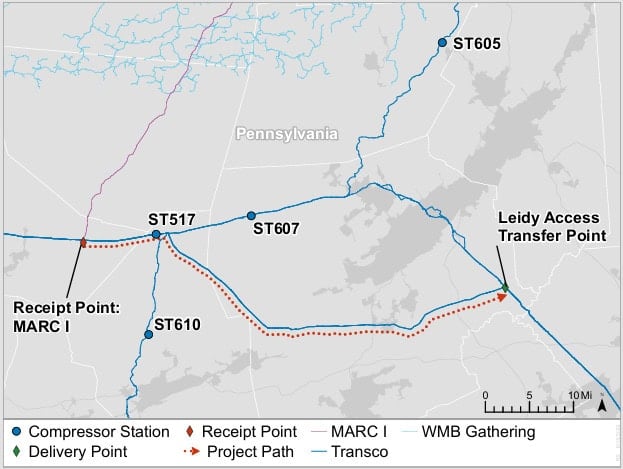
No comments:
Post a Comment