US oil prices finished higher for the fifth time in six weeks after oil traders finally realized that all the peace plans Trump had been floating were nothing more than attempts to manipulate oil prices from the White House, and had nothing to do with the war in the Middle East, which continued unabated…after trading of the contract for US light sweet crude for April delivery expired 0.4% lower at $98.32 a barrel last week after Trump had lifted sanctions on Russian, Venezuelan, and Iranian crude in an attempt to appease global oil markets, the contract price for the benchmark US light sweet crude for May delivery fell across global markets Monday morning after U.S. President Trump said he had ordered a halt to his threatened strikes on Iranian energy infrastructure after “very good and productive talks” with Tehran, and were down 5.8% as markets opening in New York after Trump said he had instructed the Department of Defense to halt strikes on Iranian power plants and energy infrastructure for a five-day period, "subject to the success of the ongoing meetings and discussions", and were down as much as 15% from the session highs after Trump said White House-appointed representatives were in talks with an Iranian official to find a resolution to the Middle East conflict, and settled $10.10 lower at $88.13 a barrel on what the media and traders believed were US-Iran talks to resolve hostilities in the Middle East….however, oil prices rose in early Asian trading on Tuesday due to supply concerns after Iran denied holding talks with the United States to end the Gulf war, contradicting statements by U.S. President Trump, who claimed that a deal could be reached soon, and were up more than 4% in European trading after markets concluded that Trump’s statements amounted to an attempt to talk down energy costs, rather than a genuine diplomatic breakthrough with Iran, and continued to advance Tuesday morning in New York after Iran denied U.S. claims of negotiations and Israeli and Iranian attacks continued, but pared its gains in volatile post-settlement trading, after settling $4.22 higher at $92.35 a barrel, on reports that the U.S. has sent Iran a 15-point plan to end the war in the Middle East….however, oil prices fell by more than 6% in earlt Asian trading Wednesday, following confirmation that US President Donald Trump had sent a peace proposal to Iran, expressing optimism about ending nearly a month-long conflict. but were off those lows during morning trading in New York, after Iran’s armed forces added to a stream of messaging that ruled out ceasefire talks, adding that they wouldn’t allow oil prices to return to their previous levels until all threats against the country were removed, and settled the session $2.03 lower at $90.32 a barrel, amid conflicting reports on whether the U.S. and Iran were in talks to find a solution to the more than three-week long Middle East conflict, with Israeli media suggesting an impending ceasefire….but oil prices were higher in Asian trading again on Thursday, as reciprocal attacks between the US, Israel, and Iran continued, despite reports that Washington wanted to avoid a prolonged war, then jumped to cross $100 per barrel on global markets after Iran said it was not engaged in direct negotiations with the US to end the war, and were 4% higher as the markets opened in New York after Russia had to halt oil exports from several ports that sustained damage from Ukrainian drone attacks, adding to global flow disruptions, and settled $4.16 higher at $94.48 a barrel as hopes for a swift end to the war in the Middle East faded and traders feared further Middle East escalation…oil prices fell on Asian markets on Friday after US President Trump said talks to end the war with Iran were going well and that he would suspend attacks on the country's energy facilities for 10 days, but were up by 3% by midday in Europe as the deferral of US strikes on the Iranian grid faded quickly with the market all too aware of the build up of US miliary power, Iranian intransigence, and the tendency towards a flurry of events over the weekend while markets are closed, and extended their run higher as markets opened in New York as Tehran denied being in talks with the US and Israel and Iran continued to exchange fire, and settled $5.16 higher at at $99.64 a barrel as traders doubted prospects of ceasefire in the Iran war and analysts warned of further price hikes if the war was prolonged….oil prices thus finished the week 1.3% higher, while the contract price for the benchmark US light sweet crude for May delivery, which had settled the prior week at $98.23 a barrel, ended 1.4% higher..
Meanwhile, US natural gas prices finished the past week unchanged, after falling 6 out of the prior seven weeks, as strong LNG demand offset forecasts for milder weather in the weeks ahead…after falling 1.4% to $3.095 per mmBTU last week, as an earlier than normal injection into storage signaled we would start the Spring shoulder season with surplus supplies, the price of the benchmark natural gas contract for April delivery opened 14.6 cents lower on Monday, as the promise of easing tensions in the Middle East and warming forecasts pushed prices decidedly lower overnight, and finished the session 20.4 cents lower at $2.891 per mmBTU on a drop in global energy prices after Trump said he was in talks with Iran to end the war, and on forecasts for milder weather and less gas demand in the U.S. over the next two weeks than previously expected…that front-month April contract opened 1.6 cents higher on Tuesday and posted a cautious ascent throughout the session as traders monitored negotiations in the Middle East and the impending storage withdrawal, and settled 5.2 cents higher at $2.943 per mmBTU, as rebounding oil prices, lingering domestic demand, and expectations for at least one more storage withdrawal lent support…natural gas prices opened 2.8 cents lower but moved higher early Wednesday, as market uncertainty surrounding the war in the Middle East persisted and LNG exports remained healthy, and managed to settle 0.9 cents higher at $2.952 per mmBTU as Tehran’s rejection of a U.S. peace plan kept war risks in play, and LNG feed gas demand and bullish storage expectations supported prices…natural gas traded around $2.970 leading up to the weekly storage report early on Thursday, then moved higher following the report, supported by ongoing uncertainty in the Middle East and steady LNG demand, and settled the session 4.7 cents higher at $2.999 per mmBTU as a larger-than-expected storage withdrawal, and the looming expiration of President Trump’s five-day pause on strikes against Iran’s energy infrastructure, lifted natural gas futures across the board…natural gas futures strengthened further early Friday, amid signs that the war with Iran would last longer than promised, following the bullish inventory surprise the prior day, and continued to advance into midday as traders balanced ongoing Iran war risks against softening domestic fundamentals, and settled the session 9.6 cents higher at $3.095 per mmBTU on position squaring and Iran war uncertainty as trading in the April natural gas contract expired unchanged for the week, while the price of the benchmark natural gas contract for May delivery, which will be the price quoted next week, finished 1.3% lower at $3.025 per mmBTU…
The EIA’s natural gas storage report for the week ending March 20th indicated that the amount of working natural gas held in underground storage fell by 54 billion cubic feet to 1,829 billion cubic feet by the end of the week, which left our natural gas supplies 90 billion cubic feet, or 5.2% above the 1,739 billion cubic feet of gas that were in storage on March 20th of last year, and 14 billion cubic feet, or 0.8% above the five-year average of 1,815 billion cubic feet of natural gas that had typically been in working storage as of the 20th of March over the most recent five years….the 54 billion cubic foot withdrawal from natural gas storage for the cited week was greater than the 48 billion cubic foot withdrawal from storage that the market was expecting ahead of the report, while it was in contrast to the 33 billion cubic foot of gas that were injected into natural gas storage during the corresponding week of 2025, and was also much more than the average 29 billion cubic foot withdrawal from natural gas storage that has been typical for the same mid March week over the past five years…
The Latest US Oil Supply and Disposition Data from the EIA
US oil data from the US Energy Information Administration for the week ending March 20th indicated that even after a big decrease in our oil imports, an even larger decrease in our oil exports meant we had surplus oil to add to our stored crude supplies for the 5th consecutive week and for 23rd time in forty-three weeks, in spite of a decrease in our oil supplies that the EIA could not account for….Our imports of crude oil fell by an average of 730,000 barrels per day to 6,464,000 barrels per day, after rising by an average of 772,000 barrels per day to a fifteen month high during the prior week, while our exports of crude oil fell by an average of 1,576,000 barrels per day to 3,322,000 barrels per day, which, when used to offset our imports, meant that the net of our trade of oil worked out to an import average of 3,142,000 barrels of oil per day during the week ending March 20th, an average of 846,000 more barrels per day than the net of our imports minus our exports during the prior week... At the same time, transfers to our oil supplies from Alaskan gas liquids, from natural gasoline, from condensate, and from unfinished oils were 2,000 barrels per day lower than the prior week at 549,000 barrels per day, while during the same week, production of crude from US wells was 11,000 barrels per day lower at 13,657,000 barrels per day. Hence, our daily supply of oil from the net of our international trade in oil, from transfers, and from domestic well production appears to have averaged a total of 17,348,000 barrels per day during the March 20th reporting week…
Meanwhile, US oil refineries reported they were processing an average of 16,598,000 barrels of crude per day during the week ending March 20th, an average of 366,000 more barrels per day than the amount of oil that our refineries reported they were processing during the prior week, while over the same period, the EIA’s surveys indicated that a net average of 989,000 barrels of oil per day were being added to the supplies of oil stored in the US… So, based on that reported & estimated data, the crude oil figures provided by the EIA appear to indicate that our total working supply of oil from net imports, from transfers, and from oilfield production during the week ending March 20th averaged a rounded 240,000 fewer barrels per day than what was added to storage plus what our oil refineries reported they used during the week. To account for the difference between the apparent supply of oil and the apparent disposition of it, the EIA just plugged a [ +240,000 ] barrel per day figure onto line 16 of the weekly U.S. Petroleum Balance Sheet, in order to make the reported data for the supply of oil and for the consumption of it balance out, a fudge factor that they label in their footnotes as “unaccounted for crude oil”, thus indicating there must have been a error or omission of that magnitude in the week’s oil supply & demand figures that we have just transcribed…in addition, since 597,000 barrels per day of oil supply could not be accounted for in the prior week’s EIA data, that means there was 357,000 barrel per day difference between this week’s oil balance sheet error and the EIA’s crude oil balance sheet error from a week ago, and hence the changes to supply and demand from that week to this one that are indicated by this week’s report are off by that much, and therefore not very useful.... However, since most oil traders react to these weekly EIA reports as if they were gospel, and since these weekly figures therefore often drive oil pricing and hence decisions to drill or complete oil wells, we’ll continue to report this data just as it’s published, and just as it’s watched & believed to be reasonably reliable by most everyone in the industry…(for more on how this weekly oil data is gathered, and the possible reasons for that “unaccounted for” oil supply, see this EIA explainer….also see this old twitter thread from an EIA administrator addressing these ongoing weekly errors, and what they had once hoped to do about it).
This week’s rounded 989,000 barrel per day average increase in our overall crude oil inventories all came as an average of 989,000 barrels per day were being added to our commercially available stocks of crude oil, while the amount of oil in our Strategic Petroleum Reserve remained unchanged… Further details from the weekly Petroleum Status Report (pdf) indicated that the 4 week average of our oil imports fell to 6,601,000 barrels per day last week, which was still 15.5% more than the 5,716,000 barrel per day average that we were importing over the same four-week period last year. This week’s crude oil production was reported to be a rounded 11,000 barrels per day lower at 13,678,000 barrels per day as the EIA’s estimate of the output from wells in the lower 48 states was 6,000 barrels per day lower at 13,242,000 barrels per day, while Alaska’s oil production was 5,000 barrels per day lower at 415,000 barrels per day...US crude oil production had reached a pre-pandemic high of 13,100,000 barrels per day during the week ending March 13th 2020, so this week’s reported oil production figure was 4.3% higher than that of our pre-pandemic production peak, and was also 40.8% above the pandemic low of 9,700,000 barrels per day that US oil production had fallen to during the third week of February of 2021.
US oil refineries were operating at 92.9% of their capacity while processing those 16,598,000 barrels of crude per day during the week ending March 20th, up from 91.4% the prior week, with the recent increases in the utilization rate likely due restarts after seasonal maintenance and temporary shutdowns, as refineries were being reconfigured to produce summer blends of fuel….the 16,598,000 barrels of oil per day that were refined that week was 5.4% more than the 15,750,000 barrels of crude that were being processed daily during the week ending March 21st of 2025, and 4.8% more than the 15,831,000 barrels that were being refined during the prepandemic week ending March 22nd, 2019, when our refinery utilization rate was at 86.6%, which was below the pre-pandemic normal utilization rate for this time of year…
With the increase in the amount of oil that was refined this week, gasoline output from our refineries was also higher, increasing by 309,000 barrels per day to 9,735,000 barrels per day during the week ending March 20th, after our refineries’ gasoline output had decreased by 462,000 barrels per day during the prior week... This week’s gasoline production was 5.6% more than the 9,222,000 barrels of gasoline that were being produced daily over the week ending March 21st of last year, and 0.8% more than the gasoline production of 9,657,000 barrels per day seen during the prepandemic week ending March 22nd, 2019….at the same time, our refineries’ production of distillate fuels (diesel fuel and heat oil) increased by 163,000 barrels per day to 5,026,000 barrels per day, after our distillates output had decreased by 75,000 barrels per day during the prior week. After that production increase, our distillates output was 11.4% more than the 4,513,000 barrels of distillates that were being produced daily during the week ending March 21st of 2025, and 2.1% more than the 4,686,000 barrels of distillates that were being produced daily during the pre-pandemic week ending March 22nd, 2019....
Even with this week’s increase in our gasoline production, our supplies of gasoline in storage at the end of the week fell for the sixth week in a row, decreasing by 2,593,000 barrels to 241,447,000 barrels during the week ending March 20th, coming after our gasoline inventories had decreased by 5,436,000 barrels during the prior week. Our gasoline supplies decreased by less this week because the amount of gasoline supplied to US users rose by 196,000 barrels per day to 8,924,000 barrels per day, while our imports of gasoline fell by 4,000 barrels per day to 443,000 barrels per day, and while our exports of gasoline fell by 79,000 barrels per day to 870,000 barrels per day … In spite of thirty-seven gasoline inventory withdrawals over the past fifty-nine weeks, our gasoline supplies were 1.0% higher than last March 21st’s gasoline inventories of 239,128,000 barrels, and about 3% above the five year average of our gasoline supplies for this time of year…
Meanwhile, after this week’s increase in distillates production, our supplies of distillate rose for the thirteenth time in nineteen weeks, increasing by 3,032,000 barrels to 119,936,000 barrels during the week ending March 20th, after our distillates supplies had decreased by 2,527,000 barrels during the prior week… Our distillates supplies rose this week because the amount of distillates supplied to US markets, an indicator of domestic demand, fell by 831,000 barrels to 3,568,000 barrels per day, while our imports of distillates fell by 66,000 barrels per day to 155,000 barrels per day, and our exports of distillates rose by 128,000 barrels per day to 1,180,000 barrels per day... After 22 additions to distillates inventories over the past 37 weeks, our distillates supplies at the end of the week were 4.9% higher than the 114,362,000 barrels of distillates that we had in storage on March 21st of 2025, but still about 0.4% below the five year average of our distillates inventories for this time of the year…
Finally, after the big decrease in our oil exports, our commercial supplies of crude oil in storage rose for the 16th time in twenty-six weeks, and for the 30th time over the past year, increasing by 6,926,000 barrels over the week, from 449,259,000 barrels on March 13th to a twenty-one month high of 456,185,000 barrels on March 20th, after our commercial crude supplies had increased by 6,156,000 barrels over the prior week….After this week’s increase, our commercial crude oil inventories were about 0.1% above the recent five-year average of commercial oil supplies for this time of year, and were about 36% above the average of our available crude oil stocks as of the third weekend of March over the 5 years at the beginning of the past decade, with the big difference between those comparisons arising because it wasn’t until early 2015 that our oil inventories had first topped 400 million barrels. After our commercial crude oil inventories had jumped to record highs during the Covid lockdowns in the Spring of 2020, then jumped again after February 2021’s winter storm Uri froze off US Gulf Coast refining, but then fell sharply due to increased exports to Europe following the onset of the Ukraine war, only to jump again following the Christmas 2022 refinery freeze-offs, changes in our commercial crude supplies have generally leveled off since, and as of this March 20th were 5.2% more than the 433,627,000 barrels of oil left in commercial storage on March 21st of 2025, and were 1.8% more than the 448,207,000 barrels of oil that we had in storage on March 22nd of 2024, but were 5.2% less than the 481,180,000 barrels of oil we had left in commercial storage on March 17th of 2023…
This Week's Rig Count
The US rig count was down by nine over the week ending March 27th, the largest drop since November, as the number of rigs targeting oil was down by five, the count of rigs targeting natural gas was down by four, and miscellaneous rigs were unchanged…for a quick snapshot of this week's rig count, we are again including below a screenshot of the rig count summary pdf from Baker Hughes...in the table below, the first column shows the active rig count as of March 27th, the second column shows the change in the number of working rigs between last week’s count (March 20th) and this week’s (March 27th) count, the third column shows last week’s March 20thactive rig count, the 4th column shows the change between the number of rigs running on Friday and the number running on the Friday of the same week of a year ago, and the 5th column shows the number of rigs that were drilling at the end of that reporting period a year ago, which in this week’s case was the 28th of March, 2025…

+++++++++++++++++++++++++++++++++++++++++++++++++++++
Infinity Natural Resources outlines plans to significantly increase output across key U.S. shale plays - On December 27, 2025, Infinity Natural Resources announced that it had agreed to purchase upstream and midstream assets in the Ohio Utica Shale for $1.2 billion from Antero Resources and Antero Midstream. The acquisition was completed during the first quarter of 2026 and represented the largest acquisition made by Infinity to date. The acquisition gives Infinity a significantly greater presence in what is arguably the most productive shale play in the United States. In addition to increasing its stake in the purchased assets to approximately 60%, Infinity added approximately 71,000 net horizontal acres in the core Utica Shale in Guernsey, Belmont, and Harrison counties. The acquisition included in excess of 110 undeveloped long-lateral drilling locations, which should provide a sufficient inventory of undeveloped drilling locations to support sustained development and output growth over the next several years.Infinity received control of in excess of 141 miles of gathering lines with a total capacity of approximately 600 MMcf/d, along with other associated water handling assets.The acquisition provides Infinity with the opportunity to vertically integrate its operations and reduce operating costs, improve flow assurance, and increase the efficiency of the development process across the acquired acreage. Infinity’s management indicated that the combined upstream and midstream operations of the Company would result in estimated synergies of approximately $25 million during 2026, resulting from reduced operating expenses and improved development planning. These synergies are a key factor enabling Infinity to grow its production levels while remaining capital disciplined. Following the acquisition, Infinity anticipates a material increase in production levels from its core shale plays. The Company indicated that its expanded Utica position would be the focus of its development activities, with Ohio representing a large portion of its drilling activity in 2026. Simultaneously, Infinity is continuing to develop stacked dry gas assets in the Marcellus and Utica Shales in Pennsylvania, and therefore is positioned to take advantage of both geographic and commodity diversity in the Appalachian Basin. Infinity’s operational outlook emphasizes a balance between growth and capital discipline. Infinity’s management indicated that the Company has the ability to adjust its drilling cadence, completion activity, and capital allocations in response to changes in commodity prices, while simultaneously targeting increased overall output in 2026 and thereafter.While the acquisition is large, Infinity emphasized that capital discipline is a fundamental aspect of its growth strategy. Infinity anticipates that the acquisition will be immediately accretive to the Company’s financial performance in terms of cash flow and adjusted EBITDAX. Additionally, Infinity provided a plan for achieving net leverage of less than 1.0x by the end of 2027. Infinity Natural Resources’ plans to significantly increase output from key U.S. shale plays are built around the intentional expansion of its asset base and not on an aggressive increase in drilling activity. Through the acquisition of high-quality Utica acreage, the integration of midstream operations, and the flexibility of its development program, Infinity is creating a platform for sustainable production growth with capital discipline. Ultimately, the sustainability of Infinity’s planned gains will be dependent on the success of converting its expanded inventory and integrated assets into consistent and efficient production across the Appalachian Basin.
Caerus Investment Advisors Buys Stake in Antero Resources - Caerus Investment Advisors LLC, a new investment firm, purchased a stake of 14,611 shares in Antero Resources Corporation during the third quarter, valued at approximately $490,000. This adds to the growing institutional ownership of the oil and natural gas company, which has seen increased investment from a number of hedge funds and advisory firms in recent quarters.The purchase of a stake in Antero Resources by a new investment firm like Caerus highlights the growing institutional confidence in the company's ability to capitalize on the rebound in energy markets and its strong position in the Appalachian Basin's natural gas and natural gas liquids production.
PA Sen. Gene Yaw Introducing Bill to Speed Up Utica Drilling - Marcellus Drilling News -- Pennsylvania State Senator Gene Yaw is introducing legislation to modernize Pennsylvania’s 1961 Oil and Gas Conservation Law, which currently relies on standards predating modern horizontal drilling. By aligning the statute with contemporary practices, the bill aims to accelerate permit reviews for Utica wells and treat them consistently with Marcellus shale operations. Yaw argues that updating these outdated rules will reduce resource waste, minimize surface impacts, and prevent natural gas from being left underground.
Yaw introduces bill to update Oil and Gas Law – A new bill aimed at updating Pennsylvania’s Oil and Gas Conservation Law to match today’s drilling practices and speed up permit reviews for Utica wells will soon be introduced, according to Sen. Gene Yaw (R-23), chair of the Senate Environmental Resources and Energy Committee and sponsor of the measure. “The techniques used to develop Marcellus and Utica shale are the same and it makes no sense for our laws to treat them differently,” Yaw said. “Modernizing this statute will reduce waste, protect resources and ensure Pennsylvania can continue to responsibly develop natural gas, a critical asset that supports jobs, generates revenue and strengthens our energy sector.” Yaw’s legislation would update a statutory framework written in 1961, long before modern horizontal drilling existed. By bringing the law in line with current practices, the bill would help reduce delays in permit reviews, improve well placement and limit unnecessary surface impacts. Currently, Yaw said outdated rules don’t reflect how unconventional wells are drilled today. Applying old standards to Utica wells can lead to significant amounts of natural gas being left in the ground, undermining the law’s original intention to prevent waste. Additionally, Yaw said because many Utica wells are located on land managed by the Pennsylvania Game Commission and the Department of Conservation and Natural Resources, outdated rules can also result in billions in lost royalty revenue for public agencies that rely on these funds to support conservation work. According to Yaw, Utica wells tap into the Utica shale, a deep underground rock formation that lies beneath the more widely known Marcellus Shale. By using the same modern horizontal drilling and hydraulic fracturing techniques, Yaw said, these wells can access large reserves of natural gas that would otherwise be unreachable.
MSC: Pennsylvania Sits at Center of Next Chapter in U.S. LNG -- Marcellus Drilling News -- The Marcellus Shale Coalition writes that Pennsylvania sits at the center of U.S. Liquefied Natural Gas (LNG) development, as highlighted by the EU–U.S. LNG Cooperation 2.0 Summit held in February in Pittsburgh. Utilizing the Appalachian Basin’s vast resources, the state has driven the shale revolution, making the U.S. a leading global energy exporter. This production has been vital for European energy security, providing a critical alternative to Russian gas.
CT DEEP Unnecessarily Delays NatGas Pipe Crossing 2 State Parks - Marcellus Drilling News - Connecticut’s Department of Energy and Environmental Protection (DEEP) has determined that Eversource Energy’s plan to install a natural gas pipeline through Hurd State Park and the Connecticut Valley Railroad State Park Trail requires a formal Environmental Impact Evaluation, unnecessarily delaying a tiny portion (1.1 miles) of a critically-important reliability project (34.5 miles long). This 16-inch pipeline, a segment of the Southeast Resiliency Project, is designed to provide energy redundancy and security for the region.
EQT achieves new drilling benchmarks while improving operational efficiency across upstream activities -The performance of an Upstream Natural Gas Development operation is typically measured using multiple metrics. The way that continued improvement takes place for operations, such as drilling, completing, cost containment, and improving the efficiency of systems, is through small improvements in each area. The most recent update on the operating performance of EQT’s Appalachian upstream assets shows that cumulative improvements are being made. EQT also disclosed in their reporting on the financial performance of the fourth quarter and all of 2025 (February 17, 2026), that they had set several new company-wide internal records regarding drilling and completion activities. Those records included a report from the Company that it completed wells at the highest quarterly well completion rate in its history.Additionally, EQT stated in their reporting that it had set two other new company-wide internal records as follows: the largest amount of lateral footage drilled in a 24-hour period, and the largest amount of lateral footage drilled in a 48-hour period. These new internal records are indicative that the improvements made to EQT’s drilling program continue. EQT indicated that it experienced a 13% decline in the average drilling cost per foot compared to the same timeframe in the prior year. Furthermore, the Company stated that its costs for the current quarter were 6% lower than it had estimated. It appears that the cost efficiency gains that EQT is experiencing result from drilling efficiencies rather than increases in volumes. The improvements in EQT’s operational efficiency also contributed to increased production. According to EQT’s fourth-quarter 2025 sales volumes exceeded the high-end of its sales volume forecast. EQT credited the increase in sales volume to favorable well performance, optimal system pressure, and reduced curtailing related to lower-than-anticipated prices.Due to these operational improvements, EQT was able to exceed sales volume projections while maintaining its capital discipline. Capital expenditures for the 4th quarter 2025 totaled $655 million, which was 4% less than the midpoint of guidance. The decrease in capital expenditures was the result of both greater efficiency and lower infrastructure capital spending than EQT had estimated.While the continuous improvement of EQT’s operational efficiency provides evidence of better performance, it is the ability of the company to provide reliable production under stressful weather conditions that is becoming increasingly important.Following Winter Storm Fern, EQT reported that the company’s production remained online nearly twice as much as its peers in the region. This allowed EQT to maintain supply to the market during a period of extremely high demand and volatile prices. Winter storm-related reliability is now considered a key indicator of market confidence and regulatory scrutiny for Appalachian producers.
Equinor's Marcellus Stake Swap: A Low-Cost Gas Bet Amid AI-Driven Demand Surge - Equinor is exchanging its operated position in the Marcellus and Utica shale formations in Ohio for a 40% non-operated stake in EQT's Northern Marcellus assets in Pennsylvania. To balance the deal, Equinor will pay EQT a cash consideration of $500 million. This finalizes the last operatorship Equinor held in the U.S. onshore, a move that aligns with its strategic focus on international oil and gas and integrated power. The mechanics are clear: the swap increases Equinor's average working interest in the Northern Marcellus from 15.7% to 25.7%. More importantly, it adds approximately 80,000 barrels of oil equivalent per day (boe/d) to its U.S. production. This is a portfolio optimization, not a major supply expansion. The deal strengthens Equinor's position in what it calls the "most robust part of the Appalachian Basin," targeting assets with low break-even costs and low upstream emissions intensity. Viewed through a commodity balance lens, the move is about securing reliable, low-cost gas volumes to support cash flow and emissions targets. The company has already acquired a similar stake earlier this year, and this swap completes the picture. It allows Equinor to exit operational responsibilities in a complex shale play while gaining a larger, more efficient stake in a core gas region. The strategic context is one of high-grading-a shift away from onshore operatorship toward a leaner, more integrated portfolio focused on offshore and international growth. The commodity balance in the Appalachian basin is shifting from one of constraint to one of potential acceleration. The region's core, the Marcellus and Utica formations, is a natural gas powerhouse, producing approximately 35 Bcf of natural gas per day. That output accounts for more than one-third of total U.S. gas production, a level that has held steady through the first half of the 2020s. The key change is in the pipeline. After years of takeaway constraints, new capacity like the Mountain Valley Pipeline has begun to unlock growth, removing a historical bottleneck. This easing of constraints arrives just as demand drivers are intensifying. A new analysis projects that AI-driven data center demand could significantly increase U.S. gas consumption in the power sector. Research shows that data centers have helped to nearly triple the demand for gas-fired power in the US over the past two years. More than a third of this new demand is explicitly linked to gas projects that will power data centers, a surge that is reshaping the power development pipeline. For producers, this creates a favorable margin environment. Major operators like EQT report that 87% of their core, undrilled Marcellus inventory has a free cash flow break-even below $2/MMBtu. This low-cost profile, combined with the region's massive resource base, positions Appalachian gas to meet rising demand efficiently.
EQT Sees Stronger Appalachian Pricing as Power, LNG Drive New Demand Wave - EQT Corp., the country’s largest natural gas producer, is seeing a substantial lift in demand for Appalachian gas by the end of the decade driven by soaring power demand and LNG exports. NGI’s Texas Eastern M-2 30 Receipt prices traded in a relatively narrow range before a dramatic winter spike above $50/MMBtu, then quickly retreated, illustrating the region’s susceptibility to short-lived but extreme demand-driven volatility. At A Glance:
Basis tightening expected across Appalachian hubs
Utilities securing pipeline capacity aggressively
Infrastructure bottlenecks pressuring power development
U.S. LNG Feedgas Maintains Peak Levels | RBN Energy - U.S. LNG feedgas demand averaged 19.1 Bcf/d last week, an increase of 0.09 Bcf/d, with small changes across all terminals. Freeport LNG Train 3 tripped offline on March 16 due to a compressor issue, but the train quickly restarted, and feedgas was minimally impacted. Overall feedgas demand remains strong with most terminals continuing to operate at peak levels. Intake at the newly commissioning Golden Pass LNG remains around 300 MMcf/d. Train 1 at the terminal is expected to begin producing LNG soon. At full utilization, Train 1 is expected to require around 850 MMcf/d of feedgas. Gulf Run (blue shaded area in the chart below) and Midcoast Pipeline (red shaded area) are delivering gas onto the header pipeline, with some volumes used as feedgas and some delivered to other pipelines in the area. Golden Pass is an anchor shipper on Gulf Run, holding 1.1 Bcf/d of capacity on the line from the Haynesville area to the Sabine River area, and a significant share of its feedgas is expected from Gulf Run.
Report: Middle East Disruption Elevates North American LNG - - Marcellus Drilling News -Morningstar DBRS has published an interesting commentary that will be of interest to MDN readers and those with an interest in LNG: “From Risk to Relevance: Middle East Disruption Elevates North American LNG.” The escalating conflict in the Middle East has disrupted global LNG supply, damaged infrastructure in Qatar, and constrained shipping. These developments have heightened buyer concerns around supply security and transit risk, prompting a reassessment of LNG sourcing strategies. As a result, North American LNG has gained strategic relevance (preference), supported by jurisdictional stability and expanding export capacity.
U.S. Natural Gas ‘Superpower’ Status in Focus as Iran War Spurs Market Swings - U.S. Department of Energy (DOE) Secretary Chris Wright said the Trump administration would continue to hone in on natural gas infrastructure and production as a key defense against price volatility as the world continues to react to escalating impacts in the war with Iran.Table of prompt-month natural gas statistics for the five trading days ending March 23, 2026, showing Henry Hub futures near $2.87/MMBtu, LNG feed gas around 19 Bcf/d, global benchmarks including TTF and JKM above $19–$21/MMBtu, and regional weather trends. At A Glance:
Traders eye potential Gulf de-escalation impact
Henry Hub remains below $3
Supply signals strengthen amid rising prices
U.S. LNG Flows to Caribbean Grow Rapidly as Power Demand Rises - The role of U.S. LNG exporters as the key supplier of natural gas imports in the Caribbean is continuing to grow as import volumes and power demand surge in the region. Chart showing combined U.S. LNG exports to the Dominican Republic, Jamaica, Panama, and Puerto Rico rising sharply from 2016 to 2025, reaching about 3.0 million tons, with notable growth spikes in 2019 (+134%), 2020 (+61%), 2021 (+56%), a dip in 2022 (-33%), and continued gains through 2025, according to NGI and Kpler data. At A Glance:
- Gulf Coast supply dominates Caribbean
- LNG demand tied to power sector expansion
- Caribbean buyers exposed to U.S. pricing
Port Canaveral Authority Votes Down Proposed LNG Facility -Marcellus Drilling News In December, representatives from Chesapeake Utilities and BHE GT&S, a subsidiary of Berkshire Hathaway Energy, presented a proposal to the Port Canaveral Authority to construct a new LNG liquefaction facility in Brevard County, FL (see Chesapeake, Berkshire Hathaway Propose LNG for Port Canaveral). The project, targeting a 2029 completion date, aims to supply essential fuel for both cruise ships and space industry rockets. While LNG is currently trucked in to support rocket launches, this facility would provide dedicated local infrastructure to meet the growing demands of the world’s busiest cruise port and the active space sector. However, the Port Authority just voted unanimously to reject the plan, bringing it to a screeching halt.
Sempra’s Energía Costa Azul LNG Project Gets More Time as Startup Nears - The U.S. Department of Energy (DOE) has granted Sempra Infrastructure an additional six months to begin exports from its U.S.-fed LNG export project in Mexico as construction nears completion. At A Glance:
- ECA Phase 1 nears completion milestone
- Mexico imports of U.S. gas increase
- Forward curve signals stronger summer pricing
Venture Global Adds LNG Cargoes to Europe in Edison Arbitration Settlement - Venture Global Inc. has settled another contract dispute over the prolonged commissioning of its Calcasieu Pass LNG facility, agreeing to boost short-term LNG exports to Europe.At A Glance:
- Venture Global nearing end of arbitration cases
- Arbitration wins strengthen legal position
- Edison secures extra supply volumes
Venture Global Plans to Pursue More Short-Term Supply Deals as LNG Output Grows --Venture Global Inc. announced a rare short-term deal to sell global commodities trader Vitol Inc. 1.5 million tons/year of LNG beginning in 2026. At A Glance:
- More short-term deals possible
- Prices linked to Henry Hub
- Company pursuing more five-year deals
TotalEnergies Redirects $928M From U.S. Offshore Wind to LNG, Natural Gas Production -TotalEnergies SE has inked an agreement with the federal government valued at $928 million billion that the French supermajor expects to accelerate the Rio Grande and Alaska LNG projects. At A Glance:
- Deal directly targets Rio Grande, Alaska LNG
- Policy shift favors natural gas over wind
- DOI calls offshore wind security risk
Cheniere CEO Warns of Coming LNG Squeeze as Corpus Christi Train 5 Nears Operation - Cheniere Energy Inc. CEO Jack Fusco said the company is working to commission Train 5 of its latest Corpus Christi LNG expansion as U.S. exporters push to fill a widening global supply gap. At A Glance:
- Corpus Christi feed gas nears 2.5 Bcf/d
- Agua Dulce prices strengthen on demand pull
- Asia demand pulls incremental U.S. volumes
Canada Should KEEP Its Natural Gas, Not Export It to U.S. for LNG - Marcellus Drilling News -- This one makes us white-hot with anger. Our “cousins” to the north, who have bashed fossil energy repeatedly and have disrespected the Trump administration on numerous occasions, now want to export more of their natural gas to the U.S. so we can use it in our LNG exports to other countries. NO THANKS. You can keep your gas and stick it where the sun doesn’t shine. We have PLENTY of our own gas, and we could extract even more (from the Marcellus/Utica, other plays, too) if we had available pipelines to flow it. We don’t need or want Canadian gas that would displace existing molecules in our limited pipelines.
Propane Sees Record Production and Elevated Inventories as Export Constraints Emerge RBN - The EIA reported a 478 Mbbl build in total U.S. propane/propylene inventories for the week ended March 20, slightly below industry expectations of a 540 Mbbl build. Total inventories now stand at 73 MMbbl, up 69% from the same period last year and well above historical benchmarks, including 30% above the five-year maximum and 61% above the five-year average. In PADD 2 (Midwest), propane stocks increased by 510 Mbbl, marking a second consecutive week of builds, bringing total inventories to 14.5 MMbbl, or 61% above 2025 levels and 14% above the five-year maximum. Stocks are also 38% above the five-year average. Total U.S. propane/propylene production increased by 35 Mb/d to 2.96 MMb/d, the highest level on record and 7% above the five-year maximum, while weekly propane exports reported by the EIA were 1.87 MMb/d, edging down by 7 Mb/d from the previous week. Exports remain below the year-to-date average of 1.92 MMb/d but above the four-week average of 1.85 MMb/d and the 1.83 MMb/d reported in the year-ago week. Export volumes may face additional pressure in the near-term following Targa’s force majeure at its Galena Park terminal. For more details, see the latest NGL Voyager.
Mild Weather Undercuts LNG Demand, Even as U.S. Exports Climb -Weather-driven LNG demand is expected to be under pressure into early April as warm temperatures settle over key markets in Europe and Asia. Charts of Europe and Asia weather trends showing trailing 365-day mean temperatures for Northwest Europe, Beijing, Seoul, and Tokyo, with seasonal swings and recent temperatures tracking near or slightly above normal levels. At A Glance:
Asian demand weakens on mild temperatures
LNG demand pressured into early April
Europe demand mixed but slightly bearish
US natgas futures drop 7%, giving up all gains since the US and Israel bombed Iran (Reuters) - U.S. natural gas futures fell about 7% to a three-week low on Monday on a drop in global energy prices after U.S. President Donald Trump said he was in talks with Iran to end the war, and on forecasts for milder weather and less gas demand in the U.S. over the next two weeks than previously expected. Front-month gas futures for April delivery NGc1 on the New York Mercantile Exchange fell 20.4 cents, or 6.6%, to settle at $2.891 per million British thermal units (mmBtu), their lowest close since February 27. That means U.S. gas futures have given up all of their gains since the U.S. and Israel started bombing Iran on February 28. In the cash market, average prices at the Waha Hub in West Texas have been in negative territory for a record 32 days in a row as pipeline constraints trapped gas in the Permian, the nation's biggest oil-producing shale basin. Average gas output in the U.S. Lower 48 states has risen to 109.8 billion cubic feet per day (bcfd) so far in March, up from 109.2 bcfd in February, according to LSEG data. That reading compares with a monthly record high of 110.6 bcfd in December 2025. Even though March is part of the winter season when utilities usually pull gas from storage to meet heating demand, mostly mild weather in recent weeks has allowed energy firms to inject gas into storage. But analysts forecast slightly cooler weather last week likely prompted energy firms to make their last withdrawals from storage this winter, cutting stockpiles from about 3% above normal levels during the week ended March 13 to near-normal levels during the week ended March 20. Looking forward, meteorologists forecast weather would remain warmer than normal through April 7, keeping heating demand low in coming weeks. LSEG projected average gas demand in the Lower 48 states, including exports, would rise from 110.2 bcfd this week to 112.0 bcfd next week. The forecast for next week was lower than LSEG's outlook on Friday. Average gas flows to the nine big U.S. liquefied natural gas export plants have slid to 18.5 bcfd so far in March, down from a record 18.7 bcfd in February. In recent weeks, the war in Iran caused global gas prices TRNLTTFMc1, JKMc1 to surge again by knocking out LNG supplies from Qatar, which provides about 20% of the world's LNG. As of late March 2026, the Dutch TTF Natural Gas futures are trading around €34–€55 per MWh (or approximately $54–$56 USD/MMBtu for front-month contracts).
Waha Natural Gas Prices Up but Still Negative as Maintenance Subsides - Overall outflows of natural gas from the Permian Basin were down slightly last week, with lower outflows to the West and Mexico offsetting higher outflows to the North. Outflows to the North (blue line in chart below) rebounded last week after the outage on El Paso restricted flows the week prior. The prior week’s outage lasted from March 7 to 13 and occurred near the Belen Compressor Station in New Mexico. However, gains on El Paso were partially offset by lower intake on other pipelines, namely Transwestern at Carlsbad. Outflows to the North averaged 1.94 Bcf/d, up 0.18 Bcf/d. Outflows to the West averaged 2.35 Bcf/d, down 0.05 Bcf/d week-on-week. Outflows to Mexico averaged 1.51 Bcf/d last week, down 0.2 Bcf/d. The bump in outflows led to slightly less punishing prices for producers without guaranteed capacity out of the Permian. Outright Waha cash prices averaged negative $3.77/MMBtu according to data from Natural Gas Intelligence (NGI), up $1.46/MMBtu. Cash prices rebounded after the force majeure on El Paso was lifted but remain extremely negative because of constraints in the basin. Prices are expected to remain very low and prone to extreme negative shocks during maintenance and outages because of how constrained the region is. Spring maintenance is common in April and May, leading to a likelihood that negative shocks will continue. Lasting relief comes in the second half of 2026 with three major pipeline projects poised to expand capacity to the East.
Permian Supply Pushes Mexico’s Natural Gas Imports Higher as Infrastructure Startups Near - A surge in West Texas natural gas exports to Mexico has led to a ramp up in cross-border flows at the tail end of March. Mexico natural gas flow snapshot showing total U.S. pipeline exports of 7.293 Bcf/d, with largest volumes to South Texas at 4.474 Bcf/d and West Texas at 2.151 Bcf/d, alongside flows to Arizona and California. At A Glance:
West Texas flows top 2 Bcf/d
ECA startup edges closer again
Reynosa bypass reaches 98% completion
Dallas Fed survey finds first quarter oil and gas activity rose (Reuters) - Activity in the U.S. oil and gas sector in the key producing states of Texas, Louisiana and New Mexico increased in the first quarter of 2026 although output was steady for now, a survey released by the Federal Reserve Bank of Dallas on Wednesday found. It said oil executives were waiting to see where prices would settle over the next six months following volatility and supply disruption caused by the Iran war, but expected the focus on energy security to rise. Prices need to hold for two to three months before large companies adjust their plans, Kunal Patel, a senior business economist at the Federal Reserve Bank of Dallas, said on a media call. Costs increased at a slightly faster pace when compared with the fourth quarter, respondents to the survey conducted between March 11 and 19 said. Of the 135 respondents, 92 were exploration and production firms and 43 were oilfield services firms, the Dallas Fed said. Companies expect a West Texas Intermediate oil price of $74 per barrel at year-end 2026, the survey showed. WTI prices averaged $94.63 during the survey period, Patel said. Respondents also foresee a Henry Hub natural gas price of $3.60 per MMBtu at year-end 2026.
Port Neches pipeline leak spilled 100 barrels, records show — A newly obtained state document is giving the clearest picture yet of a crude oil pipeline leak near Spur 136 in Port Neches, showing how much oil spilled, where it went, and how crews contained it.The incident was first reported March 9 and initially described as a moderate leak on an unused pipeline, prompting crews to move in and begin containment.According to a Railroad Commission of Texas incident notification obtained by 12News, about 100 barrels of crude oil, roughly 4,200 gallons, were released from a pipeline operated by TotalEnergies Gas Pipeline USA. The spill was first reported by Shell Pipeline.The report shows the oil spilled along the pipeline right of way and remained largely contained at the site of the failure. Crews shut down the line by isolating the pipeline on both sides, stopping additional crude from escaping.Crews then built a temporary earth berm to keep the oil from spreading, especially with rain in the forecast, while an oil spill response organization began removing contaminated soil and continuing cleanup.By the time a Railroad Commission inspector arrived March 10, the site had been stabilized, with no injuries, fires, or evacuations reported. Cleanup was expected to continue for several days as crews worked to remove contaminated material and limit environmental impact.The cause of the pipeline failure remains under investigation. State regulators are expected to continue monitoring the cleanup and will determine what led to the leak and whether any violations occurred.
Iran War Roils Pricing Just After U.S. E&P Returns Hit Four-Year Lows | RBN Energy - The upstream oil and gas sector has been periodically roiled by dramatic price swings triggered by world events over the last five decades, including the 1970s oil embargo, the 1990-91 Gulf War, the late-1990s Asian financial crisis, the 2008 financial collapse, the onset of COVID in 2020, the Russian invasion of Ukraine in 2022, and now, the U.S. and Israeli attacks on Iran. The subsequent nearly $40/bbl surge in crude oil prices has taken attention away from the just-released year-end 2025 reports that showed U.S. E&P profits and cash flows have been steadily squeezed by the decline of realizations to a five-year low. In today’s RBN blog, we analyze the impact of bottoming oil prices on earnings and cash flows as the industry girds for an unpredictable 2026. As shown in Figure 1 below, crude oil prices (gray line and right axis) rapidly gained momentum in late 2020 after plunging to just $16.55/bbl in April of that year, breaking the $50/bbl level in January 2021 and building to a peak above $100/bbl in March-July 2022. U.S. producers, which after decades of reckless spending transitioned to a model that prioritized free cash flow, basked in record returns that were passed along to shareholders. However, prices steadily retreated, lingering in the $70-$80/bbl range from 2023 through the first couple months of 2025 before declining more rapidly in the second half of the year. The average WTI price for December dipped to $57.85/bbl, the lowest since January 2021. (Prices have surged since the start of the war with Iran, settling at $98.23 on March 20.) As a result of the second-half softening, the average WTI price fell to $64.83/bbl in 2025, nearly 15% lower than the $75.80/bbl recorded in 2024. The most significant consequence of that decline was an avalanche of non-cash impairments to the value of several companies’ oil reserves, totaling $5.4 billion ($3.54/boe). The 36 exploration and production companies (E&Ps) that we follow saw profits plunge by 46% in Q4 2025 to $7.8 billion ($5.13/boe, blue bars and left axis in Figure 1), the lowest quarterly result since Q4 2020. Revenues fell by only 5% to $30.66/boe, a five-year low, as the weakness in oil prices was offset by a strong natural gas market. Cash flow declined to $30 billion, or 6%, to $19.83/boe (far-right orange bar and left axis), the weakest since Q4 2020. Expenses, other than impairments, were essentially flat quarter-over-quarter. Lifting costs declined 2% to $10.83/boe on the back of an 8% reduction in price-sensitive production taxes to $1.55/boe. Production costs fell by $0.05/boe to $9.29/boe. DD&A expenses increased 1% to $10.88/boe. Exploration expenses were up 31% to $0.28/boe. As mentioned earlier, impairment charges were up, a nearly fourfold increase to $3.54/boe. The Oil-Weighted E&Ps were the worst performers because of the previously mentioned writedowns. Profits for the peer group were down 93% to $0.97/boe from $13.26/boe in Q3 2025. The Gas-Weighted E&Ps were the best performing peer group as profits were up 54% to $6.51/boe. The Diversified E&Ps saw profits fall 26% to $8.19/boe. Total oil and gas production was up 1.2% in Q4 2025 to 1.5 billion boe. Both the Gas-Weighted and Oil-Weighted E&Ps each increased output by 2%, while the Diversified E&Ps saw output fall 1%. Next, let’s look at the results by peer group.
- The Oil-Weighted E&Ps saw profits decimated in Q4 2025, with impairment charges surging to $4.7 billion. Adding insult to injury, Permian gas prices fell back into negative territory, averaging -$0.85/MMBtu at the Waha Hub in West Texas. Earnings (far-right blue bar and left axis in Figure 2 below) fell to $508 million ($0.97/boe) from $6.8 billion ($13.26/boe) in Q3 2025. Cash flow (far-right orange bar and left axis), however, declined only 13% to $23.25/boe (far-right orange bar and left axis). Revenues were down 10% to $34.99/boe, in line with withering WTI crude oil (gray line and right axis) and Permian gas prices. Oil and gas production amounted to 524 MMboe in Q4 2025, 2% higher than the 514 MMboe posted in Q3 2025. Oxy was still the largest producer in the peer group at 136 MMboe, but its edge over EOG, which had output of 129 MMboe, has been closing every quarter. For company-by-company results, including details on lifting costs, production costs, production taxes, DD&A expenses, impairment charges and exploration expenses, expand the table below.
- The 15 companies in the Diversified E&P Peer Group earned $4 billion ($8.19/boe, far-right blue bar and left axis in Figure 3 below) in Q4 2025, 26% below the $11.02/boe ($5.4 billion) earned in the prior quarter. Cash flow (far-right orange bar and left axis) came in at $23.37/boe ($11.3 billion),10% below Q3 2025. Revenues fell 8% to $36.23/boe as weaker oil prices (gray line and right axis) were partially offset by a stronger natural gas market.Oil and gas production amounted to 485 MMboe in Q4 2025, 1% below Q3 2025 results. ConocoPhillips was the largest producer in the peer group at 213 MMboe, with Ovintiv runner-up at 57 MMboe, ahead of Continental Resources and APA Corp. at 43 MMboe and 42 MMboe, respectively. For company-by-company results, expand the table below
- The Gas-Weighted E&Ps continued their resurgence from their 2024 low point in Q4 2025, with profits at $3.3 billion ($6.51/boe, far-right blue bar and left axis in Figure 4 below), up 54% over Q3 2025. Cash flow (far-right orange bar and left axis) was up 24% to $12.86/boe ($6.5 billion). Revenues were up 14% to $20.80/boe as Henry Hub (gray line and right axis) and Appalachian gas prices (averaged through several regional hubs) were up 32% and 40%, respectively. Figure 4. Gas-Weighted E&P Financial Results and Henry Hub Prices, 2014-Q4 2025. Lifting costs were up 2% to $7.93/boe as production costs were up 3% to $7.42/boe and production taxes fell 3% to $0.51/boe. DD&A expenses were down 1% to $6.03/boe. Impairments were up fivefold but only to $0.25/boe, while exploration charges were up 34% to $0.08/boe. Each of the 10 companies in the peer group was profitable, with EQT Corp. posting the largest earnings at $832 million, followed by Expand Energy and Coterra Energy at $635 million and $438 million, respectively. EQT was also tops in cash flow, generating $1.5 billion, just ahead of Expand Energy at $1.4 billion and Coterra Energy at $1.1 billion. On a per-unit basis, Gulfport Energy was the most profitable, pulling in $8.75/boe, just ahead of EQT at $8.20/boe. In terms of cash flow, Comstock Resources topped the list at $15.62/boe, just ahead of EQT at $15.19/boe. Oil and gas production amounted to 504 MMboe, 2% better than Q3 2025. Expand Energy nudged out EQT for top producer with output of 113 MMboe compared to 101 MMboe for EQT. For company-by-company results, expand the table below.
Refinery Margins Skyrocket as Fuel Gains Outpace Crude | RBN Energy - Refinery runs climbed 365 Mb/d to 16.6 MMb/d last week (see Figure 1), roughly 850 Mb/d above year ago levels, as refiners responded to exceptionally strong margins created by surging product prices. The 3-2-1 crack spread increased sharply by $15.59/bbl week over week, reaching $55.78 per barrel on Friday, March 20 (see Figure 2). The move was primarily driven by strength in distillates, with diesel cracks surging to $87.02/bbl, while gasoline cracks also improved to $40.16/bbl. This strength was supported by wholesale gasoline and diesel prices climbing to their highest levels since 2022. At the same time, global crude fundamentals remained supportive, with Brent settling at $112.19/bbl, the Brent WTI spread widening to $13.96/bbl, and the Midland MEH differential reaching $3.36/bbl amid ongoing Persian Gulf disruptions and fears of tighter global crude flows.
Oil Price Spike Benefits Unhedged Producers -- Several North American oil and gas producers are poised to benefit from the recent oil price spike, thanks to their hedging strategies. Geologic data shows that, as of year-end 2025, Permian-focused Diamondback Energy was the largest oil producer in a group of 14 pure E&P companies in the U.S. and Canada that either had:
- No price-capping derivatives* in place for Q1 and Q2 2026; or,
- Hedging that represented up to only 10% of latest production.
Unlike their hedged peers, these 14 producers have no ceiling on their earnings and are expected to reap the largest benefits from the recent surge in oil prices caused by the conflict in Iran. The various oil hedging strategies for Q1 and Q2 2026 for U.S. and Canadian E&P companies are shown in the charts below. Aside from the group of 14 led by Diamondback, the rest of the market is likely to see earnings capped. U.S. and Canadian oil producers ended 2025 facing a challenging outlook, with 2026 oil price forecasts falling below $60/bbl.While some producers, like Diamondback, chose not to hedge, weaker cash-flow expectations prompted many other management teams to act defensively. Fixed-price swaps and collars in the range of $55 to $65/bbl were locked in, safeguarding millions of barrels against further price declines to ensure stable cash flow.However, the outbreak of the Iranian conflict has dramatically changed the market, with Brent and WTI surging past $100 per barrel for the first time since 2022.As a result, these same swaps and collars are now capping prices instead of safeguarding them and prevent hedged producers from fully capturing the upside of higher oil prices in Q1 and Q2.First quarter results, due towards the end of April and early May, will show how far North America’s E&Ps have been able to adjust and hedge at higher prices.Early signs of this have already surfaced.Canada’s Kelt Exploration is one example. In its Q4 results, the company disclosed hedge-book revisions made after year-end 2025, including swaps of over $90/bbl during the period between April and June.We expect many other producers to follow suit sooner rather than later. Companies in Diamondback’s group of 14 with little to no oil hedging in early 2026 may also decide to lock in volumes now that prices are significantly higher.If oil prices remain high, we’ll be looking beyond hedging. We’ll track changes in capital spending budgets, debt management strategies and any short-term boosts in shareholder returns, including special dividends or share buybacks.
International Brent versus Domestic WTI Crude Oil Price Differential Blowout | RBN Energy -The price differential between Brent and WTI has widened sharply in the past few days, reaching levels not seen in over a decade as the Iran war has created a growing gap between international seaborne and domestic inland crude markets. As shown in the graph below, the spread spent most of the 2023–2025 period fluctuating in a relatively narrow $2–$5/bbl range before blasting higher in early 2026. As of Friday, the differential had increased to $13.96/bbl, marking the highest differential since the mid-2010s and underscoring the extent to which global supply risks have been concentrated in waterborne barrels priced off Brent. Note that the price differential in this chart aligns the timing of Brent Futures versus CME/NYMEX Domestic Sweet (WTI) crude oil futures. Brent futures traded on the ICE platform roll on the last business day of the second month prior to settlement, while the NYMEX DSW/WTI contract rolls roughly three weeks later. Because front-month prices can diverge significantly during periods of volatility, comparing unadjusted prompt contracts would introduce distortions unrelated to underlying fundamentals. By matching WTI to the same delivery month as Brent, the series shown here isolates the true market signal: a widening geographic premium for crude that must move through contested shipping lanes versus barrels priced in the landlocked U.S. interior.Disruptions to tanker traffic and export infrastructure in the Persian Gulf have tightened availability of internationally traded barrels, significantly boosting Brent prices relative to WTI and other inland benchmarks that remain anchored by stable North American supply. Looking ahead, the trajectory of the spread will hinge primarily on the duration of constraints at the Strait of Hormuz. If shipping flows remain impaired, the differential is likely to stay elevated. Conversely, any sustained normalization of Gulf transit would be expected to compress the spread back toward the mid-single-digit range that has characterized most of the period shown in the chart.
US crude oil inventories up by 1.5% for week ending March 20 - US commercial crude oil inventories increased by 1.5% in the week ending March 20, according to data released by the Energy Information Administration (EIA) late Wednesday. Inventories rose by 6.9 million barrels to around 456.2 million barrels. Market expectations had predicted a decrease of 1.3 million barrels. Strategic petroleum reserves, which are excluded from commercial crude stocks, remained unchanged at 415.4 million barrels, the data revealed. Over the same period, gasoline inventories decreased by 2.6 million barrels to about 241.4 million barrels. EIA data showed that US crude oil production fell by 11,000 barrels per day (bpd) to approximately 13.6 million bpd during the week ending March 20. US crude oil imports decreased by 730,000 bpd to around 6.46 million bpd, while exports declined by 1.58 million barrels to about 3.32 million bpd over the same period. In the Short-Term Energy Outlook (STEO) released on March 11, the EIA predicted that US crude oil output would reach an average of 13.6 million bpd in 2026.
Alarming West Texas Oil Theft Emerges As National Security Threat - Criminals are exploiting weak points across the West Texas oil production region, which accounts for 15% of the world's energy resources. This emerging wave of oil theft is burning a multi-billion-dollar hole in the budgets of oil and gas operators across the Permian Basin and is becoming a national security threat. Bloomberg reports that oil and gas producers are losing at least $1 billion, if not more, per year due to oilfield theft in what the outlet describes as something straight out of a "Mad Max" movie.At the center of the Permian Basin is Martin County, one of the most important oil-producing counties in the country.The outlet spoke with Sheriff Randy Cozart, who estimates that about 500 barrels of crude are stolen each week. Industry groups say statewide losses are accumulating and range from $1 billion to $2 billion annually."Where there's money, there's crime," Cozart explained. "And there's lots of money in oil right now," he said, especially with WTI prices near triple-digit territory due in part to the energy shock in the Middle East.One of the major problems in the Permian Basin is the recent increase in criminal activity, which some say is due to the Biden-Harris administration's nation-killing open-border policies.Ed Longanecker, president of the Texas Independent Producers and Royalty Owners Association, told the outlet that oil companies in the region could incur losses of up to $2 billion. He said that figure does not cover thefts across the New Mexico portion of the Permian."The old joke in the oil field used to be that if it wasn't bolted down, it would get stolen," Michael Lozano, who runs government affairs and communications for the Permian Basin Petroleum Association, said, adding, "Now they're unscrewing the bolts, and they're stealing those too."A recent Federal Reserve Bank of Dallas survey of oil executives showed that at least 60% said their operations were affected by oil thefts.
Increased drilling in Oklahoma's Anadarko Basin - Oklahoma is seeing increased oil and gas drilling and it is centered in the Anadarko Basin. The most recent Baker Hughes Rig Count showed the state recorded an increase of 2 to reach 46 active rigs and the gain was in the Cana Woodford. The Cana jumped 2 to 23 rigs. The Cana Woodford, one of Oklahoma’s most active liquids-rich shale plays, continues to drive drilling momentum in the state. Its stacked formations and strong production profile have made it a focal point for operators seeking both crude oil and natural gas liquids (NGLs). The Granite Wash also recorded an increase in drilling where it saw a gain of one rig for a total of 15 active rigs in the play over the past week. The Ardmore Woodford has gone silent of the sounds of oil and gas drilling as it lost the last two rigs to be active there. It leaves no rigs in the play. The Arkoma Woodford was unchanged at 3 rigs. The Mississippian went another week with no recorded rig activity. The shifting rig distribution highlights how operators continue to concentrate capital in core areas while scaling back activity in less competitive formations. Elsewhere, the Permian Basin, the nation’s most active oil and gas play, saw a jump of 2 rigs to reach 243 rigs and the Williston Basin gained 3 to hit 29 rigs. The Utica Shale was unchanged with a count of 12 rigs and the Marcellus Shale remained at 27 rigs. The Haynesville Shale stayed at 54 rigs but the Eagle Ford Shale total declined one to 42 rigs. There was a drop of one rig in the D-J Niobrara Basin, leaving 9 rigs still in search of oil and gas. The Barnett Shale remained at one rig. The latest data reflects a steady but selective expansion of drilling activity across key U.S. shale basins, with Oklahoma’s Anadarko Basin continuing to play a central role in regional production growth.
U.S. Rig Count Falls Nine to 543; Broad Declines Sweep Most Basins | RBN Energy -- U.S. oil and gas rig count fell by nine rigs to 543 for the week ending March 27 according to Baker Hughes data, its largest weekly decline since Thanksgiving, as widespread declines in All Other (-5), Appalachia (-2), Permian (-2), Anadarko (-1) and Gulf of Mexico (-1) overwhelmed gains in the Bakken (+1) and Haynesville (+1). Within All Other, the Uinta (-2), Arkoma Woodford (-1), Piceance (-1) and Tuscaloosa Marine Shale (-1) all posted week-on-week declines. Oil-directed rigs declined to 409 (-5) and gas-directed rigs fell to 127 (-4), while miscellaneous rigs were unchanged at 7. Total U.S. rig count is up just one over the last 90 days but remains 49 rigs below this week in 2025.
Roundabout – More Canadian Heavy Crude Is Heading South – Likely Via the Rockies | RBN Energy -More Canadian heavy crude barrels are on their way to the U.S. Gulf Coast. It looks like some, if not most, of that oil could be taking a somewhat circuitous route — through PADD 4, the U.S. Rocky Mountain states. To understand why, you’ve got to grasp both Canadian and Rockies production trends, the complex web of crude oil pipes from Alberta down to the U.S. Gulf Coast, the delicate regional balances that must be navigated along the way, the implications for the major Rockies crude hub at Guernsey, WY, and, of course, the economics of making the trip. That’s what we do in Roundabout – Canada-To-Rockies Crude Flows Reshaping the PADD 4 Guernsey Market, our new multiclient study developed in partnership with Plainview Energy Analytics. In today’s RBN blog, we discuss the contents of that comprehensive analysis and why the topics covered are so important to the crude market in North America. Be warned, this is an unabashed commercial plug for our new study. We hope you find it intriguing.Canadian crude oil production has been, is now, and will keep on growing, with almost all of the increase coming in the heavy, viscous, high-sulfur variety — what’s euphemistically called oil sands. But where’s it going to go? Not to the Midwest. Refineries there are full up with the stuff. Not to exports out of British Columbia. The new pipe that takes crude that way was delayed by a decade, required a Canadian government takeover to reach completion, and ultimately cost nearly six times its original budget. Ouch. No, the barrels will be coming to the U.S. Gulf Coast, home to the largest concentration of heavy oil refineries in the world.But exactly how it is going to get there is a wide-open question. There are a number of midstream companies vying for the opportunity to move those barrels south. Several pipeline proposals are in the works that would move incremental Canadian crude through different corridors and hubs before ultimately linking into the systems that carry crude to the Gulf Coast. No single project lays out the entire route from origin to destination, but the various proposals point toward a chain of roundabout connections that could move those barrels step by step toward the Gulf, with many of those barrels flowing through the Rocky Mountains.,Western Canada will continue to deliver crude oil production increases for the foreseeable future, with Alberta's oil sands driving most of that expansion through incremental projects rather than large greenfield developments. That oil must go somewhere, and accommodating the bitumen-derived, heavy, viscous crude will require additional pipeline capacity. That crude will flow on three major corridors, shown in Figure 1 below:
- PADD 2 (Midwest corridor; dark green and orange diamonds): The dominant pathway, anchored by Enbridge Mainline and Keystone, delivering large volumes from Edmonton/Hardisty into the U.S. Midwest, with onward connectivity to hubs such as Flanagan, IL; Patoka, IL; and Cushing.
- PADD 4 (Rockies corridor; pink, light green and red diamonds): A set of cross-border systems delivering crude into the U.S. Rockies via Enbridge Express, Bow River/Milk River/Front Range, and the Rangeland/Glacier/Western Corridor systems, converging on key Rockies markets and the hub at Guernsey.
- PADD 5 (West Coast corridor; blue diamond): The westbound export route via Trans Mountain/TMX to British Columbia and export markets, with related access into the U.S. Pacific Northwest.
These corridors originate primarily in Edmonton and Hardisty, which serve as the central hubs for collection, blending, and pipeline origination for almost all of the crude from the Western Canadian Sedimentary Basin (WCSB).Some Canadian producers and policymakers would prefer to direct more of this growth westward via the corridor to the British Columbia coast, where direct access to Asian markets offers better netbacks to the Canadian border and reduced dependence on the vagaries of U.S. policy. The TMX expansion to the British Columbia west coast demonstrated both the appeal and the difficulty of that approach. The project took years longer and cost billions more than originally projected, and it now operates at near-full utilization with limited near-term expansion room beyond a planned DRA-driven increase of roughly 90 Mb/d and the prospects for a longer-term pump station expansion of up to 270 Mb/d. The experience reinforced a durable lesson: the political, regulatory, and cost risks of new West Coast pipeline construction are formidable. For the next wave of capacity, the path of least resistance runs south.That means the incremental Canadian barrels will flow into the U.S. through one of two primary corridors: into the Midwest/PADD 2 via the Enbridge Mainline, or PADD 4 via one or more Rockies pipeline systems. (We’ll explore another, more indirect route via South Bow Keystone later.) The Enbridge Mainline corridor offers real but constrained opportunity. Enbridge’s Mainline Optimization Phase 1 will add around 150 Mb/d by 2027, with Phase 2 potentially adding up to 250 Mb/d more by 2028 by offloading light oil onto Energy Transfer’s Dakota Access Pipeline (DAPL) and freeing Mainline space for additional heavy volumes. These are meaningful additions, but they face inherent physical limits — the pipe can only be optimized so far.The Rockies corridor offers a different — and increasingly important — pathway. Existing systems like Express, Bow River/Front Range, and the Rangeland/Western Corridor already move roughly 400 Mb/d into and through PADD 4. What stands out is not just the existing throughput, but the structural flexibility embedded in these systems. Several downstream segments — particularly south of key refinery delivery points in Montana — are operating below nameplate capacity, creating opportunities for incremental throughput through targeted debottlenecking, additional pump capacity, and commercial re-optimization.At the same time, a more ambitious concept appears to be taking shape. A large new-build, cross-border pipe from Bridger Pipeline intended to move Canadian crude directly to Guernsey, combined with the potential repurposing of South Bow’s built-but-unused Keystone XL infrastructure on the Canadian side of the border, points toward a significantly expanded pathway into the Rockies. Neither Bridger nor South Bow has confirmed a joint project, but the geographic alignment of the two proposals is unambiguous: the dormant Keystone XL right-of-way reaches the border at essentially the same location where the Bridger route begins. In effect, the combined system would recreate the northern portion of the Keystone XL export pathway through a completely different downstream route than the original Keystone XL project. The result would be a potential step-change increase in Canadian crude flows into PADD 4.If those barrels reach Guernsey, they still will need a path to downstream markets. Today, outbound capacity from Guernsey is split between two primary corridors. The Illinois corridor, via the Platte Pipeline, provides eastbound access to Midwest refining centers but is constrained by pipe size and limited expansion potential. The Colorado-to-Cushing corridor — anchored by systems such as Pony Express — represents the more scalable pathway, with existing capacity of roughly 400-500 Mb/d and clear potential for expansion through looping (building a parallel pipeline). Taken together, the direction of travel is clear: more Canadian crude is likely to move through the Rockies, and Guernsey will play a central role in that shift. The key uncertainties are timing and scale. A large new-build system would accelerate the transition dramatically, but even incremental expansions across existing pipelines would steadily increase flows into PADD 4.
Questerre Sees New Hope in Developing Canadian Utica Assets - Marcellus Drilling News -The province of Québec, Canada, with a huge supply of Utica Shale gas sitting beneath it, passed a new law in 2022 outlawing all oil and natural gas production throughout the province, called Bill 21 (see Quebec Pulls Trigger & Commits Energy Suicide – Bans All O&G Prod.). It was a breathtaking grab of totalitarian power. It’s also energy suicide. Québec said it would pay a piddly $79.5 million (US) to expropriate the oil and gas drilling rights of companies that own them in the province. We’ve seen estimates that those rights are worth more than $5 billion. Questerre Energy, which owns more than 1 million acres of leases and an estimated 6 Tcf of Utica Shale reserves in the province, sued Québec (see Québec May Have to Pay Questerre $4.8B for Utica Drilling Ban). Questerre issued a press release earlier today outlining what it sees as a new hope (our words) for the prospect that the province may change course on drilling in the Canadian Utica.
Questerre's Legal Overhang Threatens Quebec Utica Shale's Supply Potential Canada's natural gas market is entering a period of structural change, driven by a clear shift in demand and a long-term need for new supply. The Canada Energy Regulator projects that electricity demand will climb in every scenario through 2050, with generation more than doubling in some cases. This growing reliance on the grid, powered increasingly by renewables, is expected to reshape Canada's energy system and elevate natural gas's role as a flexible backup and peaking source. Over the next quarter-century, the CER forecasts natural gas production to accelerate, reaching between 21 and 32 billion cubic feet per day by 2050. This expansion is critical for meeting domestic needs and unlocking potential exports, particularly via LNG. Yet, the path to this growth faces a key constraint: the pace of new supply development. Into this equation steps Quebec's Utica shale, a resource with immense potential but no current commercial production. The region's Utica shale occupies nearly 16,000 square kilometres in the St. Lawrence Lowlands, and estimates suggest it holds a vast technically recoverable natural gas resource. This represents a significant untapped volume that could contribute to the national supply growth needed. However, the resource remains largely undeveloped, with no commercial production of crude oil or natural gas in Quebec to date. The transition from geological potential to marketable supply is therefore entirely dependent on overcoming operational and regulatory hurdles. The most immediate risk to unlocking this supply is a specific legal dispute. Questerre Energy Corporation, a key player in the region, faces a lawsuit over Quebec exploration rights. The company recently obtained an independent assessment of its potential damages, which are estimated to range between $49.7 million and $243 million. This liability creates a tangible financial and operational overhang. It introduces uncertainty for any company seeking to invest in or acquire assets in the area, as the outcome of the litigation could directly impact project economics and timelines. In this light, the legal risk acts as a clear supply-side constraint, potentially delaying or derailing development plans for a resource that could otherwise help balance Canada's future gas market. The path from Quebec's vast Utica shale potential to actual supply hinges on a complex mix of current operations, deep-seated policy opposition, and emerging political signals. On the ground, Questerre Energy provides a tangible production base that supports its exploration ambitions. The company's three new wells on its Kakwa Central acreage have been tied in, contributing gross production of approximately 2,755 boe/d last month. This cash flow is critical, funding the company's ongoing drilling program and providing a financial buffer as it navigates the legal and regulatory landscape in Quebec. Yet, this operational activity exists in a province with a well-documented history of opposing energy projects. For years, Quebec has been a consistent barrier to large-scale fossil fuel infrastructure. The province's opposition killed major pipeline projects like Energy East and a proposed LNG terminal, GNL Québec, citing environmental and social concerns. This legacy of resistance creates a formidable policy overhang for any new development, including the Utica shale. The legal dispute Questerre faces over exploration rights is a direct manifestation of this environment, where regulatory and judicial challenges can quickly escalate into significant financial liabilities.A potential shift in this dynamic is now emerging. Recent political commentary in Quebec suggests a recalibration of priorities. Following a corporate reorganization earlier this year, Questerre noted recent public comments by political leaders and observers discussing Quebec's energy security and the potential for local natural gas development. The company welcomed this debate, framing local gas as a contributor to strategic autonomy. This signals a possible de-risking of exploration, where energy security concerns could outweigh past environmental objections. The government's own Strategic Environmental Assessment has also found net environmental impacts from local development to be manageable.The bottom line is a market in transition. The supply equation for Canadian natural gas requires new sources, and Quebec's Utica offers a large potential volume. But unlocking it requires overcoming a dual barrier: the immediate legal liability that clouds investment, and the long-standing provincial opposition that shapes the regulatory climate. The recent policy signals offer a glimmer of change, but the industry must wait to see if these words translate into concrete support for projects that have been stalled for years.The transition from Quebec's Utica shale potential to a real supply contributor is now a race against two timelines: a pending court case and a shifting political landscape. The immediate catalyst is the unresolved legal battle. The Court of Appeal of Quebec recently ruled on the constitutionality of Bill 21, a law that could force the abandonment of existing wells. Questerre has requested leave to appeal this decision to the Supreme Court of Canada, a move that could delay a final resolution for months or longer. In the meantime, the company is preparing for a trial on the merits, with a hearing this week to set a date. The outcome of this trial is the single most critical near-term event. It will determine whether the company's exploration and production rights are upheld or dismantled, directly impacting the viability of any future development.A longer-term catalyst would be a clear provincial policy shift that de-risks the Utica resource. Recent public comments by Quebec political leaders, welcomed by Questerre, signal a potential recalibration around energy security. The company noted recent public comments by political leaders and observers discussing the province's energy security and the potential for local natural gas development. This debate, framed around strategic autonomy, could create a new opening for projects that have been stalled for years. Any formal policy change that allows for exploration and production would dramatically reduce the regulatory and legal overhang, making the Utica shale a more attractive investment proposition.The primary risk remains the substantial legal exposure. Questerre recently obtained an independent assessment of its potential damages, which are estimated to range between $49.7 million and $243 million. This represents a significant contingent liability that hangs over the company's balance sheet and any potential transaction involving its Quebec assets. The risk is not just financial; it is existential for the project's economics. Until this liability is resolved or released-potentially through a transaction with a senior exploration and production company, as outlined in a 2018 Letter of Intent-the resource remains encumbered. The path forward is therefore defined by a high-stakes legal process and a fragile political opening, with the company's ability to navigate both dictating whether this vast potential ever reaches the market.
Questerre pressed on Quebec well obligations as energy security debate grows - Questerre Energy is spotlighting its Quebec portfolio after recent political debate over the province’s energy security and the potential role of local natural gas from the Utica shale. The company emphasizes peer-reviewed and government-backed assessments suggesting manageable environmental impacts from local gas development and argues that its projects could deliver notable environmental benefits. The company has received a notice from Quebec’s Ministry of Economy, Innovation and Energy reiterating its obligations under Bill 21, including a requirement to show $11 million in liquidity for future well abandonments, of which the government is responsible for most costs. Questerre is evaluating using existing wells in a carbon sequestration pilot and says it will cooperate with the province as it pursues a political and business solution to advance its Quebec gas development while safeguarding shareholder interests. Questerre Energy Corporation is an energy technology and innovation company focused on the responsible development of oil and natural gas resources. The Calgary-based group holds a significant natural gas discovery in Quebec’s Utica shale, one of Eastern Canada’s largest undeveloped gas resources, and promotes clean technologies to balance economic, environmental and social goals in the energy transition.
Canadian Rig Counts - Continuing Their Seasonal Decline | RBN Energy - For the week ending March 27, 2026, Baker Hughes reported that the Western Canadian gas-directed rig count fell by 5 rigs week-over-week, to 58 active rigs (blue line and text in left hand chart below), while the Western Canadian oil-directed rig count dropped by 19 week-over-week to 93 active rigs (red line and text in right hand chart below). At 58 rigs, the gas-directed rig count is 4 higher than this time last year, but well below the prior five-year high for this time of year of 81 in 2023, while the oil-directed rig count is 14 lower than at this time in 2025, which was the previous five-year high for this time of year. As shown in the charts below, rig counts in Western Canada tend to decline this time of year, especially oil-directed rig counts, as "spring break-up" season gets underway. Despite very strong oil prices, unseasonably warm weather through much of February and March has likely triggered a relatively early spring break-up season for oil drilling.
Canadian LNG Projects Gain Appeal as Iran War Disrupts Global Natural Gas Supply - Canadian LNG projects could potentially benefit from unrest in the Middle East that has damaged Qatar’s LNG facilities and halted vessels from transiting the Strait of Hormuz. Line chart of Canadian natural gas production projections through 2050 across scenarios, showing output rising to about 27–32 Bcf/d under current and higher cases, while net-zero and lower scenarios level off or decline after 2035. At A Glance:
AECO remains below C$2.00
Henry Hub premium widens
BC projects await faster approvals
Pipeline leak located more than a week after sheen first reported on St. Clair river | CBC - A pipeline leak in Sarnia, Ont., has been located more than a week after a sheen reportedly turned up on the St. Clair River. Sun-Canadian Pipe Line says it pinpointed the leak on Saturday morning, nine days after the company said it was made aware of it on March 12. Suncor, which operates a Sarnia refinery, told local media it had located a "hydrocarbon sheen" on the St. Clair River on March 11 and it had been contained. The major Canadian oil company later said the leak was believed to be from Sun-Canadian, which operates a refined oil pipeline between Sarnia and the Toronto area. Sun-Canadian says the impacted pipeline remains shut down and cleanup activities are ongoing to address the leak near Sun Avenue and St. Clair Parkway, in Sarnia's petrochemical hub. Aamjiwnaang First Nation, whose reserve is located just adjacent to the spill, said it had been left in the dark about its size and extent. It also requested help from police to manage an expected increase in truck traffic carrying fuel products that would have otherwise been moved along the shuttered pipeline. The Walpole Island First Nation, downstream of the refineries along the St. Clair River, said earlier this month the spill had been contained and its water system was unaffected. Sun-Canadian's pipeline burst in 2013 and released around 60,000 litres of diesel. The pipe, built in 1953, was corroded and a six-inch rupture opened up in the wall when it became too thin to withstand the pressure, according to a review published by the Technical Standards and Safety Authority, Ontario's pipeline regulator. Some of the spill ended up in a nearby sewer system and reached the St. Clair River. The Walpole Island First Nation closed its drinking water intake as a precaution. About 22,000 litres of spilled diesel was recovered in the cleanup.
Trans Mountain Launches Open Season and Updates Expansion Size and Timing -Trans Mountain Corporation announced on March 25 an Open Season for additional firm service on its 890-Mb/d Trans Mountain pipeline, which will run for approximately eight weeks starting in early April. Trans Mountain estimates the Open Season could result in 80-90% of current capacity being contracted, implying an increase of approximately a 5 to 95 Mb/d relative to the last known committed capacity figure of 707.5 Mb/d. The Company continues to expect the 90-Mb/d DRA expansion project to be completed by early 2027, and it has tightened its guidance for the size and timing of the larger Mainline Optimization Project (MOP), now proposing it would add an incremental of 210 Mb/d of capacity (previously up to 270 Mb/d), and be ready by year-end 2028 (previously over the next four to five years). It is unclear whether either of the two proposed capacity expansion projects are contingent upon the success of this Open Season: it appears the DRA project has been moving forward, but we presume the more costly MOP project would require additional shipper commitments to move forward. Separately, Trans Mountain's CEO noted in a recent interview that he expects the pipeline to be nearly full in April, as demand for space on the line has jumped due to the crisis in the Middle East. The Trans Mountain system is one of the key export conduits for Canadian crude oil, delivering barrels from Edmonton, Alberta to a marine export terminal on Canada's west coast and refineries in the Pacific Northwest. The low end of the implied 5 to 95 Mb/d expected range of increase to Trans Mountain's committed capacity following this Open Season could mean that some of its pre-existing 707.5 Mb/d of contracted capacity will expire soon, or has recently expired, or it could reflect a scenario where the Open Season garners very little interest. Trans Mountain still expects the 90-Mb/d Drag Reducing Agent (DRA) expansion project to be ready by early 2027. Late last year Trans Mountain indicated the project had a 12-18 month lead time, so it appears the DRA project has been progressing to this point without incremental shipper commitments. The MOP project would see the addition of 30 km (19 miles) of new 36-inch pipe north of Kamloops, BC, five new greenfield pump stations, and seven upgraded pump stations. No cost estimates have been provided for either project.
Turn Me Loose – How Pipeline Capacity Scarcity and Seasonality Have Impacted WCSB Crude Oil Prices | RBN Energy Crude oil supply from the Western Canadian Sedimentary Basin (WCSB) continues to grow. At times, the regional crude surplus has exceeded outbound pipeline capacity. In today’s RBN blog, the third in a series, we’ll take a close look at periods of pipeline capacity surplus and scarcity, how these periods correlated with WCSB price discounts relative to U.S. price benchmarks, and examine seasonal price discount patterns.In Part 1 of this series, we discussed the drivers behind the near doubling of WCSB crude oil production from 2010 to 2025, as well as seasonal trends of WCSB production. In Part 2, we reviewed the major pipeline projects that expanded capacity to move barrels out of the WCSB, how the timing of those projects matched up with supply growth, and current export pipeline capacity. We’ll start today by looking at WCSB crude supply relative to export pipeline capacity. In Figure 1 below, we show total combined nameplate capacity for the six pipeline systems that move barrels out of the WCSB (light-green layer), the total amount of available pipeline capacity (blue line), and estimated WCSB crude oil supply available for export (black line). Looking at the difference between the two lines over time, we can see that there was little to no spare pipeline capacity in 2018-19, and off and on between late 2020 and mid-2024.Figure 2 below shows how price discounts for WCSB crude oil have correlated with pipeline capacity scarcity. The gray bars show the difference between available pipeline capacity and crude oil supply available for export. (In other words, the gray bars show the difference between the blue line and the black line shown in Figure 1.) The blue line in Figure 2 shows the average monthly price spread between Western Canadian Select heavy oil (WCS) at Hardisty, AB, relative to WTI at Cushing, OK. While not shown in Figure 2, the price spread between light sweet crude at Edmonton and WTI at Cushing typically moves in step with the WCS-WTI price spread.You’ll notice that in 2010-13, WCS prices often saw steep discounts. Even though there was plenty of spare capacity exiting the WCSB, refineries in the U.S. Midwest (PADD 2) had only minimal competition for those barrels, as there was little capacity to move barrels further south to the U.S. Gulf Coast (USGC) where they could fetch more competitive pricing. Another factor impacting WCS discounts was that the Midwest’s heavy crude oil processing capacity was designed to take less acidic conventional heavy crude oil from Western Canada, but its metallurgy was not well-suited to handle the more acidic oil sands bitumen blends driving the growth in WCSB heavy crude oil supply. (This has changed over the past 15 or so years as many Midwest heavy oil refineries have improved their equipment metallurgy to handle more acidic heavy crudes.) U.S. Gulf Coast (USGC) heavy oil refiners, on the other hand, were generally designed to better handle crude oil grades that had high Total Acid Numbers (TAN).As we discussed in Part 2, the startup of more than 1 MMb/d of pipeline capacity from Cushing to the USGC in 2014 at last provided substantial connectivity between WCSB heavy crudes and the world’s largest heavy crude oil refining market, ushering in a period lasting over three years that saw relatively narrow, less-volatile WCS price discounts. However, by late 2017, WCSB crude supply available for export often exceeded export pipeline capacity, once again triggering blowouts in the WCS-WTI spread. The price differential between Brent and WTI has widened sharply in the past few days, reaching levels not seen in over a decade as the Iran war has created a growing gap between international seaborne and domestic inland crude markets. In Part 1, we showed how monthly production in the WCSB can vary by several hundred thousand barrels per day within any given year, with the spring months typically seeing the lowest levels (scheduled maintenance season for most oil sands facilities) and November/December typically seeing the highest levels (very little planned maintenance downtime, new projects ramping up). Figure 3 below shows the seasonality of WCS (Hardisty)-WTI (NYMEX Cushing) price spreads from 2014-25. The gray bars show the range of WCS-WTI index prices for each month, and the black line shows the monthly average. On average, these price spreads are tightest in the spring, especially in June at the end of spring when WCSB production has been in its seasonally low period for several weeks already, and widest late in the year when production is typically at its seasonal peak. As you would expect, futures prices for monthly WCS-WTI index contracts also exhibit seasonality. In the next blog in this series, we will look at how the end markets for WCSB barrels have evolved over time, as capacity to move more barrels further afield from the Midcontinent has expanded. Later in this series, we will look at WCSB crude oil supply growth going forward and how that compares with the timing and size of pipeline projects being proposed to expand export capacity.
Canadian LNG Projects Gain Appeal as Iran War Disrupts Global Natural Gas Supply - Canadian LNG projects could potentially benefit from unrest in the Middle East that has damaged Qatar’s LNG facilities and halted vessels from transiting the Strait of Hormuz. Line chart of Canadian natural gas production projections through 2050 across scenarios, showing output rising to about 27–32 Bcf/d under current and higher cases, while net-zero and lower scenarios level off or decline after 2035. At A Glance:
AECO remains below C$2.00
Henry Hub premium widens
BC projects await faster approvals
LNG Canada and Coastal GasLink Agree to Commercial Terms For the Phase 2 Pipeline Project - TC Energy announced on March 26 that the owners of the Coastal GasLink (CGL) pipeline system and the owners of the LNG Canada export facility have agreed to commercial terms for Phase 2 of CGL, a key milestone to advancing the project to a final investment decision (FID). Currently the pipeline can deliver approximately 2.1 Bcf/d of natural gas from northeast British Columbia to the Shell-operated LNG Canada export facility on the west coast at Kitimat, B.C. The second phase of CGL would double the pipeline's current capacity, and would be developed in conjunction with a doubling of the LNG Canada facility's current export capacity, which is currently 14 million tonnes per annum (MMtpa). One of the terms of the new agreement is that LNG Canada will lead the construction of CGL Phase 2. TC Energy is the operator of the Coastal GasLink pipeline, and Shell is the operator of the LNG Canada facility. It will be interesting to see if momentum towards FID for the second phases of LNG Canada and CGL picks up, given this announcement and the current disruptions to global LNG supply due to the conflict in Iran. Shell holds minority ownership stakes in two Qatari LNG export facilities, with a combined output capacity of approximately 5 MMtpa net to Shell's ownership interests, and smaller stakes in two more Qatari LNG export facility projects in various stages of development that have a combined planned output capacity of approximately 3.5 MMtpa net to Shell's interests. KKR and Alberta Investment Management Corporation (AIMCo) are the other owners of Coastal GasLink. Petronas, PetroChina, Mitsubishi Corporation, and Korean Gas Corporation (KOGAS) are the other LNG Canada owners. Note that volumes on Phase 1 of CGL are expected grow by another 04 Bcf/d once the 3.3 MMtpa Cedar LNG project is fully ramped up. The Cedar project is located near the LNG Canada facility and is expected to take first feed gas in late 2028. Pembina Pipeline Corporation is the operator of Cedar and owns 49.9% of the project, while the Haisla First Nation is the majority owner. Link to announcement: Coastal GasLink Phase 2 advances step forward with new commercial agreements
TC Energy Reaches Key Agreements to Advance LNG Canada Expansion TC Energy Corp. has reached an agreement to develop the second phase of the Coastal GasLink (CGL) pipeline that would feed a proposed expansion of the LNG Canada facility in British Columbia.Map comparing LNG shipping routes from LNG Canada and U.S. Gulf Coast to Asia, showing shorter 10-day transit from Canada versus 24-day route from the Gulf Coast, highlighting trade advantages. At A Glance:
LNG Canada to oversee CGL expansion
Project would add more compressor stations
Canadian LNG projects gaining momentum
Mexico tries to deal with excessive oil spill - Residents along Mexico’s Gulf Coast are worried that more crude oil could wash ashore in Tabasco and Veracruz, nearly a month after contamination was first detected in early March. Around 230 km of coastline and 39 communities have already been affected, according to the Gulf of Mexico Reef Corridor Network. The spill is threatening local livelihoods, as many communities rely on fishing and tourism, especially with the busy Easter season approaching, Reuters reports. Oil has reached the Ostion Lagoon, an important breeding ground for marine life, raising concerns about environmental damage and the urgent need for cleanup before sea turtle nesting begins in April. Experts warn the oil may continue spreading, with some still offshore, and are calling for stronger containment measures. Ecologists have already found wildlife affected, including sea turtles coated in tar. Authorities, led by President Claudia Sheinbaum, are investigating the source of the spill. While state oil company Pemex is assisting with cleanup efforts, having collected about 95 metric tons of waste, it is not believed to be responsible. Officials suspect the spill may have come from a private vessel near the Pajaritos petrochemical complex, though the investigation is ongoing.
The Show Goes On – Plans for Venezuelan Revival Might Not Include its Long-Neglected Refining Sector | RBN Energy - The U.S. and Israeli military strikes against Iran and the unsettled situation in the Middle East have pushed many topics to the background for now. But the energy-related impacts from the U.S.’s decision to remove Venezuelan President Nicolás Maduro from power early this year is one topic that won’t stay in the shadows for long. Venezuela, estimated to have the world’s largest crude oil reserves, was also a major refiner that exported products across the Western Hemisphere before it began a decadelong downturn. In today’s RBN blog, we look at the history of Venezuela’s refining sector, where things stand today, and the prospects for a turnaround.We have written extensively about the developments in Venezuela over the past several weeks, with our analysis so far focused on crude oil production and other upstream issues. In Take Me Money and Run Venezuela, we began by detailing how the country was once a critical supplier of heavy sour crude to U.S. Gulf Coast refineries, providing more than 1 MMb/d in the late 1990s and early 2000s before Venezuelan production entered a long period of decline soon after Maduro’s predecessor, Hugo Chávez, came into power in late 1999. Today, the country produces less than 1 MMb/d of crude oil — barely one-quarter of the level it reached in the late 1990s.After our initial blog, we looked more closely at the type of crude Venezuela produces and the potential impact of more barrels hitting the global market. In Orinoco Flow, we said that most of Venezuela’s crude oil reserves are located within the 21,000-square-mile Orinoco Belt, which produces a crude that is extra-heavy (an API as low as 8-14 degrees), so thick that it’s difficult to transport and refine. In When Love Comes to Town, we looked at the differences in Venezuelan and Canadian heavy crudes, including production methods, costs and quality, and how a revival in Venezuelan production could impact the flows and prices of Canadian barrels. (As noted in our weekly Crude Billboard report, the U.S. imported 423 Mb/d of Venezuelan crude in the week ended March 13, the highest since December 2024.) We capped that series with Round and Round, where we detailed the concrete steps Venezuela could take to boost crude production in the short, medium and long term. (That analysis was included in our first Drill Down Report of 2026, which is available here.) Today’s blog begins a new series on Venezuela, this one focused on its refining sector, export capabilities and turnaround potential. Just as we did in our initial series, let’s start with some background. Venezuela built up the largest refining industry in Latin America during the post-WW2 era and retained that position until Brazil (a country with four times as much fuel demand) passed it in 1980, but it remained a major regional product exporter in the Caribbean (including exports to the U.S.) until well into the Chávez years. Venezuela is home to five refineries — including the Paraguaná Refining Complex, what was once the largest single-site refining facility in the world and remains the second largest by rated capacity — all of which have operated far below their full capacity in recent years. Back in the sector’s heyday, before Chávez came to power, Venezuelan refinery throughput (see Figure 1 below) was consistently around 1 MMb/d. With its refineries operating at high rates, Venezuela emerged as a major source of refined products, with the U.S. and other Western Hemisphere countries becoming consistent importers of Venezuelan gasoline, middle distillates and other products (particularly fuel oil and asphalt). The performance of Venezuela’s refineries showed a noticeable dip in 2002 and 2003, around the time of a major strike against state-run PDVSA, but throughput mostly held steady until the early 2010s, when a sharp decline began.Up until the turn of the century, Venezuela’s refineries not only produced a lot of refined products, they were also highly efficient and competitive with facilities anywhere. While U.S. and Canadian refiners (purple line in Figure 2 below) were the top performers in 2000 with a utilization rate of more than 90%, Venezuela (green line), Mexico (orange line) and the rest of Central and South America (blue line) were not far behind, with annual utilization rates above 80%, a situation that held through about 2010. But while U.S. and Canadian utilization rates have remained above 80% every year since then (except the pandemic-related dip to 78% in 2020), they have fallen everywhere else, nowhere more dramatically than in Venezuela, with utilization rates generally below 20% since the late 2010s. To understand the decline in Venezuelan refining over the past decade or so, all that is needed is to understand the situation at three facilities: the Paraguaná Refining Center (Amuay and Cardón) and the El Palito and Puerto La Cruz refineries (large black pentagons across top of Figure 3 below). Together, they represent nearly 99% of Venezuela’s domestic refining capacity (with over 70% of that at Paraguaná). Since 2019, the story has been a persistent degradation rather than a clean collapse-and-restart cycle: prolonged underinvestment, loss of skilled labor (kick-started by the exodus of its best employees during the 2002-03 strike noted above), poor management, corruption, sanctions-related constraints on parts and catalysts, unreliable utilities and repeated unplanned shutdowns.
Global Natural Gas Prices Fall on Diplomacy Hopes, but LNG Disruptions Deepen - Global natural gas prices retreated Monday after President Trump said the United States would postpone attacks on Iranian energy infrastructure. North America LNG export flow tracker showing U.S. LNG feed gas deliveries near 18.9 Bcf/d as of March 23, 2026, with detailed facility utilization across Sabine Pass, Corpus Christi, Freeport, Cameron, and Plaquemines, highlighting strong export demand. At A Glance:
Adnoc addresses LNG output decline
Banks push price forecasts higher
Iran denies ceasefire talks
QatarEnergy Declares Force Majeure on LNG Supply Contracts - QatarEnergy announced a significant decision on Tuesday, declaring force majeure on select long-term liquefied natural gas (LNG) supply contracts. This move affects its business dealings with several countries, including Italy, Belgium, South Korea, and China, illustrating the reach and impact of this declaration over a broad geographical span. The decision could have notable implications on the existing LNG supply chain and energy markets of the involved nations, candidly highlighting the challenges that global energy providers are currently navigating. (With inputs from agencies.)
How the Qatari LNG Outage is Disrupting Global Supply Flows -The LNG market is staring down a deepening supply shortfall as war in the Middle East drags on with no end in sight and Qatar remains sidelined by the conflict, threatening to upend energy flows and crush some demand in the weeks ahead. Global LNG capacity under development is set to expand sharply through the late 2020s, led by the United States and Qatar, with additional contributions from Canada and other emerging exporters At A Glance:
Competition for cargoes to intensify
Demand destruction expected
Fuel switching ahead
Natural Gas ‘Headwinds Have Become Tailwinds’ Amid Iran War, Says ConocoPhillips CEO -Whether the war with Iran comes to a swift end, a lift in global natural gas futures is likely locked in with limited production on the horizon, according to ConocoPhillips CEO Ryan Lance. Chart of global natural gas futures prices through 2029 showing Henry Hub near $3.65/MMBtu while international benchmarks JKM (JPN/KOR) and TTF remain elevated around $19–$20/MMBtu in 2026 before trending lower, highlighting the persistent global price premium over U.S. gas. At A Glance:
TTF, JKM hold elevated forward curves
2026 supply outlook largely locked in
Geopolitics drive structural gas price floor
Soaring Prices Set to Crash China’s LNG Imports to 8-Year Low -- Surging LNG prices amid the war in the Middle East are set to lead to the lowest monthly LNG imports into China in eight years as Qatari and UAE supply is off the market and Chinese buyers look to raise supply from domestic gas production and pipeline deliveries.China is on track to import about 3.7 million tons of LNG in March, per tanker-tracking data by Kpler cited by Bloomberg. That would be the lowest monthly import level in the world’s top LNG importer since the spring of 2018, as well as a 25% slump compared to March 2025, according to Bloomberg data and analysis.The de facto closure of the Strait of Hormuz has stranded all Qatari and UAE supply of LNG. Additionally, Qatar’s LNG capacity has been severely damaged by Iranian missile attacks, which forced state firm QatarEnergy to declare force majeure on contracts and start quantifying the losses.The Iranian missile attacks on Ras Laffan Industrial City (RLIC) dashed hopes of quick resumption of Qatari LNG flows even if the Strait of Hormuz were to open to unimpeded and safe traffic today. QatarEnergy last week said the damage from Iranian missile strikes on the Ras Laffan LNG complex, the world’s single largest LNG-producing facility, would cost it about $20 billion per year in lost revenue and to take up to five years to repair.As a result, Asian LNG prices have nearly doubled this month and Asian buyers are outbidding Europe for spot supply.China had some buffer to allow itself not to spend too much on costly LNG imports this month. The country’s LNG storage was estimated by Kpler at about 51% by end-March, and this buffer allows Northeast Asian buyers to draw on existing inventories. The effect would shift peak restocking season in China, Japan, and South Korea to June–July rather than April–May, according to Kpler.
Japan's gas demand may fall if Iran war hits plastics supply, gas companies say (Reuters) - Japan's gas demand may fall if the war on Iran continues to curb naphtha supply to petrochemical plants and hits their sales of resins including plastics to a range of manufacturers, gas company chiefs said on Wednesday. Osaka Gas supplies gas to factories, and if those plants are forced to cut production because of a shortage of basic materials, the company's gas sales will drop, Osaka Gas President Masataka Fujiwara said at a briefing. "There will be an impact if our customers are unable to manufacture," he said. Tokyo Gas similarly warned of the potential fallout from a shortage of naphtha for manufacturers. “As we have a number of customers who use naphtha or other petroleum products in their manufacturing operations, any move to scale back their activities or operations could have an impact on our gas sales,” Tokyo Gas President Shinichi Sasayama said at a separate press conference. So far, he said, no immediate impact has been seen. Japan gets around 6% of its liquefied natural gas supplies via the Strait of Hormuz, which is blocked due to the U.S.-Israeli war on Iran. Around 90% of Japan's oil needs also used to pass the narrow strait before the conflict broke out at the end of February. Fujiwara said Osaka Gas, one of Japan's biggest LNG importers along with JERA and Tokyo Gas (9531.T), opens new tab, has secured sufficient fuel supplies for its operations, with most of its LNG coming from Australia and the United States. "We secure the majority of LNG through long-term contracts, and there are currently no long-term contracts for LNG procurement via the Strait of Hormuz," he said, adding that a term contract with Oman expired last year. LNG imports by Japan, the world's second-biggest buyer after China, fell 1.4% in 2025 from a year earlier to 64.98 million metric tons, with the country restarting nuclear power plants, rolling out renewable energy and boosting energy efficiency. LNG stockpiles held by major Japanese utilities rose to 2.39 million tons for the week ended on March 22, industry ministry data showed on Wednesday, up 5% from a week earlier to its highest so far this year.
Cyclone Causes Outages at Australia’s Top LNG Projects -A cyclone has disrupted operations at a total of three LNG facilities in Australia, including Chevron’s Gorgon and Wheatstone, worsening an increasingly severe global LNG supply crunch. Santos was the first to report a shutdown at its Barossa gas field, which feeds the Darwin LNG terminal, earlier this week as a tropical cyclone barreled towards Australia. Chevron reported the outages at Gorgon and Wheatstone earlier today, as quoted by Reuters, with a spokesperson saying that “We will resume full production at both facilities once it is safe to do so.” Woodside also reported cyclone-related disruptions at a facility linked to its North West Shelf LNG project. The Gorgon facility is the largest LNG project in Australia, with an annual capacity of 15.6 million tons, while Wheatstone has a capacity for 8.9 million tons. Woodside’s North Wet Shelf project produces 14.3 million tons per year, and Santos’ Darwin LNG facility, which is fed by Barossa gas, has a capacity of 3.7 million tons per year.Natural gas prices in Asia have swelled by 143% since February 28, and European gas prices have gone up by 85%, and while some observers make a point of noting that even with that increase, prices are lower than they were back in 2022, this does not really matter. The important fact is that a sizable chunk of LNG supply has been taken off the market due to war and weather.Meanwhile, the Australian government began eyeing a windfall profit tax on energy companies as a result of the soaring prices in the LNG sector. ABC first reported the news last week, saying the Department of Prime Minister and Cabinet had drafted a document for modelling “new levy options” for the gas and coal industries. “Energy producers should not benefit from high international prices at the expense of domestic customers,” the document said.
Stuck in a (Gulf) You Can’t Get Out Of – Iran War Traps Propane and Refined Products in Persian Gulf ---A lot of attention has been paid to the massive volumes of crude oil and LNG currently trapped in the Persian Gulf, and for good reason — the region is a critically important global supplier. What’s sometimes overlooked by the media, however, is that Kuwait, Saudi Arabia and the United Arab Emirates (UAE) are also major exporters of refined products, and that they and Qatar also send out copious amounts of LPG. In today’s RBN blog, we consider the impact of Iran’s closure of the Strait of Hormuz on LPG and refined product exports from the Persian Gulf’s key producers.The U.S. clearly has the upper hand over Iran from a military power perspective, but — so far, at least — Iran has countered that by severely limiting safe passage for crude oil supertankers, LNG carriers, and refined products and LPG vessels through the #1 maritime energy chokepoint in the world: the Strait of Hormuz between Iran and Oman. Since the U.S. and Israel made their initial strikes on Iran on February 28, only a few dozen commercial vessels have safely traversed the narrow waterway, compared to a prewar pace of more than 100 per day. Most recently, as part of an effort to keep global energy prices from soaring to new heights, the U.S. has been allowing ships carrying Iranian crude oil and LPG to pass through, but Iran has maintained its hard line against transits by ships out of neighboring countries.The RBN Exports Analytic Suite provides insider access to all of RBN’s exports analysis. This suite offers 3 weekly subscription reports, including Crude Voyager, LNG Voyager, and NGL Voyager.Understandably, markets and the media have focused primarily on the impact on crude oil and LNG. After all, the Persian Gulf countries (including Iran and Iraq) account for about one-sixth of global oil production and 20% of seaborne oil trade, and Qatar is the world’s second-largest exporter of LNG, behind only the U.S. It is important to remember, though, that the region also is home to several major refineries and NGL fractionation centers, and that Persian Gulf countries export large volumes of LPG and refined products like gasoline, diesel and naphtha.We will start with NGLs. We should note up front that virtually all the ethane that emerges from wells in the Persian Gulf region is either rejected into natural gas and sold for its Btu value or separated at fractionators and consumed domestically at petrochemical plants. In contrast, much of the LPG (propane and butanes) and natural gasoline/pentanes-plus that is separated at fractionators is exported. Before the near-total closure of the Strait of Hormuz (orange circle in Figure 1 below), Persian Gulf countries had been sending out about 1.7 MMb/d of NGL purity products, including about 1.5 MMb/d of LPG and ~200 Mb/d of isobutane, natural gasoline and pentanes-plus. (More on export volumes and their destinations later.)
Authorities work to contain crude oil spill in waters off Kwinana - Authorities have spent the weekend working to contain an oil spill in waters off Kwinana. The Department of Transport and Major Infrastructure (DTMI) has confirmed about 150 litres of heavy crude oil was released into waters near the Kwinana Fuel Terminal on Saturday, March 21. "DTMI is working with Fremantle Ports in coordinating an appropriate response, and has appointed an Incident Controller," a DTMI spokesperson said. "The area near the release has been boomed, and this has contained the majority of the oil. "Some oil has been observed outside of the booms. As a precaution, the beach immediately surrounding the area was closed by the City of Kwinana at the request of DTMI to help ensure community safety. "DTMI and Fremantle Ports personnel conducted a shoreline clean-up on the public beach yesterday, which was successful, and have returned today to clean up residual oil which has washed up overnight." Dave Reid posted a photo on social media of the oil clinging to his dog's leg. PIC: Dave Reid/Facebook Wells Park Beach remains closed and will be reassessed before it is re-opened. The terminal operator is also being supported by the Australian Marine Oil Spill Centre who will assist with any wildlife that may be impacted by the oil.
In Win For Putin, India Buys 60 Million Barrels Of Russian Oil, As Refiners Increasingly Transact In Yuan, Dirham - Indian refiners have bought about 60 million barrels of Russian oil for delivery next month, which is set to ease some supply concerns as the Middle East war chokes flows. Citing people familiar, Bloomberg reports that the cargoes were booked at premiums of $5 to $15 a barrel to Brent. The volume is similar to the amount of purchases for this month, but more than double than that for February, according to data intelligence firm Kpler. The buying spree followed a US waiver that allowed India to take Russian oil that was already loaded onto vessels before March 5 to offset shortages caused by the effective closure of the Strait of Hormuz. The measure was subsequently expanded to include other countries and updated to allow purchases of crude already at sea before March 12. India has bought ~60 million barrels of Russian oil in March, and already booked a similar amount for delivery in April. The purchases are at a premium of $5-$15 a barrel **above** the Brent benchmark. And current prices, that’s worth >$6.5 billion for each month. Putin wins.
$100 Oil Is Solving Russia's Budget Problem - Russia is getting an unexpected windfall from the war in the Middle East. The Kremlin’s oil revenues this month hit a four-year high as oil prices jumped to $100 per barrel amid the Iran war and the de facto closed Strait of Hormuz.Moscow expects so much additional revenues from the oil price spike that authorities are unlikely to downgrade Russia’s economic prospects, hold off on planned budget cuts, and even boost military spending on the war in Ukraine, Bloomberg reports, citing sources with knowledge of the matter.A month ago, Russia was considering lowering the oil price level above which it sends the proceeds to its wealth fund as oil and gas revenues were plummeting with widening discounts and key Russian buyers like India pulling out of the spot market. But the Middle East war and the worst disruption in the history of the global oil market pushed oil prices above $100 per barrel and prompted the United States to give buyers a free pass on Russian oil purchases. As a result, the price of Urals, Russia’s flagship crude, has now nearly doubled to about $100 per barrel as demand for Russian oil in India is soaring again. The oil price spike has already given Russia a reason to postpone the planned budget tightening.Moscow has now scrapped plans to make a substantial downgrade to its economic growth forecast for 2026, according to Bloomberg’s sources.Russian oil revenues have steadily increased in March, thanks to higher shipments and soaring oil prices, according to tanker-tracking data monitored by Bloomberg. In two of the weeks this month, Russia was estimated to cash in the highest amounts of oil revenues since 2022, just after its invasion of Ukraine drove prices above $100 per barrel.Russia is cashing in on the Iran war even as it cannot take full advantage of the oil price spike as Ukraine targets its key Baltic Sea ports in an attempt to undermine Moscow’s oil export capabilities.
Most of Iraq's oil activities, projects halted due to war conditions, says ministry - Most of Iraq's oil activities and projects have been halted due to current war conditions, a senior Oil Ministry official said Friday, as the regional conflict takes a growing toll on the country's energy sector. "Most activities and projects are currently suspended due to the reality imposed by the war," Bassem Mohammed Khudair, deputy oil minister for extraction affairs, told the official Iraqi news agency INA. Production levels at oil fields could return to previous rates "within days if the crisis ends," he said, adding that gas projects have not fully stopped, but their continuity "depends directly on an end to the ongoing war." Producing fields that do not rely on imported materials are still being managed effectively by Iraqi personnel working in coordination with foreign companies remotely, Khudair said. Construction projects face the greatest challenges, however, as they depend heavily on imported materials and logistical support. He warned that the closure of the Strait of Hormuz "poses a major obstacle to sustaining these vital projects." Deputy Oil Minister Hayan Abdul Ghani said that output at Basra Oil Company has been sharply reduced from 3.3 million barrels per day (bpd) to 900,000 bpd, according to INA on March 20. The cut followed a halt in oil exports from southern ports, he said, with current output directed toward operating domestic refineries. The Strait of Hormuz has been effectively disrupted since early March. Around 20 million barrels of oil normally pass through the waterway daily, and the disruption has driven up shipping costs and pushed global energy prices higher. For nearly a month, the US and Israel have carried out an air offensive on Iran, killing over 1,340 people so far, including then-Supreme Leader Ali Khamenei. Tehran has retaliated with drone and missile strikes targeting Israel, Jordan, Iraq, and Gulf countries hosting US military assets, causing casualties and infrastructure damage while disrupting global markets and aviation.
Iraq's Economy Reels as Hormuz Blockade Chokes Oil Revenues - Iraq is seeing the worst of the Middle East crisis as its heavily oil-dependent economy is now collapsing with the trickling oil revenues amid the blockage of the Strait of Hormuz. Iraq, OPEC’s second-biggest oil producer behind Saudi Arabia, has done very little in recent decades to diversify its heavy dependence on oil. Petroleum sales still account for 90% of revenues for state budget. While other producers in the Middle East also depend on oil sales, none is as dependent as Iraq. This dependence resulted in collapsing oil revenues and an economy on the brink under a caretaker government months after the general elections. Due to the de facto closure of the Strait of Hormuz, Iraq has been forced to slash its oil production as its exports from Basra need to transit the world’s most vital oil chokepoint. Iraq, unlike Saudi Arabia and the United Arab Emirates (UAE), doesn’t have any options to bypass the Strait of Hormuz, forcing Baghdad to slash oil production as storage sites and tankers available in the Gulf filled up. Iraq moved to restore a northern oil export route to send crude from the Kirkuk fields directly to Turkey’s Mediterranean port of Ceyhan, as the southern export route via the Strait of Hormuz has been effectively closed for weeks. But due to the heavy dependence on the southern export route via Hormuz, Iraqi oil exports have collapsed from about 3.4 million barrels per day (bpd) before the war, to just about 250,000 bpd now, according to estimates reported by the Financial Times.Iraq has cut output more than the other Middle Eastern producers—its output plunged by 70% as early as one week into the war. For Iraq, the situation is more critical than the other Gulf producers—its dependence on oil revenue is the highest in the region, and unlike Kuwait, the UAE, and Saudi Arabia, Baghdad doesn’t have a huge sovereign wealth fund to lean on. Moreover, Iraq depends 90% on imports of food, consumer goods, and medicine supply transiting the Strait of Hormuz, which deepens the crisis for its economy.
Iraq plans new pipeline to Syria as oil exports slump amid regional conflict | Arab News -Iraq is proposing a new oil pipeline to Syria’s Baniyas port while seeking to boost flows to Turkiye’s Ceyhan terminal to 650,000 barrels per day, as part of a broader push to rehabilitate infrastructure and strengthen supply flexibility. Bassem Mohammed Khudair, the country’s deputy minister of oil, told the Iraqi News Agency that the existing line is inoperable and a study is underway to build a new facility, while modernizing the Basra line and developing branches toward Jordan and Baniyas. He noted that, before the current conflict, export capacity stood at around 200,000 bpd, with 50,000 barrels allocated for domestic use, adding that the target is to raise regional output to 400,000 bpd, which, combined with 250,000 barrels from the North Oil Co., could bring total exports to about 650,000 bpd, depending on production growth. Iraqi oil production has slumped amid the ongoing regional conflict, with output from southern oilfields falling roughly 80 percent to around 800,000 bpd. Storage tanks are reaching critical levels, and exports via the Strait of Hormuz remain blocked, according to three Iraqi energy officials who spoke to Reuters. Earlier this month, production from the same fields had already declined by about 70 percent to 1.3 million bpd. “The main pipeline has previously suffered sabotage and has not yet reached its full export capacity. It is currently undergoing rehabilitation and inspection,” INA reported, citing Khudair. He added that the project “will require significant investment for the pipeline, intermediate stations, and storage facilities.” The deputy minister said that one of the pumping stations has been restored, allowing an initial capacity of about 350,000 bpd, and said work is underway on a second station in partnership with the Engineering Equipment Co., which “could increase export capacity to around 500,000 barrels per day.” Khudair also highlighted ongoing coordination with the Kurdistan region to increase production from fields within its territory, noting that the contracts are between the regional authorities and foreign companies and “are not” under the ministry’s control. Iraq has two main oil pipelines: one in the Kurdistan region, established in 2014 with a design capacity of 900,000 bpd, and the main Kirkuk-Fishkhabur pipeline under the ministry’s control, with a design capacity of around 1.5 million bpd. Khudair underscored the strategic importance of the Syria project, noting that it will enhance supply flexibility between southern and northern regions and enable southern crude to bypass potential disruptions at the Strait of Hormuz. He added that the pipeline is being manufactured by an Iraqi company in the south using imported materials and is being constructed in line with international specifications. Khudair said the ministry will invite companies to compete for the pipeline construction to ensure efficient implementation. He added that the plan includes developing and rehabilitating the southern export system, enhancing the northern route via Ceyhan toward Baniyas, and, if necessary, pursuing the Aqaba project, adding that tanker-based pipelines to Turkiye, Jordan, and Syria can be considered, according to INA.
The Saudi oil pipeline the world didn't know it needed - Saudi Arabia had prepared and planned for the worst-case scenario for decades. So within hours of the first US and Israeli strikes on Iran which resulted in the effective closure of the crucial Strait of Hormuz waterway, the world’s biggest crude exporter rolled out a contingency plan — one that had waited 45 years to come to fruition — to keep its oil flowing. The cornerstone of that plan is a 1,200-kilometer pipeline, built in the 1980s, which has become a pivotal character in the evolving Middle East conflict. Running the breadth of the Arabian Peninsula from Saudi Arabia’s massive oil fields in the east of the country, the East-West pipeline empties out at the port of Yanbu on the Red Sea — a modern industrial city where a huge flotilla of oil tankers is massing to load Saudi crude, with more vessels arriving every day. State-owned oil giant Saudi Aramco now faces the test of how quickly and sustainably it can ramp up flows through the new route. Crude exports from Yanbu hit a five-day rolling average of 3.66 million barrels on Friday, according to ship-tracking data compiled by Bloomberg, around half of Saudi Arabia’s prewar total. On Thursday loadings were briefly halted following an Iranian attack, a reminder that flows can be uneven in such a volatile environment.The pipeline route offers a vital release valve to the pressure building on global oil supplies. About 20 million barrels, one-fifth of global consumption, normally flow through Hormuz on a daily basis. With no outlet for their barrels, producers have had to reduce output. However, Saudi Arabia, which has long framed itself as a stabilizing force in the market, has a substantial workaround.“The East-West pipeline is looking like a strategic masterstroke right now,” says Jim Krane, the Wallace S. Wilson Fellow for Energy Studies at Houston’s Rice University. “The entire global economy is better off with the line in operation.”“Were it not for this seamless Hormuz bypass, there’d be even more desperation in Trump’s calls for allied help,” adds Krane, referring to Donald Trump. On Saturday the US president issued Iran with a 48-hour ultimatum to unblock Hormuz or face attacks on its power plants. Tehran responded with a threat to strike US and Israeli infrastructure — including energy assets — in the region.
Saudi Oil Exports to China and India Set to Fall Amid War Disruptions - Saudi crude oil exports to its two biggest clients, India and China, are on course to decline in April because of the production disruptions in the Middle East, Bloomberg reported earlier today, citing traders. The traders said Saudi oil exports to the Chinese market were seen at some 40 million barrels, down from 48 million barrels shipped to the world’s top importer in February. Shipments to India were seen at around 23 million barrels, the Bloomberg sources said. That would be down from between 25 and 28 million barrels in February, based on figures from Vortexa and Kpler, the publication noted.Earlier this week, Reuters reported that Saudi oil giant Aramco had notified customers of term supply in Asia that they would receive in April only the flagship Arab Light grade loaded at the Yanbu export port on the Red Sea. So far in March, Saudi Aramco has exported about 4.355 million barrels per day of crude, according to Kpler data. This is way below the 7.1 million bpd in exports in February.Saudi Arabia has been rerouting oil flows from the Strait of Hormuz in the east to the port of Yanbu in the west via the East-West pipeline. Last week, loadings from Yanbu averaged 4 million barrels daily, with tankers essentially standing in line to load Saudi crude from the Red Sea port. Data from Kpler, quoted earlier this week by Reuters, suggested that the daily loading rates at Saudi oil export terminals since the start of the month have averaged 4.355 million barrels. Loadings from Yanbu specifically are seen at an average of 3.8 million barrels daily, which would be an all-time high.Clearly, the rerouting has not been enough to offset the Strait of Hormuz disruption, hence the two consecutive months of lower shipments to India and China, both of which have tapped temporarily de-sanctioned Russian barrels at sea.
IEA Says Nations Should Reduce Demand for Oil and Gas as Iran Crisis Continues — The International Energy Agency is recommending that nations, businesses and private citizens all take steps to reduce their demand for oil and gas to blunt the impact of the ongoing war in Iran. The report comes on the heels of the agency’s March 11 announcement that all 32 of its member countries had unanimously agreed to release 400 million barrels of their petroleum reserves to help ease supply disruptions due to the war in the Middle East. As previously reported by The Well News, President Trump confirmed that the U.S. will pull about 172 million barrels from its strategic petroleum reserve over 120 days as part of the IEA’s effort. It also comes as a growing number of U.S. allies, including the United Kingdom, France, Germany, Italy, Netherlands, Japan, Australia and the United Arab Emirates are joining the effort to help open the Strait of Hormuz. Iran’s blockade of the Strait, a major chokepoint in the world’s oil economy, in reaction to airstrikes by the United States and Israel, is estimated to have removed roughly 11 million barrels of oil per day from world markets. “The war in the Middle East is creating a major energy crisis, including the largest supply disruption in the history of the global oil market. In the absence of a swift resolution, the impacts on energy markets and economies are set to become more and more severe,” said IEA Executive Director Fatih Birol. “As the global energy authority, the IEA is doing everything we can to support the stability of energy markets,” Birol said. “Today’s report provides a menu of immediate and concrete measures that can be taken on the demand side by governments, businesses and households to shelter consumers from the impacts of this crisis,” he continued, explaining that its recommendations were drawn from the agency’s “decades of expertise” in this field. “I believe it will be of use to governments around the world, in both advanced and developing economies, in these challenging times,” he said. In short, the IEA report says, supply-side measures alone cannot fully offset the scale of the disruption of the oil and gas energy flows in the Middle East. Addressing demand is a critical and immediate tool to reduce pressure on consumers by improving affordability and supporting energy security, it states. The report’s suggestions, which include increasing home working, reducing motorway speeds and avoiding air travel, focus primarily on road transport, which accounts for around 45% of global oil demand, but also cover aviation, cooking and industry. Its top 10 measures for reducing oil demand are as follows:
- 1. Work from home where possible.
- 2. Reduce highway speed limits by at least 10 miles per hour.
- 3. Encourage the use of public transport like buses and trains.
- 4. Alternate private car access to roads in large cities on different days.
- 5. Increase car sharing and adopt efficient driving practices.
- 6. Efficient driving for road commercial vehicles and delivery of goods.
- 7. Divert liquefied petroleum gas use from transport. Shifting bi-fuel and converted vehicles from LPG to gasoline can preserve LPG for cooking and other essential needs.
- 8. Avoid air travel where alternative options exist.
- 9. Where possible, switch to other modern cooking solutions. Encouraging electric cooking and other modern options can reduce reliance on liquefied petroleum gas.
- 10. Leverage flexibility with petrochemical feedstocks and implement short-term efficiency and maintenance measures.
The IEA has also published a list of examples nations have taken to reduce their demand for gasoline and other petroleum products.Since the publication of the report and list, Iran has issued a statement through its mission to the United Nations that suggested it is easing its restrictions on passage through the Strait. The statement read in part, “Non-hostile vessels, including those belonging to or associated with other States, may – provided that they neither participate in nor support acts of aggression against Iran and fully comply with the declared safety and security regulations – benefit from safe passage through the Strait of Hormuz in coordination with the competent Iranian authorities.”
International Brent versus Domestic WTI Crude Oil Price Differential Blowout | RBN Energy -The price differential between Brent and WTI has widened sharply in the past few days, reaching levels not seen in over a decade as the Iran war has created a growing gap between international seaborne and domestic inland crude markets. As shown in the graph below, the spread spent most of the 2023–2025 period fluctuating in a relatively narrow $2–$5/bbl range before blasting higher in early 2026. As of Friday, the differential had increased to $13.96/bbl, marking the highest differential since the mid-2010s and underscoring the extent to which global supply risks have been concentrated in waterborne barrels priced off Brent. Note that the price differential in this chart aligns the timing of Brent Futures versus CME/NYMEX Domestic Sweet (WTI) crude oil futures. Brent futures traded on the ICE platform roll on the last business day of the second month prior to settlement, while the NYMEX DSW/WTI contract rolls roughly three weeks later. Because front-month prices can diverge significantly during periods of volatility, comparing unadjusted prompt contracts would introduce distortions unrelated to underlying fundamentals. By matching WTI to the same delivery month as Brent, the series shown here isolates the true market signal: a widening geographic premium for crude that must move through contested shipping lanes versus barrels priced in the landlocked U.S. interior.Disruptions to tanker traffic and export infrastructure in the Persian Gulf have tightened availability of internationally traded barrels, significantly boosting Brent prices relative to WTI and other inland benchmarks that remain anchored by stable North American supply. Looking ahead, the trajectory of the spread will hinge primarily on the duration of constraints at the Strait of Hormuz. If shipping flows remain impaired, the differential is likely to stay elevated. Conversely, any sustained normalization of Gulf transit would be expected to compress the spread back toward the mid-single-digit range that has characterized most of the period shown in the chart.
Oil Prices: Oil Drop 8% as Trump Says He’ll Postpone Iran Strikes for 5 Days, Cites ‘Productive’ Talks; Brent Crude Falls Below $104 — War Escalation Insights Temporarily Ease - -- Oil prices dropped about 8% on Monday after U.S. President Donald Trump said he would postpone any military strikes against Iranian power plants for five days and cited constructive talks to resolve hostilities in the Middle East, hours before a deadline that threatened to escalate the four-week-old war. Brent futures fell $8.92, or 8.0%, to $103.27 a barrel, while U.S. West Texas Intermediate lost $7.17, or 7.3%, to $91.06. The price drop came after Trump issued a 48-hour ultimatum over the weekend demanding Iran fully reopen the Strait of Hormuz or face strikes that would “obliterate” its power plants. That deadline was set to expire Monday evening. What Did Trump Say About Iran Talks? Trump said in a post on his Truth Social platform that the U.S. and Iran had had “VERY GOOD AND PRODUCTIVE” conversations over the past two days about a “COMPLETE AND TOTAL RESOLUTION OF HOSTILITIES IN THE MIDDLE EAST.” He announced that military strikes against Iranian power plants would be postponed for five days, signaling a temporary de-escalation after weeks of intensifying conflict. The announcement sent crude futures plunging nearly 15% earlier in the session. Iran denied it was talking with the U.S. and launched new attacks on Israel and other sites in the Middle East, causing oil prices to pare some of their earlier losses. Iran’s Revolutionary Guards had said they would attack Israel’s power plants and those supplying U.S. bases across the Gulf region if the United States followed through with Trump’s threat to “obliterate” Iran’s power network. The denial and fresh attacks injected uncertainty back into markets. The war has already damaged major energy facilities in the Gulf and effectively halted shipping through the Strait of Hormuz, which handles about 20% of global oil and liquefied natural gas flows. Two tankers bound for India sailed through the strait on Monday carrying liquefied petroleum gas loaded in the UAE and Kuwait, although overall traffic through the critical waterway remained blocked. Analysts have estimated a loss of 7 million to 10 million barrels per day of Middle East oil production. Fatih Birol, executive director of the International Energy Agency, said on Monday that the crisis in the Middle East is worse than the two oil shocks of the 1970s put together. The supply crunch has led to a temporary waiving of U.S. sanctions on Russian and Iranian oil already at sea. Indian refiners plan to resume buying Iranian oil, while refiners elsewhere in Asia are examining such a move, traders told Reuters. U.S. Energy Secretary Chris Wright told CNBC on Monday that the United States is “highly unlikely” to release more oil from its Strategic Petroleum Reserve to calm energy markets during the war with Iran. The SPR has already been tapped as part of a coordinated 400-million-barrel release by IEA member countries. Eurozone consumer confidence fell to its lowest level since late 2023 this month, a European Commission survey showed on Monday, offering early evidence of how the war with Iran and surging energy prices may impact the broader economy. In Russia, the Baltic Sea port of Ust-Luga resumed oil loadings after a drone attack alert was lifted, while neighboring Primorsk remained shut after air strikes, adding to global shortages. Global air travel remains severely disrupted after the Iran war forced the closure of key Middle Eastern hubs including Dubai, Doha and Abu Dhabi, stranding tens of thousands of passengers. In China, the government took steps to cushion the impact of rising fuel prices on Monday, increasing the regulated price ceiling for retail gasoline and diesel but limiting the increase to about half what would normally be applied under the government’s pricing mechanism. Federal Reserve Governor Stephen Miran said on Monday that it is too soon to say what the energy price shock from the Iran war will do to inflation and that he still thinks rate cuts are warranted to support the job market. The Bank of Japan is laying the groundwork for tweaks to its policy language in April, keeping alive the chance of a near-term increase to interest rates as the weak yen and Middle East conflict pile inflationary pressures on the economy. The Japanese government is considering intervention in crude oil futures as the crisis drives energy prices sharply higher, market sources said.
Oil, Fuel Tumble in Volatile Moves; US Cites Iran Talks -- Crude oil futures fell as much as 15% from Monday's session highs, driving refined product prices lower as well, after U.S. President Donald Trump said White House-appointed representatives were in talks with an Iranian official to find a resolution to the Middle East conflict. By 12:35 p.m. EDT, WTI for May delivery was down $7.15, or 7.3%, to $91.08 barrel (bbl). It tumbled to a session low of $84.37 from an intraday high of $101.67 earlier. The ICE Brent contract for May showed a decline of $8.71, or 7.8%, to $103.48 bbl. The low for the day was $96 versus the high of $114.43. ULSD futures for April delivery declined $0.2986 to trade at $4.3098 gallon, after a session low of $4.0107 and high of $4.8353. Front-month RBOB futures retreated by $0.2321 to $3.0541 gallon. The bottom for the day was $2.8972 versus the high at 3.2862. The U.S. Dollar Index softened by 0.374 points to 99.085 against a basket of foreign currencies. Prices retraced from their lows after Iran's Parliament Speaker Mohammad-Bagher Ghalibaf, speaking through state media, denied there had been any talks with U.S. negotiators. Israel, ally to the U.S. military campaign against Iran, earlier identified Ghalibaf as the official in talks with White House-appointed negotiators. Notwithstanding any U.S.-Iran talks, Israel's military said Monday it was continuing with strikes in the heart of Tehran. Separately, Iran said it will defend itself from further attacks. Since the conflict began three weeks ago, Iran has stepped up attacks on neighboring energy installations, particularly after an airstrike on its largest natural gas field by Israel last Wednesday. The International Energy Agency said more than 40 energy assets across nine countries in the Middle East have been severely damaged by the war. Trump told reporters earlier on Monday the U.S. would give a five-day grace period for the talks to work. "We've had very, very strong talks. We'll see where they lead. We've had major points of agreement." Trump's announcement of the five-day grace period effectively postpones attacks on Iran's power plants that he had threatened at the weekend should Iran not reopen the blockaded Strait of Hormuz -- the Middle East's most critical waterway for oil -- in 48 hours.
Oil Market Plunges as Diplomatic Hopes Trigger Sharp Selloff -- The crude market posted an outside trading day on Monday as the market remained headline driven. The market plunged early Monday after U.S. President Donald Trump said he would postpone any military strikes against Iranian power plants for five days after constructive talks, hours ahead of a deadline that threatened further escalation in the conflict now in its fourth week. In overnight trading, the oil market rallied higher, posting a high of $101.67 after Iran’s Revolutionary Guards said they would target Israel’s power plants and those supplying U.S. bases in the Middle East in retaliation against any attack on its electricity sector. This followed President Donald Trump’s threat to “obliterate” Iran’s power plants if it did not fully reopen the Strait of Hormuz within 48 hours. However, the market erased some of its sharp gains and traded sideways before it sold off $13.95 as it posted a low of $84.37 early Monday morning on news that the U.S. and Iran held constructive talks over the weekend and President Trump postponed military strikes against Iran’s power plants. The market later recovered some of its losses as Iran contradicted President Trump’s statements and said there had been no direct or indirect talks with the U.S. However, the market remained pressured by the possibility of the U.S. striking a deal with Iran soon. The May WTI contract settled down $10.10 at $88.13, while May Brent contract settled down $12.25 at $99.94. Meanwhile, the product markets ended the session sharply lower, with the heating oil market settling down 55.24 cents at $4.0560 and the RB market settling down 31.13 cents at $2.9749. U.S. Energy Secretary, Chris Wright, said global oil prices have not increased enough to cause demand destruction. The remarks come as markets have fallen into chaos as the U.S.-Israel war with Iran has led to the closure of a key trade point and damage to production infrastructure in the Middle East. He said the U.S. is “highly unlikely” to release more oil from its SPR to calm energy markets during the war with Iran. IIR Energy said U.S. oil refiners are expected to shut in about 731,000 bpd of capacity in the week ending March 23rd, increasing available refining capacity by 94,000 bpd. Offline capacity is expected to increase to 777,000 bpd in the week ending April 3rd. California Attorney General Rob Bonta said he has sued the U.S. Department of Energy over its decision to restart the long-disputed Sable Offshore pipeline system linking the Santa Ynez offshore platform to California refineries. Earlier this month, U.S. Secretary of Energy Chris Wright restarted the pipeline using powers granted to him under an executive order from President Donald Trump invoking the Cold War-era Defense Production Act to supersede state laws. Saudi Aramco cut crude supply to Asian buyers for a second month in April, after the U.S.-Israeli war with Iran disrupted trade via the Strait of Hormuz. Saudi Aramco is supplying only Arab Light crude exported from the Red Sea port of Yanbu to term customers in April, keeping supplies to Asian refineries tight and capping their refined products output. Data from analytics firm Kpler showed that Saudi Arabia has exported 4.355 million bpd of crude so far in March, down from 7.108 million bpd in February.
Brent Below $100 on Oil, Fuel Swing; US Cites Iran Talks - Crude oil and product futures tumbled in volatile trade Monday, with Brent settling below $100 bbl, after an Iranian official disputed U.S. President Donald Trump's announcement that White House representatives were in talks with Tehran to find a solution to the three-week long Middle East conflict. WTI for May delivery settled down $10.10, or 10%, at $88.13 bbl. It tumbled 17% earlier to session low of $84.37, after an intraday high at $101.67. The ICE Brent contract for May ended with a decline of $12.25, or 11%, at $99.94 bbl. It fell 14% earlier to $96 after peaking at $114.43. The Brent-WTI differential, which hit six-year highs above $16 bbl Friday, March 20, as Brent neared $120 bbl, dipped beneath $12 in the latest session. Downstream, NYMEX ULSD futures for April delivery finished down Monday's trade down $0.5524 at $4.0560 gallon, after a session low of $4.0049 and high of $4.8353. The NYMEX RBOB gasoline contract for April closed down $0.3113 at $2.9749 gallon. The intraday low was $2.8972 versus high of $3.4079. The U.S. Dollar Index retreated by 0.694 points to 98.765 against a basket of foreign currencies. Energy prices tumbled after Trump announced a five-day grace period on Monday to allow for ongoing diplomatic endeavors between the U.S. and Iran. "We've had very, very strong talks. We'll see where they lead. We've had major points of agreement," the president told reporters. Trump's stance effectively postponed U.S. strikes against Iranian power plants that he had threatened if Iran did not reopen the blockaded Strait of Hormuz within 48-hours. The strait, bordering Iran and Oman and serving as the artery for Middle East oil exports, provides passage to some 20 million bpd of petroleum liquids. Crude and product futures, however, came off session lows after Iranian Parliament Speaker Mohammad-Bagher Ghalibaf denied any negotiations had occurred with the U.S. earlier identified Ghalibaf as Iran's lead negotiator in the diplomatic efforts cited by President Trump. "The complexities of Iranian politics make this all hard to read since Ghalibaf has been coordinating some of the high-profile Iranian responses over the past three weeks," said Karim Bastati, energy analyst at DTN. "For the oil market, what matters is when the Strait of Hormuz reopens and when Iran will stop attacking regional energy infrastructure." Iran has stepped up strikes on the energy infrastructure of its neighbors after an Israeli attack on its largest natural gas field on Wednesday, March 18. The Paris-based International Energy Agency reports damage to 40 energy assets across nine countries. Adding to Monday's market volatility were reports that the U.S. was not wavering in sending thousands of more troops to the Middle East. Israel's military also said it will continue a wide-scale wave of air raids in Tehran. Iran, in response, said it will launch counterstrikes.
Oil Prices Rise as Markets Reassess Supply Risks - Oil prices rose in early trading on Tuesday due to supply concerns after Iran denied holding talks with the United States to end the Gulf war. This contradicts statements by U.S. President Donald Trump, who claimed that a deal could be reached soon. Market Performance (as of 00:01 GMT): Brent Crude Futures: Rose $1.06 (1.1%) to $101 per barrel. U.S. West Texas Intermediate (WTI): Increased $1.58 (1.8%) to $89.71 per barrel. Crude contracts had plunged by more than 10% on Monday following Trump’s announcement to postpone threatened strikes on Iranian power plants for five days. Trump cited "productive talks" with unnamed Iranian officials that allegedly resulted in "key points of agreement." Tim Waterer, Chief Market Analyst at KCM Trade, noted: "By suspending the plan to bomb Iranian power stations for five days, the U.S. effectively stripped a significant portion of the 'war premium' from oil prices." He added that today’s moderate rise is merely the market attempting to find its balance amidst the turmoil. Traders remain aware that despite the temporary suspension of missile strikes, the Strait of Hormuz is still far from being a safe passage. Impact on Global Energy Flow The war has caused a near-total halt to the transit of approximately 20% of global oil and Liquefied Natural Gas (LNG) supplies through the Strait of Hormuz. However, despite the tension, two oil tankers bound for India successfully transited the strait on Monday.
Oil Prices Rebound 4% as Trump’s Oil Price Gambit Is Failing — and the Market Knows It - WTI crude futures rose more than 4% on Tuesday while Brent gained 3.5%, recovering sharply after both benchmarks fell over 10% the previous session. The rebound tells you everything about where markets actually stand on the Iran conflict: the brief sell-off was a response to White House messaging, not a reflection of anything that has changed on the ground. President Trump announced a five-day delay on US military strikes against Iranian energy infrastructure following what he described as “productive” talks with Tehran, posting on Truth Social that the Pentagon had been instructed to postpone operations pending the outcome of ongoing discussions. The oil market sold off hard on the news. Within hours, it had reconsidered. Iranian and Arab officials were swift to push back. Iran’s Foreign Ministry denied any direct talks with Washington. “We are not the party that started this war,” a spokesperson told state broadcaster IRIB, adding that any requests for de-escalation should be directed at Washington. Arab intermediaries told the Wall Street Journal that Iran has set conditions for ending hostilities that current US positions cannot meet, and that regional shuttle diplomacy has so far failed to gain traction. The reversal in oil prices reflects a market that has concluded, reasonably, that Trump’s statements amount to an attempt to talk down energy costs rather than a genuine diplomatic breakthrough. The operational situation is unchanged. The Strait of Hormuz remains effectively closed. Qatar’s LNG facilities — struck by Iranian missiles in the conflict’s early phase — are still offline, with an estimated $20 billion in annual revenue losses already crystallising and a long-term supply vacuum forming for European and Asian markets. As we reported when Iranian strikes first hit Ras Laffan, the damage to Gulf energy infrastructure is not a near-term risk — it is an ongoing reality. The political logic on the Iranian side is equally clear. Tehran has no incentive to negotiate from a position of military parity without first securing guarantees that the conflict cannot be resumed — particularly during the remainder of Trump’s term. Any settlement that leaves Iranian military capability intact and the regime in place without a binding framework would, from Tehran’s perspective, simply reset the clock to zero. The administration, meanwhile, has struggled to define what victory actually looks like. Regime change has not materialised. Iranian missile capability has not been degraded to the point of impotence. The Strait remains blocked. Without a clear strategic achievement to point to, the path to a credible off-ramp is narrowing. What the oil market is now pricing is not the risk of further escalation in the next 48 hours — it is the structural consequence of a conflict that could push oil well above $100 a barrel if broader targeting of Gulf energy infrastructure continues. The broader economic implications are significant. A sustained oil price shock at these levels would add 0.6–0.7 percentage points to global inflation, push eurozone price growth well above the ECB’s 2% target, and make rate cuts in the second half of 2026 increasingly difficult to justify. The one genuine bearish headwind for oil prices would be evidence that surging energy costs are beginning to destroy demand — a recession signal rather than a supply signal. Tuesday’s S&P Global Flash PMI surveys may offer the first hard data point on how corporate sentiment is absorbing the energy shock. A significant deterioration in business confidence would introduce a growth-scare dynamic into an oil market that has, until now, been trading almost entirely on the supply side of the ledger. Until then, the trajectory that markets identified when the conflict began remains intact. Trump’s statements are moving prices temporarily. The underlying reality is not moving at all.
Oil Rises as Iran Denies US Talk Claims, Attacks Continued-- Oil prices advanced Tuesday morning after Iran denied U.S. claims of negotiations and Israeli and Iranian attacks continued. Brent plunged 11% in the prior session on hopes of a diplomatic resolution to the U.S.-Israeli war on Iran spurred by U.S. President Donald Trump postponing strikes on Iranian energy infrastructure for a five-day period on alleged ongoing back-channel talks with senior Iranian officials. Senior Iranian leadership on Monday denied claims of talks with the U.S., saying the country will continue to defend itself against military aggression. Israeli Defense minister Israel Katz said Tuesday the country was continuing its attacks on Iran at full force. Iran overnight launched attacks on Israel and on U.S. bases in the Middle East. U.S. strikes also continued, as the five-day pause seemingly applied only to Iranian energy infrastructure. Meanwhile, thousands of U.S. troops were set to arrive in the region just as Trump's 48-hour ultimatum expired today. The President and senior White House officials have in the past openly mulled to occupy Kharg Island, home to vast oil storage and terminals, and the vital conduit for currently 90% of Iranian oil exports. U.S. forces struck more than 90 military installations on the island in an attack ten days ago. Tanker traffic through Strait of Hormuz has been at a trickle for the last three weeks. More than 20 million bpd of petroleum liquids transited the chokepoint before the war. While Saudi Arabia and the United Arab Emirates were able to reroute some crude exports to ports in the Red Sea and the Gulf of Oman, up to 10 million bpd of crude oil and virtually all product exports from the Persian Gulf remained shut in. Near 8:00 a.m. EDT, WTI for May delivery was up $2.78 to $90.91 bbl, and Brent for May delivery advanced $2.34 to $102.28 bbl. ULSD futures for April delivery rose 4%, or $0.1651, to $4.2211 gallon, and front-month RBOB futures added $0.1095 to $3.0844 gallon. The U.S. Dollar Index strengthened by 0.365 points to 99.09 against a basket of foreign currencies.
Oil pares gains after reports of US plan aimed at ending the Middle East war (Reuters) - Oil pared gains on Tuesday in volatile post-settlement trading, after rallying nearly 5% earlier in the session, on reports that the U.S. has sent Iran a 15-point plan to end the war in the Middle East. Reuters confirmed the reports, citing a source familiar with the matter. The New York Times, citing two officials, had said the plan was delivered by way of Pakistan. Israel's Channel 12, which was first to report the plan, said a one-month ceasefire will be announced according to a mechanism that U.S. Middle East envoys Steve Witkoff and Jared Kushner are working on. Prior to the reports, Brent futures settled up $4.55, or 4.55%, at $104.49 a barrel. U.S. West Texas Intermediate climbed $4.22, or 4.79%, to $92.35. In post-settlement trading, Brent pared earlier gains, up 13 cents, or 0.13%, from the previous session at $100.07 at 4:59 p.m. ET (2259 GMT). WTI was up 29 cents, or 0.33%, at $88.41. Pakistan's prime minister said on Tuesday he was willing to host talks between the U.S. and Iran on ending the war in the Gulf. The offer came a day after Trump ordered a five-day delay of attacks on Iran's power plants, saying the U.S. had talks with unnamed Iranian officials that produced "major points of agreement," sending crude futures down more than 10%. Iran on Monday denied it had engaged in negotiations with the United States. "We're definitely getting mixed signals," said Phil Flynn, senior analyst with Price Futures Group. "I think the market is pricing in worries that these talks aren't going to go well and that the war is going to continue." Iran's negotiating posture has hardened since the war began, sources told Reuters, adding it would demand significant concessions from the U.S. if mediation efforts lead to serious negotiations. Both benchmarks had gained nearly 5% earlier on Tuesday as crude oil supply disruption persisted. The war has all but halted shipments of about one-fifth of the world's oil and liquefied natural gas through the Strait of Hormuz, causing what the International Energy Agency has called the biggest-ever oil supply disruption. Iran told International Maritime Organization member states that "non-hostile vessels" may transit the Strait of Hormuz if they coordinate with Iranian authorities, the Financial Times reported on Tuesday after oil futures settled. Brent and WTI were little changed from settlement after the report. "The reality on the ground is unchanged," said Nikos Tzabouras, analyst at Jefferies-owned Tradu.com. "The Strait of Hormuz remains effectively closed and supply disruptions linger, tightening the market." Iran sent waves of missiles into Israel on Tuesday. Three senior Israeli officials, speaking on condition of anonymity, said Trump appeared determined to reach a deal, but that they thought it highly unlikely Iran would agree to U.S. demands in any new round of negotiations. "The likelihood of temporary shipping disruptions extending into long-term supply dislocations increases with each day that hostilities persist. We've seen global energy forecasts recalibrating from supply gluts into potential deficits," said Kenny Zhu, research analyst at Global X. If the strait remains effectively shut until the end of April, Brent could reach $150 a barrel, Macquarie said. That would exceed the all-time high of $147 in 2008. In the latest attacks on energy infrastructure across the region, a gas company office and a pressure-reduction station were hit in the Iranian city of Isfahan, while a projectile struck a gas pipeline feeding a power station in Khorramshahr, Iran's Fars news agency reported.
Oil rallies toward $150 as Iran signals no return to pre-war levels -- OPEC’s reference basket rose to $145.24 per barrel on Wednesday as tensions in the Strait of Hormuz fueled fresh supply fears. According to OPEC data, the basket gained 1.67% from the previous session. The rise reflects continued disruption in key shipping lanes and mounting concerns over global supply, as producers struggle to offset losses in OPEC’s basket, which includes major grades such as Basrah Light, Arab Light, Iran Heavy, and Murban, alongside blends from Algeria, Nigeria, Libya, and other member states. Ebrahim Zolfaghari, a spokesperson for the Islamic Revolutionary Guard Corps (IRGC)-affiliated Khatam Al-Anbiya headquarters, said energy and oil prices will not return to previous levels, warning that regional conditions will stabilize only on Iran’s terms. “The era of promises is over,” Zolfaghari vowed, rejecting any prospect of an agreement and linking regional stability and investment to Iran’s military posture.
Crude Oil Falls Sharply: Brent Drops 7% As Ceasefire Hopes Ease Supply Fears -- International oil benchmarks witnessed a steep fall on Wednesday. Brent crude futures dropped 7 per cent to an intraday low of $97.18 per barrel, while US West Texas Intermediate (WTI) crude declined over 6 per cent to $86.72 as of 10:40 AM, as per IANS. This drop marks a notable reversal from recent highs, when crude prices had surged amid escalating tensions in West Asia and concerns over supply chain disruptions. The primary driver behind the fall has been rising expectations of a ceasefire in the conflict-hit region. Any easing of tensions reduces the risk premium that traders typically build into oil prices during geopolitical crises. Over the past few weeks, fears around disruptions to key supply routes had pushed oil prices higher. The latest developments, however, suggest a possible cooling of tensions, leading to a pullback in prices. Experts believe the recent decline could provide some respite for India’s macroeconomic indicators, particularly inflation and the Current Account Deficit (CAD). “Commodity markets corrected sharply last week, with oil retreating from recent highs. Brent crude, which had touched levels near $101 per barrel, fell more than 10 per cent to around $91 per barrel, easing immediate concerns over India’s oil import bill, Current Account Deficit, and rupee pressures,” analysts said. Given India’s heavy dependence on imported crude, even small movements in oil prices can have a significant economic impact. They added that every $10 per barrel movement in crude typically affects the CAD by 0.3-0.5 percentage points of GDP and increases CPI inflation by 20-30 basis points, depending on how much of the cost is passed on to consumers. Despite the correction, analysts remain cautious about the near-term outlook. US crude is currently hovering near the crucial $85-$87 support band, indicating a cautious undertone. A sustained move above $92-$94 levels could revive bullish momentum and push prices towards $98-$100. On the downside, if prices fall below $85, crude could slip further towards the $81-$82 range. Given these signals, analysts continue to recommend a ‘buy-on-dips’ approach as long as key support levels hold. While the fall in crude prices has improved sentiment, experts caution that the relief may be short-lived. The recent moderation is seen as providing temporary relief to the rupee and inflation outlook, but underlying risks remain. “With a wide trade gap and elevated gold imports, any renewed spike in crude or capital outflows could quickly reignite depreciation pressures,” analysts warned. This suggests that India’s macroeconomic stability remains closely tied to global energy dynamics. The impact of falling oil prices has been uneven across global markets. US stock markets ended lower overnight, with the S&P 500 declining 0.84 per cent and the Nasdaq falling 0.37 per cent. In contrast, Asian markets saw a strong rally. Japan’s Nikkei surged 3.26 per cent, South Korea’s KOSPI rose 3.36 per cent, and Hong Kong’s Hang Seng gained 1.30 per cent. The divergence highlights how regional markets are responding differently to evolving geopolitical signals. Oil markets remain highly sensitive to developments in West Asia. Any concrete progress towards a ceasefire could stabilise prices further, while renewed tensions may push them higher again. For India, the current dip offers a window of opportunity, but not certainty. Inflation, currency stability and trade balances will continue to be influenced by how oil prices move in the coming weeks.
WTI Steady After Biggest Cushing Crude Build In 3 Years; Imports From Venezuela Highest Since 2019 -- Oil prices remain lower this morning, following the US proposal for a ceasefire with Iran, but off the lows following Iran's rejection. “From the Iranian perspective, Trump’s actions this week have demonstrated that the US can be pressured when Iran threatens further escalation,” said Arne Lohmann Rasmussen, chief analyst at A/S Global Risk Management. Futures had already pared losses as Tehran fired a new wave of missiles at Israel, and signaled little willingness to compromise. Iran’s armed forces added to a stream of messaging that ruled out ceasefire talks, according to state-run IRIB News. They added that they wouldn’t allow oil prices to return to their previous levels until all threats against the country were removed. Overnight saw API report a modest rise in crude and refined product inventories and while oil prices are really more attuned to the geopolitical headlines currently, we're keeping our eyes on the domestic supply and demand for any signs of an actual impact locally. API
- Crude +2.35mm
- Cushing
- Gasoline +528k
- Distillates +1.39mm
DOE
- Crude +6.93mm (-200k exp)
- Cushing +3.42mm - biggest weekly build since Jan 2023
- Gasoline -2.59mm
- Distillates +3.03mm
US crude stocks rose for the 5th straight week with inventories at the Cushing Hub soaring by 3.4mm barrels - the biggest build since Jan 2023. Refined products were mixed with Distillates stocks up bigly while Gasoline stocks fell for the sixth straight week... Source: Bloomberg For the 5th week in a row, there was no addition (or drawdown) for the US SPR. Total Cushing stocks are their highest since July 2024 while total gasoline stocks tumbled to their lowest since the start of the year... Crude imports from Venezuela surged to their highest since 2019... US Crude production remains 'near' record highs - but despite a rising rig count, production is not increasing... No signs of gasoline demand destruction so far. Finished motor gasoline product supplied came in at 8.9 million barrels per day for the EIA week, a week-on-week increase of 196,000 barrels per day. WTI was trading around $89 ahead of the official inventory data (at the upper end of the overnight session's range)... “In the past 24 hours, the Trump administration has been signaling both to concerned citizens, policymakers, allies, adversaries, and perhaps most importantly markets, that there may be an end in sight sooner than the president himself had let on just about a week ago,” Behnam Ben Taleblu, Iran program senior director at the Foundation for Defense of Democracies, told Bloomberg TV. “A lot of that is hand-holding, particularly for energy markets.”
Oil Dips as Israel Media Hints at Looming Iran Ceasefire - (DTN) -- Crude futures dipped Wednesday amid conflicting reports on whether the U.S. and Iran were in talks to find a solution to the more than three-week long Middle East conflict, with Israeli media suggesting an impending ceasefire. NYMEX WTI for May delivery settled down $2.03 at $90.32 barrel (bbl), after a session low at $86.46. ICE Brent for May closed down $2.27at $102.22 bbl, off the intraday low of $97.15. Downstream, NYMEX ULSD for April delivery retreated by $0.2846 to end at $4.0063 gallon. Front-month NYMEX RBOB gasoline declined by $0.1356 to $3.0124 gallon. Energy markets initially tumbled on reports that Iran had received a 15-point U.S. peace proposal. But Tehran denied it was in any diplomatic process with the U.S. and that it was still defending itself from attacks by Israel. "Iran has no intention to hold talks with the U.S.," Iranian Foreign Minister Abbas Araghchi said. "The exchange of messages via mediators does not mean negotiation with the U.S." White House Press Secretary Karoline Leavitt also said the White House had not confirmed the existence of the 15-point peace report, despite saying there were "elements of truth" to it. She also said it was too early to decide if the Trump administration was satisfied with the progress of the war and the changes brought to Iran by the U.S.-Israel military campaign. Israeli television, however, said Trump could announce a ceasefire "by next Saturday". The conflict that began on Feb. 27 has severely cut into the oil production and exports of OPEC members in the region, creating what the International Energy Agency labeled as the largest supply disruption in history. The Strait of Hormuz remains a primary flashpoint, with most shippers avoiding the waterway that typically handles approximately 20 million bpd of petroleum liquids. Analysts warn that even if a ceasefire allows transit to resume, regional crude production will likely require months to recover to pre-war output levels. Iraqi officials said output in the country's prolific southern fields has fallen about 80% as storage hit capacity from the Hormuz blockade. BP and Eni have been told to cut production at major Iraq fields, said the officials, warning of further rationing if regional disruptions persist.
Oil Market Stays Rangebound as Ceasefire Talks Remain Unclear -The oil market posted yet another inside trading day on Wednesday as the market continued to digest the contradictory rhetoric. The market remained pressured following reports that the U.S. sent Iran a 15-point proposal aimed at ending the war, prompting talk of progress toward a ceasefire, while Iran continued to deny that direct talks had taken place. The oil market remained within Tuesday’s late session trading range, posting a low of $86.46 early in the morning before it retraced some of its losses throughout the session, posting a high of $90.95 in afternoon trading as the market awaited to hear Iran’s formal response to the U.S. proposal to end the war. According to comments made by a senior Iranian official, the proposal was still under review, although the initial response was not positive, contradicting an earlier report that Iran had rejected it. The U.S. issued a warning to Iran saying that President Donald Trump would hit Iran harder if Iran failed to accept that they have been defeated militarily. The crude market later settled in a sideways trading range during the remainder of the session. The May WTI contract ended the session down $2.03 at $90.32. However, the market later rallied to a new high of $91.73 as Iran’s Foreign Minister, said there are no talks with the U.S. and added that Iran has no intention to hold talks with the U.S. Meanwhile, the May Brent contract settled down $2.27 at $102.22. The product markets also ended the session in negative territory. The April heating oil contract settled down 28.46 cents at $4.0063 following a build in distillates stocks of over 3 million barrels on the week, while the RB market settled down13.56 cents at $3.0124 amid the news that the Trump administration was suspending anti-smog regulations on seasonal gasoline blends. Iran’s Foreign Minister, Abbas Araqchi, said that the U.S. proposal to end the war was being reviewed by top authorities in Tehran, but the exchange of messages through mediators “does not mean negotiations with the U.S.”. He said that Tehran has no intention to hold talks with the U.S. Sources stated that Iran has told intermediaries that Lebanon must be included in any ceasefire agreement with the United States and Israel, linking an end of the war to a halt to Israel’s offensive against Hezbollah.IIR Energy said U.S. oil refiners are expected to have about 643,000 barrels per day of capacity offline in the week ending March 27, increasing available refining capacity by 99,000 bpd.President Donald Trump’s administration announced on Wednesday it will temporarily suspend federal anti-smog regulations on seasonal gasoline blends to curb higher pump prices since the start of the war on Iran. The move by the Environmental Protection Agency will allow retailers to sell less expensive formulations of gasoline, including mixtures that include 15% ethanol, known as E15, that are typically not permitted during warmer months. The waiver takes effect for 20 days starting May 1st, and can be extended if needed. It will also remove all federal impediments to selling E10, gasoline blended with 10 percent ethanol, across the country. Valero Energy Corp began preparing its 380,000 bpd Port Arthur, Texas, oil refinery for a restart this week after it was shut on Tuesday following an explosion and ensuing fire on Monday night. Workers were blocking pipelines that feed the damaged 47,000 bpd unit 247 diesel hydrotreater unit early on Wednesday morning.
Oil prices gain on Iran tensions, supply concerns - Oil prices are higher on Thursday as reciprocal attacks between the US, Israel, and Iran continue, despite reports that Washington wants to avoid a prolonged war. International benchmark Brent crude futures traded at $99.65 per barrel at 11.06 a.m. local time (0806 GMT), up around 2.4% from the previous close of $97.26. US benchmark West Texas Intermediate (WTI) rose about 2.9% to $92.94 per barrel, compared with $90.32 in the previous session. The market reaction comes despite US President Donald Trump's earlier remarks that a five-day pause in attacks on Iran's energy infrastructure had been declared. However, the continued deployment of US troops to the region is keeping the risk of a broader escalation on the table. Earlier in the day, US Central Command (CENTCOM) released a video message by CENTCOM Commander Admiral Brad Cooper on its X account regarding the latest situation in the attacks against Iran. Cooper said CENTCOM hit more than 10,000 Iranian military targets. "If you combine what we've accomplished with the success of our Israeli ally, together we have struck thousands more, clearly demonstrating that we're stronger together," Cooper said. The White House said Wednesday that Trump favors a peaceful resolution with Iran but is prepared to escalate sharply if Tehran fails to accept the "reality of the current moment." Washington has delayed planned strikes on Iranian energy assets following what officials described as "productive conversations" over the past three days, spokesperson Karoline Leavitt told reporters. Iran has repeatedly denied any conversations. Meanwhile, Iranian missile attacks early Thursday targeting Israel triggered air raid sirens across central areas, including Jerusalem, and caused damage and injuries, according to Israeli media. Although the conflict has so far remained relatively contained, it continues to feed into price volatility. On the supply-demand side, US data offered mixed signals. Rising US crude inventories added to demand concerns, putting some pressure on prices. At the same time, a slight drop in daily production helped limit the downside. US commercial crude oil inventories increased by 1.5% in the week ending March 20, according to the Energy Information Administration (EIA). Inventories rose by 6.9 million barrels to around 456.2 million barrels. Market expectations had predicted a decrease of 1.3 million barrels. EIA data showed that US crude oil production fell by 11,000 barrels per day (bpd) to approximately 13.6 million bpd last week.
Oil prices spike as Iran rejects US talks – -Global oil prices jumped to cross $100 per barrel Thursday after Iran said it was not engaged in direct negotiations with the US to end the war.Brent crude futures rose 1.21 per cent to $103.46 per barrel while US West Texas Intermediate (WTI) crude jumped 1.35 per cent to $91.54 per barrel, as Middle East tensions continued to escalate.According to Iranian Foreign Minister Abbas Araghchi, exchanges between Tehran and Washington through intermediaries should not be interpreted as negotiations. Tehran was also likely to reject a US-backed ceasefire proposal.Earlier, international crude oil prices witnessed a sharp decline Wednesday amid growing hopes of a ceasefire in the West Asia region.According to experts, the recent correction in crude prices could offer some relief to India’s macroeconomic indicators, including inflation and the Current Account Deficit (CAD), even as technical indicators suggest key support levels are being tested.For India, every $10 per barrel movement in crude typically impacts the CAD by 0.3–0.5 percentage points of the GDP and raises CPI inflation by 20–30 basis points, depending on pass-through.Meanwhile, Iran has announced that it will not impose restrictions on vessels belonging to five “friendly” countries, including India, allowing them to pass through the strategically crucial Strait of Hormuz even as access remains limited for others.Along with India, ships from Russia, China, Pakistan and Iraq have been granted safe passage through the key maritime chokepoint despite the ongoing conflict in the region.At the same time, he indicated that vessels linked to countries seen as adversaries or those involved in the ongoing conflict would not be allowed passage. He said ships from the United States, Israel and certain Gulf nations playing a role in the current crisis would not be given clearance to transit through the strait.
Oil Prices Rise on Supply Outages, Iranian Counterproposal - Crude prices rebounded Thursday morning as Iran signaled skepticism over peace talks with the U.S., casting doubts about a potential ceasefire to the month-long Middle East conflict that has shuttered a fifth of world oil supply. Israel, meanwhile, claimed to have killed Iran's navy chief Alireza Tangsiri, whom it said had overseen the blockade of the Strait of Hormuz, which was the artery for much of the Arab peninsula's oil. Iran did not immediately verify Tangsiri's death. Over in Europe, Russia had to halt oil exports from several ports that sustained damage from Ukrainian drone attacks, adding to global flow disruptions. Iranian foreign minister Abbas Araghchi said Wednesday, March 25, there were no talks with the U.S. but did acknowledge the exchange of messages via Pakistani mediators. He also rejected the idea of a temporary ceasefire, saying the country was focused on a permanent end to the conflict. By 8:25 a.m. EDT, NYMEX WTI crude for May delivery was up $3.74, or 4%, at $94.06 bbl. ICE Brent crude for May delivery rose $4.65, or 5%, to $106.97 bbl. Among refined products, NYMEX ULSD futures for April delivery advanced $0.2227 to $4.2290 gallon, while NYMEX front-month RBOB futures edged higher by $0.0661 to $3.0785 gallon. The U.S. Dollar Index strengthened by 0.27 points to 99.67 against a basket of foreign currencies. Oil prices retreated by 2% in the prior session after the U.S. sent Iran a 15-point truce proposal, containing many of the same demands the country had previously adhered to under the JCPOA, or Joint Comprehensive Plan of Action. The U.S. unilaterally withdrew from the treaty, also known as the Iran nuclear deal, in 2018 under President Donald Trump's first term in office. Tehran countered the 15-point U.S. plan with a 5-point proposal that demanded international recognition over Iran's sovereignty over the Strait of Hormuz, and the payment of war reparations. Loadings at Russia's Baltic Sea export hubs Primorsk and Ust-Luga were halted Wednesday after a wave of Ukrainian drone attacks. The ports are the main outlets for Russian diesel and Urals crude exports. Russia's Druzhba pipeline sustained damages in January, and loadings at the Black Sea port of Novorossiysk have been scaled back since a Ukrainian drone attack in early March. Put together, the outages remove some 2 million bpd of crude and product supply from the market, adding to the at least 15 million bpd which remained shut in the Persian Gulf after Saudi Arabia and the UAE rerouted part of their production from the Hormuz strait to ports in the Red Sea and the Gulf of Oman.
Oil settles up nearly 6% as investors fear further Middle East escalation (Reuters) - Crude futures closed higher on Thursday, rebounding from the previous session's losses, as hopes for a swift end to the war in the Middle East faded. Brent futures rose $5.79 or 5.7% to settle at $108.01 per barrel on Thursday, while the U.S. West Texas Intermediate crude futures gained $4.16, or 4.6% to close at $94.48 a barrel. Trading volume for the front-month Brent contract was the lowest since Feb 27, the day before the United States and Israel began strikes on Iran. U.S. Special Envoy Steve Witkoff confirmed that the United States sent a "15-point action list" to Iran as a basis for negotiations to end the war. Iranian Foreign Minister Abbas Araqchi said earlier that Iran was reviewing the U.S. proposal but that there were no talks on winding down the war. A senior Iranian official told Reuters on Thursday that the proposal was "one-sided and unfair," even as U.S. President Donald Trump said Iran has offered to let 10 oil tankers transit the Strait of Hormuz as a goodwill gesture in the negotiations. "There's purely confusion and frustration over the veracity of stories coming out of the United States and Iran. Investors are once again rotating into safer assets in an effort to preserve capital," said Timothy Snyder, chief economist at Matador Economics. The Pentagon is planning to send thousands of airborne troops to the Gulf to give Trump more options for a ground assault, sources have told Reuters, adding to two Marine contingents already en route. On the Iranian side, Yemen's Iran-aligned Houthi movement said it stands ready to strike the key Red Sea waterway again in solidarity with Iran, a Houthi leader told "Ongoing military escalation, including troop deployments and fresh strikes, alongside limited tanker movement under strict Iranian conditions, continues to strain global energy markets," MUFG analyst Soojin Kim said. The war has nearly halted shipments through the Strait of Hormuz, which typically carries about a fifth of the world's crude oil and LNG supply, in what the International Energy Agency has called the biggest oil supply disruption ever. b Brent futures are up nearly 50%, while WTI is up 41% since the war began, even after both contracts slumped more than 2% on Wednesday. The 15-point U.S. proposal, sent through Pakistan, would remove Iran's stocks of highly enriched uranium, halt enrichment, curb its ballistic missile program and cut funding for regional allies, three Israeli cabinet sources familiar with the plan said. A senior Iranian official said the proposal lacks the minimum requirements for success and serves only U.S. and Israeli interests, but stressed that diplomacy has not ended despite the lack for now of a realistic peace plan. In the meantime, Iraq's oil production has slumped, with storage tanks reaching high and critical levels, three Iraqi energy officials said on Wednesday. Iraq was the second-biggest crude producer in OPEC behind Saudi Arabia in 2025, according to U.S. Energy Information Administration data. Reuters calculations based on market data also show that at least 40% of Russia's oil export capacity is halted following Ukrainian drone attacks and the seizure of tankers. Russia's Kirishinefteorgsintez oil refinery, one of the largest in the country, halted processing on Thursday following Ukrainian drone attacks that caused fires in some parts of the plant, two industry sources said. But in signs that crude flows were opening up, a Thai oil tanker passed through the Strait of Hormuz following diplomatic coordination with Iran, and Malaysia said its vessels were also being allowed to transit. The Iranian embassy in Spain also said on Thursday that Iran would be receptive to any request from Madrid related to the Strait of Hormuz because Spain respects international law, in what is the first such concession offered to an EU state. France said its military chief held talks with around 35 countries on Thursday as it sought partners and proposals for a mission to reopen the Strait of Hormuz once the war ends.
Oil prices on track for steepest weekly drop in 6 months | УНН --Oil prices fell on Friday and were on track for their steepest weekly decline in six months after US President Donald Trump said talks to end the war with Iran were going well and that he would suspend attacks on the country's energy facilities for 10 days, UNN reports with reference to Reuters. Brent crude futures fell 84 cents, or 0.8%, to $107.17 a barrel as of 03:53 GMT (05:53 Kyiv time), while US West Texas Intermediate crude futures lost $1.02, or 1.1%, to $93.46 a barrel, paring gains seen in the previous positive session.Both benchmarks were down 4.6% on a weekly basis despite Brent rising 5.7% and WTI 4.6% on Thursday amid fears of further war escalation."Despite talk of de-escalation, oil prices depend on the duration of the war, not just headlines. Any direct damage to oil infrastructure or a protracted conflict could force markets to quickly revise prices upwards," said Priyanka Sachdeva, an analyst at Phillip Nova.While Trump announced a suspension of attacks on Iran's energy infrastructure, the US also sent thousands of troops to the Middle East, and Trump is considering using ground forces to seize Iran's strategically important oil hub - Kharg Island, the publication writes. An Iranian official said that the 15-point US proposal, handed over to Tehran by Pakistan, was "one-sided and unfair."The war has led to a reduction in global oil supplies by 11 million barrels per day, with the International Energy Agency calling this crisis worse than the two oil crises of the 1970s and the Russian-Ukrainian gas war combined.Analysts at Macquarie Group said that if the war begins to subside soon, oil prices will fall rapidly in the coming months, but will still remain at pre-war levels. However, they said, prices could rise to $200 if the war drags on until the end of June."Market pressure is building every day. Asian countries are using reserve stocks and weighing possible demand adjustments," said Mukesh Sahdev, founder and CEO of Australian consulting firm XAnalysts.
Oil Up Nearly 3% But Set for First Weekly Decline Since Start of Iran War -(Reuters) – Oil prices rose on Friday but were set for their first weekly decline since February 9 as U.S. President Donald Trump extended a pause in attacks on Iran’s energy plants, though investors remain cagey about prospects for ceasefire in the month-old war. Brent crude futures rose by $3, or 2.78%, to $111.01 a barrel by 1118 GMT. U.S. West Texas Intermediate futures were up $2.59, or 2.74%, at $97.07. The Brent benchmark has jumped 53% since February 27, the day before the U.S. and Israel launched strikes against Iran, but was down 1.1% this week. WTI, up 45% since the war began, was down 1.3% over the week. “Despite talks of de-escalation, oil is trading on war longevity, not just headlines. Any direct damage to oil infrastructure or prolonged conflict could force markets to rapidly reprice higher,” said Priyanka Sachdeva, analyst at Phillip Nova. While Trump extended his deadline for Iran to reopen the Strait of Hormuz or face the destruction of its energy infrastructure, the U.S. has also sent thousands of troops to the Middle East, with Trump weighing whether to use ground forces to seize Iran’s strategic oil hub of Kharg Island. An Iranian official told Reuters that a 15-point U.S. proposal, conveyed to Tehran by Pakistan, was “one-sided and unfair”. “More talk of a deferral of US strikes on the Iranian grid seems to have been faded quickly with the market all too aware of the build up of US miliary power, Iranian intransigence, and the tendency towards a flurry of events over the weekend when markets are closed,” Sparta Commodities analyst Neil Crosby said. The conflict has taken about 11 million barrels per day out of global oil supply, with the International Energy Agency describing the crisis as worse than the two 1970s oil shocks combined. “Every day flows through the Strait remain restricted, more than 10 million barrels of oil are missing … tightening the oil market further,” said UBS analyst Giovanni Staunovo. Analysts at Macquarie Group said that oil prices will fall quickly if the war begins to wind down soon but still remain above pre-conflict levels. However, prices could rise to $200 if the war drags on until the end of June, they added.
Brent Nears $113 as Iran War Drags Into 2nd Month -- Oil prices rose again Friday, as the Iran war was poised to enter its second month with no immediate end in sight to the conflict that has disrupted about 20% of global petroleum supplies. The NYMEX WTI crude futures contract for May delivery settled the session up $5.16, or 5.5%, at $99.64 per barrel (bbl). Meanwhile, ICE Brent for May delivery closed Friday up $4.56, or 4%, at $112.57 per bbl quarter. Downstream, NYMEX ULSD futures for April delivery finished up $0.221, or 5%, at $4.4955 per gallon. Front-month NYMEX RBOB advanced by $0.1533, or 5%, at $3.2501 gallon. It gained 6% for the week. Escalating military rhetoric from Iran and Israel overshadowed a temporary pause in planned U.S. strikes on Iranian energy infrastructure and Pentagon consideration of sending thousands of additional U.S. troops to the Middle East. A senior Iranian official was reported to have said that Tehran had yet to decide on whether to respond to a U.S. peace proposal due to continued attacks on its industrial and nuclear infrastructure. U.S. crude benchmark WTI rose above the $100-per-bbl market on Friday, while Brent approached to $113, as Iran threatened attacks on steel plants across the Middle East and Israel. Tehran also cautioned U.S.-linked and Israel-allied industrial and heavy industry firms to leave the region. Israeli Defense Minister Israel Katz stated that Israeli attacks on Iran "will escalate and expand." Crude prices eased in Thursday's after-hours trade as U.S. President Donald Trump announced a 10-day moratorium on U.S. strikes against Iranian energy targets. The hostilities in the Middle East continue as the Strait of Hormuz remained blockaded by Iran since the start of the conflict on Feb. 27, shuttering flows of 20 million barrels per day in global petroleum.
Goldman Sachs now reckons that oil could take out the 2008 record of $147 -- Goldman Sachs energy analysts have been notably more optimistic than many of their Wall Street rivals lately. No longer. Judging by a note that the investment bank pushed out yesterday, they’re now throwing in the towel. On Sunday, the investment bank’s oil analysts jacked up their forecast for Brent oil in April from $85 (lol) to $115, and say the peak in early April is likely to be even higher. They also lifted their forecasts for the year as a whole, as well as for 2027. The main reasons are that Goldman now expects a much longer and more severe disruption to oil exports through the Strait of Hormuz, and that a subsequent rebuild of strategic reserves in many developed countries will bake a “security premium” into longer-term oil prices. Here’s what Goldman’s co-head of commodities research and chief oil analyst Daan Struyven and his colleagues wrote on Sunday: Price upgrade. We upgrade our price forecast for two reasons. First, we now assume that Hormuz flows remain at only 5% of normal levels for a longer 6-week period before a gradual 1-month recovery. Second, a recognition of the risks from the high concentration of production and spare capacity is likely to lead to structurally higher strategic stockpiling and long-dated prices. Prices drift higher during disruption with risk premium. Due to uncertainty around the duration of the shock and assuming that Hormuz flows remain at 5% through April 10, prices are likely to trend higher over that period until the market gains confidence that a lengthy disruption is unlikely and converges to our “after the shock” model. In the short-run, the market is likely to require a growing risk premium to generate precautionary demand destruction to hedge against shortages in longer disruptions risk scenarios. We now expect Brent to average $110 in March-April (vs. $98 prior) — up 62% from the 2025 annual average. High prices for longer. We now expect 2026 averages for Brent of $85 (vs. $77 prior) and $79 for WTI (vs. $72). We upgrade Brent/WTI 2026Q4 to $80/75 (vs. $71/67 prior) with roughly equal contributions from a larger hit to commercial oil inventories and from higher long-dated prices as the market risk-adjusts effective spare capacity. This larger hit to global commercial oil stocks (~510mb) takes into account a longer disruption, strategic inventory rebuilding from 2026Q4, and the response of policy, demand, and supply. We forecast Brent/WTI 2027 averages of $80/75. Here’s what that looks like charted (zoomable version): However, it’s the investment bank’s adverse and “severely adverse” scenarios about which we should really worry. In both Goldman scenarios, oil flows through the Hormuz remain at only 5 per cent of their normal levels for 10 weeks. In the very bad one, there is also a persistent loss of 2mn barrels of oils a day from the Middle East from damage to energy infrastructure. However, in either case, Goldman Sachs reckons that the price of a barrel of Brent is likely to spike above the $147 record set in 2008. Which is starting to feel increasingly probable.
Barclays: Prolonged Hormuz Blockage Could Wipe Out 14 Million Bpd of Oil Supply -- The global oil market could lose up to 14 million barrels per day (bpd) of supply if the blockage at the Strait of Hormuz extends for more weeks, according to Barclays.A prolonged disruption at the world's most vital oil chokepoint is set to lead to 13-14 million bpd of supply losses—an immense shock, the UK-based investment bank said in a note on Thursday, as reported by Reuters.However, both the magnitude of the supply loss and the duration of the Hormuz closure are highly uncertain, Barclays analysts noted.“Notwithstanding uncertainty about the ceasefire negotiations, in our base case, we expect traffic through the Strait to normalize by early April, which would be consistent with Brent averaging $85/b in 2026,” they wrote.But if the blockage extends into the end of April, Brent Crude could reprice to $100 per barrel, and further up to $110 a barrel if the closure extends through May, according to Barclays.Earlier this week, Goldman Sachs said that the supply losses from the Iran War could peak at about 17 million bpd, as it raised its 2026 average price forecasts for both Brent and West Texas Intermediate benchmarks.Early on Thursday in Asian trade, Brent Crude prices were trading at $105 per barrel, up by 3%, after signals emerged that Iran may not be interested in holding talks on a ceasefire.WTI Crude was also up 3% at $93 per barrel, as the U.S. benchmark continues to trade at a major discount to Brent amid the frantic search of Brent-linked crudes in Asia, where supply shortages are already being acutely felt.By 20 March, supply disruptions in the Middle East reached 10.7 million bpd, according to Kpler's estimates. These could rise to as much as 11.5 million bpd by late March and remain at that level throughout April if the situation in the Strait of Hormuz does not improve, Kpler's analyst said, noting that short-term fixes to the supply loss, such as stocks release and sanctions relief “can only delay, not offset, the growing structural deficit.”
War Could Soon Force Oil Prices To Catch Up with the Massive Supply Loss --The oil market may be sleepwalking into a significant move higher if the Strait of Hormuz remains blocked beyond March. The massive loss of supply from the Middle East has already reverberated through Asia, which depends on oil and gas from the Gulf and which is already rationing fuel, banning exports, and paying hefty premiums for any crude that could replace the sour Middle Eastern grades that are trapped by the de facto closed Strait of Hormuz. Oil traders and speculators – those who haven’t fled yet the extremely volatile crude futures trade these days – seem to be hanging on to every word of U.S. President Donald Trump. But his messaging has been chaotic, with threats of obliteration, proposals of peace plans, and insistence that the U.S. is negotiating with Iran. The market has reacted to all these with violent swings up or down. Between Monday and Wednesday, prices slumped by 10% amid market hopes that some negotiations are indeed taking place and could yield results. Speculation vs Fundamentals However, the reality looks quite different from what the crude futures market is projecting. Physical supply, of the magnitude of millions of barrels per day, is being curtailed in the Middle East as producers are forced to reduce output because oil has no way out of the region. Shortages are already hitting Asia and will soon spread to Europe, too. But the paper market looks complacent, probably also because the supply crunch will be last felt in the United States. The U.S. benchmark, WTI Crude, has widened the discount to the international benchmark, Brent Crude, to more than $10 per barrel—a gap not seen in years. Currently, Asian refiners do not need most of the U.S. crude as they cannot efficiently process the light sweet oil from the shale fields. Asia wants sour barrels of the type it has been importing from the Middle East for decades. Related: 3 Defense Stocks To Replenish America’s Depleting Arsenal As a result, WTI may keep trading at huge discounts while Brent and Middle Eastern benchmarks are set to climb higher. The longer the Strait of Hormuz blockage persists, the more severe the upward pressure on the Brent and Middle Eastern crude prices will be. “You’ve seen Asia absolutely fighting for every barrel there is in the world,” Amrita Sen, founder of consulting firm Energy Aspects, told The Wall Street Journal. If the Strait of Hormuz remains shut for a few more weeks, the price of Brent Crude will eventually catch up with the surge in physical crude from the Middle East, according to the analyst. Oil prices could soar to $150 per barrel or more if the Middle East war continues until the end of March, Kpler said last week. “With this huge outage of supply it is just a matter of time where prices really catch up with the fundamentals here and we just see how bad things are,” Amena Bakr, Kpler’s Head of Middle East and OPEC+ Insights, told CNBC International last week. We are now nearing the end of March, the conflict doesn’t appear to be very close to resolution, and the Strait of Hormuz remains shut to most tanker traffic except at Iran’s discretion for “friendly” countries, including China and some other nations in Asia. As of March 20, more than 130 million barrels of crude were already lost from the Middle East, and cumulative disruptions could exceed 250 million barrels by the end of March, 400 million barrels by the middle of April, and 600 million barrels by the end of April if flows don’t resume, Kpler said in a note on Friday. Related: A New U.S. Facility Could Break China’s Grip on Critical Materials Short-term fixes, including SPR releases and sanctions relief, “can only delay, not offset, the growing structural deficit,” Kpler’s analysts reckon. By March 20, Middle Eastern oil producers had already shut in 10.7 million barrels per day (bpd) of output. These could rise to as much as 11.5 million bpd by late March and remain at that level throughout April if the situation in the Strait of Hormuz does not improve, according to Kpler. The production cuts are not only driven by export constraints—several refineries in the region, including in Saudi Arabia and Bahrain, have been hit and forced to shut down or reduce runs. The trapped supply in the Middle East is forcing Asian refiners to pay huge premiums for crude that could replace some of the supply loss, with the most suitable grade from Norway, Johan Sverdrup, being bid at record-high double-digit premiums over Dated Brent. Refiners in Asia are cutting processing rates due to a lack of crude, fuel prices are skyrocketing, and governments are implementing fuel-saving measures such as four-day work weeks, work from home, and extended national holidays. Many Asian countries are also banning exports of fuels, which ripples through the global fuel supply, especially in jet and diesel markets. Europe could experience energy shortages before the end of April, Shell’s CEO Wael Sawan warned at the CERAWeek conference in Houston. “South Asia was first to get that brunt. That's moved to Southeast Asia, Northeast Asia and then more so into Europe as we get into April,” Sawan said earlier this week. The longer the Strait of Hormuz remains de facto closed, the more severe the crisis will become. “Ultimately, it matters little what narratives about a potential peace deal Trump puts forward,” Ole Hansen, Head of Commodity Strategy at Saxo Bank, said on Wednesday.“The unfortunate reality remains that Iran holds the strategic leverage through its control of the Strait of Hormuz, allowing it to maintain economic pressure on both the US and the global economy.”
The Iran War Has Already Unleashed a $25 Billion Energy Repair Bill – Rystad Energy - War in the Middle East has triggered severe global supply disruptions in oil and gas, with reported damage and shutdowns affecting liquefied natural gas (LNG) trains, refineries, fuel terminals and critical gas-to-liquids facilities across the region. According to Rystad Energy’s estimates, energy infrastructure repair and restoration costs to date could reach at least $25 billion, based on an initial assessment of impacted facilities, and are expected to rise further. Spending is likely to be driven primarily by engineering and construction, followed by equipment and materials. In assessing repair costs and full restoration timelines across severity tiers, one clear outlier emerges in Qatar’s Ras Laffan Industrial City, where the destruction of LNG trains S4 and S6 has triggered force majeure and a 17% capacity reduction, equivalent to about 12.8 million tonnes per annum (Mtpa). However, capital alone will not be sufficient to restore the facility, with a full recovery taking up to five years. This is because the large-frame gas turbines required to power LNG main refrigeration compressors are supplied by only three original equipment manufacturers (OEM) globally, all of which entered 2026 with production backlogs of around two to four years, driven by demand from data center electrification and coal plant retirements. The Gulf region’s recovery will be defined less by financial capital and more by structural constraints. While some assets may be restored within months, others could remain offline for years. Beyond the status of the Strait of Hormuz, every day of damaged or shut-in infrastructure pushes pre-war production capacity further out of reach. Iran’s South Pars offshore field and Qatar’s Ras Laffan facility stand out as particularly concerning cases. The scale of damage and long lead times for critical equipment could result in slow recovery at Ras Laffan, while Iran’s legal exclusion from Western supply chains means it will have to rely on Chinese and domestic contractors, which is a technically feasible approach that could be slower and more expensive. Urgent repairs will have to take precedence in place of planned expansion, Looking beyond Qatar, neighboring Bahrain represents another distinct disruption scenario. The BAPCO Sitra Refinery was struck twice, causing confirmed damage to two crude distillation units (CDU) and a tank farm, with force majeure declared across group operations. Here, the constraint is not equipment shortages or sanctions, but the timing of the damage relative to the asset’s investment cycle. The facility had just reached mechanical completion under its $7 billion modernization program in December last year, with engineering, procurement and construction (EPC) contractors still onsite finalizing ramp-up obligations when the attacks occurred. The destruction of a newly commissioned CDU block just months after first production has eliminated novel processing capacity, delaying the revenue intended to support the recent investment. Restoring the units will likely require international contractors to be re-mobilized at conflict-inflated costs and under uncertain war-risk insurance, as the damaged assets had only recently come online. There were also moderate-to-minor disruptions in other countries, including the UAE, Kuwait, Iraq and Saudi Arabia. Across all impacted facilities, the factor that most consistently shapes recovery trajectories is the density and proximity of the domestic EPC ecosystem surrounding each asset – an often-underestimated variable in conventional damage assessments. Saudi Aramco’s rapid restart at Ras Tanura, where maintenance teams were already onsite for a planned turnaround when debris fell inside the perimeter, provides the clearest example of the advantages enabled by deep domestic capability.
Live updates: Iran attacks Israel and Gulf states, plays down Trump peace talks claim --
- President Donald Trump has approved the deployment of more than 1,000 soldiers from the 82nd Airborne Division to the Middle East, two sources told NBC News.
- Iran came under more airstrikes and Tehran launched new waves of attacks against Israel and Persian Gulf Arab states, with one missile slamming into a Tel Aviv street, even as Trump touted progress in talks to end the war.
- Trump said Iran negotiations were ongoing. Iran earlier disputed the U.S. claims of diplomatic advances, though a senior official said it had exchanged messages with intermediaries.
- One country that has emerged as a key go-between is Pakistan, where two sources said an in-person meeting could be held in the coming days.
- Israel will take control of large parts of southern Lebanon in its campaign against Iran-backed Hezbollah, Defense Minister Israel Katz said.
- More than 2,000 people have been killed across the Middle East as the war continues its fourth week. In Iran, Israeli and American strikes have killed more than 1,200 people, according to the Iranian Red Crescent Society. At least 1,000 people have been killed in Lebanon, and 17 have died in Israel. Thirteen U.S. service members have been killed, and two more died of noncombat causes.
The prime minister of Pakistan spoke with Saudi Arabia’s de facto leader about about the Iran war and his country’s efforts to facilitate ceasefire talks between the U.S. and Iran.“I reiterated Pakistan’s strong condemnation of the recent attacks on the Kingdom and reaffirmed Pakistan’s unwavering solidarity and unequivocal support for Saudi Arabia in these challenging times,” Prime Minister Shehbaz Sharif said of his call with Crown Prince Mohammed bin Salman.“Appreciating the Kingdom’s restraint, I stressed the urgent need for de-escalation,” he added.Sharif said he also briefed the crown prince on Pakistan’s “diplomatic outreach efforts for regional peace and stability,” saying the two leaders agreed to remain in close coordination.About 290 U.S. service members have been injured since the beginning of Operation Epic Fury on Feb. 28, a U.S. official familiar with operations told NBC News.Of those, 255 have already returned to duty, while 10 are seriously wounded.Thirteen U.S. service members have been killed in the conflict, and two more died of noncombat causes.Chinese Foreign Minister Wang Yi encouraged his Iranian counterpart to engage in talks with the U.S. as soon as possible in order to end the war, according to a government readout.In a call with Iranian Foreign Minister Abbas Araghchi, Wang said he hoped that all parties would “seize every opportunity and window for peace to launch a negotiation process as soon as possible.”“Talking is always better than fighting,” he said.China, which has close ties with Iran, has criticized the U.S.-Israeli strikes as a violation of Iran’s sovereignty, but it is also highly concerned about Iran’s retaliatory strikes on Gulf states, where China has major commercial interests. A drone attack targeting a fuel tank at Kuwait International Airport caused a fire, the country’s civilian aviation authority said.“According to initial reports, the damage was limited to property and there were no casualties,” the Directorate General of Civil Aviation said on X.Iran has launched attacks against Kuwait following the U.S. and Israeli strikes against Iran that began on Feb. 28. Six of the 13 U.S. service members who have died in the conflict were killed in a drone attack in Kuwait.
Iran Earning $139 Million a Day From Oil as Hormuz Crisis Locks Out Rivals - Iran’s oil exports have not collapsed and are fetching much higher prices than before the war, handing Tehran handsome extra revenues from its crude, which is the only one unimpeded from transiting the Strait of Hormuz.Unlike all other Gulf producers, Iran is passing its oil through the Strait of Hormuz and its export volumes remain resilient. Steady volumes and higher prices have been bringing millions of dollars of additional oil revenues for the Islamic Republic since the war began, as oil prices jumped and discounts for Iranian barrels significantly narrowed versus Brent. Iran has likely earned $139 million per day by selling its flagship Iran Light crude so far in March, according to Bloomberg calculations based on export estimates by Tankertrackers.com and prices for Iranian Light. The estimated daily revenues were nearly $25 million higher compared to the average of $115 million daily proceeds from Iranian Light in February, according to Bloomberg’s calculations. Iran is benefiting in several ways from the Hormuz crisis. First, its tankers are transiting the Strait of Hormuz while most other Gulf oil supply is still trapped. Then, the massive supply shock from the Middle East has hiked international crude prices to above $100 per barrel (at about $105 a barrel of Brent early on Thursday), which adds more revenues from oil sales. And last but not least, the huge discount of more than $10 per barrel for Iran’s oil to Brent before the war has now narrowed to just $2.10 per barrel this week. Iranian oil exports have remained resilient since the U.S. and Israel started bombing Iran and killed the Ayatollah, meaning that the jump in oil prices and the free flow of Iranian oil through the Strait of Hormuz is likely hiking Iran’s oil revenues.Iranian crude exports remain relatively steady, maritime intelligence firm Windward said on Wednesday. The U.S. waiver on Iranian sales may not be attracting buyers beyond the already established customers, the Chinese independent refiners, but it surely is driving up the price of Iranian crude to narrowed discounts to Brent.
Iran’s Gift To the World: 10 Oil Tankers Through Strait of Hormuz -- President Donald Trump said Thursday that Iran allowed 10 oil tankers to transit the Strait of Hormuz, describing the move as a “present” and a sign of progress in ongoing negotiations. The comment, made during a Cabinet meeting, offers the clearest indication yet of what the administration had been hinting at earlier this week—some limited easing at the world’s most critical oil chokepoint. The details are scant. The White House has not confirmed specifics on the vessels, their cargo, or whether additional transits are expected. Trump suggested the ships were foreign-flagged, possibly Pakistani, and framed the move as a goodwill gesture from Tehran. The market will take it for what it is: incremental and highly conditional. Flows through the Strait of Hormuz have been restricted for weeks, with Iran effectively controlling passage and allowing select cargoes through at its discretion. The result has been a sharp dislocation between paper and physical markets, with Brent trading at $108 per barrel while physical barrels struggle to move. Ten tankers does not fix that, but it’s a start. At normal operating levels, the Strait handles roughly a fifth of global oil flows. Letting a small number of vessels through may ease some immediate pressure—particularly for buyers in Asia—but it does not restore anything close to normal trade. But it does reinforce the point that access to the Strait is now a lever. Iran appears willing to modulate flows, not reopen them outright. That keeps pressure on the global system while signaling just enough flexibility to keep negotiations alive. Still, every barrel moving through Hormuz right now is doing so on someone’s terms.
Iran Turns Back Three Ships, Declares Strait Of Hormuz Closed Iran Turns Back Three Ships, Declares Strait Of Hormuz Closed -- Iran’s Revolutionary Guards said three ships were turned back while attempting to pass through the Strait of Hormuz, as Tehran reiterated that the strategic waterway remains closed. In a statement carried on the Sepah News website, the Islamic Revolutionary Guard Corps (IRGC) said, “This morning, following the lies of the corrupt US president (Donald Trump) claiming that the Strait of Hormuz was open, three container ships of different nationalities... were turned back after a warning from the IRGC Navy.” The development comes amid heightened tensions over access to the crucial maritime route. The IRGC further stated that vessels linked to ports “belonging to allies and supporters of the Zionist-American enemies” would not be allowed passage. “The movement of any vessel ‘to and from’ ports of origin belonging to allies and supporters of the Zionist-American enemies, to any destination and through any corridor, is prohibited,” the statement said. Iran Rejects US Claim, Reasserts Control The statement followed remarks by US President Donald Trump suggesting that the Strait of Hormuz was open for transit. Rejecting the claim, the IRGC said it maintains full control over the chokepoint. “The Strait of Hormuz has been closed, and any movement through the strait will be met with a harsh response,” the IRGC Navy said. Iran said the move reflects its stance amid ongoing tensions, asserting that it will protect its maritime boundaries. The IRGC reiterated that “any movement through the strait will be met with a harsh response,” issuing a direct warning to international shipping and foreign military forces operating in or near the Persian Gulf.
Iranian Strike on Dimona Highlights Israel's Secret Nuclear Weapons Program - On Saturday, an Iranian missile struck Dimona, a city in southern Israel near the Shimon Peres Negev Nuclear Research Center, a facility where Israel first developed nuclear weapons and is believed to still be a crucial part of Israel’s undeclared nuclear weapons program. Iranian media said the strike on Dimona was a response to a US or Israeli attack that hit Iran’s Natanz nuclear facility. Iran denounced the strike on Natanz as a “criminal attack” and said it violated the Non-Proliferation Treaty (NPT), which Israel has never signed or ratified since it has a secret nuclear arsenal. According to Israeli officials, at least 175 people were injured by Iranian strikes that hit residential areas in Dimona and the nearby city of Arad. Israeli military officials said the IDF failed to intercept Iranian missiles in both cities.The targeting of Dimona has drawn attention to Israel’s nuclear weapons program, which is often missing from the conversation in US media when discussing Iran’s nuclear program, which has never been used to develop weapons. Israel’s nuclear arsenal is estimated to be somewhere between 70 and 400 warheads, and there are signs it may be expanding.Last year, The Associated Press reported that satellite images showed construction work on a major new facility at the nuclear site near Dimona, Israel, the location of Israel’s secret nuclear weapons program. Seven experts who examined the images all told the AP that they believed the construction was related to Israel’s nuclear weapons program.Neither the US nor Israel acknowledges the existence of Israel’s nuclear weapons program, though a senior Trump advisor recently suggested Israel may consider conducting a nuclear strike if the war with Iran drags on. David Sacks, the White House’s AI and Crypto czar, said in a recent podcast interview that if air defenses are depleted, Israel could get “seriously destroyed” by Iranian missiles and then “you have to worry about Israel escalating the war by contemplating using a nuclear weapon, which would truly be catastrophic.”Trump was asked about Sacks’s comments and whether he thought Israel might use a nuclear weapon. “Israel wouldn’t do that. Israel would never do that,” he said.Since the Nixon administration, the US and Israel have maintained an understanding under which Washington does not acknowledge Israel’s nuclear weapons program or pressure Israel to sign the NPT. The ambiguity has allowed the US presidents to provide military assistance without worrying about the 1976 Symington Amendment, a foreign assistance law that prohibits aid to countries that traffic in or receive nuclear enrichment equipment or technology outside of international safeguards.
Israeli Defense Minister Says Israel To Occupy All of Lebanon South of Litani River - Israeli Defense Minister Israel Katz formalized the plan for a military occupation of southern Lebanon today, announcing the intention of the Israeli military to take full military control of a “buffer zone” spanning southern Lebanon from the border with Israel all the way to the Litani River. Before the latest war this region was home to several hundred thousand people. Now, very few people remain, as Israel issued evacuation orders for the entire region in the early days of their invasion, and Katz now says Israel will not allow any of the “hundreds of thousands of residents of southern Lebanon who evacuated northward” to return to the area until Israel is satisfied Hezbollah is no longer a threat.Given the ambiguity of that end condition, this amount to a de facto population transfer on a massive scale, a scale Katz clearly freely admits with his own comments, and which would be wildly illegal under Article 49 of the Fourth Geneva Convention. Katz stopped short of calling for Israel to annex the region outright, though Finance Minister Bezalel Smotrich continues to insist Israel should just consider the Litani River to be Israel’s “new border.”Israel has destroyed all the bridges spanning the Litani River, effectively sealing off anyone from being able to get in or out at this point. Katz said Israel’s intention is to maintain control of all bridges crossing any other bodies of water in Lebanon south of the Litani, though since very few civilians remain in those areas, that means relatively little.Israel invaded Lebanon in 2024, and never fully withdrew after the end of that conflict in November of 2024. They began a new invasion in early March on the back of a joint Israel-US war against Iran, and have displaced over a million people nationwide in Lebanon since.In additional to the displacements, Israeli attacks have killed 1,039 people in Lebanon and wounded 2,876 others, according to the Lebanese Health Ministry. The most recent included a 15-year-old boy killed in an Israeli raid in Halta and a family of three killed in an airstrike in Beirut, which included a 3-year-old girl. Israel has also issued a new evacuation order to the Burj el-Chamali refugee camp in southern Lebanon, which hosts some 60,000 Palestinians. Since the camp is itself south of the Litani River, however, it’s not clear where the Palestinians are supposed to flee to, since all the bridges have been destroyed.
Israeli DM Orders Destruction of All Bridges Over Lebanon’s Litani River - In the course of prosecuting the ongoing invasion of southern Lebanon, Israeli Defense Minister Israel Katz has announced that he is ordering the destruction of every bridge across the Litani River, raising doubts over whether the hundreds of thousands of people they ordered evacuated from south of the river will ever actually be allowed to return.Israel ordered the population out of the area south of the Litani River at the war’s onset, and has expanded that to include the area between the Litani and Zahrani Rivers. They have also issued evacuation orders for Shi’ite portions of Beirut, leaving well over a million civilians displaced.Attacks in and around the Litani River bridges were already becoming commonplace last week, including a high-profile incident on Thursday in which Israel attacked a RT press crew reporting from northern Tyre overlooking one such bridge. The reporter and cameraman were injured in the attack, and Israel defended the incident saying everyone was warned to evacuate and “sufficient time had passed.” The bridge seen in the background of the Thursday attack, which is along a main Lebanese coastal highway, was destroyed outright on Sunday, meaning anyone still in the major city of Tyre who has yet to evacuate is effectively trapped in southern Lebanon now, which the IDF feeling entitled to attack anyone and everyone still there, even clearly marked press members.In his statement Sunday, DM Katz said that he had also ordered IDF troops to step up the demolition of civilian homes in southern Lebanon, particularly in towns close to the Israeli border, presenting the leveling of those villages as “along the model of Rafah and Beit Hanoun,” two cities in the Gaza Strip that Israel has largely destroyed in the course of their war there.Locals in southern Lebanon, the ones who are left, are increasingly concerned that the mass destruction of parts of the area and the deliberate demolition of bridges connecting it to the rest of the country are a prelude to Israel establishing another de facto occupation of the region.
Escalated Israeli Invasion Feared as Minster Calls for Annexation of Southern Lebanon - -- Israeli ground troops are reporting “targeted ground operations” by their troops in southern Lebanon, but with the Defense Ministry ordering all the bridges across the Litani River destroyed yesterday, there is mounting fear that the invasion is going to get a lot broader.Lebanese President Joseph Aoun said he views the destruction of the bridges and other civilian infrastructure in the south as a prelude to an invasion. Israel of course was already occupying parts of southern Lebanon since 2024, and had invaded deeper earlier this month. Aoun saw the attacks as “an attempt to sever the geographical connection between the southern Litani region and the rest of Lebanese territory.” Israel’s operations are doing nothing to dispel that speculation, and indeed it seems in line with the visions of some of the far-right Israeli government members. Finance Minister Bezalel Smotrich said he wants the war to end with “a different reality entirely” and that should include Israel annexing the whole region south of the Litani River outright. That would, naturally, be a severe violation of international law.The area south of the Litani River has several hundred thousand people living within it, though they’ve been ordered evacuated by the Israeli military. It includes substantial cities, including the coastal city of Tyre.Annexing the entire region into Israel outright conflicts with Israel’s previous scheme for the region, which was to forcibly depopulate much of the area south of the Litani River and rebrand it a “Trump economic zone. Either plan involves the forcibly relocation of a massive number of civilians from southern Lebanon, and Israel may indeed view that as a fait accompli at this point since they’ve evacuated the region and destroyed all the bridges that would have been used by those civilians to return to their homes when the danger has passed.The danger isn’t expected to pass any time soon at any rate, with Israel’s Army Chief declaring the war to have “only just begun.” This leaves in excess of a million Lebanese civilians displaced from their homes in an open-ended manner, spanning the whole of the country’s south as well as suburbs of the capital city of Beirut, which Israel has similarly declared off-limits.
Israeli Troops Advance on Dam in Southwestern Syria -- Since their invasion of southwestern Syria in December of 2024, Israel has intermittently raided towns and villages across the Quneitra and Daraa Governorates, but has also aimed to secure control over water sources, vital in a region primarily focused on agriculture.Monday, a unit of around 30 Israeli infantry advanced on the Ruwaihina Dam in the central part of Quneitra. The troops deployed there and show no signs that they intend for that deployment to be temporary. The IDF has yet to comment on the matter.Ruwaihina Dam is a lifeline for villagers in Ruwaihina. Built in the 1980s, the residents of the village are primarily farmers and also operate fish farms using the dam to control water supplies. The IDF has raided Ruwaihina multiple times in 2025, raiding homes and causing damage to several buildings within. This happens in a lot of towns and villages in Quneitra, but up until now there had been no permanent Israeli presents in Ruwaihina.Syria issued a statement reiterating their call for Israel to withdraw from Syrian territory, though again there appears to be little sign that’s going to happen, and again the IDF has yet to even comment on the fact that their troops are there in the first place.Direct negotiations have been ongoing intermittently for nearly a year now between Israel and Syria, but Israel has suggested the idea of them withdrawing from Syrian territory was effectively a non-starter, and that they’re holding out for a deal encroaching even deeper into Syrian territory.
War Widens to the Caspian. Why Isn’t Iran Attacking Azerbaijan? - In a move that’s flown a bit under the radar amid all the other madness in the war of aggression against Iran, Israel attacked the Iranian Navy fleet in the Caspian Sea last week claiming it struck dozens of targets, “including missile boats, a corvette, a shipyard used to build and repair vessels, and a command centre.”Iran has already been striking Israel’s Haifa port, and the most recent hits there could be viewed as a response to the Caspian attack. But is a larger response coming? As we noted back in February, it was already looking likely that Russia and/or Iran were going to need to intervene more strongly to “restore order in the Caucasus.” While the Israeli strikes in the Caspian do little to change the dynamics of the conflict, they do increase the odds of drawing other nations into the conflict. Perhaps that’s the point.The Caspian, which was shaping up to be the energy and trade corridor that bypassed the sanctions and conflict zones, but the shared maritime space (the Caspian isn’t classified as a lake or sea) of Azerbaijan, Iran, Kazakhstan, Russia, and Turkmenistan is now a combat zone with risks for the natural gas fields of Kashagan in Kazakhstan and Shah Deniz in Azerbaijan. Baku, which had taken a belligerent tone at the beginning of the US-Israel attacks on Iran, has recently changed its tune.This humanitarian turn comes after Azerbaijan President Ilham Aliyev was fanning the flames of Azeri separatism in Iran, and Baku was making claims about Iranian sleeper cells in Azerbaijan plotting to blow up pipelines and “Jewish targets.” There was also the alleged Iranian drone attack on Azerbaijan, which Tehran denied. What that suggests is that Azerbaijan—and potentially its top ally Türkiye with its designs for a buffer zone inside Iran—were told war would be fast, the government in Tehran would collapse and then they could move in and take a piece under the cover of preventing refugee flows and/or protecting ethnic Turks in Iran. When it became obvious that wasn’t going to happen and they risked becoming cannon fodder, they quickly backed off. They might get dragged in regardless. Why?
- 1.The Baku-Tbilisi-Ceyhan (BTC) pipeline not only supplies nearly 30 percent of Israel’s oil, but it is increasingly critical for European markets due to the destruction in the Persian Gulf. Tehran said in the first week of the conflict that it would hit the “enemy’s oil supply lines,” but that has not included the BTC pipeline—yet. Iran can simply continue to target Haifa refineries if it wants to stop the oil from fueling Israel.
- 2. If Tehran wants to cause more pain for the global economy, Azerbaijan is a logical choice. It could shut down the last remaining air corridor through the region:The loss of Azeri gas would further decimate Europe as Azerbaijan provides roughly five percent of the EU’s total gas imports (eight percent of its pipeline imports).And Baku is currently a major beneficiary of the war on Iran, as its oil and gas-dependent economy expects a windfall from higher prices.
- 3. Azerbaijan and Türkiye are the main beneficiaries of the Trump Route for International Peace and Prosperity (TRIPP), ostensibly an internationally-financed rail and energy infrastructure project cutting across 43 kilometers (27 miles) of southern Armenia that would connect Azerbaijan to its autonomous Nakhchivan exclave bordered by Armenia, Türkiye, and Iran. In reality the US weaseling its way into the project, which originally arose out of a 2020 Armenia-Azerbaijan peace brokered by Moscow and called for Russian involvement in such a corridor, has always been more about Iran encirclement and pushing CIA-backed Turkish influence across the Caucasus and into Central Asia. Iran has always been strongly opposed to what has come to be known as TRIPP, and could be an opportunity to put an end to it.
- 4. Türkiye President Recep Erdogan and Aliyev are weasels. As this Turkish author points out the obvious: Türkiye is—passively—on the side of the US and Israel. Despite all the rhetoric between Ankara and Tel Aviv and predictions that “Türkiye is next,” Ankara has continued to send oil and critical minerals to Israel and its bases are used to help protect the Zionists.
War in Middle East intensifies with first strike from Yemen (AP) — Israel’s military said it intercepted a missile launched from Yemen toward Israel early Saturday, the first time it had faced fire from that country. The Iranian-backed Houthi rebels claimed responsibility for the attack, which calls into question whether the rebel group backed by Tehran will again target commercial shipping traveling through the Red Sea corridor. Sirens went off around Beer Sheba and the area near Israel’s main nuclear research center for the third time overnight Friday into Saturday as Iran and Hezbollah continued to fire on Israel overnight.The Houthis have held Yemen’s capital, Sanaa, since 2014, and so far had stayed out of the war as the rebels have had an uneasy ceasefire for years with Saudi Arabia, which launched a war against the group on behalf of Yemen’s exiled government in 2015. Attacks on vessels during the Israel-Hamas war upended shipping in the Red Sea, through which about $1 trillion worth of goods passed each year before the war. The rebels also fired drones at Israel.Israel struck Iran’s nuclear facilities hours after threatening to “escalate and expand” its campaign against Tehran on Friday. Iran vowed to retaliate and struck a base in Saudi Arabia, wounding U.S. service members and damaging planes.Brig. Gen. Yahya Saree, a military spokesman for the Houthis, issued the claim in a statement Saturday on the rebels’ Al-Masirah satellite television.Saree said they fired a barrage of ballistic missiles targeting what he described as “sensitive Israeli military sites” in southern Israel. The attack came hours after Saree signaled in a vague statement Friday that the rebels would join the war that shocked the region and rattled the global economy.In 2024, the Trump administration launched strikes against the Houthis that ended weeks later. The U.S.-led campaign against the Houthi rebels, overshadowed by the Israel-Hamas war in the Gaza Strip, turned into the most intense running sea battle the Navy had faced since World War II.The Houthi rebels attacked over 100 merchant vessels with missiles and drones, sinking two vessels and killing four sailors, from November 2023 until January 2025. That would cause further chaos in global shipping, which already is reeling from Iran’s stranglehold over the Strait of Hormuz, the narrow mouth of the Persian Gulf through which a fifth of all oil and natural gas once passed.The potential involvement of the Houthis in the war also would complicate the deployment of the USS Gerald R. Ford, the aircraft carrier that went to port in Crete on Monday for repairs. Sending the carrier back into the Red Sea could draw it into the same high tempo of attacks seen by the USS Dwight D. Eisenhower in 2024 and the USS Harry S. Truman in the 2025 American campaign against the Houthis.
Middle East crisis live: Yemen’s Houthis launch first attack on Israel since outbreak of Iran war --Yemen’s Houthis say an attack on Israel on Saturday came after continued targeting of infrastructure in Iran, Lebanon, Iraq and Palestinian territories.The group said the attack was made with a barrage of missiles, adding that their operations would continue until the “aggression” on all fronts ends.The entry into the war of the Houthis has called into question whether the rebel group, backed by Tehran, will again target commercial shipping travelling through the Red Sea corridor. Iran has claimed to have targeted a US “military support vessel” near Oman’s commercial port of Salalah, following an earlier statement by the Omani government that the port had come under attack.“A logistics vessel supporting the aggressive US army was targeted by the armed forces of the Islamic Republic of Iran at a considerable distance from the port of Salalah in Oman,” Lt Col Ebrahim Zolfaghari, a spokesperson for the Khatam-al Anbiya central headquarters, which coordinates the army and Islamic Revolutionary Guard Corps (IRGC), said in a statement carried by state media.The official Oman News Agency reported this morning that the port was targeted by two drones, injuring one foreign worker and damaging one of the cranes.Oman has acted as mediator between the US and Iran in the three rounds of nuclear talks that took place in the weeks before the conflict began last month. Earlier this month, Oman said the US had “lost control of its own foreign policy” and accused Israel of persuading Donald Trump to go to war with Iran.“As we previously announced, the national sovereignty of the brotherly and friendly country of Oman is respected by the Islamic Republic of Iran,” Zolfaghari added in the statement.
Iran-US war latest: Assault ship carrying thousands of American marines arrives in Middle East - Thousands of US marines have arrived in the Middle East aboard the USS Tripoli, according to US Central Command.It comes amid reports that President Donald Trump would be sending thousands of military personnel to the region in an attempt to defeat Iran.“The America-class amphibious assault ship serves as the flagship for the Tripoli Amphibious Ready Group/31st Marine Expeditionary Unit composed of about 3,500 Sailors and Marines in addition to transport and strike fighter aircraft, as well as amphibious assault and tactical assets,” wrote US Central Command on Saturday.The arrival of the reinforcements comes amidst speculation of a ground invasion. However, secretary of state Marco Rubio had said on Friday that the US could achieve its goals without a ground invasion.Earlier this week, reports from theWall Street Journal suggested Trump was considering sending 10,000 troops.Meanwhile, Yemen's Iran-aligned Houthis launched missiles at Israel in their first attack since the current Middle East conflict broke out. The Houthis, whose involvement on Saturday risks broadening and prolonging a war that has entered its fifth week, warned their operations would continue until the “aggression” on all fronts ended. Israel said it had intercepted a missile from Yemen.
US-Israel-Iran War News Live Updates: Houthis launch second missile attack on Israel amid heavy strikes across Tehran --A month into Iran war, Donald Trump has outlined five objectives the US wants to achieve before ending its war with Iran. A month into the conflict, he has suggested the operation may soon be “winding down,” even as several goals remain unclear or only partially met.Last week, Trump expanded the list to five objectives—up from four cited earlier by his team since the war began on February 28, and three initially outlined by the Pentagon and Secretary of State Marco Rubio. While the administration insists its aims are consistent, the priorities have shifted as the conflict strains the global economy, tests alliances, and raises questions about its planning and endgame.Joint strikes by the US and Israel have significantly weakened Iran’s military and killed several senior leaders. However, these tactical gains do not necessarily ensure that Trump’s broader strategic objectives will be achieved. With the Islamic Revolutionary Guard Corps still in power, an incomplete outcome could carry both domestic political risks and global consequences. The White House maintains the campaign is on track. Press secretary Karoline Leavitt said “Operation Epic Fury” is progressing “ahead of schedule” and close to meeting its core goals.
- The US says it has significantly degraded Iran’s missile capabilities, though Tehran continues to launch missiles and drones.
- Strikes have targeted Iran’s defence industrial base, including weapons and drone production, but attacks from Iran persist.
- The US and Israel have established air superiority and damaged naval assets, though some Iranian capabilities remain active.
- Efforts to halt Iran’s nuclear progress continue, with key concerns around its enriched uranium stockpile still unresolved.
- Protecting regional allies and securing routes like the Strait of Hormuz remains a stated goal, even as threats continue.
Yemen's Iran-aligned Houthis said they carried out a second attack on Israel in less than 24 hours using missiles and drones, and vowed to continue military operations in the coming days, the group's military spokesperson Yahya Saree said in a televised speech, according to Reuters.The Houthis' entry into the conflict adds to regional tensions, particularly given their ability to strike targets far beyond Yemen and disrupt shipping lanes around the Arabian Peninsula and the Red Sea, as they did in support of Hamas in Gaza following the October 7, 2023, attacks.
Impact of Iran war on global economy intensifies daily -As the US war on Iran nears the completion of its first month and deepens by the day, its effects on the global economy are intensifying. In the recent period central banks and governments have sought to overcome major economic storms by throwing money at the problems, amounting to trillions of dollars. This has led to an unprecedented growth of debt while at the same time lifting the wealth of the financial oligarchs to unprecedented heights. But in the growing crisis set off by the war, that “solution” is not possible. As is being increasingly pointed out, central banks may be able to print money, but they cannot print molecules. Printing money will not miraculously end the lack of oil. The rapidly worsening situation was underscored yesterday by the director of the International Energy Agency, Fatih Birol, in remarks to a conference in Canberra, Australia. He said the impact of the crisis was worse than the combined effects of two oil shocks of the 1970s—that which flowed from the quadrupling of prices in 1973–74 and the turbulence which followed the Iranian revolution in 1979. Even if military action halted immediately, the market would not recover quickly, he said. That assessment has also been made by energy analysts at Goldman Sachs who have significantly increased their forecasts of higher prices, warning they could even reach the record set in 2008 of $147 per barrel. The shutdown of the Strait of Hormuz has also sent the price of liquified natural gas (LNG) soaring as supplies are increasingly constricted. The Financial Times (FT) reported at the weekend that countries around the world are “facing a cliff edge” as the flow of LNG from the regions comes to an end when a “handful of tankers from the region reach their destinations.” After that there will be nothing from the Gulf state of Qatar, the supplier of a fifth of the world’s LNG, which stopped exports shortly after the war began. Countries throughout the Asian region are the most heavily impacted so far because of their reliance on oil and LNG which comes through the Strait. Only one LNG cargo ship from the Gulf is still expected to arrive in Asia. Thailand has to import 90 percent of its crude, half of which comes via the Strait. Some 30 percent of its LNG comes from the Middle East. The situation in Pakistan is even more severe. Some 99 percent of its LNG imports came from Qatar last year. It has not received any supplies since the third day of the war. India, which at present is considered the world’s fastest growing major economy and the world’s fifth largest after Japan, is also being hit on both the supply and financial fronts. Half of its energy imports come from the Gulf states. There are already widespread shortages of gas used for cooking. The Gulf region is not only the country’s largest trading partner. India’s international financial position is being impacted because of remittances sent home by workers amounting to more than $50 billion a year. According to Priyanka Kishore of the research consultancy Asia Decoded, whose remarks were cited in the FT, the Indian currency, the rupee, “is among the most exposed EM [emerging market] currencies to the Iran war.” “Also at risk is the sizable flow of remittances from the Middle East, which plays an important role in containing the current account deficit in the face of a widening trade gap.” From the beginning of the war, the Indian central bank has been using its foreign exchange reserves to try to prevent a fall in the value of the rupee which has dropped against the US dollar and has been hitting record lows. The fear is that a collapse in the currency’s value will push up interest rates and hit the financial system. In the words of analysts at one Mumbai-based financial services firm, an extended war will likely “trigger stress across all financial markets in India.” Before the war the governor of the Reserve Bank of India, Sanjay Malhotra, described the Indian economy as being in a “sweet spot,” with strong growth and low inflation. It now threatened to rapidly turn sour. The war is not only causing disruption to oil and gas supplies, but a range of other commodities is also being hit. These include the supply of urea, a source of nitrogen-based fertilisers vital for agriculture around the world and sulphur also vital for the production of fertilisers. There have been warnings that if the disruption caused by the war continues the situation will be much worse than 2022 in the wake of the Russian invasion of Ukraine. Helium, a by-product of natural gas processing, for which Qatar provides around a third of the global supply, is also being impacted. It is a vital raw material in the production of computer chips.
Iran war's economic shocks could reverberate for a while - The Iran war's economic consequences risk outlasting the conflict itself.Any swift ceasefire or arrangement allowing safe passage through the Strait of Hormuz won't undo supply shocks that could linger for months — and in some cases, years. Oil markets "have so far faced logistics disruptions, not true supply destruction," Matt Bauer, a commodity strategist at Ned Davis Research, wrote in a client note on Friday."But attacks on South Pars and Iran's retaliation raise the risk that the conflict is shifting toward physical damage of production capacity.""The direct attacks on energy infrastructure illustrate the war's long-lasting consequences," says Kyle Rodda, a senior financial market analyst at Capital.com, an online trading platform."Productive capacity will be offline for an uncomfortably long time, meaning energy prices are likely to fall much slower than they rose."The blockage of the Strait of Hormuz has already upset the global flow of commodities. Now, this week's damage to energy facilities in the Gulf could deepen that disruption.The attacks wiped out 17% of the nation's natural gas export capacity, Qatar's energy minister, Saad al-Kaabi, told Reuters. The damage likely means less natural gas from the region in the long-term — with nearly 13 million tons of liquefied natural gas sidelined annually for as long as five years, Kaabi said. Natural gas is a key ingredient for fertilizer, and about a third of the world's seaborne fertilizer supply — and almost half of the world's urea — is transported through the Strait of Hormuz. Any fertilizer on the water can't get out. U.S. farmers who did not pre-order fertilizer might not get enough in time for spring planting, the American Farm Bureau told the AP this week. That could result in lower crop yields, which would put upward pressure on grocery prices into the next year. Higher prices for diesel — which powers agriculture equipment — already risk aggravating food inflation. The damage to Qatar's natural gas facilities will also squeeze the production of an important byproduct: helium, a critical input for semiconductor manufacturers racing to keep up with AI-related demand. Qatar is the world's second-largest helium producer, behind the U.S. "The limited supply of helium will impact Taiwan's ability to manufacture semiconductors, which we all saw back in 2021 can affect the supply of nearly every good, from cars to dishwashers," Sameera Fazili, a former economic adviser to President Biden, said on a call with reporters on Friday. Economists across Wall Street — plus the Federal Reserve — are penciling in higher forecasts for inflation this year. Others have also marked down GDP and consumer spending expectations.It's a result of what they anticipate will be a monthslong global shock from the Iran War — the effects of which the U.S. won't escape. The scale of the impact on U.S. inflation and growth in the second half of the year depend in part on the extent "there is any permanent damage to oil and gas infrastructure," economists at SMBC, a Japanese bank, wrote in a note this week.Oxford Economics, for instance, now expects that consumer spending among Americans, adjusted for inflation, will rise by 1.9% this year — which would be the slowest annual growth in 13 years outside the pandemic.
Russia Launches Largest One-Day Drone Blitz Of Ukraine War - At least seven people were killed in Ukraine on Tuesday after Russia launched a truly massive drone attack that's said to be the largest of the four-year war. Counting both drones and cruise missiles, 979 warheads poured into Ukrainian airspace as diplomatic efforts at ending the war remain stalled and the world's attention focused almost entirely on the US-Israeli war on Iran. Ukrainian officials said it began with an overnight attack comprising almost 400 long-range drones and 23 cruise missiles. Then, in a surprise twist, Russia unleashed even more in broad daylight. Startled Ukrainians were sent rushing to bomb shelters after alarms rang out around noon, as a swarm of 556 drones hammered cities across the western part of the country, including Lviv, Ternopil, Vinnytsia, Ivano-Frankivsk, Zhytomyr, Zaporizhzhia and Dnipro. Ukraine's air force claimed it shot most of them down, with only 15 of the daytime drones supposedly hitting anything. Ukraine said the impacted structures included apartment buildings, hospitals and a UNESCO World Heritage site. Video captured the dramatic sound and site of a Shahed drone as it descended and then smashed into a what is said to be a residential building in Lviv: Beyond the broad-daylight aspect of the attacks, the onslaught was noteworthy for its inclusion of the historic city of Lviv in the targeting package. To this point, Lviv -- a city of 700,000 only 40 miles from Poland -- had gone relatively unscathed compared to many other Ukrainian cities. The region's governor, Maksym Kozytskyi struck an alarmed tone, posting, "The threat remains high. Stay in shelters!!!" “Iranian Shaheds, modernized by Russia, hit a church in Lviv -- it's absolute perversion," Ukrainian Prime Minister Volodymyr Zelensky said in his nightly national address. "The scale of today’s attack strongly indicates that Russia has no intention of really ending this war.” Efforts at ending the war have gone into a lull, as the United States and western European governments are fully occupied with the war on Iran, which threatens to plunge the world into an economic catastrophe that surpasses the Great Depression. Via social media, Ukrainian First Lady Olena Zelenska noted that global diversion of attention, writing, "Amid the news the world is drowning in every day, we will not let Ukrainian grief get lost, become just another statistic, a headline that will be casually skipped over."Though the war on Iran is depriving the Ukraine war of attention, it will likely have a profound effect on the battlefields, as surging energy prices will give a major shot in the arm to Russia's armed forces, just as the war is set for its latest return to fighting season. Per reporting in Financial Times earlier in March, Russia is generating up to $150 million per day in extra budget revenue amid its increased taxes on oil exports to markets like China and India, with potential total added revenue reaching billions by the end of this month. ..it's just one more way Trump's decision to start a regime-change war on Iran is looking like one of the greatest strategic blunders in US history.
Russia and Ukraine Trade Major Drone Attacks as Peace Process Is Stalled - Russia and Ukraine traded massive drone attacks on Tuesday and Wednesday as Russian forces in eastern Ukraine appear to have launched a new spring offensive, as much of the world’s attention is on the US-Israeli war against Iran in the Middle East.The Russian military bombarded Ukraine with drones overnight Monday into Tuesday and during the day on Tuesday, launching nearly 1,000 drones in a 24-hour period, killing at least seven people across the country. On Wednesday, the Russian Defense Ministry reported that its forces shot down 389 Ukrainian drones over Russian regions. Russia’s TASS news agency described it as the largest Ukrainian drone attack on Russian territory yet. Several residential buildings were damaged by the barrage, but no casualties were reported.The governor of Russia’s Belgorod Oblast said there was “serious damage” to energy infrastructure, and that power outages affected nearly half a million people in the region. In Ukraine, around 150,000 people in Chernihiv were reported to be without power.The massive drone attacks come as the Russian military appears to be making a major push in Ukraine’s eastern Donbas region, as the peace process aimed at ending the war that has been raging for more than four years has been stalled. US and Ukrainian officials held talks in Florida over the weekend, but there was no sign of any breakthrough. The Donbas has been one of the major sticking points in the negotiations as Russian President Vladimir Putin has demanded that Ukraine cede the territory it still controls in the region, a condition that Ukrainian President Volodymyr Zelensky has rejected.
Ukraine Knocks Out 40% of Russia's Oil Export Capacity in Baltic Drone Strike - Russia is scrambling to reroute oil flows after a fresh wave of attacks knocked out key Baltic export infrastructure—just as maritime risks are already piling up elsewhere. According to Reuters, citing Interfax, pipeline operator Transneft is attempting to redirect crude volumes away from ports hit by Ukrainian drone strikes, including Primorsk and Ust-Luga—two of Russia’s most critical export hubs.. Reuters calculations suggest as much as 40% of Russia’s oil export capacity is currently offline, factoring in port outages, pipeline issues, and tanker-related disruptions. That’s a logistics problem first—and a supply problem second. Primorsk alone handles more than 1 million barrels per day of Urals crude, while Ust-Luga moved nearly 33 million tons of oil products last year. Losing both, even temporarily, creates an immediate bottleneck that can’t be solved overnight. Transneft CEO Nikolai Tokarev acknowledged as much, noting that redirecting these volumes on short notice is difficult given the scale involved. Russia does have alternatives. Flows can be shifted toward Black Sea ports or via inland routes, for example. But it isn’t a perfect solution, as there are limits. Infrastructure capacity is finite, and the Black Sea is hardly a safe fallback, with tanker attacks escalating in recent weeks. That leaves Russia to manage constraints on multiple fronts: reduced port capacity in the Baltic, growing risks to tankers in the Black Sea, and ongoing complications tied to sanctions and shipping access. Even if production holds, getting crude from wellhead to buyer is becoming more complicated, more expensive, and increasingly uncertain. In conjunction with the war in the Middle East and de facto closure of the Strait of Hormuz and subsequent oil/LNG production outages, the Russian disruption adds a fresh element into already sky-high oil prices. Brent crude was trading above $106 in morning trade on Thursday.
Russia's Baltic Ports Burning Again as Ukraine Drone Campaign Enters Third Day -- Russia's vital oil export loading ports on the Baltic Sea appeared to be on fire again early on Friday, as Moscow is not getting reprieve from Ukrainian drone attacks this week that aim to reduce its oil export capabilities and the benefits Russia is reaping from the soaring oil prices and its now-unsanctioned crude. The ports of Primorsk and Ust-Luga were on fire early on Friday, Bloomberg reports, based on tracking NASA satellite images of the area that show the fires had likely started 3-12 hours before they were detected by NASA's Fire Information for Resource Management System.Alexander Drozdenko, the governor of the Russian region of Leningrad, where the ports are located, posted on Telegram that Russia had destroyed 36 drones during the night, and the warning of air raid had been lifted. Preliminary information points to no people injured, Drozdenko said.Ukraine has intensified attacks on Russia's Baltic Sea ports this week, crippling loading operations and forcing suspension of activities.In the Monday attack, drone attacks triggered fires at fuel storage tanks in Primorsk while neighboring Ust-Luga also suspended operations amid the barrage before partially resuming loadings.Then an attack on Wednesday at Ust-Luga resulted in a major fire, suspending operations.Primorsk is crucial for Russia's exports as it ships the Russian flagship Urals crude and low-sulfur diesel to international markets, including volumes linked to the so-called "shadow fleet" used to bypass Western sanctions. Industry data indicates the port has capacity of about 1 million barrels per day (bpd).The drone attacks have now hit Russia's oil loadings for exports, with Reuters calculations suggesting that as much as 40% of Russia's oil export capacity is currently offline, factoring in port outages, pipeline issues, and tanker-related disruptions.The disruption means Russia cannot take full advantage of the spike in oil prices and its now unsanctioned oil that is wanted again in its key market India. It also means that supply of Russian oil is disrupted at a time of the biggest oil supply disruption occurring with the de facto closure of the Strait of Hormuz in the Middle East.
Russia Warns of Force Majeure on Oil Cargoes After Port Disruptions -- Russia’s oil exporters are warning buyers that cargoes from its key Baltic ports may not be delivered at all.Russian producers are now saying they may declare force majeure on cargoes from key Baltic Sea ports after a sustained wave of Ukrainian drone strikes knocked out critical infrastructure this week.The epicenter is Ust-Luga, one of Russia’s most important export terminals, where oil loadings have been halted since Wednesday following repeated strikes from Ukraine and a fire that, as of Friday, was still burning. Industry sources told Reuters that shipments may not resume until mid-April. Nearby Primorsk—another backbone of Russia’s Baltic export system—has fared only marginally better. It sustained damage but has partially resumed loadings. Even so, partial is doing a lot of work here. Together, the two ports represent a massive share of Russia’s seaborne crude and product flows.Reuters calculations suggest up to 40% of Russia’s oil export capacity is currently offline when factoring in port outages, pipeline disruptions, and tanker seizures.And yet, paradoxically, Russia is making more money. With Brent pushing past $100 and Urals crude reportedly trading near that same level amid a war-driven supply crunch, Moscow is seeing a surge in oil revenues. The spike has already prompted the Kremlin to shelve planned budget tightening and reconsider spending priorities, including military outlays.Prices are papering over operational damage for now, but there is a limit.Ukraine seems to be targeting Russia’s export capacity. President Volodymyr Zelenskiy has signaled that long-range strikes are designed to sustain pressure precisely as sanctions enforcement loosens and Russian barrels make their way back into global markets.Russia can attempt to reroute flows through alternative outlets, including Black Sea ports or inland networks. But capacity is finite, and those routes are already under strain.The potential force majeure announcement comes at a time when the oil market is already under strain. The effective closure of the Strait of Hormuz has already taken a significant chunk of oil and LNG supply off the market. Now layer in Russian export outages, and the result is a system with very little slack.Japan Considers Switch From LNG to Coal - Japan is considering ramping up coal-fired power generation amid a liquefied natural gas crunch that has led to significantly higher prices. Per a proposal drafted by the economy ministry, the 50% utilization rate cap on coal-fired power plants could be removed in the new fiscal year that begins in April, Reuters reported, adding that this could reduce consumption of LNG by half a million tons annually. For context, Japan imports around 4 million tons of liquefied gas annually from the Middle East. This also happens to be the amount of LNG that the country has in storage, the report also said. Japan is the world’s second-largest importer of liquefied natural gas due to its energy commodity scarcity. These imports last year came into the spotlight after the United States stepped up the pressure on Russia’s energy industry and buyers of Russian energy commodities, urging them to switch to U.S. energy instead. In November 2025, unnamed sources from the economy ministry told Reuters Tokyo was going to start buying LNG for its strategic reserve, at a monthly rate of at least 70,000 tons. The buying was scheduled to begin this January, which means the buyers did not have a lot of time to add any meaningful volumes of liquefied gas to the reserve before QatarEnergy declared force majeure on its exports following Iranian strikes on its infrastructure. As a way of boosting its supply of liquefied natural gas, Japan’s largest buyer of the fuel, JERA. A month before the war erupted, JERA signed a long-term LNG sale and purchase agreement with QatarEnergy to secure the supply of 3 million tons per year for a period of 27 years, with deliveries expected to commence in 2028. Now, the Japanese utility expects the start of deliveries to be delayed, prompting a search for alternatives.
Second Tanker Hit in Weeks as Black Sea Drone Strikes Russian Oil Cargo - A tanker carrying Russian oil was hit on Thursday by an unmanned marine vehicle in the Black Sea near Istanbul, Turkish authorities said.The Altura crude oil tanker, which is sanctioned by the EU and the UK, was hit by what Turkey believes is an unmanned vehicle, Turkish Transport and Infrastructure Minister Abdulkadir Uraloglu said. The tanker, flying the flag of Sierra Leone and operated by a Turkish firm, had loaded crude oil from the Russian Black Sea port of Novorossiysk, tanker-tracking data on MarineTraffic shows. The Altura was fully laden with about 1 million barrels of Russia's flagship crude Urals, according to tanker-tracking data."We believe it was not a drone attack, but an unmanned underwater vehicle," Uraloglu told Turkish media on Thursday."It was an externally caused explosion, a deliberate attack specifically aimed at disabling the ship's engine room," the minister said, adding that all 27 Turkish crew members aboard the tanker were unharmed.Turkish private broadcaster NTV reported earlier on Thursday that the tanker was hit by a drone some 15 nautical miles, or 17 miles, from the Bosporus Strait."Whether it was at the water level or below will be determined in the coming hours," Uraloglu said. The tanker suffered engine damage following a blast early on Thursday that severely shook the ship bridge and disabled part of the equipment, Turkey's Directorate General for Maritime Affairs told Bloomberg.Turkey has warned several times in recent months against escalating attacks on tankers carrying Russian oil near or in its waters.Earlier this month, a Greek-operated oil tanker was damaged by a drone or projectile attack in the Black Sea while en route to Russia.But back then, the vessel was hit some 14 nautical miles (or 16 miles) off the port of Novorossiysk, with no injuries or oil spill resulting from the strike.

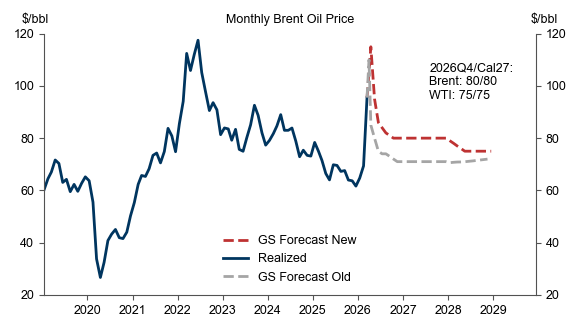
No comments:
Post a Comment