US oil prices finished higher for a third straight week after Yemen’s ‘Houthis’ announced they were closing the Bab al-Mandeb Strait to Saudi shipping and attacked two Saudi oil tankers in the Red Sea, leading other tankers to turn back…after rising 15.5% to $82.49 a barrel last week after the US repeatedly attacked bridges and other civilian infrastructure in Iran, while Iran targeted oil tankers and other ships around the Strait of Hormuz, the contract price for the benchmark US light sweet crude for August delivery rose by around 3% during early Asian trading on Monday, as the United States and Iran expanded military attacks in their ongoing conflict, disrupting shipments through the Strait of Hormuz, but later dipped to below their opening price after Iran’s Foreign Ministry indicated that negotiations with the US could continue, citing national interests, then seesawed in early New York trading, reversing early gains on reports that mediators were seeking to reinstate a ceasefire between the U.S. and Iran, before again rising on new threats to Saudi oil exports, and settling 74 cents higher at $83.23 a barrel as the market weighed hopes of renewed U.S.-Iran negotiations against the news that Yemen’s Houthis had declared a naval blockade against Saudi Arabia…oil prices edged lower in Asia on Tuesday as traders assessed signs of possible diplomatic progress between the United States and Iran, while remaining cautious over ongoing military escalations in West Asia, but rose Tuesday morning during its last day of trading in New York on mounting supply disruptions and on growing geopolitical risks amid several fresh attacks on tankers from the Strait of Hormuz to the Black Sea, and expired $1.68 higher at a five week high of $84.91 a barrel on the continuing attacks by the U.S. and Iran, and on threats of a naval blockade on Saudi Arabia by Yemen’s Houthi militants, while the more actively traded US benchmark oil contract for September delivery settled $1.86 higher at $84.34 a barrel…with markets now citing the price of that September contract as the US price of oil, prices rose more than 4% during Asian trading on Wednesday on renewed military tensions between the United States and Iran, and on increased risks to oil transportation through the Strait of Hormuz and the Bab-el-Mandeb strait, heightening market fears of supply disruptions, and extended their rise to near six-week highs in early US trading as the escalating U.S.-Iran war looked to threaten new oil supply routes in the Middle East, and rose further amid fresh threats from Trump and Secretary of War Hegseth, while the EIA reported a drop in US production and that stocks at the all-important Cushing hub, already at 'tank bottoms', fell again last week, and settled $2.49 higher at a six-week high of $86.83 per barrel on mounting supply concerns as hostilities continued to escalate between the U.S. and Iran, while the Houthi militia in Yemen posed new threats to shipping, after Secretary of State Marco Rubio said Tehran was not serious about reaching a deal to end the fighting…oil prices climbed again in Asian trading on Thursday, after the Iran-aligned Houthi militants claimed strikes on two Saudi oil tankers in the Red Sea, raising fears of deeper supply disruptions across key Middle East shipping routes, and saw the global benchmark top $100 per barrel for the first time since May as the widening conflict in the Middle East increased fears of disruptions to global oil supplies, and were up around 5% in early trading in New York, on reports that two Saudi Arabian oil tankers had been struck in the Red Sea by Houthi forces, who earlier had announced a blockade of Saudi ports, and settled $5.36 or 6.2% higher at $92.19 a barrel, as the Houthi attacks in the Red Sea caused further global supply disruptions following a near-halt in trade through the Strait of Hormuz….oil prices remained elevated in early Asian trading on Friday as traders weighed the potential impact of heightened tensions in the Middle East on energy supplies and maritime trade, then retreated sharply across global markets as shipping data suggested energy flows had not been completely disrupted, with vessel traffic through both the Strait of Hormuz and the Bab el-Mandeb Strait continuing, indicating that oil exports were still moving, despite heightened security risks, and further retreated from their highs Friday morning in New York as Trump’s reimposition of U.S. tariffs fanned demand woes, and settled $2.88 lower at $89.31 a barrel after sources said that China had initiated a push to resume the stalled peace talks between the United States and Iran…however, oil prices still finished 8.3% higher for the week, while the US benchmark oil contract for September delivery, which had ended the prior week at $81.78 a barrel, finished 9.2% higher..
meanwhile, natural gas prices finished lower for a fourth straight week on cooler forecasts, strong production, weak LNG demand, and plenty of gas in storage…after falling 1% to $2.911 per mmBTU last week as a surplus of gas in storage outweighed Mideast war concerns and the impact of the heatwave covering the northeastern third of the country, the price of the benchmark natural gas contract for August delivery opened 2.6 cents lower on Monday, driven lower by bearish sentiment, as supply and production remained robust and cooling demand faded, and finished the session 5.1 cents lower at $2.860 per mmBTU as stubbornly high supply and underwhelming demand from the LNG and power sectors exerted bearish pressure on the natural gas market to start the week…the August natural gas contract opened a tenth of a cent higher on Tuesday and traded within a tight range around $2.865 throughout the session, as market fundamentals remained largely unchanged, and settled a half cent higher at $2.865 per mmBTU on rising output and a decline in LNG export flows, as a tropical storm in the Gulf of Mexico helped to lower demand forecasts….natural gas prices opened 4.4 cents higher on Wednesday and rose cautiously through the session, as comfortable northeast temperatures helped to offset western US heat, and settled 6.0 cents higher at $2.925 per mmBTU as bargain buying erased early-week declines, but comfortable supply and manageable demand kept enthusiasm in check…August natural gas opened 4.2 cents higher on Thursday, then stabilized near $2.935 before moving cautiously higher following the slightly bullish EIA storage report, but faded near the close to settle 0.9 cents lower at $2.916 per mmBTU, even as winter contract prices gained ground amid substantial heat in the forecast, downwardly trending production and a supportive storage print….August natural gas futures continued to trade sideways Friday, as traders balanced short-term demand fluctuations against robust production and ample supplies, and settled 4.5 cents lower at 2.871 per mmBTU, as US natural gas inventories remained well above the 5-year average and weather forecasts shifted a bit cooler, thus leaving the contract priced 1.4% lower on the week…
The EIA’s natural gas storage report for the week ending July 17th indicated that the amount of working natural gas held in underground storage rose by 32 billion cubic feet to 3,056 billion cubic feet by the end of the week, which left our natural gas supplies 16 billion cubic feet, or 0.5% below the 3,072 billion cubic feet of gas that were in storage on July 17th of last year, but 183 billion cubic feet, or 6.4% above the five-year average of 2,873 billion cubic feet of natural gas that had typically been in working storage as of the 17th of July over the most recent five years….the 32 billion cubic foot injection into natural gas storage for the cited week was less than the 38 billion cubic foot injection into storage that the market had been expecting ahead of the report, but it was more than the 27 billion cubic foot of gas that were injected into natural gas storage during the corresponding week of 2025, and was also more than the average 30 billion cubic foot injection into natural gas storage that had been typical for the same early July week over the past five years…
The Latest US Oil Supply and Disposition Data from the EIA
US oil data from the US Energy Information Administration for the week ending July 17th showed that after even after an increase in our imports and a decrease in our oil exports, we still needed to pull oil out of our stored crude supplies for a record thirteenth consecutive week, and for the 35th time in sixty weeks, as it took an increased draw from the Strategic Petroleum Reserve to cover an increase in our commercially available oil supplies, which the EIA had characterized as being 'at tank bottoms'…. Our imports of crude oil rose by an average of 117,000 barrels per day to average 5,806,000 barrels per day, after rising by an average of 60,000 barrels per day during the prior week, while our exports of crude oil fell by an average of 386,000 barrels per day to average 3,353,000 barrels per day, which, when used to offset our imports, meant that the net of our trade of oil worked out to an import average of 2,453,000 barrels of oil per day during the week ending July 17th, an average of 485,000 more barrels per day than the net of our imports minus our exports during the prior week... At the same time, transfers to our oil supplies from Alaskan gas liquids, from natural gasoline, from condensate, and from unfinished oils averaged 3,000 barrels per day more than the prior week at 228,000 barrels per day, while during the same week, production of crude from US wells was 63,000 barrels per day lower at 13,798,000 barrels per day. Hence, our daily supply of oil from the net of our international trade in oil, from transfers, and from domestic well production appears to have averaged a total of 16,479,000 barrels per day during the July 17th reporting week…
Meanwhile, US oil refineries reported they were processing an average of 17,065,000 barrels of crude per day during the week ending July 17th, an average of 58,000 fewer barrels per day than the amount of oil that our refineries reported they were processing during the prior week, while over the same period, the EIA’s surveys indicated that an average of 435,000 barrels of oil per day were being pulled out of the supplies of oil stored in the US… So, based on all that reported & estimated data, the crude oil figures provided by the EIA appear to indicate that our total working supply of oil from storage, from net imports, from transfers, and from oilfield production during the week ending July 17th averaged a rounded 150,000 fewer barrels per day than what our oil refineries reported they used during the week. To account for the difference between the apparent supply of oil and the apparent disposition of it, the EIA just plugged a [ +150,000 ] barrel per day figure onto line 16 of the weekly U.S. Petroleum Balance Sheet, in order to make the reported data for the supply of oil and for the consumption of it balance out, a fudge factor that they label in their footnotes as “unaccounted for crude oil”, thus indicating there must have been a error or omission of that amount in the week’s oil supply & demand figures that we have just transcribed.... Since 400,000 barrels per day of oil supply could not be accounted for in the prior week’s EIA data, that means there was a 250,000 barrel per day difference between this week’s oil balance sheet error and the EIA’s crude oil balance sheet error from a week ago, and hence the changes to supply and demand from that week to this one that are indicated by this week’s report are somehow off by that much, and therefore not very useful.... However, since most oil traders react to to the figures in these weekly EIA reports as if they were gospel, and since these weekly figures therefore often drive oil pricing and hence decisions to drill or complete oil wells, we’ll continue to report this data just as it’s published, and just as it’s watched & believed to be reasonably reliable by most everyone in the industry…(for more on how this weekly oil data is gathered, and the possible reasons for that “unaccounted for” oil supply, see this EIA explainer….also see this March 2023 twitter thread from an EIA administrator addressing these ongoing weekly errors, and what they had once hoped to do about it).
This week’s 435,000 barrel per day average decrease in our overall crude oil inventories came as an average of 287,000 barrels per day were being added to our commercially available stocks of crude oil, while 722,000 barrels per day were being pulled out of our Strategic Petroleum Reserve, the seventeenth consecutive Iran war related withdrawal from the SPR, including the four largest draws in SPR history, which left the SPR level at 311,447,000 barrels, the lowest since it was initially being filled in March 1983…Despite those recent draws on the SPR and on commercial supplies, and even with with total fuel inventories tracking near multi-year lows, our Total Supplies of Crude Oil and Petroleum Products, including the SPR, rose by 6,501,000 barrels to 1,533,850,000 barrels during the week ending July 17th, after our total supplies had fallen to a 23 year low two weeks earlier….
Further details from the weekly Petroleum Status Report (pdf) indicated that the 4 week average of our oil imports rose to 5,601,000 barrels per day last week, which was 11.4% less than the 6,322,000 barrel per day average that we were importing over the same four-week period last year, while the four week average of our exports fell to 3,586,000 barrels per day last week, which was still 15.4% more than the 3,109,000 barrel per day average that we were exporting last year year at this time... This week’s crude oil production was reported to be 63,000 barrels per day lower at 13,798,000 barrels per day as the EIA’s estimate of the output from wells in the lower 48 states was 54,000 barrels per day lower at 13,376,000 barrels per day, while Alaska’s oil production was 9,000 barrels per day lower at 431,000 barrels per day...US crude oil production had reached a pre-pandemic high of 13,100,000 barrels per day during the week ending March 13th 2020, so this week’s reported oil production figure was 5.3% higher than that of our pre-pandemic production peak, and was also 42.2% above the pandemic low of 9,700,000 barrels per day that US oil production had fallen to during the third week of February of 2021.
US oil refineries were operating at 96.1% of their capacity while processing those 17,065,000 barrels of crude per day during the week ending July 17th, down from 96.2% the prior week, utilization rates that are typical of mid-summer….the 17,065,000 barrels of oil per day that were refined that week were 0.8% more than the 16,936,000 barrels of crude that were being processed daily during the week ending July 18th of 2025, and were 0.2% more than the 17,034,000 barrels that were being refined during the pre-pandemic week ending July 19th, 2019, when our refinery utilization rate was at 93.1%, which was a bit below the pre-pandemic normal utilization rate for this time of year…
Even with the decrease in the amount of oil that was being refined this week, gasoline output from our refineries was higher, increasing by 60,000 barrels per day to 9,700,000 barrels per day during the week ending July 17th, after our refineries’ gasoline output had decreased by 96,000 barrels per day during the prior week... This week’s gasoline production was 3.6% higher than the 9,366,000 barrels of gasoline that were being produced daily over the week ending July 18th of last year, but 3.9% less than the gasoline production of 10,089,000 barrels per day seen during the prepandemic week ending July 19th, 2019….at the same time, our refineries’ production of distillate fuels (diesel fuel and heat oil) increased by 90,000 barrels per day to 5,349,000 barrels per day, after our distillates output had increased by 72,000 barrels per day during the prior week. With those increases, our distillates output was 5.3% more than the 5,079,000 barrels of distillates that were being produced daily during the week ending July 18th of 2025, and 2.5% more than the 5,219,000 barrels of distillates that were being produced daily during the pre-pandemic week ending July 19th, 2019....
With this week’s increase in our gasoline production, our supplies of gasoline in storage at the end of the week rose for the 4th time in twenty-three weeks, increasing by 765,000 barrels to 211,294,000 barrels during the week ending July 17th, after our gasoline inventories had decreased by 1,533,000 barrels to a thirty-three week low during the prior week. Our gasoline supplies increased this week even though the amount of gasoline supplied to US users rose by 103,000 barrels per day to 8,947,000 barrels per day, because our imports of gasoline rose by 140,000 barrels per day to 494,000 barrels per day and because our exports of gasoline fell by 160,000 barrels per day to 807,000 barrels per day… But after fifty gasoline inventory withdrawals over the past seventy-four weeks, our gasoline supplies were 8.6% lower than last July 18th’s gasoline inventories of 231,129,000 barrels, and about 7% below the five year average of our gasoline supplies for this time of year…
After this week’s increase in distillates production, our supplies of distillates rose for the fifteenth time in twenty-five weeks, increasing by 1,395,000 barrels to 109,570,000 barrels during the week ending July 17th, after our distillates supplies had increased by 4,556,000 barrels during the prior week... Our distillates supplies rose by less this week because the amount of distillates supplied to US markets, an indicator of domestic demand, rose by 562,000 to 3,718,000 barrels per day, and because our exports of distillates rose by 58,000 barrels per day to 1,604,000 barrels per day, while our imports of distillates rose by 80,000 barrels per day to 173,000 barrels per day... After 30 additions to distillates inventories over the past 55 weeks, our distillates supplies at the end of the week were 0.3% lower than the 109,901,000 barrels of distillates that we had in storage on July 18th of 2025, while they were still about 10% below the five year average of our distillates inventories for this time of the year…
Finally, after the big withdrawal from the Strategic Petroleum Reserve, our commercial supplies of crude oil in storage rose for the 12th time in twenty-six weeks, and for the 25th time over the past year, increasing by 2,010,000 barrels over the week, from 409,665,000 barrels on July 10th to 411,675,000 barrels on July 17th, after our commercial crude supplies had decreased by 1,692,000 barrels over the prior week….After this week’s increase, our commercial crude oil inventories were still about 6% below the recent five-year average of commercial oil supplies for this time of year, while they were abut 18% above the average of our available crude oil stocks as of the third weekend of July over the 5 years at the beginning of the past decade, with the difference between those comparisons arising because it wasn’t until early 2015 that our oil inventories had first topped 400 million barrels. After our commercial crude oil inventories had jumped to record highs during the Covid lockdowns in the Spring of 2020, then jumped again after February 2021’s winter storm Uri froze off US Gulf Coast refining, but then fell sharply due to increased exports to Europe following the onset of the Ukraine war, only to jump again following the Christmas 2022 refinery freeze-offs, changes in our commercial crude supplies had been less extreme up until the onset of the Iran war, when they were initially built up to a three year high by mid-April...However, after falling sharply over the past three months, our commercial crude oil inventories as of this July 17th were 1.7% below the 418,993,000 barrels of oil we had in commercial storage on July 18th of 2025, and were 5.7% less than the 436,485,000 barrels of oil that we had in storage on July 19th of 2024, and 9.9% less than the 456,820,000 barrels of oil we had left in commercial storage on July 21st of 2023…
This Week's Rig Count
The US rig count was down over the week ending July 24th, as the number of rigs targeting oil was down by two, while the count of rigs targeting natural gas was up by one, and miscellaneous rigs were unchanged…for a quick snapshot of this week's rig count, we are again including below a screenshot of the rig count summary table from Baker Hughes...in the table below, the first column shows the active rig count as of July 24th, the second column shows the change in the number of working rigs between last week’s count (July 17th) and this week’s (July 24th) count, the third column shows last week’s July 17th active rig count, the 4th column shows the change between the number of rigs running on Friday and the number running on the Friday of the same week of a year ago, and the 5th column shows the number of rigs that were drilling at the end of that reporting period a year ago, which in this week’s case was Friday, the 25th of July, 2025…

+++++++++++++++++++++++++++++++++++++++++++++++++++++
also including news on & relating to ohio data centers here, for reasons i've previously mentioned
BLM Sets Sept. Date to Auction 41 Parcels in OH Wayne Nat’l Forest - Marcellus Drilling News -- Last December, MDN brought you the fantastic news that the Bureau of Land Management (BLM) had opened a public scoping period to receive public input on 41 oil and gas parcels totaling 2,795 acres that may be included in a September 2026 lease sale in the Wayne National Forest (WNF) located in southeastern Ohio (see BLM Plans Ohio Wayne Nat’l Forest Lease Sale for September 2026). It would be the first lease sale held in WNF since March 2017 (the first Trump administration). The comment period ended Jan. 15, 2026. But then the BLM opened a second public comment period for the same list of properties (see BLM Ready to Auction Land in OH Wayne Nat’l Forest for Drilling). The time for commenting is now over. The BLM set the auction date for September 15.
Ohio Power Siting Board approves fifth natural gas power plant in New Albany— The Ohio Power Siting Board recently approved the construction of a 250 megawatt natural gas-fired electric generation facility in Licking County. The Socrates the Younger (STY) Power Generation Facility will operate “behind-the-meter” to serve the electric load of an adjacent data center and will not be physically connected to the electric power grid. Sidecat, LLC, an affiliate of Meta Platforms, Inc. will consume the power generated by the facility. Will-Power OH, LLC will construct and operate the power plant on 109 acres at the southwest corner of Clover Valley Road and Harrison Road NW in New Albany, Ohio. The project will incorporate 116 MW of battery energy storage to accommodate fluctuations in demand and mitigate unplanned outages. Will-Power OH must adhere to 36 conditions designed to minimize potential impacts during construction and operation. This is the fifth behind-the-meter natural gas power plant approved by the OPSB in New Albany, Ohio. Socrates North and Socrates South, both 200 MW power plants, are under construction. These plants will also provide power for data centers for Sidecat LLC, Meta’s affiliate EdgeConneX has two power plants with battery storage under construction in New Albany — PowerConneX I, a 120 MW plant and PowerConneX II, a 216 MW plant — that will power a nearby data center. A third EdgeConneX plant — the proposed 430 MW PowerConneX III — is in the pre-application phase with the OPSB. If approved, it would require a new 24-mile, 24-inch natural gas pipeline to be constructed to feed the plant. Will-Power OH is in the pre-application phase with another behind-the-meter natural gas power plant and battery storage, the 500 MW Neo Power Generational Facility, that would also power nearby data centers. More information regarding the STY facility and maps of the project area are available online at dis.puc.state.oh.us by searching case 26-0169-EL-BLN.
OPSB schedules local hearings for 2 proposed natural gas plants to power data centers - — The Ohio Power Siting Board set dates to hear public input on two natural gas-fired power plants that will power data centers. The board will hold a local public hearing regarding the construction of the proposed Fairfield Energy Center on Aug. 17 at 6 p.m. at Millersport Junior/Senior High School, 11850 Lancaster St., Millersport, Ohio. This facility is proposed on 100 acres within the Village of Millersport in Fairfield County. The facility would have a maximum total generating capacity of up to 1,300 megawatts, with up to 1,000-megawatts of battery energy storage. The facility would provide power to a data center adjacent to the project site.Additional information regarding the Fairfield Energy Center is available at www.OPSB.ohio.gov in case number 26-160-EL-BGN. The public hearing regarding the construction of the proposed PowerConneX Ashville Energy Center in Pickaway County is scheduled for Aug. 19, 2026, at 5 p.m. at Teays Valley High School, Main Cafeteria, 3887 State Route 752, Ashville, Ohio. The facility would be sited on approximately 110 acres and have a maximum total generating capacity of up to 800 megawatts to power a co-located data center. Additional information regarding the PowerConneX project is online at www.OPSB.ohio.gov in case number 26-196-EL-BGN.The purpose of the local public hearing is to allow individuals to provide sworn testimony regarding the proposed transmission line project. The hearing transcript will become part of the case record considered by the OPSB. Witnesses will register when they arrive at the hearing and will testify in the order in which they register. Testimony will be limited to three minutes per witness. If a witness wishes to supplement their testimony with an exhibit, a copy of the document should be provided to the administrative law judge during the hearing.
Ohio family fought eminent domain for a Meta pipeline, and won a route around its farm -A farming family in Ohio says a pipeline developer has, at least for now, backed off pressure on them to sell a property the family has held for generations. The dispute centers on a natural gas pipeline tied to Meta's new data center and on how large corporate developments can come into conflict with the people who already live and work on the land. According to BG Independent News, Will-Power sought to purchase some of the Luidhardt family's land north of Bowling Green, Ohio, for a natural gas line linked to Meta's Middleton Township data center. Jon Luidhardt said the family declined, after which the family's attorney said he got the impression the company would pursue eminent domain to force a sale. After that, Jon Luidhardt and his father, Ken Luidhardt, turned to Maurice Thompson, executive director of the 1851 Center for Constitutional Law. Thompson asked for an intervention from the Ohio Power Siting Board, saying a project built for the benefit of a single company should not justify taking private property. "It's land that's been in my family for at least three generations," Jon Luidhardt said, per BG Independent News. "We want to continue a fourth and fifth generation of farming." Thompson said Will-Power later informed regulators that the line would be redirected around Luidhardt Farms and taken off the family's property, although a revised map still had not been seen by the Luidhardt family at the time of publish. "We filed a motion to intervene in this case because we oppose any private business using the power of the state to forcibly seize another's property, through eminent domain. And that's exactly what Meta's pipeline company was attempting to do to the Luidhardts here by putting them on the route despite their opposition," Thompson wrote in an email to BG Independent News. A representative for Williams, the parent company of Will-Power, disputed that eminent domain was used or threatened in an email to The Cool Down and noted that the company eventually moved on to a different route through other property acquisitions, and that route was the only route ever submitted for review. "Williams did not use eminent domain to secure the property interests associated with this project," the representative wrote. "In fact, we already had 100% acquisition before this farmer filed an intervention, and the Luidhart property was not on the pipeline route submitted for review." In years past, Williams has categorized eminent domain as a last resort for pipeline plans, which may help to explain Thompson's impression but also why Will-Power made plans for the pipeline route that did not require the Luidhardt property. The representative for Williams said that the company "did not pursue or threaten [eminent domain] as to ANY of the landowners impacted by the route" and that "all of our options were voluntary agreements." The dispute extends beyond one Ohio farm. It raises questions about whether state authority should be used to help a private corporation secure land for infrastructure that mainly benefits its own operations. Thompson said eminent domain is generally meant to serve a public use, not the needs of one private company. He argued the proposed Apollo pipeline was "solely to fuel a single private business, rather than to heat Ohioans' homes or fuel their cars."
From Fracking to Data Centers—Hamster Wheels and That Same Old Song and Dance -- As a community organizer and environmental activist for over 15 years, I’ve often used the metaphor that “we are spinning on a hamster wheel.” That phrase gets mixed reactions. Some nod in agreement, and some get angry. The truth is not always easy to hear. I understand that from my own experiences. In 2012, I learned that fracking for natural gas and oil was happening in my community. I started researching fracking, and found out about air pollution, toxic chemicals being injected underground, threats to water, farmland being bought up at an unprecedented pace, and tax incentives subsidizing all this. And in the end, the community wouldn’t even have lower energy costs.The fracking boom was hitting communities all over Ohio, Pennsylvania, Texas, Colorado—anywhere the fossil fuel industry sniffed out profits—and people were angry. So my neighbors and I tried to use the tools we had been taught we have in our supposed democracy.We went to local and state officials, regulatory agencies like the Environmental Protection Agency and Health Department, and environmental organizations. With help from the Community Environmental Legal Defense Fund (CELDF), we passed a citizen initiative to ban fracking. The people voted for it—but then two drilling companies sued to have our democratically enacted law overturned for violating their corporate “rights.” The court agreed with them and overturned our law.Afterwards, I convinced myself that it was our fault. I believed that if more communities took action like we had, positive change would come. So, I started organizing with other communities across Ohio and in other states that found themselves in the same position. But the same cycle of corporate power overriding the people was repeated over and over. The people in these communities had no legal authority to stop fracking.Some communities, like New York, banned fracking. However, they didn’t ban the use of fracked gas, so my community and many others were sacrificed to make sure Times Square stayed lit up. No offense to New Yorkers, but that’s the hard truth. It is how the system is set up to work.Other communities turned to regulations. People convinced themselves that if frackers had to have further setbacks from schools and homes, we’d be protected from toxic water injections, airborne chemicals from waste pits and hundreds of trucks, and water depletion due to the between 1.5 and 16 million gallons of water used for each frack well. Communities enacted stricter regulations, but the harm continued.It became all too clear that we the people were indeed like hamsters spinning in a wheel. All the tools that we grew up believing would protect us and our communities didn’t work. They were just diversions to keep us occupied as the government and the fracking industry drilled well after well.Now it’s 2026, and communities are up in arms again over an issue that causes many of the same harms as fracking: data centers. I get calls and emails every week from communities all over the country with people sharing concerns—farmland being purchased at unprecedented rates, massive water withdrawals, air pollution and toxification, astronomical energy usage, skyrocketing power rates, and tax subsidies for mega tech corporations. Sound familiar?It reminds me of the Aerosmith song, “Same Old Song and Dance.” The song is about how the “justice system” does not apply equally to all. The band wasn’t singing about fracking or data centers, but it may as well have been. Whether we use metaphors like spinning in a hamster wheel or cliches like “same old song and dance,” this is how the system is set up to work: It protects industry, capitalism and the profits of a few, not the people and environment. Folks fighting mining, toxic waste, big agriculture, industrial energy of any kind, clear cutting of forests, plastic pollution, etc. are all trapped in the hamster wheel.
Gas line easement in Granville Township will benefit the Open Space program - The Energy Cooperative secured a key location in Granville Township on Wednesday for a substation the utility needs for a 24-mile pipeline to provide natural gas to a power plant at an EdgeConnex data center in New Albany.After months of negotiations, the three Granville Township trustees unanimously approved an agreement on July 22 with the Newark-based, member-owned utility to allow a 24-inch pipeline to cross land purchased by the township with Open Space funds.In return, the utility will pay the township almost $1.8 million, which will be split between the township general fund and the Open Space program that strategically purchases land or development rights to preserve green spaces in the township and Village of Granville. “We got everything we wanted,” said Leonard Hubert, who shepherded the negotiations for the township. “The taxpayers should be extremely happy with this agreement. Everyone should be happy.”And, in fact, The Energy Cooperative leadership team is also happy, because they obtained a permanent easement and permanent access to the substation in the agreement. It provides The Energy Cooperative with a location to connect with a large transmission line owned by TC Energy that will send the initial supply of natural gas that the utility needs to fulfill its promise to sell gas to PowerConnex, the EdgeConnex subsidiary building a stand-alone power plant to feed 216 megawatts of electricity to the EdgeConnex data center on 170 acres in the New Albany International Business Park. “TC Energy has a pipeline coming across that property, and they have a station there,” said Todd Ware, president and chief executive officer of The Energy Cooperative. “We will be able to put our station next to it, and that makes it very convenient and very efficient to do it there.”The 24-mile pipeline will be built in two phases, Ware said. The first phase will be from Granville to New Albany, and the utility has secured most of the right-of-way easements for that phase – largely because the main easement is with the State of Ohio. The pipeline will run along the north side of Rt. 161 from Granville to just east of Mink Street, where it will jog north through some private land and then under Mink Street near Jug Street to the PowerConnex plant.Phase One construction is scheduled for completion in September 2027, Ware said. Phase Two, which will run from Granville to near Hebron to connect with a large Eastern Gas Transmission and Storage company pipeline, is scheduled to be done in 2028. The proposed path for that line crosses through more private land than the first phase, so it will take longer to secure easements from individual property owners.“That will give us two sources,” Ware said, adding that Eastern has higher pressure lines, which will help push natural gas to customers in the New Albany area, which is at the western edge of The Energy Cooperative system.“We know that area is growing, and we knew we needed a greater supply of gas,” he said. “We knew that we could do that with this project, and that it is a good deal because it benefits our existing customers.”Ware said The Energy Cooperative leadership team knew that someone was going to build that pipeline, “and we felt that it really made sense for a local company to do it.” “Any other company that could have done it would not have benefited our customers,” Ware said. “We think this is a real value, especially since we don’t have to pay for it.”
Meta's fast-tracked gas plants in Ohio spotlight the hidden energy cost of AI - Meta is building its own power plants. Not solar farms. Not wind turbines. Natural gas facilities, constructed behind the meter at its Ohio data center campuses, approved under laws that allow the whole thing to happen in as little as 45 days without a single public hearing. Two projects are already moving forward. The Socrates South facility, a 200 MW plant in New Albany, received approval from the Ohio Power Siting Board on June 9, 2025. The larger Apollo facility, a 350 MW plant in Middleton Township, gained its own OPSB approval on February 3, 2026. Combined, that’s 550 MW of new gas-fired generation capacity dedicated entirely to feeding Meta’s AI infrastructure. Ohio passed legislation around 2025 that created an expedited approval pathway for certain power plants. Under the new rules, projects can receive sign-off within 45 days, and public hearings aren’t required. In the case of the Apollo facility, residents reportedly didn’t have access to draft air permits until after construction had already begun. The plants are being constructed by subsidiaries of The Williams Companies. Meta is financing both projects and will consume all of the electricity generated. The behind-the-meter setup means these facilities operate essentially off-grid, supplying power directly to Meta’s data centers without routing through the public utility system. Estimates suggest facilities of this type could emit around 2.5 million tonnes of CO2 annually per project. If both plants operate at scale, that’s potentially 5 million tonnes of carbon dioxide per year. Residents near the Middleton Township site have expressed frustration that they had little opportunity to weigh in before the project was approved and construction commenced. The projects reportedly involve the use of shell entities for operations, making it harder for local stakeholders and journalists to trace accountability back to the companies actually responsible for the facilities. Meta’s Ohio strategy — building dedicated gas plants that sit behind the meter — is one approach to meeting hyperscale AI computing demand. Natural gas offers speed that alternatives often can’t match: a gas plant can be permitted, built, and operational in a fraction of the time it takes to bring a nuclear reactor or major solar installation online. That speed advantage is exactly what Ohio’s new legislation is designed to enable. Companies like Williams Companies, which are constructing these facilities, stand to benefit from a new class of deep-pocketed corporate customers. The behind-the-meter model could become a template that other hyperscalers replicate, creating a sustained pipeline of infrastructure projects. Ohio’s expedited permitting process is already drawing criticism from environmental groups and local communities. If public opposition builds, states could tighten the rules just as quickly as they loosened them. Construction on both Ohio facilities is targeting completion by late 2026.
Ohioans to continue to see high electric bills based on latest auction -The regional power grid operator fell short in securing electric reserves, it said Tuesday, even as the price for electricity again hit a maximum ceiling. Ohio is among 13 states within PJM Interconnection, the regional grid operator, which coordinates how electricity flows—at times, functioning like a traffic control room. PJM’s 2028-2029 auction, the results of which released earlier this week, showed that electricity demand regionally is moving faster than generation, meaning electric bills in Ohio will stay high for some time.“Today’s auction sends the wrong message,” an Ohio Consumers’ Counsel spokesperson wrote in an email Tuesday. “Consumers should not have to pay record high prices and still face growing reliability concerns.”Even at that $325 per megawatt-day price, PJM still fell short of its own reliability goal—a 20% reserve margin target—during its 2028-2029 auction. It cited data center growth as one major factor driving demand.In June, an eleventh-hour effort to send data center regulations to Gov. Mike DeWine died. The last-minute legislation the lawmakers were considering would have created an electric rate class for the state’s data centers, a move PJM is urging states take.The amended version of House Bill 646 is unlikely to see any substantive action before November.And the Ohio Manufacturers’ Association is fighting that measure, arguing utilities themselves are overstating demand in their forecasts, which is causing the costs to consumers to increase.“We’ve had all these consecutive auctions that just go sky high, customers have been losing at every single one of these, it’s time for some additional oversight.” President Ryan Augsburger said in an interview. “What is the problem, in plain English? PJM counts uncertain future demand as though it’s guaranteed.”Sen. Mark Romanchuk (R-Ontario) and Sen. Paula Hicks-Hudson (D-Toledo) have introduced Senate Bill 457, creating more forecast oversight. It has yet to get any hearings, and faces a short window for action, since the legislative session ends in December.
Ohio couple's power bills topped $600, and the crypto mine across the street was hard to ignore - By February, Keith and Cheryl Kasnik were facing electric bills over $600 after already paying more than $500 in December. Living across the street from a growing cryptocurrency mining campus has led the couple to question whether something bigger is helping push those costs upward. Their experience in Perry Township reflects a wider shift in Ohio, according to News 5 Cleveland. Residential electricity prices in the state have risen by about 26% since early 2023, and experts told the outlet that fast-growing demand from data centers is part of the explanation. These facilities help power everything from video streaming and artificial intelligence to financial systems, medical records, and crypto mining. But they also consume enormous amounts of electricity. In Stark County, the crypto operation near the Kasniks could eventually use more power than all of the county's households combined. Maureen Willis, who leads the Ohio Office of Consumers' Counsel, said, "We have increased demand. And the supply is just not keeping up with that increased demand." Steve Stivers, president and CEO of the Ohio Chamber of Commerce, echoed the concern, saying, "The power issue's 100% real." Still, rising rates cannot be pinned on a single factor. Fuel prices, aging infrastructure, storms, and manufacturing growth are also adding pressure to the grid. A major question for households is who ends up paying when massive new power users come online. As Stivers put it, "Nobody wants to subsidize somebody else, especially somebody that is making a lot of money — and has a lot of money already." Data centers are not ordinary customers. PJM Interconnection, the grid operator serving Ohio and a large multistate region, experienced a major demand spike in 2024 after years of relatively flat growth. PJM executive vice president Asim Haque told lawmakers that current and planned data centers account for much of that "generational increase," News 5 Cleveland reported. Crypto operations and other large computing facilities are part of a more complicated picture. While they can strain local grids, some firms have also said they are willing to cover infrastructure costs rather than shifting them onto residents. Ohio lawmakers have been considering rules that would handle data centers differently from other utility customers. Proposed changes include separate classifications and special tariffs for very large new users, along with substantial up-front payments, long-term contracts, and charges based on projected electricity demand even if the customer later uses less power. One example is AEP Ohio, which has already implemented a data center tariff. The company said that move sharply reduced both the number of proposed projects in its pipeline and the amount of electricity those developments were expected to need. That suggests some planned projects may have been speculative. Future demand forecasts can shape today's rates.
Data centers cause Ohio's energy demand to surpass supply | NBC4 WCMH-TV — For the second year in a row, the organization that supplies Ohio with electricity was unable to meet its full capacity target. PJM Interconnection, the regional transmission organization that includes Ohio and 12 other states, said the capacity of resources procured at last week’s auction is short of their reliability requirement. “Such a shortage does not necessarily mean that the PJM system will be unable to serve load reliably in the delivery year,” the organization said in a statement. “It means that PJM would have to operate with slimmer reserves and a greater level of risk.” PJM is facing a shortfall of about 6.8 gigawatts — the same amount of electricity it would take to power about 4 million homes. It also signals to state lawmakers and consumer watchdogs that Ohioans’ electric bills are going to continue to get even higher. “Consumers are being asked to pay significantly more for capacity,” Maureen Willis, Ohio Consumers’ Counsel, said Monday. “PJM still didn’t secure enough resources to meet their reliability target, so that’s a troubling result. If families are paying record prices for capacity and electricity, they should also expect record reliability and um that is not the case as we’ve seen from the auction results.” State Sen. Kent Smith (D-Euclid) called the PJM auction results “the worst-case scenario.” “We’ve got data centers entering the market quicker than we can get generation to enter,” Smith said. “Unfortunately, it means prices are probably going to go up and reliability is going to go down.” Rep. Adam Holmes (R-Nashport) agrees the data center boom, along with the growth of heavy industry in Ohio, has created a rapidly increasing energy demand the state has recognized for years. That’s one reason why Holmes is still eager for the legislature to pass House Bill 646, making sure consumers aren’t paying for the electricity needs of the data centers. “Our [Public Utilities Commission] has taken a lot of leadership to ensure they do it on their own,” Holmes said. “I think we have coverage now through policy decisions at PUCO, but we want to back it up with law.” Female football coach sues university in Ohio over response to reported assault PJM has also cited data centers as the primary driver of the overwhelming growth in energy demand. Ryan Augsburger, president of the Ohio Manufacturers’ Association, is not convinced. “Data centers are in the news a lot, but it would seem to us, based on the analysis, that data centers are more of a convenient scapegoat,” Augsburger said. Augsburger argues that much of the increase in average electric bills is due to the forecasts of how much data centers and other heavy energy consumers are expected to use, not what they actually use. He said that while data centers do need to pay their fair share, those forecasts need to be more transparent and accurate. “Customers are getting a raw deal,” Augsburger said. “Customers are getting a bill for a market process that seems to not be working properly.” Augsburger and the OMA are backing Senate Bill 457 — the Electric Forecast Integrity Act — sponsored by Senators Mark Romanchuk (R-Ontario) and Paula Hicks-Hudson (D-Toledo). That bill would require an independent, third-party review of utility forecasts, and give PUCO more responsibility to determine if a forecast is reasonable.
How data centers could affect Northeast Ohio's power grid, water use and air quality -- Data centers have been a hot topic around Cleveland and the rest of Ohio as the boom continues to touch communities across the state. In May a permit for a hyperscale data center was rejected in Cleveland’s Slavic Village, and a short-term moratorium is was approved by Cleveland City Council last week, bringing the data center boom to the forefront of many Clevelanders’ minds. Residents cite concerns for increasing electric prices, adding another heavy user to an already-stressed grid, noise pollution, and concerns about water usage, but what do we know about the environmental cost of hyperscale data centers?Hyperscale data centers are the “if you give a mouse a cookie” of the energy grid. A single modern AI data center can gobble up the energy needed to power 100,000 homes, well over half of the occupied homes in Cleveland, according to the 2020 census. Some of the larger data centers under construction across the country could consume 20 times that amount, according to the International Energy Agency, an international organization working to shape a secure, affordable and sustainable energy future for all. Data centers in the United States are largely run on fossil fuels. A 2025 International Energy Agency report found that 55 percent of the energy powering data centers in the U.S. comes from natural gas and coal, with natural gas accounting for 40 percent and coal accounting for 15 percent. There has been a lot of focus on the short-term impacts of hyperscale data centers, such as increased energy costs and increased instability of the grid, but the long-term climate impacts loom larger in the background.“When you put a data center on the grid and it starts consuming electricity, that electricity often comes from a power plant somewhere, whether it is a natural gas plant or coal plant. The more that power plant runs, the more emissions it produces, and those emissions are partly greenhouse gases, which contribute to climate change and also local air pollutants,” said Michael Craig, an associate professor at the University of Michigan that works on environmental systems and environmental impact. “There are far-reaching consequences,” Craig said. This means data centers can have air quality impacts far beyond where they are located, causing environmental health concerns for vulnerable communities near power plants. Along with pollution from the power plant the data center causes from daily use, most data centers rely on several diesel back-up generators, and sometimes hundreds of generators, to ensure around-the-clock access to power. The American Cancer Society links cancer and heart and lung disease to the pollutants released when burning diesel fuel. Midsized data centers can slurp up between 100,000 and 300,000 gallons of water a day, while hyperscale data centers like the proposed project in Slavic Village that was blocked can consume as much as 5 million gallons per day. There are currently no laws requiring data centers to report their daily water usage, making it more difficult to accurately track how much any given data center is actually using. The Great Lakes Compact, a legally binding agreement between the eight Great Lakes states and two Canadian provinces, requires large water users drawing from a private well to report whether they use more than 100,000 gallons a day. If a data center is hooked up to the municipal water supply, there is no law requiring they report their water usage.
OHIO: Data center legislation will appear before council within the next month --A moratorium that could impact the future of data center development within Defiance's corporation limits is expected to be drawn up within the month by the city's law director. Thereafter, an ordinance well go before Defiance City Council for approval, either later this month or in early August, according to the man who will compose the legislation — City Law Director Sean O'Donnell. He was given this direction by city council during its meeting Tuesday evening when Defiance resident Rebecca Rupp — concerned about the impact of potential data centers — requested a moratorium that would limit data center development in the immediacy. Council's motion requested that O'Donnell draw up a 12-month moratorium that would effectively limit data storage and crypto currency facilities. In the meantime, city officials plan to discuss changes to the city's zoning code later this month, likely to take into account the recent proliferation of data centers throughout the state. (New ones are being built near Bowling Green, Lima and Van Wert in northwest Ohio, for example.) No data centers are proposed in Defiance right now, although Rupp has expressed concerns about acreage west of the North Clinton Street Menards store as a potential site for one. But even if one were coming here now, he noted that the city's water plant would need major upgrades, noted Defiance Mayor Mike McCann. This and related matters would unfold over a long period of time — probably longer than the 12 months proposed in the moratorium. There are also legal questions arising from a moratorium, according to officials, particularly if a zoning code change comes about specifically to deal with data centers. The area that Rupp is worried about is zoned for manufacturing. "It's hard to ban a use completely all over the city," said O'Donnell. Council's procedural rules give the law director 30 days (from the date of the motion) to put something together and present it to members for approval. "I'm going to do my research," he told The Crescent-News, noting that undo haste could create shaky legal ground. He speculated that the ordinance would appear during council's first meeting in August or a "little before." Council has scheduled a special meeting at 5 p.m. on July 28 in the city service building, 631 Perry St., to discuss possible changes to the city's zoning code. The moratorium likely would be presented during one of council's regular sessions that are scheduled at 7 p.m. on the first, second and fourth Tuesdays of each month. Although he won't have a vote on the aforementioned ordinance, McCann expressed some concern about the moratorium legislation. "I don't think it sends a real good message on the economic development side of things, but I don't really know," he said. "We have yet to talk to anybody about data centers."
Ohio city aims to keep data centers farther from homes with August zoning vote --Massillon, Ohio, is moving closer to drawing a clearer line around where data centers can be built. On Aug. 3, the city is expected to consider new zoning rules meant to steer those projects away from residential areas and require proof that water, electric, and wastewater systems can handle them before any construction starts. Following a July 13 work session, Massillon's nine-member City Council is still aiming to make a decision on data center zoning at its regular Aug. 3 meeting, the Canton Repository reported. The matter has been under discussion for nearly three months. Council is now weighing a narrower approach to where the facilities could go. Under the latest proposal, data centers would no longer be allowed in both light-industrial and heavy-industrial districts and instead would be confined to heavy-industrial. The proposal would also expand separation from residential districts. The Canton Repository reported that facilities smaller than 100,000 square feet and those at or above that mark alike would need 400-foot setbacks, up from the 200 feet included in earlier draft language. Data centers can require substantial electricity, water, and wastewater capacity, while cooling equipment can create persistent noise when projects are built too close to homes. Additionally, a possible future project has already entered the conversation: A developer has shown interest in the Massillon Technology and Energy Park, a former Republic Steel property, as a potential site. The zoning proposal would do more than limit locations. It would also require developers to demonstrate in their site plans that enough utility capacity is available before construction can proceed. Applicants would also have to provide certifications for peak noise and decibel levels. "I think that's a good time (to consider) and falls in line with our (60-day) stay," said Councilwoman Julie Harwig Smith, R-Ward 5. Development Director Ted Herncane added: "This will keep data centers farther away from neighborhoods."
Ohio residents launch petition to halt Meta's 32-acre expansion, warning of a 'land grab' -- Opposition to Meta's data center complex in Middleton Township, Ohio, is growing after town trustees went against the zoning commission's recommendations and made way for the project. For those opposing the move, the dispute is about more than the 32 acres slated for Meta's data center expansion. It is also about whether local communities get a meaningful say before large industrial projects reshape nearby roads, air, water, and neighborhoods. On July 7, trustees Fred Vetter and Mike Moulton voted yes to rezoning 13 parcels of land — or 31.82 acres — for light industrial use by Liames LLC on behalf of Meta, while Middleton Township trustee Melissa Petrea was the lone dissenter, according to The Blade. Now, residents in Wood County have begun a grassroots petition to overturn the 2-1 vote. Getting the issue onto the November ballot will reportedly require 971 valid signatures, so opponents are targeting at least 1,300 to account for any that may be rejected. Leslie Harper, a Whitehouse resident working with those challenging Meta's expansion, is helping coordinate volunteers for that effort. "Where is this land grab going to stop? Now that we're seeing construction of [the data center], people are really getting scared," Harper told The Blade. Neighbors fighting the expansion point to risks they say could come with it, including water contamination, air pollution, and lower property values. In their view, approving this rezoning could also make it easier for the data center project to absorb still more nearby land. Mark Patton, who lives near the Meta site, summed up the concern many neighbors feel after seeing Meta or Meta-linked companies buy land in the area, per The Blade: "They're going to pick us apart." The conflict reflects a broader concern that has surfaced in communities across the country. While major tech infrastructure projects can bring jobs and investment, they can also put added pressure on local land, utilities, and public trust when residents feel their concerns are being brushed aside. At this point, their main avenue is a ballot referendum. Harper and other volunteers are racing to organize in time for Middleton Township voters to weigh in this fall on whether to reverse the trustees' action. A ballot referendum gives residents a formal path to challenge land-use changes they believe could threaten their quality of life. It also brings more scrutiny to how large developments move forward, especially when elected officials choose a different path than local zoning boards recommend. "From a resident standpoint, this project is massive, and they have many valid concerns regarding safety and well-being, which is the fundamental purpose of zoning laws under the Ohio Revised Code," Petrea, who voted against the rezoning, told The Blade. Trustees Vetter, Moulton, and Meta did not respond to The Blade's request for comment.
After missing statewide ballot, Ohio's data center fight goes local - After a statewide campaign to ban large data centers failed to make the November ballot, volunteers in communities across Ohio have turned their focus to banning them locally.In Sunbury, Ohio, they didn’t need to knock on doors.Alicia Doty and her neighbors set up folding tables, and people flocked to them, signing her petition to amend their city’s charter to ban large data centers.“It was incredibly easy,” Doty said. “We had so many people upset that they couldn’t sign it.”In less than a month, the proposal went from an idea to a certified spot on November’s ballot. And Sunbury isn’t alone. Across Ohio, more than two dozen communities are pursuing ballot measures to blunt data center development, from charter amendments and referendums to recalls of elected officials.They stretch from Oregon in the north to Hamilton and Trenton in southwest Ohio and a growing cluster of communities around Columbus, including Sunbury, Pataskala and Ashville. “We all know what each other is doing,” said Nicole Nawman, an organizer from Urbana. “We’re each other’s cheerleaders, and we are rooting each other on. It’s the most grassroots thing I have ever seen in my life.” Ohio’s local campaigns aren’t happening by chance.After its proposed statewide constitutional amendment missed this year’s ballot, Conserve Ohio turned its attention to Ohio’s cities, towns and villages.Organizers share ideas through the group’s social media pages, while attorneys help communities adapt the statewide proposal into local charter amendments.“Conserve Ohio has created a space for people to come together and organize,” attorney Nick Owens said.The result is a growing network of nearly identical ballot measures. Doty, Nawman and Kat Steele in Hamilton all worked with Conserve Ohio.Their proposed charter amendments would prohibit data centers that need more than 25 megawatts of power, mirroring the statewide amendment organizers hope to bring back in 2027.“The city will still be able to do development and welcome in tech infrastructure,” Steele said. “We don’t want those hyperscalers.” Data centers have existed for decades, quietly storing everything from business records to movies and online shopping orders. They largely operated in the background until the rapid growth of artificial intelligence drove demand for a new generation of “hyperscale” facilities capable of consuming as much power as a medium-sized city.“It’s just not sustainable the way they are developing at all,” Steele said.Not everyone is lining up to sign, though. Nawman said she has talked with electricians, plumbers and other union workers who see data centers as years of construction work and steady paychecks.An October 2025 study commissioned by the Ohio Chamber of Commerce estimated the industry has created 19,400 construction jobs. “People don’t always agree with what makes a community stronger. I do recognize Amazon would bring a strong financial tax base into our coffers, but at what cost?” Not every community in Ohio has a charter to amend.In Ashville, residents are asking the Ohio Supreme Court to let them vote on a resolution village council passed to clear the way for a data center campus. Other communities, like Hudson, have temporary moratoriums, typically lasting six months to a year.Urbana is pursuing nearly every available option.The city passed a moratorium on new data centers after discussions with a developer sparked community opposition.Residents submitted signatures for a charter amendment to ban data centers larger than 25 megawatts, and they’re collecting signatures to recall Mayor Bill Bean over his handling of the proposed project.“A lot of the community members feel betrayed,” Nawman said. “That our best interests weren’t being considered.”Ohio community joins nationwide data center protests — Residents in Cambridge joined a nationwide protest Saturday against the expansion of artificial intelligence data centers as opposition grows to a potential project in Guernsey County. The demonstration was one of at least 100 planned across the United States by HumansFirst, an organization calling for greater transparency, environmental protections and community input in data center development. Sam Ferguson said concerns about electricity demand and rising household utility costs brought him to the protest. “They tell us to conserve energy when it’s hot. Turn your air conditioner back. Turn your furnace back when it’s cold. But you’re going to build something like that and give them free range or as much power as they need. And you’re asking me to conserve?” Ferguson said. He also questioned whether tax breaks for data center projects would provide enough benefit to residents. “If they’re putting that in and it’s going to benefit everybody in the community in a good way and not a bad way — that’s different,” Ferguson said. “But it seems like every time they put something in they’ll give them bands of dollars in tax breaks.” Supporters say data centers can bring construction work, jobs and new investment. Protest organizer Kris Talvot said residents want clearer information about how many permanent jobs a project would create. “There is a concern about those entry-level jobs, but a lot of people think that the temporary construction jobs are going to be permanent jobs,” Talvot said. Talvot also raised concerns about building large facilities on undeveloped land instead of reusing former industrial sites. Ferguson said residents should have a meaningful role in decisions that affect their community. Organizers are collecting signatures hoping to place the issue before Ohio voters in 2027.
Wheeling residents gather in protest of proposed data centers - (WTRF) – A national movement is striking a local chord as people across the country participate in a national day of protest against data centers.Advocacy group Humans First coordinated the days movement, saying the country wide demonstrations are intended to pressure local, state and federal officials to stray from rapid A-I expansion.In Warwood, some residents gathered to protest against the redevelopment of the former Centre Foundry site. Silicon Foundation says they are building a technology park at the location.The site plan includes three components – a modular computing facility, manufacturing for the data center industry and a training academy for local electricians and technical specialists. “Well I hope they don’t do any data center type things here and I hope that they wise up and decide to talk to community about what the community would be willing to allow to be here. It’s not every day that things like this happen in our local community that something as large as a data center is being proposed and so it’s important to me to make sure that i, i can only do what i can do, and i have to be the change i want to see in the world and that’s why I’m here. “ --Hunter Fluharty | Wheeling Resident The group behind Saturday’s protest did plan for larger scale action, but cancelled the larger movement saying “Due to the air pollution caused by the Canadian Wildfire Smoke we have made the decision to postpone today’s protest. WE WILL RESCHEDULE!!!! Please stay indoors as much as possible today. We’d also love to see as many people as possible at the city council meeting on Tuesday to voice your concerns over the proposed Warwood data center.”
The EPA Is Writing Permits That Could Let Ohio Data Centers Dump Wastewater Into State Waters - A single hyperscale data center can drink up to 5 million gallons of water per day — roughly what 12,000 people use. Now Ohio wants to make it easier for those facilities to give that water back, and not in great shape. Ohio's draft replaces individualized environmental reviews with a single statewide blanket permit covering an entire industry. Under the old system, each data center needed its own discharge permit — an individualized review examining the specific river, stream depth, and watershed receiving the waste. Draft permit OHD000001 replaces that with a statewide general NPDES permit (National Pollutant Discharge Elimination System — the federal framework that keeps industrial waste out of public drinking water). One application, five years of coverage, with significantly reduced site-specific analysis. The draft's own language anticipates a "decline in water quality" in some waters to accommodate data-center growth. Circle of Blue reporting calls this approach "without precedent" in the Great Lakes region. Cooling-tower blowdown isn't just warm water. Here's what can come with it:
- Biocides and anti-scaling chemicals used to keep pipes clean
- Heavy metals leached from equipment and piping
- Concentrated salts and dissolved minerals
- Potential PFAS — "forever chemicals" reportedly used as fire suppressants — with zero specific restrictions in the current draft
- Thermal load hot enough to reduce dissolved oxygen and stress aquatic life
"Ohio EPA does not allow discharges that harm aquatic life, recreation, or human health," the agency stated publicly. "Every permit includes strict limits and monitoring requirements to ensure water quality standards are met."That sounds reassuring. Then you notice the permit itself acknowledges water quality may decrease to serve "critical community or economic needs." Ohio lawmakers and environmental groups argue a blanket permit means no one verifies whether those standards actually fit the specific conditions at each discharge point — the particular river, its depth, its flow, its existing stress load. The lake that cut off Toledo's tap water in 2014 would receive fewer protections than smaller Ohio lakes under this draft. Remember 2014? Harmful algal blooms shut off drinking water for 500,000 people in Toledo for three days. Lake Erie's western basin remains nutrient-stressed today. Warm discharges accelerate exactly those blooms. Yet the draft carves Lake Erie out of protections afforded to other high-quality Ohio lakes. The Alliance for the Great Lakes says this approach "puts our waters at risk." Critics quoted in Cleveland media warn it could let data centers "boil our rivers."Over the next five years, planned data-center growth in Ohio could involve withdrawals of around 150 billion gallons — comparable to the annual water use of 4.6 million households, according to the Ohio Environmental Council. Multiple facilities within the same watershed compound that impact progressively over time. The "cloud" has never been weightless. If Ohio's permit passes, other states competing for data-center investment may copy the playbook. Every cloud backup, every AI infrastructure query, carries a water bill — and this permit decides who pays it.
Ohio EPA drops plan for statewide data center wastewater permit, shifts to case-by-case --(WSYX) — The Ohio Environmental Protection Agency has decided not to move forward with a proposed statewide permit for data centers to dispose wastewater into local waterways, opting instead to require each project to undergo its own individual permitting process. Announced Tuesday, the decision comes after the agency said it received a significant volume of public comments opposing the proposed National Pollutant Discharge Elimination System general permit. Ohio EPA confirmed that the number of public comments they received exceeded 7,000. "Oftentimes, people can feel powerless in their government, but this is one of those instances where 7,000 voices matter." Said Ohio state senator Kent Smith. Smith is amongst the other Ohio senate democrats in their caucus that sent a letter to the EPA months ago advising them against the proposal. Smith said his major concern for the proposal was that it would allow for the water quality requirements to be lessened for the data centers it would apply to. "Look, there's no economic, there is no community interest in polluted water and there's no long-term economic benefit to contaminated water, " Smith said. The proposal was announced in October 2025, by December the Alliance for the Great Lakes was pushing against it telling others to join in on giving public comment. Helena Volzer is the senior source water policy manager with the organization, she said a major concern for her was the blanket permit the proposal gives, not considering the vastly different wastes of data centers and their effects on waterways. "We objected to the principle of this 'one size fits all' approach. There's a lot of variability when it comes to data centers in terms of their cooling method and what they might be discharging," Volzer said. The opposition against the proposal was shared across both party lines, with bipartisan opposition. U.S Senator Bernie Moreno criticized the proposed policy, posting his contention on X, “Ohio should not compromise the integrity of our waterways to help data centers. The companies putting these centers up have so much money we expect the water going back into our rivers to be cleaner than ever before!” In a statement, the Ohio EPA said public participation played a key role in the decision: "After carefully reviewing the significant volume of public comments received on the draft National Pollutant Discharge Elimination System (NPDES) general permit for data centers, Ohio EPA has decided not to move forward with finalizing the general permit." The agency also said issuing individual permits is "the most appropriate path forward at this time."
Ohio EPA drops plan to permit data center discharges into lakes, rivers - The Ohio Environmental Protection Agency (EPA) said Tuesday that for now, it will abandon a proposal to make it easier for data centers to discharge their wastewater into some lakes, rivers and streams. The state agency had been considering streamlining its National Pollutant Discharge Elimination System (NPDES) permits process for all data centers statewide. But after the EPA received a “significant volume” of comments against doing so, it won’t move forward with the one-size-fits-all model, saying that issuing permits for a data center on a case by case basis “is the most appropriate path forward at this time.” An EPA spokesperson declined further comment. The move came after mounting public and political pressure. Alliance for the Great Lakes Senior Source Water Policy Manager Helena Volzer said last she heard, the EPA had gotten thousands of comments, including some her organization had solicited. “I think, by and large, things will continue the way they have,” Volzer said in an interview Tuesday. “Most data centers are discharging to wastewater treatment, because it’s convenient.” Holzer was concerned with minimal oversight into data center discharges into bodies of freshwater, since different facilities have different cooling methods and release different chemicals. Politicians across the aisle, including U.S. Sen. Bernie Moreno and gubernatorial candidate Amy Acton, voiced concerns with the EPA rules as drafted. “Data centers should be held to the same, or higher, environmental standards as any other business,” Moreno wrote on X earlier in July. “This nonsense needs to end, as do the dumb tax incentives, and all data centers should never raise electricity costs!” And Acton wrote on X last week that she believes data centers “should never discharge their water usage into our lakes.” Most of the data centers in the state discharge into nearby wastewater treatment facilities, which follow standards the federal government sets. Just one has the green light to discharge into freshwater through its existing NPDES license, Holzer said.
Columbus could use recycled water for data centers' huge demand - The Columbus Dispatch - Columbus is exploring ways to let the region's booming data center industry use lower-quality water as they guzzled more than 1.2 billion gallons in a 12-month period.
Columbus residents urge council to impose tight restrictions on potential data centers in city limits — Columbus residents voiced concerns over the impact of large data centers during a nearly three-hour public hearing before Columbus City Council. Council is considering legislation that would require large data centers to submit water conservation plans, create decommissioning strategies and meet new sewer permit requirements. But many speakers said the proposal does not go far enough, calling for stronger protections and stricter enforcement. Several residents and environmental activists urged council members to consider a moratorium on new data centers while stronger regulations are developed. Others asked council to require facilities to establish an "end-of-life" plan before construction begins, ensuring data centers have a clear decommissioning process. Speakers also called for data centers to operate on renewable energy, restrictions on where they can be built, including protections for the Big Darby Creek watershed, and tougher penalties for companies that violate city rules. Spencer Dirrig, vice president of government affairs for the Ohio Environmental Council, said Columbus has an opportunity to set an example for other communities by adopting stronger standards. "People are watching if you do this with real standards and teeth, you won't just protect your own residents, you'll set a standard that every other community can reach for! However, taking half steps with weak enforcement is a mistake we cannot afford," said Dirrig. Other residents raised concerns about the amount of energy data centers consume. "As we all know, data centers use an absurd amount of energy, and I fear that when the city loses power, my neighbors and I would be in the dark while an empty server room keeps humming," added East Columbus resident Madison Young. "I do think we should put a prohibition on NDA's and certainly any tax abatements. These data centers, if they're not paying their taxes, then they're not contributing to the communities where they're being built. And communities need these tax dollars to fund our schools, our infrastructure, transportation, all of the above," said Samantha Baker, a resident who spoke at the hearing. Dirrig also called for stronger enforcement measures, recommending that companies that remain out of compliance for consecutive months lose their operating permits. City Council has not yet taken a final vote on the proposed legislation. The next hearing is scheduled for Sept. 16.
Dozens of gas strikes reveal risks below Northeast Ohio neighborhoods: 3News Investigates - One month after a house explosion in Twinsburg Township, records from communities near Hiram Lane show how dangerous excavation work can be. The gas explosion that destroyed several homes on Hiram Lane in Twinsburg Township last month also forced nearby communities to confront a broader question: Could that happen here? Records obtained by 3News Investigates show at least 38 incidents over the past 18 months in which gas lines were struck during excavation work in communities near Hiram Lane. The incidents represent a small percentage of the overall volume of underground projects, but local leaders and residents say the disaster demonstrated why every excavation must be handled correctly. The Hiram Lane explosion began with a gas leak after a fiber-optic excavation project went wrong. The blast leveled much of the cul-de-sac, destroyed several homes and damaged dozens more. But the impact quickly spread beyond Twinsburg Township.At least six nearby cities and communities — Green, Stow, Hudson, Macedonia, Reminderville, and Streetsboro — temporarily paused excavation work on the day of the explosion."Obviously, it was very startling," Green Mayor Rocco Yeargin admitted.Yeargin said his administration contacted contractors immediately after the disaster, and met with them in the days after, as city leaders reviewed safety practices surrounding underground utility projects. "It's nerve-wracking for a resident when they hear there's a gas leak," Yeargin said. "So understanding that and the potential danger that we see happened in Twinsburg, we’ve really asked them to slow down." Underground excavation can result in gas lines being damaged. The destruction on Hiram Lane showed how severe the consequences can become when leaking gas reaches a home. Yeargin acknowledges that a lack of universal standards at the state level can make it challenging for local governments to supervise work in real time, but that hasn't stopped him from insisting on a safety-first approach. "We can ask you to do best practices at every stage of the process," he said. "And by doing that, that's the best we can do to protect our residents." Yeargin said city officials are essentially seeking a "zero-strike policy" before underground utility work moves forward. Of the communities that provided records to 3News Investigates, Stow documented the most gas lines damaged during excavation work. Records show 16 incidents in the city since January 2025. At one of those locations, a homeowner said crews struck a gas line in his front yard earlier this year. He asked to remain off camera because he is still trying to get his property repaired long after after the project ended and crews left. "It's been difficult. It's been frustrating," he confessed. "It's been several months, and there's been no means to the end." Part of the issue isn't just the damage left behind; it's communication before ground was broken. This homeowner said he didn't receive any notification about crews digging up his yard before they did so. "We really didn't have an option. We didn't have a choice to say, 'We don't want this' or 'When will this happen?' or 'Why are we getting this?'" After seeing images of the destruction on Hiram Lane, the homeowner said he realized the leak outside his own home could have had far more serious consequences. "I was shocked," he said. "I was a little bit taken aback by how it got to this point, because I'd heard of other similar accidents." Less than 6 miles away, cleanup on Hiram Lane is only beginning. One of the destroyed homes belonged to a friend of Larry Landals, who has joined other nearby residents in raising money and gathering supplies for the affected families. "We need to help the rest of that community, that little cul-de-sac, get back on their feet," Landals said. Landals said the families will need continued support long after the immediate attention surrounding the explosion fades. "They don't know where their lives are going to go," he said, "so you need to stay in touch with them and support them through whatever they're going through." Underground utility projects will eventually resume across the region, but residents and elected officials say safety must remain the first priority. Yeargin told 3News Investigates that Green expects underground utility work to resume within the next few weeks. We reached out to other communities to find out when they plan on resuming excavation work, but have not heard back.
Ohio 811 asks Trumbull residents to call before digging (WKBN) — After several gas lines strike in the Valley, fiber optics installations may be slowing down while officials look for ways to prevent it from happening again. The president and executive director of the Ohio 811, Roger Lipscomb, met with state representatives and Trumbull County leaders on Tuesday He says fiber optic companies are moving too quickly to keep up with the growing installations of broadband expansion. He says better communication is needed and crews need to slow down before digging. “It really concerned me that there was a lot of misunderstanding, there was a lot of folks that clearly didn’t understand the moving parts of this process,” Lipscomb said. “So if someone said to me if our laws are deficient, the answer is yes and no. We had a period of time of 1990 to 2012 where we did not upgrade or update the … Safety laws in the state.” Lipscomb also says that part of the problem is the aging infrastructure and keeping up with the modernization of broadband. He says Ohio 811 is also working with state lawmakers at some possible legislation to improve safety procedures and standards.
Bath trustees hear update on directional boring concerns in township - — The Bath Township Board of Trustees heard an update on directional boring concerns brought on by the recent gas explosion in Twinsburg Township during its July 13 meeting. Bath Township Administrator Vito Sinopoli reviewed current correspondence between the township and the Public Utilities Commission of Ohio (PUCO) regarding the safety of Bath residents while recognizing that Ohio townships have limited authority to regulate utility work occurring within established rights-of-way. The PUCO response indicated the commission “does not directly regulate directional boring or fiber optic installation but does oversee gas pipeline safety and enforcement of Ohio’s underground utility damage prevention laws.” “Bath will continue working with utility providers, monitoring work occurring within township rights-of-way, advocating on behalf of residents, and providing information to help residents understand these projects and know where to report any concerns,” Sinopoli said.
Roads Blocked After Construction Company Struck Gas Line - A construction company accidentally ruptured a gas line in Westerville, Ohio, prompting firefighters to block roads and call for assistance from the gas company. Emergency medical personnel are on site as a precaution.
TGP Floats 200 Line Expansion as 4-State Natural Gas 'Power Corridor' Forms - Tennessee Gas Pipeline (TGP) is testing shipper appetite for new Appalachian capacity with a nonbinding open season for its 219 South Project to serve rising power demand from Pennsylvania toward the Gulf Coast. The expanded capacity could access southwest Marcellus Shale and Utica Shale receipts, potentially connect with the Clarington, OH, area and reach a Kinder Morgan connection in Nashville TN. Map shows Kinder Morgan's Project 219 South natural gas pipeline expansion, increasing capacity between Tennessee, Ohio and western Pennsylvania. At a Glance:
Up to 530,000 Dth/d offered
Service targeted for Dec. 2029
Could ‘morph’ bigger, per Mody
Ascent Resources Utica Holdings LLC 'BB-' Ratings Affirmed; Outlook Stable - S&P Global ---S&P Global Ratings today took the rating actions listed above. Ascent’s competitive position is strengthening, due to its stable cost position, growth in production, scale of proved developed reserves, and increasing share of liquids production (we estimate 15% of its production will be liquids this year versus less than 10% in 2023). It continues to make efficiency gains, with lower average spud to rig release days, lower drilling and completion (D&C) costs per lateral foot, and more average frac stages per day compared to a year ago.The company has demonstrated an ability to maintain a stable reserve base and sustain a competitive cost structure through improved operating efficiencies despite inflationary pressures. Based on S&P Global Ratings data, breakeven EBIT has averaged $2.52 per mcfe over the last 4 years, in line with higher rated Range Resources with $2.41/mcfe but lower than CNX’s of about $1.94/mcfe due to CNX’s integrated business model and owned infrastructure. Although Ascent’s 2,100 Mmcfe/d production is in line with Range, Ascent’s proved reserves are lower than Range and other higher rated peers, with about 9,200 Bcfe versus over 15,000 Bcfe for peers. We expect the company to continue to prioritize reducing costs and capital efficiency, maintaining stable production and reserves while mitigating cost inflation to preserve operating margins. The company remains focused on further cost reduction, enhancing drilling and completion (D&C) efficiency and flattening well decline rates. Additionally, continuous improvement on D&C efficiency gains, coupled with moderating decline rates, should continue to support a lower reinvestment rate and maintenance capital requirements.However, basin concentration, below average profitability and financial-sponsor ownership constrain the rating. Although the company has a large reserve base in the low-cost Utica shale (year-end 2025 proved reserves of 9,200 Bcfe, 86% natural gas and 72% proved developed), its Appalachian basin peers also produce from the Marcellus formation. That said, Ascent has some inventory in the Marcellus, which could provide future development optionality. In addition, with its high concentration of natural gas production, Ascent’s profitability (measured by unhedged EBIT/mcfe of production) falls in the below average range relative to broader E&P peers. Lastly, its all-in reserve replacement ratio (including revisions) has averaged 114% over the last 3 years, which we view comparably with peers.Furthermore, despite Ascent’s track record of operational performance and solid cash generation, our financial policy assessment reflects corporate decision-making that could prioritize the interests of controlling owners over those of debtholders. For a stronger financial assessment, we would expect a track record of managing conservative leverage, prioritizing investment into the business over distributions, and a decrease of the sponsor's ownership stake. Our base case assumes Ascent continuing future quarterly distributions between 50% to 100% of free operating cash flow, but we note the exact amount is decided on a quarterly basis and may vary. We do not expect distributions to exceed annual free cash flow, nor do we expect the company to increase debt to support distributions. Cash paid for distributions to Ascent’s parent (which also includes share repurchases and cash payment based on free cash flow) increased to $179 million in the first quarter of 2026, a substantial increase from about $107 million for the same period a year ago, based on a 30% increase in FOCF.The stable outlook reflects our expectation that over the next two years, Ascent will maintain modest financial policies such that FFO to debt will average approximately 60%, with debt to EBITDA of about 1.5x. In addition, we expect free cash flow to fund additional distributions to shareholders. We could lower our rating on Ascent if its credit measures weaken such that FFO to debt declines well below 45% and debt to EBITDA increases above 2x on a sustained basis. This could occur if:
- Natural gas prices decline, likely in conjunction with a weakening in the company's hedging program;
- Ascent's capital spending rises without a commensurate increase in its production; or
- The company pursues a more aggressive shareholder return policy.
We could raise our rating on Ascent if the company sustains FFO to debt above 60% and debt to EBITDA below 1.5x, while maintaining the scale of its reserves and sustaining average reserve replacement ratio over 100%.
26 New Shale Well Permits Reported for PA-OH-WV Jul 13 – 19 - - Marcellus Drilling News -- The Marcellus/Utica region received 26 new drilling permits last week, July 13 – 19, up 19 from two weeks ago (after dipping down 21 three weeks ago). So goes the permitting yo-yo ride. Last week, Pennsylvania issued 23 new permits (after issuing just 1 two weeks ago). Ohio issued 2 new permits. And, West Virginia issued 1 new permit. The drillers who received new permits included: Antero Resources (1), Ascent Resources (2), CNX Resources (2), EQT (1), Expand Energy (3), Formentera Operating (1), Laurel Mountain Energy (5), Pennsylvania General Energy (6), and Range Resources (5). Antero Resources | Ascent Resources | Bradford County | Butler County | CNX Resources | EQT Corp | Expand Energy | Formentera Operating | Greene County (PA) | Guernsey County | Laurel Mountain Energy | Lycoming County | Pennsylvania General Energy | Range Resources Corp | Tyler County | Washington County | Wyoming County (PA)
Antis Turn to Big Green Fundraiser for Lawfare Against Homer City - Marcellus Drilling News -- In April 2025, Knighthead Capital Management, Homer City Redevelopment (HCR), and Kiewit Power Constructors Co. announced a plan to convert the former Homer City Generating Station, previously the largest coal-fired power plant in Pennsylvania (Indiana County, 50 miles east of Pittsburgh) into a more than 3,200-acre natural gas-powered data center campus, designed to meet the growing demand for artificial intelligence (AI) and high-performance computing (see Largest Gas-Fired Power Plant in the U.S. Coming in Western Pa.). When completed and online, the planned 4.5 GW power plant will use roughly 790 MMcf/d (million cubic feet per day) of Marcellus/Utica gas. The project, now under construction, is already transforming the local economy (see Homer City Economic Boom Now Under Way from Data Center Project). Yet antis are *still* trying to use lawfare to block it.
EQT Wastewater Pipeline in Greene County Springs a Leak - Marcellus Drilling News - On July 15, 2026, Pennsylvania’s DEP inspected Equitrans’s [EQT] NIDGH015 shale gas wastewater pipeline after the company reported a contaminated water release in Aleppo Township, Greene County. The spill of unknown quantity occurred July 14 around 6:00 p.m., roughly 1,200 feet from EQT’s Walter Stinger well pad, when a riser and valve within a plastic vault failed, leaking through a hole cut in the vault’s side. DEP found the vault wasn’t shown on the approved Erosion and Sedimentation Plan, and nearby wetlands and a stream weren’t delineated. Multiple violations were issued, with a written response due July 31. This marks Equitrans’ second release in the township within weeks.
DEP: Crude Oil Gathering Pipeline Failure In Conventional Oil Well Field Contaminated 750 Feet Of Chappel Fork Creek In Hamilton Twp., McKean County - On July 9, 2026, the Department of Environmental Protection inspected the WT 4912 8 conventional oil well site in Hampton Township, McKean County in response to a notification by Copperhead Enterprises LLC of a crude oil gathering pipeline rupture on July 8. The well owner said “the gathering line failed due to valves on the gathering lines at the tank battery unknowingly being closed by a suspected, unknown, third party prior to the lease being pumped on the afternoon of 7/8/26. It is estimated that the wells on the lease were pumping for 2-3 hours before the well tender drove towards this well and noticed the release at approximately 15:00.” DEP found “crude oil had sprayed onto the road bank and lower limbs of nearby trees.” “The majority of the crude oil migrated west/ northwest in a roadside ditch alongside Chappel Fork Road for approximately 400 [feet] before reaching a spring run that evolves into an unnamed tributary (UNT) of Chappel Fork [Creek].” “Pockets of crude oil were observed in the spring run/UNT between where it intersects Chappel Fork Road and its confluence with Chappel Fork. Crude oil was also present in an approximate 750' stretch of Chappel Fork [a High Quality stream] downslope of the stream's confluence with the aforementioned spring run/UNT.” “At the time of the inspection, "underflow dams, absorbent booms and pads have been placed throughout the impacted portions of the roadside ditch, spring run/UNT and Chappel Fork to contain the released product. “Crews were in the process of recovering crude that was collecting behind the various containment measures and replacing saturated absorbents as needed.” “After further progress is made with recovering the free crude, Chuck intends to excavate the contaminated soil at the origin of the release and replace the ruptured portion of the gathering line.” “Upcoming inspections will be done throughout the remediation of this release to ensure suitable progress is being made.” Multiple violations were issued and DEP requested a written response by July 31. DEP inspection report. To report oil and gas violations or any environmental emergency or complaint, visit DEP’s Environmental Complaint webpage. Text photos and the location of abandoned wells to 717-788-8990.
DEP: Contaminated Water Storage Tank At Abandoned Conventional Oil Well Site Sat Broken Open For Nearly 3 Years With No Response From Owner In Clover Twp., Jefferson County -- On July 9, 2026, the Department of Environmental Protection found a storage tank for contaminated water from the abandoned Allegheny Natural Resources, Inc. Lee Spangler 4 conventional oil well in Clover Township, Jefferson County was broken open and showing evidence of a discharge. DEP noted at some point the tank discharge pipe became disconnected from the tank and drained oil and contaminated fluid into secondary containment around the tank. DEP inspected the tank on Oct. 26, 2023 and Dec. 7, 2023 and found the well was abandoned at that time and the tank broken open and recommended the tank be replaced “immediately.” No violations were issued. The well owner also failed to submit annual production, waste generation and well integrity reports since 2019. DEP’s July 9 inspection report said an inspector in 2023 tried to contact the well owner who was sent the inspection reports, but without success. Multiple violations were issued on July 9 and a response requested from the well owner by August 15. DEP inspection report.
HG Energy Washington Co. Pad Leaks Up to 1,000 Barrels of Wastewater -- Marcellus Drilling News - The Pennsylvania Department of Environmental Protection (DEP) reports that the failure of equipment near HG Energy’s WFN-6 shale gas well pad in West Finley Township, Washington County, released an estimated 500 to 1,000 barrels (21,000 to 42,000 gallons) of brine. Discovered by drone on July 8, the spill reportedly began when equipment failed inside a cement vault (connected to a pipeline), causing wastewater to flow downslope toward an unnamed tributary of Robinson Fork Creek. DEP inspectors documented dead and dying vegetation marking the wastewater’s path.
PA DEP Approves 2 Water Pipes in NEPA to Support Shale Drilling -- Marcellus Drilling News -- Thanks to the work of David Hess at the PA Environment Digest Blog, which tracks Department of Environmental Protection (DEP) notices published in the Pennsylvania Bulletin, we know of two water pipeline projects (for EQT and Expand Energy) approved by the DEP related to drilling new shale wells in two different northeastern PA counties: Lycoming and Bradford. Water is used for fracking. New water pipelines mean new fracking is on the way in those locations.
Clean Ocean Action Sues NJ Agency for Approving NESE Pipe - Marcellus Drilling News -- Last November, New Jersey (and New York) issued a federal Clean Water Act permit to build the Williams Northeast Supply Enhancement (NESE) pipeline project (see Trump Won: New York & New Jersey Issue Water Permits for NESE Pipe). In addition to various state and federal permits required for NESE, the project needed approval from the New Jersey Tidelands Resource Council, a 12-member panel appointed by the state governor and working with the state Department of Environmental Protection (DEP) staff. The Tidelands Council issued its approval of NESE in May of this year (see Obscure NJ State Agency Grants Approval for Williams NESE Pipe). The green group Clean Ocean Action is now suing NJ over the Tidelands approval.
Bloomberg Throws Shade at Constitution Pipe, Claims No Customers - Marcellus Drilling News - The Federal Energy Regulatory Commission (FERC) is close to issuing an environmental assessment for the Constitution Pipeline, a 125-mile greenfield pipeline from the Marcellus gas fields of Susquehanna County, PA, to Schoharie County, NY (see FERC Speeds Enviro Assessment for Constitution Pipe – Due by Aug 21). When that’s done, FERC will be teed up to re-issue the certificate of public convenience and necessity for the project. The Constitution is a speeding bullet right now, so it’s time for the corrupt environmental left to try and slow it down. Bloomberg’s so-called reporters are happy to do their part.
Battle Brewing Over 42-Mile TC Energy Kentucky Pipe for Gas Plant - Marcellus Drilling News -- Maysville Project map (click for larger version) TC Energy subsidiary Columbia Gulf Transmission has proposed a 42-mile, 30-inch pipeline through Rowan, Fleming, and Mason counties (in Kentucky) to supply gas to East Kentucky Power Cooperative’s coal-fired Spurlock plant, letting it co-fire up to 50% natural gas (see TC Energy to Build 42 Miles of Kentucky Pipe for Gas Plant). The roughly $400 million project has drawn opposition from residents citing safety, undisclosed routes through properties, tree removal, and imagined threats to 15 endangered or threatened species identified by state wildlife officials. Rowan and Fleming county governments oppose the pipeline, while Mason County officials and GOP lawmakers, including Senate President Robert Stivers, support it for jobs and grid reliability. FERC decides on whether or not to approve it in November.
Boone County officials, Petersburg residents oppose proposed interstate natural gas pipeline A project to build a natural gas pipeline from Indiana into northwestern Boone County is raising eyebrows among residents and the fiscal court. The Dearborn County Lateral Project is a proposed 12-mile interstate natural gas pipeline from Texas Gas Transmission, an Owensboro-based subsidiary of Boardwalk Pipelines. Although the proposed pipeline would be primarily located in Indiana, planning documents indicate it will cross the Ohio River into Boone County, just north of Petersburg. In total, 2.9 miles of pipeline would be entirely within Kentucky. Irving, Texas-based Vistra Corp, which owns the Miami Fort Power Plant in Hamilton County, Ohio, wants the 20-inch-diameter pipeline to support regional energy infrastructure during the plant’s transition from coal to natural gas. The proposed pipeline would connect to Texas Gas Transmission’s existing 26-inch-diameter Mainline Pipeline in Dearborn County. In addition to the pipeline, Texas Gas Transmission plans to build supporting infrastructure, including a new measurement and flow-control station, connections to the existing pipeline, and additional facilities for pipeline inspection and maintenance. If completed, the pipeline would provide up to 265,000 dekatherms–a unit of measurement used in the natural gas industry–of natural gas transportation capacity per day to the power plant, according to the project’s webpage. During the Boone County Fiscal Court meeting on July 14, Petersburg resident Penny Morris raised concerns about the project, particularly its potential impacts on private wells and groundwater, which are important sources of drinking water for area residents. “Although the pipeline may not cross my property, it has the potential to affect my community; Petersburg residents depend on the Ohio River and local groundwater resources, and many households rely on private wells for their drinking water,” Morris said. Furthermore, Morris requested that county officials assess how the pipeline could affect emergency response resources in the event of a rupture or explosion. Petersburg is served by the Petersburg Fire Protection District. In response, Boone County Judge/Executive Gary Moore validated her concerns and questioned the need for the pipeline to venture into Kentucky. “We have similar concerns, and so what we have here is a pipeline that’s going to enter and exit Boone County, but there’s no benefit to Boone County,” Moore said. “It’s coming from Indiana and finishing in Ohio, but it loops through.” Texas Gas Transmission began reaching out to affected landowners and other stakeholders in the second quarter of 2025 – a process that remains ongoing. Texas Gas Transmission filed its Federal Energy Regulatory Commission application on May 29, with the agency issuing its official ‘Notice of Application’ on June 12, initiating the federal review process. A timeline published on Boardwalk Pipeline’s website indicates that the project is expected to remain under federal review until early 2027. If approved, construction would begin in the spring of 2027 and continue through the spring of 2028. As part of the review process, the FERC is conducting an environmental analysis under the National Environmental Policy Act, which includes opportunities for public comment and review of environmental impacts. Boone County Engineer Rob Franxman said that county staff submitted comments to the FERC, raising concerns similar to those of Morris, including questions about the pipeline’s routing and environmental impact. Moreover, Franxman emphasized that Boone County does not support the eminent domain of private lands for the completion of the project. “The last concern, as Judge said, was regarding eminent domain and the fact that we, the court themselves, aren’t in agreement with eminent domain and would not be supportive of any functions for eminent domain for the completion of the pipeline,” Franxman said. Moore reported that a Petersburg landowner had already denied a project surveyor access to his property. Boone County Commissioner Chet Hand proposed a motion, which the fiscal court supported, requesting that county staff draft a formal letter to federal representatives and regulators opposing the pipeline’s foray into Kentucky. “Any pressure we can apply – maybe it moves a needle, maybe it doesn’t,” Hand said. “I agree with the fact that it doesn’t benefit Boone County at all.”
Boone Co. leaders, residents push back on Texas Gas pipeline plan in Petersburg - — Boone County neighbors and leaders are speaking out against plans for Texas Gas Transmission, LLC to build a natural gas pipeline from Dearborn County, Indiana, across the Ohio River into Boone County. The goal would be to connect to Vistra Corp.’s Miami Fort Power Plant in Hamilton County, Ohio. "Usually projects like this benefit the communities that they're running through. We don't see that here," Boone County Commissioner Jesse Brewer said. Penny Morris lives near the planned pipeline route in Petersburg and said she has concerns about the project's impacts. "How is it going to directly affect my water well? Because if they drill in and the river bed is very, very soft and delicate, it can either cause it to frack or it can cause it to have backwash that can backwash into our system," Morris said. In a statement to WCPO, Texas Gas's parent company, Boardwalk Pipelines, said no fracking will be involved in the process. Boardwalk Pipelines said protecting water resources is part of its planning process. Boone County leaders, however, have formally opposed the project in a letter to project leaders. Brewer questioned the pipeline's routing decisions. "Why does it got to come from Ohio over across the river twice?" Brewer said. "When there's no benefit for the Boone County residents that we can see or tell." Boardwalk Pipelines said in an email Thursday that many factors — including environmental concerns and proximity to homes — were taken into consideration when planning the pipeline route. Brewer also raised concerns about a lack of early communication with county officials. "Couldn't there have been a better planning process to bring us in earlier on so we can understand it, so we can maybe have some guidance ... or just understand it?" Brewer said. Boardwalk Pipelines addressed the communication concern in Thursday's email, saying that Texas Gas began engaging local officials early in the project development process in late 2025. The company is now encouraging residents to submit input on the project to the Federal Energy Regulatory Commission by 5 p.m. on July 27.
M-U Gas to Power OpenAI $20B, 3.2-GW Data Center Near Savannah, GA - - Marcellus Drilling News -- Georgia Power announced yesterday that it will serve a new OpenAI data center project in Effingham County, Georgia — about 45 minutes from Savannah — expected to create thousands of jobs and billions of dollars in local investment. The $20 BILLION OpenAI facility will need roughly 3,200 megawatts (3.2 GW) of power, and OpenAI has agreed, under a 25-year deal, to provide up to 1,000 MW (1 GW) of flexible demand response, allowing Georgia Power to curtail deliveries during peak periods. The utility calls it among the largest single-facility demand response commitments in the U.S. OpenAI will cover full infrastructure and electric service costs with financial assurances, consistent with Georgia PSC rules. And yes! There is a direct connection to the Marcellus/Utica. Get ready; your future ChatGPT queries may be powered by M-U molecules!
EQT Moving Up MVP Southgate Construction to THIS YR, Online NEXT YR - Marcellus Drilling News --Yesterday, EQT Corporation, the largest Marcellus/Utica-only producer by far, issued its second-quarter 2026 update. We’re pulling out what we consider to be the biggest news from that update for this separate post. During an earnings call with analysts, EQT CEO Toby Rice said that since the Federal Energy Regulatory Commission (FERC) approved the company’s 31-mile Mountain Valley Pipeline (MVP) Southgate project from southern Virginia into northern North Carolina in June (see FERC Gives OK for MVP Southgate Construction to Begin in N.C), the company has decided to “pull forward capital spending” on the project to this year, meaning construction will begin this year.
KM Reports TGP Cumberland Project Gas Pipe in TN Now Online - Marcellus Drilling News --As part of Kinder Morgan’s second-quarter update, the company made an important announcement that (until now) it had not made. Namely, on May 26, 2026, TGP (Tennessee Gas Pipeline) placed in service its approximately $235 million Cumberland Pipeline project. The 30-inch pipeline is a 32-mile lateral originating from TGP’s existing 100 Line in Dickson County, Tennessee, and terminating at Tennessee Valley Authority’s (TVA) new natural gas-fired power plant in Stewart County, Tennessee. Big Green tried its best to block this project along with the gas-fired power plant, but failed.
SC Landowners Attempt Class Action to Oppose Elba Express Pipe -- Marcellus Drilling News -- A new wrinkle to report in the case of a South Carolina pipeline, the Elba Express Pipeline, and its quest to build an extension to a gas-fired power plant in Colleton County. In June, we told you that Kinder Morgan, the builder, had been forced to sue some 55 (of the 185) landowners along the proposed route to allow simple access to their property for a survey (see Kinder Morgan Forced to Sue SC Landowners for Pipe Survey Access). Now comes word that the reluctant landowners are suing back and asking the court to grant class action stats to their lawsuit
Compromise pipeline safety bill emerges before markup - The House Energy and Commerce Committee unveiled a new, bipartisan bill to reauthorize pipeline safety programs Monday after years of party-line haggling over fossil fuel expansion and punishments for protesters.The revamped version comes in the form of a substitute amendment to the original bill, the Pipeline Safety Authorization Act, H.R. 9338, from Rep. Randy Weber (R-Texas). It will be marked up Tuesday during a marathon committee session that will also feature bills on data centers and the electric grid.The compromise measure marks a significant leap forward for the committee, which has been stuck on how to revamp the federal pipeline regulator for years.The bill is the result of months of negotiations across the aisle and takes a new tack on major issues that have dogged the panel in past attempts, including how to deal with protesters who damage pipelines.
Committee approves bipartisan pipeline safety bill - The House Energy and Commerce Committee advanced a compromise pipeline safety bill Tuesday — a sign of significant progress in Congress’ yearslong push to revamp the nation’s pipeline regulator.The panel approved the Pipeline Safety Authorization Act, H.R. 9338, from Rep. Randy Weber (R-Texas) by a 41-8 vote after adopting a bipartisan substitute amendment by voice vote.The amendment made changes to provisions that had previously prompted Democratic opposition — including language to prosecute individuals who disrupt pipeline operations. Lawmakers’ stamp of approval puts Energy and Commerce on the same plane as the House Transportation and Infrastructure Committee, which advanced its own bipartisan pipeline safety bill, H.R. 5301, last year. The Senate passed its bipartisan PIPELINE Safety Act, S. 2975, in April.
House Bill Would Fast-Track FERC Approval of National Security Pipelines - A new House bill would allow the president to designate certain interstate oil and natural gas pipelines as critical to national security, triggering expedited FERC reviews and limiting state permitting authority. (P&GJ) — Rep. Ken Calvert, R-Calif., has introduced legislation that would establish an expedited federal permitting process for interstate oil and natural gas pipelines deemed critical to U.S. national security. The National Security Interstate Pipeline Act (H.R. 9838) would allow the president to designate qualifying pipeline projects as essential to supplying energy for military installations, the defense industrial base or other critical infrastructure. Projects receiving the designation would fall under the exclusive permitting authority of the Federal Energy Regulatory Commission (FERC), with the agency required to issue a decision within 180 days of receiving an application. The legislation would also preempt state and local permitting requirements that could delay or block designated projects. Any legal challenges filed under the measure would be heard exclusively by the U.S. Court of Appeals for the District of Columbia Circuit. Calvert said the bill is intended to improve energy reliability for critical facilities and address barriers to developing interstate pipeline infrastructure. "The National Security Interstate Pipeline Act will ensure California and other states can be connected to energy-producing regions and keep oil and gas flowing to the critical national security facilities that depend on them," Calvert said. According to the congressman, California currently has no interstate pipelines connecting it to the broader U.S. oil supply network. His office also cited declining in-state oil production, increased reliance on imported crude and reduced refining capacity as reasons for the legislation. The bill notes that California produced about 257,000 bpd of oil in 2025, while foreign sources supplied 63% of the crude processed by the state's refineries in 2024. It also states that California's refining capacity has declined by approximately 30% over the past five years. Original co-sponsors include Reps. Vince Fong, James Gallagher, Darrell Issa, Nathaniel Moran, Jefferson Shreve, Dale Strong and David Valadao.
Haynesville Buildout Positions Basin for Next LNG Growth Phase - The Haynesville Shale is expanding the infrastructure needed to supply the next wave of Gulf Coast LNG demand years before much of the region's new liquefaction capacity reaches full operation. Entropic Analytics chart showing Carthage Hub natural gas prices and Gulf South receipt volumes by source from December 2025 through July 2026. At a Glance:
LNG drives investment
Carthage expands connections
Infrastructure precedes growth
EQT Grabs 31% of FERC-Approved Underground Gas Storage Project in MS - Marcellus Drilling News -- Yes, there is a direct connection between the Federal Energy Regulatory Commission’s (FERC) approval of the expansion of an underground salt-dome storage cavern project in Mississippi and the Marcellus/Utica. FERC has approved Leaf River Energy Center’s expansion of its New Home Salt Dome storage facility in Smith, Jasper, and Clarke counties, Mississippi, adding 19.18 Bcf of working gas capacity through new cavern development and facility upgrades. The project includes a new Cavern 5, expansion of Caverns 2 and 4, new compression, and pipeline additions, raising total working gas capacity from 36.0 to 55.18 Bcf
Plaquemines LNG Feedgas Holds Firm as Bertha Nears Louisiana - A look at the global natural gas and LNG markets by the numbers. NGI North America LNG Export Flow Tracker showing feed gas deliveries, facility utilization and export volumes across US LNG terminals as of July 22, 2026.
- 3.83 Bcf/d: Plaquemines LNG's latest nomination for the July 22 gas day kept climbing rather than pulling back as Tropical Storm Bertha nears southeast Louisiana, with landfall expected Wednesday evening. Feedgas at the Venture Global LNG facility rose to roughly 3.8 Bcf/d Tuesday from 3.6 Bcf/d the day before and held near 3.83 Bcf/d in Wednesday’s nominations, even as the storm’s center closed in near the mouth of the Mississippi. Further west along the LNG export corridor, Cameron LNG's combined nominations also remained steady at 1.93 Bcf/d, well within its normal weekly range, according to NGI’s Entropic Analytics data. Venture Global’s other operating Louisiana terminal, Calcasieu Pass LNG, was the steadiest of the three, holding at 1.56 Bcf/d. Bertha is forecast to track through southeastern Louisiana Wednesday with tropical storm conditions and coastal flooding continuing along the affected corridor through the night.
- 17.7 Bcf/d: US LNG feedgas demand continued to stabilize Wednesday after recovering from a six-week low last week. Nominations landed at 17.7 Bcf/d, according to Entropic Analytics data. Wednesday’s nominations from the previous evening cycle edged up from 17.6 Bcf/d Tuesday and 17.5 Bcf/d Monday, but remained below 18 Bcf/d for a 10th consecutive day. Feedgas demand was about 1.1 Bcf/d above the July 15 low of 16.6 Bcf/d. Ongoing maintenance at Freeport LNG has capped the rebound, while additional unplanned outages have added volatility beyond work previously expected to continue into August. The seven-day average held near 17.5 Bcf/d, roughly 1.1 Bcf/d below the early-July run rate.
- 2.19 Mt: Weekly US LNG exports slipped in the week ended July 19 to around 2.19 Mt, down about 7% from the prior week's 2.35 Mt as early summer's choppy export pattern continued. Asia led all destinations for US deliveries at roughly 0.94 Mt, just ahead of Europe's 0.78 Mt, according to Kpler data. Around 0.29 Mt landed in Africa and another 0.19 Mt shifted to the Americas as Egypt and Brazil, Colombia and Puerto Rico experienced seasonal demand spikes. Looking ahead, Kpler's predictive data points to a rebound in the week ending August 2, with exports rising to around 2.41 Mt, roughly 10% above the last confirmed week. Asia is again set to lead at about 0.98 Mt, trailed closely by Europe at 0.74 Mt.
- 0.10 Bcf/d: Freeport LNG is seeking federal approval to raise the implied peak production rate at its three-train Texas terminal to 2.52 Bcf/d from about 2.42 Bcf/d, a roughly 4% increase that appears to align with previously completed debottlenecking work. The application to the Federal Energy Regulatory Commission would increase the maximum hourly rate to 35 Mcf per train from 33.6 Mcf without constructing new facilities or changing Freeport’s authorized annual production limit of 870 Bcf. The higher ceiling would give the terminal more flexibility to recover output lost during maintenance and outages, including the major turnaround expected to continue into August, although Freeport has not disclosed the details of the current ongoing work.
Developing Gulf Storm May Delay LNG Shipping, Spare Natural Gas Supply - Meteorologists and port authorities are keeping a close eye on a tropical depression Monday as it appears on its path to become Tropical Storm Bertha, raising the risk of temporary LNG shipping and offshore logistics delays that could further weigh on US natural gas prices. At a Glance:
Depression expected to become Tropical Storm Bertha
Rough seas threaten Gulf LNG traffic
Gas supply impacts appear limited
Tropical Storm Bertha Tests Gulf Coast LNG Operations as Gas Prices Hold Steady - Tropical Storm Bertha is approaching key Gulf Coast LNG export facilities, but feedgas flows remain largely intact as U.S. natural gas prices hold steady amid shifting demand forecasts. (Reuters) — U.S. natural gas futures held steady on July 21 on rising output, a decline in liquefied natural gas (LNG) export flows, and as a tropical storm in the Gulf of Mexico helps to lower demand forecasts. Front-month gas futures for August delivery on the New York Mercantile Exchange rose 0.5 cent, or 0.2%, to settle at $2.865 per million British thermal units (MMBtu). In the Gulf of Mexico, the U.S. National Hurricane Center said Tropical Storm Bertha would move west across the Gulf Coast and hit Louisiana on Wednesday near the mouth of the Mississippi River close to where Venture Global LNG's Plaquemines export plant is located. After crossing southern Louisiana, Bertha is expected to weaken into a tropical depression as it keeps moving west toward Texas, crossing almost all of the other Gulf Coast LNG export plants except Cheniere Energy's Corpus Christi, which is farther south along the Texas coast. Energy analysts noted the storm would likely reduce gas demand by bringing cooler, rainy weather and knocking out power to homes and businesses and possibly causing some LNG export plants to reduce output. Plaquemines LNG, however, was on track to take in more gas on Tuesday with feedgas rising to 3.8 billion cubic feet per day on July 21, up from 3.6 billion cubic feet per day on July 20. There were no major changes in flows at any of the other Gulf Coast LNG export plants, according to data from financial firm LSEG. The analysts noted that tropical storms could disrupt gas flows on pipelines but usually do not reduce output by much, since most U.S. gas production is located far inland in the Marcellus/Utica shale in Pennsylvania, Ohio, and West Virginia and the Permian basin in West Texas and New Mexico. Only about 2% of total U.S. gas output comes from the federal offshore Gulf of Mexico. LSEG said average gas output in the U.S. Lower 48 states rose to 110.5 billion cubic feet per day so far in July, up from 110.0 billion cubic feet per day in June, but remained below the monthly record high of 110.6 billion cubic feet per day in December 2025. Analysts said mostly mild weather during the spring allowed energy firms to stockpile more gas than usual. As they wait for a federal report on Thursday, analysts projected the amount of gas in storage likely rose to 6.5% above normal during the week ended July 17, up from 6.4% above normal during the previous week. Meteorologists forecast the weather would remain mostly warmer than normal through August 5, forcing power generators to continue burning lots of gas to keep air conditioners humming. About 40% of U.S. power generation comes from gas-fired plants. LSEG projected average gas demand in the Lower 48 states, including exports, would rise from 111.0 billion cubic feet per day this week to 111.6 billion cubic feet per day next week. The forecast for this week was lower than LSEG's outlook on Friday, while its forecast for next week was higher. Average gas flows to the nine big U.S. LNG export plants eased to 17.3 billion cubic feet per day so far in July due in part to maintenance at Freeport LNG's export plant in Texas, down from 17.4 billion cubic feet per day in June and the monthly record high of 18.8 billion cubic feet per day in April.
Bertha Pressures Gulf Coast Shipping Without Derailing LNG Feedgas - Tropical Storm Bertha disrupted vessel traffic across parts of the Gulf Coast Wednesday evening into Thursday, but LNG feedgas nominations from Louisiana to Texas showed little evidence of storm-related curtailments.NGI LNG Flow Tracker shows North American LNG feed gas deliveries reaching 17.19 million Dth, led by Sabine Pass and Plaquemines export facilities. At a Glance:
Feedgas holds steady across Gulf terminals
Houston curbs outbound vessel traffic
New Orleans returns to normal operations
US LNG Feedgas Rebounds as Global Weather Supports Cargo Demand - US LNG feedgas demand recovered Monday despite ongoing terminal maintenance, while international weather forecasts strengthened the near-term demand outlook for US cargoes. At a Glance:
- Feedgas recovers despite terminal maintenance
- Asian heat supports LNG demand outlook
- Europe turns warmer later this month
Freeport LNG Trip Adds Volatility to Recovering US Feedgas Demand - A Thursday afternoon operational trip at Freeport LNG added another burst of volatility to US feedgas nominations, but gains at other export terminals kept national demand on an upward path as feedgas deliveries continue to rise. Freeport LNG feedgas deliveries by pipeline chart tracks Gulf South and TETCO pipeline volumes from May to July 2026. At a Glance:
Freeport rebounds after trip
Feedgas reaches nearly 2-week high
Terminal below early-July flows
Nat-Gas Prices Fade As Forecasts Turn a Bit Cooler -August Nymex natural gas (NGQ26) on Friday closed down -0.045 (-1.54%), falling back towards last week’s 2.25-month nearest-futures low. Nat-gas prices fell back as US natural gas inventories remain well above the 5-year average and weather forecasts shifted a bit cooler. Commodity Weather Group is still forecasting above-average temperatures in the interior West through August 7, but lower temperatures than previously thought. A bearish factor for nat-gas prices in the medium term is speculation that a powerful El Niño weather system will bring warmer-than-normal temperatures to the Northern Hemisphere this fall and winter, reducing nat-gas heating demand. US (lower-48) dry gas production on Friday was 111.6 bcf/day (+2.9% y/y), according to BNEF. Lower-48 state gas demand on Friday was 77.6 bcf/day (-6.5% y/y), according to BNEF. Estimated LNG net flows to US LNG export terminals on Friday were 18.2 bcf/day (+3.7% w/w), according to BNEF. Projections for higher US nat-gas production are negative for prices. On July 7, the EIA raised its forecast for 2026 US dry nat-gas production to 111.2 bcf/day from a June estimate of 111.0 bcf/day. As a positive factor for gas prices, the Edison Electric Institute reported on Wednesday that US (lower-48) electricity output in the week ended July 18 rose +2.0% y/y to 101,391 GWh (gigawatt hours). Also, US electricity output in the 52 weeks ending July 18 rose +2.3% y/y to 4,350,346 GWh. Thursday's weekly EIA report was mixed for nat-gas prices, as nat-gas inventories for the week ended July 17 rose by +32 bcf, less than expectations of +34 bcf but above the 5-year weekly average increase of +30 bcf. As of July 17, nat-gas inventories were down -0.6% y/y, and +6.4% above their 5-year seasonal average, signaling adequate nat-gas supplies. As of July 20, gas storage in Europe was 54% full, compared to the 5-year seasonal average of 70% full for this time of year. Baker Hughes reported Friday that the number of active US nat-gas drilling rigs in the week ending July 24 rose by +1 rig to 127 rigs, below the 3-year high of 134 rigs set in February 2026.
LNG Set to Become U.S.’s 2nd Largest Net Export Industry by 2031 -A new S&P Global Energy study (full copy below) projects U.S. LNG will become the nation’s second-largest net export industry by 2031, trailing only civilian aircraft and parts. Feedgas demand for exports is expected to double to 36 Bcf/d within five years — 25% above the prior base case — as the U.S. surpasses a one-third share of the global market. Through 2040, LNG should support 555,000 jobs annually, add $1.4 trillion to GDP, and generate $2.9 trillion in business revenues, $206 billion in taxes, and $630 billion in labor income, on more than $1 trillion of supply-chain investment. Household gas costs rise just 1.6% from 2026-2031, and new Northeast pipeline capacity could cut peak winter prices more than 20%.
Will the AI Boom Create a “Knife Fight” with LNG for Natural Gas? - Marcellus Drilling News --Chronometer Partners CIO Matthew Smith warns the U.S. faces a structural natural gas shortage by 2028, as AI data centers’ round-the-clock power needs collide with surging LNG export commitments. His firm’s 18-month study found production may grow roughly 20 Bcf/d by 2030, but LNG exports alone (rising from about 15 to 35 Bcf/day) could absorb most of that gain, sparking a “knife fight” for supply. Energy already accounts for roughly 10% of AI compute costs, potentially reaching 20-30% if gas prices double or triple. Winners could include gas producers, nuclear and solar generators; hyperscalers and equipment suppliers face rising cost pressure and possible slower buildout.
DOE Offers $65.5 Million to Boost Oil, Gas Production and Infrastructure - The U.S. Department of Energy is offering up to $65.5 million for projects aimed at improving oil and natural gas production, strengthening energy infrastructure and advancing digital technologies across the upstream and midstream sectors. (P&GJ) — The U.S. Department of Energy (DOE) has announced up to $65.5 million in funding for research, development and demonstration projects intended to improve domestic oil and natural gas production, strengthen critical energy infrastructure and advance technologies across the upstream and midstream sectors. The funding opportunity supports projects designed to improve the performance and reliability of existing energy infrastructure while expanding the nation's ability to produce, transport and process oil and natural gas. DOE Under Secretary of Energy Kyle Haustveit said the initiative is intended to support technologies that improve efficiency and strengthen the industry's long-term competitiveness. "This funding opportunity will help American producers eliminate waste, improve efficiency and deliver affordable, reliable and secure energy," Haustveit said. DOE is seeking proposals in three primary areas. The first focuses on technologies that convert stranded or underutilized oil and natural gas resources into higher-value products, including systems that reduce flaring, process sour gas and deploy modular gas conversion technologies in producing basins. A second category targets infrastructure reliability through the development and testing of advanced materials and equipment for compressors, valves, piping, storage tanks, coatings and other assets intended to improve the safety and efficiency of oil and natural gas transportation. The third area emphasizes digital technologies, including artificial intelligence-enabled digital twins, continuous monitoring systems and advanced analytics designed to improve operational efficiency, increase hydrocarbon recovery and reduce operating costs at upstream and midstream facilities. The funding opportunity follows a separate $150 million DOE initiative announced earlier this year that supports technologies for unconventional oil and gas recovery, hydraulic fracture characterization and produced water management. Applications are due Sept. 22, 2026.
Questerre Still Hopeful Quebec Politicians Will Allow Utica Drilling - Marcellus Drilling News - Hope springs eternal at Questerre Energy, a Canadian driller that owns more than 1 million acres of leases and an estimated 6 Tcf of Utica Shale reserves in the province of Québec, Canada. What's that? You didn't realize the Utica Shale stretches that far north? It does! However, Québec, with a huge supply of Utica Shale gas sitting beneath it, passed a new law in 2022 outlawing all oil and natural gas production throughout the province, called Bill 21 (see Quebec Pulls Trigger & Commits Energy Suicide – Bans All O&G Prod.). It was a breathtaking grab of totalitarian power. Questerre has tried both carrot (encouraging the province to rethink its ban) and stick (suing Québec). So far, neither has worked. However, Québec recently issued its Integrated Energy Resource Management Plan (PGIRE) that says nice things (sort of) about natural gas.
North Baja Flows Support SoCal Natural Gas Prices as Mexico LNG Nears Completion -- Flows from TC Energy’s North Baja Pipeline into Mexico are holding steady within their recent range as Sempra Infrastructure targets substantial completion of its Energía Costa Azul (ECA) LNG export plant this summer. NGI chart comparing SoCal Border Avg. daily spot natural gas prices with Ogilby deliveries from late May to mid-July, showing prices rebounding as border deliveries remain volatile. At a Glance:
North Baja flows hold steady
ECA nears summer completion
LNG feedgas lifts regional demand
Iran War Impacts LNG Operations for TotalEnergies - Both LNG sales and hydrocarbon production declined at TotalEnergies during the second quarter due to conflict in the Middle East that has impacted its assets in the region. NGI chart tracks Asia LNG parity prices, Japan/Korea futures, Brent crude, coal prices and implied oil-linked slope through July 2026. At a Glance:
LNG sales down
Prices soar
Refining margins lift results
Russian LNG Imports to EU Rising Despite Looming Import Ban -- Russian LNG gained ground against US supply in the European Union (EU) during the first half of 2026, highlighting the bloc’s challenge as it moves toward a full ban on Russian volumes and debates further restrictions on Moscow’s energy trade.NGI chart comparing European LNG imports by region of origin during January-June 2025 and January-June 2026, showing higher Russian LNG imports and steady US dominance. At a Glance:
Russian LNG imports rise 15%
US supply retreats during 2Q2026
EU debates further sanctions
ADNOC Approves $6.2 Billion Gas Project In Abu Dhabi -- Abu Dhabi’s national oil company ADNOC just announced a $6.2 billion final investment decision to develop the Umm Shaif Gas Cap project in Abu Dhabi as part of its strategy to grow its global gas portfolio. ADNOC will develop the project alongside its international partners - France’s TotalEnergies, Italy’s Eni, and China National Petroleum Corporation (CNPC).The final investment decision (FID) includes three engineering, procurement, and construction (EPC) packages totaling $5.1 billion for large-scale offshore infrastructure awarded by ADNOC to consortiums including major UAE and international contractors. The development also includes a $365 million 14-well drilling and integrated drilling services program to be delivered by ADNOC Drilling over 18 months using three existing rigs.The green light for the development of Umm Shaif Gas Cap follows last month’s agreement in which ADNOC let BP and TotalEnergies take 10% each in the consortium developing one of Abu Dhabi’s largest gas fields—the Bab Gas Cap project in Abu Dhabi.The Bab Cap Gas concession is expected to support UAE’s plan to become gas self-sufficient and domestic feedstock production, as well as ADNOC’s liquefied natural gas export expansion plans.The new project, Umm Shaif Gas Cap, is the latest milestone in the company’s gas growth strategy and will unlock more than 600 million standard cubic feet per day (scfd) of natural gas and associated gas liquids, equivalent to almost 10% of the UAE’s current daily gas consumption, ADNOC said today. Production from the development is expected by 2030.“ADNOC is accelerating its integrated gas strategy to further harness the UAE's vast gas resources and expand our global LNG platform, as global demand for natural gas continues to rise,” said Sultan Ahmed Al Jaber, UAE Minister of Industry and Advanced Technology and ADNOC Managing Director and Group CEO.Earlier this month, ADNOC Logistics and Services placed a $900-million order for four newbuild LNG carriers to expand its fleet as Abu Dhabi’s national oil company seeks to boost gas exports to seize the global rise in LNG demand.
Escalating Iran War Seen Curbing Even More LNG Supply Through Year’s End - QatarEnergy has extended force majeure on LNG shipments to Asian customers through mid-October. Qatar had planned to restart LNG production after a ceasefire between the United States and Iran was signed in June. QatarEnergy shut down its liquefaction facilities in March shortly after the war started. But after Iran attacked vessels in the Strait of Hormuz earlier this month, fighting flared and the conflict has again escalated.
More than 100 litres leaked: Diesel spill from passenger ship pollutes Moselle river - More than 100 litres of diesel spilled from a passenger ship into the Moselle River near Detzem, Germany, leaving 124 passengers stranded aboard while emergency crews work to contain the pollution. German water police said the spill, near a lock not far from Trier, was probably caused by a technical fault. Local firefighters are tackling an oil slick that has spread across the water, though strong currents are complicating containment efforts. The vessel, meanwhile, must remain in the lock until it undergoes a technical inspection.
Kazakhstan Suspends CPC Oil Terminal Loading After Drone Attack on Tankers - Caspianpost.com - Kazakhstan has temporarily suspended oil loading at the Caspian Pipeline Consortium (CPC) marine terminal after two tankers carrying Kazakh crude came under a drone attack in the Black Sea. The incident occurred on July 19 while the tankers ASIA and NISSOS IOS were loading crude oil at the CPC terminal. Both vessels, crewed by international seafarers, caught fire following the drone strikes. The fires were quickly extinguished by the crews, and no injuries were reported, The Caspian Post reports via zakon.kz. According to the Ministry of Energy, the terminal's offshore mooring facilities (SPM-1 and SPM-3) were not damaged, and no oil spill occurred. However, oil loading operations have been suspended while authorities assess the consequences of the attack. The ministry said oil exports would remain on hold until the assessment is completed, adding that further information on the resumption of shipments would be provided in due course. Kazakhstan's Ministry of Energy condemned the attack, describing strikes on civilian critical energy infrastructure as unacceptable. It warned that any attack on international energy infrastructure threatens global energy security, disrupts international trade in energy resources, and causes significant economic damage to project participants. The Ministry of Foreign Affairs also strongly condemned the drone attacks on civilian vessels involved in the lawful transportation of oil through the CPC infrastructure, noting that similar incidents had occurred on July 17. In a statement, the ministry said the attacks represented an unacceptable assault on Kazakhstan's economic interests and were aimed at destabilizing legitimate international trade, global energy markets, and critical transport and logistics supply chains. Kazakhstan also criticized those responsible for disregarding previously agreed notification procedures governing the movement of civilian tankers in the Black Sea, saying the actions had put the lives of seafarers at serious risk. The Foreign Ministry called for an immediate halt to the attacks and urged all partners to condemn them while supporting practical measures to safeguard Kazakhstan's oil export infrastructure. It stressed that strict adherence to international law is essential to preventing similar incidents. Kazakhstan is currently assessing the full extent of the damage and said it reserves the right to pursue all remedies available under international law, including seeking compensation for any losses incurred. The ministry reaffirmed Kazakhstan's commitment to the peaceful resolution of conflicts, international law, freedom of navigation, and the secure operation of global transport, logistics, and energy corridors.
India Scours Angola, Venezuela for Crude as Mideast Supply Dries Up -- Indian refiners are in search of crude supply from as far as Angola in Africa and Venezuela in South America as their term supplies from the Middle East are trapped again and unable to reach India as planned. Some of the biggest state-held refiners in India, the world’s third-largest crude oil importer, are looking for and testing new crude grades, to offset part of the supply lost to the Middle East conflict, senior refinery executives told Indian outlet Economic Times. “We diversified our crude sourcing outside of the Strait of Hormuz, exploring multiple geographies including two new crude grades from Venezuela and Angola,” Vetsa Ramakrishna Gupta, finance director at state-run Bharat Petroleum Corporation Limited (BPCL), told ET. Another state-run refiner, Hindustan Petroleum Corporation Limited (HPCL), said it barely got any term supplies from the Middle East in the first quarter as cargoes were trapped in the Persian Gulf west of the Strait of Hormuz. “This time in the first quarter, we hardly got anything from our term contracts because a lot of the term contracts were sitting on the other side of Strait of Hormuz,” HPCL managing director Vikas Kaushal told the Indian outlet. “We had to make decisions based on availability rather than optimisation,” the executive added. India’s crude oil imports from Russia have remained close to record-high levels in July despite the end of the U.S. waiver the previous month. But this week, some of India’s state refiners suspended crude oil loadings from Iraq, amid the escalation of hostilities in the Middle East and the abrupt halt to traffic through the Strait of Hormuz. Indian Oil Corp and Mangalore Refinery and Petrochemicals Limited (MRPL) have reportedly suspended crude loadings from Iraq, with Indian Oil ditching earlier plans to load the supertanker Lila Jamnagar, concluding that sending a fully laden 2-million-barrel tanker through Hormuz was no longer worth the risk. MRPL has also halted Iraqi liftings as security in the region continues to deteriorate.
China Rushes to Secure Russian Oil as Middle East Supply Risks Escalate - Chinese refiners have bought up all crude oil cargoes set to load from Russia’s Far East port of Kozmino in August weeks earlier than usual, traders with knowledge of the market told Bloomberg on Friday, as risks to Middle Eastern supply spiked this week with attacks on tankers in the Red Sea. China has been snapping up the cargoes at a faster pace, which raised the price of the Russian Far Eastern crude blend ESPO to a discount of just $1 per barrel to the price of ICE Brent, up from a discount of between $3 and $4 per barrel two weeks ago, Bloomberg’s trade sources said. Two weeks ago, risks to crude oil supply from the Middle East rose again after the ceasefire was shattered by Iranian attacks on vessels in the Strait of Hormuz. The U.S. has since been striking Iranian targets daily, Iran has been firing missiles at U.S. military bases and assets across the Middle East, and the U.S. has reinstated the blockade aimed at stopping Iranian oil exports. The Strait of Hormuz is once again closed, and the steady flow of tankers that managed to exit the Persian Gulf abruptly ended after just three weeks. This week, Brent crude oil prices hit $100 per barrel again, as the Strait of Hormuz remains almost entirely paralyzed and the Iran-aligned Houthis in Yemen target tankers in the Bab el-Mandeb Strait in the Red Sea. As a result, Chinese buyers are wasting no time securing some alternatives to Middle Eastern supply well in advance. They typically wait until the end of the window for next month's loading for Russia’s ESPO crude, considering that the journey from Kozmino to China’s east coast is only a week long. But with spiking prices and growing fears that supply from the Middle East is constrained at both key chokepoints, China’s refiners prefer to stock up on Russia’s crude that takes only a week to reach import terminals.
Surging Oil Prices Push Japan’s Import Bill to an Unprecedented High - Surging oil prices have led to a significant increase in Japan’s import bill, hitting an all-time high last month of $89.46 billion, Reuters has reported, citing government data.The June total was 25.4% higher than a year earlier, as international oil prices rose by over 50% in the 12 months since last July, according to Bloomberg data, as cited by Saxo Bank. In the year to date, Brent crude and WTI have surged by over 60%.“Japan's diversification of oil procurement sources is progressing, with purchases from the United States and Russia surging, while declines in imports from the Middle East have moderated,” Daiwa Institute of Research economist Koki Akimoto said, as quoted by Reuters.The June volumes of imported oil were down by 13.7% on a year earlier. In terms of value, however, oil imports rose by a substantial 59.3%, the government data showed.Resource-poor Japan is one of the biggest energy importers globally and relied on the Middle East for as much as 95% of its oil imports before the war broke out. Now, the country is switching to suppliers outside the war-torn region.With traffic in the Strait of Hormuz still slowed to a trickle at 90% lower volumes compared to before March 2026, Japan has turned to suppliers, including the United States, Azerbaijan, South Sudan, and Russia’s Sakhalin oil supply, which was never sanctioned because of the Japanese dependence on it.This has helped Japan maintain its oil supply security but has come at a cost and growing fears about inflation. Reuters reported that Japan’s central bank was expected to leave interest rates unchanged at a meeting this week and extend its tightening policy in response to higher energy costs. These are now likely to climb even higher as the situation in the Middle East remains tense and the prospect of peace distant.
Oil Shock Could Turn Super El Niño Into an Inflation Problem Again - The world isn't just staring down another weather event. It's staring down a weather event colliding with a supply-driven oil shock. JPMorgan warned Friday that a "super" El Niño combined with higher energy prices from the Middle East conflict could slow the decline in global inflation next year, adding roughly 0.3 percentage points to headline inflation worldwide. The bank puts the odds of the current El Niño strengthening into a "very strong" or "super" event at 81% by the end of the year, with a 97% probability conditions persist into 2027. Neither development would be especially alarming on its own. Together, they become considerably more expensive. A super El Niño typically disrupts agricultural production across Asia and Latin America through droughts, excessive rainfall, and shifting growing seasons. JPMorgan estimates that would lift global food inflation by about 0.7 percentage points at its peak. Layer on $100 oil, tighter diesel supplies, more expensive fertilizer, higher transportation costs, and elevated packaging costs, and the increase in food inflation could reach 1.3% to 1.5%. The oil market is already supplying the second half of that equation. Brent crude climbed above $100 a barrel this week after renewed fighting around the Strait of Hormuz and Houthi attacks on tankers in the Red Sea threatened the two export routes Gulf producers have relied on for months. At the same time, Kazakhstan has begun cutting oil production after drone attacks halted tanker loadings at the Caspian Pipeline Consortium terminal on the Black Sea, removing another source of internationally traded crude. Diesel prices remain under even greater pressure than crude. Middle Eastern refining capacity has yet to fully recover from the war, Russian fuel exports remain constrained following months of Ukrainian drone strikes on refineries, and global refining margins remain near record highs. JPMorgan expects emerging markets to absorb most of the inflation shock because food accounts for a larger share of household spending. India, Indonesia, Brazil and Colombia rank among the most exposed economies. Advanced economies won't escape either. Europe and the United States may avoid the worst crop losses, but they would still import higher food costs through more expensive fuel, fertilizer, transportation, and global commodity markets.
Shipping Firms Offering Sailors Massive Bonuses To Risk Crossing Hormuz - International shipping firms are offering crews large bonuses to transit the Strait of Hormuz despite the risks involved, Bloomberg reported Monday. Sinokor Group, the world's largest owner of supertankers, offered its crews six months of extra salary to make a return voyage collecting oil from Saudi Arabia or Iraq and unloading it in the Gulf of Oman, a trip the company said would take around a month, according to a document seen by Bloomberg. Iranian military speedboats, illustrative file image Captain Pradeep Chawla, chairman of GlobalMET, a seafarer training organization that partners with the International Maritime Organization (IMO), said crews are "being offered huge bonuses by some companies," without referring to the Sinokor offer directly. He added that "We have heard stories of a large number of crew members getting off, but they are able to find people who are willing to go." Since the start of the US war on Iran, at least 59 commercial ships have come under attack in and around the Persian Gulf, with 17 seafarers killed, according to the UN's shipping agency. The cost of shipping has surged since attacks on commercial vessels drove traffic through the Strait of Hormuz to near collapse. The heightened risk has driven up both insurance premiums and crew bonuses, yet many seafarers are still refusing the additional pay rather than risk the crossing. The latest shipping data by Kpler shows that traffic through the Strait of Hormuz remains heavily suppressed, with only 30 verified crossings logged between July 17 and 19. Reuters reported last week that shipping firms are steering clear of US-controlled shipping corridors through the Strait of Hormuz along Oman's coast, fearing Iranian strikes. The move follows a series of attacks on vessels bypassing the Islamic Republic's designated channels under the Iran–US memorandum of understanding (MoU). One shipping source said the US appears to have no control over the situation, while Verisk Maplecroft analyst Torbjorn Solvedt warned that Iran's continued ability to hit ships on the Omani route makes US President Donald Trump's administration's plan to keep traffic moving unlikely to succeed. In early July, three Thai sailors sued their former employer, Precious Shipping, along with two affiliates and the vessel's captain, accusing them of endangering their lives and dismissing them before their nine-month contracts ended, after a projectile struck their cargo ship in the Strait of Hormuz in March, killing three crew members.
Iran: 2 oil tankers in Strait of Hormuz have exploded -Iran’s Islamic Revolutionary Guard Corps (IRGC) on Monday said two “deviant” oil tankers exploded after passing through the Strait of Hormuz. The IRGC said the ships exploded after they tried to enter and exit the strait through an “unsafe route,” according to the state-run Fars News Agency. The outlet added that the tankers were “instigated and forced by the United States” to enter the strait and violate the designated routes through the crucial waterway. “If they break their oaths after their covenant and attack your religion, then fight the leaders of disbelief; indeed, they have no oaths; perhaps they will cease,” the IRGC said in its statement, quoting the Quran. The IRGC added that “this is our land” and that the “terrorist American army from thousands of kilometers away has no legal legitimacy and will definitely be confronted.” The IRGC’s claim comes after Iran-backed Houthi militants in Yemen said they were imposing a naval blockade on Saudi Arabia, Reuters reported. Iran had called on the Houthis to block the Bab el-Mandeb Strait linking to the Red Sea if the U.S. continued to pummel Iran’s electrical infrastructure. The Houthis said they declared “a maritime embargo against the criminal Saudi enemy, based on the equation of ‘an eye for an eye,’ effective immediately,” according to a statement to Reuters. Closing the Bab el-Mandeb Strait would cut down the world’s oil supply by 7 percent and leave most Saudi oil exports unable to exit the Middle East, the outlet reported. It would add to the disrupted flow of oil out of the Persian Gulf, which has seen a 10 percent reduction since the war began. Iran shut down the Strait of Hormuz after the IRGC and the U.S. resumed hostilities last week, casting aside the interim deal signed by the U.S. and Iran to reopen the strait and lower heightened gas prices. One senior Iranian official told Reuters on Monday that officials in Tehran received a proposal from mediators for a 10-day ceasefire to salvage the deal. Both countries have suggested continuing toward the path of diplomacy, even as the U.S. concluded its ninth consecutive night of strikes. U.S. Central Command on Sunday stated that it wrapped up its latest round of strikes on Iranian military command centers, air defense and coastal surveillance sites, maritime capabilities, missile and drone launch sites, and communications networks.
Saudi Red Sea Crude Exports Have Sank 41% Since March Peak - Saudi Arabia, which at the start of the Iran war redirected virtually all crude exports through its East-West pipeline to Yanbu on the Red Sea, has seen crude exports from Yanbu crumble by 41% to about 2.39 million barrels per day (bpd) by June, from a peak of 4.07 million bpd in March, Wood Mackenzie vessel tracking and cargo data showed. Despite the near-total concentration of exports through Yanbu, volumes have declined steadily from the March peak, according to WoodMac's tracking data. By June, Yanbu loadings had fallen to around 2.39 million bpd, down by 41% from the March peak and a 66% slump from the total Saudi export level from January of about 7.96 million bpd across both Gulf and Red Sea terminals. “For months, the market treated Yanbu as the answer to Hormuz risk,” said Ian Solis, data analyst, Tech/Maritime-Ops for Wood Mackenzie. “The problem is that Yanbu has its own chokepoint. If Bab al-Mandeb comes under sustained disruption from a declared Houthi naval blockade, Asia stands to lose a major crude supply artery,” the analyst noted. This week, the Iran-aligned Houthis appeared to make good on their pledge to target Saudi Arabia’s oil exports from the Red Sea and the Bab el-Mandeb Strait. The Red Sea oil chokepoint has been critical for Saudi crude oil shipments after the Kingdom has managed in recent months to redirect its exports that previously shipped from the Persian Gulf to Yanbu. Yemen’s Houthis, allies of Iran, said late Wednesday they had struck two Saudi tankers in the Bab el-Mandeb chokepoint in the latest Middle East war escalation, saying the vessels had violated the naval blockade that the group declared earlier this week. The Saudi diversification away from the Strait of Hormuz may now mean dependence on another chokepoint in a war zone. “What looked like diversification was in reality a shift from one strategic bottleneck to another,” WoodMac’s Solis said.
Iran’s Houthi allies declare maritime embargo against Saudi Arabia, escalating threat to oil market - Houthi militants in Yemen on Monday declared a maritime embargo against Saudi Arabia effective immediately, threatening to exacerbate the oil supply disruption triggered by Iran’s attacks on tankers in the Strait of Hormuz. The Houthis have repeatedly threatened to close the Bab el-Mandeb Strait during the U.S.-Iran war. The strait is a choke point for commercial ship traffic that connects the Red Sea to the Gulf of Aden and global markets.The militants, in a statement carried by state news, accused the Saudis of laying an “aggressive siege” against them. Tensions escalated last week after they claimed that Riyadh had bombed Sanaa International Airport.The Saudis have diverted million of barrels of oil per day through a pipeline to an export terminal on the Red Sea. Those exports have acted as a crucial relief valve for global oil markets during the U.S.-Iran war.A closure of Bab el-Mandeb would block in those barrels, exacerbating the disruption triggered by Iran’s attacks on tankers in Hormuz.But crude oil prices were little changed in response to the Houthis’ threat. Brent oil, the international benchmark, had jumped nearly 4% overnight to break $90 per barrel as at least three U.S. service members have died during recent fighting between the U.S. and Iran. Prices subsequently eased after Tehran indicated it was still open to talks with Washington.The U.S.-Iran war has escalated as the interim deal they signed on June 17 to reopen Hormuz has collapsed. Tehran has repeatedly attacked oil tankers, killing at least two seafarers and injuring more than a dozen this month.The U.S. has bombed Iran for nine consecutive days and reimposed its naval blockade in response to the tanker attacks. Tehran has launched missiles against U.S. allies in the Gulf in retaliation.Tanker traffic through Hormuz has fallen as the fighting escalates. The Trump administration has said the strait remains open and millions of barrels of oil are being shipped out daily under U.S. military protection.
Oil Prices Surge as Attacks Escalate in Iran War -- Oil prices rose by around 3% on Monday, with Brent crude climbing above $90 a barrel, as the United States and Iran expanded military attacks in their ongoing conflict, disrupting energy shipments through the Strait of Hormuz. Brent crude futures gained $2.69, or 3.05%, to $90.79 per barrel by 23:43 GMT, reaching their highest level since June 11. The benchmark extended last week's rally, during which it surged 15.9% its largest weekly gain since April. U.S. West Texas Intermediate (WTI) crude rose $2.19, or 2.65%, to $84.68 per barrel, its highest level since June 12. Front-month WTI futures climbed 15.5% last week, marking their biggest weekly increase since early March. The U.S. Central Command (CENTCOM) announced on Monday that it had successfully completed its ninth consecutive night of strikes against Iran. According to CENTCOM, U.S. forces targeted Iranian military command centers, air defense and coastal surveillance sites, naval capabilities, missile and drone launch facilities, and communications networks. The stated objective was to reduce Iran's ability to attack commercial shipping and civilian mariners transiting the Strait of Hormuz. In recent days, both sides have targeted maritime traffic. The United States announced it had imposed a naval blockade on Iranian ports, while Iran said it was targeting vessels that violate its navigation rules in the Strait of Hormuz, a strategic waterway through which roughly one-fifth of global oil trade normally passes. The United Kingdom Maritime Trade Operations (UKMTO) agency reported early Monday that a vessel had caught fire northwest of Kumzar, Oman. In a research note, Amarpreet Singh, an analyst at Barclays, said: "The coming days and weeks will provide a clearer picture of the sustainable level of oil exports from the region under the renewed dual blockades." He added: "Under current conditions, we believe oil markets remain far too complacent about the potential impact on inventories, which, unlike at the start of the war, have now fallen to their lowest levels in five years." Data from the London Stock Exchange Group (LSEG) showed that only four vessels transited the Strait of Hormuz on Sunday, down from eight vessels the previous day. The data also indicated that at least three refined product tankers and one very large crude carrier (VLCC) have entered the strait since Friday to load oil.
Oil prices dip as Iran cites possibility of talks with US - Oil prices fell on Monday 20 July after Iran’s Foreign Ministry indicated that negotiations with the US could continue, citing national interests, reported Reuters. The comments prompted a reversal of earlier gains, which had pushed oil benchmarks to their highest levels in more than a month amid concerns over disruptions to tanker movements in the Strait of Hormuz. By 08:52 GMT, Brent crude futures had declined by $0.14, or 0.16%, trading at $87.96 per barrel (bbl). Earlier in the session, Brent reached $91.42/bbl, the highest figure recorded since 11 June. US West Texas Intermediate (WTI) crude also retreated, falling by $0.50, or 0.61%, to $81.99/bbl, after hitting the highest level since 12 June. Both benchmarks recorded their largest weekly rises since early March and April, with Brent and WTI jumping 15.9% and 15.5%, respectively, last week. The escalation began over the weekend, when the US launched its ninth consecutive night of strikes against Iran, with regional allies Kuwait and Bahrain also reporting further Iranian attacks. Reports from Iran’s Islamic Revolutionary Guard Corps on Monday claimed that two oil tankers exploded and were immobilised after attempting to navigate a southern route through the Strait of Hormuz. Both the US and Iran have recently targeted maritime activity, with the US announcing the enforcement of a naval blockade on Iranian ports and Iran stating it would act against ships violating its navigation rules in the area. The UK Maritime Trade Operations (UKMTO) centre reported a vessel on fire north-west of Kumzar in Oman on Monday. Passage through the Strait of Hormuz has slowed, with four vessels transiting on Sunday compared to eight the previous day, according to LSEG data. Since Friday, at least three oil product tankers and one large crude carrier have entered the strait to load oil. Elsewhere, the Caspian Pipeline Consortium (CPC) reported that an oil tanker near Russia’s Black Sea coast was attacked and damaged by two drones on Friday, reported Reuters. The vessel, identified as the Nordic Zenith and chartered by ExxonMobil, was not attributed to any specific party by CPC. The region has witnessed a recent escalation in attacks on shipping linked to the ongoing conflict between Russia and Ukraine. The CPC pipeline, which connects Kazakhstan’s oilfields to Russia’s Novorossiysk port, accounts for approximately 80% of Kazakhstan’s oil exports and has faced disruptions due to strikes on its facilities since the conflict began. Last week, TS Lombard’s Freya Beamish wrote in a report that renewed fighting in the Strait of Hormuz is pushing energy prices higher. She put a low probability on disruption severe enough to drive commodity prices up and shift inflation into a “rising volatile inflation” regime. However, Beamish said risks have increased because the flare-up comes amid depleted inventories and reduced global refining capacity after Ukrainian strikes on Russian refineries cut capacity by around 10% worldwide. She added that refining margins, the gap between crude prices and prices for fuels such as petrol and diesel, remain above pre-war levels. China’s ability to defer oil imports and continue exporting refined products remains the key stabiliser, Beamish added.
Oil Prices Seesaw Amid Ceasefire Proposal, Houthi Threats -- Oil and product futures were mixed in a volatile morning session Monday. They reversed early gains on reports that mediators were seeking to reinstate a ceasefire between the U.S. and Iran before again rising on new threats to Saudi oil exports. By 8:45 a.m. ET, ICE Brent for September delivery was up $0.52 to trade near $88.62 bbl, and NYMEX WTI for August delivery rose $0.18 to $82.67 bbl. Downstream, NYMEX ULSD futures for August delivery advanced $0.0813 to $4.1459 gallon, and front-month RBOB futures rose $0.0259 to $3.4186 gallon. The U.S. Dollar Index strengthened by 0.114 points to 100.7 against a basket of foreign currencies. Oil prices jumped early Monday in response to this weekend's Iranian attacks on oil tankers and neighboring energy infrastructure as well as to the widening scope of U.S. strikes, but reversed course following comments from the Iranian Foreign Ministry which suggested Tehran was open to return to the negotiating table, coupled with reports that mediators have proposed a 10-day ceasefire to allow for new talks. The price drop, however, was short-lived as the Iran-allied Houthi militia in Yemen soon after announced they will impose a sea navigation ban on Saudi Arabia. Between late 2024 and 2025, Houthi attacks on ships attempting to cross near the Horn of Africa had led to plummeting traffic through the Suez Canal, forcing shippers to reroute around the Cape of Good Hope. Attacks from Yemen could threaten millions of bpd of crude oil exports which have in response to the closure of the Strait of Hormuz have been rerouted to ports on the Red Sea. Oil flows from the Middle East have already plummeted with the ceasefire collapse. Ship tracking data showed that only four vessels transited the strait Sunday. During the U.S.-Iranian truce, following the initial wave of leaving laden tankers, an average of 20 to 30 vessels per day traversed the chokepoint, compared to a rate of more than 120 per day before the outbreak of the war on Feb. 27.
Oil Prices Rise as Middle East Tensions Escalate Amid Hopes for Renewed U.S.-Iran Talks - The oil market traded higher on Monday amid the escalating tensions in the Middle East. The market weighed hopes of renewed U.S.-Iran negotiations against the news that Yemen’s Houthis declared a naval blockade against Saudi Arabia. The crude market gapped higher on Sunday evening from $82.76 to $83.76 as the U.S. conducted its ninth consecutive night of attacks against Iran on Sunday and Iran struck U.S. allies Kuwait and Bahrain in retaliation, attacking desalination plants. The market posted a high of $85.39. However, the market erased some of its gains and backfilled its opening gap as it traded to a low of $80.27 as Iran’s Foreign Ministry said negotiations with the U.S. could be pursued based on national interests. The oil market later retraced some of its losses as Yemen’s Houthis said it will impose a maritime blockade on Saudi Arabia. The August WTI contract settled up 74 cents at $83.23 and the September Brent contract settled up $1.12 at $89.22. The product markets ended the session in mixed territory, with the heating oil market settling up 5.44 cents at $4.1190 and the RB market settling down 37 points at $3.3890. According to the Department of Energy, crude oil stocks in the U.S. Strategic Petroleum Reserve fell by about 5.1 million barrels to 311.4 million barrels last week, the lowest level since March 1983. The drawdowns are part of a U.S. agreement to release 172 million barrels from the facility. Since the U.S.-Israeli war on Iran began at the end of February, SPR inventories have fallen by 104.04 million barrels as of July 17th. Overall U.S. inventories, including commercial and SPR stocks, have fallen by 129 million barrels to 726.2 million barrels as of July 10th, the lowest level since 1984. U.S. gasoline pump prices crossed the $4/gallon mark on Monday as renewed hostilities between the U.S. and Iran further disrupt energy flows through the Strait of Hormuz. National average retail gasoline prices have increased more than 30% since the U.S. and Israel attacked Iran at the end of February. According to data from the American Automobile Association, the average pump price on Monday was $4.0030/gallon. In preparation for Tropical Depression Two, Chevron is shutting-in production at its Petronius facility in the Gulf of Mexico and all associated personnel are being moved onshore. The company also said it is transporting nonessential personnel from its Tubular bells and Blind Faith platforms. IIR Energy said U.S. oil refiners are expected to shut in about 244,000 bpd of capacity in week ending July 24th. Offline capacity is expected to decrease to 221,000 bpd in the week ending July 31st.
Oil Prices Ease To Around $88 As US-Iran Ceasefire Hopes Offset Fresh Military Escalation --Global crude oil prices edged lower on Tuesday as investors assessed signs of possible diplomatic progress between the United States and Iran while remaining cautious over continued military escalations in West Asia. Brent crude futures declined 0.9% to around $88.44 per barrel. US West Texas Intermediate (WTI) crude also fell 73 0.9% to $82 per barrel, while the more actively traded September contract slipped 41 cents, or 0.5%, to $82.07 per barrel. The decline came after reports suggested that mediation efforts were underway between Washington and Tehran, raising hopes of a temporary reduction in hostilities. According to analysts, markets reacted to reports that mediators had proposed a 10-day ceasefire, which could help revive the June interim agreement between the two sides. The proposed truce is linked to the memorandum of understanding signed in June, which was intended to create a pathway towards a broader agreement to end the conflict. A senior Iranian official told Reuters that Tehran had received a ceasefire proposal from mediators aimed at preserving the June 17 agreement. The proposal is expected to support efforts for negotiations on a longer-term arrangement to end the conflict that began on February 28 following US-Israeli strikes on Iran. Despite diplomatic efforts, concerns over supply disruptions continued to limit the decline in oil prices. The market remained focused on ongoing military developments, including fresh US strikes on Iranian targets and retaliatory attacks by Iran’s Revolutionary Guards against US military assets in the region. The situation was further complicated by threats from Yemen’s Houthi group regarding possible disruptions to shipping routes, adding to concerns over energy security in the Gulf region. Investors are expected to closely track further developments in US-Iran negotiations, military activity and potential risks to key oil transit routes.
Oil Prices Rise on Growing Supply Risks Amid Fresh Attacks - Oil and product futures rose Tuesday morning on mounting supply disruptions and growing geopolitical risks amid several fresh attacks on tankers from the Strait of Hormuz to the Black Sea. Oil exports from the Persian Gulf, meanwhile, have slowed to an almost complete standstill. By 8:40 a.m. ET, ICE Brent for September delivery was up $1.61 near $90.83 bbl, and NYMEX WTI for August delivery on its last trading day rose $1.73 to $84.96 bbl. The more actively traded September contract gained $1.57 to $84.05 bbl. Downstream, NYMEX ULSD futures for August delivery edged higher $0.0085 to $4.1275 gallon, and front-month RBOB futures advanced $0.0322 to $3.4212 gallon. The U.S. Dollar Index inched up 0.084 points to 100.865 against a basket of foreign currencies. Ukraine has over the past months stepped up its attacks on Russian energy infrastructure, affecting oil exports and refining operations. Russia's main Black Sea port of Novorossiysk, which also houses Kazakhstan main crude oil export terminal, experienced several drone strikes over the past few days. On Monday, two tankers were attacked while loading Kazakh oil, leading to a suspension of operations. According to OPEC secondary sources, Kazakhstan produces around 1.87 million bpd of crude oil, the vast majority of which is exported via the Black Sea. The U.S., meanwhile, continued to ramp up attacks on Iran as fighting entered its tenth day following the collapse of the ceasefire and the reinstatement of U.S. and Iranian blockades of the Strait of Hormuz. The latest attack on a tanker in the strait was reported early Tuesday by UK's Maritime Trade Operations agency. Iran's Revolutionary Guard on Tuesday vowed to continue to block oil and gas exports from the region. Traffic tracking data indicated that only a single laden tanker visibly exited the Persian Gulf on Monday. Supply woes were also fueled by a Houthi statement on Monday announcing a blockade of Saudi oil exports. Attacks by the Iran-aligned Yemeni militia on ships crossing Bab-el-Mandeb have between 2024 and 2025 severely disrupted traffic through the Suez Canal. Deescalation hopes sparked by reports about revived diplomatic efforts to end the U.S.-Iranian war, including a 10-day ceasefire proposal, meanwhile, kept supply-disruption induced gains in check.
Oil prices rise to five-week high on US-Iran attacks, Houthi blockade threat (Reuters) - Oil prices climbed about 2% on Tuesday to a five-week high, on worries that energy supply disruptions could worsen in the Middle East due to more attacks between the U.S. and Iran and a threatened naval blockade of Saudi Arabia by Yemen's Houthis. Brent futures rose $1.79, or 2.0%, to settle at $91.01 a barrel, while U.S. West Texas Intermediate crude gained $1.68, or 2.0%, to settle at $84.91. That was the highest close for Brent since June 10 and for WTI since June 11. It also kept Brent in technically overbought territory for a seventh straight day for the first time since June 2025. "The rally is not necessarily about lost barrels today, but rather the market assigning a higher probability that logistics remain unstable through the week, especially if Saudi exports to Asia or Red Sea transit face additional disruption," analysts at consulting firm Gelber & Associates said in a note. Two oil tankers carrying Saudi crude to Asia reversed course in the Red Sea on Tuesday after threats from the Iran-aligned Houthis.. U.S. forces bombed targets in the south and west of Iran overnight; Tehran targeted U.S. sites in Bahrain, Kuwait and Jordan and at least one tanker was hit in the Strait of Hormuz. The Houthis announced a naval blockade on Saudi Arabia on Monday, expanding the conflict and raising the threat to global energy supplies and trade beyond the Gulf. The two tankers, which loaded Saudi crude bound for China and India this week, made U-turns and were headed toward the Suez, shipping data on LSEG showed. However, sources said Saudi Arabia's Red Sea port of Yanbu was operating normally. Crude oil exports from Saudi Arabia fell for a third straight month in May to a record low, data from the Joint Organizations Data Initiative showed on Tuesday. As Russia's war with Ukraine expands beyond Ukraine's borders, the Caspian Pipeline Consortium (CPC) has stopped receiving oil from Kazakhstan after suspending loadings on Monday due to attacks on oil tankers at its Black Sea terminal, three industry sources said. Russia has accused Ukraine of targeting CPC tankers. Ukraine has not commented on the attacks. The oil market awaited weekly storage reports from the American Petroleum Institute trade group later on Tuesday and the U.S. Energy Information Administration on Wednesday. Analysts estimated energy firms pulled 0.5 million barrels of crude from storage during the week ended July 17. If correct, that would be the second week of declines in a row and compares with a decrease of 3.2 million barrels in the same week last year and an average decline of 1.2 million barrels over the past five years (2021 to 2025). ,
Brent Crude Oil Price Surpasses $95 Per Barrel Amid West Asia Tensions | Ratopati - Kathmandu. Amid growing concerns over potential disruptions to global oil supply due to escalating tensions in West Asia, the price of Brent crude surpassed 95 US dollars per barrel on Wednesday. This marks the first time Brent crude has reached this level in approximately six weeks.The price of Brent crude, considered the international benchmark, briefly exceeded 95 US dollars per barrel during trading before slightly declining. The price of American 'West Texas Intermediate' (WTI) crude has also seen an increase.According to analysts, the renewed military tensions between the United States and Iran, along with increased risks in oil transportation through the Strait of Hormuz and the Bab-el-Mandeb strait, have heightened market fears of supply disruptions.Market participants have stated that rising geopolitical risks, coupled with a current supply shortage and a short-term increase in crude oil demand, have contributed to the price hike. The trend of sharp increases in crude oil prices in recent weeks continued on Wednesday. Analysts have warned that if tensions in the Middle East further escalate, geopolitical risks could exert additional pressure on oil prices, potentially impacting the global energy market.
Oil Soars To Six-Week Highs Amid Trump Threats, US Production Dip, & 'Tank Bottoms' At Cushing - Oil prices extended their rise this morning to six week highs as fighting between the US and Iran continued around the Persian Gulf (11th straight night of attacks) and threats of a blockade in the Red Sea added to growing uncertainty about the flow of energy from the region.Secretary of State Marco Rubio said on Wednesday that U.S. forces would continue to attack Iran as long as it tried to exercise control over shipping traffic, which has dwindled in recent weeks.Yesterday, President Trump and Secretary of War Pete Hegseth threatened to deepen the war effort, including by potentially targeting the Houthis.Trump further threatened the Iranians this morning, saying on his social media network that if the country attacks any ship in the Strait of Hormuz, “the United States will bomb and destroy ONE BRIDGE OR POWER PLANT, including those located next to, or in, the Capital City of Tehran.”WTI is back at six-week highs, dragging bond yields higher and seemingly wearing on stocks too. Overnight saw API report an unexpected build in crude but an 'expected' draw in gasoline stocks. API:
- Crude +2.6mm
- Cushing
- Gasoline -1.38mm
- Distillates +1.76mm
DOE
- Crude +2.01mm (-500k exp)
- Cushing -674k
- Gasoline +765k
- Distillates +1.395mm
Crude stocks rose (in line with API's report) but Gasoline stocks rose (against API's reported draw)...Stocks at the all-important Cushing hub fell again last week, unable to recover from 'tank bottoms'... Interestingly, crude oil releases from the Strategic Petroleum Reserve re-accelerated last week... Despite the ongoing rise in the rig count, US crude production dipped last week from record highs… Next week’s EIA data may be more volatile depending on how hard Tropical Storm Bertha will impact the Gulf Coast. The storm could disrupt port operations and data on imports and exports. Bad weather could also make a dent on fuel demand on the East Coast. Crude imports from the Middle East remained at zero for a third week in the seven days to June 17. A couple of ships hauling Saudi crude to the US managed to leave the Persian Gulf during the brief opening of the Strait of Hormuz. But the waterway’s effective closure and the simultaneous threats to ships in the southern Red Sea will likely make further deliveries scarce. WTI is holding around $88 at six-week highs... The conflict is widening at a vulnerable time for energy markets.Oil stockpiles are smaller than they were when U.S.-Israeli strikes on Iran began at the end of February, and Ukrainian attacks have severely damaged Russian refineries, tightening supplies of transportation fuels like diesel and prompting Goldman Sachs to raise a red flag about the potential for $120 Brent if things continue to escalate... ...and worse still, gas prices may go higher...The $4 threshold is both economically and politically sensitive, as it is where lower-income consumers typically begin cutting discretionary purchases and trading down across gas stations, convenience stores and quick-service restaurants, further weighing on consumer sentiment... and Trump's approval ratings.
Oil prices rise after Rubio says Iran 'not serious' about peace talks- Oil prices rose Wednesday after President Donald Trump threatened again to bomb Iranian bridges and power plants and Secretary of State Marco Rubio said Tehran was not serious about reaching a deal to end the fighting. Brent crude futures , the international benchmark, gained more than 3% to close at $94.07 per barrel. U.S. West Texas Intermediate crude advanced about 3% to settle at $86.83. Prices have surged more than 20% this month as fighting sharply escalates between the U.S. and Iran. Speaking to reporters at a meeting of foreign ministers of the Association of Southeast Asian Nations in the Philippines on Wednesday, Rubio said Washington remains willing to negotiate an end to the war. “The U.S. would love to reach a diplomatic settlement, we’d love to reach an agreement if it were possible with Iran,” Rubio said. But the Iranians “don’t seem to be serious” about making a deal, he said. Tehran made commitments in the memorandum of understanding reached last month and “within two weeks violated it,” Rubio said. U.S. forces will continue to defend transit through Hormuz, Rubio said. “We’re going to continue to protect shipping, we think other countries should join us in that endeavor,” he said. “The president has many options available to him if they continue to insist on not being cooperative.” Iran’s Houthi allies in Yemen, meanwhile, have declared an embargo against ships that deliver or load cargo at ports in Saudi Arabia. The embargo threatens Saudi oil exports that have been rerouted to the Red Sea to compensate for the loss of supplies through Hormuz. Trump threatened Wednesday to bomb bridges and power plants in Iran if Tehran targets ships in Hormuz. “From this point forward, any time the Islamic Republic of Iran shoots at a ship in the Strait of Hormuz, whether it be by Missile, Rocket, Drone, or any other device or weapon, the United States will bomb and destroy ONE BRIDGE OR POWER PLANT, including those located next to, or in, the Capital City of Tehran,” Trump said in a Truth Social post. The U.S. military, meanwhile, carried out its 11th consecutive night of strikes against Iran. The attacks targeted Iranian military operations centers, maritime capabilities, aircraft hangars, drone storage facilities and military logistics infrastructure, U.S. Central Command said. Oil prices in the $90 to $100 per barrel range are supported by tightening fundamentals as exports through Hormuz slow and are at risk in the Red Sea, said Ryan McKay with TD Securities in a note to clients. “This latest escalation and throttling of flows by Iran has in turn sped up that repricing and has again opened the door to fatter right-tail scenarios the longer it goes on,” McKay said.
Oil settles up more than 3% to six-week high as Mideast conflict threatens oil transit routes (Reuters) - Oil prices settled at their highest since June 11 on Wednesday on mounting supply concerns as hostilities continued to escalate between the U.S. and Iran, while threats to shipping by the Iran-backed Houthi militia in Yemen further boosted prices. Brent crude futures settled up $3.06, or 3.36%, at $94.07 a barrel, their highest in just shy of six weeks, after hitting a session high of $95.47. U.S. West Texas Intermediate crude climbed $2.49, or 2.95%, to $86.83. The Brent crude three-month timespread, meanwhile, expanded to $9.26 a barrel, its widest since May 22, deepening backwardation on mounting supply risks. Backwardation is where prompt crude trades above later-dated barrels, typically signalling tighter near-term supply. The U.S. military said it carried out an 11th consecutive night of attacks on Iran. The U.S. attacks came a short while after the Kuwaiti army said its air defences were intercepting Iranian drones. President Donald Trump said on Wednesday the U.S. would "bomb and destroy one bridge or power plant" any time Tehran targets a ship in the Strait of Hormuz. Iran's Revolutionary Guards' spokesperson warned shipping companies that the Strait of Hormuz southern route is mined in a post on X. As well as the renewed conflict over control of that key waterway, the Iran-aligned Houthis have opened a new front in the war by threatening to target vessels carrying Saudi oil in the Bab el-Mandeb Strait and announced a naval blockade of Saudi Arabia. Ships with links to Israel, the United States or Saudi Arabia are at a higher risk of being attacked by Yemen's Iran-aligned Houthi militia and are advised to avoid voyages through the Red Sea and Gulf of Aden, the European Union's naval force Aspides said on Wednesday. "The energy market now has the dual-strait worry, with the Bab el-Mandeb Strait looking like it could join the Strait of Hormuz as a hot spot, as traders closely watch shipping numbers in the Red Sea," Bab el-Mandeb at the southern entrance to the Red Sea has become an increasingly important route for Saudi Arabian crude exports as traffic through the Strait of Hormuz has fallen sharply again since a ceasefire between the United States and Iran collapsed earlier this month. Five tankers changed course in the Red Sea to avoid the Bab el-Mandeb Strait on Wednesday after the Houthis' threat to block Saudi oil exports. "Heightened supply disruption fears are mounting as intensified conflict and security risks in the Red Sea force commercial vessels and tankers to alter trade routes," In response to the Houthi warnings, Asian refiners are seeking to ship crude oil from Saudi Arabia's Red Sea port of Yanbu through the Suez Canal and around Africa. "The (Houthi) threat has led tankers to divert which could further pressure the physical market and Saudi exports, contributing to push prices to the upside," said Frank Walbaum, market analyst at trading platform Naga.com. Meanwhile, U.S. crude stocks rose last week, the Energy Information Administration said, as refinery runs eased and crude exports dropped while imports rose. Crude inventories rose by 2 million barrels to 411.7 million barrels in the week ended July 17, the EIA said, compared with analysts' expectations in a Reuters poll for a 1.1 million-barrel draw. Elsewhere, EU ambassadors failed on Wednesday to agree on a 21st package of sanctions against Russia over its invasion of Ukraine, an EU diplomat said.
Blockade of Bab el-Mandeb to push up crude oil prices, threaten product supply, lift freight rates - The Houthis threat to block Saudi Arabia’s crude oil cargoes through the Bab el-Mandeb Strait can adversely impact refined products supply and overall availability of crude oil while pushing up freight costs, a scenario that can further inflate India’s already high energy import bill, if the blockade extends. Already, by Wednesday evening, Brent prices were trading at $93.82 per barrel and WTI was at $86.68 a barrel Refiners and trade sources said the scenario where the traffic is again thinning along the Strait of Hormuz (SoH) coupled with blockade of the Bab el-Mandeb Strait — world’s two most important energy choke points — will inflate crude oil prices as Saudi Arabia is a major supplier to Japan and South Korea. Besides, prices of diesel cracks will rise further as refined product supply will also be threatened if the blockade continues. Another issue will be shipping rates as vessels will have to take longer voyages to bypass the choke points, which would tie up more tanker capacity and increase delivered freight costs for Asian refiners. Kpler emphasised that Red Sea has emerged as a strategic chokepoint on par with the SoH for Asian refiners. Any escalation would directly threaten refinery runs, crude availability, freight costs, and regional product supply. Nearly 6-7 million barrels per day (mb/d) of crude currently transits the Bab el-Mandeb, with flows predominantly moving north to south. Around half of these volumes are Saudi crude loaded from Yanbu, while most of the remainder is Russian crude bound for India, with smaller volumes heading to China, it added. Sumit Ritolia, Kpler’s Lead Research Analyst for Refining and Modeling pointed out that Saudi Arabia has significantly expanded its bypass of the SoH, with Yanbu exports reaching 4.14 mb/d in June 2026, effectively rerouting around 64 per cent of the volumes traditionally exported via Ras Tanura. “While this reduces reliance on the SoH, it also makes the Red Sea/Bab el-Mandeb corridor increasingly critical. Escalation and disruption would have immediate consequences for Asian refiners, particularly India, South Korea and Japan, which rely heavily on these crude flows,” he added. S&P Global Energy said Houthis’ threat of a maritime embargo on Saudi Arabian ports in the Red Sea could raise the possibility of wider confrontation in the broader US-Iran conflict. Such a move could threaten navigation to key Saudi Red Sea ports, including Yanbu, Jeddah and Jizan.
Oil prices cross $100 as middle east conflict sparks global supply fears | Hindustan Times - Global oil prices crossed $100 per barrel for the first time since May on Thursday. The rise came as the widening conflict in the Middle East increased fears of disruptions to global oil supplies. Brent crude, the global oil benchmark, jumped more than 6% and briefly touched $100.14 per barrel before easing slightly. West Texas Intermediate (WTI), the main US oil benchmark, also climbed nearly 5% to $90.98 per barrel. US crude oil continued its rally for a second straight day, rising more than 5% to nearly $92 per barrel. This was its highest level since June 11, according to NBC News. The latest jump in oil prices was triggered by fresh tensions involving Iran-backed Houthi rebels. The group claimed it attacked two Saudi oil tankers in the Red Sea. The Houthis had earlier announced a naval blockade on Saudi Arabia before claiming responsibility for the tanker attacks. The attacks have raised fears that the conflict is spreading beyond its earlier areas. NBC News said this appeared to be the first time since the Iran war began that ship attacks had moved beyond the area around the Strait of Hormuz. The Red Sea has become an important route for Saudi Arabia’s oil exports. Saudi Arabia has been shipping around 4 million to 5 million barrels of oil through the Red Sea and the Bab al-Mandeb Strait to avoid the Strait of Hormuz. Analysts say this Red Sea route has become a key backup for global oil supplies. The latest attacks have now put that important route at risk, according to CNN. The Houthis claimed they struck two Saudi oil tankers on Thursday. Their claim has increased concerns that oil exports could face further disruptions. The Bab el-Mandeb Strait is one of the world's most important shipping routes for oil. Millions of barrels of oil pass through it every day before reaching global markets. Around 12% to 15% of global maritime trade worth more than $1 trillion passes through the Bab el-Mandeb Strait every year. The Bab el-Mandeb route had become an alternative to the Strait of Hormuz. Ship traffic through Hormuz has slowed sharply, with crossings falling to single digits on Tuesday, according to NBC News. Brent crude has gained around $27 per barrel this month alone. That is an increase of more than one-third in just a few weeks. Brent crude last closed above $100 per barrel on May 22, based on FactSet data. Oil prices have climbed about 35% since the beginning of this month, as reported by NBC News. Oil prices are now more than 60% higher than they were at the start of the year. Higher oil prices are also pushing up fuel prices for consumers. The average US gasoline price rose to $4.09 per gallon on Thursday, up from $4.06 the previous day. The figures came from AAA data. The latest rise in fuel prices has erased much of the progress made after the United States and Iran signed a memorandum of understanding in mid-June. That US-Iran agreement has now collapsed. President Donald Trump warned on Wednesday that the US would respond strongly to future attacks on ships. Trump said, "blow up an Iranian bridge or power plant for every vessel attacked by Tehran." Only hours after Trump's warning, the Houthis claimed they had attacked two Saudi tankers in the Red Sea. The United Kingdom Maritime Trade Office reported that a tanker was "being struck by an unknown projectile" north of the Bab el-Mandeb Strait. Saudi Arabia's state-run news agency also reported that the oil tanker Encelia caught fire during an overnight attack in the Red Sea, according to NBC News. The Saudi report did not mention the second tanker, Layla. Experts say higher oil prices are increasing worries about inflation. Rising energy costs can make transportation, manufacturing and daily goods more expensive. Jim Reid, Deutsche Bank’s global head of macro research, said, "Inflation has remained top of the agenda for markets this morning", as quoted by NBC News. He added, "Indeed, the strikes between the US and Iran show no sign of easing, and the Houthis said they targeted two oil tankers in the Red Sea yesterday, raising fears that the conflict is widening." Because investors are worried about inflation, US government bond yields have also moved higher. The yield on the US 10-year Treasury bond reached 4.67% early Thursday. NBC News said this was its highest level since January 2025. The 10-year Treasury yield is important because it influences borrowing costs across the economy, including home loans. The average US 30-year mortgage rate rose to 6.77% on Wednesday. NBC News said this was the highest level since July 2025.
Oil tops $100: Trump’s warmongering punishes Americans, not Iran - Iranian Parliament Speaker Mohammad Baqer Qalibaf has sarcastically rebuked the US over soaring global oil prices above $100 a barrel, declaring that Washington's escalation against Iran has backfired spectacularly, punishing American consumers instead of Tehran. "They wanted to punish Iran. Punished themselves with triple-digit oil instead. 10/10 strategy," Ghalibaf wrote on X on Thursday. He shared an image illustrating how the US naval blockade on Iran and resumed strikes have pushed gasoline prices above $7 a gallon in the United States. The reaction came as Brent crude oil surged 7.1% to $100.74 a barrel on Thursday – its highest level since May – following attacks by Yemen's Ansarullah movement on two Saudi oil tankers in the Red Sea, amid supply disruptions already caused by Washington's illegal blockade of the Sea of Oman. Mohammad Mokhber, senior adviser and assistant to Iran's leader, warned in a separate social media post that the $100 price is "solely the result of disruptions to transportation, not production," and that continued US aggression will have broader global consequences. "The fire that the United States is igniting in the region's oil and gas fields will ultimately spread across the entire world," Mokhber said, adding that Iran's armed forces will "define the battlefield and the level of the game one step above the enemy." Iran has imposed restrictions on transit of vessels in the Strait of Hormuz following continued US attacks on Iranian soil since last week in violation of the war-ending memorandum of understanding signed by Tehran and Washington in June. The US escalation has disrupted shipping through one of the world's most important energy chokepoints, fueling concerns over global crude supplies and contributing to a sharp rise in oil prices. Qalibaf said on Wednesday that the Strait of Hormuz situation will not return to its pre-war state, warning that "no country in the region will be able to sell oil if Iran is prevented from doing so." "In a region where we cannot sell oil, no one will sell oil," Qalibaf wrote on X, describing the war as an "all or nothing" equation. The escalation follows President Donald Trump's formal notification to Congress on July 7 that military aggression against Iran had resumed – a move that effectively tore up the 14-point memorandum of understanding signed with Tehran just weeks earlier, which had committed both sides to ending the war and lifting the US naval blockade. Washington has since launched 13 consecutive nights of terrorist strikes across Iran, targeting increasingly civilian infrastructure including bridges, power plants, and the under-construction Darkhovin nuclear power plant. The strikes have killed dozens of civilians and wounded hundreds, according to Iranian health officials. Trump has threatened to destroy "one bridge or power plant" for each ship attacked in the Strait of Hormuz, including targets in or near Tehran. Iran has responded with retaliatory missile and drone strikes on US bases in Jordan and Bahrain, and has vowed to strike US-linked energy infrastructure across the region if American attacks continue. Ansarullah, the Yemeni movement, said on Thursday it struck two Saudi oil tankers – the Encelia and the Layla – in the Red Sea, setting one ablaze, as part of a naval blockade against Saudi shipping through the Bab el-Mandeb strait. The movement described the attacks as a legal and defensive response to the Saudi-led blockade on Yemen and recent strikes on Sanaa's international airport. The actions have opened a second critical chokepoint, with Goldman Sachs estimating that nearly 9 million barrels per day of oil flows through the Bab el-Mandeb, including 4 million barrels that would be difficult to reroute. The price surge has sent shockwaves through global markets, with US stocks tumbling sharply on Thursday. Alphabet and Tesla led the declines, falling 6.7% and 14% respectively, dragging the S&P 500 down 1.3% as investors braced for higher costs to ripple through the economy. US gasoline prices have climbed to an average of $4.09 a gallon, up from $3.93 a month ago, according to AAA. Analysts warn that a sustained $100 oil price could push US inflation above 4% – well past the Federal Reserve's 2% target – potentially forcing the central bank to raise interest rates for the first time since 2023. The 10-year Treasury yield has risen to 4.70% from just 3.97% before the war began, pushing long-term US mortgage rates to their highest levels in nearly a year. Goldman Sachs expects oil prices to retain most of their recent gains through July and August as global inventories continue to decline amid lower West Asia production and seasonal summer demand. European markets also suffered steep losses on Thursday, with France's CAC 40 dropping 1.6%, as the energy shock threatens to derail a fragile economic recovery across the continent.
Hormuz Tanker Crossings Sink to Lowest Level Since May as War Risk Spikes -- Only one oil tanker transited the Strait of Hormuz on Thursday, the lowest number of crossings since May 7, as war risks spiked this week to hike crude oil prices above $100 per barrel again.Three tankers transited the Strait of Hormuz on Wednesday, but this number crumbled to just one on Thursday, according to Kpler’s vessel-tracking data cited by Reuters on Friday.The New Giant, a supertanker loaded with about 2 million barrels of Basrah crude from Iraq, exited the Strait of Hormuz on Thursday, with China’s Rizhao port expected to welcome it in the middle of August, the data showed.At the same time, no tanker made an inbound transit through the Strait into the Persian Gulf on Thursday. Traffic at the Bab el-Mandeb Strait in the Red Sea held relatively high despite the Houthi attacks on vessels and threats of blockade at Saudi Arabia’s key export valve in the absence of Hormuz traffic.However, some tankers were observed to have turned north in the Red Sea, toward the Suez Canal, to avoid being targeted by the Houthis, the Iran-aligned group in Yemen which emerged as the new threat to oil supply from the Middle East.Voyages from the Red Sea through the Suez Canal, the Mediterranean, and around the southern tip of Africa make the delivery time of energy commodities to Asia three times longer than through the Bab el-Mandeb Strait.Aramco, the Saudi oil giant that had managed to re-route most of its shipments away from Hormuz via Bab el-Mandeb, has begun offering crude loadings at Sidi Kerir, the Egyptian port on the Mediterranean, Reuters reports. “Further escalation in the Persian Gulf and fears of a widening conflict are putting a significant amount of oil supply at risk,” ING commodity analysts said in a note on Friday, pointing out the Houthis’ attacks on Saudi tankers in the Bab el-Mandeb Strait and President Trump’s fresh threats against Iran.
Oil Jumps as Houthi Attacks on Tankers Amplify Supply Woes (DTN) -- Oil and product futures rose for a fifth consecutive trading day Thursday morning on reports that two Saudi Arabian oil tankers have been struck in the Red Sea by Houthi forces who earlier this week announced a blockade of Saudi ports. By 8:15 a.m. ET, ICE Brent for September delivery was up $4.98 to trade near $99.05 bbl, the highest since early June, and NYMEX WTI for September delivery rose $4.14 to $90.97 bbl. Downstream, NYMEX ULSD futures for August delivery soared $0.1068 to $4.2556 gallon, and front-month RBOB futures advanced $0.0430 to $3.4577 gallon. The U.S. Dollar Index strengthened by 0.191 points to 101.145 against a basket of foreign currencies. The attacks by the Iran-aligned Yemeni militia put in jeopardy yet another vital oil shipping route from the Middle East to global consumers. In addition, they threaten to disrupt millions of bpd of crude supply rerouted from the locked-in Persian Gulf to Saudi Arabia's Red Sea port of Yanbu. The opening of this new front in the re-escalating U.S.-Iran war supported the geopolitical risk premium on oil prices along with ramped up bellicose rhetoric from the White House. U.S. President Donald Trump on Wednesday announced that the U.S. will strike critical Iranian infrastructure, including bridges and power plants, for every vessel attacked by Iranian forces in the Strait of Hormuz. Tehran in response threatened retaliatory strikes on energy infrastructure in neighboring U.S.-allied countries, amplifying supply concerns. Dimming peace prospects and growing supply disruptions against the backdrop of four months of rapidly dwindling global fuel inventories have propelled refining margins to all-time highs. U.S. refiners have been running at near maximum capacity for weeks, setting a post-pandemic high in crude oil processing despite diminished capacity, Energy Information Administration (EIA) data released Wednesday showed. This sustained high processing pace and accompanying maintenance deferments greatly increases outage risks, which ironically serves as yet another catalyst for soaring product cracks. The EIA on Wednesday reported across-the-board builds to crude oil and road fuel inventories. However, they continued to be far below normal seasonal levels after months of steep draws. Volumes of national gasoline stockpiles, subject to seasonal swings, are at 211.3 million bbl not only at their lowest since November, but at the most depleted for this time of year since 2012.
Oil Prices Surge Above $90 as Red Sea Tanker Attacks Deepen Middle East Supply Concerns - The oil market rallied higher, trading above the $90 level for the first time since June 11th after Yemen’s Houthis said they attacked two Saudi oil tankers in the Red Sea, causing further supply disruptions. The escalation compounds the near halt in the Strait of Hormuz and the reduction in Iranian exports, increasing concerns over near term supplies. The market was also well supported by U.S. President Donald Trump’s statement that he was considering restarting major combat operations in Iran after stating that he would hold Iran accountable for any attacks by Yemen’s Houthi militants. The crude market opened higher in overnight trading, posted a low of $87.32 and never looked back as it rallied higher. The market extended its gains throughout the session, rising over $6.60 as it posted a high of $93.50 ahead of the close. The September WTI contract settled up $5.36 at $92.19 and the September Brent contract settled up $6.62 at $100.69. The product markets also ended the session sharply higher, with the heating oil market settling up 19.28 cents at $4.3416 and the RB market settling up 8.17 cents at $3.4964. BP said that it was returning non-essential personnel to its Thunder Horse and Na Kika platforms. The company had removed some non-essential personnel from the two platforms in the U.S. Gulf of Mexico earlier this week as a precaution ahead of Tropical Storm Bertha. Three sources said OPEC+ oil-producing countries will likely agree to a further increase in their output targets from September when they meet on August 2nd, even though the U.S. war with Iran is again hindering some of the group’s members from pumping more. Seven core OPEC+ members, Saudi Arabia, Russia, Iraq, Kuwait, Algeria, Kazakhstan and Oman, will likely increase their output target by about 188,000 bpd for September, the same as for June, July and August. According to five trading sources, Saudi Aramco has offered additional crude cargoes for loading from Egypt’s Mediterranean port of Sidi Kerir, as Houthi threats to Saudi shipping raise risks for southbound Red Sea exports through the Bab el-Mandeb Strait. Goldman Sachs maintained its Brent crude forecast of $80/barrel for the fourth quarter of 2026, saying lower Middle East supply should support prices if tensions between the United States and Iran ease by year-end. The bank expects oil prices to retain most of their recent gains through July and August as global inventories continue to draw, supported by lower Middle East production, seasonal summer travel demand and a decline in strategic petroleum reserve releases by OECD countries. The bank maintained its view that Brent and U.S. West Texas Intermediate crude would average $75 and $70/barrel, respectively, in 2027, assuming the Strait of Hormuz remains open. Despite a projected 2027 surplus of 3.2 million bpd, the bank does not expect Brent to fall below the high-$60s because of 1.2 million bpd of global strategic stockpiling in 2027, and the price sensitivity of U.S. shale and of supply disruptions. The bank also highlighted two-sided risks to its forecast, saying it could see Brent exceeding $120/barrel by the fourth quarter of 2026 and averaging $100 in 2027, if Hormuz remains disrupted. On the downside, it sees Brent declining to the low $60s by end-2027 if supply exceeds expectations and demand losses prove more persistent.
Oil prices hover above $100 per barrel amid escalating Middle East tensions -- Oil prices in international market remained elevated on Friday as traders weighed the potential impact of heightened tensions in the Middle East on energy supplies and maritime trade. Brent crude continued to trade above the $100-a-barrel mark, reflecting sustained market concerns over possible disruptions to shipping through the Red Sea. The benchmark was quoted at $101.06 a barrel in early trading, extending gains after closing above $100 in the previous session for the first time since May. Brent was also on track to post a weekly increase of about 14.6%, marking a fourth consecutive week of gains. The market’s latest advance followed claims by Houthi fighters that they had targeted two Saudi oil tankers in the Red Sea, raising fresh concerns over the security of a key global shipping route. Meanwhile, U.S. benchmark West Texas Intermediate (WTI) crude held near $91.20 a barrel. Although trading was largely steady, the contract remained at its highest level since June 11 and was set for a weekly gain of approximately 11.8%. On the other hand, US President Donald Trump has threatened “major military punishment” against Iran and its Houthi allies after the Yemeni group said it struck two Saudi oil tankers in the Red Sea, expanding tensions to a second major shipping chokepoint in the Middle East. The Houthis, who control northern and western Yemen, said they carried out the strikes on Thursday and were imposing a naval blockade on Saudi Arabia. The group said Saudi Arabia had diverted millions of barrels of oil each day by pipeline to the Red Sea to bypass Iran’s blockade in the Strait of Hormuz. Responding on social media, Trump said the United States would hold Iran responsible for any future attacks by the Houthis. “If they do this again, the U.S. will hold Iran responsible, in that the Houthis are a Surrogate and/or Proxy of Iran, and major military punishment will be inflicted upon Iran and, of course, the Houthis, themselves,” Trump wrote. Trump also told Axios he was considering re-launching major combat operations in Iran and was close to making a decision. “They haven’t received enough pain yet,” the outlet quoted him as saying. In a separate social media post, Trump said “any and all damages done” to cargo ships would be paid for with “Iranian Money,” referring to frozen Iranian assets held by the United States, without explaining how the funds would be used.
Oil Prices Retreat But Remain On Track For Double-Digit Weekly Gain Amid Fears Of Larger U.S. Attack On Iran - Global oil prices retreated sharply on Friday after surging above $100 a barrel, though both major benchmarks remain on course for strong weekly gains amid escalating conflict in the Middle East and growing concerns over global energy supplies. Brent crude fell nearly 4% to $96.70 a barrel, after closing above $100 in the previous session for the first time since May. West Texas Intermediate (WTI) dropped 3.4% to $89.04 a barrel. Despite Friday’s decline, Brent is still on track to gain nearly 10% this week, while WTI is set for an increase of almost 8%. Market volatility has been driven by rising tensions following attacks on two Saudi oil tankers in the Red Sea, claimed by Iran-backed Houthi rebels. The incidents have heightened fears of disruptions to one of the world’s most important energy shipping corridors. U.S. President Donald Trump responded by warning Iran and the Houthis of “major military punishment,” adding to concerns that the conflict could further threaten global oil supplies. Analysts say the risk remains elevated as key oil-producing regions and major shipping routes continue to be affected by the conflict. Iran has previously warned that the Houthis could close the Bab el-Mandeb Strait if U.S. attacks on Iranian infrastructure continue. The waterway is one of the world’s busiest energy transit routes, second only to the Strait of Hormuz for global oil shipments. Shipping data, however, suggests energy flows have not been completely disrupted. Vessel traffic through both the Strait of Hormuz and the Bab el-Mandeb Strait has continued, indicating that oil exports are still moving despite heightened security risks. JPMorgan analysts estimate that every additional month of significant supply disruption could increase Brent crude prices by $7 to $8 per barrel, potentially pushing average monthly prices to around $114 if disruptions persist for three months. Elsewhere, geopolitical tensions also weighed on markets after Russia said it launched overnight strikes on Ukrainian port infrastructure, while Kazakhstan reported temporary oil production cuts following suspected Ukrainian drone attacks on a key Black Sea export terminal.
Oil Set for Weekly Rise Even as New US Tariffs Weigh (DTN) -- Oil and product futures retreated from recent highs Friday morning as the reimposition of U.S. tariffs fanned demand woes, but were still on track for sizable weekly increases. By 8:30 a.m. ET, ICE Brent for September delivery was down $3.16 to trade near $97.53 bbl, and NYMEX WTI for September delivery fell $2.70 to $89.49 bbl. Downstream, NYMEX ULSD futures for August delivery slumped $0.1136 to $4.2280 gallon, and front-month RBOB futures retreated $0.0971 to $3.3933 gallon. The U.S. Dollar Index edged lower by 0.016 points to 101.270 against a basket of foreign currencies. Oil prices have soared this week amid an escalating U.S.-Iran war and growing supply disruptions. On Friday, attention shifted to the demand side after the U.S. reinstituted import tariffs on most trading partners. The new duties ranging from 10% to 12.5% amplified concerns about economic growth, and about the additional inflationary pressure making interest rate cuts less likely. Despite this morning's slump, oil futures were still eyeing considerable weekly gains. Front-month Brent futures were up more than 9% on the week, the fourth consecutive weekly rise. Intensifying U.S. attacks on Iran, the de-facto closure of Strait of Hormuz, dimming peace prospects and the opening of a new front jeopardizing yet another vital oil shipping route had Brent breach the $100 bbl mark Thursday for the first time in two months. This week's attacks on Saudi tankers by Iran's allies in Yemen threatened to disrupt millions of bpd of crude supply rerouted from the locked-in Persian Gulf to Saudi Arabia's Red Sea port of Yanbu. Oil supply disruptions were also mounting outside of the Middle East. Ukrainian drone attacks on tankers loading in the Russian Black Sea port of Novorossiysk forced shut loading operations of Kazakh oil, affecting some 1.2 to 1.5 million bpd in exports. The longer operations stay idle, the more Caspian Sea production will have to be curbed given the lack of alternative takeaway options and limited storage capacity.
Oil falls on report China pushing for end US-Iran war (Reuters) - Crude oil futures prices were more than 4% lower on Friday after sources said that China had initiated a push to resume stalled peace talks between the United States and Iran, but remained on track for hefty weekly gains. Both Brent and U.S. West Texas Intermediate crude have rallied this week as the United States and Iran exchanged missile strikes, traffic through the Strait of Hormuz fell to a trickle and Yemen's Houthis attacked shipping in the Red Sea. Brent futures settled at $96.78 a barrel, down $3.91, or 3.88%, having settled above $100 in the previous session for the first time since May. The contract remained on course for a gain of nearly 10% this week. West Texas Intermediate (WTI) futures finished at $89.31 a barrel, down $2.88, or 3.12%, on track for an 8.27% weekly rise. "There's nothing this market loves more than hope," "Nobody wants to get suckered, so any hint this may get settled they will take," "Nobody wants to think we're on a one-way course." Energy markets were in a precarious state on Friday, said Phil Flynn, senior analyst with Price Futures Group. "Overall stocks remain pretty tight — and that situation could turn on a dime, so it's worth keeping a close watch as things develop, U.S. President Donald Trump promised "major military punishment" for Iran and its Houthi allies after the strikes on two Saudi oil tankers in the Red Sea. Iran had been pressing the Houthis to close the Bab el-Mandeb gateway to the Red Sea if the United States continues to attack Iranian power infrastructure. It is the second most important route for energy shipments after the Strait of Hormuz at the mouth of the Gulf. Additionally, the Houthis declared on Monday that they were imposing a naval blockade on Saudi Arabia, which had been diverting its oil via pipeline to get around Iran's closure of the Strait of Hormuz. Daily vessel transits through the strait were steady at three for each of the past three days, preliminary ship-tracking data from Kpler showed. Another two ships — including empty very large crude carrier Noble — entered the Gulf via the strait on Thursday. Meanwhile, at Bab el-Mandeb, commodity vessel transits totaled 32 on July 23, up from 26 the day before, Kpler data showed, with two crossings for July 24 so far. "In the right seas, ships are still moving ... so it's not a complete blockade as some might have feared," said Giovanni Staunovo, a UBS analyst. Analysts at JPMorgan said in a note that each additional month of disruption to oil supply would add around $7 to $8 a barrel to Brent, lifting monthly average prices to around $114 a barrel if disruptions extend to three months. Elsewhere, Russia said on Friday that its forces struck three Ukrainian ports overnight targeting infrastructure — including loading and unloading facilities and fuel reserves — which supported Ukraine's armed forces. On Thursday, Kazakhstan's energy ministry said oil companies temporarily reduced production after suspected Ukrainian drone attacks forced the country's main Black Sea export terminal to close.
Higher-For-Longer Oil Scenario Is Here To Stay - Oil prices have been on a climb for over a week now as hostilities in the Middle East continue, and despite recent talk of a glut, the physical market is flashing signs of tightness—and higher oil for longer. Earlier this month, analysts were quick to start warning of an oil glut looming over the world as traffic via the Strait of Hormuz recovered in leaps and bounds amid the U.S.-Iran ceasefire. That was one shaky ceasefire, however, and it broke down soon enough to the apparent surprise of most oil forecasters. Traffic via Hormuz is once again paralyzed, tanker crossings are sporadic, and Iran and the United States are intensifying the exchange of fire. Meanwhile, global oil stocks are melting like snow.In its latest Oil Market Report, the IEA said earlier this month that in June, global oil supply had rebounded sharply, by 4.1 million barrels daily, thanks to the ceasefire. However, the agency pointed out, even with that sharp rebound, global oil production was 9.4 million barrels daily lower than it used to be before the war began. Drawdowns from oil inventories continued, the IEA also reported, even though what the agency calls global observed oil inventories rose in June by 21 million barrels. While those rose, OECD crude stocks fell by 62 million barrels, following a draw of 73 million barrels in the previous month.The United States, meanwhile, is approaching critically low levels in its oil storage facilities due to the extensive drawdowns since the start of the war with Iran. These drawdowns have pushed inventories at Cushing, Oklahoma, to minimum operational levels, the Wall Street Journal reported earlier in July, meaning further draws from that facility would be ill-advised as they would compromise the storage facility itself. In more worrying news, inventories in the Strategic Petroleum Reserve are also running low, the WSJ reported in the same news story, sitting at the lowest since 1983.“The worst fears of the oil market could still be realized later this year as we get to the minimum operating levels,” Andy Lipow, president of Lipow Oil Associates, told the Wall Street Journal. “The only way to get prices back in balance is to have prices go up, such that you would have demand destruction. Once the shelf is bare, there’s nowhere to turn,” Lipow added. Prices, meaning fuel prices, will likely do just that, because fuel supply remains tight. The gasoline crack spread, or the difference between the price of crude and the price of the fuel, has gone up to $0.90 per gallon since the start of July, the Wall Street Journal again reported. While U.S. crude is trading at around $80 per barrel ($84 at the time of writing), which is 18% above pre-war levels, gasoline prices are 32% higher than they were at the end of February, data that the WSJ cited from OPIS showed.The reason for this discrepancy, if one could even call it that, is simple enough. With crude oil, when prices surged following Iran’s closure of the Strait of Hormuz in response to the U.S. and Israeli strikes, China stopped importing so much. China had built itself a sizable oil inventory stock that it used to weather the supply shock. Yet there was no comparable stock cushion for fuels—and to make matters more complicated, refineries in the Middle East have suffered damage from the war, while in Russia, Ukrainian drone attacks have also hurt output and led to a ban on diesel exports.What this means is that even if oil prices fall from their current elevated levels, which tends to happen occasionally following President Trump’s social media posts, this will not translate into an immediate decline in fuel prices, regardless of what the U.S. president posts. Per data from the International Energy Agency as cited by the WSJ, refineries in the Middle East processed 20% less crude in the second quarter of this year than they did in 2025. In Russia, drone attacks have disabled an estimated 25% of refining capacity, which led to the diesel ban, which would have a ripple effect on global markets because Russia supplies an average 11% of the world’s diesel.A further complication for fuel markets comes from the demand side. There has been some demand destruction as a result of the war, but overall, demand for the fuel—and for diesel, too—has remained resilient, as tends to happen with fuel demand in times of troubled supply due to the global economy’s dependence on said fuels. Because of that dependence, governments tend to do whatever they can to shield fuel consumers, and that makes demand destruction challenging.Demand destruction has been noted as the one sure way to bring down energy commodity prices in times of tight supply. The abovementioned dependence on the global economy on those energy commodities, however, highlights the risky nature of that price stabilization approach—letting the market’s nature take its course. Because letting demand destruction happen would be so risky, governments will likely remain committed to controlling fuel prices—and those prices will remain elevated for longer.
Iran War Expands as Houthi Rebels Strangle Another Key Waterway in Middle East --The Middle East conflict spiraled further Monday, sending global natural gas prices higher after Iranian-backed militia said they would blockade Saudi Arabian ships in the region’s other major maritime chokepoint. At a Glance:
Bab el-Mandeb blockaded
TTF, JKM continue climbing
Storm headed for US export plants
Ships bound for Saudi Arabia turn around in sign of new Red Sea blockade - A large cargo ship bound for Saudi Arabia was turned back Tuesday by Houthi rebels in Yemen, one of six vessels that reversed course as the Iran-aligned group began enforcing its announced Red Sea blockade, according to ship-tracking data and analysis by the maritime firm Lloyd’s List. Continuing toward Saudi ports would put the ship at risk of “targeting in any location within the operational reach of the Yemeni Armed Forces,” the Houthi-run Humanitarian Operations Coordination Center warned in an email to the operator of the Chinese-owned vessel, Lloyd’s List reported. The email said the Liu Jiang Kou’s transit clearance had been canceled. Numerous other vessels on Tuesday passed through the Bab el-Mandeb Strait, the channel separating the Gulf of Aden and the Red Sea, even amid the first indications the blockade announced a day earlier would be enforced there. The Houthi announcement raised concerns that a widening Iran war could add to the economic turmoil caused by ongoing disruptions to oil shipping. Strikes by the Trump administration have failed to loosen Tehran’s chokehold over the Strait of Hormuz, and a Red Sea blockade risks shutting another key shipping route. Already, 14 percent of global oil shipments have been halted by disruptions in the Strait of Hormuz, which has been largely shut by Iranian threats and mines since the U.S. and Israel launched the war five months ago. If successful, the Houthis’ move could reduce global supply by an estimated 7 percent. “The Hormuz southern corridor is at a near-standstill after a run of tanker strikes, and a declared Houthi blockade is pushing the risk west into the Red Sea,” maritime intelligence company Windward said in a report Tuesday. No attacks on commercial vessels in the Red Sea or Bab el-Mandeb Strait have been reported since the Houthis announced the naval blockade against Saudi Arabia, their longtime adversary. The Liu Jiang Kou, a vehicle carrier operated by Chinese shipping company Cosco Shipping Specialized Carriers, had been sailing in the Gulf of Aden toward the Red Sea, bound for the port of Jeddah, but made a U-turn, according to ship tracking data. Cosco did not immediately respond to a request for comment. The scope of the blockade is not clear. Three Saudi-linked tankers crossed or approached the strait on Tuesday despite the Houthi threat, and other traffic remained steady, according to the Windward report. In addition to the Liu Jiang Kou, two Hong Kong oil tankers, Xin Tong Yang and New Prime, bound for Saudi Arabia’s Yanbu Port made an abrupt U-turn in the Arabian Sea, Lloyd’s List reported. New Prime later changed its reported destination from Yanbu to the Suez Canal in Egypt. Lloyd’s also reported that Desh Viraat, an Indian tanker, made a U-turn in the Arabian Sea. Two additional tankers changed course while heading southeast from Saudi ports toward the strait, according to ship tracking data and Lloyd’s List. One was the Cosco-operated Xin Long Yang, which turned back after departing on Monday. The other, Greek-owned tanker Rodos, made a U-turn about 100 miles into its journey to India and changed its reported destination to the Suez Canal.
Yemeni Forces Attack Two Saudi Oil Tankers in Red Sea --- Yemeni forces have launched attacks on two Saudi oil tankers in the Red Sea as part of the enforcement of the new maritime blockade on Saudi Arabia, according to an announcement from Yahya Saree, the spokesman for the military wing of Ansar Allah, also known as the Houthis. “The Yemeni Armed Forces carried out a qualitative military operation targeting two Saudi oil tankers that violated the blockade imposed by the Armed Forces in the Red Sea,” Saree said, according to Yemen’s SABA news agency. Saree identified the tankers that were targeted as the Encelia and the Layla. A maritime security source told Reuters that the Encelia transmitted a distress call via VHF, reporting it had been struck by a missile while operating near the Saudi Red Sea port of Jizan and was on fire.Saree said that the attacks were carried out with a “number of ballistic and cruise missiles, as well as drones.” He also claimed that the “Yemeni Armed Forces forced approximately ten ships to retreat and return” since the blockade started on Monday, a move that came one week after Saudi Arabia bombed the Sanaa International Airport in Yemen.President Trump on Tuesday suggested that he could restart a bombing campaign he waged against Ansar Allah last year, which failed to end the Yemeni blockade of Israeli shipping in the Red Sea and Yemeni drone and missile attacks targeting Israel in response to its genocidal war in Gaza.Trump reportedly gave Saudi Crown Prince Mohammed bin Salman the green light to bomb the Sanaa airport, an attack that was carried out to prevent a plane from Iran that was carrying a delegation of Yemeni officials who attended the funeral of Ayatollah Ali Khamenei.
Red Sea tension grows as Houthis strike Saudi tankers: What to know as Houthi attacks create tinderbox in Red Sea - Houthi strikes on a pair of Saudi oil tankers have created an explosive situation in the Red Sea, threatening to open a new front in the U.S.-Israeli conflict with Iran and further roil the global energy market.The Yemen-based militant group said Thursday it struck the Encelia and Layla tankers with ballistic missiles, cruise missiles and drones, according to the Houthis’ SABA News Agency. It marked the first attack from the Houthis since they announced a blockade of Saudi ships attempting to go through the Bab el-Mandeb Strait earlier this week. The blockade was imposed in response to a strike on Sanaa International Airport in northern Yemen. The Houthis blamed Saudi Arabia, but the Saudi-backed Yemeni government claimed responsibility for the strike. The strikes on the tankers Thursday caused international benchmark Brent crude to cross the $100 mark, with futures trading at about $101 per barrel, up from about $79 a month ago. Average gas prices jumped to almost $4.10 per gallon, up from $3.92 a month ago, according to AAA. About 8 percent of the world’s oil passes through the Bab el-Mandeb Strait at the southern end of the Red Sea, according to the U.S. Energy Information Administration. Analytics platform Kpler’s statistics show about 6.2 million barrels of oil have passed through the strait every day over the past month, two-thirds of it from Saudi Arabia, allowing it to bypass the Strait of Hormuz. The Houthis control Yemeni territory along the strait. Closing it leaves most Saudi oil exports unable to exit the Middle East, compounding the 10-percent reduction in oil flow since Iran shut down the Strait of Hormuz at the start of the war with the U.S. and Israel in February. Several Asian countries are likely to be hit hard by the reduction of their crude imports transiting through Bab el-Mandeb Strait, most notably India, according to Kpler. International Energy Agency Executive Director Fatih Birol warned Tuesday that threats to the Red Sea choke point “exacerbate” concerns over the security of oil supply and “uncertainty over the market outlook.” “We estimate that Gulf exports are below their late-June highs but are still considerably higher than the levels seen between early March and mid-June,” he noted.Oman’s Foreign Ministry emphasized the need to avoid any new escalation or threats “that could exacerbate the situation and endanger freedom of navigation.”With the Bab el-Mandeb Strait’s effective closure, Asian oil refineries are looking at alternative routes to export oil, including the longer path of transit from Yanbu, Saudi Arabia, through the Suez Canal in Egypt and into the Mediterranean Sea, sailing around Africa past the Cape of Good Hope and off to Asia, Al Jazeera reported Wednesday. Rerouting Saudi crude through this method would mean avoiding security risks, but it would add time and distance to exporting oil. Rerouting cargoes from Yanbu to South Korea would increase the journey time from 24 days to 54 days, according to Kpler.The challenge is whether enough oil can physically move quickly enough through the canal to meet global demands, Homayoun Falakshahi, head of crude oil analysis at Kpler, told Al Jazeera.“Maintaining current export rates would require materially higher terminal productivity, making logistics the key bottleneck,” he told the outlet.Another risk is whether or not Iran could interfere with cargo passing through the Suez Canal. Retired U.S. Navy Adm. James Stavridis earlier this month warned to keep an eye on Iran’s moves around the Suez Canal.“It’s got more traffic flowing through it than the Strait of Hormuz, and the Iranians are beginning to make noises about attempting to close that, using the Houthis in the southwest corner,” Stavridis told CNN’s Jake Tapper.
Saudi Arabia takes center stage as oil hits $100 and the Iran war escalates amid Houthi attacks and nuclear expansion -- The war in Iran has officially expanded into Saudi Arabia and the Red Sea as Yemeni Houthis attacked Saudi tankers avoiding the dangerous Strait of Hormuz and oil prices rose above $100 per barrel Thursday for the first time since early June. The Iran-allied Houthi attacks followed the U.S. signing a nuclear power agreement with the Saudis on Wednesday to develop a civilian nuclear program in the kingdom—just as the U.S. aims to prevent the Saudis’ Iranian rivals from expanding their nuclear ambitions. “The net effect of this nuclear deal is escalatory,” said Jennifer Li, senior geopolitical analyst for the Rystad Energy research firm. “There isn’t really a scenario in which the Iranians will view this favorably. The Iranians have positioned the Houthis, in theory, to go out and target this embargo specifically of Saudi vessels. “From the perspective of Tehran, there’s more willingness to escalate in terms of this whole ‘Who blinks first?’ dilemma,” Li told Fortune. “I think it forces both sides to become more maximalist.” The new Houthi attacks in the Red Sea’s Bab el-Mandeb Strait off Yemen force Saudi tankers to instead trek north to the shallower Suez Canal and into the Mediterranean Sea. To access Asian markets, tankers must then travel all the way around Africa, adding substantial time as well as fuel and insurance costs to shipments. Saudi Arabia already was diverting much more of its oil via pipelines to the Red Sea specifically to avoid Iranian attacks in the Persian Gulf’s Strait of Hormuz. Bab el-Mandeb translates to “gate of tears” in Arabic, referring to the historical, naturally occurring dangers of traveling through the strait. While the nuclear deal may represent added motivation, Fernando Ferreira, director of the geopolitical risk service at Rapidan Energy Group, said he sees the Houthis acting of their own accord from decades of preexisting conflict with the Saudis and choosing to attack at an opportune time of a broader escalation in the Iran war. “The risk here is certainly skewed towards a return of a regional war in the Middle East that could be more disruptive than what we saw in the first round of the confrontation,” Ferreira said. “The [Red Sea] is a big new factor that we didn’t have to deal with in phase one.” With the global benchmark for oil prices now hovering near $100 per barrel, Ferreira warned that further escalation could push prices closer to $120—near the late-April high of $124 per barrel. Already, the average price of a gallon of regular unleaded gasoline in the U.S. is back up to $4.09 and rising rapidly. The extra whammy on oil markets is that Ukraine’s drone attacks on terminals off Russia’s Black Sea prompted Kazakhstan on July 23 to reduce its oil production to prevent storage facilities from overflowing. And there is again growing concern over a bigger war, with U.S. boots on the ground in Iran. In the meantime, Ferreira still expects the Houthis to be relatively measured in their blockade and their attacks. “In a final round, we could start seeing attacks on Saudi energy facilities, but the Houthis understand this is the greatest point of leverage that they have over Riyadh,” he said.
Iran flew commanders, missile gear to Houthi rebels in Yemen: report - Iran allegedly sent senior military commanders and equipment to bolster the Houthi rebel group in Yemen. Iran sent men and military hardware to its Houthi terrorist proxies before the group began attacking oil tankers in the Red Sea — partially closing the “Gate of Tears” strait and opening a second front in the battle to keep crucial Middle East shipping lanes open. Iran flew Islamic Revolutionary Guard Corps (IRGC) commanders, military advisers and missile and drone gear into Yemen ahead of the overnight strikes on two ships in the Red Sea, sources told Reuters on Wednesday. The Houthis’ attacks — and previous warnings issued by the group — have already caused several ships to turn back along the critical trade route through the Bab-el-Mandeb strait, which connects the Red Sea to the wider ocean. The Iranian team and gear were allegedly on the plane that Yemen’s Saudi-backed government tried to stop from landing last week. Iran has also crippled passage through the Strait of Hormuz, which lies on the other side of the Arabian Peninsula and allows passage out of the Persian Gulf. It previously carried 20% of the world’s oil. The Houthis’ attacks on two Saudi oil tankers on Wednesday sent Brent crude oil surging past $100 a barrel for the first time since May.
Iran ally makes exception for Chinese oil tankers after Red Sea strikes - A pair of Chinese oil tankers exited the Red Sea together on Thursday with apparent permission from Yemen’s Houthi rebels, who claimed attacks against two Saudi ships just hours earlier. Vessel-tracking data reviewed by Newsweek showed the very large crude carriers Xin Long Yang and Cosnew Lake sailed through the Bab el-Mandeb Strait into the Gulf of Aden while announcing Chinese crew on board. Both belong to China’s state-owned COSCO Shipping, and each was carrying about 2 million barrels of crude oil loaded at Saudi Arabia’s Yanbu port, according to LSEG data. They were the first known transits from Saudi waters since the Iran-allied Houthis, known officially as Ansar Allah, announced a maritime blockade against Saudi Arabia beginning this week over the kingdom’s military intervention in Yemen. Vessel data showed both Chinese ships made U-turns earlier this week at the start of the Houthi operation but later continued their southward journeys on Wednesday. Later the same day, Houthi forces said they fired missiles and drones at two Saudi oil tankers in the Red Sea as part of their blockade. At least one of the vessels was struck 80 nautical miles off Al Shuqaiq, a town in southwestern Saudi Arabia, said the British military-run United Kingdom Maritime Trade Operations. Saudi state news reports identified the ship as the tanker Encelia, which had sailed from Jeddah port and remains stopped in the southern Red Sea, data from the MarineTraffic website showed. Cichen Shen, an analyst with the specialist shipping industry outlet Lloyd’s List, said Chinese vessels “appear to retain partial safe passage through Houthi-controlled waters” despite the fresh attacks. The Houthis granted transit clearances to COSCO “on a ship-by-ship basis” and did not give a blanket approval, Shen told Newsweek, noting that the two Chinese tankers had already loaded oil at Yanbu before the blockade began. “It is therefore premature to conclude that Chinese tankers will be fully exempt from Houthi restrictions—at a minimum, we should watch whether their inbound vessels are allowed through as well,” he said. “Another open question is whether Chinese ships will be permitted to carry cargo destined for other countries,” Shen said.
Iran-backed Houthis launch retaliatory strikes on Saudi Arabia -- Iran-backed Houthi rebels announced Saturday they fired missiles and drones toward Saudi Arabia, claiming retaliation for Saudi attacks on Yemen’s coastal city of Hodeida. Brig. Gen. Yahya Saree, the militant group’s spokesperson, said in a social media post that the Houthis executed two military operations “in response to this blatant and criminal aggression” from Saudi Arabia. “The first targeted sensitive Aramco-affiliated facilities in Jizan with dozens of ballistic missiles and drones,” he continued. “And the second operation targeted sensitive Aramco-affiliated facilities in Yanbu with a number of ballistic and cruise missiles and drones.”“Both operations successfully achieved their objectives thanks to Allah Almighty, with accurate and direct strikes,” Saree added. This is the latest in a series of attacks tied to critical shipping routes in the Middle East amid the U.S.-Iran conflict, spiking fears of a wider regional war.The Yemen-based militant group’s actions against Saudi Arabia this week, including a maritime blockade and attacks on oil tankers, threaten to further disrupt oil markets already strained by the effective closure of the Strait of Hormuz during crossfire between the U.S. and Iran. After the Houthis attacked two Saudi tankers in the Red Sea on Thursday, international benchmark Brent crude oil jumped up to a future trading price of around $101 a barrel. On Thursday, President Trump warned that his administration would “hold Iran responsible” for any attacks from the Houthis on ships. “Please let this TRUTH serve to represent that if they do this again, the U.S. will hold Iran responsible, in that the Houthis are a Surrogate and/or Proxy of Iran, and major military punishment will be inflicted upon Iran and, of course, the Houthis, themselves, who I am very disappointed with in that they have, until now, acted very professionally and smart,” Trump wrote in a Truth Social post.
Oil Tanker Trying to Cross Hormuz Strait Illegally Catches Fire - - (Tasnim) – One of three offending oil tankers attempting to pass through the unsafe route in the Strait of Hormuz caught fire, and the other two turned back, the Islamic Revolution Guard Corps (IRGC) said. “Three oil tankers, provoked and tempted by the child-killing US army, intended to pass through the mine-laid route south of the Strait of Hormuz. After an explosion and severe fire in one of them, the other two quickly turned around and returned,” the IRGC said in a statement on Thursday morning. “The powerful IRGC Navy emphasizes that the Strait of Hormuz is under our control and is completely closed as long as the evils of the United States in the region continue, and no oil tanker will enter or exit, and any ship that is deceived by the United States and intends to pass without coordination with the Islamic Republic of Iran will suffer the same fate,” the statement said. “We warn the aggressor and child-killing America to stop its hostile actions in this sensitive region, (and stop) endangering commercial ships, and playing with the world’s energy security.” The IRGC warned the US to end the interventions that have no result other than an energy crisis and a decrease in agricultural fertilizers for the world. “These evil acts will have no result for you except greater discredit and irreparable defeat that you will soon taste.” The IRGC added that, “With God's help, a punitive operation will be carried out for this violation you have committed.” Iran and the US signed a memorandum of understanding last month to end the cycle arising from the latest bout of unprovoked American-Israeli aggression against the Islamic Republic, which had begun on February 28. Under the understanding, Iran agreed to allow fee-free maritime transit through the strait for a period of 60 days. In compliance with the MoU, the Islamic Republic devised a special maritime route for vessels to cross the chokepoint, while warning vessels against using illegal routes. The US has, however, been trying to escort transit through the strait along an illegal passageway, prompting the Islamic Republic to shut the corridor until Washington ended its interference in regional maritime movement.
Oil shipments are under attack on multiple fronts as fighting escalates in Red Sea, Hormuz and Black Sea -- Oil tankers are increasingly coming under fire on several fronts as economic warfare is deployed as a weapon in the escalating conflicts in the Middle East and Europe. Iran has stepped up its attacks on tankers in and around the Strait of Hormuz this month as it tries to impose its control over the crucial oil corridor. Tehran's Houthi allies in Yemen opened a second front this week, firing on two Saudi tankers in the Red Sea after declaring a maritime embargo against Riyadh. Ukraine, meanwhile, says it has attacked more than 150 tankers, cargo ships, and other vessels associated with Russia's shadow fleet in the Sea of Azov and Black Sea, according to the Kyiv Post. The oil market is now dealing with wars on multiple fronts, Helima Croft, head of global commodity strategy, told CNBC's "Power Lunch" on Thursday. Oil prices have surged more than 30% in July with Brent crude breaking $100 per barrel on Thursday for the first time since May, as the security situation has rapidly deteriorated in the southern Red Sea and Hormuz. Ship traffic through Hormuz has plunged after rebounding in the weeks following the memorandum of understanding signed by the U.S. and Iran on June 17 to reopen the strait. "After the collapse of the MOU, we have entered the worst phase of this conflict for merchant shipping," said Dimitris Maniatis, CEO of the maritime risk service Marisks, headquartered in Athens, Greece. "The primary reason is the fact that the Iranians want to assert more authority and control over what is happening in the Strait of Hormuz," Maniatis said. Some 61 commercial ships have been attacked in the Persian Gulf, Strait of Hormuz, and Gulf of Oman since March 1, resulting in the deaths of at least 17 seafarers and dozens of injuries, according to the International Maritime Organization, a United Nations agency. At least a dozen tankers have been struck this month in and around Hormuz, killing at least two seafarers, as fighting sharply escalates between the U.S. and Iran, according to the IMO data. The Red Sea attacks now threaten millions of barrels per day of oil that the Saudis redirected through a pipeline to its western coast amid to the security situation in Hormuz. The Saudi exports transit through the Bab el-Mandeb Strait, a chokepoint that links the Red Sea to the Gulf of Aden. "The Iranians and the Houthis together now are implementing a very significant blow to American national interests, the American oil companies and of course Saudi Arabia," Maniatis said. "But they're not managing to entirely choke exports." Houthi attacks on ships in the Red Sea from 2023 to 2025 in response to Israel's war in Gaza dramatically reduced traffic through the Bab el-Mandeb. Shipping through the strait had still not fully recovered. The Saudis can redirect some oil through a pipeline that stretches from a port on the Red Sea across Egypt to the Mediterranean but the logistics are complex, said Matt Smith, director of commodity research at Kpler. Supertankers cannot transit the Suez Canal fully loaded because the channel is too shallow, Smith said. The Saudis would have to unload half the cargo at the port of Ain Sokhna, pipe it through to the port of Sidi Kerir, send the supertanker through Suez and retrieve the oil on the other side, he said. The supertanker would then face a much longer journey around Africa to destinations in Asia, and would have to return on the same route through the Suez due to Houthi threats at the Bab el-Mandeb, Smith said. The roundtrip journey would take around eight weeks, he said.
We don't expect the Strait of Hormuz to reopen until next year, says Kpler's Matt Smith - CNBC video - Matt Smith, Kpler director of commodity research, joins 'Squawk Box' to discuss the impact of the Iran war on energy prices, fate of the Strait of Hormuz, oil price outlook, and more.
Iran rushed billions in oil exports before US reimposed blockade: WSJ -- Iran accelerated oil exports through Asia after the United States temporarily eased restrictions in mid-June, allowing the country to move an estimated 70 million barrels of crude before sanctions were reinstated, The Wall Street Journal reported Sunday, citing analysts and shipping data. Beginning in late June, roughly 20 Iranian oil tankers departed for waters off Malaysia’s eastern coast carrying crude that had accumulated during the earlier blockade. Analysts say much of that oil is ultimately destined for China. The exports followed a temporary agreement reached on June 17 that led Washington to suspend its blockade of Iranian shipping. Tehran quickly loaded tankers at the port of Chabahar and dispatched them toward Asia before the restrictions returned about a month later. Independent estimates from advocacy group United Against Nuclear Iran and energy analysts suggest the shipments were worth roughly $5 billion to $6 billion. Those sales are expected to generate revenue for Iran over the coming months even as renewed U.S. measures once again curb exports through the Strait of Hormuz. Iran relied on a familiar sanctions-evasion strategy by sending cargoes to the Eastern Outer Port Limits, an offshore area outside Malaysian territorial waters that has long served as a transfer point for sanctioned oil. There, ship-to-ship transfers allow Iranian crude to be pumped into other tankers using large hoses. Those vessels typically continue to privately owned Chinese “teapot” refineries, which often purchase discounted crude. The offshore transfers make it more difficult for authorities to trace the oil’s origin and enforce sanctions. Analysts said the surge in tanker arrivals near Malaysia suggests Iran has already locked in substantial future oil revenue despite the renewed restrictions. Charlie Brown, a Singapore-based analyst with United Against Nuclear Iran, said the temporary suspension of the blockade gave Tehran an opportunity to rebuild its export pipeline. Had restrictions remained in place, the financial impact would likely have been felt sooner, he said, but the additional shipments have now created a new buffer. According to United Against Nuclear Iran, Iran exported about 50 million barrels of crude to Asia during the second half of June alone, roughly equal to a full month’s worth of its pre-conflict exports to China.
The Iran war is spreading to drinking water - Iran attacked desalination sites in Kuwait twice in two days over the weekend, authorities in the arid Gulf state said, while Iran reported strikes on one of its plants that supplies drinking water to thousands of people.The second Iranian attack on a desalination plant caused a fire which spread through a “large number” of electricity generation units, Kuwait’s electricity, water and renewable energy ministry said in a statement.Kuwaiti officials had said one of the country’s joint desalination and power plants had come under “hostile attack,” setting fire to part of the site and forcing authorities to disconnect several electricity generation units.Residents were told to cut down their electricity and water use.Iran’s military on Monday said it had attacked an air base and port in Bahrain, as well as a Kuwaiti military base housing U.S. special forces.Meanwhile, Iranian media reported the U.S. had struck a desalination plant on Iran’s coastline on Saturday, severing water access for around 10,000 people. Experts have long warned the desalination plants in the Gulf and broader Middle East region are very vulnerable to attacks or natural disasters.The attacks are a “massive” escalation in the conflict, said Yossi Mekelberg, a senior consulting fellow with the Chatham House think tank in London. Attacks on desalination plants are “bound to bring a response,” he told Newsweek.Both Iran and the U.S. have accused one another of striking critical infrastructure that supports civilians, which is generally considered a war crime under international law unless there’s a military objective in targeting this type of site.Water desalination plants work by taking out salts and other minerals in seawater, then churning out fresh water that Gulf state residents can drink or use in their everyday lives.They also provide water for growing crops and for keeping hotels and hospitals running. The World Health Organization (WHO) has warned that if the Gulf states lose access to their desalinated water supply, diseases could spread and many people could be forced from their homes. Tens of millions of people in the Gulf rely on desalination for their drinking water. There are an estimated 5,000 desalination plants scattered around the Middle East, and the vast majority of the Gulf’s desalinated water comes from just 56 of these facilities.In Kuwait, roughly 90 percent of the country’s drinking water comes from desalination plants.Bahrain—which said one of its desalination plants was struck by Iran in March but not significantly damaged—is similarly dependent on these facilities for its drinking water.In Qatar, this number surges to 99 percent, meaning desalination plants are critical for keeping its population supplied with drinking water.However, the country has built massive storage facilities to make sure there would be enough water for several days if desalination plants are damaged or destroyed.Some other countries in the Middle East, like Saudi Arabia, also use desalination plants, but supplement these facilities with other clean water sources. Experts say water desalination plants are very expensive to run and suck up a lot of energy to stay operational. They can also be an obvious weakness for the Gulf states during wartime or if a natural disaster strikes, because of how many people are dependent on them.Jul 19, 2026
Saudi outlet, citing Israeli source, claims new supreme leader Mojtaba Khamenei 'not in Iran' An Israeli security source cited by the Saudi al-Hadath outlet says Iranian leader Mojtaba Khamenei “is not in Iran.” Khamenei, who was appointed supreme leader shortly after his father was killed in US-Israeli strikes on February 28 and has only communicated via written statements since, has had no public appearances. The source tells al-Hadath that Khamenei’s messages are written by new Islamic Revolutionary Guard Corps chief Ahmad Vahidi and other members of the IRGC. “Iran’s internal divisions are deep and threaten the existence of the Islamic Revolutionary Guard Corps,” the source is cited as saying. The Israeli source also says that the US does not want Israel to participate in strikes on Iran, even if Tehran attacks Israel.
Israel Setting Up New Bases in Southern Lebanon as Attacks Continue - - The “progress” in last week’s Rome talks on Israel’s withdrawal from Lebanon left the situation without any timetable, and as Israel continues to escalate strikes against southern Lebanon, all indications are that they’re prepping for an open-ended occupation of the region.Israeli newspapers are now reporting that the IDF is establishing another line of “permanent” military bases inside Lebanon to complement the ones that they were already illegally occupying before March’s invasion began. The exact locations of the new bases are as yet not public knowledge, though indications are it is within the Yellow Line region established during this current round of invasion.Israel also carried out artillery and airstrikes against the area around Bint Jbeil District on Saturday, wounding an unknown number of civilians in the village of Haris which was the target of substantial artillery fire. The IDF was relatively mum on operations in the south Saturday, though they claimed to have targeted Hezbollah drone operators somewhere in the region. They did not provide any details about whether any of them were hit, or even which attacks were aimed at them. Destruction in southern Lebanon continues apace though, with Lebanese Education Minister Rima Karami reporting that Israel had destroyed three more schools in the towns of Khiam and Bint Jbeil, towns that are both almost totally destroyed at this point. Karami said that soldiers “looted” the schools before wiring them up with explosives and reducing them to ash. It’s not clear what was looted from the schools, though the ministry reported that this brings the number of schools totally destroyed during the IDF invasion to 20. At least 340 schools have been damaged in the course of the war, according to a recent ministry assessment.It’s not clear exactly why the schools are being targeted in this manner, though elsewhere in Lebanon schools are being converted into shelters for people displaced by the war, so this may simply be a continuation of Israeli DM Israel Katz’s plan to make certain towns and villages “disappear.”
Israel Has Killed 1,180 Palestinians in Gaza Since the So-Called Ceasefire Deal Was Signed - Israeli attacks in Gaza have killed at least 1,180 Palestinians since the US-backed ceasefire deal was signed in October 2025, according to numbers released by Gaza’s Health Ministry on Wednesday, as the IDF continues its constant violations of the agreement. The Health Ministry said that another 3,810 Palestinians have been wounded, meaning there have been nearly 5,000 total Palestinian casualties in Gaza in the nine months since the deal was signed.According to the Israeli government’s official numbers, five Israeli soldiers have been killed in Gaza over the same period, the last being one who was killed in February 2026 by Israeli forces in a friendly fire incident. The other four died as a result of “combat” in southern Gaza in October 2025, when Hamas militants were trapped on the Israeli-occupied side of the Strip.Israeli attacks in Gaza have escalated in recent weeks, and the Health Ministry reported Wednesday that it recorded the Israeli killing of 11 Palestinians over the previous 24 hours, a toll that includes a family of six — a father, his wife, and their four children — who were massacred by an Israeli strike on an apartment in Gaza City.Attacks continued on Wednesday, with the Israeli news agency WAFA reporting that at least one Palestinian was killed and several others were injured by a strike near the Nuseirat refugee camp in central Gaza.Israel has also violated the ceasefire deal by taking more territory in Gaza, and is now said to control about 70% of the Strip despite the agreement leaving 53% of Gaza under Israel’s control and it explicitly stating that the “IDF will not return to areas that have been withdrawn from, as long as Hamas fully implements the agreement,” and Hamas had fulfilled its side of the deal by releasing all living Israeli hostages and bodies that it had and working to recover other Israeli remains.Israeli officials have claimed Hamas is violating the deal by not disarming, but the agreement signed in October 2025didn’t commit Hamas to giving up its weapons. The two sides agreed to a US peace framework that called for the “demilitarization” of Gaza as a framework for negotiations, but the issue of disarmament and the full Israeli withdrawal from Gaza were meant to be worked out in follow-up talks.Despite the daily Israeli attacks and frequent ground incursions, the Trump administration and the so-called “Board of Peace,” which is meant to oversee the implementation of the agreement, have remained quiet about Israel’s constant violations.
Russian Strikes Pound Ukrainian Cities After Ukrainian Drone Attacks Killed Eight in Russia - - Russian missiles and drones targeted multiple Ukrainian cities on Sunday, killing at least six people, in strikes that came a day after a Ukrainian drone barrage killed eight people in Russia.Russia’s Defense Ministry said that its forces intercepted 379 Ukrainian drones over multiple Russian regions on Saturday. Local officials said that seven people were killed and 25 were wounded by an attack that hit a logistics center belonging to Wildberries, a Russian online retailer, in the Tambov Oblast. One other person was killed, and 61 were wounded by various attacks in the Moscow Oblast. Russian officials vowed there would be a response, and according to the Ukrainian Air Force, Russia’s armed forces fired 41 missiles and 125 drones into Ukraine overnight into Sunday. Local officials reported three killed in a Russian attack that hit a postal facility near Kharkiv, and three other people were killed by separate attacks in Kyiv, Sumy, and Kherson.Russia’s Defense Ministry claimed attacks on military targets, facilities that produce military equipment, and energy infrastructure, though photos show apartment buildings were also damaged in the Russian barrage. The Russian ministry also said its forces targeted Ukrainian ports and “vessels used in the interests of the Ukrainian army,” and Ukrainian officials reported five people were killed by a Russian strike on a cargo ship in the Black Sea. Ukrainian forces also launched drones into Russia again on Sunday, with the Russian Defense Ministry claiming its forces downed over 160 Ukrainian drones over the Black Sea and multiple Russian regions. Ukraine’s drone attacks are known to be supported by US intelligence, meaning they always risk an escalation between Moscow and NATO.
Russian warship opens fire off Devon -- A Russian warship has opened fire off the coast of Devon while being shadowed by a Royal Navy patrol ship. Neustrashimy, a Kremlin frigate, was around 40 nautical miles south-east of Plymouth when it carried out a gunnery exercise shortly after 9am on Monday. The vessel’s actions, which have been called “highly unusual” by defence sources, are being seen as a way for Russia to challenge Andy Burnham, who entered Downing Street on Monday. At the time of the drill, which took place in international waters, the Russian warship was being closely shadowed by HMS Tyne at a distance of two miles, The Telegraph understands. Russian commanders warned the Navy vessel to move back before the gunnery exercise, with Tyne pulling back to a distance of around five nautical miles. A Navy source said: “It was quite unusual for the Russian ship to conduct such an exercise like this in the Channel. Although it is international waters, the Channel is a busy shipping lane. Drills like this would normally take place in more open waters. “You could speculate that Russia was trying to challenge us. They know where the line is and they are just starting to use a bit more obvious exercising and training to remind us.” Lord Dannatt, who was chief of the general staff between 2006 and 2009, told Times Radio: “I think it’s another illustration of the aggressive instinct shown by Vladimir Putin, of course most clearly demonstrated by his attack on Ukraine. “But he wants to demonstrate that Russia’s got muscles that it can flex, and it’s not entirely by happenstance that that Russian warship chose to carry out a live fire exercise on the same day that Andy Burnham became prime minister. “This is an indication from the Kremlin that ‘we’re here and we’re powerful, we’re strong, and what are you going to do about it?’ So it’s a challenge.”It is unclear when Russia last staged a gunnery exercise this close to the UK. At the time of the incident, the frigate was also being monitored by a French maritime aircraft. The live-fire drill lasted for about 30 minutes, during which HMS Tyne monitored the activity.A spokesman for the MoD said: “The Royal Navy monitored that exercise throughout, continues to track the vessel’s activity closely and stands ready to protect UK national security.”The provocation by the Kremlin is being seen as the first military challenge for Mr Burnham and Wes Streeting, his new Defence Secretary.Putin has been piling pressure on Britain after Sir Keir Starmer, the former prime minister, authorised the use of troops to seize Russian oil tankers that are part of the Kremlin’s sanctioned shadow fleet in March. In response, Russia has deployed warships to guard the vessels in the Channel.
NATO seals €27B overhaul of Cold War-era fuel network - — NATO countries finalized a €27 billion deal to overhaul the alliance’s military fuel transport system, the organization announced Wednesday. “The 27-billion-euro investment will modernise NATO’s existing fuel storage and distribution infrastructure,” the alliance said in a statement. “It will support new facilities, including pipelines, in the eastern and south-eastern part of the Alliance and ensure NATO forces have the energy supplies they need for warfighting readiness.”NATO’s 32 ambassadors signed off on the deal, part of its effort to prepare for a potential war with Russia, during their last regular meeting ahead of the summer break, two NATO diplomats said, after Turkey dropped its last-minute bid to hold up the compromise. Both diplomats were granted anonymity to speak freely about the classified talks.. The military alliance also agreed to raise its common funding budget to “up to EUR 6.5 billion” for next year, and signed off on its investment priorities for the next five years. For 2026, allies had agreed on a budget of €5.3 billion.

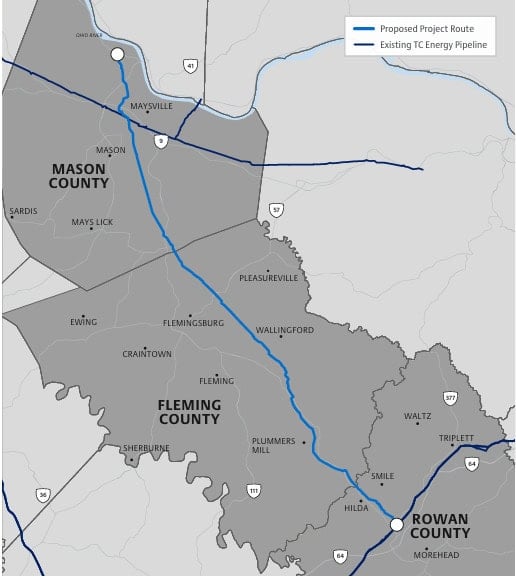
No comments:
Post a Comment