US oil prices finished lower for the second time in eight weeks after President Trump declared a ceasefire in the war with Iran ahead of proposed peace talks in Pakistan this weekend….after rising 13.5% to a 45 month high of $111.54 a barrel last week after the Yemeni Houthis joined Iran in the war against Israel and the US, and after Trump threatened to bomb Iran back to the stone age, the contract price for the benchmark US light sweet crude for May delivery rose further overnight from Sunday into Monday after Trump’s threats on Sunday to attack energy supplies and bridges in Iran if the country did not reopen the Strait of Hormuz, but pulled back in choppy trading in Asia on Monday, as traders awaited for clarity on the status of talks between the U.S. and Iran, and remained wary about sustained supply losses due to shipping disruptions, then dipped further as markets opening in New York, as traders appeared to be comforted by reports of tankers bearing French, Japanese and other flags being allowed by Tehran to transit the Hormuz waterway that is integral to a fifth of global petroleum cargoes, but retraced some of its losses and traded back towards its highs in afternoon trading after Iran rejected a ceasefire proposal and said it wanted a permanent end to the war, and settled 78 cents higher at $112.41 a barrel, as the U.S. and Iran ratcheted up their rhetoric even as they were engaging in indirect talks that could lead to the de-escalation of hostilities…oil prices continued to rise as trading sessions opened in Asian markets on Tuesday after US President Trump threatened to unleash "hell" on Tehran if it failed to comply with his 8:00 PM EDT deadline to reopen the Strait of Hormuz, then surged sharply on global markets immediately following the announcement of a US airstrike targeting Iran's strategic military facilities on Kharg Island in the Persian Gulf, and topped $117 in morning trading in New York after the latest U.S. attacks on Iran amid President Trump’s threats of escalation, but erased much of its gains during the remainder of the session to settle 54 cents higher at $112.95 a barrel on concerns that rising energy prices could slow global economic growth…however, crude oil prices crashed overnight to as low as $95 by morning trading in Australia, after US President Trump declared that he had delayed his threat to attack Iran's infrastructure by two weeks, renewing hopes that the two nations may be moving toward a ceasefire agreement to end the conflict, and held below $100 per barrel across Asian markets following the announcement from US President Donald Trump regarding a two-week ceasefire with Iran, contingent on the safe reopening of the Strait of Hormuz, but pared its overnight losses and traded in a range from about $97.50 to $91.85 for much of the US session following Trump’s turnaround and Iran’s agreement to halt its attacks and allow safe transit through the Strait of Hormuz for two weeks, while talks continued to finalize a deal to end the war, and settled down $18.54, or 16.4%, at $94.41 a barrel as new attacks by Tehran on neighboring's countries' oil and gas facilities, in retaliation to missile fires by Israel on Lebanon, tested the U.S. resolve to enforce a ceasefire to allow oil tankers unhindered passage on the Strait of Hormuz….oil prices rose more than 3% in Asian trading on Thursday, as doubts about the fragile two-week truce in the Middle East raised fears that energy supplies through the crucial Strait of Hormuz would remain limited, and that shippers would be reluctant to resume transit, and hovered near $100 per barrel in trading across global markets, as traders weighed the implications of a fragile U.S.–Iran ceasefire against ongoing disruptions in the Strait of Hormuz, and were up $5.20, or 5.5%, to $99.61 as markets opened in New York, as Middle East tensions flared again from Iran's threat to abandon a ceasefire with the U.S. and Israel if its ally Lebanon remained under attack, but pared its early gains to settle $3.46 higher at $97.87 a barrel after Israeli Prime Minister Benjamin Netanyahu said he had instructed officials to open peace talks with Lebanon, including discussions on disarming Hezbollah…oil prices edged higher in early Asian trading on Friday, supported by ongoing concerns over disruptions to energy flows through the Strait of Hormuz, despite the recently announced two-week truce between the United States and Iran aimed at de-escalation, then jumped another 1% after attacks on Saudi Arabia’s East-West pipeline and crude-producing facilities dented their output and supply capacity, but steadied during US trading as traders awaited the outcome of U.S.-Iran peace talks after a more than a month of fighting that led to an upheaval in Middle East oil supplies and surge in energy costs for consumers worldwide, and settled $1.30 at $96.57 a barrel ahead of U.S.-Iran talks that could drive energy prices lower if a peace deal were struck, and thus ended down 13.4% for the week, the steepest weekly drop since 2022…
Meanwhile, US natural gas prices finished lower for the fifth consecutive week and for the ninth time in ten weeks as the prospect of peace talks with Iran left traders to focus on weak domestic demand and surplus supplies…after falling 7.4% to $2.800 per mmBTU last week as mild weather forecasts suggested little need for either heating or cooling, the price of the benchmark natural gas contract for May delivery opened 4.9 cents higher on Monday, as geopolitical tensions provided support over the weekend, even as domestic fundamentals leaned bearish, then traded near $2.815 into the afternoon to settle 1.1 cents higher at $2.811 per mmBTU, as a short-lived wave of colder weather moved through the Ohio Valley and into the eastern U.S., driving incremental demand for heating and power generation, and underpinning prices at the margin….natural gas prices opened 3.7 cents higher on Tuesday, as the market continued to balance bearish domestic fundamentals against ongoing geopolitical tensions with Iran, and settled 5.9 cents higher at $2.870 per mmBTU as President Trump’s threats to destroy Iran’s civilization loomed large, staving off any bold trading moves, as untold war fallout permeated markets….however, May natural gas opened lower on Wednesday, knocked down overnight as geopolitical tensions eased after the announcement of a two-week cease fire, and closed 14.6 cents lower at $2.724 per mmBTU amid hefty gas supply readings and weak weather demand outlooks across most of the country…natural gas prices fell to trade along the $2.710 level ahead of the weekly storage report on Thursday, then tumbled to a fresh eight-month intraday low of $2.655 at midday following a historically bearish injection into storage, and barely recovered to settle 5.4 cents lower at 2.670 per mmBTU in the wake of the bearish government inventory print and uncertainty about war fallout in the Middle East….natural gas futures were little changed ahead of Friday’s open, with little in the way of fresh fundamentals to drive direction, then edged lower during morning trading amid a lack of supportive fundamentals, and hovered on either side of even into midday Friday, as weak weather-driven demand and stronger renewable output outweighed geopolitical risks, and settled 2.2 cents lower at $2.648 per mmBTU and down 5.45% for the week, as traders looked beyond Iran war risks and concentrated on healthy domestic supply and rapidly diffusing heating demand…
The EIA’s natural gas storage report for the week ending April 3rd indicated that the amount of working natural gas held in underground storage rose by 50 billion cubic feet to 1,911 billion cubic feet by the end of the week, which left our natural gas supplies 89 billion cubic feet, or 4.9% above the 1,822 billion cubic feet of gas that were in storage on April 3rd of last year, and 87 billion cubic feet, or 4.8% above the five-year average of 1,824 billion cubic feet of natural gas that had typically been in working storage as of the 3rd of April over the most recent five years….the 50 billion cubic foot injection into natural gas storage for the cited week was more than the 44 billion cubic foot injection into storage that the market was expecting ahead of the report, while it was less than the 57 billion cubic foot of gas that were injected into natural gas storage during the corresponding week of 2025, but was much more than the average 13 billion cubic foot withdrawal from natural gas storage that has been typical for the same late March-early April week over the past five years…
The Latest US Oil Supply and Disposition Data from the EIA
US oil data from the US Energy Information Administration for the week ending April 3rd indicated that even after a decrease in our oil production and an increase in our oil exports, we still had surplus oil left to add to our stored crude supplies for the 7th consecutive week and for 25th time in forty-five weeks, as a decrease in our refinery throughput and an increase in oil supplies that the EIA could not account for provided a cushion….Our imports of crude oil fell by an average of 130,000 barrels per day to 6,324,000 barrels per day, after falling by an average of 10,000 barrels per day during the prior week, while our exports of crude oil rose by an average of 628,000 barrels per day to 4,149,000 barrels per day, which, when used to offset our imports, meant that the net of our trade of oil worked out to an import average of 2,175,000 barrels of oil per day during the week ending April 3rd, an average of 758,000 fewer barrels per day than the net of our imports minus our exports during the prior week... At the same time, transfers to our oil supplies from Alaskan gas liquids, from natural gasoline, from condensate, and from unfinished oils were 1,000 barrels per day lower than the prior week at 547,000 barrels per day, while during the same week, production of crude from US wells was 61,000 barrels per day lower at 13,596,000 barrels per day. Hence, our daily supply of oil from the net of our international trade in oil, from transfers, and from domestic well production appears to have averaged a total of 16,318,000 barrels per day during the April 3rd reporting week…
Meanwhile, US oil refineries reported they were processing an average of 16,250,000 barrels of crude per day during the week ending April 3rd, an average of 129,000 fewer barrels per day than the amount of oil that our refineries reported they were processing during the prior week, while over the same period, the EIA’s surveys indicated that a net average of 192,000 barrels of oil per day were being added to the supplies of oil stored in the US… So, based on that reported & estimated data, the crude oil figures provided by the EIA appear to indicate that our total working supply of oil from net imports, from transfers, and from oilfield production during the week ending April 3rd averaged a rounded 124,000 fewer barrels per day than what was added to storage plus what our oil refineries reported they used during the week. To account for the difference between the apparent supply of oil and the apparent disposition of it, the EIA just plugged a [ +124,000 ] barrel per day figure onto line 16 of the weekly U.S. Petroleum Balance Sheet, in order to make the reported data for the supply of oil and for the consumption of it balance out, a fudge factor that they label in their footnotes as “unaccounted for crude oil”, thus indicating there must have been a error or omission of that size in the week’s oil supply & demand figures that we have just transcribed…In addition, since 35,000 barrels per day of demand for oil could not be accounted for in the prior week’s EIA data, that means there was 158,000 barrel per day difference between this week’s oil balance sheet error and the EIA’s crude oil balance sheet error from a week ago, and hence the changes to supply and demand from that week to this one that are indicated by this week’s report are off by that much, and therefore not very useful.... But since most oil traders react to these weekly EIA reports as if they were gospel, and since these weekly figures therefore often drive oil pricing and hence decisions to drill or complete oil wells, we’ll continue to report this data just as it’s published, and just as it’s watched & believed to be reasonably reliable by most everyone in the industry…(for more on how this weekly oil data is gathered, and the possible reasons for that “unaccounted for” oil supply, see this EIA explainer….also see this old twitter thread from an EIA administrator addressing these ongoing weekly errors, and what they had once hoped to do about it).
This week’s rounded 192,000 barrel per day average increase in our overall crude oil inventories all came as an average of 440,000 barrels per day were being added to our commercially available stocks of crude oil, while 248,000 barrels per day were being pulled out of our Strategic Petroleum Reserve, just the second SPR withdrawal in a year and a half, following a nearly continuous string of weekly additions to the SPR from September 2023 to February 2026, which followed nearly continuous SPR withdrawals over the 39 months prior to August 2023… Further details from the weekly Petroleum Status Report (pdf) indicated that the 4 week average of our oil imports fell to 6,609,000 barrels per day last week, which was 9.1% more than the 6,059,000 barrel per day average that we were importing over the same four-week period last year. This week’s crude oil production was reported to be 61,000 barrels per day lower at 13,596,000 barrels per day because the EIA’s estimate of the output from wells in the lower 48 states was 60,000 barrels per day lower at 13,174,000 barrels per day, while Alaska’s oil production was 1,000 barrels per day lower at 422,000 barrels per day...US crude oil production had reached a pre-pandemic high of 13,100,000 barrels per day during the week ending March 13th 2020, so this week’s reported oil production figure was 3.8% higher than that of our pre-pandemic production peak, and was also 40.2% above the pandemic low of 9,700,000 barrels per day that US oil production had fallen to during the third week of February of 2021.
US oil refineries were operating at 92.0% of their capacity while processing those 16,250,000 barrels of crude per day during the week ending April 3rd, down from 921% the prior week, with the recent vacillation in the refinery utilization rate likely due to temporary shutdowns for seasonal maintenance, as refineries are reconfigured to produce summer blends of fuel….the 16,250,000 barrels of oil per day that were refined that week was still 4.0% more than the 15,627,000 barrels of crude that were being processed daily during the week ending April 4th of 2025, and 0.9% more than the 16,100,000 barrels that were being refined during the prepandemic week ending April 5th, 2019, when our refinery utilization rate was at 87.5%, which was below the pre-pandemic normal utilization rate for this time of year…
With the decrease in the amount of oil that was refined this week, gasoline output from our refineries was also lower, decreasing by 214,000 barrels per day to 9,369,000 barrels per day during the week ending April 3rd, after our refineries’ gasoline output had decreased by 152,000 barrels per day during the prior week... This week’s gasoline production was still 4.7% more than the 8,946,000 barrels of gasoline that were being produced daily over the week ending April 4th of last year, but 7.9% less than the gasoline production of 10,169,000 barrels per day seen during the prepandemic week ending April 5th, 2019….on the other hand, our refineries’ production of distillate fuels (diesel fuel and heat oil) increased by 9,000 barrels per day to 5,035,000 barrels per day, after our distillates output was unchanged during the prior week. After that modest production increase, our distillates output was 8.1% more than the 4,658,000 barrels of distillates that were being produced daily during the week ending April 4th of 2025, but virtually unchanged from the 5,038,000 barrels of distillates that were being produced daily during the pre-pandemic week ending April 5th, 2019....
After this week’s decrease in our gasoline production, our supplies of gasoline in storage at the end of the week fell for the eighth week in a row, decreasing by 1,589,000 barrels to 239,272,000 barrels during the week ending April 3rd, after our gasoline inventories had decreased by 586,000 barrels during the prior week. Our gasoline supplies decreased by more this week because the amount of gasoline supplied to US users fell by 122,000 barrels per day to 8,564,000 barrels per day, and because our exports of gasoline rose by 51,000 barrels per day to 880,000 barrels per day, while our imports of gasoline rose by 69,000 barrels per day to 571,000 barrels per day… In spite of thirty-nine gasoline inventory withdrawals over the sixty weeks, our gasoline supplies were 1.4% higher than last April 4th’s gasoline inventories of 235,977,000 barrels, and about 3% above the five year average of our gasoline supplies for this time of year…
Meanwhile, after this week’s modest increase in distillates production, our supplies of distillates fell for the eighth time in twenty-one weeks, decreasing by 3,144,000 barrels to 119,936,000 barrels during the week ending April 3rd, after our distillates supplies had decreased by 2,111,000 barrels during the prior week… Our distillates supplies fell by more this week because the amount of distillates supplied to US markets, an indicator of domestic demand, rose by 21,000 barrels to 4,060,000 barrels per day, and because our exports of distillates rose by 170,000 barrels per day to a nine-month high of 1,576 ,000 barrels per day, while our imports of distillates rose by 35,000 barrels per day to 152,000 barrels per day... After 22 additions to distillates inventories over the past 39 weeks, our distillates supplies at the end of the week were till 3.2% higher than the 111,082,000 barrels of distillates that we had in storage on April 4th of 2025, but now about 5% below the five year average of our distillates inventories for this time of the year…
Finally, despite the increase in our oil exports, our commercial supplies of crude oil in storage rose for the 16th time in twenty-six weeks, and for the 30th time over the past year, increasing by 3,081,000 barrels over the week, from 461,636,000 barrels on March 27th to a thirty-three month high of 464,717,000 barrels on April 3rd , after our commercial crude supplies had increased by 5,451,000 barrels over the prior week….After this week’s increase, our commercial crude oil inventories were about 2% above the recent five-year average of commercial oil supplies for this time of year, and were about 38% above the average of our available crude oil stocks as of the first weekend of April over the 5 years at the beginning of the past decade, with the big difference between those comparisons arising because it wasn’t until early 2015 that our oil inventories had first topped 400 million barrels. After our commercial crude oil inventories had jumped to record highs during the Covid lockdowns in the Spring of 2020, then jumped again after February 2021’s winter storm Uri froze off US Gulf Coast refining, but then fell sharply due to increased exports to Europe following the onset of the Ukraine war, only to jump again following the Christmas 2022 refinery freeze-offs, changes in our commercial crude supplies have generally leveled off since, and as of this April 3rd were 5.1% above the 442,345,000 barrels of oil in commercial storage on April 4th of 2025, and were 1.6% more than the 457,258,000 barrels of oil that we had in storage on April 5th of 2024, but were 1.1% less than the 469,952,000 barrels of oil we had left in commercial storage on March 24th of 2023…
This Week's Rig Count
The US rig count was down by 3 over the eight days ending April 10th, after last week’s report was published a day early ahead of Good Friday, as the count of rigs targeting natural gas was down by three, while the number of rigs targeting oil was unchanged, and miscellaneous rigs were also unchanged…for a quick snapshot of this week's rig count, we are again including below a screenshot of the rig count summary pdf from Baker Hughes...in the table below, the first column shows the active rig count as of April 10th, the second column shows the change in the number of working rigs between last week’s count (April 2nd) and this week’s (April 10th) count, the third column shows last week’s April 2nd active rig count, the 4th column shows the change between the number of rigs running on Thursday and the number running on the Friday of the same week of a year ago, and the 5th column shows the number of rigs that were drilling at the end of that reporting period a year ago, which in this week’s case was the 11th of April, 2025…

+++++++++++++++++++++++++++++++++++++++++++++++++++++
NB: domestic news is pretty thin this week because i spent a lot of time tracking Iran war developments...
Scene cleared after damaged gas line prompts evacuations at North Market - A damaged gas line near Columbus’ North Market prompted a large evacuation Thursday afternoon after crews reported a problem near the intersection of Park and Vine streets at the new Merchant Tower building. The incident came in at 1:08 p.m., according to Columbus Fire. Firefighters said the leak sounded like a “jet engine” coming out of the ground. Columbia Gas later said a construction crew struck the gas line.Fire crews had to evacuate between 800 and 1,000 people from the surrounding businesses and the construction crew. Chayton McKinney, who works inside the North Market, described what the sudden evacuation felt like.“Pretty scary because the thought or idea of, like, an explosion or something happening is like, ‘Uh-oh,’ but thankfully nothing happened. Fire Department, everyone, they came through real quick. Columbia Gas eventually got here a couple hours afterward to assess the situation. Columbus fire personnel contained the leak and left the area about 3 p.m. Columbia Gas crews then began working on a repair.
Gas line struck near Valley Oaks Care Center prompts evacuation of ventilator patients — A construction accident outside Valley Oaks Care Center in East Liverpool on Thursday prompted an emergency response and evacuation just before noon after a gas line was struck.Officials said gas levels were detected inside the building, leading crews to safely move residents out, including five patients on ventilators. Those patients were moved with the help of five ambulances and mutual aid from the surrounding area. The gas company was able to shut off the line, and the East Liverpool Fire Department ventilated the building. No injuries were reported.
OH Supreme Court Ruling Affects Mineral Rights Claims in Old Deeds -- Marcellus Drilling News --The Ohio Supreme Court issued a decision in a case we previously did not know about, one with the potential to affect landowners and drillers. In the case Faith Ranch & Farms Fund, Inc. v. PNC Bank, the Supremes ruled that a former Harrison County landowner did NOT reserve underground oil and gas rights in a 1953 deed that mentioned coal and “other minerals.” Using the phrase “other minerals” may refer to oil and gas, but that isn’t necessarily the case, the justices said in a 6-1 ruling. The phrase was considered in relation to how it’s contextualized in a deed, one of the justices wrote.
22 New Shale Well Permits Issued for PA-OH-WV Mar 30 – Apr 5 -- Marcellus Drilling News --The Marcellus/Utica region received 22 new drilling permits last week, Mar. 30 – Apr. 5, up 3 from the 19 issued two weeks ago. Pennsylvania issued 6 of the permits. Ohio issued 8 new permits. West Virginia also issued 8 new permits last week. The drillers who received new permits last week included Ascent Resources, EOG Resources, EQT, Expand Energy, Jay-Bee Oil & Gas, and Laurel Mountain Energy. Ascent Resources | Butler County | Carroll County | EOG Resources | EQT Corp | Expand Energy | Fayette County | Harrison County | Jay-Bee Oil & Gas | Laurel Mountain Energy | Marshall County | Pleasants County
CNX Seeks Permit for Water from Beaver Run Reservoir for Fracking -- Marcellus Drilling News - CNX Midstream has applied for a state permit to withdraw water from Westmoreland County’s Beaver Run Reservoir for horizontal drilling and Marcellus shale fracking. If approved by the Pennsylvania Department of Environmental Protection (DEP), the company would install a short floating intake and a 156-foot pipeline. Beaver Run, which serves nearly 123,000 people, is one of the region’s main water sources, and any withdrawal would require municipal authority approval and metering. Officials said reservoir levels are currently near capacity after recent rains.
From Field to Well: Don't Leave Royalty Money on the Table - Lancaster Farming -- For many Pennsylvania farmers—especially those in the Marcellus and Utica Shale regions—oil and gas leases can provide meaningful supplemental income. But once a well begins producing, receiving the correct royalty payments depends on one often-overlooked document: the Division Order (DO). A Division Order determines how production revenue is divided and confirms your ownership interest. It is also your best chance to verify that you are being paid accurately. Signing a DO without reviewing it carefully can lock errors in place for years, silently reducing your income over the life of the well.  A Division Order establishes your share of production revenue before royalty payments begin. Even a small mistake in your ownership percentage can have significant long-term consequences, especially if a well produces for decades. Because Division Orders are prepared by the operator—not by you—it’s essential to confirm the numbers before signing. Once approved, corrections can be difficult and time-consuming. mUnderstanding a few basic terms can help you review your Division Order with confidence:
- Net Revenue Interest (NRI): Your actual share of production revenue
- Royalty Interest (RI): The royalty rate stated in your lease (often 12.5%–20%)
- Working Interest (WI): Ownership interest typically held by operators, not farmers
- Division of Interest (DOI): The operator’s calculation of ownership percentages
Your royalty payment is based on three core factors: your net acreage, your lease royalty rate, and the size of the drilling unit. Formula: NRI = (Your Net Acres ÷ Unit Acres) × Royalty Rate If you own 10 net acres in a 640-acre drilling unit and have a 3/16 royalty, your NRI would be 0.293%.Always compare your own calculation to the percentage listed on the Division Order. If the numbers do not match, do not sign until the discrepancy is resolved. Request supporting documentation from the operator to verify how your interest was calculated.Pennsylvania oil and gas leasing comes with unique challenges that can impact royalty calculations:
- Pooled Units Are Common: Most farms are combined with neighboring properties into larger drilling units. Royalties are paid based on your proportionate share of the entire unit—not the physical location of the well.
- Heirship and Title Gaps: Many farms have passed down through generations without updated deeds or fully administered estates. Unclear ownership can delay payments or reduce credited acreage.
- Severed Mineral Rights: In Pennsylvania, mineral rights are often separate from surface ownership. Even if drilling occurs on your land, you may not receive royalties unless you own the subsurface rights.
You’ve worked your land too hard to leave royalty money on the table. A careful review of your Division Order can protect your income and prevent costly errors that compound over time. If something doesn’t look right, consider speaking with an attorney experienced in Pennsylvania oil and gas law before signing—such as Eric Holey at MPL Law Firm. A brief review today can preserve years of future royalty payments.
Southwestern Energy Wins Major PA Case re Rule of Capture/Trespass -- Marcellus Drilling News - We believe this is the end of the legal road for the Briggs family’s lawsuit against Southwestern Energy (now part of Expand Energy) in a case that centers on whether hydraulic fracturing constitutes a trespass if it forces gas from a neighbor’s property, even if no fluid enters that neighbor’s specific property layer. In January 2020, the Pennsylvania Supreme Court ruled in favor of Southwestern, retaining the “rule of capture” in the Keystone State (see HUGE NEWS: PA Supreme Court Keeps ‘Rule of Capture’ for Fracking). In 2022, the Briggs family filed an amended complaint, call it “Briggs 2,” along the same lines, alleging that Southwestern’s drilling and fracking on a neighboring property had intruded (“trespassed”) under the property line, draining gas from the Briggs property and injecting PFAS “forever chemicals” under their land (see Briggs v SWN Rule of Capture/Trespass Court Case Resurrected). Read More
PA Commonwealth Court Blocks Lawfare Attempt Against EQT Gas Pad -- Marcellus Drilling News - A decision issued by the Pennsylvania Commonwealth Court has helped to rein in attempted lawfare (the abuse of our judicial system) by an anti-fossil fuel group in southwestern PA. Protect PT, a group we’ve covered many times in the past, tried to assert “standing” (the right to sue) in a case involving an EQT well pad that needed to be moved by 178 feet from its original location. The local zoning board was happy to give the antis “standing” in their hearings, but when Protect PT didn’t like the board’s decision, they tried to appeal it to a court. The trial court told Protect PT the group didn’t have standing under the very specific requirements of the law. Read More
Mainstream Media Catches Up: AI Data Centers are the New Fracking -- Marcellus Drilling News - Please excuse our immodesty while we toot our own horn. MDN first tipped you back in July 2025 that the Democrat anti-fracking movement in Pennsylvania (and beyond) was rapidly becoming anti-data center (see PA Antis Hate Fossil Fuels, Shale Drilling, and Now…Data Centers). The trend only blossomed, with national and international groups joining the chorus against data centers. Here we are in April 2026, some nine months later, and the mainstream media, via the venerable Financial Times of London, has just noticed this fact and published an article that reaches the same conclusion
Pennsylvania is one of the world's top energy producers — so why can't it build pipelines? --This July, construction is slated to begin on the Tioga Pathway Project, with a target in-service date of fall 2026. The project will expand pipeline transportation capacity to move Marcellus and Utica Shale gas from the Appalachian Basin into the interstate pipeline grid, strengthening energy reliability across the region. Due to several delays, the approval process took roughly three years from proposal to groundbreaking. By today’s standards, that is still considered fast — which should give policymakers pause. Across the country, major energy infrastructure projects routinely face far longer timelines at both the federal and state levels. Yet American energy independence depends on a steady pipeline of new infrastructure, something that is far from guaranteed under the current permitting regime. Pennsylvania plays a central role in this equation. From coal to natural gas extracted from the Marcellus Shale, the Commonwealth consistently ranks among the world’s leading energy producers. But production alone is not enough. It takes an extensive network of pipelines, compressor stations, processing facilities, and export terminals to move that energy from where it is extracted to where it is consumed. If we are serious about maximizing Pennsylvania’s energy potential, we must confront a hard truth: the permitting framework governing major infrastructure projects is no longer functioning as intended. At the heart of the problem is the National Environmental Policy Act (NEPA). When enacted, NEPA served an important purpose by requiring federal agencies to evaluate and disclose the environmental impacts of major projects. Over time, however, the process has evolved into a significant bottleneck. Today, the average timeline for completing a NEPA review stretches to roughly four and a half years, delaying projects that are critical to both economic growth and energy reliability. Pennsylvania has experienced these consequences firsthand. Consider the PennEast Pipeline, a $1.2 billion, 115-mile project designed to transport 1.1 billion cubic feet of natural gas per day from Luzerne County, Pennsylvania, to Mercer County, New Jersey. After spending seven years navigating federal reviews, legal challenges, and state-level permit denials, the project became emblematic of a system that too often prevents completion rather than ensures responsible development. Although the Supreme Court ultimately affirmed the project’s authority to proceed by allowing federally approved infrastructure to exercise eminent domain over state-owned land, the years of delay had already rendered the project financially untenable. It was ultimately canceled, a stark reminder that even when project sponsors ultimately prevail in a permitting dispute, the drawn-out timeline can kill new energy infrastructure. The scale and complexity of the review process further illustrate the problem. A Council on Environmental Quality (CEQ) fact sheet found that environmental impact statements between 2013 and 2018 averaged 575 pages, with a quarter exceeding 600 pages. Layers of interagency coordination, duplicative analysis, and the constant threat of litigation have created a system defined less by careful review and more by prolonged delay.Encouragingly, there is growing recognition on both sides of the political aisle that reform is needed. A Bipartisan Policy Center poll found that 61 percent of voters support efforts to expedite the federal permitting process. Lawmakers in both parties are beginning to respond. In July of last year, House Natural Resources Committee Chairman Bruce Westerman (R-Ark.) and Rep. Jared Golden (D-Maine) introduced the Standardizing Permitting and Expediting Economic Development (SPEED) Act, which would help streamline judicial review by limiting NEPA lawsuits to parties that participated in the public comment process.
Devon-Coterra Merger Marks End of Shale 2.0, Start of Shale 3.0 -- Marcellus Drilling News - On February 2, 2026, Devon Energy and Coterra Energy announced a landmark $58 billion all-stock merger, creating a “Super-Independent” energy producer targeting the AI-driven surge in power demand (see Devon Energy Buying Coterra Energy for $21.4B in All-Stock Merger). The deal combines Devon’s Permian Basin oil operations with Coterra’s dominance in the Marcellus Shale, yielding pro forma production of 1.6 million Boe/d (barrels of oil equivalent per day), including 4.3 Bcf/d (billion cubic feet per day) of natural gas. The merger strategically positions the new Devon to supply direct, fixed-price gas contracts to tech hyperscalers like Microsoft, Meta, and Google, signaling a historic convergence of the shale energy and artificial intelligence industries.
FERC Takes New Look at Constitution Pipeline Before Reissuing Cert -- Marcellus Drilling News - (click map for larger version) The Federal Energy Regulatory Commission (FERC) is actively reviewing two requests related to reviving the Constitution Pipeline project, a 124-mile pipeline from the Marcellus gas fields of Susquehanna County, PA, to Schoharie County, NY, to move Marcellus gas into New York State and New England. Following a deal between President Trump and NY Governor Hochul to allow the project, Williams (the builder) asked FERC in January to reissue the originally-issued certificate for the project, along with a waiver that says the project no longer needs approval by NY to receive a Clean Water Act Section 401 clearance (see Williams Asks FERC to Reissue Constitution Pipe Cert & NY Waiver). Read More
Zombie Antis Fight to Block Williams NESE Pipeline in NY, NJ - Marcellus Drilling News -- Anti-fossil fuel fanatics haven’t given up on trying to block construction of the Williams Northeast Supply Enhancement (NESE) pipeline, a $1 billion+ project designed to increase Transco pipeline capacity and flows of Marcellus gas heading into New York City and other northeastern markets. Last November, the states of New York and New Jersey issued federal Clean Water Act permits for their respective states, allowing NESE to be built (see Trump Won: New York & New Jersey Issue Water Permits for NESE Pipe). Antis sued both the Federal Energy Regulatory Commission (FERC) and the environmental agencies of NY and NJ (see Radicals Sue NY, NJ to Block NESE Pipeline Water Permits). Antis are now trying to persuade the new radical governor of NJ, Mikie Sherrill, to deny permits that allow construction to begin in her state.
MVP Southgate Gets FERC Permission to Start Building in Virginia - Marcellus Drilling News -- The Mountain Valley Pipeline (MVP), which began operations in 2024 through West Virginia and Virginia, is now slated for an extension, the MVP Southgate, into North Carolina. This expansion faces opposition from some residents and environmental groups who raise concerns about safety, environmental impact, eminent domain issues, and the need for increased natural gas infrastructure (they believe cataclysmic global warming comes from burning natural gas). Despite court challenges and past environmental violations, the project has received government approvals and is forging ahead. On March 23, the Federal Energy Regulatory Commission (FERC) issued a notice to proceed with construction in Virginia.
NGL Steam Cracker Margins — Ethane and LPG Highest vs. Naphtha since 2014 | RBN Energy -- U.S. petrochemical steam cracker margins have been transformed almost overnight by the Iran war. As shown in the daily margin chart on the right below, margins for ethane, propane, and normal butane (red dashed oval) have surged to their highest levels relative to natural gasoline (light naphtha) since 2014 — a development that stands out even against the long-term annual record on the left, which includes the exceptional 2021 post-Covid spike when all feedstock margins rose together.The numbers tell the story clearly. Before the war, daily margins were running at roughly 10 c/lb for ethane, 7–8 c/lb for propane, about 1.7 c/lb for normal butane, and around -7 to -10 c/lb for natural gasoline. By early April, ethane had climbed to ~25 c/lb, propane to ~25 c/lb, and normal butane to ~22 c/lb — while natural gasoline deteriorated further to -14 to -18 c/lb. The spread between ethane and natural gasoline, which was running around 15–18 c/lb before the war, reached as high as 49 c/lb in mid-March and remains in the 38–44 c/lb range. The reason for the divergence lies in how these feedstock margins are calculated and how the feedstocks themselves are valued. Steam crackers primarily produce ethylene and propylene, and the higher the price for these two petrochemical intermediates, the higher the margin for whichever feedstock the cracker uses to produce them, all other factors being equal. Prices for ethylene and propylene are up approximately 68% since the war began, driven by the loss of Middle Eastern supply as Iran blocked the Strait of Hormuz, cutting off roughly 20% of global ethylene and propylene derivative production and sharply curtailing output from naphtha-based crackers across Asia and Europe. Yet NGL feedstock costs for U.S. crackers have risen only modestly — ethane by roughly 3%, given its tight link to U.S. natural gas prices (which the conflict has not affected), and propane and normal butane by about 20%. Natural gasoline, by contrast, tracks crude oil closely and has risen roughly 60% in line with WTI crude oil at Cushing, Oklahoma. The result is a widening advantage for U.S. crackers, which run predominantly on ethane, propane, and normal butane, over their naphtha-dependent global competitors — an edge that could persist for many months after the conflict ends, given the time required to restore Persian Gulf shipping and restart idled chemical plants.
U.S. Propane: Record Production Meets Elevated Inventories | RBN Energy -- The EIA reported total U.S. propane/propylene inventories increased by 570 Mbbl for the week ended April 3, coming in below industry expectations of a 1.7 MMbbl build but above the average build for the week of 454 Mbbl. Total stocks are now at 77.6 MMbbl and remain elevated, at 31.9 MMbbl, or 70%, above the same week in 2025 and 21.4 MMbbl, or 38%, above the five-year maximum. Inventories are also 70% above the five-year average. Total U.S. production increased by 51 Mb/d to just over 3 MMb/d, marking a third consecutive weekly record and running 10% above the five-year maximum, while weekly propane exports were 1.7 MMb/d, down about 188 Mb/d from the previous week and below the year-to-date average of 1.9 MMb/d. The decline in exports is due in part to Targa’s force majeure at its Galena Park terminal. Regionally, PADD 2 (Midwest) propane stocks increased by 368 Mbbl, marking a fourth consecutive weekly build, with inventories at 14.9 MMbbl, which is 5.4 MMbbl, or 56%, above 2025 and 2.4 MMbbl, or 20%, above the five-year maximum. Stocks are also 4.6 MMbbl, or 45%, above the five-year average. In contrast, PADD 3 (Gulf Coast) propane inventories fell by 84 Mbbl to 55.9 MMbbl, reflecting a draw atypical for this time of year, though stocks remain elevated at 26.4 MMbbl, or 89%, above 2025 and 18.4 MMbbl, or 49%, above the five-year maximum. Inventories are also 27 MMbbl, or 93%, above the five-year average.
Democrat Senators Investigate $370M IRS Payout to Cheniere Energy -- Marcellus Drilling News -- Seven Democrat U.S. senators (some of the worst of the worst) have launched an investigation into a $370 million “alternative fuel” payout by the IRS to Cheniere Energy, the U.S.’s largest LNG exporter. Critics argue that Cheniere should not have received the tax credit, as LNG is already standard fuel for its tankers, not an alternative, and the credit was intended for motor vehicles or motorboats up to 65 feet, not 1,000-foot tankers. The senators question whether the IRS determined LNG tankers qualify as motorboats and whether LNG use in these vessels should be considered an alternative fuel.
Caturus Inks Commonwealth LNG Offtake Deals, Expects FID in Coming Weeks - Privately held natural gas producer Caturus Energy LLC said it has finalized a series of offtake agreements underpinning development of its Commonwealth LNG export project in Cameron Parish, LA.At A Glance:
- Louisiana project now fully commercialized
- Company targeting 2030 operations start
- Caturus eyeing 1 Bcfe/d net upstream production
Commonwealth LNG Finalizes Customer Signups, FID Next Few Weeks -- Marcellus Drilling News - Caturus has reached major milestones in its “wellhead-to-water” strategy, finalizing customer offtake agreements (new customer signups) for its $12.5 billion, 9.5 MTPA Commonwealth LNG project in Louisiana. This commercialization milestone paves the way for imminent project financing and a final investment decision (FID) in the coming weeks. Key international partners, including EQT LNG Trading, Glencore, Mercuria, PETRONAS, and Aramco Trading Americas, have signed long-term Sale and Purchase Agreements
Agua Dulce Natural Gas Prices Sag Under Mild Weather Despite Middle East Volatility -- After initially showing some upward momentum following the rise of oil prices amid geopolitical instability in the Middle East, natural gas cash prices at South Texas hub Agua Dulce have sagged as warmer weather and loose fundamentals drive the U.S. natural gas market.Map of U.S. natural gas exports to Mexico showing cross-border pipeline flows totaling 6.546 Bcf/d, with volumes from South Texas, West Texas, Arizona, California regions. At A Glance:
Corpus Christi Train 5 nears startup
Mexico pipeline expansion lifts pull ahead
Winter strip signals firmer pricing ahead
U.S. LNG Capacity Edges up as Corpus Christi Stage III Ramps Up | RBN Energy --U.S. LNG feedgas rose slightly last week, averaging 19.4 Bcf/d, up 0.07 Bcf/d from the previous week. Higher intake at Corpus Christi and Golden Pass offset lower volumes at Sabine Pass. Feedgas deliveries to Sabine Pass dipped early in the week due to unplanned maintenance on the Natural Gas Pipeline of America, but quickly rebounded. At Corpus Christi, feedgas intake increased due to higher flows to the legacy terminal and commissioning at Corpus Christi Stage III. See the picture below of a rendering of the Corpus Christi Stage III LNG expansion project. Train 5 reached substantial completion and is online. Trains 1–4 are in service and Trains 6 and 7 are expected online later this year. The Stage III project sources feedgas solely through the Agua Dulce to Corpus Christi Pipeline and uses the existing terminal’s marine infrastructure.Golden Pass has begun producing LNG, and its first export cargo is expected later this month.Most U.S. terminals continue to run at or above peak capacity, often exceeding long-term contract levels. Stay tuned to the LNG Voyager Weekly report for additional insights.
US Natural Gas Futures Rise 0.4% As Cold Weather Boosts Demand -- U.S. natural gas futures are starting to show signs of near-term support, with a brief cold snap potentially tightening demand just as broader energy markets shift. A short-lived wave of colder weather moving through the Ohio Valley and into the eastern U.S. is driving incremental demand for heating and power generation, which could be underpinning prices at the margin. At the same time, rising oil prices following the outbreak of war in Iran may also be feeding into the front-month gas contract, suggesting cross-commodity dynamics are beginning to matter more in the current setup. May-delivery futures settled up 1.1 cents, or 0.4%, at $2.811 per mmbtu on Nymex, reflecting what appears to be a weather-driven bounce rather than a structural shift. Forecasts point to below-average temperatures persisting in the Upper Midwest through April 10, but that support may fade as above-average temperatures are expected to dominate across the eastern two-thirds of the U.S. from April 11 to April 20. This transition could limit the duration of demand strength, potentially keeping a ceiling on further price gains unless additional catalysts emerge. Underneath the surface, the fundamental picture remains mixed. Lower-48 dry gas production was estimated at around 112.6 bcf per day, up 4.9% year over year, while total demand came in near 73.6 bcf per day, down 5.9% from a year earlier. Export flows to Mexico were approximately 6.4 bcf per day, down 2.8% week over week, while gas flows to LNG export terminals rose 1.3% to about 20.3 bcf per day. Taken together, these data points suggest that while near-term pricing could stay supported, the broader supply-demand balance may continue to act as a counterweight.
NatGas Futures Fall on Ceasefire, but Physical LNG Flows Face Lengthy Road to Recovery -A two-week ceasefire between the United States and Iran sent oil and natural gas futures tumbling early Wednesday, but questions remained around the durability of the truce. May Nymex natural gas futures dropped 12.2 cents to $2.748/MMBtu as of 11:28 a.m. ET, with June down 11.2 cents to $2.874.Analysts at Rystad Energy warned that while futures markets could respond quickly, getting back to normal in the physical movement of commodities was tricky.
Global Natural Gas Volatility Rekindles Calls to Prioritize U.S. LNG Exports -As unrest in the Middle East continues to warp global natural gas markets, energy infrastructure policy experts believe a critical moment has arrived for U.S. LNG exports.Table of NGI’s North American LNG export project tracker showing existing, sanctioned, and proposed LNG terminals across the United States, including capacity in MTPA and Bcf/d, with major projects such as Sabine Pass, Corpus Christi LNG, Golden Pass, and Plaquemines. At A Glance:
Markets remain on edge over supply
U.S. LNG demand surges amid conflict
Export capacity constraints come into focus
U.S. LNG Races to Replace War-Hit Supply as Conflict Widens Price Premiums - With one-fifth of global LNG supply cut off due to the U.S.-Israeli war with Iran, North American LNG operators are pulling all levers to ramp up supply as quickly as possible. Chart Showing NGI Maximum Gulf Coast LNG Netback Price Declining from Above $17.50 per MMBtu in Mid-2026 to Around $14.60 by Spring 2027, with Modest Fluctuations Through Late 2026 Before Sharp Drop in Early 2027.
At A Glance:
DOE authorizes increased Elba Island shipments
Rio Grande seeks 24/7 construction approval
CCL, Golden Pass ramping up feed gas
High Production and Low Prices for Gas in the Permian | RBN Energy Permian production averaged 22.2 Bcf/d for the week ended April 6, up 0.4 Bcf/d from the week prior. This is the highest weekly gas production figure that has ever been seen in the Permian Basin. The higher production levels were largely a result of higher receipts on El Paso Pipeline. Production receipts on the pipeline have been variable because of ongoing maintenance work but are currently very strong, about 0.5 Bcf/d over the same time last year. However production upside remains limited in the near-term because of constrained infrastructure. In the back half of the year, once infrastructure is available, RBN expects over 1.5 Bcf/d of production growth. Over 4.5 Bcf/d of new pipeline capacity is due online later this year, giving the basin running room to grow and alleviating pressure on Waha prices. Graph Source: RBN NATGAS Permian, Wood Mackenzie As would be expected in the capacity-constrained Permian, record production led to fiercely low prices for producers without capacity out of the basin. According to data from Natural Gas Intelligence, outright Waha cash prices averaged negative $5.31/MMBtu for the week ended April 6, down $2.38/MMBtu from the prior week. Prices were sharply down all last week but especially low over the Easter holiday weekend, less than negative $6.00/MMBtu. In general, when the market is constrained, Waha prices tend to be lower over the weekend than during the week, other things being equal. This is caused by lower domestic demand and the bundling of multiple days into one price. With the long holiday weekend this was even more exacerbated than usual.
Long Time Comin’ – More Permian Gas Takeaway Is Coming. What About Stronger Waha Prices? | RBN Energy - Permian wells are churning out 22 Bcf/d of residue natural gas — one-fifth of total U.S. production — but for many producers that gas abundance is a hindrance. A persistent shortfall in pipeline takeaway capacity has made negative (sometimes very negative) prompt-month and cash prices at the all-important Waha Hub an all-too-regular thing. But there’s good reason to believe the situation will soon be changing for the much-better. A massive tranche of new takeaway capacity will be coming online over the next few months, ending the shortfall for at least a few years, and gas demand from LNG exporters and power generators will be ramping up fast. In today’s RBN blog, we begin an in-depth examination of Permian takeaway capacity, Waha prices, and the potentially far-reaching impact of solidly positive gas prices on producers’ development strategies.The Permian’s expansion into the world’s largest, most productive crude oil play over the past 15 years came with a market-changing side effect: an equally impressive expansion in the production of associated gas (natural gas + NGLs). Producers’ primary focus was (and still is) on crude — to quote bank robber Willie Sutton, “That’s where the money is” — and their #1 priority has been supporting the development of the pipelines, storage and other infrastructure needed to produce it and get it to market. At the same time, however, they and their midstream partners had no choice but to deal with the vast and fast-increasing volumes of associated gas emerging from Permian wells with high-value oil.Massive sums have been invested in building out gas gathering systems, processing plants and takeaway pipelines, not just for natural gas but for NGLs. But it’s almost always been a game of catch-up. Producers didn’t want to make long-term pipeline-capacity commitments, and that reluctance ultimately crushed the spread that justified the pipeline to begin with. That led to a game of chicken, where ultimately the biggest producers had no choice but to pony up to get the pipelines built and smaller producers suffered when their interruptible gas was sold at negative prices. (We coined it “the midstream conundrum.”)Constraints in Permian gas takeaway, often exacerbated by pipeline maintenance that temporarily took some capacity offline, had consequences, primarily in the prompt-month and cash prices that shippers without sufficient pipeline space were offered for their gas at the Waha Hub in West Texas’s Pecos County. The left graph in Figure 1 below shows natural gas production in the Permian (black line), gas consumption within the basin (“Demand”; dark-brown layer), flows to Mexico (beige layer), pipeline capacity out of the region (green layer), and periods when takeaway constraints frequently caused Waha prices to turn negative (dashed circles). [Note that most producers are not selling their gas at Waha prices. A lot of them have capacity on pipelines that can get their gas to downstream markets.] Figure 1. Permian Gas Production, Takeaway Capacity and Waha Cash Prices. Sources: RBN, NGI Waha, at the crossroads of a long list of incoming and outgoing gas pipelines, is the Permian’s most important trading hub. As shown by the green line in the right graph, Waha prices were deeply discounted to Henry Hub through most of the 2010s but remained positive (above the horizontal black line), often marginally so. But by 2019, Permian gas production had really taken off, incremental takeaway capacity wasn’t being added fast enough, and Waha prices started going negative (dashed blue and yellow ovals). In other words, producers and shippers had to pay to have someone take their gas. The situation has been particularly egregious the past few months (dashed red oval): Waha cash prices have averaged negative $1.50/MMBtu so far this year, negative $3.60/MMBtu in March and negative $6/MMBtu this past weekend.Negative gas pricing can be OK — the cost of doing business, you might say — but only if the costs are manageable and don’t start taking too big a bite out of the profits from crude oil sales. And producers have strategies for mitigating the damage. For example, they can hedge their Waha-bound gas with forward and basis-swap contracts that lock in small but still-positive Waha prices, or they can focus on production areas with lower gas-to-oil ratios (GORs) when the takeaway situation at the hub tightens.The real fix for negative prices at Waha, though, is more pipeline takeaway capacity — ideally a lot more of it — and that’s exactly what’s about to happen. As we’ve been tracking in RBN’s monthly Arrow Model report, by the end of this year, a 570-MMcf/d expansion of the Gulf Coast Express pipeline (GCX; light-blue line in Figure 2 below), the 2.5-Bcf/d Blackcomb Pipeline (dashed purple line), and the 1.5-Bcf/d Hugh Brinson Pipeline (dashed orange line) will add a staggering 4.6 Bcf/d of incremental takeaway capacity out of the Permian.
No Sudden Movement – U.S. E&Ps Stay Cautious on 2026 Capex Amidst Market Volatility | RBN Energy - The roiling of global energy markets by war in the Middle East has, at least temporarily, magnified the importance of domestic oil output and dramatically heightened interest in production trends. As lower prices continued to erode returns for oil producers in 2025 and into early 2026, it’s no surprise that E&Ps accentuated a cautious, discipline-first approach in their initial 2026 capex and production guidance, which targets generally lower investment and flattens production growth. In today’s RBN blog, we’ll take a detailed look at the 2026 forecasts by peer group and offer some far-too-early speculation about the potential industry response to the recent surge in oil prices.As shown in Figure 1 below, the 36 companies we follow have set 2026 capital investment of $59.1 billion (far-right blue bar and left axis), down 5% from $62.5 billion in 2025 and continuing a moderation from the recent peak in 2023. The commodity price collapse at the onset of the pandemic threatened the financial stability of a chronically overspending E&P industry that had lost the investment community's confidence. The response was drastic cuts to capital spending in 2020 and 2021, as producers strategically shifted their investment focus to maximizing shareholder returns over reserve and production growth (see Where Has All The Capex Gone?). Sustained high commodity prices allowed producers to increase drilling to offset steep shale decline rates, leading to substantial quarterly increases in investment and a total 2022 capex of $52.1 billion, up 58% over 2021 and the largest growth rate in over a decade. Inflation as well as increased organic capital outlays related to acquisition activity led to another 24% increase in 2023 investment to $64.5 billion, similar to amounts spent in pre-pandemic 2018. The restored investment over two years resulted in a 14% production gain.However, declining cash flows from lower commodity prices in the latter half of 2023 brought the industry to another inflection point. Producers couldn’t fund continued capex increases and sustain dividends and share buybacks without resuming the deficit spending that had rocked their financial stability a decade before. Their decisions about 2024 capital spending couldn’t have been more clear — maximizing free cash flow was the top priority (see Solid as a Rock). Total investment fell 3% to $62.8 billion in 2024 and drifted slightly lower to $62.5 billion in 2025. Production climbed 7% in 2025 to 5.8 billion boe, partially because of the wave of M&A activity.As we reviewed in our recent 2025 earnings blog, And The Thunder Rolls, steadily eroding oil prices have been taking their toll on earnings, which hit a five-year low of $5.13/boe in Q4 2025, down 46% from the previous quarter. While the expectation of lower oil prices certainly influenced 2026 investment, the maturing of U.S. shale inventory was increasingly cited as a major factor. EOG Resources CEO Ezra Yacob pointed out that “Industrywide, Tier 1 inventory is maturing,” while Occidental Petroleum leader Vicki Hollub pointed out “Tier 1 opportunities are finite.” Devon Energy and Continental Resources both said they were transitioning into more development of Tier 2 zones because the highest-return inventory is becoming more limited.As the overall inventory declines, capital efficiency gains are flattening, with diminishing returns from longer laterals, more complex completions and tighter spacing. And despite softer oil prices, industry costs are continuing to rise, pressuring budgets. With margins squeezed, E&Ps are unwilling to chase volume growth. Total production growth (orange line and right axis in Figure 1 above) is forecast to be up only 1% at 5.9 billion boe in 2026 after steady growth since 2021. The Q4 2025 results of the Oil-Weighted E&Ps were most dramatically impacted by lower oil prices. Earnings plunged to just $0.97/boe from $13.26/boe in Q3 2025 on lower revenues and nearly $9/boe in price-related impairments. To sustain returns, the oil producers have slashed their 2026 capital spending forecasts by 7% to $22.5 billion from $24.3 billion the previous year (blue bars and left axis in Figure 2 below). Eight of the 11 oil-focused companies we follow reduced planned investment, with the largest reductions announced by the larger-cap E&Ps. Q4 2025 profits for the Diversified Peer Group fell 26% to $8.19/boe as impairments were not a significant factor. However, producers have slashed their 2026 capital spending forecast by 8% to $24.9 billion following a 7% cut the previous year (blue bars and left axis in Figure 3 below). The dichotomy between the larger and smaller producers was even more dramatic than for the Oil-Weighted group. The six largest Diversified spenders collectively cut investment by a significant 12%, while the six smallest companies are increasing capex by 7%. The recent rise in natural gas prices, including spikes related to the bitterly cold winter, spurred a 54% increase in profits to $6.51/boe in Q4 2025 for the Gas-Weighted producers. It is not unexpected that total capex for the 10 producers is forecast to increase 4% to $11.6 billion (far-right blue bar and left axis in Figure 4 below) in 2026, but that modest growth masks significant differences in strategy among the producers.
Global Volatility Drives Cautious U.S. Crude Market Behavior | RBN Energy -Domestic crude balances softened further last week, with inventories building 3.08 MMbbl for a seventh straight week as refinery runs declined and production edged lower, but this conservatism appears increasingly tied to heightened global volatility rather than weak underlying economics. Escalating tensions around Iran and the Strait of Hormuz drove a sharp repricing of supply risk, pushing WTI up to $111.54/bbl and reinforcing a steep backwardated structure, which in turn incentivized market participants to remain cautious with runs and inventory management. That same global disruption redirected flows, with U.S. crude exports surging 630 Mb/d to 4.15 MMb/d as Midland barrels moved competitively into Europe and Asia amid constrained Middle East supply. Imports declined overall, though stronger Canadian inflows into PADD 2 partially offset the drop and underscored the growing reliance on regional barrels during periods of global instability. Refining margins compressed notably, with the 3-2-1 crack spread falling to $40.67/bbl (see chart below), but still remained elevated enough to support high runs, reinforcing the view that operational caution, not margin erosion, is driving the recent pullback in refinery activity.
Line 5 opponents raise concerns over report on geologic conditions for proposed tunnel The company behind the controversial Line 5 tunnel project in the Straits of Mackinac released a report this month that lays out the potential geologic risks a contractor might see during construction — risks that pipeline opponents say underscore the dangers of the proposed tunnel. Canadian pipeline company Enbridge Energy submitted its geotechnical baseline report on the project to state permitting agencies in early March. The report itself is from 2022. Enbridge says the report is based on data that was already available publicly. The company wants to replace the existing dual-pipeline infrastructure in the Straits of Mackinac with a tunnel housing a new segment buried under the lakebed. Opponents said they’re worried about potentially unsafe conditions indicated by the report, including weak bedrock, high water pressure and dangerous gases beneath the Straits. “The report raises serious concerns about whether it is possible to safely build a tunnel in the Straits of Mackinac,” said Debbie Chizewer, managing attorney with the legal nonprofit Earthjustice, which is involved in litigation against Line 5. Brian J. O’Mara, a geological engineer with the consultant group Agate Harbor Advisors LLC, said the report confirms his concerns around poor rock quality, suggesting that much of the bedrock won’t be stable for tunneling and could lead to the construction equipment failing. The report also contains some redacted sentences in sections related to gas conditions and the possible “squeezing” of weak rock under high pressure. “The report is silent on the risks related to fire, explosions, floods, sinkholes, tunnel collapse and a full-bore rupture release of oil and gas liquids from the pipeline,” O’Mara wrote in an email. He had written in legal filings to permitting agencies about his concerns on the report’s baseline data as early as 2023. O’Mara notes that he believes the report incorrectly concludes that contractors won’t encounter any gas during tunneling. Enbridge spokesperson Ryan Duffy said in an email that the geology beneath the Straits is not known to have gas, and that “the question has been thoroughly investigated by Enbridge and independent experts responding to Michigan regulators.” “The reality is that the new pipeline replacement at the Straits crossing is designed specifically to prevent potential risks to the Great Lakes and its communities,” Duffy said. Duffy said the “sole purpose” of the report was to inform and negotiate business deals with construction contractors. “Any geotechnical information pertinent to permitting decisions has already been made available to the relevant permitting agencies,” he said. The report was not included in the case filings for Enbridge’s permit for the project issued by the Michigan Public Service Commission in 2023. The agency declined further comment because an appeal of the permit sits before the Michigan Supreme Court. Enbridge is still waiting for permits from federal and other state agencies for the proposed project.The U.S. Army Corps of Engineers reviewed the geotechnical report when it developed the tunnel project’s Environmental Impact Statement, said agency spokesperson Brandon Hubbard. A spokesperson for the Michigan Department of Environment, Great Lakes and Energy (EGLE) said the agency requested the geotechnical report from Enbridge in late 2025 as part of their permitting process. “We are continuing to evaluate the application that was submitted. We will include this document, along with many others posted to the EGLE database, as part of our review,” said EGLE spokesperson Scott Dean in an email.
Trump admin starts rollback of Biden methane rule - The Trump administration undertook an early step Monday in what is expected to be a significant rollback of a Biden-era rule restricting methane emissions from oil and gas production.Last year, the Environmental Protection Agency (EPA) announced that it would revisit the methane rule, arguing that it was “throttling the oil and gas industry.” On Monday, the EPA published a rule that takes aim at a portion of the Biden administration one. The agency said it was also developing another proposal to further amend the rule, which required drillers to take steps to cut emissions of planet-heating methane. Monday’s step gives oil and gas producers more time to participate in emergency flaring — the practice of burning off natural gas that co-occurs with oil during oil production. The Biden-era rule sought to phase out flaring at new oil wells, but it gave energy companies 24 hours to flare in certain circumstances. The Trump rule extended the window to 72 hours. The Trump administration says the changes it is making will save the sector about $208 million annually. The administration did not calculate the rule’s climate impacts, though it said the rule could lead to at least some increased emissions. “My predecessors weaponized environmental regulations to regulate the oil and gas industry out of existence,” EPA Administrator Lee Zeldin said in a written statement. “Making rules workable for owners and operators advances American energy dominance, lowers cost for American families, and ensures the United States is providing better and cleaner energy,” he added. Jon Goldstein, associate vice president at the Environmental Defense Fund, described Monday’s rule as a “harbinger.” “In and of itself, it’s relatively small changes, but it’s the … first move on what we consider to be a pretty significant effort to remove and water down regulation” on methane from the oil and gas sector, he said. Methane is a powerful greenhouse gas that’s about 28 times as potent as carbon dioxide over a 100-year period. It’s responsible for about 20 percent to 30 percent of global warming.
EPA Issues Final Quad O Rule Overturning Biden-Era Onerous Regs - Marcellus Drilling News -- The EPA has revised certain Biden-era oil and natural gas regulations, specifically aspects of the 2024 Clean Air Act rules (OOOOb/c, known as “Quad O”), to reduce compliance burdens and lower energy costs. Administrator Lee Zeldin states these changes aim to unleash domestic energy by providing flexibility to operators, saving an estimated $2.5 billion over 15 years. Key revisions include extending temporary flaring allowances from 24 to 72 hours and adjusting Net Heating Value (NHV) monitoring requirements, both expected to reduce unnecessary testing without affecting emissions. This action is part of a broader effort to make regulations more workable, promote American energy dominance, and ultimately benefit American families through lower energy costs.
Pembina Pipeline Targets 5-7% Steady Annual Growth Through 2030 - Pembina Pipeline Corporation PBA has laid out an ambitious yet disciplined roadmap, targeting 5%-7% compound annual growth in fee-based adjusted EBITDA per share through 2030. The outlook reflects a strategic focus on maximizing existing infrastructure while bringing new projects online, ensuring steady and visible earnings expansion. With a diversified asset base and disciplined financial approach, Pembina Pipeline is well-positioned to deliver consistent long-term value. The company’s future plans include investments in LNG, LPG, gas-to-power and emissions-reduction infrastructure, reinforcing its commitment to both growth and sustainability. A key driver of this growth is increased utilization across Pembina Pipeline’s current asset base. By optimizing pipelines and gas-processing facilities, the company aims to handle greater volumes efficiently. Enhancements to transportation routes will also enable better access to higher-value markets, improving margins and strengthening overall returns. Pembina Pipeline’s outlook is further supported by contributions from sanctioned projects under construction. These developments, along with a robust portfolio of future opportunities, are expected to extend the company’s growth runway well beyond 2030. The strategy aligns with the rising demand for energy infrastructure across North America. To manage commodity price volatility, Pembina Pipeline has hedged approximately 65% of its 2026 frac spread exposure. With higher hedge coverage in the second and third quarters, the company has locked in favorable pricing, enhancing earnings visibility and reducing risk in a fluctuating market environment.
Western Canada’s AECO Prices Languish Near 5-Month Low Despite LNG Export Growth - Cash prices at Western Canada’s natural gas price benchmark are lower than last year as output continues to outstrip takeaway capacity and demand. Chart of NGI’s NOVA/AECO C daily natural gas prices from April 2025 to April 2026, showing volatility with prices dropping below $0/MMBtu in late September, peaking above $3/MMBtu in December, then easing near $1.50/MMBtu. At A Glance:
Spot AECO trails Henry Hub
Associated gas output high
May forwards hover near $1
TC Energy CEO Says Canada Risks Losing Natural Gas, LNG Opportunity to U.S. -- TC Energy Corp. CEO François Poirier says Canada faces a “generational opportunity” in global natural gas and LNG exports but risks falling further behind the United States without roughly $500 billion in infrastructure investment by 2030. At A Glance:
- CEO targets $500B investment by 2030
- 45 Bcf/d demand growth seen ahead
- AECO prices underscore cost advantage
Canada Needs Permitting Reform, Indigenous Equity to Unlock Natural Gas Potential, TC Energy CEO Says -TC Energy Corp. CEO François Poirier is urging Canada to overhaul its permitting process and expand Indigenous partnerships to clear a path for the country to capture a larger share of the global LNG market. Map of Western Canada natural gas pipelines showing operational, under construction, and proposed LNG export facilities across British Columbia and Alberta, including Montney and Duvernay shale plays, major pipeline routes, import/export points, and hubs such as NOVA/AECO C and Kingsgate. At A Glance:
Permitting reform ‘can coexist’ with standards
Indigenous equity called 'base assumption'
Mexico pipeline built in under three years
Upgrade U – Upgrader Repairs Could Offer Surest Route to Higher Venezuelan Crude Oil Production | RBN Energy - There’s no shortage of work to be done to revive Venezuela’s crude oil industry, much of which suffered from years of poor management and minimal investment. One rehabilitation effort that may well provide a lot of bang for the buck would be to repair and restart the industry’s crude upgraders, which process Venezuela’s extra-heavy oil to produce a lighter synthetic crude that can then be piped, shipped and refined. In today’s RBN blog, we’ll discuss how improving the upgraders could make a massive difference for U.S. Gulf Coast refiners.We’ve written extensively this year about Venezuela’s oil sector in the wake of the U.S.-backed removal of President Nicolás Maduro, starting with Take Me Money and Run Venezuela, where we recapped how the country went from supplying more than 1 MMb/d of heavy sour crude to Gulf Coast refiners in the late 1990s and early 2000s to overall production of less than 1 MMb/d today — roughly one-quarter of its former output. We then dug into the unique characteristics of Venezuela’s crude slate in Orinoco Flow, noting that most reserves lie in the 21,000-square-mile Orinoco Belt and are extra-heavy (API as low as 8-14 degrees), making the oil difficult and costly to move and refine. In When Love Comes to Town, we compared Venezuelan and Canadian heavy crudes. Finally, in Round and Round (which previewed our first Drill Down Report of 2026, which is available here), we laid out the practical steps Venezuela would need to take to boost crude production.This is the second in our new series on Venezuela. The first piece focused on the refining sector, which is so far gone that we see little interest from Western companies in making the large investments needed to restore it, especially given the growing surplus of refined products from the Gulf Coast. (Check out our biannual Future of Fuels report, where we discuss this in more detail.)But the situation with Venezuela’s crude upgraders is quite different from the country’s refiners (black pentagons in Figure 1 below). While the country’s four upgraders (white pentagons along the coast) are also dilapidated after years of underinvestment and barely operable — if at all — they are critical to increasing production from the Orinoco Belt (blue-shaded area). The extra-heavy crude produced there must be either upgraded into synthetic crude oil (SCO) or blended with a diluent like condensate or natural gasoline before it can be exported. Given that the vast majority of the diluent used in Venezuela needs to be imported, the lack of operable upgrading capacity is a major constraint on crude production.
Middle East Conflict Triggers ‘Dual Shock’ for Global Energy, Delaying LNG Glut - The world is facing a rare two-pronged energy crisis with disruptions to both oil and LNG supplies threatening to hammer commodity prices, according to Anne-Sophie Corbeau of the Center on Global Energy Policy at Columbia University. Chart comparing Henry Hub natural gas prices with global LNG benchmarks JKM (JPN/KOR), TTF, and crude oil prices Brent, WTI, highlighting widening international price spreads in early 2026. At A Glance:
Oil, LNG disruptions erase fuel-switching
Oversupply slips to 2027–2028
$20 LNG threatens emerging markets
Eyes of the Ranger – How the Iran War Reshapes Global Gas and LNG This Year and Beyond | RBN Energy -U.S. LNG has been on the fast track as new export capacity along the Texas and Louisiana Gulf Coast draws in increasing volumes of U.S. natural gas. But the impact of that unprecedented buildout has only intensified over the past several weeks as U.S. and Israeli forces launched surprise airstrikes in Iran, triggering retaliation that disrupted traffic through the Strait of Hormuz and knocked out key parts of Qatar’s LNG infrastructure. In today’s RBN blog, we’ll discuss how the conflict with Iran could impact the U.S. gas and LNG market in the short, medium and long term. Today’s blog is a recap of our March 26 webcast, Invasion U.S.A. – U.S. LNG Update and Impacts of the War in Iran, available to our Backstage Pass, Arrow Model and LNG Voyager subscribers. The title of the webcast riffs on the 1985 action film Invasion U.S.A., which starred Chuck Norris as a one‑man wrecking crew fighting off a surprise assault on American soil. Predictably, the movie is a bit campy, but it fits the larger-than-life aura that Norris came to embody. Whereas we dove into the specifics around the war and LNG in the webcast, here we’ll outline the top issues.To begin to understand the importance of the conflict in Iran on LNG markets, first note that the world’s largest gas field lies in the Persian Gulf between Qatar and Iran. Iran claims the northern part (green-shaded area to upper-right of dashed yellow line in Figure 1 below), which they call South Pars, while Qatar controls the southern part (green-shaded area to lower-left of dashed yellow line), called the North Dome. (The naming is kind of upside-down, if you ask us) Next, let’s look at what’s changed. The conflict didn’t just create a chokepoint for global shipping at the Strait of Hormuz (red circle); it also directly hit gas infrastructure. After the strikes by the U.S. and Israel began on February 28, Iranian retaliation effectively blocked the Strait of Hormuz, stranding large volumes of oil, gas, NGLs and refined products. (A re-opening of the strait was a key condition of the two-week cease-fire announced by the U.S. and Iran on April 7, but it’s uncertain how quickly it might impact vessel traffic.) As a result, Qatar, the second-largest LNG exporting nation in the world after the U.S., declared force majeure on March 2, effectively reducing global LNG supply by roughly 20%. Things escalated further on March 18-19, with Israel striking Iran’s Asaluyeh gas processing facility (green plant icon at top edge of map) and Iran retaliating with strikes against Qatar’s Ras Laffan complex (green plant icon at center-left), taking offline two liquefaction trains that are each partially owned by ExxonMobil. Those two, Train 4 and Train 6, represent about 12.8 million tons per annum (MMtpa; ~1.7 Bcf/d) of LNG capacity. That’s roughly 17% of Qatar’s total capacity and, interestingly, roughly comparable to the volume QatarEnergy is set to lift from the Golden Pass LNG terminal. (A 70/30 joint venture between QatarEnergy and ExxonMobil, the terminal recently achieved first LNG, the partners said March 30.) In Europe and Asia, natural gas prices have taken off. As shown in Figure 2 below, the Dutch Title Transfer Facility benchmark for European gas (TTF; orange line), and the Japan Korea Marker for spot LNG into Asia (JKM; blue line) have both pushed sharply higher since the war began. But while the global market’s reaction to the conflict with Iran has been dramatic, the U.S. gas and LNG story looks a lot calmer, with the Henry Hub spot price (aqua line) seemingly indifferent to the global picture. Forward Henry Hub prices (dashed aqua line) continue to track with U.S. fundamentals regardless of the international headlines, in contrast to the forward prices for TTF and JKM (dashed orange and blue lines, respectively). In the short term, there really isn’t much upside to U.S. LNG production, and what there is comes from commissioning projects rather than the war. Nameplate U.S. LNG export capacity is a little above 16 Bcf/d today, including all the in-service trains and terminals plus Plaquemines LNG. Feedgas demand is closer to 19 Bcf/d, but actual LNG sendout is lower because a portion of the gas is consumed on-site or lost as boil-off plus additional gas consumed by commissioning terminals (Note: Our LNG Voyager report tracks these statistics weekly.) But just because domestic gas pricing hasn’t been affected doesn’t mean there haven’t been strategic recalibrations for the LNG sector. We can break down the situation into short-, medium-, and long-term impacts. While the U.S. market remains insulated from the impacts of the war, there are two ways the U.S. can help offset some (albeit a small amount) of the Qatari losses in the short term. First, there’s the U.S.’s peak production capacity. Most U.S. LNG is sold under long-term contract, but some is available for short-term sales. Most, if not all, U.S. terminals have the ability to produce LNG above their contracted level. We saw that in action last year. In 2025, U.S. LNG exports averaged about 4 Bcf/d above long-term contract levels.A lot of that came from commissioning volumes at Venture Global’s Calcasieu Pass LNG and Plaquemines LNG. Calcasieu Pass’s long-term contracts began on April 15, 2025. Plaquemines is operating at full capacity but technically still commissioning and none of its long-term contracts have begun. That means all of those cargoes are being marketed by Venture Global, rather than going to the terminal’s long-term offtakers. The contracts associated with the Phase 1 facilities, which is a little more than half of the long-term contracts, will start later this year, contingent upon the completion of commissioning, with the Phase 2 contracts beginning in 2027. (Our LNG Voyager Quarterly report meticulously tracks these contracts and project developments.) Even with new contracts starting up this year at Plaquemines and a handful of Cheniere Energy contracts that also begin in 2026, U.S. exports could still average around 5 Bcf/d above contracted levels this year (difference between far-right set of green and blue bars in right chart of Figure 3 below), especially as additional capacity begins ramping online in the back half of the year. The other primary way that the U.S. can assist in the current market situation is because U.S. LNG is extremely destination flexible. While most U.S. LNG is sold under long-term contract, that does not mean it is sold to a specific destination. The key is who holds the offtake. The majority of U.S. LNG is contracted by portfolio players and traders, which makes all the difference (see Two of Us). For the most part, these folks can ship cargoes wherever the price signal is strongest — only a small chunk is tied to specific end markets, and the rest can pivot as conditions warrant, a setup that isn’t changing anytime soon. As new projects come online, that dynamic is expected to continue, with portfolio players taking a large share of new capacity. The left chart in Figure 3 above shows how that contracted capacity is distributed, with most volumes held by portfolio players and traders (three middle columns) rather than end users in Europe or Asia (columns with black arrows). While the majority of U.S. LNG heads to Europe, we have seen an increase in cargoes to Asia as the war has dragged on. In March, the U.S. exported 33 LNG cargoes to Asia, compared to 18 in February. Nearly all of those are taking the long route around the Cape of Good Hope in Africa, with the Strait of Hormuz blocked and near-constant traffic issues at the Panama Canal. Global gas prices have been higher since the war, but Asian prices are well above European ones, incentivizing cargoes to take the longer, more expensive journey. Looking out a couple of years, the picture shifts. The global LNG market is expected to stay structurally tight through the late 2020s. Even assuming that Ras Laffan can partially restart over the next few months, damaged trains will keep some Qatari volumes offline for years, limiting supply. In addition, Qatar had planned to begin bringing online its four-train North Field East (NFE) and two-train North Field South (NFS) LNG export projects in 2026 and 2027, but that timeline has been pushed back at least a year. Those six new mega-trains are each designed to produce about 7.8 MMtpa (1 Bcf/d); altogether, they eventually will bring the facility’s capacity to 16.5 Bcf/d. Qatar is also planning a North Field West (NFW) expansion that would bring two more mega-trains online for an incremental 2 Bcf/d, but that schedule has been delayed to 2031. The forward curve captures the global dynamic — tight in the near term and looser further out — pointing to a constrained window before the next wave of U.S. LNG supply comes online in the 2030s. The start of production at Golden Pass LNG in Texas helps, but it is not a one-for-one replacement for lost or delayed Qatari volumes, given contract structures, even with QatarEnergy’s stake. Commissioning cargoes and projects like CP2 (another Venture Global project) can backfill some of the gap, but not all. The result is a market that remains tighter than pre-war levels, reinforcing the value of U.S. LNG. It’s hard to predict how long the Iran conflict will continue and its long-term market impact, which is the part of our analysis that requires the most speculation. The cease-fire between Iran and the U.S. offers some hope that the conflict will wind down in the short term, but there is no guarantee it won’t become a long-term issue. As more LNG projects come online through the 2030s, the U.S. gas market will gradually become less sheltered and more linked to global prices. Over the long term, the pressure will build as U.S. feedgas demand (solid black line in Figure 4 below) steadily rises as more terminals come online. But we should also note that, unlike natural gas, crude oil prices are already much higher. If crude prices stay stronger for longer, that could drive a lot of incremental associated natural gas production (especially in the Permian) and put downward pressure on gas prices. More LNG buildout puts upward pressure on U.S. gas prices, as what demand can’t be met by associated gas growth will have to be met by dry gas production. That’s where the Henry Hub price scenarios come in. Figure 4 above shows the RBN Lower 48 production forecast at three different Henry Hub price scenarios. The low scenario (dark orange bars) has production when Henry Hub prices average $2.50/MMBtu over the next five years. In the mid-case (light orange bars), Henry Hub averages $4.00/MMBtu over the same period, and in the high case (blue bars), it’s $5.50/MMBtu. As U.S. domestic demand plus LNG feedgas demand from operational and under-construction projects (solid black line) moves higher, prices move out of the mid-case and into the high case. How high U.S. gas prices rise will be a function of how much additional LNG is green-lit and how much associated gas production grows. (The dashed and dotted black lines show U.S. demand plus LNG feedgas demand if LNG Voyager’s Tier 1, Tier 2 and Tier 3 projects advance.) Even before the war in Iran, more U.S. LNG projects seemed likely to go ahead, and in the context of the war, interest in U.S. LNG has only intensified. For now, the U.S. natural gas market is protected. Export capacity is essentially maxed out and domestic supply remains strong. But that buffer will not hold forever. As new LNG projects come online and more capacity gets locked into long-term commitments, the U.S. market becomes more tied to global demand and pricing. The destination flexibility of U.S. LNG helps redirect cargoes where they are needed most and facilities can push toward peak output when margins justify it, but those factors only go so far. Maintenance constraints and the duration of the conflict will ultimately determine how long any global tightness and price pressure stick around. For more insights on the ever-changing LNG industry, check out our LNG Voyager report.
Evidence Points To Ukraine Being Behind TurkStream Attempted Sabotage (To No One's Surprise) -- Secret service documents allegedly prove that the Ukrainians planned to blow up the Turkish and Blue Stream pipelines years ago, permanently cutting Europe off from cheap Russian gas, reports Magyar Nemzet, citing a report out of Ellenpont. However, Serbia’s intelligence chief is denying that Ukrainians were the perpetrators, instead claiming that they had reports of a possible attack planned by a certain migrant gang group of radical Muslims but had not considered it legitimate intel. However, this same chief also does not rule out that Ukraine was the contractor behind the scheme. The Serbian section of the Turkish Stream gas pipeline was set on fire in a sabotage operation on Sunday. Since this pipeline supplies Hungary with gas, blowing up the pipeline would have put the country’s gas supply at risk. The portal also reported that, in response to the explosives found near the TurkStream pipeline in Serbia last weekend, a presenter on one of Zelensky’s propaganda TV stations stated: “If the Ukrainians want to blow up the Turkish Stream, they will blow it up.” President Zelensky has been accused by Budapest of openly interfering in the Hungarian elections by creating an energy crisis to help opposition leader Péter Magyar. Kyiv wants to cut Hungary off from all Russian oil, and they are counting on Magyar’s Tisza Party to do this. Since January, Kyiv has refused to reopen the Druzhba after a Russian attack, with Hungary and Slovakia claiming Zelensky is keeping the pipeline closed on purpose. Back in August last year, after a Ukrainian attack on part of the pipeline in Russia, the section was repaired quickly, and Hungary’s foreign minister made it clear that they expected no further attacks on such vital energy infrastructure. In September 2022, when the Ukrainians destroyed Nord Stream, they were allegedly planning a double attack, writes Magyar Nemet, with the other target being the TurkStream. “This pipeline is essential for Hungary’s natural gas supply, as 56 percent, or more than half, of the natural gas in our system comes through the Turkish Stream pipeline,” wrote Hungarian Foreign Minister Szijjártó after the incident. Calling the situation “extremely serious,” Hungarian Prime Minister Viktor Orbán said, “We are currently under a Ukrainian gas blockade, but we can make up for the loss from the south. If this umbilical cord is cut, the Hungarian economy will come to a standstill.”
Europe’s Russian LNG Reliance Surges Ahead of 2027 Ban - The European Union bought 97% of the liquefied natural gas produced at Novatek’s Yamal LNG facility over the first quarter of the year, raising certain questions about the pending ban on all Russian gas imports from next year. Despite attempts to secure alternative supply and reduce its purchases of Russian energy altogether, the EU appears to have found it difficult to find that alternative supply at competitive prices, leading to a 17% increase in purchases from Yamal LNG, for a total of 5 million tons, according to data from Kpler cited by the Financial Times. The EU bought 69 out of the 71 LNG cargoes shipped from the Yamal Peninsula in western Siberia between January and March, with 25 cargoes received in March alone—the highest monthly total for the quarter. The cargoes represented a total of 1.8 million tons of the superchilled fuel. The publication also wrote that the bill for the Yamal LNG gas for the first quarter had come in at 2.88 billion amid soaring gas prices as a result of the disruption of energy flows out of the Middle East. EU countries are now facing the first phase of the Russian gas ban, set to take effect on April 25, when EU buyers will be banned from buying Russian LNG under spot contracts. A full ban will take effect for LNG imports from the beginning of 2027 and for pipeline gas imports from the autumn of 2027. The time of the ban is rather inconvenient in light of first-quarter purchases. European countries have depleted their gas storage and now need to start refilling them while demand for gas is seasonally low. But with spot deals for Russian LNG set for a ban, the availability of gas will be squeezed additionally, on top of the now-absent Qatari supply.
Europe’s Jet Fuel Shortage Arriving in Weeks --Europe could face a jet fuel shortage within three weeks if flows through the Strait of Hormuz remain restricted, according to the region’s airport industry group. ACI Europe warned that a continued disruption would leave airports and airlines short on supply during the start of the peak summer travel season. In a letter to EU officials, the group said a shortage would quickly ripple through the aviation system and hit economic activity across the bloc.“If the passage through the Strait of Hormuz does not resume in any significant and stable way within the next 3 weeks, systemic jet fuel shortage is set to become a reality for the EU,” the group told Bloomberg News. Roughly 30% of Europe’s jet fuel imports typically come from the Gulf area, and pressure is already showing up on the ground. Seven airports in Italy have restricted access to jet fuel in recent days as supply tightens.Jet fuel is moving in the same direction as crude. Oil prices pushed above $100 per barrel after the disruption in Hormuz, raising costs for airlines already dealing with rerouted flights and closed airspace. Brent has since retrated, but was still near $96 as of Friday. Carriers have started passing those costs onto customers through fuel surcharges and added fees.Europe’s supply position leaves little room to absorb a shock. The region relies heavily on imported fuel and has limited refining capacity dedicated to jet fuel production. ACI Europe said the current situation has exposed that dependency.Airlines are preparing to ramp up for summer demand, when fuel consumption typically peaks. ACI Europe has asked the European Commission to monitor supply and production levels over the next six months as the situation develops.
India's Oil Minister Heads to Qatar as LNG Supply Crisis Deepens --India's Oil Minister Hardeep Puri is visiting Qatar on Thursday and Friday as India seeks to secure LNG and liquefied petroleum gas (LPG) supply amid the fragile U.S.-Iran ceasefire. Puri will be on an official visit to the State of Qatar on April 9-10, 2026, India's Ministry of Petroleum and Natural Gas said in a statement early on Thursday. Puri is expected to press Qatari officials to prioritize supply of LNG and LPG, which is widely used as a cooking fuel in India, to the country, sources with knowledge of the matter told Bloomberg. India relies on Qatar for 45% of its LNG supply and 20% of LPG supply, and the tiny Gulf state is the single biggest supplier of both fuels to India.Qatar halted all LNG production on the third day of the war, on March 2, and subsequently declared force majeure on deliveries. Amid the war, Iran has closed off the Strait of Hormuz, and has only selectively assured safe passage to certain energy cargoes to India, China, Malaysia, and Pakistan.Some Indian tankers carrying LPG have cleared the Strait of Hormuz in recent weeks despite the de facto closure of the critical oil and gas chokepoint.The tentative and already fragile ceasefire, however, has not led to an immediate re-opening of the Strait of Hormuz, as the U.S. has demanded.Traffic through the Strait was still largely choked early on Thursday, with Iran controlling the passage of vessels.Qatar, for its part, is considering tentatively resuming work on its LNG expansion projects, while the full restart of its LNG facilities could take months. State firm QatarEnergy has said that it would be forced to declare force majeure on a number of long-term contracts, while repairs to the Ras Laffan LNG complex, the world's largest, could take up to five years to complete.
Strait of Hormuz Tensions Deepen as LNG Vessels Retreat, Markets React - Global natural gas benchmarks inched through the beginning of the week as hopes of Qatari LNG supplies slipping past the Strait of Hormuz and ramping strikes on infrastructure diminished the outlook for short-term supply relief. At A Glance:
- TTF jumps as Hormuz risks persist
- JKM premium over TTF widens
- US LNG exports hit record levels
Israel Restarts Second Offshore Gas Field After U.S.-Iran Ceasefire - The Israeli Energy Ministry on Thursday announced it had instructed the company operating the platform at the offshore natural gas field Karish to restore operations following the announcement of the two-week U.S.-Iran ceasefire. The ministry has decided to instruct Energean to begin restoring the Karish rig off Israel’s Mediterranean coast into operation, after assessing the situation and taking into account all relevant considerations, Israel said today. Israel had ordered the Karish platform shut on February 28, when the U.S. and Israel started bombing Iran, as a precaution for safety reasons. At the time, Chevron also declared force majeure at Israel’s giant Leviathan natural gas field after the government ordered a temporary suspension of production on security grounds. In early March, Israel’s Energy Ministry directed operator Chevron to shut in Leviathan following joint U.S.-Israeli strikes on Iran and subsequent retaliatory action across the region. Partner NewMed Energy said the suspension followed guidance from security authorities, noting that regulators instructed the consortium to adjust operations in line with evolving security conditions, including the possibility of temporary production halts as the situation develops. Leviathan was restarted at the end of last week, after Chevron and NewMed Energy received notice from the Israeli Energy Ministry to do so. Now Israel is also ordering Energean plc to begin preparations to restart operations. London-listed Energean on Thursday said it had received notice from the Ministry of Energy and Infrastructure, permitting the safe restart and resumption of production and operations at its Energean Power FPSO. Energean is working to safely restart production and resume normal operations in line with its operating procedures, the company said. Despite the restart of the gas fields, the situation with the ceasefire and the re-opening of the Strait of Hormuz remains fluid, with Iran signaling it is closing the chokepoint again after Israeli strikes on Lebanon.
Sweden briefly detains sanctioned tanker over oil spill suspicions - In the early days of April, Swedish authorities investigated and briefly detained the sanctioned tanker Flora 1 after a 12+ km oil spill was discovered east of Gotland, but ultimately closed the case after confirming its registration and finding no provable environmental crime. On April 2, 2026, the Swedish Coast Guard discovered a mineral oil spill east of Gotland in the Baltic Sea. The slick was initially more than 12 kilometers long, and the tanker Flora 1 was quickly identified as a vessel of interest due to its location and unclear circumstances. On Friday, April 3, 2026, the Coast Guard boarded Flora 1 in Operation Klöver, working with the police and under direction of the Public Prosecutor’s Office. The vessel was escorted to an anchorage outside Ystad. It was carrying oil and had 24 crew members on board. Authorities investigated suspected environmental crimes and also raised concerns about the ship’s unclear flag status, changing identity history, and inclusion on the EU sanctions list. On Saturday, April 4, 2026, further investigation was conducted. Cameroon confirmed the ship was registered in its maritime registry, resolving the flag-state uncertainty. After this, authorities concluded that environmental crime could not be proven, and all preliminary investigations were closed. By April 4, 2026, the tanker Flora 1 was cleared to leave Swedish waters. Despite no prosecution, Swedish authorities emphasized continued strict enforcement of maritime environmental protection in the Baltic Sea. To remind, previously, on 12 March, the Swedish Coast Guard boarded a 228-metre tanker off Trelleborg in the Baltic Sea due to false registry suspicions. Before that, on March 6, the Swedish Coast Guard, with the help of Swedish Police, took control of the ship Caffa near Trelleborg.
Vessel detained under suspicion over Baltic Sea oil spill is on EU sanctions list - Offshore Energy The Swedish Coast Guard has decided to launch a probe into a ship suspected of causing an oil spill in the Baltic Sea, east of Gotland, ordering the vessel to anchor in Swedish territorial waters. A prosecutor is leading a preliminary probe into suspected environmental crimes, after the Swedish Coast Guard seized a ship to facilitate the investigation into its involvement in a mineral oil spill east of Gotland, which its surveillance aircraft detected.The Flora 1 oil tanker was identified early on as being of interest to the investigation into the spill, which was over 12 kilometers long at the time. The vessel is now anchoring south of Ystad. The operation is being conducted in cooperation with the Swedish Police.The Swedish Coast Guard has confirmed that the ship, which was en route from a port in the Gulf of Finland with a stated destination of Santos in Brazil, has an unclear flag status and is on the EU sanctions list. Daniel Stenling, Deputy Head of Operations at the Coast Guard, commented: “We act when we detect emissions. This is a result of our enhanced maritime surveillance that we are conducting as a result of the deteriorating security situation in the Baltic Sea region. If there is a suspicious vessel, we intervene. “Shipping should know that we maintain order at sea and are acting to increase maritime safety. It is without doubt interesting in this context that the ship is surrounded by various uncertainties in addition to being suspected of an oil spill. Whether this entails further criminal suspicions will be revealed by the investigation.” Sweden’s Coast Guard explains that the ship is carrying oil, with 24 crew members on board. The Baltic Sea is seen as an extremely sensitive ecosystem, with zero tolerance for emissions. The reported crime was committed in the Swedish economic zone, outside Swedish territory.Thanks to international agreements for such cases, the coastal state has the authority to intervene against and investigate issues such as environmental and fishing crimes. “As far as we know, this is the first time we have been able to trace a discharge to a vessel subject to sanctions, and which may be suspected of environmental crimes,” added the Swedish Coast Guard.
Shale Play Pushes Argentina Oil Output To All-Time High | OilPrice.com --A year ago, any news about rising oil production anywhere would only serve to make oil traders more bearish on the commodity amid persistent talk of a massive glut. Now, any news of more supply is a welcome change in a world suddenly dominated by reports about fuel rationing and the very real possibility of severe oil shortages. Enter Argentina. Argentina’s crude oil production hit 847,000 barrels daily earlier this year as the country doubles down on the largest shale oil and gas formation outside the United States, the Vaca Muerta. Thanks to that play, Argentina could see its output grow to 1 million barrels daily by 2030, according to Argentina’s energy industry association.The February daily average was a 15.9% increase on the year, but the increase in output from the main producing region in the Dead Cow formation, the Neuquen Basin, was a whopping 30.4%, with the total produced there representing 77.4% of the national total, which is fast turning Argentina into the newest member of the global oil exporters’ club.“The rise in Brent crude prices due to the conflict in the Middle East has had a direct and positive impact on Argentine exports. In this context, the country has a strategic opportunity to advance liquefied natural gas development and position itself as a secure supplier for Asia and Europe,” an Argentinian consultancy wrote in a report on the country’s energy industry, as cited by UPI.
Transocean Secures $1B Backlog From New Offshore Contracts - Transocean Ltd. has announced a significant boost to its contract backlog, securing approximately $1 billion in new awards and extensions. These agreements span key offshore markets in Norway and Brazil, reinforcing the company’s strong positioning in ultra-deepwater and harsh environment drilling. Transocean, currently pursuing a merger with competitor Valaris to form the world’s largest offshore drilling company, continues to demonstrate its leadership in technically demanding offshore drilling segments. With a fleet of 27 mobile offshore drilling units, including 20 ultra-deepwater floaters, the company remains well-positioned to capitalize on sustained demand in deepwater exploration. These latest contract wins not only strengthen Transocean’s backlog but also enhance its long-term earnings visibility, particularly in high-margin offshore markets. A major component of the announcement is a contract awarded to the Transocean Barents rig in Norway. The harsh-environment semisubmersible secured a 1,095-day contract at a day rate of $450,000, expected to commence in the second quarter of 2027. This contract alone is projected to add around $490 million to the company’s backlog. Importantly, optional extensions could keep the rig operational in Norway through 2034, offering long-term revenue visibility and strategic stability in a key offshore market. Transocean also strengthened its footprint in Brazil through contract extensions for two ultra-deepwater drillships with Petrobras. The Deepwater Orion secured a 1,095-day extension, contributing approximately $420 million in backlog and extending its commitment through March 2030. Meanwhile, the Deepwater Aquila received a 365-day extension, adding around $160 million and securing operations through June 2028. These extensions ensure continuity of operations and highlight Petrobras’ ongoing demand for high-specification offshore drilling assets.
Salvage crews remove fuel to avert oil spill from grounded cruise ship - Salvage crews in Fiji are working to prevent an oil spill after the cruise ship Fiji Princess ran aground near Monuriki Island in Fiji. The vessel struck a reef on 4 April, according to Fiji’s maritime rescue agency. All 30 passengers and 17 of the 31 crew members were safely evacuated the same day, and no injuries have been reported. The Maritime Safety Authority of Fiji (MSAF) said its officers assessed the ship on 4 April, noting “serious damage to the vessel’s rear left side, including the area housing the steering equipment, as well as damage underneath the hull.” The vessel also suffered engine failure and was reported to be taking on water. Rough seas initially prevented a full underwater inspection. MSAF spokespersons said that as of 6 April, the main priority is minimizing the risk of pollution, as the ship was carrying approximately 20,000 litres of diesel fuel. While oil spill response equipment has been brought to the scene as a precaution, rough sea conditions have prevented its deployment. At the time of inspection, there were no signs that the fuel tanks had been compromised. Salvage teams, with support from an Australian specialist, are working to remove the fuel and oil from the vessel. Further recovery operations will begin once weather conditions improve. “MSAF’s focus remains on the safety of personnel, protecting Fiji’s marine environment, and ensuring all response efforts are carried out safely,” the spokesperson said.
Japan to release extra 20 days' oil reserves from May - - Japan plans to release 20 days' worth of oil reserves from May, Prime Minister Sanae Takaichi said Friday, adding to the ongoing efforts that began in mid-March. Takaichi revealed the plan at a ministerial meeting on the day to address the Middle East situation amid uncertainty over safe passage through the Strait of Hormuz despite the US-Iran ceasefire deal. The Japanese government began releasing some 50 days' worth of reserves to the market on March 16 to secure stable supplies after the outbreak of the Middle East conflict in late February left the key oil shipping route largely closed. Although the United States and Iran have agreed on a two-week ceasefire, it remains uncertain whether shipping through the Strait of Hormuz can resume smoothly or return to pre-war operating conditions. Takaichi told the media that "we will take every possible measure to ensure a stable supply of crude oil." By May, Japan should be able to secure more than half of its oil imports via routes that do not include the Strait of Hormuz, Takaichi said, without naming the sources. Japan is dependent on the Middle East for more than 90 percent of its crude oil imports, most of which pass through the Strait of Hormuz.
Chinese Refiners Buy Iranian Crude at Premium - Chinese independent refiners are buying Iranian crude at a premium to Brent crude, for the first time in years, Reuters has reported, noting prices were driven higher by anticipated increases in Indian purchases of Iranian oil. At least two so-called teapot refiners had bought cargoes of Iranian Light at premiums of between $1.50 and $2 per barrel to Brent crude this month, two unnamed trading sources told the publication, after the United States temporarily lifted sanctions on the commodity to manage international prices. India, which stopped importing Iranian crude in 2019 to comply with the U.S. sanctions, is now scrambling for crude supply as its imports from the other Middle Eastern producers account for about half of all its crude purchases. Supply from the Middle East has been severely constrained over the past weeks due to the closure of the Strait of Hormuz. As a result, reports emerged earlier this week that India was expecting its first cargo of Iranian crude in seven years, set to arrive by the end of the week. India has also returned to buying Russian crude en masse, thanks to a separate U.S. waiver. India's imports of Russian crude oil jumped by 90% in March versus February. Chinese refiners, meanwhile, just got new crude import quotas from Beijing and rushed to utilize them as global benchmarks dipped below $100 per barrel amid attempts to secure a ceasefire between the U.S. and Israel, and Iran. The Chinese government last week issued an import quota for crude oil for a total of 55 million tons to independent refiners. Beijing has ordered the refining industry to keep producing fuels at the average run rates for the past two years to make sure there is enough fuel supply for the domestic market, despite refiners’ higher costs that are eroding their margins.
Iraq thanks Iran for allowing Iraqi oil tankers through Strait of Hormuz -- Iraq’s Foreign Minister Fuad Hussein has thanked Iran for facilitating and allowing Iraqi oil tankers to pass through the Strait of Hormuz amid the Islamic Republic’s restrictions on the critical conduit for global energy supplies. In a meeting with Iran’s Ambassador to Baghdad Mohammad Kazem Al-e Sadeq on Sunday, Hussein emphasized the need to continue bilateral cooperation and find a way to end the war in the region. He said the continuation of close cooperation between Tehran and Baghdad would serve the shared interests of both sides. The top Iraqi diplomat added that his country’s policy is based on avoiding war and working toward ending conflicts, emphasizing that Baghdad consistently supports the settlement of issues through peaceful channels. Hussein added that the region needs an approach based on open and rational dialogue which can pave the way for stronger cooperation among regional countries and help achieve lasting stability. Following the launch of attacks by the United States and the Israeli regime against Iran, the Islamic Republic moved to take full control of transit through the Strait of Hormuz in the Persian Gulf, causing international energy and commodity prices to rise to levels not seen in years. Iranian authorities have indicated that the world's vital energy lifeline, through which nearly one-fifth of global oil passed before the war, remains open to everyone except to ships tied to the US, Israel and their allies. Iran’s Khatam al-Anbiya Central Headquarters said in a statement on Saturday that Iraq will be exempt from all restrictions in the Strait of Hormuz and the country’s ships are free to pass the waterway. It added that Iran holds profound respect for Iraq’s national sovereignty, noting that the Iraqi nation bears the scars of American occupation and its struggle against the US is worthy of praise and admiration. Iran’s announcement came as US President Donald Trump reiterated his demands for Tehran to make a deal or relinquish control of the Strait of Hormuz, warning in a social media post that “all hell” would rain down within 48 hours otherwise. On Sunday, Trump renewed his threat to unleash “hell” on Iran if it continues to keep the Strait of Hormuz closed, saying the US will destroy the country’s power plants and bridges. In a stern warning to the United States and the Israeli regime on Saturday, Major General Ali Abdollahi, commander of the Khatam al-Anbiya Central Headquarters, said any attack on the Islamic Republic’s infrastructure would open the "gates of hell" on the aggressors. "The aggressive and warmongering US president, after suffering repeated defeats, has, in a desperate, nervous, unbalanced, and foolish move, threatened our country’s infrastructure and national assets,” he added.
Iran strikes Kuwait’s oil infrastructure before Opec+ supply talks --Iranian drones have struck Kuwait’s oil infrastructure, causing “severe material damage” that threatens to further disrupt oil supplies already hit by the US-Israel war on Iran.The drone strikes on Sunday came hours before members of the Opec+ group of major global oil suppliers gathered to discuss how to bolster output despite Iran’s effective closure of the strait of Hormuz shipping route.Iran’s Islamic Revolutionary Guard Corps said it had attacked petrochemical plants in Kuwait, as well as the United Arab Emirates and Bahrain. The Kuwait Petroleum Corporation reported damage and fires at its subsidiaries. The company said fires had earlier broken out at its Shuwaikh oil sector complex, which houses the oil ministry and KPC headquarters, after a separate drone attack. Iranian drones also reportedly hit an office complex for Kuwaiti government ministries, which caused significant damage but no casualties, while local media reported two power and water desalination plants had been attacked.Meanwhile, Iran’s central military command rejected an ultimatum by Donald Trump, who had threatened to destroy vital Iranian infrastructure if Tehran did not accept a peace deal within 48 hours. On Saturday, an Israeli attack on Iran’s petrochemical plants killed at least five people, according to Iranian media reports.The drone attacks on Kuwait are just the latest hit to Middle Eastern oil infrastructure since the US and Israel started the war against Iran at the end of February. Israel’s attack on a production facility in Iran’s largest gasfield at South Pars in mid-March triggered retaliation by Tehran, which subsequently struck Qatar’s Ras Laffan industrial complex. That came days after drones struck oil storage facilities at the port of Salalah in Oman.
OPEC+ to boost oil output when Strait of Hormuz reopens --A group of OPEC+ members met Sunday and agreed to increase their oil output once the Strait of Hormuz is reopened. The plan is set to be implemented in May, and the countries said they would plan to produce an additional 206,000 barrels per day upon the waterway reopening, according to a press release. Eight members of OPEC+ — Saudi Arabia, Russia, Iraq, United Arab Emirates, Kuwait, Kazakhstan, Algeria and Oman — agreed to increase May quotas to hit the goal.It marks an increase from April 2023, when the nations agreed to voluntarily boost production to 1.65 million barrels per day.The slated increase is intended to boost market stability as international crude oil prices spiked 2 percent over the Easter weekend. Gas prices have followed trends and energy costs have also been on the rise amid the ongoing war, according to the U.S. Energy and Information Administration. During a Monday briefing, President Trump told reporters he “can’t tell” if he’s winding things down in the Middle East or escalating them. However, he did promise to bomb Iran back to the “Stone Ages” if the Strait of Hormuz isn’t reopened by Tuesday at 8:00 p.m. EST.
Oil prices rise again after Trump threats and rumors over negotiations -- Oil prices rose further overnight from Sunday to Monday following new threats from US President Donald Trump against Iran. A barrel of US WTI oil for May delivery rose more than 2 percent and cost around $113.91. The price of North Sea Brent crude for June delivery also rose by more than 2 percent to $111.37 per barrel. In a message on his online platform Truth Social, Trump threatened on Sunday to attack energy supplies and bridges in Iran if the country does not reopen the key Strait of Hormuz. The US president appears to have postponed his ultimatum again to Tuesday at 8 p.m. local time in Washington (Wednesday 2 a.m. Belgian time). Meanwhile, the American news site Axios writes that, based on four American, Israeli, and regional sources, representatives of the United States, Iran, and a group of regional mediators are discussing the terms for a possible 45-day ceasefire. The negotiators are reportedly discussing an agreement in two phases. During the first phase of a possible 45-day ceasefire, negotiations would continue on a definitive end to the war in the Middle East. In Haifa, Israël, two people died, and several were injured, after an Iranian missile hit a building. Later, at least five people died in Iran after attacks from Israël and the US.
Oil prices see modest drop on reports of US-Iran peace proposal | Daily Sabah - Oil prices declined in choppy trade early on Monday, as investors awaited more clarity on the status of talks between the U.S. and Iran and remained cautious about sustained supply losses due to shipping disruptions. Brent crude futures fell 64 cents, or 0.6%, to $108.39 a barrel at 11:09 a.m. GMT, while U.S. West Texas Intermediate (WTI) crude futures were trading down 1.2%, or $1.33, at $110.21 per barrel. The pricing moves in Asia trading on Monday were dwarfed by an 11% surge for WTI and an 8% rise for Brent during the previous trading session on Thursday, the biggest absolute price increase since 2020. The U.S. and Iran received the framework of a plan to end hostilities, but Iran immediately rejected reopening the Strait of Hormuz, after U.S. President Donald Trump threatened to rain "hell" on Tehran if it did not make a deal by the end of Tuesday. Iran also said it has formulated its positions and demands in response to recent cease-fire proposals conveyed via intermediaries. The Strait of Hormuz, which carries oil and petroleum products from Iraq, Saudi Arabia, Qatar, Kuwait and the United Arab Emirates, remains largely closed due to Iranian attacks on shipping after the war began on Feb. 28. Some vessels, however, including an Omani-operated tanker, a French-owned container ship and a Japanese-owned gas carrier, have passed through the Strait of Hormuz since Thursday, shipping data showed, reflecting Iran's policy to allow passage for vessels from countries it deems more friendly. "The market is trying to realise what to expect going forward. The most important headline this weekend has been that some ships passed through the Strait," said SEB Research analyst Ole Hvalbye. Hvalbye also highlighted that Europe continued to lose physical barrels and products to Asia due to the market tightening. The Middle East supply disruptions have led to refiners seeking alternative sources for crude, particularly for physical cargoes in the U.S. and Britain's North Sea. Spot premiums for U.S. West Texas Intermediate crude have jumped to all-time highs on competition between Asian and European refiners. Indian refiners have also postponed maintenance shutdowns of their units to meet local fuel demand. On Sunday, OPEC+, consisting of some members of the Organization of the Petroleum Exporting Countries (OPEC) and allies such as Russia, agreed to a modest rise of 206,000 barrels per day (bpd) for May. However, that decision will largely exist on paper as several of the group's key producers are unable to raise output due to the war. Saudi Arabia also set the official selling price of May Arab Light crude oil to Asia at a record premium of $19.50 a barrel above the Oman/Dubai average, an increase of $17 from the previous month, Aramco said. Meanwhile, Russian supply has been disrupted recently by Ukrainian drone attacks on its Baltic Sea export terminals. Media reports on Sunday said its Ust-Luga terminal resumed loadings on Saturday after days of disruptions. Exports from the Black Sea port of Tuapse are set to rise to 794,000 metric tons in April, up 8.7% daily from 755,000 metric tons planned for March, according to two traders and Reuters calculations.
Oil Dips on Iran Truce Hopes Despite Trump Threats (DTN) -- Oil and product futures dipped Monday on expectations of a potential truce over Iran despite U.S. President Donald Trump's warning that there will be unrestrained attacks on the country's energy infrastructure if it did not reopen the Strait of Hormuz by Tuesday. Energy traders also appeared comforted by reports of tankers bearing French, Japanese and other flags being allowed by Tehran to transit the Hormuz waterway that is integral to a fifth of global petroleum cargoes. Near 9 a.m. EDT, the NYMEX WTI futures contract for May delivery was at $110.31 bbl, down $1.23, or 1.1%, on the day. It rose 11% last week in the first trading week of April. ICE Brent futures contract for June were at $108.45 bbl, down $1.40, or 0.5%, on the session. The spread between the two benchmarks remained in WTI's favor, after shifting to that structure last week for the first time since 2022. Among refined products, RBOB futures for May delivery slipped by $0.04690 to $3.2411 gallon. Front-month ULSD futures fell by $0.0088 to $4.3523 gallon. The U.S. Dollar Index softened by 0.140 points to 99.715 against a basket of foreign currencies. Oil prices retreated from the highs of last week after media reports on Monday said Pakistani mediators -- following overnight contacts with U.S. and Iranian officials -- expect a ceasefire that will allow the Hormuz, now virtually under Tehran's control, to reopen. That initiative will be followed by talks on a broader settlement to be concluded within 15 to 20 days, the reports added. Tehran has used a mix of military strikes and opaque vetting to control tanker traffic through strait which connects oil from various Middle East exporters with the Persian Gulf and rest of the world's waterways. Iran and Oman, which border the Hormuz along with the UAE, were reportedly finalizing on Sunday, April 5, a formal protocol for transit on the strait, viewed by analysts as a precursor to the first-ever toll collection on vessels in the region. Trump has vacillated between demands that Iran reopen the strait and saying that it does not matter much to the U.S., which receives only 10% of its oil from the Middle East.
Oil Market Edges Higher as Traders Await U.S.–Iran Developments - The oil market on Monday, following the long Easter holiday weekend, ended the session higher following some choppy trading as the market awaited for further news regarding talks between the U.S. and Iran. The market was well supported on the opening on Sunday evening following U.S. President Donald Trump’s threat of targeting Iran’s power plants and bridges if the Strait of Hormuz is not reopened by Tuesday evening. The oil market rallied to a high of $115.48 before it retraced some of its gains and posted a low of $108.89 in overnight trading on news that the U.S. and Iran were weighing a framework of plan to end the conflict. The market later retraced some of its losses and traded back towards its highs in afternoon trading after Iran rejected a ceasefire proposal and said it wanted a permanent end to the war, while President Trump later reiterated that the deadline for Iran to make a deal was Tuesday evening and added that Iran could be taken out in one night, possibly Tuesday night. The May WTI contract settled up 87 cents at $112.41 and the June Brent contract settled up 74 cents at $109.77. The product markets ended the session in mixed territory, with the heating oil market settling down 3.27 cents at $4.3284 and the RB market settling up 2.02 cents at $3.3082. OPEC+ agreed on Sunday to increase its oil output quotas by 206,000 bpd for May, a modest increase that will largely exist on paper as its key members are unable to raise production due to the U.S.-Israeli war with Iran. Sources stated that the OPEC+ quota increase of 206,000 bpd represents less than 2% of the supply disrupted by the Hormuz closure, but it signals readiness to raise output once the waterway reopens. Consultancy Energy Aspects called the increase “academic” as long as disruptions in the strait persist. A separate OPEC+ panel that also met on Sunday, called the Joint Ministerial Monitoring Committee, expressed concern about attacks on energy assets. The panel said the attacks were expensive and time-consuming to repair and impact supply. OPEC+ is scheduled to hold its next meeting on May 3rd. Bloomberg reported that the war in Iran has increased demand for U.S. oil from overseas toward record levels. However, exports are beginning to reach their limits. Constraints in infrastructure and supply are likely to keep U.S. oil flows well below headline capacity figures often cited at around 10 million bpd. However, analysts said the system has a ceiling of under 6 million bpd. Flows are expected to reach 5 million bpd in April and likely surpass that level in May, with buyers in Asia looking for alternative supplies after the war in Iran disrupted Middle East exports. Bloomberg also reported that freight costs for very large crude carriers have increased, with some routes seeing records, creating a limit on export economics even as dock and pipeline capacity remain available.Bloomberg News reported that Russia’s key Baltic port of Ust-Luga resumed crude loading after days of disruptions amid multiple Ukrainian drone attacks in the region.
Oil rises in choppy trade; US, Iran rhetoric heats up (Reuters) - Oil prices climbed in choppy trade on Monday, as the U.S. and Iran ratcheted up their rhetoric even as the two countries are engaging in indirect talks that could lead to the de-escalation of hostilities. Brent crude futures settled at $109.77 a barrel, up 74 cents, or 0.68%. U.S. West Texas Intermediate crude futures settled at $112.40, up 87 cents or 0.78%. For prices to decline to less exorbitant levels, any cessation of attacks would need to come with an agreement to open the crucial Strait of Hormuz, the shipping artery used by one-fifth of the world's oil and gas supply. Major oil consumers, particularly in Asia, are conserving barrels or cutting consumption in response to the closure of the strait. The U.S. and Iran received a framework from Pakistan to end hostilities, but Iran rejected the idea of immediately reopening the strait after President Donald Trump threatened to rain "hell" on the nation if it did not make a deal by the end of Tuesday. The strait, which carries oil and petroleum products from Iraq, Saudi Arabia, Qatar, Kuwait and the United Arab Emirates, remains largely closed due to Iranian attacks on shipping after the U.S.-Israel attacks began on February 28. Some vessels, however, including an Omani-operated tanker, a French-owned container ship and a Japanese-owned gas carrier, have passed through the strait since Thursday, shipping data showed, reflecting Iran's policy to allow passage for vessels from countries it deems friendly. "The market is trying to realise what to expect going forward. The most important headline this weekend has been that some ships passed through the strait," Hvalbye also highlighted that Europe continued to lose physical barrels and products to Asia due to the market tightening. Iran said it had formulated its positions and demands in response to recent ceasefire proposals conveyed via intermediaries. "It's a very fluid situation with peace plans being put out there," . "The rhetoric out of Iran seems to reject a ceasefire proposal, but they are allowing more ships through the Strait of Hormuz." Monday's price moves followed an 11% surge for WTI and an 8% rise for Brent during the previous trading session on Thursday, the biggest absolute price increase since 2020. The Middle East supply disruptions have led to refiners seeking alternative sources for crude, particularly for physical cargoes in the U.S. and Britain's North Sea. Spot premiums for U.S. WTI crude have jumped to all-time highs on competition between Asian and European refiners. Indian refiners have also postponed maintenance shutdowns of their units to meet local fuel demand. On Sunday, OPEC+, consisting of some members of the Organization of the Petroleum Exporting Countries and allies such as Russia, agreed to a modest rise of 206,000 barrels per day for May. "OPEC movements look to be challenged based on export availability," Saudi Arabia also set the official selling price of May Arab Light crude oil to Asia at a record premium of $19.50 a barrel above the Oman/Dubai average, an increase of $17 from the previous month, Aramco said. Russian supply has been disrupted recently by Ukrainian drone attacks on its Baltic Sea export terminals. Media reports on Sunday said its Ust-Luga terminal resumed loadings on Saturday after days of disruptions. Exports from the Black Sea port of Tuapse are set to rise to 794,000 metric tons in April, up 8.7% on a daily basis from 755,000 metric tons planned for March, according to two traders and Reuters calculations.
Oil Prices Continue to Rise as Trump Escalates Rhetoric Against Iran -Oil prices continued their upward trajectory on Tuesday as President Donald Trump escalated his rhetoric against Iran, threatening stricter measures if Tehran does not reopen the Strait of Hormuz—a critical global maritime corridor for oil transit.Brent Crude Futures rose by 57 cents, or 0.5%, reaching $110.34 per barrel by 12:02 GMT.U.S. crude futures increased by $1.26, or 1.1%, to $113.67 per barrel.Trump has threatened to unleash "hell" on Tehran if it fails to comply with his 8:00 PM EDT Tuesday deadline to reopen the strait. Warning that Iran could be "wiped out," he vowed further action should an agreement not be reached.Responding to a U.S. proposal conveyed through Pakistan (acting as a mediator), Tehran rejected a ceasefire, insisting instead on a permanent end to the war. Iran also refused to yield to pressure to reopen the waterway. Iranian forces effectively closed the Strait of Hormuz following the start of U.S. and Israeli strikes on February 28, 2024. This closure has disrupted a vital shipping route through which approximately 20% of the world's oil supply typically flows.
Oil prices surge above $114 after US bombing of Kharg Island in the Arabian Gulf – Global oil prices surged on Tuesday, marking a sharp increase immediately following the announcement of a US airstrike targeting strategic military facilities on Kharg Island in the Persian Gulf. After a period of market uncertainty awaiting the expiration of President Donald Trump’s deadline for retaliation against Tehran, the price of West Texas Intermediate (WTI) crude, the US benchmark, jumped by more than 2.05% to $114.71 a barrel. At its peak, it surged by over 3%. Brent crude also rose by 0.41%, reaching $110.22 a barrel. On the ground, US fighter jets launched a series of intensive airstrikes targeting ballistic missile sites and drone launch pads belonging to the Islamic Revolutionary Guard Corps (IRGC), as well as radar and air defense systems on Kharg Island. The Axios news website, citing a senior US official, reported that the US military carried out precise “surgical” strikes targeting only “military objectives” on the island. The island is a major port for Iranian oil exports. The US official stressed that the goal of the operation was to neutralize offensive capabilities that threaten international maritime security in the Strait of Hormuz, emphasizing that Washington had deliberately avoided directly targeting oil infrastructure “so far.” This was to prevent an environmental catastrophe or a complete collapse of the global oil supply, should Tehran continue its escalation. These dramatic developments come immediately after the expiration of President Trump’s ultimatum to reopen the Strait of Hormuz. Kharg Island is historically considered the “crown jewel” of the Iranian regime’s defense and economic structure, housing the most important Revolutionary Guard fortifications and underground ammunition depots.
Oil prices jump as Trump Iran deadline approaches, following Kharg Island attack - Oil prices rose Tuesday after the latest U.S. attacks on Iran and amid President Trump’s threats of escalation. Prices for U.S. benchmark WTI were up more than 3 percent at $116 per barrel as of Tuesday. The price of international benchmark Brent Crude was also up, though the increase was not as dramatic. The U.S. struck military targets on Kharg Island, an Iranian oil export hub, according to a White House official, marking the second strikes the island has faced.The increase also comes as markets await Trump’s Tuesday night deadline for a deal with Iran. If an agreement is not reached, the conflict could spiral, which would be expected to further raise prices.“A whole civilization will die tonight, never to be brought back again. I don’t want that to happen, but it probably will. However, now that we have Complete and Total Regime Change, where different, smarter, and less radicalized minds prevail, maybe something revolutionarily wonderful can happen, WHO KNOWS?” Trump wrote on Truth Social Tuesday morning. The conflict with Iran has sent oil prices soaring amid the effective closure of the Strait of Hormuz, a key oil shipping channel. About 20 percent of the world’s oil typically flows through the strait on a given day.As a result, gasoline prices have also risen — the national average gasoline price was about $4.14 per gallon on Tuesday. Meanwhile, the stock market was down on Tuesday, with the S&P 500 off nearly 1 percent.
Oil little changed after Trump makes ominous threat against Iran ahead of deadline to open Strait of Hormuz - Oil prices were little changed Tuesday, after U.S. President Donald Trump made ominous threats against Iran ahead of his deadline for the Strait of Hormuz to reopen this evening.U.S. crude oil for May rose 54 cents to close at $112.95 per barrel. International benchmark Brent crude with June delivery was last down 15 cents to $109.62 per barrel. “A whole civilization will die tonight, never to be brought back again,” Trump said in a social media post. “I don’t want that to happen, but it probably will.”“However, now that we have Complete and Total Regime Change, where different, smarter, and less radicalized minds prevail, maybe something revolutionarily wonderful can happen,” the president said. “WHO KNOWS?”“We will find out tonight, one of the most important moments in the long and complex history of the World,” Trump said. “47 years of extortion, corruption, and death, will finally end. God Bless the Great People of Iran!”Meanwhile, the U.S. struck military targets on Iran’s Kharg Island overnight, a White House official told CNBC. Kharg is Iran’s oil export hub.Trump has vowed to decimate Iran’s power plants and bridges if Tehran does not reopen the Strait by 8 p.m. ET on Tuesday. The president said Monday that Iran’s leadership was negotiating in “good faith.”Tanker traffic through the Strait, which connects the Persian Gulf to the global market, has plunged due to attacks by Iran on vessels. This has triggered a massive supply shock. Prices have soared for crude oil, jet fuel, diesel and gasoline since the U.S. and Israel attacked Iran on Feb. 28.“We have to have a deal that’s acceptable to me, and part of that deal is going to be — we want free traffic of oil and everything else,” Trump told reporters at a press conference Monday. Senior Iranian officials told The New York Times Tuesday that Tehran pulled out of negotiations after Trump’s threats to destroy the country. Middle East officials told The Wall Street Journal that Iran cut off direct communication with the U.S. but negotiations continue through mediators.“Risk is under priced right now given where we are in the kind of rhetoric and the language that we’re seeing,” Dan Yergin, S&P Global vice chairman, told CNBC’s “The Exchange” on Tuesday.“The Iranians have made it pretty clear, if their basic infrastructure gets attacked then the infrastructure of the Arab Gulf states gets attacked,” Yergin said. The outcome of the peace talks remains murky, said Ed Yardeni, president of Yardeni Research, keeping investors on tenterhooks and caught between pricing in an imminent end to the conflict or further escalation.“There is no way to predict the outcome. We can’t rule out that Iran will cave in. Or, Trump may postpone the deadline again, explaining that negotiations are making progress. Or the war will escalate,” Yardeni said. “The fog of war remains thick.”Shipping through the Strait of Hormuz has slowly resumed, with eight tankers transiting Monday, up from the average of fewer than two transits per day in March, according to S&P Global Market Intelligence. That, however, is a fraction of prewar levels, with an average of 20 million barrels of crude oil and products transiting the strait per day in 2025.“It is an improvement at the margin in terms of flows,” said Michael Wan, senior currency analyst at MUFG Research, noting that the path toward peace remains “narrow and unlikely” given the wide gap in expectations among different parties in the conflict.A full resumption of traffic through the strait would still take some time for the actual supply to flow through to Asian economies facing imminent energy shortages, said Wan, who expects a timeline of “at least 3 to 6 months.”
Oil Market Swings as Iran Deadline Leads to Ceasefire Agreement - The oil market ended the session higher ahead of a deadline set by U.S. President Donald Trump for Iran to reopen the Strait of Hormuz or face attacks in its civilian infrastructure. President Trump gave Iran until 8 p.m. Tuesday to reopen the waterway or face potential strikes on key infrastructure, including power plants. In the hours leading up to the deadline, Iran signaled resistance but ultimately moved toward a conditional agreement, and a two-week ceasefire was reached Tuesday evening. Prior to the agreement, Iranian officials had warned of possible retaliation against infrastructure in the Gulf. The crude market breached its previous high in overnight trading as it traded to $116.56. The market later gave up some of its gains and sold off to a low of $111.28, only to breach its earlier high amid the market’s concerns over the possible escalation in the war against Iran. The oil market posted a high of $117.63 by mid-day and erased some of its gains during the remainder of the session. The May WTI contract settled up 54 cents at $112.95. However the market sold off further to a new low of $109.20 on the news that Pakistan’s Prime Minister Shehbaz Sharif requested U.S. President Donald Trump make a two-week extension to a deadline he imposed on Iran to end its blockade of Gulf oil, with the White House stating that President Trump will respond. Meanwhile, the June Brent contract settled down 50 cents at $109.27. The product markets also ended the session in mixed territory, with the heating oil market settling up 1.49 cents at $4.4774 and the RB market settling down 30 points at $3.3052. The EIA said fuel prices could keep increasing for months even after the Strait of Hormuz reopens, deviating from President Donald Trump’s assurances that consumers will see immediate relief when he ends the war with Iran. The EIA said the trajectory of fuel prices depends on a number of variables, including the duration of the Strait of Hormuz’s closure and the amount of oil production that has been shut in the Middle East due to it, both of which the agency can only estimate. The EIA said it expects full restoration of flows through the Strait of Hormuz will take months even after the conflict ends, and it expects uncertainty around future supply disruptions to keep oil prices above pre-conflict levels through the rest of this year. The EIA said U.S. retail gasoline prices are likely to peak at a monthly average of $4.30/gallon in April, and average more than $3.70/gallon for the year. The EIA said it expects diesel prices to peak at a monthly average of $5.80/gallon in April, and average $4.80/gallon for the year. The EIA also cut its forecast for global oil demand growth to half its previous estimate due to reports of fuel shortages in parts of the world, and government initiatives aimed at cutting fuel usage and exports. Global oil demand is now expected to grow by about 600,000 bpd to 104.6 million bpd, down from its prior forecast for growth of 1.2 million bpd this year. Oil demand will rebound next year once supply flows return to normal later this year. It expects demand growth to average 1.6 million bpd next year. The EIA expects U.S. oil output to average 13.64 million bpd in April, the highest level since December 2025.GasBuddy data showed that the U.S. national average price of gasoline stood at $4.14/gallon as of Tuesday, the highest level since August 2022.
Crude oil prices on MCX crash 9% to below ₹10,000/bbl on US-Iran war ceasefire. Crude oil prices on MCX crash 9% to below ₹10,000/bbl on US-Iran war ceasefire. What's near-term outlook? Crude oil prices on Multi Commodity Exchange (MCX) fell as much as 6% to ₹10,029 per barrel on Wednesday. In the international market, too, oil dipped below $100. Here's the near-term outlook for crude oil prices amid de-escalation in the US-Iran war. On the international front, Brent crude tumbled by as much as 16% before stabilising near $95 per barrel, while West Texas Intermediate recorded its steepest fall in nearly six years, trading around $96. On the international front, Brent crude tumbled by as much as 16% before stabilising near $95 per barrel, while West Texas Intermediate recorded its steepest fall in nearly six years, trading around $96.(AP) US-Iran war ceasefire: Crude oil prices on Multi Commodity Exchange (MCX) crashed as much as 9% to ₹9,709 per barrel on Wednesday, tracking a decline in global oil prices, after the US and Iran reached a two-week ceasefire deal, which is expected to pause the American-Israeli military offensive in return for Iran reopening the Strait of Hormuz. On the international front, Brent crude tumbled by as much as 16% before stabilising near $95 per barrel, while West Texas Intermediate recorded its steepest fall in nearly six years, trading around $96. US President Donald Trump said that the ceasefire is subject to Iran reopening the Strait of Hormuz, which would pave the way for the agreement to be fully completed. The announcement came roughly 90 minutes before his earlier ultimatum for Iran to reopen the strait or face heavy military strikes. The period leading up to it was marked by heightened tensions and increasingly aggressive rhetoric from the US president toward Iran, including a warning that “a whole civilisation will die tonight.” Iran has agreed to a ceasefire proposal put forward by Pakistan, noting that ships will be allowed safe passage through the strait for two weeks in coordination with its armed forces, Foreign Minister Abbas Araghchi said. Israel has also consented to the temporary halt in hostilities, according to a White House official. As part of the plan, Iran and Oman may be permitted to levy transit fees on vessels passing through the Strait of Hormuz, the Associated Press reported, citing a regional official. Delegations from the US and Iran have been invited to Islamabad on Friday for further talks aimed at reaching a final agreement to resolve all disputes, Pakistan Prime Minister Shehbaz Sharif said on X. The near shutdown of the crucial waterway — which typically handles about 20% of global oil and LNG flows — has unsettled energy markets, with WTI crude still up over 40% since the conflict began in late February. Following signs of de-escalation, trading activity spiked, with approximately 240,000 Brent contracts traded in the first hour alone, compared with just a few thousand lots in a normal session, according to a Bloomberg report. Anindya Banerjee, Head of Commodity and Currency Research, Kotak Securities, believes that if the ceasefire holds over the next two weeks and evolves into a more concrete pause, oil could extend its downside with Brent drifting towards the $85 zone, while key near-term levels to watch remain support around $90 for both Brent and WTI and resistance near $100. “A last-minute ceasefire triggered a sharp collapse in oil prices, with WTI plunging nearly $26 from $117 to $91, as markets quickly priced in the reopening of the Strait of Hormuz and a two-stage plan involving an immediate truce followed by 15–20 days of negotiations; the resulting drop in energy prices softened inflation expectations, weakened the US Dollar, and in turn sparked a strong rally in metals—especially bullion—while broader financial assets moved higher, reflecting a classic unwind of geopolitical risk premium led by oil, transmitted through the dollar, and amplified across global markets,” Banerjee said. Meanwhile, Ponmudi R, CEO of Enrich Money, said that crude oil continues to remain the key driver of the entire market. Commenting on the technical outlook, Ponmudi R added, “On the downside, ₹10,650– ₹10,600 acts as immediate support. Any dip toward these levels is likely to attract buying interest. The overall chart pattern remains bullish, supported by ongoing geopolitical tensions.”
Oil Prices Plunge Below $95 as Trump Announces Iran Ceasefire: Markets React Wildly -- World oil prices tumbled sharply Wednesday after President Donald Trump announced a framework ceasefire between the United States, Israel and Iran, easing fears of prolonged disruption to crude flows through the Strait of Hormuz and sending Brent crude futures plunging more than 13% in early trading. As of mid-morning on April 8, 2026, Brent crude — the global benchmark — traded around $94 per barrel, down from Tuesday's settlement near $109-$111 and far below the $118 peak reached in late March amid fears of extended closure of the vital shipping chokepoint. West Texas Intermediate (WTI) crude also fell heavily, trading near $95-$96 per barrel after earlier sessions above $110. The dramatic reversal followed Trump's statement that a ceasefire framework had been received and accepted in principle by both sides, raising hopes that tanker traffic through the Strait of Hormuz — which carries about one-fifth of global oil supply — could resume soon. Markets had priced in significant supply risks since late February when military actions escalated, effectively halting much of the flow and driving prices from around $60-$70 at the start of the year to over $118 by quarter's end. Analysts described the move as a classic risk-off reaction. "Geopolitical premium that built up over weeks is evaporating fast," said one energy trader. "If the ceasefire holds and Hormuz reopens, we could see prices test $80 or lower in the coming sessions as inventories rebuild." The first quarter of 2026 saw one of the most volatile periods in recent oil market history. Brent began the year near $61 per barrel but surged sharply after Feb. 28 military actions and the subsequent de facto closure of the Strait of Hormuz. Prices finished the quarter at $118, with product markets seeing even steeper gains as refiners scrambled for alternative supplies. OPEC+ responded by agreeing to raise output quotas by 206,000 barrels per day for May, a modest increase aimed at offsetting some losses but largely symbolic given physical constraints on several producers. Saudi Arabia and other Gulf exporters set record premiums for their flagship crudes as buyers competed for limited available barrels. U.S. oil premiums also hit record highs as the world scrambled for non-Middle Eastern crude. WTI briefly traded above Brent in early April, an unusual inversion reflecting strong domestic supply and logistical advantages for North American barrels. Despite the plunge on ceasefire news, prices remain well above year-ago levels. One year prior, Brent traded near $63-$70 per barrel. The net gain still reflects tighter fundamentals entering 2026, including recovering global demand and years of underinvestment in new production. Longer-term forecasts vary widely. J.P. Morgan maintains a bearish outlook, projecting Brent averaging around $60 per barrel for 2026 once disruptions ease and surpluses reappear. The EIA and others project Q2 averages in the $91-$95 range assuming resolution of the Hormuz issue. S&P Global Ratings raised its 2026 assumptions by $15 per barrel earlier in March to reflect longer-than-expected disruptions. Gasoline and other refined product prices followed crude lower but with some lag. U.S. drivers have seen pump prices climb significantly since late February, adding pressure on household budgets and contributing to broader inflation concerns. Airlines and shipping companies also faced higher fuel surcharges. The ceasefire announcement brings cautious optimism but no guarantees. Iran has rejected aspects of previous proposals, and details of the framework remain sparse. Any breakdown could quickly send prices rebounding. Market participants are watching tanker movements, satellite data on Hormuz traffic and statements from OPEC+ ministers for confirmation of physical reopening. IEA data showed global oil consumption growth revised lower for 2026, now projected at 640,000 barrels per day year-on-year, reflecting efficiency gains and economic headwinds in some regions. Supply-side responses, including voluntary and involuntary cuts if needed, will determine whether the post-ceasefire market tips into surplus. For consumers and businesses, the drop offers immediate relief after weeks of escalating energy costs. Refiners that locked in higher crude earlier may face margin pressure, while upstream producers in the U.S. shale patch could see drilling plans reassessed if prices settle below $80-$85. The episode underscores oil's enduring sensitivity to Middle East geopolitics. Even brief disruptions in the Strait of Hormuz — a narrow waterway between Iran and Oman — can ripple through global markets, affecting everything from gasoline to plastics and heating oil. As trading continued Wednesday, volatility remained high with wide intraday swings. Technical analysts noted key support levels near $90 for Brent, with resistance around $100-$105 if optimism fades. Broader energy markets reacted in tandem. Natural gas prices showed mixed movement, while renewable energy stocks gained on expectations of lower fossil fuel costs reducing competitive pressure in the short term. Economists warn that even with lower oil, the lagged effects of recent highs will continue feeding into consumer prices for weeks. Central banks monitoring inflation data will watch energy components closely. Looking ahead, attention turns to the durability of any ceasefire and OPEC+'s next moves at its upcoming meetings. A sustained reopening of Hormuz could accelerate inventory builds, pressuring prices lower through the second half of 2026.
Oil Market Plunges on Ceasefire Deal Despite Ongoing Regional Strikes - The oil market on Wednesday tumbled below the $100 level after U.S. President Donald Trump on Tuesday announced a two-week ceasefire with Iran hours before his deadline for Iran to open the Strait of Hormuz or face strikes on its civilian infrastructure. The crude market sold off almost $22 on Tuesday evening as it gapped lower, breached a support line and posted a low of $91.05, following President Trump’s turnaround and Iran’s agreement to halt its attacks and allow safe transit through the Strait of Hormuz for two weeks, while talks continue to finalize a deal to end the war. The market later pared some of its losses and traded in a range from about $97.50 to $91.85 for much of the session. Relief over a two-week truce between the U.S. and Iran gave way to concern that fighting was continuing across the region, as Israel launched its biggest attack on Lebanon and Iran struck its Gulf neighbors’ oil facilities. The market found some support on news that Saudi Arabia’s East-West pipeline was targeted in an attack. Also, the top U.S. general said U.S. troops stood ready to resume fighting if Iran failed to strike a negotiated settlement, while an Iranian source warned that Iran would withdraw from the ceasefire if attacks on Lebanon continue. The May WTI contract ended the volatile trading session down $18.54 at $94.41 and the June Brent contract settled down $14.52 at $94.75. The product markets also sold off sharply, with the heating oil market settling down 11.63 cents at $3.8084 and the RB market settling down 29.93 cents at $3.0059. The EIA reported that U.S. crude production is expected to decline through the mid-2030s, with global crude futures trading below $70/barrel through 2030. The U.S. is expected to produce between 12.4 million bpd and 12.7 million bpd of crude by 2050, compared with 13.6 million bpd produced in 2025, with the Permian Basin accounting for most onshore output. Petroleum and other liquids consumption is estimated to fall by 11%-23% in 2050 compared to 2025, mainly due to increased use of electric vehicles. Brent crude futures will trade below $70/barrel through 2030, leading to decreased U.S. crude oil production through the mid-2030s. In the late 2030s, Brent crude prices are expected to increase above $75/barrel, supporting a rise in crude production through most of the 2040s, though output is expected to fall again in 2050. U.S. crude oil exports are projected to be between 3.3 million bpd and 4.7 million bpd, accounting for 25% to 33% of U.S. crude oil production in 2050. U.S. oil demand is expected to average 20.5 million bpd in 2027, up 0.24% on the year.IIR Energy reported that U.S. oil refiners are expected to shut in about 704,000 bpd of capacity in the week ending April 10th, down from 911,000 bpd in the previous week. Offline capacity is expected to increase to 723,000 bpd in the week ending April 17th.Several market experts said U.S. consumers will continue to pay high prices to fill up their vehicles or purchase airplane tickets through the peak summer travel season, even as wholesale fuel prices fell after President Donald Trump announced a two-week ceasefire in the U.S.-Israeli war on Iran. Data from GasBuddy showed that U.S. retail gasoline prices eased a penny to $4.16/gallon as of mid-day Wednesday, from a near four-year high of $4.17 a gallon on Tuesday. GasBuddy analyst, Patrick De Haan, said “If everything were to freeze right now, the national average could fall 5 or 10 cents a gallon for gasoline by this time next week.”
WTI at $94 as Oil Tumbles Amid Tenuous Iran Ceasefire (DTN) -- Crude futures retreated to mid-$90 bbl levels Wednesday and product prices tumbled too, driven by a two-week ceasefire announced over the Iran war. New attacks by Tehran on neighboring's countries' oil and gas facilities, in retaliation to missile fires by Israel on Lebanon, tested the U.S. resolve to enforce a ceasefire to allow oil tankers unhindered passage on the Strait of Hormuz -- the transit point for 20 million bpd of petroleum liquids. Some ships reported being turned away from the strait on Wednesday, creating confusion over accessibility to the waterway effectively blockaded by Iran after the start of U.S.-Israeli military campaign against it on Feb. 27. The Financial Times, meanwhile, cited Iran oil industry official Hamid Hosseini as saying that Tehran will charge $1 for every barrel that passes the strait, to be paid in cryptocurrency. Oil prices were also driven down by speculation that the Federal Reserve might raise U.S. interest rates if energy prices drove inflation much higher than the central bank's 2% per annum target. "It could be appropriate to raise the target range for the federal funds rate at future meetings," the Fed said in the minutes of its March meeting published on Wednesday. NYMEX WTI for May delivery settled down $18.54, or 16%, at $94.41 bbl, after a four-year high at $116.56 on Tuesday, April 7. ICE Brent for June closed down $14.52, or 13%, tar $94.75 bbl. The front-month contract for the global crude benchmark hit $119.13 in mid-March, reaching its highest since the February 2022 invasion of Ukraine by Russia. WTI also returned to trading at a discount Brent, after a brief but phenomenal premium against the global benchmark that reached above $20 bbl, its highest since 2008. The spread between front-month May WTI and the immediate subsequent month, June, narrowed to around $7 bbl after reaching a record high above $15.50 earlier this week. RBOB futures for May delivery settled down by $0.2993 at $3.0059 gallon. It rose to $3.3628 in the prior session, reaching its highest since July 2022. Front-month ULSD futures finished down $0.669 at $ 3.8084 gallon, after a four-year high of $4.7061 on March 20. The U.S. Dollar Index fell by 0.887 points to 98.795 against a basket of foreign currencies. Iran threatened to reimpose its blockade on the Strait of Hormuz after Israel said the ceasefire announced by U.S. President Donald Trump late on Tuesday, April 7, did not exempt it from targeting Hezbollah militants in Lebanon, who are critical allies to Iran's military. Israeli Prime Minister Benjamin Netanyahu described the ceasefire as an accessory to his aim of ensuring all highly enriched uranium is removed from Iran to deprive it the opportunity of developing a nuclear bomb that could strike his nation. "This isn't the war's end," Netanyahu told a media briefing. "We are ready to return to fighting at any time." Tehran maintains its ceasefire acceptance follows a 10-point peace framework it had presented to the United States. Trump, meanwhile, signaled the U.S. will only negotiate meaningful ceasefire points behind closed doors, while administration officials noting he had not expressed formal opposition to Israel's continued strikes bombing Hezbollah. While the U.S. worked to salvage the peace effort over the Middle East, Tehran trained its drones at its neighbors, reportedly damaging power and oil facilities in Kuwait and a Saudi oil pipeline. A diplomatic support center at Baghdad International Airport and the vicinity of the U.S. Embassy in Iraq was also targeted by Iran, reports said. In other Iran-related news, ExxonMobil said it expects a 6% drop in global production for the first quarter of this year as the conflict in the Middle East impacts output at the world's largest publicly-traded energy company. On the data front, U.S. crude stocks climbed by 3.1 million bbl during the week ended April 3 to 464.7 million bbl, its highest since June 11, 2021, the Energy Information Administration said. Total motor gasoline inventories fell by 1.6 million bbl last week to 239.3 million bbl. Distillate fuel balances fell by 3.1 million bbl to 114.7 million bbl. Jet fuel stocks fell 600,000 bbl to 43.3 million bbl.
Traders place large $950 million bet on oil price falling hours ahead of ceasefire - Investors placed an approximately $950 million bet on oil prices falling just hours before the U.S. and Iran announced a ceasefire, the latest large wager on the direction of the world's most traded commodity ahead of a major policy announcement by President Donald Trump. On Tuesday, investors sold a combined 8,600 lots of Brent and U.S. crude futures at 1945 GMT, according to LSEG data. At around 2230 GMT on Tuesday, Trump stepped back from threatening the destruction of "a whole civilization" and announced a two-week ceasefire with Iran, knocking crude futures down by some 15 per cent to below $100 a barrel at the start of Wednesday's official trading session. Taking large positions on oil prices rising or falling is not unusual as traders use them to hedge large volumes of physical oil trade. But such deals are very rarely done in big lots, as traders prefer to use sweeping orders across many exchanges and ask brokers to use algorithmic trading over many hours to execute the order to avoid impacting prices with their bets. Large orders also are seldom executed after settlement, which happens Monday to Friday at 1830 GMT. The bet follows similar moves on March 23, when investors sold $500 million in oil futures just 15 minutes before an announcement by Trump that he would delay attacks on Iran's energy infrastructure, which stunned markets and then triggered a 15 per cent drop in the crude price. In Tuesday's trading, some 6,200 lots of Brent futures changed hands at 1945 GMT, roughly 1 per cent of the total volume traded in the day's regular session, while some 2,400 lots of WTI futures traded at this time, also equal to around 1 per cent of that day's regular volume. Exchange operator CME Group declined to comment. ICE and the Commodity Futures Trading Commission, which oversees U.S. commodity derivatives markets, did not immediately respond to a Reuters request for comment. Trading volumes and volatility have exploded since the start of the war. On average, in the three years leading up to the war, some 300,000 lots of Brent crude futures would change hands on a daily basis. That amount has doubled in the last four weeks as daily volumes have hit record highs above 1 million lots, equal to a billion barrels of oil.
Oil Prices Spike Amid Ceasefire Hopes And Strait Of Hormuz Bottlenecks - Oil prices surged again Thursday, hovering near $100 per barrel, as traders weighed the implications of a fragile U.S.–Iran ceasefire against ongoing disruptions in the Strait of Hormuz. The rise reflects investor concern over continued supply chain challenges and geopolitical risks.Benchmark Brent crude rose 3.7% to $98.24 per barrel, while U.S. WTI crude jumped 6.8% to $100.79 per barrel, The Washington Post reported on Thursday. The ceasefire theoretically includes provisions for reopening the Strait of Hormuz, a strategic waterway that channels nearly 20% of global oil and LNG exports. However, Business Insider noted that shipping traffic in the strait remains highly limited, with only a handful of tankers able to transit due to ongoing security concerns.Officials in Abu Dhabi warned that the Strait of Hormuz is "not open" despite the ceasefire, according to The Guardian, highlighting that the physical flow of oil remains constrained. Analysts have said that this has sustained risk premiums in oil prices, as traders continue to factor in potential delays and regional instability, CNBC reported. Stock markets reacted cautiously to the mixed signals. The S&P 500 slipped 0.1%, the Dow Jones fell 40 points, and the Nasdaq composite lost 0.2%, according to the Washington Post. Investors remain concerned that even a formal ceasefire may not prevent further disruptions in oil exports from the Gulf.Supply chain issues persist across the region. Companies in the Gulf have reduced production volumes, and global inventories remain tight. Financial strategists have said that high crude prices could continue to fuel inflationary pressures, complicating central bank policies, CNBC noted.In addition, analysts noted that even if the Strait of Hormuz reopens fully, it could take weeks for oil flows to normalize due to insurance and logistical hurdles, according to Business Insider. Meanwhile, Goldman Sachs has lowered its second-quarter oil forecast while maintaining caution over potential upside risks if the waterway remains partially blocked, Reuters reported.
Oil Rebounds on Iran's Threat to Abandon Ceasefire -- Crude and product futures rebounded Thursday from the selloff of the previous session as tensions flared again in the Middle East from Iran's threat to abandon a ceasefire with the U.S. and Israel if its ally Lebanon remains under attack. "Israeli strikes on Lebanon violate the ceasefire agreement," Iran's President Masoud Pezeshkian said. "Attacks on Lebanon would deem ceasefire negotiations meaningless. Iran will not abandon the Lebanese people." Israel and the U.S. say Lebanon was not part of the two-week ceasefire deal with Iran. Mohammad Eslami, head of the Atomic Energy Organization of Iran also said Tehran viewed its "right to enrich uranium" as a non-negotiable component of any long-term peace deal. This adds a layer of complexity to peace talks scheduled in Pakistan at the weekend, as both Israel and the U.S. forbid Iran from nuclear development initiatives. Attention was also on the Strait of Hormuz, the Middle East's oil shipment artery where tanker transit remained at a virtual standstill despite U.S. demands that Iran reopen the waterway under the two-week ceasefire agreement. Only one oil products tanker and five dry bulk carriers were reported to have traversed the strait in the last 24 hours, compared to the typical average of 140 vessels daily carrying a total of some 20 million barrels per day of petroleum liquids. Iran announced alternative routes for maritime traffic in the Persian Gulf, citing the risk of sea mines on the Hormuz, which it has effectively blockaded through most of the 40-day conflict in the region. Reports cited Iranian officials as demanding a toll of $1 for every barrel (bbl) carried through the Hormuz, sparking protests from the Trump administration and adding to the upward pressure on oil prices in Thursday's session. By 8:45 a.m. ET, the NYMEX WTI futures contract for May delivery was up $5.20, or 5.5%, to $99.61 bbl after a 16% decline in the prior session. ICE Brent for June rose $3.72, or 4%, to $98.47 bbl, after settling down 13% Wednesday. Downstream, RBOB futures for May delivery advanced by $0.0606 to $ 3.0665 gallon while front-month ULSD futures climbed by $0.2022 to $4.0106 gallon. The U.S. Dollar Index fell by 0.220 points to 98.705 against a basket of foreign currencies.
WTI at $97 After Choppy Trade on Mideast Peace Prospects -- Oil markets saw choppy trade Thursday on conflicting signals over peace prospects in the Middle East as Israel delivered mixed messaging on whether it would accede to Iran's demands to stop bombing Lebanon. U.S. President Donald Trump told a televised interview that Israel was scaling back its military operations in Lebanon. He said this was to maintain the ceasefire with Iran that the United States and Israel had agreed to on Tuesday, after 40 days of fighting. "Netanyahu told me he'd low-key it," Trump said during an appearance on the NBC network, referring to Israeli Prime Benjamin Netanyahu's apparent willingness to scale back on Israeli attacks on Lebanon. But Netanyahu himself told Israeli media that his forces were "continuing to strike Hezbollah with force" to secure Israel's northern territory which borders Lebanon. Other news outlets cited Israeli Defense Forces as saying they were bracing for Lebanese counterstrikes and, as such, did not want to let up on their bombing of Lebanon. Meanwhile, the Strait of Hormuz remained essentially closed, defying President Trump's demand for unrestrained passage on the waterway. As the Middle East's oil artery, the strait used to see crossings by as many as 140 vessels a day, carrying a total of some 20 million bpd of petroleum liquids, aside from other commodities. Tehran's effective blockade of the Hormuz shortly after the start of U.S.-Israeli airstrikes on February 27 has reduced traffic there to a trickle. On Thursday, only three crossings were reported on the strait, comprising of one vessel carrying dry goods and two Iranian-flagged tankers, one carrying bunker fuel and another fuel. That was after five ships that transited on Wednesday, all of them non-oil carriers. More than 800 ships were, meanwhile, reported stranded in the adjacent Persian Gulf. Iran has announced alternative routes for maritime traffic in the Persian Gulf, citing the risk of sea mines on the Hormuz. It is also demanding a toll of $1 for every barrel (bbl) carried through the strait, adding further complications to Middle East oil transit and peace talks. Transit on the Hormuz, an international waterway, is "not a privilege to be granted, withheld or weaponized," UAE Minister of Industry Sultan Ahmed Al Jaber, who's also the CEO at Abu Dhabi National Oil Co, said in published remarks on Thursday. NYMEX WTI for May delivery settled up $3.46, or 3.7%, at $97.87 bbl after a session high of $102.70. It fell 16% on Wednesday, reacting to the ceasefire enforced the prior day. ICE Brent for June closed up $1.17, or 1.2%, at $95.92 bbl, after a session peak at $ 99.50. The front-month Brent contract fell 13% on Wednesday. Downstream, RBOB futures for May delivery softened by $0.0052 to $3.0007 gallon, after trading as high as $3.1151 earlier. Front-month ULSD futures climbed by $0.1286 to $3.9370 gallon, after a session peak at $ 4.0989. The U.S. Dollar Index fell by 0.325 points to 98.600 against a basket of foreign currencies by 2:55 p.m. EDT.
Oil pares gains to close up 1% as Israel plans peace talks with Lebanon (Reuters) - Oil prices closed up 1% but settled below $100 for the second straight session on Thursday in volatile trading as a fragile Middle East ceasefire held and Israel said it would start direct negotiations with Lebanon as soon as possible. Earlier in the session, doubts over the durability of the two‑week ceasefire between the United States and Iran stoked concerns about ongoing restrictions to energy flows through the Strait of Hormuz, driving prices up more than 5%. Those gains were later pared after Israeli Prime Minister Benjamin Netanyahu said he had instructed officials to open peace talks with Lebanon, including discussions on disarming Hezbollah. The Reuters Power Up newsletter provides everything you need to know about the global energy industry. Sign up here. Brent crude futures settled up $1.17 or 1.2%, at $95.92 a barrel, after hitting a session high of $99.50. U.S. West Texas Intermediate crude closed up $3.46 or 3.7% at $97.87 a barrel, well below its intraday peak of $102.70. Both benchmarks fell below $100 per barrel in the previous trading session, with WTI recording its biggest decline since April 2020, on optimism that the ceasefire would result in a reopening of the strait. But questions have lingered over the ceasefire's effectiveness as ship traffic through the Strait of Hormuz fell to well below 10% of normal volumes on Thursday after Iran asserted control by warning vessels to remain within its territorial waters and prices for some physical oil grades hit fresh all-time highs. The Hormuz waterway connects supply from Gulf producers such as Iraq, Saudi Arabia, Kuwait and Qatar to global markets, and typically carries 20% of global oil and gas supply. Concerns over supply disruptions in Saudi Arabia resurfaced after state news agency SPA said late on Thursday that attacks had reduced the kingdom’s oil production capacity by about 600,000 barrels per day and cut throughput on its East‑West Pipeline by roughly 700,000 bpd. The report lifted Brent and WTI more than $1 a barrel in post‑settlement trading as markets digested the news. "Now with Saudi infrastructure hit, the market is realizing that even if Hormuz opens tomorrow, Saudi export flexibility is damaged for weeks," Israel bombed more targets in Lebanon on Thursday, putting the ceasefire in jeopardy. "Crude futures are taking back some of (Wednesday's) losses as the Strait of Hormuz remains with just a small fraction of traffic, much less than the market anticipated (Wednesday)," "Even if shipments resume, the risks won't disappear overnight," . "Tankers may be forced to navigate mined waters and a heightened military presence, all of which will keep insurance premiums high and freight costs elevated." Shippers on Wednesday said they needed clarity on terms of the ceasefire before resuming transit through the strait. Iran has issued maps to guide ships around mines and show safe paths for passage, Iranian media reported. Regional oil facilities remain under threat, with Iran striking sites in nearby countries after the ceasefire, including a pipeline in Saudi Arabia that has been used to bypass the blockaded waterway, according to an oil industry source. Crude loadings at Saudi Arabia's Red Sea port of Yanbu have continued despite an Iranian on Wednesday on the East-West Pipeline, sources at two buyers from the port and a third trading source told Reuters on Thursday. Kuwait, Bahrain and the UAE also reported missile and drone attacks by Iran. The ceasefire led Goldman Sachs to trim its second‑quarter 2026 forecasts for Brent and U.S. crude to $90 and $87 a barrel, respectively, from previous forecasts that Brent and WTI oil prices would average $99 and $91 a barrel, respectively.
Oil Prices Gain as Iran–US Ceasefire Ambiguities Persist Ahead of Saturday Talks --Global crude prices rose nearly 1% on Friday after attacks on Saudi Arabia’s East-West pipeline and crude-producing facilities dented output and supply capacity, reports said. In early trade, the June contract of benchmark Brent crude was at $96.65, up 0.78% from its previous close, while the May contract of West Texas Intermediate (WTI) rose 0.99% to $98.84 per barrel. Saudi Arabia’s energy ministry on Thursday said the military strikes have reduced the country’s oil production capacity by nearly 600,000 barrels per day (bpd) and cut flows through its East-West pipeline by roughly 700,000 bpd. The East-West Pipeline is a 1,200-kilometre-long dual-pipe system that transports crude oil from Saudi Arabia’s Eastern Province to the Red Sea port of Yanbu, enabling exports to bypass the Strait of Hormuz.Oil markets also remained volatile amid uncertainty surrounding the two-week ceasefire between Washington and Tehran, which US Vice President JD Vance described as ‘fragile’.Iran has accused the US of breaching conditions outlined in the 10-point peace proposal, arguing that continued Israeli strikes against Hezbollah in Lebanon amount to a ‘proxy’ continuation of the conflict and violate the truce.Market participants are now closely watching the US–Iran talks scheduled for Saturday, which aim to find a longer-term resolution to the conflict that began on February 28. Any breakdown in negotiations could further disrupt global energy supply chains and increase geopolitical risk premiums in oil prices.Uncertainty also persists around transit through the Strait of Hormuz, a critical chokepoint through which nearly 25% of global energy trade flows. While Iran has agreed to allow passage through the Strait under certain conditions, the restrictions have added to ambiguity in energy markets.US President Donald Trump on Thursday said in a post on Truth Social that Iran was doing a “very poor job” of allowing oil shipments through the Strait, adding, “That is not the agreement we have.”According to reports citing the agreement, Iran has proposed allowing vessels to pass through the Strait subject to conditions including payment of a toll fee and compliance with specific transit regulations.Tehran has also suggested alternate routes within the waterway after deploying sea mines in certain areas, posing safety risks to commercial shipping. The presence of naval mines has increased insurance costs and heightened concerns over potential supply disruptions.According to a report by The Guardian, Abu Dhabi National Oil Company (Adnoc) Chief Executive Officer Sultan Al Jaber said on Thursday that the Strait is “not open” despite the ceasefire announcement, adding that transit remains subject to “permission, conditions, and political leverage.” He warned that global energy security and economic stability depend on the Strait being opened fully and without restrictions.Geopolitical tensions in West Asia continue to remain high despite the temporary ceasefire announcement. Israel’s military said early Friday that it struck 10 launchers in Lebanon that had fired rockets toward northern Israel on Thursday evening.Tel Aviv also accused the Iran-backed militant group Hezbollah of launching missiles targeting Israeli territory, triggering air raid sirens in parts of northern Israel. Hezbollah claimed it had targeted Israeli military infrastructure in the northern city of Haifa.Israel said on Thursday that while it supports the temporary ceasefire framework with the US, the agreement does not include a resolution in Lebanon, as Israel aims to completely dismantle Hezbollah’s military capabilities. However, Iran, along with mediator Pakistan, stated that Lebanon was explicitly included in the ceasefire framework.Iranian Supreme Leader Ayatollah Mojtaba Khamenei said on Thursday that Iran would seek compensation for damages caused during the conflict and warned of consequences for those responsible for the attacks.
Oil Eyes Large Weekly Loss Amid Fragile Iran Peace Hopes -- Crude futures were steady on Friday, headed for their largest weekly decline in 10 months, as market participants awaited the outcome of U.S.-Iran peace talks after a more than a month of fighting that led to an upheaval in Middle East oil supplies and surge in energy costs for consumers worldwide. By 9:10 a.m. EDT, NYMEX WTI for May delivery was down $0.09, or 0.1%, to $97.78 bbl. For the week, the U.S. crude benchmark was down almost 13%, its biggest weekly decline since the week ended June 26, 2025. More Recommended for You ICE Brent for June slid $0.44, or 0.5%, to $95.48 bbl. It showed a drop of almost 12.5% on the week. Downstream, RBOB futures for May delivery softened by $0.0140 to $3.0147 gallon. Front-month ULSD futures also slid by $0.0855 to $3.8515 gallon. Oil prices remained lower after data on Friday showed U.S. headline inflation rose in March as the Consumer Price Index (CPI) surged 3.3% year-on-year from higher gasoline and other energy costs brought on by the war in Iran. The CPI number for March came in a touch below market expectations for an annual growth of 3.4%. But it was still the highest annual inflation rate for any month in almost two years after February's 2.4% growth. Peace talks over Iran are scheduled to begin this weekend in Islamabad, Pakistan, with U.S. Vice President JD Vance leading the White House delegation. A ceasefire since Tuesday brought to a halt U.S.-Israeli airstrikes against Iran that began on Feb. 27, triggering counterstrikes by Tehran against the oil and gas facilities of its neighbors deemed as U.S. and Israeli allies. Ahead of the talks, U.S. President Donald Trump characterized Iran's 10-point proposal published by media outlets as a hoax, without precisely saying what Tehran had offered. Iran has, nevertheless, demanded control and toll collection over the Strait of Hormuz as compensation for war damages. Since the Iran broke out five weeks ago, Iran had blockaded the strait, barely providing passage to oil tankers that relied on the waterway that served as the artery of Middle East energy supplies. Prior to the war, the Hormuz was a transit point to around 140 oil tankers daily that carry a cumulative volume of about 20 million bpd of petroleum liquids that make up 20% of world supply.
Oil ends lower ahead of U.S.-Iran ceasefire talks, posts steepest weekly loss since 2022 (Reuters) - Oil futures settled lower on Friday and posted their biggest weekly decline since 2022 ahead of talks between Iran and the U.S. aimed at securing a permanent ceasefire. Crude futures hovered near $100 a barrel as attacks continued and the flow of oil through the Strait of Hormuz remained heavily restricted, and concerns lingered over potential supply disruptions in Saudi Arabia. Prices in the physical market were at record highs. Brent futures settled down 72 cents, or 0.8%, at $95.20 a barrel, capping a week in which contracts fell 12.7%. The decline followed a sharp selloff after Iran and the U.S. agreed on Tuesday to a two‑week ceasefire brokered by Pakistan. It was Brent’s steepest weekly loss since August 2022. U.S. West Texas Intermediate crude futures fell $1.30, or 1.3%, to settle at $96.57 a barrel, with a weekly decline of 13.4%, its largest since April 2020 during lockdowns for the pandemic. "The key issue for the oil market is whether ship traffic through the Strait of Hormuz will resume. So far, there are no signs of this happening. If oil supplies from the Persian Gulf remain blocked, oil prices are likely to rise again," Traffic through the strait remained less than 10% of normal volumes as Tehran warned ships to keep to its territorial waters. Most ships that have sailed through the Strait in the past day were linked to Iran, ship-tracking data showed on Friday. Iran wants to charge fees for ships to pass through the strait under a peace deal, a Tehran official told Reuters on April 7. Western leaders and the United Nations' shipping agency have pushed back on that idea. The crucial artery for oil and gas flows has been effectively shut down by the conflict that began when the U.S. and Israel launched air strikes against Iran on February 28. More than 60 energy infrastructure assets across the Gulf have been hit by drone and missile strikes. While most attacks are not expected to cause prolonged disruptions, at least eight facilities face lengthy repair timelines, according to a Thursday note from Natasha Kaneva, head of global commodities research at J.P. Morgan. Middle East producers shut in about 7.5 million barrels per day (bpd) of crude oil production in March as storage capacity tightened, with outages projected to rise to 9.1 million bpd in April, the Energy Information Administration, opens new tab said in a report earlier this week. The sharp hit to global oil production from the Iran war is poised to flip the oil market into a supply deficit this year, analysts say, a huge swing in forecasts that erases previous expectations of comfortable oversupply. Still, producers in the Middle East have asked Asian refiners to submit crude oil loading programmes for April and May in preparation for the eventual resumption of shipping through the Strait of Hormuz, three sources with knowledge of the matter said. Prices steadied on Friday as investors balanced lower Saudi output with diplomatic progress. Saudi state news agency SPA reported on Thursday that attacks on Saudi energy facilities have cut the kingdom's oil production capacity by about 600,000 barrels per day and reduced its East-West Pipeline throughput by about 700,000 bpd. Meanwhile, Lebanon said it intends to take part in a meeting with U.S. and Israeli representatives in Washington next week to discuss and announce a ceasefire. U.S. President Donald Trump's administration is likely to extend as soon as Friday a waiver allowing countries to buy some sanctioned Russian oil and petroleum products, two sources familiar with the matter told Reuters. U.S. energy firms this week cut the number of oil and natural gas rigs operating for the third time in four weeks, Baker Hughes said in its closely followed report on Friday. This week's decline puts the total rig count down 38 rigs, or about 7% below this time last year, the energy services firm said. Russia's crude oil exports from its main western ports increased in early April compared with March, according to trading sources and Reuters calculations, despite disruptions to loadings caused by drone attacks on energy infrastructure.
Azerbaijani oil price exceeds $125 - Global oil markets have witnessed a significant increase in the price of Azerbaijani crude, AzerNEWS reports. On April 9, the price of Azeri Light crude oil rose by $4.59, or 3.8%, to reach $125.03 per barrel. The minimum price for Azeri Light crude was recorded on April 21, 2020, at just $15.81 per barrel. The all-time high for the commodity was set in July 2008, when it reached $149.66 per barrel. It should be noted that the previous price of Azerbaijani oil was US$ 120.44. Azerbaijan’s 2026 state budget is based on an average oil price of $65 per barrel. Global oil benchmarks, Brent and West Texas Intermediate (WTI), experienced slight price increases on major exchanges. The price of a barrel of Brent crude oil climbed by $0.89, settling at $96.81. Simultaneously, on the New York Mercantile Exchange (NYMEX), light crude oil also saw an upward movement, with its price rising by $0.78 to reach $98.65 per barrel.
Oil price tops US$100 to reduce growth by 0.1 percent: Bappenas - Indonesia would experience a 0.1 percent economic slowdown if global oil prices remain at US$100 per barrel until June, the National Development Planning Ministry (Bappenas) projected. Brent crude, the global benchmark, as well as US West Texas Intermediate (WTI) are currently above US$100 per barrel—higher than the average oil price in January, when Brent crude was US$64 per barrel. Bappenas’ director of macroeconomic planning, Ibnu Yahya, on Tuesday, explained the impact of energy price spikes on the national economy is now much more limited than in previous crisis periods. Indonesia, according to him, is currently more adaptive and flexible in responding to global shocks. This resilience is said to be the result of the gradual and continuous strengthening of economic fundamentals since the 1998 crisis. By comparison, during the 2008 global financial crisis, when the global economy was under pressure, Indonesia's economic growth declined relatively slightly from 6.1 percent to around 4.9 percent. Indonesia was also able to maintain good resilience during the spike in energy prices and global geopolitical tensions in 2022, with the domestic economy remaining resilient with growth above 5 percent. However, the government acknowledges that strengthening the national economy still faces a number of challenges, particularly in the real sector, fiscal policy, bank credit, and foreign direct investment. To address these challenges, the government’s focus includes industrialization efforts and workforce transformation from the informal to the formal sector to strengthen the middle class. “All of this work cannot be completed this year. It must be carried out in medium- to long-term projects,” Yahya noted.
Ukraine hits oil refinery, Baltic Sea port in Russia | The Daily Star Ukrainian drones struck Russia’s NORSI oil refinery in the central Nizhny Novgorod region overnight, Ukrainian drone forces commander Robert Brovdi said yesterday. He said other drones had also hit the Baltic Sea port of Primorsk used by Russia’s oil transport company Transneft to ship oil abroad, reports Reuters. Russia acknowledged an oil spill but insisting th Ukraine confirmed it staged the latest strike on the port, near the border with Finland, that plays an important role in Russia’s oil exports. Russian air defences shot down 19 drones in the Leningrad region and debris from one “damaged a section of the oil pipeline near the port of Primorsk, and the pipeline is being safely burned out,” regional governor Alexander Drozdenko initially said on Telegram. But two hours later, he wrote: “According to updated information, the oil pipeline in the area of the port of Primorsk was not damaged.” “The fuel leak occurred due to a shrapnel hit on one of the fuel tanks. The consequences have already been dealt with,” he added. No casualties were reported. Ukraine’s drone forces commander Robert Brovdi said that the country’s “unmanned systems forces once again struck the Transneft Primorsk port and paid a gracious visit to Lukoil in Kstovo,” referring to a refinery of Russia’s second-biggest oil firm in another region. Ukraine has stepped up attacks on Russian energy infrastructure in recent weeks in a bid to reduce Moscow’s earnings from oil exports, as the Middle East war pushes up prices.
Russia strikes oil and gas facilities in Poltava and Sumy oblasts for second consecutive day | Ukrainska Pravda -Russian forces have deliberately attacked gas and oil facilities belonging to Naftogaz Group, Ukraine's largest national oil and gas company, for the second consecutive day.On the night of 4-5 April, drones again struck a gas production facility in Poltava Oblast that had already come under attack the previous day.Another strike hit an oil and gas facility in Sumy Oblast, causing a fire.Koretskyi reported that employees had been in shelters at the time of the strikes and no casualties were recorded.
Iran military vows to cut US, allied access to regional oil and gas, force American retreat - Iran's highest operational command unit has issued the United States, the Israeli regime, and their allies a stern warning against further transgression against the country's infrastructure. The comments were issued on Tuesday on the part of the Khatam al-Anbiya Central Headquarters that coordinates operations between the Army and the Islamic Revolution Guards Corps (IRGC). "We will target the infrastructure of the US and its allies in a way that will deprive them of the region’s oil and gas for years and force them to withdraw from the region," spokesman Lieutenant Colonel Ebrahim Zolfaqari said in a statement. The comments came following repeated attacks by the United States and the Israeli regime against various Iranian infrastructural sites, including petrochemical facilities, railways, and bridges, as part of their February 28-present unprovoked aggression targeting the Islamic Republic. They also followed a so-called tight deadline issued by US President Donald Trump for the Islamic Republic to reopen the strategic Strait of Hormuz that it has shut down to the adversaries and those abetting their atrocities. The Islamic Republic has categorically rejected any form of submission, asserting it would only settle for a conclusive end to whatever instance of aggression against the nation. Most recently, Iran's Armed Forces responded with a 99th wave of retaliatory strikes against sensitive and strategic American and Israeli targets across the region. The latest phase featured the IRGC's firing missiles from twin launch systems for the first time during the reprisal. The spokesman asserted, "The wave of effective and crushing operations by Iran’s Armed Forces against the military, security, and economic infrastructure of the Zionist regime in the occupied territories, as well as against centers associated with the criminal United States in the region, will continue with even greater intensity and volume."
Iran to Table 10-Point Framework in Islamabad Talks after Ceasefire on Its Terms - Palestine Chronicle - Iran is preparing to present a comprehensive 10-point proposal during negotiations scheduled for Friday, April 10, in Islamabad, according to informed sources cited by ISNA. The Iranian delegation will be led by Mohammad Bagher Ghalibaf, while the US side will be headed by JD Vance. The proposal is expected to extend well beyond the nuclear file, addressing broader regional security arrangements and the full structure of primary and secondary sanctions imposed on Iran over the past decades. The talks follow a two-week ceasefire announced on Wednesday, under which Iran agreed to suspend defensive operations on the condition that US and Israeli attacks cease. The arrangement also allows for safe maritime passage through the Strait of Hormuz, coordinated by Iranian military forces for the duration of the truce. Iranian Foreign Minister Abbas Araghchi stated that Washington had accepted Tehran’s framework as a “basis for talks,” indicating that negotiations will proceed within parameters largely defined by Iran. According to Iranian sources, the proposal includes:
- Non-aggression guarantees.
- Continued Iranian control over the Strait of Hormuz.
- Recognition of Iran’s right to uranium enrichment.
- Lifting all primary sanctions.
- Lifting all secondary sanctions.
- Termination of UN Security Council resolutions.
- Termination of Board of Governors decisions.
- Compensation for war damages.
- Withdrawal of US combat forces from the region.
- End to military operations on all fronts, including Lebanon.
The inclusion of Lebanon remains a central point of dispute, as Israel has claimed that the ceasefire does not apply to the Lebanese front.Speaking during a visit to Hungary, Vance expressed cautious optimism about the upcoming negotiations. “If the Iranians are willing in good faith to work with us, I think we can make an agreement,” he said, adding that President Donald Trump had instructed the negotiating team to pursue a deal seriously.
Houthi: Ceasefire a ‘major victory’ for Iran, Ummah in fight against US, Israel - Leader of Yemen's Ansarallah movement Abdul-Malik al-Houthi says the declaration of a ceasefire in the US-Israeli war of terrorism is, in itself, a significant victory for the Islamic Republic of Iran and the Resistance Axis. "The declaration of a ceasefire is, by itself, a major victory for the Islamic Republic of Iran, the countries of the Resistance Axis, the Islamic Ummah, and the free peoples of the world," he said in a televised address on Thursday. "What the Islamic Resistance in Lebanon achieved is one of the greatest battles it has fought to date. The performance of the Lebanese Islamic Resistance was extremely effective, and the speed of their operations and their level of perseverance caught the enemies off guard," he added. The leader of Ansarallah stated that the role of Iraqi Islamic Resistance groups in the equation of field unity became apparent from the first moment of the aggression against Iran. "The tribes, the people of Iraq, and its active forces participated in this round of war," he said. Al-Houthi also highlighted Yemen's involvement in joint operations with the Resistance Axis, pointing out the missile and drone attacks against the Israeli enemy. The results of Yemen’s front, he stated, have been to prevent the Israeli and American enemies from using the Strait of Hormuz for military operations against Iran and the countries of the Resistance Axis. “Yemen’s operations, with their surprise tactics, are a crucial factor in the escalation process and are progressing according to a structured plan, taking into account the timing of the aggressions,” he said. Al-Houthi said among the goals of the enemies in their aggression against the Islamic Republic of Iran was to execute the dangerous phase of the Zionist plan that targets the entire Islamic Ummah. “Despite the scale of the crimes committed, the Israeli regime and its allies largely failed to implement their plans. The resilience of the Islamic Republic of Iran represents a massive endurance at the leadership, popular, and military levels." He emphasized that the most important achievement in this critical period of confrontation with the enemies of the Ummah was the formulation of the equation of field unity and the resistance fronts. “Hezbollah and the Islamic Resistance in Lebanon are at the forefront of the battle of field unity and the great confrontation with the Israeli enemy. They were able to inflict severe losses on the enemy through direct operations and engagements," he added. Al-Houthi also noted the significant military and strategic role of Iran in the region, saying the Resistance Axis benefitted from the efforts, military capabilities, and significant firepower of Iran’s armed forces. “Iran has carried out unprecedented large-scale operations targeting Israeli and American military bases, dealing severe blows to them,” he said. He further pointed out that closing the Strait of Hormuz is one of Iran's key positions to exert pressure on the United States and its allies. “Iran’s victory and that of the Resistance Axis have restored credibility to the deterrence equation for the entire Islamic Ummah. It is vital for all countries in the region, their regimes, and governments to reconsider their misguided approaches that have led them to submit to the enemies,” he said. Al-Houthi said the goal of the enemy is to alter West Asia, and some Arab regimes once thought their salvation lay in submission to the United States and Israel, offering support and loyalty to them. “They were wrong. The facts have now become clear to certain Arab regimes, which have suffered greatly by hosting American bases, placing their own security at risk."
Iran’s Lavan oil refinery attacked hours after US announcement of ceasefire - The National Iranian Oil Refining and Distribution Company says an oil refinery located on Iran’s Lavan Island came under attack on Wednesday morning, despite the announcement of a ceasefire between the United States and Iran. In a statement on Wednesday, the company said the facility of Lavan oil refinery was targeted by “a cowardly attack by enemies” at 10:00 local time. “Safety and firefighting teams are controlling and extinguishing the fire and securing the facility,” the statement said. No casualties have so far been reported. “Fortunately, no casualties have been reported so far due to the timely evacuation of employees,” the company added. The attack comes despite the announcement of a ceasefire early Wednesday after 41 days of intense fighting between Iran and the US-Israeli coalition. Israel's Maariv newspaper admitted that the US-Israeli war against the Islamic Republic has ended in a "decisive victory for Iran," with both the US and Israel conceding to a "strategic surrender" and retreating from the battlefield. On Wednesday, the United States and Iran agreed to a two-week ceasefire after Washington received a 10-point proposal from Tehran. The Israeli newspaper emphasized that Iran has imposed a deal largely of its own design on the US, rejecting Washington's proposal. Throughout the war, Iran continued to target Israeli and American assets in occupied Palestine and US military bases and interests in the Persian Gulf, maintaining its resilience even after 41 days of fighting. Iran’s Supreme National Security Council also declared a “historic and crushing defeat” of the United States and the Israeli regime, saying that Washington was forced to accept the Iranian proposal that includes a permanent ceasefire, the lifting of all sanctions, and the withdrawal of US combat forces from the region.
Iran urges southern neighbors to deny US military use of airspace, territory - Iran has advised Saudi Arabia and the United Arab Emirates against allowing the United States to use their territory and airspace to launch military strikes against the Islamic Republic, reminding both nations about their "international responsibility" not to facilitate acts of aggression. In two separate letters addressed to UN Secretary General Antonio Guterres and the president of the Security Council on Monday, Iran's UN Ambassador Amir Saeid Iravani detailed multiple instances of US warplanes operating from or transiting through Saudi and Emirati airspace to carry out bombing raids on Iranian targets. According to the letters, the attacks occurred primarily on March 23, 24, and 28, 2026. In his letter concerning Saudi Arabia, Iravani listed over a dozen specific incidents, including a US F-16SV fighter jet conducting bombing raids on Iranian targets, an F-35 and F-15E jets carrying out additional strikes. A separate letter detailed similar activity originating from the United Arab Emirates, including a US U-2S reconnaissance aircraft operating over Emirati airspace on March 23. "In light of the international responsibility of States arising from placing their territory at the disposal of others for the commission of acts of aggression," Iravani wrote, Iran "expresses its strong and unequivocal objection" to the actions and "strictly calls upon" both Saudi Arabia and the UAE to observe good neighborliness and prevent further use of their territory against Iran. The ambassador emphasized that while Iran remains committed to respecting the sovereignty of both nations, it "reserves its inherent right to take all necessary and appropriate measures, including the exercise of its right of self-defense, to safeguard its sovereignty, territorial integrity, and political independence."
Iran’s armed forces keep ‘intelligent’ control over Strait of Hormuz - The Iranian military command says it maintains “intelligent” control over the Strait of Hormuz through its own initiative. It warned on Wednesday that any new adversarial mistake will be met with even more destructive and lethal force. “With initiative, we manage and intelligently control the Strait of Hormuz,” the Armed Forces General Staff and the Khatam al-Anbiya Central Headquarters said in a joint statement. The statement came hours after an announcement of a two-week ceasefire between Iran and the United States after 40 days of war, during which Iran’s armed forces launched 100 waves of decisive strikes against US and Israeli targets across the region. “With mistrust toward the American and Zionist enemies, we are monitoring all their movements in the region,” the command said. “Should they make a mistake again, we will confront them more destructively and more lethally than before.” The ceasefire agreement, brokered by regional mediators, brings a temporary halt to the illegal US-Israeli war of aggression that began on February 28. “Forty days of resistance, steadfastness and conscious presence of the Iranian people on the scene, and the tireless combat of the brave and proud sons of the nation against the open and illegal aggression of the American-Zionist enemies, finally forced them to accept the proposed terms of Islamic Iran and surrender.” Iranian forces had prepared for a longer and wider war after the 12-day imposed war in June 2025, the command stated. “The enemies never expected such steadfastness and power from the Iranian armed forces,” the command said. “With the initiative of Iran’s powerful armed forces, control of the war slipped out of the enemy’s hands.” The enemy gained nothing but heavy losses, numerous military casualties and extensive infrastructure damage, the statement added. The command praised Iran’s fighters across the Army, IRGC, police, defense industry workers, Basij and tribal warriors. With full popular support, they targeted US bases across West Asia and Zionist positions in the occupied territories. “They humiliated the American and Zionist enemies,” the statement said. “They proved that a powerful Iran can decisively and steadfastly put any enemy, at any level, in its place and force it to surrender and retreat.” “The cost of resisting the world’s most bullying, arrogant and rebellious government, the globe-devouring America, is far lower than compromise.” The armed forces reiterated that Iran is not and will never be a threat to regional countries. “We once again reiterate that we are not and will not be a threat to the countries of the region,” the command said. “We advise Muslim governments and nations to trust Islamic Iran and to cooperate and strive for the expulsion of the US military, the main source of insecurity in the region and the world.”
First Two Ships Pass Through Strait Of Hormuz Since Ceasefire As Iran Demands Payment In Crypto - Last night we reported that no less than 800 ships were still trapped in the immediate aftermath of the US-Iran ceasefire agreement, unsure what the fine print of the deal meant for transits. This morning we are down to ~798, after the first two cargo vessels have crossed the Strait of Hormuz since the ceasefire, according to ship tracking data. The Liberia-flagged Daytona Beach, destined for the United Arab Emirates, crossed just before 8am UK time, while the Greek-owned NJ Earth followed about two hours later, with its destination undisclosed, the tracking platform Kpler showed. The ships are the first large vessels to transit the critical waterway since the agreement of a two-week ceasefire, under which Iran has claimed it would maintain control of the strait. It was unclear if they paid any tolls to make the crossing. Around 175 million barrels of crude and refined products are currently loaded on to 187 tankers in the Gulf, according to Kpler data — which could now start to move, depending on what happens in the strait. Regarding Hormuz transit, Iran said it will demand that shipping companies pay tolls in cryptocurrency for oil tankers passing through the Strait of Hormuz, as it seeks to retain control over passage through the key waterway during the two-week ceasefire, the FT reported. Hamid Hosseini, a spokesperson for Iran’s Oil, Gas and Petrochemical Products Exporters’ Union, told the FT on Wednesday that Iran wanted to collect tolling fees from any tanker passing and to assess each ship. “Iran needs to monitor what goes in and out of the strait to ensure these two weeks aren’t used for transferring weapons,” said Hosseini, whose industry association works closely with the state. “Everything can pass through, but the procedure will take time for each vessel, and Iran is not in a rush,” he added. Decisions on the conditions for passing the strait are taken by Iran’s Supreme National Security Council. Hosseini’s remarks suggest Iran will require any tankers to use the northerly route close to its coastline, raising questions over whether western or Gulf state-linked vessels will be willing to risk transit. Hosseini said that each tanker must email authorities about its cargo, after which Iran will inform them of the toll to be paid in digital currencies. He said that the tariff is $1 per barrel of oil, adding that empty tankers can pass freely. “Once the email arrives and Iran completes its assessment, vessels are given a few seconds to pay in bitcoin, ensuring they can’t be traced or confiscated due to sanctions,” Hosseini added. Speaking to CBS this morning, Trump said that there may be a joint US-Iran venture for Hormuz tolls. Tankers in the Gulf on Wednesday received a radio broadcast that warned they would be targeted with military strikes unless they first gained approval from Iranian authorities. “If any vessels try to transit without permission, [they] will be destroyed,” said the broadcast, which is in English, according to a recording shared with the FT.
Iran Gives Approved Hormuz Shippers "Few Seconds" To Submit Payment In Bitcoin - Iran plans to require shipping companies to pay transit tolls in Bitcoin for vessels passing through the Strait of Hormuz, according to a Financial Times report. As Micah Zimmerman reports for BitcoinMagazine.com, this links bitcoin to one of the world’s most critical energy corridors and current events.The policy would apply to oil tankers seeking passage during a two-week ceasefire between Iran and the United States, announced after a shift in posture from Donald Trump. The arrangement aims to reopen a route that handles a large share of global oil flows while allowing Tehran to maintain control over access.According to statements attributed to Iranian officials, shipping firms would receive a payment request prior to transit. Once approved, vessels would be given a short window to complete the transaction in bitcoin. The structure reflects an attempt to bypass traditional financial rails that remain constrained by sanctions, while preserving a mechanism for enforcement over passage. As The FT details, Hamid Hosseini, a spokesperson for Iran’s Oil, Gas and Petrochemical Products Exporters’ Union, told the FT on Wednesday that Iran wanted to collect tolling fees from any tanker passing and to assess each ship. “Iran needs to monitor what goes in and out of the strait to ensure these two weeks aren’t used for transferring weapons,” said Hosseini, whose industry association works closely with the state. “Everything can pass through, but the procedure will take time for each vessel, and Iran is not in a rush,” he added. Decisions on the conditions for passing the strait are taken by Iran’s Supreme National Security Council. Hosseini’s remarks suggest Iran will require any tankers to use the northerly route close to its coastline, raising questions over whether western or Gulf state-linked vessels will be willing to risk transit. Hosseini said that each tanker must email authorities about its cargo, after which Iran will inform them of the toll to be paid in digital currencies. He said that the tariff is $1 per barrel of oil, adding that empty tankers can pass freely. “Once the email arrives and Iran completes its assessment, vessels are given a few seconds to pay in bitcoin, ensuring they can’t be traced or confiscated due to sanctions,” Hosseini added. The move places bitcoin at the center of a geopolitical flashpoint. Iran has faced restrictions on dollar-based settlement systems for years, limiting its ability to collect fees or process payments tied to maritime trade. By shifting to bitcoin, authorities seek a channel that operates outside conventional banking networks and offers resistance to seizure. Shipping companies face a different calculation. Compliance may secure safe passage through a narrow waterway that links the Persian Gulf to global markets, but it introduces exposure to digital asset volatility, operational risk, and legal uncertainty tied to sanctions regimes. Markets have begun to react. Bitcoin rose above $72,500 following the ceasefire announcement, reversing earlier weakness tied to fears of escalation. Currently bitcoin is trading near $73,000. The price move reflects a shift in risk sentiment as traders reassess the likelihood of supply disruptions and broader conflict. The proposed toll system underscores how digital assets can intersect with state policy under pressure. For Iran, bitcoin offers a tool to collect revenue and assert control without reliance on intermediaries. For global shipping, it signals a potential change in how access to key infrastructure could be priced and enforced. The ceasefire remains limited in scope and duration. Any breakdown in negotiations could halt transit or alter the payment framework, leaving companies exposed to sudden shifts in policy. For now, the introduction of bitcoin as a toll mechanism marks a test case for cryptocurrency use in sovereign-controlled trade routes, with implications that extend beyond the region.
At Least 254 Killed, Over 1,100 Wounded in Massive Israeli Attacks on Lebanon - The ink was barely dry on last night’s two week ceasefire with Iran when Israel began what was their largest scale attack on Lebanon since the war began, with IDF spokesman Avichay Adraee saying Israel carried out strikes on over 100 targets in just 10 minutes. Reportedly that involved 160 bombs being dropped on Lebanon. Israeli Defense Minister Israel Katz presented it as a “surprise attack” on hundreds of Hezbollah members, though reports indicate that Israel targeted sites in and around Beirut, across southern Lebanon, as well as in the Bekaa Valley, and no evidence was provided by Israel that the targeting was exclusively Hezbollah targets.The very preliminary reports are suggesting a lot of non-military targets were struck in the course of this operation, with reports an attack on a funeral in Chmistar killed at least 10, and three girls in the coastal town of Adloun reportedly slain in another strike.The most recent figures from Lebanese officials are that at least 254 people were killed in the course of the Israeli attacks, and over 1,165 others have been wounded. While this is a larger single strike than anyone expected, it also does not appear to be a one-off, with Israeli Army Chief Eyal Zamir vowing Israel will “continue to attack without pause” and the army further announcing the war has been rebranded “Operation Eternal Darkness.” In the lead-up to these attacks, Israel also issued an evacuation order for the suburbs of the city of Tyre, ordering residents of those areas to head northward beyond the Litani and Zahrani Rivers. Given the Israeli military launched high-profile attacks to destroy the bridge spanning the Litani just weeks prior, complying with the order was effectively impossible. Lebanese President Joseph Aoun condemned the attacks as “barbaric” and similarly reported substantial civilian damage was inflicted, saying Israel bears full responsibility for these attacks. He added that Israel had added a “new massacre to its dark record” and urged the international community to intervene to stop the attacks. Prime Minister Nawaf Salam has declared a national day of mourning Thursday in the wake of the massacre. Israel launched its latest war against Lebanon in early March, in the immediate aftermath of the joint US-Israel attack on Iran. Though it was clear in all early reports that Iran’s 10 point plan for the ceasefire included cessation of attacks on Lebanon as well, Israel insisted Lebanon wasn’t included at all, and today’s strikes indicate that not only did they never intend to stop attacking Lebanon, but are greatly escalating the conflict. Iran has reportedly threatened to withdraw from the ceasefire outright in the wake of the attacks on Lebanon.US Vice President J.D. Vance dismissed the massacre, suggesting there was never any intention of including Lebanon in the deal and also claiming that Israel had agreed to “frankly check itself a little bit in Lebanon” despite having killed an enormous number of civilians today because Israel is so committed to the deal. He added that he thought it would be “dumb” of Iran to risk harming the ceasefire over Lebanon. UN human rights chief Volker Turk said the scale of the killing in Lebanon was “horrific” and said it was particularly appalling for such an incident to be carried out mere hours after a ceasefire was put into effect.
Hundreds killed as Israel launches heaviest attacks on Lebanon since start of war - The Lebanon-based Al-Mayadeen news website said that the Israeli regime had struck densely populated residential areas, from the capital Beirut and its southern suburb to areas in Saida and Nabatieh in the south and Bekaa in eastern Lebanon. Lebanese media are citing the Lebanese Red Cross in reporting the death toll could be at least 300, with many more injured. The Reuters news agency quoted security sources as saying that at least 12 people had been killed in one attack on a crowded neighborhood in Beirut. Lebanese hospitals issued an urgent appeal for blood donations as they became overwhelmed with victims, according to sources close to the Lebanese resistance movement Hezbollah, which has been the main target of Israeli attacks in the past weeks because of its support for Iran’s fight against the US-Israeli aggression. The intensive attacks came just hours after Iran and the US agreed to the terms of a 15-day ceasefire mediated by Pakistan, which also included a halt to the Israeli aggression on Lebanon. Israeli regime’s Chief of Staff Eyal Zamir said after Wednesday’s attacks that the regime will continue striking Lebanon and will use every operational opportunity available. The Israeli aggression on Lebanon has killed hundreds of people and displaced nearly a million from their homes in more than a month of indiscriminate attacks. The aggression has not deterred Hezbollah, as the group has indicated that it will continue defending Iran and the regional resistance in their fight against the US and Israel. Meanwhile, Hassan Fadlallah, a member of the Loyalty to the Resistance bloc in the Lebanese parliament, said the Israeli regime is trying to "evade the ceasefire decision related to the Lebanon front in an attempt to compensate for its defeat in the aggression against Iran." He said Israel, after failing to achieve its objectives, was forced to accept the US decision to halt the war. Fadlallah added that Israel’s "crimes in Lebanon cannot erase the image of its defeat in the face of Iran" or the retreat of Israeli troops before the Lebanese resistance prior to reaching the Litani River.
Israel launches fresh strikes on Lebanon after huge attacks jeopardise truce (Reuters) - Israel bombed more targets in Lebanon on Thursday, putting the Middle East ceasefire in further jeopardy after its biggest attacks of the war on its neighbour killed more than 250 people and threatened to torpedo Donald Trump's truce from the outset. Iranian negotiators were expected to set off later on Thursday for Pakistan for the first peace talks of the war, due to meet a U.S. delegation on Saturday. But there was no sign Iran had lifted its blockade of the Strait of Hormuz, which has caused the worst disruption to global energy supplies in history. Tehran said there would be no deal as long as Israel was striking Lebanon. The shortage drove the price that European and Asian refineries pay for oil to record levels near $150 a barrel, with even higher prices for some products such as jet fuel. Israel, which invaded Lebanon last month in parallel with the war on Iran to root out the armed group Hezbollah, Tehran's ally, says its actions there are not covered by the ceasefire announced late on Tuesday by Trump. Washington has also said Lebanon is not covered by the truce, but Iran and Pakistan, which acted as mediator, say it was explicitly part of the deal. A host of countries, including Britain and France, said the truce should extend to Lebanon. A Pakistani source with knowledge of the discussions said Pakistan was working on ceasefires for Lebanon and Yemen: "It will be discussed during the (upcoming) talks and we will settle it." The Israeli military said on Thursday it had killed the nephew of Hezbollah's Secretary-General Naim Qassem, who had served as his personal secretary, and had struck river crossings in Lebanon overnight. Israel struck Beirut's southern suburbs just before midnight and at dawn, and hit towns across the south on Thursday morning, Lebanese state media said. For its part, Hezbollah, which had initially said it would pause attacks on Israel in line with the ceasefire, said it was resuming them on Thursday morning and had fired once across the border and twice at Israeli forces in southern Lebanon. Families gathered on Thursday at Beirut hospitals to identify slain loved ones, and rescuers worked through the night to try to save those trapped under rubble from attacks that hit populated areas without customary warnings to civilians. "This is my place, this is my house, I've been living here like more than 51 years. So, everything destroyed. See?" said Naim Chebbo, sweeping shattered glass and debris from his home in Beirut after strikes destroyed the building next door. Lebanon declared a day of national mourning and shut state offices. At one funeral in central Beirut, mourners gathered quietly to bury a man who had been killed. His wife had survived the bombing, which sheared off half the building and left survivors trapped on upper floors for hours. Iran's deputy foreign minister Saeed Khatibzadeh told BBC Radio that Israel's strikes on Lebanon were a "grave violation" of the ceasefire. "It was a catastrophe, could actually end in more catastrophe, and this is the nature of this rogue behaviour that we are seeing from Israel in the whole Middle East." Inside Iran, where the halt to six weeks of U.S. and Iranian airstrikes has been portrayed as total victory for the clerical rulers, huge crowds turned out to commemorate 40 days of mourning for Supreme Leader Ayatollah Ali Khamenei, killed on the war's first day. State TV showed crowds in Tehran, Kermanshah, Yazd and Zahedan, with mourners in black carrying Iranian flags and portraits of Khamenei and his son and successor Mojtaba. Large commemorative billboards were displayed and a huge Hezbollah flag hung from one building. After six weeks of war, Trump has sought an off-ramp before the economic consequences derail his presidency. His announcement of a ceasefire has tamed a surge in benchmark oil prices, based on financial contracts to deliver oil a month in the future. But with a fifth of global supply still trapped, present-day prices of physical oil and fuels are still rising.
France slams unacceptable Israeli attacks as UK says Lebanon should be included in ceasefire -France has censured the latest Israeli atrocities against civilians across Lebanon as unacceptable, whilst the United Kingdom wants the Arab country included in the ceasefire between the US and Iran. The French foreign minister has denounced the latest "unacceptable" Israeli acts of aggression against civilians across Lebanon, warning such atrocities could jeopardize the shaky ceasefire agreement between the United States and Iran. "These attacks are all the more unacceptable as they undermine the temporary ceasefire reached yesterday between the US and Iran," Jean-Noel Barrot told France Inter radio station on Thursday. The remarks came a day after the Israeli regime targeted various areas throughout Lebanon on Wednesday, killing at least 254 people and wounding 1,165 others, according to the Lebanese Ministry of Public Health. Since February 28, when Israel and the US began their large-scale and unprovoked military campaign against Iran, the occupying regime has ramped up its assaults on Lebanon. Before the war, Israel carried out numerous violations of a 2024 ceasefire deal it signed with Hezbollah, under which Tel Aviv was expected to end deadly attacks on Lebanon. Iran and the US announced a 15-day ceasefire on Wednesday based on Iran's 10-point proposal. One of the agreed points, as confirmed by the mediator Pakistan, has been a ceasefire in Lebanon. The Islamic Revolution Guards Corps (IRGC) has announced that Iran was preparing "regret-inducing" response to the renewed Israeli attacks on Lebanon, warning that any assault on Hezbollah was an assault on the Islamic Republic.
Pakistani defense minister blasts Israel over genocide in Lebanon - Pakistan’s Defense Minister Khawaja Muhammad Asif has blasted the Israeli regime as “evil and a curse for humanity,” slamming its ongoing genocide against innocent civilians in Lebanon while diplomatic peace efforts are underway in Islamabad. Taking to the social media platform X on Thursday, the senior Pakistani politician drew a clear line between the Zionist entity’s bloodletting and any pretense of pursuing peace, stating: “Israel is evil and a curse for humanity, while peace talks are underway in Islamabad, genocide is being committed in Lebanon. Innocent citizens are being killed by Israel, first Gaza, then Iran and now Lebanon, bloodletting continues unabated.”Asif further described the Zionist regime as a “cancerous state” forcibly implanted on Palestinian land, underscoring that its very existence has brought nothing but destruction and instability to the region and the wider world. Israel is evil and a curse for humanity, while peace talks are underway in Islamabad, genocide is being committed in Lebanon. Innocent citizens are being killed by Israel, first Gaza, then Iran and now Lebanon, bloodletting continues unabated. I hope and pray people who created…— Khawaja M. Asif (@KhawajaMAsif) April 9, 2026 The remarks come as the Israeli occupation army escalates its barbaric assault on Lebanon, killing hundreds of civilians in blatant acts of aggression that have drawn widespread international condemnation.This latest wave of Israeli crimes follows the regime’s long genocidal campaign in Gaza — which has left tens of thousands of Palestinians dead, mostly women and children — and its aggression against Iran on February 28.Pakistan has long stood firmly with the Palestinian people and the Lebanese resistance in their legitimate struggle against Zionist occupation and expansionism.Asif’s statement reflects the principled position of the Islamic Republic of Pakistan, which rejects the legitimacy of the Israeli entity and demands an immediate end to its reign of terror.
Iran shuts Strait of Hormuz in retaliation for Israeli strikes on Hezbollah | The Jerusalem Post -- Iran has once again closed the Strait of Hormuz, blocking oil tankers from transiting the waterway, in retaliation for Israeli strikes on Hezbollah, Islamic Revolutionary Guard Corps-tied outlet Fars News reported on Wednesday. Oil tankers attempting to transit the strait received threatening messages from the Iranian Navy, according to several shipping sources. "Any vessel trying to travel into the sea ... will be targeted and destroyed..." the message, which was received by several vessels, said.
Britain to call for toll-free Strait of Hormuz, says Lebanon must be part of Iran ceasefire - U.K. Foreign Minister Yvette Cooper is expected to call for unhindered access through the Strait of Hormuz on Thursday, countering a push by Iran to control one of the world’s most important oil chokepoints. In an annual foreign policy speech, Cooper is expected to say shipping must be toll-free through the Strait of Hormuz, which has effectively been blocked by Iran since the start of the war. “The fundamental freedoms of the seas must not be unilaterally withdrawn or sold off to individual bidders. Nor can there be any place for tolls on an international waterway,” Cooper will say at Mansion House in London later this evening, according to advance extracts of her speech. Iran has said it wants to charge ships to pass through the Strait of Hormuz, with the Financial Times reporting on Wednesday that Tehran is planning to charge shipping firms in cryptocurrency for their oil tankers to pass through the waterway. The Strait of Hormuz is a narrow maritime corridor that connects the Persian Gulf and the Gulf of Oman. Roughly 20% of global oil and gas typically passes through the Strait. Britain’s Cooper is also expected to push for Lebanon to be included in the two-week ceasefire agreed between the U.S. and Iran on Tuesday. “The ceasefire agreement between the US, Israel and Iran is welcome. It is a vital step towards bringing security and stability to the region, and to easing the pressures on the global economy and the cost of living here at home,” Cooper will say. “There is considerable work to do, and we support the negotiations: they must make progress; there must be no return to conflict; Lebanon must be included in the ceasefire; there must be no further threat from Iran to its neighbors; and crucially the Strait of Hormuz must be fully reopened.”
Iran attacks on crucial Saudi pipeline and production facilities slash kingdom's oil output -Saudi Arabia’s critical pipeline to the Red Sea suffered a recent attack from Iran, cutting throughput by 700,000 barrels per day. The attack hit a pumping station on the East-West pipeline, according to a state-news agency report. This pipeline brings crude oil from processing facilities near the Persian Gulf to an export terminal on the Red Sea called Yanbu. The Saudis have relied on the pipeline, which has a capacity of 7 million bpd, as their main way to export crude oil during the Iran war. Riyadh cannot export through the Strait of Hormuz due to Iranian attacks. Attacks on Saudi’s Manifa and Khurais production facilities have slashed the kingdom’s output by 600,000 bpd, according to the Saudi Press Agency report. Several refineries have also been attacked. The damage to Saudi energy infrastructure will only compound the massive disruption to global oil supplies triggered by Iran’s attacks on tankers in the Strait of Hormuz. The U.S. agreed to a two-week ceasefire on Tuesday in exchange for Iran allowing ships to pass through the strait. But the CEO of the United Arab Emirate’s state-owned oil company said Thursday that the strait remains effectively closed to traffic. Iran has made clear that ships must obtain its permission to pass through the strait, said Sultan Ahmed Al Jaber, CEO of Abu Dhabi National Oil Co. “This moment requires clarity,” Al Jaber said in a social media post. “So let’s be clear: the Strait of Hormuz is not open. Access is being restricted, conditioned and controlled.” The strait connects Gulf oil producers like Saudi Arabia and the UAE to global markets. About 20% of global oil supplies passed through the waterway before the U.S. and Israel attacked Iran on Feb. 28. Gulf oil producers have shut down about 13 million bpd of production due to the disruption in the strait, said Matt Smith, an oil analyst at Kpler, in an interview with CNBC on Thursday.
Iran may rise in ‘full-scale defense’ any moment as Israel violates truce agreement: Official - Iran could rise up in full-scale defense at any moment as the Israeli regime is resorting to violation of a fragile and temporary ceasefire, a senior security official has warned. Speaking exclusively to Press TV on Wednesday, the official said the entire world is currently witnessing the regime destabilize the already tenuous truce reached earlier in the day. According to the official, the regime is raising the cost of the agreement for the United States by breaching the ceasefire while simultaneously carrying out aggression against Lebanon and attacking Iran. The highly placed official called on mediating countries to intervene immediately, stating that the time has come to "put this aggressor regime in its place." He further warned that if the ceasefire collapses, the Zionist regime will be held solely responsible, vowing that Iran "will punish the aggressor." The official also cautioned that the current period of ease, which followed the controlled reopening of the Strait of Hormuz, would come to a swift end if the violations continue. Earlier on Wednesday, Iran declared a “historic victory” following the war of aggression by the United States and the Israeli regime that lasted 40 days, announcing that Washington had been forced to accept a 10-point Iranian proposal. One of the points in the proposal called for the immediate cessation of US-Israeli hostilities on all fronts, including in Lebanon. However, hours after the ceasefire was announced, the Israeli regime targeted multiple locations in Lebanon, including the capital, Beirut, killing hundreds of civilians. According to reports, Israel launched at least 100 airstrikes in under 10 minutes, targeting areas across the country. Local media said that at least 88 people were killed in Beirut alone. It was described as the heaviest Israeli bombardment against Lebanon since the regime started fresh aggression on the Arab country in early March, concurrent with the war of aggression against the Islamic Republic of Iran.Strait of Hormuz ship traffic remains at standstill despite Iran, US and Israel ceasefire - ABC News - Ship traffic through the Strait of Hormuz has remained at an effective standstill in the 24 hours since Iran conditionally lifted its blockade on the critical shipping lane, amid a fragile ceasefire with the US and Israel. Since the start of the war with Iran, an average of seven ships — tankers, bulk carriers and container ships — have transited the strait each day compared to pre-war traffic of more than 130 vessels a day, according to marine data analysed by the ABC. About 9am AEST yesterday, Iran announced a two-week period during which "safe passage through the Strait of Hormuz will be possible via coordination with Iran's Armed Forces". But in the day since, only seven ships appeared to make the journey through, according to the available tracking data. Iran war live updates: For the latest news on the Middle East crisis, read our blog Of those vessels, six were bulk cargo carriers which travelled through Iran's so-called "toll booth" route along the country's coast, instead of the typical shipping lane through the middle of the strait. Three of the bulk carriers were Chinese-owned, and three were Greek-owned. The seventh vessel that transited was a Chinese-owned oil and chemical tanker, but its path was unclear. It appeared to vanish off the tracking map as it sailed through the strait, indicating the vessel's tracking data was either turned off or disrupted. The trickle of ships through the critical shipping lane over the past 24 hours has been typical of the traffic seen since the start of the war. Iran reportedly told mediators it would limit the number of ship transits through the strait to about a dozen a day, as part of the ceasefire, according to the Wall Street Journal. Some reports from Iranian state media say the regime has closed the strait again in response to Israel's strikes in Lebanon, while other reports state Iran's Revolutionary Guards have shared a map to help ships avoid naval mines in the strait. But even if the Strait of Hormuz had returned to normal overnight, it would likely take much longer for oil and gas supply chains around the world to recover. The strait has been a key part of negotiations between the US and Iran, with US President Donald Trump earlier threatening the "whole civilisation will die" if the shipping lane was not opened. Both countries, and Israel, have agreed to a ceasefire, with talks planned in Pakistan from Saturday. No official version of Iran's 10-point plan for peace has been publicised, but a summary of the regime's demands, shared by Iran's Supreme National Security Council, included two points about the Strait of Hormuz. The proposal includes allowing Iran to charge a $US2 million fee per ship — shared with Oman, which sits south of the strait — the New York Times reported, citing senior Iranian officials. Iranian attacks and threats on vessels in and around the strait have strangled the shipping lane since the US and Israel first bombed Iran on February 28. Some crews have been able to sail through the strait with Iran's approval, or by taking their chances. But the vast majority of ships have avoided the narrow shipping lane, where about 20 per cent of the world's oil and liquefied natural gas normally passes through. The disruption to global supply chains has been so severe that even if ship traffic returned to normal overnight, it would take months for supplies to normalise, according to Sparta Commodities senior oil market analyst June Goh. "We will need to see a constant flow of crude [oil] coming out before they can re-inventorise the very, very depleted crude stocks in the Asian refineries' tanks … only then can we talk about products coming out readily available into the market," she said.
‘Severely Punished’: Iran Warns Warns Talks ‘Meaningless’ after Israeli Massacres - Iranian officials have repeatedly stated that any ceasefire agreement must include Lebanon, framing ongoing Israeli strikes there as violations of the deal. According to the Wall Street Journal, Iranian Foreign Minister Abbas Araqchi said that a ceasefire with the United States must also halt Israeli operations in Lebanon, stressing that Washington cannot pursue a truce with Tehran while allowing continued attacks on Hezbollah. Araqchi has also raised what Iran describes as Israeli “ceasefire violations” in both Iran and Lebanon during contacts with Pakistani mediators, according to an Iranian Foreign Ministry statement. Separately, Araqchi conveyed the same position during a phone call with South Korean Foreign Minister Cho Hyun, emphasizing that adherence to the ceasefire across all fronts—including Lebanon—is a prerequisite for ending the war. He added that maritime passage through the Strait of Hormuz would be possible during the ceasefire period only if the other side complies with its commitments, according to the Iranian Foreign Ministry. For his part, Iranian President Masoud Pezeshkian warned that continued Israeli attacks risk collapsing diplomacy altogether, stating that “the continuation of these attacks will make negotiations meaningless. Our hands will remain on the trigger.” Deputy Foreign Minister Saeed Khatibzadeh also confirmed that Iran’s participation in Islamabad talks remains conditional on halting Israeli aggression against Lebanon, noting that “any peace in the region must include Lebanon.” Meanwhile, Mohammad Bagher Ghalibaf reiterated that “Lebanon and the entire Resistance Axis form an inseparable part of the ceasefire.” Additionally, an Iranian political-security source told Al-Mayadeen: “We will not remain silent in the face of any attack on Lebanon or aggression against Iran, and the aggressor will be punished firmly and clearly.” Qaani: “You Will Be Severely Punished” In a parallel military message, Quds Force commander Esmail Qaani addressed resistance fighters in Lebanon and across the region, praising their role and signaling escalation. He warned Israel directly: “You will be severely punished, you murderous Zionists.” Qaani described the resistance’s actions as decisive, saying they “will yield victory,” and added: “I kiss your hands one by one,” in a symbolic tribute to fighters. He framed the confrontation as historic, stating that what is being written on the battlefield are “great heroic epics” that will leave lasting lessons.
US-Israeli Strikes Hit Prestigious Iranian University - A US-Israeli strike hit the Sharif University of Technology in Tehran on Monday, an attack widely condemned by Iranians both inside and outside of the country, as the bombing campaign continues to hit civilian targets. The university, known as the “MIT of Iran,” is a prestigious institution that attracts top medical and engineering students in the country. “Disgraceful!” Trita Parsi, executive vice president of the Quincy Institute, wrote on X in response to the bombing. “The US/Israel just bombed Sharif University in Tehran. This is not only Iran’s best university, but also a top 100 global university in the field of Civil Engineering.” Aftermath of US-Israeli strike on the Sharif University (Iranian Red Crescent photo) Proponents of the war attempted to justify the bombing of the university by pointing to US and EU sanctions imposed on the school over allegations that it cooperates with entities involved in Iranian military activity, but it’s not unusual for engineering schools to have links to their country’s military industry. In the US, the US military and weapons makers are deeply entrenched with universities, funding research and sponsoring students, among other activities. Reports from Iran said there was extensive damage at the university following the strikes, which hit laboratories and a mosque at the school. US-Israeli strikes also pounded other targets in Tehran and elsewhere across the country, killing at least 34 people, including six children, according to Al Jazeera. Iran’s Fars News Agency reported that the six children — four girls and two boys under 10 years old — were killed by a major air attack in Tehran province’s Baharestan County.Iran said that the US-Israeli attacks also targeted petrochemical plants in southern Iran. President Trump is threatening to destroy all of the power plants in Iran if Iran doesn’t capitulate to his demands by 8 pm EST on Tuesday night, and said on Monday that the “entire country” could be “taken out” in just one night.
310 students and teachers killed, over 750 schools damaged in US-Israeli war on Iran - Iran’s minister of education says 310 students and teachers have been killed and over 750 schools have sustained damage so far in the ongoing war of aggression launched by the invading US-Israeli coalition against the Islamic Republic since late February. Photos of Minab primary school students who were martyred in US-Israeli strikes. Alireza Kazemi provided the grim figures during a televised interview on Monday night, adding that more than 210 students and teachers were also wounded during this period. The United States and Israel launched their latest unprovoked war on Iran on February 28, assassinating Leader of the Islamic Revolution Ayatollah Seyyed Ali Khamenei, senior military officials and targeting nuclear facilities, schools and hospitals. Referring to the infrastructural damage inflicted on the country’s education, Kazemi said, “Some 900 educational and administrative units as well as camping and sporting facilities have been either damaged or demolished.” He stressed that of these, 750 schools sustained damage. According to the minister, provinces of Hormozgan, Markazi, Tehran and East Azarbaijan bore the brunt of the attacks on the educational infrastructure. “Iran’s Foreign Ministry has already communicated with a number of international organizations, including UNITED Nations Educational, Scientific and Cultural Organization (UNESCO) and United Nations International Children’s Emergency Fund (UNICEF), to legally pursue justice for Iranian students,” Kazemi stressed. The enemies have deliberately targeted Iran’s civilian infrastructure and energy facilities, killing hundreds of Iranian civilians, including some 170 children at an elementary school in Minab on the first day of war. Iran's armed forces have responded with nearly 100 waves of retaliatory strikes, codenamed Operation True Promise 4. Hundreds of ballistic and hypersonic missiles, along with drone attacks, have hit American and Israeli targets across the region.
Former World Bank chief says Iran economy collapsing into ‘barter system’ amid conflict- Former World Bank President David Malpass predicted Sunday that Iran’s economy could collapse into a “barter system” as the country’s financial crisis worsens amid the conflict with the U.S. and Israel.“All around the world, people in poor countries struggle with getting money, and they go back to a barter system where — and I’m sure that’s happening in Iran — where people are desperate to get food, so they sell their furniture, or you know, their services,” Malpass told John Catsimatidis in a radio interview on “The Cats Roundtable” show.Large-scale protests erupted across Iran early this year over the country’s ailing economy, as the rial currency fell to a record low. The collapse, coupled with high inflation, led to the resignation of the head of the Iranian Central Bank, Mohammad Reza Farzin, at the time.Iranian state data released Tuesday showed that inflation inside the country has continued to accelerate, with prices on food and essential goods soaring, according to Iran International. The London-based news channel reported that the price of bread has risen 140 percent from a year ago, while the price of meat and related products has increased 135 percent. Fruits, nuts and dairy products also rose by more than 100 percent.The crisis has been compounded by U.S. and Israeli strikes, some of which, special correspondent Reza Sayah told PBS News on Tuesday, knocked out power in parts of Tehran.“It’s very hard to run a banking system without internet and also without, you know, I think it may get to this in a lot of Iran, without electricity,” said Malpass, who resigned from the World Bank in 2023.“So you can — we can expect shortages across Iran, and that will put pressure on the government. Whether they crack down, we’ll have to see what their response is,” he added. Reuters reported on March 11 that an administrative building linked to Bank Sepah, one of the country’s largest public banks, had been struck, citing the semiofficial Mehr News Agency. President Trump threatened on Thursday to conduct strikes on Iranian electrical power plants if the regime did not agree to come to the negotiating table for a peace deal.The president has imposed a Monday deadline for Iran to reopen the Strait of Hormuz, a critical maritime oil choke point, vowing to rain “all Hell” down if it is not met.
Trump's 'Board of Peace' Gives Hamas Deadline To Agree to Disarmament by the End of the Week - President Trump’s so-called “Board of Peace” is demanding that Hamas finalize an agreement on its disarmament by the end of this week, The New York Times reported on Monday, as Israel continues launching attacks across Gaza in violation of the October ceasefire deal. The report said that the demands were delivered to Hamas last month by Nickolay Mladenov, a Bulgarian politician who was named the director of the board, which is ultimately under the control of President Trump. The demands require Hamas to eventually give up virtually all of its weapons and share maps of its tunnel network.Mladenov made a vague post on X on Friday where he appeared to suggest there would be grave consequences for Hamas if it didn’t agree. “He who will not cross the river will drown in the sea,” he wrote. For its part, Hamas has said that it won’t discuss disarmament until Israel fulfills its obligations under the ceasefire deal that was signed in October 2025. According to Gaza’s Health Ministry, Israeli attacks have killed at least 723 Palestinians and wounded 1,990 since the deal was signed.“Dealing with the weapons file in this rude manner is a scandalous effort by the occupation to continue killing and exterminating at the expense of our people,” the spokesman for Hamas’s military wing, the al-Qassam Brigades, said on Sunday.Besides the IDF attacking Palestinians, Israel has also backed anti-Hamas militias and gangs, which include members with ties to ISIS. Israel has also not allowed 600 aid trucks to enter Gaza each day, which was another requirement of the ceasefire deal, and the Times report said that the board was pressing Israel to allow more trucks into the Strip.The Times report said that if Hamas agrees to the demand, the US and Israel will allow reconstruction to take place in Gaza, and the IDF troops who currently occupy more than 50% of the Strip would pull back. However, since the ceasefire deal was signed, the messaging from the Israeli government has been that the IDF will never leave Gaza and may eventually establish Jewish settlements in the Palestinian territory.
WHO Suspends Medical Evacuations from Gaza After One of Its Workers Killed by Israeli Fire - -- The World Health Organization (WHO) said on Monday that it was suspending medical evacuations from Gaza after an Israeli attack in the Strip killed one of its workers.“[WHO] is devastated to confirm that a person contracted to provide services to the Organization in Gaza was killed today during a security incident. Two WHO staff members were present but were not injured,” WHO Director-General Tedros Adhanom Ghebreyesus said in a post on X. “Following the incident, WHO suspended today’s medical evacuation of patients from Gaza via Rafah to Egypt. Medical evacuations will remain suspended until further notice,” Ghebreyesus added.According to Al Jazeera, Majdi Aslan, a 54-year-old WHO contractor, was attacked by Israeli forces while driving a vehicle carrying WHO employees in southern Gaza near the “yellow line,” which separates the IDF-occupied side of Gaza from the rest of the Strip.“The driver was shot in the head, and by the time he was transported to the Al-Aqsa Hospital, he was announced dead,” said Al Jazeera correspondent Hani Mahmoud.Since signing the US-backed ceasefire deal back in October 2025, the Israeli military has continued launching attacks across the Strip in violation of the deal. Gaza’s Health Ministry said on Tuesday that the IDF has killed at least 733 Palestinians and wounded 2,034 under the so-called ceasefire.
UNIFIL Investigation Finds Israeli Tank Fire Killed Peacekeeper in Southern Lebanon - An Israeli tank shell attack on UNIFIL peacekeepers late last month has been confirmed to have killed at least one peacekeeper, according to a UNIFIL investigation, which found a 120mm main tank shell at the scene and determined it was fired by an Israeli Merkava tank.The Israeli strike targeted the headquarters of the UNIFIL contingent from Indonesia, in southern Lebanon’s Marjayoun District, killing one peacekeeper and seriously wounding a second. A third peacekeeper was also reported killed, reportedly by a Hezbollah explosive device.The Israeli military had issued a statement that amounted to a blanket denial of the incident, though they only cited the explosive device and denied that was theirs, and did not address the direct shelling by a battle tank of the UNIFIL position.The IDF also called on the UNIFIL to follow Israeli evacuation orders and withdraw from active areas, which effectively amount to the whole south of Lebanon, which is thew only place the UNIFIL operates in the first place.Spanish Prime Minister Pedro Sanchez issued a statement calling for all attacks on UN peacekeepers to end, adding that Lebanon’s sovereignty and territorial integrity “must be respected.” Spain has contributed a substantial number of troops to the UNIFIL operation.Over the weekend, the UNIFIL expressed disquiet about the growing attacks on their positions, citing Israeli troops having destroyed some 17 UNIFIL cameras in Ras Naqoura, and warning that the peacekeepers may “return fire” if they continue to come under attack.
Hezbollah Claims ‘Direct Hit’ on Israeli Warship Off Lebanese Coast; IDF ‘Unaware’ of Incident - Hezbollah has reported firing a cruise missile at an Israeli warship operating 68 nautical miles off the Lebanese coast, and further claimed to have scored a “direct hit” on the warship. Details of the hit remain unclear, as the IDF claims to be totally unaware of any such incident, while some videos claim to show such a ship ablaze, though it has yet to be authenticated.Hezbollah claimed to have tracked the warship off the coast for hours, and struck it before it was able to carry out an attack on Lebanese territory. In the wake of reports on the incident, Israel attacked a residential neighborhood adjacent to Lebanon’s largest public hospital, Rafik Hariri University Hospital in Beirut.The hospital attack killed at least 4 people and wounded at least 39 others, with tolls continuing to rise. Israel issued an evacuation warning for south Beirut shortly before the attack. The attacking warplane was sighted by reporters flying low over the city. Further attacks were reported in southern Lebanon, including one strike that killed seven people, including a family of six and a relative. Among the slain in that strike was a 4-year-old child.The family was already displaced by the war and was in Kfar Hatta, which had been ordered evacuated by Israel. The family didn’t have a car of their own, so they were waiting for another relative to come pick them up so they could leave when the strike was carried out.Another attack on Habbush killed two girls, and wounded dozens of others. The most recent figure from the Lebanese Health Ministry was that since the Israeli war began, some 1,461 people have been killed, and 4,430 others wounded. The death toll included 129 children and 54 health care workers. President Joseph Aoun issued a statement calling for negotiations with Israel to begin, saying he wanted to spare the country from the scale of destruction witnessed in Gaza. Israeli officials have frequently cited Gaza as a model for their present war in Lebanon.
150 Strikes in Two Hours – Massacres across Lebanon as Israeli Airstrikes Kill Dozens - A massive wave of Israeli airstrikes struck large parts of Lebanon on Wednesday, targeting Beirut, southern Lebanon, the Bekaa Valley, and Mount Lebanon in one of the most extensive escalations since the start of the war. According to the Lebanese news network Al Mayadeen, approximately 150 airstrikes were carried out across the country within just two hours. Heavy firebelt strikes hit Beirut’s southern suburbs, targeting densely populated neighborhoods including Bir Hassan, Haret Hreik, Chiah, Hay al-Sellom, and al-Rihab. In central Beirut, additional strikes hit residential areas including Cola, Barbir, al-Manara, Ain al-Mraisseh, Corniche al-Mazraa, Moussaitbeh, Basta, Choueifat, and Ain el-Tineh, with residential buildings directly impacted. An Israeli strike on a residential building in Burj Abi Haidar killed at least three people and wounded dozens more. Further south of Beirut, a drone strike targeted a car in Khaldeh. In southern Lebanon, Israeli attacks caused significant civilian casualties across multiple towns. In the coastal city of Sidon, an airstrike on a residential building killed at least six people and injured 25 others. In Adloun, three girls were killed after an Israeli strike hit a home. Extensive strikes were also reported across Nabatieh and surrounding areas, including Kfar Sir, Kfour, Harouf, Jbaa, Ain Qana, Zibdeen, Doueir, Kfar Joz, Kfar Roummen, Jibshit, Haboush, al-Qusaybeh, and Sir al-Gharbiya, as well as Sarafand, Ansar, Zefta, Houmine al-Tahta, Jwayya, Bissariyeh, Deir al-Zahrani, Deir Qanoun al-Nahr, and Majdal Selm. The full extent of casualties in many of these areas remains unclear. In the Bekaa Valley, Israeli warplanes carried out repeated strikes on civilian areas including Douris, Karak, Shmestar, Hosh al-Rafqa, and areas around Tarayya and Hermel. One of the most deadly attacks targeted a funeral procession in Shmestar, where at least 10 people were killed and dozens more injured. Strikes also hit a center affiliated with the Islamic Health Authority in Hermel, causing additional casualties. In Douris, two people were killed and 11 injured in a strike on a residential apartment, while further casualties were reported across Hermel. Lebanon’s Health Minister warned that hospitals are “overwhelmed with martyrs and wounded individuals,” as the scale of casualties strained the country’s medical system. Hospitals across Lebanon issued urgent appeals for blood donations, while emergency services reported severe disruption due to traffic congestion caused by the intensity of the airstrikes. The Ministry of Public Health called on citizens to clear roads to allow ambulances to operate, warning that rescue efforts were being hindered at a critical moment. Medical staff described chaotic scenes in emergency departments as they struggled to cope with the influx of wounded civilians. The escalation comes despite a broader ceasefire agreement between the United States and Iran, which was announced earlier and described as covering multiple fronts. Israeli strikes on Lebanon continued throughout Wednesday, raising further uncertainty over the scope and implementation of the ceasefire. At the same time, no missile or drone launches from Lebanon were reported following the ceasefire announcement, indicating a pause in operations from the Lebanese side. Fars: Hormuz Closed In a significant development, Iran moved to close the Strait of Hormuz following the Israeli escalation in Lebanon. According to Fars News Agency, the strait—briefly opened for around 10 minutes earlier in the day—was shut again “until further notice,” signaling a direct linkage between developments in Lebanon and broader regional escalation.
Iran war live updates: Netanyahu approves talks with Lebanon but no ceasefire | AP News
- A tentative ceasefire is faltering as Israel pounds Beirut, Iran maintains its grip on the Strait of Hormuz and truce talks remain uncertain, with both Tehran and Washington claiming victory and exerting pressure. Talks on a permanent deal could begin soon in Islamabad, with Vice President JD Vance set to lead the U.S. delegation.
- Israeli strikes made Wednesday the deadliest day in Lebanon since the war began, with more than 300 people killed according to the Health Ministry. There are lingering disagreements over whether the ceasefire covers the Lebanese militant group Hezbollah, and Iran is warning of “STRONG responses” if attacks on its militant ally don’t stop.
- Israel-Lebanon negotiations are expected next week in Washington, according to a person familiar with the matter. Israeli Prime Minister Benjamin Netanyahu said he had approved direct talks, while the Lebanese government did not immediately respond. Netanyahu said there is no ceasefire in Lebanon and his country will keep striking Hezbollah.
- Although the Strait of Hormuz is closed, there were no reports of strikes inside Iran or attacks against Israel or neighboring Gulf Arab countries, leaving Lebanon as the only country where the conflict is still burning.


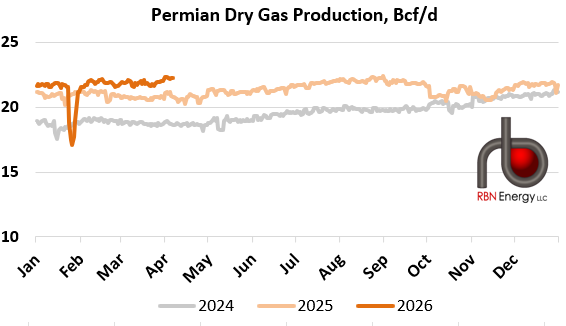
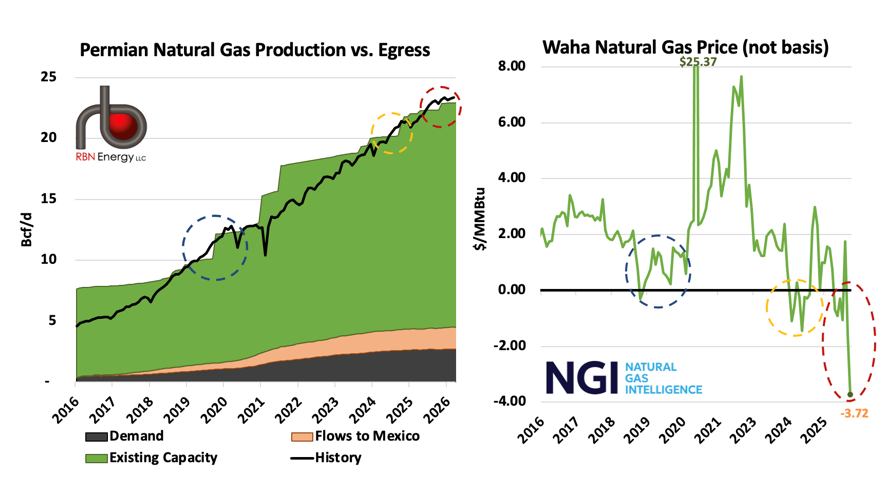
No comments:
Post a Comment